Nintendo DS2005Kart racingNintendo EADFirst online Mario Kart32 coursesRetro cups debut23.60 million soldMission Mode
Mario Kart DS
The Mario Kart that went round the world. Mario Kart DS reached North America on 14 November 2005, Europe on 25 November and Japan on 8 December, and it was the first game in the series that could be raced over the internet, through the brand-new Nintendo Wi-Fi Connection. It was also the biggest Mario Kart yet made: 32 courses, half of them new and half rebuilt from the four earlier games in the first Retro Grand Prix; 12 drivers, with Dry Bones and R.O.B. on the grid for the first time; 36 karts; a single-player Mission Mode with seven boss fights; and a Battle mode you could finally play alone. Eight people could race from a single Game Card, and the stylus let you draw your own emblem for the bonnet. Produced by Hideki Konno and directed by Makoto Wada and Yasuyuki Oyagi at Nintendo EAD, it introduced the Bullet Bill and the Blooper, scored 91 on Metacritic and sold 23.60 million copies, the third best-selling game on the Nintendo DS.
Developer:Nintendo EAD
Publisher:Nintendo
Platform:Nintendo DS
Genre:Kart racing
N. America:14 November 2005
Australia:17 November 2005
Europe:25 November 2005
Japan:8 December 2005
South Korea:5 April 2007
Players:1; 2–8 by local wireless (one Game Card is enough); 2–4 online until May 2014
Re-releases:Wii U Virtual Console (2015; Japan 2016)
Advertisement
Overview
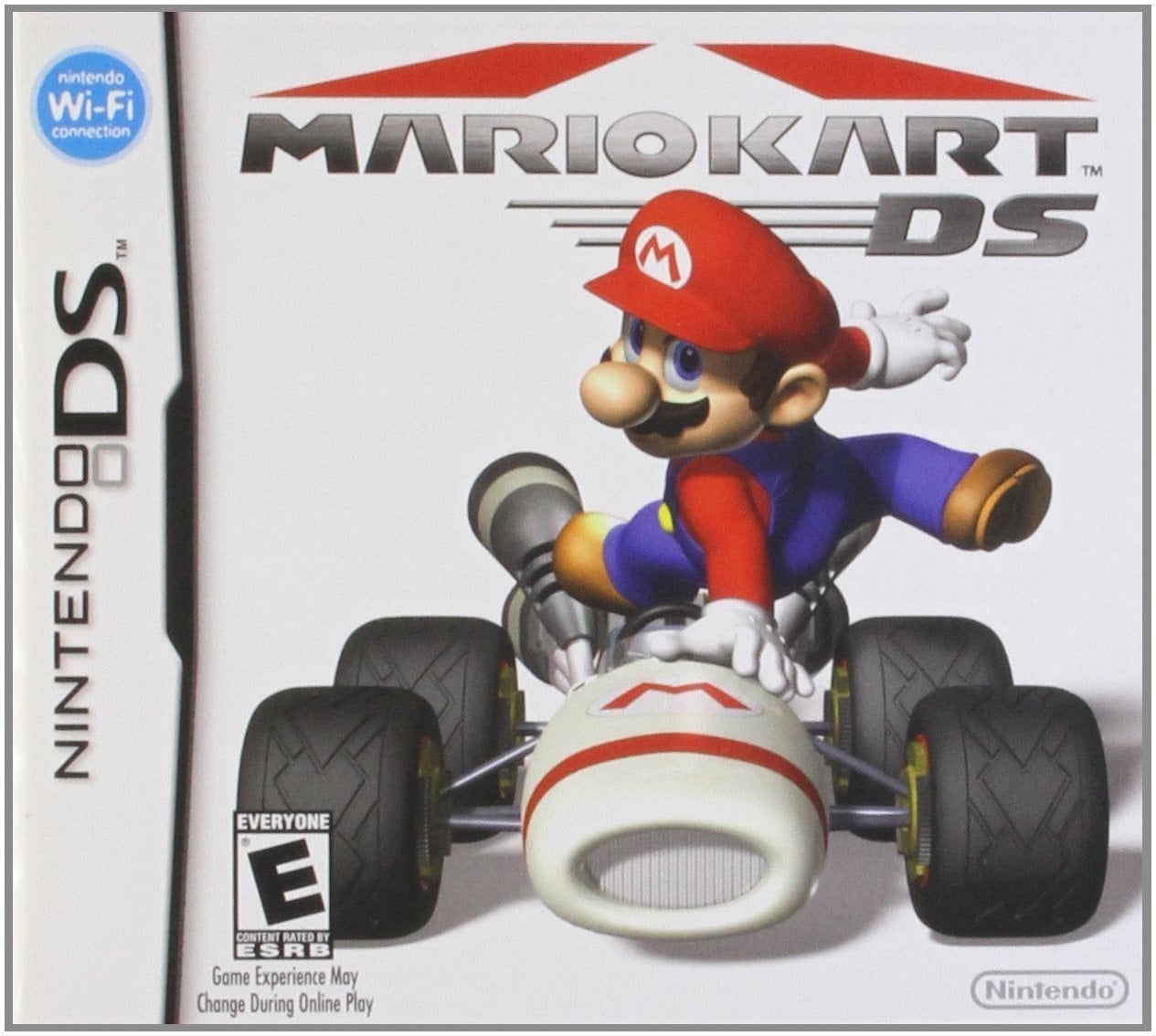
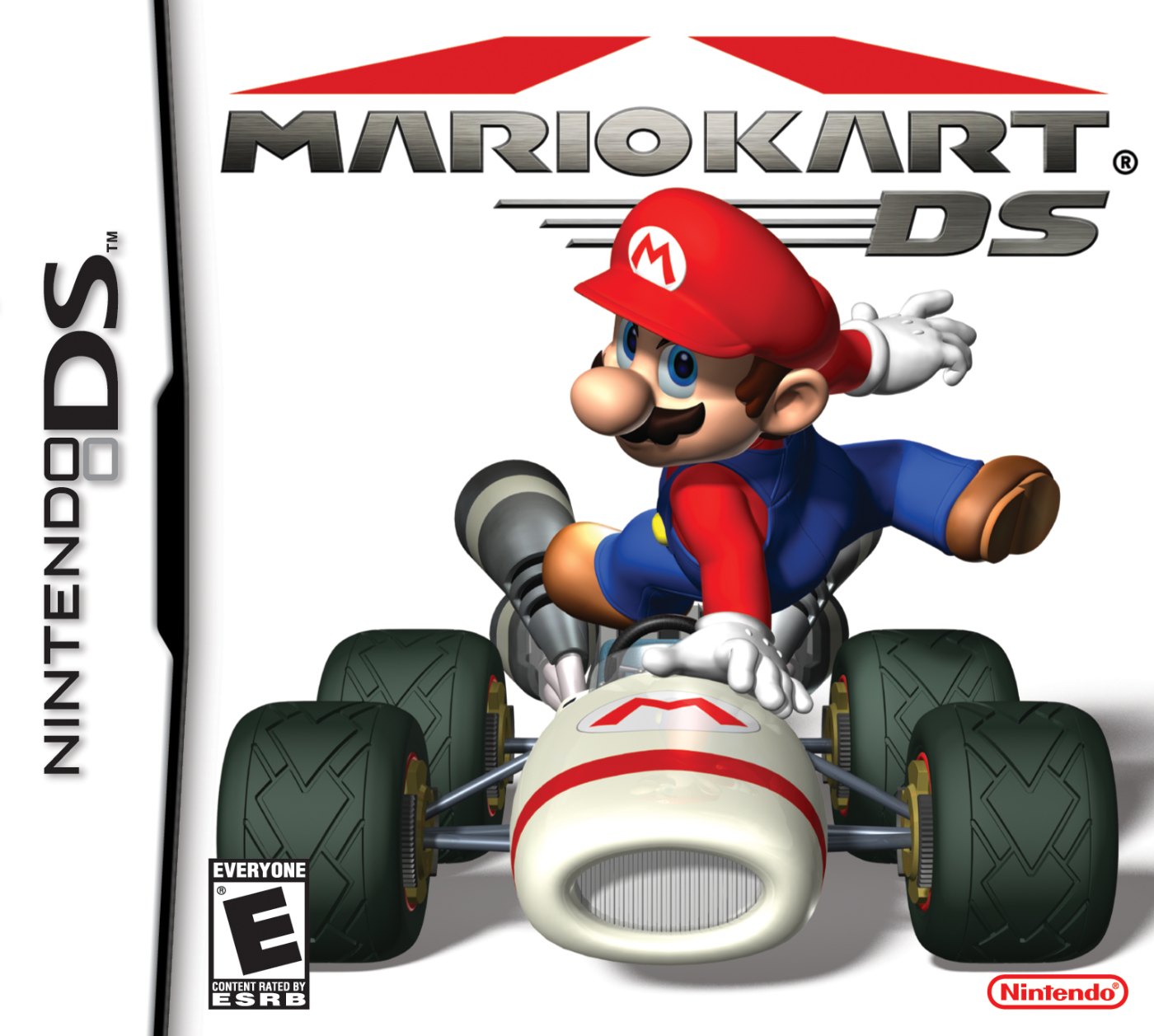
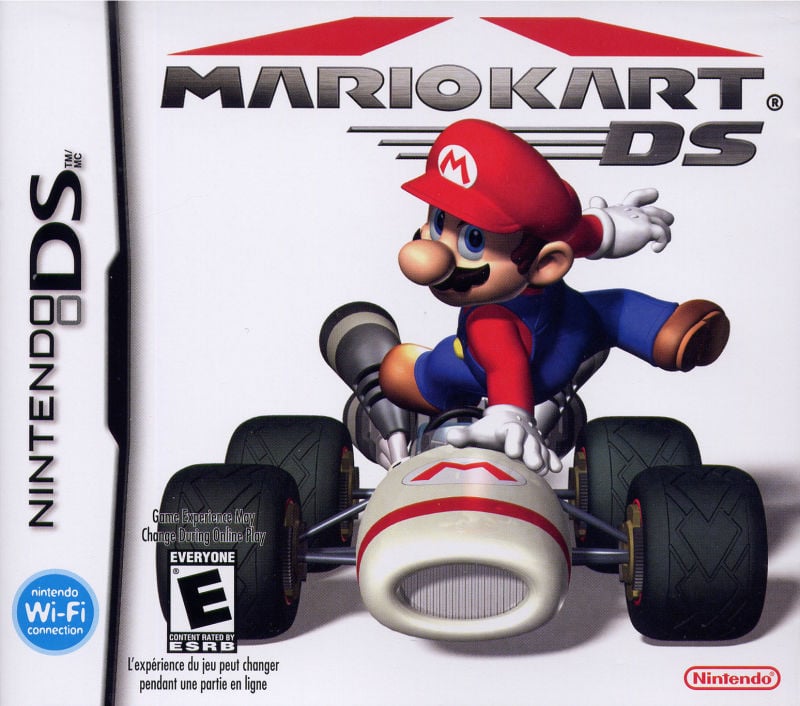
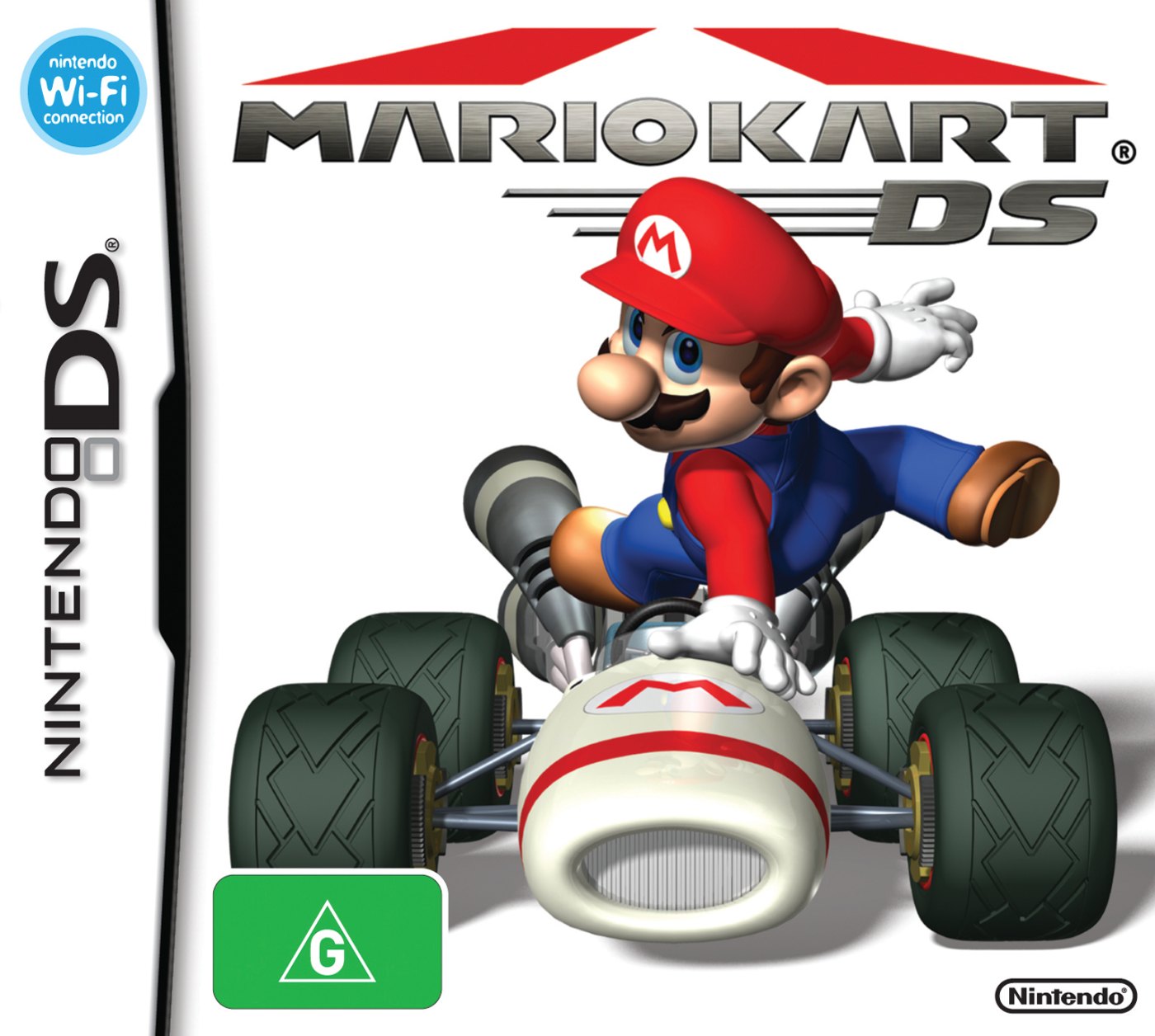
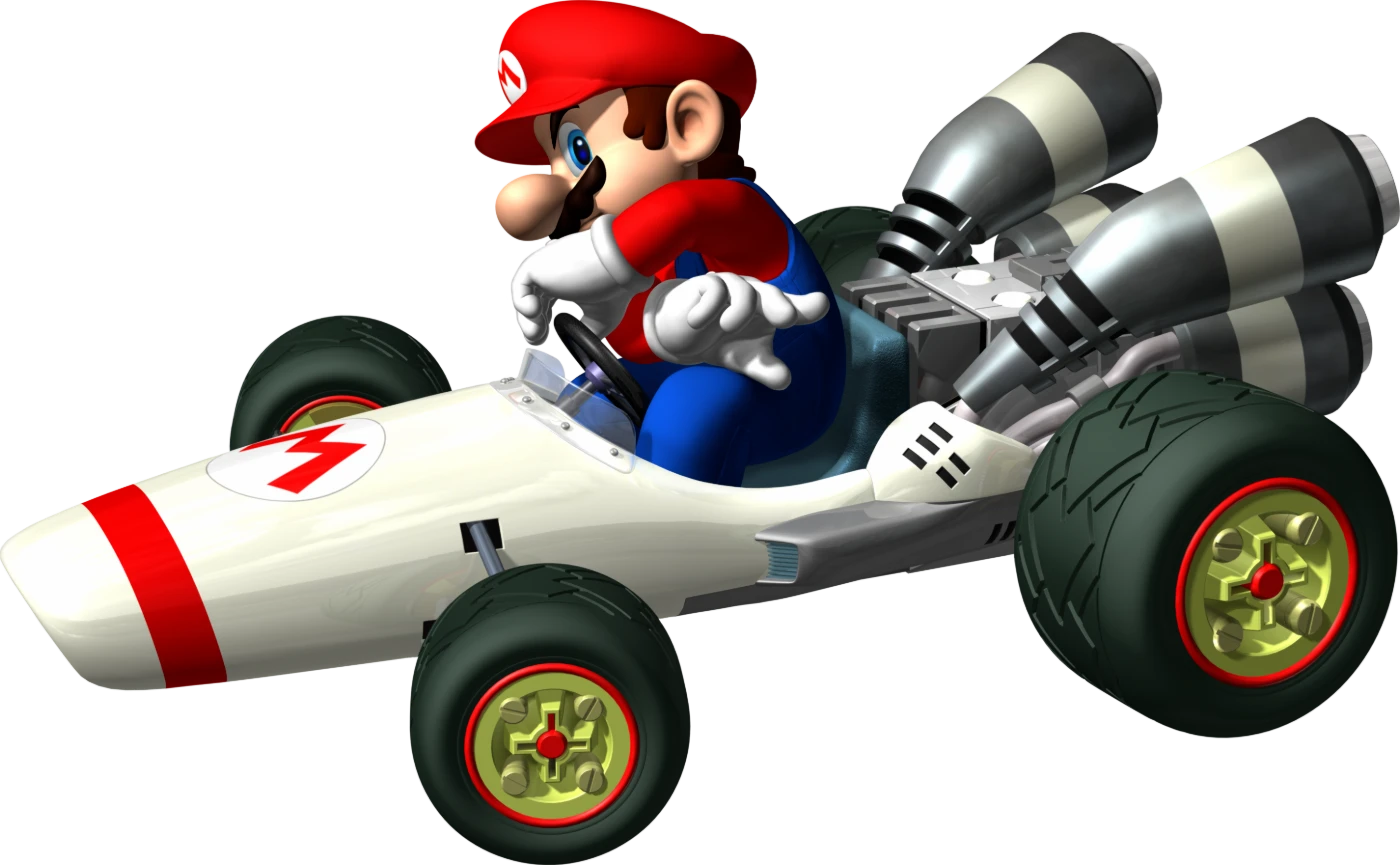
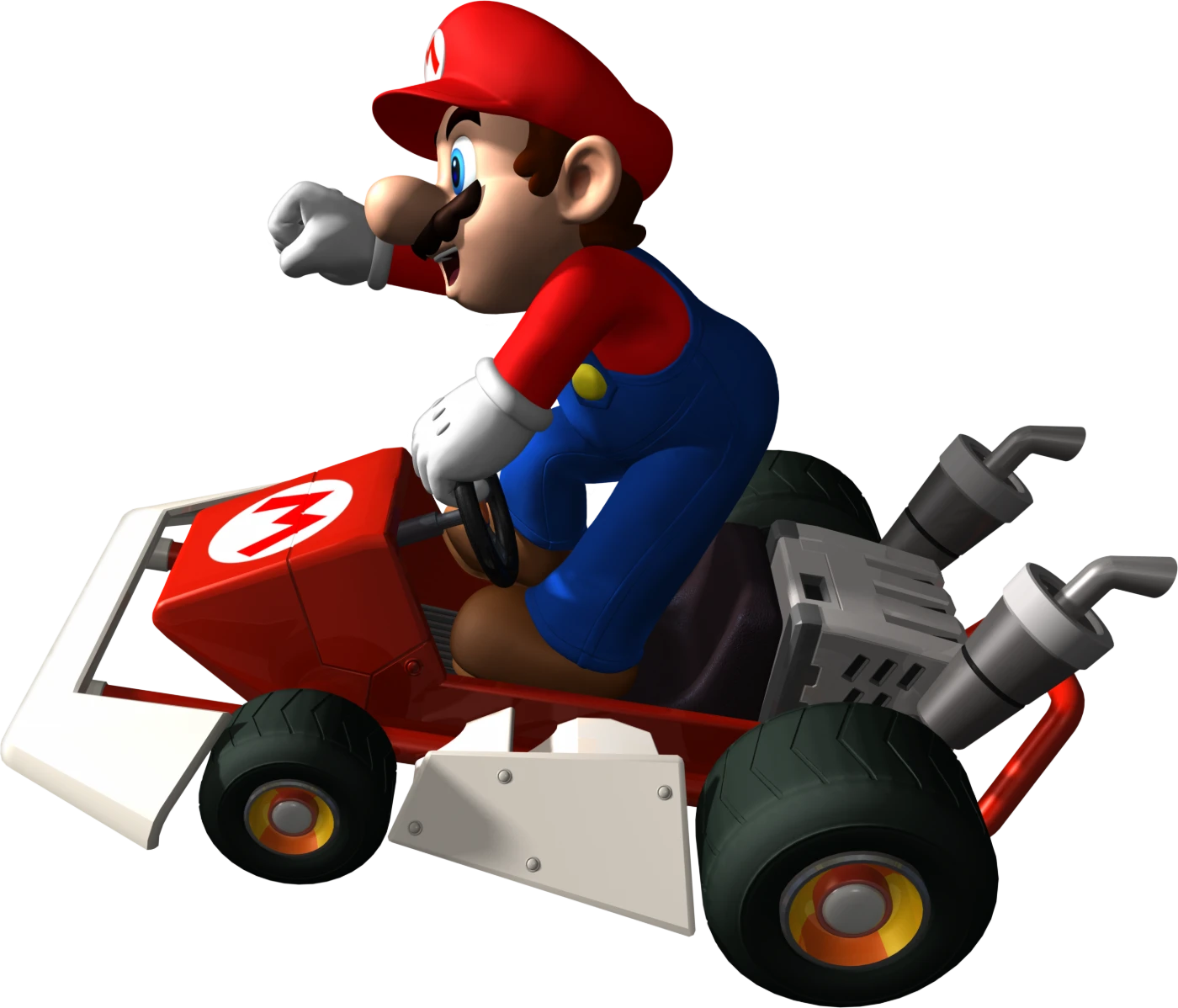
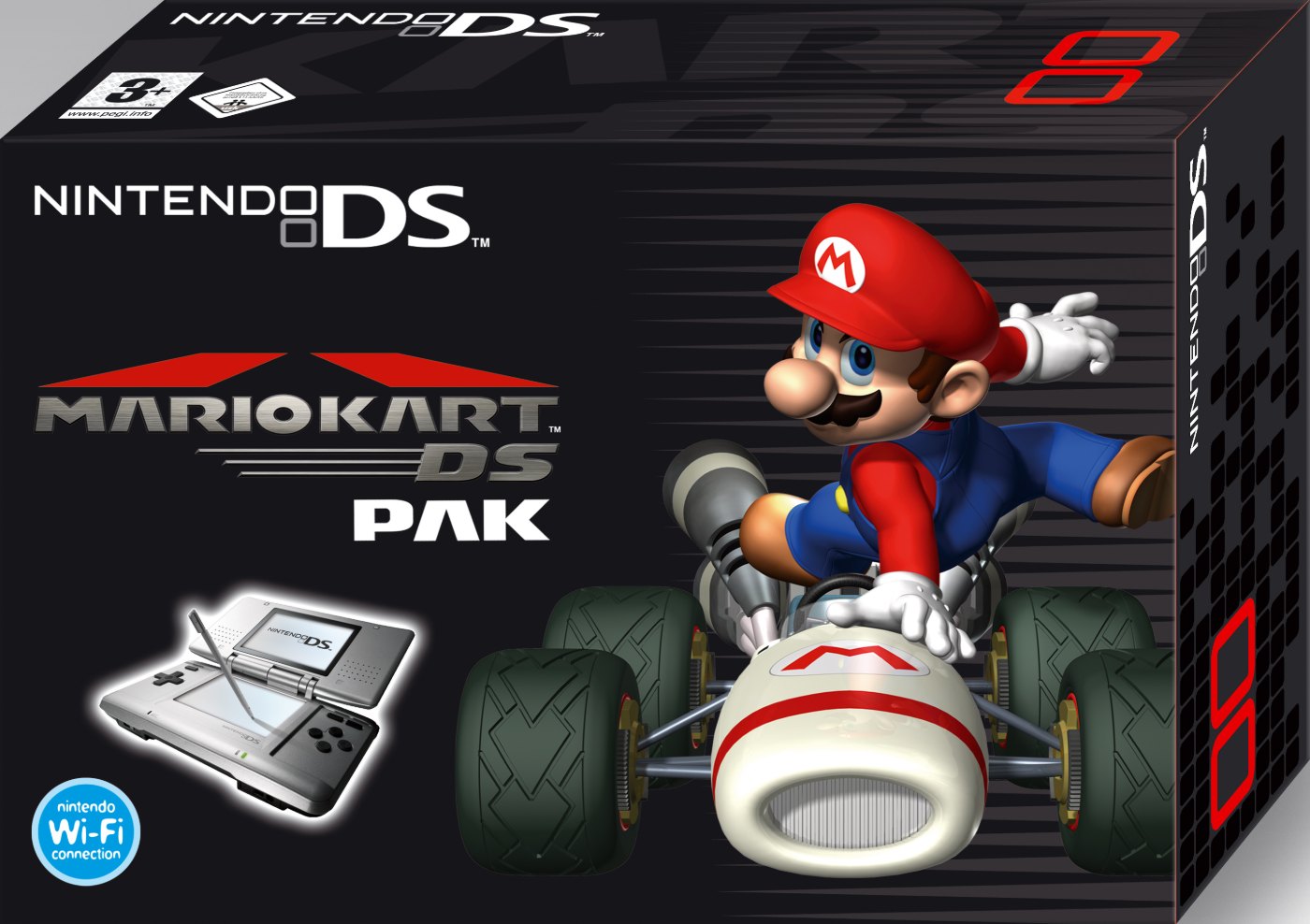
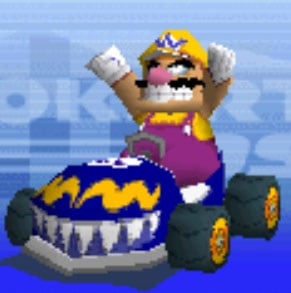
Mario in his B Dasher: the artwork used on the box.
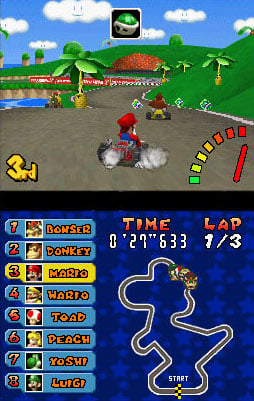
After the two-seater experiment of Double Dash!!, Mario Kart DS goes back to one driver per kart and then piles on more of everything else. The race plays out on the top screen of the Nintendo DS while the touch screen underneath becomes a live map, showing where every rival is and what they are carrying. It is the first handheld Mario Kart built in real 3D, and it runs at a steady 60 frames per second.
The headline in 2005 was the internet. This was the first game to use Nintendo Wi-Fi Connection, the free online service for the DS, and up to four players anywhere in the world could be matched for a set of four races. Nintendo reported that 52,000 of the 112,000 people who bought the game in its first week in the United States had already taken it online.
The idea that has lasted longest, though, is the Retro Grand Prix. Alongside sixteen new courses in the Mushroom, Flower, Star and Special Cups, the game adds the Shell, Banana, Leaf and Lightning Cups, each made of one course from Super Mario Kart, one from Mario Kart 64, one from Super Circuit and one from Double Dash!!. Every Mario Kart since has had retro cups.
There is a great deal more besides. Mission Mode sets 56 short challenges and seven boss battles against old enemies from Super Mario 64 DS. Battle mode can be played against computer drivers for the first time, with balloons you inflate by blowing into the microphone. Each character has three karts of their own and can eventually drive all 36. And up to eight DS owners can race over local wireless, even if only one of them owns the game.
Critics were close to unanimous: IGN and GameSpot both named it their DS game of the year, and Nintendo World Report gave it full marks. The public agreed to the tune of 23.60 million copies. Its drifting system also started the longest argument in Mario Kart history, over a technique called snaking, and Nintendo redesigned the mini-turbo for the next game because of it.
From Nintendo’s announcement
“Rev up your engines and buckle up for Mario Kart DS!”
Official text: Nintendo of Europe, Mario Kart DS product page, and Nintendo UK press release, 5 October 2005.
Nintendo of Europe’s product page goes on to promise “an all-star cast of karting veterans and newcomers” and 32 courses, and calls this the first game in the series to feature classic courses from previous Mario Kart titles. The British press release of 5 October 2005 made the other big claim: that this was “the first Nintendo DS title to offer gamers online play”.
Why Mario Kart DS matters to Mario fans
Almost everything people now expect from a Mario Kart starts here: online races, retro cups with their SNES, N64, GBA and GCN prefixes, a choice of karts for every driver, the Bullet Bill and the Blooper. It is also a love letter to the wider Mario series, with a pinball table for Waluigi, an airship straight out of Super Mario Bros. 3, Delfino Plaza from Super Mario Sunshine, Tick-Tock Clock from Super Mario 64 and Luigi’s own haunted mansion to race through, plus the Nintendo robot R.O.B. as the most unexpected secret driver the series has ever had.
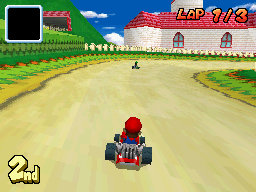
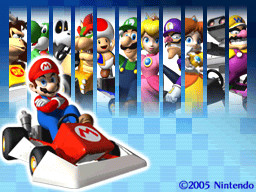
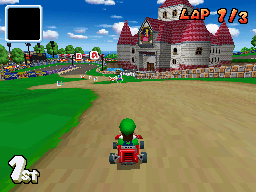
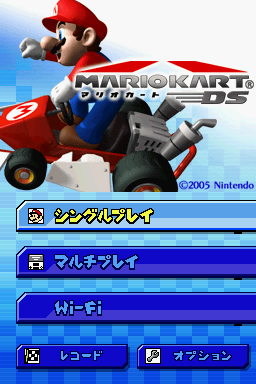
The title screen.The full roster of twelve drivers.Choosing a cup. Nitro cups are the new courses; Retro cups are the classics.Mario fires himself up the field as a Bullet Bill, one of the two new items.
Quick Answers
The questions people ask most about Mario Kart DS, answered briefly here and in depth further down the page.
When did Mario Kart DS come out?
North America: 14 November 2005. Australia: 17 November 2005. Europe: 25 November 2005. Japan: 8 December 2005. South Korea followed on 5 April 2007. More →
How do you unlock the secret characters?
Win gold trophies. Dry Bones: every Nitro cup in 50cc. Daisy: every Retro cup in 50cc. Waluigi: every Retro cup in 100cc. R.O.B.: every Nitro cup or every Retro cup in 150cc Mirror. Shy Guy is only playable by guests in DS Download Play. More →
How many courses are there?
Thirty-two: sixteen new ones in the Nitro Grand Prix (Mushroom, Flower, Star and Special Cups) and sixteen classics in the Retro Grand Prix (Shell, Banana, Leaf and Lightning Cups). There are also six battle courses. More →
Can you still play Mario Kart DS online?
Not officially. Nintendo Wi-Fi Connection was shut down on 20 May 2014, and the Wii U Virtual Console version is single-player only. Local wireless play on original hardware never depended on the service. More →
What is snaking?
Chaining mini-turbos down a straight by drifting left and right in a zigzag. In Mario Kart DS a mini-turbo is charged by rocking the Control Pad, so a quick player can boost almost continuously. Mario Kart Wii changed mini-turbos to charge with time because of it. More →
How do you unlock all 36 karts?
Each driver starts with two. Gold in every 100cc Nitro cup adds a third for everybody; gold in every Nitro or every Retro cup in 150cc adds four borrowed from other drivers; gold in all eight Mirror cups lets anyone drive anything. More →
How does Mission Mode work?
There are seven levels, each with eight short missions (drive through gates, collect coins, smash crates, race a rival) and a boss battle. Earn at least one star on everything in Levels 1 to 6 to open Level 7. More →
Who made it?
Nintendo EAD. Hideki Konno produced, Makoto Wada and Yasuyuki Oyagi directed, Shigeru Miyamoto was general producer and Shinobu Tanaka wrote the music. More →
How many copies did it sell?
23.60 million worldwide according to Nintendo, which makes it the third best-selling Nintendo DS game after New Super Mario Bros. and Nintendogs. More →
Is it on a modern console?
It was sold on the Wii U Virtual Console from April 2015 (May 2016 in Japan) until the Wii U eShop stopped taking purchases on 27 March 2023. It has not been released on Nintendo Switch at the time of writing. More →
Cups & Courses
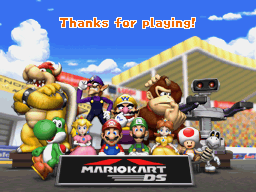
Promotional artwork: the cast on Figure-8 Circuit.
Mario Kart DS has two Grand Prix. The Nitro Grand Prix is the traditional one: the Mushroom, Flower, Star and Special Cups, sixteen courses made for this game. The Retro Grand Prix is the new idea: the Shell, Banana, Leaf and Lightning Cups, sixteen courses rebuilt from the four earlier Mario Karts. Each retro cup takes one track from each game, in order of release, and each carries a prefix to say where it came from: SNES, N64, GBA or GCN. The naming has been used ever since, with DS itself joining the list from Mario Kart Wii onwards.
Every cup can be raced in 50cc, 100cc and 150cc, and in Mirror once you have earned it. Gold trophies are what open the game up: new drivers, new karts and finally the right to put anyone in anything. Twenty of the 32 courses could also be raced online; they are marked in the list at the end of this section.
The new courses are an unusually strong set. Five of the sixteen are built around a place from another Mario game, from the airships of Super Mario Bros. 3 to the plaza of Super Mario Sunshine, and all but three of them (Figure-8 Circuit, Bowser Castle and Rainbow Road) have been remade for later Mario Karts.
Mushroom Cup
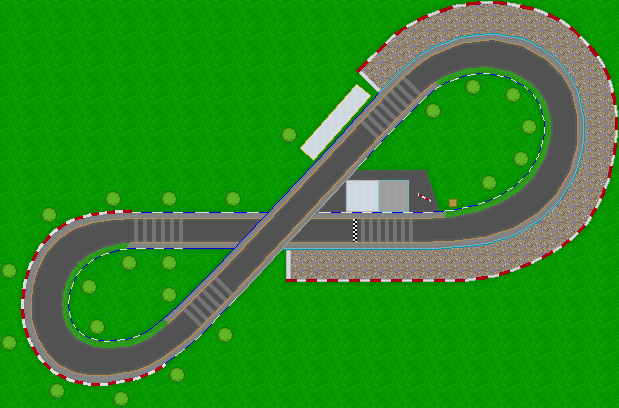
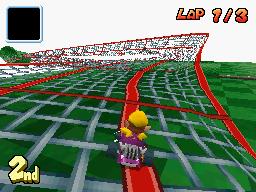
Figure-8 Circuit is exactly what it says: a wide, smooth eight with a flyover in the middle, grandstands full of spectators and nothing on the road to worry about. Its long, easy bends are there to teach you to power-slide. It is the only circuit in the series not named after a character.
Yoshi Falls circles a lake with a giant Yoshi egg in the middle, and three waterfalls pour straight across the road. The lower line is quicker but the current pushes you towards the drop; the upper line has bridges, Item Boxes and Dash Panels. It is the shortest of the new courses.
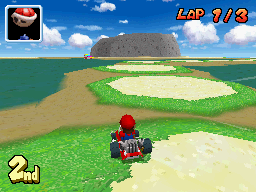
Cheep Cheep Beach launches you off a boardwalk on to the sand, under two arches of rock and through the shallows, where Cheep Cheeps bounce about and crabs sit in wait. The tide comes in and goes out as you race. The lap ends with a detour through the jungle.
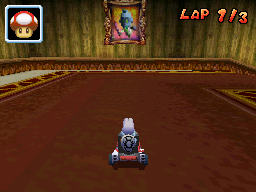
Luigi’s Mansion starts in the woods outside the house from the GameCube game, runs through the front door and down beneath the hall, where the portrait ghosts hang on the walls, and comes out through a graveyard into a swamp. There the trees get up and walk, and a kart that meets one stops dead.
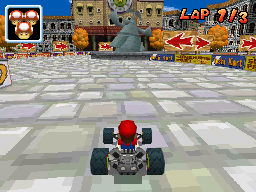
Mario on the straight at Figure-8 Circuit.Yoshi on his home course, Yoshi Falls.The boardwalk at the start of Cheep Cheep Beach.Bowser races through the hall of Luigi’s Mansion.
Flower Cup
Desert Hills is Desert Land from Super Mario Bros. 3 turned into a racetrack: an oasis, a brick pyramid, a field of dunes and a crowd of Pokeys. From the second lap the Angry Sun joins in, spitting Fire Snakes on to the road. There are two cuts for the brave, one across the hairpin and one round the back of the pyramid.
Delfino Square borrows Delfino Plaza from Super Mario Sunshine, Piantas and all. The lap goes round a fountain, down a narrow alley that splits in two, over a stone bridge and along a pier stacked with crates (smash them for Mushrooms, or Bananas if you are unlucky) before a drawbridge covered in Dash Panels lifts under your wheels.
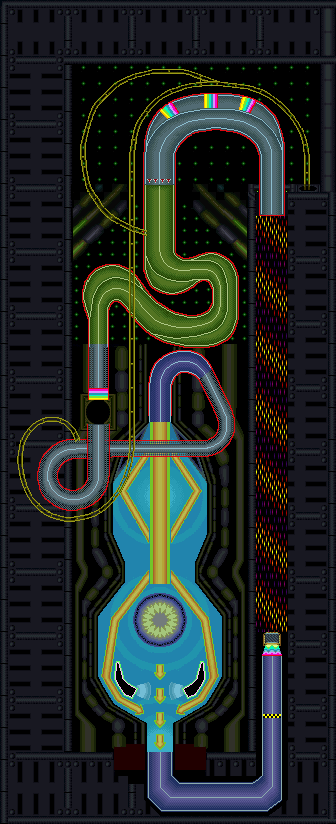
Waluigi Pinball is the star of the game. You are fired up a launcher like the ball, wind down a spiralling ramp with giant pinballs rolling after you, and arrive on the table itself, among bumpers that throw you about and flippers that spin you out. Even the item roulette makes pinball noises here. It is the longest of the new courses, despite sitting in the Flower Cup.
Shroom Ridge is a mountain road open to traffic. Cars and trucks come at you in both directions, a first for the series, and for half the lap there is no barrier between the road and a very long drop.
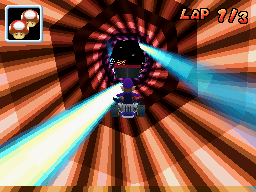
The pyramid shortcut on Desert Hills.Through the alley in Delfino Square.The pinball table at the foot of Waluigi Pinball.The tunnel on Shroom Ridge.
Star Cup
DK Pass climbs a snowy mountain above a frozen lake and comes straight back down. Giant snowballs roll down the road towards you, snowmen stand in the way, and a lone Item Box on a ledge at the summit rewards anyone with a Mushroom to spare.
Tick-Tock Clock takes place inside the clock from Super Mario 64. You drive over a clock face while the hands sweep round, past a swinging pendulum and across gears that turn against each other, so the road itself is always trying to carry you somewhere else.
Mario Circuit runs beside the lake at Peach’s Castle, past Goombas, through a pipe-shaped tunnel and along a dirt road lined with Piranha Plants. Fire-spitting plants guard the S-bend, and one side of the course has no rail between you and the moat.
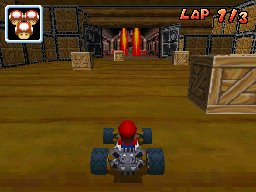
Airship Fortress is a Super Mario Bros. 3 airship level at racing speed. Bullet Bills are fired down the opening straight, Rocky Wrenches pop out of the deck, flame burners sweep a room below, and then a cannon blasts every kart across the sky into a ruined tower, where the road corkscrews down to the line.
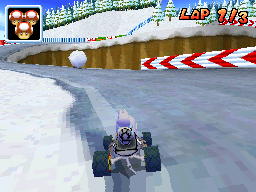
Donkey Kong on the way down DK Pass.The pendulum in Tick-Tock Clock.A Fire Piranha Plant takes aim on Mario Circuit.Peach is shot out of the cannon at Airship Fortress.
Special Cup
Wario Stadium is a stunt arena of churned-up dirt: bumps, a jump off a Dash Panel ramp, a mud pit crossed by islands of Dash Panels, spinning chains of fire and one enormous ramp before the finish. It shares its music with Waluigi Pinball.
Peach Gardens looks like the gentlest course in the cup and is not. The hedge maze in the grounds of the castle is patrolled by Chain Chomps that have slipped their chains, some of them towing a tail of Item Boxes, and Monty Moles burst out of the dirt paths.
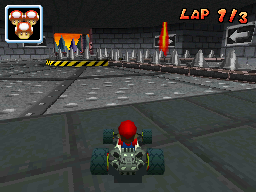
Bowser Castle throws everything at you in turn: a corridor of Thwomps, a round room whose floor rotates against you, a spiral over lava, a choice between a spinning cylinder of a bridge and the slower garden beneath it, and a last dash across moving platforms.
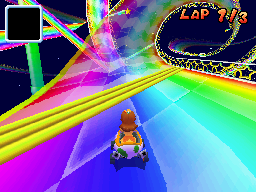
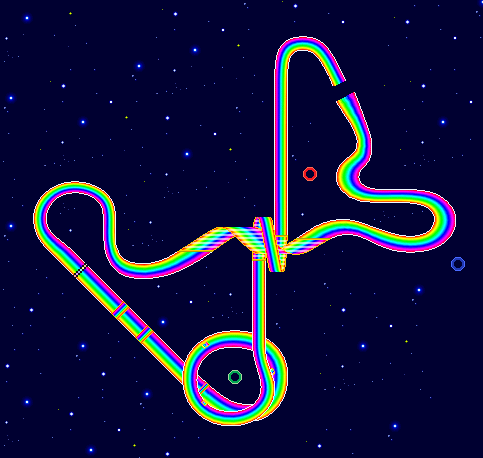
Rainbow Road ends the Nitro Grand Prix in space, with a vertical loop and a corkscrew. No other Mario Kart course turned its drivers upside down until Mario Kart 8, nine years later.
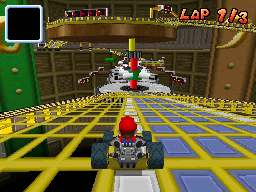
Wario at Wario Stadium.The hedge maze of Peach Gardens.The spinning bridge in Bowser Castle.Mario approaches the loop on Rainbow Road.
Shell Cup (retro)
The first retro cup is a gentle one, built from the early courses of each earlier game. SNES Mario Circuit 1 is where it all began in 1992: flat tarmac, sand and a cluster of pipes. N64 Moo Moo Farm, the shortest course of Mario Kart 64, still has its cows in the fields and its moles in the road; here they are Monty Moles.
GBA Peach Circuit is a short, simple loop from the Mushroom Cup of Super Circuit, in sight of Peach’s Castle. GCN Luigi Circuit comes from Double Dash!! with its Chain Chomp still tethered beside the track and still lunging at anyone who strays too close. All four Shell Cup courses, with the four of the Mushroom Cup, are the ones available in DS Download Play.
Wario on SNES Mario Circuit 1.The start line at N64 Moo Moo Farm.Luigi takes the first turn of GCN Luigi Circuit.
Banana Cup (retro)
SNES Donut Plains 1 loops round a lake and over a bridge. N64 Frappe Snowland keeps its field of snowmen, which throw you backwards on contact. GBA Bowser Castle 2 is all right angles, floor grids over lava and ramps, with Thwomps overhead and Lava Bubbles leaping from the pits.
GCN Baby Park is the one everybody remembers. The tiny oval from Double Dash!! was scaled up for the DS and cut from seven laps to five, and shells can no longer cross the central divider, but it is still the most chaotic minute in the game.
Luigi on SNES Donut Plains 1.Yoshi and Lakitu at N64 Frappe Snowland.The lava grid of GBA Bowser Castle 2.Wario on GCN Baby Park.
Leaf Cup (retro)
SNES Koopa Beach 2 is a lap of a single island, with Cheep Cheeps flapping about at the water’s edge. N64 Choco Mountain has its boulders, which still tumble on to the road at the cliff-edge hairpin.
GBA Luigi Circuit is the airfield course from the Lightning Cup of Super Circuit. GCN Mushroom Bridge is the coast road from Double Dash!!, traffic included, and it doubles as the arena for the last boss of Mission Mode.
Waluigi on SNES Koopa Beach 2.Falling boulders on N64 Choco Mountain.Toad heads for the shortcut on GCN Mushroom Bridge.
Lightning Cup (retro)
The Lightning Cup takes its name from a cup in Super Circuit and is the retro equivalent of the Special Cup. SNES Choco Island 2 is mud, bumps and Piranha Plants. N64 Banshee Boardwalk is the haunted pier, with a swarm of Swoops and a giant fish, here called Bubba, vaulting over the track.
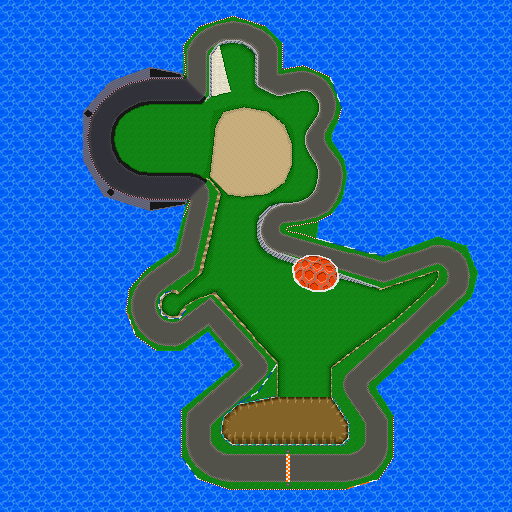
GBA Sky Garden is a cobbled road across the clouds, with ramps over the gaps. GCN Yoshi Circuit, the track shaped like Yoshi himself, closes the Grand Prix, with Piranha Plants on the verges and a tunnel through his nose.
Bubba leaps the track at N64 Banshee Boardwalk.Yoshi takes a ramp at GBA Sky Garden.The tunnel in the nose of GCN Yoshi Circuit.
The six battle courses
Nintendo DS is a battle fought on top of a gigantic Nintendo DS floating in space. The two screens are the two halves of the arena, and the top one is displaying the game’s own title screen. Twilight House is a mansion of eight rooms in a three-by-three grid, ringed by a narrow balcony over a dark void.
Palm Shore is three sandy islands in a shallow sea, where the tide rises every few seconds and floods the middle. Tart Top is a giant tart. Its Item Boxes hang high in the air and can only be reached from the Dash Panel that circles the mound of cream in the centre, and bumping into the smaller mounds of cream splatters pink icing over your screen.
Two more arenas are classics: Block Fort from Mario Kart 64 and Pipe Plaza from Double Dash!!. Oddly, this is the only game in the series that does not give its retro battle courses a console prefix, and both use the new battle music in place of their own.
Nintendo DS.Twilight House.Palm Shore.Tart Top.Block Fort, from Mario Kart 64.Pipe Plaza, from Double Dash!!.
Every course in Mario Kart DS
All 32 race courses in cup order. “Wi-Fi” marks the twenty that could be raced over Nintendo Wi-Fi Connection. Later appearances are noted for the sixteen new courses.
Figure-8 CircuitMushroom Cup · new · Wi-FiA broad, hazard-free figure of eight for learning to power-slide. Never remade for a later Mario Kart, though it became a Super Smash Bros. stage.
Yoshi FallsMushroom Cup · new · Wi-FiRound a lake and across three waterfalls. The shortest new course. Remade for Mario Kart Wii.
Cheep Cheep BeachMushroom Cup · new · Wi-FiBoardwalk, sand, a changing tide and a jungle. Remade for Mario Kart 8.
Luigi’s MansionMushroom Cup · new · Wi-FiThrough the haunted house and out into a swamp of walking trees. Remade for Mario Kart 7 and Tour.
Desert HillsFlower Cup · new · Wi-FiSuper Mario Bros. 3’s desert, with Pokeys and an Angry Sun. Remade for Mario Kart Wii and Mario Kart World.
Delfino SquareFlower Cup · new · Wi-FiAlleys, a pier of crates and a lifting drawbridge in a Sunshine-style town. Remade for Mario Kart Wii.
Waluigi PinballFlower Cup · newA race through a pinball machine: launcher, pinballs, bumpers and flippers. The longest new course. Remade for Mario Kart 7, Tour and the Booster Course Pass.
Shroom RidgeFlower Cup · newTwo-way traffic on a cliff road with no guard rail. Remade for Tour and the Booster Course Pass.
DK PassStar Cup · new · Wi-FiUp a snowbound mountain and down again, dodging giant snowballs. Remade for Mario Kart 7, Tour and Mario Kart World.
Tick-Tock ClockStar Cup · newClock hands, pendulums and turning gears inside the Super Mario 64 clock. Remade for Mario Kart 8.
Mario CircuitStar Cup · new · Wi-FiRound Peach’s Castle past Goombas and fire-spitting Piranha Plants. Remade for Tour and the Booster Course Pass.
Airship FortressStar Cup · newBullet Bills, Rocky Wrenches and a cannon shot into a ruined tower. Remade for Mario Kart 7, Tour and Mario Kart World.
Wario StadiumSpecial Cup · new · Wi-FiMud, ramps and spinning fire in a stunt arena. Remade for Mario Kart 8.
Peach GardensSpecial Cup · newA formal garden with loose Chain Chomps in its hedge maze. Remade for Mario Kart Wii, Tour and the Booster Course Pass.
Bowser CastleSpecial Cup · newThwomps, a rotating room, a spinning bridge and platforms over lava. Never remade.
Rainbow RoadSpecial Cup · new · Wi-FiThe first Rainbow Road with a loop and a corkscrew. Never remade.
SNES Mario Circuit 1Shell Cup · retro, from Super Mario Kart (1992) · Wi-FiThe very first Mario Kart course: tarmac, sand and pipes.
N64 Moo Moo FarmShell Cup · retro, from Mario Kart 64 (1996) · Wi-FiA short dirt oval among the cows, with Monty Moles popping up in the road.
GBA Peach CircuitShell Cup · retro, from Mario Kart: Super Circuit (2001) · Wi-FiA short tarmac loop from Super Circuit, in sight of Peach’s Castle.
GCN Luigi CircuitShell Cup · retro, from Mario Kart: Double Dash!! (2003) · Wi-FiThe pinched oval from the GameCube, guarded by a Chain Chomp on a stake.
SNES Donut Plains 1Banana Cup · retro, from Super Mario Kart (1992)A lake, a bridge and three U-turns.
N64 Frappe SnowlandBanana Cup · retro, from Mario Kart 64 (1996) · Wi-FiSnowfields and a minefield of snowmen.
GBA Bowser Castle 2Banana Cup · retro, from Mario Kart: Super Circuit (2001)Right-angled corners, grids over lava, Thwomps and Lava Bubbles.
GCN Baby ParkBanana Cup · retro, from Mario Kart: Double Dash!! (2003) · Wi-FiThe tiny fairground oval, here run over five laps instead of seven.
SNES Koopa Beach 2Leaf Cup · retro, from Super Mario Kart (1992)One lap of one island, through the shallows and the Cheep Cheeps.
N64 Choco MountainLeaf Cup · retro, from Mario Kart 64 (1996) · Wi-FiA canyon road with boulders falling at the hairpin.
GBA Luigi CircuitLeaf Cup · retro, from Mario Kart: Super Circuit (2001)The airfield circuit from Super Circuit’s Lightning Cup.
GCN Mushroom BridgeLeaf Cup · retro, from Mario Kart: Double Dash!! (2003)A coast road busy with traffic, and the stage for the Wiggler boss race.
SNES Choco Island 2Lightning Cup · retro, from Super Mario Kart (1992) · Wi-FiSlippery mud and bumps, now with Piranha Plants at the roadside.
N64 Banshee BoardwalkLightning Cup · retro, from Mario Kart 64 (1996)A haunted pier with a swarm of Swoops and a giant leaping fish.
GBA Sky GardenLightning Cup · retro, from Mario Kart: Super Circuit (2001) · Wi-FiCobbles on clouds, with ramps over the gaps.
GCN Yoshi CircuitLightning Cup · retro, from Mario Kart: Double Dash!! (2003) · Wi-FiAn island circuit in the shape of Yoshi, lined with Piranha Plants.
Battle courses: Nintendo DS, Twilight House (remade for Mario Kart Wii and Tour), Palm Shore (remade for Mario Kart 7) and Tart Top are new; Block Fort comes from Mario Kart 64 and Pipe Plaza from Double Dash!!. Battle mode was never available online.
The game has three different Grand Prix introduction fanfares, a detail no other Mario Kart shares: one for Figure-8 Circuit, Waluigi Pinball, Mario Circuit and GCN Luigi Circuit, one for Wario Stadium alone, and one for everything else.
Advertisement
Gameplay & Controls
Eight karts, three laps, and a box of tricks on every straight: Mario Kart DS is a return to the classic formula after Double Dash!!, played with the Control Pad and buttons. What is new is how much the game tells you. The second screen means you always know who is behind you and what they are holding.
Characters matter less than they did on the GameCube, and karts matter more. Every kart has six ratings, and the driver adds only their weight. As Hideki Konno put it at the time: “Bowser is going to knock Peach around no matter what karts they’re in.”
Two screens
The top screen is the race. The touch screen is the map, and it can be switched between two views with the stylus or the Y Button. It also lists the running order and shows the item each rival is carrying, so a Red Shell from the kart behind is never a complete surprise.
The top screen keeps the lap counter, the timer, your position and the item roulette, which now sits in the top-left corner. The roulette even gives you a clue before it stops: an ordinary chime for an ordinary item and a stronger one when something powerful is on its way.
The grid on Figure-8 Circuit. Lakitu, unusually, is not there to start the race.Inked by a Blooper on Frappe Snowland.
Controls
A accelerates and B brakes or reverses. The Control Pad steers. L or X uses an item, and holding Up or Down on the Control Pad as you press throws it ahead or drops it behind. R makes the kart hop; hold it through a corner to drift.
In Balloon Battle, blowing into the microphone (or holding Select) inflates a spare balloon. In Time Trials, Select switches the direction arrows and Mushroom display on and off.
Rocket Starts, drifting and slipstreams
For a Rocket Start, hold A as the 2 of the countdown fades. Go too early and the engine stalls for a few seconds.
Hold R through a corner and the kart drifts. While it slides, press the Control Pad away from the turn and back again: the sparks at the rear wheels turn blue, then orange. Release R on orange for a mini-turbo. A drift and a hop timed well can even dodge a Spiny Shell, though only in the two faster classes.
Slipstreaming returns from Mario Kart 64. Tuck in directly behind another kart for a few seconds and you are flung past it with a burst of speed.
Because the mini-turbo is charged by the player’s thumb and not by the length of the corner, there is nothing to stop you drifting on a straight, and experts do exactly that, weaving left and right and firing a boost each time. This is snaking. It works best in karts with high handling, Dry Bones’s in particular, and it divided players for years.
Yoshi power-sliding round Figure-8 Circuit.A Dash Panel at Yoshi Falls.
Game modes
Grand Prix is for one player: a cup of four races against seven computer drivers in 50cc, 100cc, 150cc or Mirror. Points run 10, 8, 6, 4, 3, 2, 1 and 0, and after the trophy ceremony your whole cup is graded, from E up to A and then one, two or three stars. Earn the same star rating in every cup and class and it is displayed in your records and beside your name.
Time Trials give you Mushrooms according to your kart’s Items rating: one, two or three. You can race the ghost of your own best lap, a ghost sent by a friend, or a staff ghost, which appears once your time is within 108 per cent of the Nintendo tester’s.
VS lets you set the engine class, the computer drivers’ skill, the order of courses and the win condition (a number of wins, a number of races up to 32, or free play), alone or with friends, in teams if you like. Battle has two games, Balloon Battle and Shine Runners, and for the first time both can be played against the computer.
In Balloon Battle everyone starts with one balloon and four in reserve. You inflate the spares yourself, up to three at a time, by blowing into the microphone. Burst a rival’s balloons with items, or ram them with a Mushroom to steal one. In Shine Runners, nine Shine Sprites are scattered over the arena. After 60 seconds whoever holds the fewest is knocked out, the clock resets to 30 seconds, and so on until one driver is left.
The cup select screen with every cup cleared.Balloon Battle on Palm Shore.Peach battling on Tart Top.
Mission Mode
Missions are bite-sized tests of one skill each. Drive through numbered gates in order. Collect every coin. Smash every Item Box, or every crate. Reverse out of Luigi’s Mansion. Perform a set number of mini-turbos in a lap. Squash Cheep Cheeps with a Star or bowl shells at Monty Moles. Beat a single rival over one lap, whether that rival is Yoshi, a runaway red car on Shroom Ridge or a Chain Chomp that has slipped its chain in Peach Gardens.
There are seven levels of eight missions, and each ends with a boss. Every mission is driven by a set character in their standard kart, the four secret drivers are not used, and each attempt is graded from E to three stars, mostly on time. Finish everything in Levels 1 to 6 with at least one star and Level 7 opens.
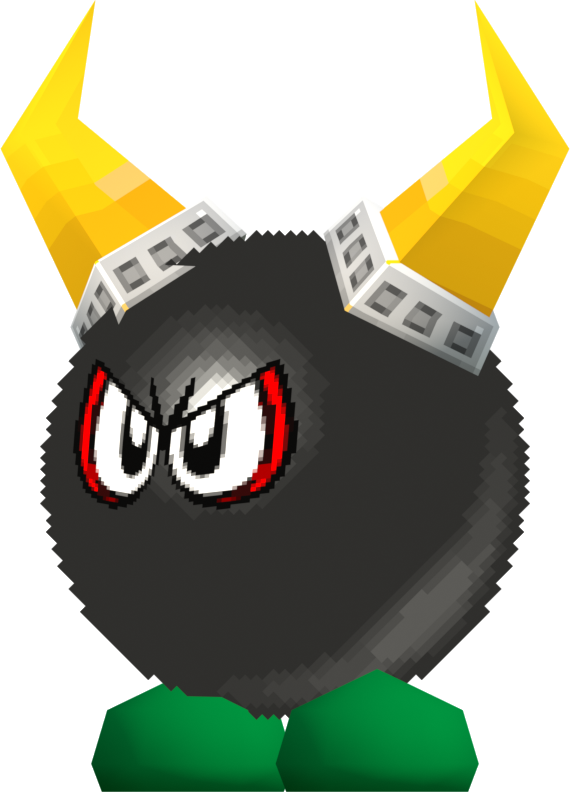
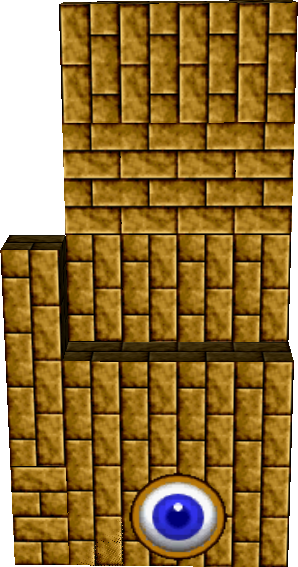
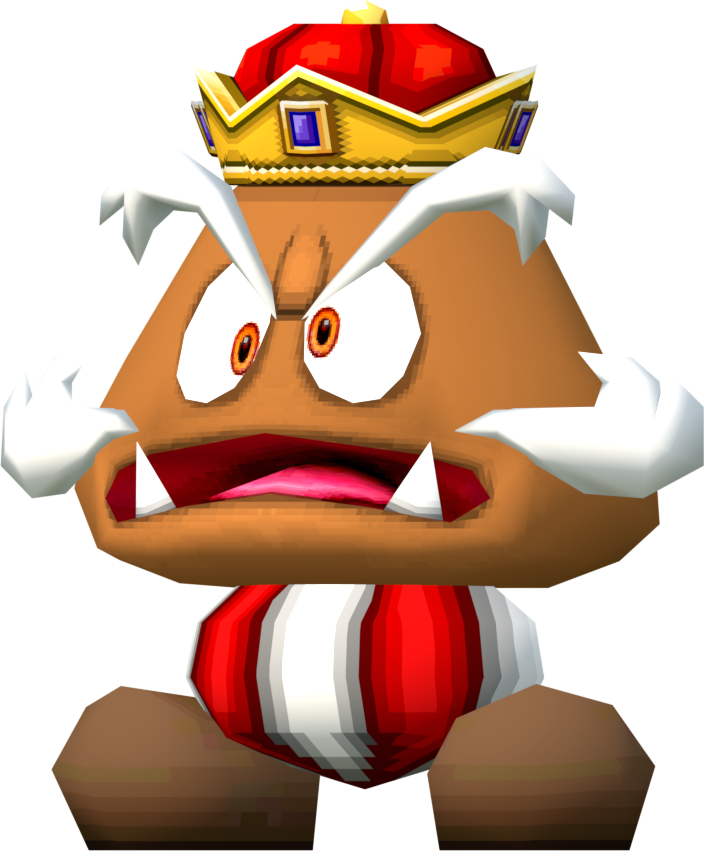
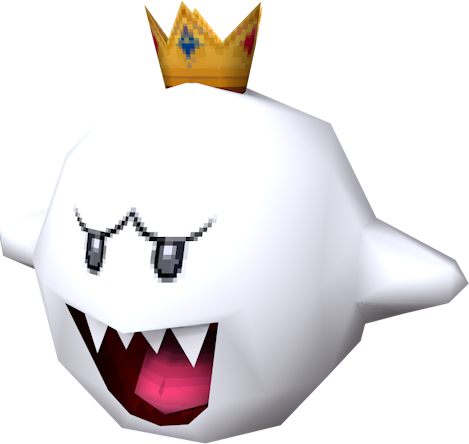
The bosses are borrowed, models and all, from Super Mario 64 DS. Yoshi shunts Big Bully off a platform with Mushroom boosts. Mario fires shells into the eye of Eyerok. Toad races Goomboss round Baby Park while the giant Goomba scatters minions and, on the last lap, cheats by hopping the central barrier. Peach collects 50 coins while dodging King Boo. Wario lobs Bob-ombs at the Big Bob-omb. Luigi barges Chief Chilly off his arena three times. Last comes a race against Wiggler on Mushroom Bridge, and he does not stay calm.
Level 1 boss: Yoshi against Big Bully.Level 3 boss: Toad races Goomboss round Baby Park.Level 4 boss: Peach gathers coins under King Boo’s nose.Level 6 boss: Luigi and Chief Chilly.Level 7 boss: Mario lines up against Wiggler on Mushroom Bridge.
The 36 karts
Each of the twelve drivers has three karts: a standard kart in their colours (Standard MR for Mario, Standard LG for Luigi and so on), a signature kart available from the start, and a second signature kart that has to be unlocked. Every kart is rated for Speed, Acceleration, Weight, Handling, Drift and Items.
Handling is how tightly a kart turns without drifting; Drift is how tightly it turns while sliding. Items is the odd one out, and it has never been used again: a high rating improves your luck at the roulette, with better odds of Triple Bananas when you lead and Triple Mushrooms in the middle of the pack. The price is paid elsewhere on the chart.
A few karts are known by their extremes. The Hurricane and the ROB-BLS share the highest top speed. Dry Bones’s Dry Bomber has the best acceleration and the best handling, which suits snaking. Peach’s Light Tripper has the best drift. Bowser’s Tyrant is the heaviest thing on the road.
At first each driver may use only their own standard and first signature kart. Further gold trophies add the third, then four more borrowed from other drivers, and finally the lot: 36 karts for 12 drivers, or 432 combinations.
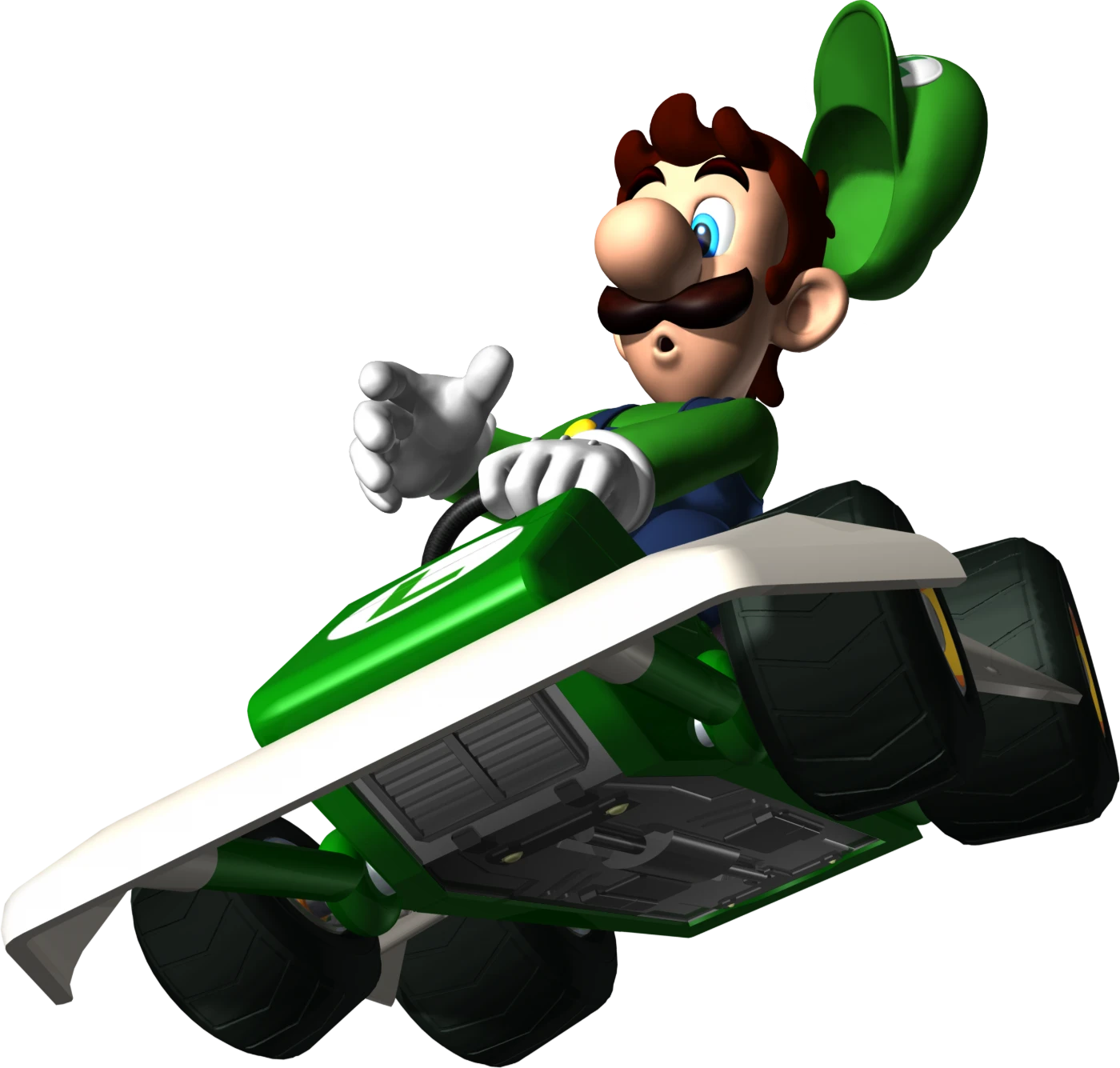
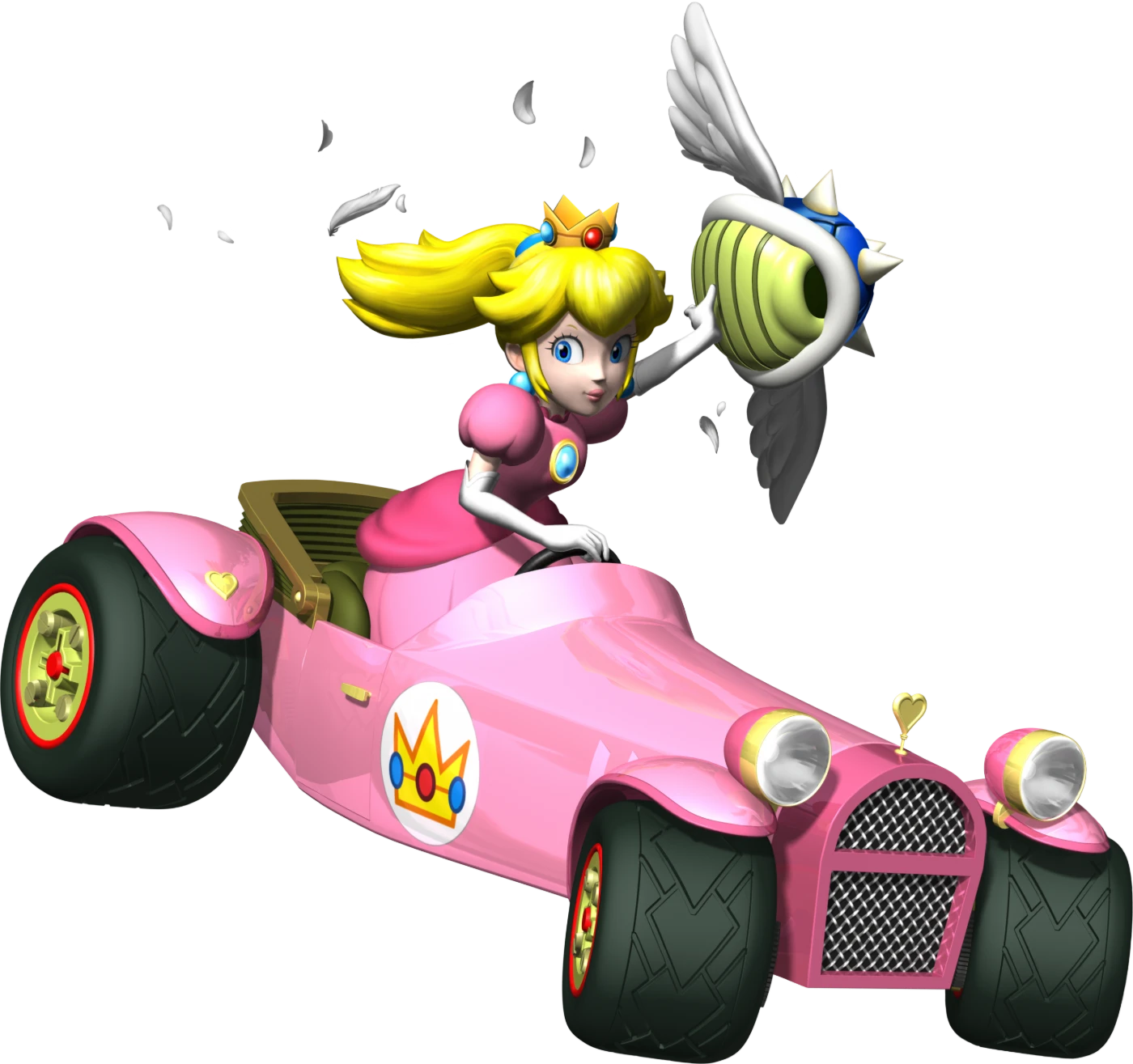
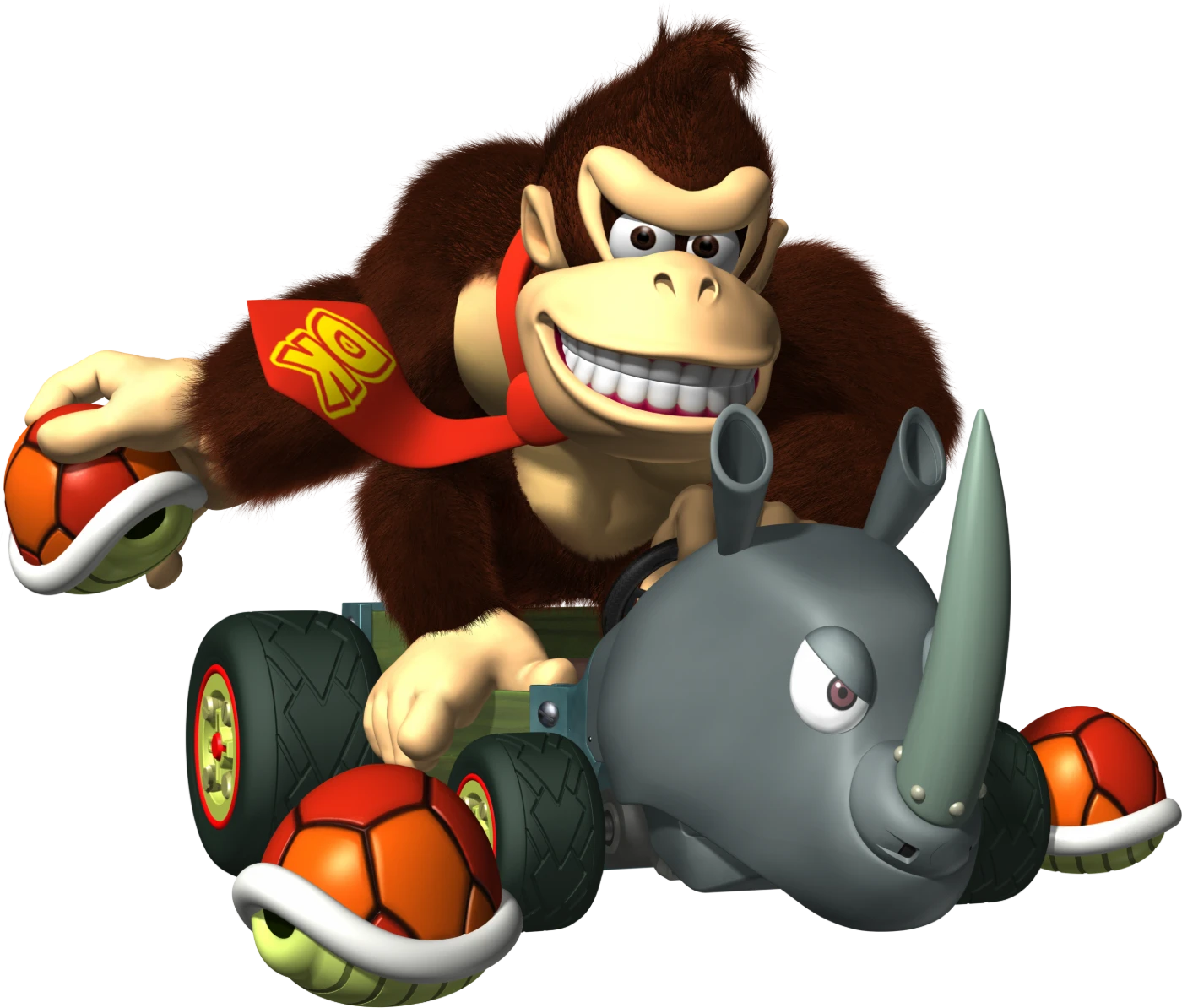
Standard MR (Mario). Standard kart.B Dasher (Mario). Signature kart; later open to Daisy and Waluigi.Shooting Star (Mario). Unlockable; later open to Toad and Wario.Standard LG (Luigi). Standard kart.Poltergust 4000 (Luigi). Signature kart; later open to Yoshi and Waluigi.Streamliner (Luigi). Unlockable; later open to Dry Bones and R.O.B.Standard PC (Peach). Standard kart.Royale (Peach). Signature kart; later open to Yoshi and Toad.Light Tripper (Peach). Unlockable, with the best Drift rating; later open to Daisy and Dry Bones.Standard YS (Yoshi). Standard kart.Egg 1 (Yoshi). Signature kart; later open to Daisy and R.O.B.Cucumber (Yoshi). Unlockable; later open to Dry Bones and Luigi.Standard TD (Toad). Standard kart.Mushmellow (Toad). Signature kart; later open to Dry Bones and Yoshi.4-Wheel Cradle (Toad). Unlockable; later open to Mario and Peach.Standard DK (Donkey Kong). Standard kart.Rambi Rider (Donkey Kong). Signature kart, modelled on Rambi the rhino; later open to Bowser and Daisy.Wildlife (Donkey Kong). Unlockable; later open to Luigi and Peach.Standard WR (Wario). Standard kart.Brute (Wario). Signature kart; later open to Bowser and Waluigi.Dragonfly (Wario). Unlockable; later open to R.O.B. and Luigi.Standard BW (Bowser). Standard kart.Tyrant (Bowser). Signature kart and the heaviest in the game; later open to Waluigi and Wario.Hurricane (Bowser). Unlockable, with the joint-highest Speed; later open to R.O.B. and Donkey Kong.Standard DS (Daisy). Standard kart.Power Flower (Daisy). Signature kart; later open to Peach and Donkey Kong.Light Dancer (Daisy). Unlockable; later open to Mario and Bowser.Standard DB (Dry Bones). Standard kart.Banisher (Dry Bones). Signature kart; later open to Mario and Yoshi.Dry Bomber (Dry Bones). Unlockable, with the best Acceleration and Handling; later open to Peach and Toad.Standard WL (Waluigi). Standard kart.Gold Mantis (Waluigi). Signature kart, an excavator; later open to Mario and Donkey Kong.Zipper (Waluigi). Unlockable three-wheeler; later open to Toad and Wario.Standard RB (R.O.B.). Standard kart.ROB-BLS (R.O.B.). Signature kart, with the joint-highest Speed; later open to Luigi and Wario.ROB-LGS (R.O.B.). Unlockable; later open to Donkey Kong and Bowser.Shy Guy’s standard kart, seen only in DS Download Play. It handles like Yoshi’s.
Nintendo Wi-Fi Connection
Online play was free and deliberately simple. You chose who to look for (Friends, Rivals with a record like yours, players from your own part of the world in some versions, or anyone Worldwide) and the game put up to four of you together. Everyone picked a character, a kart and a course, the votes were counted, and you raced four times. Every player you beat over the four races went on your record as a win and every player who beat you as a loss.
Friends were added by swapping twelve-digit Friend Codes, and both of you had to be searching in the Friends section at the same moment to meet. Strangers could not be added afterwards; the only way to race them again was to choose to continue.
To keep the action smooth, the online game was trimmed. Races were 100cc only, for no more than four players, on 20 of the 32 courses. Shells and bananas could not be held behind the kart as a shield, triple items were removed, the item roulette could not be stopped early, breakable scenery stayed unbroken and there was no Battle mode. Waluigi Pinball, Airship Fortress, Tick-Tock Clock, Peach Gardens and Bowser Castle were among the twelve courses left out.
The service closed on 20 May 2014, along with online play for every other DS and Wii game.
Nintendo’s artwork for worldwide play over Nintendo Wi-Fi Connection.A Wi-Fi race on Mario Circuit: Yoshi against Yoshi.
Eight players, one Game Card, and your own emblem
Up to eight DS systems can join a local wireless race or battle. If everybody has a Game Card, every course any of them has unlocked is available. If only the host has one, the others can still play through DS Download Play: the eight courses of the Mushroom and Shell Cups for racing, and Nintendo DS, Tart Top and Pipe Plaza for battles. Guests without a card do not choose a driver. They are each given a Shy Guy in a random colour.
Under Options you can set a nickname and draw an emblem with the stylus. It is printed on your kart and shown beside your name in wireless and Wi-Fi races.
The emblem maker.A picture of Mario taking shape.The finished emblem.Mario and the Standard MR on the kart select screen.
Items
Seventeen items, two of them new. The character-specific specials of Double Dash!! are gone, and the Golden Mushroom, Triple Shells and Bob-omb that were specials on the GameCube are open to everybody. As always, the further back you are, the better your luck, and in this game the kart you chose has a say as well.
Item BoxDrive through one to start the roulette. Some are fixed in place; on Shroom Ridge others move along the road.
MushroomA short burst of speed. In Balloon Battle, ramming a rival while boosting steals a balloon.
Triple MushroomsThree boosts, one for each press of the button.
Golden MushroomAs many boosts as you can manage for a short time.
BananaSpins out any kart that runs over it. Hold the button to trail it behind you as a shield.
Triple BananasThree peels trailed behind the kart and dropped one at a time.
Green ShellRuns dead straight and bowls over whichever kart it reaches first. Fired backwards it moves more slowly.
Triple Green ShellsThree shells that circle the kart until you launch them.
Red ShellHomes in on the next kart ahead and rolls it over.
Triple Red ShellsThree homing shells, fired one at a time.
Spiny ShellFlies to the leader and explodes, catching anyone else in the blast.
Bob-ombGoes off after a short delay, or sooner if a kart comes close.
Fake Item BoxLooks like an Item Box and knocks over whoever drives into it. It has its own icon on the touch-screen map.
StarA spell of invincibility that flattens every kart you touch.
LightningEvery rival spins out, drops their items and shrinks for a while.
BooTurns you invisible and untouchable for a few seconds and steals an item from a rival.
BlooperNew. Squirts ink over the screens of the drivers ahead of you, hiding the road.
Bullet BillNew. Turns your kart into a Bullet Bill that steers itself up the course, bowling over anyone in the way. A gift for whoever is running last.
Cartoons, Comics & Other Media
Mario Kart DS was the game Nintendo used to launch its online service, and it was sold hard: in its own console bundle, on demo units in shops and through a time-trial contest in Japan. Its courses, karts and ideas have been turning up in other games ever since.
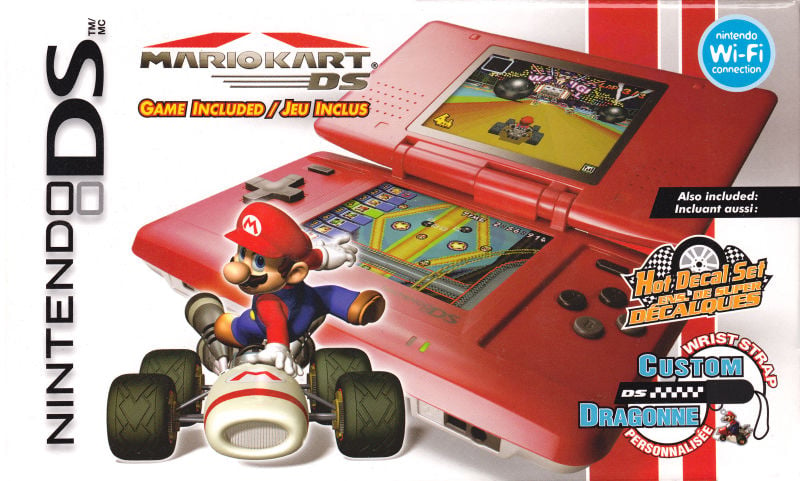
The red Nintendo DS bundleConsole bundle · North America · from 28 November 2005Two weeks after the game came out, Nintendo of America packed it with a new red Nintendo DS, a chequered-flag wrist strap and a sheet of racing decals. Canada and Europe had bundles of their own.
Shop demosKiosk demo versions · 2005Demo builds were made for shop kiosks in Europe, the United States and Japan; The Cutting Room Floor dates them to April, May and November 2005. The early ones are a treasure trove of things that were later cut, including a Chain Chomp in the item roulette and missions that never made the final game.
The Japanese Time Trial contestCompetition · JapanOn the Time Trials records screen, pressing Up, Down, L, R, Y, A reveals a sixteen-character code that encodes your ghost data. Nintendo’s Japanese website used the codes to run an official contest.
Super Smash Bros. BrawlGame · Wii · 2008Brawl’s Mario Kart stage, which it calls Mario Circuit, is modelled on Figure-8 Circuit, and the Waluigi Pinball theme is among its music. The stage returned in the Wii U game and again in Super Smash Bros. Ultimate, where it finally goes by the name Figure-8 Circuit and the B Dasher appears as a spirit.
New Super Mario Bros.Game · Nintendo DS · 2006The look Mario Kart DS gave the Blooper, and its menu design for the Mushroom, were picked up by the next big DS Mario game and went on to become the standard designs.
Mario Kart WiiGame · Wii · 2008The sequel remade Yoshi Falls, Delfino Square, Desert Hills and Peach Gardens as retro courses and Twilight House as a battle arena, gave them all a DS prefix, and turned Shine Runners into Coin Runners. It also added the online rankings and ghost sharing that Konno had wanted for this game.
Later Mario KartsMario Kart 7, 8, Tour and WorldMario Kart 7 brought back Luigi’s Mansion, Waluigi Pinball, DK Pass, Airship Fortress and Palm Shore, with the B Dasher and Egg 1 as kart bodies. Mario Kart 8 has Cheep Cheep Beach, Wario Stadium and Tick-Tock Clock, and the B Dasher as downloadable content; the Booster Course Pass for Mario Kart 8 Deluxe added Shroom Ridge, Waluigi Pinball, Peach Gardens and Mario Circuit. Mario Kart World has Desert Hills, Airship Fortress and DK Pass, and the B Dasher on its original DS tyres.
Mario Kart TourGame · mobile · 2019Seven of the new courses and nine karts (among them the B Dasher, Poltergust 4000, Royale, Egg 1 and Rambi Rider) returned in the mobile game, and the bonus challenge that ends each of its cups echoes Mission Mode.
Waluigi Pinball elsewhereMario Sports Mix and othersThe course made such an impression that Waluigi has kept the theme. Mario Sports Mix gives him a pinball-themed court called Waluigi Pinball, and the idea has since returned as Waluigi’s Pinball Arcade, a minigame in Super Mario Party Jamboree and a court in Mario Tennis Fever.
Nintendo MonopolyBoard gameThe kart on the Mario Kart space of Nintendo’s edition of Monopoly, and on two of its cards, is the standard kart design from this game.
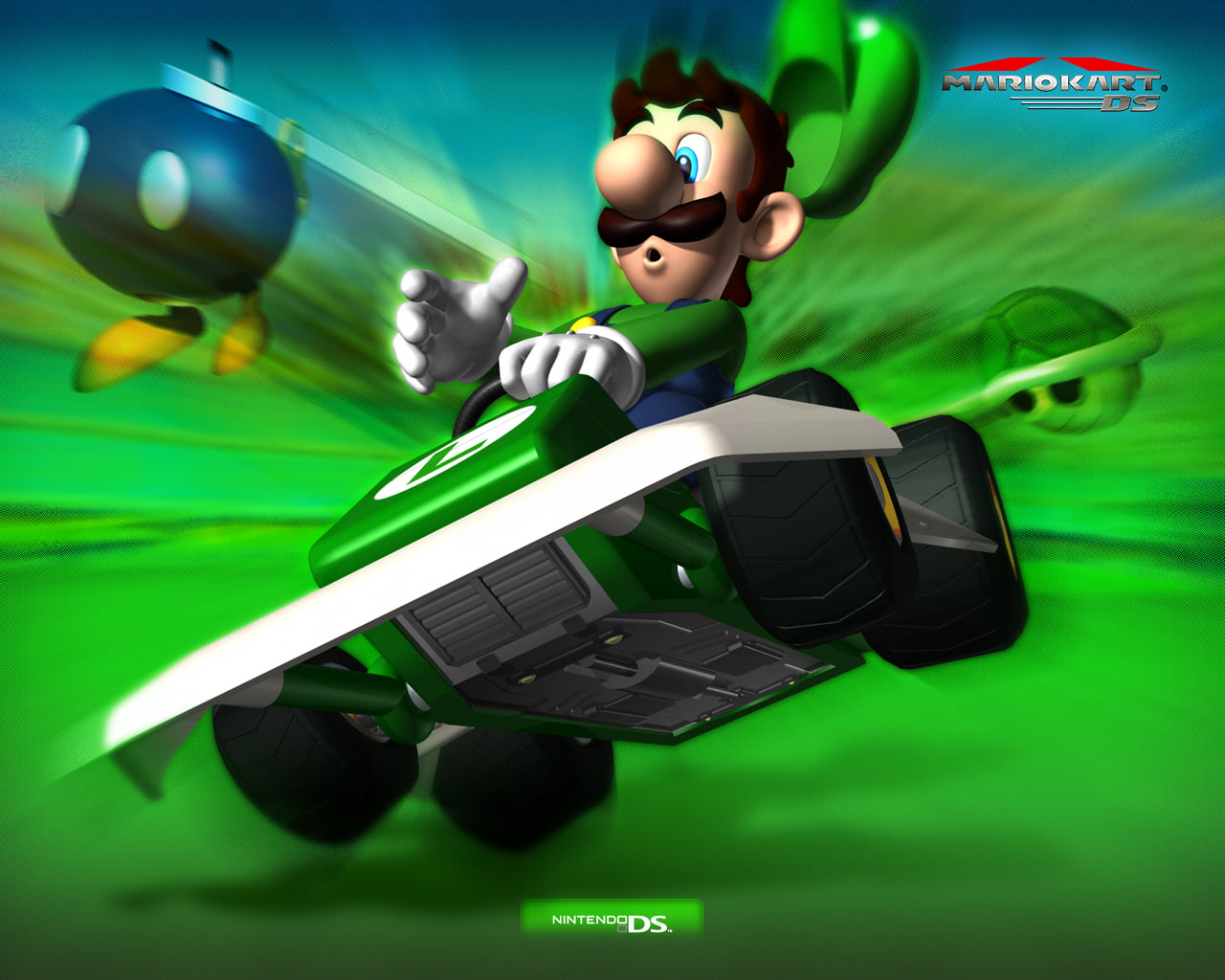
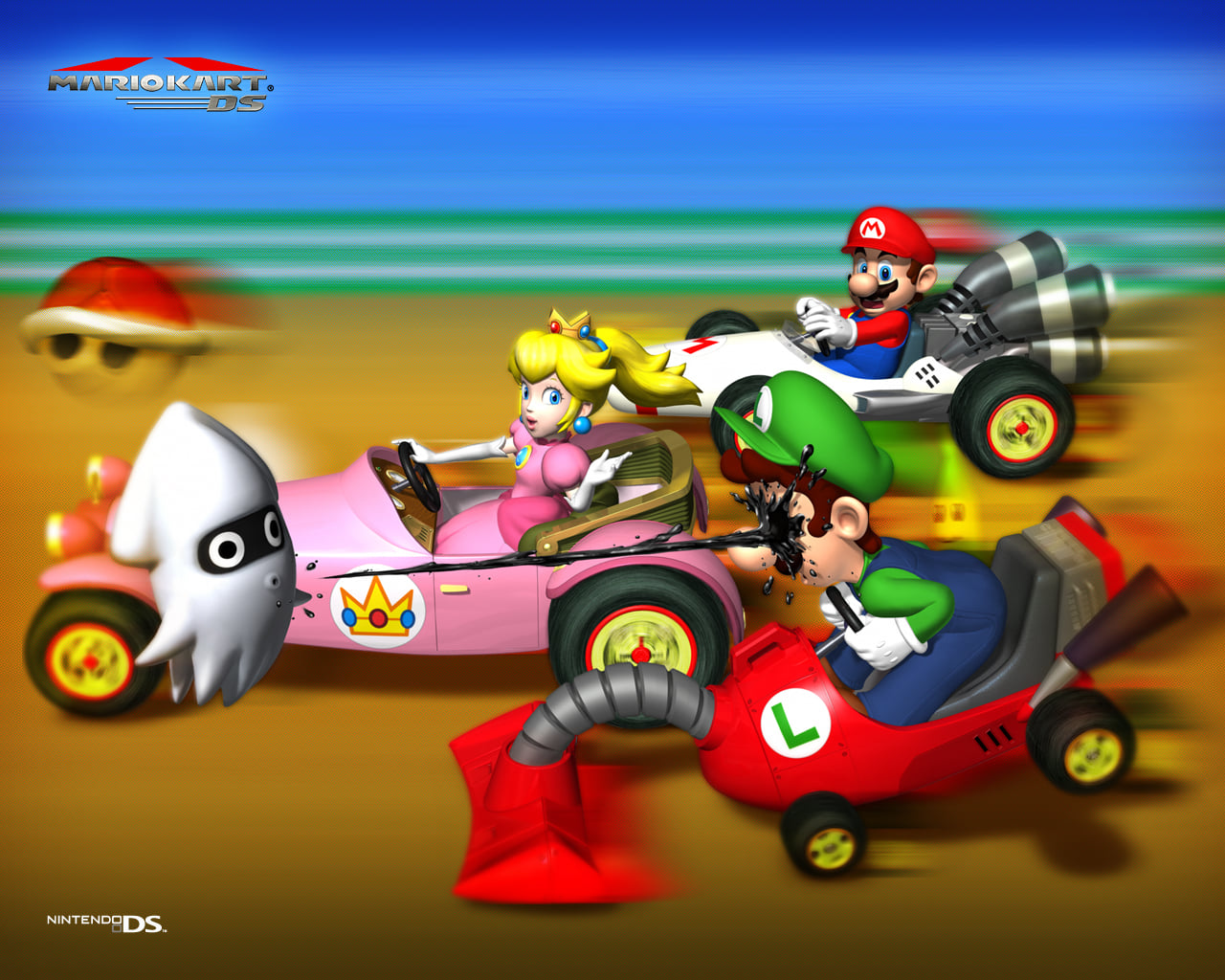
Wallpapers and buddy iconsOfficial downloads · 2005Nintendo issued desktop wallpapers and AOL Instant Messenger buddy icons for the game, a very 2005 piece of promotion. Super Mario Wiki archives fourteen of the former and six of the latter.
Nintendo Today!Official profileNintendo’s own one-line history of the game, written for its Nintendo Today! app, sums it up as “the first Mario Kart series game playable online with players from around the world” and picks out the Bullet Bill and the Blooper as the items that made races more dramatic.
Advertisement
Characters
Twelve drivers in three weight classes of four, plus one guest. The eight on the starting grid are the eight from Mario Kart 64 and Super Circuit; the four secret drivers are won with gold trophies. Each has a standard kart, a signature kart and a second signature kart to unlock. The weight figure is the driver’s own, and it is added to the weight of whatever they are driving.
Character
Who they are
In this game
Abilities & notes
MarioMedium · starter
The all-rounder, voiced by Charles Martinet, and the face of the box, the title screen and the first Time Trial ghost.
Available from the start. He drives the first mission of the game and two of its boss fights, against Eyerok and Wiggler.
Weight: 32
Karts: Standard MR, B Dasher, Shooting Star (unlockable)
Staff ghosts: Figure-8 Circuit, Mario Circuit, SNES Mario Circuit 1
LuigiMedium · starter
Mario’s brother has two circuits and a mansion in this game, and a kart built out of his ghost-catching vacuum cleaner.
Available from the start. In Mission Mode he has to reverse out of his own mansion and later knock Chief Chilly off the ice.
Weight: 32
Karts: Standard LG, Poltergust 4000, Streamliner (unlockable)
Staff ghosts: Luigi’s Mansion, GCN Luigi Circuit, GBA Luigi Circuit
PeachLight · starter
The princess is a lightweight here, and the game singles her out as a natural at drifting. Voiced by Jen Taylor.
Available from the start. Her boss mission is the coin hunt under King Boo.
Weight: 23
Karts: Standard PC, Royale, Light Tripper (unlockable)
Staff ghosts: Delfino Square, Peach Gardens, GBA Peach Circuit
YoshiLight · starter
Mario’s dinosaur friend, voiced by Kazumi Totaka, with a waterfall course and an egg-shaped kart to his name.
Available from the start. He faces the first boss, Big Bully. Shy Guy borrows his statistics.
Weight: 20
Karts: Standard YS, Egg 1, Cucumber (unlockable)
Staff ghosts: Yoshi Falls, SNES Koopa Beach 2, GCN Yoshi Circuit
ToadLight · starter
Peach’s loyal retainer, back on the starting grid after being a secret driver in Double Dash!!.
Available from the start. He races Goomboss round Baby Park for the Level 3 boss.
Weight: 17
Karts: Standard TD, Mushmellow, 4-Wheel Cradle (unlockable)
Staff ghosts: Shroom Ridge, GCN Baby Park, GCN Mushroom Bridge
Donkey KongHeavy · starter
The big ape, voiced by Takashi Nagasako, riding a kart modelled on Rambi the rhino from Donkey Kong Country.
Available from the start. He and Bowser are the only starters without a boss mission.
Weight: 41
Karts: Standard DK, Rambi Rider, Wildlife (unlockable)
Wario’s lanky partner, back from Double Dash!!, with a pinball table of a course named after him and a digger for a kart.
Unlocked by winning a gold trophy in every Retro cup in 100cc.
Weight: 35
Karts: Standard WL, Gold Mantis, Zipper (unlockable)
Staff ghosts: Waluigi Pinball, SNES Choco Island 2
R.O.B.Heavy · unlockable · new
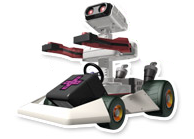
The Robotic Operating Buddy, Nintendo’s robot accessory for the NES, in his first playable role in a Mario Kart. In the Japanese game he is HVC-012, the Family Computer Robot.
The last driver to unlock: win gold in every Nitro cup, or every Retro cup, in 150cc Mirror.
Weight: 50
Karts: Standard RB, ROB-BLS, ROB-LGS (unlockable)
Staff ghosts: Desert Hills, Rainbow Road
Shy GuyLight · DS Download Play only · new
The masked troublemaker of Super Mario Bros. 2, playable in a Mario Kart for the first time and voiced by Nintendo of America’s Nate Bihldorff.
Cannot be unlocked. Players who join a wireless game without a Game Card of their own are each given a Shy Guy in one of eight colours.
Weight: 20 (the same statistics as Yoshi)
Kart: his own standard kart only
Mission bosses and course hazards
The seven bosses of Mission Mode, followed by everything on the courses that is not trying to win. Six of the bosses use their models from Super Mario 64 DS.
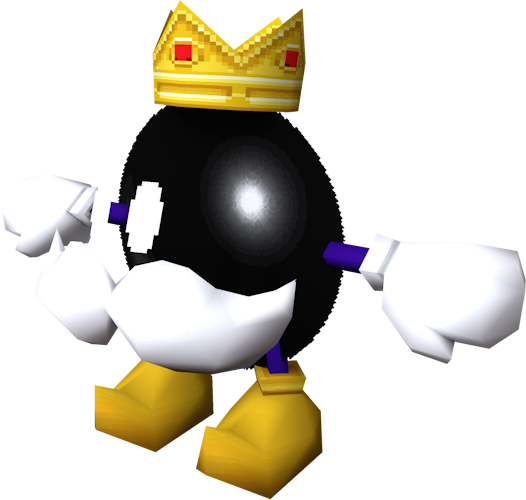
Big BullyMission Mode, Level 1 bossFought by Yoshi on a platform over water. Ram him with Mushroom boosts until he goes over the edge.
EyerokMission Mode, Level 2 bossMario must hit its eyeball with shells three times.
GoombossMission Mode, Level 3 bossRaces Toad round Baby Park, dropping Goombas and Mushrooms behind him, and jumps the barrier on the last lap.
King BooMission Mode, Level 4 bossHaunts a lava arena while Peach tries to collect 50 coins.
Big Bob-ombMission Mode, Level 5 bossThe king of the Bob-ombs. Wario has to land three Bob-ombs on him.
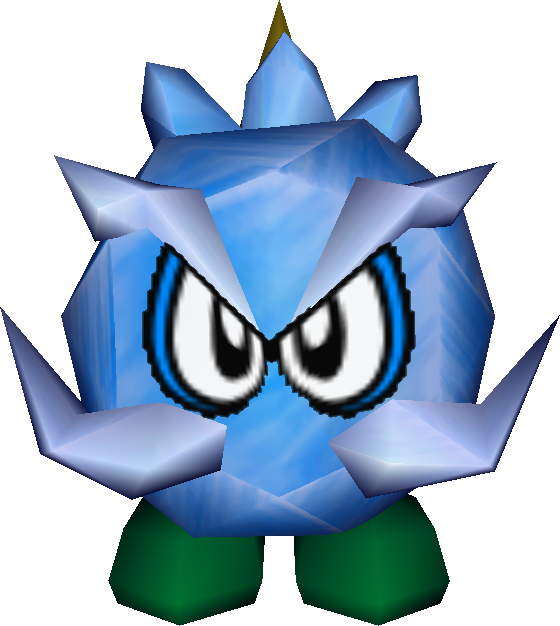
Chief ChillyMission Mode, Level 6 bossLuigi must use Mushroom boosts to knock him off the stage three times.
WigglerMission Mode, Level 7 bossThe final boss is a race against a giant Wiggler along Mushroom Bridge.
Angry SunDesert HillsHangs over the course and, from the second lap, spits Fire Snakes on to the track.
Fire SnakeDesert HillsBounces about where the Angry Sun has dropped it.
PokeyDesert HillsCactus columns standing in the road.
Cheep CheepCheep Cheep Beach, SNES Koopa Beach 2Flaps about in the shallows and spins out any kart that hits it.
SidestepperCheep Cheep BeachCrabs sitting on the sand.
Walking TreeLuigi’s MansionStrolls about the swamp and stops karts like a wall.
PinballWaluigi PinballGiant steel balls that roll down the course and ricochet round the table.
BumperWaluigi PinballBlue ones stay put and pink ones circle. Both send karts and pinballs flying.
FlipperWaluigi PinballThe last obstacle before the finishing straight. A swipe from one spins you out.
TrafficShroom Ridge, GCN Mushroom BridgeCars and cargo trucks on the public road.
SnowmanDK Pass, N64 Frappe SnowlandThrows a kart backwards on contact.
GoombaMario CircuitSpins you out. Flatten one with a shell and it drops a Mushroom.
Piranha PlantMario Circuit, SNES Choco Island 2, GCN Yoshi CircuitRoadside plants that spin out passing karts.
Fire Piranha PlantMario CircuitSits in a pipe and spits fireballs across the road.
Bullet BillAirship FortressFired from the airship down the starting straight.
Rocky WrenchAirship FortressPops up through hatches in the deck.
BurnerAirship Fortress, Bowser CastleA jet of flame that sets karts alight.
Fire BarWario StadiumSpinning chains of fireballs beyond the ramps.
Chain ChompPeach Gardens, GCN Luigi CircuitLoose in the hedge maze, some with a tail of Item Boxes; chained to a stake on Luigi Circuit.
Monty MolePeach Gardens, N64 Moo Moo FarmPeeks out of its hole, then leaps.
ThwompBowser Castle, GBA Bowser Castle 2Slams down on anything beneath it. Some slide from side to side.
Lava BubbleGBA Bowser Castle 2Jumps out of the lava pits.
SwoopN64 Banshee BoardwalkA colony of bats that slows any kart driving through it.
BubbaN64 Banshee BoardwalkA giant fish that leaps over the pier. Harmless, but alarming.
BooLuigi’s Mansion, N64 Banshee BoardwalkScenery here, and an item elsewhere.
Moo MooN64 Moo Moo FarmCows watching from the fields.
PiantaDelfino SquareThe islanders of Super Mario Sunshine, here as spectators.
The people who made it
Names and roles as given in the staff roll.
Hideki KonnoProducerCo-director of Super Mario Kart and director of Mario Kart 64, returning to the series after about nine years away. He was producing Nintendogs at the same time.
Makoto Wada and Yasuyuki OyagiDirectorsOyagi had been one of the directors of Double Dash!! and went on to direct Mario Kart Wii.
Shigeru MiyamotoGeneral producerAccording to Konno, Miyamoto asked him to oversee the DS game more closely than a producer normally would.
Satoru IwataExecutive producerNintendo’s president went with Konno to Nintendo of America in spring 2005 to present the plan for online play.
Kimiharu HyodoMission-Run Mode directorLed the design of Mission Mode.
Katsuhito NishimuraWi-Fi Mode directorLed the online mode, with Yukihiko Ito credited for Wi-Fi programming.
Shinya Hiratake and Taku MatobaPlanningThe game’s two credited planners.
Katsuhisa SatoProgramming directorHeaded a programming team that included Yusuke Shiraiwa (system) and Ichiro Suzuki (items).
Yoshiki HaruhanaDesign directorIn charge of the game’s look.
Hiromu TakemuraCourse directorA course designer on Double Dash!!, promoted to lead the courses here, with Hirotake Ohtsubo, Yoshihisa Morimoto and Taeko Sugawara designing.
Shinobu TanakaMusicOne of the two composers of Double Dash!!, here writing the whole score. Mitsuhiro Hikino was sound director.
Charles MartinetVoicesMario, Luigi, Wario and Waluigi.
Jen Taylor, Deanna Mustard, Scott Burns, Kazumi Totaka, Takashi Nagasako, Toru Asakawa, Nate BihldorffVoicesPeach and Toad; Daisy; Bowser; Yoshi; Donkey Kong; Dry Bones; and Shy Guy respectively.
How It Was Made
Mario Kart DS was made by Nintendo EAD alongside Nintendogs, with the same producer and the same deadline: Christmas 2005. Hideki Konno talked about it at E3 that year, to Wired a week before launch, and with unusual frankness to Satoru Iwata in 2008. The game’s own data, picked over by The Cutting Room Floor and Super Mario Wiki, fills in the rest.
From E3 2004 to the shops
An early build on Yoshi Circuit, with a Double Dash!!-style speedometer on screen. Nintendo, via Super Mario Wiki
Nintendo confirmed a Mario Kart for its new handheld on 11 May 2004, at that year’s E3, and showed footage of it running. The game was first playable in public at the Game Developers Conference in March 2005, where IGN noted that it held 60 frames per second with fully 3D characters and courses and that wireless play was already working.
Online play was the news of E3 2005 that May. Battle mode was not ready for that show, but Konno promised it would be in the finished game and, for the first time, playable alone. The final American and European versions were built on 8 October 2005 and the Japanese one on 17 October, according to dates left in the game’s files, and it reached American shops on 14 November.
Konno comes back
Hideki Konno had co-directed Super Mario Kart and directed Mario Kart 64, then spent years on other work, Luigi’s Mansion and projects with outside studios among them. He had no hand in Super Circuit or Double Dash!!. By his own count about nine years separated Mario Kart 64 from his return.
He came back as producer, with Makoto Wada and Yasuyuki Oyagi directing, and at Shigeru Miyamoto’s request kept a closer eye on the project than a producer usually would. He described the difference between his two DS games to Wired: Nintendogs was designed to win over people who did not play games, while this was “the fifth game in the Mario Kart series” and had to satisfy the people who already loved it, with as much in it as the hardware could carry.
Eight players first, then the world
A Nintendo UK graphic from May 2014, the month the online service closed, full of trivia about the game. Nintendo UK, via Super Mario Wiki
The first goal was not the internet at all. Mario Kart 64 had managed four players and the team wanted eight, racing together over the wireless link built into every DS. Konno was proud that it worked out of the box; on the GameCube, he pointed out, eight players had needed a Broadband Adapter.
Experiments with Wi-Fi began in 2005. In about April of that year Konno and Iwata took the idea to Nintendo of America, the reaction was enthusiastic, and the online mode became a serious part of the plan with only months to go. A good deal of the work that followed went into hiding the delay between distant players.
Konno wanted more than the enthusiasts. Halo had sold in huge numbers, he told IGN, yet most of its online players were hardcore gamers; he wanted “everyone to go online, and the technology and time is right for that to happen”. Japan was the hard case. Only about a tenth of the people who bought online-capable games there actually used the feature, he told Wired, and Nintendo was aiming for nine-tenths with Mario Kart. The pitch came down to three promises: “easy access, worry-free, and free of charge”.
What had to go
The online game is a cut-down one, and Konno did not pretend otherwise. Asked why shells and bananas could not be trailed behind the kart on Wi-Fi, he said that what “looks easy, actually it’s something very difficult to accomplish”, and that at some point the team “had to say, ‘we’re gonna stop here.’”
Other ideas went the same way. Konno had wanted online rankings and a way to share ghost data widely, and there was no time. Iwata remembered him looking “completely unsatisfied” as he talked about an idea he had been forced to give up. Then, after launch, came something nobody had planned for: players dropping out of races one by one until the track was deserted. Konno said he was “very shocked”. Both frustrations went straight into Mario Kart Wii.
The touch screen that stayed out of the way
A DS launch-window game was expected to do something clever with the stylus. The team tried: one test let you place a banana anywhere on the course by touching the map. It was dropped because it was simply too much to think about while racing, and the lower screen became an information display instead. The stylus was saved for the emblem editor.
The retro courses were Konno’s way of making old hands feel at home. Every earlier Mario Kart had fed into this one, he said at E3, and years later he explained that the classic tracks were there so that somebody who knew the Super NES game would feel they knew this one too.
NitroKart: what the data shows
The unused remake of Mario Circuit from Double Dash!!, still in the game’s data. Nintendo, via Super Mario Wiki
Text inside the program calls the project NitroKart; Nitro was the codename of the DS. The earliest screenshots show how much it owed to Double Dash!!: a GameCube-style speedometer, an item window in the middle of the screen, and menus with the same blue star background. In the demo versions Lakitu still started the race, Wario wore his old long-sleeved shirt and Donkey Kong used his voice from Donkey Kong 64.
Three items were cut. A Chain Chomp sat in the demo’s item roulette, though it could not actually be won, and graphics survive for Bowser’s Shell and for a purple shell that has no code at all. Professor E. Gadd was to have been a driver, with the Poltergust 4000 as his kart; his name is still in the files, and Dry Bones took his place. A pink version of the Egg 1 suggests that Birdo was considered too.
Several courses were abandoned. The files hold most of a remake of Mario Circuit from Double Dash!!, the beginnings of that game’s Block City battle arena, a beach course named for Koopa Troopa that seems to have given way to Cheep Cheep Beach, an early Waluigi Pinball with a slot machine you could drive on, and a tunnel-filled track that looks like a test of the collision system. In Luigi’s Mansion, the portrait ghosts were once meant to lean out of their frames.
Mission Mode changed too. A demo contains ten early missions, some of which let drivers use their signature karts, and the finished game still carries 28 mission entries that are never used, among them a boss fight for Donkey Kong.
Konno’s verdict
Days before the American launch, Wired’s Game|Life asked Konno how the new game measured up to the old ones. The interviewer put it to him that many people still called the Super NES original the best of the series, and asked whether the DS game had finally beaten it. Konno pointed to how much was in the new game and answered: “I think we’ve done it. We’ve surpassed Super Mario Kart.”
Series Firsts
What Mario Kart DS added to the series, checked against the four games before it.
1Online racesThe first Mario Kart with online multiplayer, and the game Nintendo used to launch Nintendo Wi-Fi Connection.
2Retro cupsThe first Retro Grand Prix: sixteen remade courses in four cups, labelled SNES, N64, GBA and GCN. Every later Mario Kart has followed suit.
3Bullet Bill and BlooperBoth items are new here, and both have been in every Mario Kart since.
4Mission ModeA single-player mode of set challenges and boss battles. No other game in the main series has one.
5Battle mode for oneEarlier Battle modes needed friends. This one adds computer opponents, and balloons you blow up yourself through the microphone.
6The Items statisticA sixth rating for every kart that tilts the item roulette in your favour. It appears in this game and in no other.
7Eight players without extra hardwareEight-player races over local wireless, and DS Download Play for up to eight from one Game Card.
8New driversDry Bones, R.O.B. and Shy Guy are all playable in Mario Kart for the first time.
9A second screenThe first Mario Kart with a live map showing rivals’ positions and the items they are holding.
10The emblem makerPlayers can draw their own emblem and wear it on the kart, a feature this game has to itself.
11Loop and corkscrewRainbow Road has the first sections of a Mario Kart course that turn the karts upside down, and the only ones until Mario Kart 8.
12Oncoming trafficShroom Ridge is the first traffic course with vehicles travelling in both directions.
133D in your pocketThe first handheld Mario Kart drawn mostly with real-time 3D graphics. Super Circuit on the Game Boy Advance used flat, rotating tracks.
Cheats & Secrets
There are no button codes for unlocking anything in Mario Kart DS. Everything is earned with gold trophies, star ranks and fast laps, and the courses hide the rest.
What the gold trophies unlock
50cc: gold in all four Nitro cups unlocks Dry Bones; gold in all four Retro cups unlocks Daisy. 100cc: all Nitro cups, a third kart for every driver; all Retro cups, Waluigi. 150cc: all Nitro cups or all Retro cups, four more karts for every driver (seven each); all eight cups, Mirror mode. Mirror: all Nitro cups or all Retro cups, R.O.B.; all eight cups, every kart for every driver.
Mission Mode Level 7
Earn at least a one-star rank on every mission and boss in Levels 1 to 6. The staff credits roll after the Level 6 boss, and again after the Level 7 boss.
Staff ghosts
Every race course has a ghost set by a Nintendo tester, each with a name beginning “Ninten”. To unlock one, post a time within 108 per cent of theirs. The quickest is 0:50.688 on SNES Mario Circuit 1 and the longest 2:23.288 on Waluigi Pinball; the target for Figure-8 Circuit, for example, is 1:44.199 against a staff time of 1:36.481.
Stars beside your name
Finish every cup in every class with a one-, two- or three-star rating and that many stars appear in your records. They were also shown to opponents online, which Konno described before launch as the game’s way of telling the experts from the rest.
Rocket Start
Hold A just as the 2 of the countdown starts to fade. Too early and you stall.
Escaping the Spiny Shell
In 100cc and 150cc a hop and mini-turbo at the last instant can throw the shell off. On Wario Stadium the same trick works from the Dash Panels on the jumps, and on Bowser Castle a leader who drops off the spinning bridge at the right moment is missed altogether.
Shortcuts
Desert Hills: cut across the inside of the hairpin, or dash round the back of the pyramid. Delfino Square: jump on to the wooden dock by the pier, or boost down the muddy alley behind the crates just before the drawbridge. DK Pass: a Mushroom reaches the lone Item Box on the cliff at the summit, which tends to give Triple Mushrooms or a Star. Mario Circuit: one Mushroom takes you across the grass beside the right-hand Fire Piranha Plant. Peach Gardens: any boost lets you cut straight over the lawns. Bowser Castle: there is a second way through the circular room, and a gap in the wall to jump through on the last lap. Yoshi Falls: the lower line under the waterfalls is the faster one if you can hold it.
The contest code
On the Time Trials records screen press Up, Down, L, R, Y, A. A sixteen-character code appears, containing the details of your ghost. It was made for a contest on Nintendo’s Japanese website and is in every version of the game.
More from SLB
SLB’s own cheats and unlockables page for Mario Kart DS is linked under Reference below.
Compiled from Super Mario Wiki’s unlockables table, staff ghost table and course pages, The Cutting Room Floor and Hideki Konno’s 2005 interview with Wired.
Glitches & Oddities
Mario Kart DS is best known for one exploit that was not a bug at all. The real glitches range from the harmless to one that can lock up the console.
Snaking
Drift, rock the Control Pad until the sparks turn orange, release, and immediately drift the other way. Done down a straight, it produces one mini-turbo after another. With a fast-charging kart such as the Egg 1, the ROB-BLS or the Dry Bomber there is a further effect: snake straight out of a perfect Rocket Start or a Dash Panel and the kart behaves as if it were using a Mushroom, crossing grass and sand at full speed for as long as the chain holds. Nothing here breaks a rule, but online it split the audience into those who could and those who could not, and Nintendo responded in the next game by making mini-turbos charge with time.
The Luigi’s Mansion freeze
Park on the steps at the mansion’s front door, hold A and B together to spin the wheels on the spot, and turn. The game locks up, because the stairs have no sound effect for it to play. In a wireless race it takes the session down with it. The Wii U Virtual Console version does not have the problem.
Flying on Rainbow Road
On the loop or, better, the corkscrew, drive into the barrier, then hold R and Down. After a moment the kart lifts off and floats away from the track until Lakitu fetches it back.
Yoshi Circuit lap skip
Hit the end of the first fence on GCN Yoshi Circuit at an angle and drop into the sea. You are put back behind the finish line; drive the wrong way, turn round after the nose section, and the game counts a lap.
Silent Waluigi
In an eight-player race or battle with Bowser, Wario, Luigi, Yoshi, Donkey Kong, Daisy, Mario and Waluigi, Waluigi says nothing at all. There is not enough sound memory left for his voice.
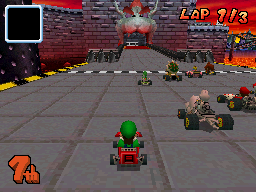
Seventh from eighth
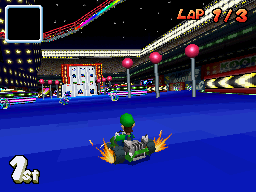
Luigi starting in “7th” place, from the back of the grid.
If Bowser Castle is the first course of a VS session, or you finished last in the previous race, the top screen says you are starting 7th when you are plainly lined up behind the kart in 7th. This one survives on the Wii U.
Out of bounds
Hold right against the double stone arch on Cheep Cheep Beach and you can slip out of the course without Lakitu noticing. On Wario Stadium, a boost over the last set of bumps can carry you clean over the wall. On N64 Choco Mountain, a boulder that hits you at the water’s edge at the right instant sends the kart flying.
The slow-motion Spiny Shell
A Spiny Shell fired in the bumper section of Waluigi Pinball may circle the edge of the table for a few seconds before it remembers to chase the leader.
Dropping out
Not a glitch, but the flaw online play was remembered for. A player who switched off was given a loss against everyone still racing, yet if every opponent cut their connection, the winner’s record was not updated at all.
Videos
Nintendo’s trailer from E3 2005, when online play was announced, and Did You Know Gaming’s tour of the game’s secrets and cut content.
Nintendo’s E3 2005 trailer for the game, as preserved by a video archive channel.
Did You Know Gaming’s episode on Mario Kart DS: Professor E. Gadd’s lost place on the grid, unused content and the stories behind the karts.
Trivia & Interesting Facts
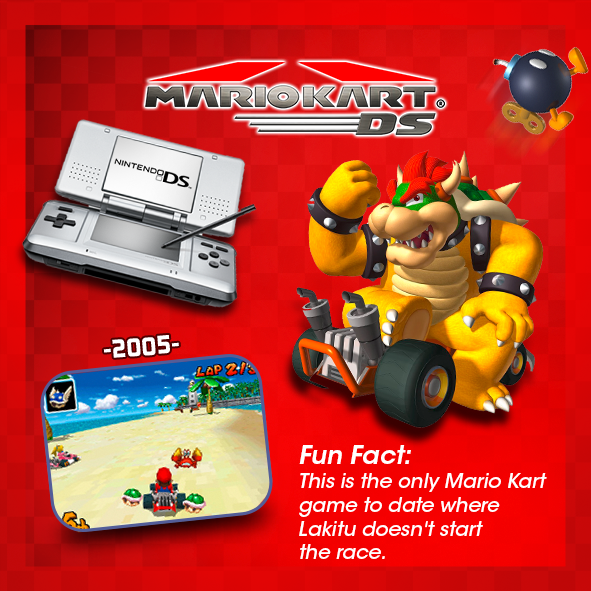
Lakitu does not start the races in Mario Kart DS. A Nintendo UK trivia graphic from 2014 pointed out that this made it the only game in the series, until Mario Kart Tour, in which he does not. He does in the early demo versions.
HVC-012, as the Japanese game knows R.O.B.In the Japanese version R.O.B. is HVC-012, the Family Computer Robot, and his kart icons are different to match.
The project’s internal name was NitroKart; a leftover line of text in the program reads “NitroKart Ghost Data Test 01”.
Professor E. Gadd nearly made the roster. The Poltergust 4000 was to be his kart and to carry his emblem, and a folder in the game’s files still bears his Japanese name.
With the secret drivers unlocked, the cast divides evenly into light, medium and heavy, four apiece. Super Mario Wiki notes that the series had not been that tidy since the original Super Mario Kart.
Thirty-six karts and twelve drivers make 432 possible pairings once everything is unlocked. The computer drivers never take advantage: they only ever use their own three karts.
Yoshi Falls is the shortest of the new courses and Waluigi Pinball the longest, yet they sit in the Mushroom and Flower Cups.
The Gold Mantis is not an invention. It is the excavator driven by Foreman Spike in the artwork for Mobile Golf.
Dry Bones meets Chauncey’s portrait.The portrait ghosts of Luigi’s Mansion hang in the room beneath the hall on the Luigi’s Mansion course, the baby Chauncey among them.
Mission 5-1, the race against a runaway Chain Chomp in Peach Gardens, has music heard nowhere else in the game: a new arrangement of the Chain Chomp theme from Double Dash!!.
Waluigi Pinball replaces the ordinary sound effects with pinball ones, right down to the noise the item roulette makes.
The hills behind Shroom Ridge resemble Giant Land as it appears in Super Mario All-Stars, and the hills behind Figure-8 Circuit are dotted with pipes and blocks in the style of Super Mario Bros. 3.
The finish line gate on Peach Gardens stands slightly ahead of the real finish line.
The Rainbow Road staff ghost is driven by R.O.B. in the ROB-BLS, and the ghost on Figure-8 Circuit by Mario in the plain Standard MR.
Shy Guy’s voice belongs to Nate Bihldorff, who is also credited as one of the game’s two Nintendo of America localisers.
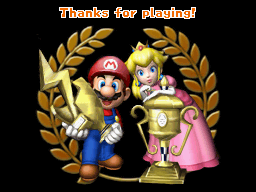
The second title screen.Complete the game and the title screen changes. The first shows Mario alone; the second, all twelve drivers.
Wario Stadium borrows its look from the Wario Stadium of Mario Kart 64 and some of its furniture from Waluigi Stadium in Double Dash!!.
The Nintendo DS battle course looked different in the kiosk demo, where the giant console hung in a sunset sky and not in space.
An unused effect in the code would have blurred the screen whenever the kart boosted. It is never switched on.
Mario Kart DS is the only game in the series that leaves the console prefix off its retro battle courses: Block Fort and Pipe Plaza, not N64 Block Fort and GCN Pipe Plaza.
The South Korean edition did not arrive until 5 April 2007, nearly seventeen months after the American one, and its files are dated February 2007.
Baby Park’s course map is rotated 180 degrees from the GameCube original, and its roller coaster is gone.
Regional Box Art
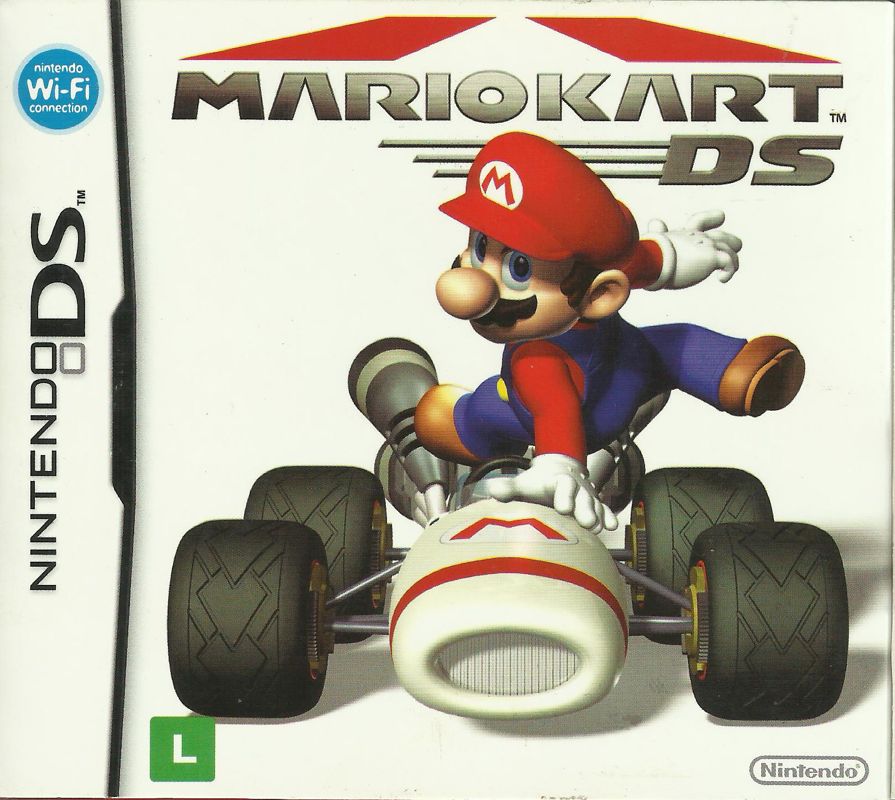
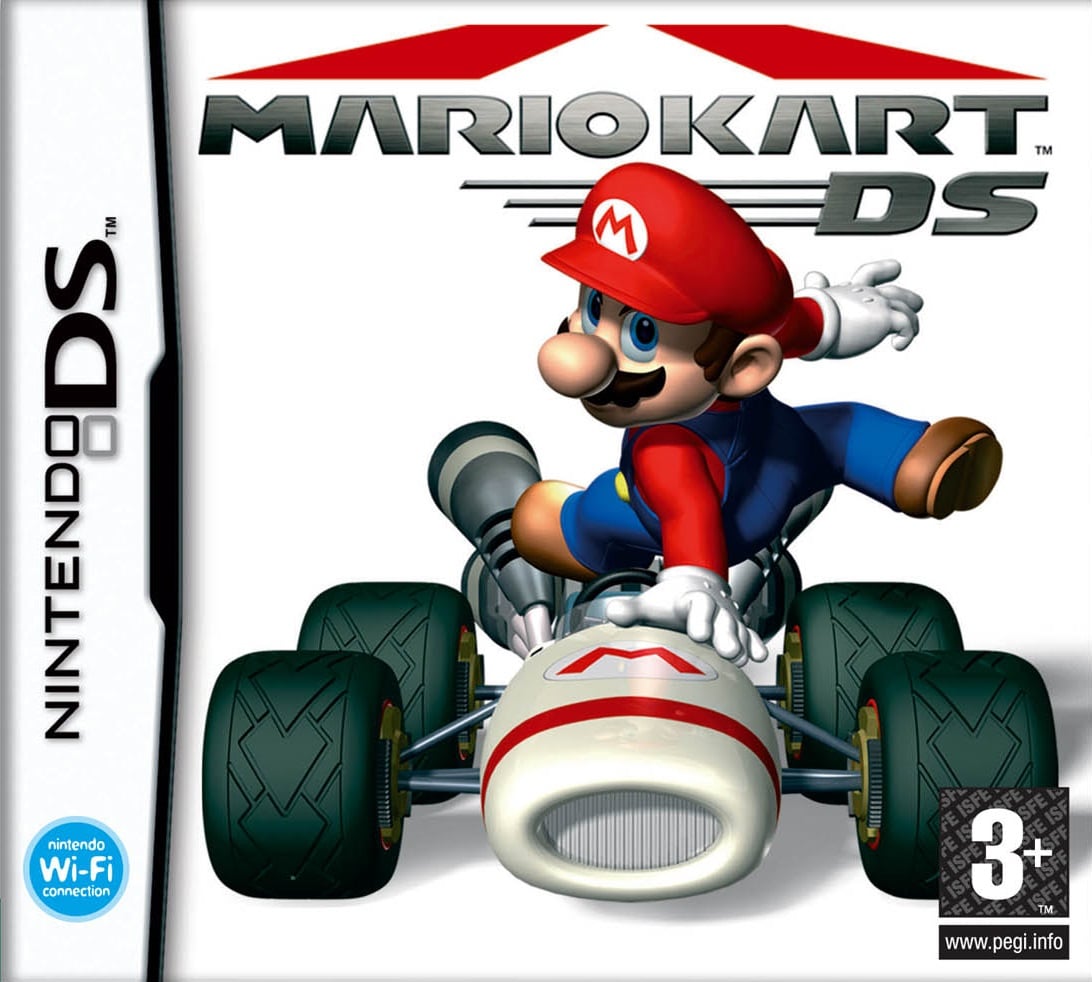
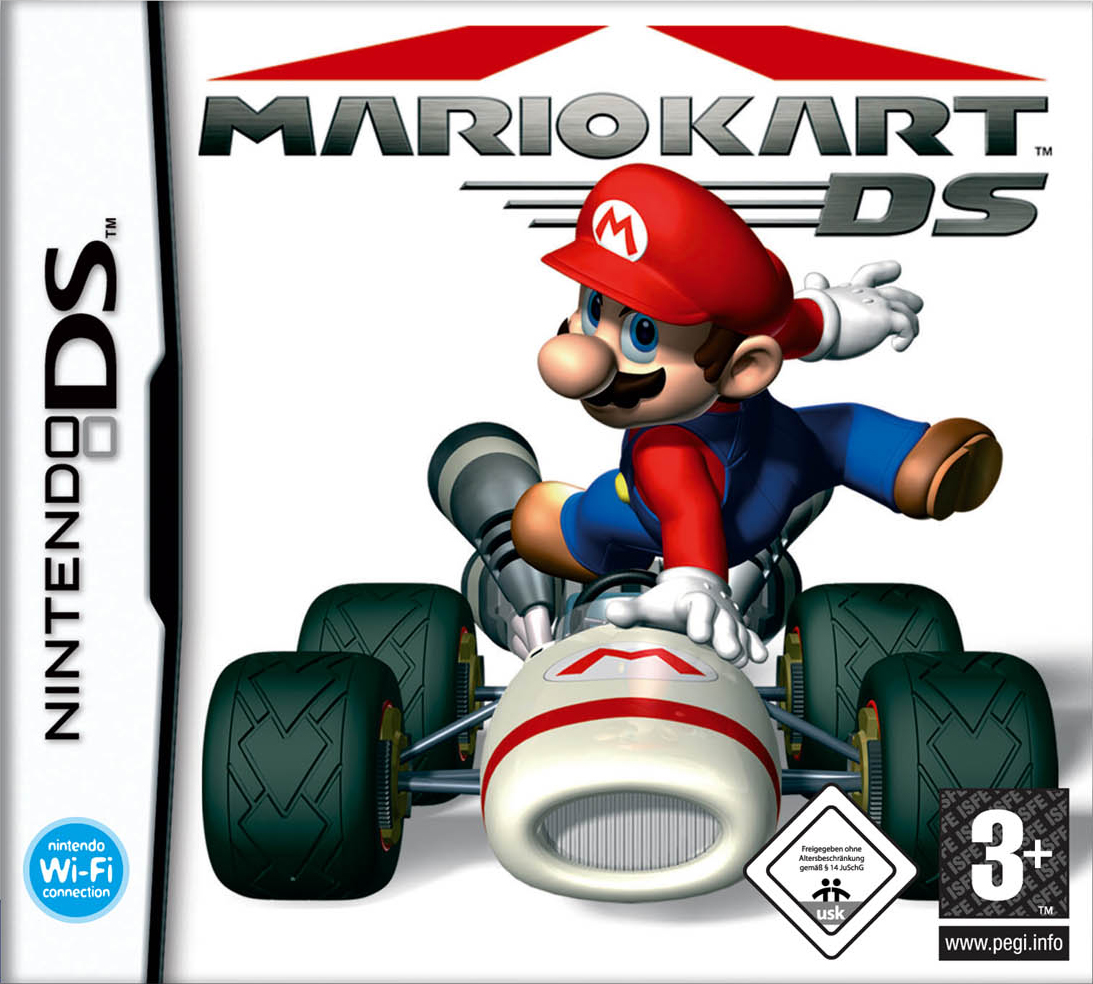
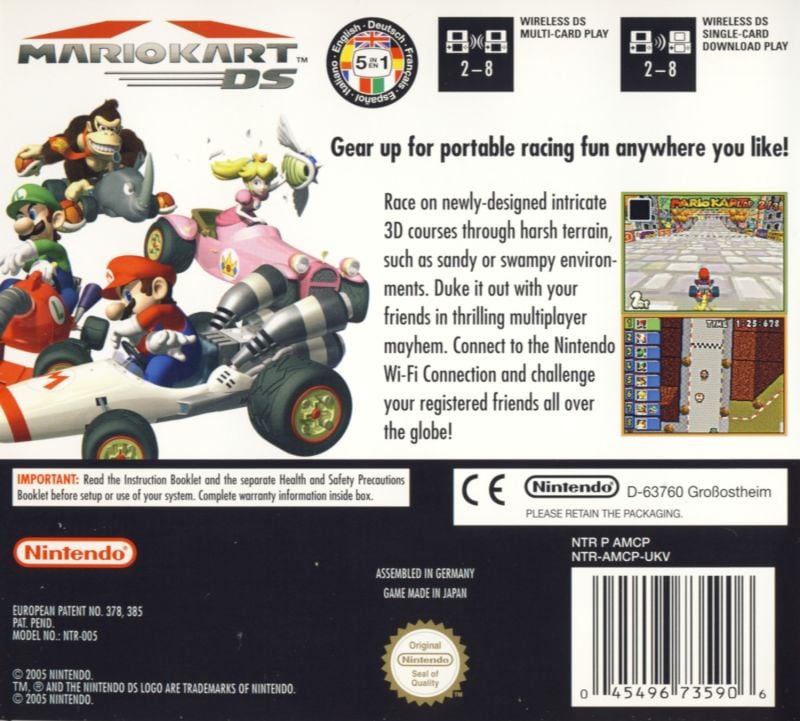
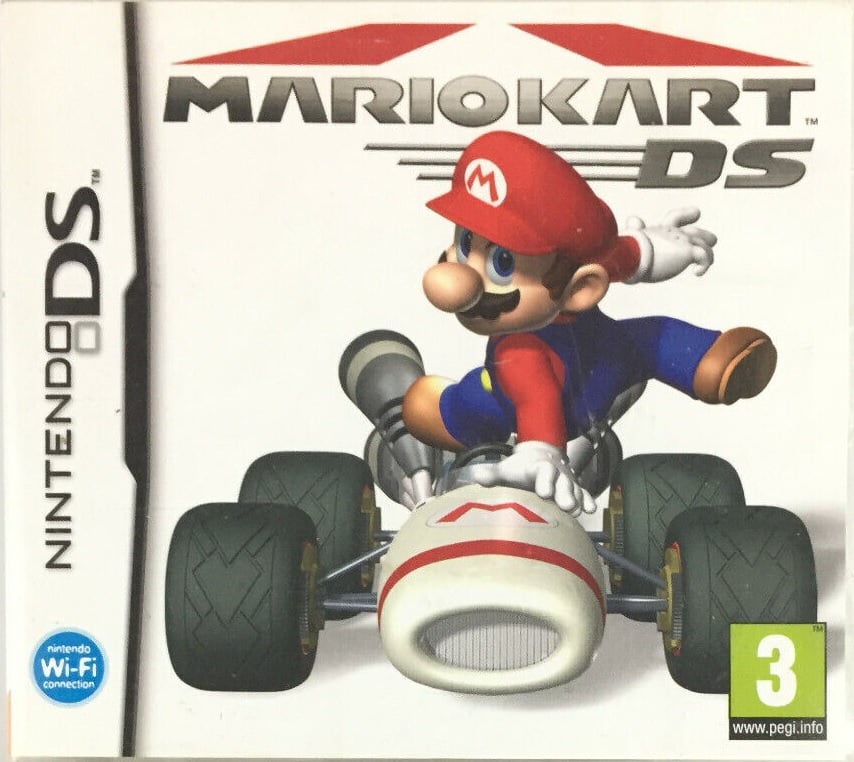
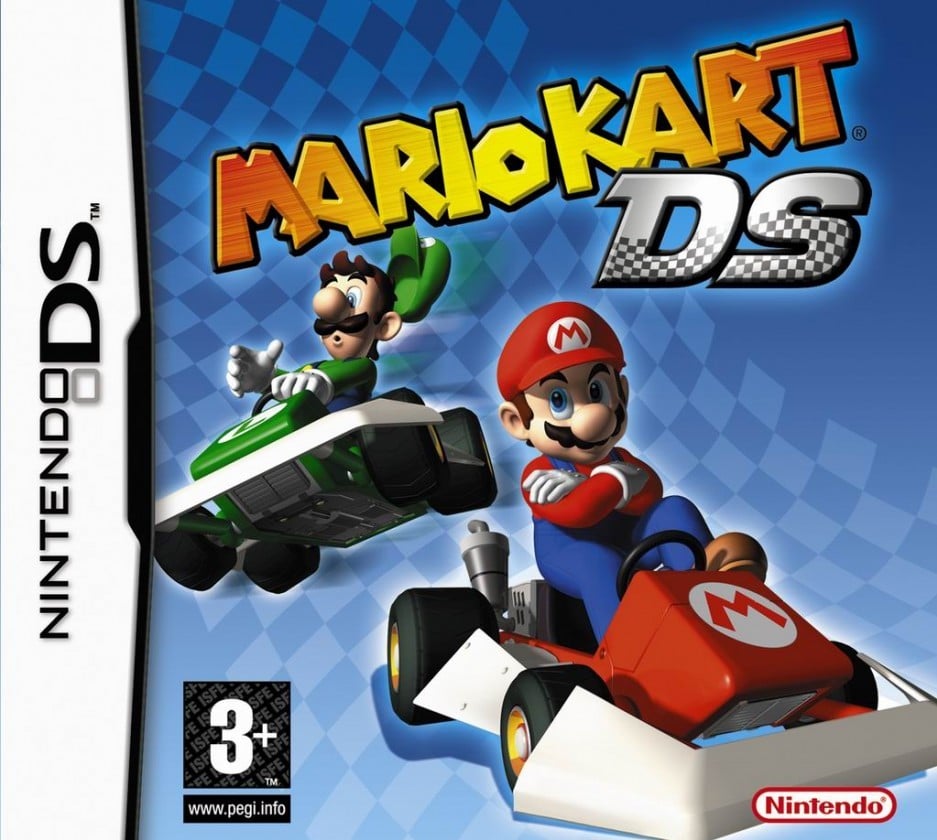
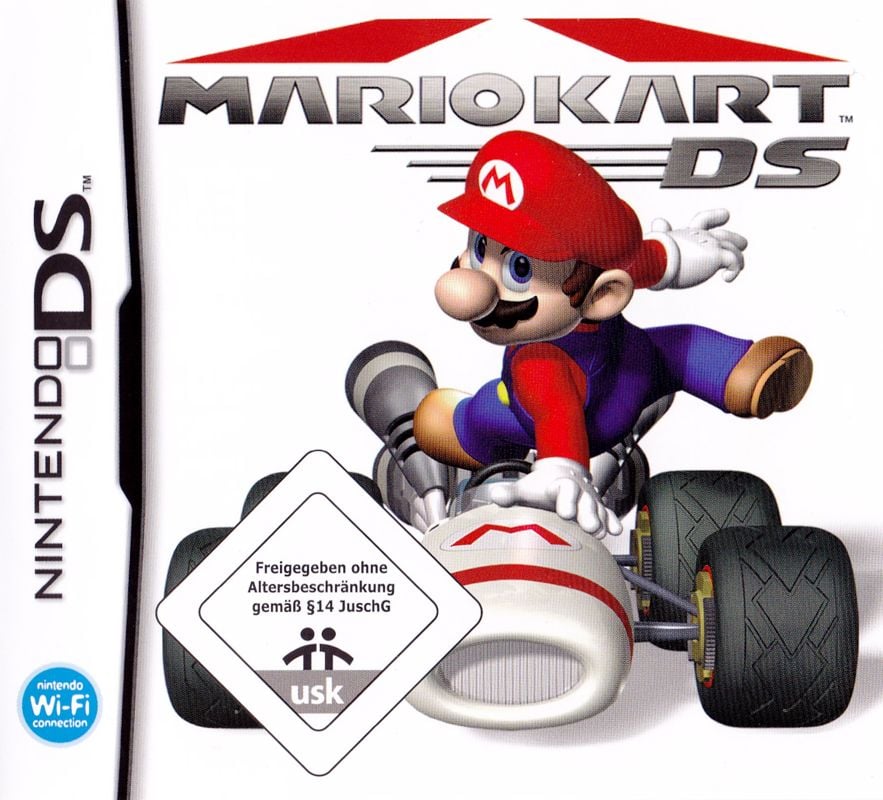
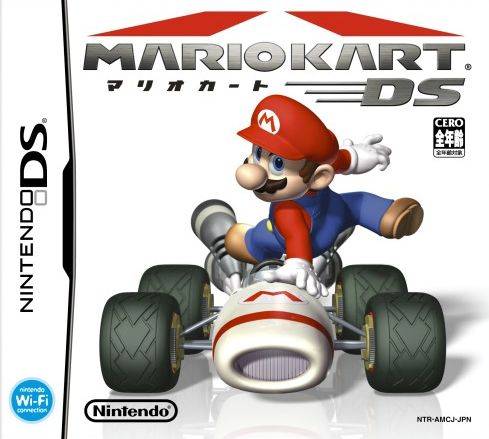
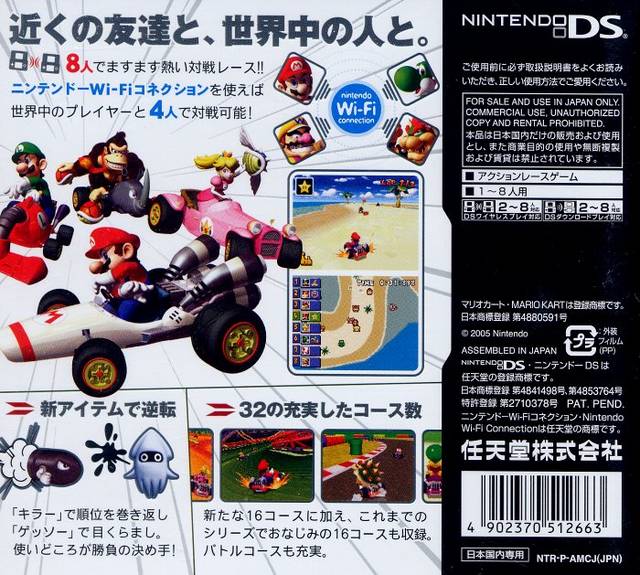
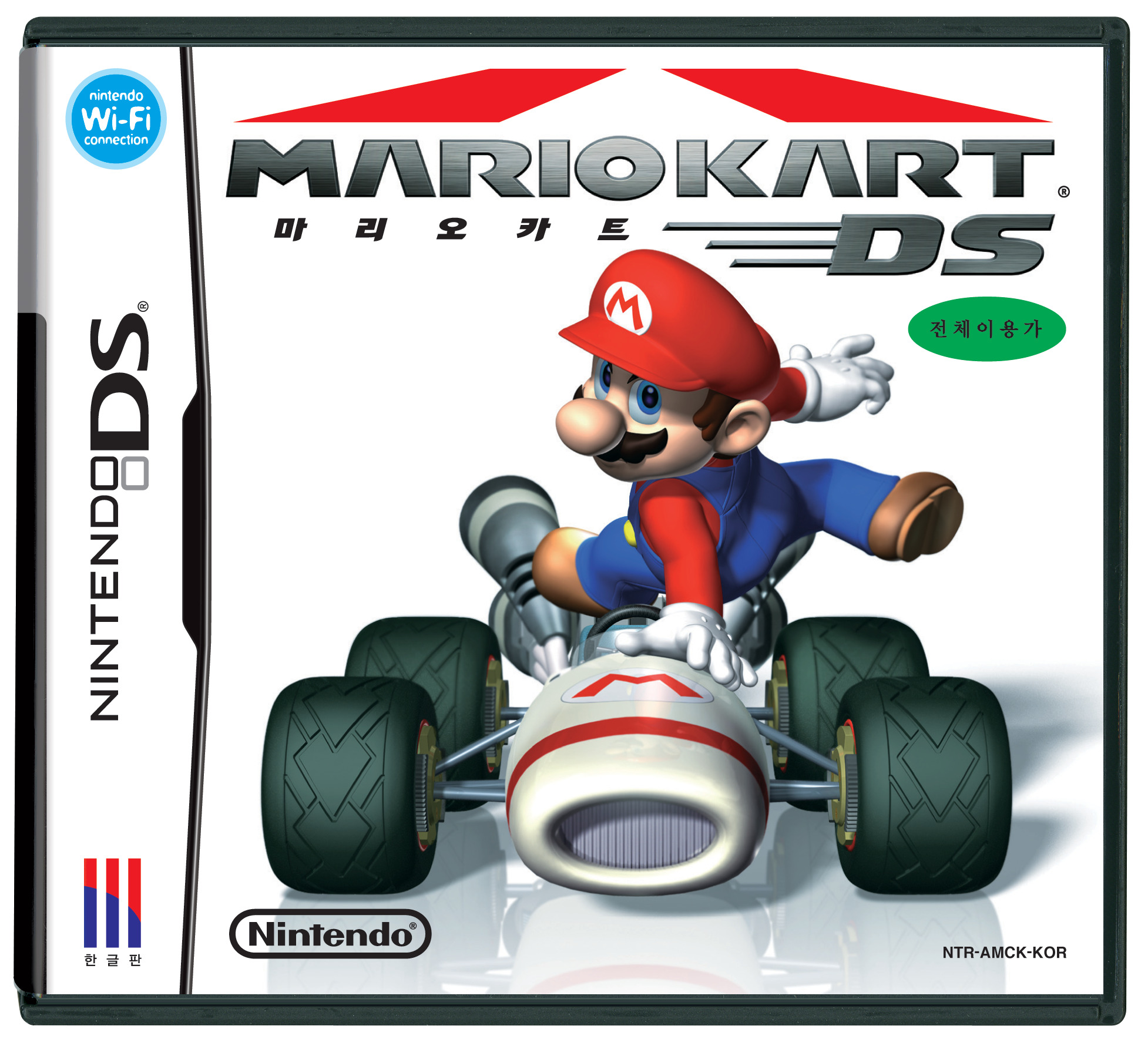
The cover art is Mario at the wheel of his B Dasher. Super Mario Wiki archives sixteen versions of the packaging, including two early designs and the later reprints.
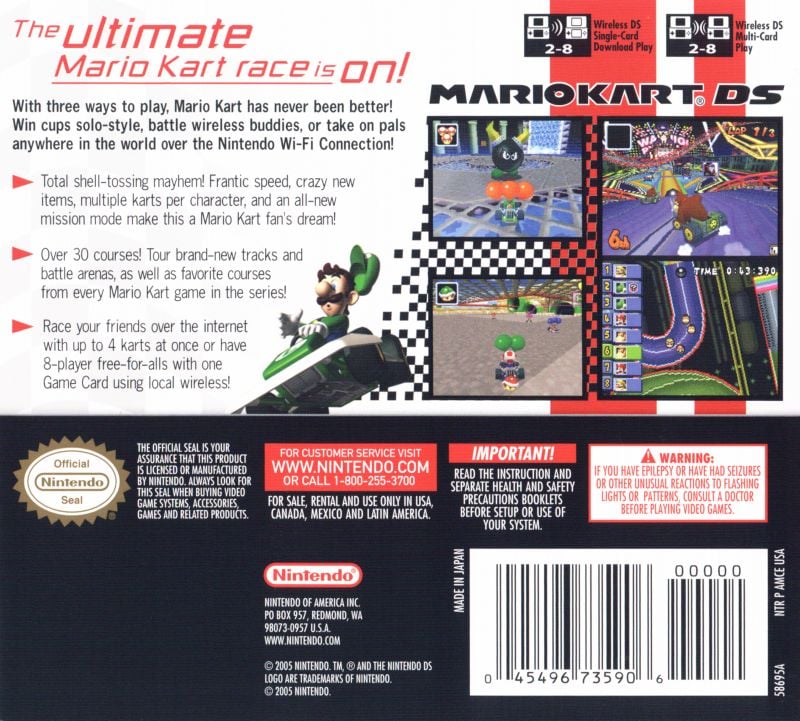
North America (2005)The original release.North America, backThe reverse of the case.North America, later printA reprint from later in the game’s long life.North America, pre-releaseAn early version of the cover.CanadaThe bilingual Canadian release.BrazilThe Brazilian release.Europe (2005)The standard European cover.Europe, alternateA second European cover.Europe, backThe reverse of the European case.Europe, later printA European reprint.Europe, pre-releaseAn early European design.GermanyGerman-language cover.Australia (2005)Released on 17 November 2005.Japan (2005)Released on 8 December 2005.Japan, backThe reverse of the Japanese case.South Korea (2007)Released on 5 April 2007.
Screenshots
More from the Nitro cups, and one very long way down.
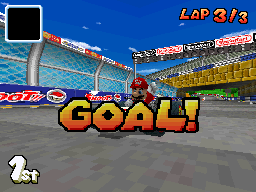
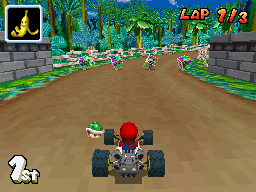
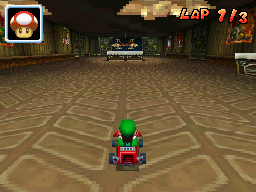
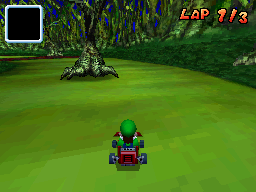
First across the line on Figure-8 Circuit.The jungle stretch of Cheep Cheep Beach.Luigi on the lower floor of his mansion in Time Trials.The Walking Trees in the swamp.The Pianta statue and roundabout in Delfino Square.Inside the launcher at Waluigi Pinball.Dry Bones climbs DK Pass.The gears beneath Tick-Tock Clock.The dirt road beside Peach’s Castle on Mario Circuit.The crate room of Airship Fortress.The rotating circular room in Bowser Castle.Daisy heads into the corkscrew on Rainbow Road.
Artwork & Media Gallery
Logos, official artwork, cup emblems, course maps, packaging and a look at what was left on the cutting-room floor.
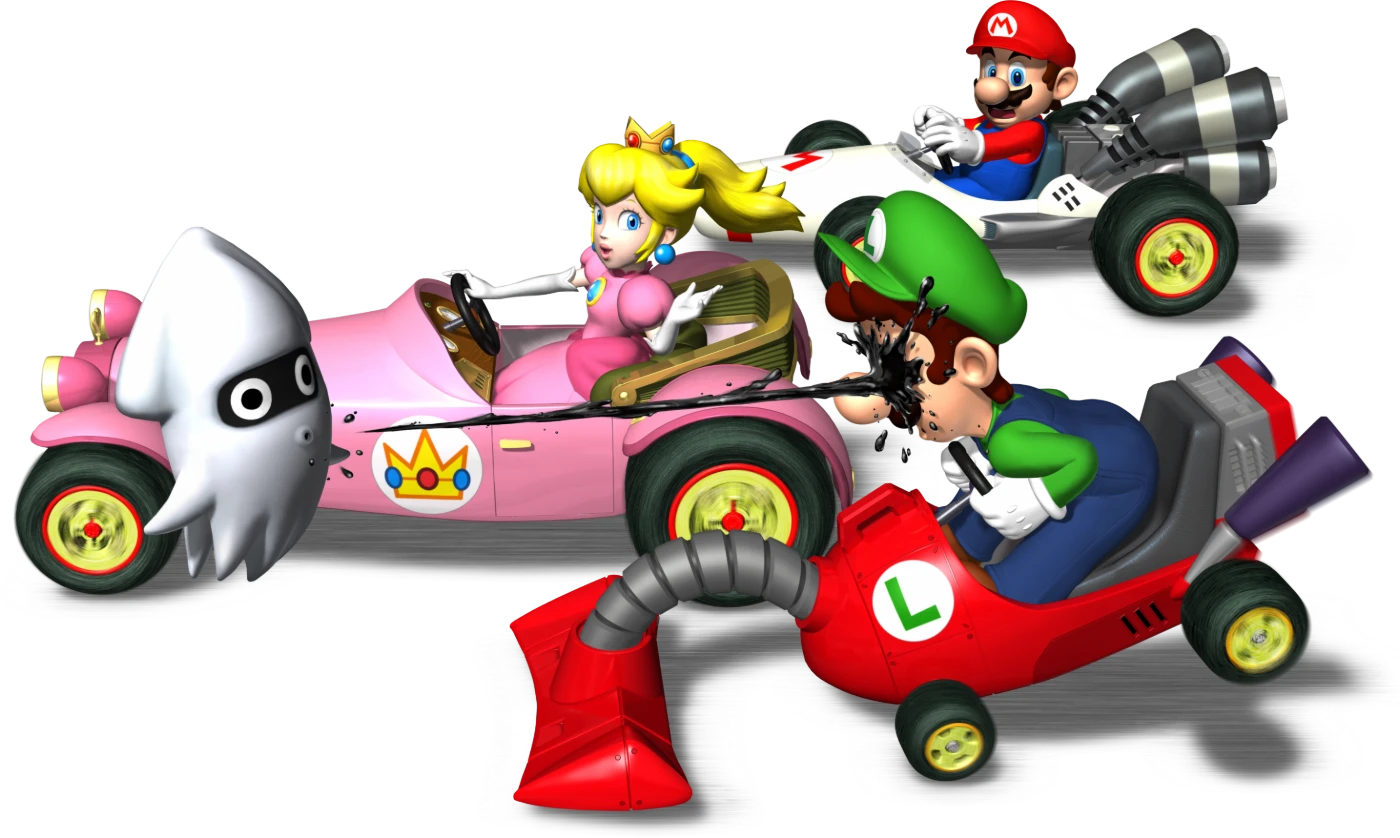
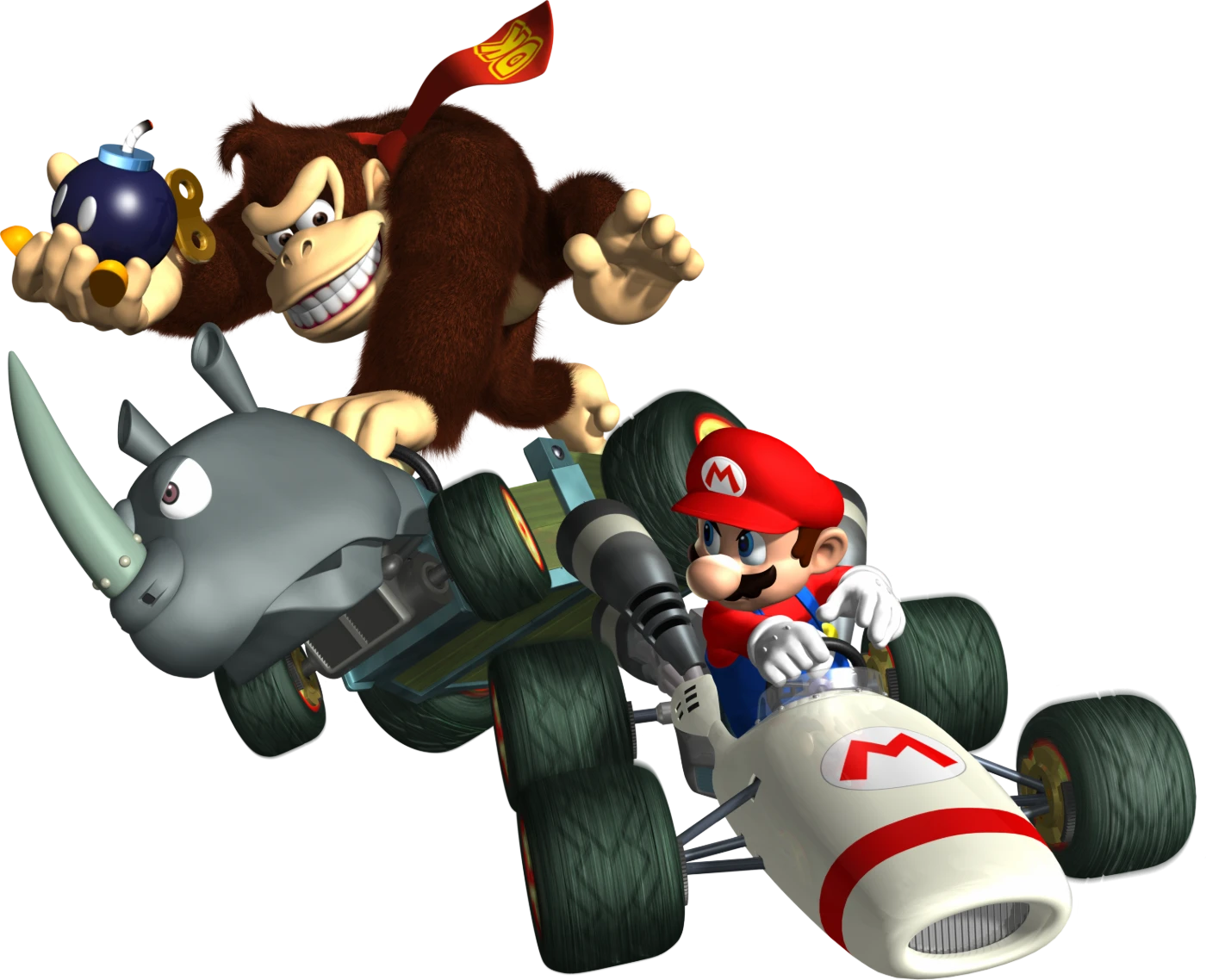
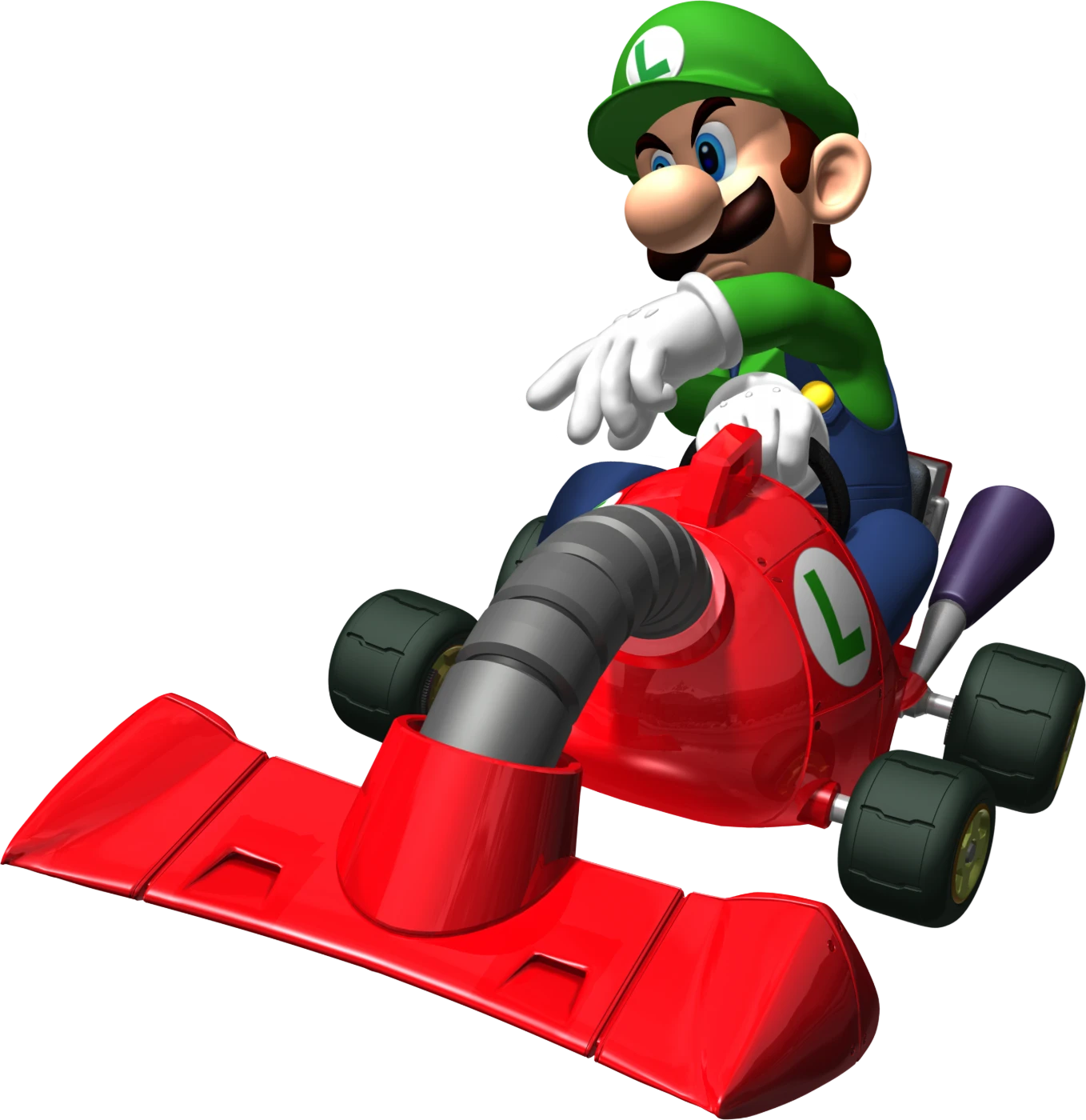
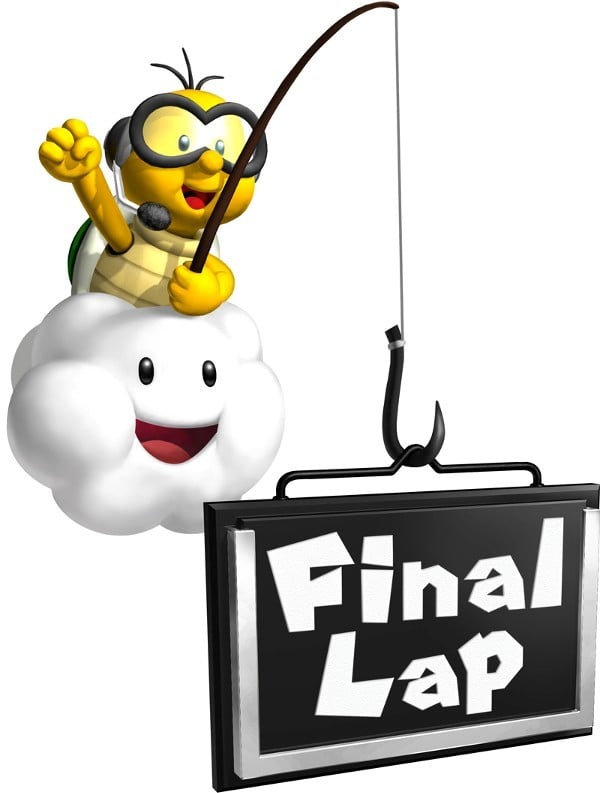
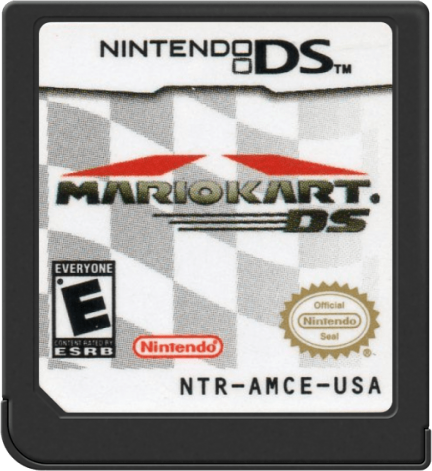
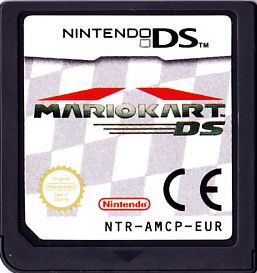
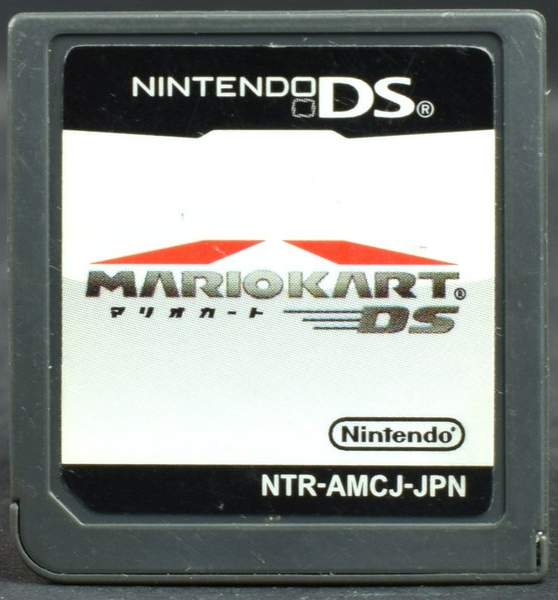
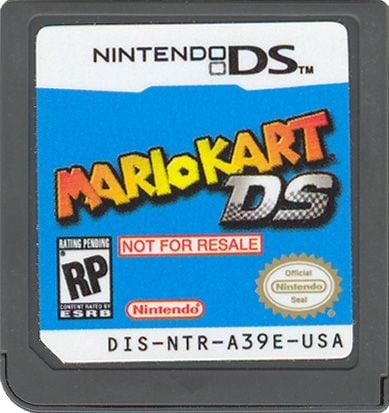
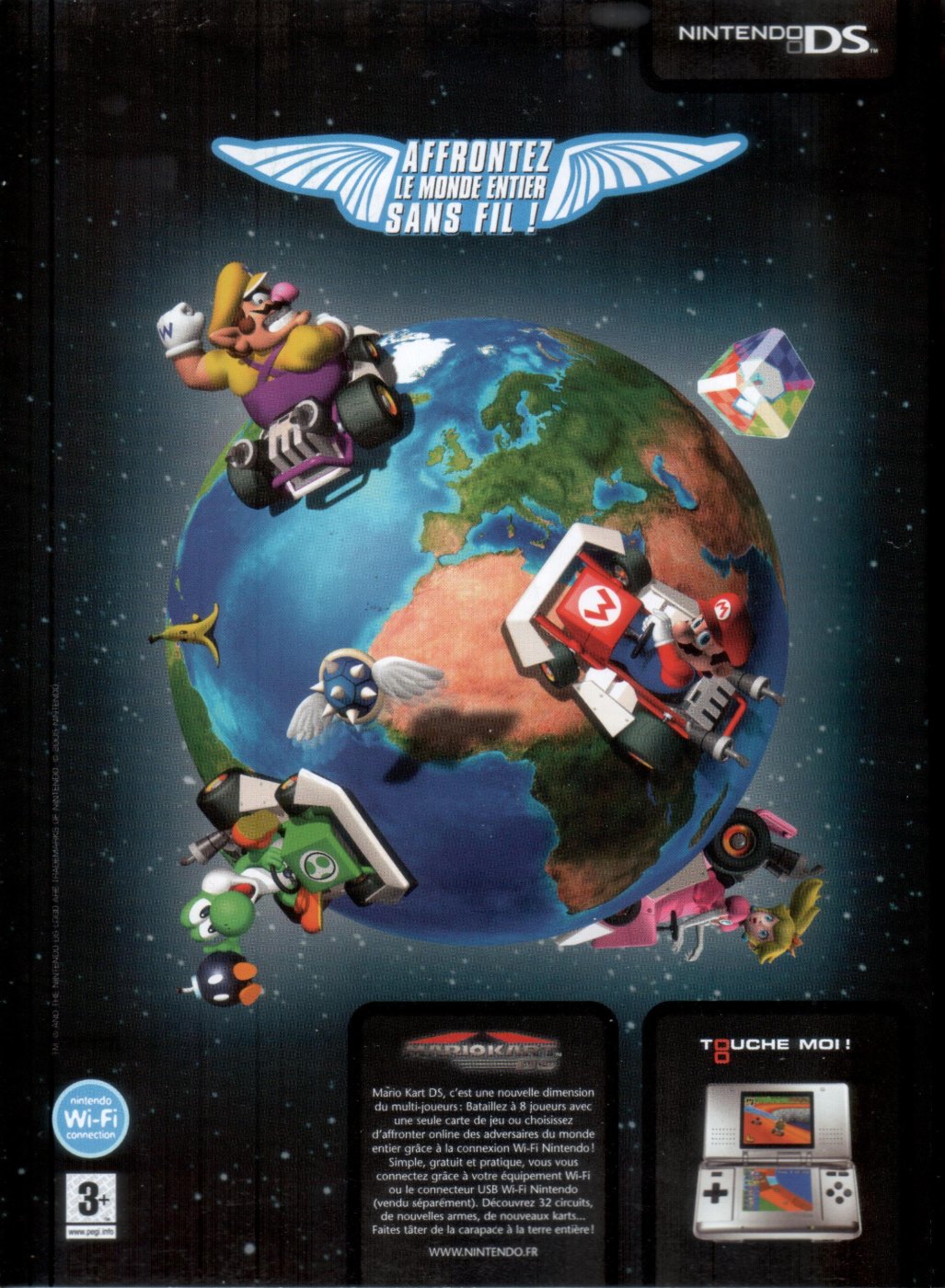
The international logo.The Japanese logo.The preliminary logo shown at E3 2005.Mario in the B Dasher, side view.Mario in the Standard MR, as on the title screen.Peach, Luigi and Mario, with a Blooper doing its worst to Luigi.Mario and Donkey Kong racing.Luigi in the Poltergust 4000.Luigi at the wheel.Peach in the Royale, armed with a Spiny Shell.Donkey Kong in the Rambi Rider with Triple Red Shells.Wario in the Brute.Lakitu with the Final Lap sign.Mushroom Cup.Flower Cup.Star Cup.Special Cup.Shell Cup.Banana Cup.Leaf Cup.Lightning Cup.Course map: Figure-8 Circuit.Course map: Waluigi Pinball.Course map: Rainbow Road.Course map: GCN Yoshi Circuit.Mario’s default emblem.R.O.B.’s default emblem.The Japanese title screen.The first title screen, with Mario alone.The first ending screen.The final ending screen, once every driver is unlocked.The European Nintendo DS bundle.The Canadian Nintendo DS bundle.The North American Game Card.The European Game Card.The Japanese Game Card.A North American demo Game Card.A French print advertisement.Official wallpaper: Luigi throws a Bob-omb on Figure-8 Circuit.Official wallpaper: Mario, Peach and Luigi at Moo Moo Farm.The game’s icon on the Nintendo DS menu.The Wii U Virtual Console icon.A pre-release Figure-8 Circuit, with Donkey Kong apparently in “0th” place.Pre-release Yoshi Circuit, with palm trees where the Piranha Plants ended up.Wario in the early, blue version of the Brute.The unused Chain Chomp item icon.The scrapped Koopa Troopa beach course.The unfinished remake of Block City from Double Dash!!.The unused course known in the files as dokan_course.An early version of the Waluigi Pinball table.The Nintendo DS battle course as it looked in the kiosk demo.
Legacy & Re-releases
Mario Kart DS stayed on sale for years, was reissued once, and set the pattern for every Mario Kart that followed.
Every release
Nintendo DS (North America)14 November 2005The first release, and the launch of Nintendo Wi-Fi Connection.
Nintendo DS (Australia)17 November 2005The Australian release.
Nintendo DS (Europe)25 November 2005Launched alongside the Nintendo Wi-Fi USB Connector.
Red Nintendo DS bundle (North America)28 November 2005The game with a red console, a chequered-flag wrist strap and decals.
Nintendo DS (Japan)8 December 2005Also released that day in Hong Kong and Taiwan.
Nintendo DS (South Korea)5 April 2007The Korean-language edition.
Nintendo Wi-Fi Connection closes20 May 2014The end of official online play.
Wii U Virtual Console (Europe and Australia)2 April 2015Priced at £8.99 in the UK. Single-player only: no wireless play, no Download Play and no online.
Wii U Virtual Console (North America)23 April 2015Priced at $9.99.
Wii U Virtual Console (Japan)25 May 2016The Japanese release.
Wii U eShop closes to purchases27 March 2023The game has not been reissued since.
What Mario Kart kept
The shape of a modern Mario Kart is the shape of this game. Retro cups, with their console prefixes, have been in every sequel. So have online races, the Bullet Bill and the Blooper. Shine Runners turned into Coin Runners, and the online rankings and ghost sharing that could not be finished in time for 2005 arrived with the Wii game.
Its own courses have become some of the most reused in the series: thirteen of the sixteen have been remade, Waluigi Pinball three times. Mario Kart Wii took four of them, Mario Kart 7 four more, and Mario Kart 8, its Booster Course Pass, Mario Kart Tour and Mario Kart World have kept returning to the well.
What it kept to itself
Mission Mode has never come back in the same form. Nor has the emblem maker, the Items statistic or the idea of unlocking other drivers’ karts one batch at a time. And the hand-charged mini-turbo, the thing that made snaking possible, was gone by 2008: from Mario Kart Wii onwards a mini-turbo charges according to how long the drift is held.
Its place in the series
In 2005 a number of critics called it the best Mario Kart yet made, and in 2012 GamesRadar named it the best game on the Nintendo DS. Its producer agreed with the first of those and was still dissatisfied: the missing rankings, the ghosts that could not be shared and the opponents who pulled the plug all nagged at Hideki Konno, and he has said that fixing them was his motivation for the Wii game. Seen that way, Mario Kart DS is both a summing-up of the four games before it and the first draft of everything since.
Reviews & Sales
Sales
Mario Kart DS sold 112,000 copies in its first week in the United States, and Nintendo announced that 52,000 of those buyers, nearly half, had already logged on to Nintendo Wi-Fi Connection. It was the best-selling handheld game in America that month. In Japan it opened with 224,411 copies in its first week, on Famitsu’s count.
Then it kept selling, for years. By August 2006 it had sold 910,000 copies in the United States. In 2008, its fourth year on the shelves, it was still the best-selling DS game of the year in America and the tenth best-selling game on any system, according to NPD. Famitsu had it past 3.2 million in Japan by January 2009.
Nintendo’s final figure is 23.60 million copies worldwide. That makes it the third best-selling Nintendo DS game, behind New Super Mario Bros. (30.80 million) and Nintendogs (23.96 million), and it outsold every Mario Kart before it.
23.60mcopies sold worldwide
3rdbest-selling Nintendo DS game
112,000US sales in week one
52,000of them online in week one
Reviews
Scores and dates as listed by Wikipedia and Super Mario Wiki from the original reviews.
Nintendo World ReportMike Sklens · 19 November 2005
10/10
GameSpyBryn Williams · 16 November 2005
5/5
X-PlayUS television · Shane Satterfield · 13 December 2005
5/5
IGNCraig Harris · 11 November 2005
9.5/10
GameZoneLouis Bedigian · 12 December 2005
9.5/10
GameSpotJustin Calvert · 14 November 2005
9.2/10
Computer and Video GamesUK · Matt Wales · 24 November 2005
9/10
EurogamerUK · Tom Bramwell · 22 November 2005
9/10
Nintendo PowerUS · Chris Shepperd · January 2006
9/10
PALGNAustralia · 21 November 2005
9/10
GameProUS · 14 November 2005
4.5/5
Electronic Gaming MonthlyUS · three reviewers · January 2006
26/30
Game InformerUS · Matt Helgeson · December 2005
8.5/10
GameRevolutionBen Silverman · 15 November 2005
A−
MetacriticAggregate score
91/100
GameRankingsAggregate score
91.43%
The reviews read like a competition to find the biggest compliment. IGN’s Craig Harris called it the best kart racing game ever made. GameSpy’s Bryn Williams praised its “pixel-perfect” controls and described eight-player wireless racing as “pure gaming nirvana”. In Britain, Computer and Video Games found the new courses “tightly-focused, inventive, and downright fun”.
The complaints were consistent too. Almost everyone wished the online mode did more: there was no lobby, no way of adding a stranger as a friend after a good race, no Battle mode and a limit of four players, and GameSpot’s Justin Calvert pointed out that you could never tell whether an opponent had quit or simply lost their connection. Eurogamer and Nintendo Power grumbled about rubber-band computer drivers and blue shells, one of EGM’s reviewers found the missions forgettable, and X-Play thought the graphics blocky even as it gave full marks.
Honours
IGN · Best of 2005Best Racing/Driving Game; DS Game of the YearIGN also gave the game its Editors’ Choice award.
GameSpot · Best of 2005Best DS GameAlso nominated for Best Multiplayer Game and Best Driving Game.
G-Phoria · 2006Best Handheld GameAnnounced in August 2006.
9th Annual Interactive Achievement Awards · 2006Racing Game of the Year; Outstanding Achievement in Online Gameplay (nominee)Two nominations from the Academy of Interactive Arts & Sciences.
Official Nintendo Magazine · 2009No. 26, 100 greatest Nintendo gamesIn the UK magazine’s all-time ranking.
GamesRadar · 2012Best DS game of all timeRanked first, ahead of Pokémon Black and White.
SLB User Reviews
Mario Kart DS has yet to receive a community review on Super Luigi Bros.
If you’ve played Mario Kart DS and would like to submit a review, please get in touch.
More from the Super Luigi Bros Guide
These picture lists come from the earlier Super Luigi Bros guide to Mario Kart DS and are kept here in full.
Merchandise & Collectibles
Mario Kart DS inspired a significant range of physical merchandise, particularly in Japan and Europe. Here’s what was produced:
Remote Control Car
Licensed Nintendo Mario Kart DS remote-controlled cars featuring the game’s characters and karts. These were widely available in toy shops across Europe and North America following the game’s 2005 release.
Carrera GO!!! Slot Car Sets
German toy manufacturer Carrera produced full Mario Kart DS–branded electric slot car racing sets (1:43 scale). Sets #62038, #62185 and #62206 featured Mario’s B Dasher and Wario’s Brute on full figure-8 track layouts with two controllers and a power supply.
Carrera Pull & Speed Die-Cast
Carrera also produced standalone 1:43 scale pull-back die-cast cars — the B Dasher (Mario), Royale (Peach) and Brute (Wario) were available individually. Wind up and release for a burst across the floor. Widely available in European toy shops.
NKOK Super Race Set
American toy brand NKOK produced licensed Mario Kart DS racing sets and remote-controlled cars in 2008. These targeted the mainstream toy market with Mario Kart DS branding and featured multiple characters from the game.
Beyond these dedicated merchandise lines, Mario Kart DS characters and karts appeared in various other collectible series including Yujin gashapon pull-back capsule toys (2005), McDonald’s Happy Meal toys, trading card sets, and official Club Nintendo promotional items.
To provide the best experiences, we use technologies like cookies to store and/or access device information. Consenting to these technologies will allow us to process data such as browsing behavior or unique IDs on this site. Not consenting or withdrawing consent, may adversely affect certain features and functions.
Functional
Always active
The technical storage or access is strictly necessary for the legitimate purpose of enabling the use of a specific service explicitly requested by the subscriber or user, or for the sole purpose of carrying out the transmission of a communication over an electronic communications network.
Preferences
The technical storage or access is necessary for the legitimate purpose of storing preferences that are not requested by the subscriber or user.
Statistics
The technical storage or access that is used exclusively for statistical purposes.The technical storage or access that is used exclusively for anonymous statistical purposes. Without a subpoena, voluntary compliance on the part of your Internet Service Provider, or additional records from a third party, information stored or retrieved for this purpose alone cannot usually be used to identify you.
Marketing
The technical storage or access is required to create user profiles to send advertising, or to track the user on a website or across several websites for similar marketing purposes.

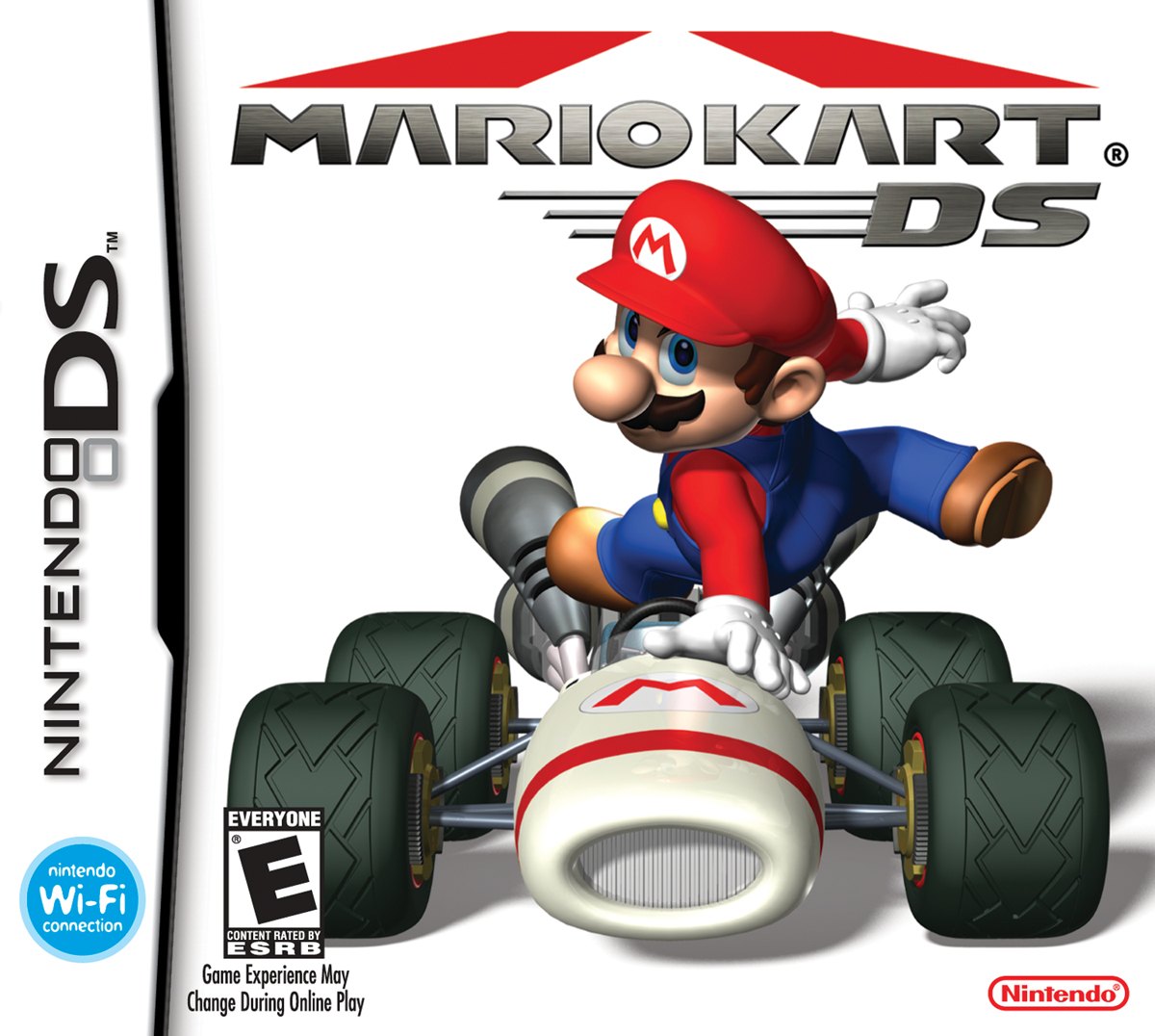
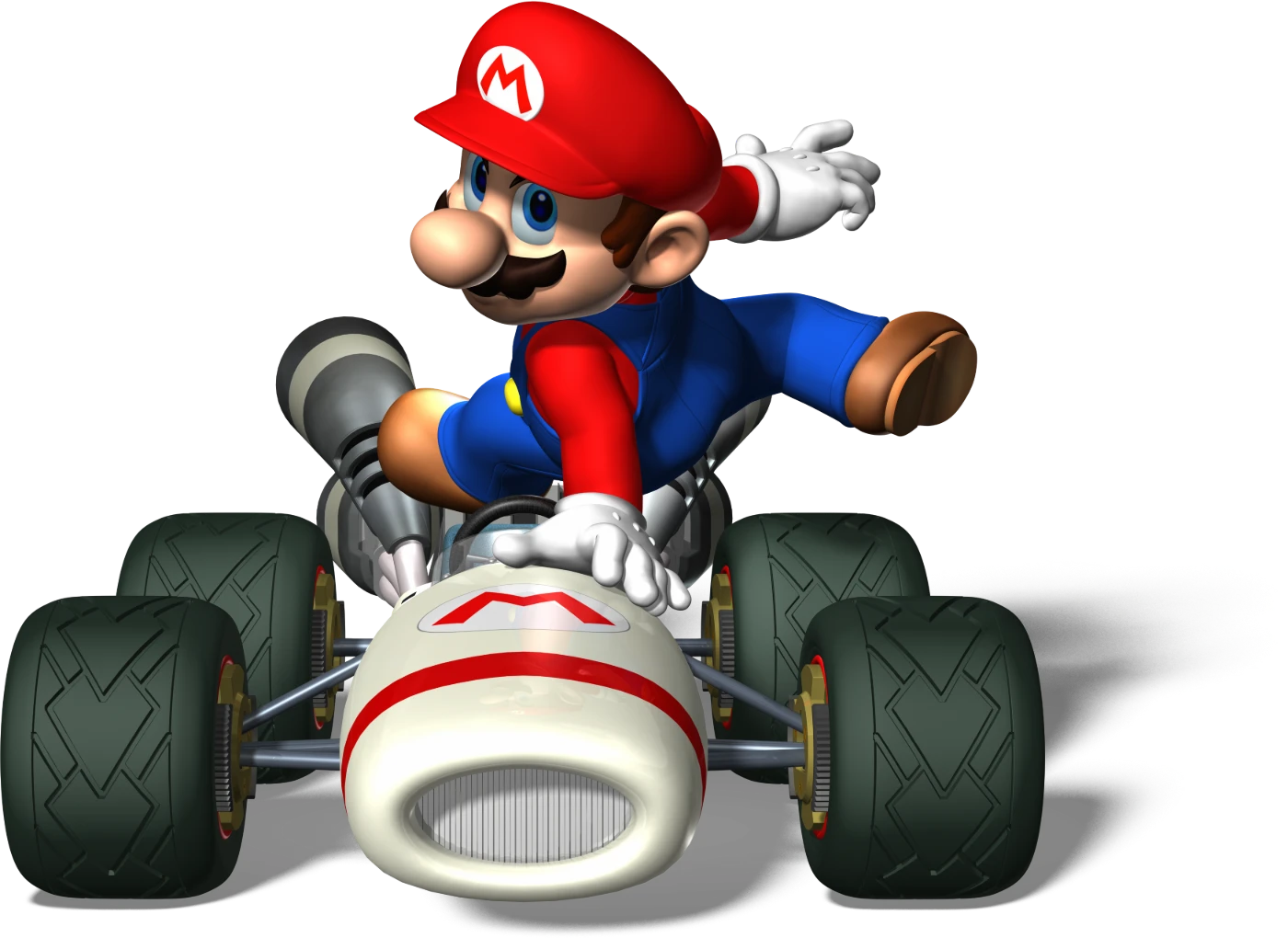
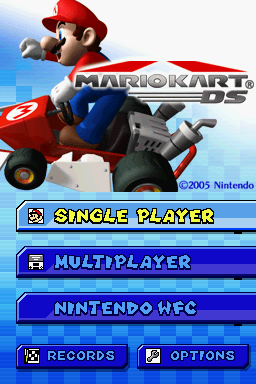
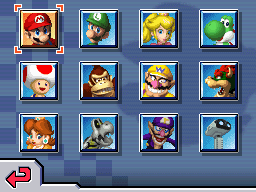
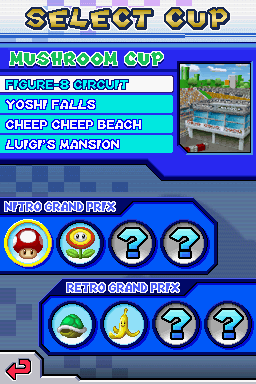
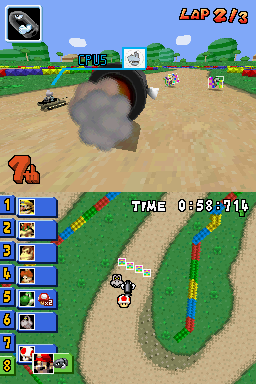
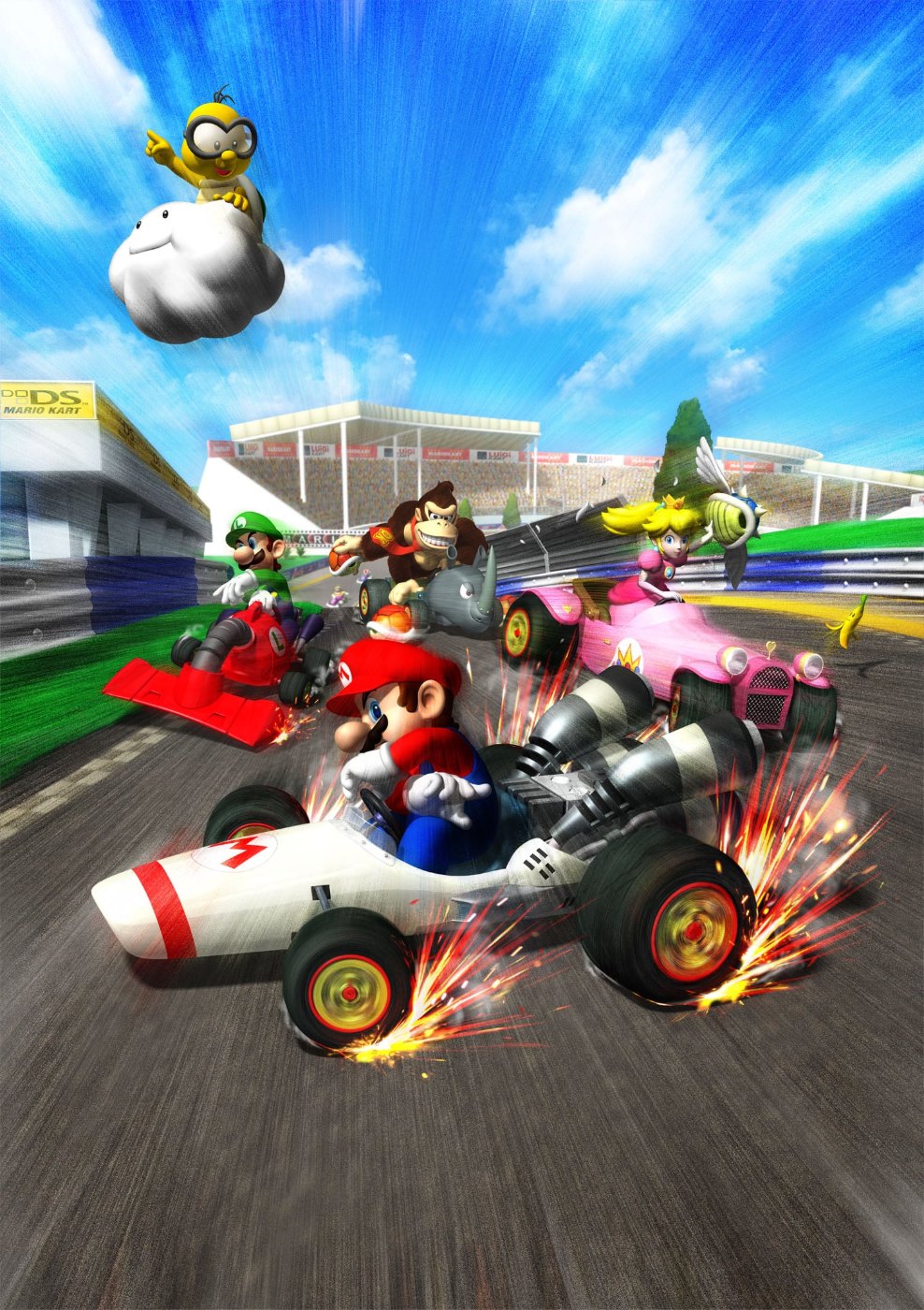
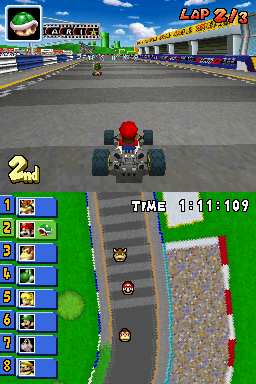
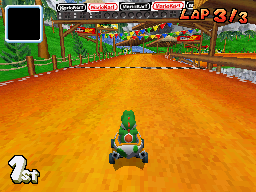
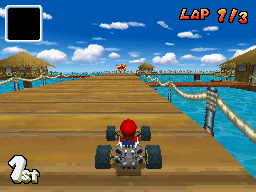
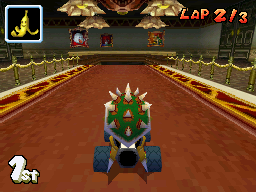
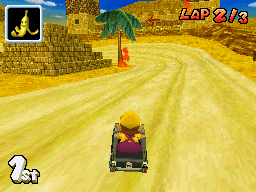
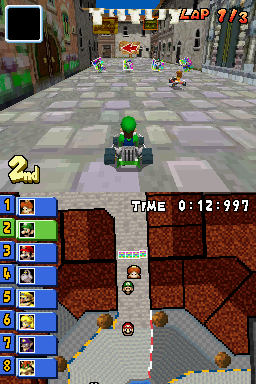
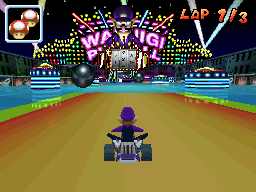
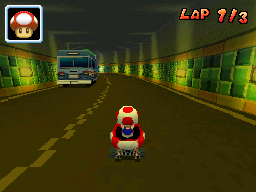
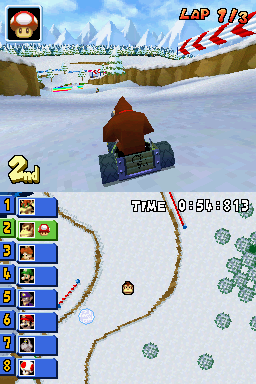
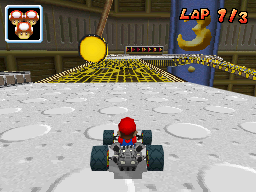
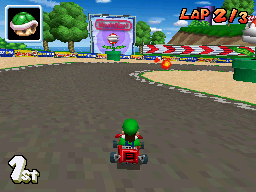
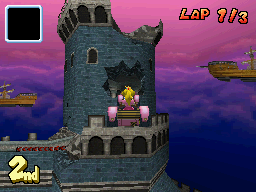
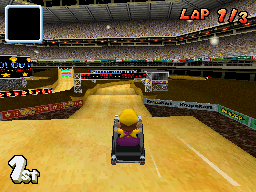
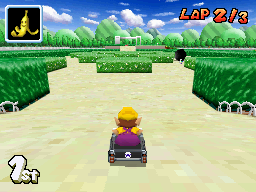
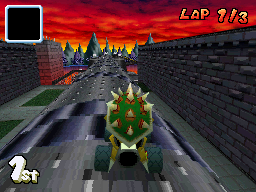
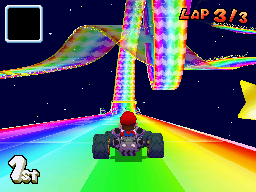
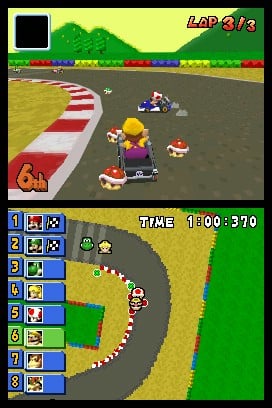
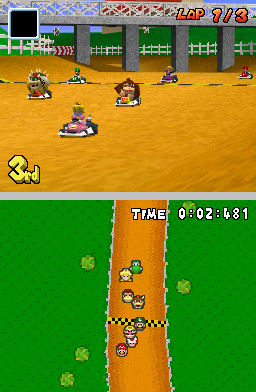
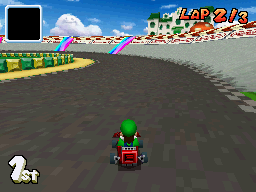
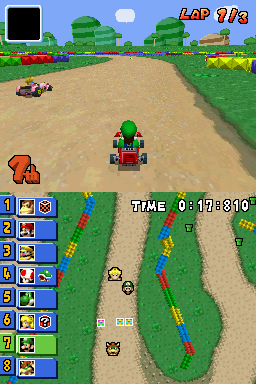
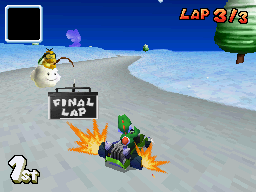
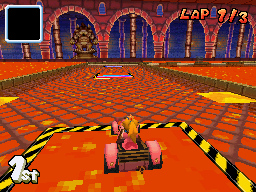
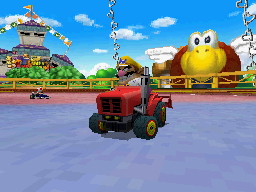

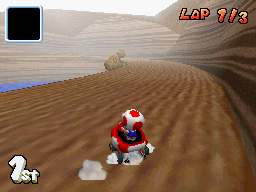
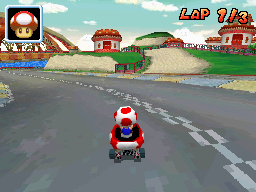
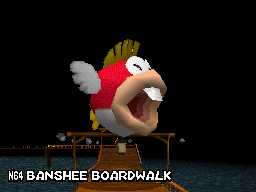
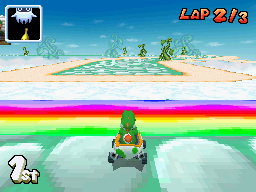
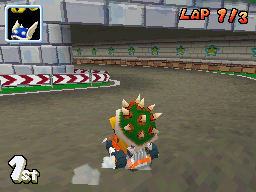
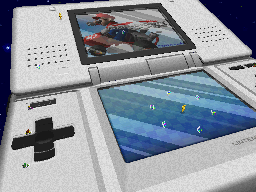
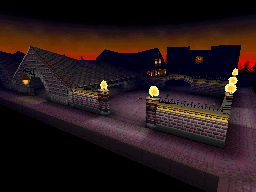
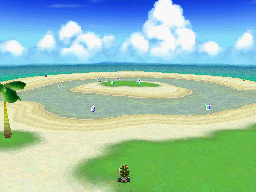
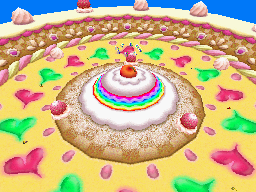
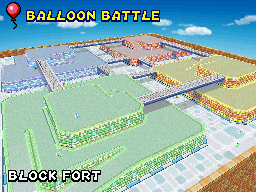
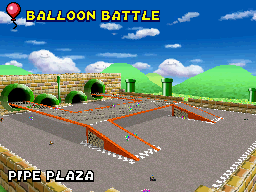
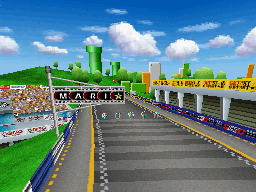 Figure-8 CircuitMushroom Cup · new · Wi-FiA broad, hazard-free figure of eight for learning to power-slide. Never remade for a later Mario Kart, though it became a Super Smash Bros. stage.
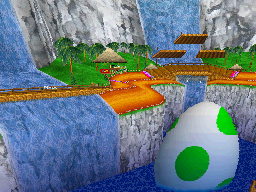 Yoshi FallsMushroom Cup · new · Wi-FiRound a lake and across three waterfalls. The shortest new course. Remade for Mario Kart Wii.
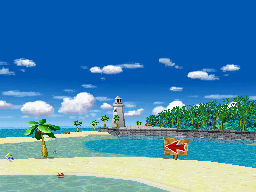 Cheep Cheep BeachMushroom Cup · new · Wi-FiBoardwalk, sand, a changing tide and a jungle. Remade for Mario Kart 8.
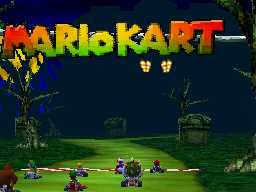 Luigi’s MansionMushroom Cup · new · Wi-FiThrough the haunted house and out into a swamp of walking trees. Remade for Mario Kart 7 and Tour.
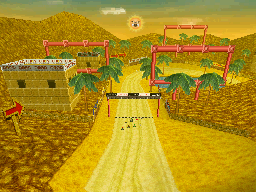 Desert HillsFlower Cup · new · Wi-FiSuper Mario Bros. 3’s desert, with Pokeys and an Angry Sun. Remade for Mario Kart Wii and Mario Kart World.
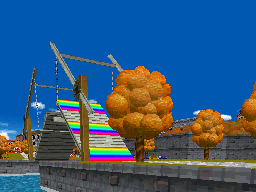 Delfino SquareFlower Cup · new · Wi-FiAlleys, a pier of crates and a lifting drawbridge in a Sunshine-style town. Remade for Mario Kart Wii.
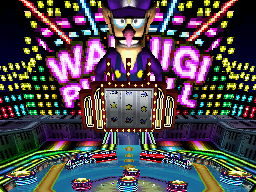 Waluigi PinballFlower Cup · newA race through a pinball machine: launcher, pinballs, bumpers and flippers. The longest new course. Remade for Mario Kart 7, Tour and the Booster Course Pass.
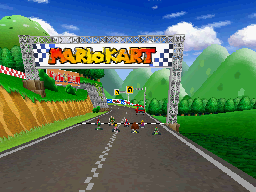 Shroom RidgeFlower Cup · newTwo-way traffic on a cliff road with no guard rail. Remade for Tour and the Booster Course Pass.
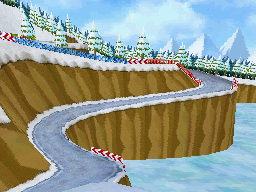 DK PassStar Cup · new · Wi-FiUp a snowbound mountain and down again, dodging giant snowballs. Remade for Mario Kart 7, Tour and Mario Kart World.
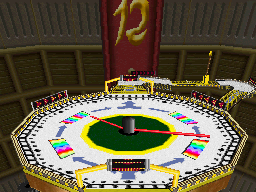 Tick-Tock ClockStar Cup · newClock hands, pendulums and turning gears inside the Super Mario 64 clock. Remade for Mario Kart 8.
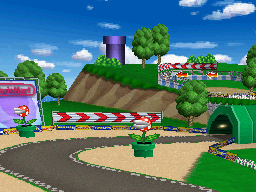 Mario CircuitStar Cup · new · Wi-FiRound Peach’s Castle past Goombas and fire-spitting Piranha Plants. Remade for Tour and the Booster Course Pass.
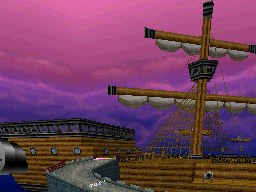 Airship FortressStar Cup · newBullet Bills, Rocky Wrenches and a cannon shot into a ruined tower. Remade for Mario Kart 7, Tour and Mario Kart World.
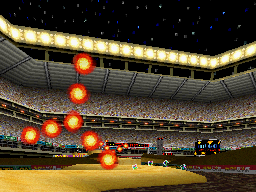 Wario StadiumSpecial Cup · new · Wi-FiMud, ramps and spinning fire in a stunt arena. Remade for Mario Kart 8.
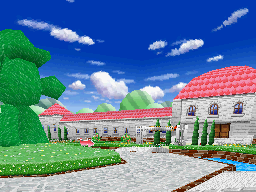 Peach GardensSpecial Cup · newA formal garden with loose Chain Chomps in its hedge maze. Remade for Mario Kart Wii, Tour and the Booster Course Pass.
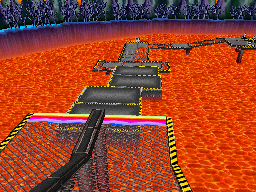 Bowser CastleSpecial Cup · newThwomps, a rotating room, a spinning bridge and platforms over lava. Never remade.
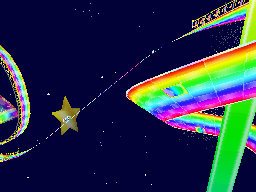 Rainbow RoadSpecial Cup · new · Wi-FiThe first Rainbow Road with a loop and a corkscrew. Never remade.
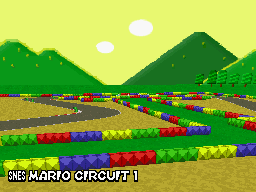 SNES Mario Circuit 1Shell Cup · retro, from Super Mario Kart (1992) · Wi-FiThe very first Mario Kart course: tarmac, sand and pipes.
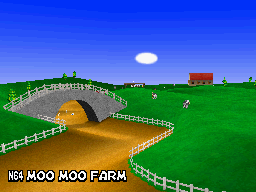 N64 Moo Moo FarmShell Cup · retro, from Mario Kart 64 (1996) · Wi-FiA short dirt oval among the cows, with Monty Moles popping up in the road.
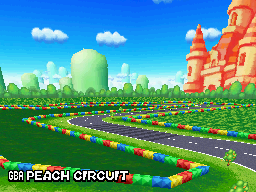 GBA Peach CircuitShell Cup · retro, from Mario Kart: Super Circuit (2001) · Wi-FiA short tarmac loop from Super Circuit, in sight of Peach’s Castle.
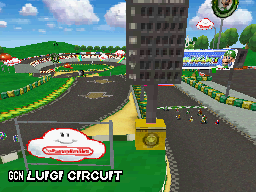 GCN Luigi CircuitShell Cup · retro, from Mario Kart: Double Dash!! (2003) · Wi-FiThe pinched oval from the GameCube, guarded by a Chain Chomp on a stake.
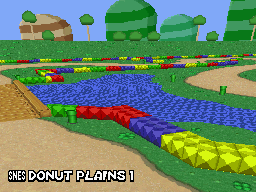 SNES Donut Plains 1Banana Cup · retro, from Super Mario Kart (1992)A lake, a bridge and three U-turns.
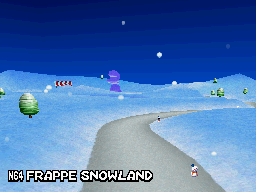 N64 Frappe SnowlandBanana Cup · retro, from Mario Kart 64 (1996) · Wi-FiSnowfields and a minefield of snowmen.
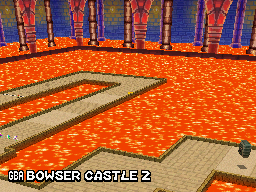 GBA Bowser Castle 2Banana Cup · retro, from Mario Kart: Super Circuit (2001)Right-angled corners, grids over lava, Thwomps and Lava Bubbles.
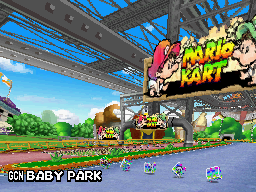 GCN Baby ParkBanana Cup · retro, from Mario Kart: Double Dash!! (2003) · Wi-FiThe tiny fairground oval, here run over five laps instead of seven.
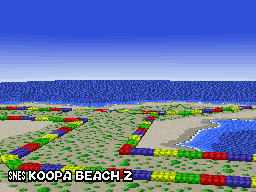 SNES Koopa Beach 2Leaf Cup · retro, from Super Mario Kart (1992)One lap of one island, through the shallows and the Cheep Cheeps.
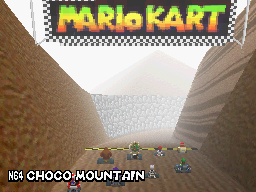 N64 Choco MountainLeaf Cup · retro, from Mario Kart 64 (1996) · Wi-FiA canyon road with boulders falling at the hairpin.
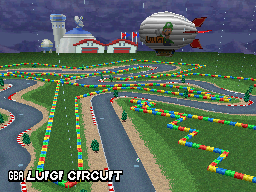 GBA Luigi CircuitLeaf Cup · retro, from Mario Kart: Super Circuit (2001)The airfield circuit from Super Circuit’s Lightning Cup.
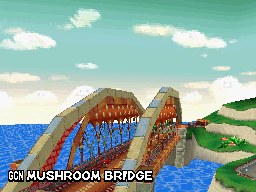 GCN Mushroom BridgeLeaf Cup · retro, from Mario Kart: Double Dash!! (2003)A coast road busy with traffic, and the stage for the Wiggler boss race.
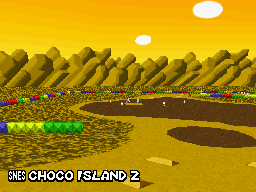 SNES Choco Island 2Lightning Cup · retro, from Super Mario Kart (1992) · Wi-FiSlippery mud and bumps, now with Piranha Plants at the roadside.
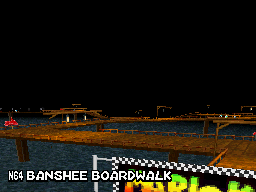 N64 Banshee BoardwalkLightning Cup · retro, from Mario Kart 64 (1996)A haunted pier with a swarm of Swoops and a giant leaping fish.
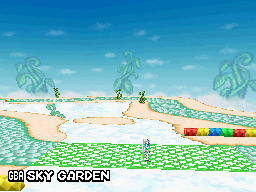 GBA Sky GardenLightning Cup · retro, from Mario Kart: Super Circuit (2001) · Wi-FiCobbles on clouds, with ramps over the gaps.
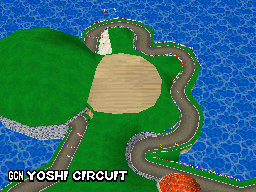 GCN Yoshi CircuitLightning Cup · retro, from Mario Kart: Double Dash!! (2003) · Wi-FiAn island circuit in the shape of Yoshi, lined with Piranha Plants.
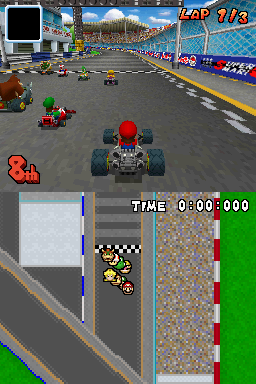
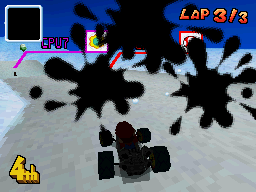
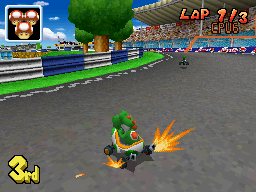
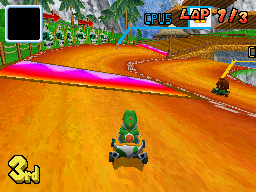
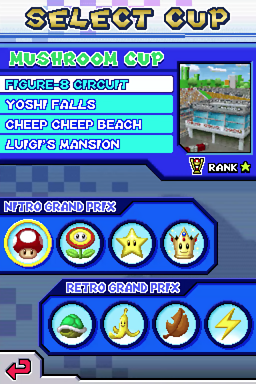
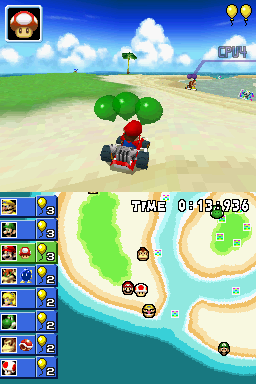
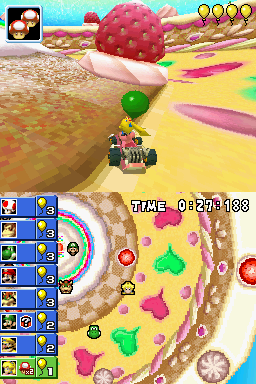
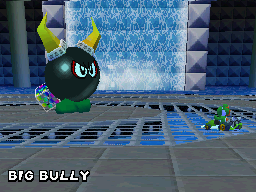
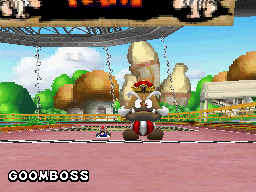
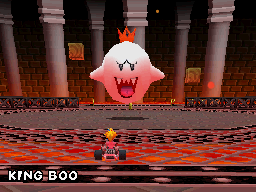
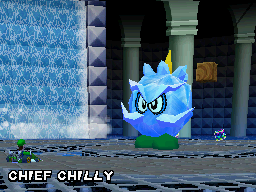
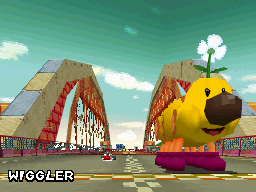
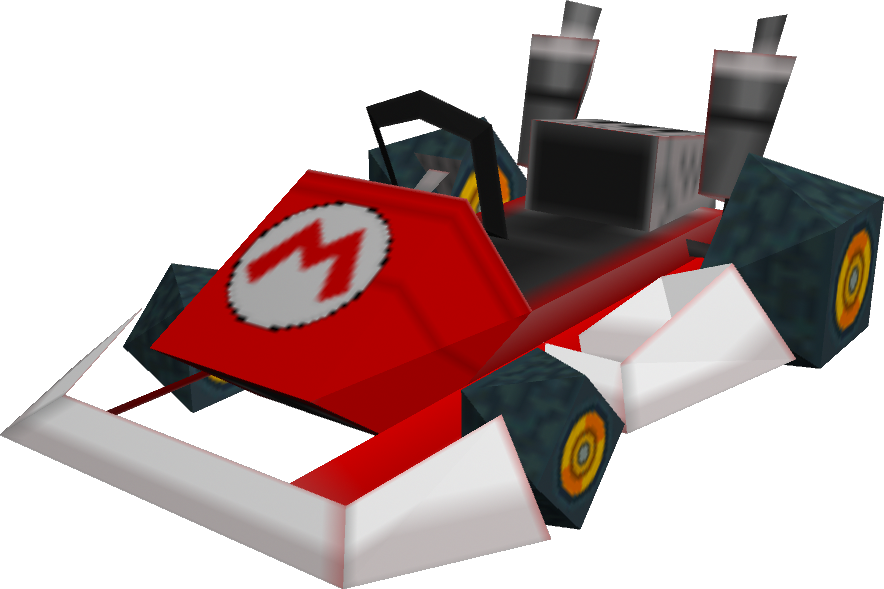
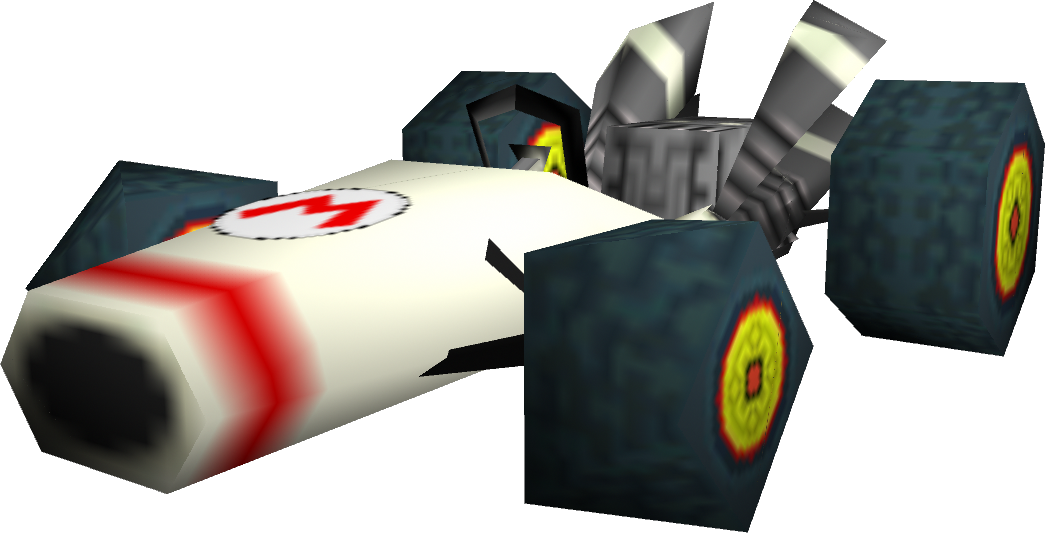
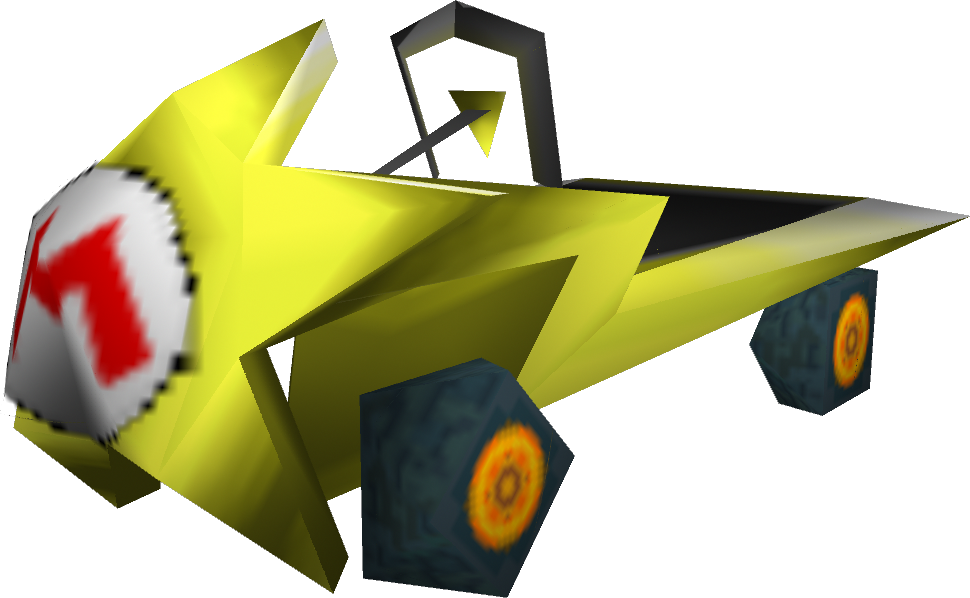
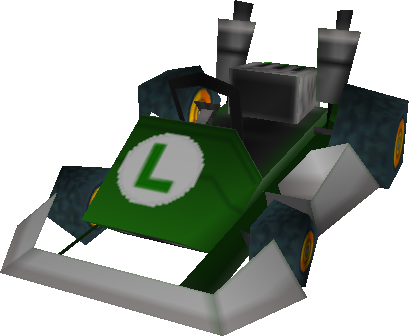
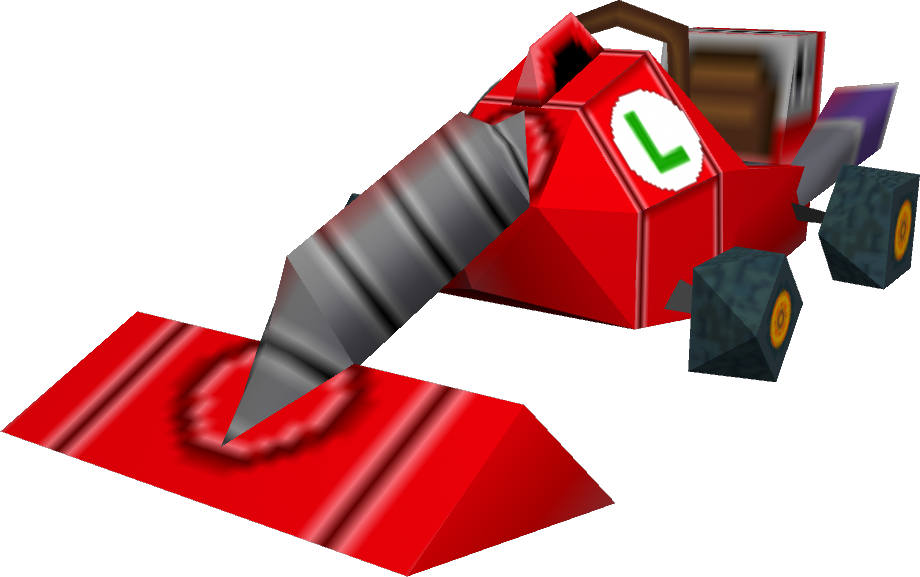
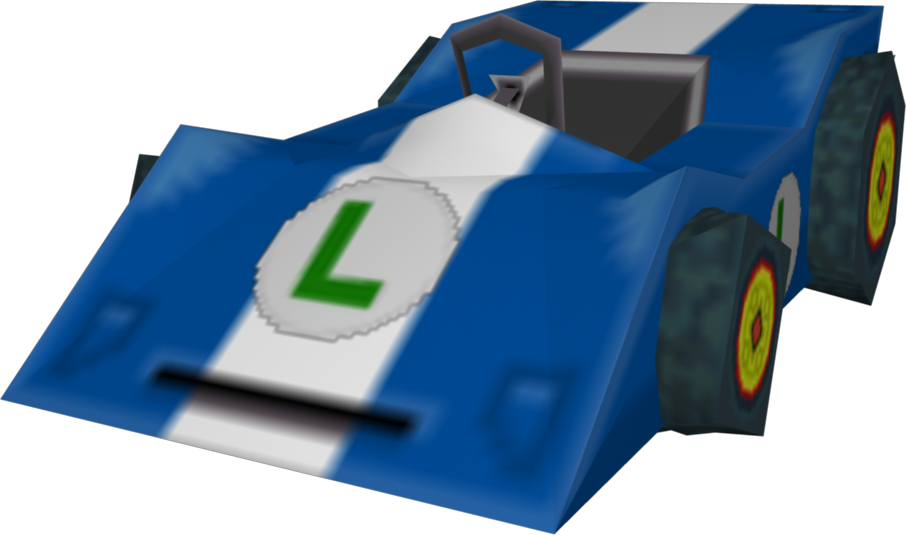
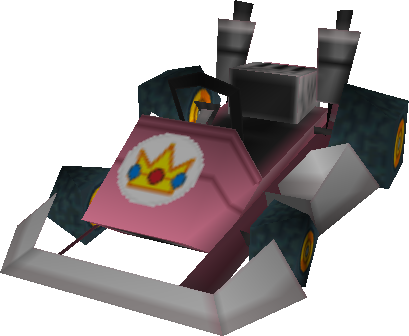
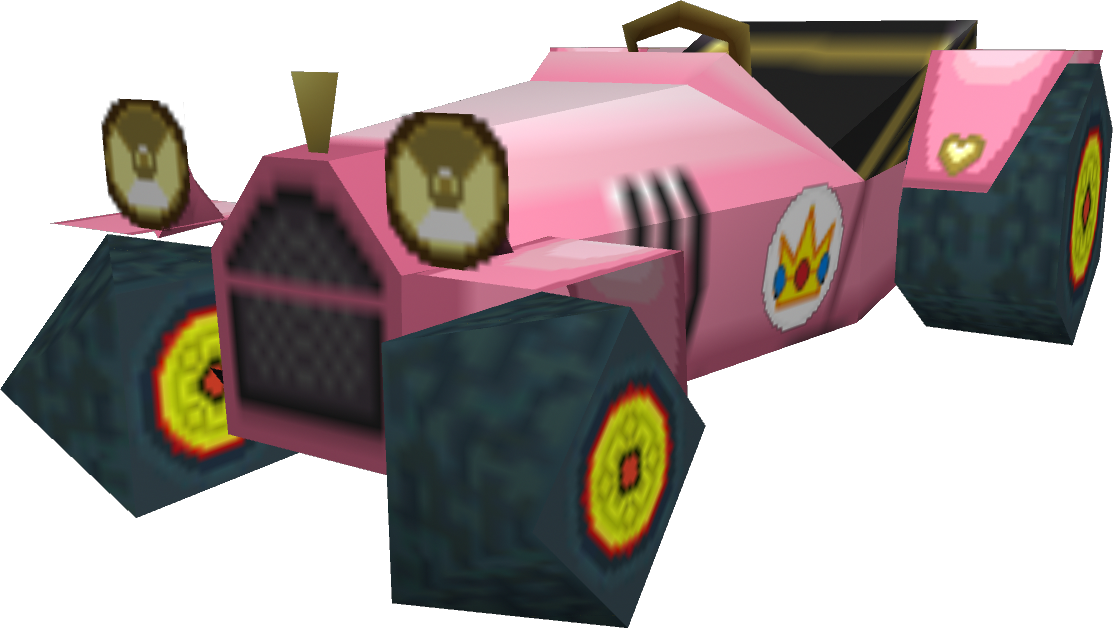
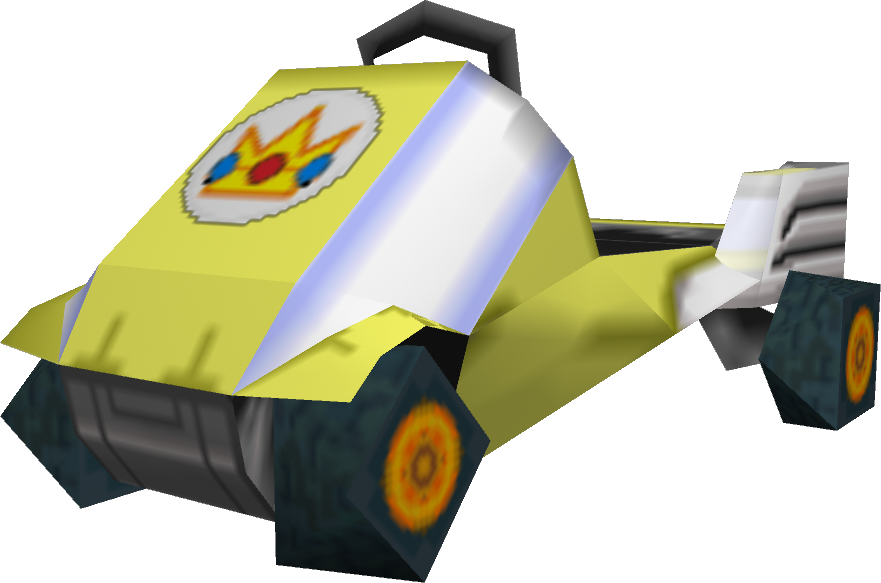
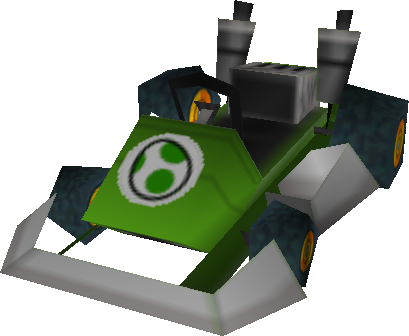
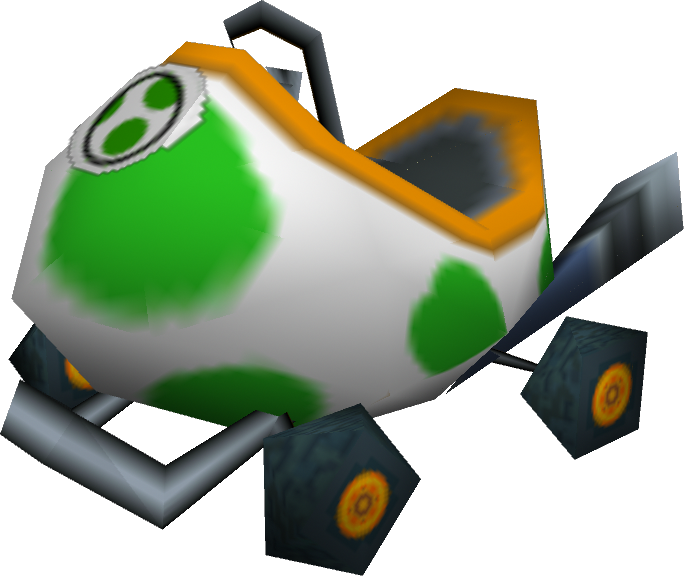
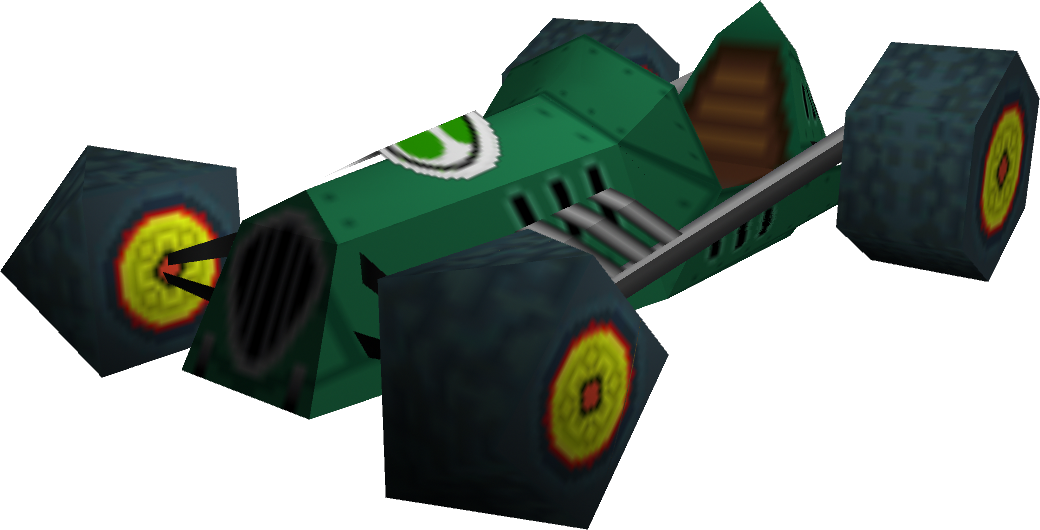
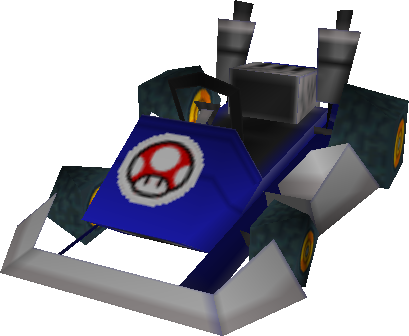
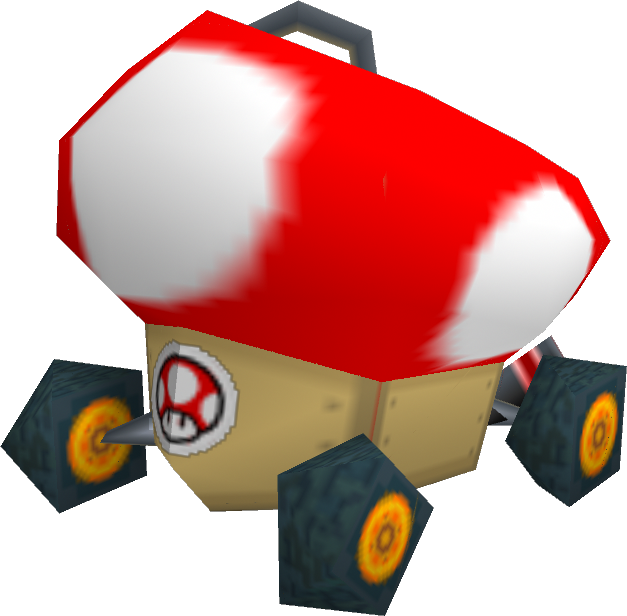
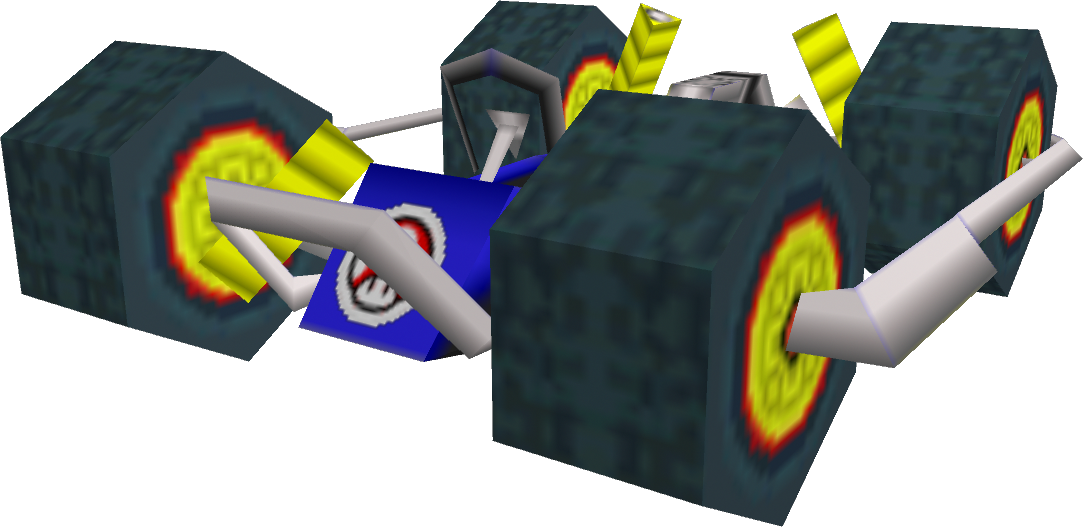
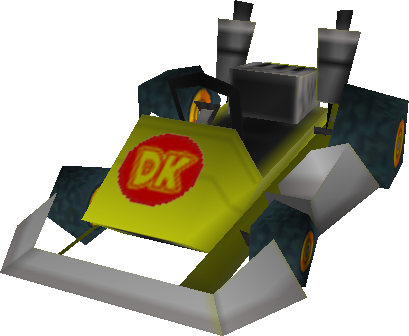
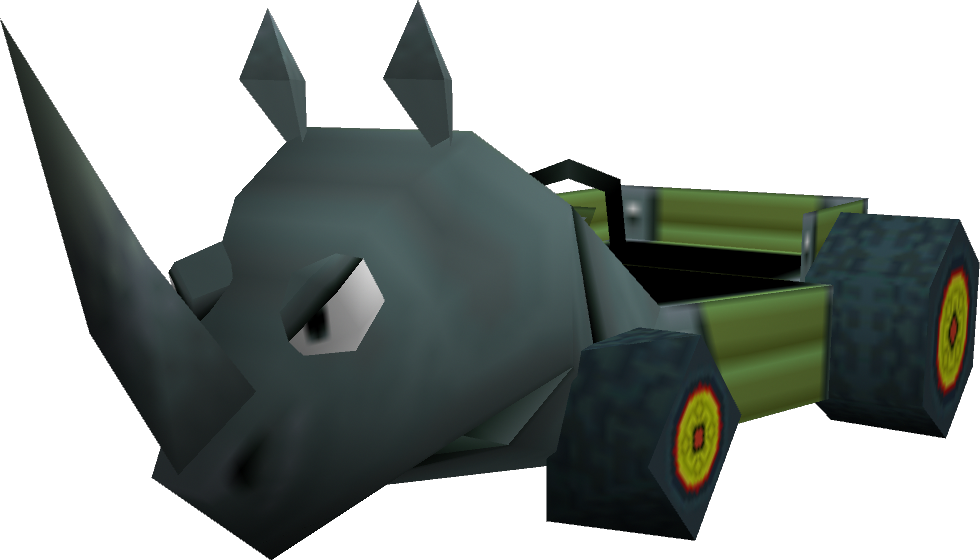
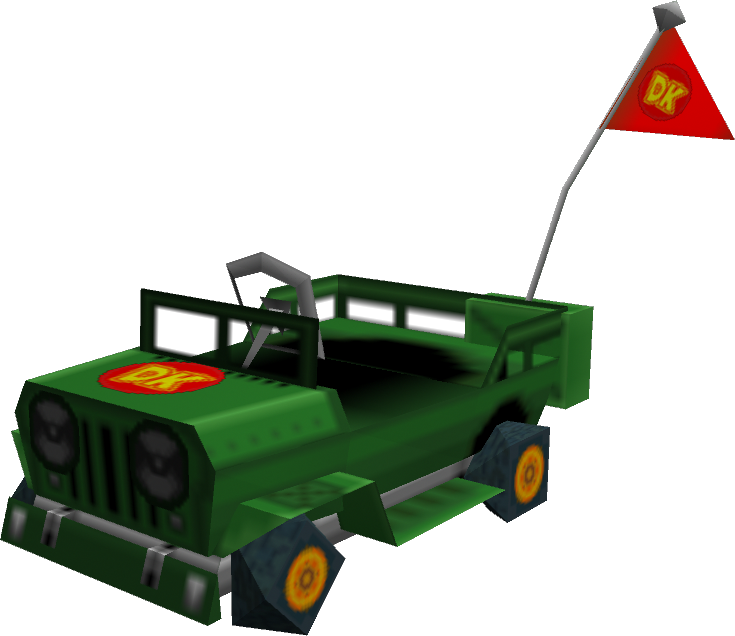
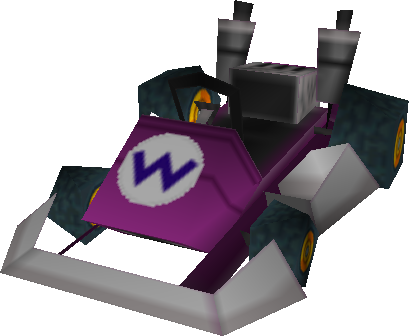
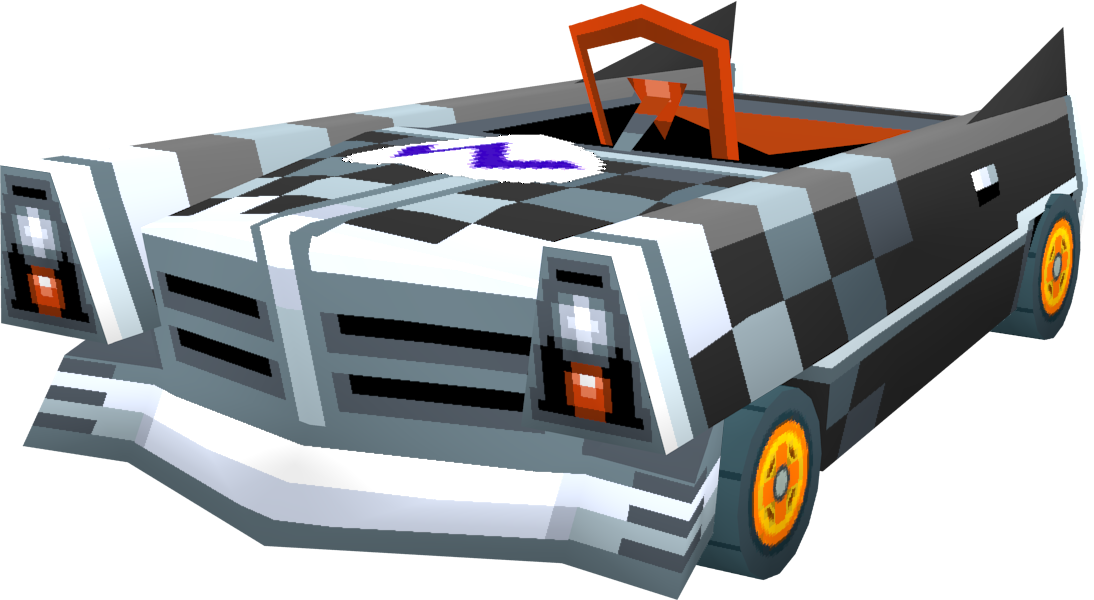
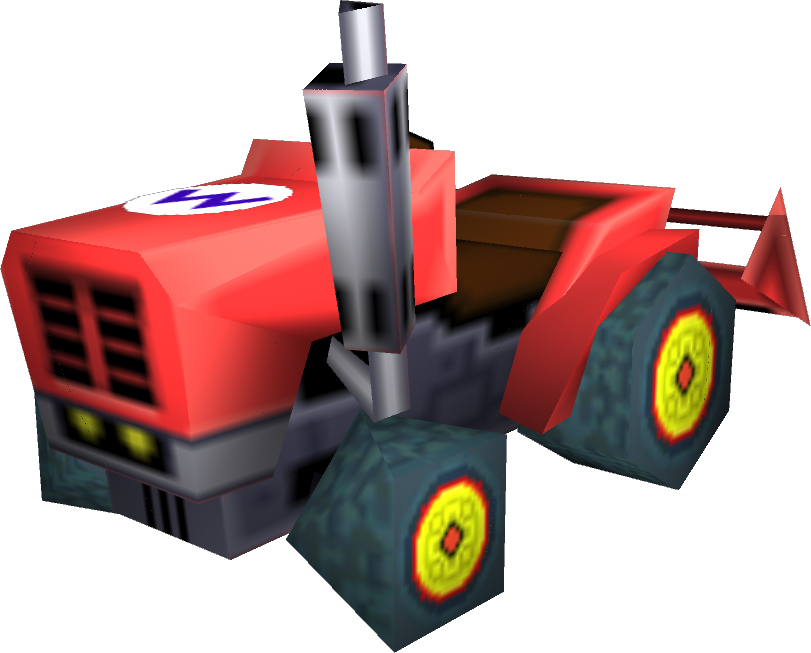
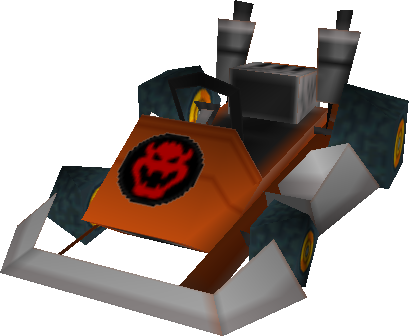
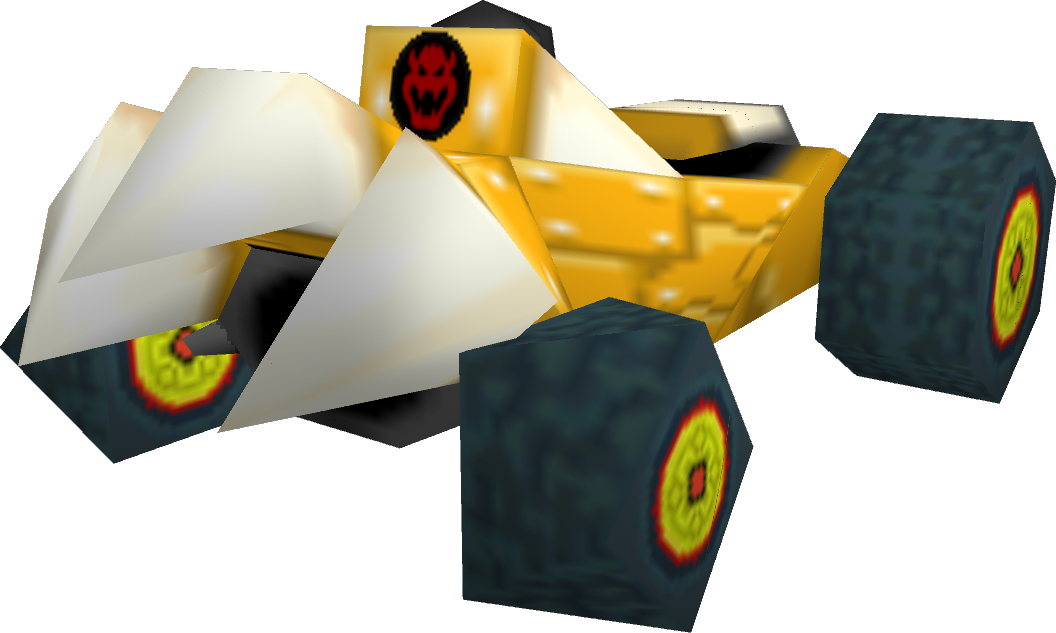
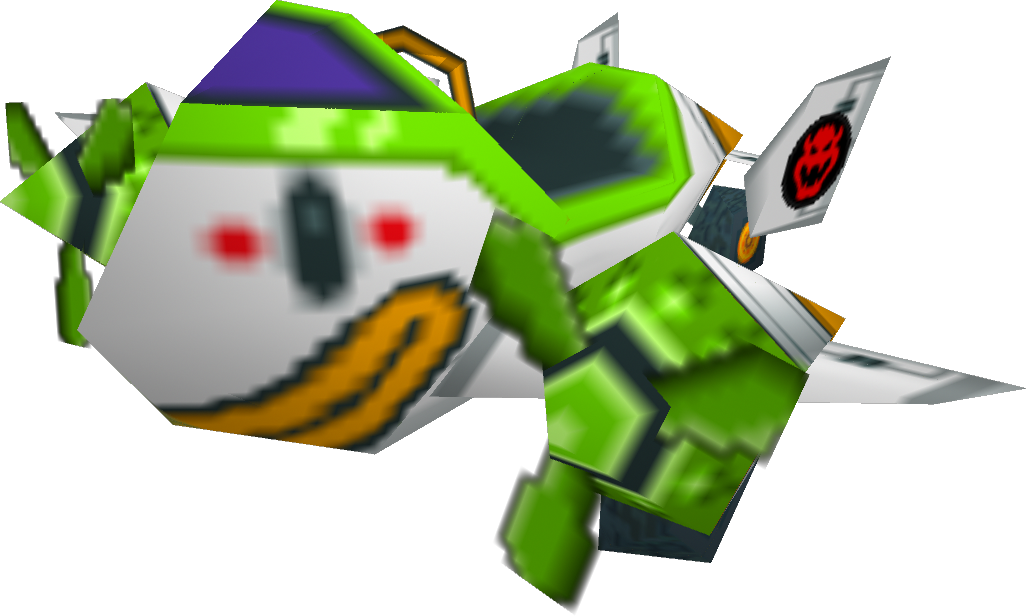
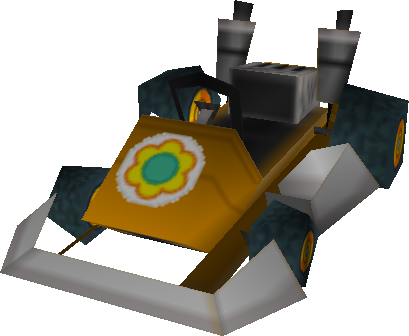
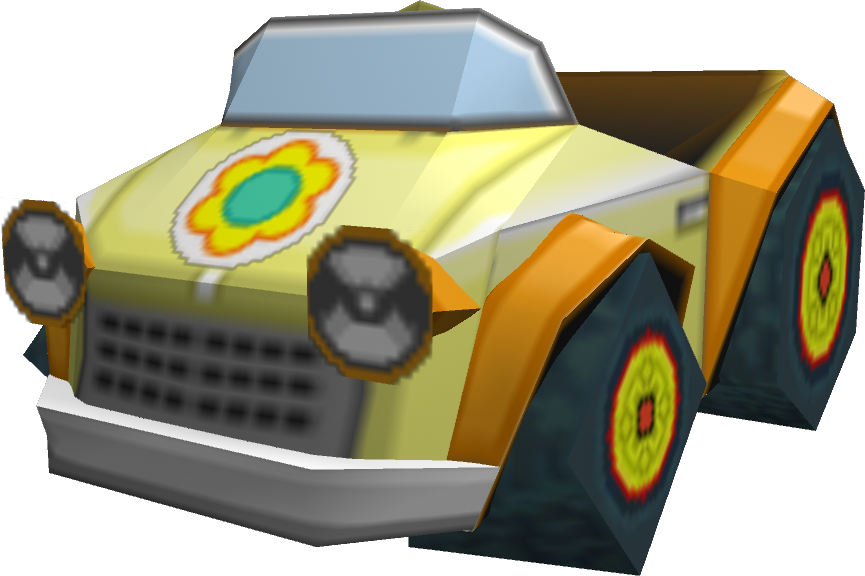
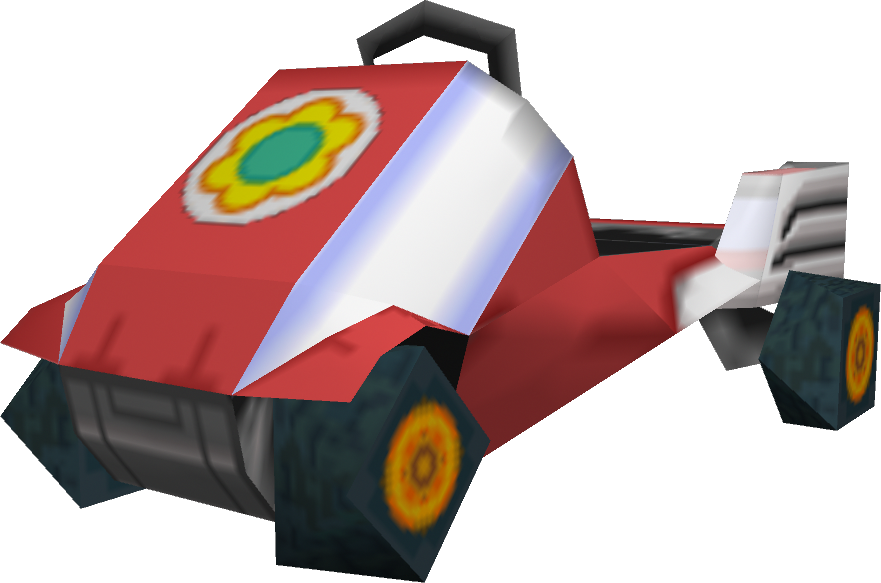
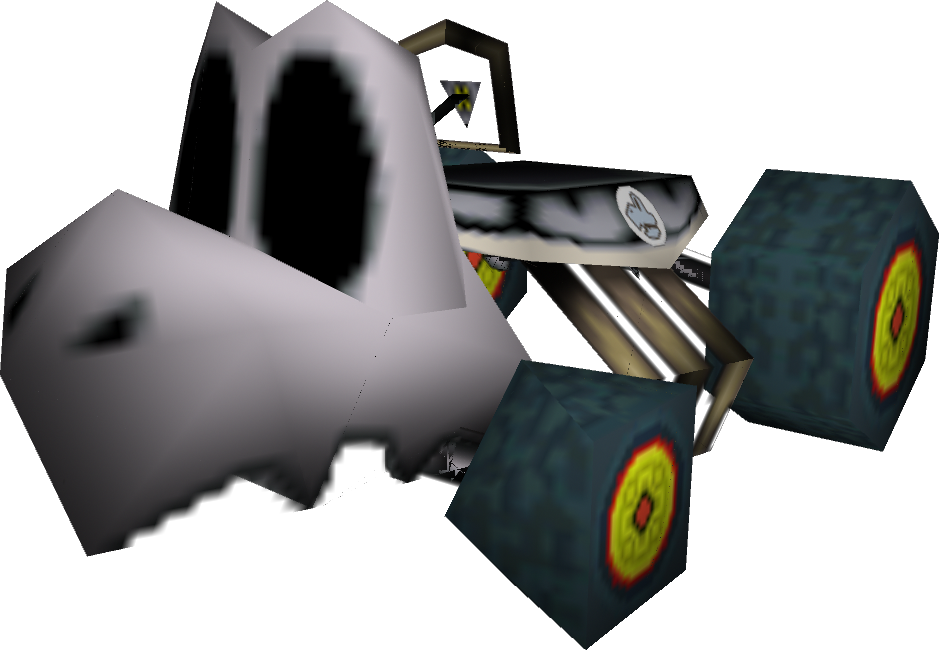
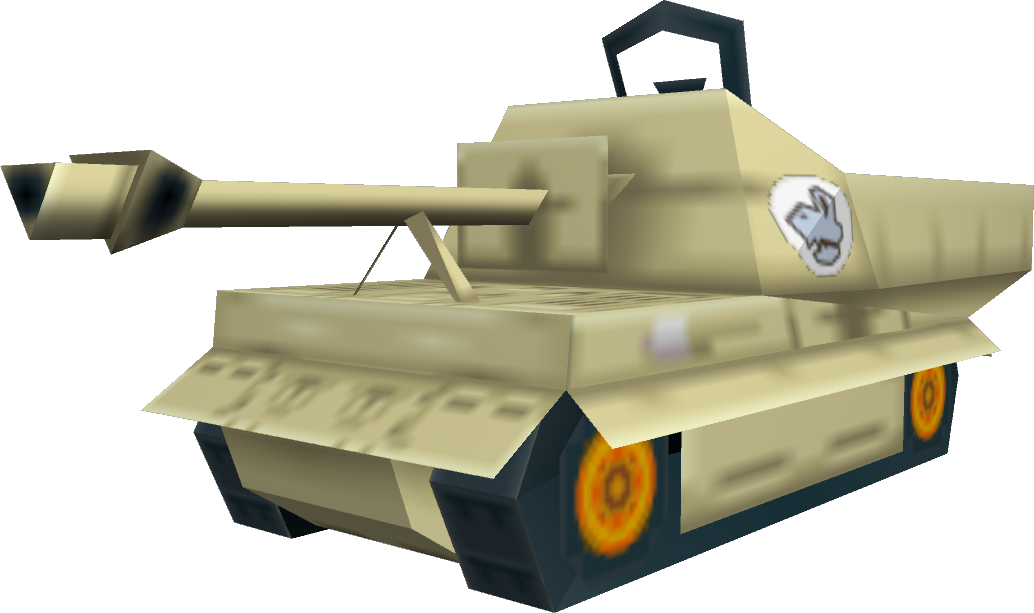
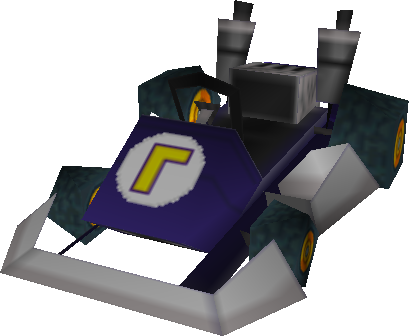
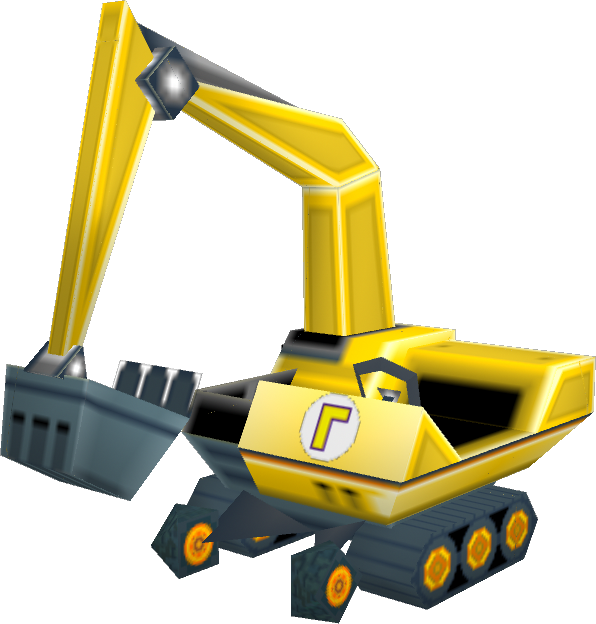
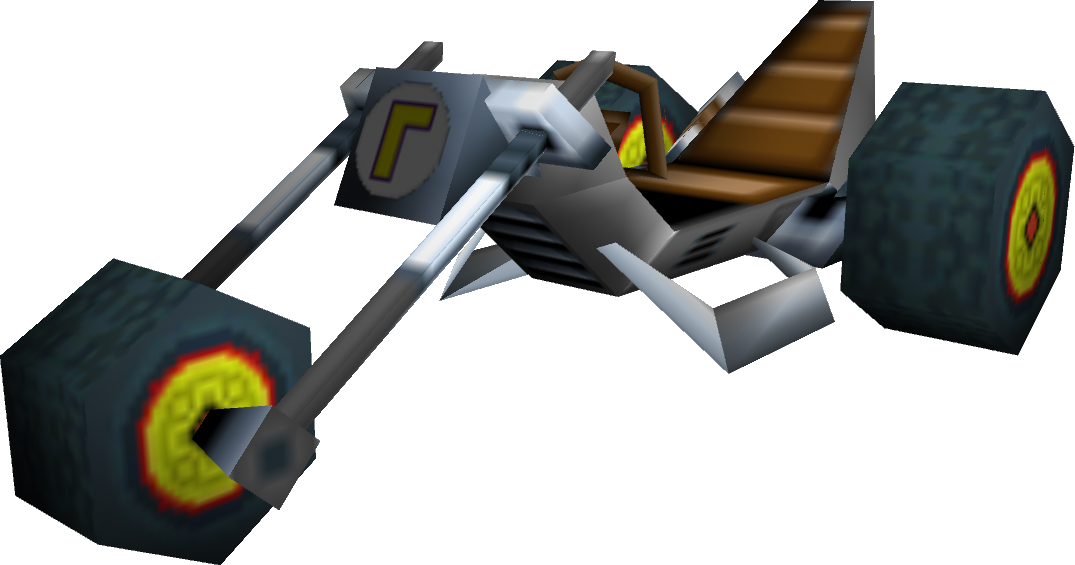
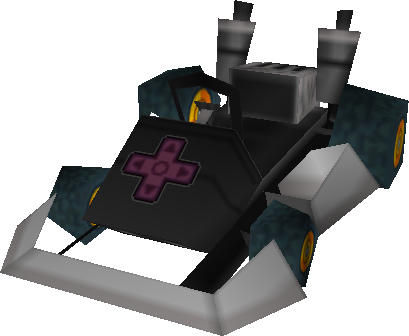
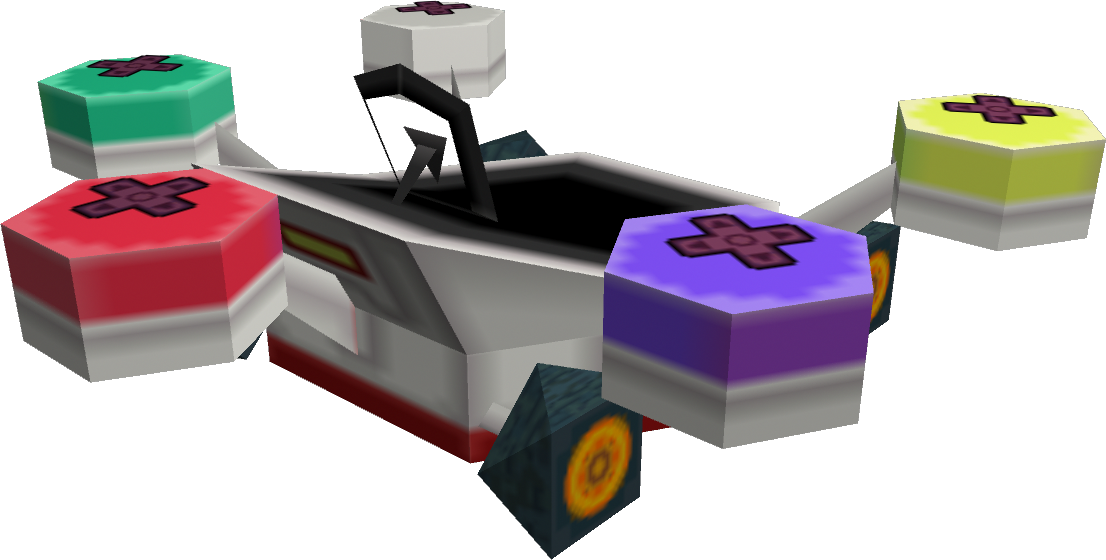
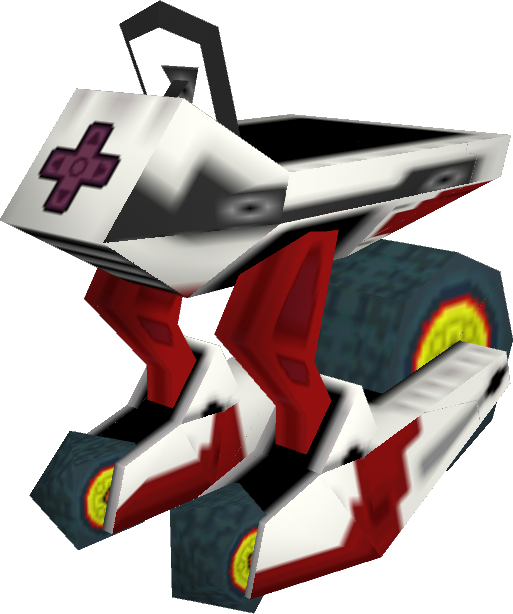
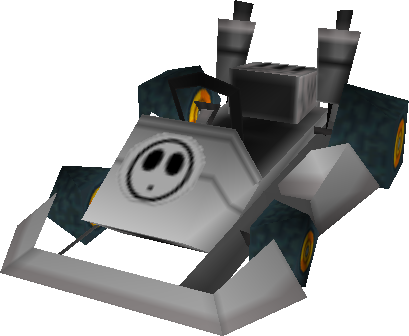
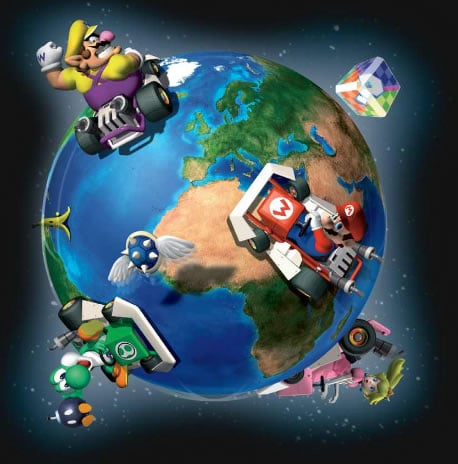
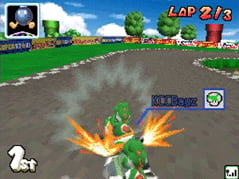
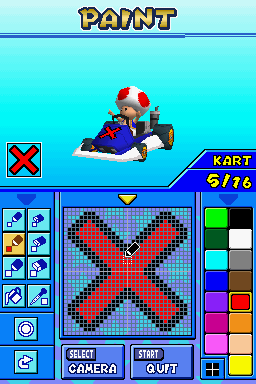
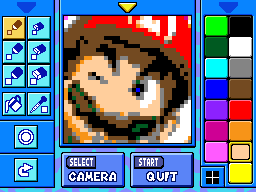

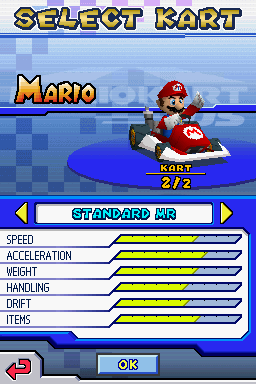
 Item BoxDrive through one to start the roulette. Some are fixed in place; on Shroom Ridge others move along the road.
 MushroomA short burst of speed. In Balloon Battle, ramming a rival while boosting steals a balloon.
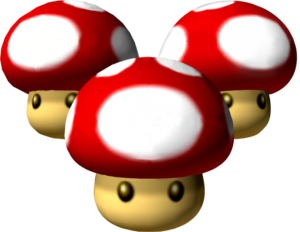 Triple MushroomsThree boosts, one for each press of the button.
 Golden MushroomAs many boosts as you can manage for a short time.
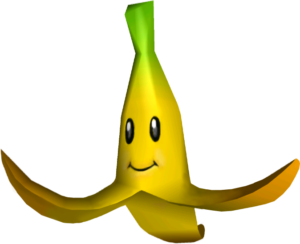 BananaSpins out any kart that runs over it. Hold the button to trail it behind you as a shield.
 Triple BananasThree peels trailed behind the kart and dropped one at a time.
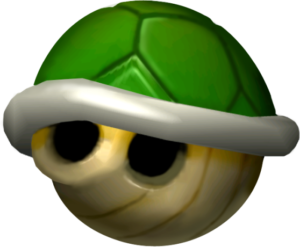 Green ShellRuns dead straight and bowls over whichever kart it reaches first. Fired backwards it moves more slowly.
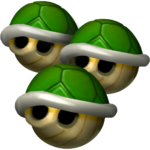 Triple Green ShellsThree shells that circle the kart until you launch them.
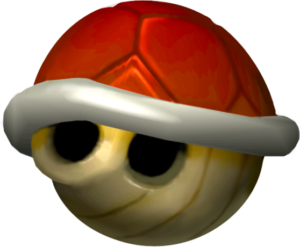 Red ShellHomes in on the next kart ahead and rolls it over.
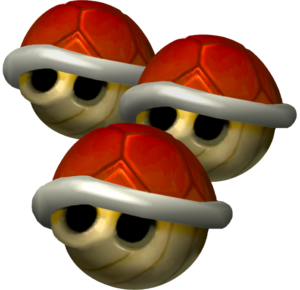 Triple Red ShellsThree homing shells, fired one at a time.
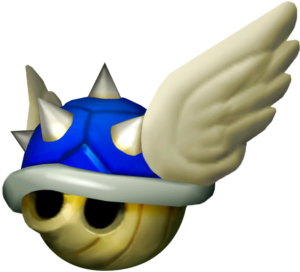 Spiny ShellFlies to the leader and explodes, catching anyone else in the blast.
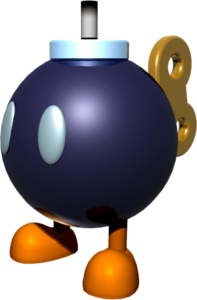 Bob-ombGoes off after a short delay, or sooner if a kart comes close.
 Fake Item BoxLooks like an Item Box and knocks over whoever drives into it. It has its own icon on the touch-screen map.
 StarA spell of invincibility that flattens every kart you touch.
 LightningEvery rival spins out, drops their items and shrinks for a while.
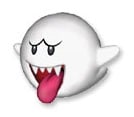 BooTurns you invisible and untouchable for a few seconds and steals an item from a rival.
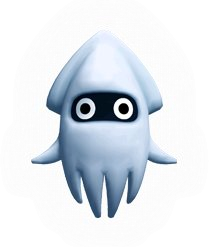 BlooperNew. Squirts ink over the screens of the drivers ahead of you, hiding the road.
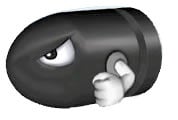 Bullet BillNew. Turns your kart into a Bullet Bill that steers itself up the course, bowling over anyone in the way. A gift for whoever is running last.
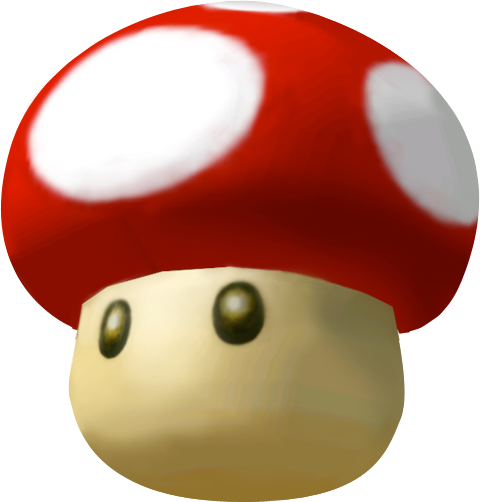
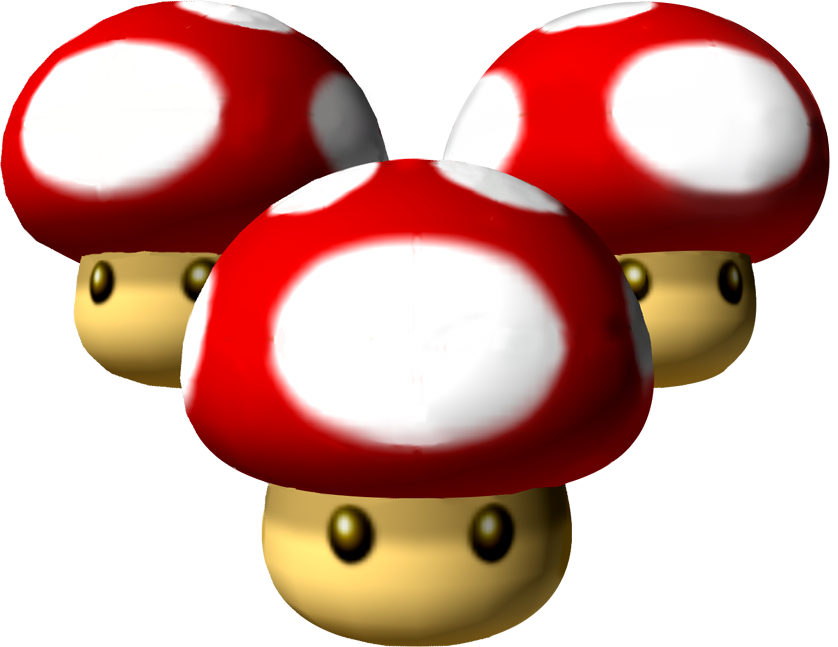
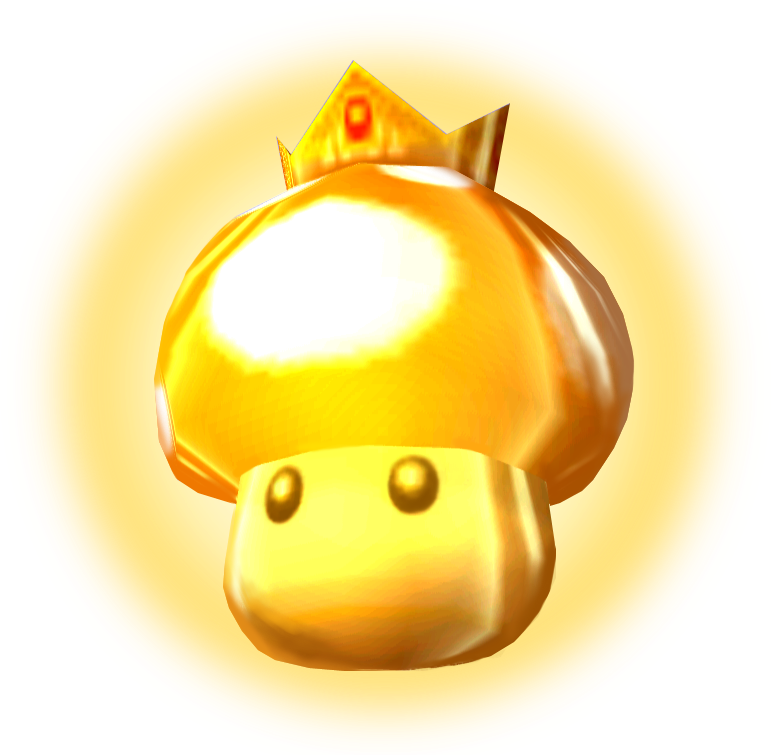
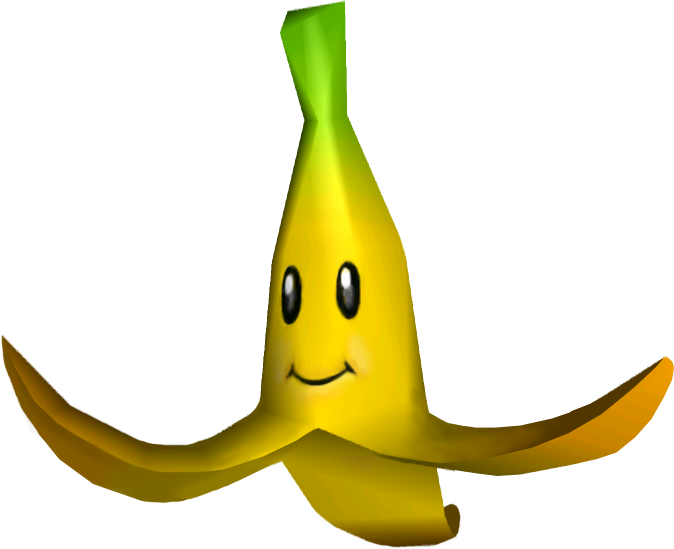
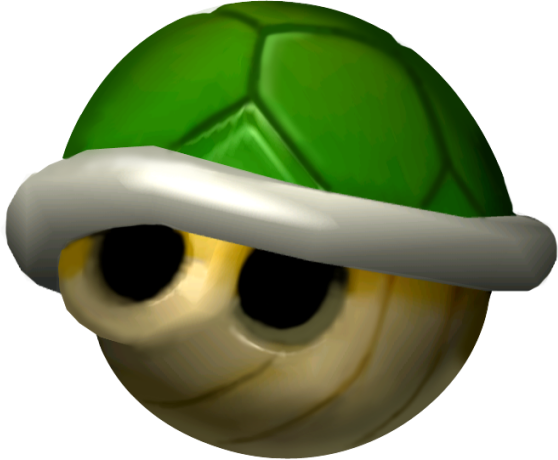
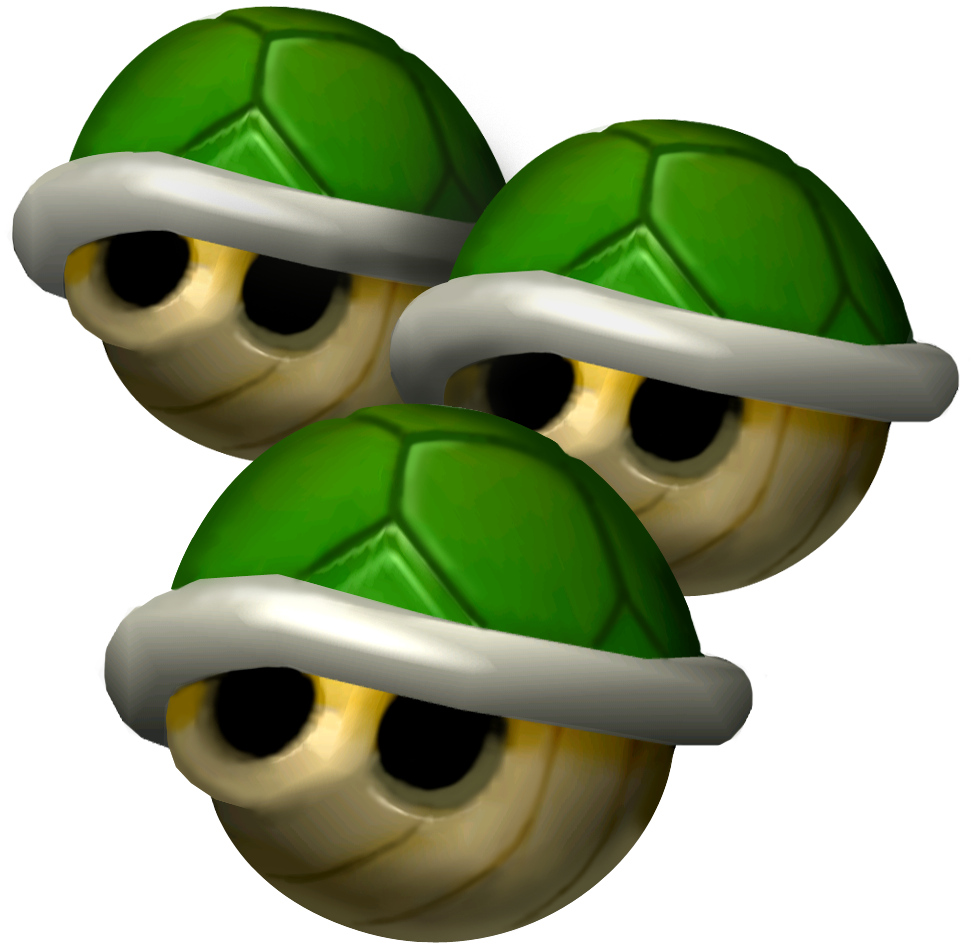
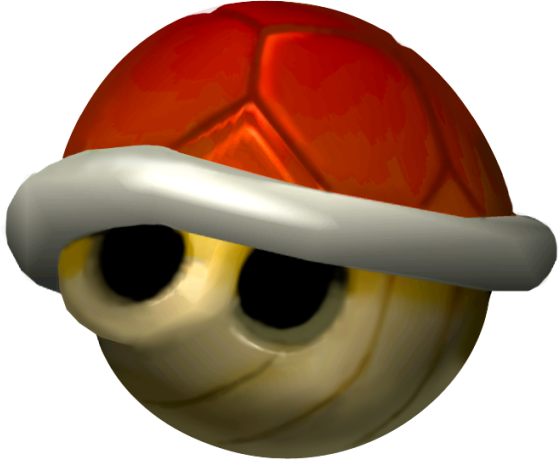
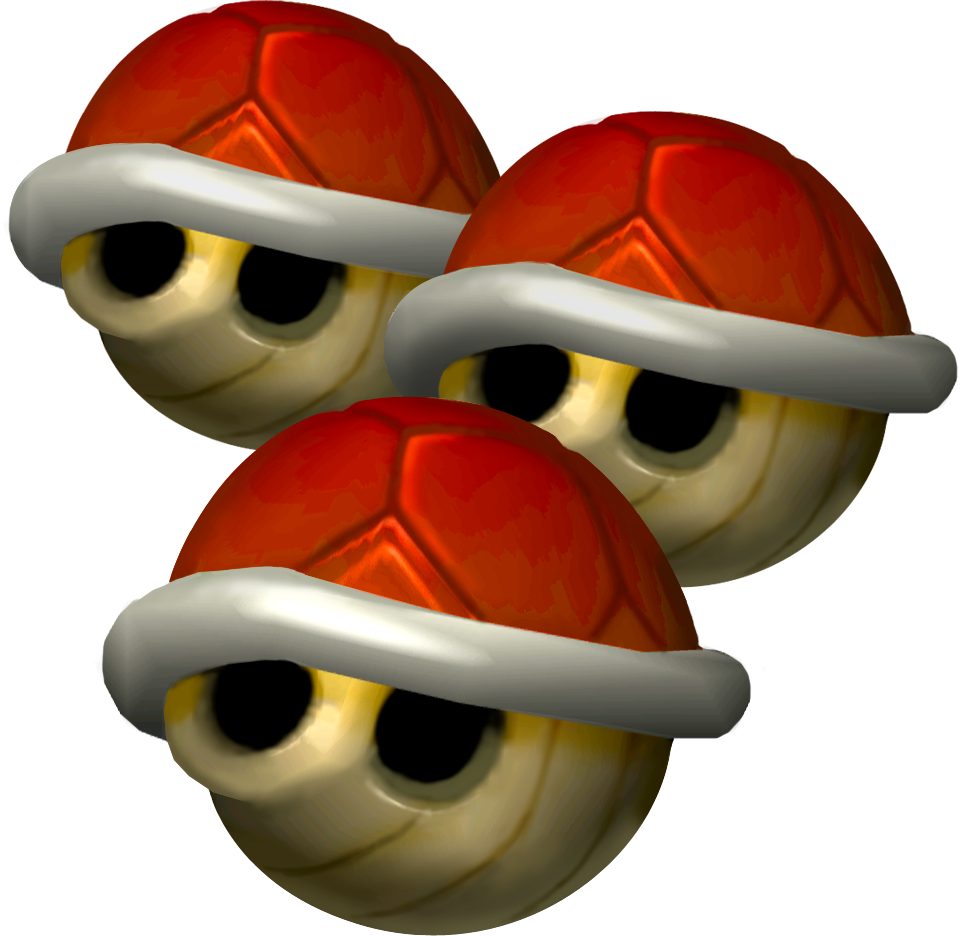
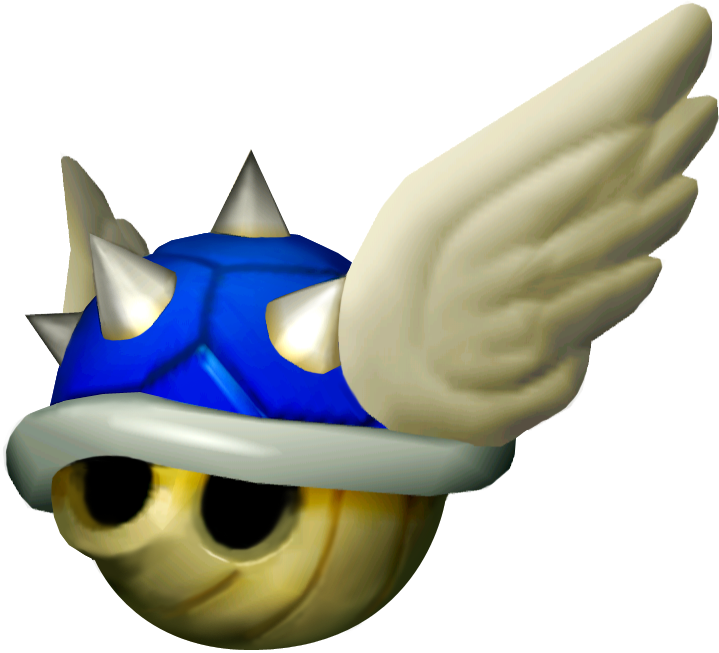
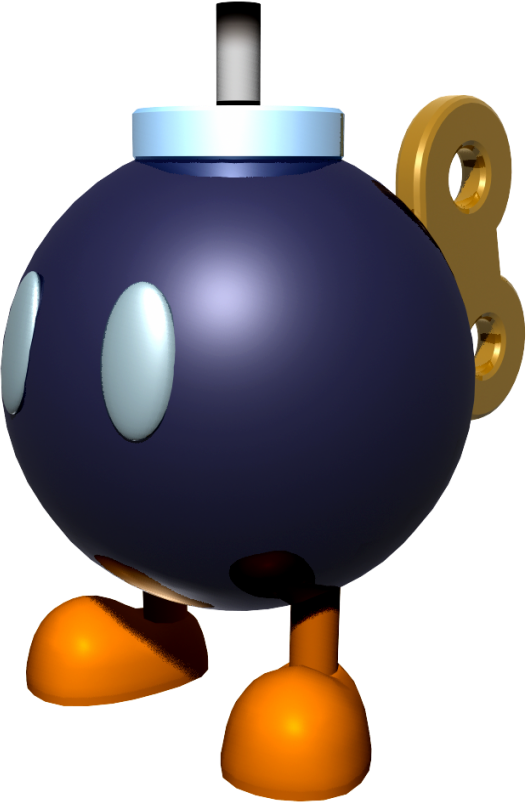


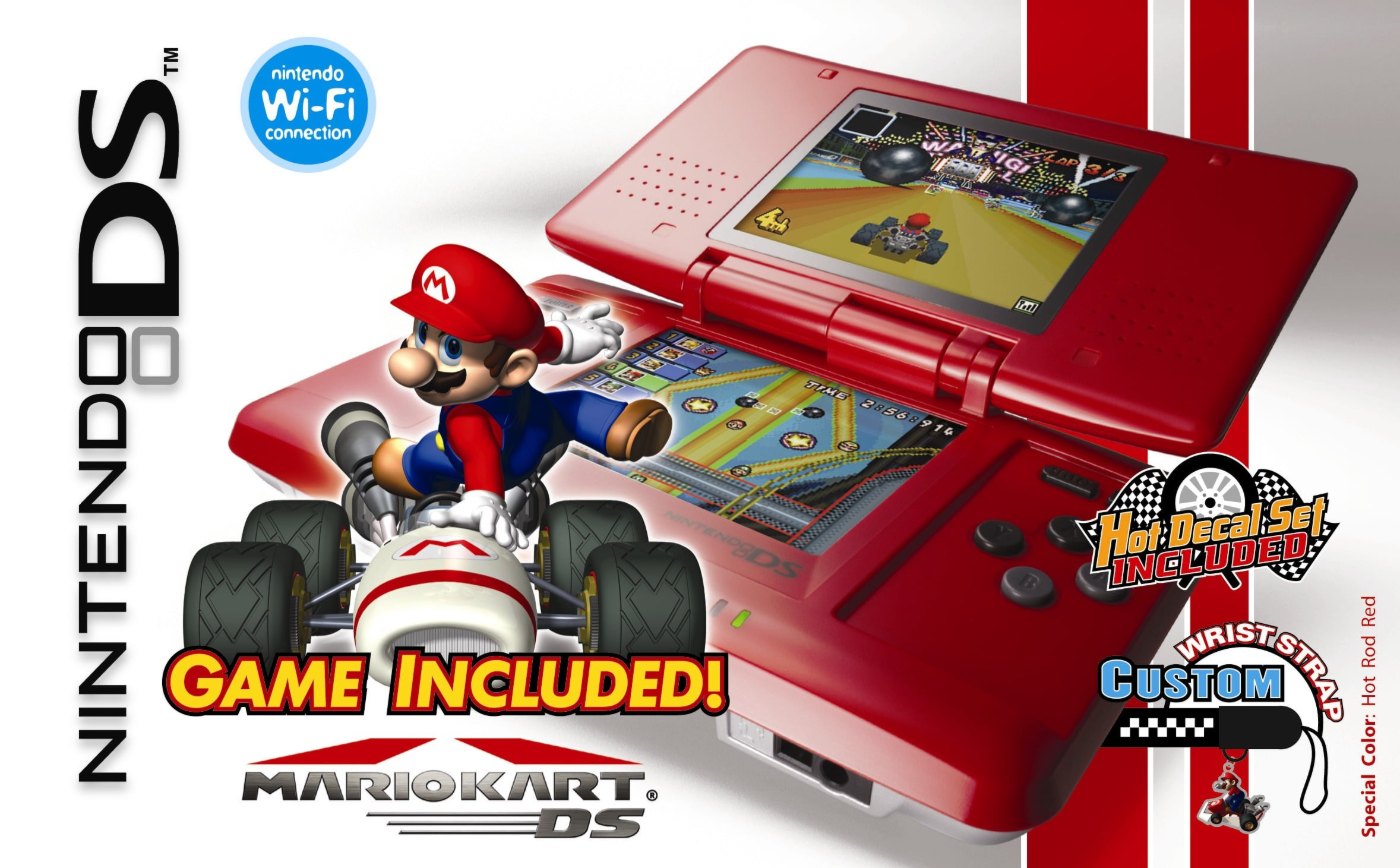 The red Nintendo DS bundleConsole bundle · North America · from 28 November 2005Two weeks after the game came out, Nintendo of America packed it with a new red Nintendo DS, a chequered-flag wrist strap and a sheet of racing decals. Canada and Europe had bundles of their own.
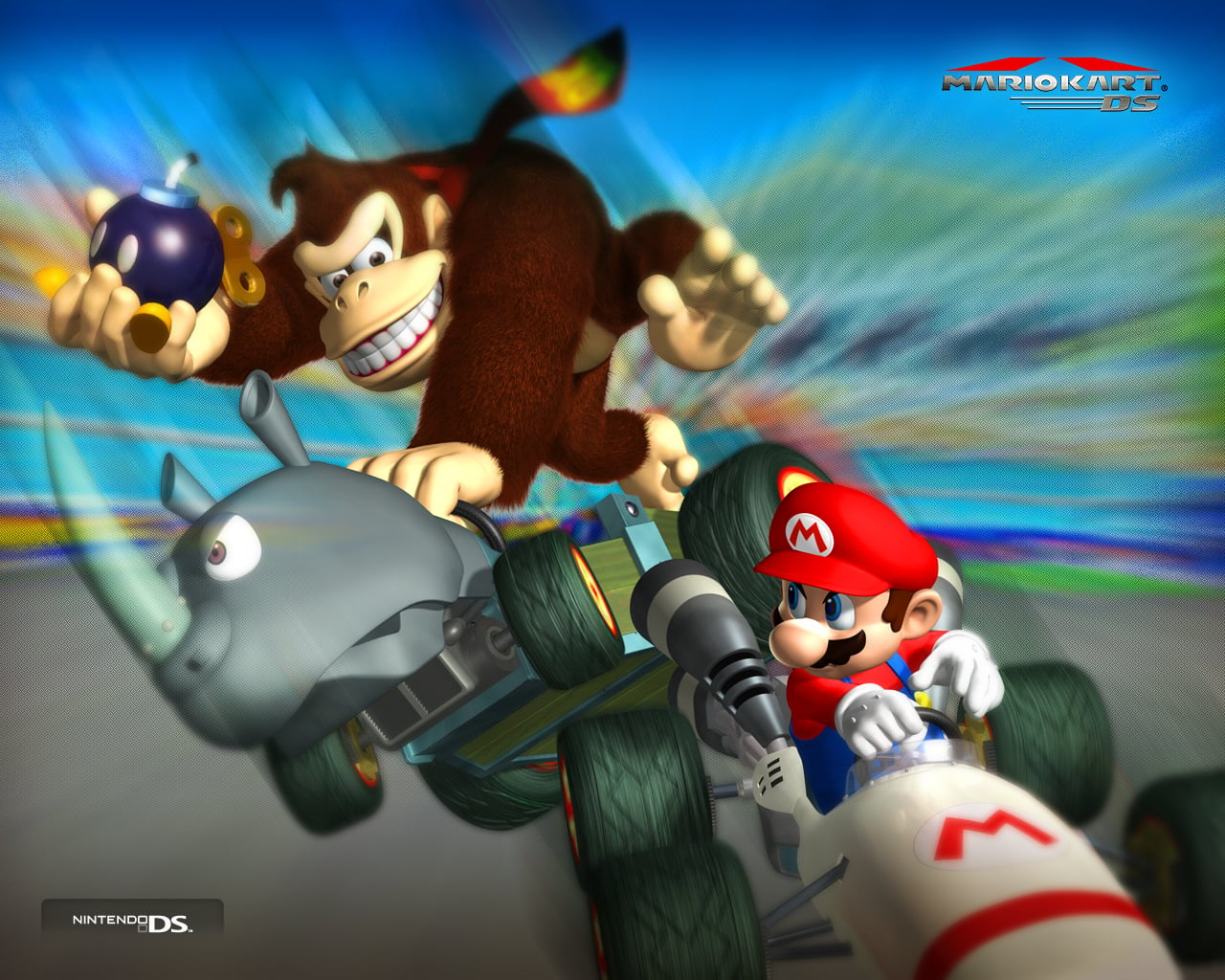 Wallpapers and buddy iconsOfficial downloads · 2005Nintendo issued desktop wallpapers and AOL Instant Messenger buddy icons for the game, a very 2005 piece of promotion. Super Mario Wiki archives fourteen of the former and six of the latter.
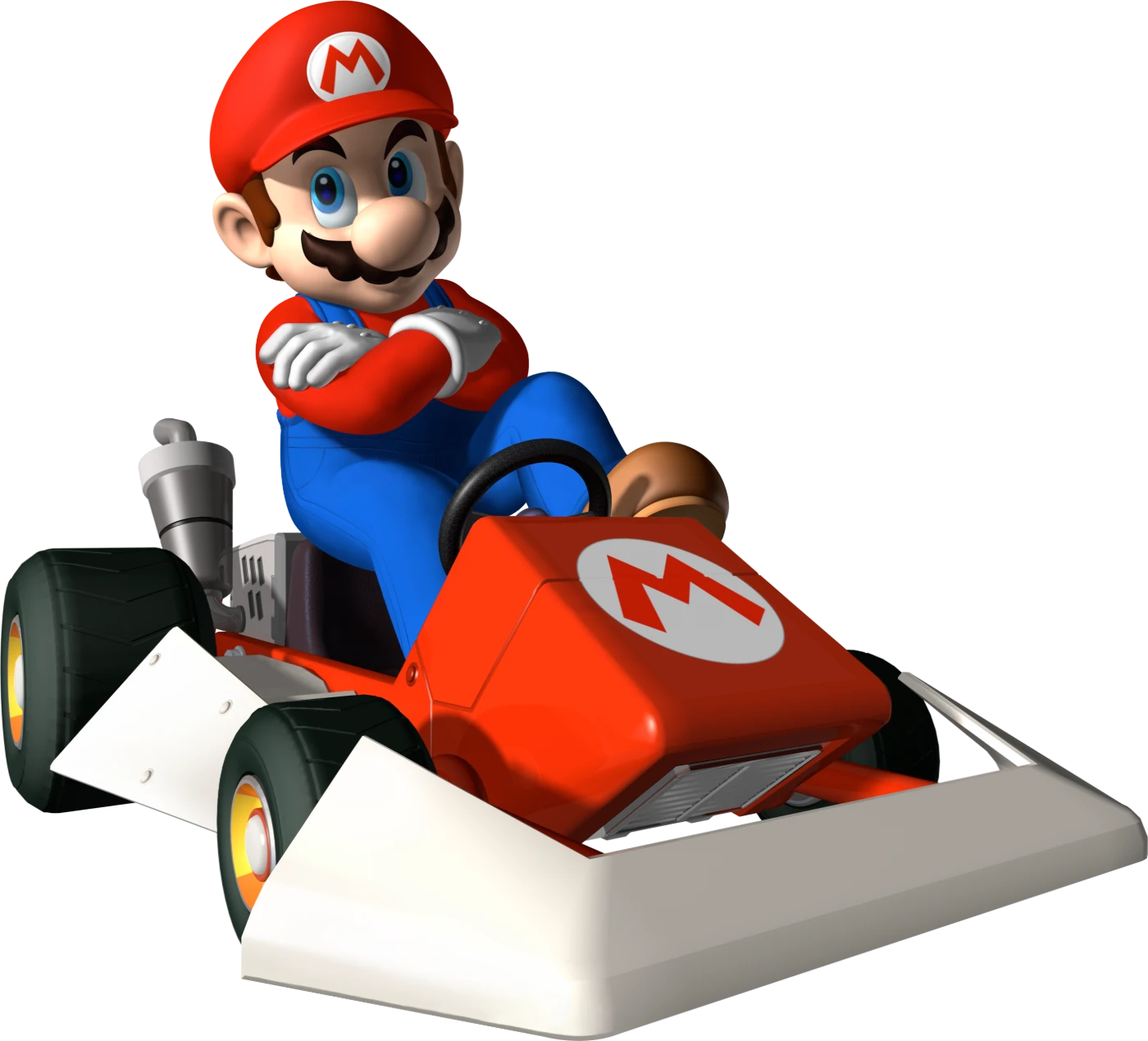 MarioMedium · starter
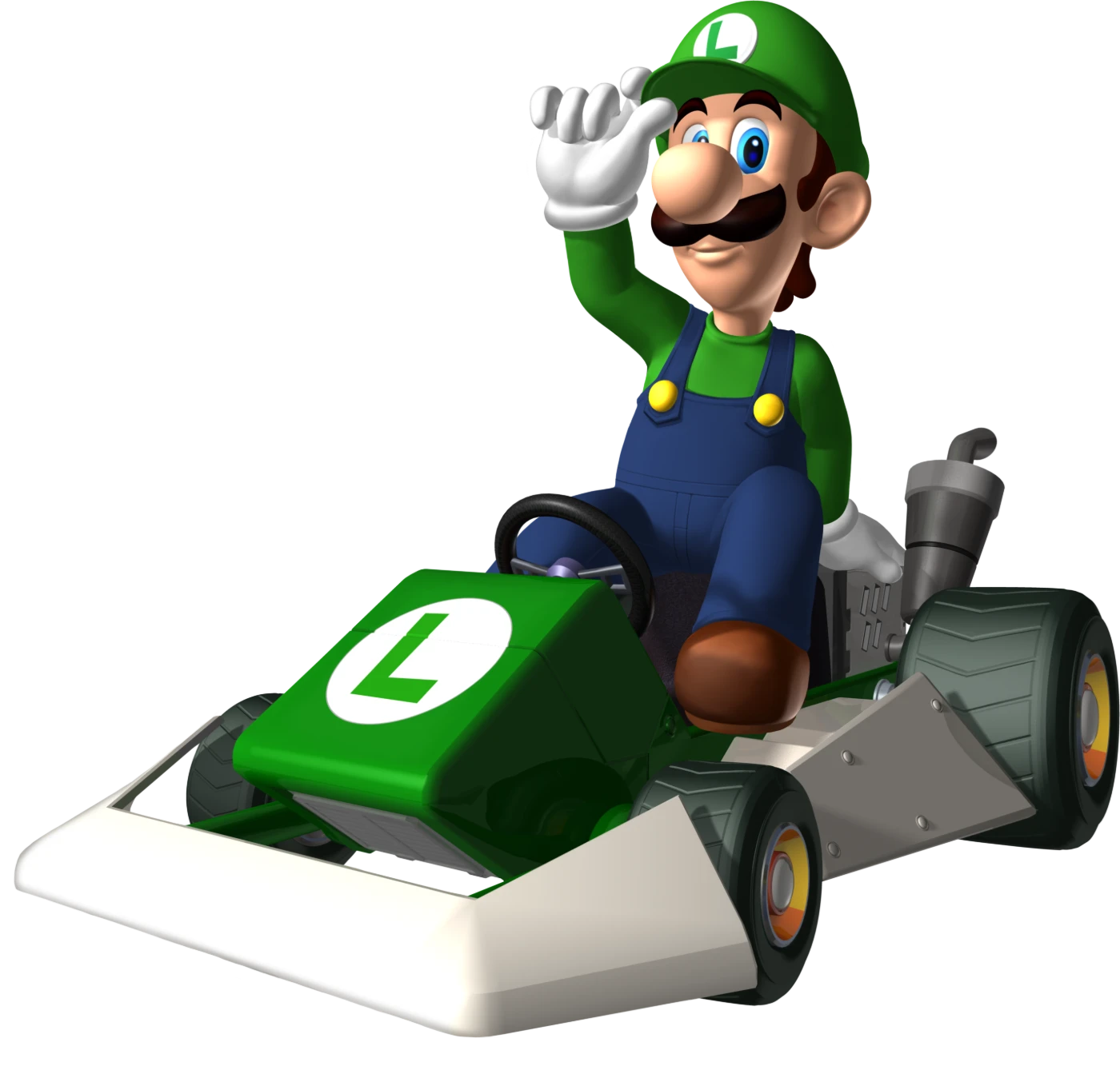 LuigiMedium · starter
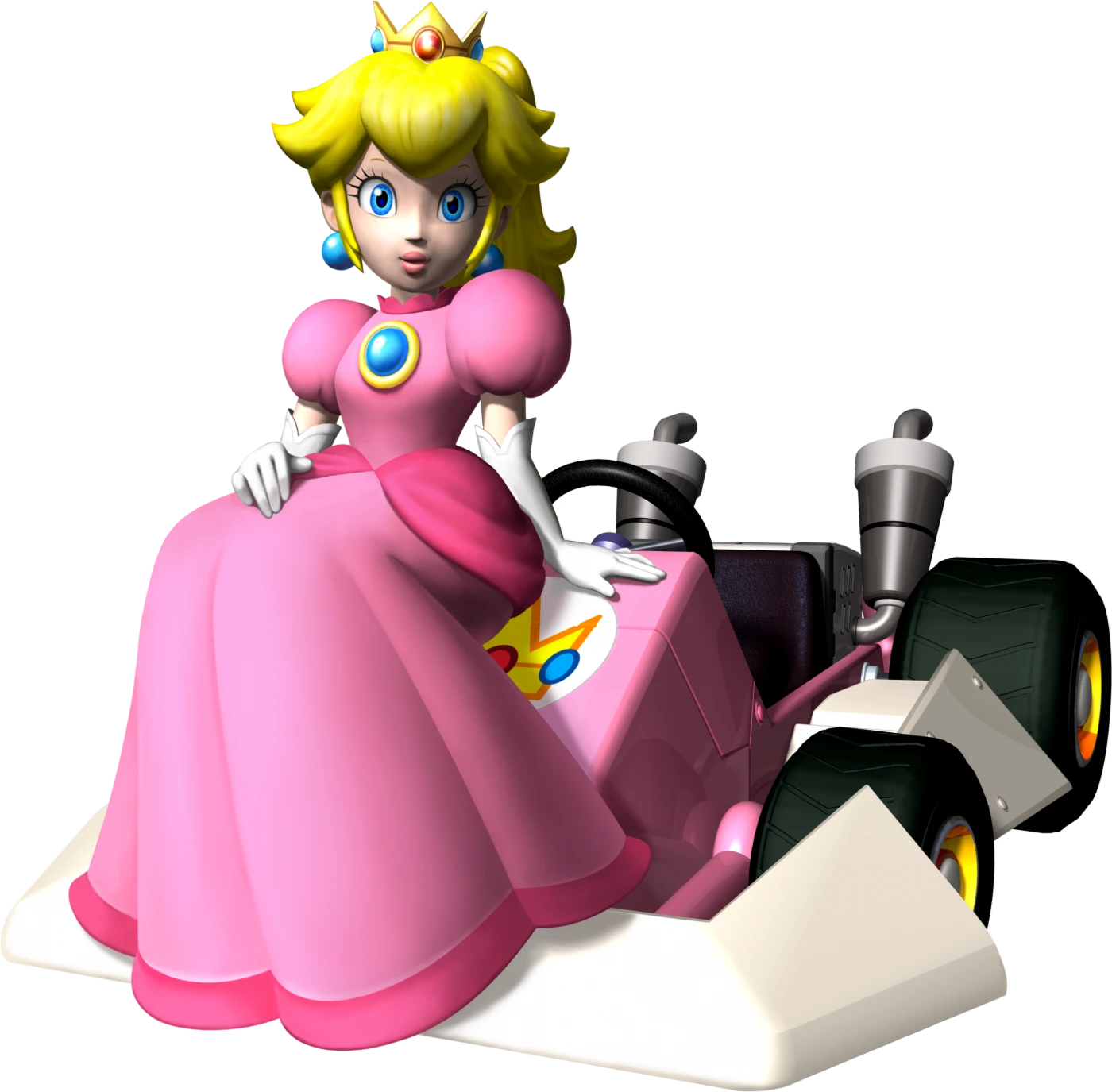 PeachLight · starter
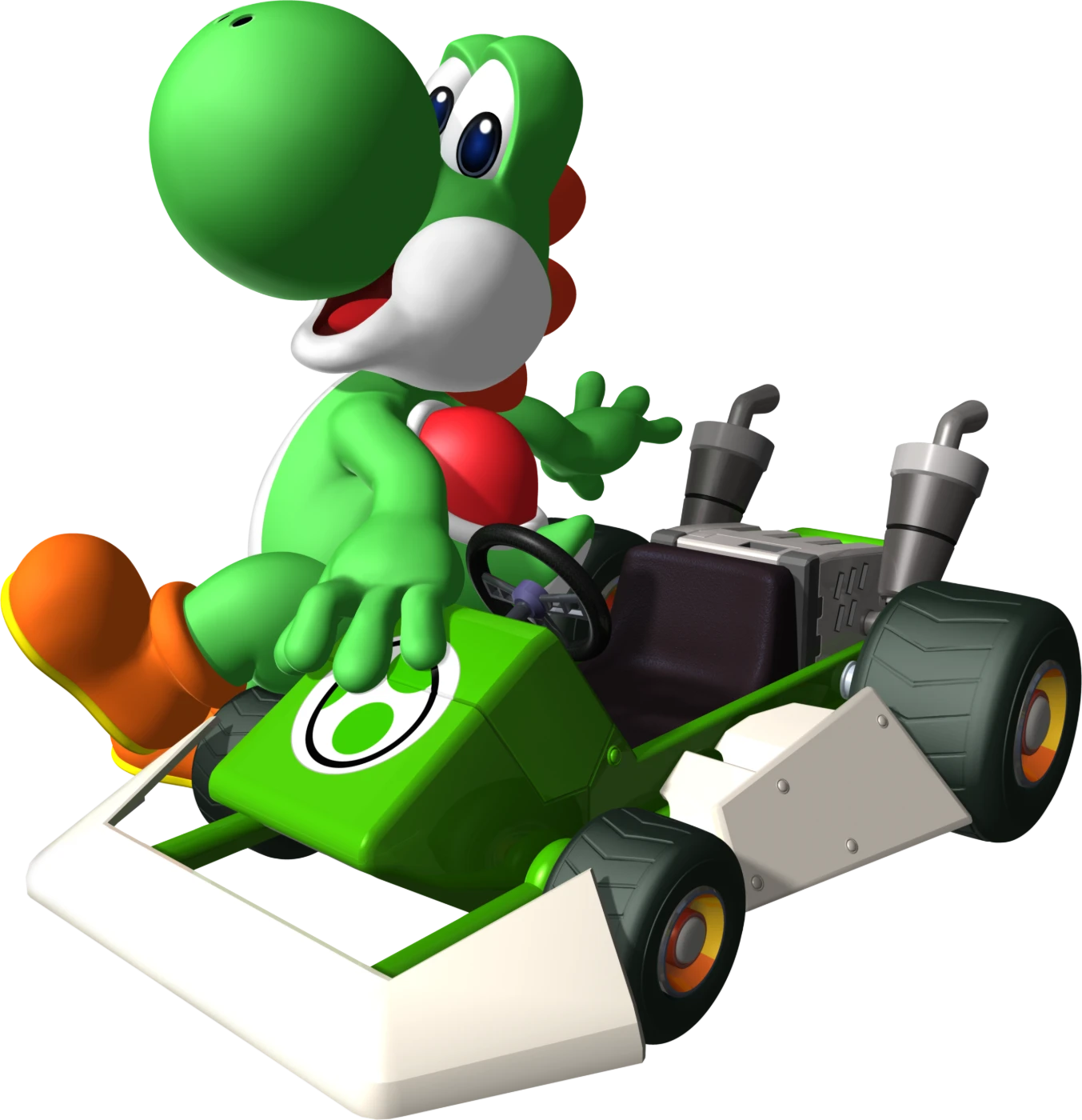 YoshiLight · starter
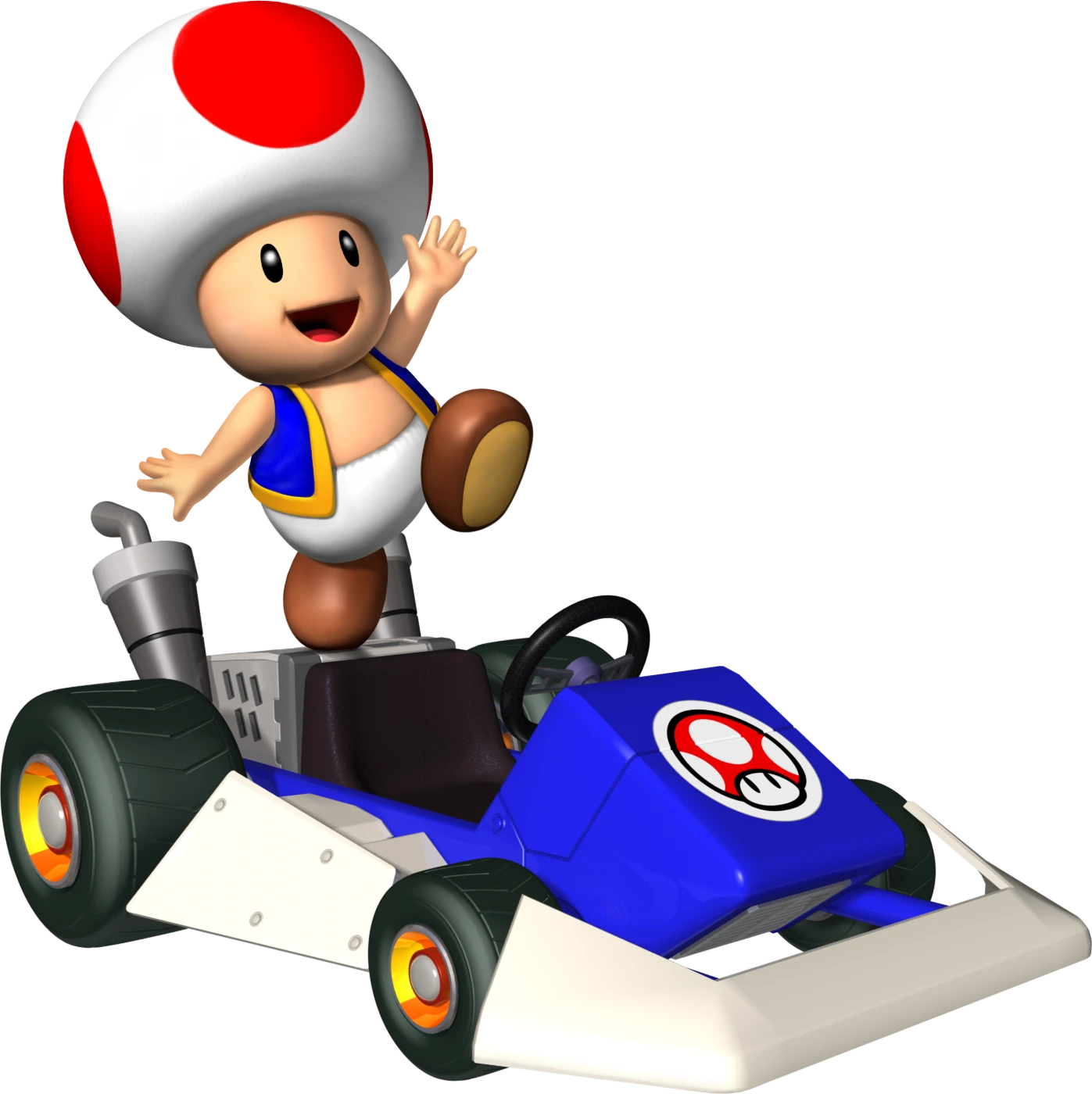 ToadLight · starter
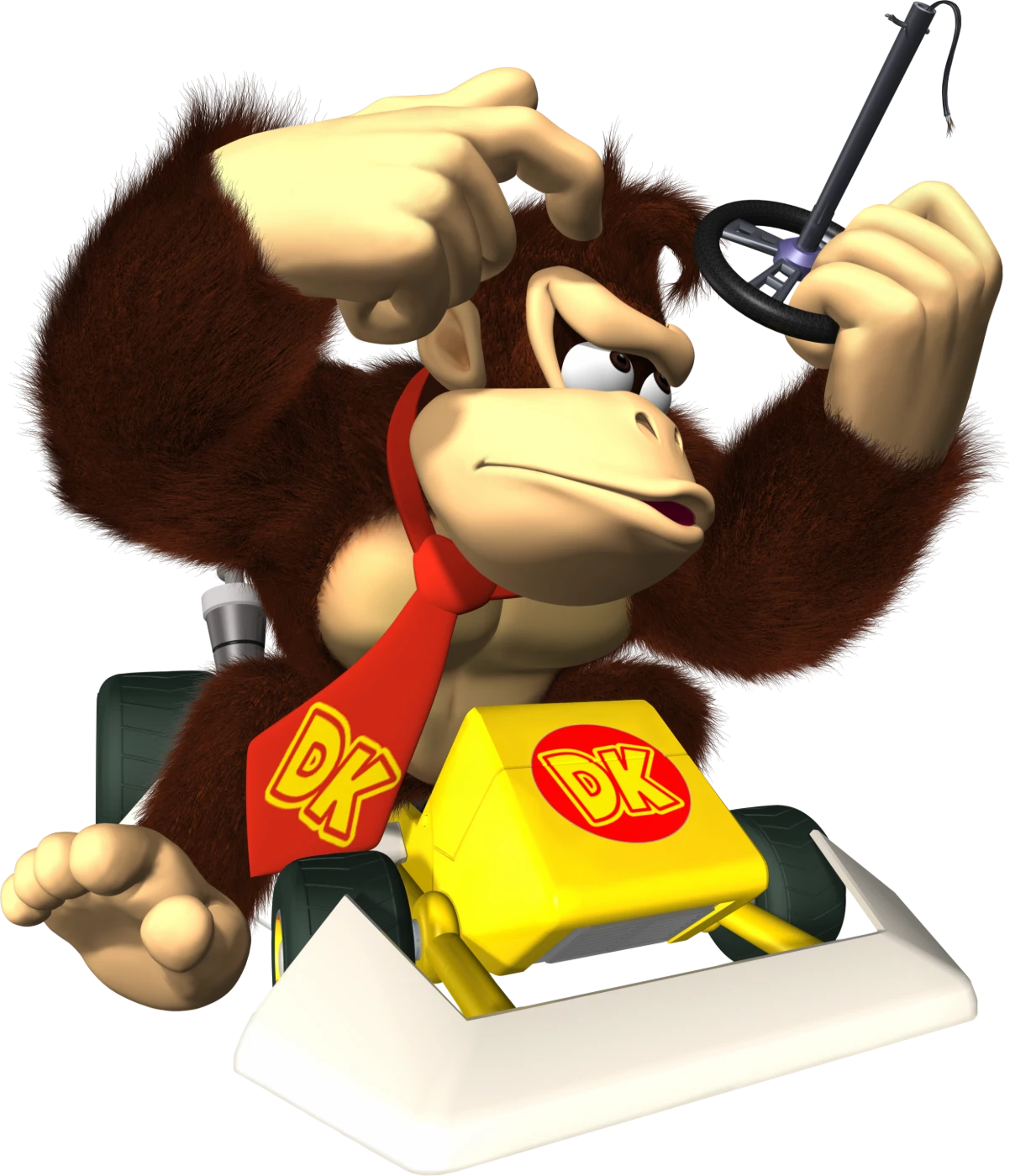 Donkey KongHeavy · starter
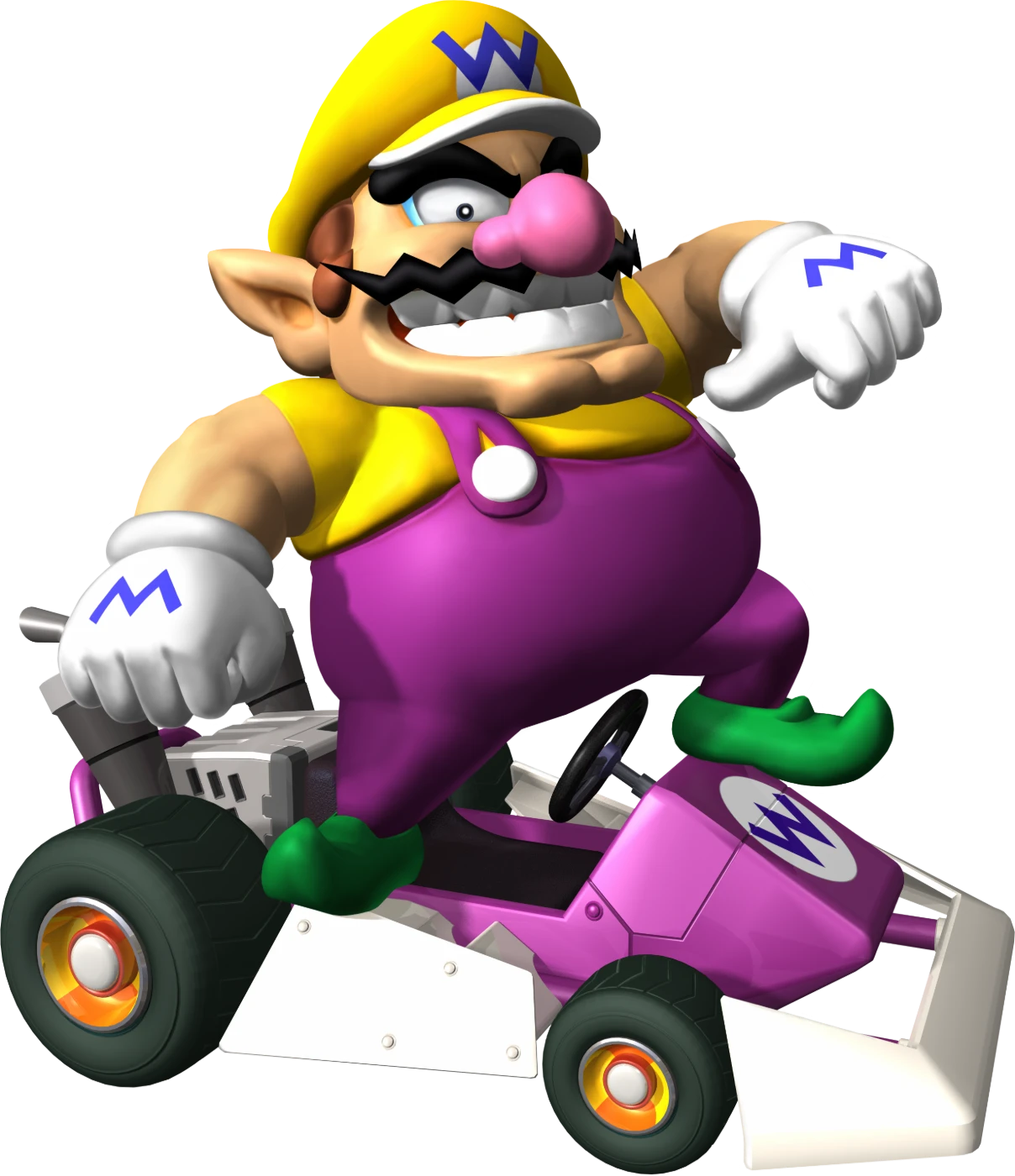 WarioHeavy · starter
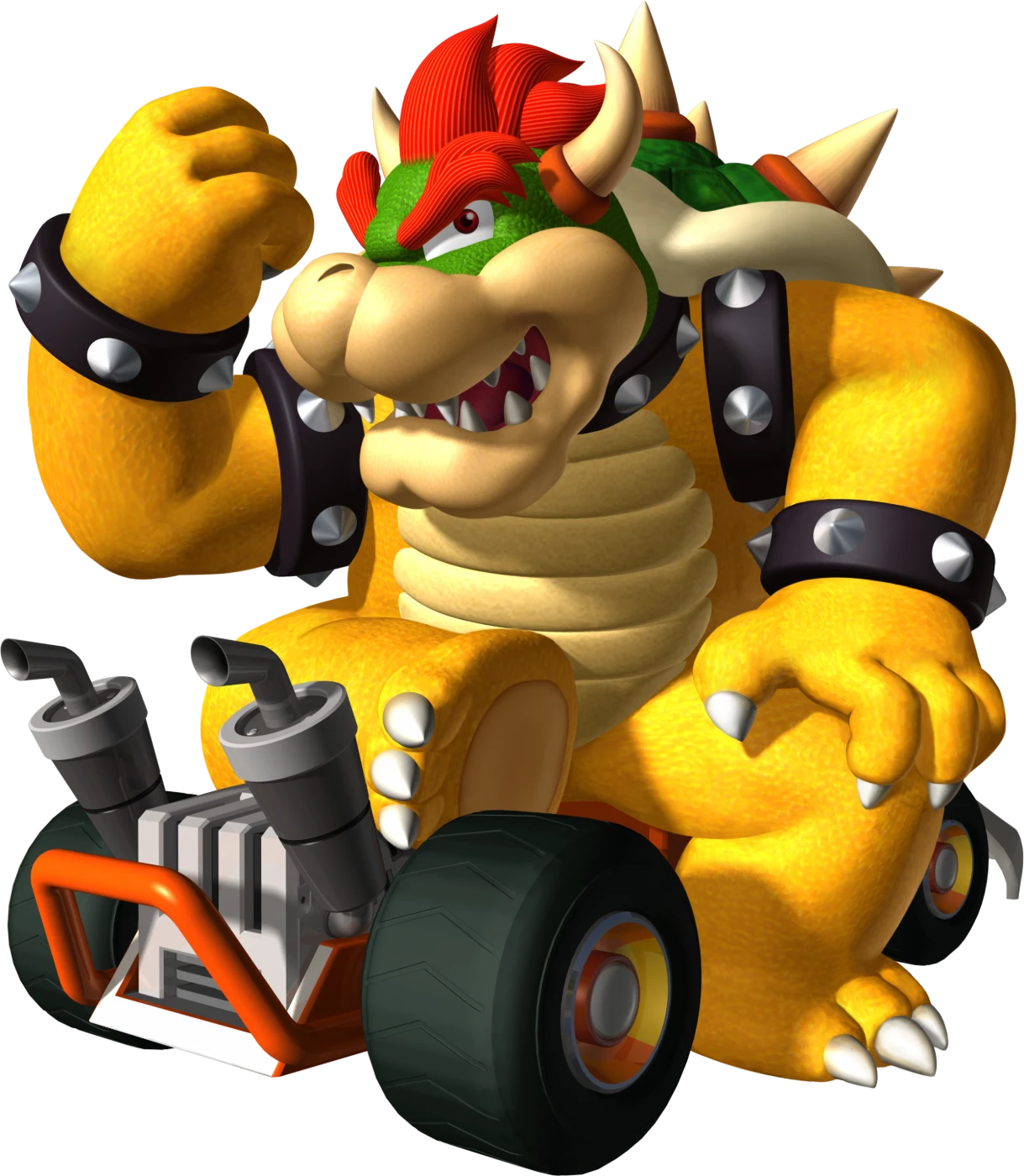 BowserHeavy · starter
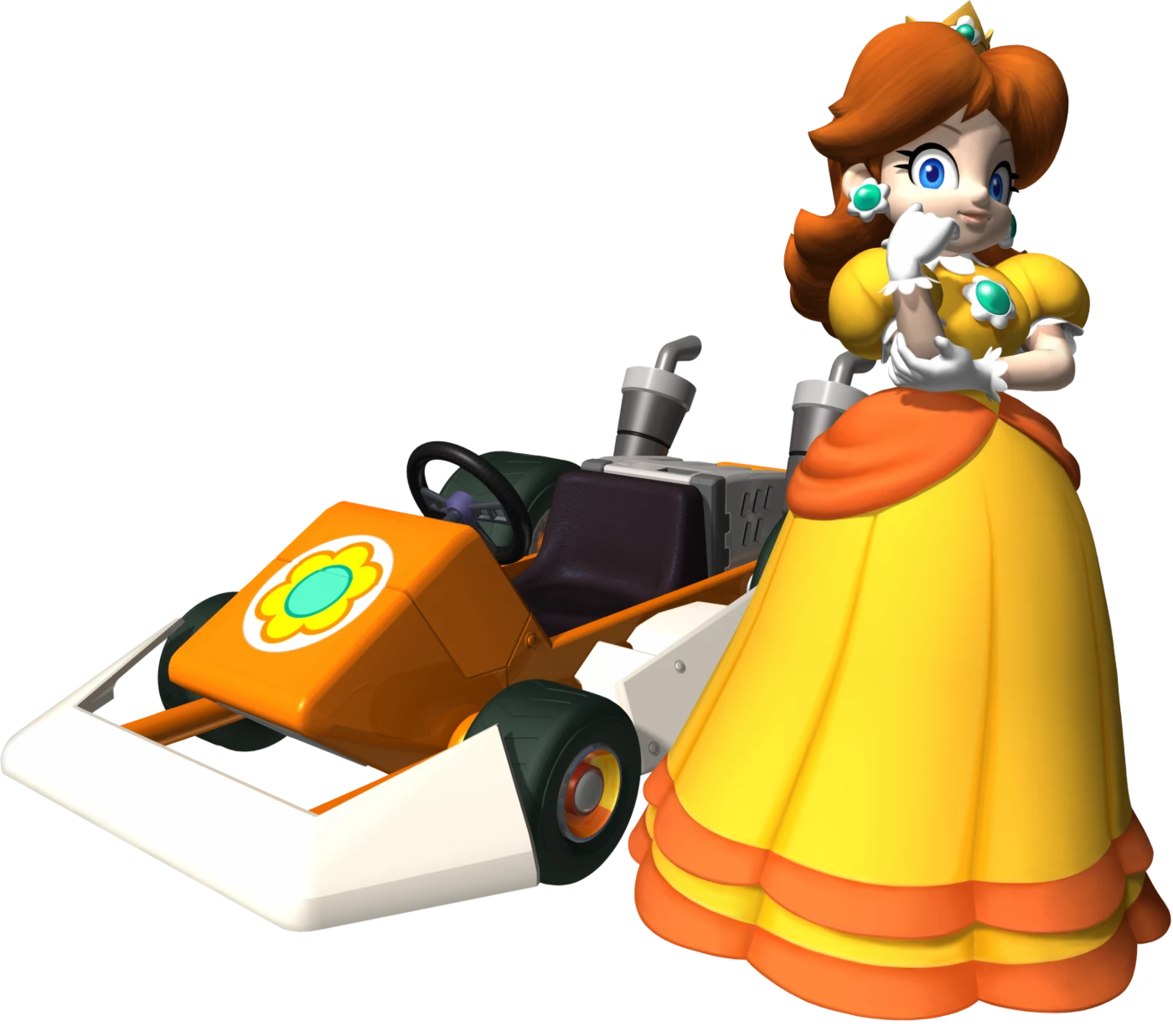 DaisyMedium · unlockable
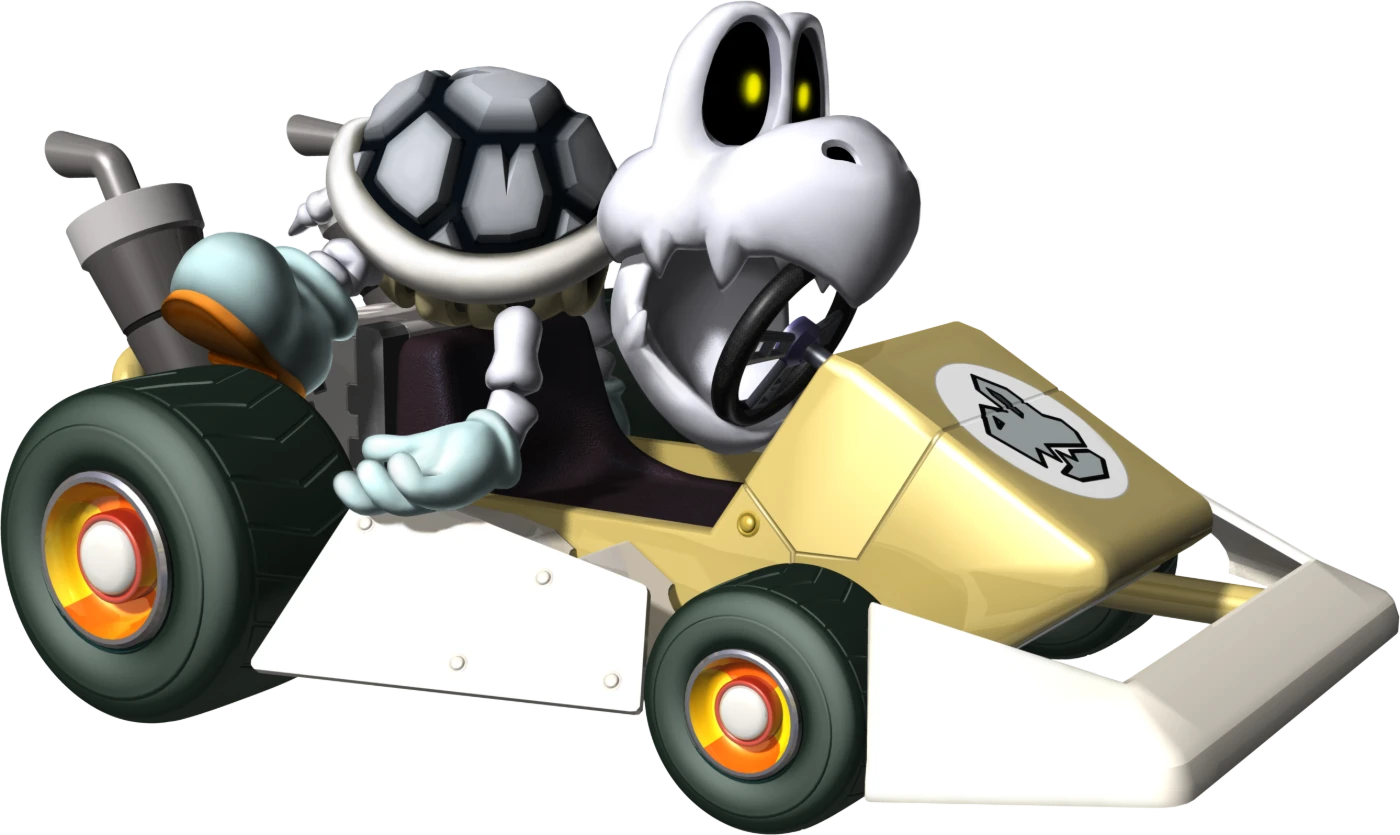 Dry BonesLight · unlockable · new
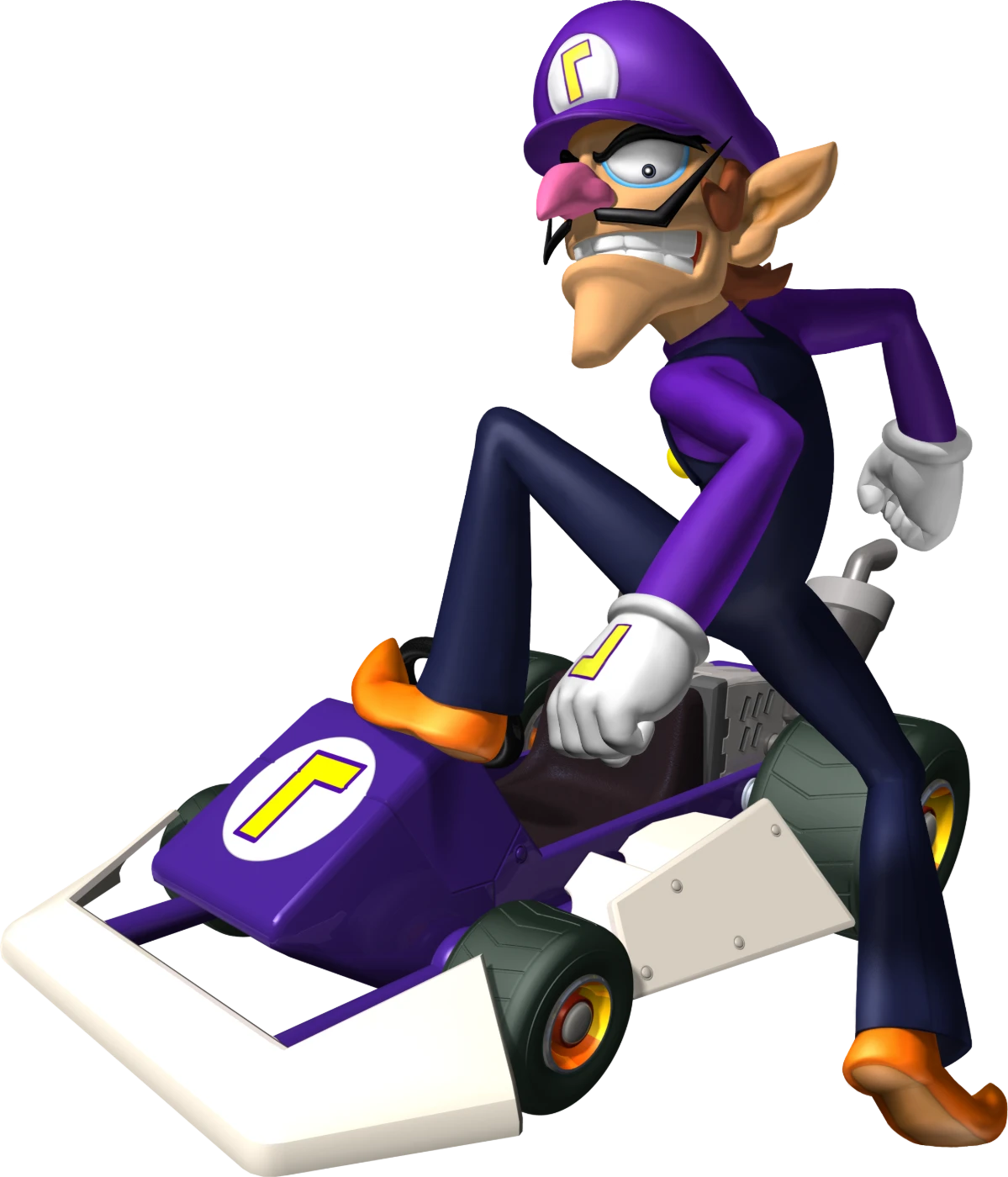 WaluigiMedium · unlockable
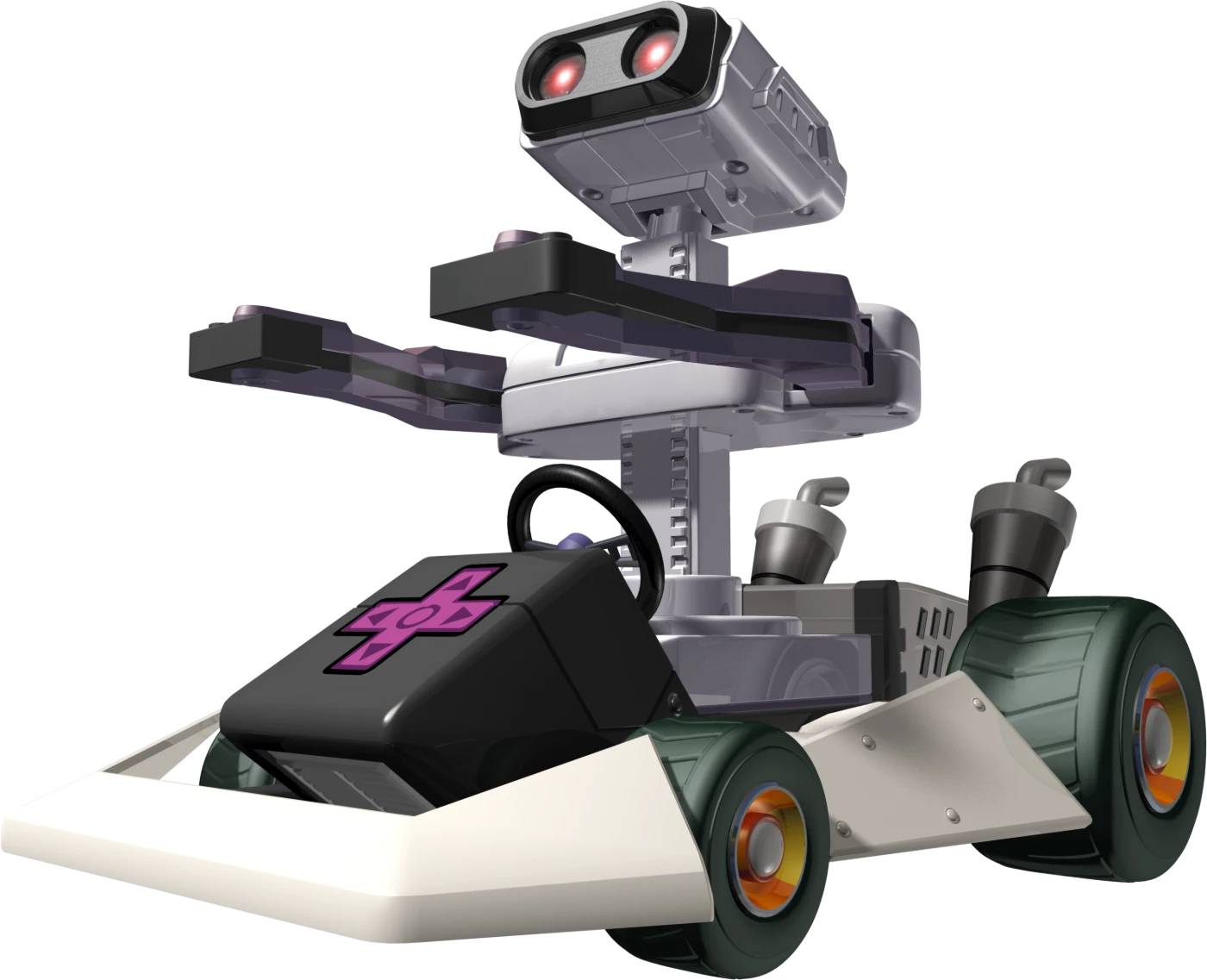 R.O.B.Heavy · unlockable · new
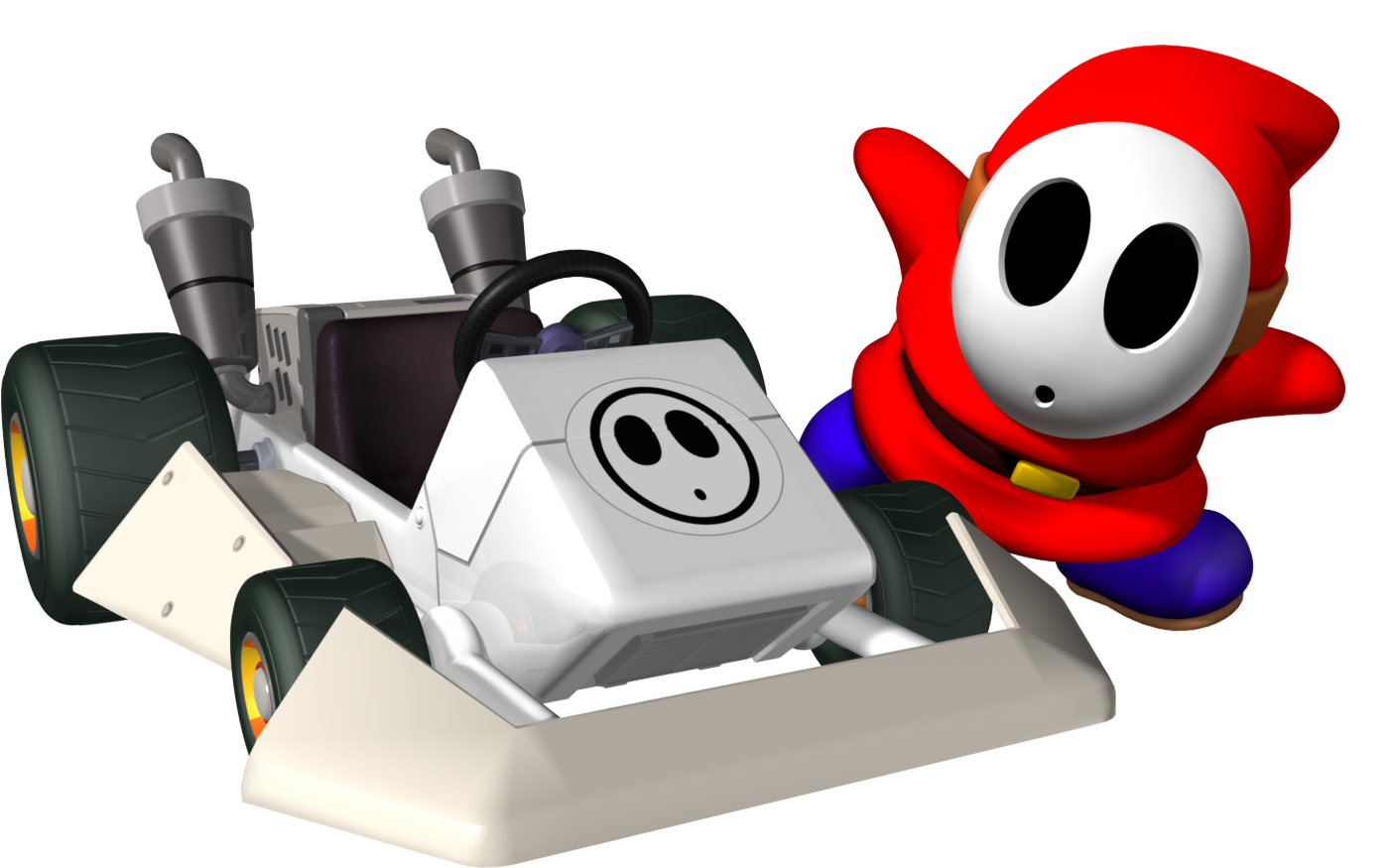 Shy GuyLight · DS Download Play only · new
 Big BullyMission Mode, Level 1 bossFought by Yoshi on a platform over water. Ram him with Mushroom boosts until he goes over the edge.
 EyerokMission Mode, Level 2 bossMario must hit its eyeball with shells three times.
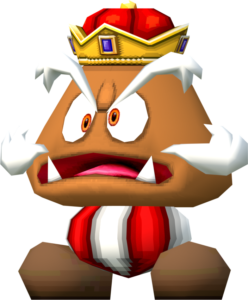 GoombossMission Mode, Level 3 bossRaces Toad round Baby Park, dropping Goombas and Mushrooms behind him, and jumps the barrier on the last lap.
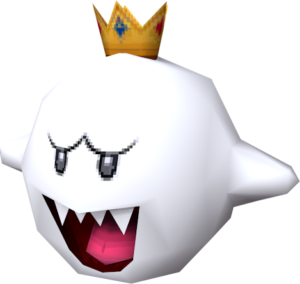 King BooMission Mode, Level 4 bossHaunts a lava arena while Peach tries to collect 50 coins.
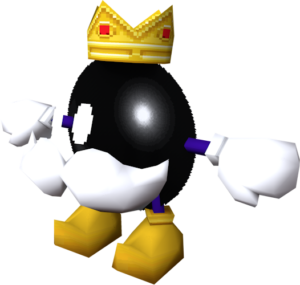 Big Bob-ombMission Mode, Level 5 bossThe king of the Bob-ombs. Wario has to land three Bob-ombs on him.
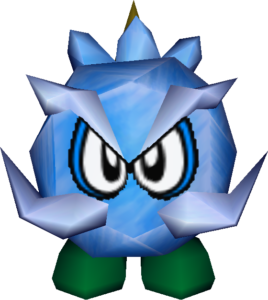 Chief ChillyMission Mode, Level 6 bossLuigi must use Mushroom boosts to knock him off the stage three times.
 WigglerMission Mode, Level 7 bossThe final boss is a race against a giant Wiggler along Mushroom Bridge.
 Angry SunDesert HillsHangs over the course and, from the second lap, spits Fire Snakes on to the track.
 Fire SnakeDesert HillsBounces about where the Angry Sun has dropped it.
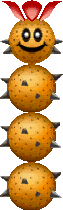 PokeyDesert HillsCactus columns standing in the road.
 Cheep CheepCheep Cheep Beach, SNES Koopa Beach 2Flaps about in the shallows and spins out any kart that hits it.
 SidestepperCheep Cheep BeachCrabs sitting on the sand.
 Walking TreeLuigi’s MansionStrolls about the swamp and stops karts like a wall.
 PinballWaluigi PinballGiant steel balls that roll down the course and ricochet round the table.
 BumperWaluigi PinballBlue ones stay put and pink ones circle. Both send karts and pinballs flying.
 FlipperWaluigi PinballThe last obstacle before the finishing straight. A swipe from one spins you out.
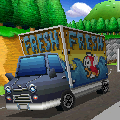 TrafficShroom Ridge, GCN Mushroom BridgeCars and cargo trucks on the public road.
 SnowmanDK Pass, N64 Frappe SnowlandThrows a kart backwards on contact.
 GoombaMario CircuitSpins you out. Flatten one with a shell and it drops a Mushroom.
 Piranha PlantMario Circuit, SNES Choco Island 2, GCN Yoshi CircuitRoadside plants that spin out passing karts.
 Fire Piranha PlantMario CircuitSits in a pipe and spits fireballs across the road.
 Bullet BillAirship FortressFired from the airship down the starting straight.
 Rocky WrenchAirship FortressPops up through hatches in the deck.
 BurnerAirship Fortress, Bowser CastleA jet of flame that sets karts alight.
 Fire BarWario StadiumSpinning chains of fireballs beyond the ramps.
 Chain ChompPeach Gardens, GCN Luigi CircuitLoose in the hedge maze, some with a tail of Item Boxes; chained to a stake on Luigi Circuit.
 Monty MolePeach Gardens, N64 Moo Moo FarmPeeks out of its hole, then leaps.
 ThwompBowser Castle, GBA Bowser Castle 2Slams down on anything beneath it. Some slide from side to side.
 Lava BubbleGBA Bowser Castle 2Jumps out of the lava pits.
 SwoopN64 Banshee BoardwalkA colony of bats that slows any kart driving through it.
 BubbaN64 Banshee BoardwalkA giant fish that leaps over the pier. Harmless, but alarming.
 BooLuigi’s Mansion, N64 Banshee BoardwalkScenery here, and an item elsewhere.
 Moo MooN64 Moo Moo FarmCows watching from the fields.
 PiantaDelfino SquareThe islanders of Super Mario Sunshine, here as spectators.