Nintendo Switch20203D platformer collectionNintendo EPD & NERDThree games, one cartridgeOn sale for six months9.01 million sold175-track music playerSuper Mario Bros. 35th anniversary
Super Mario 3D All-Stars
Eleven years of 3D Mario in one box, and a box you were only allowed to buy for six months. Super Mario 3D All-Stars (Super Mario 3D Collection in Japan) was revealed in the Super Mario Bros. 35th Anniversary Direct on 3 September 2020 and released worldwide on 18 September 2020. It collects Super Mario 64, Super Mario Sunshine and Super Mario Galaxy, sharpened to 720p and 1080p, with Sunshine in widescreen, Galaxy’s pointer moved onto Joy-Con motion and the touch screen, and a music player holding all 175 tracks of the three soundtracks.
The games were emulated rather than remade, the Super Mario 64 inside is the 1997 Shindou revision (so no backwards long jump), and Super Mario Galaxy 2 was nowhere to be seen. Nintendo stopped selling it on 31 March 2021; by then it had shipped 9.01 million copies, and critics had given it a Metacritic score of 82 while arguing loudly about the price, the extras and the deadline.
Developer:Nintendo EPD, with Nintendo European Research & Development (NERD); iQue and 1-UP Studio also credited
Publisher:Nintendo
Platform:Nintendo Switch (runs on Nintendo Switch 2 after update 1.1.2)
Announced:3 September 2020, Super Mario Bros. 35th Anniversary Direct
Released:18 September 2020 worldwide (South Korea boxed copies: 24 September 2020)
On sale until:31 March 2021 (eShop and new physical production)
Japanese title:Super Mario 3D Collection
Players:1 (Super Mario Galaxy: 1–2 in Co-Star Mode)
Producer:Kenta Motokura
Resolution:Super Mario 64: 960×720 in every mode · Sunshine and Galaxy: 1080p on TV, 720p handheld
Music:175 tracks from the three original soundtracks (Koji Kondo, Shinobu Tanaka, Mahito Yokota and others)
Download size:5,013 MB
Age ratings:PEGI 7 · ESRB E · CERO A
Sales:9.01 million (Nintendo, to 31 March 2021) · 9.07 million (CESA, to 31 December 2021)
Metacritic:82
Later releases:Super Mario 64 on Nintendo Switch Online (2021) · Galaxy on Switch (2025) · Sunshine on Nintendo Switch 2 (2026)
Advertisement
Overview
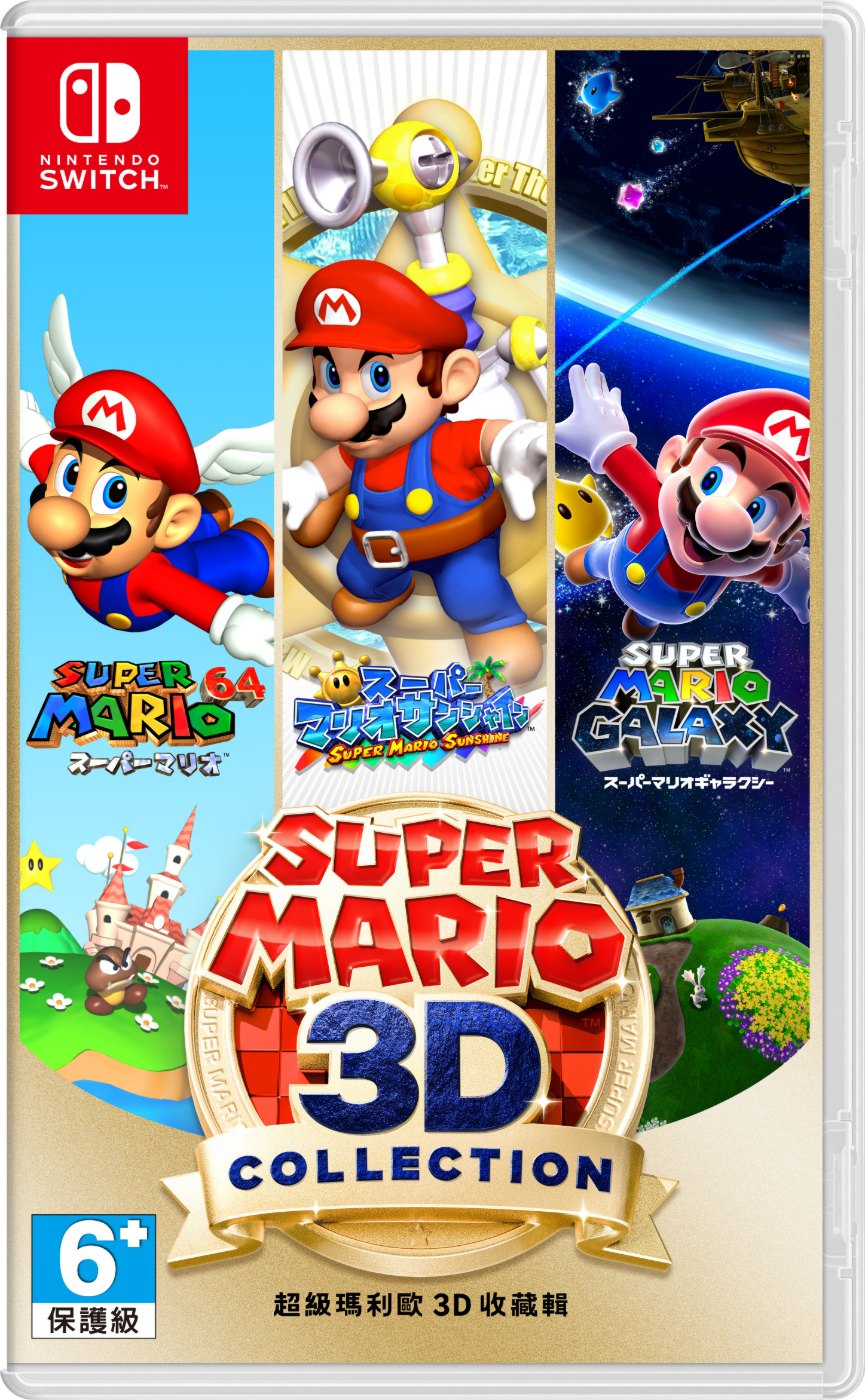
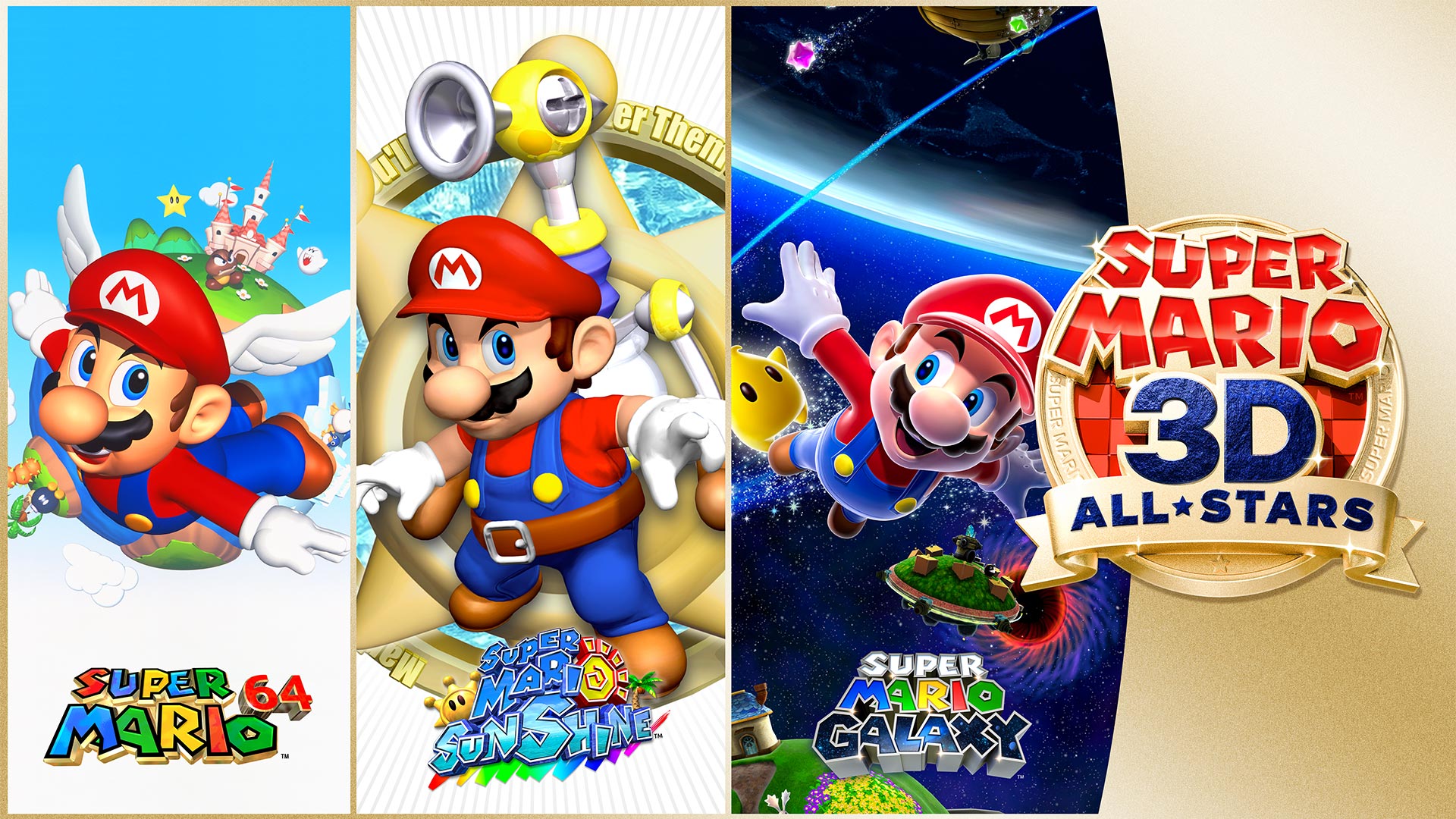
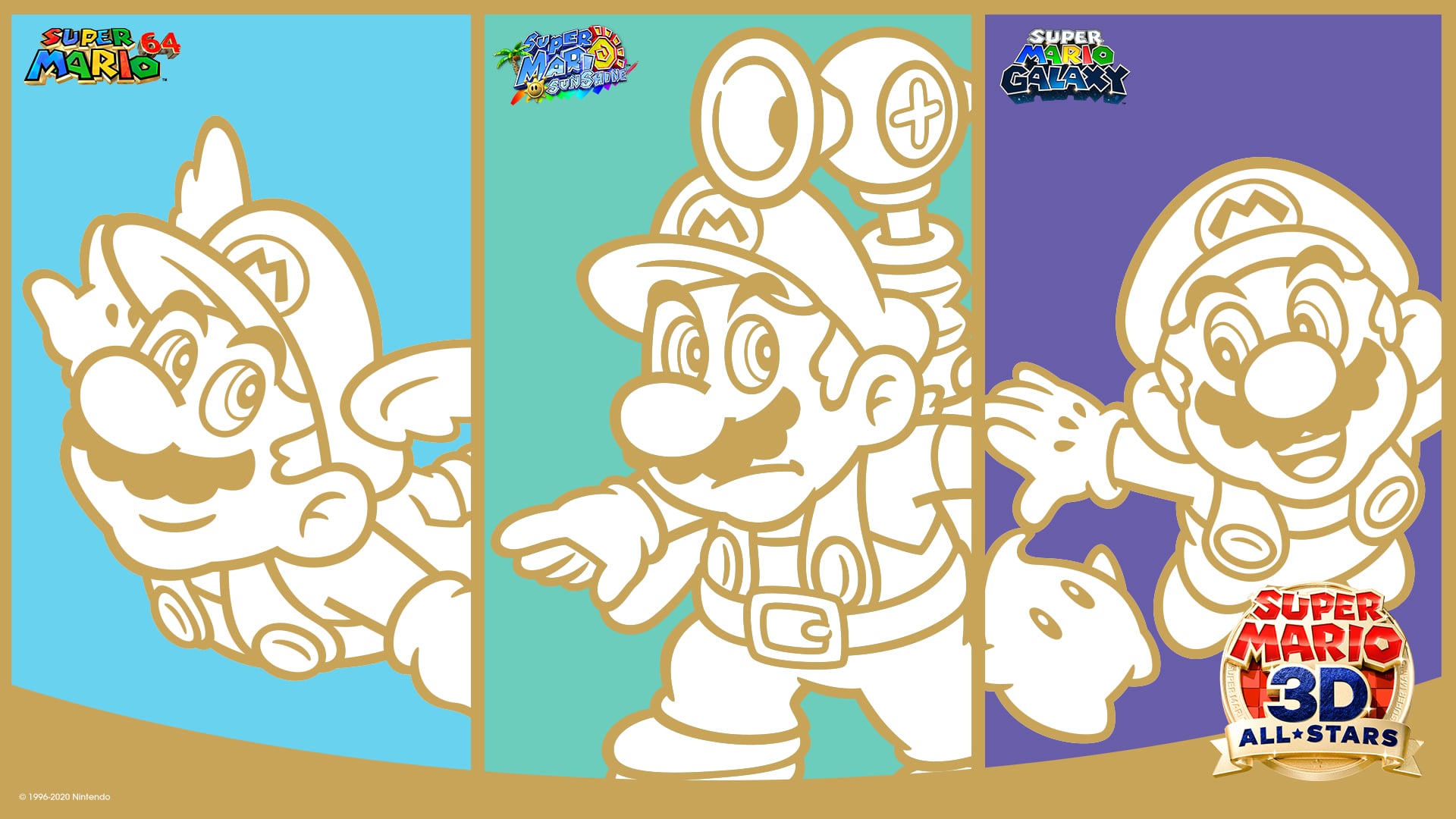
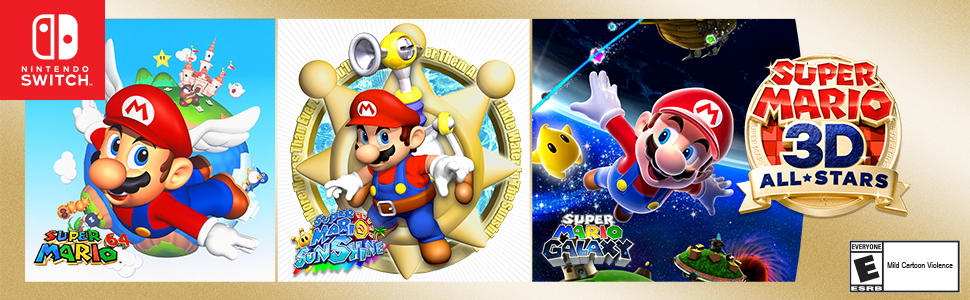
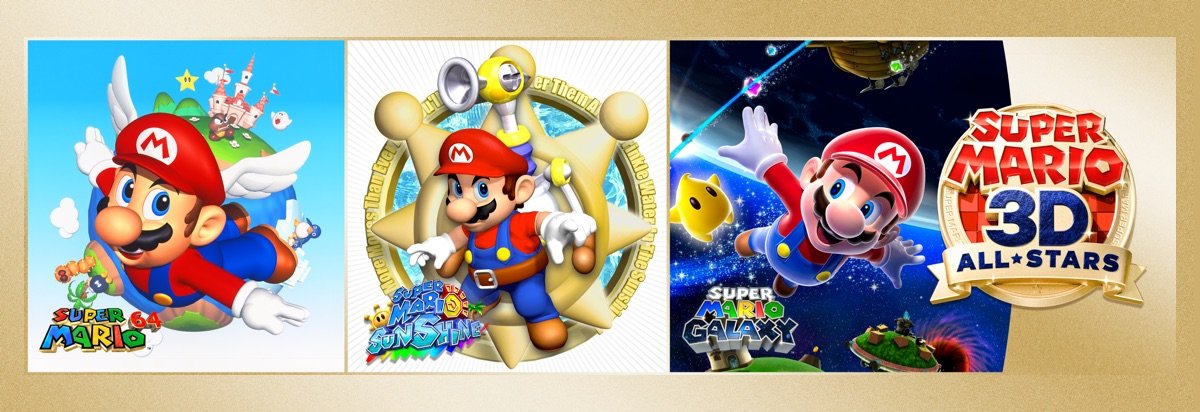
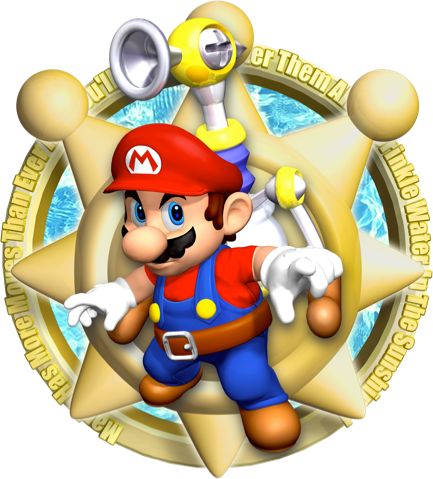
Banner artwork for the collection: Mario from all three games.
Ten years after it put the Super NES Super Mario All-Stars on a Wii disc for Mario’s 25th birthday, Nintendo reached for the name again for his 35th. This time the stars were the 3D games: Super Mario 64 from the Nintendo 64, Super Mario Sunshine from the GameCube and Super Mario Galaxy from the Wii, gathered behind a single menu on one Switch cartridge. Each of the three has its own page on Super Luigi Bros; this one is about the collection.
It is a preservation job, not a remake. Nintendo European Research & Development built emulators for the two older games and a version of Galaxy that runs natively in part, and the work went into making them comfortable on a modern console: higher resolutions, a 16:9 picture for Sunshine, new button layouts for controllers the games were never designed for, and a way to aim Galaxy’s Star Pointer when there is no Wii Remote and no television. The level designs, the physics (bar one famous trick) and the stories are untouched.
The extras amount to a music player with every track of all three soundtracks, playable with the screen switched off, and a set of new artwork for the menus and loading screens. That thinness, the absence of Super Mario Galaxy 2, the full price and above all the decision to stop selling it on 31 March 2021 drew more comment than the games themselves, which nobody disputed were three of the best platformers ever made.
It sold anyway. Nintendo counted 9.01 million copies by the end of March 2021, and since then all three games have found their own way back to Switch and Switch 2. As a snapshot of how Nintendo celebrated a birthday in the middle of a pandemic, and of how far 3D Mario travelled in eleven years, it remains a fascinating object.
Discover three of Mario’s grandest 3D adventures with Super Mario 3D All-Stars on Nintendo Switch! This special bundle includes Super Mario 64, Super Mario Sunshine and Super Mario Galaxy, all optimised for Nintendo Switch with updated HD graphics, Joy-Con controls, as well as a music player featuring the epic soundtracks from all three games!
With a timeless control scheme that’s featured in every one of his 3D outings since, Super Mario 64 marked Mario’s glorious debut into the world of 3D. Wall jump, backflip and even fly as you explore paintings around Princess Peach’s castle to collect Power Stars and stop Bowser!
Time to hit the beach! Mario travels to the beautiful Isle Delfino for a tropical vacation with his friends, but instead finds himself teaming up with trusty F.L.U.D.D. to uncover a shadowy plot and the master puppeteer behind it all. His newfound friend also allows Mario to traverse worlds in all sorts of unique ways thanks to its wonderful water pump!
Mario blasts off on an intergalactic quest to help Rosalina and save Princess Peach from Bowser’s assault of astronomical proportions. Defy gravity and hop across planets with optional motion controls, or pass a Joy-Con controller to a friend for some extra help in Co-Star Mode!
— Official description (Nintendo UK, 2020)
Why Super Mario 3D All-Stars Matters to Mario Fans
For many Switch owners this was the first chance to play Super Mario Sunshine at all: it was the first time the game had been released on any console other than the GameCube, and it came with the first official release of its soundtrack. It put the 1997 Shindou version of Super Mario 64 into English for the first time, made Super Mario Galaxy playable in handheld mode, and in leaving out Galaxy 2 created a wish that Nintendo finally granted in 2025. And its six-month sale is still argued about today.
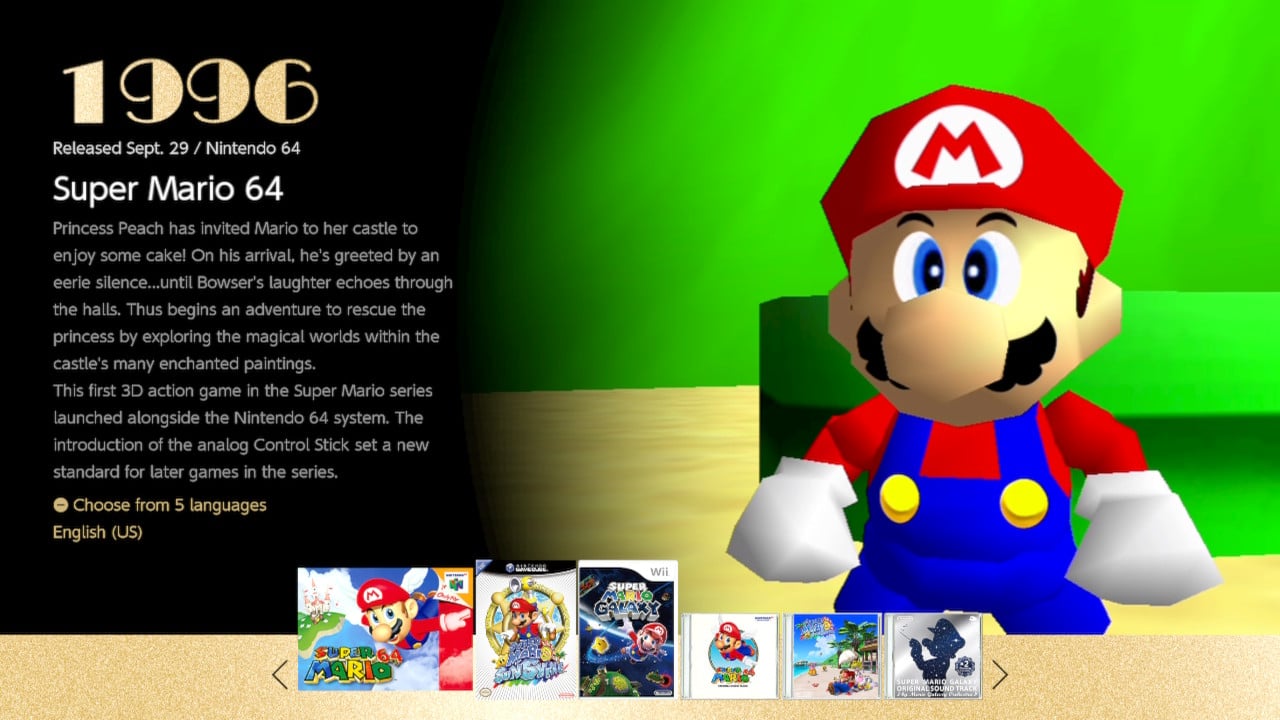
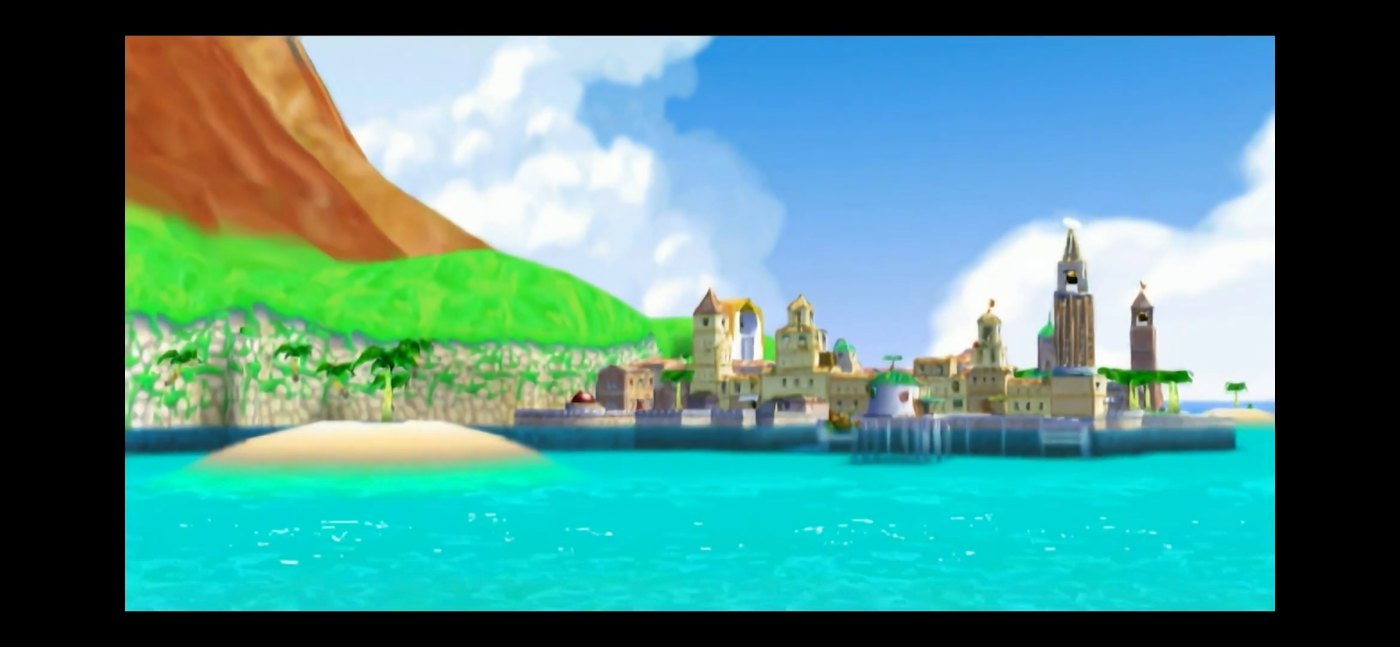
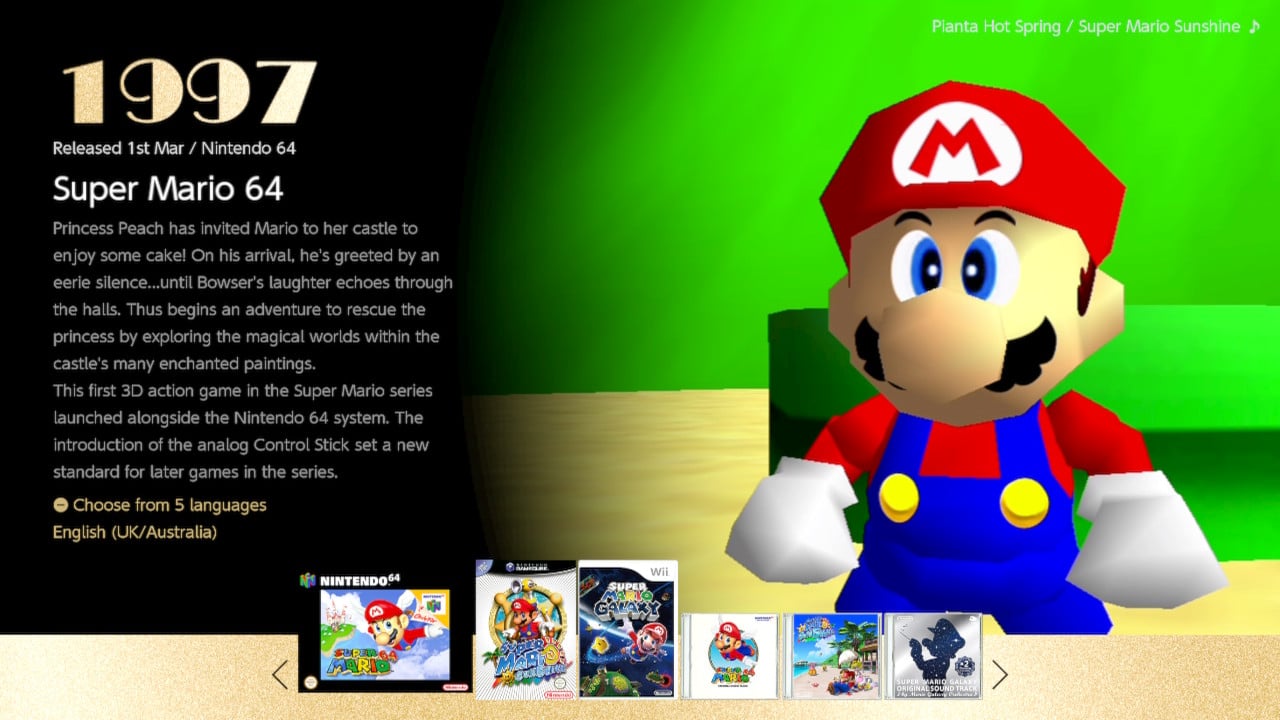
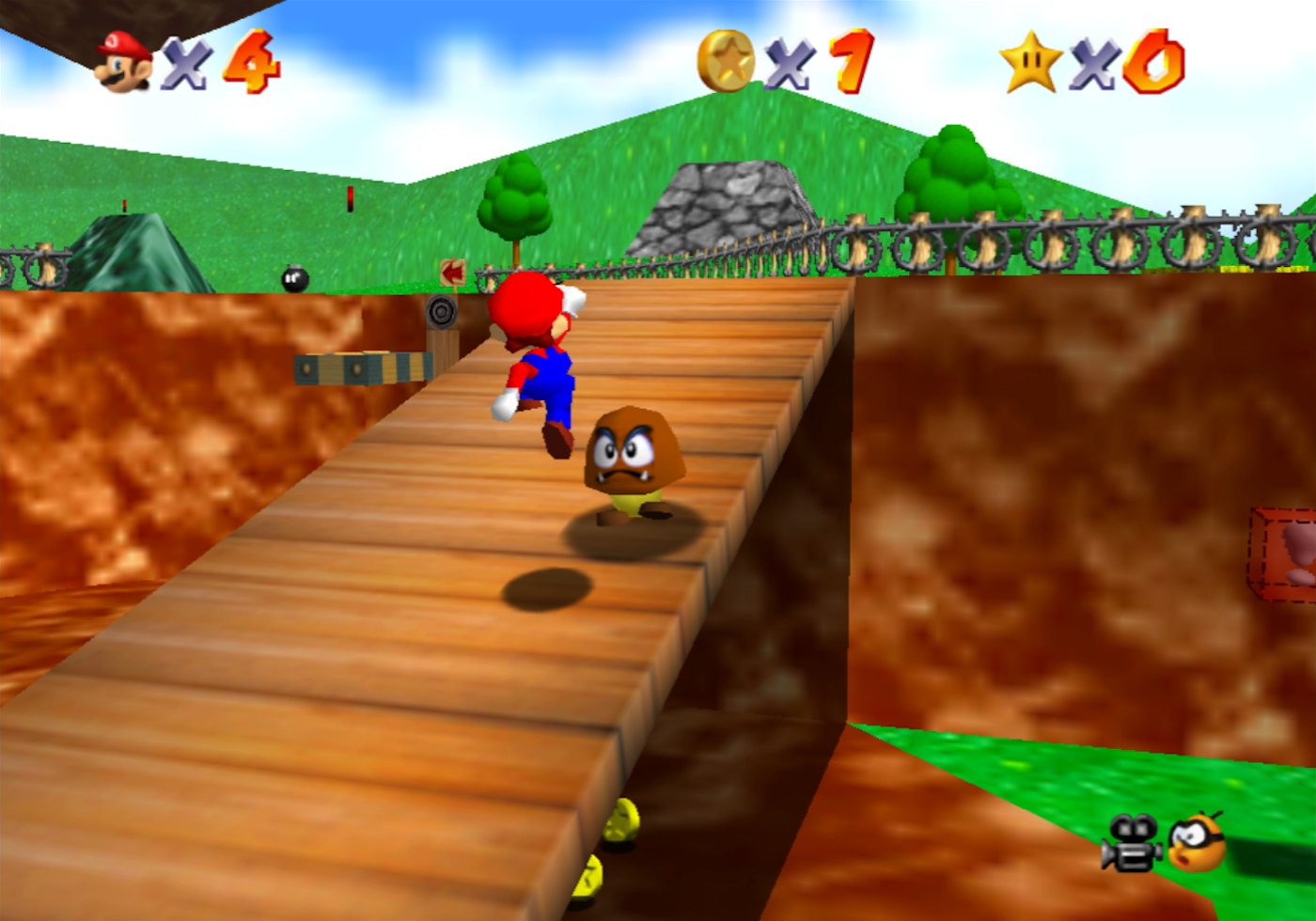
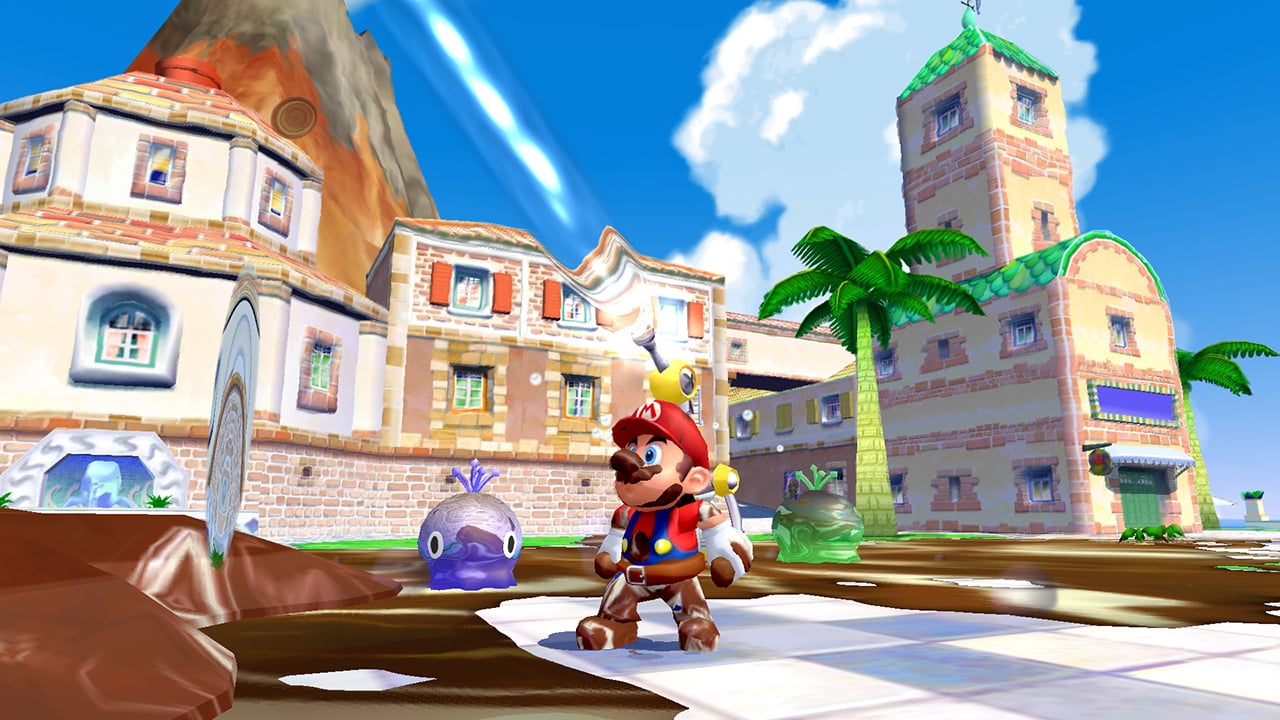
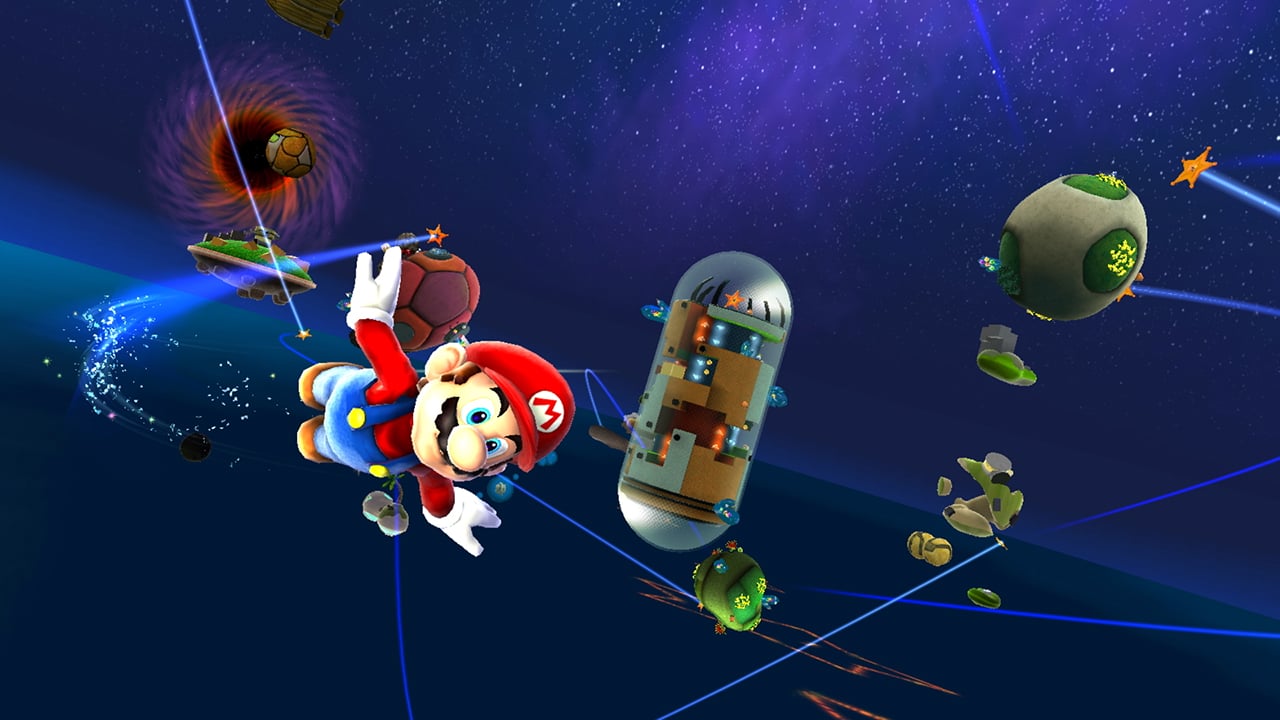
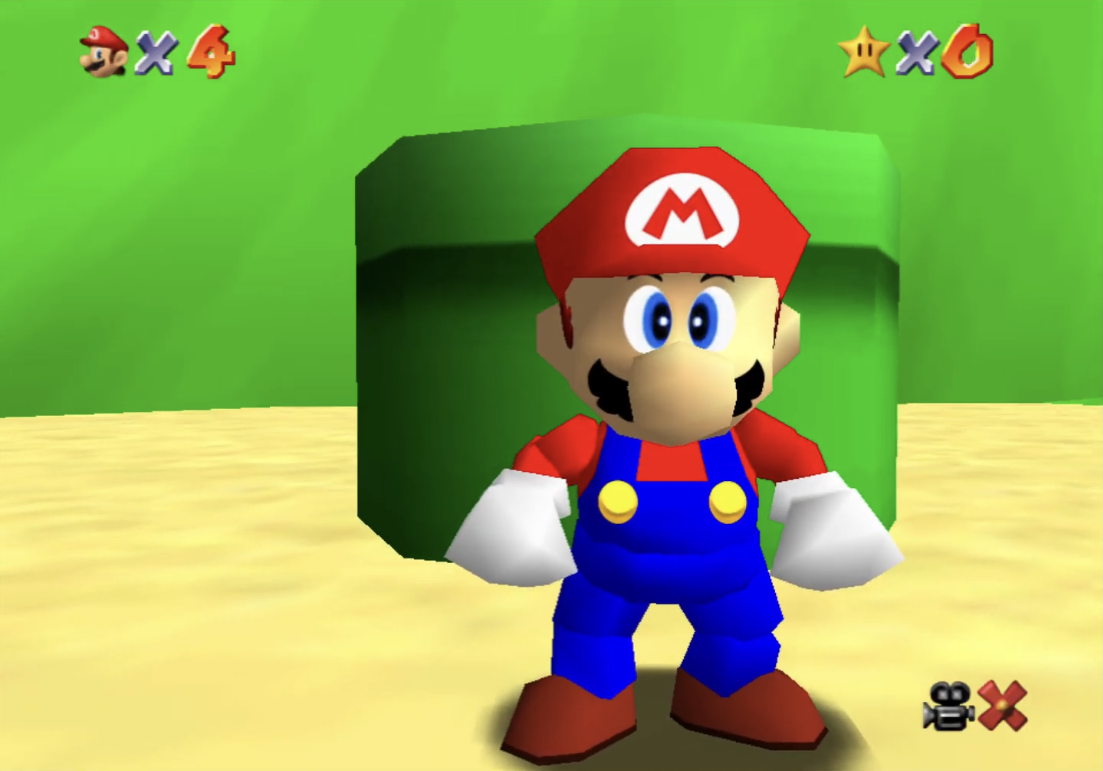
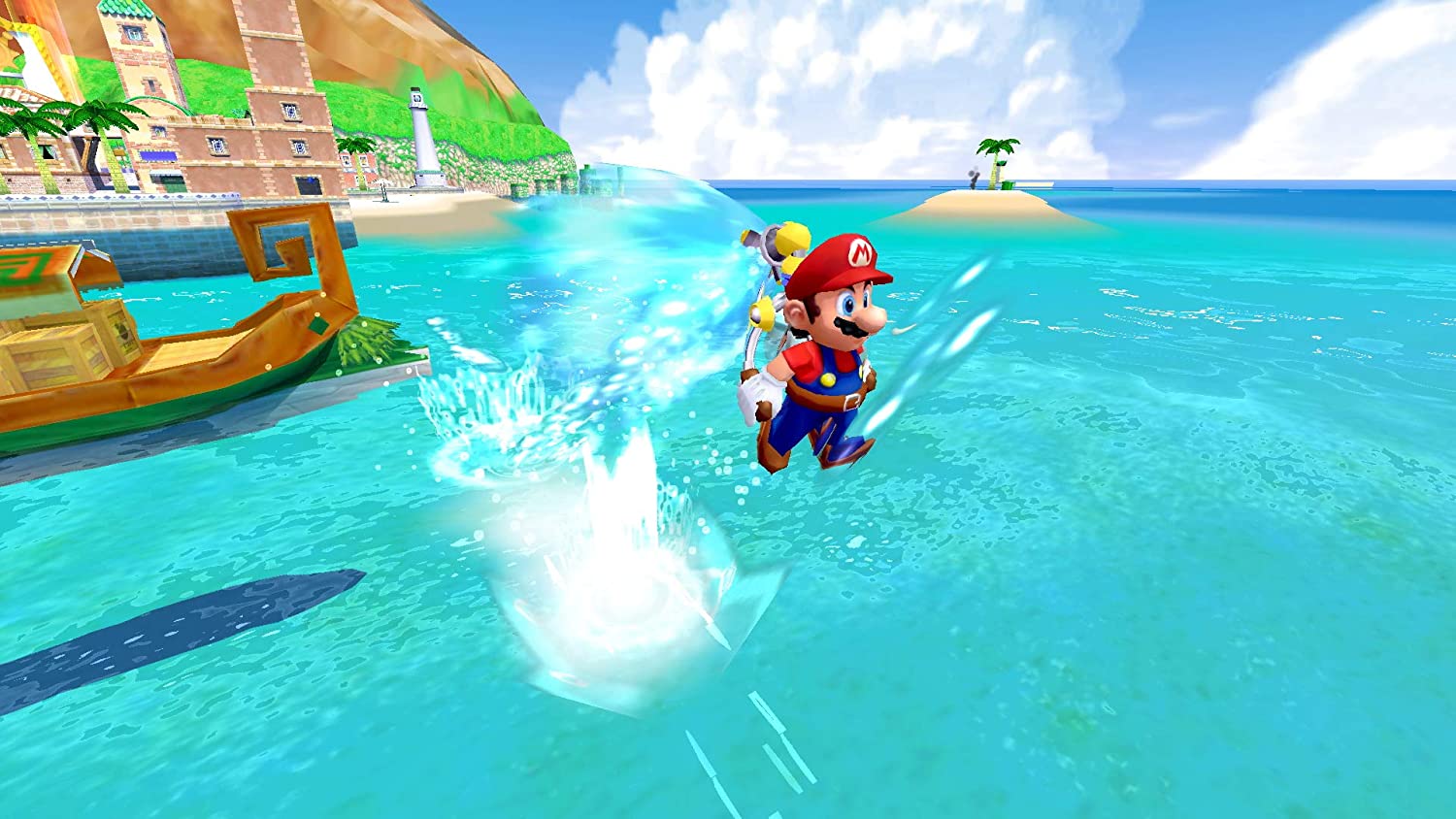
The game-select menu, with each game’s original year and console.Super Mario 64 at 720p: Bob-omb Battlefield.Super Mario Sunshine, now in widescreen: Delfino Plaza.Super Mario Galaxy at 1080p: Good Egg Galaxy.
Quick Answers
The questions people still ask about the 2020 collection.
What is Super Mario 3D All-Stars?
A Nintendo Switch collection of Super Mario 64, Super Mario Sunshine and Super Mario Galaxy, released on 18 September 2020 for the 35th anniversary of Super Mario Bros. The three games run at higher resolutions with updated controls, and a music player holds all 175 tracks of their soundtracks. More →
No. Its absence was one of the most common complaints in reviews. Galaxy 2 came to Switch on 2 October 2025, sold alone or in a bundle with a new version of the first Galaxy. More →
Can you still buy it?
Not new from Nintendo. Digital sales ended and the game left the Nintendo eShop on 31 March 2021, and Nintendo stopped making cartridges. Anyone who bought it digitally before then can still redownload it, and boxed copies carried on selling in shops while stocks lasted. More →
What resolution do the games run at?
Super Mario 64 runs at 960×720 in every mode and stays 4:3. Super Mario Sunshine and Super Mario Galaxy run at 1920×1080 on a television and 1280×720 in handheld and tabletop modes, and Sunshine is shown in 16:9 widescreen. More →
Which version of Super Mario 64 is it?
The 1997 Japanese Shindou version, which added Rumble Pak support and fixed several bugs, including the backwards long jump. It was the first English release of that version. More →
How do you aim the Star Pointer in Super Mario Galaxy?
Point a Joy-Con (or tilt a Pro Controller) and press R to recentre it. In handheld mode and on Nintendo Switch Lite you swipe the touch screen instead and tap to fire Star Bits. Spinning is on X and Y, so shaking is optional. More →
Can you use a GameCube controller for Sunshine?
Yes, since update 1.1.0 on 16 November 2020, in TV mode with the GameCube controller adapter. That update also added camera inversion to all three games. Version 1.1.1 in November 2021 added Nintendo Switch Online’s N64 controller for Super Mario 64. More →
How many copies did it sell?
Nintendo reported 9.01 million worldwide in the financial year to 31 March 2021: 940,000 in Japan and 8.07 million elsewhere. CESA later gave 9.07 million to the end of 2021. More →
Where can I play these games today?
Super Mario 64 has been in the Nintendo 64 library of Nintendo Switch Online + Expansion Pack since 25 October 2021; Super Mario Galaxy was re-released on Switch on 2 October 2025; and Super Mario Sunshine joined the GameCube library on Nintendo Switch 2 on 13 August 2026. More →
The Three Games
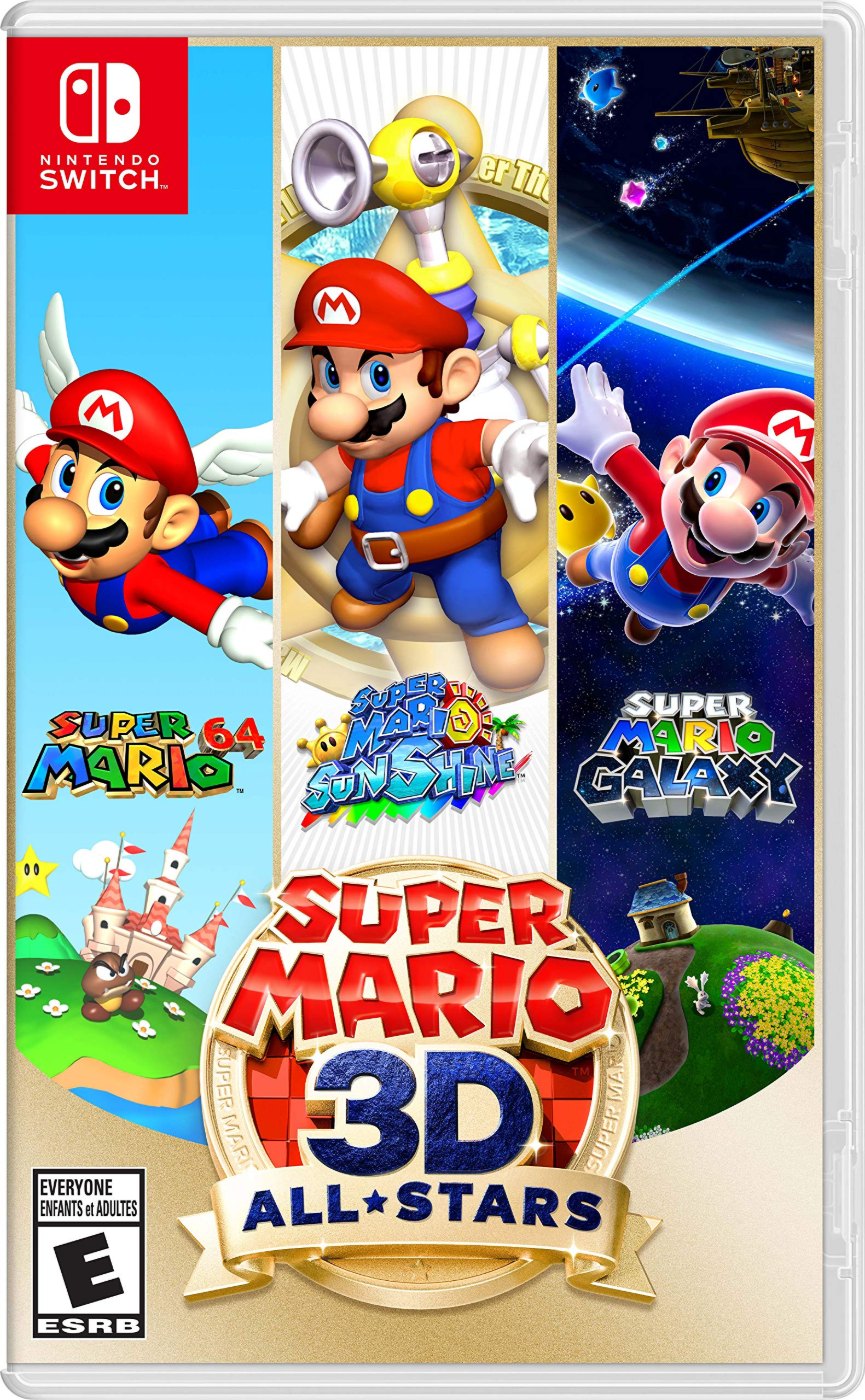
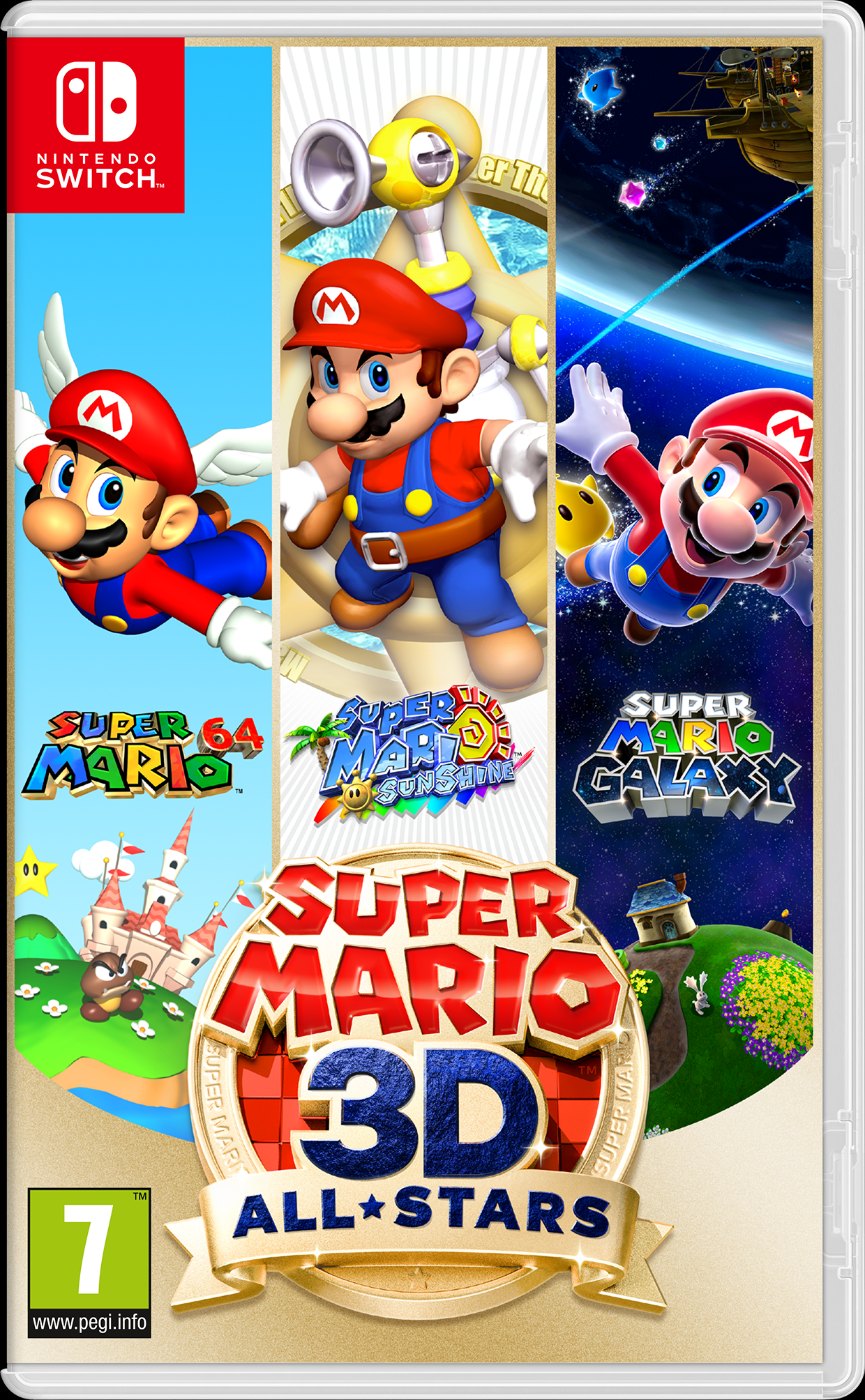
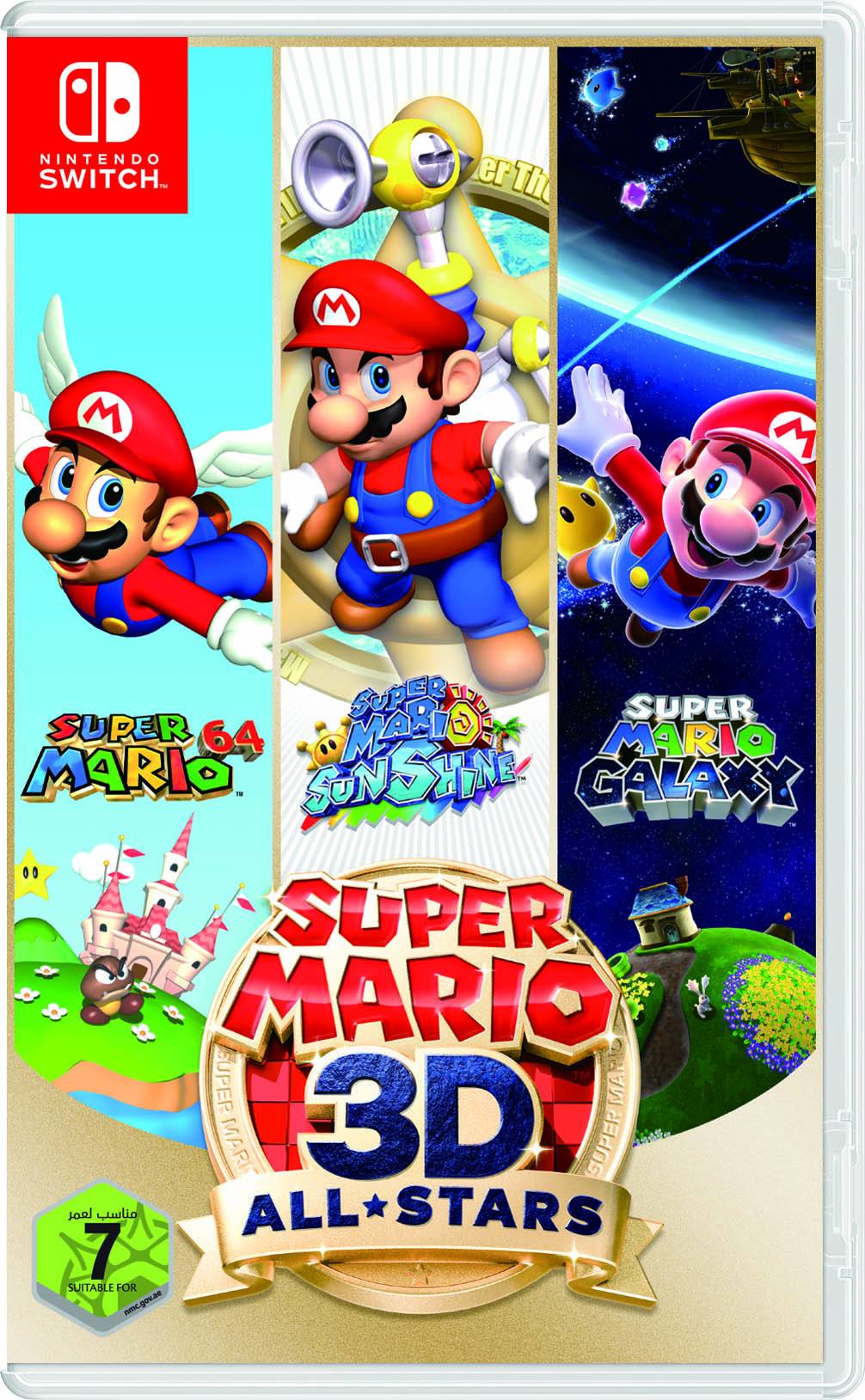
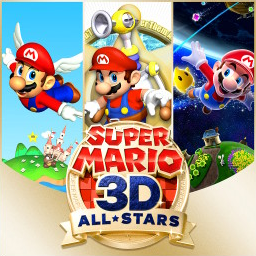
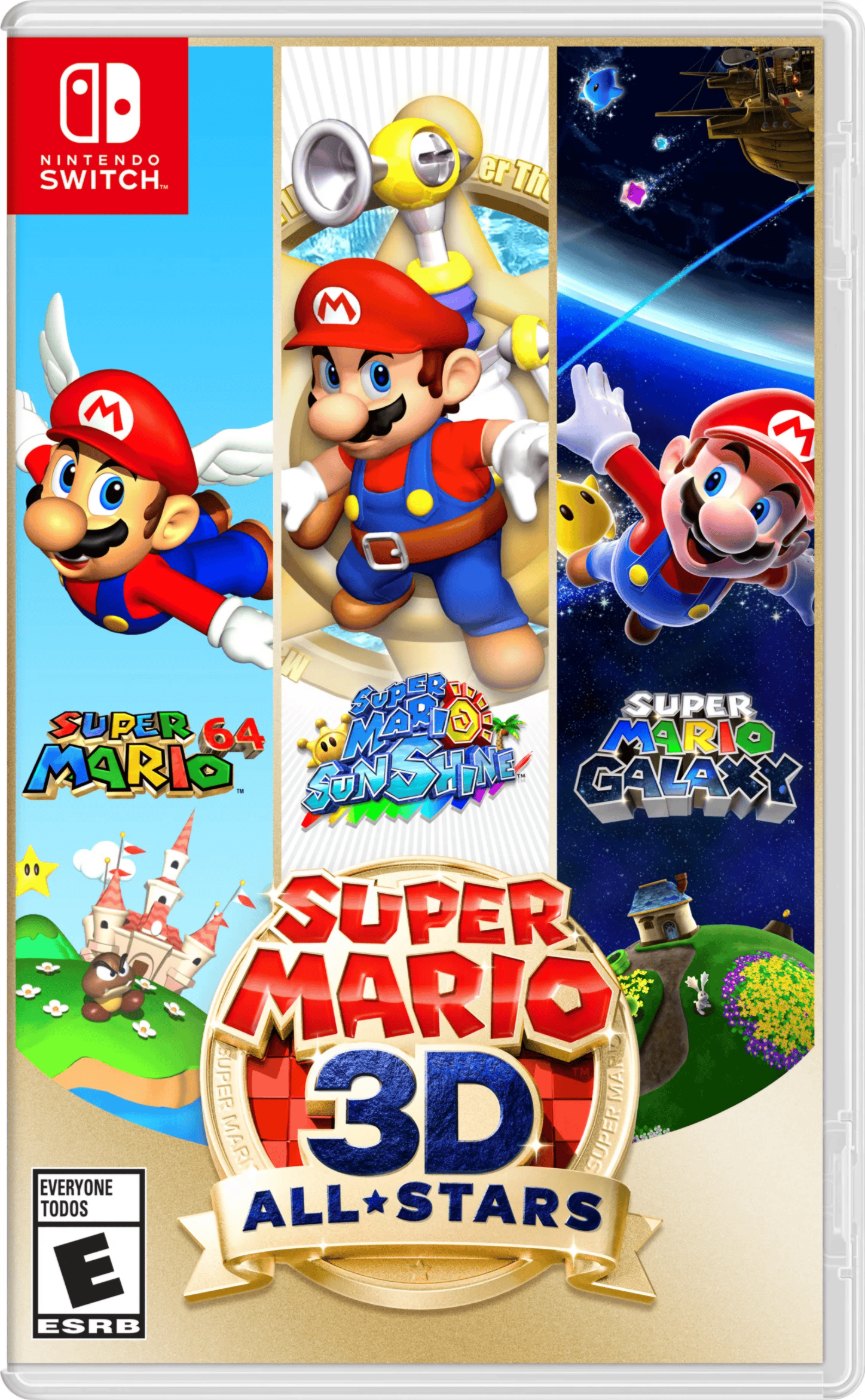
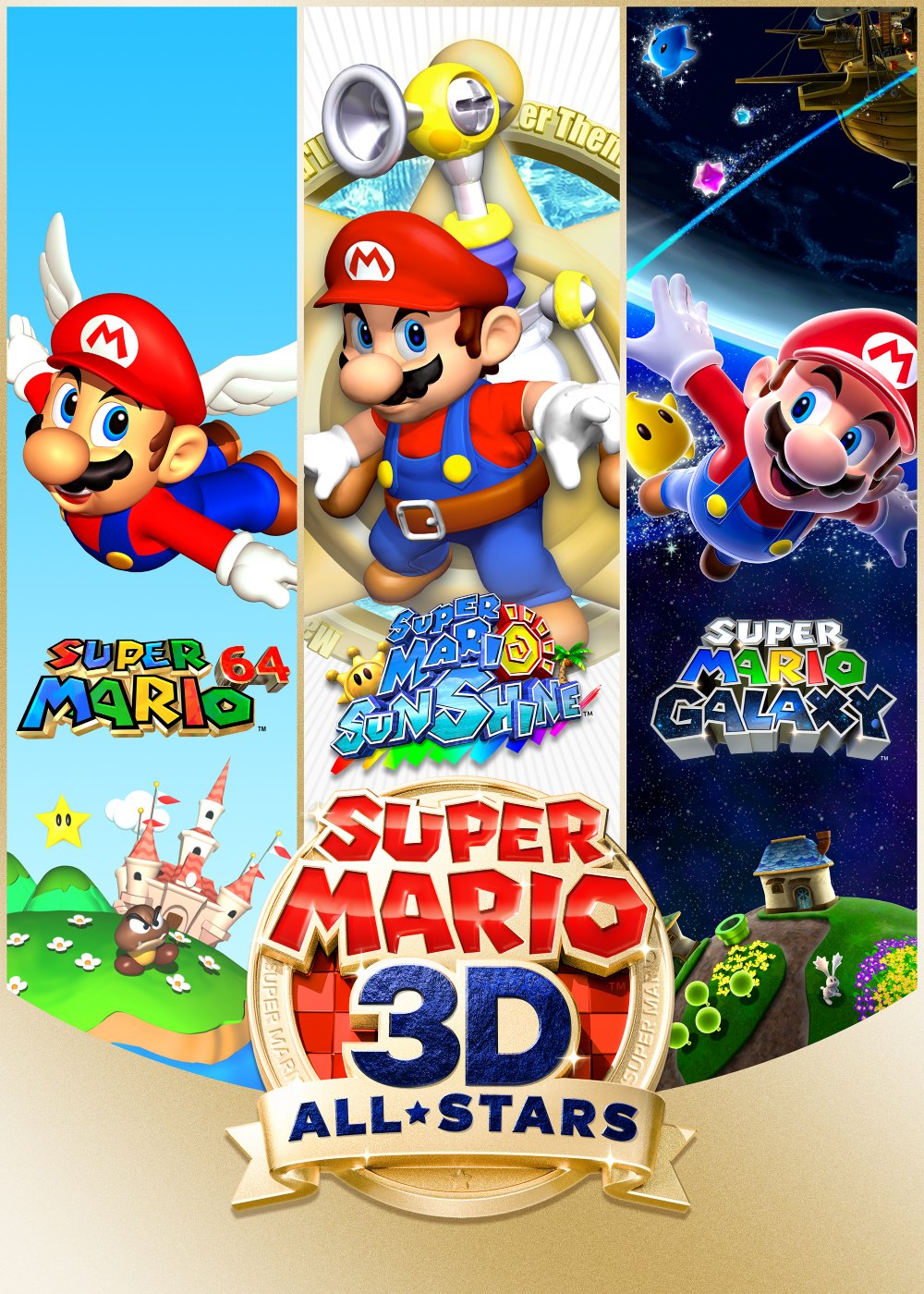
The cover artwork: Mario as he looks in each of the three games.
A compilation has no story of its own, so here are the three it contains, in the order the menu offers them, with what the Switch versions add along the way. Each game has a full beat-by-beat retelling on its own Super Luigi Bros page.
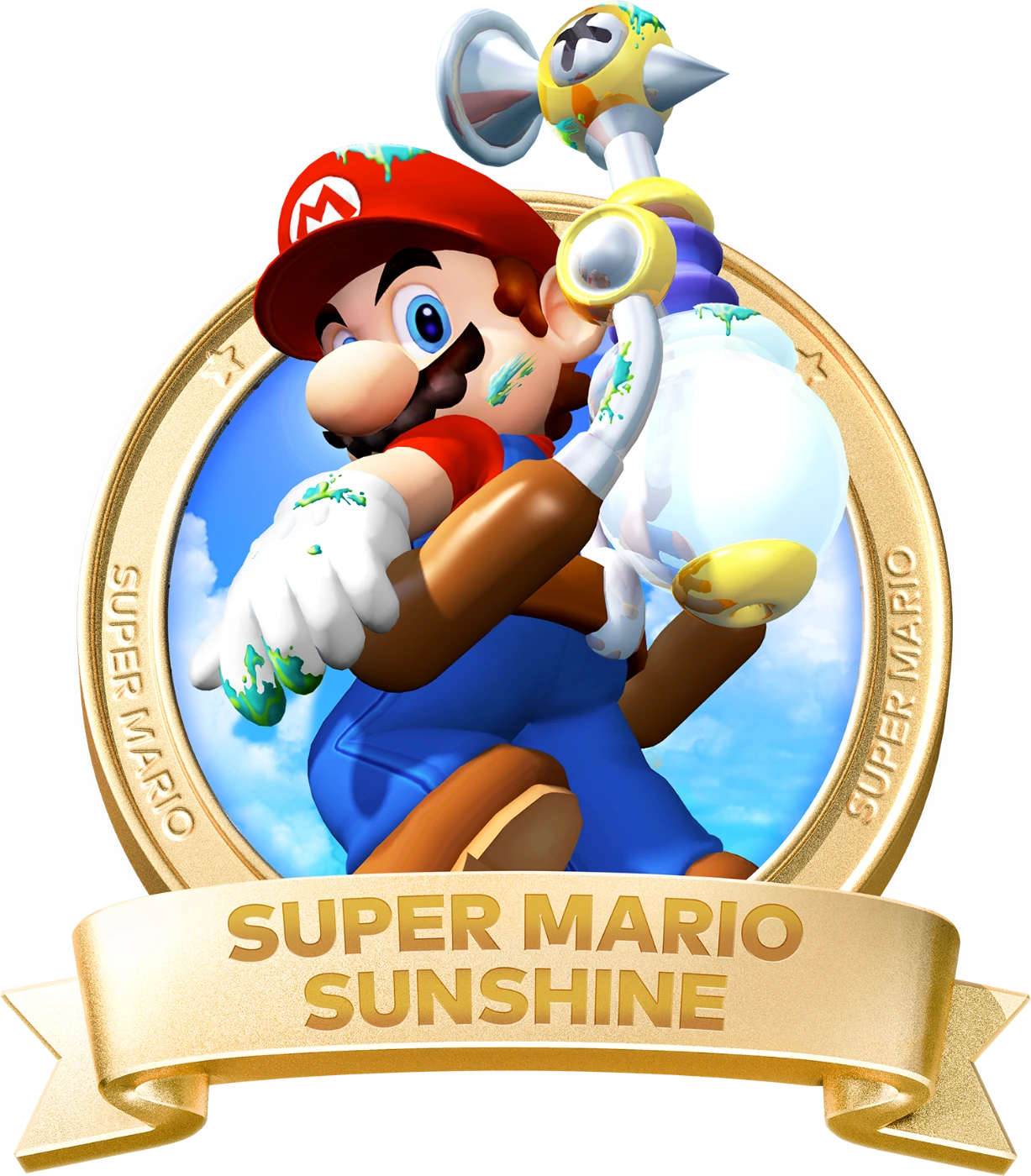
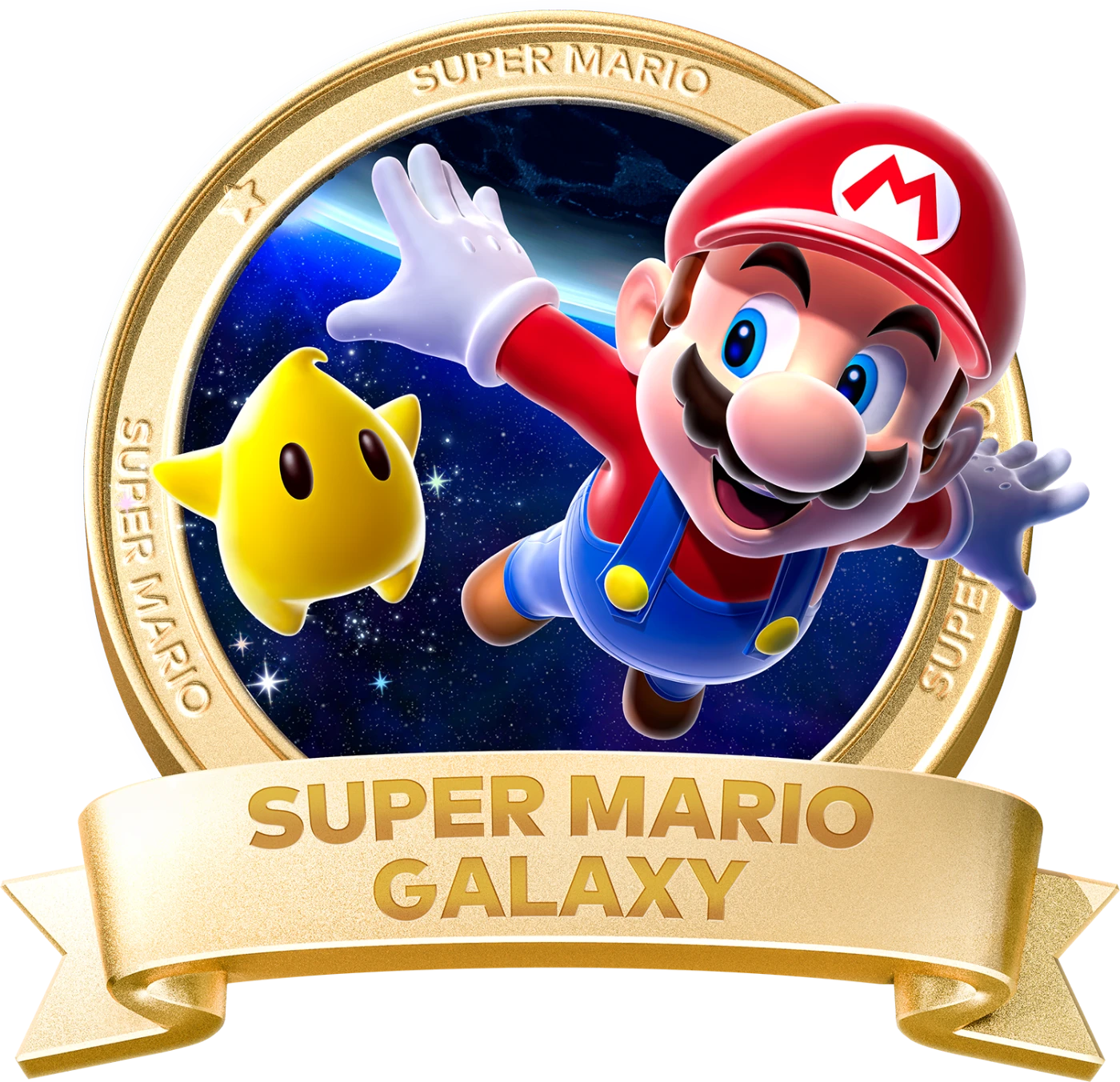
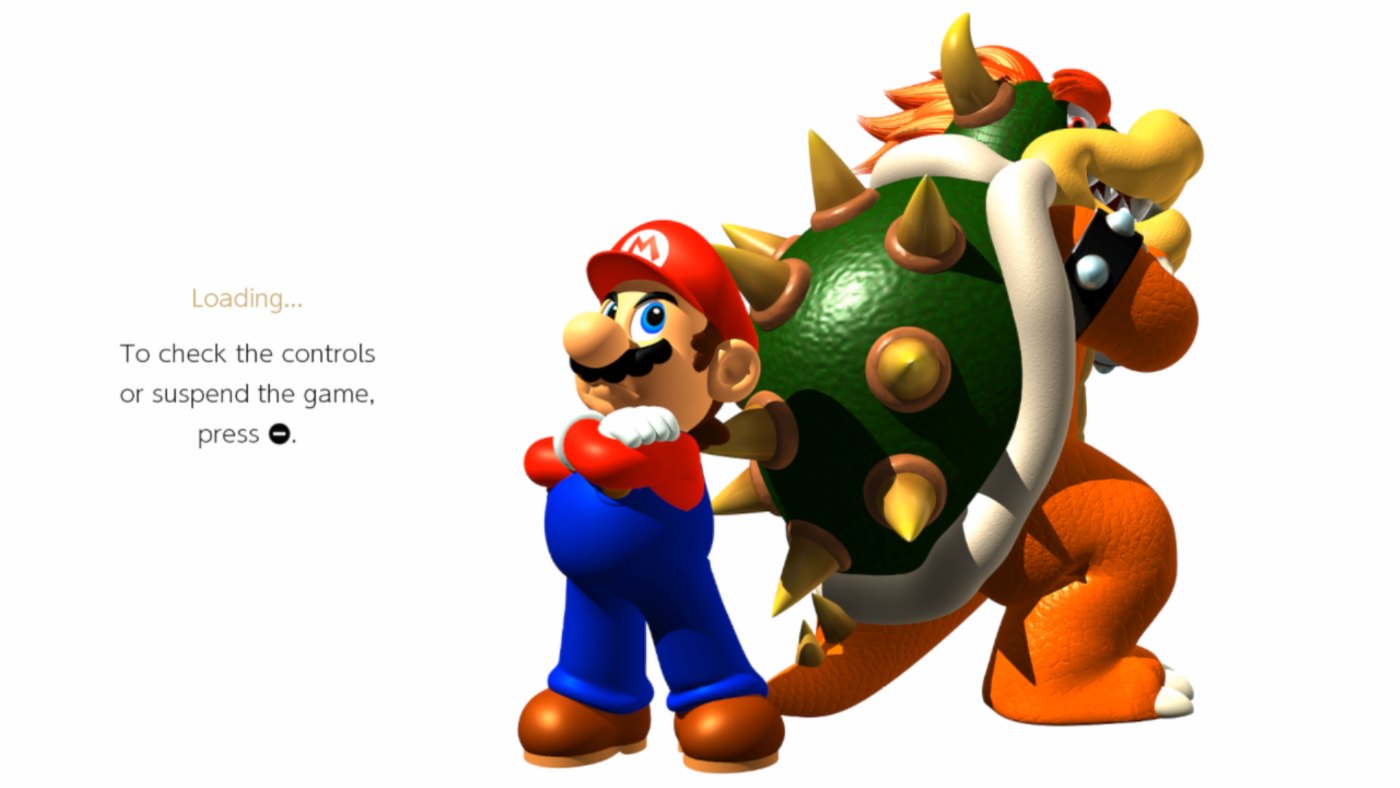
Picking a game from the menu closes the screen with an iris in the shape of that game’s prize: a Power Star for Super Mario 64, a Shine Sprite for Sunshine and a Grand Star for Galaxy. Each then loads behind a new piece of artwork made for the collection.
Super Mario 64: an invitation to cake
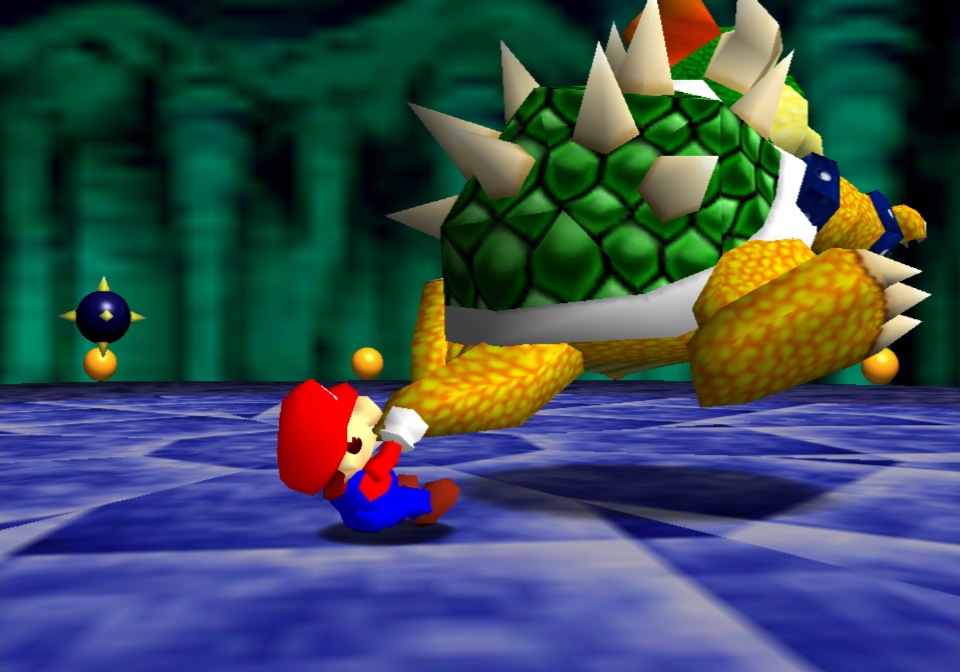
Princess Peach writes to Mario inviting him to the castle for a cake she has baked, and he arrives to find it empty. Bowser has hidden the castle’s Power Stars in the worlds inside its paintings and sealed the princess away. Followed everywhere by the Lakitu Bros. and their camera, Mario dives into fifteen courses, most of them behind paintings, three Bowser stages and a clutch of secret rooms, swinging Bowser by the tail three times until Peach is free and the cake is served. The full tale is on our Super Mario 64 page.
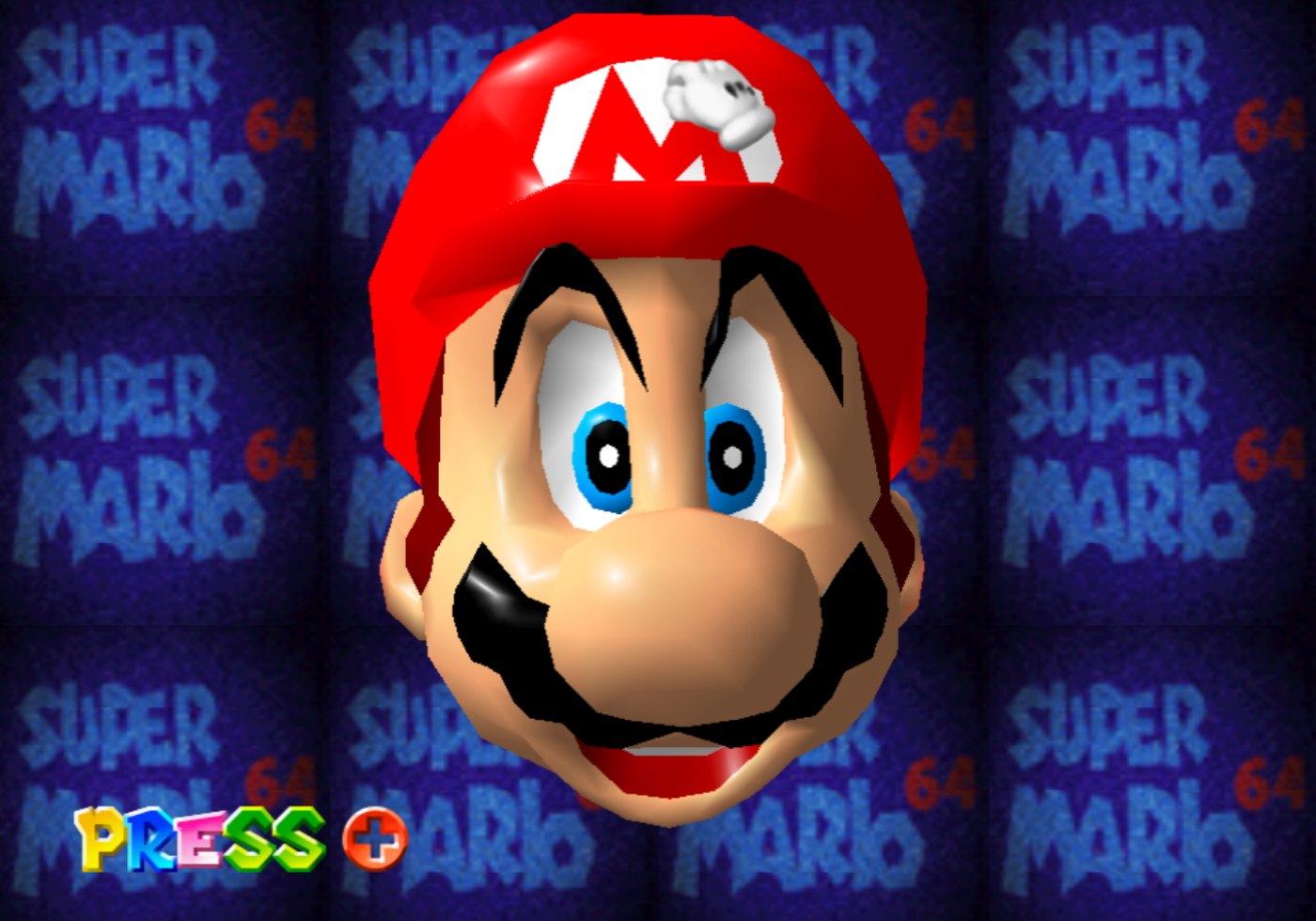
On Switch the story plays out exactly as it did in 1996, now in sharper 720p and still in the original 4:3 frame. Only the title screen notices the new hardware: its prompt shows the + button, although Mario still says “press start” after the demo plays.
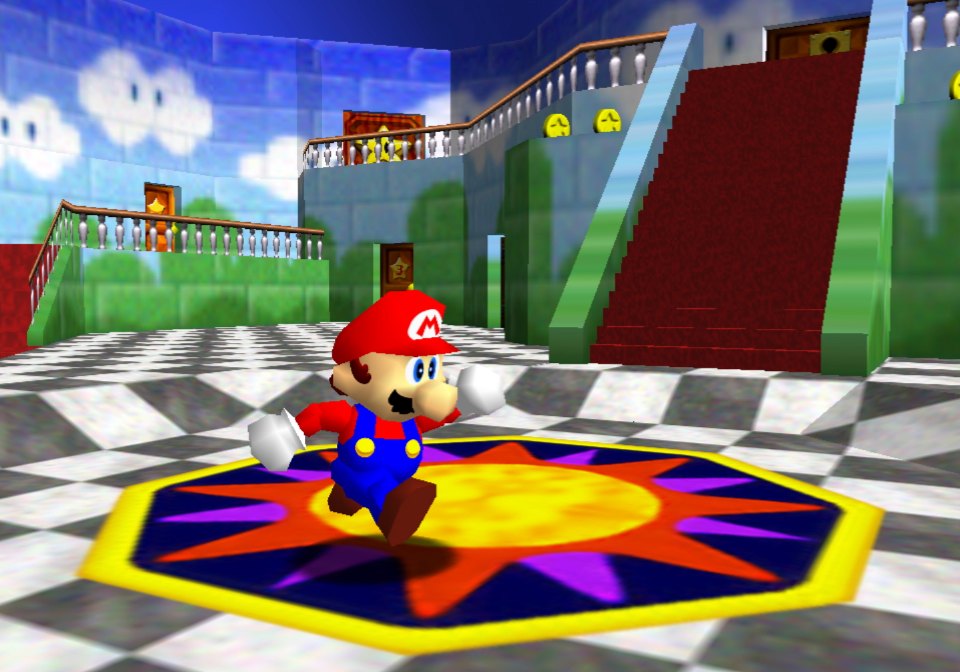
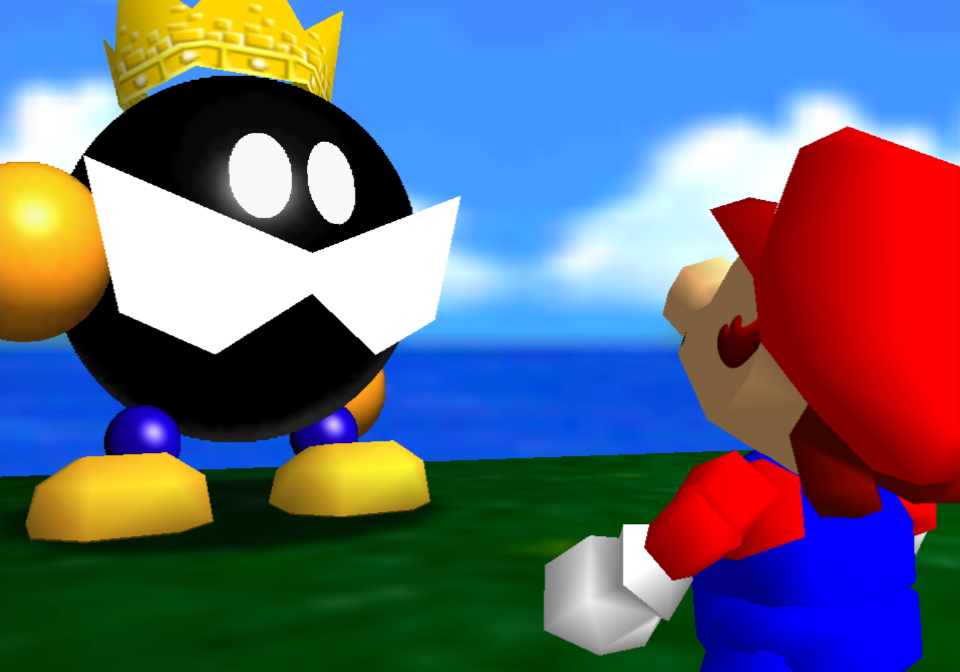
Mario arrives at the castle grounds.The castle foyer, upscaled.The first boss: the king of the Bob-ombs.Mario swings Bowser by the tail.
Super Mario Sunshine: a holiday on trial
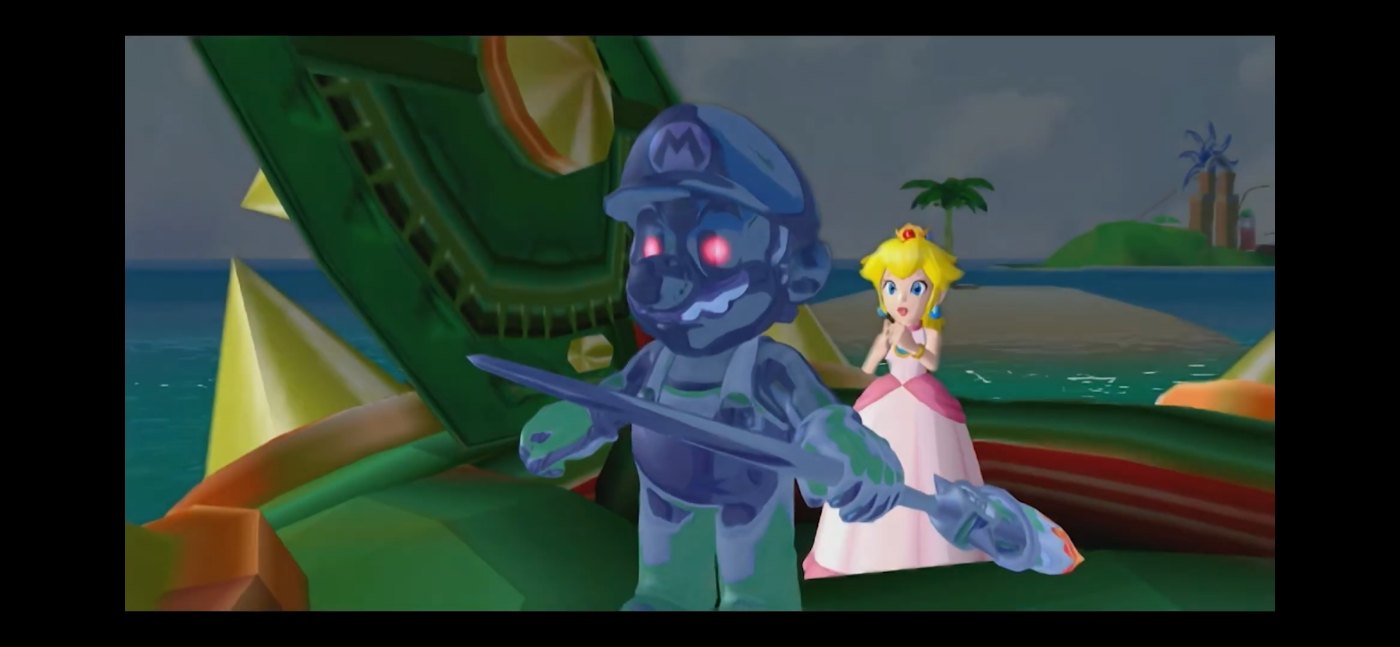
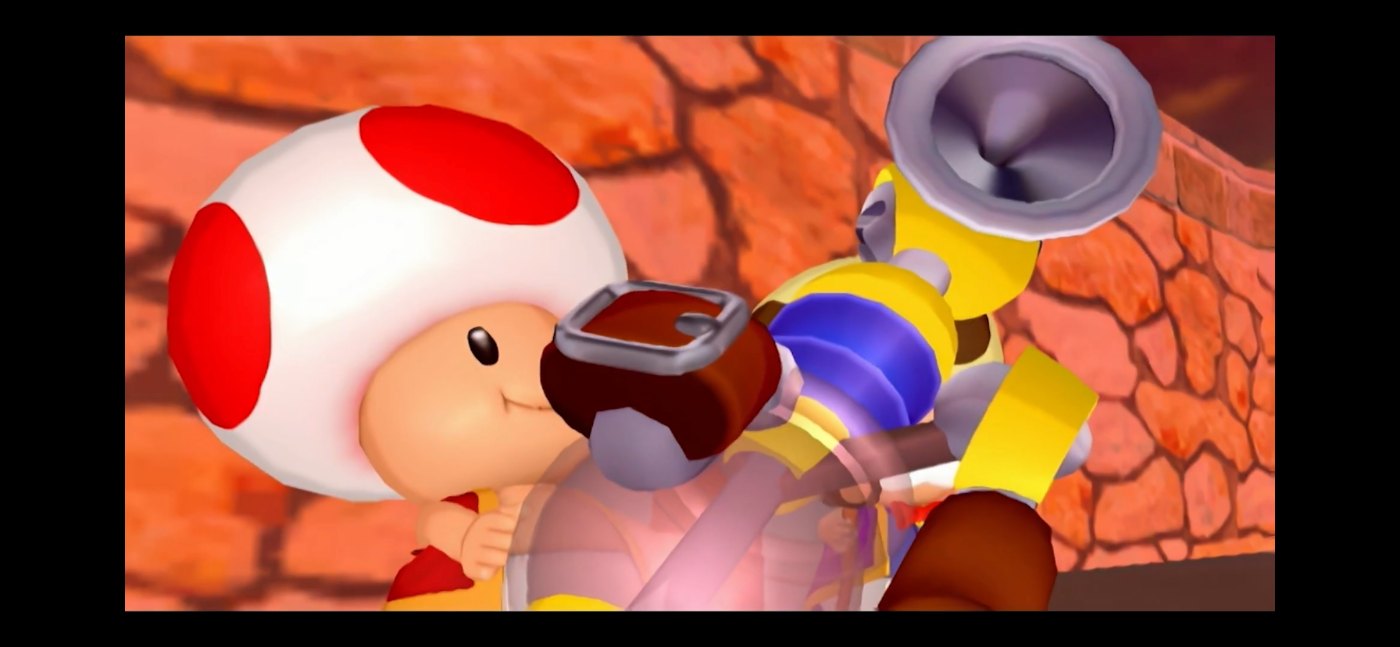
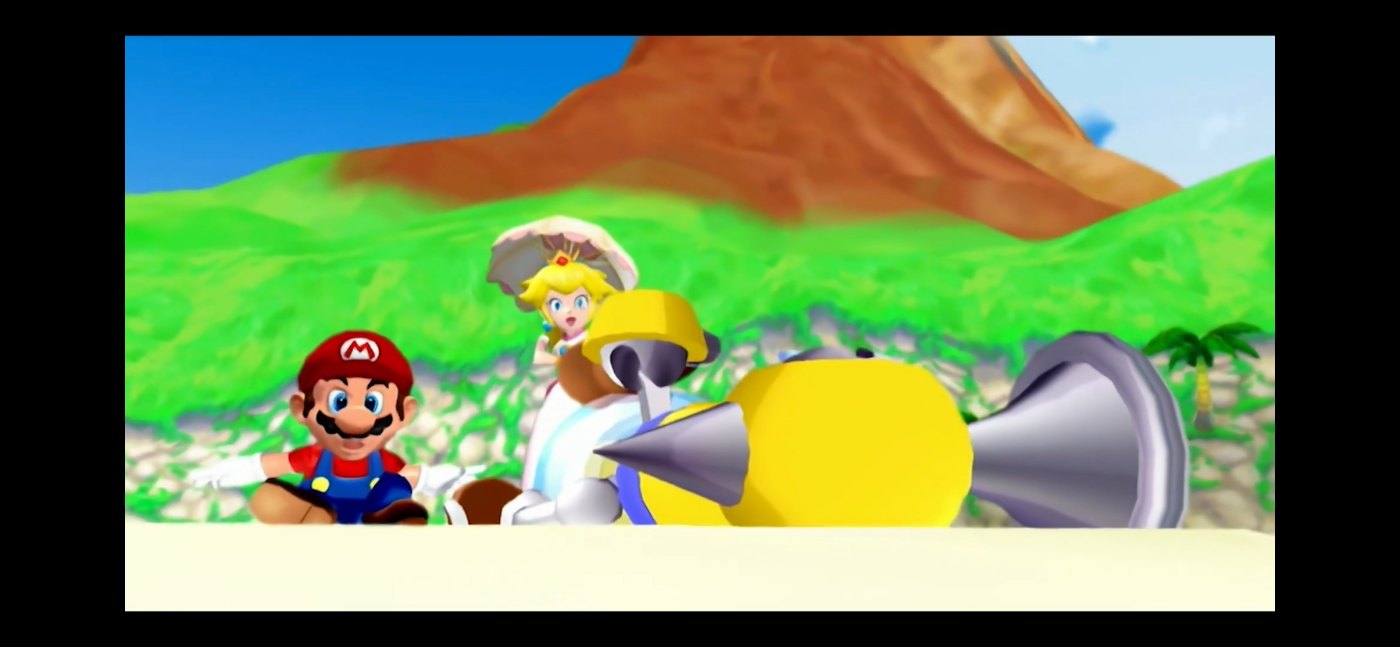
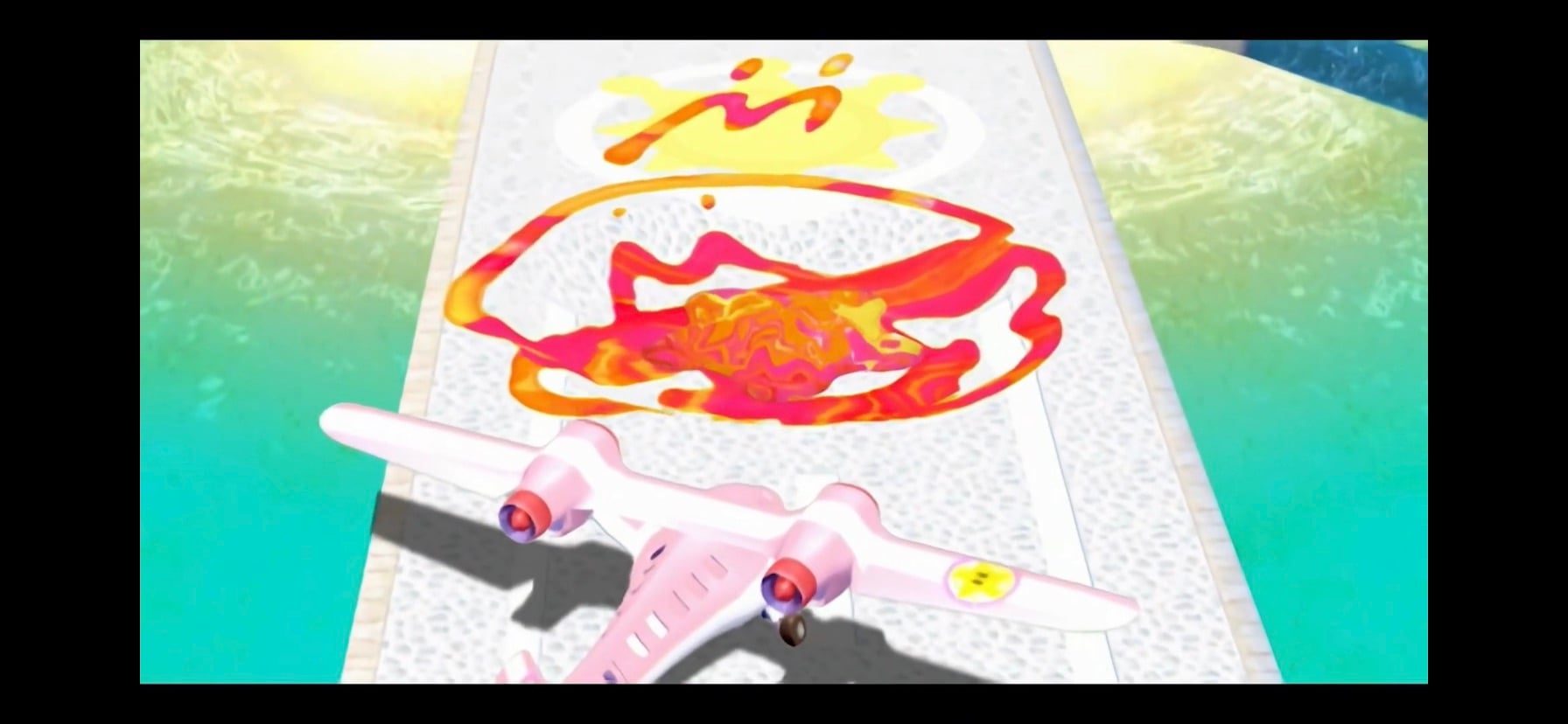
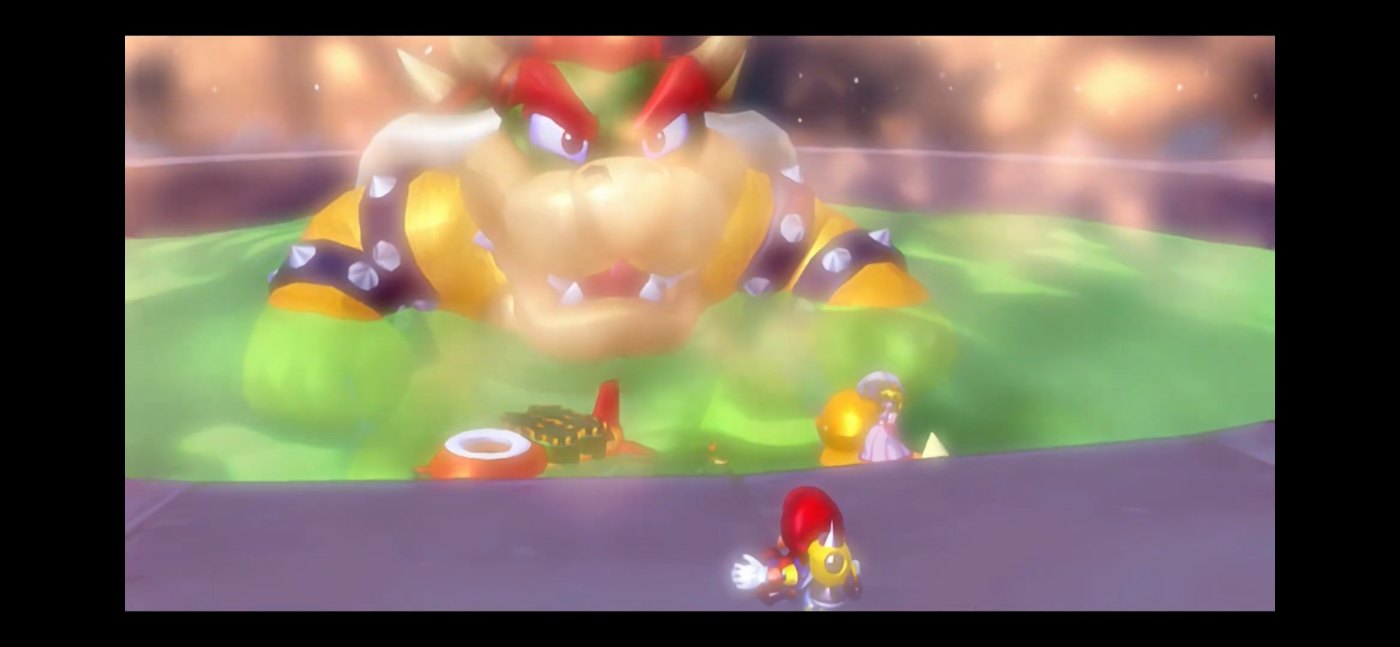
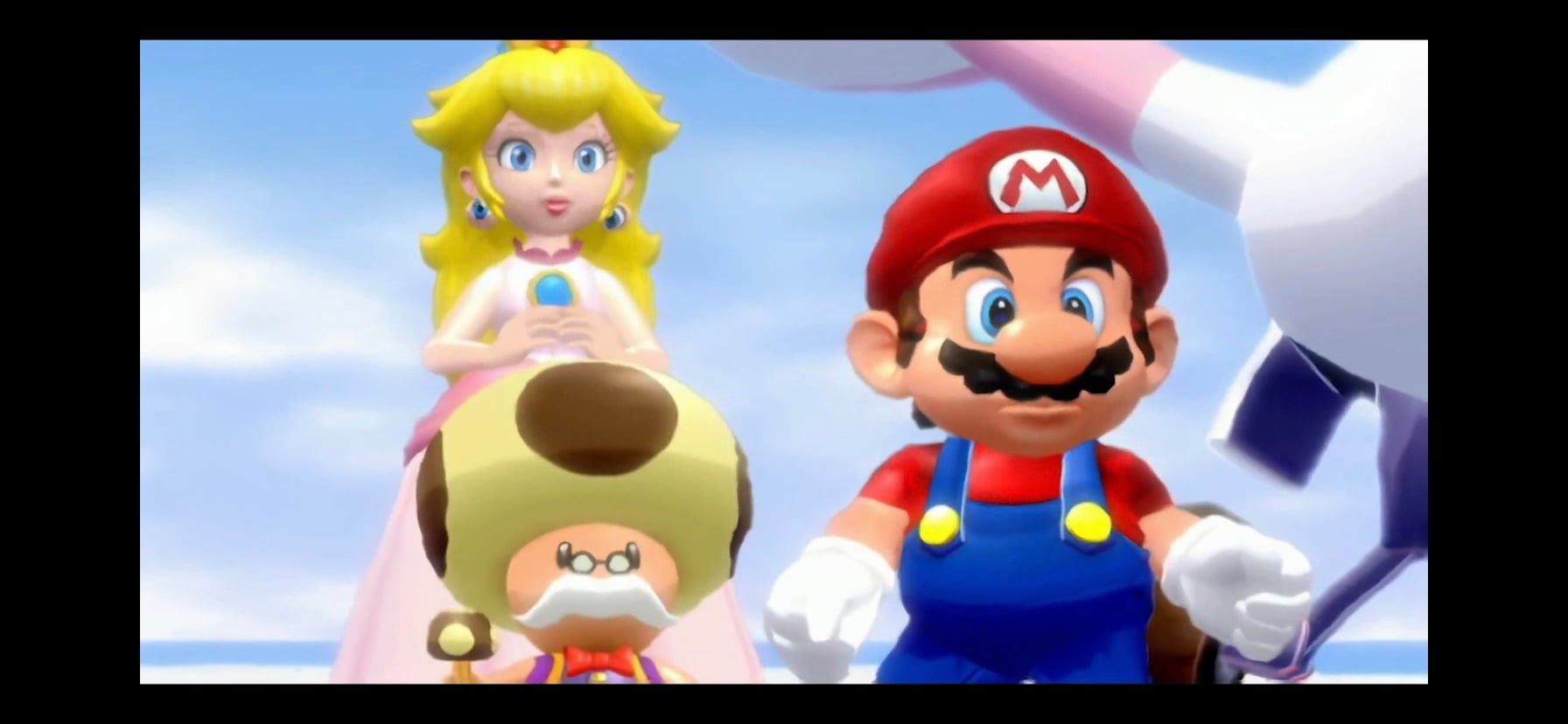
Mario, Peach and Toadsworth fly to Isle Delfino for a break, and land on an airstrip smeared with goop. Mario finds a talking water pump, F.L.U.D.D., cleans up, and is promptly arrested: a shadowy figure who looks just like him has been painting graffiti all over the island, and a Pianta court sentences Mario to scrub the place clean and recover the scattered Shine Sprites. The impostor, Shadow Mario, kidnaps Peach and turns out to be Bowser Jr., who has been told she is his mother. The final showdown is with Bowser himself, bathing in a hot tub above the island. Read the whole holiday on our Super Mario Sunshine page.
This is the game that changed most visibly. The cutscenes, all fully voiced, have been upscaled and reframed for a widescreen television, so every frame of the trial and the kidnapping is wider and sharper than on GameCube.
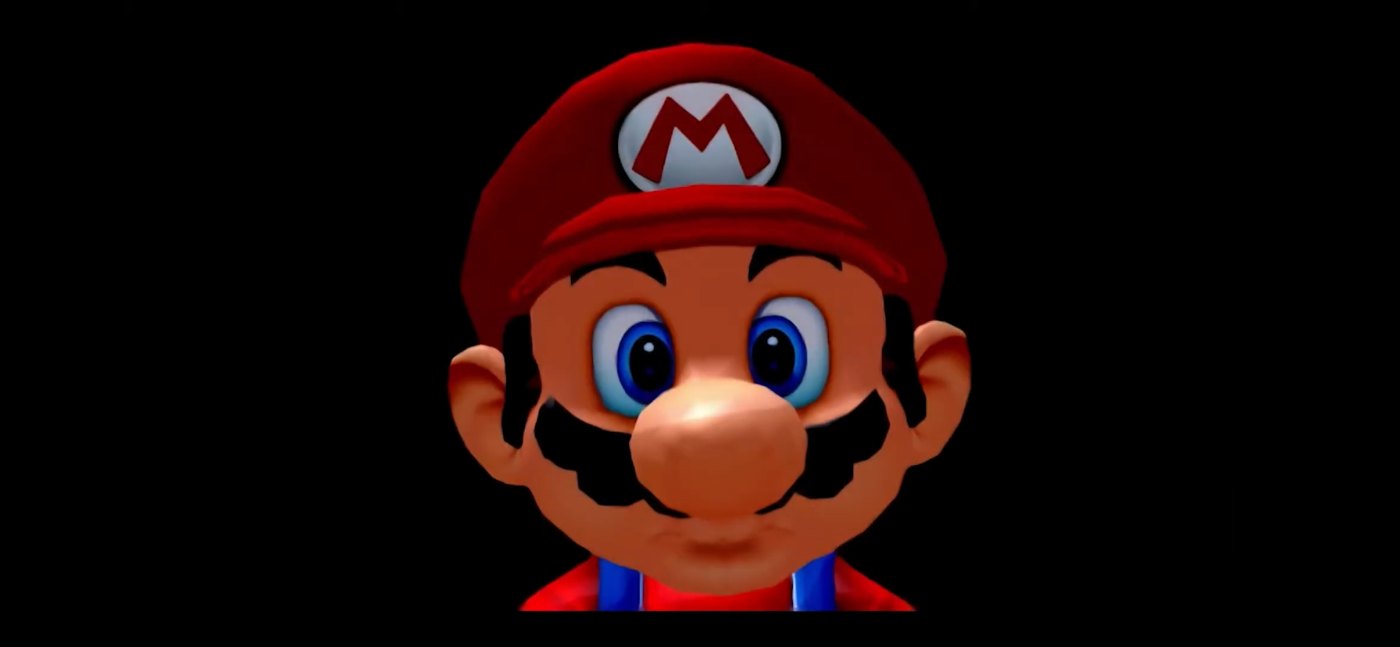
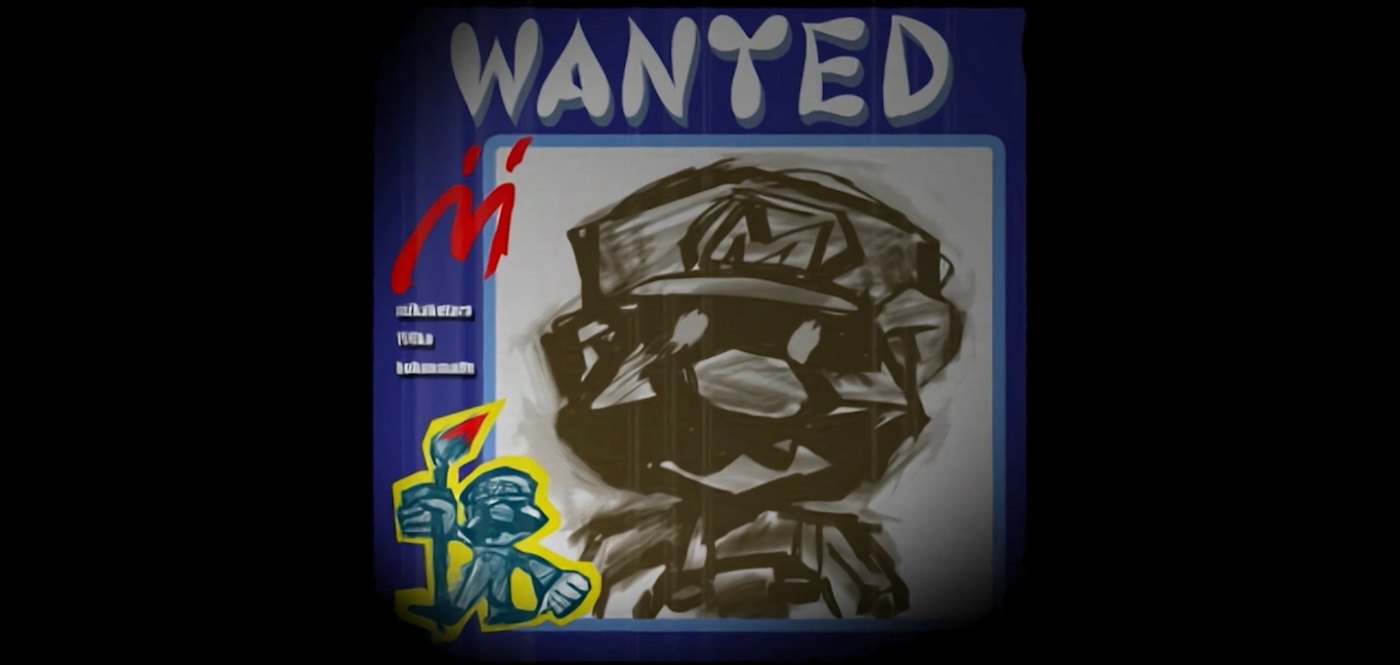
The plane stops short of a pool of goop.Mario on trial.The wanted poster for Shadow Mario.The final confrontation with Bowser.
Super Mario Galaxy: a castle in orbit
On the night of the Star Festival, Bowser’s airships tear Peach’s castle from the ground and carry it to the centre of the universe. Mario, flung into space, wakes on a tiny planet and meets Rosalina and her star-children, the Lumas, whose Comet Observatory has lost its power. Gathering Power Stars and Grand Stars across dozens of galaxies brings the Observatory back to life and Mario within reach of Bowser’s new galaxy. Collect 120 stars and beat Bowser, and Luigi becomes playable for a second run through the game. The full story, storybook and all, is on our Super Mario Galaxy page.
Galaxy is the smoothest of the three on Switch, at 1080p and 60 frames per second. Its story scenes are unchanged, but one late moment is new: when the 121st Power Star is collected, Mailtoad has fresh lines, sends his photographs straight to the Switch album, and the staff’s closing message is now shown in the game itself.
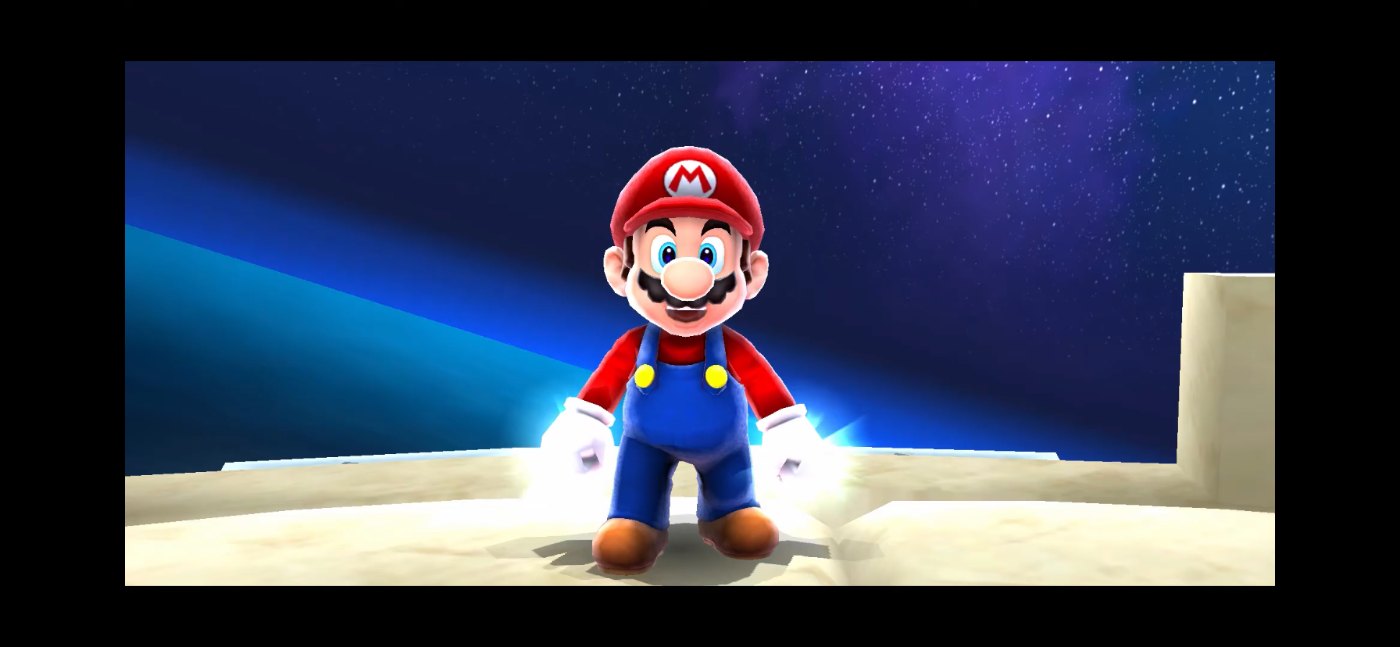
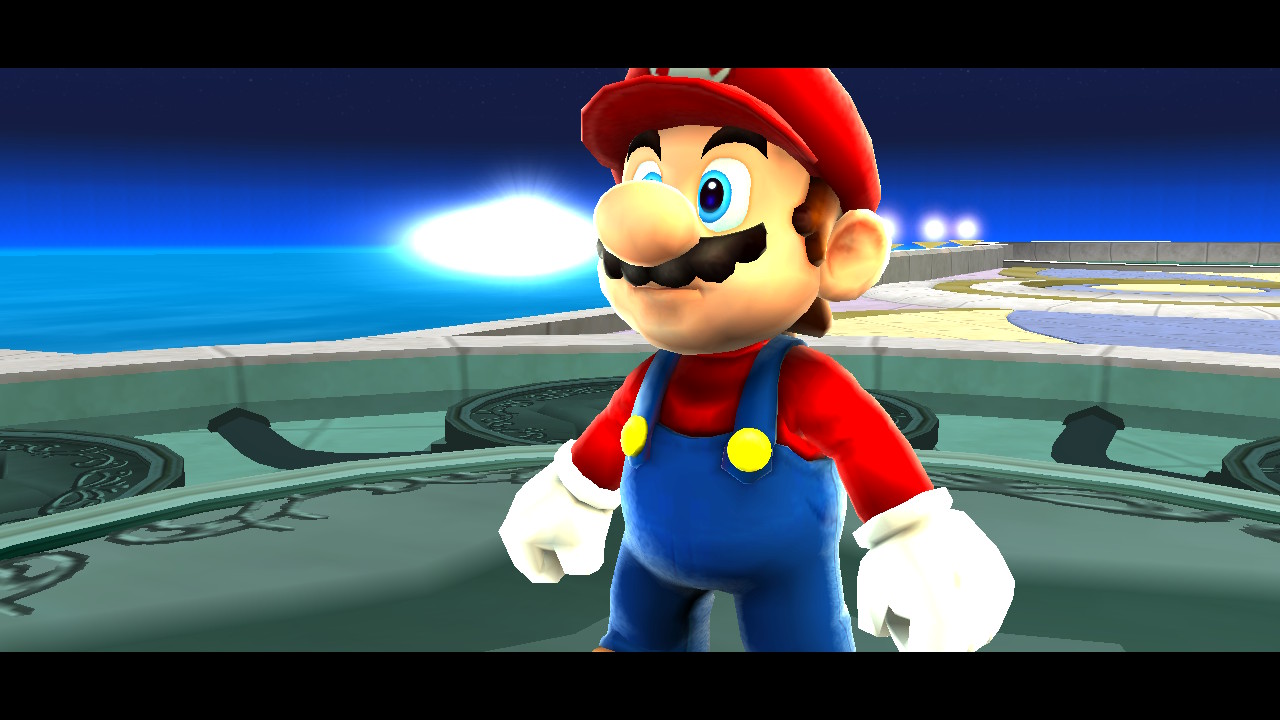
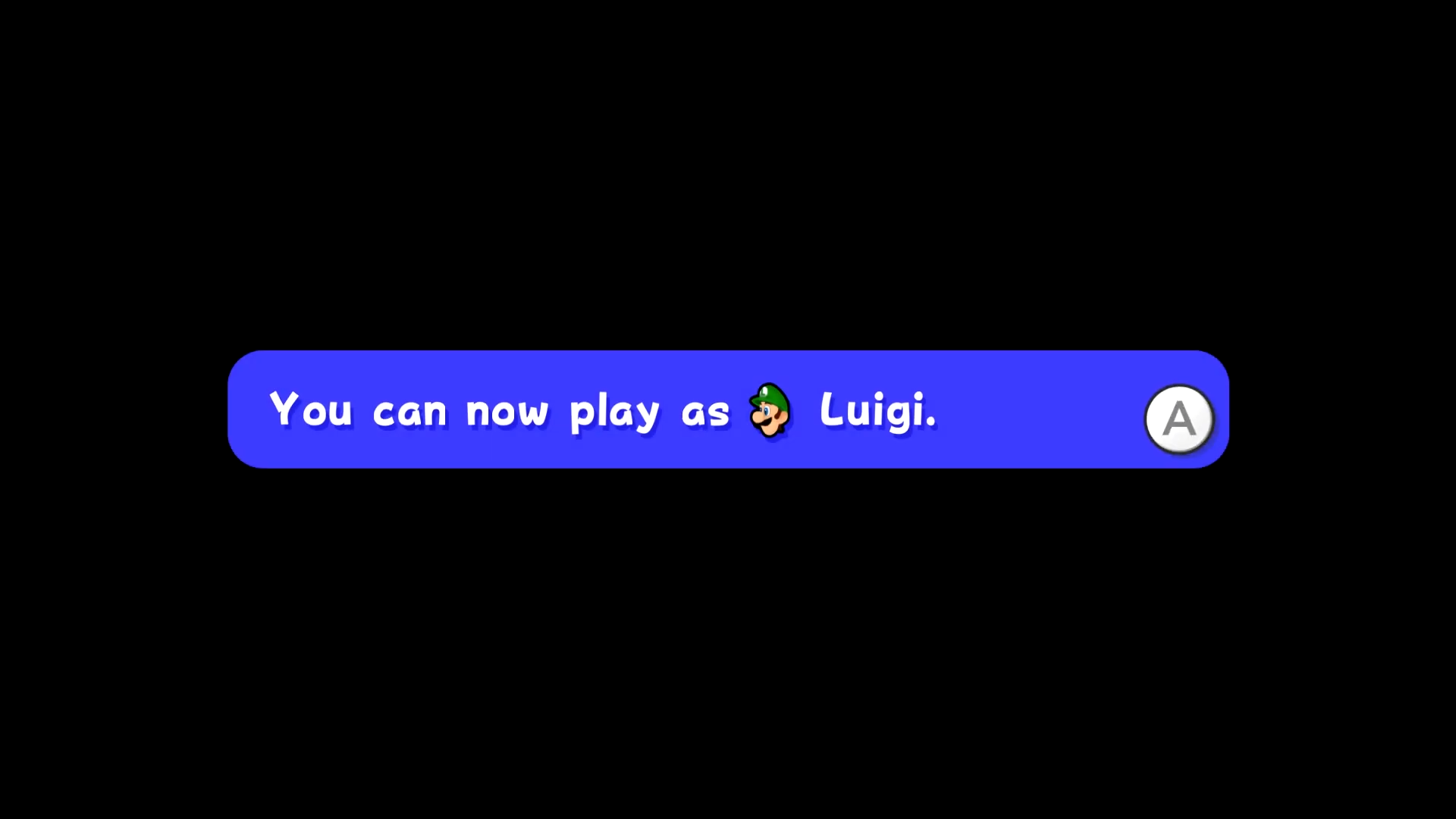
Mario receives the spin from a Luma.Mario meets Rosalina.The screen that announces Luigi.
What is on the cartridge
Three games and their three soundtracks, each chosen from the same menu.
Super Mario 64Nintendo 64, 1996 · 15 courses, 120 Power Stars · Final boss: BowserThe 1997 Shindou revision with rumble, upscaled to 720p in its original 4:3 frame.
Super Mario SunshineGameCube, 2002 · Delfino Plaza and seven areas, 120 Shine Sprites · Final boss: BowserBased on the European version and shown in 16:9 widescreen, at up to 1080p.
Super Mario GalaxyWii, 2007 · 42 galaxies, 121 Power Stars, then Luigi · Final boss: Bowser1080p at 60 frames per second, with Joy-Con, gyro and touch-screen pointing in place of the Wii Remote.
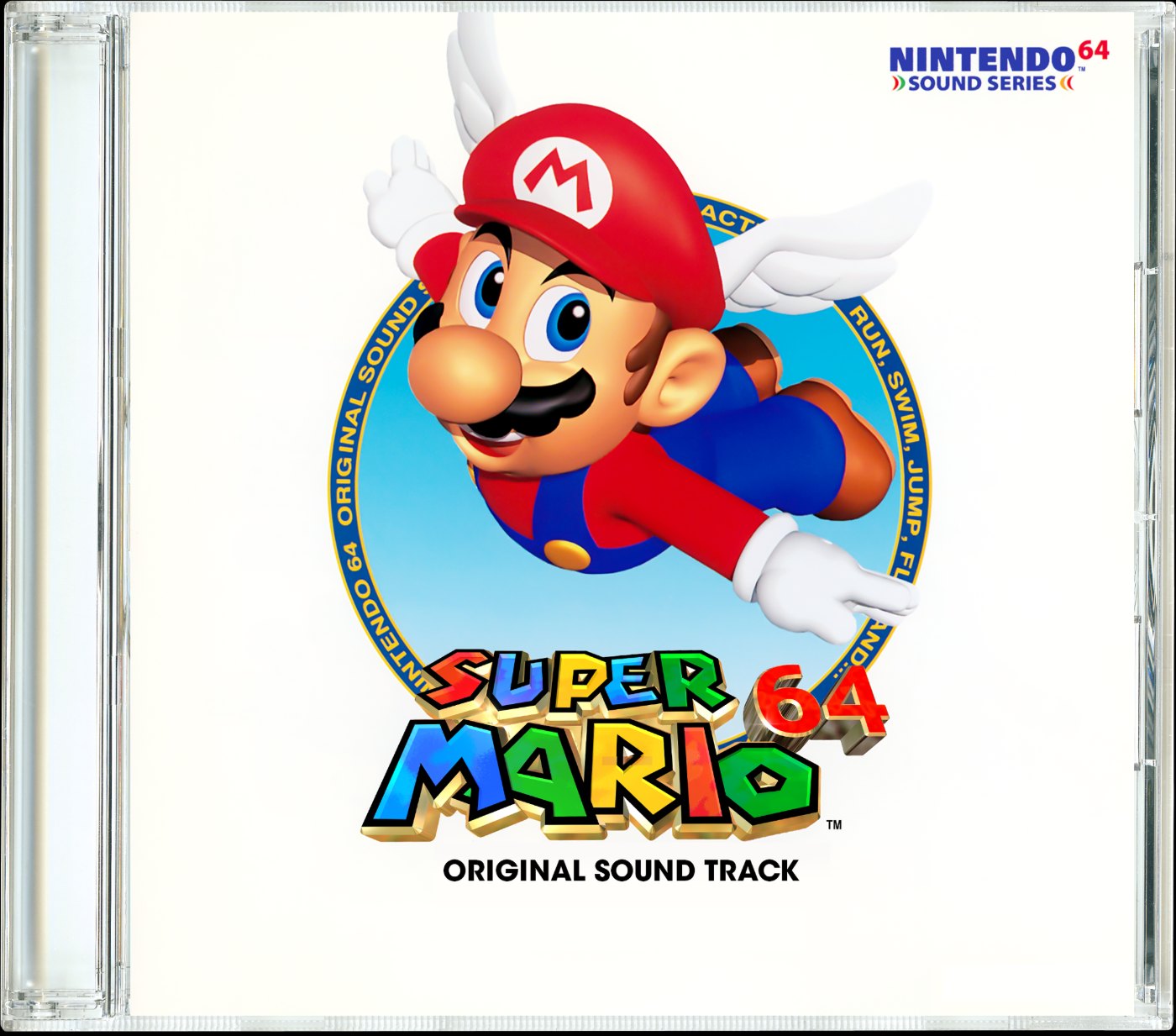
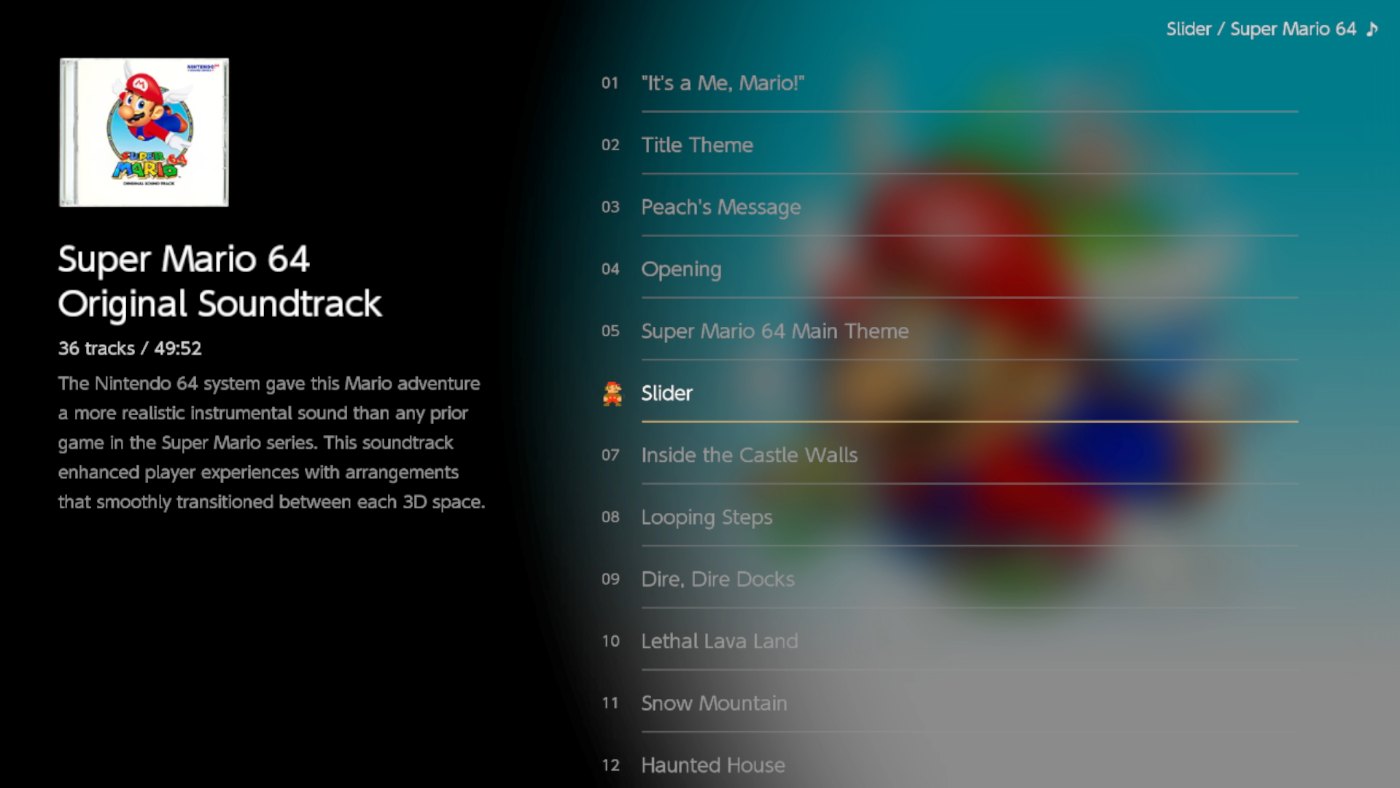
Super Mario 64 Original Soundtrack36 tracks · 49:52A score previously sold on CD, presented here with its Japanese cover on a jewel case.
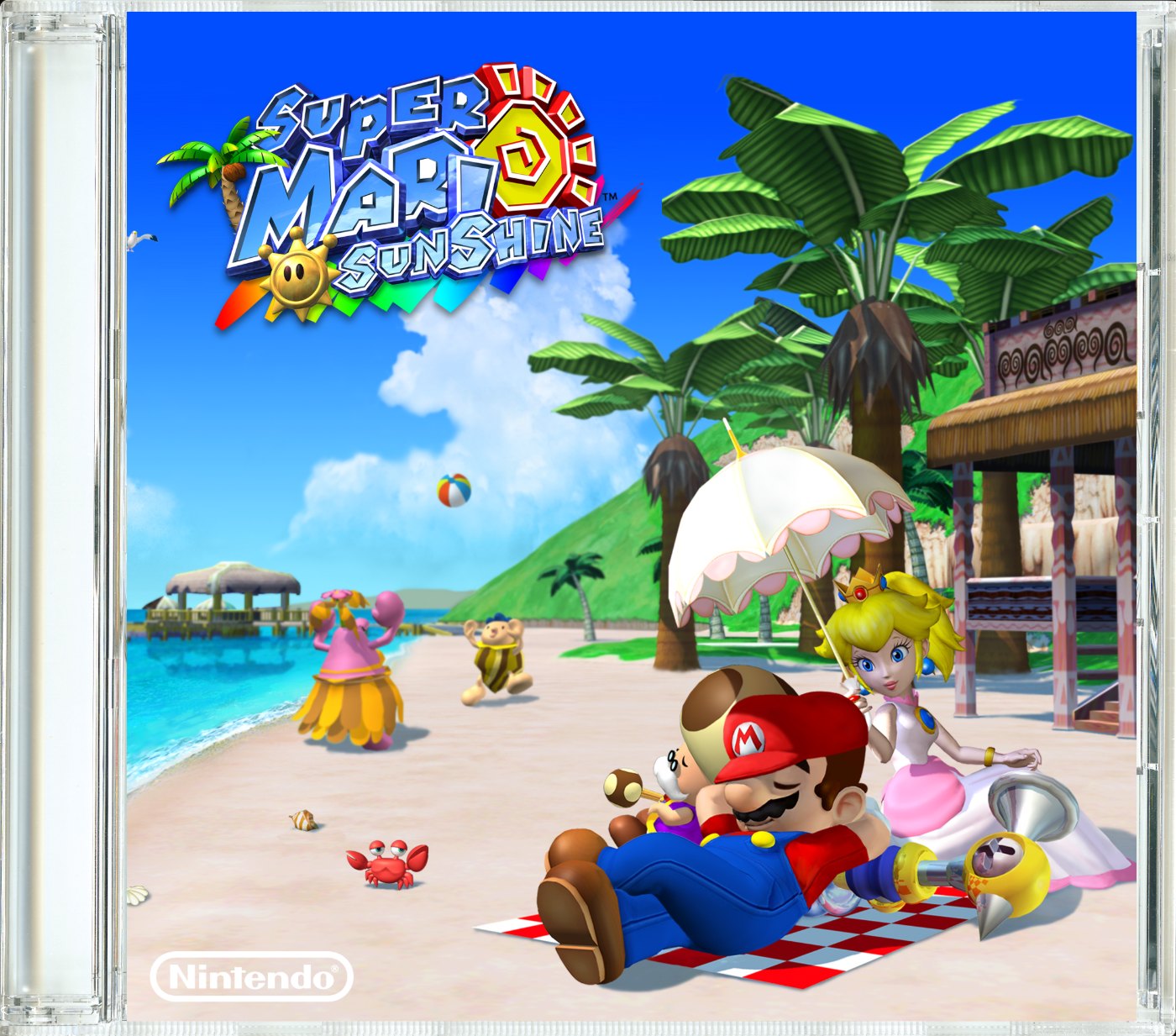
Super Mario Sunshine Original Soundtrack58 tracks · 1:11:01Never released before in any form: this was Sunshine’s first official soundtrack.
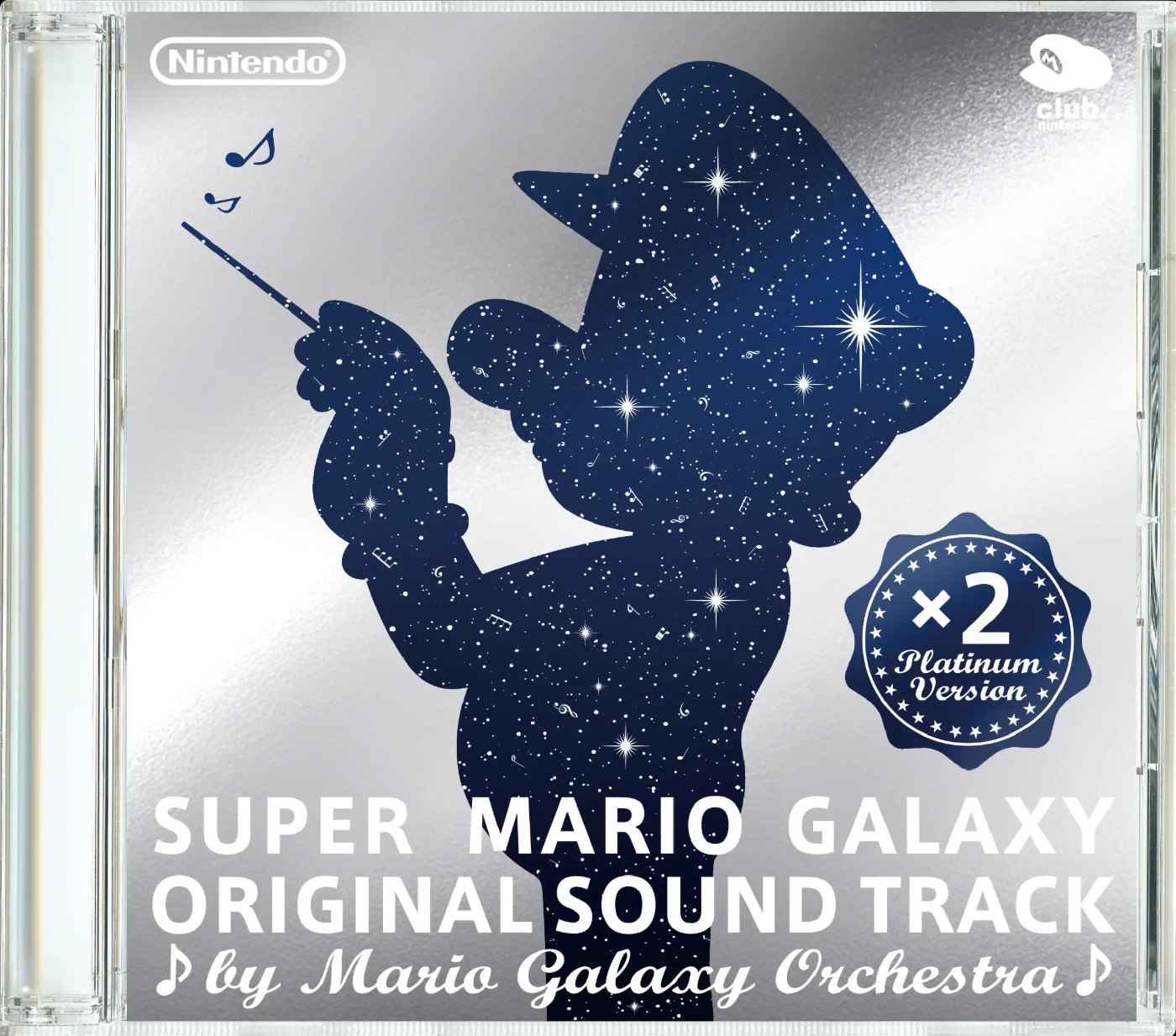
Super Mario Galaxy Original Soundtrack81 tracks · 2:07:03The full Platinum Version, originally a two-disc Club Nintendo exclusive in Japan.
Total: 175 tracks. Choosing a song on the menu plays the coin sound from Super Mario World, and the Mario running beside the track that is playing is the little 1985 sprite from Super Mario Bros.
Advertisement
What Changed & How It Plays
Nothing about how the three games play was redesigned. What changed is everything around the controls, the picture and the presentation, and it differs from game to game. The launcher ties them together: a menu that dates each game to its original year and console, a short description of each, and the soundtrack player.
All three games work in TV, tabletop and handheld modes. The − button opens a suspend menu in every game, and a software update in November 2020 added camera inversion options to all three.
The menu and the music player
The menu greets you with a random track from any of the three soundtracks. Each soundtrack has its own page, listed track by track, and pressing − there switches to a music-player mode that keeps playing with the Switch’s screen turned off: the closest the collection comes to a bonus feature, and the one reviewers liked best.
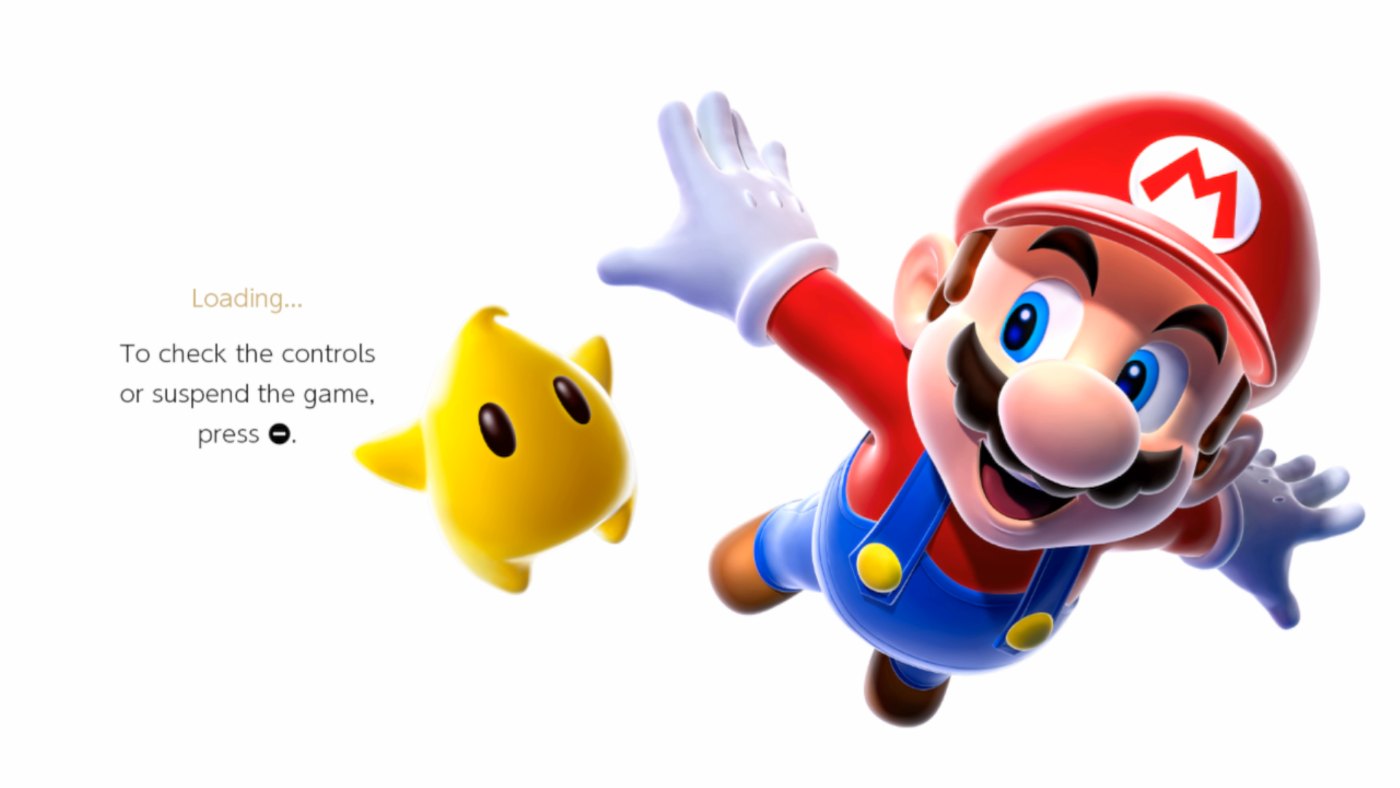
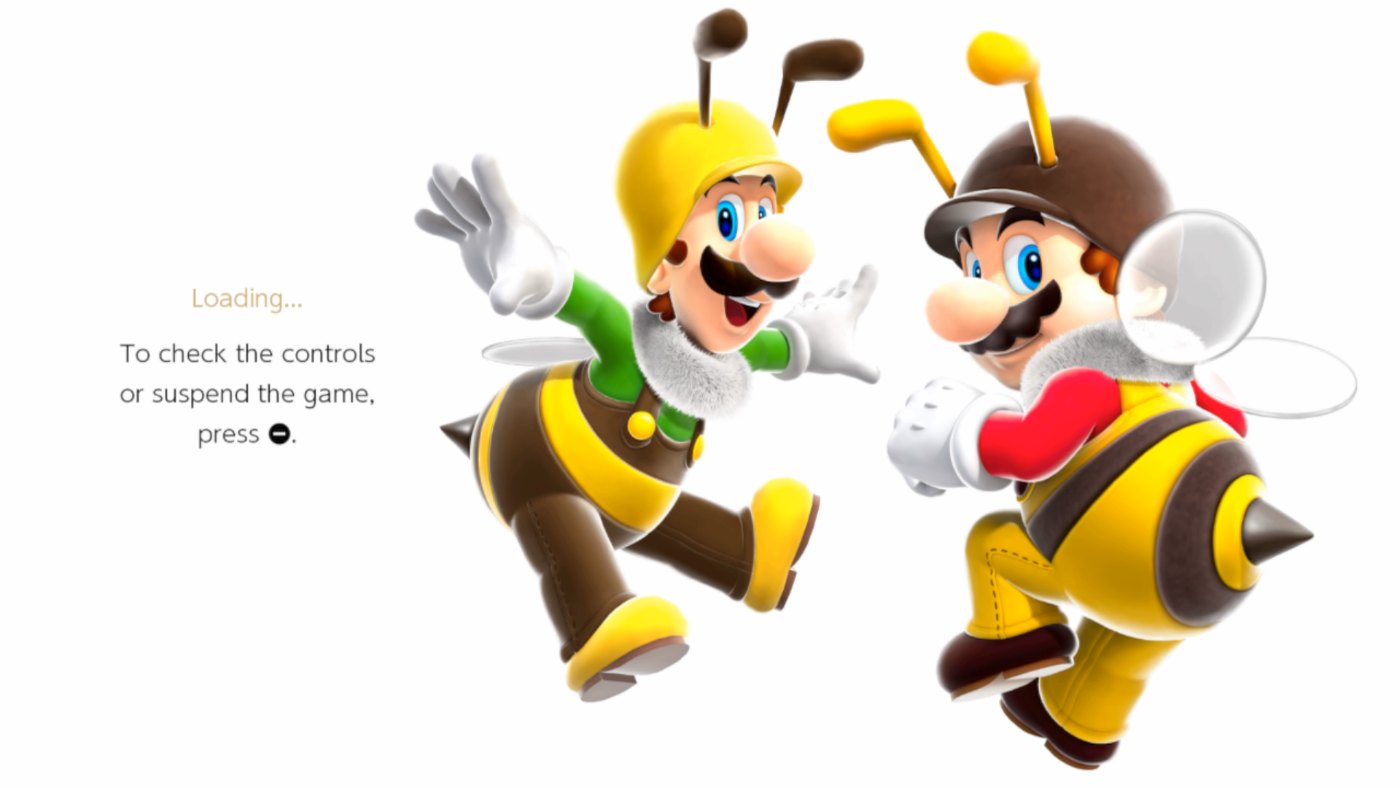
The other new material is visual. Every game loads behind one of several fresh illustrations made for the collection (Wing Mario, Mario and FLUDD covered in goop, Bee Mario and Bee Luigi), and the menus use new logos for each game. There is no concept art, no digital manual and no choice of display options.
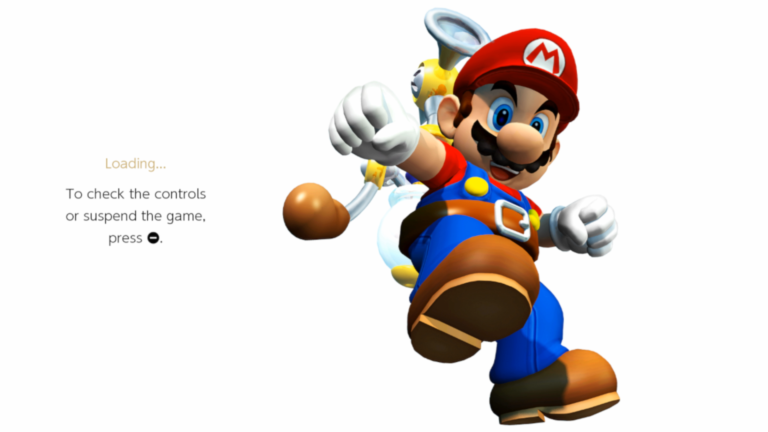
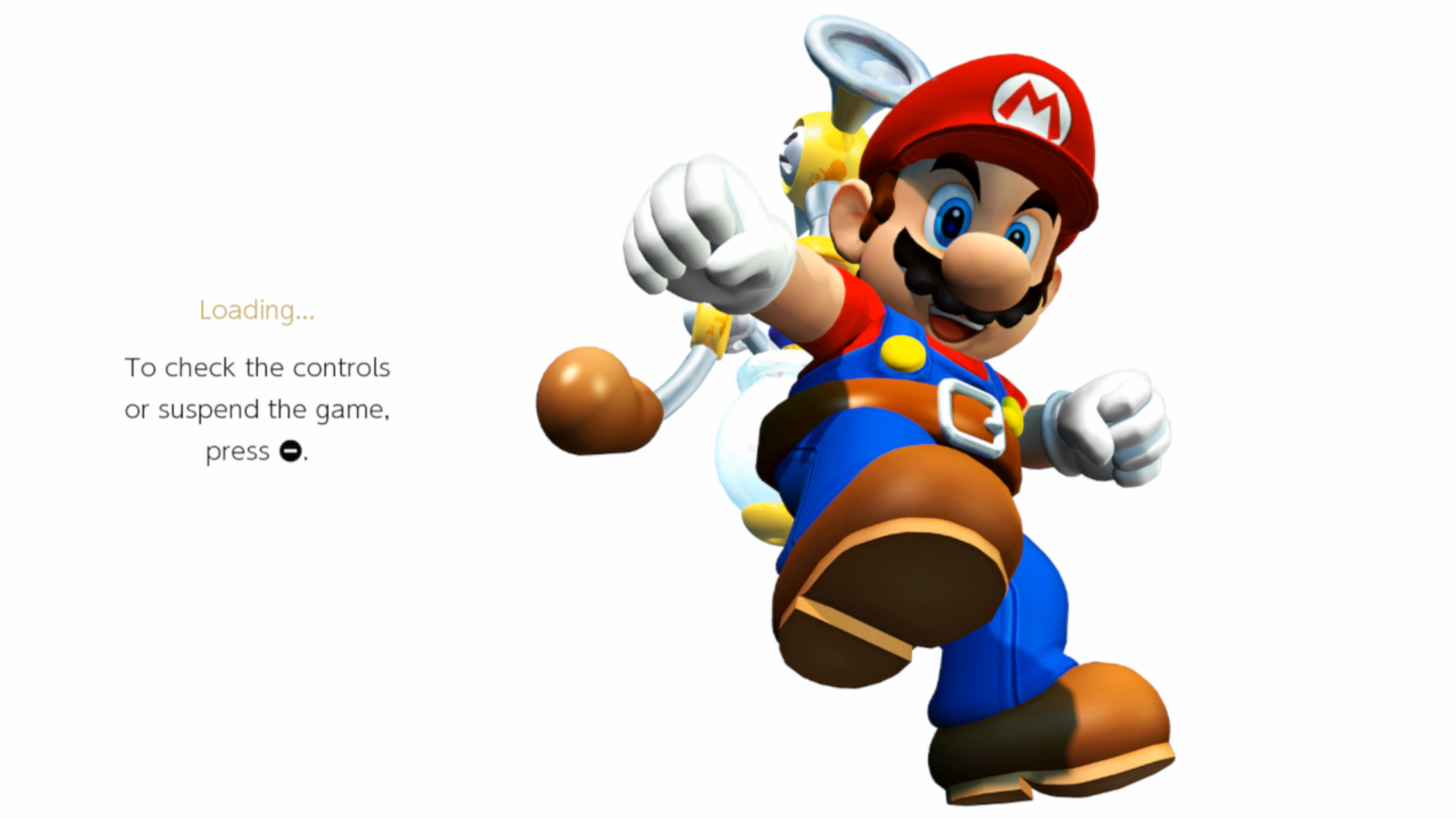
The Super Mario 64 soundtrack page.A Super Mario 64 loading screen: Mario and Bowser.A Galaxy loading screen: Bee Mario and Bee Luigi.
Super Mario 64: the Shindou version at 720p
The Super Mario 64 here is not the version most Western players grew up with. It is the Shindou Pak Taiou edition released in Japan in July 1997, which added Rumble Pak support (now Switch rumble) and quietly fixed a number of bugs. The most famous casualty is the backwards long jump: the Shindou code resets Mario’s speed when he long jumps backwards, so the trick that speedrunners use to climb the endless stairs without 70 Power Stars no longer works. This was the first time the Shindou version had been released in English.
It runs at 960×720 in every mode, in a 4:3 window, at 30 frames per second. Some textures were redrawn at higher resolution, and a colour error on the ankle of Bowser in the 15-piece sliding puzzle was corrected. The Options menu has gone, with the language choice moved to the launcher, and only the four original languages are offered: Japanese, English, French and German.
Jump is on A or B, punch and kick on X or Y, crouch on ZL or ZR and the camera on the right stick, with L or R switching camera mode. The directional buttons act as a digital stick, as they did in Super Mario 64 DS. The buttons cannot be remapped, but update 1.1.1 in November 2021 added support for Nintendo Switch Online’s Nintendo 64 controller.
The title screen now asks you to press +.Bowser’s 15-piece puzzle, its ankle colour fixed.
Super Mario Sunshine: widescreen at last
Sunshine was the biggest technical job. Running at 1080p on a television and 720p in handheld mode, it is shown in 16:9 widescreen with its cutscenes upscaled and zoomed in to fill the frame. The base is the European release, and small slips were tidied up: a yellow Toad near Pinna Park now stands where he was meant to, rather than on the edge of a death barrier, and the text on Gooper Blooper’s cork is finally legible.
The GameCube controller’s analogue R trigger, which let you squirt FLUDD harder or softer, had no direct equivalent. On Switch, ZR gives a running squirt at about three-quarters pressure and R plants Mario’s feet to aim; Y picks up and dives, X changes nozzle, L opens the guidebook and ZL centres the camera. FLUDD’s tutorials talk about “the button” and “the stick” instead of naming GameCube parts, and talking to islanders moved to A.
At launch the camera could not be inverted, which annoyed players who had learned it the GameCube way. Update 1.1.0 fixed that and added proper GameCube controller support with analogue spraying, for TV mode only and with the adapter sold separately.
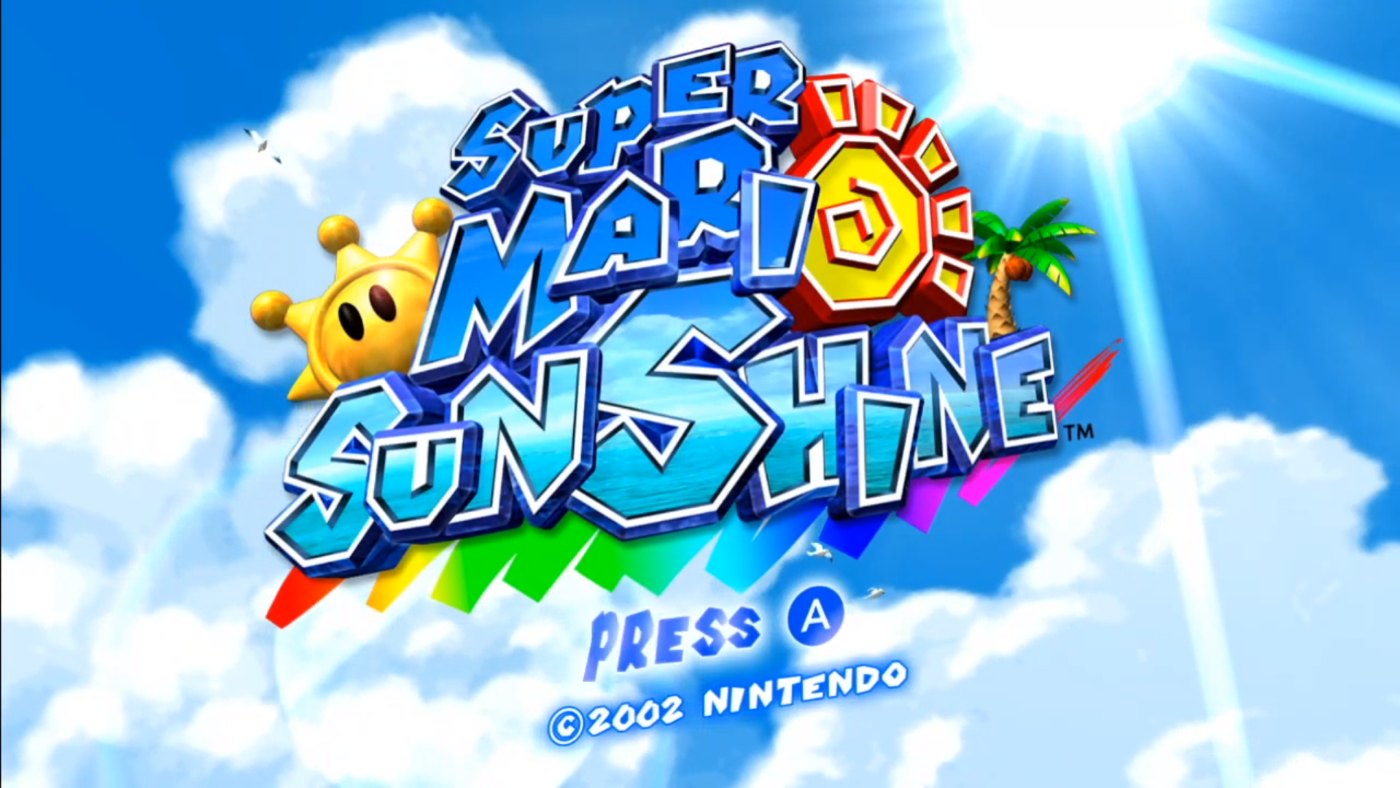
The Sunshine title screen on Switch.The Turbo Nozzle in widescreen.
Super Mario Galaxy: a pointer without a Wii Remote
Galaxy is the only one of the three that runs natively on Switch, at least in part, at 1080p (720p handheld) and 60 frames per second. Its Wii controls were rethought for three ways of playing. With two Joy-Con, the right one becomes the Wii Remote: point it to aim the Star Pointer, shake it or press X or Y to spin. A Pro Controller aims with its gyro, recentred with R. In handheld mode and on Nintendo Switch Lite the touch screen takes over: swipe to move the pointer, tap to fire a Star Bit, hold to fire several, and tap a Pull Star to grab it.
Co-Star Mode survives: a second player holds a single Joy-Con sideways to collect and shoot Star Bits and stop enemies in their tracks. Rolling-ball and ray-surfing stages ask you to hold a Joy-Con upright and tilt it. Sounds that came out of the Wii Remote’s speaker now play through the television, Miis can no longer be save icons, and the star cursor cannot be spun by twisting the controller.
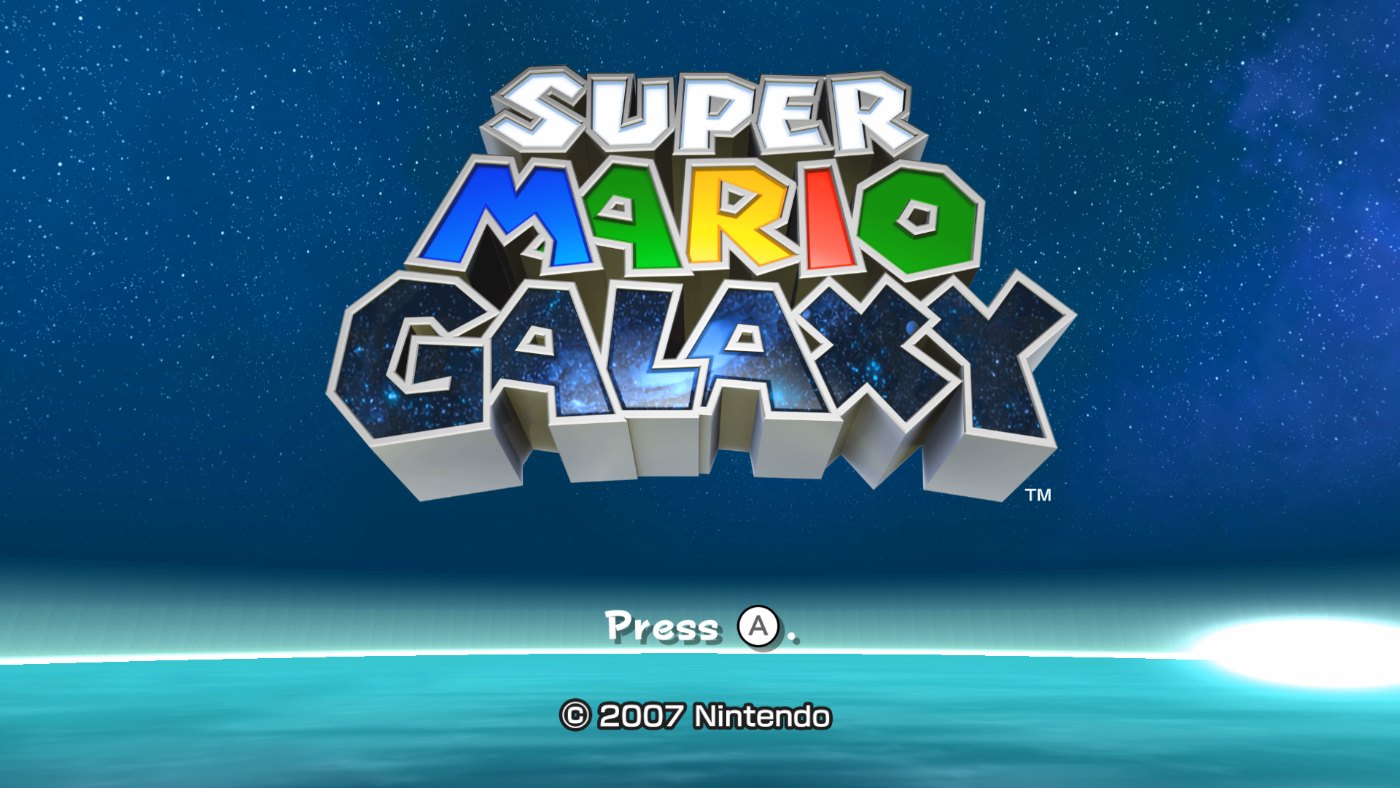
The Galaxy title screen: press A to start.Freezeflame Galaxy at 1080p.
Five years of updates
Version 1.0.1, out on 16 September 2020 before the game even reached shops, fixed the Co-Star Mode display in Galaxy. Version 1.1.0 on 16 November 2020 was the big one: camera inversion everywhere, GameCube controller support for Sunshine, no more slowdown when opening Sunshine’s guidebook, and fixes for a handful of launch bugs (see Glitches below). Version 1.1.1 on 3 November 2021 brought the N64 controller, and three small updates between June and October 2025 (1.1.2 to 1.1.4) were needed to run the game on Nintendo Switch 2.
Redrawn for Switch
Some of the icons and textures the collection redrew in high definition:
Squirt NozzleSunshine: FLUDD’s standard spray, in its new Switch icon.
Hover NozzleSunshine: keeps Mario airborne for a few seconds.
Rocket NozzleSunshine: launches Mario high into the air.
Turbo NozzleSunshine: a burst of speed across land and water.
Yoshi’s juice gaugeSunshine: shows how much fruit juice Yoshi has left.
Power MeterSuper Mario 64: Mario’s eight-slice health pie, redrawn.
1-Up MushroomSuper Mario 64: one of the sprites given a higher-resolution version.
Mr. ISuper Mario 64: the giant eyeball, also redrawn.
The 35th Anniversary & Other Media
Super Mario 3D All-Stars was one part of a six-month celebration that Nintendo announced in the same Direct and wound up on the same day, 31 March 2021.
Super Mario Bros. 35th AnniversaryNintendo · 3 September 2020 – 31 March 2021The umbrella for everything below, with its own logo, website and My Nintendo missions. Two of the missions involved this game: buying it, and listening to the music player on the game’s website.
Super Mario Bros. 35Nintendo Switch Online · 1 October 2020A competitive online game in the style of Tetris 99, built on the original Super Mario Bros. for Switch Online members, and also playable only until 31 March 2021, after which its servers closed.
Game & Watch: Super Mario Bros.Nintendo · 13 November 2020A new Game & Watch handheld made for the anniversary, also sold only for a limited time.
Mario Kart Live: Home CircuitNintendo · 16 October 2020Toy karts that race around a course you build at home, played through the Switch; announced in the same Direct.
Super Mario 3D World + Bowser’s FuryNintendo · 12 February 2021Announced alongside 3D All-Stars, with the new Bowser’s Fury adventure added: read our page.
Super Mario All-Stars on Switch OnlineNintendo · 3 September 2020The 16-bit original whose name this collection borrows joined the Super NES library on the day of the Direct. Our page covers the cartridge and the 2010 Wii edition.
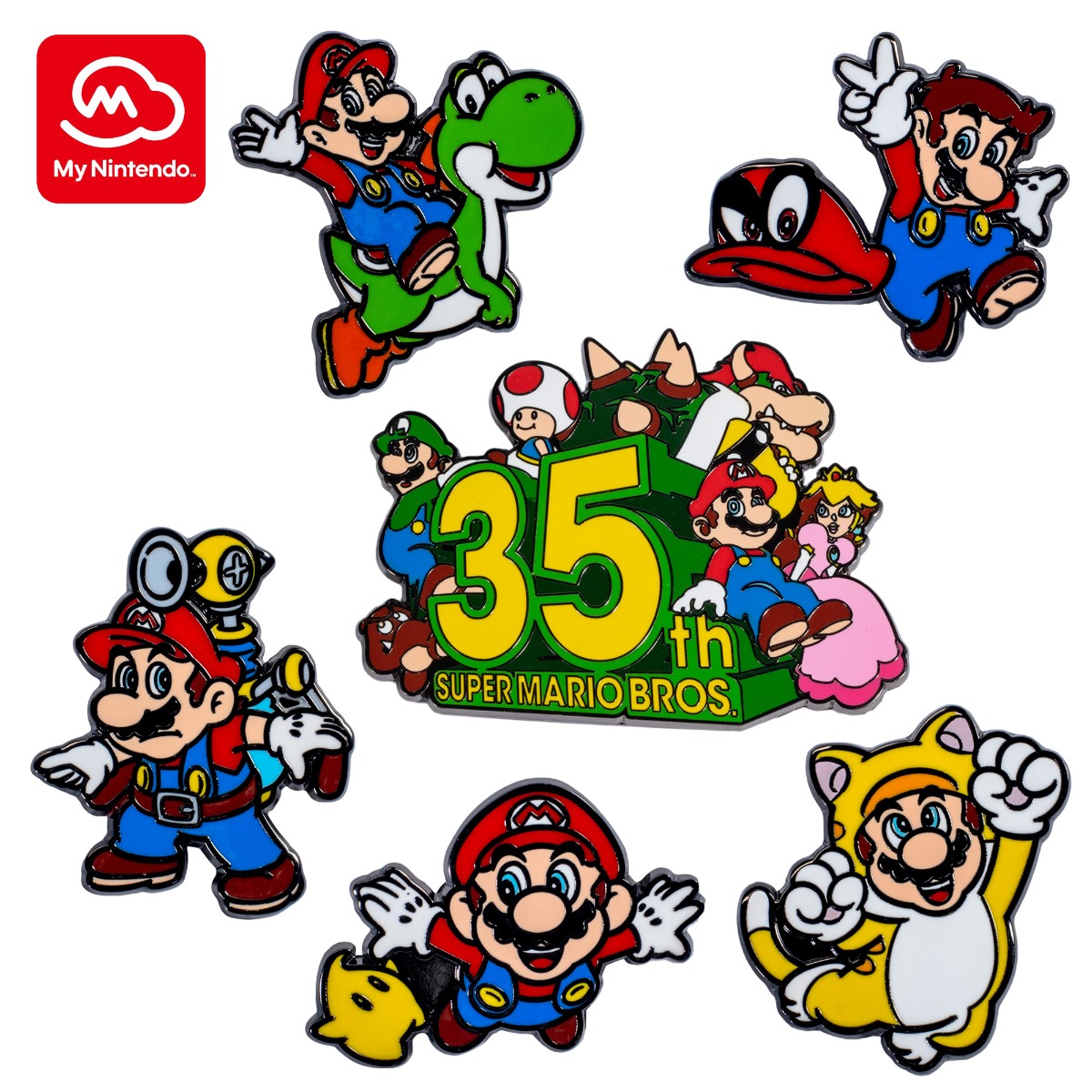
My Nintendo pinsNintendo · two waves, 2020–2021A set of 35th anniversary pins, earned through anniversary missions, included pins for Super Mario 64, Super Mario Sunshine and Super Mario Galaxy.
Gen Hoshino’s commercialNintendo Japan · 3 September 2020The anniversary had its own commercial and song, performed by Gen Hoshino.
Play NintendoNintendo of AmericaNintendo’s Play Nintendo site ran a feature on the three games, tips and tricks, polls and an online puzzle for the collection.
Tetris 99, Smash and SplatoonIn-game events, 2020–2021The anniversary also reached other games: a Super Mario All-Stars theme for Tetris 99, a Mario-only online tournament in Super Smash Bros. Ultimate and a Super Mushroom versus Super Star Splatfest in Splatoon 2.
Characters
Three games mean three casts, and the collection redrew several of them for its menus and loading screens. These are the faces you meet across the cartridge.
Character
Who they are
In this game
Abilities & notes
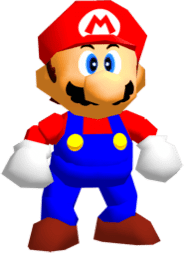
MarioHero of all three games
The star of the show, seen on the cover in his three 3D looks and drawn afresh for every game’s artwork set.
Collects Power Stars in a painted castle, Shine Sprites on a tropical island and Power Stars again across the universe.
Moves change by game: triple jump and wall kick in 64, FLUDD in Sunshine, the spin in Galaxy.
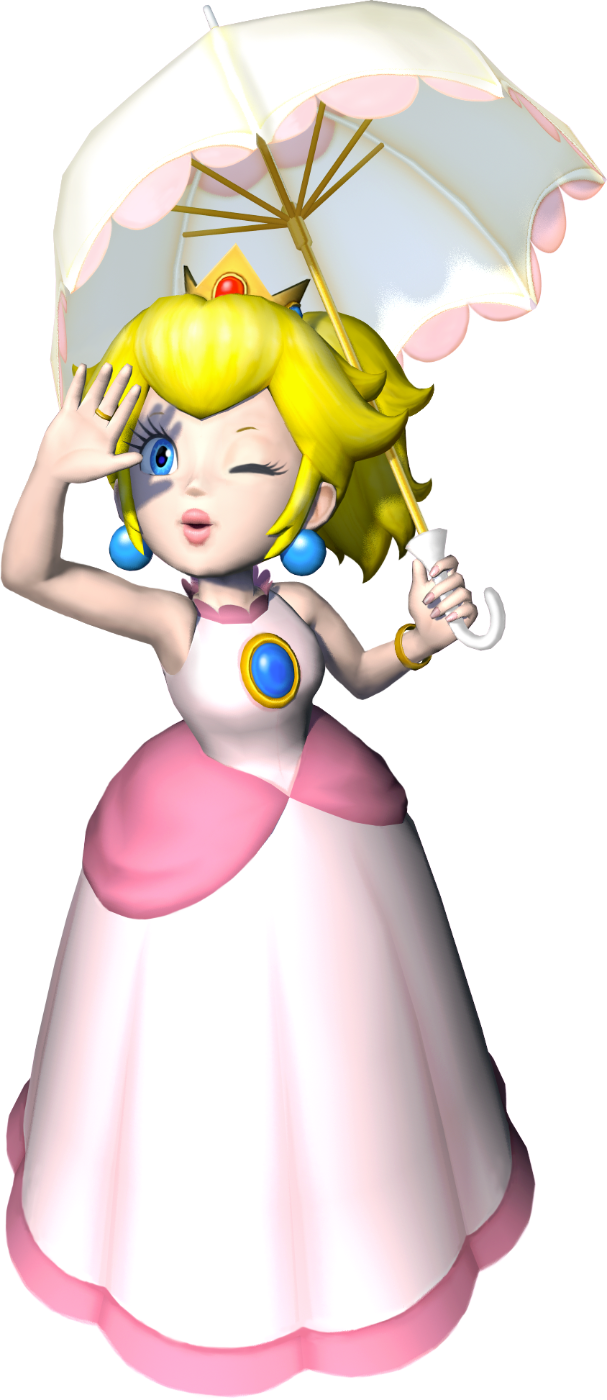
Princess PeachCaptive, holidaymaker, festival host
Ruler of the Mushroom Kingdom, given a new Sunshine illustration for the collection.
Sealed in her own castle in 64, kidnapped by Shadow Mario in Sunshine, and carried off with her castle in Galaxy.
Not playable in any of the three.
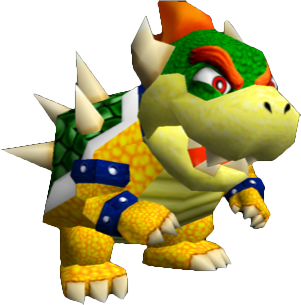
BowserFinal boss, three times over
The King of the Koopas, with a fresh Super Mario 64 render for the collection.
Steals the Power Stars in 64, relaxes in a hot tub with his son in Sunshine and builds a galaxy-sized empire in Galaxy.
Swung by the tail in 64; fought from a hot tub in Sunshine; ground-pounded on tiny planets in Galaxy.
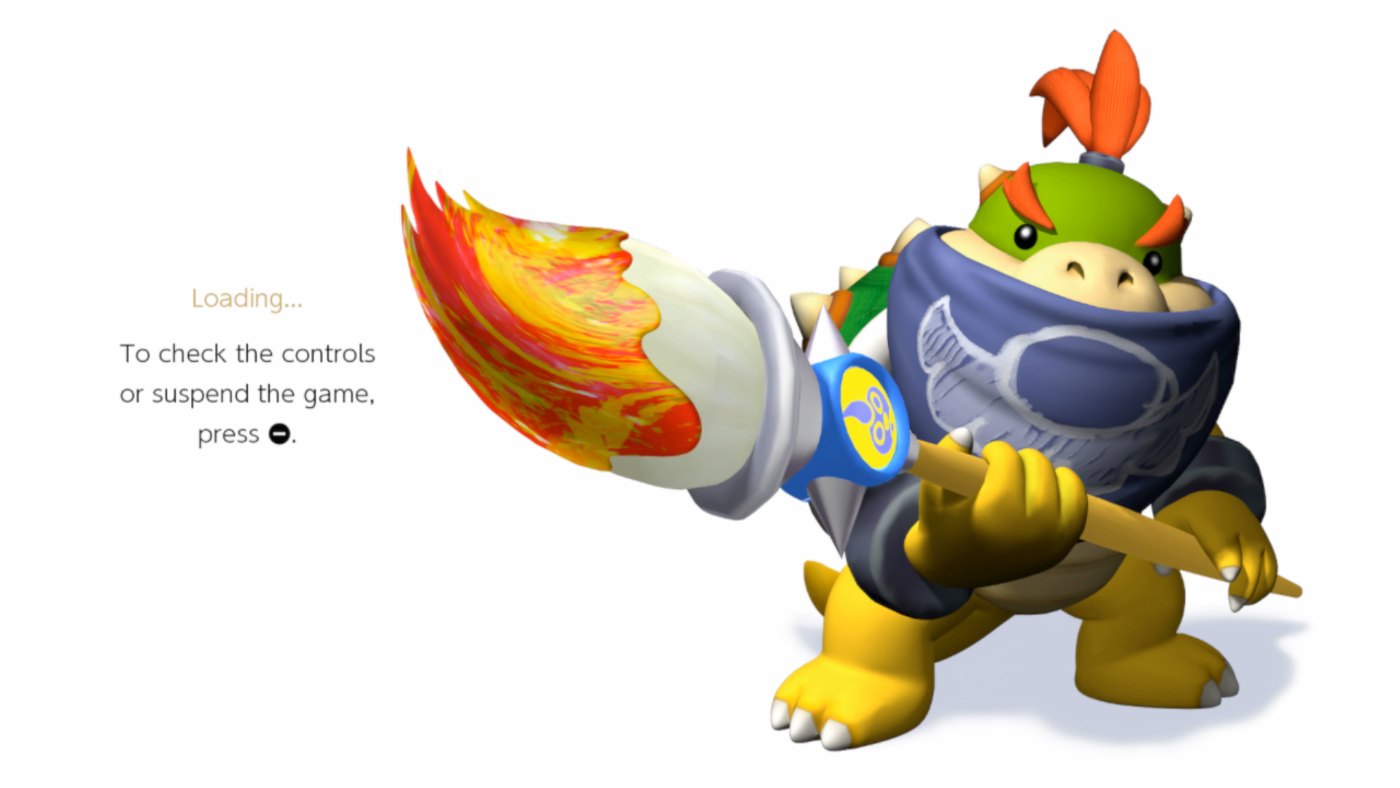
Bowser Jr.Sunshine’s troublemaker
Bowser’s son, introduced in Super Mario Sunshine, where he is the shadowy Mario lookalike.
Paints Isle Delfino with goop, frames Mario and kidnaps Peach, believing she is his mother.
Has his own loading screen in the collection.
F.L.U.D.D.The talking water pump
A water backpack built by Professor E. Gadd that bonds with Mario at Delfino Airstrip.
Sprays, hovers, rockets and turbo-charges Mario through Sunshine, and is badly damaged in the finale before the Toads repair it.
Four nozzles: Squirt, Hover, Rocket and Turbo.
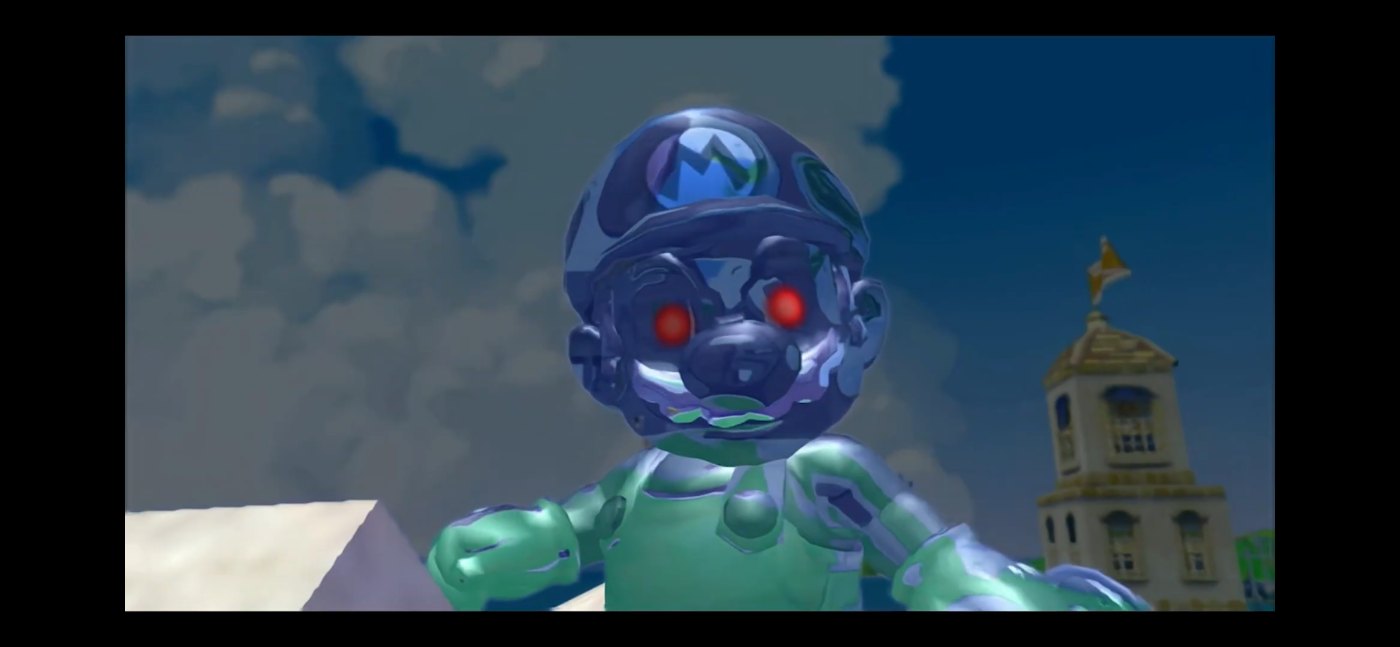
Shadow MarioThe impostor
A paint-dripping figure in Mario’s shape, wielding a magic brush.
His graffiti gets Mario convicted; he is unmasked as Bowser Jr. at Pinna Park.
Chased through many of Sunshine’s episodes.
ToadsworthPeach’s steward
The elderly Toad who looks after the princess, introduced in Sunshine.
Comes on the holiday, warns the Toads not to touch the goop and asks Mario to clean it up.
Speaks in the voiced cutscenes, now in widescreen.
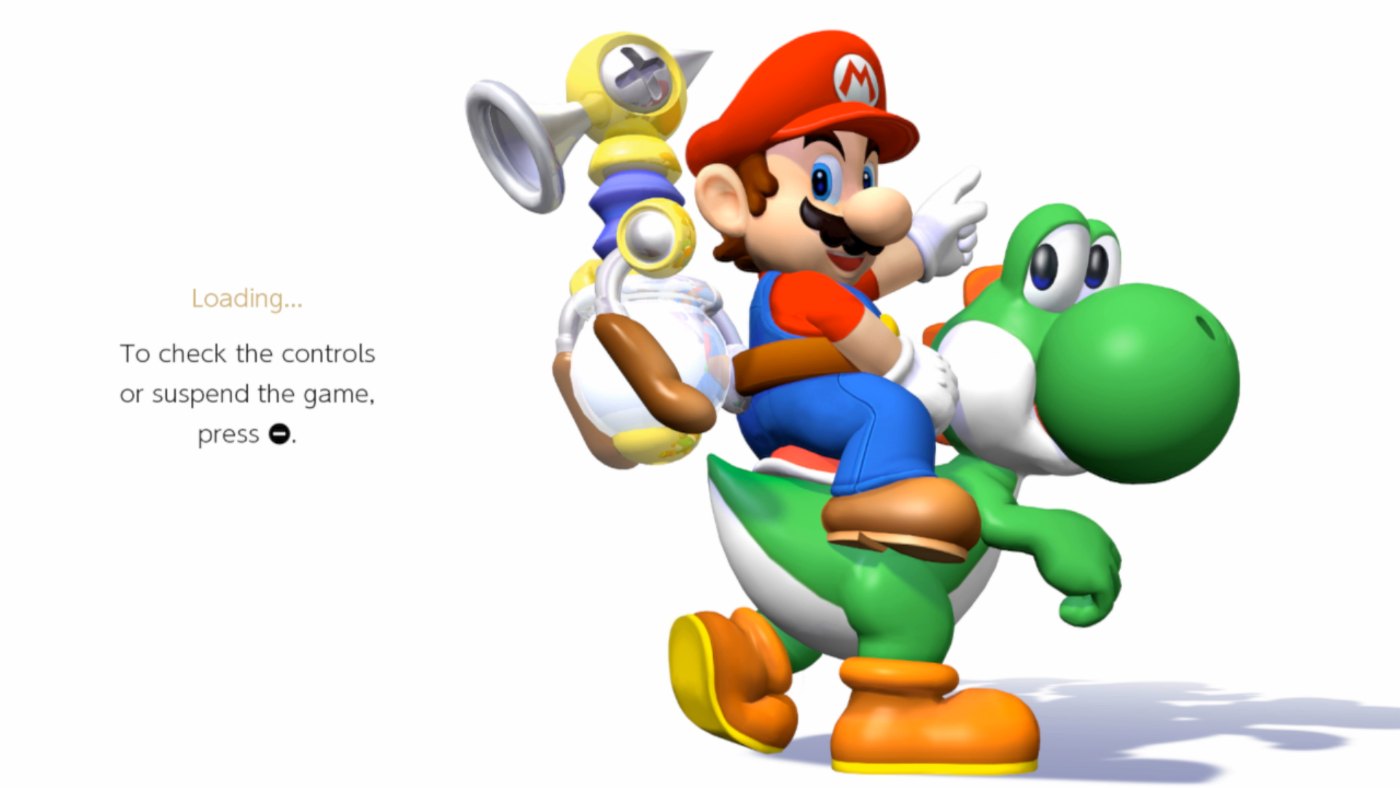
YoshiSunshine’s juice-powered steed
Hatched from eggs on Isle Delfino after Mario brings them the fruit they ask for.
Sprays fruit juice, eats enemies and dissolves into the water if he falls in.
His juice gauge was redrawn for Switch.
RosalinaGuardian of the Comet Observatory
The keeper of the Lumas, introduced in Super Mario Galaxy.
Gives Mario the power to spin and sends him out for the Power Stars that will restore her Observatory.
Appears only in Galaxy of the three games.
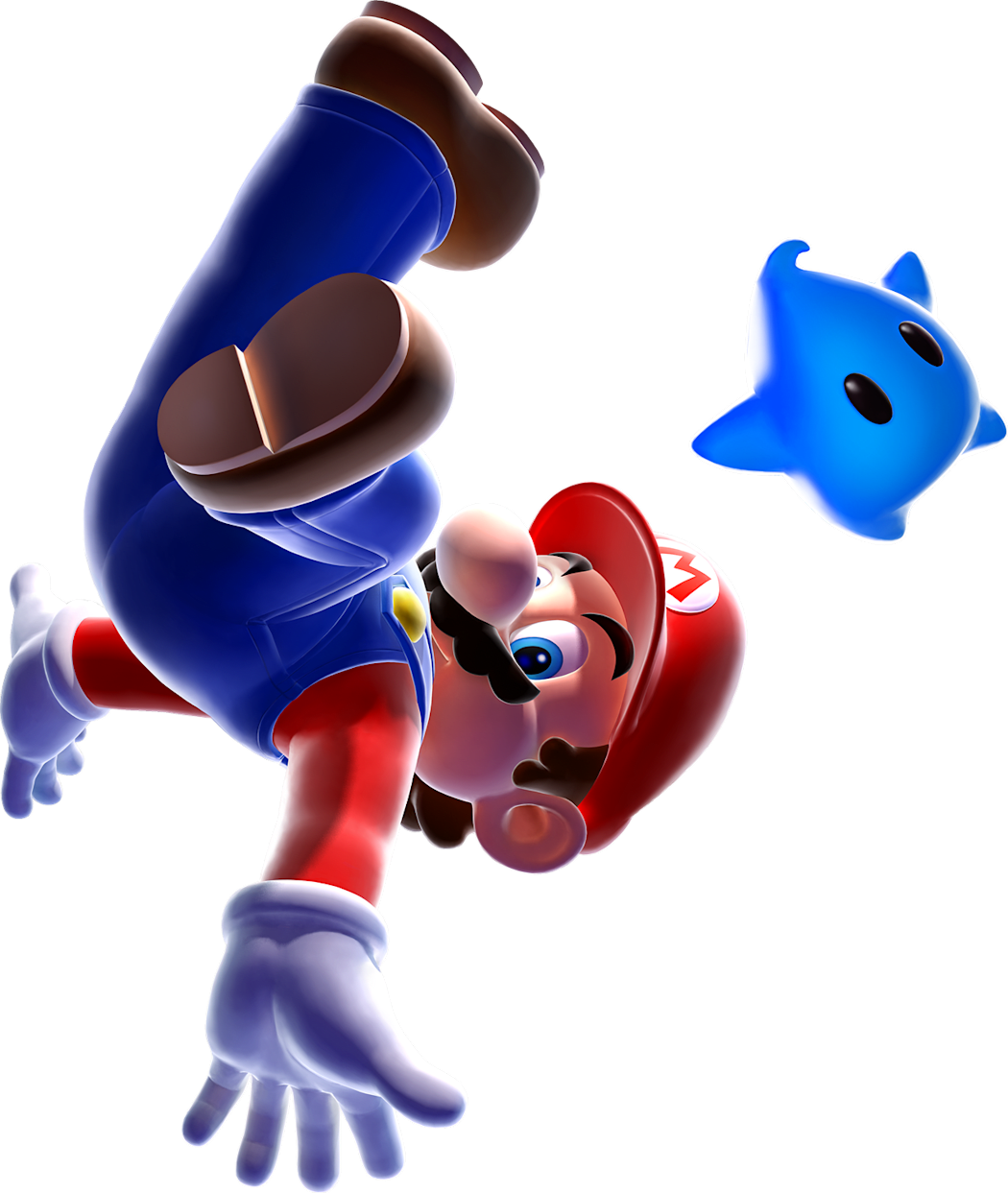
LumasStar-children
Small star creatures who live with Rosalina and become planets, galaxies and power-ups.
A Luma rides in Mario’s cap and gives him the spin; Hungry Lumas grow into new planets and galaxies when fed Star Bits.
The blue Luma appears in the collection’s Galaxy artwork.
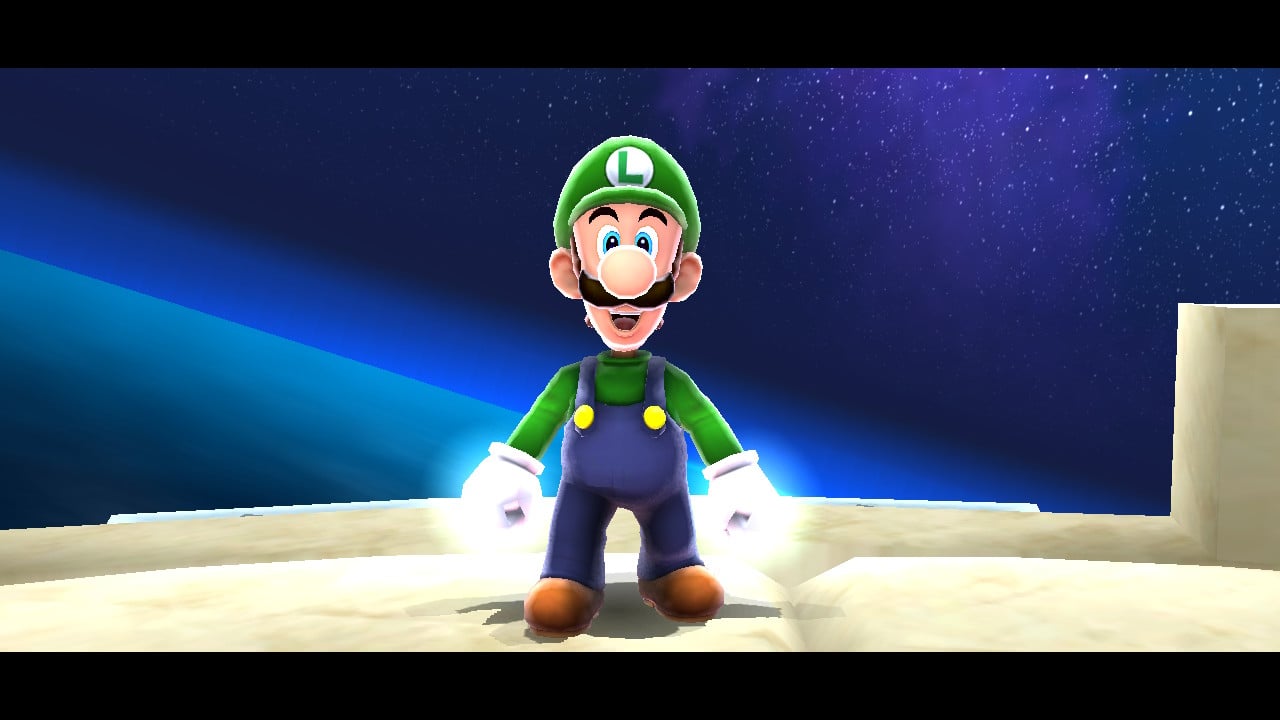
LuigiGalaxy’s second hero
Mario’s brother, rescued along the way in Galaxy.
Becomes playable after 120 stars, with a higher jump and slipperier footing, for a whole second run through the game.
Not playable in the 64 or Sunshine included here.
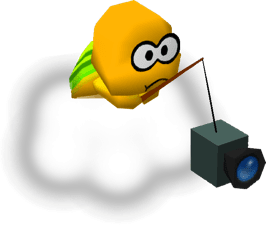
Lakitu Bros.Super Mario 64’s camera crew
A Lakitu reporting on Mario’s adventure, filming it from his cloud.
Explains the camera controls, now with the right stick doing the work of the N64’s C buttons.
Got a new render and their own loading screen in the collection.
Bosses and familiar faces, in high definition
A handful of the opponents you meet across the three games, as they look on Switch. Every boss is covered on the individual game pages.
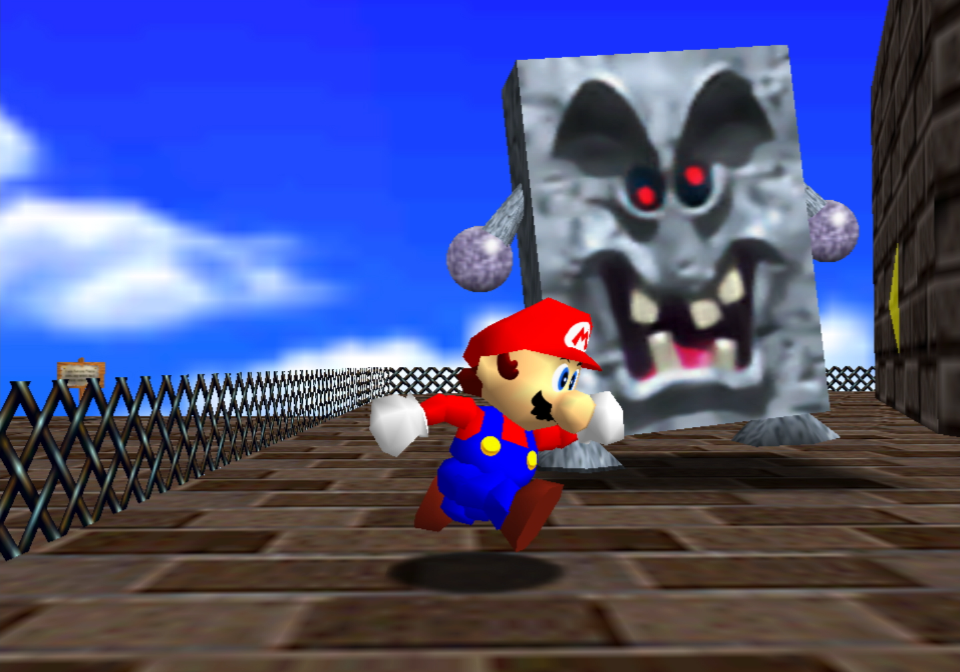
WhompSuper Mario 64 · Whomp’s FortressSlab-shaped bruisers who try to flatten Mario; their king guards the fortress top.
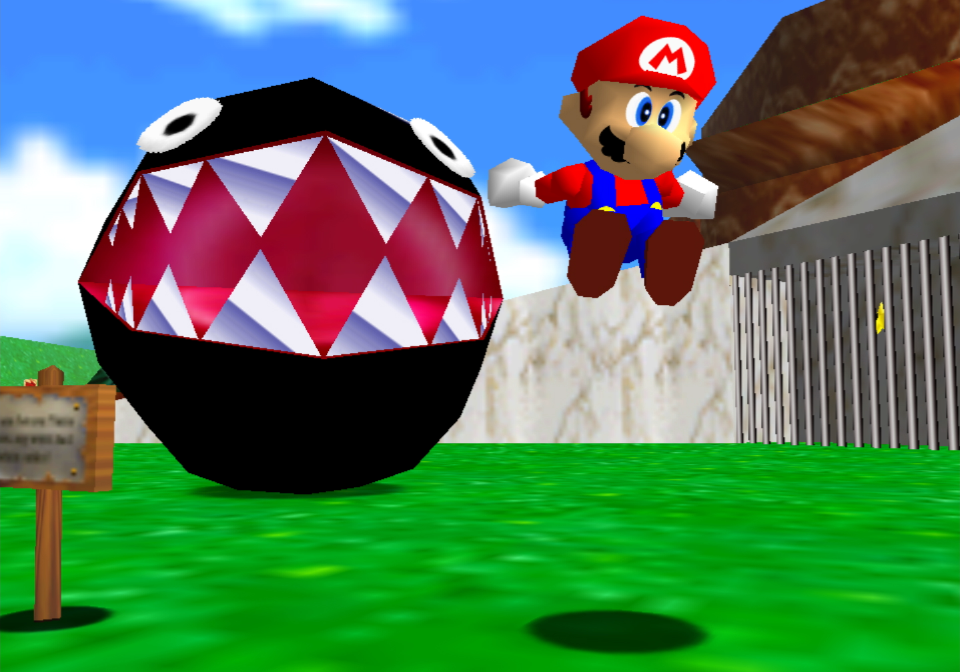
Chain ChompSuper Mario 64 · Bob-omb BattlefieldPound its post three times and it breaks free.
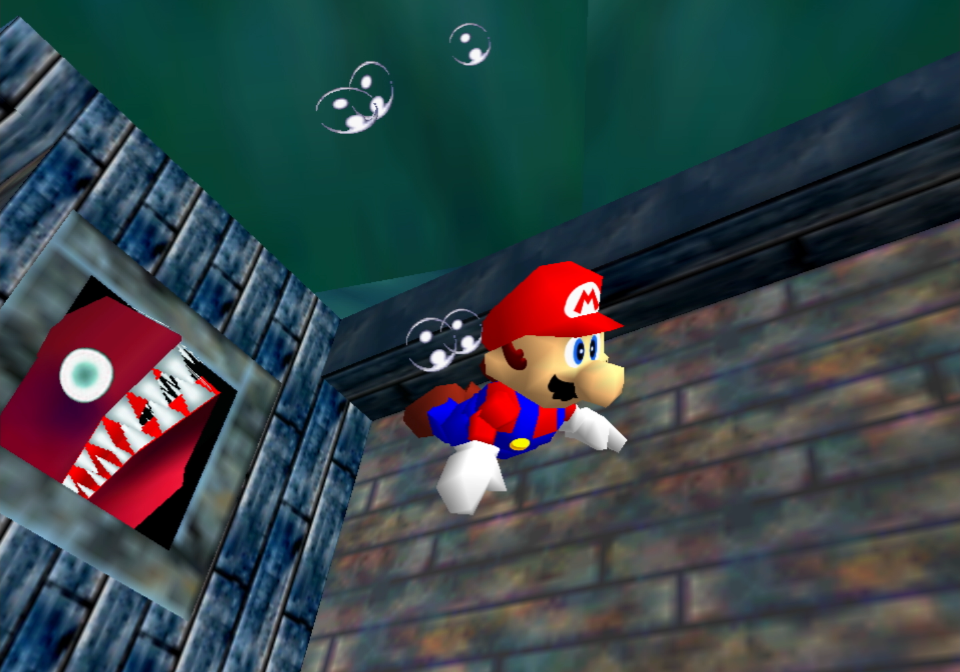
UnagiSuper Mario 64 · Jolly Roger BayThe giant eel guarding the sunken ship.
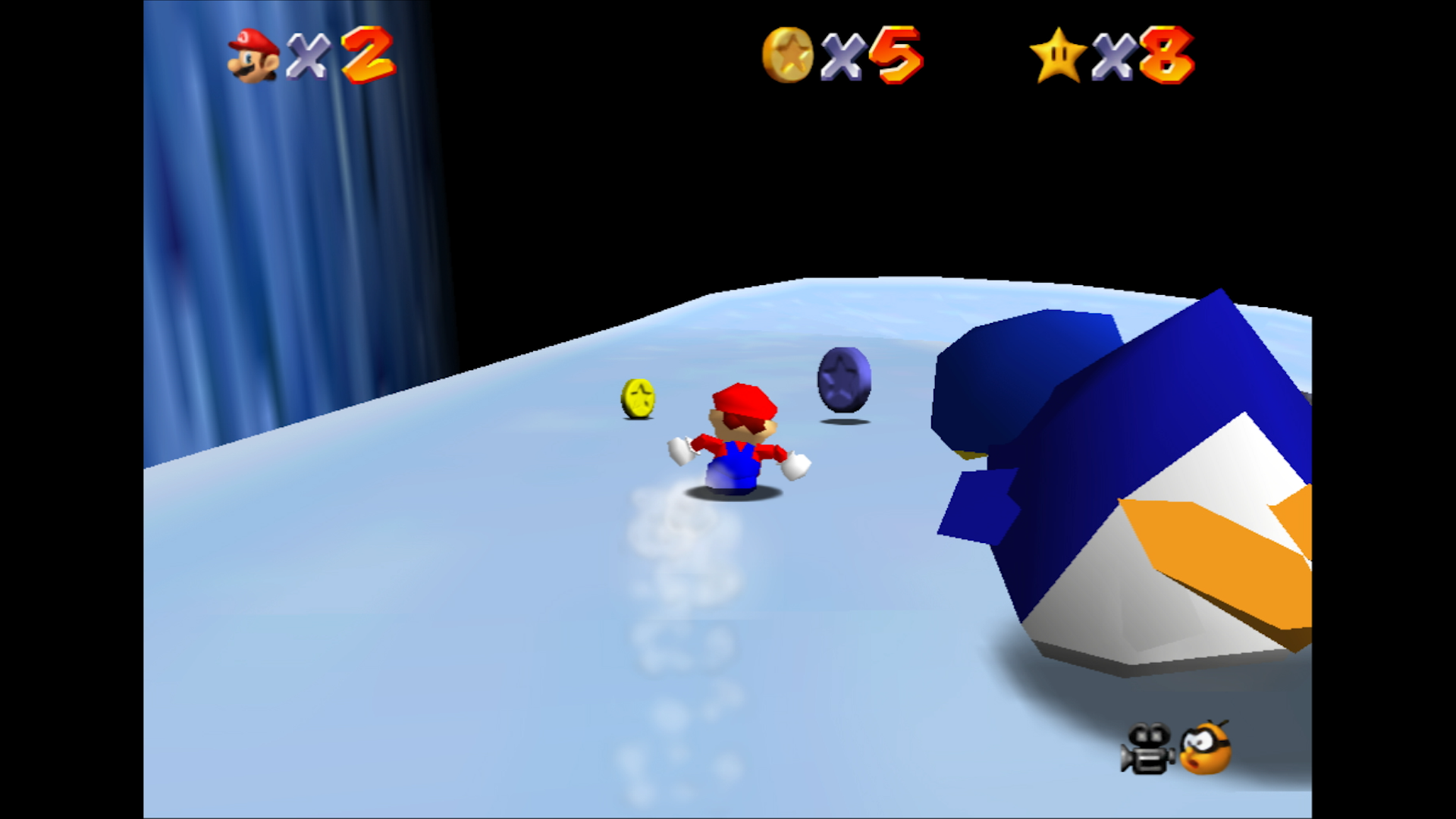
Big PenguinSuper Mario 64 · Cool, Cool MountainRaces Mario down the slide for a Power Star.
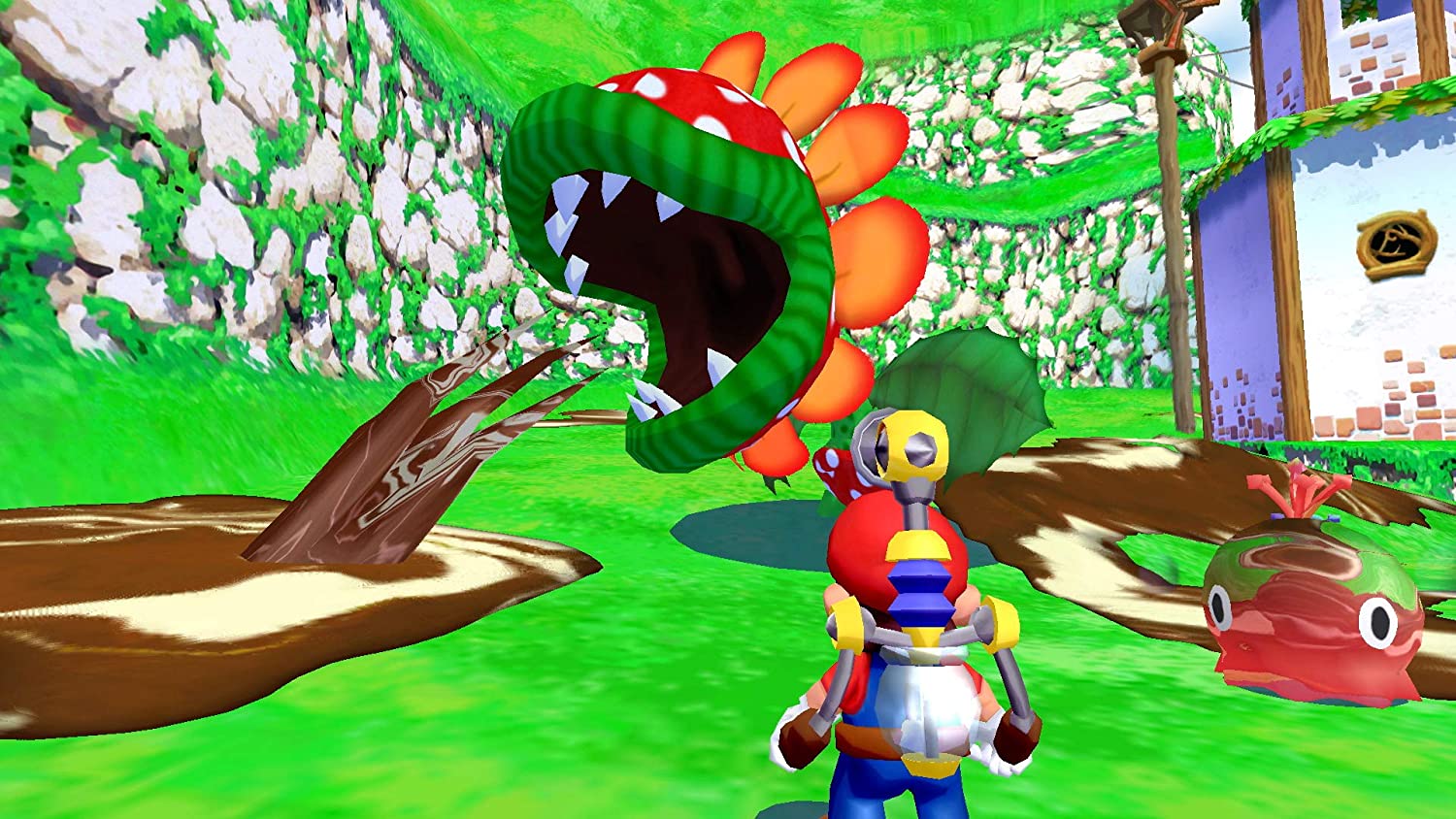
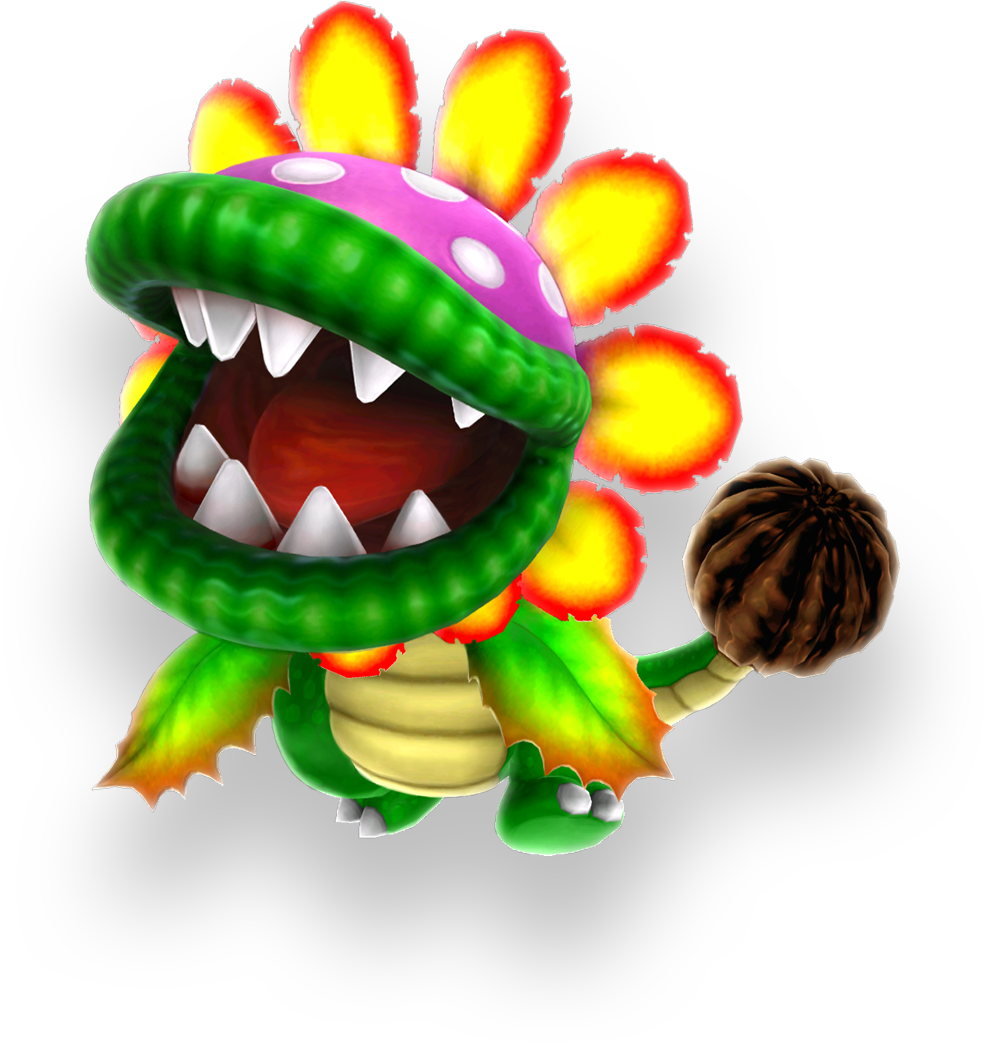
Petey Piranha (boss)Super Mario Sunshine · Bianco HillsA goop-spitting, belly-flopping giant Piranha Plant: pump water into its mouth.
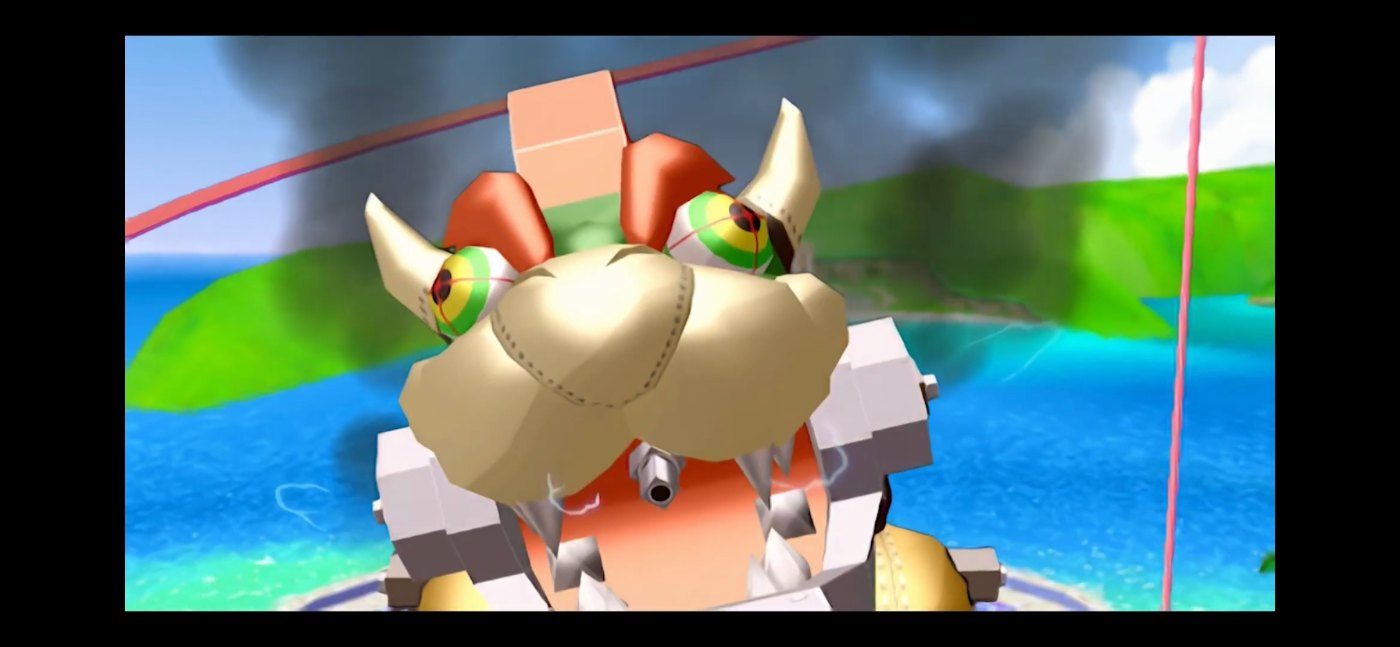
Mecha-Bowser (boss)Super Mario Sunshine · Pinna ParkBowser Jr.’s robot rises from the sea and is beaten from the roller coaster.
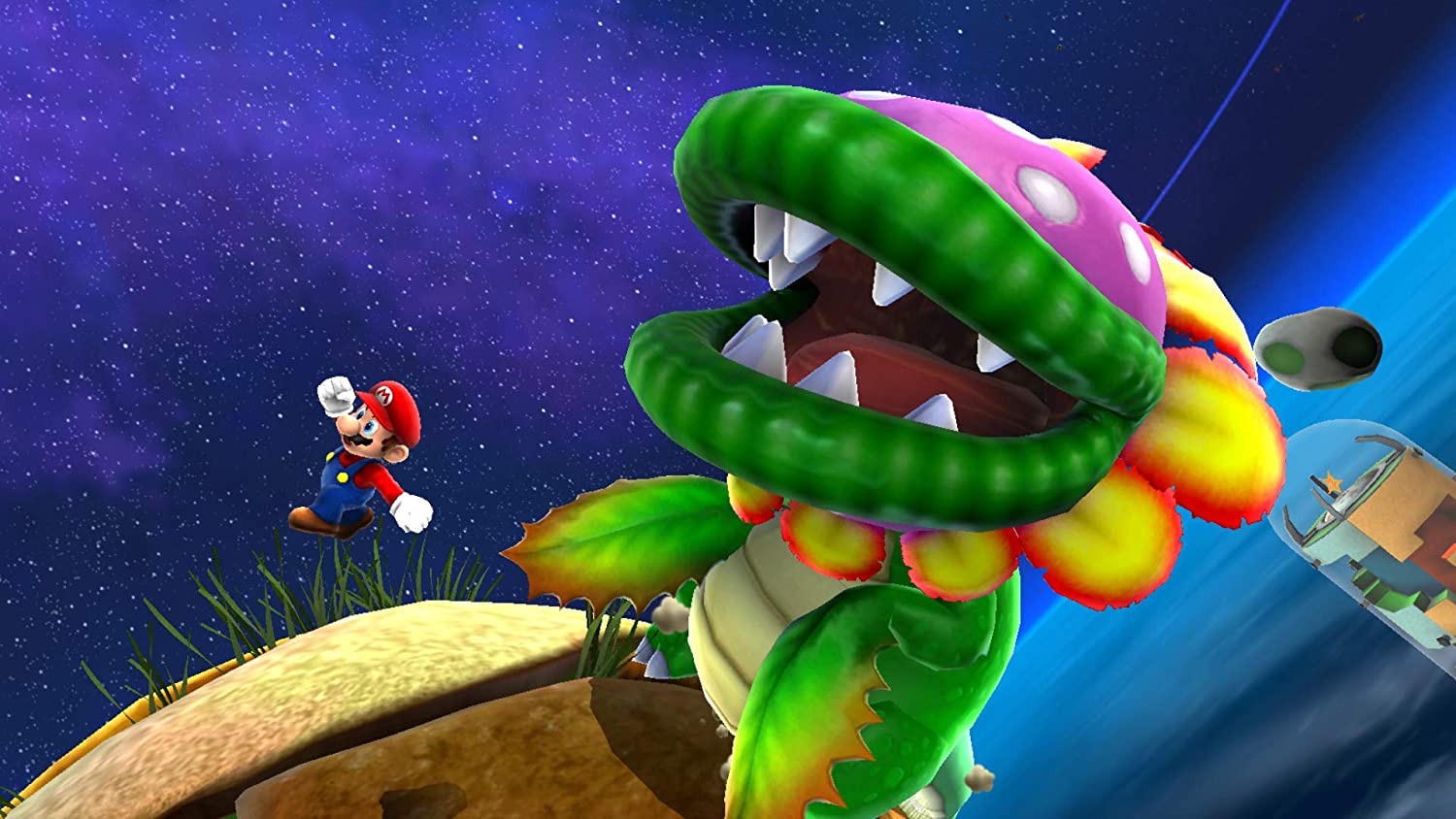
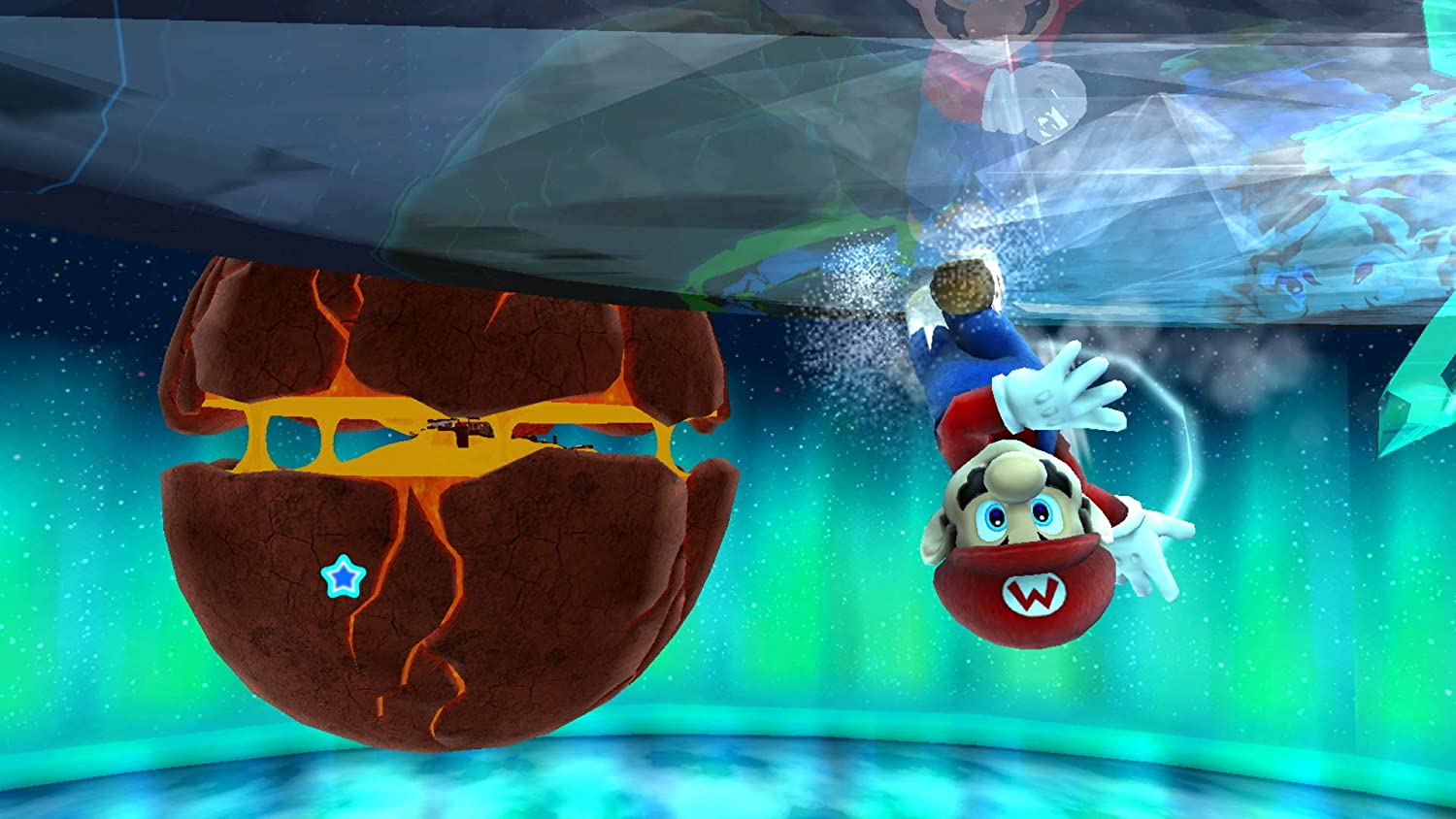
Dino Piranha (boss)Super Mario Galaxy · Good Egg GalaxyA dinosaur-sized Piranha Plant hatched from an egg; spin its tail.
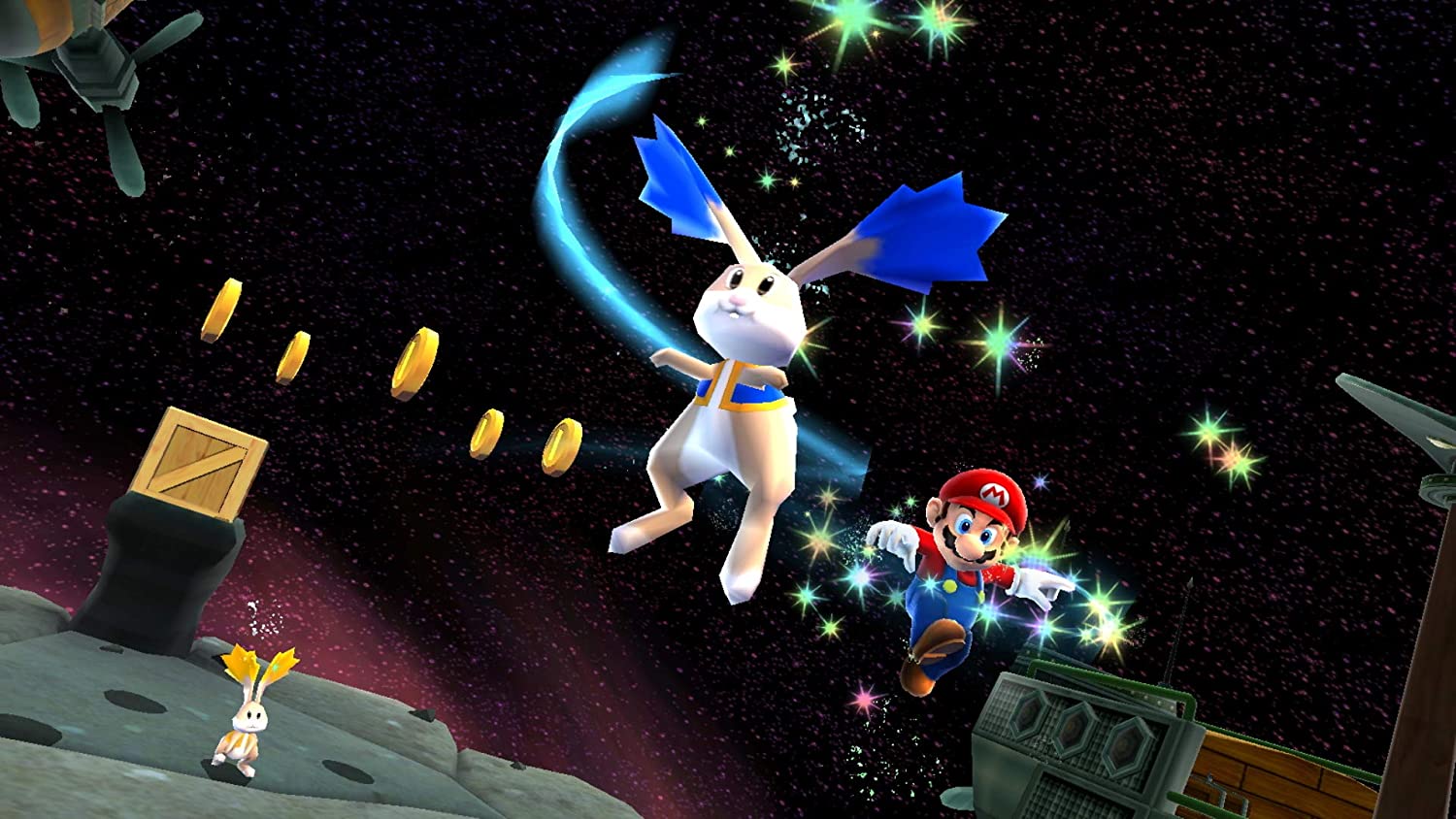
Star BunniesSuper Mario Galaxy · Good Egg GalaxyThree rabbits to catch for a Power Star; they move more slowly on Switch.
Who made it
Nintendo has said little about the team; the collection keeps each game’s original credits.
Nintendo EPDDeveloperNintendo’s Entertainment Planning & Development division, the descendant of the EAD teams that made the three games.
Kenta MotokuraProducerDirector of Super Mario Odyssey, credited as the collection’s producer.
Nintendo European Research & Development (NERD)EmulationBuilt the emulators, including the GameCube emulation for Sunshine with its widescreen rendering, controller bindings and machine-learning upscaling of cutscenes.
iQue and 1-UP StudioAdditional developmentAlso credited as developers.
Koji Kondo, Shinobu Tanaka and Mahito YokotaOriginal musicComposers of the scores that fill the music player: Kondo worked on all three games, Tanaka on Sunshine and Yokota on Galaxy.
Advertisement
How It Was Made
Nintendo said little in public about how the collection was made, so its story is told by its announcement, by what the files reveal and by what Nintendo said afterwards about the limited sale.
Rumours in lockdown
The stars pattern from the official website: Power Stars, Shine Sprites and Grand Stars.
The secret did not keep. On 30 March 2020 Video Games Chronicle reported that Nintendo planned to re-release much of the Mario back catalogue on Switch for the 35th anniversary. Some outlets said Super Mario Galaxy 2 would be part of it, others that it would not, and a follow-up report named 64, Sunshine and Galaxy and said plans to show them at E3 2020 had been dropped when the pandemic cancelled the show.
File dates found inside the finished game suggest how late the work ran: the launcher’s videos were created in March 2020, and the Sunshine and Galaxy cutscenes were last modified in April. Inside the Super Mario 64 data the project is called “Stardust”; Eurogamer reported that Nintendo also referred to it as “Super Mario All-Stars 2”.
A Direct for a 35th birthday
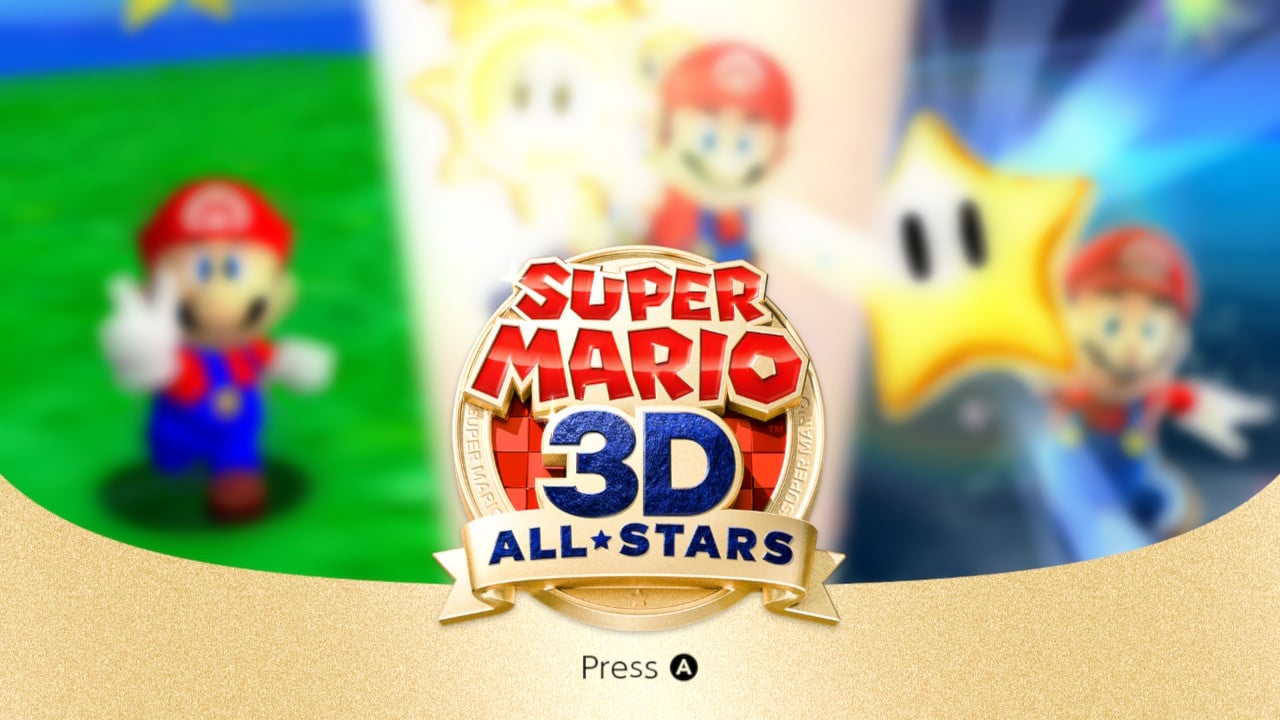
The Super Mario 3D All-Stars logo.
Nintendo revealed the collection on 3 September 2020 in the Super Mario Bros. 35th Anniversary Direct, alongside Super Mario Bros. 35, Mario Kart Live: Home Circuit, Game & Watch: Super Mario Bros. and Super Mario 3D World + Bowser’s Fury. The release date was just fifteen days away. Nintendo UK’s announcement promised HD graphics, Joy-Con controls and the music player, and set out the condition that made headlines: the game could be bought only until 31 March 2021, though anyone who did could keep playing and redownloading it.
An overview trailer on 14 September showed the resolutions (960×720 for 64; 1080p docked and 720p handheld for the others) and the music-player mode. The next day a leak suggested what the finished game soon confirmed: all three games were running under emulation.
Emulators, not remasters
Sunshine’s opening tourist video, upscaled for the collection.
The technical work fell largely to Nintendo European Research & Development. Super Mario 64 runs in an N64 emulator, with changes such as its sharper textures patched in on the fly. Sunshine runs in a new GameCube emulator that renders in 16:9, maps the GameCube pad onto Switch controls and shows cutscenes upscaled using machine learning. Galaxy was partly recompiled to run natively, with some parts, such as graphics and sound, still emulated; it appears to be built on the version released for Nvidia Shield TV in China, sharing many of that port’s fixes.
Configuration files left in the game point to the emulators being developed on PC: Sunshine’s includes a keyboard control scheme. Leftover strings in the Super Mario 64 data name other Nintendo 64 games, among them Paper Mario, Mario Golf, Mario Tennis and Kirby 64, probably remnants of testing.
Why only six months?
Anniversary pins: Super Mario 64, Sunshine and Galaxy among them.
The deadline was the controversy. The Washington Post compared it to the “Disney Vault” and noted that Switch had no Virtual Console to keep the games available afterwards; TheGamer called it a cynical gimmick, and Screen Rant worried that future releases would follow the same pattern if it succeeded. Pre-orders were resold online for up to US$265, and one British retailer, Base.com, cancelled every pre-order it had taken, blaming a short allocation.
Nintendo of America president Doug Bowser later told Polygon that the limited release was a “unique” way of marking the anniversary and was not intended as a model for future games. When the date came, the eShop listing went and production stopped, but boxed copies already in shops carried on selling.
Series Firsts
A collection of old games is not where you expect firsts, but this one has three that matter.
1Super Mario Sunshine re-releasedThe first time Sunshine had been released on any console other than the GameCube, eighteen years after the original.
2Sunshine’s soundtrackThe 58-track album in the music player was the first official soundtrack release of any kind for the game.
3The Shindou Super Mario 64 in EnglishThe 1997 Japanese Rumble Pak edition had never been released in English before.
Cheats & Secrets
The three games keep all their own secrets, covered on their pages. These are the tips and tricks that belong to the collection.
Music with the screen off
Open any of the three soundtracks from the menu and press − to switch to music-player mode. The music keeps playing with the screen off, so the Switch doubles as a Mario jukebox.
Inverting the camera
Since update 1.1.0 each game has a camera option. If Sunshine feels wrong, this is why: the launch version had un-inverted the GameCube camera with no way back.
Analogue spraying in Sunshine
Plug in a GameCube controller through the adapter (TV mode only) and the R trigger once again controls how hard FLUDD sprays. The on-screen prompts still show Switch buttons.
Playing Galaxy in handheld mode
Swipe the touch screen to move the pointer, tap to fire one Star Bit and hold to fire a stream. Tap a Pull Star to latch on. Using a Joy-Con or Pro Controller, press R whenever the pointer drifts.
The endless stairs need 70 Power Stars
Because the backwards long jump is fixed in this version of Super Mario 64, the old shortcut up the endless stairs does not work. Collect the 70 stars.
Unlocking Luigi in Galaxy
Collect 120 Power Stars and beat Bowser again, and the game announces that you can play as Luigi.
Mailtoad’s photographs
Get the 121st star in Galaxy and Mailtoad’s two pictures go straight to your Switch album.
Glitches & Oddities
The emulated versions fixed some old bugs, kept others and introduced a few of their own, several of which were fixed in November 2020.
Goodbye, backwards long jump
The most famous Super Mario 64 glitch of all, the speed-building backwards long jump, is absent because the collection uses the Shindou code, which resets Mario’s speed when he long jumps backwards. The Virtual Console and Switch Online versions still have it.
Sound running late
In Super Mario 64, music and sound effects play slightly behind the action, all the way through.
Debug cubes in Bianco Hills
At launch, the grey cubes that mark the paths of the flipping platforms in Bianco Hills’ second secret course were visible. Update 1.1.0 hid them again.
A beep instead of a bell
The sound that plays as “GO!” appears in Sunshine’s races came out as a flat tone like a censor’s bleep until update 1.1.0.
Widescreen side effects
The wider view caught Sunshine out in places. A Pianta was left hanging in midair at the start of “Yoshi’s Fruit Adventure” and the Turbo Nozzle’s underwater zoom did not fit the screen until 1.1.0; a mirror in Hotel Delfino and the antennas on Gelato Beach still stretch at some angles.
Purple Coins in the wall
In Galaxy’s “Purple Coins on the Puzzle Cube”, three coins sat inside a wall, reachable only with a ground-pound beside them because Mario’s hitbox had grown. The same error is in the Nvidia Shield version; 1.1.0 fixed it here.
Still unfixed in Sunshine
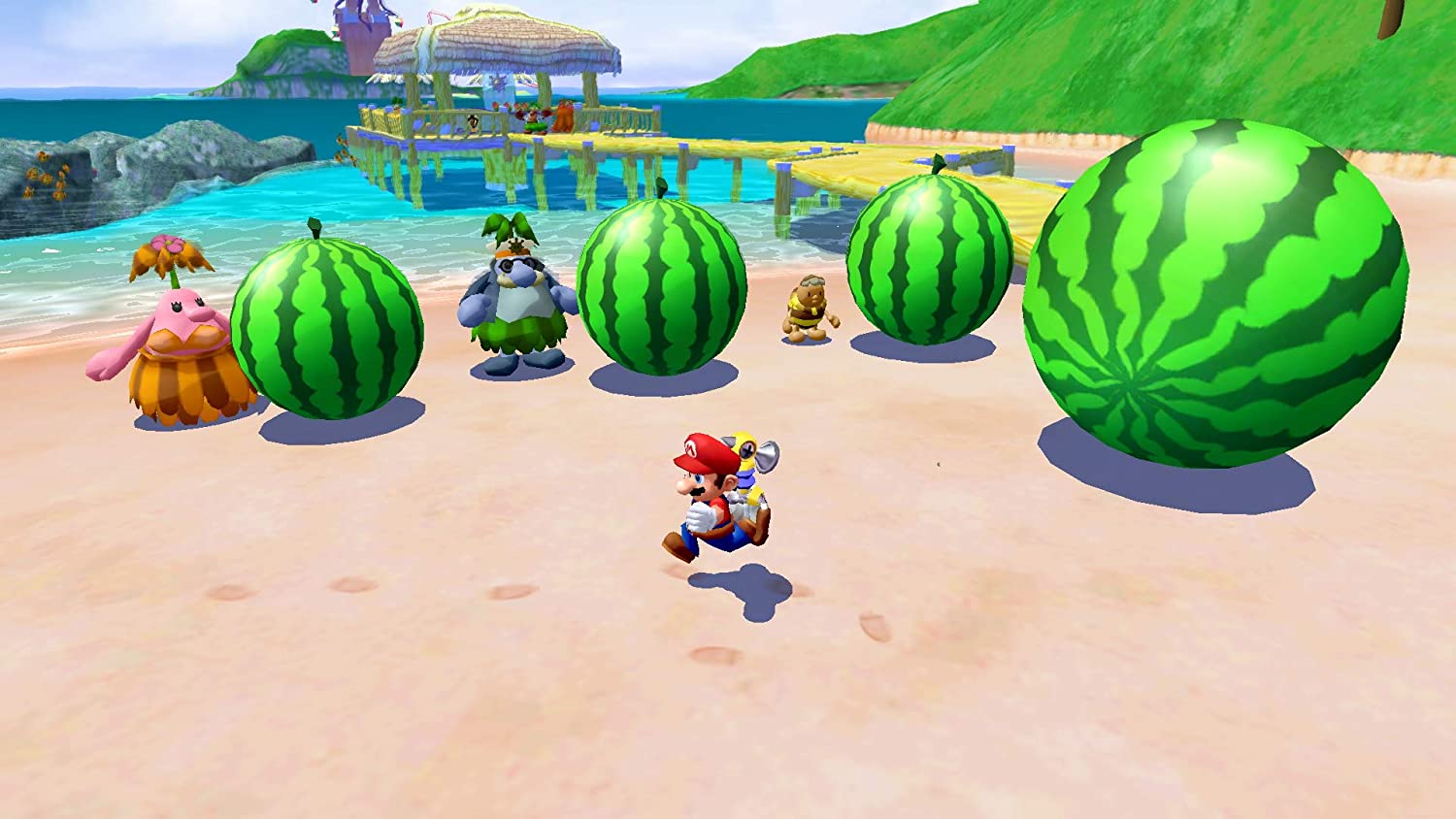
Sirena Beach’s goop-cleaning mission can be completed after scrubbing little or none of it; the squid-shaped goop on Noki Bay’s waterfall sometimes fails to load; Piantas with glasses wear them behind their eyes; and with the game in Italian, reading the sign by Bar Gelato during “The Watermelon Festival” locks up the game.
A crash and a stuck ending
Going through Super Mario 64’s erase sequence on an empty save file crashes the collection back to the Switch home screen, and the ending screen still waits for ever after the credits, just as on the Nintendo 64.
Videos
Two official uploads: Nintendo of America’s overview trailer, which shows each game’s resolution and the music player, and Nintendo UK’s copy of the full Super Mario Bros. 35th Anniversary Direct in which the collection was announced.
Nintendo of America’s overview trailer, 14 September 2020.
The full anniversary Direct of 3 September 2020, as posted by Nintendo UK.
Trivia & Interesting Facts
Inside the Super Mario 64 data the project is called “Stardust”, and Eurogamer reported that Nintendo also knew it as “Super Mario All-Stars 2”.
The year headings on the game-select screen reuse the lettering of the “SELECT GAME” screen of the 1993 Super Mario All-Stars.
Before the title screen appears, the collection plays a higher-pitched, shortened “You Got a Star!” fanfare from Super Mario Galaxy 2: the only part of that game on the cartridge.
The soundtrack menus show the Japanese CD covers of the 64 and Galaxy albums on a jewel-case template. Sunshine had never had an album, so its cover was new.
Super Mario 64 is offered only in the four languages of its original releases (Japanese, English, French and German), even though Super Mario 64 DS added Spanish and Italian.
Simplified Chinese translations of all three games exist (Sunshine’s was never released), but the collection uses Chinese only in its menu: the iQue Player and Nvidia Shield TV versions were reportedly spin-off translations that Nintendo did not own outright.
Sunshine’s empty save file carries a modification date of 19 February 2020, seven months before release.
The Princess Peach painting, one of the textures redrawn for Switch.The collection corrected an old colour error on Bowser’s ankle in Super Mario 64’s 15-piece sliding puzzle, and made the horn and spike rings brown.
In Super Mario 64 the music now quietens while Mario takes a nap.
A Sunshine loading screen: Mario and FLUDD.Sunshine’s Dolby Pro Logic II logo no longer appears at start-up, its Stereo/Mono/Surround option has gone, and every mention of a Memory Card has been removed.
In Galaxy the low-battery warning for the Wii Remote and every reminder to plug in the Nunchuk have been taken out.
Galaxy’s Star Bunnies run more slowly on Switch than they did on Wii.
Nintendo’s official Mario Portal site counts the collection as an entry in the Super Mario series in its own right: the 24th on its list.
Two My Nintendo anniversary missions were tied to it: buying the game, and listening to its music player on the game’s website.
Regional Box Art
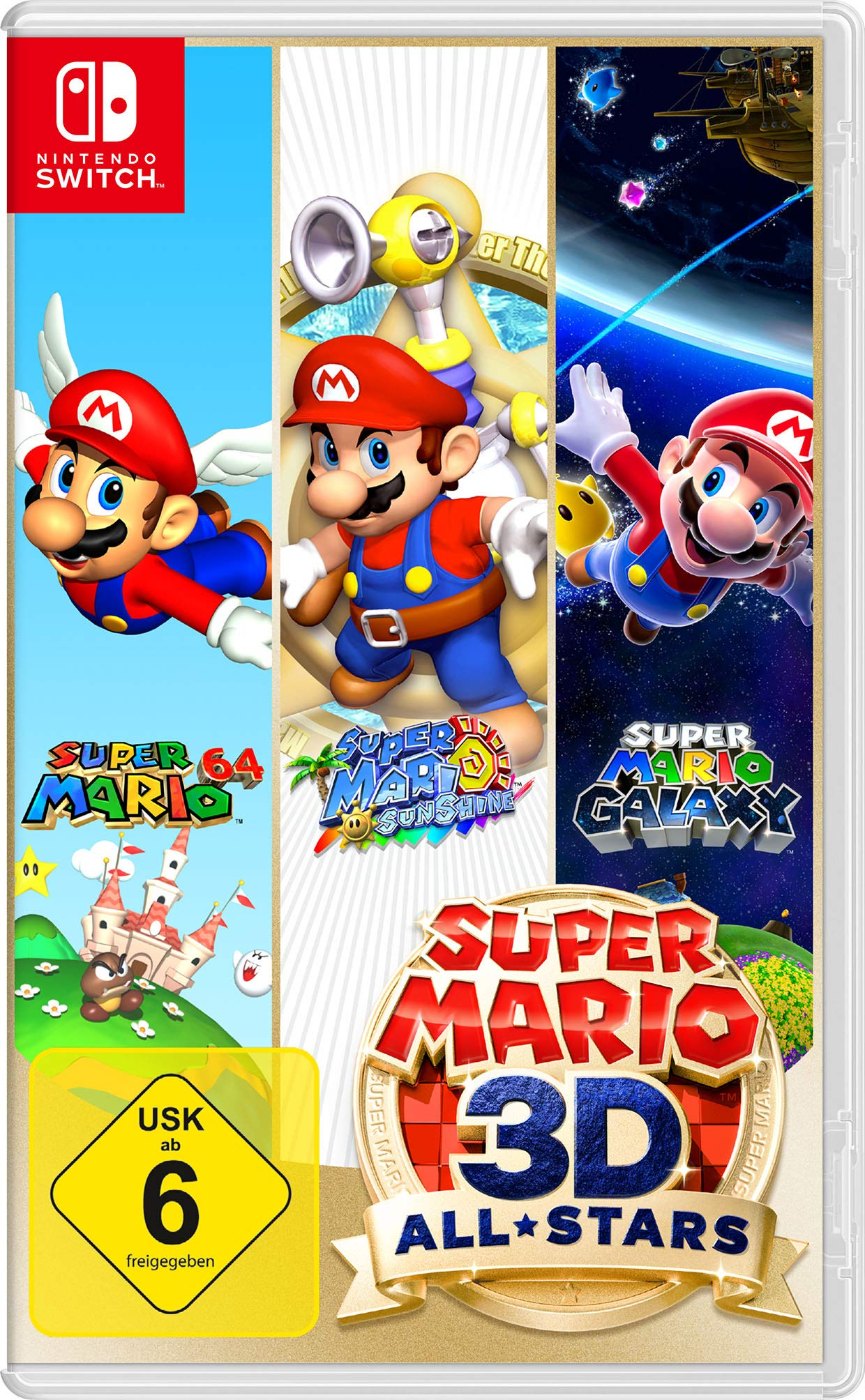
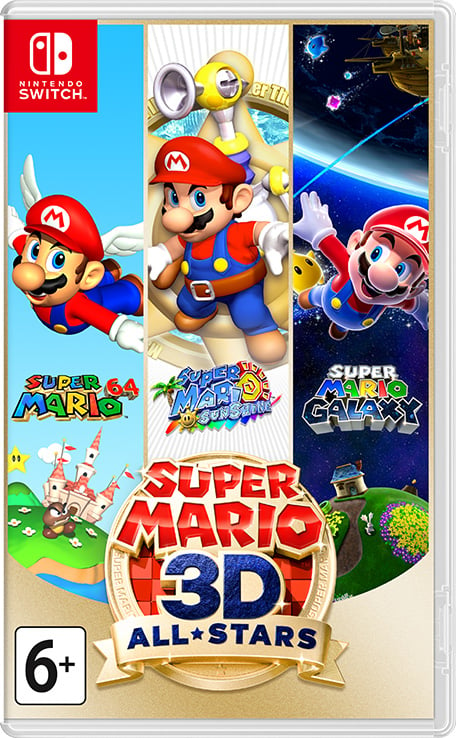
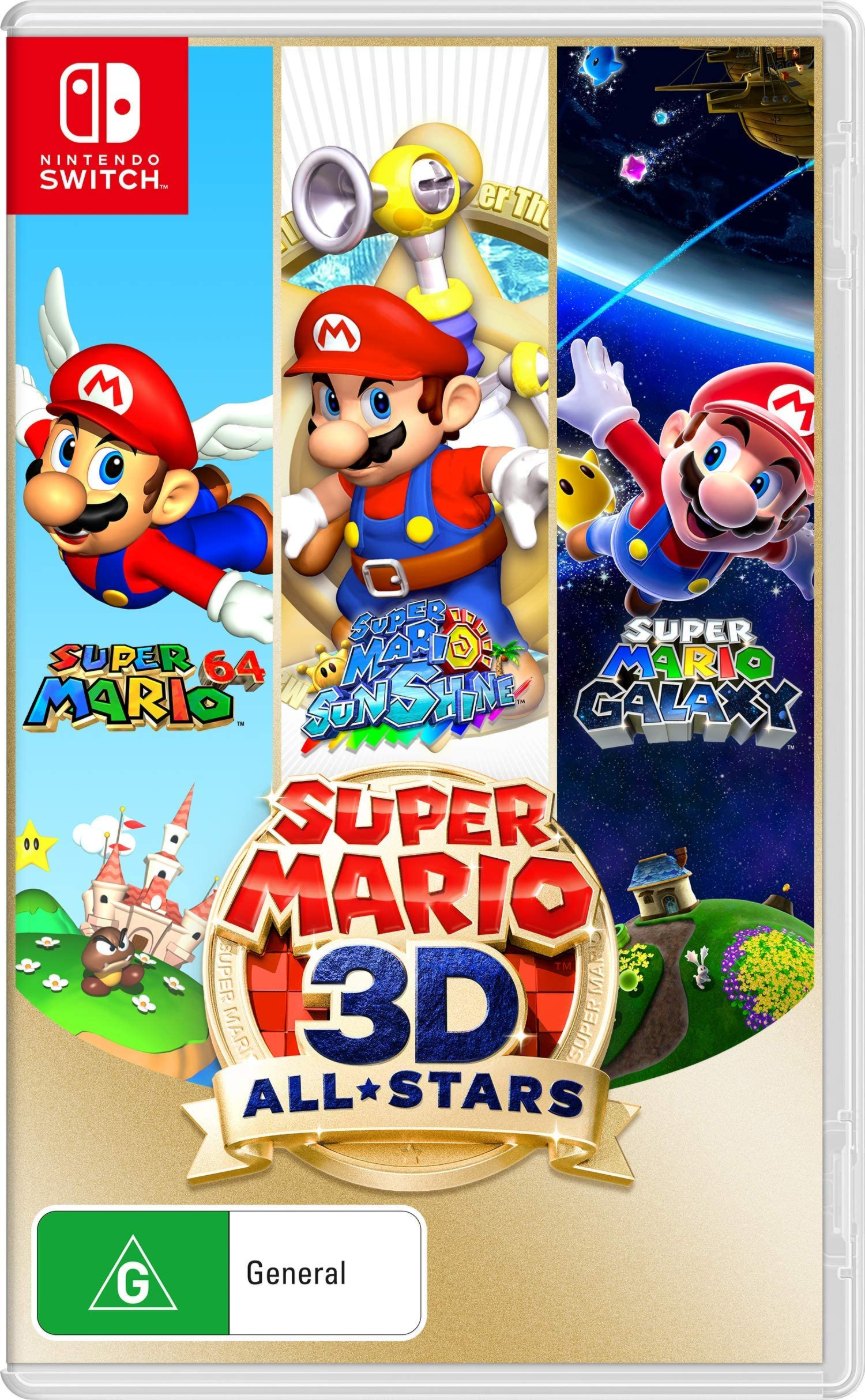
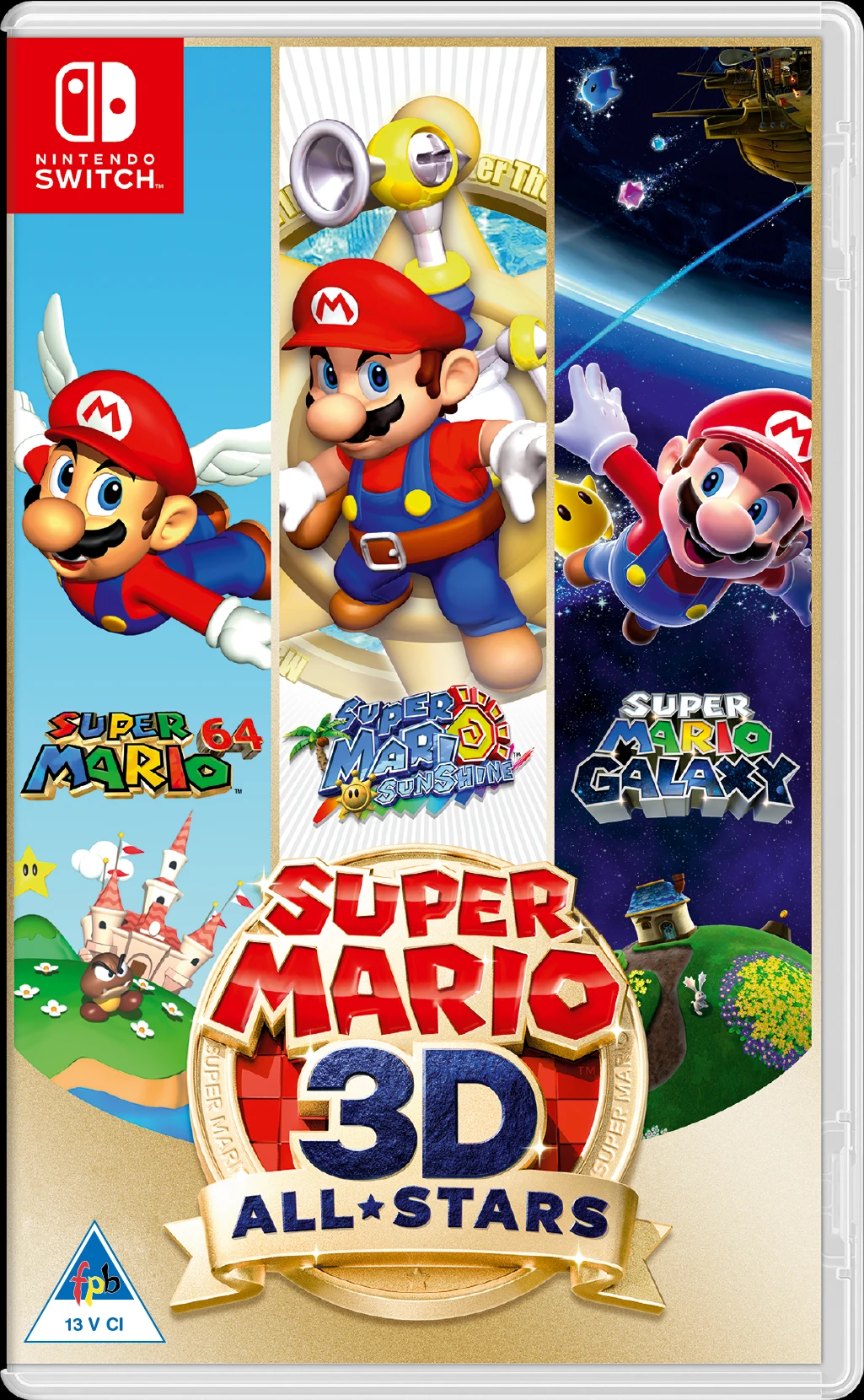
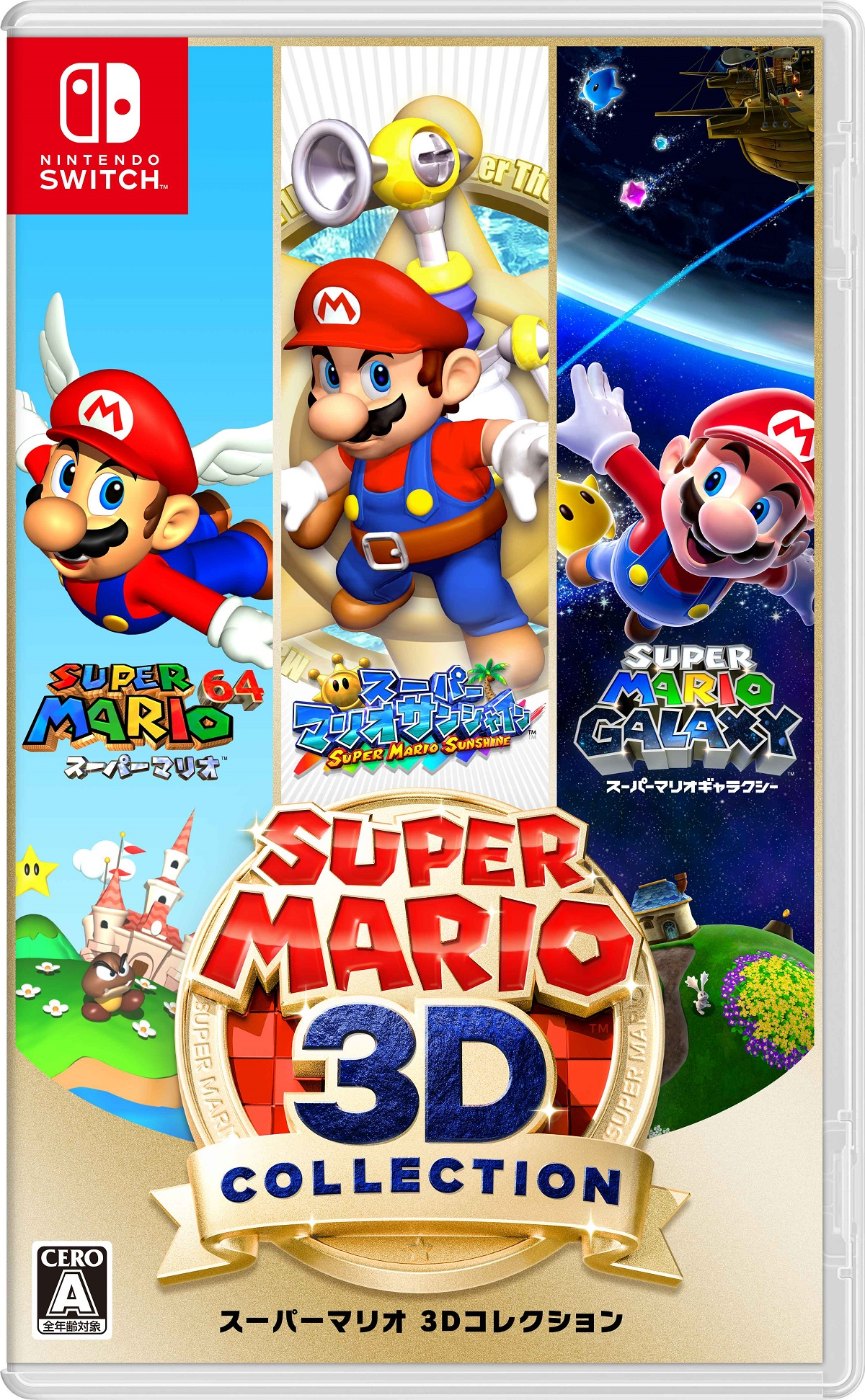
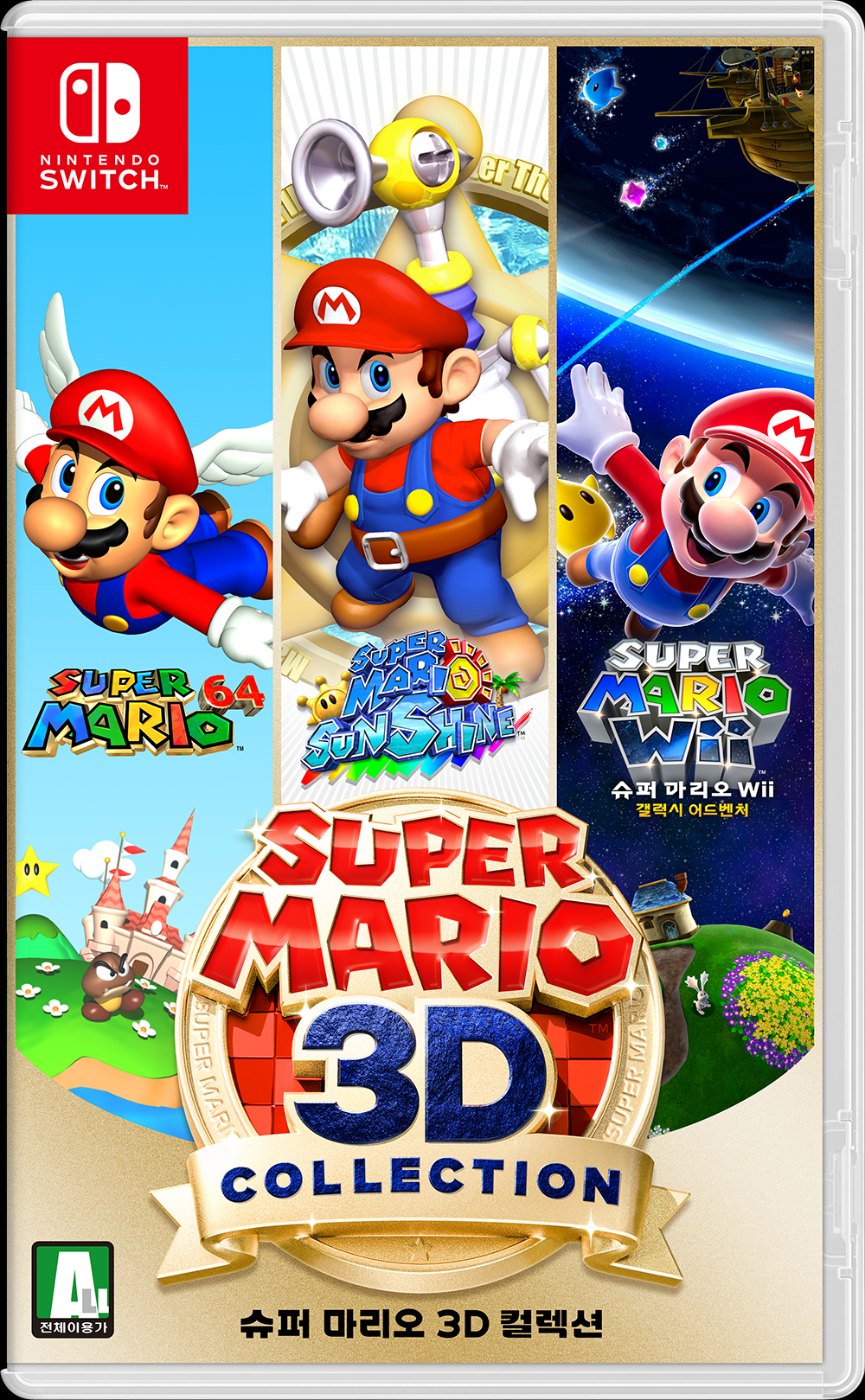
One piece of artwork, Mario as he appears in each of the three games, used around the world with local logos and rating labels.
North AmericaAlso used in Latin America and South-East Asia.CanadaEuropeGermanyRussiaAustralia and New ZealandSouth AfricaSaudi ArabiaUnited Arab EmiratesJapanSuper Mario 3D Collection.South KoreaBoxed copies from 24 September 2020.Hong Kong and Taiwan
Screenshots
The three games as the collection presents them.
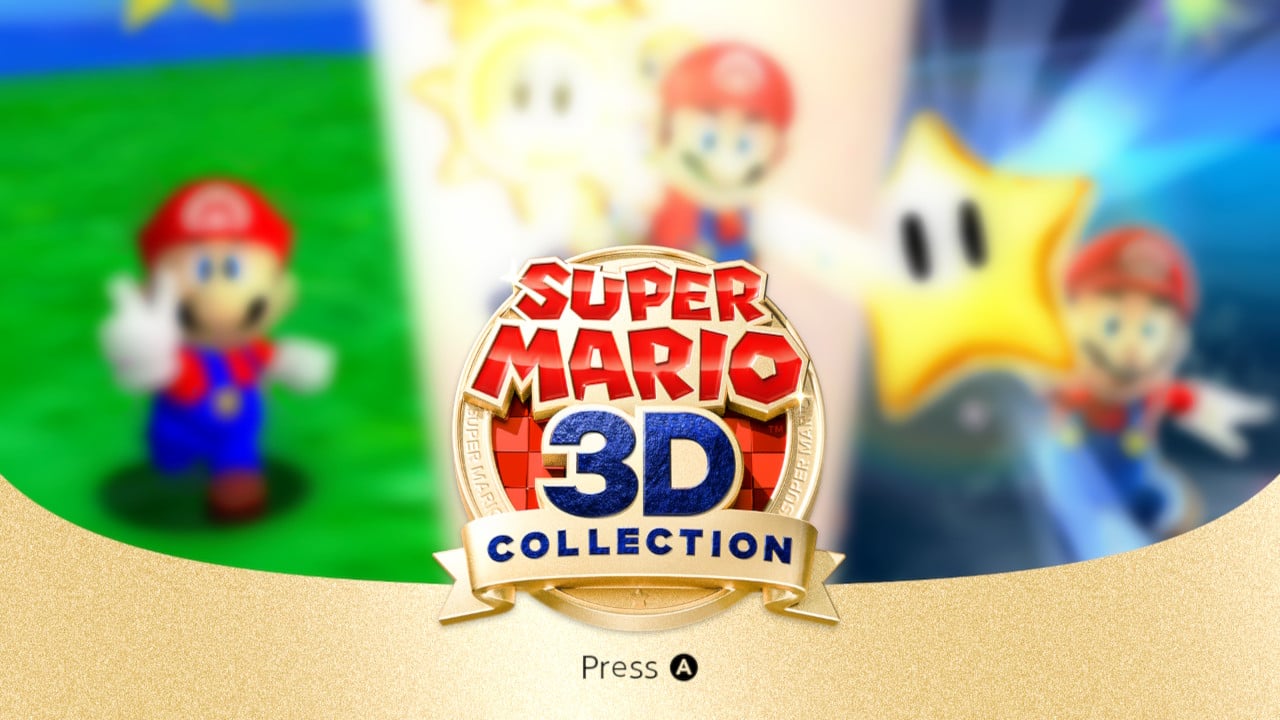
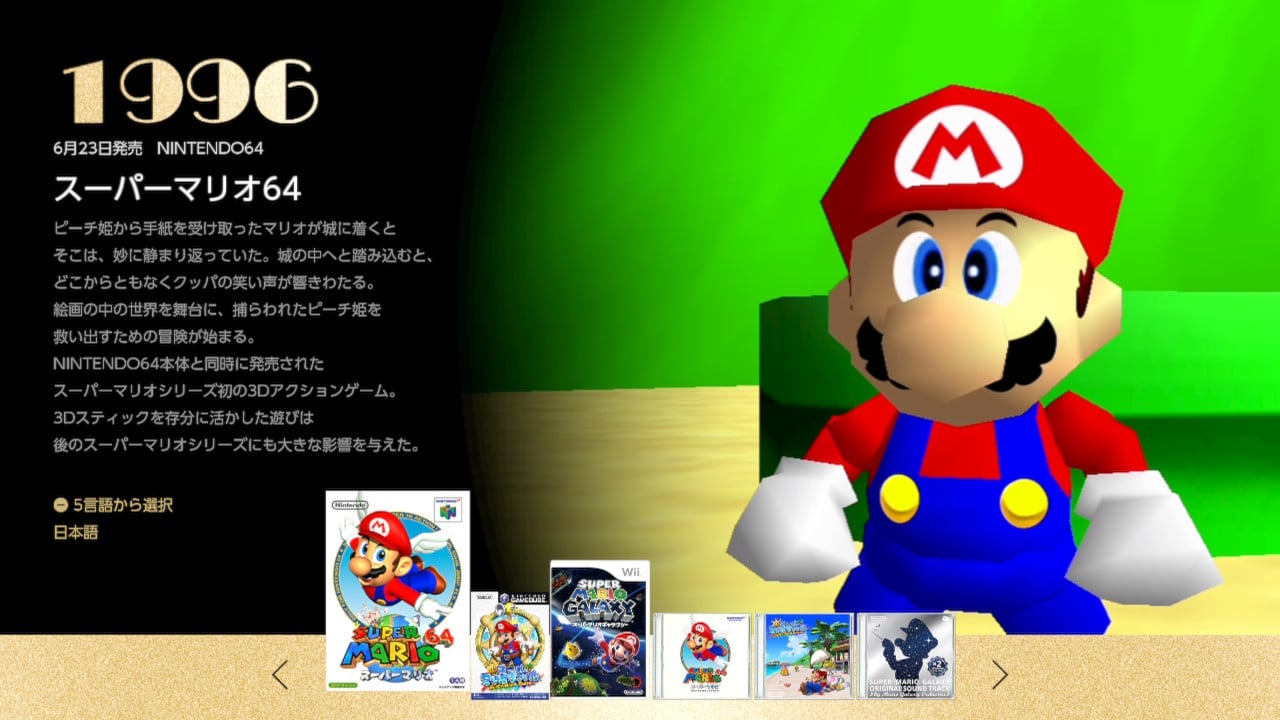
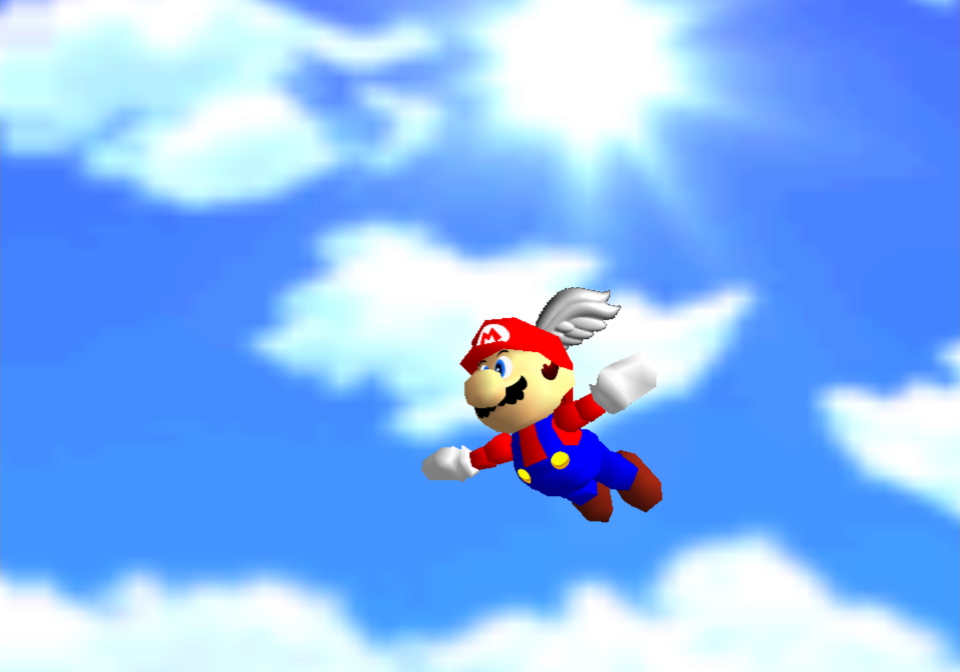
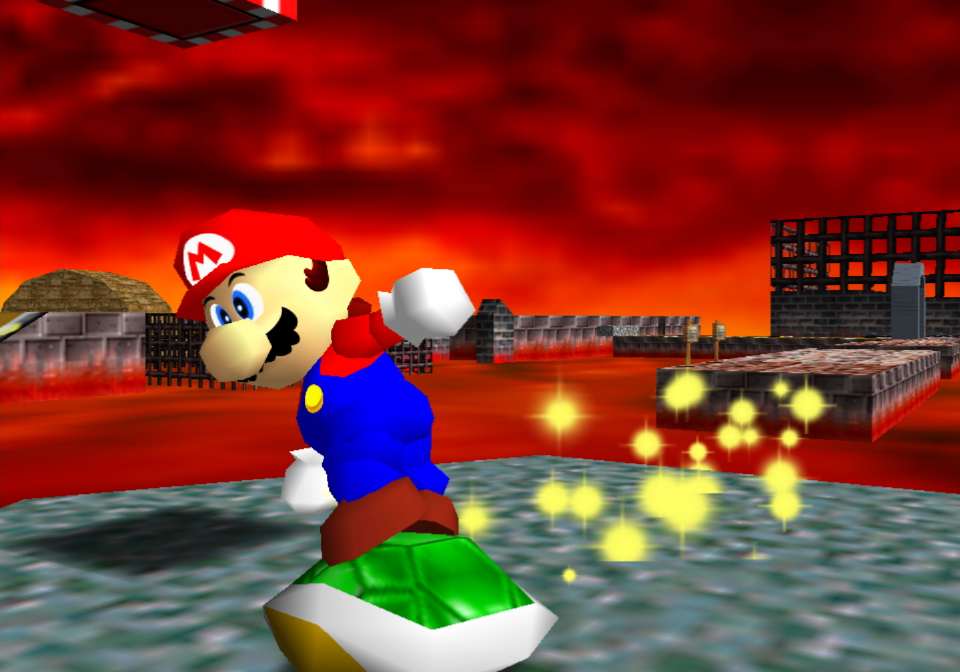
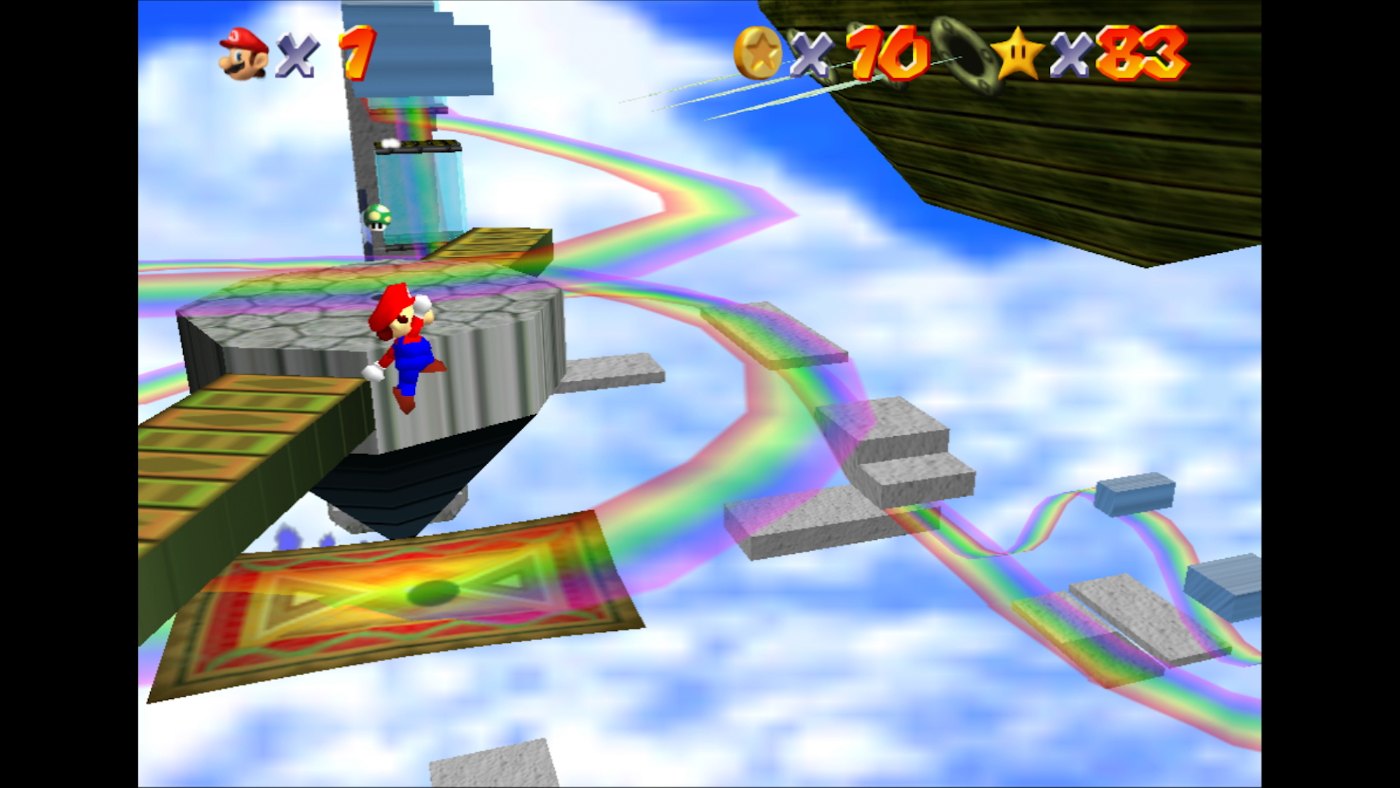
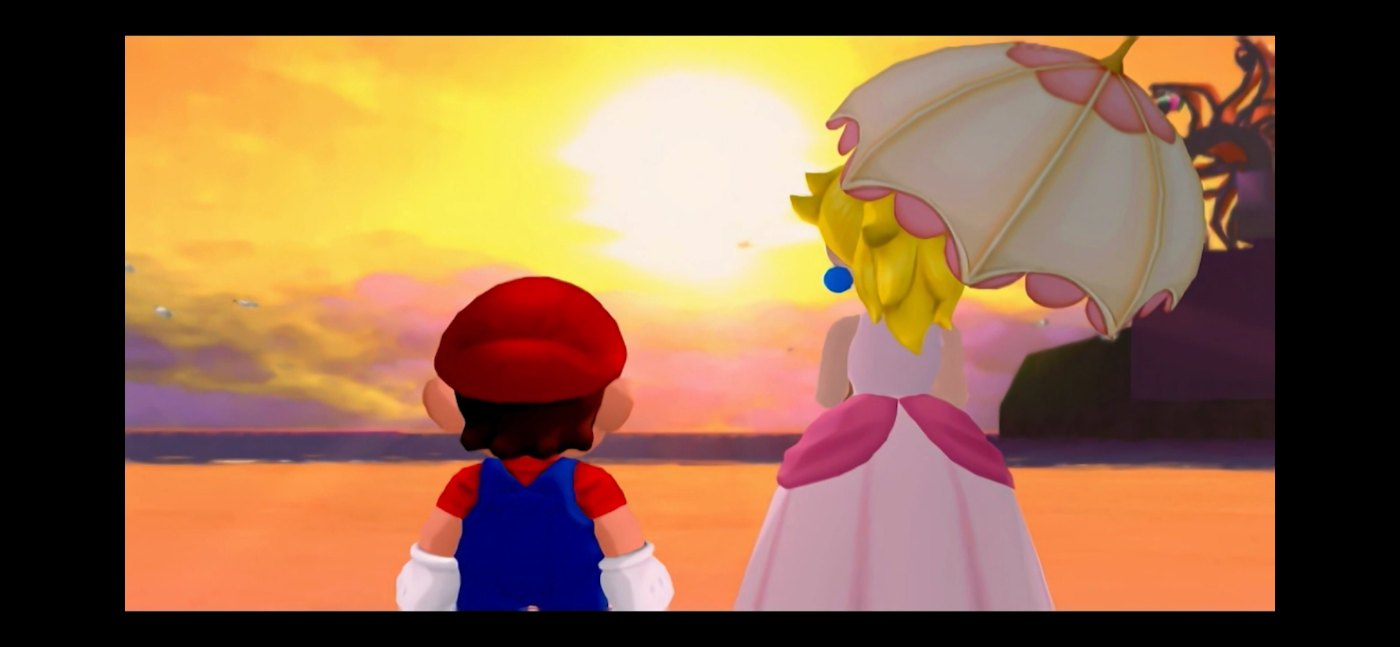
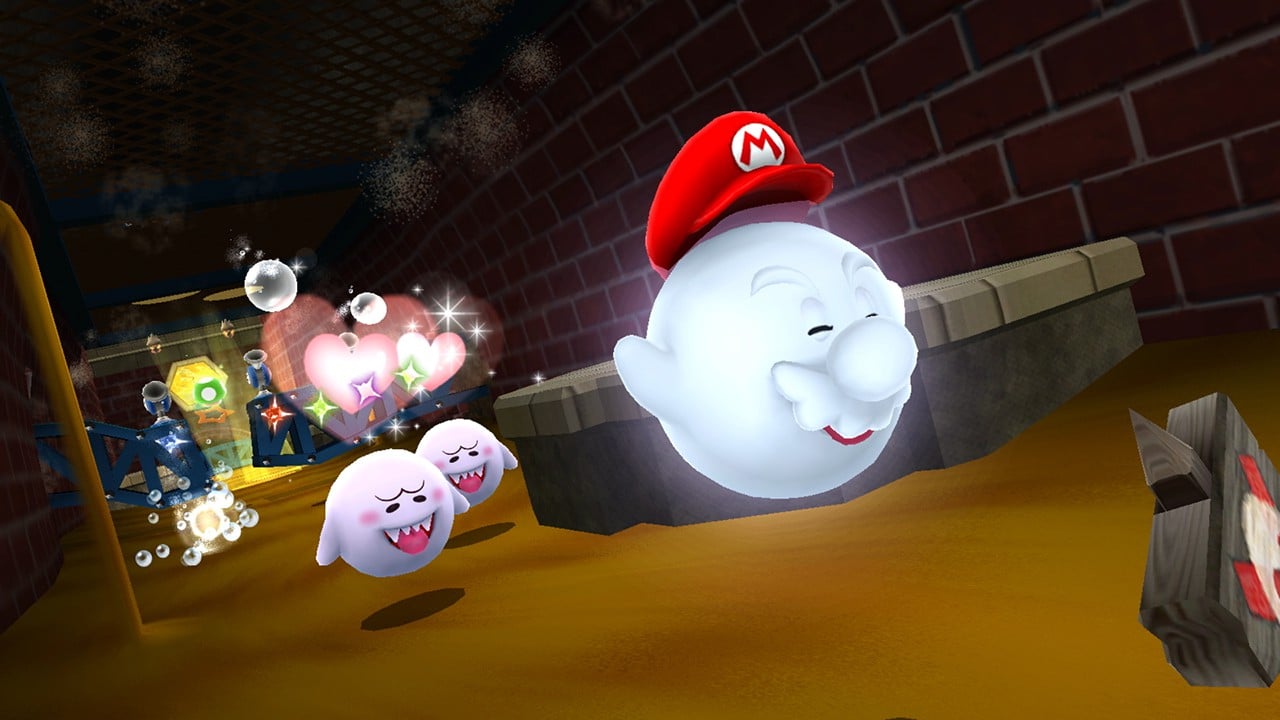
The collection’s title screen.The title screen in Asia: Super Mario 3D Collection.The North American game-select menu.The Japanese game-select menu.Super Mario 64: flying with the Wing Cap.Super Mario 64: shell-surfing in Lethal Lava Land.Super Mario 64: the magic carpet of Rainbow Ride.Super Mario Sunshine: Gelato Beach.Super Mario Sunshine: Peach is taken hostage.Super Mario Sunshine: the ending sunset, in widescreen.Super Mario Galaxy: Boo Mario.Super Mario Galaxy: a loading screen with Mario and a Luma.
Artwork & Media Gallery
Logos, artwork and wallpapers made for the collection. Select any image to view it larger.
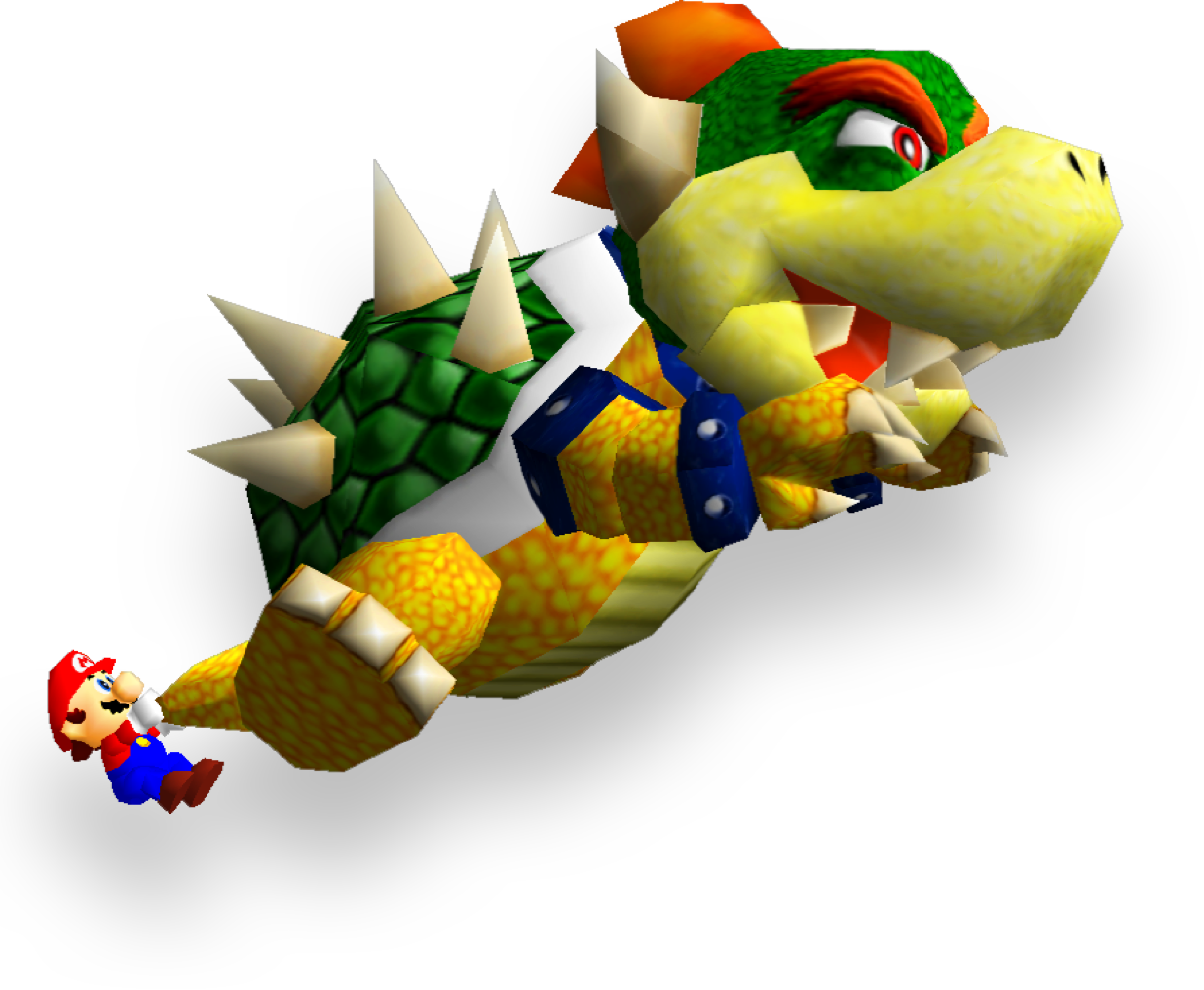
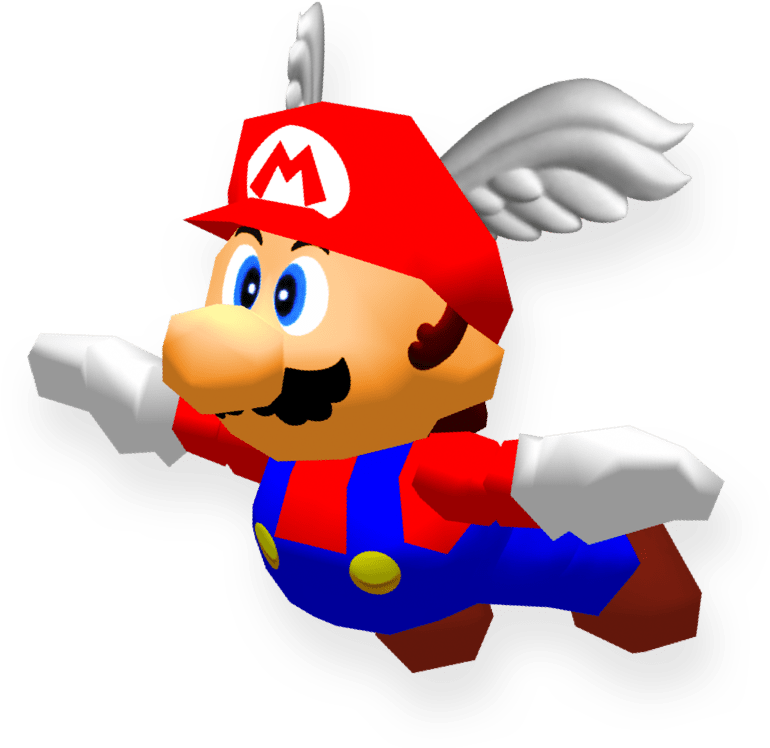
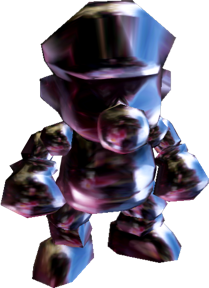
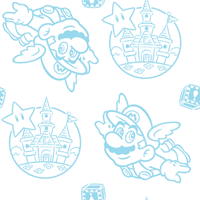
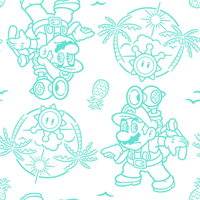
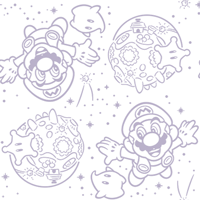
The Japanese logo: Super Mario 3D Collection.The Korean logo.The Traditional Chinese logo.A second banner illustration.Super Mario 64: Mario grabs Bowser by the tail.Super Mario 64: Wing Mario.Super Mario 64: Metal Mario.Super Mario 64: a penguin.Super Mario Galaxy: Dino Piranha.A 2D pattern based on Super Mario 64.A 2D pattern based on Super Mario Sunshine.A 2D pattern based on Super Mario Galaxy.The Bob-omb Battlefield painting, redrawn.The Cool, Cool Mountain painting.The Tick Tock Clock painting.The Switch HOME Menu icon.A My Nintendo wallpaper.Sunshine’s epilogue: the repaired FLUDD.Delfino Plaza restored, in HD.FLUDD lies damaged after the final battle.
Legacy & Re-releases
The collection left the shop on schedule, and the three games went on to separate lives.
Releases, updates and what came after
Announcement3 September 2020Revealed in the Super Mario Bros. 35th Anniversary Direct, with a release date fifteen days later.
Nintendo Switch18 September 2020Released worldwide, with launch-day update 1.0.1 (dated 16 September). Boxed copies in South Korea followed on 24 September.
Version 1.1.016 November 2020Camera inversion in all three games, GameCube controller support for Sunshine and a batch of bug fixes.
End of sale31 March 2021Removed from the Nintendo eShop and production ended. Existing owners can still redownload it.
Nintendo Switch Online + Expansion Pack25 October 2021Super Mario 64 joins the Nintendo 64 library, in its original form with the backwards long jump intact.
Version 1.1.13 November 2021Adds support for the Switch Online Nintendo 64 controller in Super Mario 64.
Versions 1.1.2–1.1.4June–October 2025Adjustments needed to play on Nintendo Switch 2 (3 June, 14 July and 28 October 2025).
Super Mario Galaxy + Super Mario Galaxy 22 October 2025Both Galaxy games on Switch for the 40th anniversary, with an Assist Mode, new storybook material and a Switch 2 update for 4K.
Nintendo Classics (GameCube)13 August 2026Super Mario Sunshine joins the GameCube library for Nintendo Switch 2.
After the deadline
Nintendo kept its word: the digital version disappeared on 31 March 2021 and new cartridges stopped. Reports at the time found UK boxed sales jumping by around 267 per cent in the run-up, and shops went on selling the copies they had. Anyone who bought it can still download it again, so the collection remains playable for its owners; on Switch 2 it needs update 1.1.2 or later.
Doug Bowser’s explanation was that the limited release was a way of marking this particular anniversary, not a model for future games.
Three games, three new homes
Super Mario 64 was the first to return, in its original Nintendo 64 form for Switch Online + Expansion Pack subscribers in October 2021. Super Mario Galaxy followed in October 2025 for the 40th anniversary of Super Mario Bros., this time with Super Mario Galaxy 2, the game whose absence had dogged 3D All-Stars; the new release added an Assist Mode with a longer life meter, extra storybook material and higher resolutions. Super Mario Sunshine came back on 13 August 2026 in the GameCube library of Nintendo Classics, exclusive to Switch 2.
So the collection ended up as exactly what it promised to be: a celebration for a limited time, and for its 9 million buyers the only place where all three of these games sit behind one menu.
Reviews & Sales
Sales figures
The deadline did not hurt. Wikipedia’s sales summary records that within days of the announcement, pre-orders had put it second only to Animal Crossing: New Horizons among Amazon’s best-sellers of the year in the US; that it sold more than 210,000 boxed copies in Japan in its first three days, according to Famitsu figures reported by Nintendo Life; that it went straight to number one in the UK boxed chart (GamesIndustry.biz); and that it was second only to Marvel’s Avengers in the American NPD chart for September 2020.
Nintendo’s results for the year to 31 March 2021, published in May 2021, list it among the Switch million-sellers at 9.01 million units: 940,000 in Japan and 8.07 million in the rest of the world. Because those twelve months cover its whole time on sale, that is close to a lifetime figure; CESA’s 2022 white paper later gave 9.07 million to the end of December 2021.
9.01mNintendo, to 31 March 2021
0.94mof those in Japan
8.07moutside Japan
9.07mCESA, to 31 December 2021
82Metacritic (102 reviews)
Reception and review scores
Critics loved the games and argued about the package. Metacritic averages 82 from 102 reviews; OpenCritic shows 85 per cent of critics recommending it. The scores below come from published review round-ups; Nintendo Life’s was checked against the review itself.
Cubed3Luke Hemming · 16 Sept 2020
10/10
Nintendo LifeChris Scullion · 16 Sept 2020
9/10
My Nintendo NewsColette · Sept 2020
9/10
Pocket Gamer UKJon Mundy · 18 Sept 2020
4.5/5
DestructoidChris Carter
8.5/10
Nintendo World ReportJohn Rairdin, Neal Ronaghan, Jordan Rudek
8.5/10
GameSpotKevin Knezevic
8/10
VentureBeat2020
4/5
PCMagWill Greenwald
7/10
Shacknews2020
7/10
TheSixthAxisStefan L · 16 Sept 2020
7/10
Screen RantRiley Little · 16 Sept 2020
3.5/5
Critical HitBrad Lang
6.5/10
Nobody needed convincing about the games. Pocket Gamer’s Jon Mundy reckoned Galaxy alone justified the price for newcomers, Cubed3 gave it ten out of ten, and Nintendo Life’s Chris Scullion admired the sharp 720p of 64, the widescreen Sunshine and the 60-frames-per-second Galaxy, calling the trio three of the best Nintendo games ever made. Kotaku found the 64 port free of unfortunate side effects, though it noticed stuttering late in Sunshine.
The package was another matter. Nintendo Life called the presentation practically barebones, with no concept art, manuals, screen filters or border options; IGN’s port analysis was disappointed by how little had been done and noted slowdown in Sunshine; TheSixthAxis likened the anniversary to a half-hearted birthday party and pointed out that the 64 here lacked the Virtual Console’s save states. Screen Rant contrasted it with Activision’s full remakes of Crash Bandicoot, Spyro and Tony Hawk’s Pro Skater, and nearly everyone asked where Super Mario Galaxy 2 had gone. User scores on Metacritic were noticeably lower than the critics’.
SLB User Reviews
Super Mario 3D All-Stars has yet to receive a community review on Super Luigi Bros.
If you’ve played Super Mario 3D All-Stars and would like to submit a review, please get in touch.
Sources
Every fact on this page was checked against the 15 sources listed here.
To provide the best experiences, we use technologies like cookies to store and/or access device information. Consenting to these technologies will allow us to process data such as browsing behavior or unique IDs on this site. Not consenting or withdrawing consent, may adversely affect certain features and functions.
Functional
Always active
The technical storage or access is strictly necessary for the legitimate purpose of enabling the use of a specific service explicitly requested by the subscriber or user, or for the sole purpose of carrying out the transmission of a communication over an electronic communications network.
Preferences
The technical storage or access is necessary for the legitimate purpose of storing preferences that are not requested by the subscriber or user.
Statistics
The technical storage or access that is used exclusively for statistical purposes.The technical storage or access that is used exclusively for anonymous statistical purposes. Without a subpoena, voluntary compliance on the part of your Internet Service Provider, or additional records from a third party, information stored or retrieved for this purpose alone cannot usually be used to identify you.
Marketing
The technical storage or access is required to create user profiles to send advertising, or to track the user on a website or across several websites for similar marketing purposes.

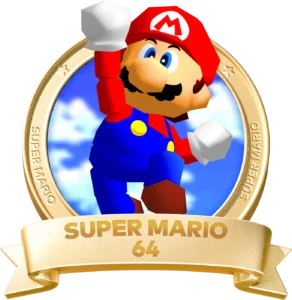 Super Mario 64Nintendo 64, 1996 · 15 courses, 120 Power Stars · Final boss: BowserThe 1997 Shindou revision with rumble, upscaled to 720p in its original 4:3 frame.
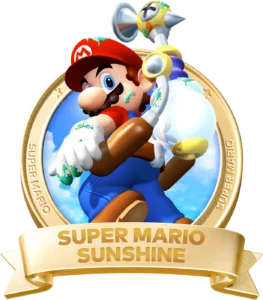 Super Mario SunshineGameCube, 2002 · Delfino Plaza and seven areas, 120 Shine Sprites · Final boss: BowserBased on the European version and shown in 16:9 widescreen, at up to 1080p.
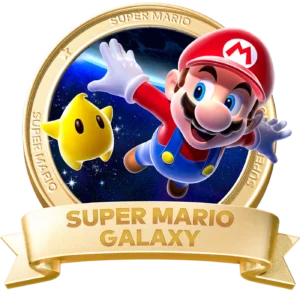 Super Mario GalaxyWii, 2007 · 42 galaxies, 121 Power Stars, then Luigi · Final boss: Bowser1080p at 60 frames per second, with Joy-Con, gyro and touch-screen pointing in place of the Wii Remote.
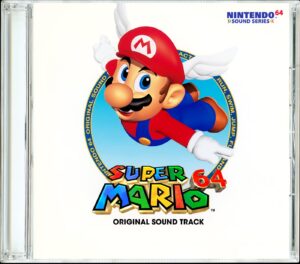 Super Mario 64 Original Soundtrack36 tracks · 49:52A score previously sold on CD, presented here with its Japanese cover on a jewel case.
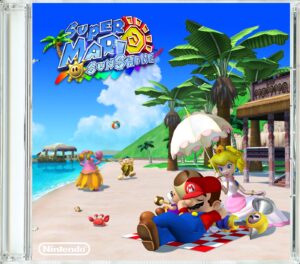 Super Mario Sunshine Original Soundtrack58 tracks · 1:11:01Never released before in any form: this was Sunshine’s first official soundtrack.
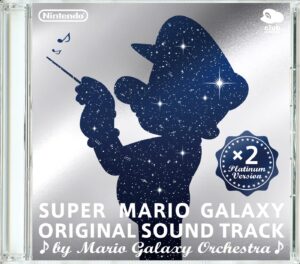 Super Mario Galaxy Original Soundtrack81 tracks · 2:07:03The full Platinum Version, originally a two-disc Club Nintendo exclusive in Japan.

 Squirt NozzleSunshine: FLUDD’s standard spray, in its new Switch icon.
 Hover NozzleSunshine: keeps Mario airborne for a few seconds.
 Rocket NozzleSunshine: launches Mario high into the air.
 Turbo NozzleSunshine: a burst of speed across land and water.
 Yoshi’s juice gaugeSunshine: shows how much fruit juice Yoshi has left.
 Power MeterSuper Mario 64: Mario’s eight-slice health pie, redrawn.
 1-Up MushroomSuper Mario 64: one of the sprites given a higher-resolution version.
 Mr. ISuper Mario 64: the giant eyeball, also redrawn.

 Super Mario Bros. 35th AnniversaryNintendo · 3 September 2020 – 31 March 2021The umbrella for everything below, with its own logo, website and My Nintendo missions. Two of the missions involved this game: buying it, and listening to the music player on the game’s website.
 Super Mario Bros. 35Nintendo Switch Online · 1 October 2020A competitive online game in the style of Tetris 99, built on the original Super Mario Bros. for Switch Online members, and also playable only until 31 March 2021, after which its servers closed.
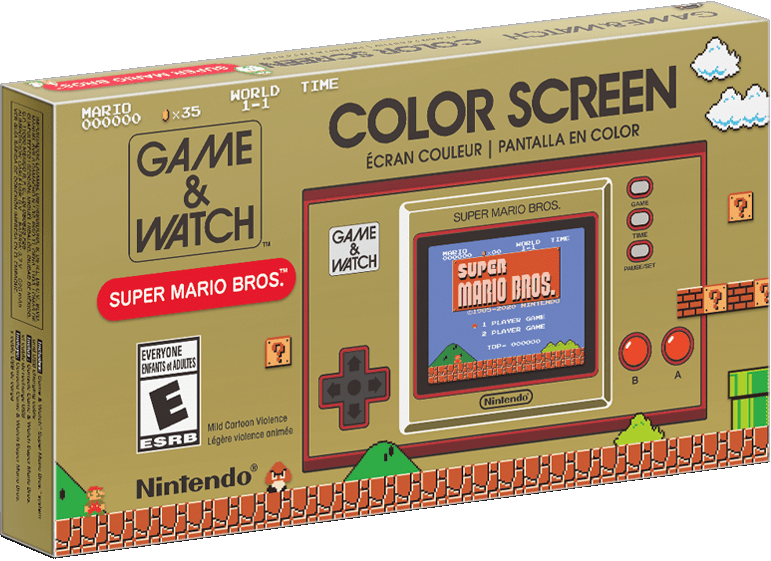 Game & Watch: Super Mario Bros.Nintendo · 13 November 2020A new Game & Watch handheld made for the anniversary, also sold only for a limited time.
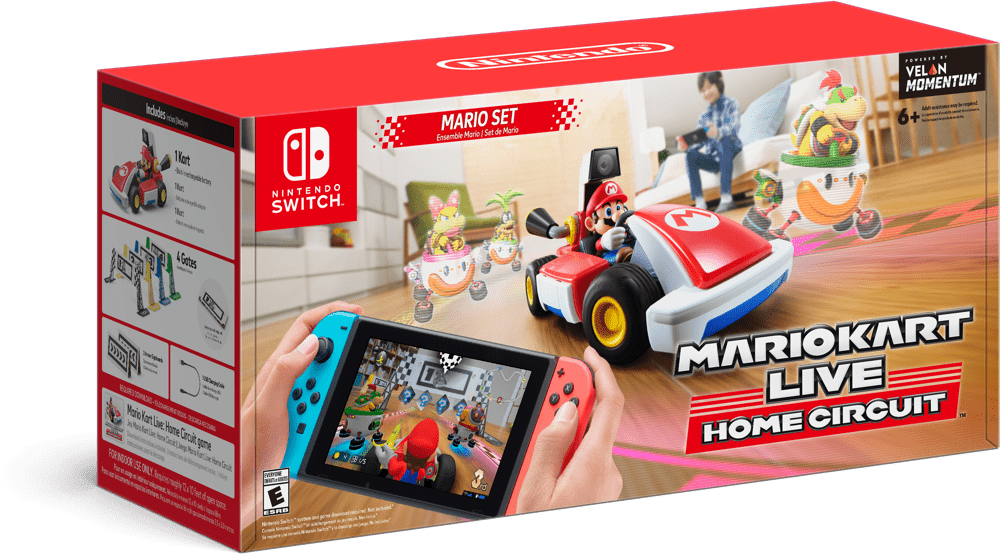 Mario Kart Live: Home CircuitNintendo · 16 October 2020Toy karts that race around a course you build at home, played through the Switch; announced in the same Direct.
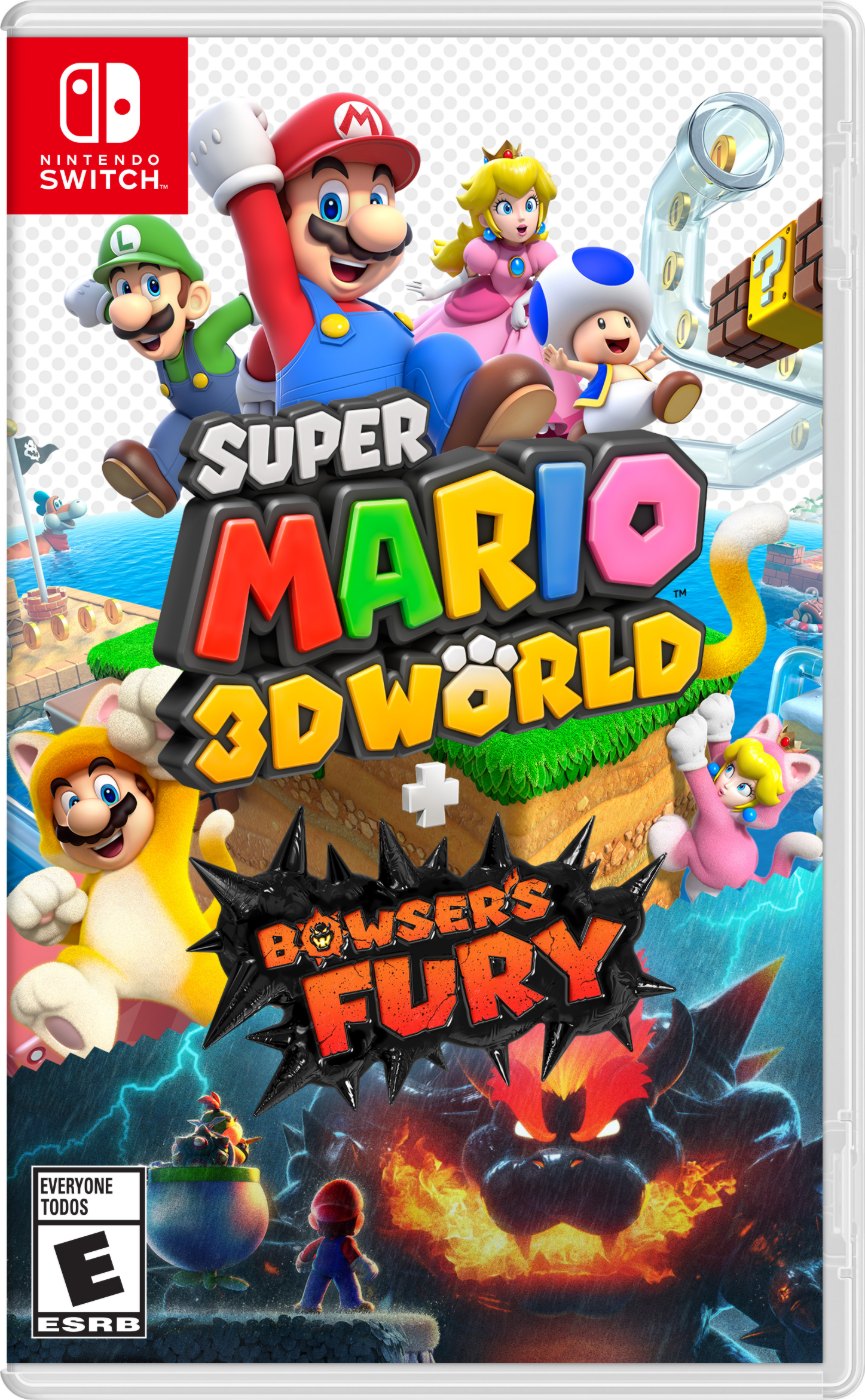 Super Mario 3D World + Bowser’s FuryNintendo · 12 February 2021Announced alongside 3D All-Stars, with the new Bowser’s Fury adventure added: read our page.
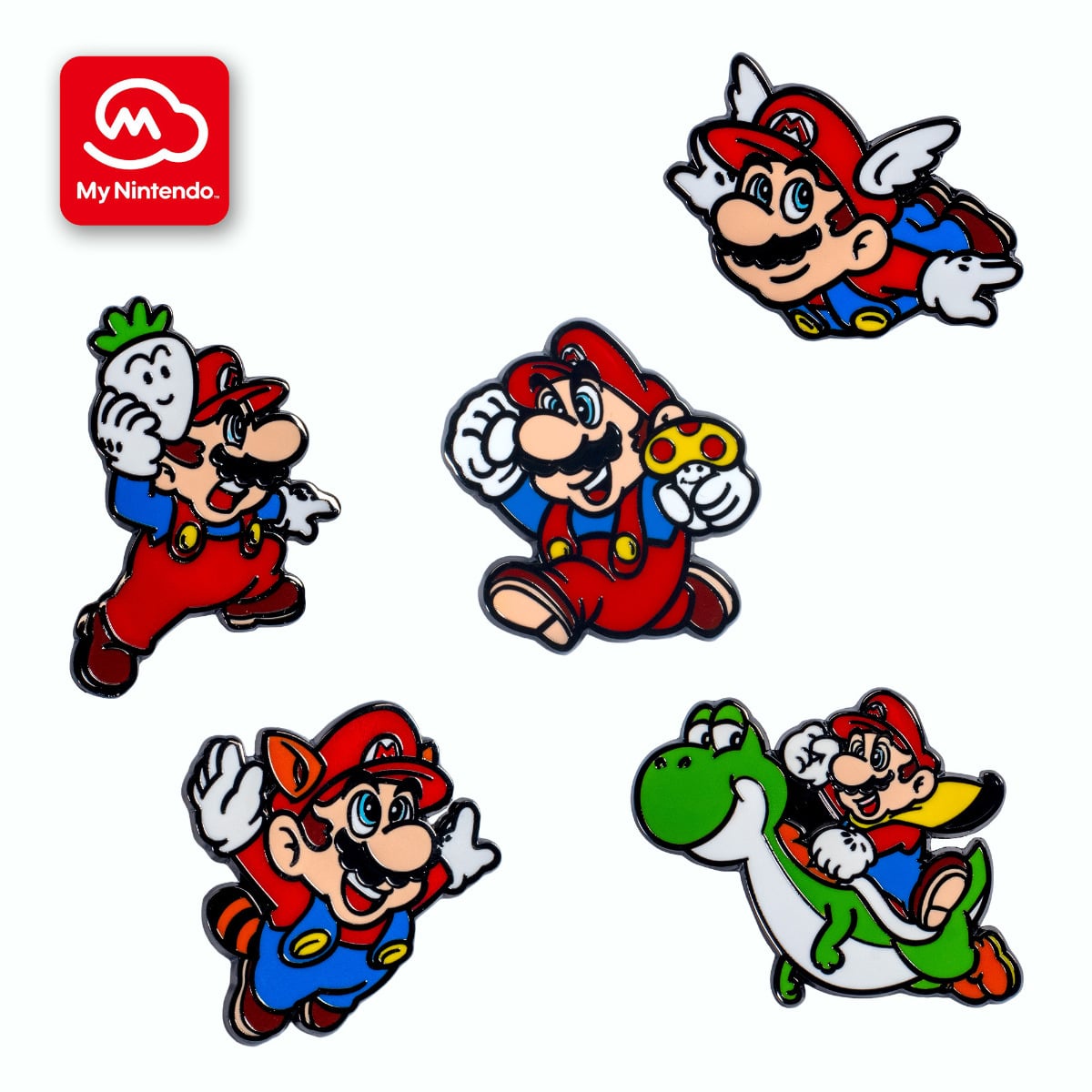 My Nintendo pinsNintendo · two waves, 2020–2021A set of 35th anniversary pins, earned through anniversary missions, included pins for Super Mario 64, Super Mario Sunshine and Super Mario Galaxy.
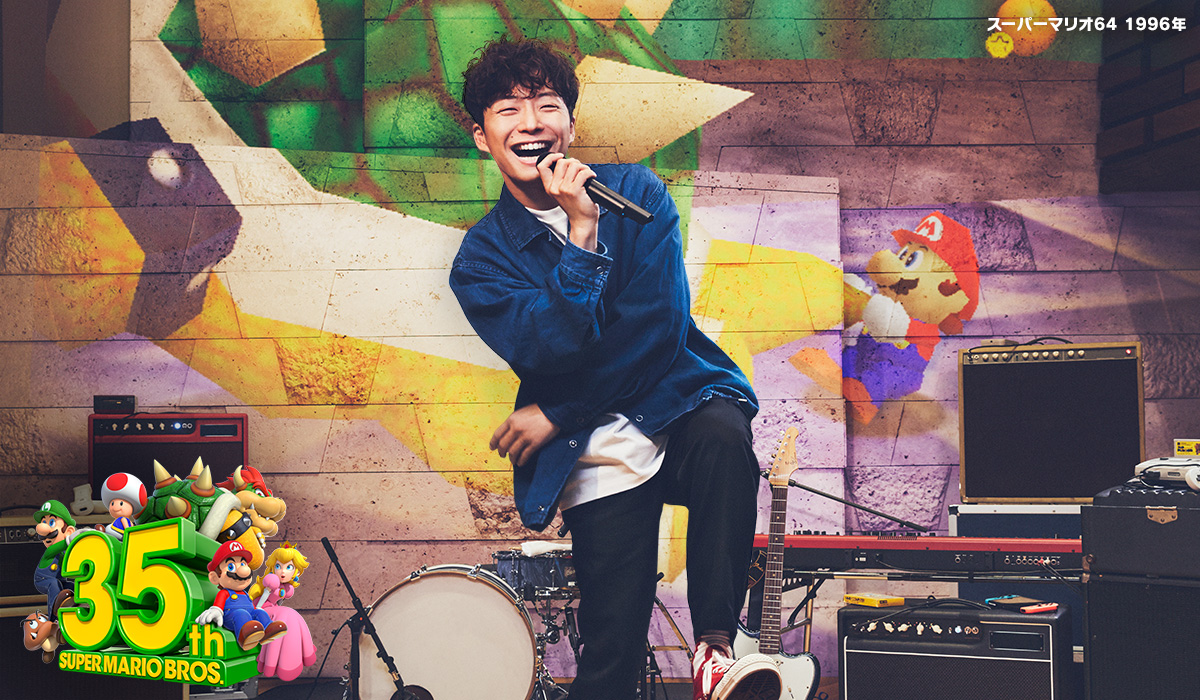 Gen Hoshino’s commercialNintendo Japan · 3 September 2020The anniversary had its own commercial and song, performed by Gen Hoshino.
 Play NintendoNintendo of AmericaNintendo’s Play Nintendo site ran a feature on the three games, tips and tricks, polls and an online puzzle for the collection.
 MarioHero of all three games
 Princess PeachCaptive, holidaymaker, festival host
 BowserFinal boss, three times over
 Bowser Jr.Sunshine’s troublemaker
 F.L.U.D.D.The talking water pump
 Shadow MarioThe impostor
 ToadsworthPeach’s steward
 YoshiSunshine’s juice-powered steed
 LumasStar-children
 LuigiGalaxy’s second hero
 Lakitu Bros.Super Mario 64’s camera crew
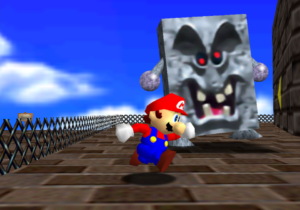 WhompSuper Mario 64 · Whomp’s FortressSlab-shaped bruisers who try to flatten Mario; their king guards the fortress top.
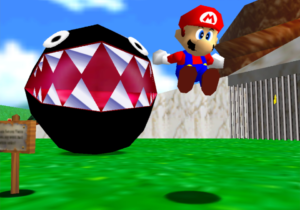 Chain ChompSuper Mario 64 · Bob-omb BattlefieldPound its post three times and it breaks free.
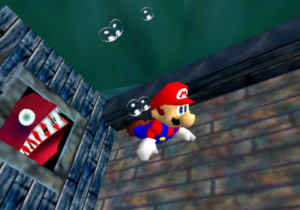 UnagiSuper Mario 64 · Jolly Roger BayThe giant eel guarding the sunken ship.
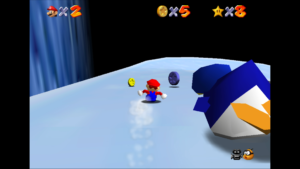 Big PenguinSuper Mario 64 · Cool, Cool MountainRaces Mario down the slide for a Power Star.
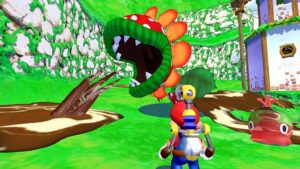 Petey Piranha (boss)Super Mario Sunshine · Bianco HillsA goop-spitting, belly-flopping giant Piranha Plant: pump water into its mouth.
 Mecha-Bowser (boss)Super Mario Sunshine · Pinna ParkBowser Jr.’s robot rises from the sea and is beaten from the roller coaster.
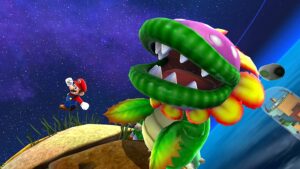 Dino Piranha (boss)Super Mario Galaxy · Good Egg GalaxyA dinosaur-sized Piranha Plant hatched from an egg; spin its tail.
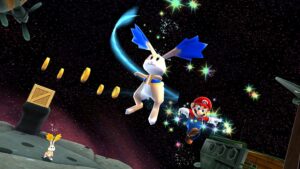 Star BunniesSuper Mario Galaxy · Good Egg GalaxyThree rabbits to catch for a Power Star; they move more slowly on Switch.