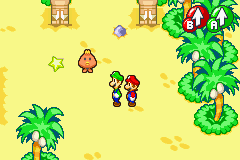
Game Boy Advance2003AlphaDreamAction RPGFirst Mario & Luigi gameFawful’s debutMetacritic 902.15 million soldMario Bros. on the cart
Mario & Luigi: Superstar Saga
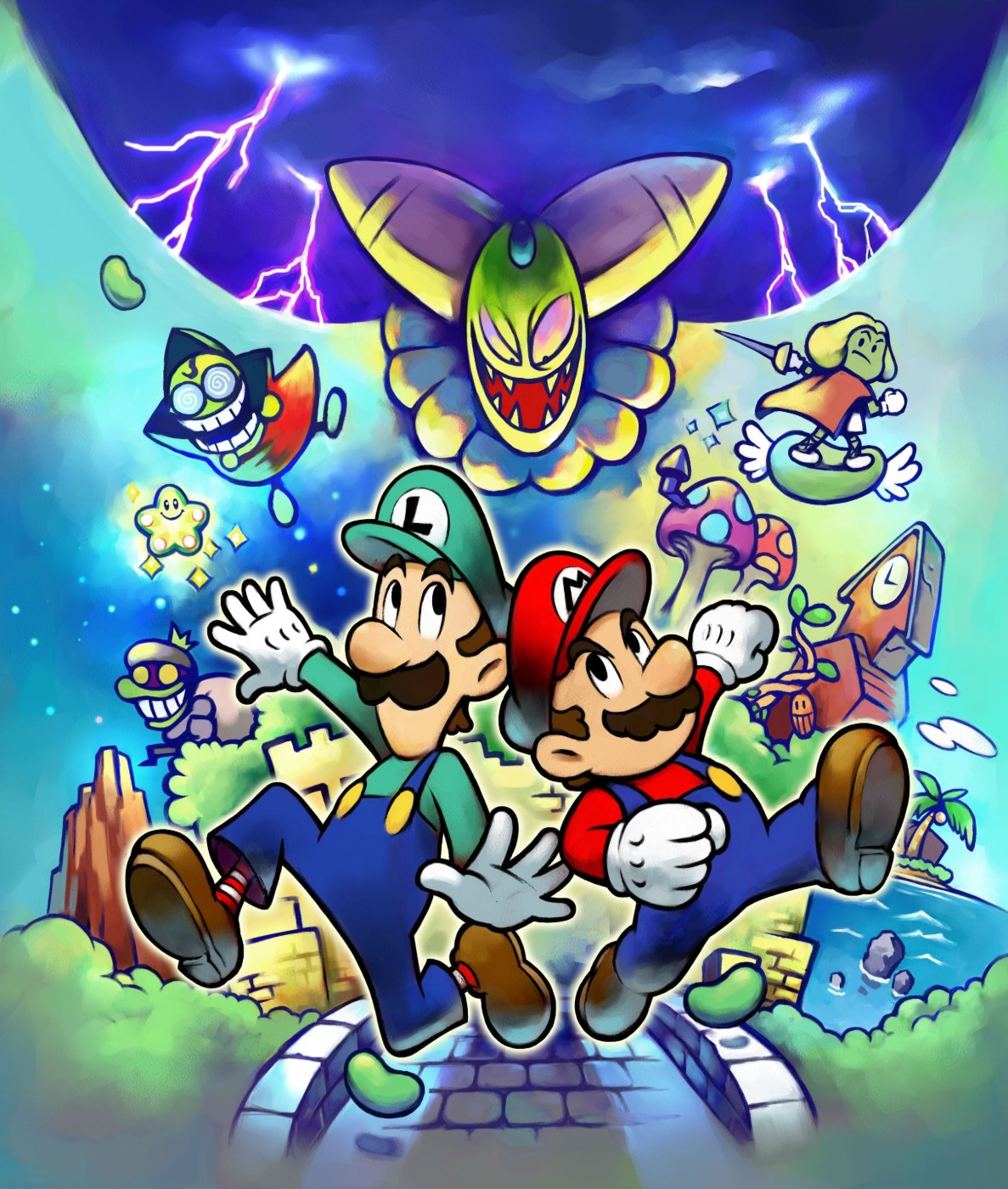
The one where Luigi finally gets his name on the box. Released for the Game Boy Advance in November 2003, Mario & Luigi: Superstar Saga is the first game in the Mario & Luigi series and the first Mario adventure from AlphaDream, a Tokyo studio staffed by people who had made Super Mario RPG at Square. Its big idea is one button per brother: A is Mario and B is Luigi, in the field and in every fight, so jumps, hammer swings, dodges and the two-man Bros. Attacks are all played with your own thumbs rather than picked from a menu. The setting is new too. The witch Cackletta and her gloriously mangled-English pupil Fawful steal Princess Peach’s voice, and the chase leads out of the Mushroom Kingdom and into the Beanbean Kingdom, a land where every place name is a laugh. With music by Yoko Shimomura, a script that is still quoted today, 27 boss fights and a remake of the arcade Mario Bros. tucked on the cartridge, it scored 90 on Metacritic, sold 2.15 million copies and was remade for Nintendo 3DS in 2017.
Developer:AlphaDream (minigames by Vanpool)
Publisher:Nintendo
Platform:Game Boy Advance; Wii U Virtual Console (2014); Game Boy Advance – Nintendo Classics on Nintendo Switch (2023)
Genre:Action RPG with timed, turn-based battles
N. America:17 November 2003
Japan:21 November 2003, as Mario & Luigi RPG
Europe:21 November 2003 (Super Mario Wiki lists the UK and Germany a day earlier)
Australia:28 November 2003
Players:1 in the adventure; up to 4 in the bundled Mario Bros.
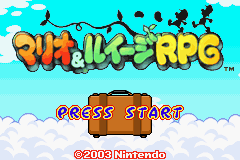
Mario & Luigi: Superstar Saga is the third Mario role-playing game, after Super Mario RPG: Legend of the Seven Stars on the Super NES and Paper Mario on the Nintendo 64, and the first built for a handheld. It reached North America on 17 November 2003, Japan and mainland Europe on 21 November and Australia on 28 November. In Japan it is simply Mario & Luigi RPG.
The story starts with a diplomatic visit that goes badly wrong. An ambassador from the neighbouring Beanbean Kingdom arrives at Peach’s Castle with a gift, and turns out to be the witch Cackletta. She and her assistant Fawful make off with the princess’s voice, leaving Peach spitting explosive symbols every time she opens her mouth. Bowser, who had only popped round for a kidnapping, decides a princess who blows up his castle is no use to him and offers Mario a lift on his airship. Luigi is dragged aboard by mistake. Within minutes the ship is shot out of the sky, and the brothers are on foot in a foreign country.
What follows is part RPG, part platformer and part double act. You steer both brothers at once, Mario on the A Button and Luigi on B, hopping across gaps one after the other, hammering each other into the ground and setting each other on fire in the name of puzzle-solving. Battles are turn-based but never passive: press the button as a jump lands and it hits harder, press it as an enemy charges and your brother leaps clear or swats it away. Learn the patterns and even a boss can be fought without taking much of a scratch.
It is also properly funny, in a way few Mario games had been before. The Beanbean Kingdom is full of bean people with names like Lady Lima and Prince Peasley, its map reads like a list of laughs (Hoohoo, Chucklehuck, Teehee, Gwarhar, Joke’s End), and Fawful talks in a stream of food metaphors that the English localisation team turned into the stuff of legend. Critics loved it, AlphaDream went on to make four sequels, and the game came back on Wii U in 2014, on Nintendo 3DS as a full remake in 2017 and on Nintendo Switch Online in 2023.
Why Superstar Saga matters to Mario fans
This is the game that made Luigi a co-star rather than a second player. He gets half the buttons, half the moves, a solo chapter in which he has to be hypnotised into bravery, and the scene where he saves the day in a dress. It also gave the series Fawful, the Beanbean Kingdom and the Mario & Luigi sense of humour, all of which carried on through Partners in Time, Bowser’s Inside Story, Dream Team and, after a long gap, Brothership. On a site called Super Luigi Bros, that makes it close to required reading.
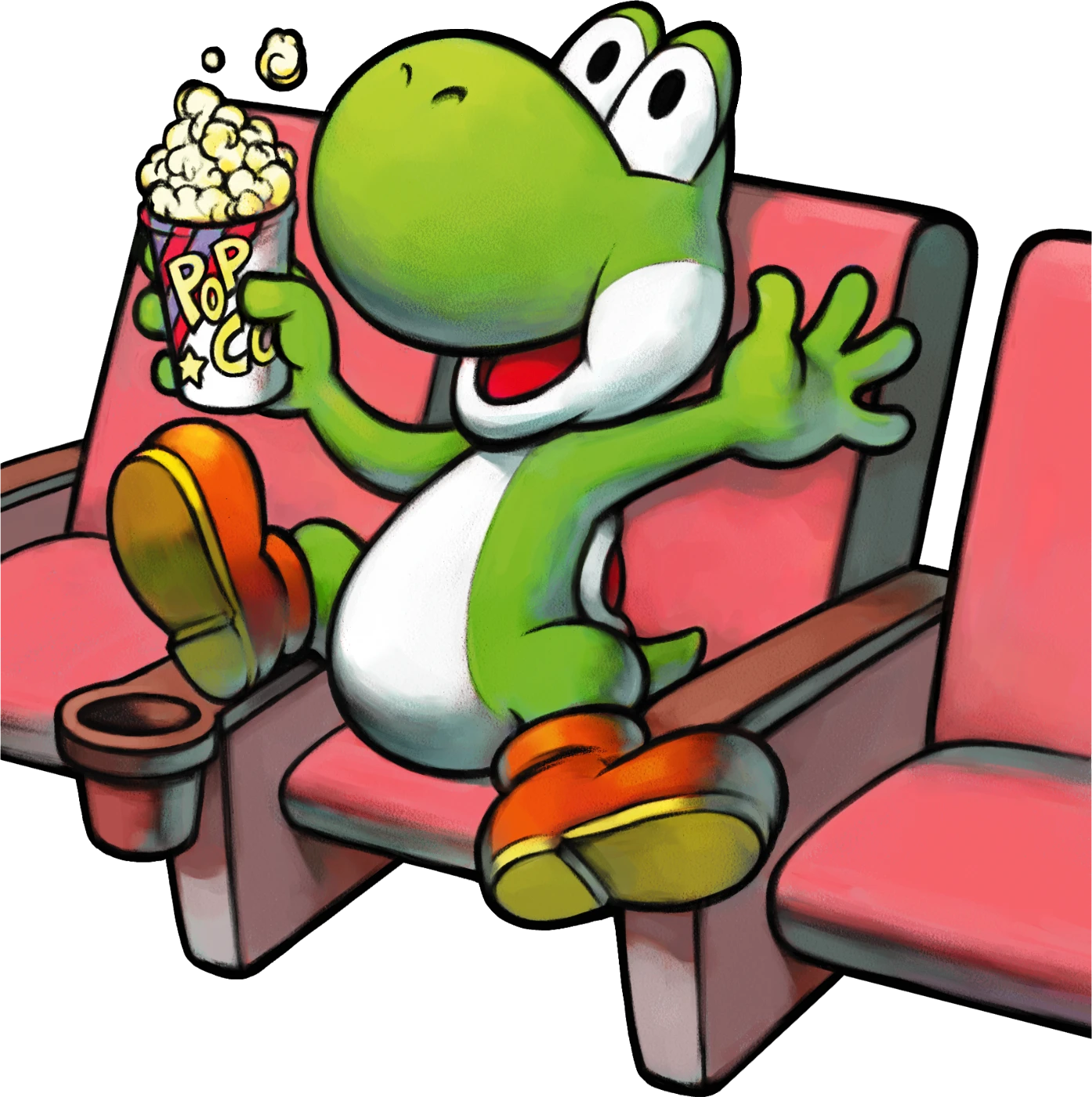
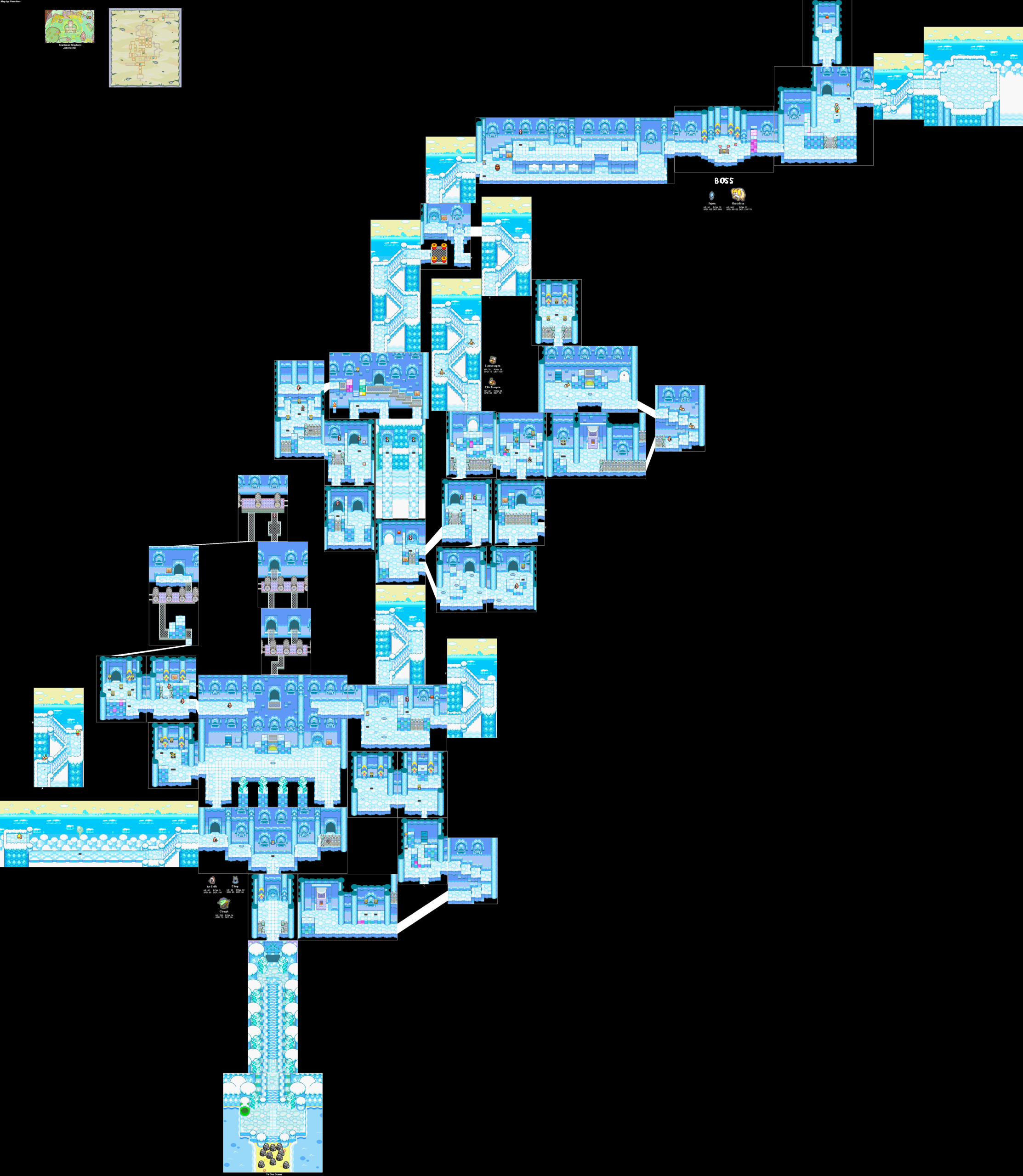
The first proper boss: Tolstar, in Stardust Fields.Chucklehuck Woods, home of the Chuckola Reserve.Inside Woohoo Hooniversity.Yoshi Theater, where the hungry Yoshis hang out.
“An adventure so big, you’ll need both Bros.!”
Nintendo eShop description for the Wii U Virtual Console release (2014), as recorded by Super Mario Wiki. Tagline quoted; the rest summarised.
Nintendo’s own one-line pitch. The rest of the description sets up the theft of Peach’s voice by Cackletta and Fawful and points out that an enhanced Mario Bros. is included as a quick extra.
Quick Answers
The questions people ask most about Mario & Luigi: Superstar Saga, answered briefly here and in depth further down the page.
When did Mario & Luigi: Superstar Saga come out?
On Game Boy Advance on 17 November 2003 in North America, 21 November in Japan and Europe and 28 November 2003 in Australia. It returned on the Wii U Virtual Console in April 2014 and on Nintendo Switch Online in February 2023. More →
Who made Superstar Saga?
AlphaDream, a Tokyo studio founded in 2000 by former Square staff, with Nintendo publishing. Yoshihiko Maekawa, who co-directed Super Mario RPG, directed it; Shigeru Miyamoto and Tetsuo Mizuno produced; Yoko Shimomura wrote the music. More →
Who is the villain?
Cackletta, a Beanish witch, helped by her pupil Fawful. Halfway through, Fawful puts her spirit into Bowser’s body, creating Bowletta, who is the final boss along with Cackletta’s soul. More →
How many Bros. Attacks are there?
Eight. Mario starts Splash Bros., Chopper Bros., Fire Bros. and Swing Bros.; Luigi starts Bounce Bros., Knockback Bros., Thunder Bros. and Cyclone Bros. Each also has a stronger Advanced version unlocked by using it often enough. More →
How many bosses are there?
Super Mario Wiki’s boss table has 27 entries, counting each rematch with Popple and all seven Koopalings in Bowser’s Castle. The last three are Fawful, Bowletta and Cackletta’s soul. More →
What is the Mario Bros. game on the cartridge?
The same Game Boy Advance remake of the 1983 arcade game that came with the Super Mario Advance series. It has Classic and Battle modes, supports up to four players over link cables and connects with the Super Mario Advance games. More →
Is the Japanese version different?
Yes. It was finished about two weeks after the Western versions and fixes several bugs, changes how much healing items restore, starts the brothers with more Bros. Points, adds three Heart Blocks and gives many enemies and bosses different stats. More →
What did the 3DS remake change?
Superstar Saga + Bowser’s Minions (2017) redrew everything, rearranged the music, added saving anywhere, a touch-screen map and an Easy Mode, removed Mario Bros. and added a new side story, Minion Quest: The Search for Bowser. More →
Can I play Superstar Saga on Nintendo Switch?
Yes. The original Game Boy Advance game was a launch title for Game Boy Advance – Nintendo Classics, part of Nintendo Switch Online + Expansion Pack, on 8 February 2023. More →
Story
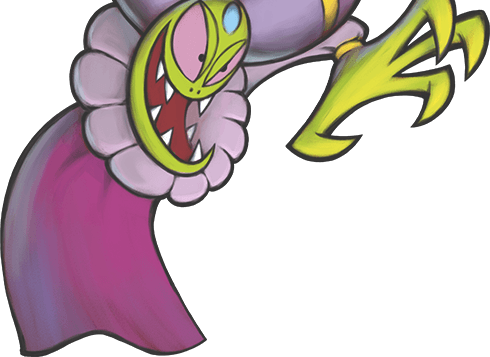
Cackletta, the Beanish witch behind it all.
Superstar Saga is a road trip. It begins as a simple errand (get the princess’s voice back) and keeps swerving: the villain dies halfway through and comes back wearing Bowser, the thing everybody was chasing turns out never to have been stolen, and the hero of the last act is Luigi in a frock. What follows is the whole plot, spoilers and all.
The setting is the Beanbean Kingdom, the Mushroom Kingdom’s next-door neighbour, ruled by Queen Bean from a castle that guards the Beanstar: a sleeping relic that grants wishes once it is woken. Cackletta believes Princess Peach’s voice is the thing to wake it.
A gift from the Beanbean Kingdom
The Beanbean Goodwill Ambassador and her assistant arrive at Peach’s Castle with a present from Queen Bean. They are Cackletta and Fawful in disguise, and they steal the princess’s voice and escape into the night sky. Toad sprints to the Mario brothers’ house, bursts in on Mario in the shower, and Mario charges off to the castle, dragging along Luigi, who had been hanging out the washing.
At the castle they find Bowser, who has turned up for a routine kidnapping. One short tutorial fight later, Toad explains the problem: whenever Peach speaks, her words fall out of the speech balloon as explosives. Bowser, picturing what that would do to his own castle, proposes a truce. He will fly Mario to the Beanbean Kingdom aboard the Koopa Cruiser to get the voice back. Luigi comes to wave them off and is press-ganged as a new recruit.
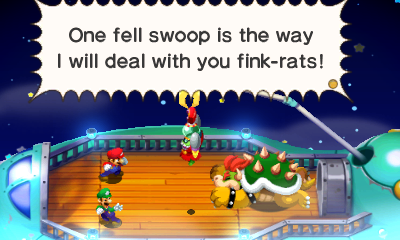
They do not get far. Cackletta swoops alongside to gloat, then leaves Fawful to finish the job. After a brief scrap on deck he blasts the Cruiser with his headgear and it goes down in flames over the border.
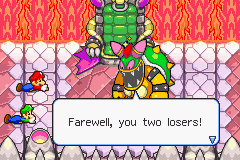
Cackletta and Fawful steal the voice.Toad arrives while Luigi hangs out the washing.Cackletta mocks Bowser and the brothers aboard the Koopa Cruiser.Fawful explains what the voice is for.
Stardust Fields: welcome to the border
The brothers wake in Stardust Fields, the no-man’s-land between the two kingdoms. The Border Bros. will not let anyone across without a game of Border Jump, and a pair of locals, the Starshade Bros., teach Mario and Luigi the High Jump and the Spin Jump (and with them their first Bros. Attacks).
Bowser, meanwhile, is stuck in a cannon belonging to a swindler called Tolstar, who wants 100 Beanbean coins to let him out. The brothers scrape the money together, Tolstar pockets it and attacks them anyway, and when he is beaten a Starshade Bro helpfully lights the fuse. Bowser is fired clean across the kingdom and out of the story for a while.
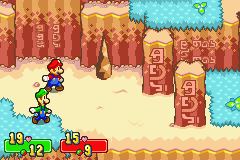
Stardust Fields.Meeting the Starshade Bros.The battle with Tolstar.Bowser, stuck in the cannon and about to leave.
Hoohoo Village and Hoohoo Mountain
In Hoohoo Village the guards take the brothers for the villains who have made off with Prince Peasley, until Tolstar wanders by and vouches for them. The road down to the castle is blocked by a rock statue Fawful has left of himself, and only a hammer will shift it. The village smiths, the Hammerhead Bros., cannot make one without a Hoohoo Block from the mountain.
So up they go. Hoohooros stops them on the path for a game and then a fight. At the summit the block tumbles away and wakes Blablanadon, the mountain’s winged resident, who admits he has been sitting on an egg. It hatches into the dragon Dragohoho, the brothers beat it, and it turns back into Prince Peasley, who had been transformed by Cackletta. He leaves them his rose as a token.
Blablanadon flies them home, where the block has conveniently landed in the Hammerhead Bros.’ cabin. Hammers made, statue smashed, and a ride on the Mysterious Mine Carts brings them down to the plains.
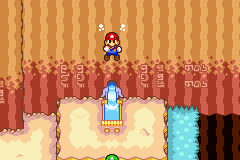
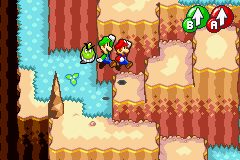
Hoohoo Village.Hoohooros blocks the mountain path.The summit of Hoohoo Mountain.Prince Peasley, himself again, hears about the stolen voice.
Beanbean Castle Town and a queen with indigestion
Beanbean Castle Town is a wreck; Cackletta and Fawful have already been through. Peasley’s Rose gets the brothers past the castle guards, where Lady Lima, the queen’s adviser, refuses to believe they are the famous Mario Bros. and sends them to mend the plumbing in the sewers to prove themselves.
It is a trap. The Lima who gave the order was Cackletta in disguise, and fixing the pipes switches off the security around the Beanstar. By the time the brothers free the real Lady Lima, the witch has taken it. Worse, she has fed Queen Bean a Belly Blech worm, and the queen bursts in swollen to monstrous size and swinging. Once she has been subdued, Lima explains the cure: a dose of Chuckola Reserve, a prized soda, to make Her Majesty spit the worm out.
Beanbean Castle Town after Cackletta’s visit.Outside Beanbean Castle.
Chucklehuck Woods and the Chuckola Reserve
The Reserve is kept beyond Chateau de Chucklehuck, the soda works at the edge of the woods. Somebody has got there first: Popple, self-styled Shadow Thief, and his enormous, forgetful new sidekick Rookie, who looks remarkably like a certain Koopa King with amnesia. After seeing them off the brothers free the brewers Cork and Cask from a barrel and are taught the Mini-Mario and Luigi Dunk hammer moves in thanks.
Deep in the woods Chuckleroot will only open the way in exchange for red, white and purple Chuckola Fruit. Past him, and past a Wiggler, they reach Mother Chuckola, where a character called Bubbles is busy telling the Reserve jokes. The soda has been listening. It rises up as the Chuckolator and has to be beaten.
Bubbles then sets off a tremor that drops the brothers and the soda underground. Mario lands in the Reserve, and Luigi has to get him home by barrel. Back at the castle, Luigi jumps on his brother and Mario squirts the soda straight into Queen Bean, who returns to normal. Peasley arrives with news: Cackletta is at Woohoo Hooniversity.
The entrance to Chateau de Chucklehuck.A hallway in the chateau.Chucklehuck Woods.
Woohoo Hooniversity: Cackletta falls
The kingdom’s seat of learning has been taken over, its professors turned into Laser Snifits. In the main laboratory Cackletta and Fawful have wired Peach’s voice into a squad of Peach-bots and are playing it to the Beanstar. Instead of waking sweetly, the star goes berserk and crashes through the floor. Luigi knocks Fawful flat with his hammer, and Cackletta fights the brothers alone.
She loses, and for a moment that seems to be that. But Fawful returns, absorbs what is left of his mistress and is promptly thrown out of the building by Prince Peasley. In the basement the brothers find the Beanstar, and Popple and Rookie trying to steal it. One more fight, one last stray Peach-bot, and the furious star rockets into the sky with everyone clinging to it. They drop off one by one. Rookie, jolted by the fall, remembers that he is Bowser just before he lets go. High above the kingdom the Beanstar shatters into four pieces.
Inside the Hooniversity.Cackletta switches on the Peach-bots.Popple and Rookie in the basement.One Peach-bot too many: the Beanstar loses its temper.
Oho Oasis, Bowletta and the truth about Peach
Mario and Luigi land on Oho Oasis, a small island whose Fire and Thunder Palaces grant them the Firebrand and Thunderhand. Elsewhere, Fawful finds Bowser lying stunned in Stardust Fields and pours Cackletta’s spirit into him. The result has Bowser’s body, Cackletta’s mind and a new name: Bowletta.
Back on the mainland, Peasley reports that Princess Peach is flying in, but Beanbean Airport’s runway has been overrun by Piranha Plants and their mother. The brothers clear it with a bellyful of water and a jolt of electricity, beat Mom Piranha, and the Toad Express lands.
Then the twist. Peach steps off the plane and speaks, perfectly normally. Her voice was never stolen at all. Peasley had warned the Mushroom Kingdom what Cackletta was planning, so on the day of the visit Peach hid and Birdo sat on the throne in her place. It was Birdo’s voice that went into the Peach-bots, which is exactly why the Beanstar flew into a rage. Bowletta’s response is simple: forget the voice and take the princess herself.
Oho Oasis.Cackletta’s spirit closes in on a dazed Bowser.Peach speaks, and nobody explodes.The flashback: Peach and Toadsworth hide while Birdo meets the ambassadors.
Little Fungitown and Luigi’s finest hour
Peach decides to visit Little Fungitown, a town of Toads, and the brothers escort her across the desert of Teehee Valley, beating a boss called Trunkle on the way. In the town arcade Mario wins the grand prize on Star ’Stache Smash, an “Invincishroom”, and wolfs it down. It is a Poison Mushroom. He collapses with Bean Fever.
The only cure is Crabbie Grass, which grows in Guffawha Ruins, and the ruins are said to hold a monster. Luigi cannot face it. He visits Psycho Kamek, the town hypnotist, who convinces him that he is Mario, and so Luigi marches through the ruins alone. The “monster” is a big stone head who would just like people to stop telling stories about him.
Luigi comes back with the grass, is struck by lightning for his trouble, and sees Bowletta carry Peach away in the Koopa Clown Car. He cures Mario, and at Beanbean Castle Lady Lima reads out the ransom note: the princess in exchange for all four pieces of the Beanstar.
Teehee Valley.Little Fungitown.Star ’Stache Smash, and the prize that poisons Mario.Guffawha Ruins, which Luigi braves alone.
Four pieces of the Beanstar
The pieces have scattered to the four corners of the map, and the hunt for them is the most open stretch of the game. One is aboard the S.S. Chuckola, a ship in Teehee Valley; the ship drifts out into Oho Ocean, and the trail ends in Gwarhar Lagoon on the shell of Hermie III, a crab who has been using it as a decoration. The Jellyfish Sisters’ Relaxation Room nearby teaches the Dash and the Tickle.
The second belongs to Harhall, a designer who parts with it once the brothers have coloured some cloth for him with Designbombs. The third fell into Winkle Colosseum in Chucklehuck Woods, where the brothers must win the Winkles’ game and then beat Popple, working alone now. The fourth is part of the sign outside Yoshi Theater, and its owner Boddle will swap it for seven Neon Eggs, which means feeding Bean Fruit to seven very hungry Yoshis.
With the star reassembled, Bowletta names the place for the exchange: Joke’s End, a frozen palace across the ocean. Peasley slips the brothers a Fake Beanstar, just in case, and they surf north.
Gwarhar Lagoon.Yoshi Theater.Queen Bean wonders what Bowletta is really after.
Joke’s End and the princess swap
Joke’s End is a climb through ice puzzles, many of which need the brothers to split up. Inside lives Jojora, who asks them to invite a friend of hers; the snow woman who answers attacks instead.
At the handover, Luigi holds out the fake Beanstar, but Fawful is not fooled: he blasts Luigi and seizes the real one, and Bowletta shows no sign of giving Peach back. Mario’s back-up plan involves a spare dress supplied by Toadsworth and a brother who did not volunteer. A second “Peach” appears, Bowletta is taken in, and she flies off to the Koopa Cruiser with a princess who is really Luigi in a wig.
Aboard the badly repaired Koopa Cruiser the truth comes out. Luigi runs for it with Fawful on his heels and escapes with the Beanstar. He ends up down a sand pit in Teehee Valley, where Mario rescues him and the pair deal with Popple one last time, now partnered with Birdo. An enraged Bowletta announces that if she cannot have the star she will have the Mushroom Kingdom.
Joke’s End.The brothers at Joke’s End.Bowletta and Fawful with their “princess”.Luigi escapes through the rickety Koopa Cruiser.
Bowser’s Castle: Koopalings, Fawful and Bowletta
Bowser’s Castle appears in the sky over Beanbean Castle Town and opens fire, flattening it for the second time. Blablanadon carries the brothers up. Inside, each wing is held by one of the seven Koopalings, fought in the same order as in Super Mario World: Iggy, Morton, Lemmy, Ludwig, Roy, Wendy and Larry. Beyond them waits Fawful, inside a new dome-shaped machine. When he is finally beaten, Prince Peasley arrives and knocks him out of the castle for good.
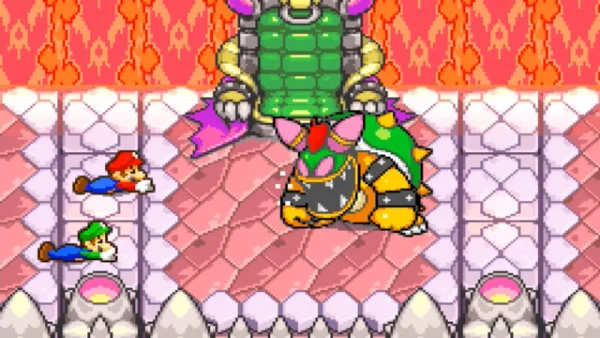
Then Bowletta herself, who turns into Dark Bowletta when her health runs low. She goes down, and it is a trick. A Time Bob-omb goes off in the brothers’ faces and she swallows them whole. Inside her, Mario and Luigi face Cackletta’s soul: a head, two arms and a heart.
Beating it drives the witch out of Bowser for ever. Peasley warns that he has planted a detonator, the brothers escape on Blablanadon, and Bowser, himself again, crashes into Oho Ocean, to be fished out by the prince later. In the epilogue Peach flies home, Peasley sends along a huge farewell present that turns out to contain Bowser (jettisoned over his other castle), and the credits roll as a film in Yoshi Theater, to wild applause from an audience of Yoshis.
Bowletta swallows the brothers.The flight home, with Bowser dangling underneath.
Every area in Superstar Saga
Super Mario Wiki lists 22 locations, grouped here into 21 cards (Oho Ocean and its Seabed share one). They are given in the order the story first reaches them, with what you learn or win there and who is waiting at the end. Every Beanbean place name except Yoshi Theater and Little Fungitown is some kind of laugh.
Toadtown Square and Peach’s CastleMushroom Kingdom · tutorial · BowserA short run as Toad, two missable favours for the locals and a ten-HP Bowser to learn the ropes on.
Koopa CruiserIn flight · Fawful (first battle)Bowser’s airship, crewed by his Baddies. Find the lost Koopa on board for a 1-Up Mushroom before Fawful shoots it down.
Stardust FieldsThe border · High Jump and Spin Jump · TolstarBorder Jump, the Starshade Bros. and a spot called Area 64 (Area 51 in Japan).
Hoohoo VillageBeanbean Kingdom · hammersHome to the Hammerhead Bros. and the starting point of the Mysterious Mine Carts.
Hoohoo MountainHoohoo Block and Peasley’s Rose · Hoohooros, DragohohoWhirlwinds, a watering hole and a view of Peach’s Castle from the top.
Beanbean OutskirtsOverworld · Secret Scrolls · Piranha Bean (Luigi only)The fields around the capital, riddled with caves, Thwomp games, buried beans and warp pipes. Renamed Beanbean Fields in the remake.
Beanbean Castle TownHub · shops, Starbeans CafeRuined, rebuilt and ruined again over the course of the story. Beanlets and Beanstones are hidden in its streets.
Beanbean Castle and SewersBeanbean Brooch · Queen BeanWhere the Beanstar was kept, and where a plumbing job turns out to be sabotage.
Chateau de ChucklehuckMini-Mario and Luigi Dunk · Popple and RookieThe Chuckola soda works, run by Cork and Cask.
Chucklehuck WoodsChuckola Reserve; later a Beanstar piece · Wiggler, Chuckolator, PoppleA dark forest whose guardian wants fruit before he will let you by. Winkle Colosseum is tucked inside.
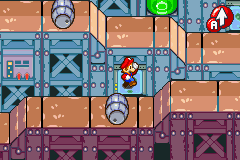
Woohoo HooniversityThe Beanstar · Cackletta, Popple and RookieLaser Snifits, Dr. Mario’s Viruses, a room of rolling barrels straight out of Donkey Kong and a hall of famous blocks.
Oho OasisFirebrand and ThunderhandAn island of Oho Jees with a Fire Palace and a Thunder Palace.
Oho Ocean and the SeabedSea crossing · surfing minigameWalked along the bottom or surfed across the top on Luigi’s back.
Beanbean AirportPeach arrives · Mom PiranhaA weed problem on the runway, solved with water and lightning.
Teehee ValleyDesert · Trunkle; later Popple and BirdoA former sea bed turned desert, and the road to Little Fungitown. The S.S. Chuckola starts out here.
Little FungitownToad town · Star ’Stache SmashA slice of the Mushroom Kingdom abroad, complete with arcade and hypnotist.
Guffawha RuinsCrabbie Grass · Luigi aloneLuigi’s solo dungeon, guarded by a misunderstood stone head.
Gwarhar LagoonBeanstar piece, Dash and Tickle · Hermie IIIHome of the Jellyfish Sisters’ Relaxation Room and a crab who loves to decorate.
Yoshi TheaterBeanstar piece · Neon EggsA cinema whose posters advertise films starring Kirby, Wario and Starfy.
Joke’s EndThe exchange · Jojora and her friendA frozen palace across the ocean, full of puzzles that split the brothers up.
Bowser’s CastleFinale · seven Koopalings, Fawful, Bowletta, Cackletta’s soulA flying fortress with a Super Mario Bros.-style bridge-and-axe gag hidden inside.
Nine green Warp Pipes link the main areas once you have found each end, and three secret caves near Beanbean Castle Town hide side-scrolling bonus stages. The 3DS remake raises the pipe count to thirteen.
Advertisement
Gameplay & Controls
Superstar Saga looks like a top-down RPG, but it plays more like a platformer that happens to have levels and hit points. Almost nothing is automatic. Every jump across a ledge, every hammer blow and every dodge is a button press, and the button depends on which brother you mean.
One button each
Mario on A, Luigi on B.
The brothers walk in single file, one in front and one behind, and the Control Pad moves the pair. A always belongs to Mario and B to Luigi, so crossing a gap means jumping one and then the other in quick succession. Start swaps who leads. R cycles through the front brother’s actions (jump, hammer, hand power) and L through the back brother’s, which is where the team moves live. An icon in the corner of the screen shows what each button will currently do.
For a short while at the very start you control Toad instead, running through Mario and Luigi’s house to raise the alarm. Later sections split the brothers up: Mario squeezes through gaps on his own, Luigi explores a ruin solo, and several rooms in Joke’s End need them to work apart and meet again.
Battles: timed hits, dodges and counters
Enemies wander the field, and touching one starts a fight. Jump on it or hammer it first and you get a First Strike, damaging or stunning it before the battle opens. Let it hit a brother from behind and he trips, flat on his face and unable to act until his turn comes round.
Each brother chooses from four Command Blocks: a solo move, a Bros. Attack, an item or running away. Solo moves are the jump, the hammer (once the Hammerhead Bros. have made you a pair) and the hand powers, Mario’s Firebrand and Luigi’s Thunderhand, learned at Oho Oasis. Press the brother’s button at the moment of impact and the attack does more damage. Fire and thunder are elemental: against the right enemy they score a critical hit for double damage, and against the wrong one they heal it.
Defence works the same way. When an enemy attacks, you watch who it is aiming at and press that brother’s button to jump over it, or hold and release to meet it with the hammer. Land on the enemy on the way down, or bat its projectile back, and you deal damage on its turn. Read the enemy correctly and its attack can be avoided altogether, which is why a careful player can get through whole boss fights barely scratched.
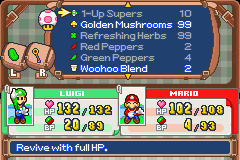
There are six stats. HP is health; at zero a brother is out cold until revived with a 1-Up Mushroom or 1-Up Super. BP (Bros. Points) pays for Bros. Attacks. POW and DEF are attack and defence, SPEED decides who moves first, and STACHE raises the chance of a Lucky Hit, which roughly doubles damage, as well as cutting shop prices and improving what you get for selling. Each level-up raises everything a little and then lets you choose one stat for an extra boost. Running away means hammering A and B to sprint off-screen while coins spill from your pockets; if one brother is unconscious the other carries him, and you lose half as much.
The tutorial fight: Mario against Bowser in Peach’s Castle.Dragohoho on Hoohoo Mountain, the first real test of dodging.The Solo Attack Command Block.The Bros. Attack Command Block.
Bros. Attacks
Bros. Attacks are the showpieces: combination moves in which one brother launches, throws or hammers the other at the enemy, with a string of A and B presses along the way. Miss an input and the move fizzles into something weaker than a plain jump. There are eight, four started by each brother. Six arrive alongside the field techniques they are based on, and the last two are hidden on Secret Scrolls.
Each can be set to one of three modes. Mode 1 slows the action down and shows the buttons to press; Mode 2 keeps the prompts but runs at full speed; Mode 3 removes both, and in return costs fewer Bros. Points and hits harder. Splash Bros., for example, costs 4 BP in Modes 1 and 2 and 3 BP in Mode 3; Cyclone Bros. drops from 8 to 4.
Use an attack successfully enough times and its Advanced version unlocks, a trickier input with a bonus attached. Advanced Swing Bros. can steal an item, Advanced Fire Bros. can leave an enemy burning, Advanced Thunder Bros. lowers POW, Advanced Cyclone Bros. can make enemies dizzy and Advanced Bounce Bros. hits two targets. The number of uses needed varies wildly: 8 for Bounce Bros., 10 for Swing Bros., 20 for Splash Bros., 21 for Cyclone Bros., 24 for Thunder Bros., 28 for Fire Bros., 32 for Chopper Bros. and 43 for Knockback Bros.
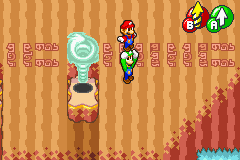
Splash Bros., the first Bros. Attack.The High Jump, the field move behind Bounce Bros.The Spin Jump, which becomes Splash Bros. in battle.
Field moves: jumps, hammers and hand powers
New techniques are handed out by the locals as the story goes on, and each one opens more of the map. The Starshade Bros. in Stardust Fields teach the High Jump (Luigi hops on Mario’s head to reach high ledges) and the Spin Jump (Mario climbs on Luigi and the pair whirl across wide gaps). The Hammerhead Bros. forge the hammers, later upgraded to Super and Ultra Hammers that smash tougher rocks. At Chateau de Chucklehuck, Cork and Cask add the two hammer tricks: Luigi flattens his brother into Mini-Mario, small enough for mouse-holes and able to sense buried beans, and Mario pounds Luigi into the soil for the Luigi Dunk, letting him tunnel under fences and dig things up.
The hand powers come from the Fire and Thunder Palaces on Oho Oasis. In front, Mario’s Firebrand burns whatever is ahead and Luigi’s Thunderhand gives it a shock; together they open the way down to the sea bed. Used from behind on your own brother they become the Dash (Mario singes Luigi, who bolts forward fast enough to bowl over a blocking Ankoopa) and the Tickle (Luigi zaps Mario so the two shuffle sideways locked together, the only way to move a Boo Statue that vanishes when looked at). The Jellyfish Sisters in Gwarhar Lagoon teach those last two.
Water gets its own set of jokes. Mario can gulp from a fountain and swell up, then be hammered by Luigi to squirt it out again, which is how the pair deal with the Piranha Plants at the airport. And when the sea needs crossing, Luigi lies down and Mario rides him like a surfboard.
Each brother wears a pair of trousers, a badge and, later, one accessory in an extra slot. Shops in Beanbean Castle Town and Little Fungitown sell gear, and the rarest pieces are prizes: the secret caves near the castle are short side-scrolling levels in the style of Super Mario Bros., each ending with a mole who hands over something like a High-End Badge or Iron Pants.
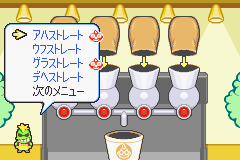
The other currency is beans, in four kinds: Woo, Hoo, Chuckle and Hee. Chuckle Beans are buried and need Mini-Mario to sniff them out and Luigi to dig; Hee Beans are minigame prizes; Hoo Beans hide in blocks; Woo Beans come from Harhall the designer. Take them to the Starbeans Cafe in Beanbean Castle Town and the cashier brews seven blends, each of which permanently raises a stat. The first time you make each blend, the cafe’s owner, Professor E. Gadd of Luigi’s Mansion, turns up for a comic scene and leaves an accessory behind.
The Starbeans Cafe in Beanbean Castle Town.The Beanbean Machine and its seven blends.
Minigames
The minigames, credited to the studio Vanpool, are woven into the plot and can be replayed for beans. Border Jump is a skipping-rope contest run by the Border Bros. at the frontier; return later for Border Jump 2, Super Border Jump and Super Border Jump Sunshine, then a marathon of all four. The Mysterious Mine Carts carry you down from Hoohoo Village towards the capital, and Hoohooros sets a game of his own before he will fight. On the S.S. Chuckola a skeletal character called Bink runs a barrel game, and there is another called Chuckola Bounce.
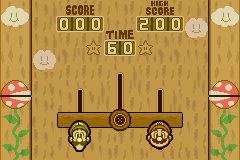
Star ’Stache Smash, the arcade machine in Little Fungitown, has you tilt a tray with A and B to tip mushrooms (1 point), Fire Flowers (3) and Stars (5) into whichever Piranha Plant hole is open, for 60 seconds; 200 points wins the “Invincishroom” that sets off the next chapter. There is a surfing course out in Oho Ocean where Luigi the surfboard pops balloons against the clock, a Thwomp guessing game in the Hammerhead Bros.’ cave, Harhall’s job dyeing cloth with coloured and patterned Designbombs, and the Yoshi-feeding puzzle at Yoshi Theater.
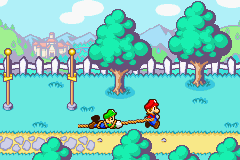
Border Jump, with a Super Mario Bros. castle and flagpole behind.Star ’Stache Smash.Hoohooros’s minigame on Hoohoo Mountain.
Mario Bros. on the cartridge
The Mario Bros. title screen.
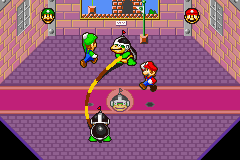
The game select screen offers a second game: the Game Boy Advance remake of the 1983 arcade Mario Bros., the same one bundled with all four Super Mario Advance titles. It adds backgrounds, music, scrolling stages, two POW Blocks, the crouching super jump from Super Mario Bros. 2 and the ability to pick up and throw other players. Classic mode is the co-operative original; Battle is a race to five coins based on the Battle Game from Super Mario All-Stars.
Up to four people can play, and a Superstar Saga cartridge will link with the Super Mario Advance games to do it. Single-Pak play lets friends without a copy join in over link cables, in Battle mode only. The 3DS remake dropped Mario Bros. altogether.
Version differences
The Japanese release was built about a fortnight after the Western ones, and AlphaDream used the time. Mario and Luigi start with 14 and 16 BP instead of 10 each. The stronger healing items restore less (an Ultra Mushroom gives 75 HP rather than 120, an Ultra Syrup 55 BP rather than 100) while the Nut and Super Nut restore slightly more (the Ultra Nut drops from 100 HP to 75), and the Red and Green Peppers raise POW or DEF by 25 per cent, not 50. Three Heart Blocks were added, in the Beanbean Castle Sewers, Oho Oasis and Teehee Valley. Dozens of enemies and bosses have different HP, experience and coin values; Roy, for instance, has 920 HP in Japan against 550 elsewhere, while Cackletta’s soul has 800 rather than 1,200.
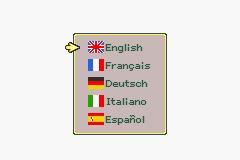
There are cosmetic changes as well. The mushroom emblem on Peach’s Castle was redrawn, a Control Pad prompt appears when Toad enters the brothers’ house and when you choose a level-up bonus, signposts are larger, the heads in Star ’Stache Smash differ, and the Starbeans menu marks each blend you have already made with an E. Gadd icon. A music bug with Mini-Mario and a scripting loophole that lets Western players overkill certain bosses were both fixed. One piece of gear, the Oho Gear, can only be won in the Japanese game. The European cartridge adds a language selection screen. Changes in the 2017 remake are covered under Legacy.
Peach’s Castle in the Western versions……and in Japan, with a redrawn emblem.Starting BP in the West: 10 each.Starting BP in Japan: 14 and 16.
Bros. Attacks, items and gear
All eight Bros. Attacks, every consumable, the beans and blends, E. Gadd’s seven accessories and the key items the plot hangs on. The gear list is a selection: shops and enemies supply many more trousers and badges than are shown here.
Splash Bros.Mario’s. Learned with the Spin Jump from the Starshade Bros. The brothers jump high and drop on one enemy. 4 BP (3 in Mode 3).
Bounce Bros.Luigi’s. Learned with the High Jump. The High Jump turned into an attack. 4 BP (3). The Advanced version hits two enemies.
Chopper Bros.Mario’s. Learned from Cork and Cask. Mario dunks Luigi into the ground to attack. 5 BP (3).
Knockback Bros.Luigi’s. Learned from Cork and Cask. Luigi fires Mario at the enemy. 5 BP (3).
Fire Bros.Mario’s. Learned at the Jellyfish Sisters’ Relaxation Room. A volley of fireballs; the Advanced version can burn. 6 BP (3).
Thunder Bros.Luigi’s. Learned at the Relaxation Room. Lightning that strikes every enemy on the ground; the Advanced version lowers POW. 6 BP (4).
Swing Bros.Mario’s, secret. Taught by Secret Scroll 1 once you have Super Hammers. Mario swings Luigi round; the Advanced version steals items. 6 BP (4).
Cyclone Bros.Luigi’s, secret. Taught by Secret Scroll 2 once you have Ultra Hammers. A twin spinning attack; the Advanced version leaves enemies dizzy. 8 BP (4).
Mushroom, Super, Ultra and Max MushroomRestore 25, 50, 120 or all HP to one brother (45 and 75 for Super and Ultra in Japan).
Nut, Super, Ultra and Max NutRestore 20, 40, 100 or all HP to both brothers (25, 45 and 75 in Japan).
Syrup, Super, Ultra and Max SyrupRestore 20, 40, 100 or all BP to one brother (35 and 55 for Super and Ultra in Japan).
Golden MushroomFills one brother’s HP and BP completely.
Refreshing HerbCures status problems such as poison and dizziness.
1-Up Mushroom and 1-Up SuperRevive a fallen brother with half his HP, or with full HP and BP.
Red PepperRaises POW by half for the battle (a quarter in Japan) and makes the brother heavier.
Green PepperRaises DEF by half (a quarter in Japan) and makes him lighter.
Woo BeanReward from Harhall for each new shirt design. 25 make a Woohoo Blend (+4 HP).
Hoo BeanFound in blocks. 25 make a Hoohoo Blend (+4 BP).
Chuckle BeanBuried in the ground. 25 make a Chuckle Blend (+4 SPEED).
Hee BeanMinigame prize. 25 make a Teehee Blend (+4 STACHE).
Hoolumbian, Chuckoccino and TeeheespressoMixed blends: 15 Woo Beans plus 10 Hoo, Chuckle or Hee. +4 POW, +4 DEF and +6 to a random stat.
Greed WalletE. Gadd’s first gift. Doubles the coins enemies drop.
Bonus RingSecond gift. Extra experience for winning without losing HP.
Excite SpringThird gift. Hold the button to hang in the air when dodging.
Great ForceFourth gift. Doubles the damage you deal and the damage you take.
Power GripFifth gift. Stops the hammer head dropping off while you hold a guard. Not in the remake.
Cobalt NecktieSixth gift. Doubles the wearer’s STACHE.
Game Boy Horror SPSeventh and last gift. Enemies always drop their rare item.
Soulful Bros. and Bros. RockPrize badges: the first from Hermie III for bringing him Spangle, the second from the scholar who wants ten Beanstones.
BeanstarThe sleeping wish-granter everyone is after. It breaks into four pieces over Woohoo Hooniversity.
Peasley’s RoseThe prince’s keepsake, and your pass into Beanbean Castle.
Beanbean BroochLady Lima’s pass to Chateau de Chucklehuck.
Chuckola FruitRed, white and purple fruit that Chuckleroot demands before he will let you through the woods.
Crabbie GrassThe bitter cure for Bean Fever, growing deep in Guffawha Ruins.
Neon EggsSeven coloured eggs laid by well-fed Yoshis. Boddle swaps them for a Beanstar piece.
Secret Scrolls 1 and 2Won from the Thwomps’ boulder game. They teach Swing Bros. and Cyclone Bros.
Fake BeanstarA cheap plastic copy from Prince Peasley, meant to fool Bowletta.
Peach’s Extra DressToadsworth’s contribution to the rescue plan. Luigi ends up wearing it.
Beanstones and BeanletsTen jewels and five lost pets hidden around Beanbean Castle Town. Find them all for the Bros. Rock and a Golden Mushroom.
Membership Card and Winkle CardMinigame trophies from Bink’s barrel game on the S.S. Chuckola and from Winkle Colosseum.
Cartoons, Comics & Other Media
Superstar Saga never had a cartoon or a comic of its own in the West, but it has been quoted, sampled and visited by other games ever since, and it is stuffed with nods to Nintendo’s past.
Nintendo Power Player’s GuideGuide bookNintendo’s own strategy guide. The magazine came back to the game years later in the Playback section of issue 263.
Prima’s Official Strategy GuideGuide bookThe third-party alternative, published by Prima Games.
The knock-knock joke contestNintendo of America · 16 October to 17 November 2003A month-long competition on the game’s website. Weekly winners received a Game Boy Advance SP and the game; comedian Kathy Griffin picked the overall champion, who took home a GameCube bundle and a year of online comedy-writing classes.
The Japanese TV commercialAdvert · 2003An animated spot in which Peach’s speech turns explosive and the brothers Spin Jump across a broken bridge, set to a rearranged Super Mario World ground theme.
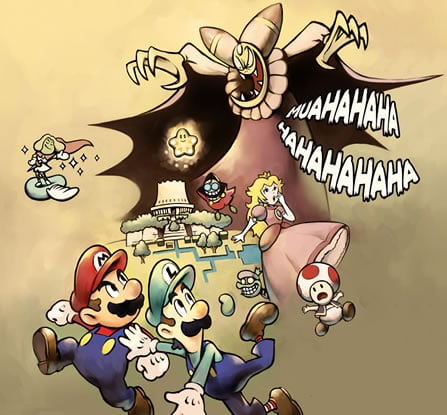
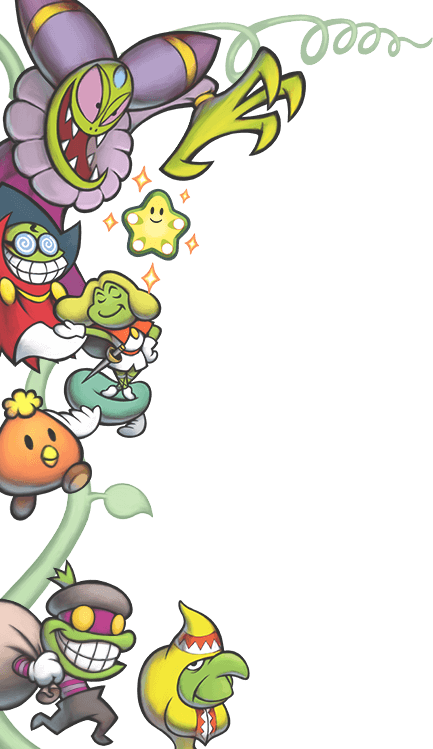
Nintendo DREAM’s Luigi guideMagazine appendix · JapanVolume 104 of Nintendo DREAM came with a “Luigi Ōen Guide” booklet; its back cover is a group illustration of the cast by the game’s illustrator, Masanori Sato.
Paper Mario: The Thousand-Year DoorGameCube · 2004Admiral Bobbery’s last request is a Chuckola Cola, and Bowser can claim to be the Shadow Thief, Popple’s title.
Mario & Luigi: Partners in TimeNintendo DS · 2005Fawful turns up running a shop called Fawful’s Bean ’n’ Badge, a Peasley poster hangs in the castle shop, and the ending theme is reused.
Super Paper MarioWii · 2007One of the hundred Sammer Guys is called Mustard of Doom and talks exactly like Fawful.
Mario & Luigi: Bowser’s Inside StoryNintendo DS · 2009Fawful is promoted to lead villain. Posters of his Superstar Saga look hang in Bowser’s Castle and snatches of Cackletta’s theme play once he has taken over.
Mario & Luigi: Dream Team and Paper JamNintendo 3DS · 2013 and 2015Popple returns as a boss in Dream Team, Beanish people appear, and Driftwood Shore’s music quotes Gwarhar Lagoon and Oho Oasis. Paper Jam rearranges the original battle theme.
Super Smash Bros.Brawl (2008) and Ultimate (2018)Brawl’s random name generator can produce “FWFUL”. In Ultimate, Prince Peasley is a spirit and Palutena’s Guidance for Piranha Plant name-checks Mom Piranha and Piranha Bean.
Nintendo Badge Arcade and Yoshi’s Crafted WorldNintendo 3DS and Nintendo SwitchThe Badge Arcade’s Pixel Collection includes the Superstar Saga Game Pak, and some of Crafted World’s cardboard scenery is cut from Starbeans iced coffee cartons.
Mario & Luigi: BrothershipNintendo Switch · 2024Prince Peasley lends his name and face to a rare reef, and Sharkbones swim again as enemies.
Characters
Apart from the brothers, Peach, Bowser and a few Toads, nearly everyone here was invented for this game: the Beanish people of the Beanbean Kingdom, their royal family, and one of the best villain double acts Mario has ever faced.
Character
Who they are
In this game
Abilities & notes
MarioThe A Button
The Mushroom Kingdom’s resident hero, here a man of few words: he and Luigi get by on gibberish.
Leads the chase after Cackletta, learns the Firebrand on Oho Oasis, spends a chapter in bed with Bean Fever after eating a Poison Mushroom, and comes up with the plan to put his brother in a dress.
Bros. Attacks: Splash, Chopper, Fire and Swing Bros.
Hand power: Firebrand (fire)
Field: Spin Jump, Luigi Dunk, Dash; fills with water
10 BP at the start (14 in Japan)
LuigiThe B Button
Mario’s brother, and by general agreement the less famous of the two.
Kidnapped on to the Koopa Cruiser by accident and never allowed to go home. He hammers Fawful, rolls Mario across country in a barrel, conquers Guffawha Ruins under hypnosis and steals the Beanstar back while dressed as Princess Peach.
Bros. Attacks: Bounce, Knockback, Thunder and Cyclone Bros.
Hand power: Thunderhand (thunder)
Field: High Jump, Mini-Mario hammer, Tickle; surfboard
10 BP at the start (16 in Japan)
Fights Piranha Bean alone
Princess PeachNot as helpless as she looks
Ruler of the Mushroom Kingdom.
Apparently robbed of her voice in the opening scene. In fact she was hiding all along, forewarned by Prince Peasley, and arrives in the Beanbean Kingdom halfway through. Bowletta then kidnaps her for real.
Voiced by Jen Taylor
Travels with Toadsworth on the Toad Express
Bowser / RookieAlly, amnesiac, vessel
King of the Koopas, having the worst week of his life.
Teams up with Mario, is fired out of a cannon, loses his memory and becomes Popple’s apprentice “Rookie”, is possessed by Cackletta as Bowletta and finally goes down with his own castle.
Tutorial boss: 10 HP
As Rookie: 120 HP at the chateau, 250 HP at the Hooniversity
Voiced by Scott Burns
ToadPlayable for one house
Peach’s loyal retainer.
Runs to fetch the brothers at the start, and for those few rooms he is the character you control. He later explains Peach’s explosive vocabulary.
Playable only in the opening
ToadsworthPeach’s steward
The princess’s adviser and steward.
Hides with Peach during the ambassadors’ visit, accompanies her to the Beanbean Kingdom and supplies Peach’s Extra Dress for the decoy plan.
Gives: Peach’s Extra Dress
Prince PeasleyHero of the Beanbean Kingdom
The Beanbean Kingdom’s own hero, and Queen Bean’s son.
Turned into Dragohoho by Cackletta and freed by the brothers. From then on he does the things they cannot: scouting ahead, warning Peach, batting Fawful out of two different buildings and blowing up Bowser’s Castle.
Gives: Peasley’s Rose, Fake Beanstar
As Dragohoho: 80 HP
Queen BeanMonarch of the Beanbean Kingdom
A large and formidable sovereign.
Fed a Belly Blech worm by Cackletta, she swells into a muscle-bound monster and attacks. Chuckola Reserve cures her, and she backs the brothers for the rest of the adventure.
Boss: 120 HP, plus arms with 22 HP each
Lady LimaThe queen’s adviser
Queen Bean’s most trusted counsellor.
Impersonated by Cackletta, who uses her authority to send the brothers into the sewers. The real Lima hands out the Beanbean Brooch and later reads Bowletta’s ransom demand.
Gives: Beanbean Brooch
CacklettaThe Beanish witch
A cackling sorceress who styles herself “the Great Cackletta”.
Steals the voice, the Beanstar and Queen Bean’s dignity, and is beaten at Woohoo Hooniversity before the game is half done. What survives of her lives on in Fawful’s headgear, then in Bowser, and is the last thing you fight.
At the Hooniversity: 300 HP
As a soul: heart 1,200 HP (800 in Japan), head 200, arms 80
FawfulHe has fury
Cackletta’s “most best pupil”: a Beanish inventor who does his fighting with a mechanical headgear. Known in Japan as Gerakobits.
Shoots down the Koopa Cruiser, saves his mistress’s spirit, creates Bowletta and is the last boss before her. His tangled, food-obsessed English made him the game’s breakout star.
First battle: 18 HP, then 12
Second battle: 400 HP (430 in Japan)
Returns in Partners in Time and Bowser’s Inside Story
BowlettaCackletta in Bowser’s body
What you get when a witch’s spirit is poured into a Koopa King.
Kidnaps Peach, demands the Beanstar, turns Bowser’s Castle on the Beanbean Kingdom and, when beaten, swallows the brothers for the true final battle.
500 HP (700 in Japan)
Turns into Dark Bowletta when weakened
Summons Flarets
PoppleThe Shadow Thief
A self-proclaimed master thief.
After the Chuckola Reserve, then the Beanstar, then a Beanstar piece. Fought four times: twice with Rookie, once alone at Winkle Colosseum and once with Birdo.
HP by battle: 100, 150, 520 (620 in Japan), 500 (600)
Returns in Dream Team
BirdoThe decoy princess
The egg-firing Birdo, a long way from home.
Dressed as Peach to receive the ambassadors, so it is her voice that Cackletta steals. She later teams up with Popple for the last fight in Teehee Valley.
Boss: 450 HP (500 in Japan)
Professor E. GaddOwner of the Starbeans Cafe
The ghost-hunting inventor from Luigi’s Mansion, making a guest appearance.
Turns up each time you brew a new blend at Starbeans and rewards you with one of seven gadgets, ending with the Game Boy Horror SP. He replaced a planned run of guest stars from other Nintendo series.
Voiced by Kazumi Totaka
Seven accessories, in a fixed order
BlablanadonThe flier on the summit
A winged creature who lives on top of Hoohoo Mountain.
Hatches the egg that contains Dragohoho, then becomes the brothers’ air taxi: down from the mountain, up to Bowser’s Castle and away again before it explodes.
Found at: Hoohoo Mountain summit
Starshade Bros.Teachers of the High Jump and Spin Jump
Two brothers living in Stardust Fields.
Give Mario and Luigi their first team moves, and light the fuse on Tolstar’s cannon.
Teach: High Jump, Spin Jump, Splash Bros., Bounce Bros.
Sledge and MalletThe Hammerhead Bros.
Blacksmith brothers from Hoohoo Village. Sledge is the one who wants to play “with power”.
Forge the first hammers from the Hoohoo Block, then move to a cave in the Outskirts where they upgrade them to Super and Ultra Hammers.
Make: Hammer, Super Hammer, Ultra Hammer
Cork and CaskBrewers of Chuckola Cola
The Beanish owners of Chateau de Chucklehuck, with French accents to match.
Rescued from a barrel after the first Popple fight; they teach the two hammer techniques.
Teach: Mini-Mario, Luigi Dunk, Chopper Bros., Knockback Bros.
Chuckleroot and BubblesGuardians of the Reserve
The gatekeeper of the woods and the comedian of Mother Chuckola.
Chuckleroot wants three Chuckola Fruits before he will let anyone pass; Bubbles is telling the Reserve jokes when it turns into the Chuckolator. His jokes are different in every language, because they are all puns.
Chuckleroot asks for: red, white and purple Chuckola Fruit
Psycho KamekHypnotist of Little Fungitown
A Magikoopa in white and red robes, working as a hypnotist among the Toads.
Hypnotises Luigi into believing he is Mario so that he can face Guffawha Ruins. The remake replaces him with Dr. Toadley from Bowser’s Inside Story.
Found at: Little Fungitown
Jellyfish SistersKeepers of the Relaxation Room
The sisters who run the Relaxation Room at Gwarhar Lagoon.
Teach the advanced uses of the hand powers: the Dash and the Tickle, and with them Fire Bros. and Thunder Bros.
Teach: Dash, Tickle, Fire Bros., Thunder Bros.
Boddle and the YoshisYoshi Theater
The theatre’s owner and his audience of seven colours of Yoshi.
Boddle has built a Beanstar piece into his sign and wants seven Neon Eggs for it. Each Yoshi lays one after eating Bean Fruit. The Yoshis are also the audience for the end credits.
Trades a Beanstar piece for a dyeing job, then keeps the brothers on as assistants: 28 possible shirt designs, a Woo Bean for each new one and Harhall’s Pants for the full set.
28 designs: 7 colours × 4 patterns
Bosses & enemies
Every boss in story order, then every regular enemy. HP figures are from the North American and European versions, with the Japanese figure in brackets where it differs. The enemy list follows Super Mario Wiki’s table, which counts colour and strength variants separately.
Bowser (boss)Peach’s Castle10 HP. A tutorial in jumping, fought by Mario alone.
Fawful (boss)Koopa Cruiser18 HP in the first phase and 12 in the second.
Tolstar (boss)Stardust Fields52 HP. Pays out exactly the coins you handed him.
Hoohooros (boss)Hoohoo Mountain45 HP, with 2 HP pillars alongside.
Dragohoho (boss)Hoohoo Mountain summit80 HP. Prince Peasley under a spell, backed by 4 HP Hoho Stones.
Queen Bean (boss)Beanbean Castle120 HP (100). Knock out both arms, 22 HP each, to reach her.
Popple and Rookie (boss)Chateau de Chucklehuck100 and 120 HP. The first of four meetings with the Shadow Thief.
Wiggler (boss)Chucklehuck Woods34 HP, and worth 120 EXP.
Chuckolator (boss)Chucklehuck Woods300 HP. Living soda with a shield and a gun arm.
Cackletta (boss)Woohoo Hooniversity300 HP. The witch herself, fighting alone after Luigi floors Fawful.
Popple and Rookie, rematch (boss)Woohoo Hooniversity basement150 and 250 HP. Rookie has learned some very Bowser-like tricks.
Mom Piranha (boss)Beanbean Airport220 HP. Appears in red and blue forms.
Trunkle (boss)Teehee Valley110 HP body (180) and a 60 HP tree (140), plus small Trunkles.
Hermie III (boss)Gwarhar Lagoon400 HP (380), claws 70 (40). Sidesteppers scuttle in to help.
Popple, alone (boss)Winkle Colosseum, Chucklehuck Woods520 HP (620). Fights for the third Beanstar piece.
Piranha Bean (boss)Beanbean Outskirts, on the way to Guffawha Ruins180 HP (280). Luigi fights it alone.
Jojora and her friend (boss)Joke’s EndJojora has 50 HP; the friend she summons has 500.
Popple and Birdo (boss)Teehee Valley500 HP (600) and 450 HP (500). Birdo’s eggs have 20 HP each.
Iggy (boss)Bowser’s Castle550 HP (650). First of the seven Koopalings.
Morton (boss)Bowser’s Castle500 HP (900).
Lemmy (boss)Bowser’s Castle380 HP (600), hidden among fakes with 1 HP.
Ludwig (boss)Bowser’s Castle550 HP (700).
Roy (boss)Bowser’s Castle550 HP (920), the most of the seven in Japan.
Wendy (boss)Bowser’s Castle350 HP (500), also with doubles.
Larry (boss)Bowser’s Castle550 HP (600). Arrives swinging a spiked tennis racquet.
Fawful, second battle (boss)Bowser’s Castle400 HP (430). Fights from inside a dome-shaped machine.
Bowletta (boss)Bowser’s Castle500 HP (700). Becomes Dark Bowletta when hurt and summons 10 HP Flarets.
Chomp BroBowser’s Castle120 HP. Lost its tattoos in the remake.
MagikoopaBowser’s Castle100 HP, 110 EXP (130).
Sniper BillBowser’s Castle80 HP. Takes aim with a Super Scope, as in Yoshi’s Safari.
Key staff
AlphaDream’s credits are short by modern standards. These are the people who shaped the game.
Yoshihiko MaekawaDirectorCo-director of Super Mario RPG at Square. He later supervised the 2023 Switch remake of Super Mario RPG.
Shigeru Miyamoto and Tetsuo MizunoProducersMario’s creator for Nintendo, and for AlphaDream its co-founder, a former president of Square.
Satoru IwataExecutive producerNintendo’s president at the time.
Takashi TezukaProduction supervisorOverseeing the project for Nintendo.
Hiroyuki KubotaField design lead and scenarioCredited with the scenario as well as leading the field design.
Masashi HarakiMain programLead programmer, and the author of the spinning-star transition that opens every battle.
Jun Iwasaki and Eiyo AndouBattle designDesigned the fights.
Yoko ShimomuraMusicComposer of Super Mario RPG, returning to the plumbers seven years on.
Koji KondoMario theme music and sound supportCredited for the classic themes the soundtrack quotes.
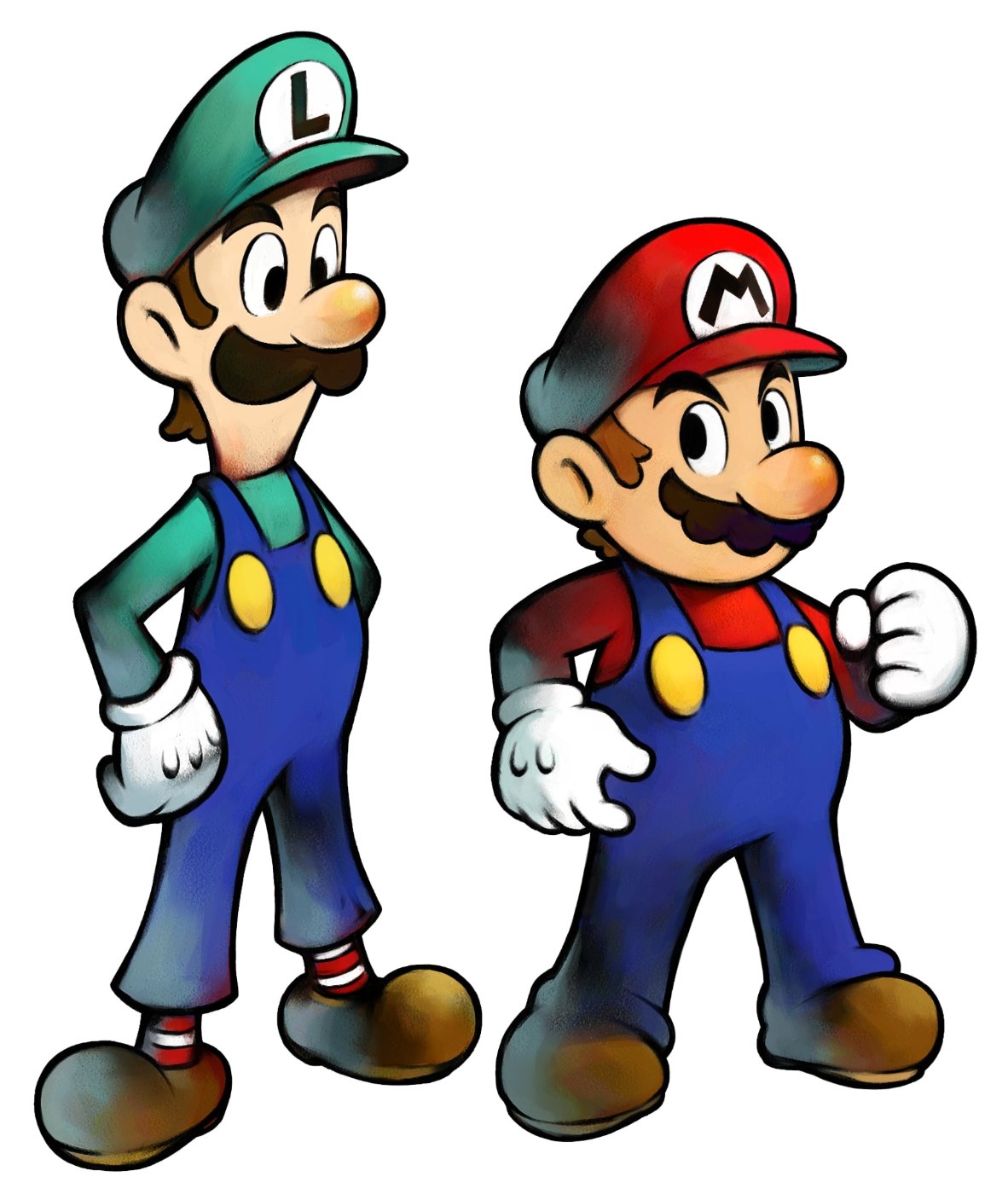
Masanori SatoIllustrationDrew the official artwork, under illustration supervisor Yoichi Kotabe.
Shuji Kamohara, Hiroyuki Yotsuji and Tetsuya OhiCharacter and monster graphicsAnimated the brothers, the field characters and the enemies respectively.
Taro Kudo and VanpoolMinigamesKudo, Kazuyuki Kurashima, Koji Kikkawa and Satoshi Ohtake of Vanpool are credited with the minigames.
Nate Bihldorff and Bill TrinenNorth American localisationNintendo of America’s writers on the English script, managed by Jeff Miller and Leslie Swan.
Charles MartinetVoicesMario, Luigi and the Mario Bros. announcer. Jen Taylor is Peach, Scott Burns is Bowser and Kazumi Totaka voices E. Gadd and the Yoshis.
Chihiro FujiokaSpecial thanksAlphaDream’s other co-founder and Maekawa’s co-director on Super Mario RPG.
Advertisement
How It Was Made
AlphaDream said little in public about how Superstar Saga was made, and no full-length developer interview from 2003 could be found for this page. What follows is pieced together from the credits, the code and a handful of later accounts.
From Square to AlphaDream
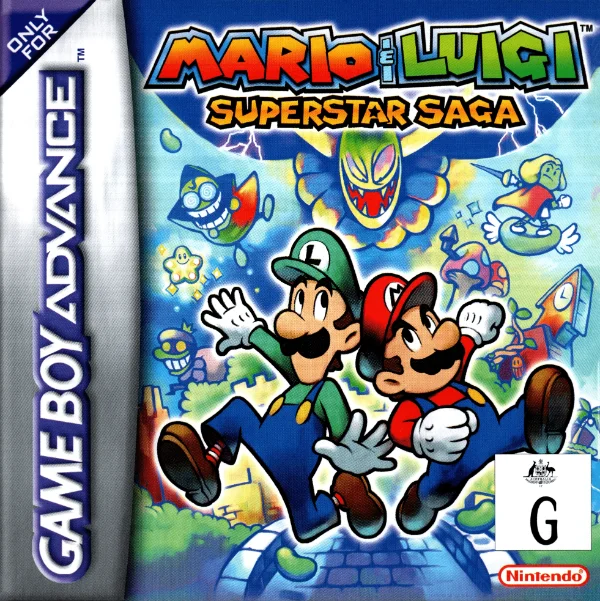
The artwork used on the box, illustrated by Masanori Sato. Nintendo
The studio was set up on 12 January 2000 by Tetsuo Mizuno, who had been the second president of Square, and Chihiro Fujioka, one of its game directors. It began life as AlphaStar Software, a spin-off from a staffing agency, and took the name AlphaDream that July. Fujioka and Yoshihiko Maekawa had co-directed Super Mario RPG: Legend of the Seven Stars for Square in 1996, and both are in Superstar Saga’s credits: Maekawa as director, Fujioka under special thanks.
AlphaDream’s first role-playing game for the Game Boy Advance was Tomato Adventure, directed by Fujioka and published by Nintendo in January 2002. Superstar Saga leans on it heavily, with a similar look, shared sound effects and a few character references, and two unused arrangements of the Tomato Adventure title theme are still sitting in the Mario game’s sound data. Superstar Saga was the studio’s first Mario game.
E3 2003 and the road to release
The logo shown at E3 2003, close to the Japanese one. Nintendo
The game was unveiled at E3 in May 2003 under the working title Mario and Luigi, with a playable demo on the show floor. That demo was built on 3 May 2003; a cartridge of it surfaced and was dumped online in October 2023, revealing a half-translated build with three preset save files, a Hoohoo Mountain still called “Ufu Mountain”, an early Bowletta and a menagerie of enemies that never made it: a bean-like green Hammer Bro, three Goombas joined in a pea pod, a dog with two Chain Chomps for heads.
More playable demos went out in August and September 2003: at the European Computer Trade Show, at the Games Convention and at Nintendo’s own Gamers’ Summit. The North American and European versions were both finalised on 4 October 2003 and the Japanese one on 16 October, which is why Japan’s cartridge contains fixes and rebalancing the others lack. A North American kiosk demo was built on 27 October.
One late addition has become a small legend. Main programmer Masashi Haraki, interviewed by the YouTuber Lizardy in 2024, recalled (as reported by Gaming Reinvented) that the team had struggled to find a battle transition Maekawa liked, and that the star which spins on to the screen in 3D was a last-ditch effort of his own that happened to win the director over.
Music, voices and minigames
Yoko Shimomura, who had scored Super Mario RPG, wrote the soundtrack, with Koji Kondo credited for the Mario themes it quotes. And it quotes a great many: the Super Mario Bros. ground and underground tunes, “Inside the Castle Walls” from Super Mario 64, a Yoshi’s Island piece for Star ’Stache Smash, the humming title theme of Luigi’s Mansion whenever E. Gadd appears, and Mario’s house music from Super Mario RPG itself.
Charles Martinet recorded Mario and Luigi’s chatter, Jen Taylor is Peach, Scott Burns is Bowser, and Kazumi Totaka supplied E. Gadd and the Yoshis. The minigames were contracted out to Vanpool, and the Mario Bros. remake carries its own credit for Kiyoshi Koda and Toshinori Kawai alongside a thank-you to the original Super Mario Advance team. The cartridge also supports rumble when played through the GameCube’s Game Boy Player.
Fawful finds his voice
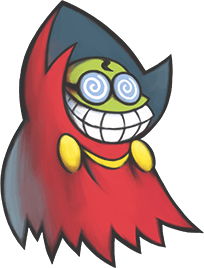
Fawful, as drawn for the original game. Nintendo
The English script is credited to Nate Bihldorff and Bill Trinen of Nintendo of America, with separate teams for German, French, Spanish and Italian. Their Fawful, a villain who promises “the mustard of your doom”, caught on to the point that later games quote him back: Super Paper Mario has a fighter called Mustard of Doom. In Japanese he is Gerakobits, a name built on a word for laughter; the English one combines “guffaw” and “awful”. French has known him as Faffreux and Gracowitz, German as Krankfried and Italian as Sogghigno.
Other jokes had to be rebuilt country by country. Bubbles’s routine at Mother Chuckola is all puns, so every language has different ones, and a corner of Stardust Fields is named Area 64 in English, after the Nintendo 64, where the Japanese has Area 51.
The guest stars who never arrived
Sprites for the cut Starbeans visitors, still in the game data. Nintendo, via Super Mario Wiki
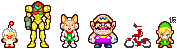
The Starbeans Cafe was planned as a parade of Nintendo cameos. Dialogue and sprites remain in the game for six visitors who would each have dropped in after a new blend. Wario comes to settle an old tab and sneers at the drinks. Fox McCloud asks for a guest-star discount before Slippy calls him away. Captain Olimar loves the coffee, calls Mario “Marlio” and attacks the green creature next to him. Samus Aran arrives during a power cut with her energy tanks empty and the cashier suggests sharing the brothers’ Hoolumbian with her. An 8-bit Excitebike rider uses the place as a drive-through. And Link arrives with empty bottles, asking the way to the fairy fountain.
Their gifts changed with them. Wario’s Gold became the Greed Wallet; the Great Force, Power Grip, Bonus Ring, Cobalt Necktie and Game Boy Horror SP stand in for what the code calls the Triforce, an Energy Tank, a Gold Ring, a UV Lamp and a plain Game Boy Horror. In the finished game Professor E. Gadd plays every scene himself.
A release in mainland China through iQue got as far as a translated prototype dated February 2007 and an official ISBN before being cancelled; Super Mario Wiki puts that down to piracy.
Series Firsts
Only firsts that the sources state outright, checked against the two Mario RPGs that came before.
1The first Mario & Luigi gameThe opening entry of the series, and the third Mario RPG overall after Super Mario RPG (1996) and Paper Mario (2000).
2AlphaDream’s first Mario gameThe studio had made Koto Battle and Tomato Adventure; this was its first outing with Nintendo’s mascot and the start of a five-game run.
3Fawful’s first appearanceSuper Mario Wiki gives Superstar Saga (2003) as his debut. He came back as a shopkeeper in Partners in Time and as the lead villain of Bowser’s Inside Story.
4The Starbeans Cafe opensE. Gadd’s coffee chain is first seen here; its branded cartons turn up again as scenery in Yoshi’s Crafted World.
5First in the series to be remadeSuperstar Saga + Bowser’s Minions (2017) was the first remake of a Mario & Luigi game, a year ahead of the Bowser’s Inside Story remake.
6A launch title for Game Boy Advance on SwitchIt was in the first batch of games when Game Boy Advance – Nintendo Classics opened on 8 February 2023.
Cheats & Secrets
There are no button codes in Superstar Saga. Its secrets are things to find, things to grind and a few favours that can be missed for good.
Three favours you can miss in the first ten minutes
Before leaving Toadtown Square, jump on the hedge in the south-east corner and take the Mushroom on top. Hand it back to the Toad who asks and he lets you keep it and adds a Super Mushroom. A blue Toad by the long western hedge has lost something on it; return that for a 1-Up Mushroom. And give the lost Koopa correct directions before boarding the Koopa Cruiser, then find him on the ship for another 1-Up Mushroom. None of these can be done once the brothers leave the Mushroom Kingdom.
The two secret Bros. Attacks
Swing Bros. and Cyclone Bros. are not taught by anyone. They are written on Secret Scrolls held by two Thwomps in the Hammerhead Bros.’ cave in the eastern Beanbean Outskirts. Pay 200 coins (500 for the second Thwomp), then smash one of three boulders and hope. You need the Super Hammers for Scroll 1 and the Ultra Hammers for Scroll 2.
Unlocking the Advanced attacks
Each Bros. Attack upgrades after a set number of successful uses: Bounce Bros. 8, Swing Bros. 10, Splash Bros. 20, Cyclone Bros. 21, Thunder Bros. 24, Fire Bros. 28, Chopper Bros. 32 and Knockback Bros. 43. Advanced Swing Bros. steals items, which is worth remembering when a boss is carrying something good.
E. Gadd’s gifts come in a fixed order
Whichever blend you brew first at Starbeans, the rewards arrive in the same sequence: Greed Wallet, Bonus Ring, Excite Spring, Great Force, Power Grip, Cobalt Necktie and finally the Game Boy Horror SP. Brew all seven and the professor hangs his portrait by the counter.
Where the beans are
Hee Beans come from minigames: one to seven for each level of Border Jump, up to nine a go from Star ’Stache Smash (480 points or more) and more from the surfing course. Chuckle Beans are underground: Mini-Mario can sense them and a dunked Luigi digs them up. Hoo Beans are in blocks. Woo Beans come from Harhall, one for each new shirt design.
Spangle and the Soulful Bros. badge
Once you have Ultra Hammers, break through the rocks in Gwarhar Lagoon that nothing else would dent and you will find Spangle. Take it to Hermie III, who has been missing his Beanstar piece, and he rewards you with the Soulful Bros. badge.
Beanstones, Beanlets and Harhall’s Pants
A scholar on the west side of Beanbean Castle Town wants ten Beanstones, five buried on each side of town; an exclamation mark appears over Mini-Mario when he is standing on one, Luigi digs it up, and for the full set the scholar hands over the Bros. Rock badge. A citizen on the east side has lost five Beanlets and pays a Golden Mushroom for their return. Completing all 28 of Harhall’s designs (seven colours in four patterns) earns Harhall’s Pants.
The secret caves
Three caves near Beanbean Castle Town, two to the north and one to the west, turn into side-scrolling underground stages in the style of Super Mario Bros. At the end of each a mole gives up a rare piece of gear such as the High-End Badge or Iron Pants. Other caves are blocked by Ankoopas until Mario can Dash into them.
Hunt the Gold Beanie
Gold Beanies turn up now and then in Chucklehuck Woods, on the Seabed and in Gwarhar Lagoon. With 11 HP they are no threat, and each is worth 50 experience and 30 coins (100 in the Japanese game).
Play it on a television, with rumble
Run the cartridge through a GameCube Game Boy Player and the game adds controller rumble.
The debug room
The Cutting Room Floor documents a leftover test area, reached with the memory code 02001E90:0001 on a fresh save: two unfinished maps populated by silent copies of Popple. A second leftover room is a cutscene menu dressed up as the Starbeans blend machine.
SLB’s own cheats and unlockables page for the game is linked under References below.
Glitches & Oddities
Superstar Saga is sturdy for a first attempt, but the Western cartridges shipped with a few holes that the later Japanese build closed. These are the best documented.
The 5,000 damage glitch
In the North American and European versions, bosses with a scripted ending (Hermie III, Bowletta and Cackletta’s soul among them) secretly carry 5,000 extra HP so that they cannot die before their cutscene. Deal more than 5,000 damage anyway, with maxed stats or an endless Bros. Attack combo, and the victory screen fires at the same time as the cutscene: the game may freeze, the boss may turn invisible, and Bowletta pays out 5,000 EXP and 2,004 coins she was never meant to give. The Japanese version stops HP falling below 4,999.
Unlimited Golden Mushrooms
Ninety-nine Golden Mushrooms.
With Advanced Swing Bros., knock Fawful out of his machine in Bowser’s Castle and steal his Golden Mushroom. Lose the fight, choose to continue from Beanbean Castle rather than the last Save Album, and the mushroom stays in your suitcase. Repeat as often as you like. The last Popple fight works too.
Peppers that never wear off
Give a brother a Red or Green Pepper and let him be knocked out. Revive him and the stat boost lasts until the battle ends.
Dizzy Bowletta
Bowletta, still seeing stars.
Finish Bowletta while she is dizzy from Advanced Cyclone Bros. and she stays cross-eyed all the way through the cutscene that follows. Something similar happens to the arms and heart of Cackletta’s soul if its head is dizzied.
Burning a boss to death
In the Jojora fight and the last Popple fight, set the boss alight with Fire Bros. and let the burn deliver the final point of damage on the enemy’s turn. The partner carries on as if nothing has happened; Birdo’s egg attack shows a ghostly Popple, and the Jojora battle can freeze outright.
The Hoohooros freeze
Hoohooros, frozen.
Break the empty pillar, then the second, using Bros. Attacks. If the brothers learn an Advanced attack while Hoohooros is moving, he stops and stares at them for ever, and only the power switch will help.
Flying Mario
Mario floats away from Luigi.
After getting hammers, have Mario drink from a fountain and Luigi hammer him until he is empty. Mario drifts upwards and can pass through walls. It stops working once the brothers learn the hammer techniques.
Mini-Mario and the missing music
Walk into a new area as Mini-Mario and the music often fails to change; go down a pipe and it always does. Saving in certain states can leave an area silent until you leave the screen. Fixed in the Japanese version.
The Teeheespresso scramble
In Western versions, try to give a Teeheespresso to the active brother while the two are separated and the stat icons briefly turn to nonsense.
Videos
Nintendo’s own trailer for the 2017 remake, which retells the opening of the story, and a documentary look at the whole series.
Official launch trailer for the remake, September 2017.
Facts, cut content and development history from across the series, October 2017.
Trivia & Interesting Facts
In Japan the game is plainly titled Mario & Luigi RPG, and the unreleased Chinese edition carried the same name.
Every place in the Beanbean Kingdom is named after a laugh (Hoohoo, Chucklehuck, Woohoo, Teehee, Guffawha, Gwarhar, Oho, Joke’s End) with two exceptions: Yoshi Theater and Little Fungitown.
Geno’s cameo sprite.A Geno doll from Super Mario RPG pops up to explain the rules of Star ’Stache Smash. In the 3DS remake a plain text bubble does the job instead; Super Mario Wiki suggests licensing was the reason.
The Legend of Stafy poster in Yoshi Theater.The posters in Yoshi Theater advertise films called Legend of Stafy, Kirby Story, a Wario picture modelled on the Japanese box of WarioWare, Inc., and M & L. The remake swapped them for posters of Mario & Luigi characters.
The portrait of Peach hanging in the brothers’ house is a pixel copy of her official artwork from Super Smash Bros. Melee. It was touched up for the Japanese version.
The seventh and final Starbeans prize is the Game Boy Horror SP, a joke on Luigi’s Game Boy Horror and the then-new Game Boy Advance SP. The code shows it began as a plain Game Boy Horror.
The Great Force accessory was called the Triforce in the cut Link scene. The 3DS remake leans into it: the item is drawn like the Triforce and plays the Zelda item jingle.
The Viruses in Woohoo Hooniversity come from Dr. Mario and are beaten the same way, by matching their colours.
Sniper Bills aim at the brothers with Super Scopes, a nod to Yoshi’s Safari.
The fourth Border Jump course is called Super Border Jump Sunshine, after Super Mario Sunshine, just as the third, Super Border Jump, borrows from Super Mario Bros. When Luigi is told to jump and Mario jumps too, the Border Bros. tease him with his old name, Jumpman.
Score 30 points in Bink’s barrel minigame and a Stalfos from The Legend of Zelda flashes up on screen.
The Star ’Stache Smash cabinet was manufactured, according to its controls screen, by “WIN-tendo”.
Clearing the airport of Piranha Plants with water, then finishing the job with electricity, mirrors the opening of Super Mario Sunshine, where Mario cleans up a Piranha creature on Delfino Airstrip. Piranha Bean is modelled on Petey Piranha from the same game.
Luigi dressing up as Princess Peach had happened once before, in the Super Mario Adventures comics.
Mario hums the Super Mario Bros. theme in the shower, a gag first seen in the Marrymore hotel suite in Super Mario RPG.
Larry Koopa warms up with a spiked tennis racquet like the one Bowser uses in Mario Tennis on Nintendo 64, and Wendy and Lemmy both hide among doubles of themselves, as they did among decoys in Super Mario World.
Hoohoo Mountain was “Ufu Mountain” in the E3 2003 demo, and Border Jump was translated as “Borderline Jump”. In the finished game you can see Peach’s Castle from the summit.
A sound clip of Professor E. Gadd saying “Luigi” lies unused in the game data. According to The Cutting Room Floor it was finally used, barely audibly, in Luigi’s Mansion 3.
Seven pieces of gear exist in the code but cannot be obtained in the West, including Jeanie Jeans, Jeaniest Jeans and the Oho Gear. The official player’s guide nevertheless lists them as enemy drops.
The enemies shown in battle only as “????” do have a name in the code, Sharkbone; only the German version has a separate one, Sand-Cheep, for the shark-finned fish. The remake finally uses Sharkbone in its Easy Mode hints, and Sharkbones went on to appear in Brothership.
The planned Chinese edition for iQue was approved for sale (it received an ISBN) but never came out. Super Mario Wiki says the only other Mario game in that position was Mario Kart: Super Circuit.
The Switch remake of Super Mario RPG, supervised by Yoshihiko Maekawa and scored by Yoko Shimomura, was released on 17 November 2023: twenty years to the day after Superstar Saga’s North American launch.
A Heart Block in the Beanbean Castle Sewers, found only in the Japanese version.The Japanese version has three Heart Blocks that the Western game lacks, in the Beanbean Castle Sewers, on Oho Oasis and in Teehee Valley. The remake put Heart Blocks in every region and added more.
Regional Box Art
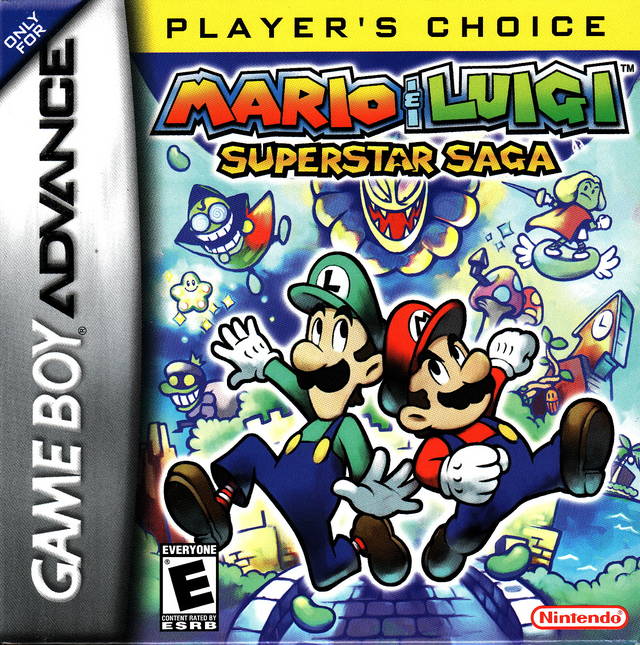
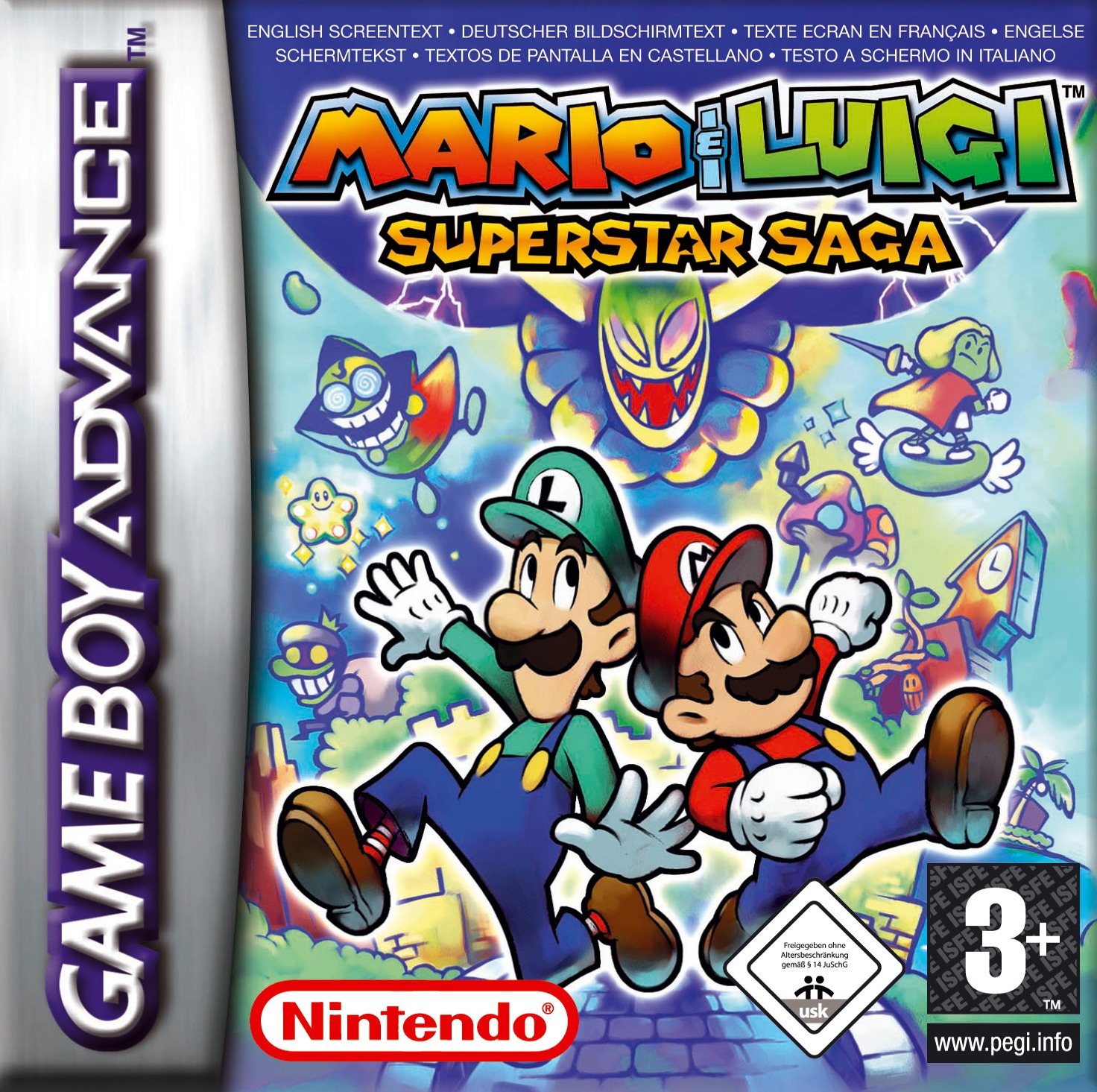
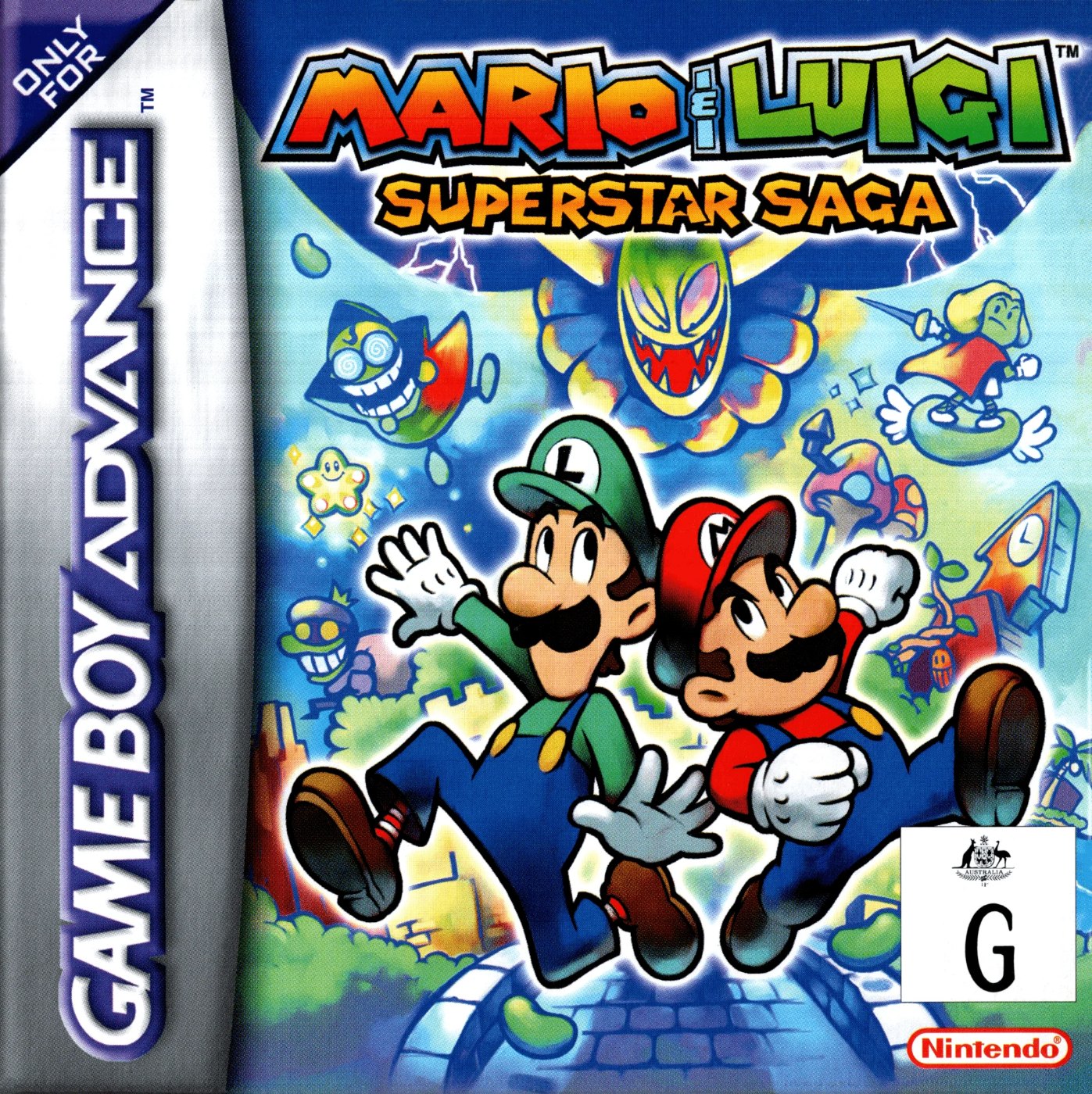
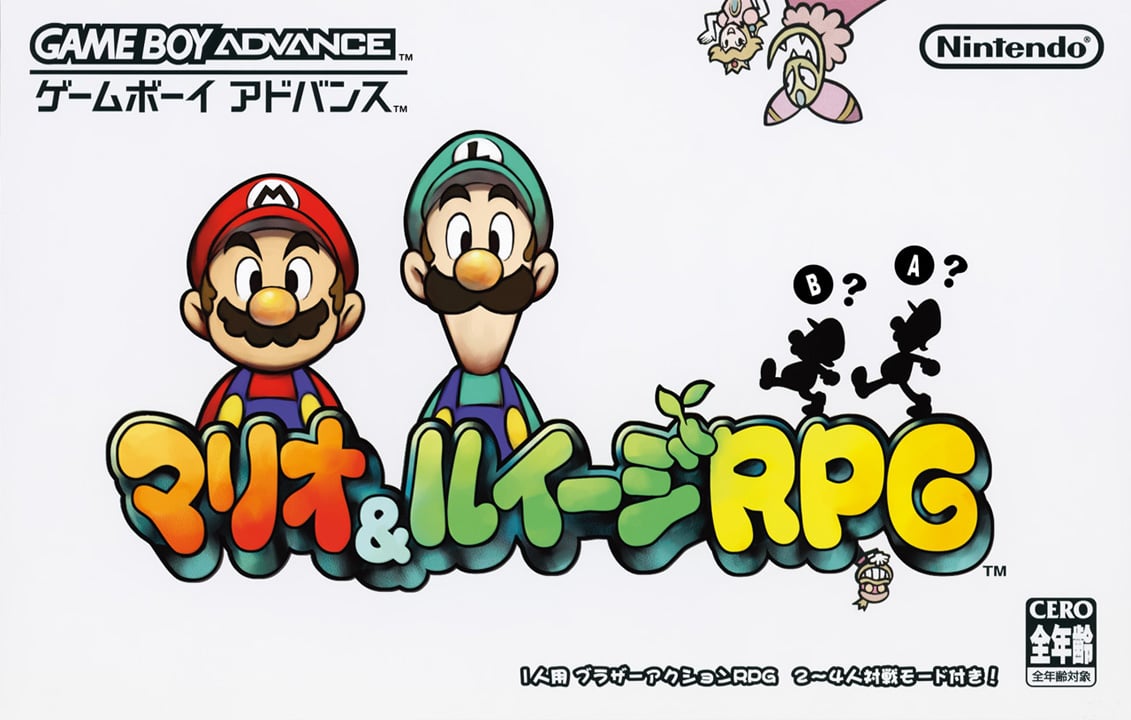
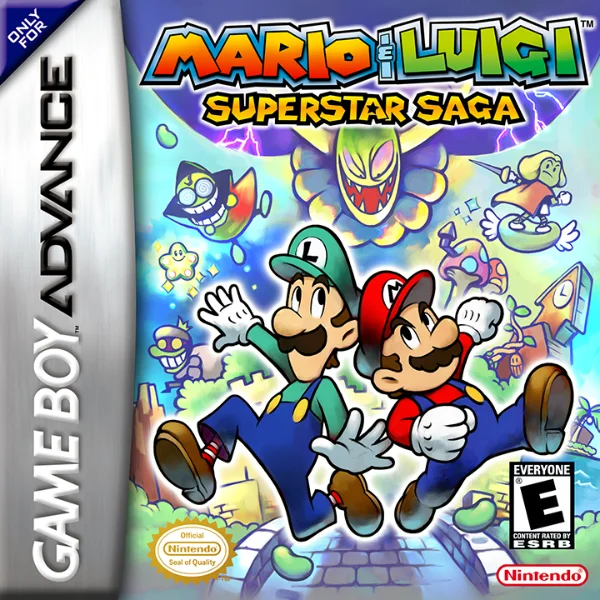
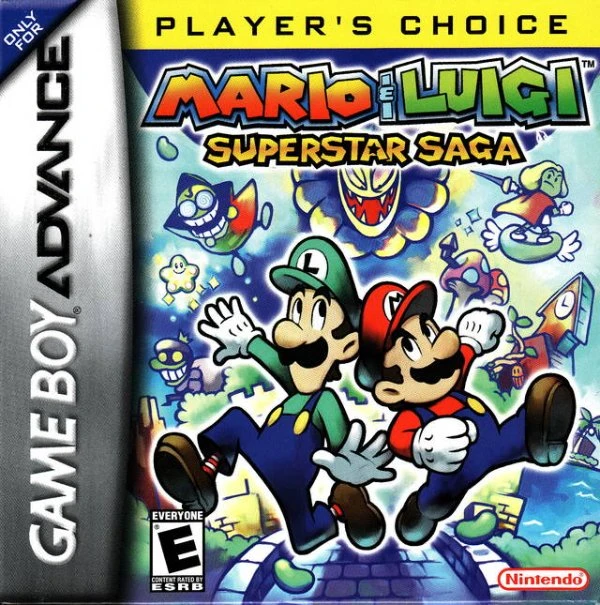
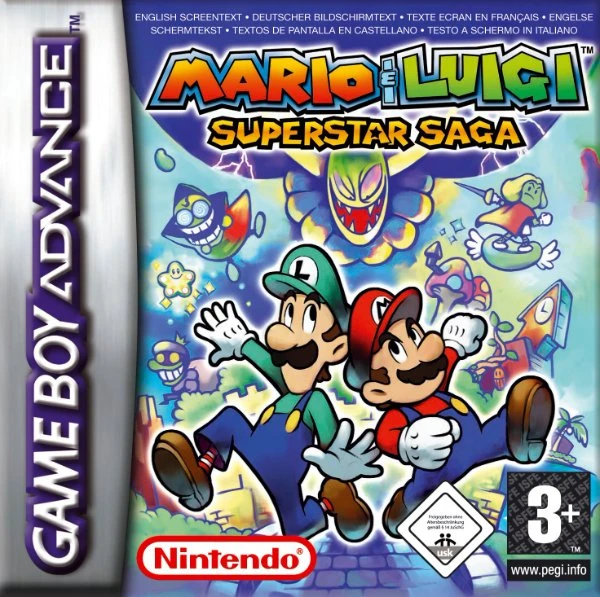
The Game Boy Advance boxes for each region, the Player’s Choice reissue, and the main covers of the 2017 Nintendo 3DS remake.
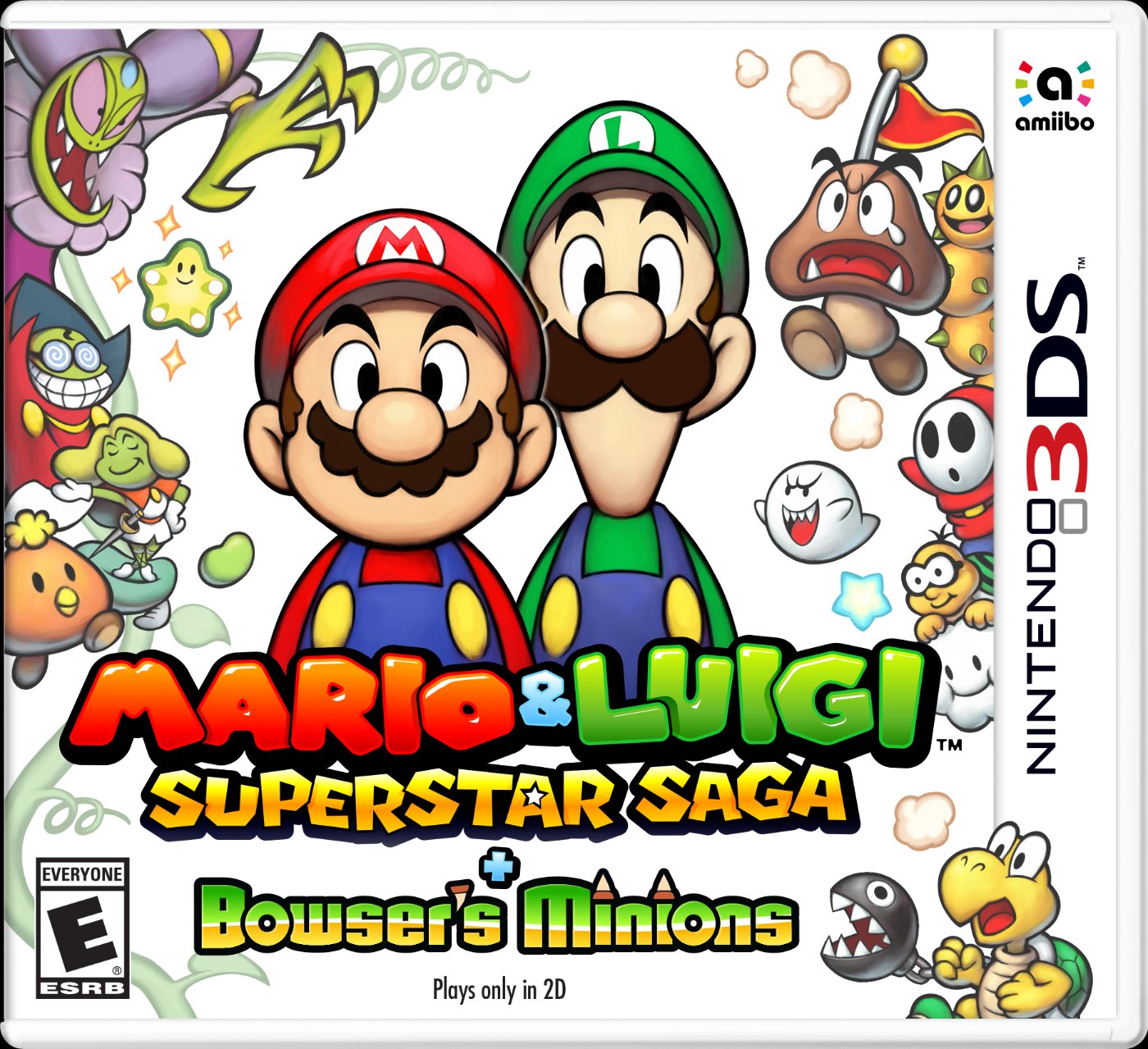
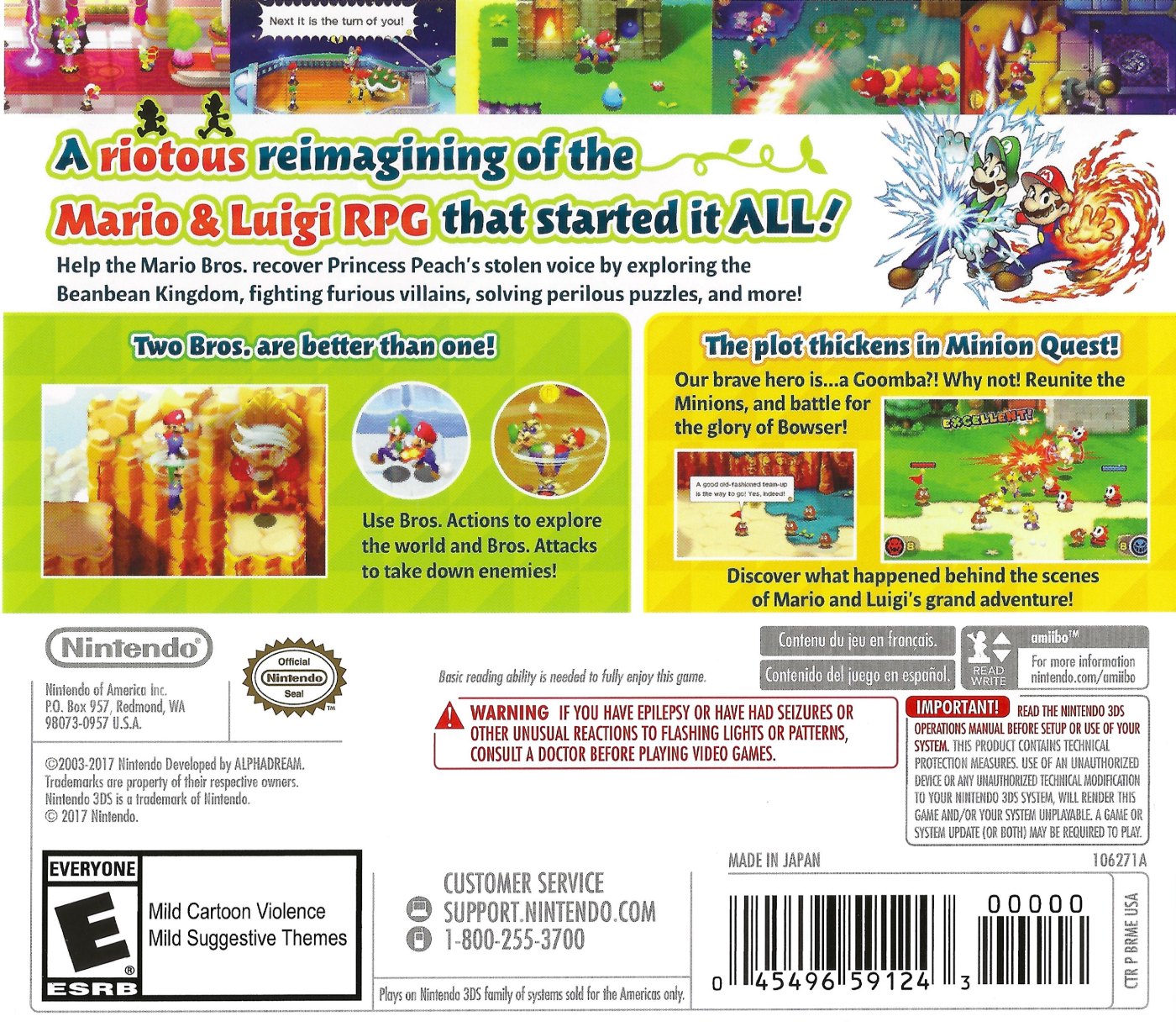
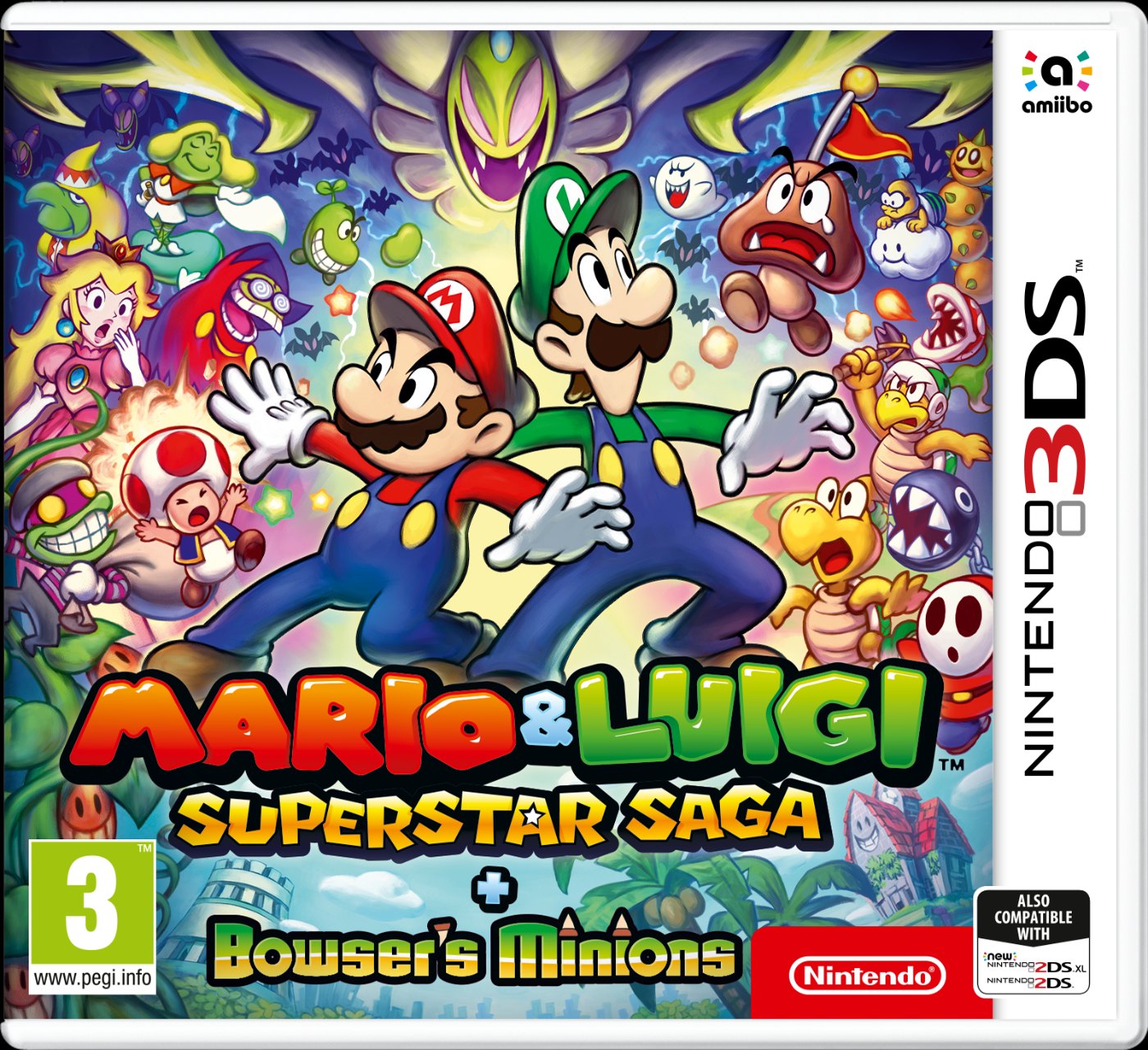
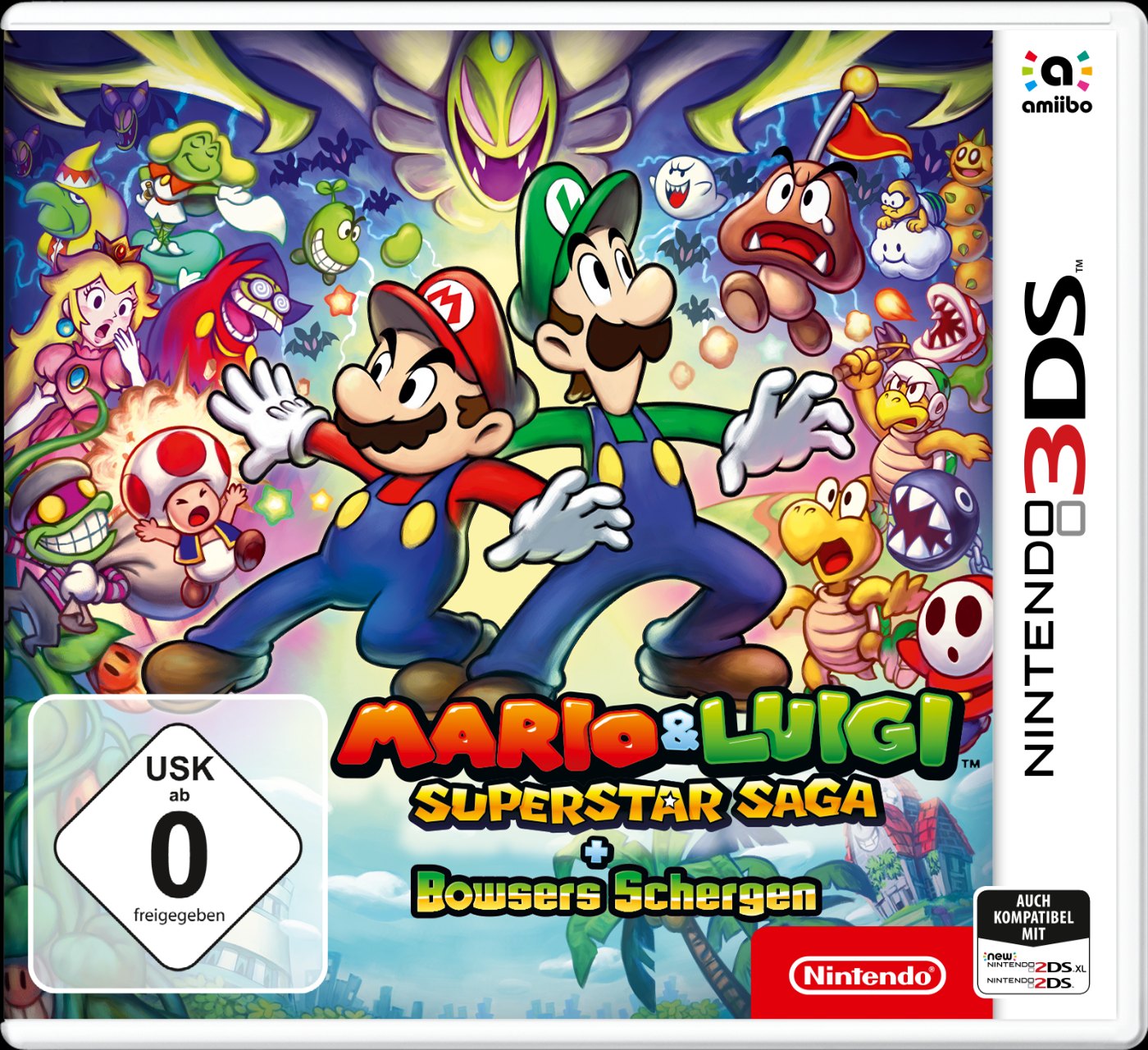
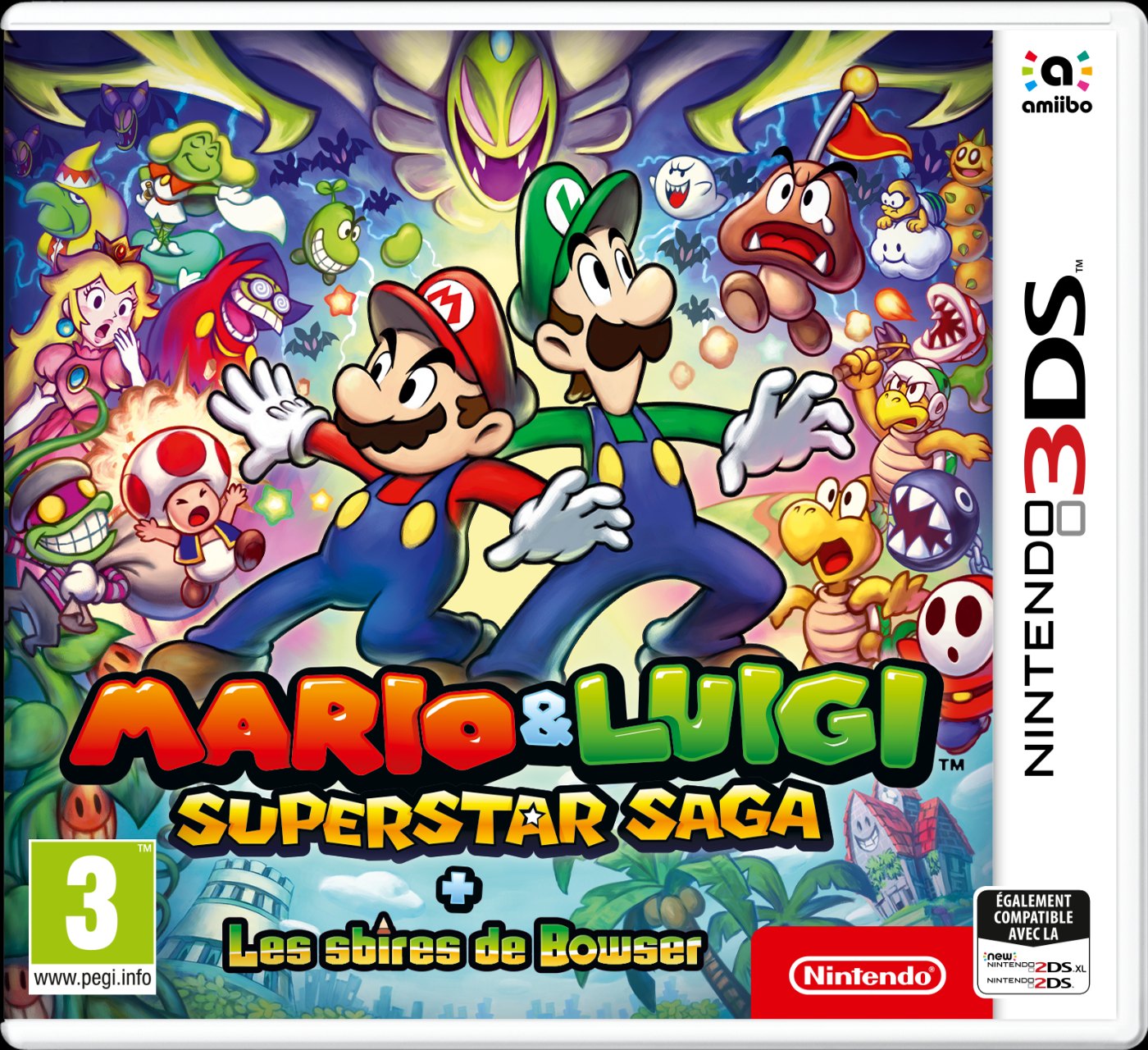
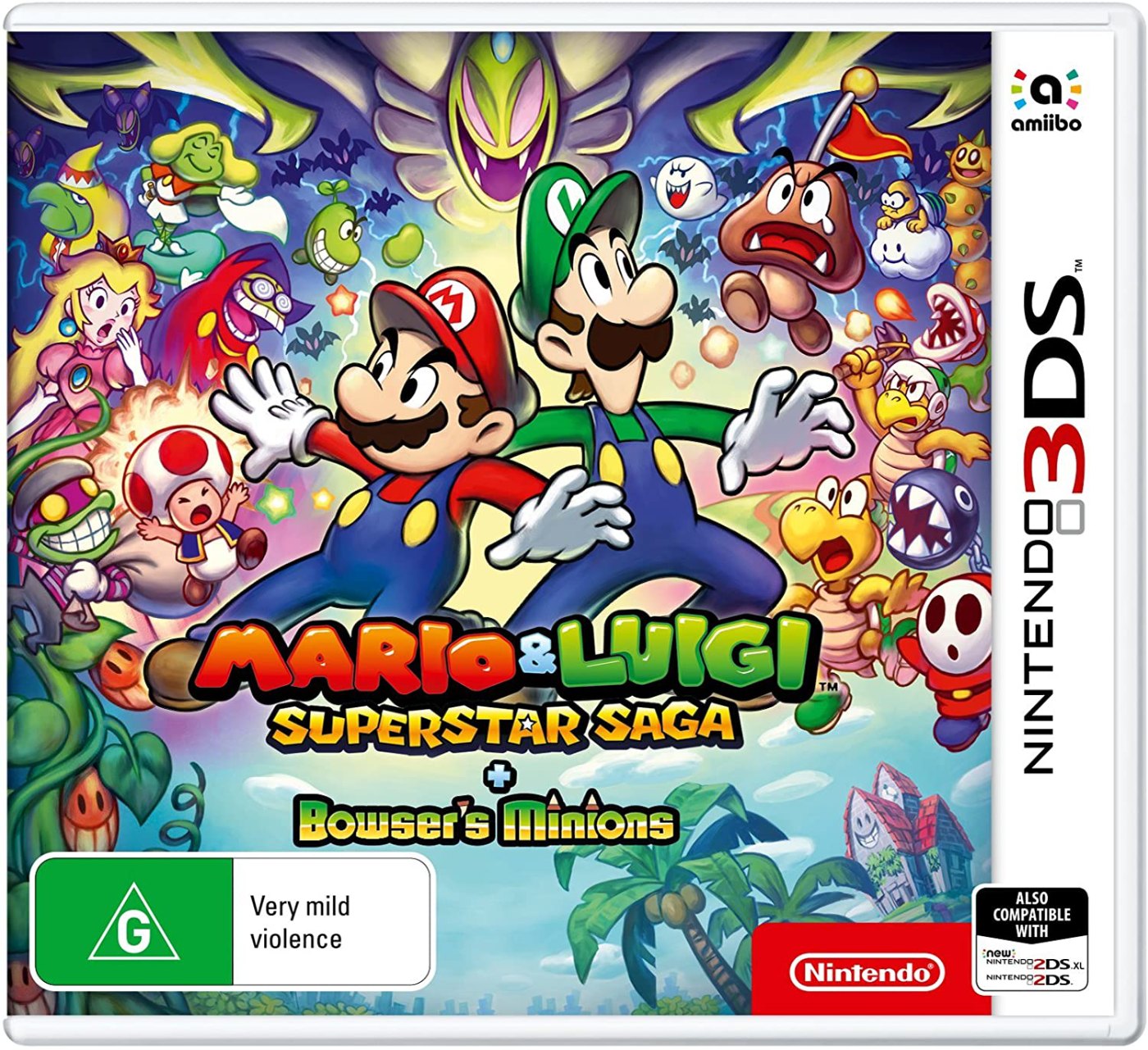
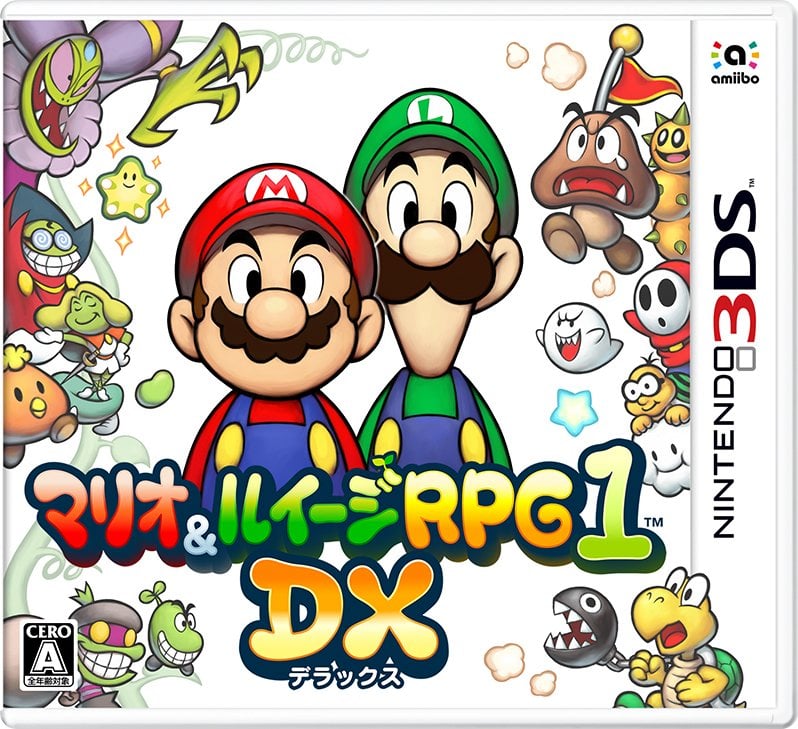
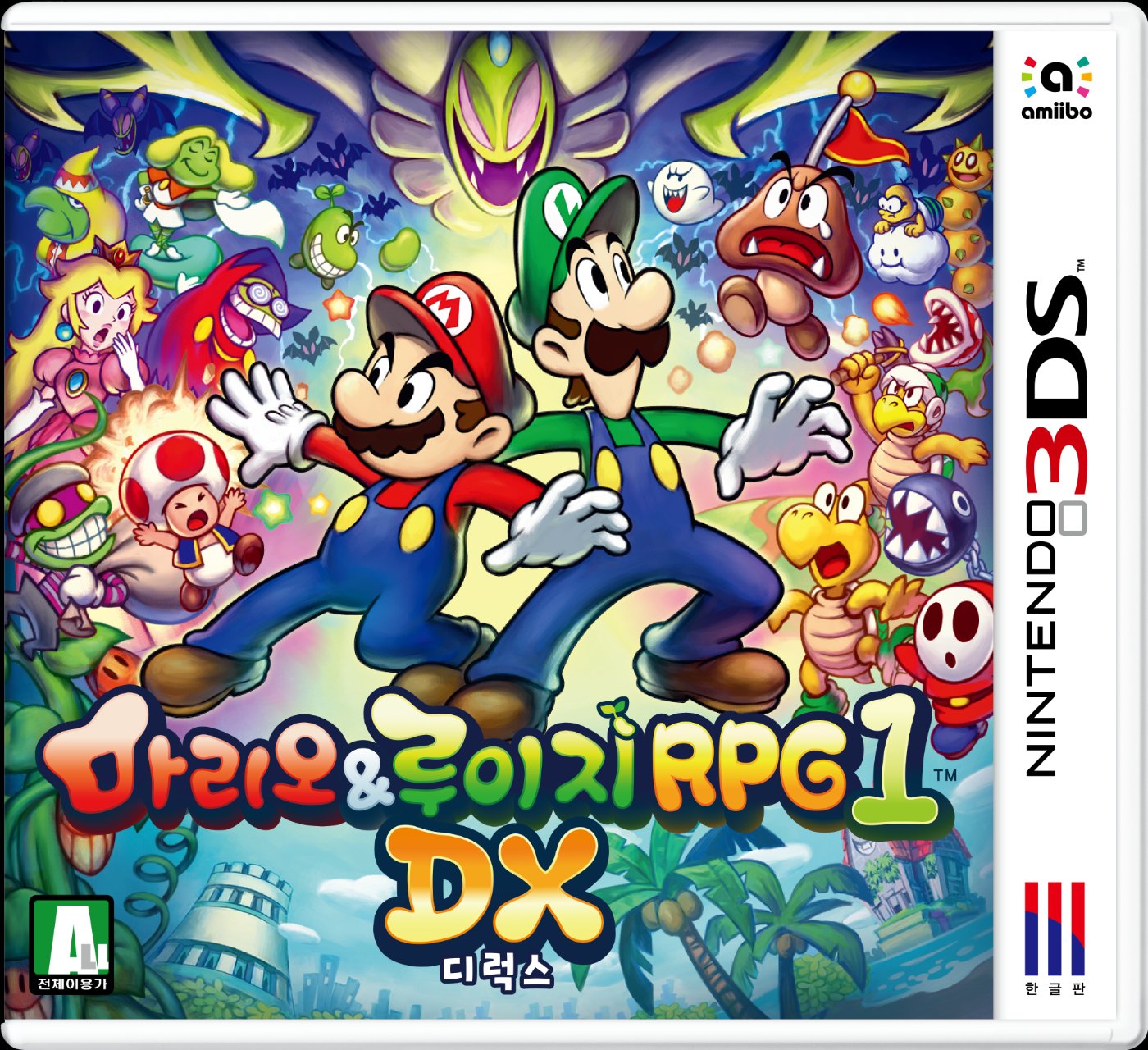
North America (Game Boy Advance, 2003)North America, Player’s Choice (2006)EuropeAustraliaJapanMario & Luigi RPGNorth America (Nintendo 3DS remake, 2017)North America, 3DS remake (back)Europe, 3DS remakeGermany, 3DS remakeFrance, 3DS remakeAustralia, 3DS remakeJapan, 3DS remakeSouth Korea, 3DS remake (2018)
Screenshots
More from the Game Boy Advance original, followed by a few from the 3DS remake for comparison.
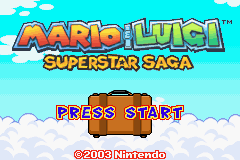
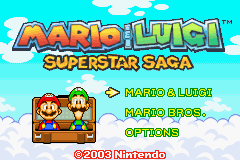
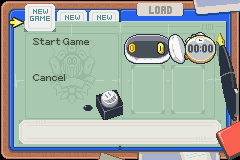
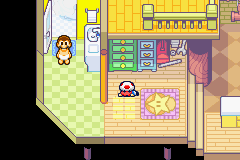
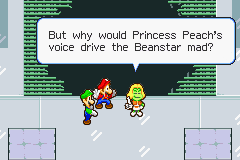
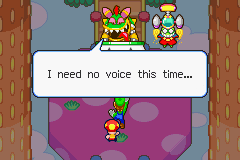
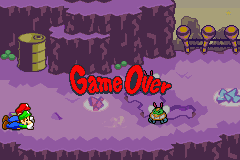
The title screen.Game select: the adventure or Mario Bros.The file select screen.Toad discovers that Mario is in the shower.Mario leaves in a hurry, with Luigi in tow.Climbing Hoohoo Mountain.Spin Jumping clear of a whirlwind.The Donkey Kong barrel room in Woohoo Hooniversity.An Oho Jee on Oho Oasis.Peasley wonders why the Beanstar reacted so badly.Bowletta decides to steal the real thing.Game over.The 3DS remake: title screen.The remake: Cackletta attacks Peach’s Castle.The remake: Fawful takes aim at the Koopa Cruiser.The remake: Tolstar again.The remake: surfing on Luigi.The remake: Minion Quest is unlocked.
Artwork & Media Gallery
Official artwork by Masanori Sato, logos, adverts, maps, sprites and a few things that were left on the cutting-room floor. SLB’s own galleries for the game are linked below.
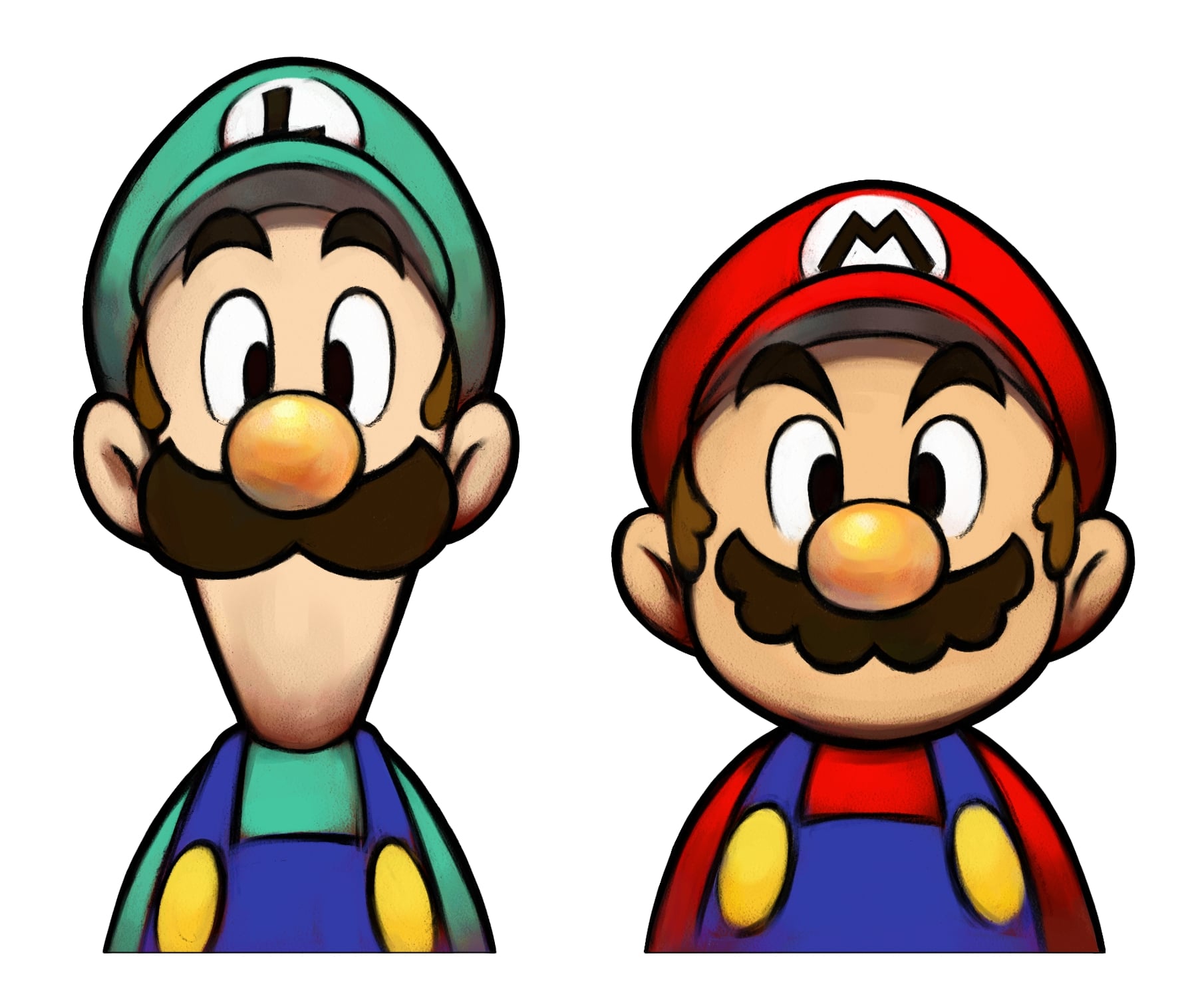
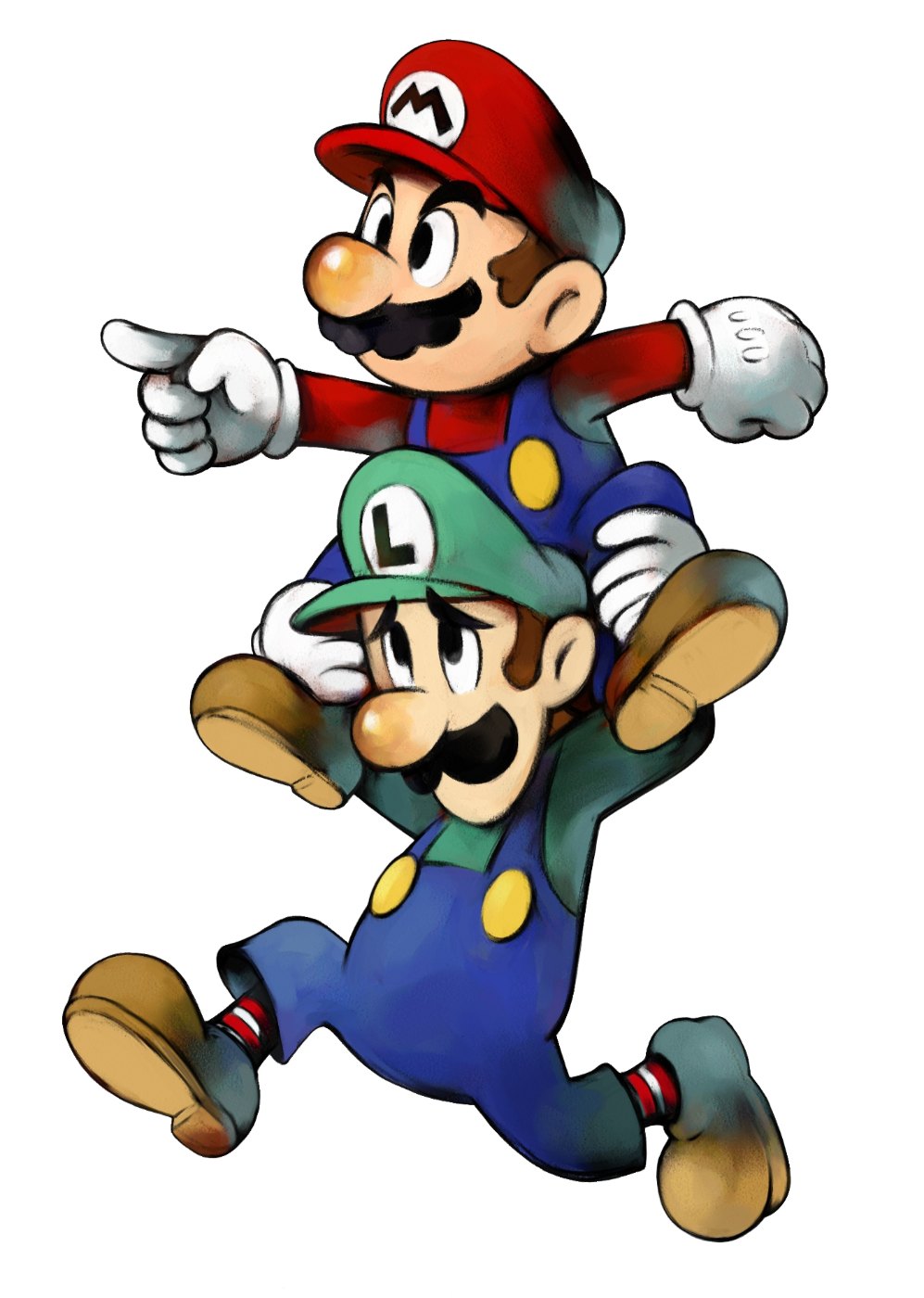
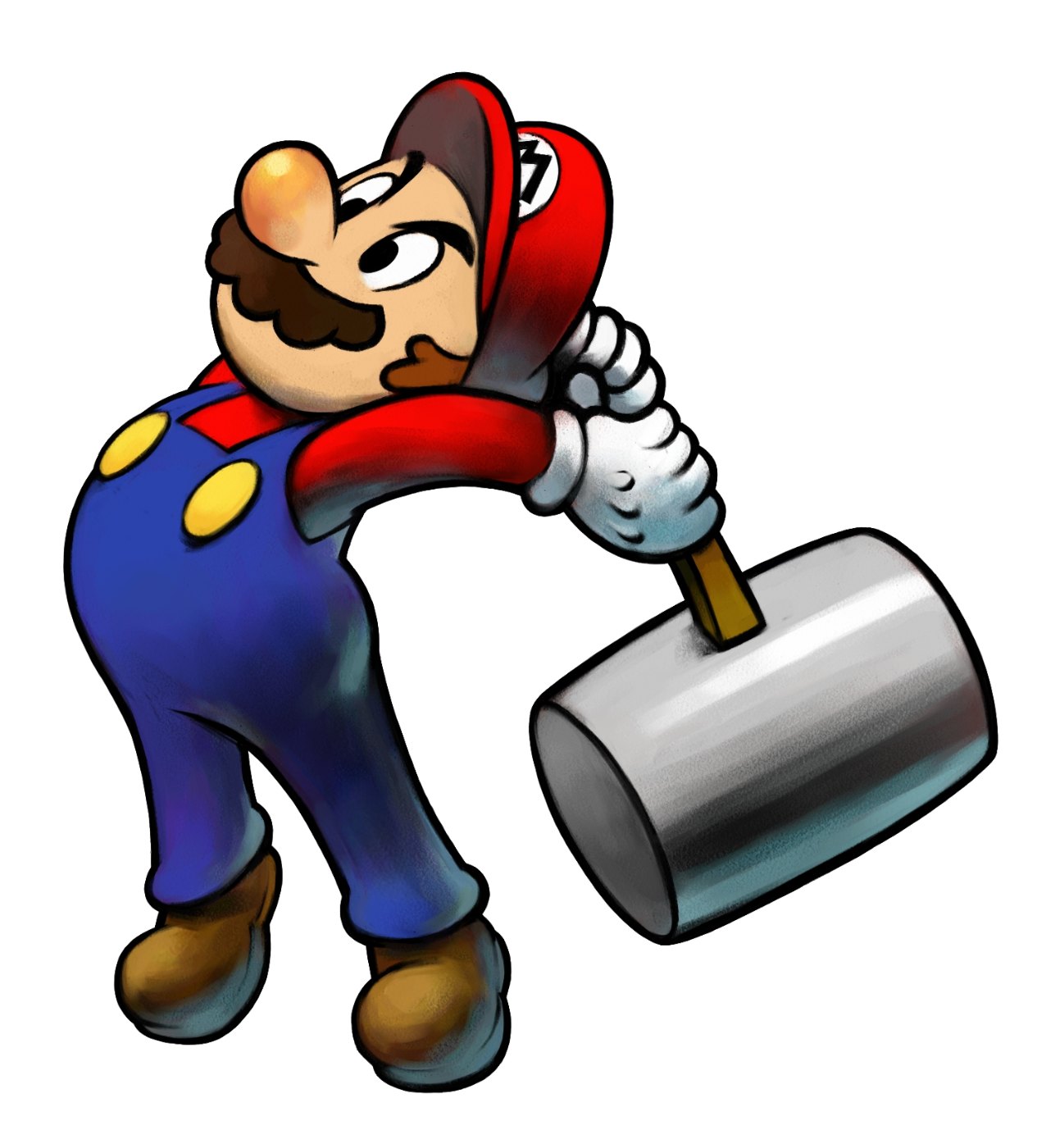
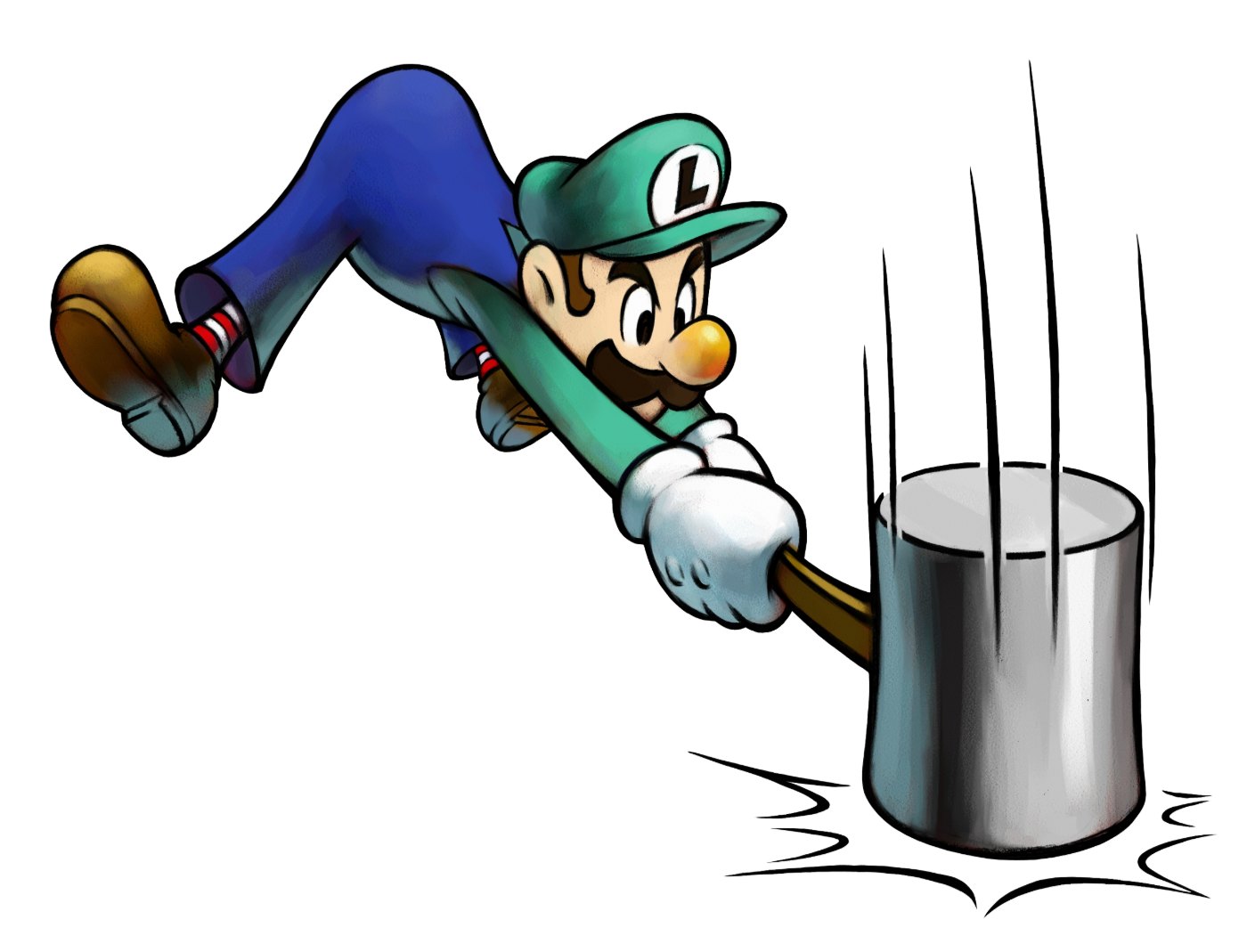
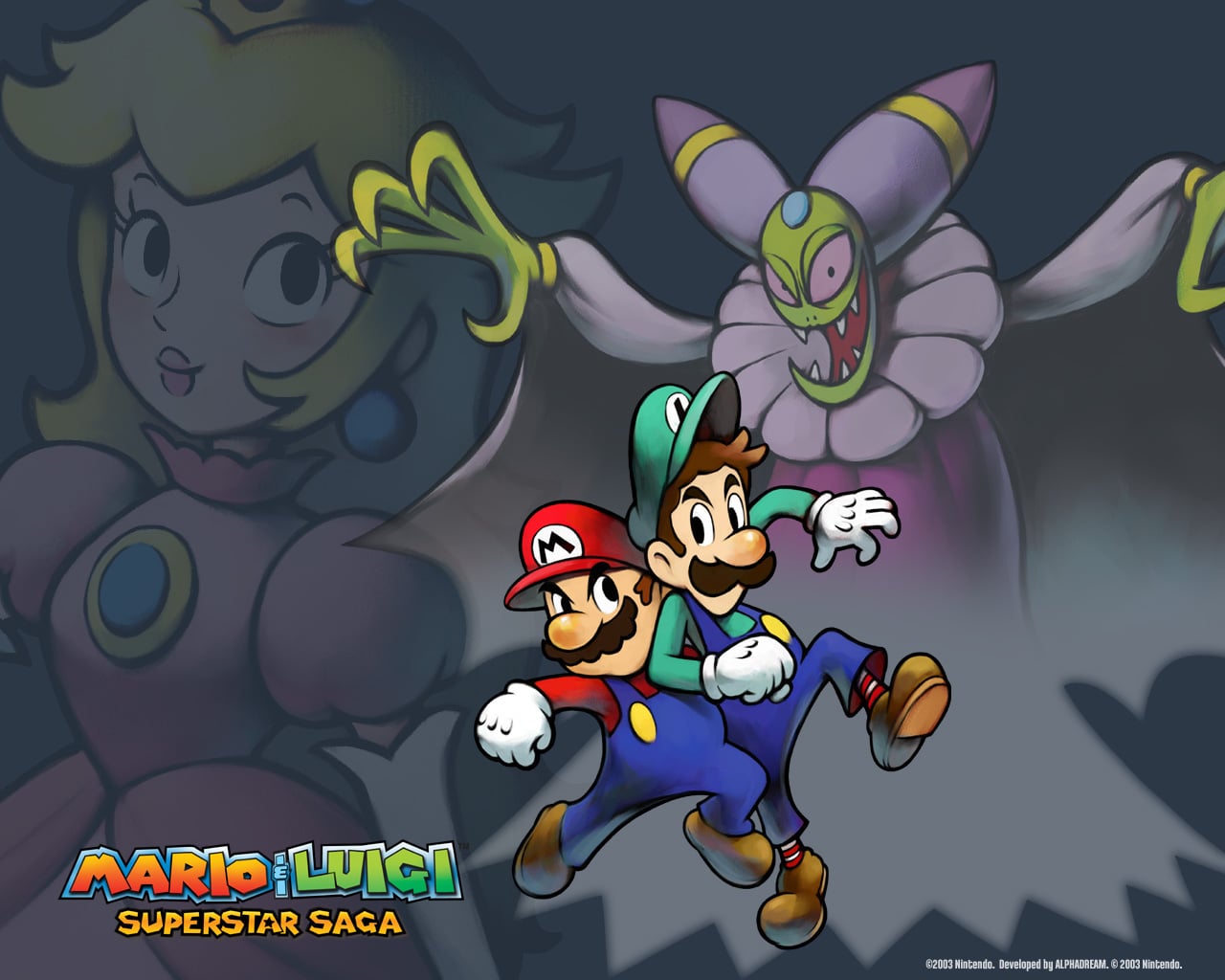
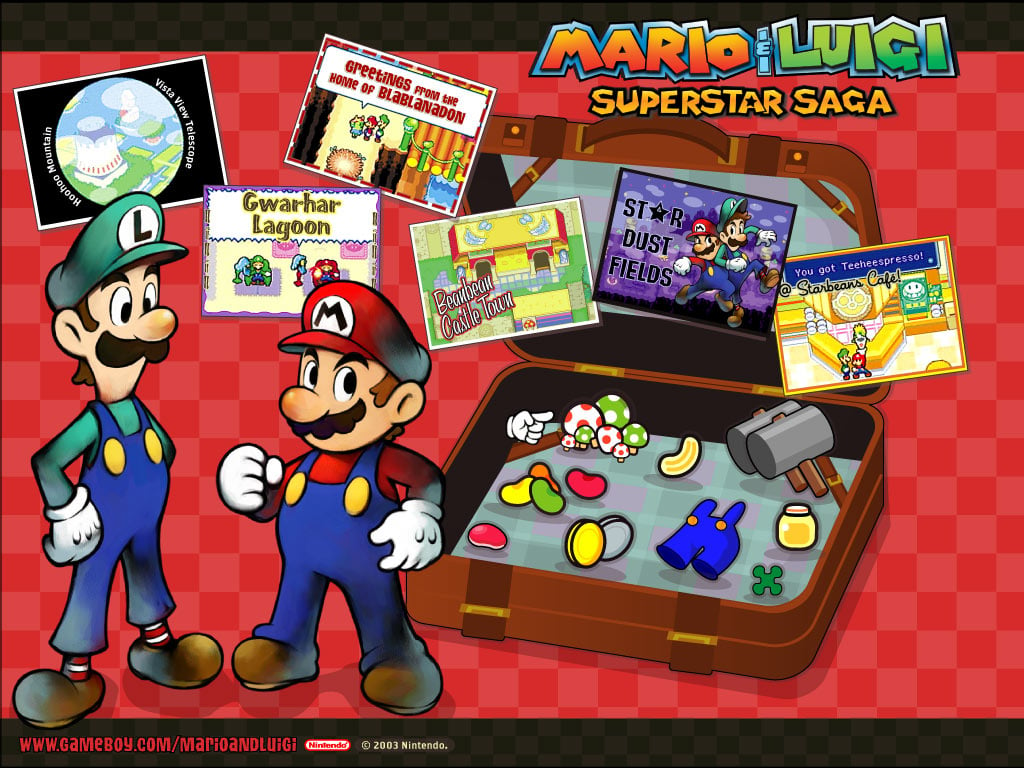
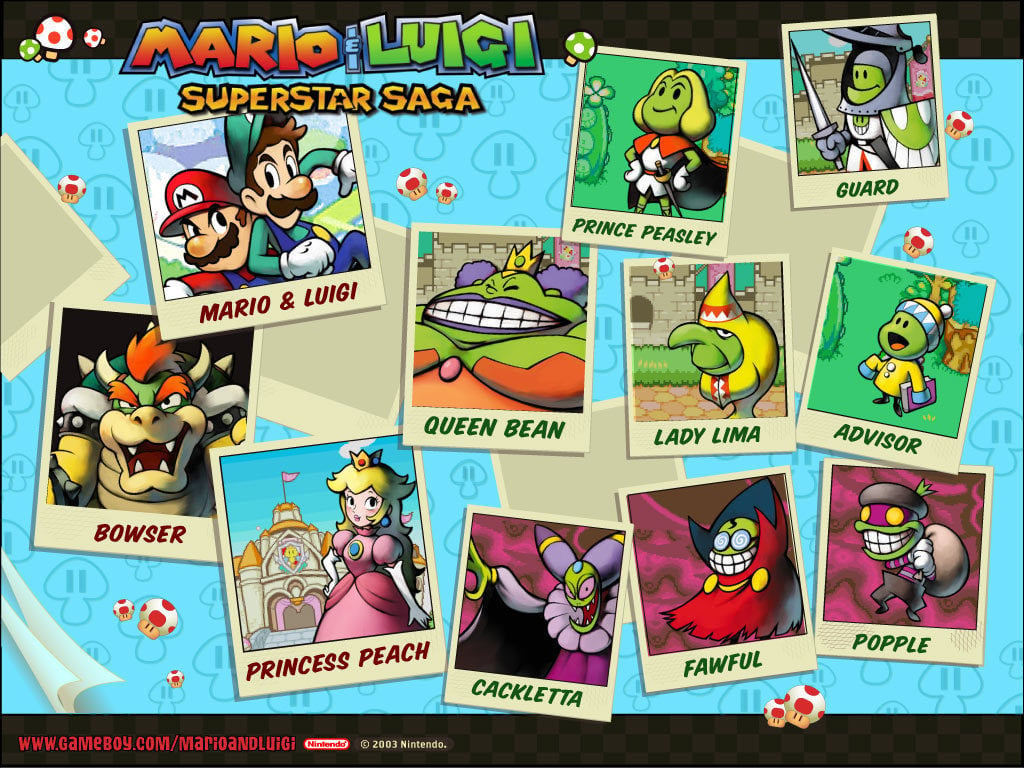
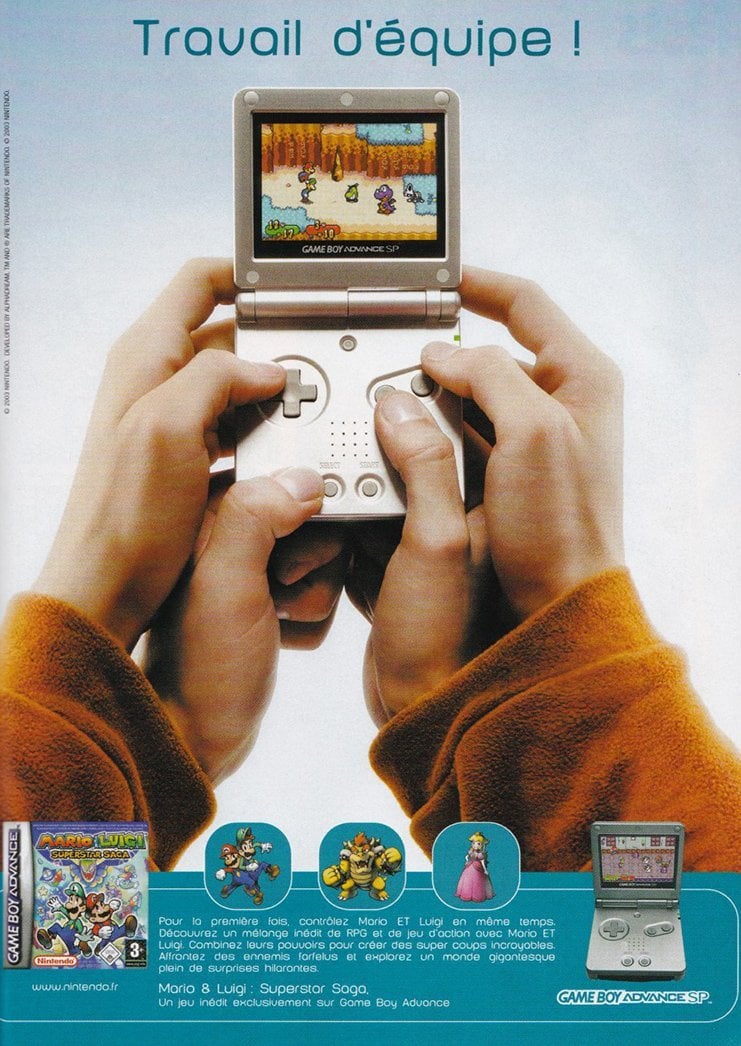
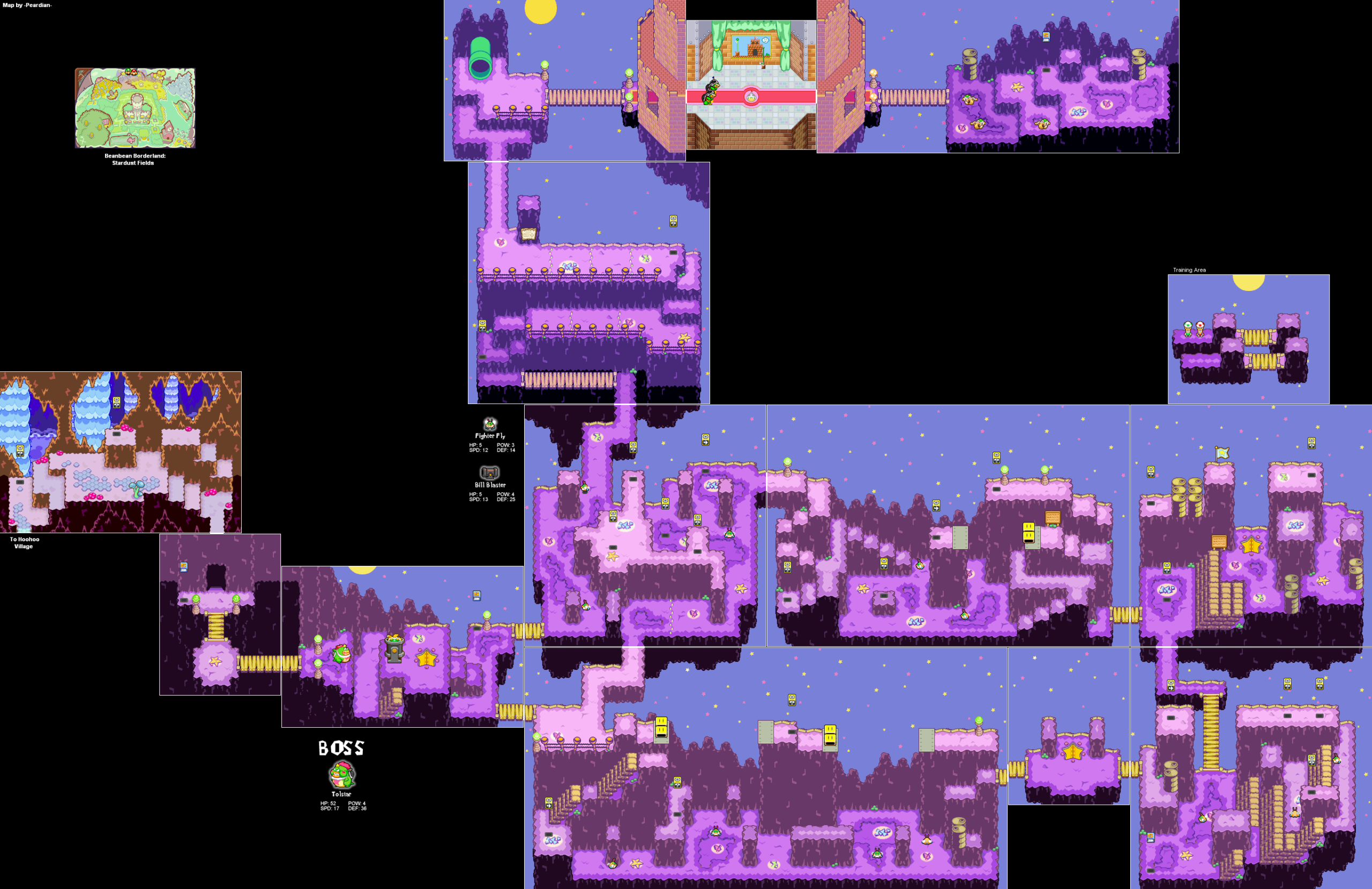
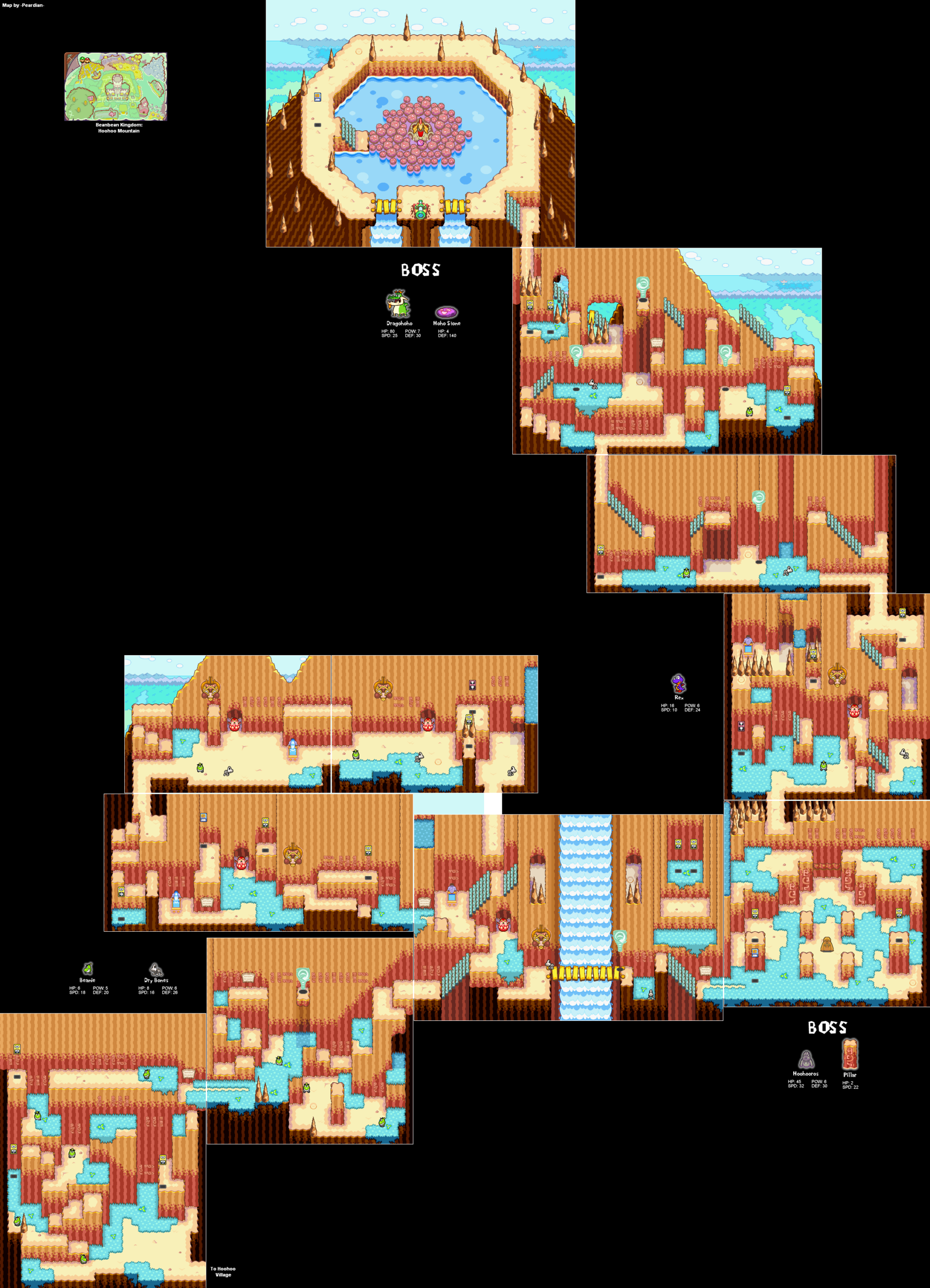
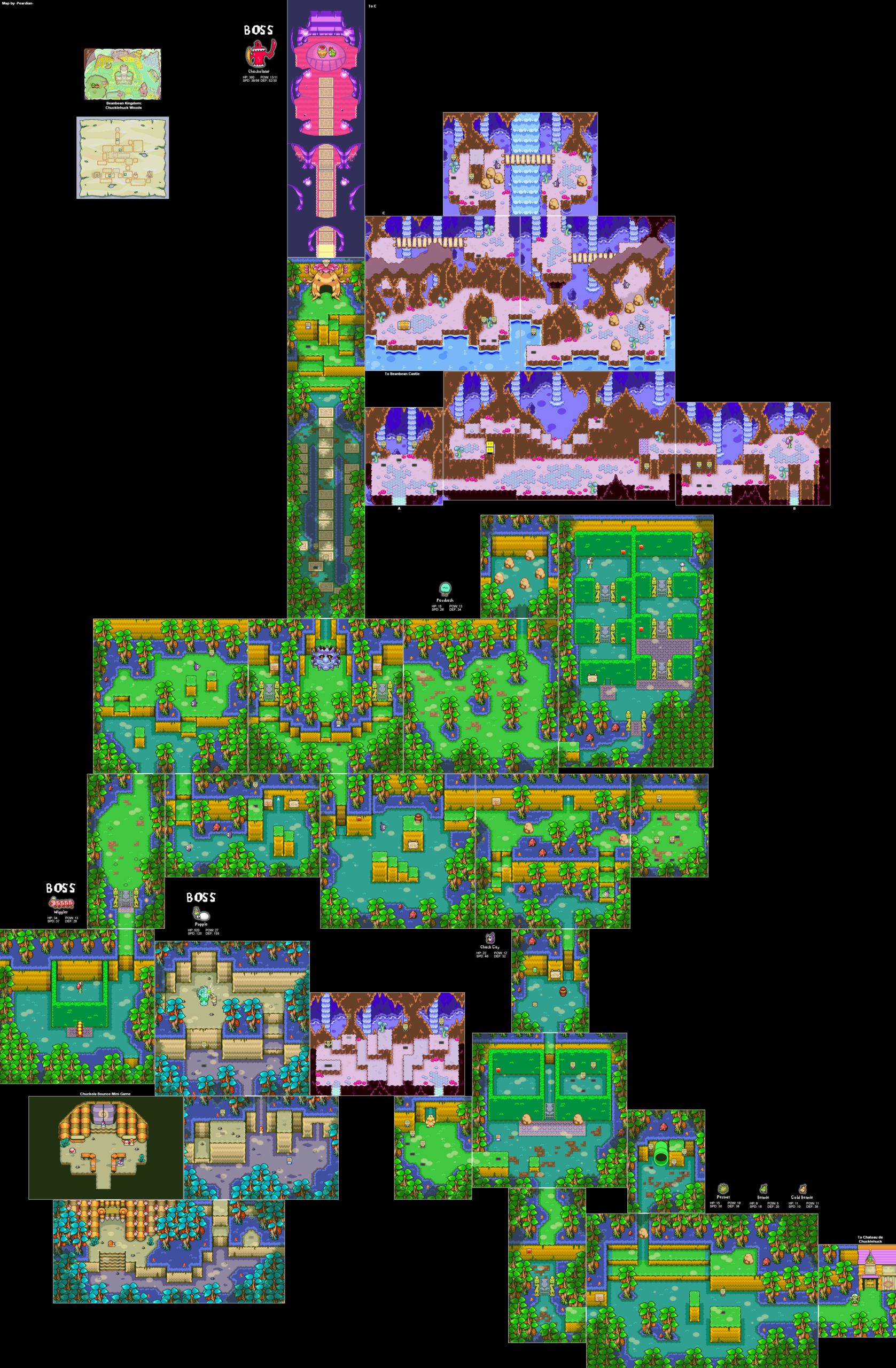
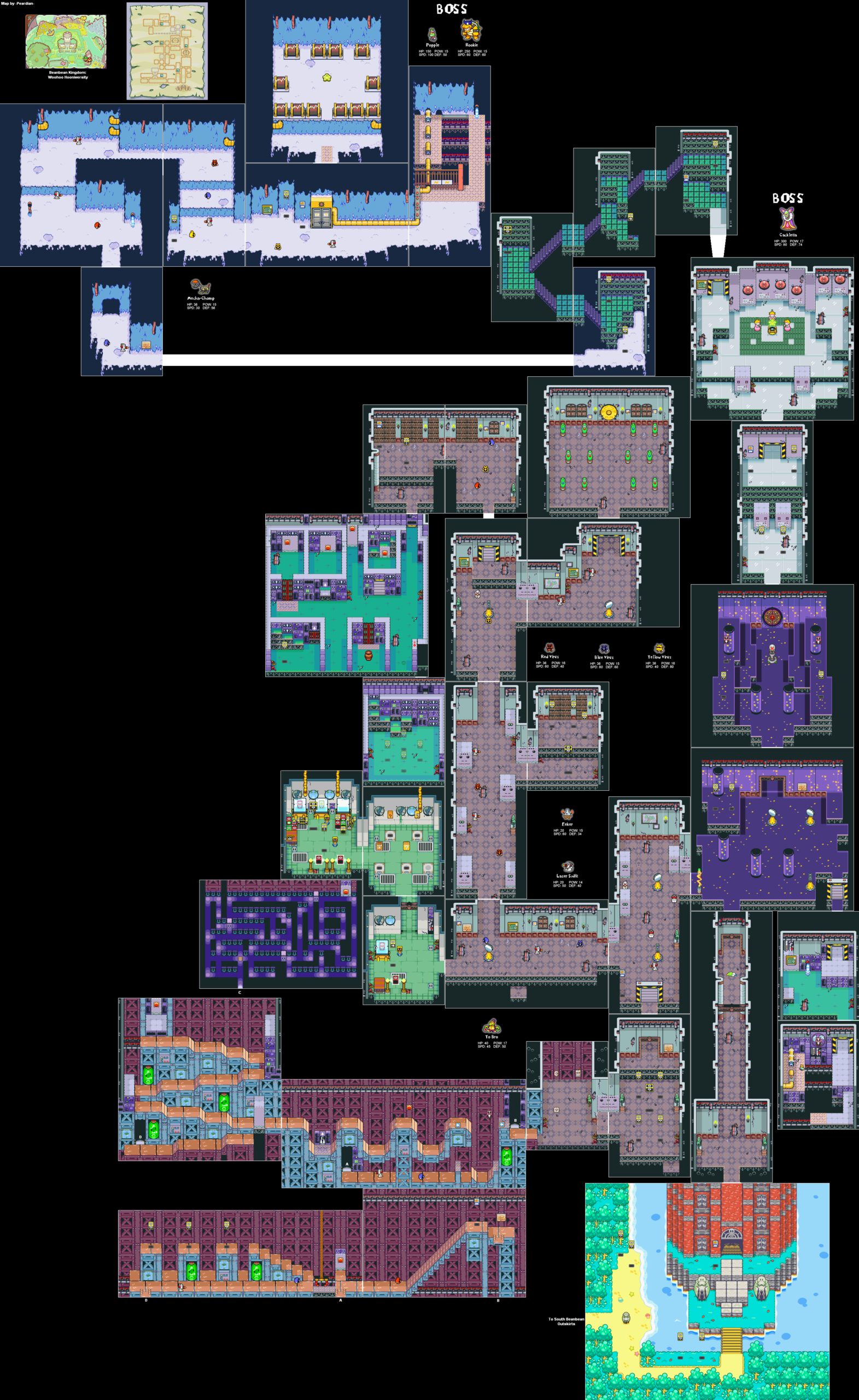
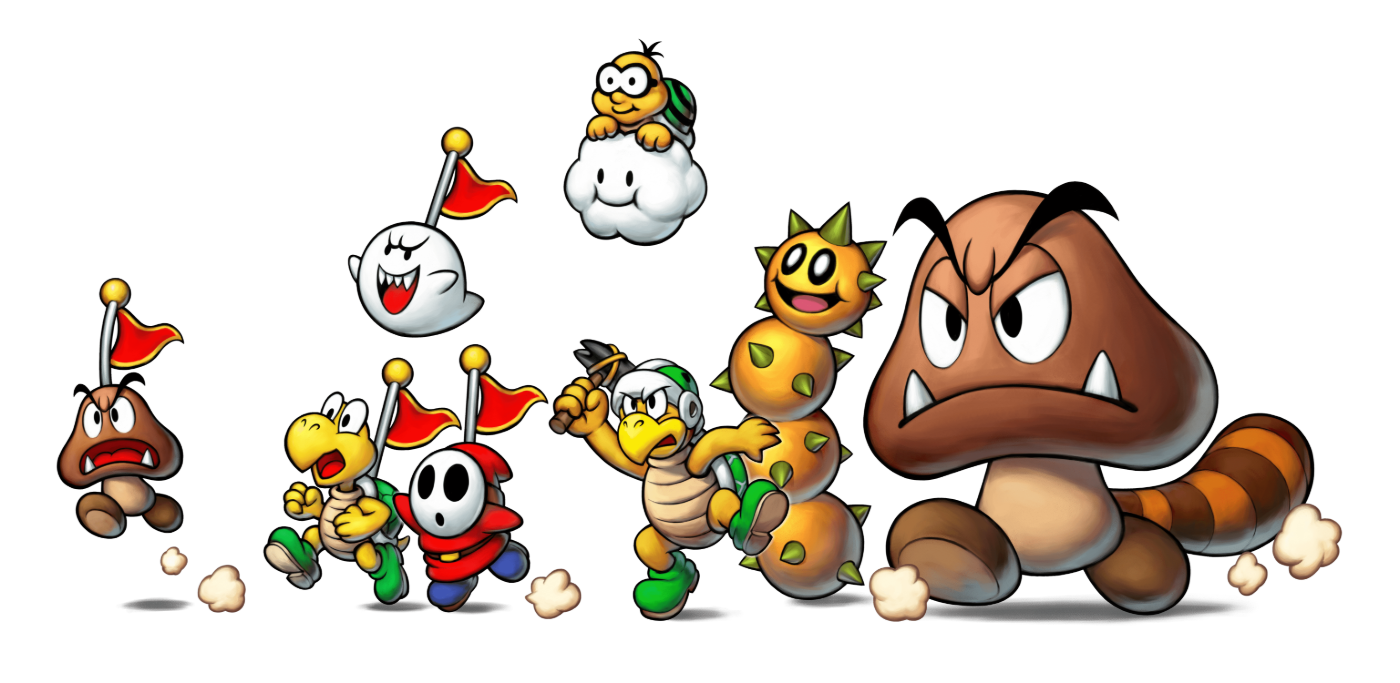
Mario and Luigi escape Cackletta’s clutches.Mario and Luigi.Mario and Luigi, head artwork.Setting up a Spin Jump.Mario with his hammer.Luigi with his hammer.A Pea.A Beanbean soldier.A Yoshi at the pictures.The Beanstar.Official wallpaper: Cackletta.Official wallpaper: the suitcase and postcards.Official wallpaper: the cast.International logo.Japanese logo: Mario & Luigi RPG.Logo from the unreleased Chinese prototype.Japanese title screen.The language select screen of the European version.North American print advert.French print advert.Cackletta in the Japanese TV commercial.Peach’s explosive vocabulary, from the same advert.Wii U Virtual Console menu icon.Map: Stardust Fields.Map: Hoohoo Mountain.Map: Chucklehuck Woods.Map: Woohoo Hooniversity.Map: Joke’s End.Mario sprite.Luigi sprite.Princess Peach sprite.Prince Peasley sprite.Luigi in surfboard form.Mario, full of water.Luigi with the Poltergust 3000.Yoshi Theater poster: Wario.Yoshi Theater poster: M & L.Yoshi Theater poster: Kirby Story.Star ’Stache Smash in the Japanese version.The Japanese Starbeans menu, with E. Gadd icons.Unused: Fox McCloud.Unused: Link.Unused: Samus Aran.Unused: Captain Olimar.Unused: Wario.Unused: an Excitebike racer.Unused: a cloaked Beanish of unknown purpose.Bowletta’s early design, from the E3 2003 demo.An early Border Jump.Captain Goomba, star of the remake’s Minion Quest.Bowser’s Minions (3DS remake artwork).Fawful, redrawn for the remake.Cackletta, redrawn for the remake.The Beanbean cast in the remake’s group artwork.Logo of Superstar Saga + Bowser’s Minions.
Legacy & Re-releases
Superstar Saga has been released four times in twenty years, and the series it started outlived the studio that made it.
Releases and re-releases
Game Boy AdvanceNovember 2003North America 17 November, Japan and Europe 21 November (the UK and Germany are listed a day earlier), Australia 28 November 2003.
Player’s Choice2 April 2006Budget reissue in North America with a Player’s Choice banner on the box.
iQue (China)UnreleasedA Simplified Chinese version was translated and approved, with a build dated 7 February 2007, but never went on sale.
Wii U Virtual ConsoleApril 2014North America and Europe 3 April, Australia 4 April, Japan 30 April 2014. The Mario Bros. game is included.
Nintendo 3DS remakeOctober 2017Mario & Luigi: Superstar Saga + Bowser’s Minions: Japan 5 October, North America and Europe 6 October, Australia 7 October 2017; South Korea 12 April 2018.
Nintendo Switch OnlineFebruary 2023A launch title for Game Boy Advance – Nintendo Classics: 8 February 2023 in North America, 9 February elsewhere.
The remake: Superstar Saga + Bowser’s Minions
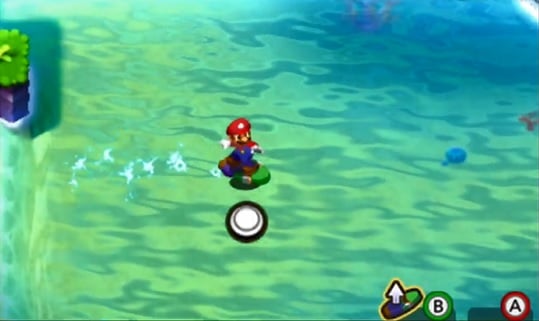
Announced at E3 2017 and released that October, AlphaDream’s remake rebuilds the whole game in the style of Dream Team and Paper Jam, with new sprites, lighting and a fully rearranged soundtrack (the original tunes can be heard in a music player). It is 2D only; there is no stereoscopic 3D.
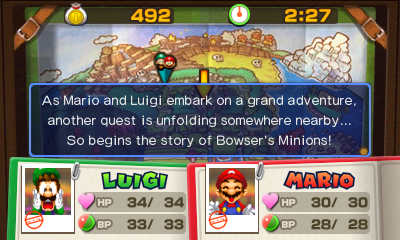
Almost every rough edge was sanded down. You can save anywhere, speed up cutscenes, press X to make both brothers jump together and choose field moves on the touch screen, which also carries a map you can pin. The three Bros. Attack modes became Normal and Easy, the Advanced attacks became “Super” attacks chosen from the menu, an Emergency Guard and an Easy Mode came across from Paper Jam, running away no longer costs coins, and Heart Blocks appear in every region. On the other hand enemies were retuned to be tougher, bosses gain a Fury state when weakened, several healing items and all the Starbeans blends are weaker, and you are no longer fully healed after a boss.
Plenty of details changed. The Koopalings use their New Super Mario Bros. Wii designs. Psycho Kamek was replaced by Dr. Toadley, the Ankoopas by Big Koopa Troopas, the Mecha-Chomps by Mechakoopas and Geno by a text box. Toadtown Square became Peach’s Castle and Beanbean Outskirts became Beanbean Fields. Cackletta is a 3D model, and one of her gestures, made with a middle finger in 2003, now uses an index finger. Bowser calls Tolstar a “swindler” where he once said “welcher”. And Mario Bros. is gone.
Minion Quest: The Search for Bowser
In its place is a second story running alongside the first. Once the brothers spot Captain Goomba chasing after Fawful, just before Beanbean Castle Town, a new mode opens in the suitcase. It follows Captain Goomba and a squad of Bowser’s minions as they search the Beanbean Kingdom for their missing king, in battles that Wikipedia describes as real-time strategy. It supports the Goomba, Koopa Troopa and Boo amiibo, and explains a few loose ends, such as who rebuilt Bowser’s Castle and why E. Gadd opened a coffee shop (to fund his ghost research).
Critics were lukewarm about it. Destructoid called it a “throwaway” for many players, though worth the time; the main game around it still scored 81 on Metacritic.
Four sequels, a bankruptcy and a comeback
AlphaDream followed Superstar Saga with Partners in Time (2005) and Bowser’s Inside Story (2009) on Nintendo DS, then Dream Team (2013) and Paper Jam (2015) on Nintendo 3DS, before remaking the first and third games in 2017 and 2018.
The remakes were its last work. By March 2018 the company was more than ¥465 million in debt, and on 1 October 2019 it filed for bankruptcy, citing slow revenue and high development costs, and closed the same day. The series returned on 7 November 2024 with Mario & Luigi: Brothership for Nintendo Switch, developed by Acquire with several former AlphaDream staff in key roles: the sixth original game and the first not made by AlphaDream.
Where the cast went next
Fawful was the breakout. He has a cameo as a shopkeeper in Partners in Time, takes over the Mushroom Kingdom in Bowser’s Inside Story and was last seen in that game’s 2018 remake. Popple came back as a boss in Dream Team. Prince Peasley has been reduced to posters, a Super Smash Bros. Ultimate spirit and the name of a reef in Brothership, and Cackletta survives mostly as a musical quotation. The Beanish people still turn up now and then, and Starbeans cartons are part of the scenery in Yoshi’s Crafted World.
Reviews & Sales
Sales figures
Superstar Saga is a million-seller twice over. The 2021 edition of the CESA Games White Paper, the Japanese industry body’s yearbook, puts lifetime sales at 2.15 million, which Wikipedia ranks fifteenth among Game Boy Advance games. In the United States alone it had sold a million copies and taken about $30 million by August 2006, according to Next Generation, making it the fourteenth best-selling handheld game launched there since 2000. Nintendo added it to the budget Player’s Choice range in North America in April 2006.
No official sales figure for the 3DS remake turned up in the sources used for this page.
2.15mworldwide (CESA, 2021)
1m+United States by August 2006
$30mUS revenue by August 2006
90Metacritic, Game Boy Advance
81Metacritic, 3DS remake
Reception and review scores
The Game Boy Advance original averages 90 on Metacritic and finished on 90.41 per cent at GameRankings. Scores below are as listed in Wikipedia’s and Super Mario Wiki’s reception tables.
Game InformerUSA
9.5/10
Nintendo World ReportUSA
9.5/10
NGC MagazineUK
94%
Nintendo PowerUSA
4.7/5
GameZoneLouis Bedigian
9.4/10
FamitsuJapan
37/40
GameSpotRicardo Torres · November 2003
9.2/10
IGNCraig Harris · 17 November 2003
9/10
EurogamerTom Bramwell · 8 December 2003
9/10
GamesTMUK
9/10
Electronic Gaming MonthlyUSA
8.83/10
1UP.comJeremy Parish · 9 May 2004
8.5/10
EdgeUK · issue 132
8/10
Computer and Video GamesUK
8/10
Reviewers agreed on what worked. The writing was singled out again and again: Eurogamer’s Tom Bramwell wrote that every line and cameo was handled “with a loving sense of humour”, and summed the game up as “simple, fun and rewarding”. IGN’s Craig Harris liked that, unlike most Japanese RPGs of the day, the turn-based battle “involves the player at all times”. GameSpot called it “one of the best experiences on the Game Boy Advance this year”, and Jeremy Parish at 1UP.com thought that while it was “not the most inventive game you’ll play this year”, it “just might be the most fun”.
The complaints were milder. Several critics found it easy and less original than its battle system first suggested; GameSpy thought it offered little that NES and Super NES Mario and Zelda games had not. Edge and others found the controls occasionally confusing, and the overhead view could make it hard to judge where a platform actually was. RPGamer’s Andrew Long called the plot repetitive and the characters “a tad shallow”.
The 2017 remake was received warmly but more quietly: 81 on Metacritic, with 9/10 from Nintendo Life and Nintendo World Report, 8/10 from GameSpot and Polygon, 7.5/10 from Destructoid and 32/40 from Famitsu. GameSpot felt that the new Minion Quest mode “falters” but was easy to ignore.
Honours
GameSpot · December 2003Game Boy Advance Game of the MonthNamed the best GBA game of November 2003.
Academy of Interactive Arts & Sciences · 7th Interactive Achievement AwardsNominee, Handheld Game of the YearA nomination at the industry’s own awards.
Nintendo Power · issue 200, February 2006No. 37 in the Top 200In the magazine’s ranking of the best games made for Nintendo systems.
IGN · 16 March 2007No. 12, Top 25 Game Boy Advance Games of All TimeCraig Harris’s end-of-era list.
SLB User Reviews
Mario & Luigi: Superstar Saga has yet to receive a community review on Super Luigi Bros.
If you’ve played Mario & Luigi: Superstar Saga and would like to submit a review, please get in touch.
More from the Super Luigi Bros Guide
These picture lists come from the earlier Super Luigi Bros guide to Mario & Luigi: Superstar Saga and are kept here in full.
Regional Logos, Box Art & Screens
Mario & Luigi: Superstar Saga shipped with distinct regional box art across major markets and was also re-issued as a North American Player’s Choice edition.
Regional Logos
InternationalWestern markets logoJapanJapanese market logoPre-releaseE3 2003 logo variant
Box Art
North AmericaReleased 17 Nov 2003Player’s ChoiceBudget re-release editionEuropeReleased 21 Nov 2003AustraliaReleased 28 Nov 2003JapanReleased 21 Nov 2003
Iconic In-Game Screens
Title screenTitle screen (Japanese)Game selection screenFile selection screen
Key Story Moments
Mario dragging Luigi to the rescueCackletta plotting the voice theftPrince Peasley reveal at Hoohoo Mountain summitThe decoy Peach (Birdo) deceptionBowletta swallows the Bros. — the finale beginsAll 7 Neon Eggs — the Yoshi Theater sidequest
Reference / Information
Sub-pages and guides for Mario & Luigi: Superstar Saga.
To provide the best experiences, we use technologies like cookies to store and/or access device information. Consenting to these technologies will allow us to process data such as browsing behavior or unique IDs on this site. Not consenting or withdrawing consent, may adversely affect certain features and functions.
Functional
Always active
The technical storage or access is strictly necessary for the legitimate purpose of enabling the use of a specific service explicitly requested by the subscriber or user, or for the sole purpose of carrying out the transmission of a communication over an electronic communications network.
Preferences
The technical storage or access is necessary for the legitimate purpose of storing preferences that are not requested by the subscriber or user.
Statistics
The technical storage or access that is used exclusively for statistical purposes.The technical storage or access that is used exclusively for anonymous statistical purposes. Without a subpoena, voluntary compliance on the part of your Internet Service Provider, or additional records from a third party, information stored or retrieved for this purpose alone cannot usually be used to identify you.
Marketing
The technical storage or access is required to create user profiles to send advertising, or to track the user on a website or across several websites for similar marketing purposes.

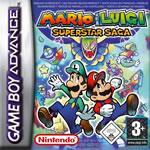
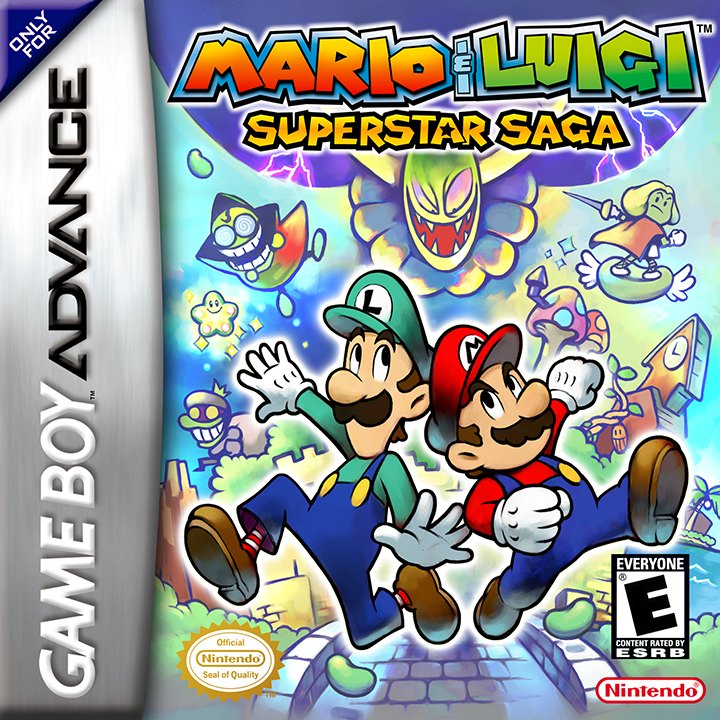
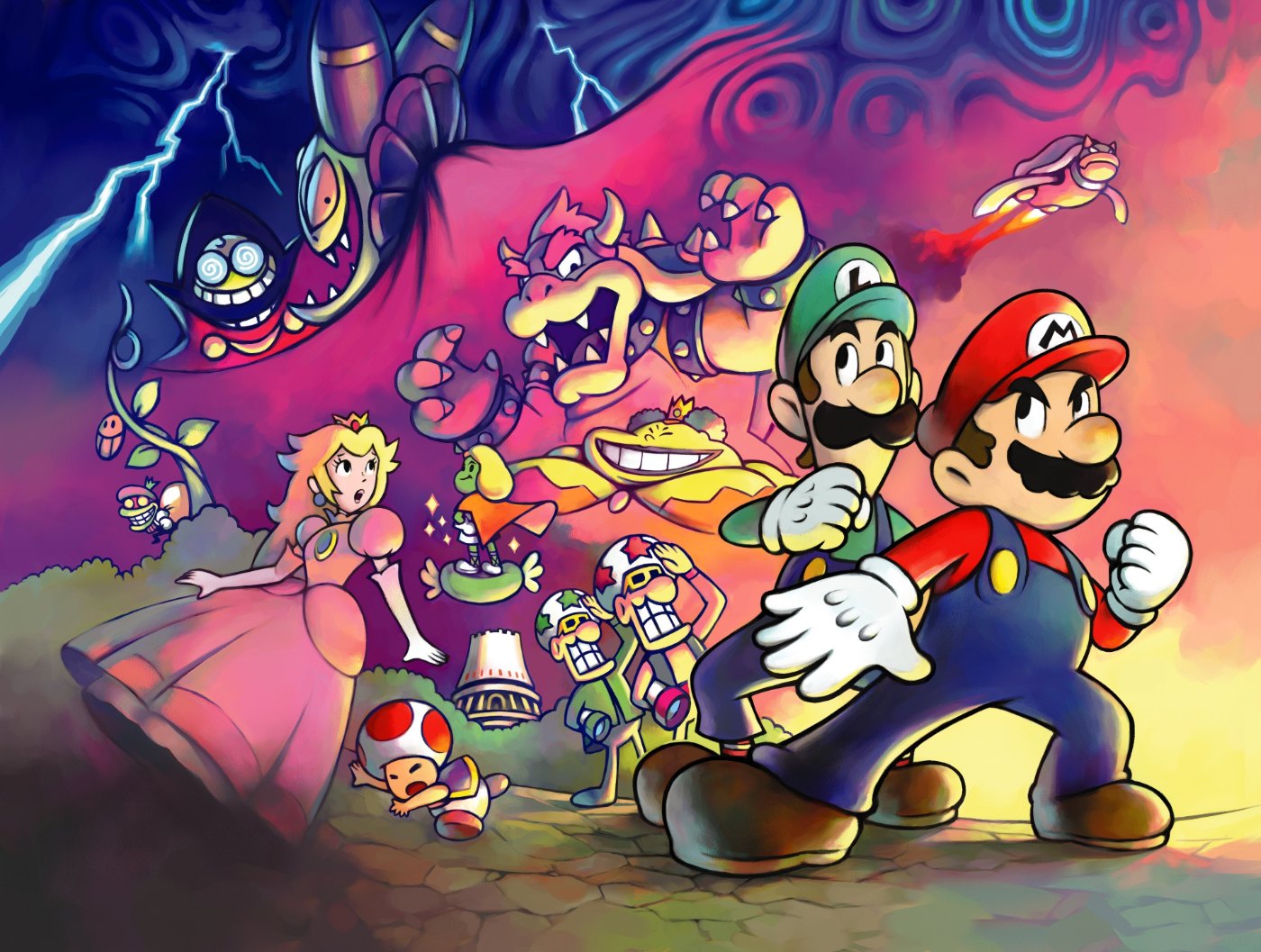
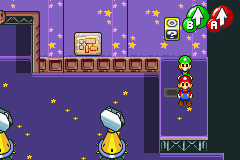
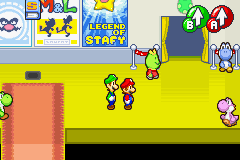
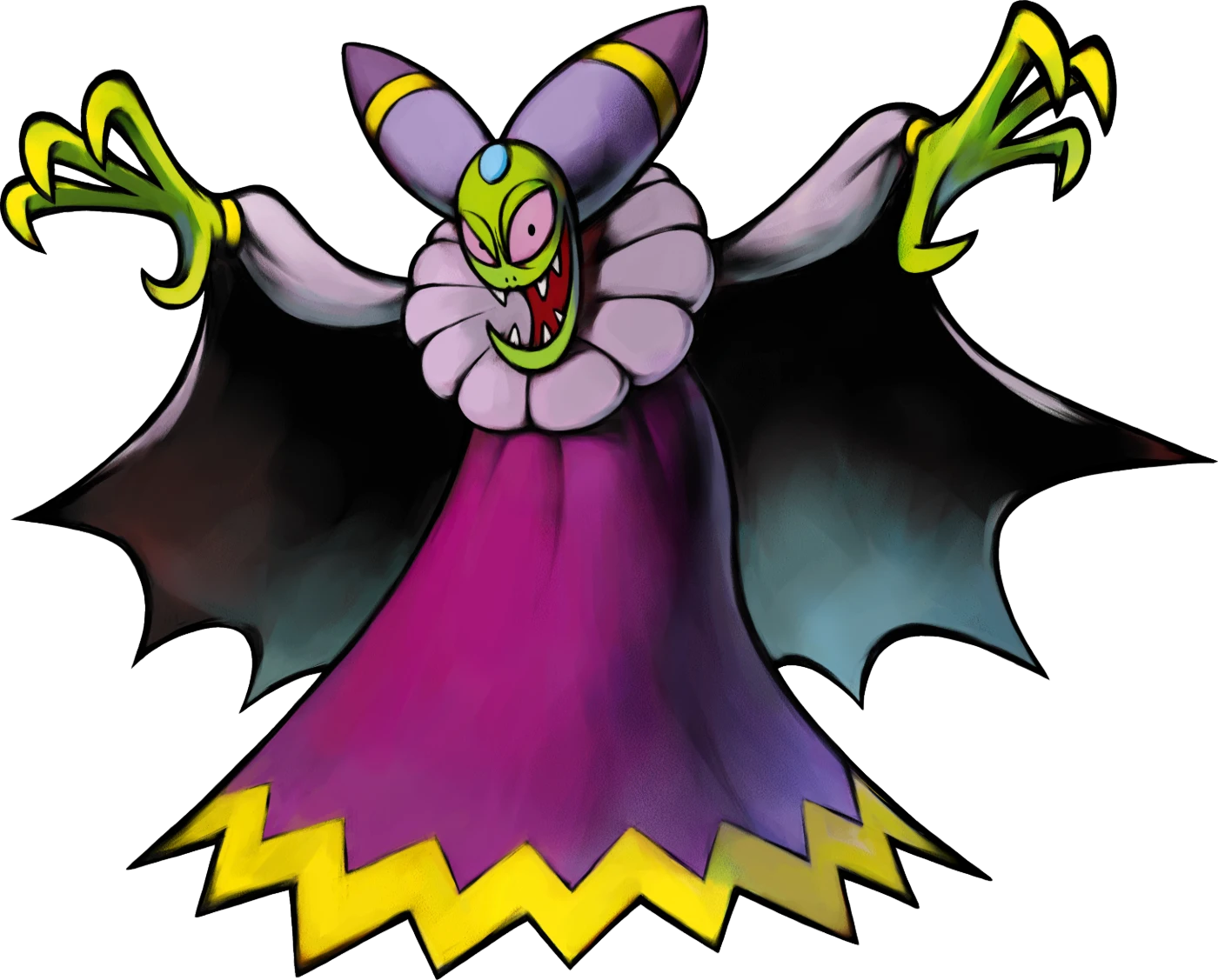
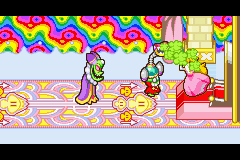
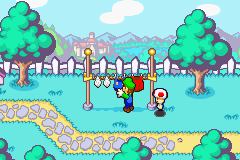
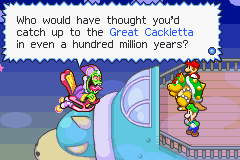
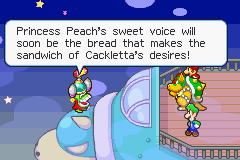
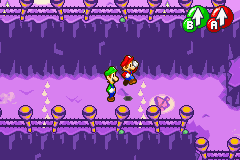
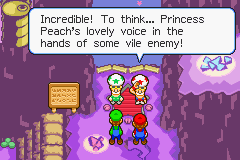
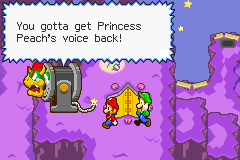
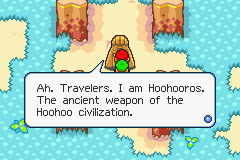
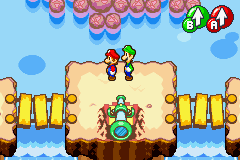
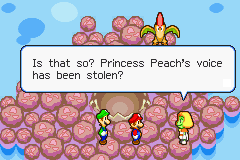
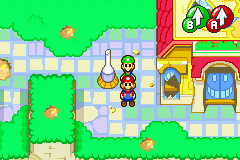
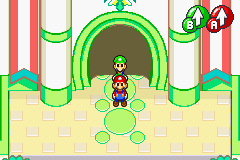
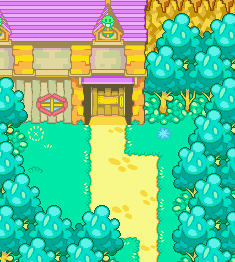
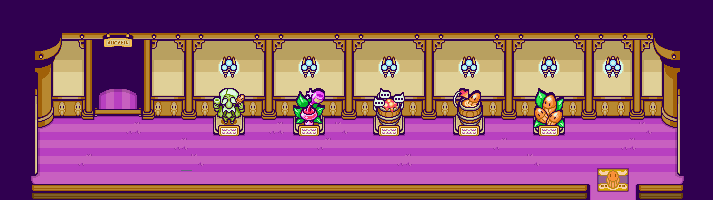
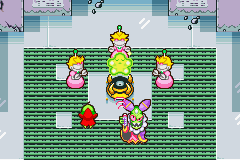
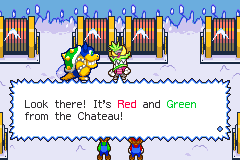
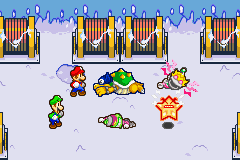
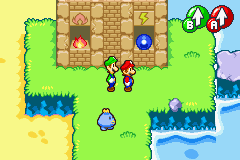
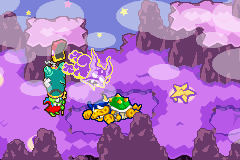
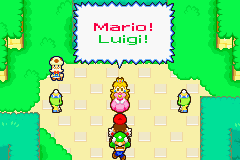
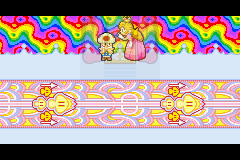
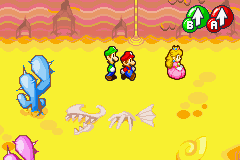
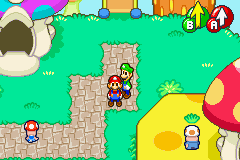
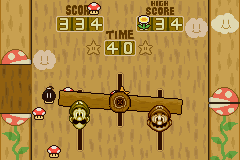
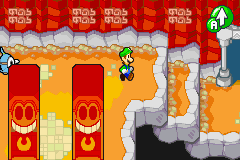
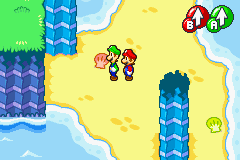
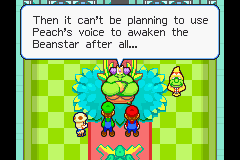
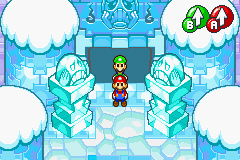
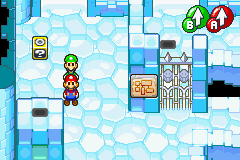
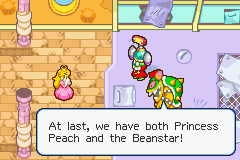
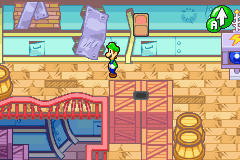
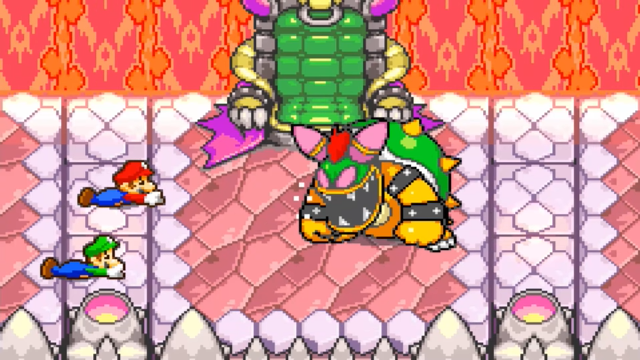
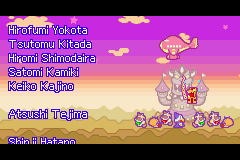
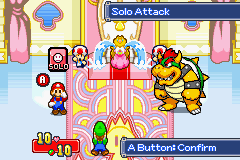 Toadtown Square and Peach’s CastleMushroom Kingdom · tutorial · BowserA short run as Toad, two missable favours for the locals and a ten-HP Bowser to learn the ropes on.
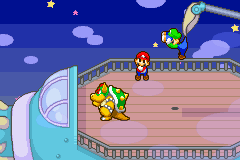 Koopa CruiserIn flight · Fawful (first battle)Bowser’s airship, crewed by his Baddies. Find the lost Koopa on board for a 1-Up Mushroom before Fawful shoots it down.
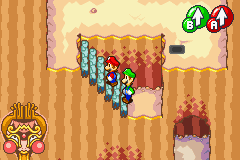 Hoohoo MountainHoohoo Block and Peasley’s Rose · Hoohooros, DragohohoWhirlwinds, a watering hole and a view of Peach’s Castle from the top.
 Woohoo HooniversityThe Beanstar · Cackletta, Popple and RookieLaser Snifits, Dr. Mario’s Viruses, a room of rolling barrels straight out of Donkey Kong and a hall of famous blocks.
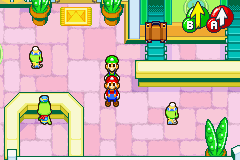 Beanbean AirportPeach arrives · Mom PiranhaA weed problem on the runway, solved with water and lightning.
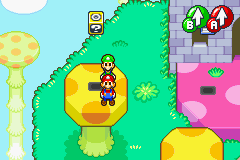 Little FungitownToad town · Star ’Stache SmashA slice of the Mushroom Kingdom abroad, complete with arcade and hypnotist.
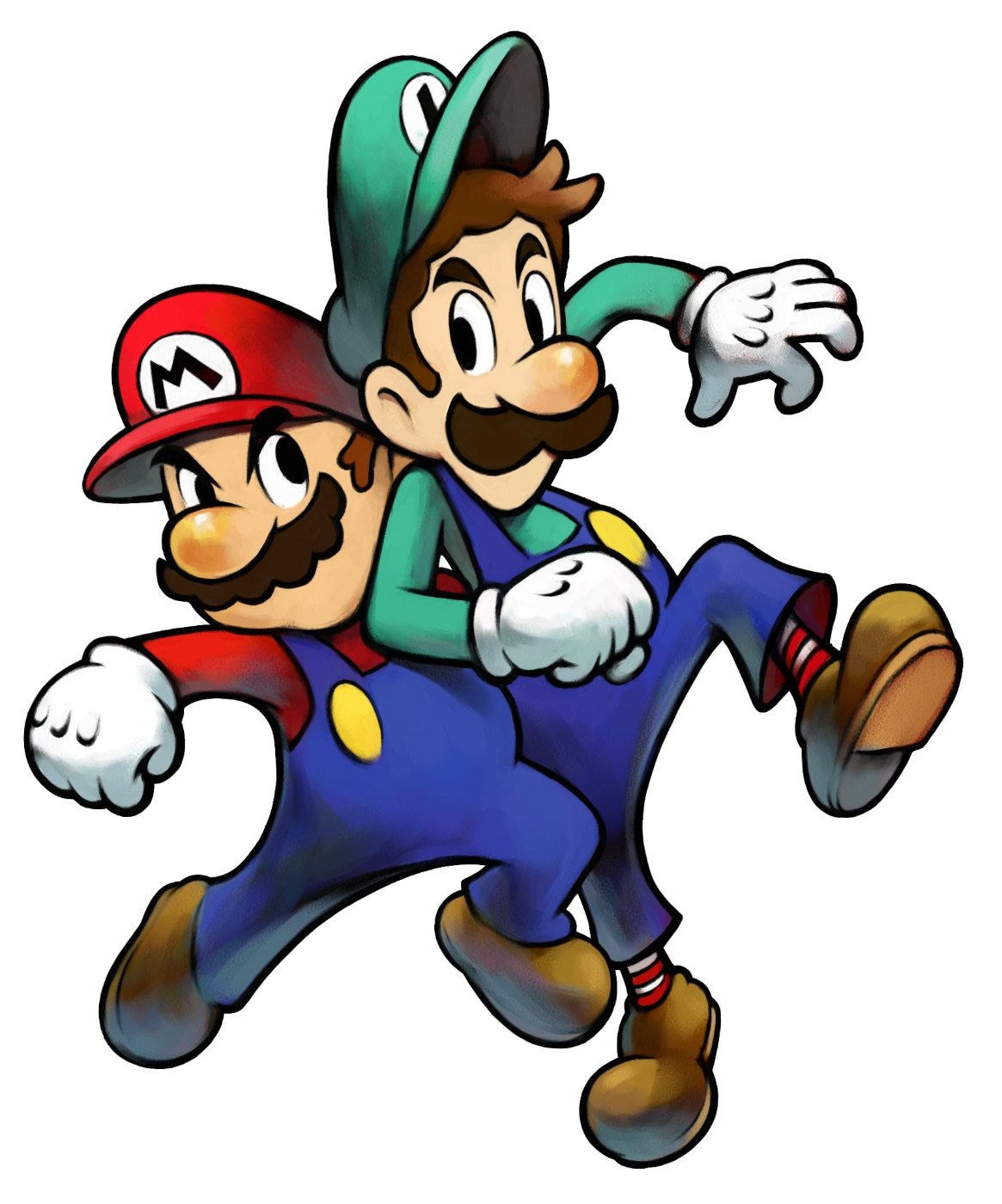
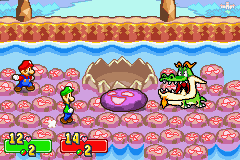


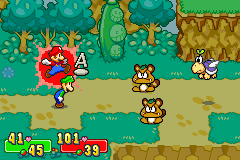
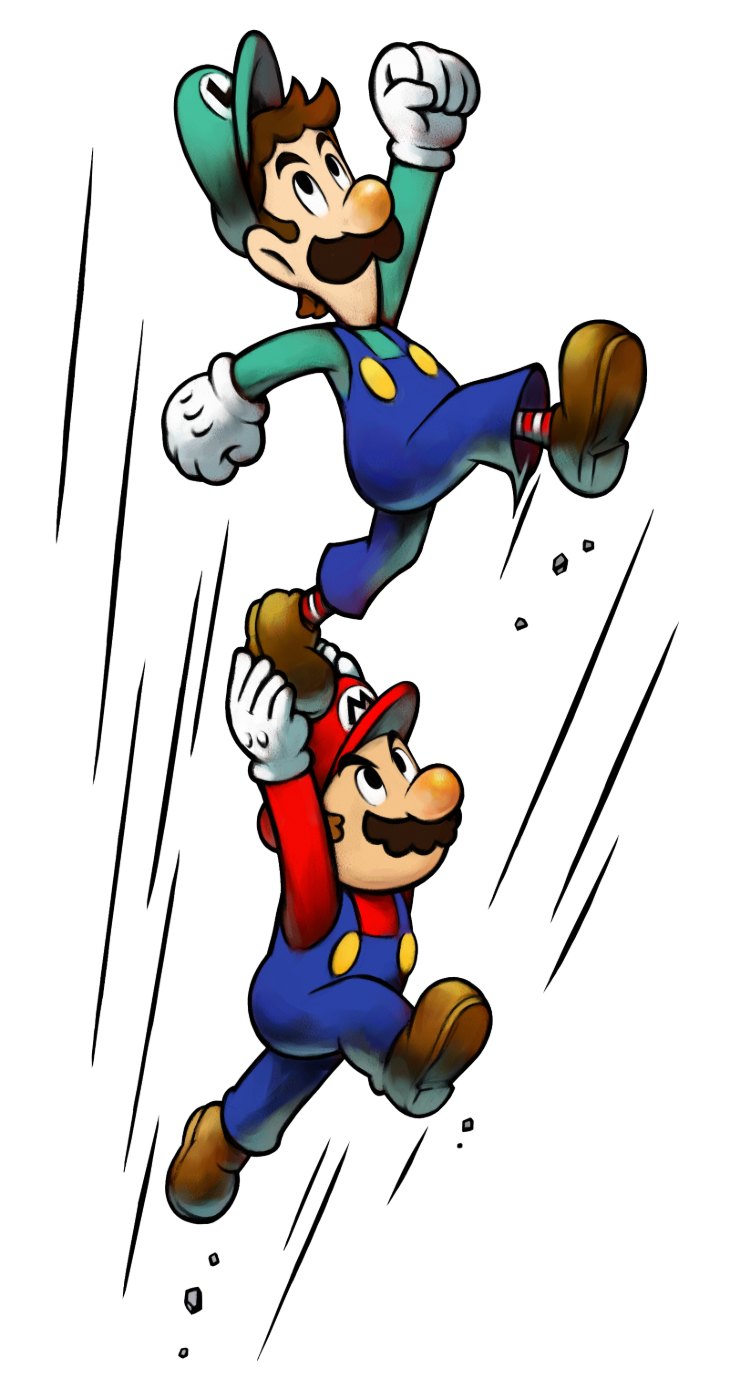
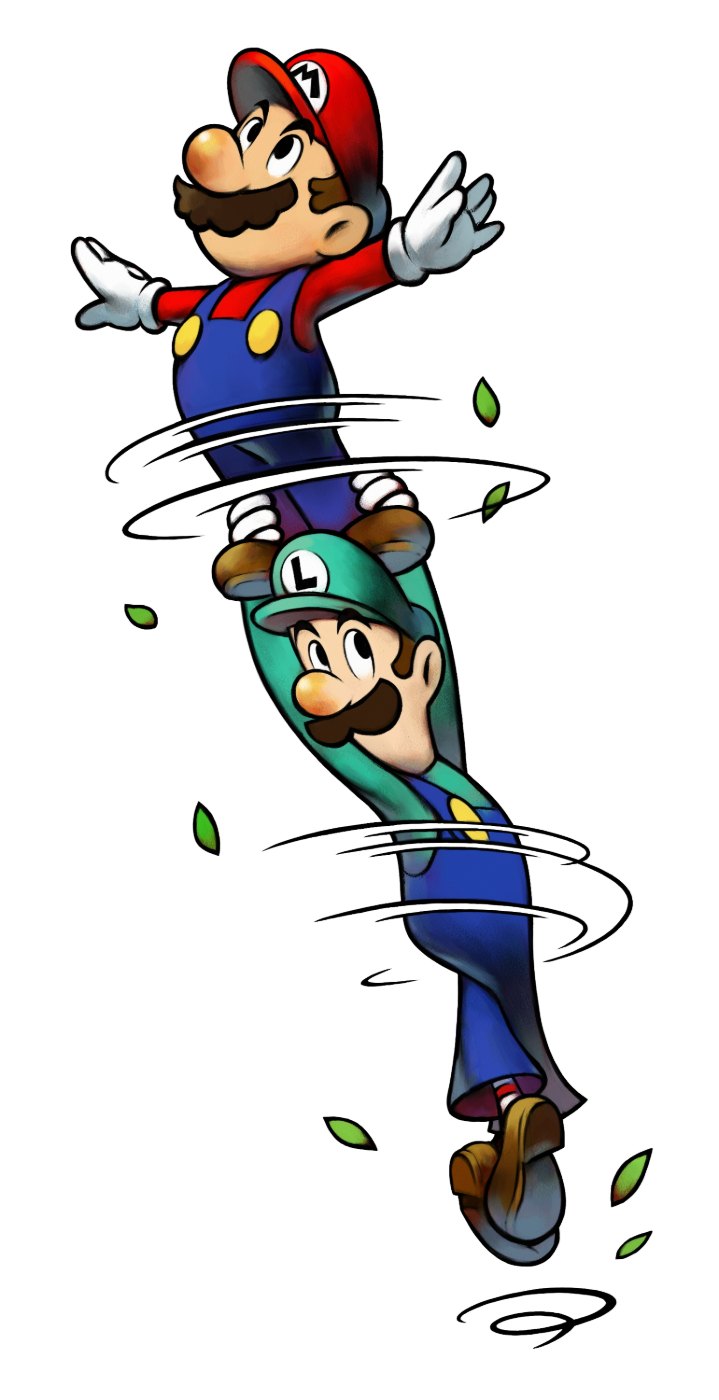


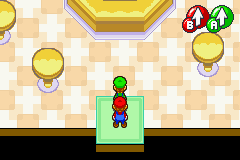
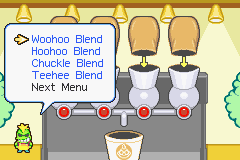
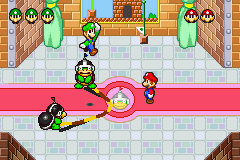
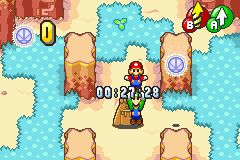
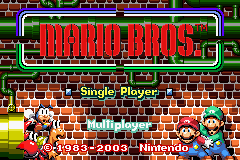
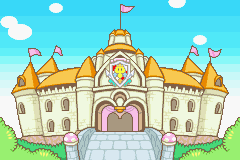
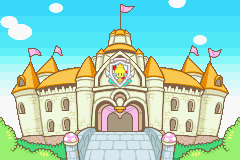
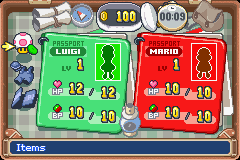
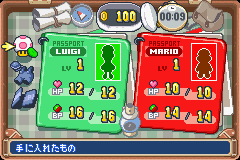
 Mushroom, Super, Ultra and Max MushroomRestore 25, 50, 120 or all HP to one brother (45 and 75 for Super and Ultra in Japan).
 Nut, Super, Ultra and Max NutRestore 20, 40, 100 or all HP to both brothers (25, 45 and 75 in Japan).
 Syrup, Super, Ultra and Max SyrupRestore 20, 40, 100 or all BP to one brother (35 and 55 for Super and Ultra in Japan).
 Golden MushroomFills one brother’s HP and BP completely.
 Refreshing HerbCures status problems such as poison and dizziness.
 1-Up Mushroom and 1-Up SuperRevive a fallen brother with half his HP, or with full HP and BP.
 Red PepperRaises POW by half for the battle (a quarter in Japan) and makes the brother heavier.
 Green PepperRaises DEF by half (a quarter in Japan) and makes him lighter.
 Woo BeanReward from Harhall for each new shirt design. 25 make a Woohoo Blend (+4 HP).
 Hoo BeanFound in blocks. 25 make a Hoohoo Blend (+4 BP).
 Chuckle BeanBuried in the ground. 25 make a Chuckle Blend (+4 SPEED).
 Hee BeanMinigame prize. 25 make a Teehee Blend (+4 STACHE).
 Hoolumbian, Chuckoccino and TeeheespressoMixed blends: 15 Woo Beans plus 10 Hoo, Chuckle or Hee. +4 POW, +4 DEF and +6 to a random stat.
 Greed WalletE. Gadd’s first gift. Doubles the coins enemies drop.
 Bonus RingSecond gift. Extra experience for winning without losing HP.
 Excite SpringThird gift. Hold the button to hang in the air when dodging.
 Great ForceFourth gift. Doubles the damage you deal and the damage you take.
 Power GripFifth gift. Stops the hammer head dropping off while you hold a guard. Not in the remake.
 Cobalt NecktieSixth gift. Doubles the wearer’s STACHE.
 Game Boy Horror SPSeventh and last gift. Enemies always drop their rare item.
 Soulful Bros. and Bros. RockPrize badges: the first from Hermie III for bringing him Spangle, the second from the scholar who wants ten Beanstones.
 BeanstarThe sleeping wish-granter everyone is after. It breaks into four pieces over Woohoo Hooniversity.
 Peasley’s RoseThe prince’s keepsake, and your pass into Beanbean Castle.
 Beanbean BroochLady Lima’s pass to Chateau de Chucklehuck.
 Chuckola FruitRed, white and purple fruit that Chuckleroot demands before he will let you through the woods.
 Crabbie GrassThe bitter cure for Bean Fever, growing deep in Guffawha Ruins.
 Neon EggsSeven coloured eggs laid by well-fed Yoshis. Boddle swaps them for a Beanstar piece.
 Secret Scrolls 1 and 2Won from the Thwomps’ boulder game. They teach Swing Bros. and Cyclone Bros.
 Fake BeanstarA cheap plastic copy from Prince Peasley, meant to fool Bowletta.
 Peach’s Extra DressToadsworth’s contribution to the rescue plan. Luigi ends up wearing it.
 Beanstones and BeanletsTen jewels and five lost pets hidden around Beanbean Castle Town. Find them all for the Bros. Rock and a Golden Mushroom.
 Membership Card and Winkle CardMinigame trophies from Bink’s barrel game on the S.S. Chuckola and from Winkle Colosseum.
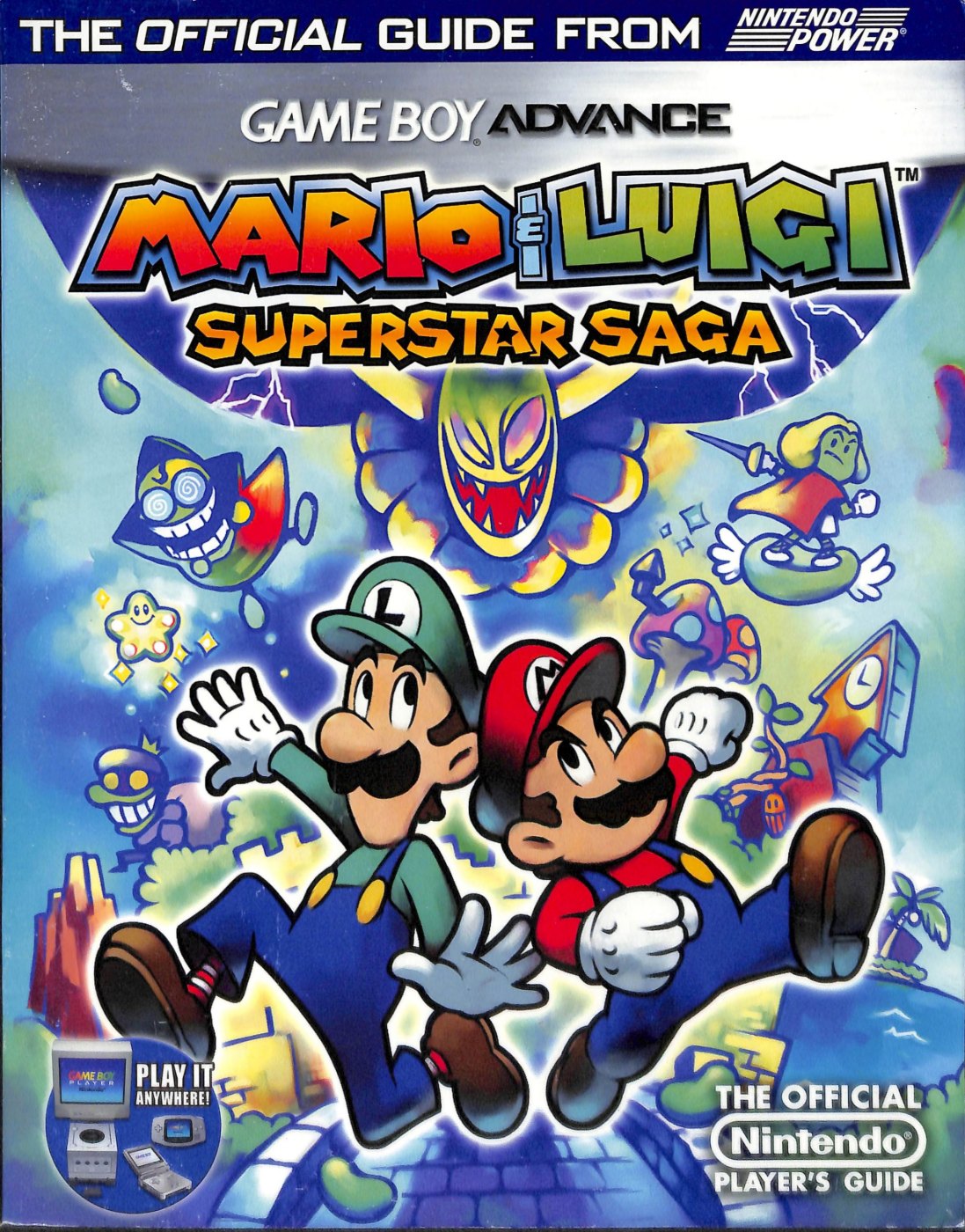 Nintendo Power Player’s GuideGuide bookNintendo’s own strategy guide. The magazine came back to the game years later in the Playback section of issue 263.
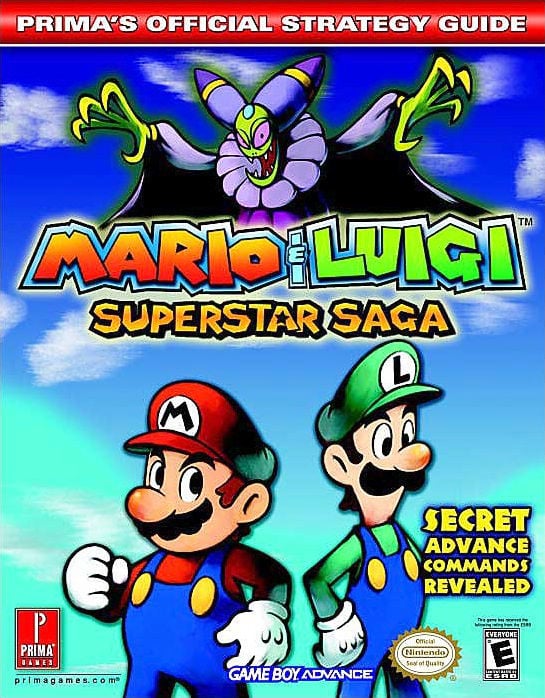 Prima’s Official Strategy GuideGuide bookThe third-party alternative, published by Prima Games.
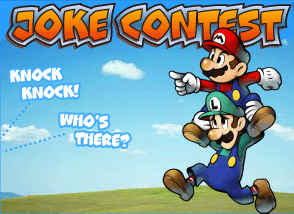 The knock-knock joke contestNintendo of America · 16 October to 17 November 2003A month-long competition on the game’s website. Weekly winners received a Game Boy Advance SP and the game; comedian Kathy Griffin picked the overall champion, who took home a GameCube bundle and a year of online comedy-writing classes.
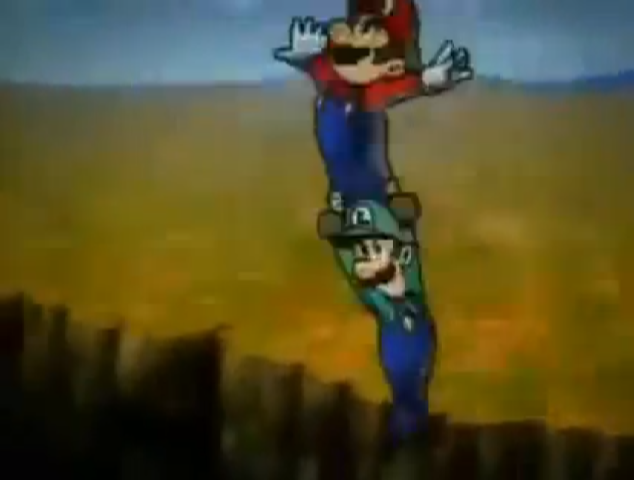 The Japanese TV commercialAdvert · 2003An animated spot in which Peach’s speech turns explosive and the brothers Spin Jump across a broken bridge, set to a rearranged Super Mario World ground theme.
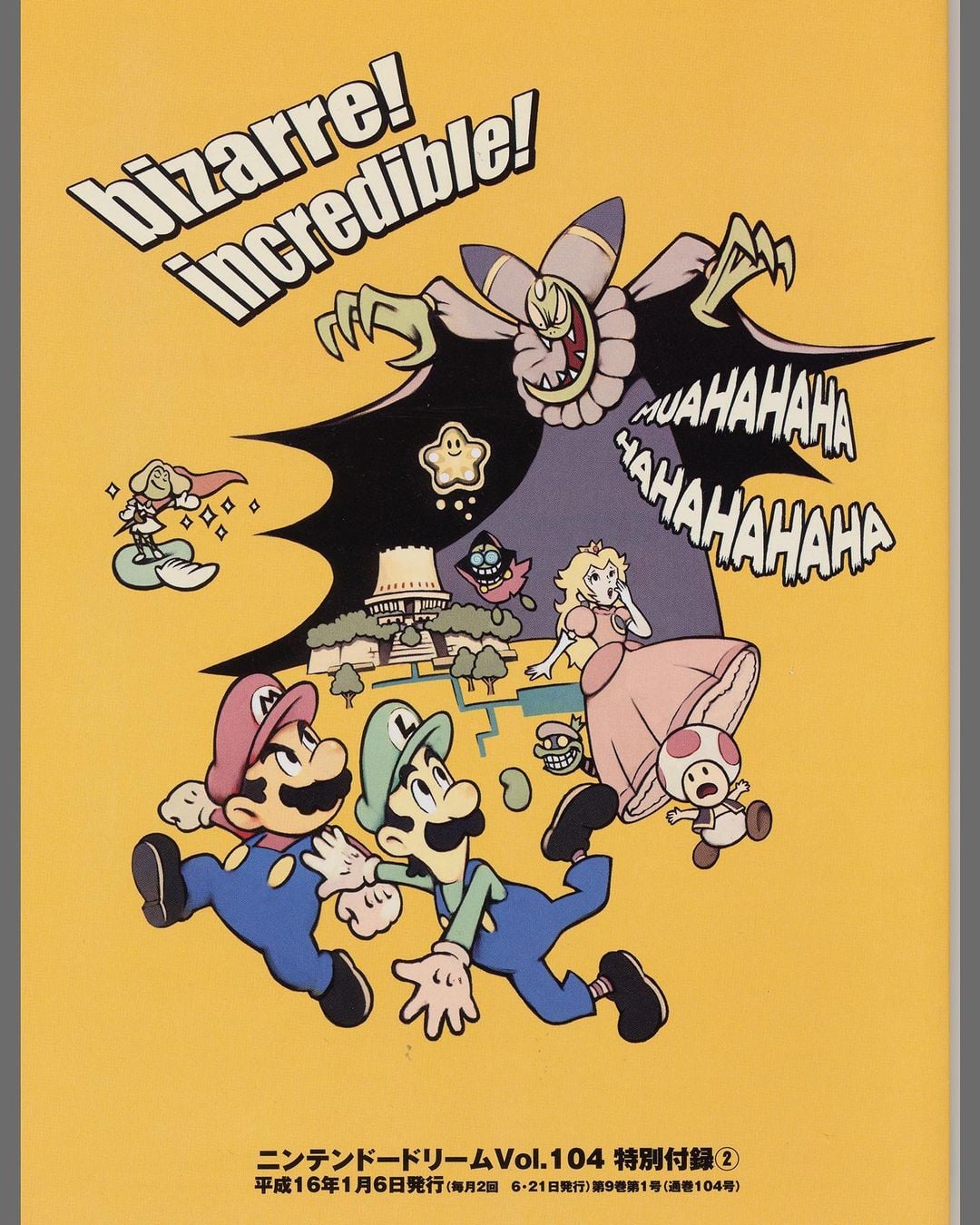 Nintendo DREAM’s Luigi guideMagazine appendix · JapanVolume 104 of Nintendo DREAM came with a “Luigi Ōen Guide” booklet; its back cover is a group illustration of the cast by the game’s illustrator, Masanori Sato.
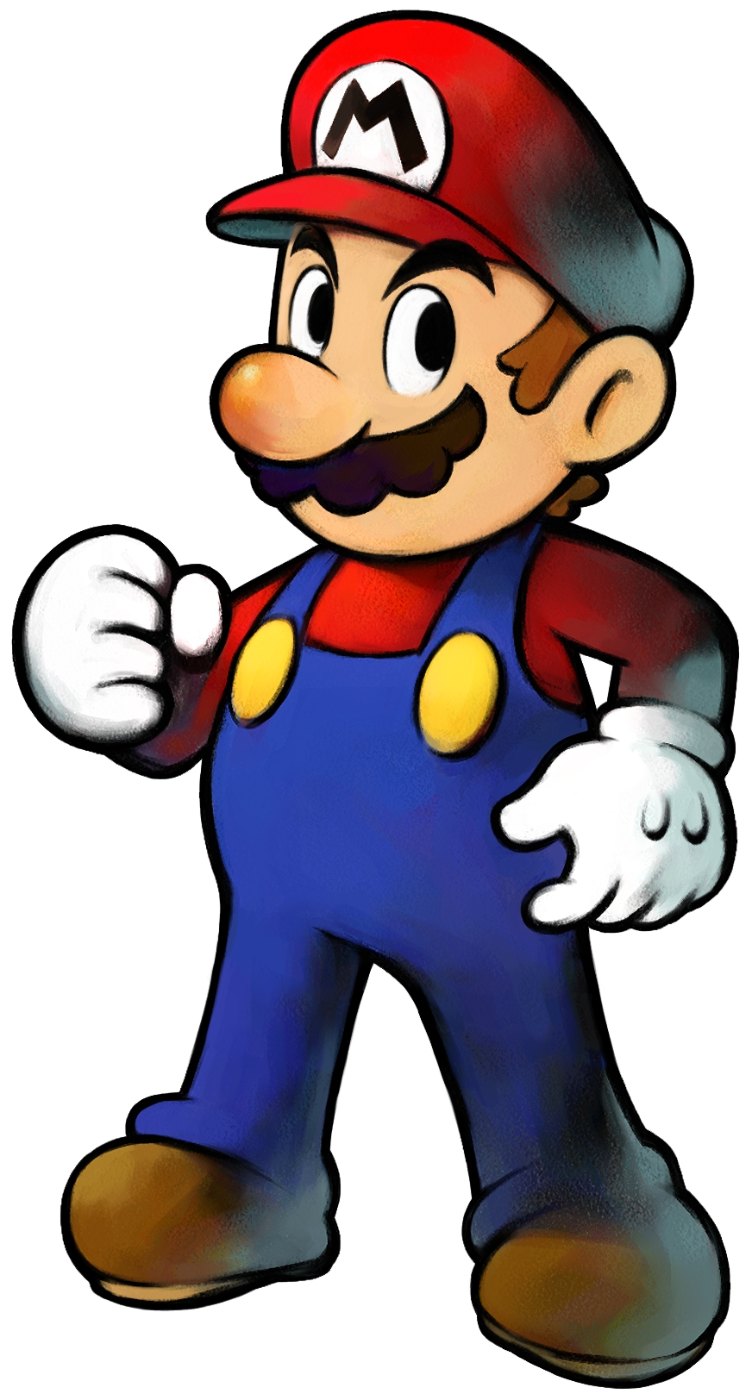 MarioThe A Button
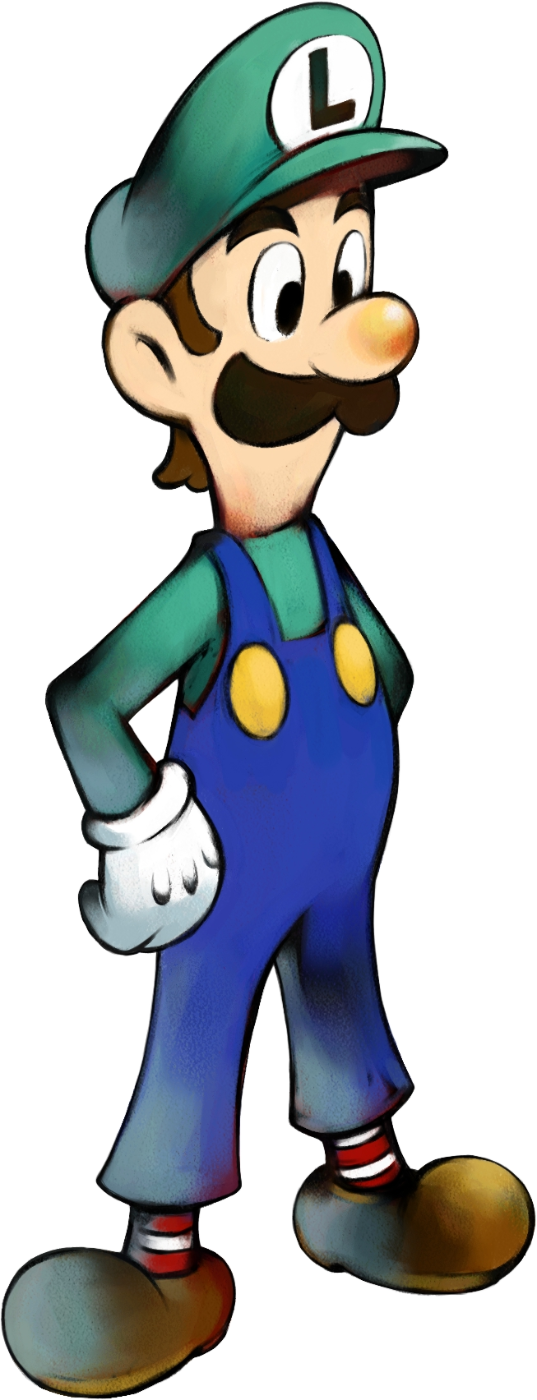 LuigiThe B Button
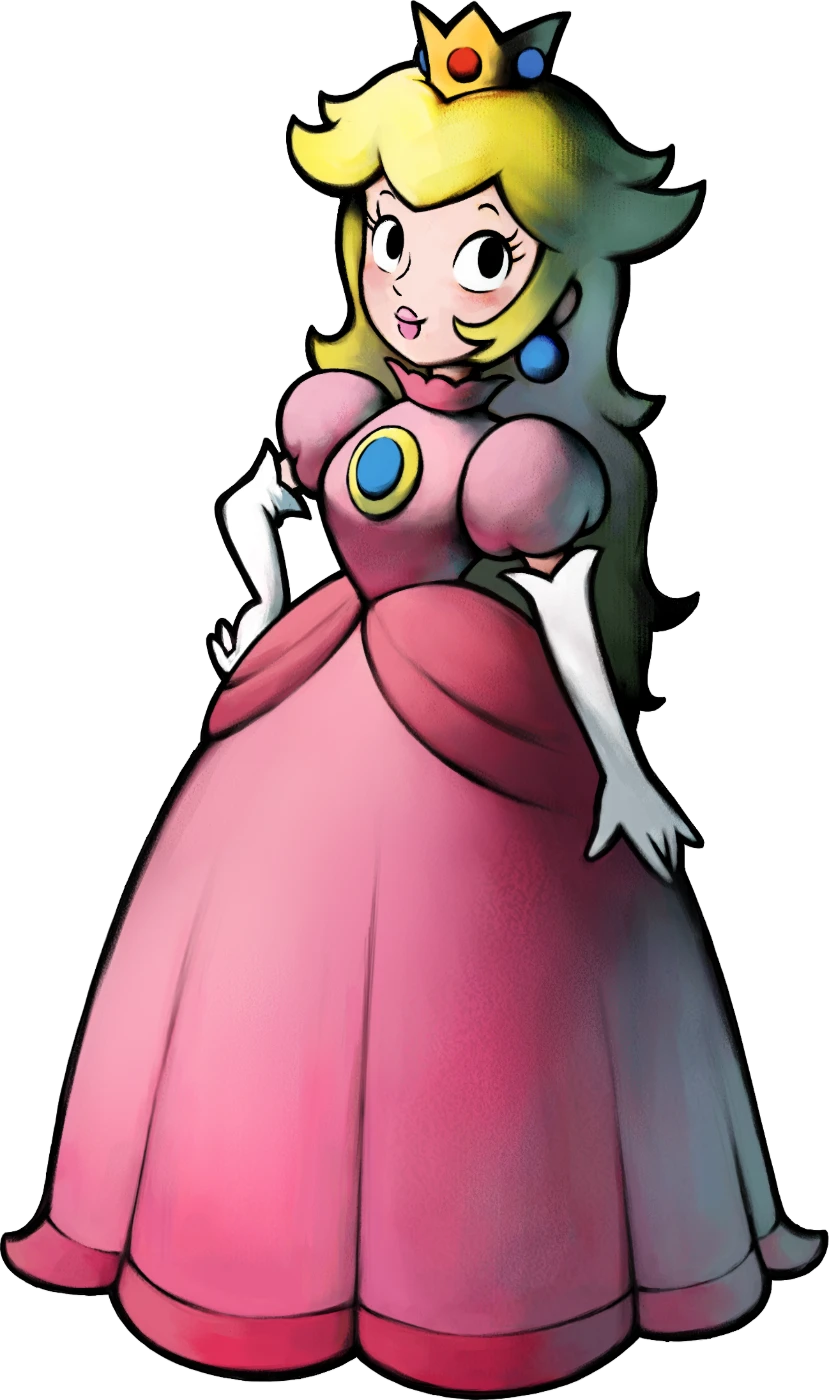 Princess PeachNot as helpless as she looks
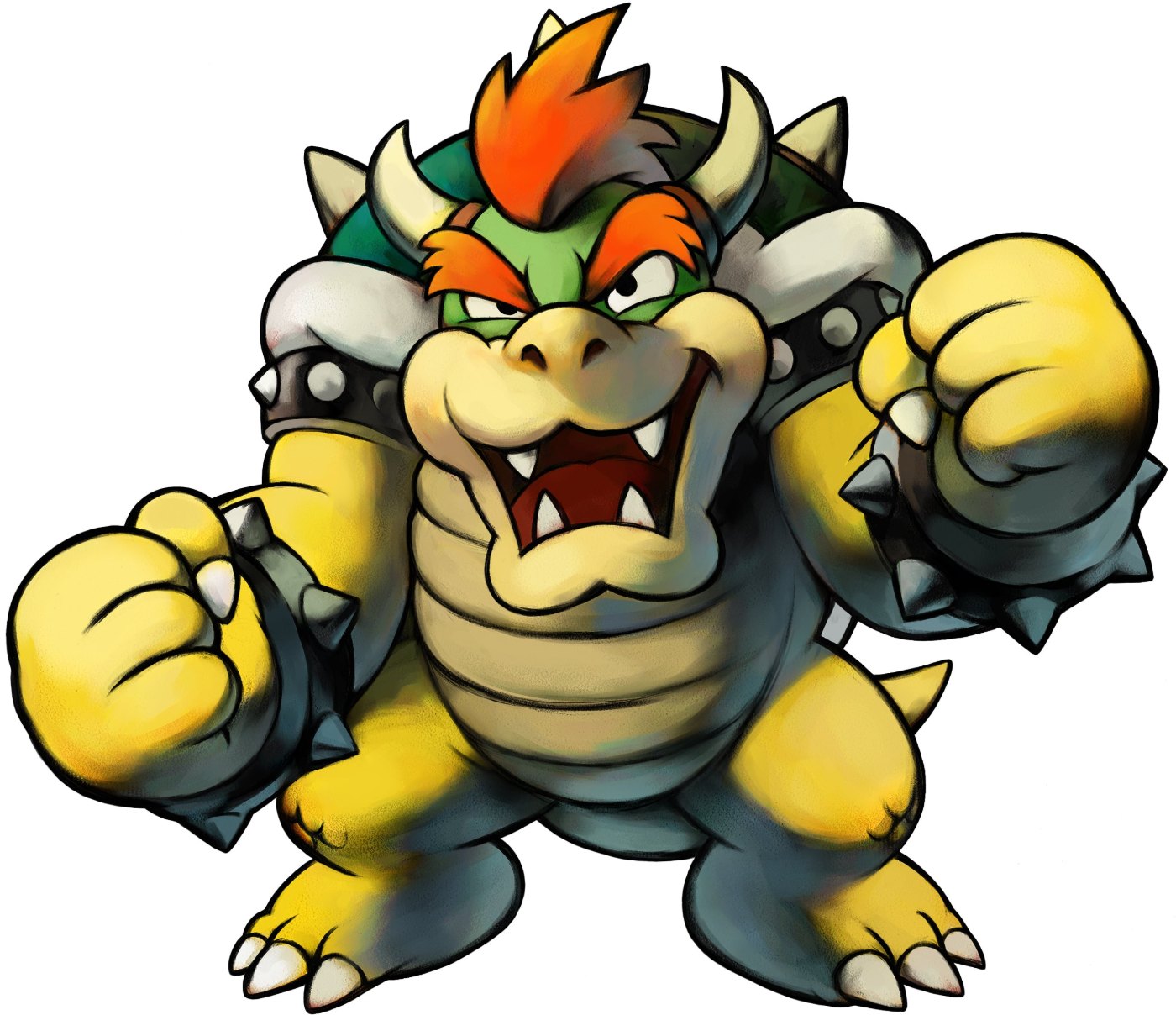 Bowser / RookieAlly, amnesiac, vessel
 ToadPlayable for one house
 ToadsworthPeach’s steward
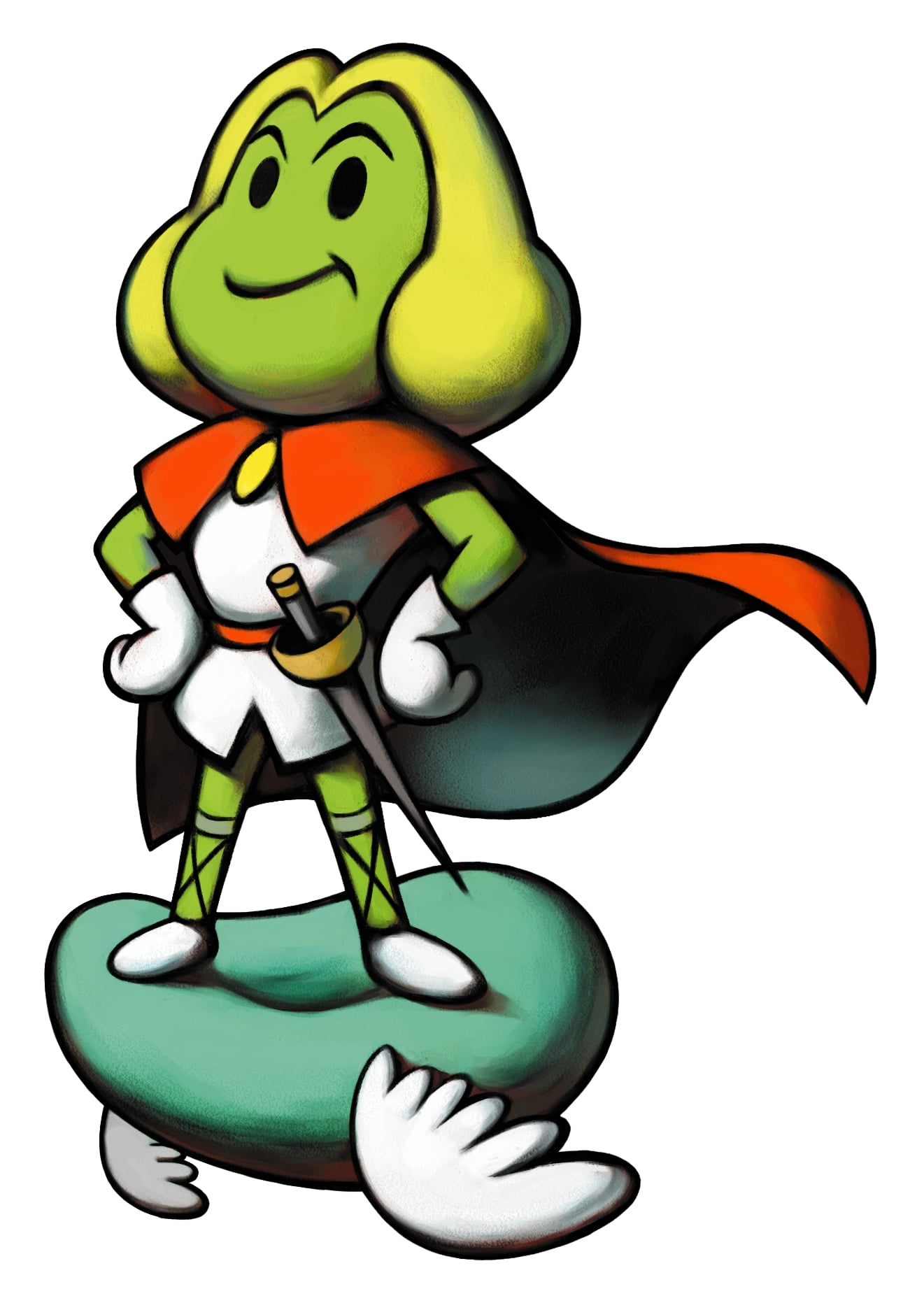 Prince PeasleyHero of the Beanbean Kingdom
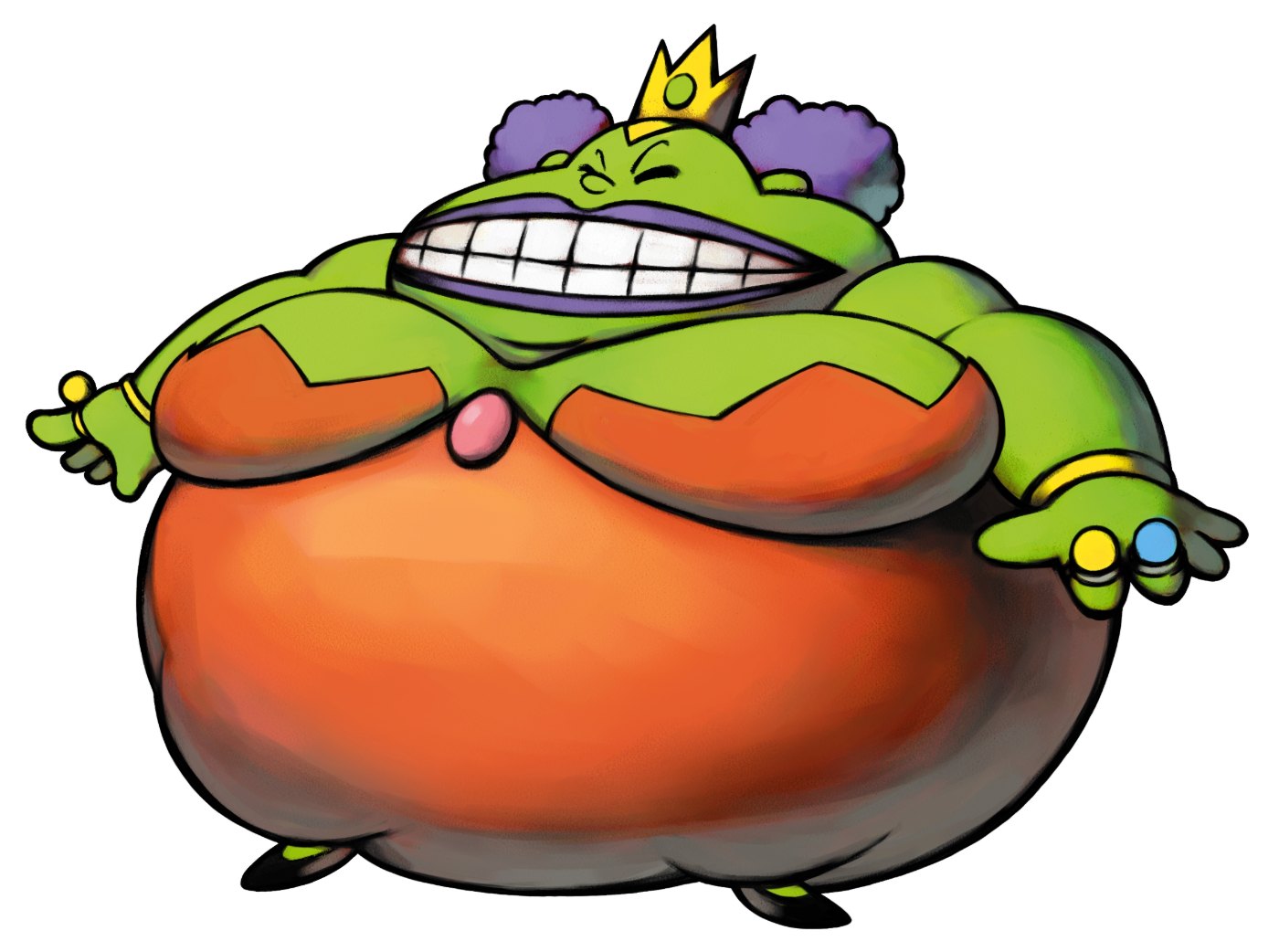 Queen BeanMonarch of the Beanbean Kingdom
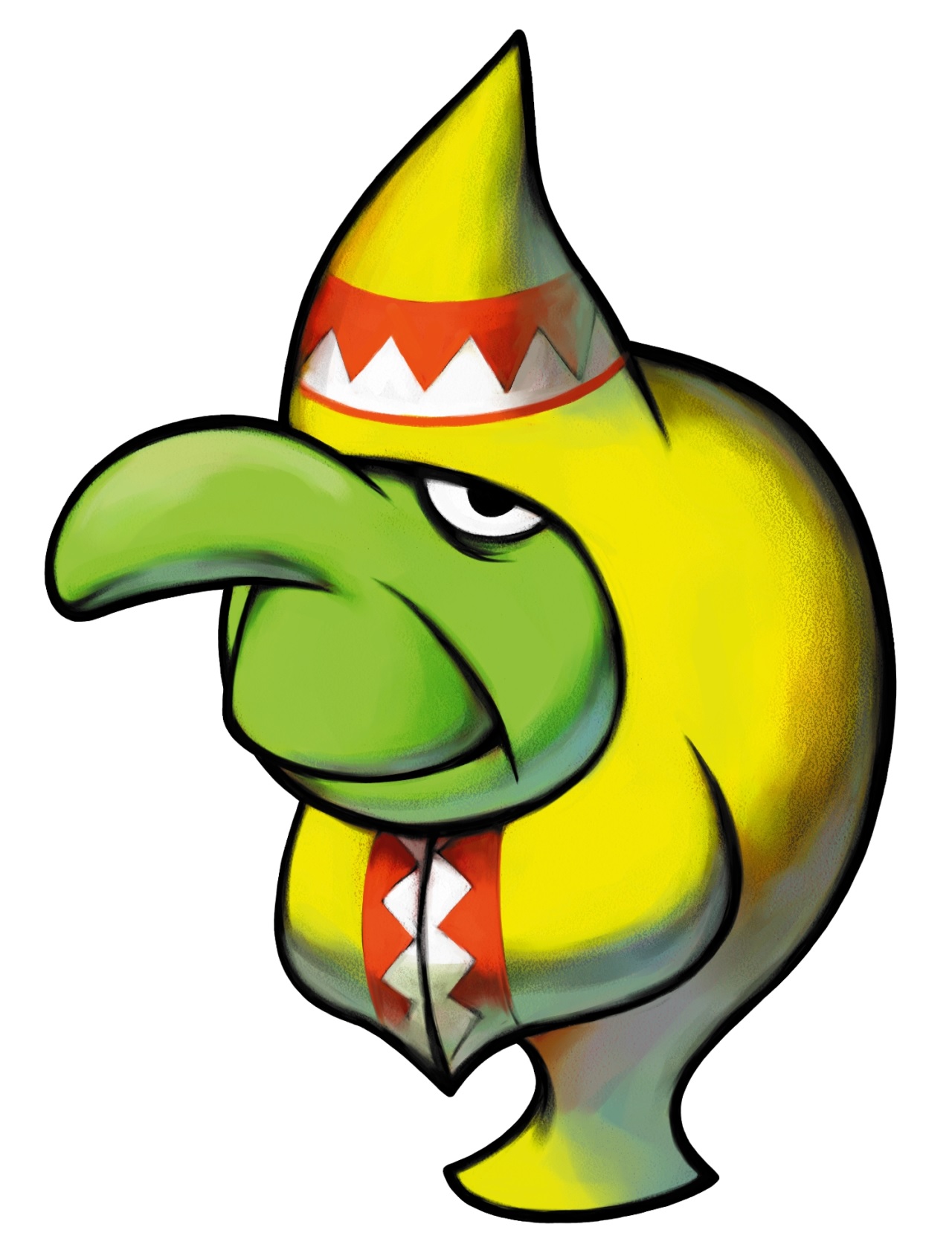 Lady LimaThe queen’s adviser
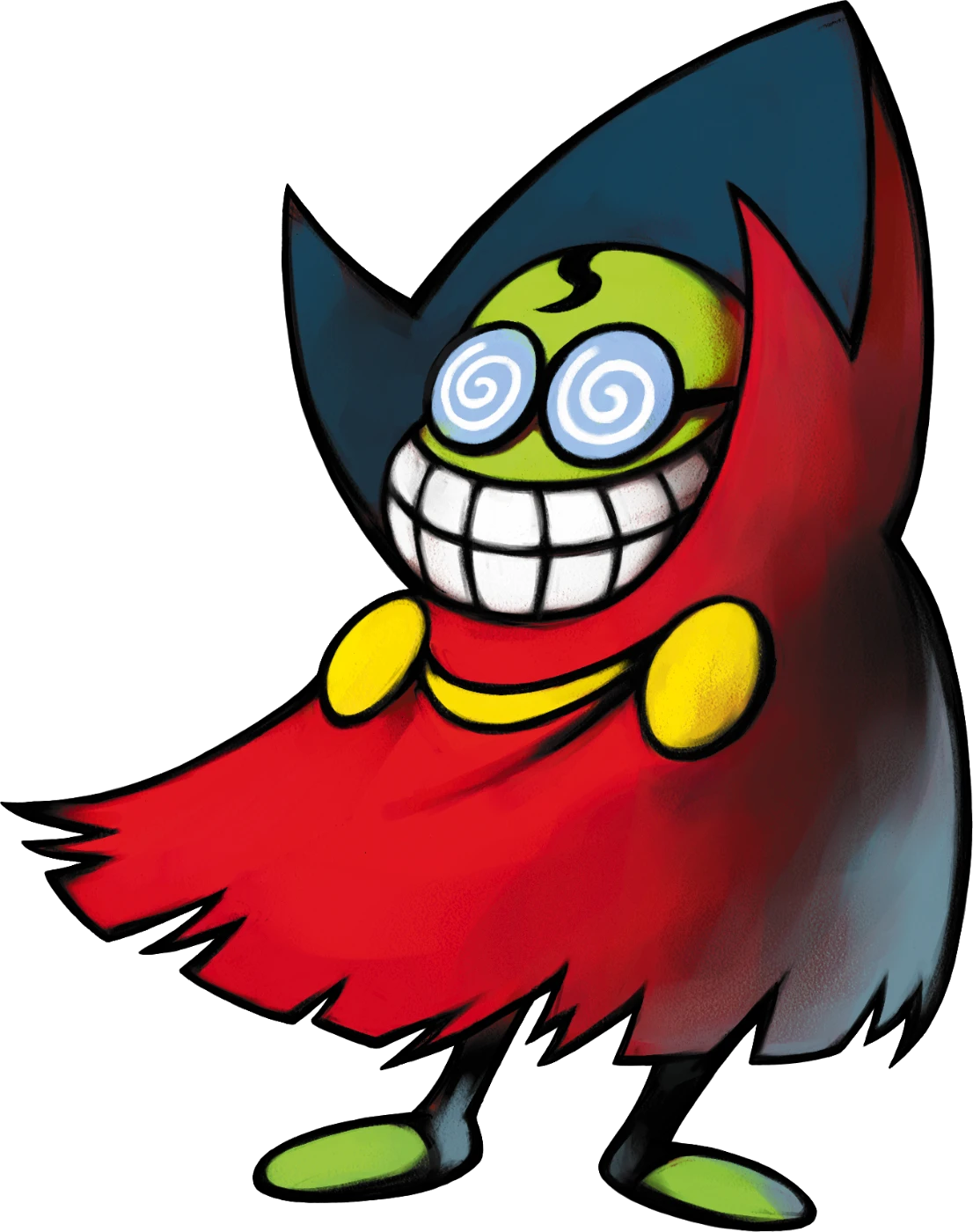 FawfulHe has fury
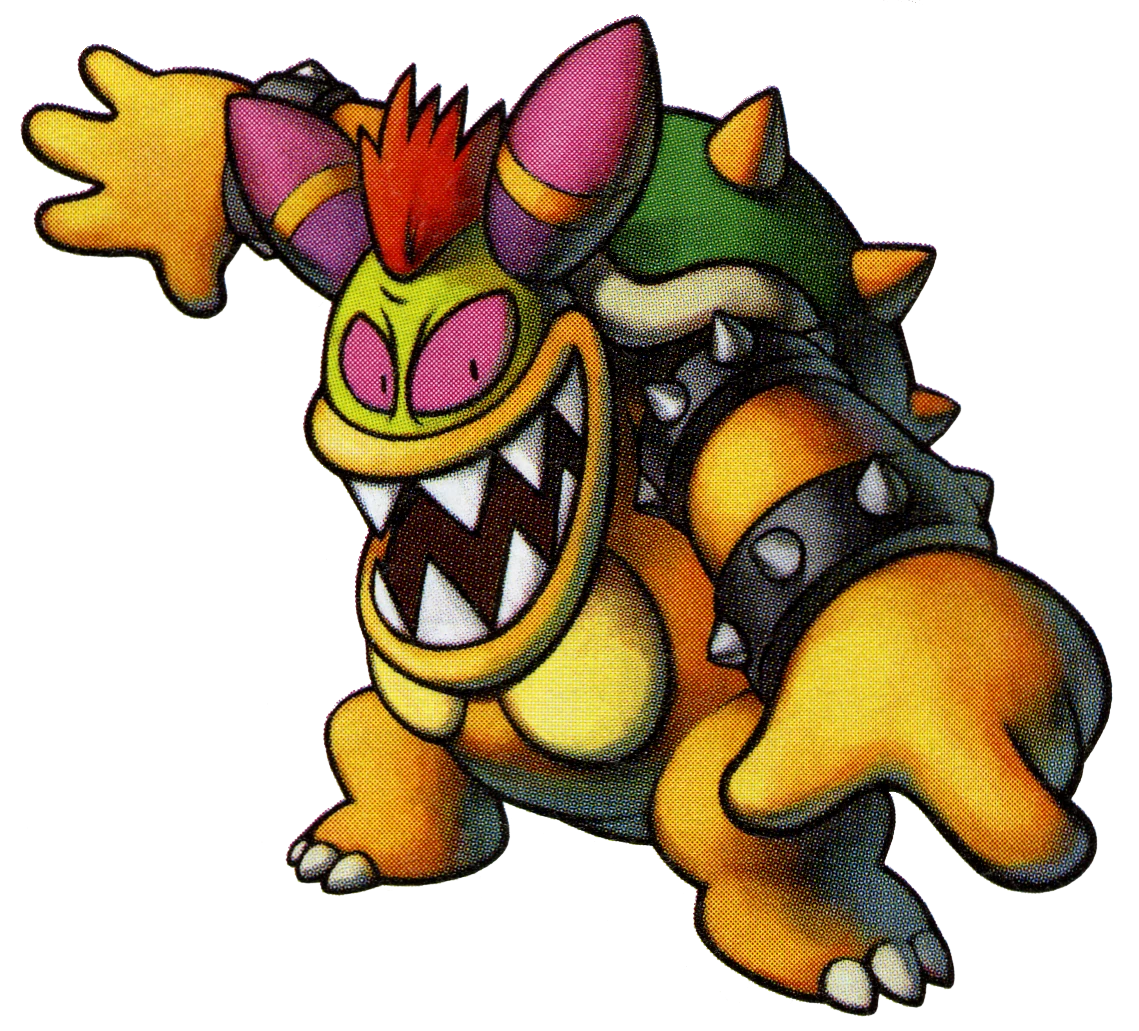 BowlettaCackletta in Bowser’s body
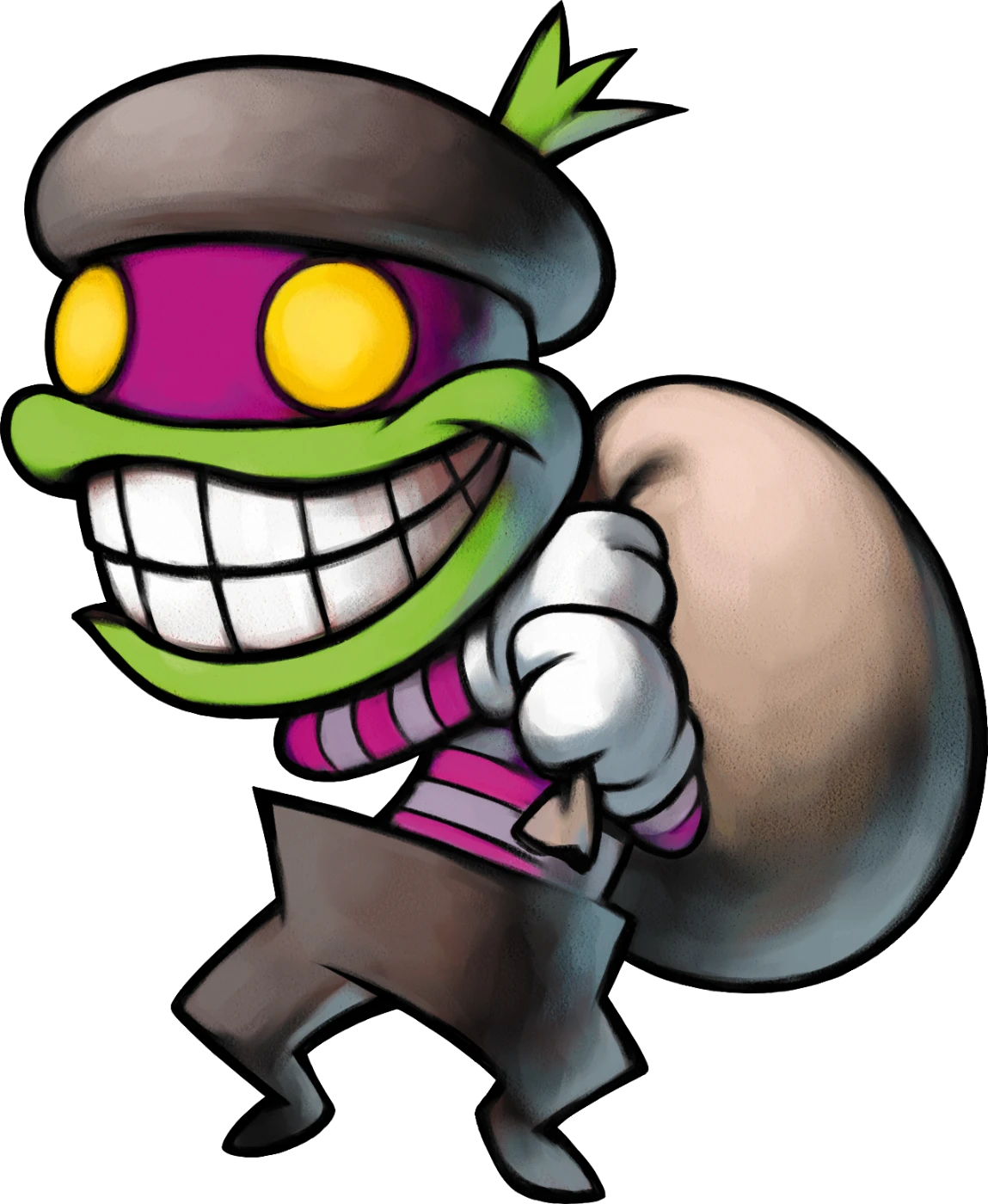 PoppleThe Shadow Thief
 BirdoThe decoy princess
 Professor E. GaddOwner of the Starbeans Cafe
 BlablanadonThe flier on the summit
 Starshade Bros.Teachers of the High Jump and Spin Jump
 Sledge and MalletThe Hammerhead Bros.
 Cork and CaskBrewers of Chuckola Cola
 Chuckleroot and BubblesGuardians of the Reserve
 Psycho KamekHypnotist of Little Fungitown
 Jellyfish SistersKeepers of the Relaxation Room
 Boddle and the YoshisYoshi Theater
 HarhallFashion designer
 Bowser (boss)Peach’s Castle10 HP. A tutorial in jumping, fought by Mario alone.
 Fawful (boss)Koopa Cruiser18 HP in the first phase and 12 in the second.
 Tolstar (boss)Stardust Fields52 HP. Pays out exactly the coins you handed him.
 Hoohooros (boss)Hoohoo Mountain45 HP, with 2 HP pillars alongside.
 Dragohoho (boss)Hoohoo Mountain summit80 HP. Prince Peasley under a spell, backed by 4 HP Hoho Stones.
 Queen Bean (boss)Beanbean Castle120 HP (100). Knock out both arms, 22 HP each, to reach her.
 Popple and Rookie (boss)Chateau de Chucklehuck100 and 120 HP. The first of four meetings with the Shadow Thief.
 Wiggler (boss)Chucklehuck Woods34 HP, and worth 120 EXP.
 Chuckolator (boss)Chucklehuck Woods300 HP. Living soda with a shield and a gun arm.
 Cackletta (boss)Woohoo Hooniversity300 HP. The witch herself, fighting alone after Luigi floors Fawful.
 Popple and Rookie, rematch (boss)Woohoo Hooniversity basement150 and 250 HP. Rookie has learned some very Bowser-like tricks.
 Mom Piranha (boss)Beanbean Airport220 HP. Appears in red and blue forms.
 Trunkle (boss)Teehee Valley110 HP body (180) and a 60 HP tree (140), plus small Trunkles.
 Hermie III (boss)Gwarhar Lagoon400 HP (380), claws 70 (40). Sidesteppers scuttle in to help.
 Popple, alone (boss)Winkle Colosseum, Chucklehuck Woods520 HP (620). Fights for the third Beanstar piece.
 Piranha Bean (boss)Beanbean Outskirts, on the way to Guffawha Ruins180 HP (280). Luigi fights it alone.
 Jojora and her friend (boss)Joke’s EndJojora has 50 HP; the friend she summons has 500.
 Popple and Birdo (boss)Teehee Valley500 HP (600) and 450 HP (500). Birdo’s eggs have 20 HP each.
 Iggy (boss)Bowser’s Castle550 HP (650). First of the seven Koopalings.
 Morton (boss)Bowser’s Castle500 HP (900).
 Lemmy (boss)Bowser’s Castle380 HP (600), hidden among fakes with 1 HP.
 Ludwig (boss)Bowser’s Castle550 HP (700).
 Roy (boss)Bowser’s Castle550 HP (920), the most of the seven in Japan.
 Wendy (boss)Bowser’s Castle350 HP (500), also with doubles.
 Larry (boss)Bowser’s Castle550 HP (600). Arrives swinging a spiked tennis racquet.
 Fawful, second battle (boss)Bowser’s Castle400 HP (430). Fights from inside a dome-shaped machine.
 Bowletta (boss)Bowser’s Castle500 HP (700). Becomes Dark Bowletta when hurt and summons 10 HP Flarets.
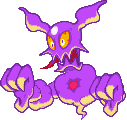 Cackletta’s soul (boss)Inside BowlettaHead 200 HP (180), arms 80 (90), heart 1,200 (800).
 GoombaKoopa Cruiser4 HP, 2 EXP. Bowser’s own crew, used for target practice.
 Fighter FlyStardust Fields5 HP, 2 EXP. Back from the original Mario Bros.
 Bill BlasterStardust Fields5 HP, 3 EXP.
 BeanieHoohoo Mountain, the Outskirts, Beanbean Castle, Chucklehuck Woods, Seabed, Gwarhar Lagoon6 HP, 4 EXP. The most widespread enemy in the kingdom.
 Dry BonesHoohoo Mountain8 HP, 6 EXP.
 RexHoohoo Mountain16 HP, 8 EXP.
 SharpeaBeanbean Outskirts8 HP, 2 EXP.
 SwormBeanbean Outskirts14 HP, 14 EXP (2 in Japan).
 ParabeanieBeanbean Outskirts20 HP, 9 EXP (8).
 TroopeaBeanbean Outskirts20 HP, 16 EXP (4). Walks on two legs in the remake.
 TanoombaBeanbean Outskirts30 HP (70), 20 EXP (14).
 LakipeaBeanbean Outskirts40 HP (50), 20 EXP (10).
 Bob-ombBeanbean Outskirts30 HP, 16 EXP (7).
 ParatroopeaBeanbean Outskirts40 HP, 20 EXP (9).
 Super FlyBeanbean Castle Sewers10 HP, 12 EXP.
 SpinyBeanbean Castle14 HP, 15 EXP.
 PestnutChucklehuck Woods; Seabed and Gwarhar Lagoon15 HP in the woods; the sea-going kind has 40 (30) and is called Elite Pestnut in the remake.
 Gold BeanieChucklehuck Woods, Seabed, Gwarhar Lagoon11 HP. Worth 50 EXP and 30 coins (100 coins in Japan).
 Chuck GuyChucklehuck Woods; Guffawha Ruins22 HP in the woods, 30 in the ruins, where it gives 60 EXP (30).
 FuzzbushChucklehuck Woods15 HP, 24 EXP.
 Laser SnifitWoohoo Hooniversity20 HP, 20 EXP (18). The Hooniversity’s scientists, transformed.
 EekerWoohoo Hooniversity20 HP, 24 EXP (25).
 Yo BroWoohoo Hooniversity40 HP (30), 30 EXP (25).
 VirusWoohoo Hooniversity36 HP. Blue, red and yellow, straight from Dr. Mario; match their colours to clear them.
 Mecha-ChompWoohoo Hooniversity36 HP (46). Replaced by Mechakoopas in the remake.
 Oho JeeOho Oasis and its palaces75 HP, but only 4 EXP.
 GoomdiverSeabed, Gwarhar Lagoon30 HP, 25 EXP.
 BlooperSeabed60 HP (40), 35 EXP.
 Piranha PlantBeanbean Airport30 HP. Red and blue, and all over the runway.
 Gritty GoombaTeehee Valley; Gwarhar Lagoon30 HP in the desert, 50 for the tougher lagoon kind (Elite Gritty Goomba in the remake).
 Spiky SnifitTeehee Valley80 HP, 67 EXP (45).
 Oucher GlassGuffawha Ruins40 HP, 60 EXP (40). Only Luigi ever meets it.
 Limbo BroGuffawha Ruins; Teehee Valley40 HP for the yellow kind, 45 for the green one found later.
 AnubooTeehee Valley60 HP, 60 EXP.
 Cheep CheepSeabed, Gwarhar Lagoon40 HP, 60 EXP. Becomes a Spiny Cheep Cheep in the remake.
 Puffer-CheepSeabed, Gwarhar Lagoon40 HP, 80 EXP (60).
 StarkissSeabed, Gwarhar Lagoon35 HP, 58 EXP (50).
 MalibutSeabed, Gwarhar Lagoon60 HP (50), 68 EXP (70).
 Mecha-BlooperSeabed, Gwarhar Lagoon80 HP, 92 EXP (80).
 Elite TroopeaGwarhar Lagoon40 HP, 40 EXP (70).
 Boomerang BroGwarhar Lagoon60 HP, 100 EXP. Drops the Oho Gear, but only in Japan. Renamed Beanerang Bro in the remake.
 Sand Cheep (shown as ????)Gwarhar Lagoon50 HP. A shark-finned Cheep Cheep whose name the game never displays.
 Sharkbone (shown as ????)Gwarhar Lagoon25 HP, 120 EXP (80). Two fish sharing one unnamed entry.
 Ice SnifitJoke’s End60 HP, 68 EXP (75).
 GlurpJoke’s End50 HP, 70 EXP.
 ClumphJoke’s End200 HP (150), the most of any regular enemy.
 ScaratroopeaJoke’s End70 HP, 48 EXP (90).
 Elite Dry BonesTeehee Valley40 HP, 68 EXP (70). The late-game Dry Bones.
 Gunner GuyBowser’s Castle60 HP, 90 EXP.
 Hammer BroBowser’s Castle100 HP, 132 EXP (120).
 BooBowser’s Castle10 HP, 40 EXP (110).
 Chomp BroBowser’s Castle120 HP. Lost its tattoos in the remake.
 MagikoopaBowser’s Castle100 HP, 110 EXP (130).
 Sniper BillBowser’s Castle80 HP. Takes aim with a Super Scope, as in Yoshi’s Safari.