Arcade1983Nintendo R&D1PlatformerMario becomes a plumberLuigi’s arcade debutThe first POW BlockTwo players at once
Mario Bros.
Two years after Donkey Kong, Nintendo sent its little hero underground. Mario Bros. reached Japanese arcades in June 1983 and American ones that summer, and it is the game in which Mario became a plumber and was joined, in the arcades for the first time, by his brother Luigi. Up to two players at once share one screen of sewer pipes and ledges, clearing out Shellcreepers, Sidesteppers and Fighterflies by bumping the floor beneath them and then kicking them away, while Slipice, icicles and fireballs make life harder. In the middle of it all sits the very first POW Block. Designed by Shigeru Miyamoto and produced by Gunpei Yokoi at Nintendo R&D1, it gave the series its pipes and its coins, came home on the Famicom and NES, the Atari 2600, 5200 and 7800 and a string of home computers, and has been reborn as the Battle mode of Super Mario Bros. 3, the bonus game of every Super Mario Advance, Luigi Bros. and an Arcade Archives release on Nintendo Switch.
Developer:Nintendo R&D1 (arcade); Intelligent Systems (Famicom/NES port, by most accounts)
Publisher:Nintendo; Atari, Westside Soft House, Ocean Software and HAMSTER for various versions
Platform:Arcade; Famicom/NES; Atari 2600, 5200, 7800 and 8-bit computers; NEC PC-8001; Amstrad CPC, Commodore 64, ZX Spectrum; later e-Reader, Virtual Console, Nintendo Switch
Genre:Single-screen platformer
Japan (arcade):June 1983 (some sources give 21 June)
N. America (arcade):Summer 1983 (some sources give 20 July), after a preview in Chicago in March
Famicom:9 September 1983
NES:North America 20 June 1986; Europe 1986 (some sources give 1 September)
Music:Yukio Kaneoka; Hirokazu Tanaka also credited on the arcade game
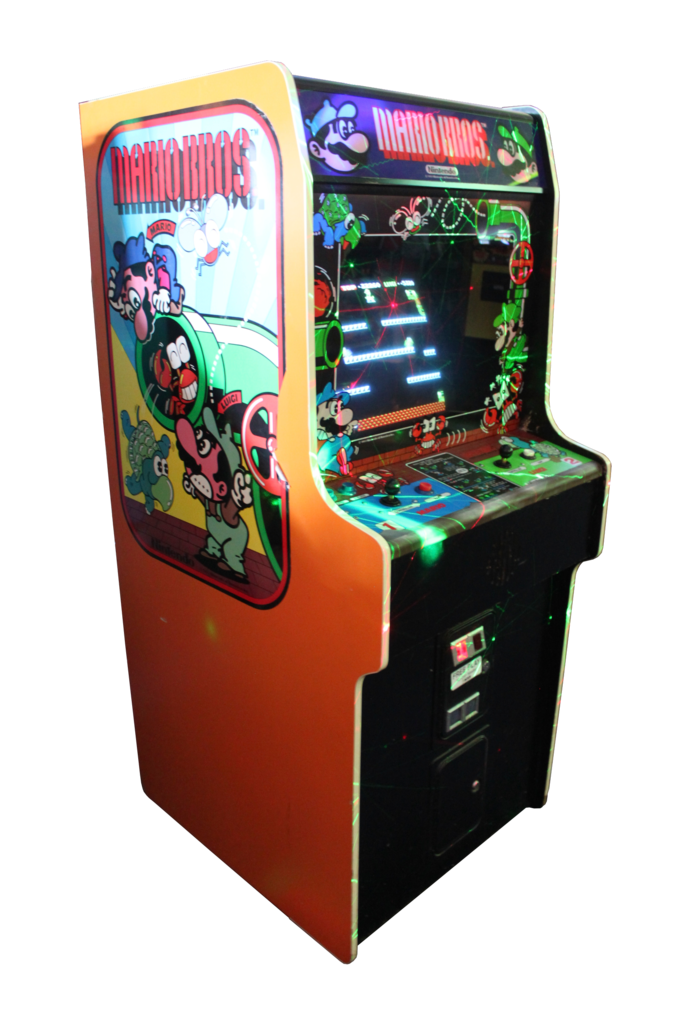
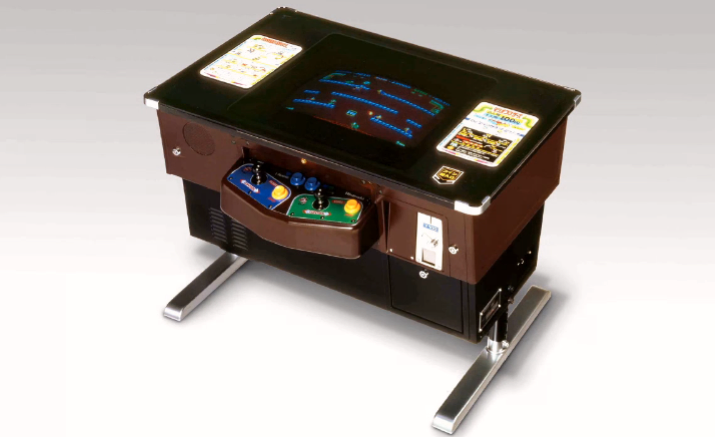
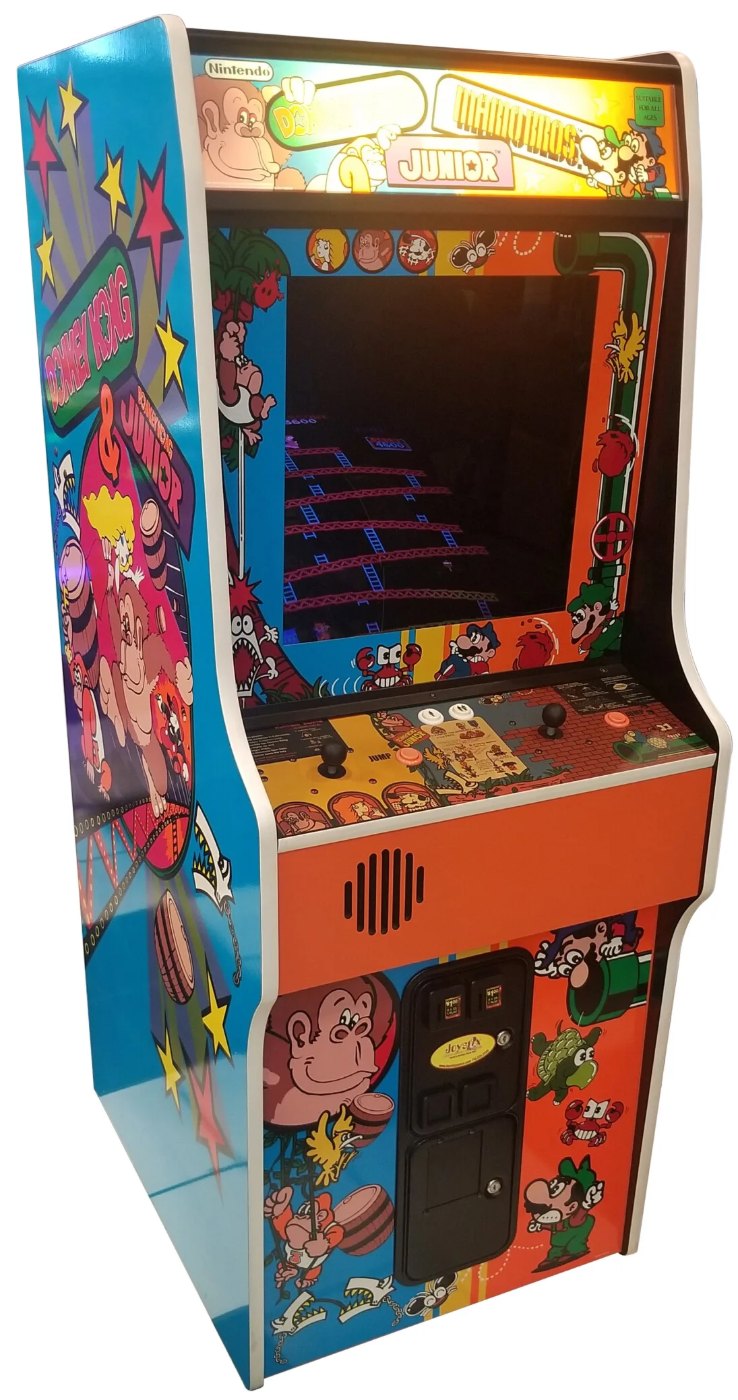
Cabinets:Upright and cocktail (the cocktail was sold only in Japan)
Phases:22 unique phases, then a loop; the second Japanese phase is missing elsewhere; the counter tops out at 98, or 99 in Japan
Sales:About 3,800 US arcade cabinets by November 1983; 2.28 million NES/Famicom copies (CESA); 1.59 million Atari 2600 cartridges (see Reception)
Ratings:ESRB E · PEGI 3 · CERO A · ACB G · USK 0 (re-releases)
On Nintendo Switch:Arcade Archives Mario Bros. (27 September 2017) and the NES version in Nintendo Switch Online (September 2018)
Advertisement
Overview
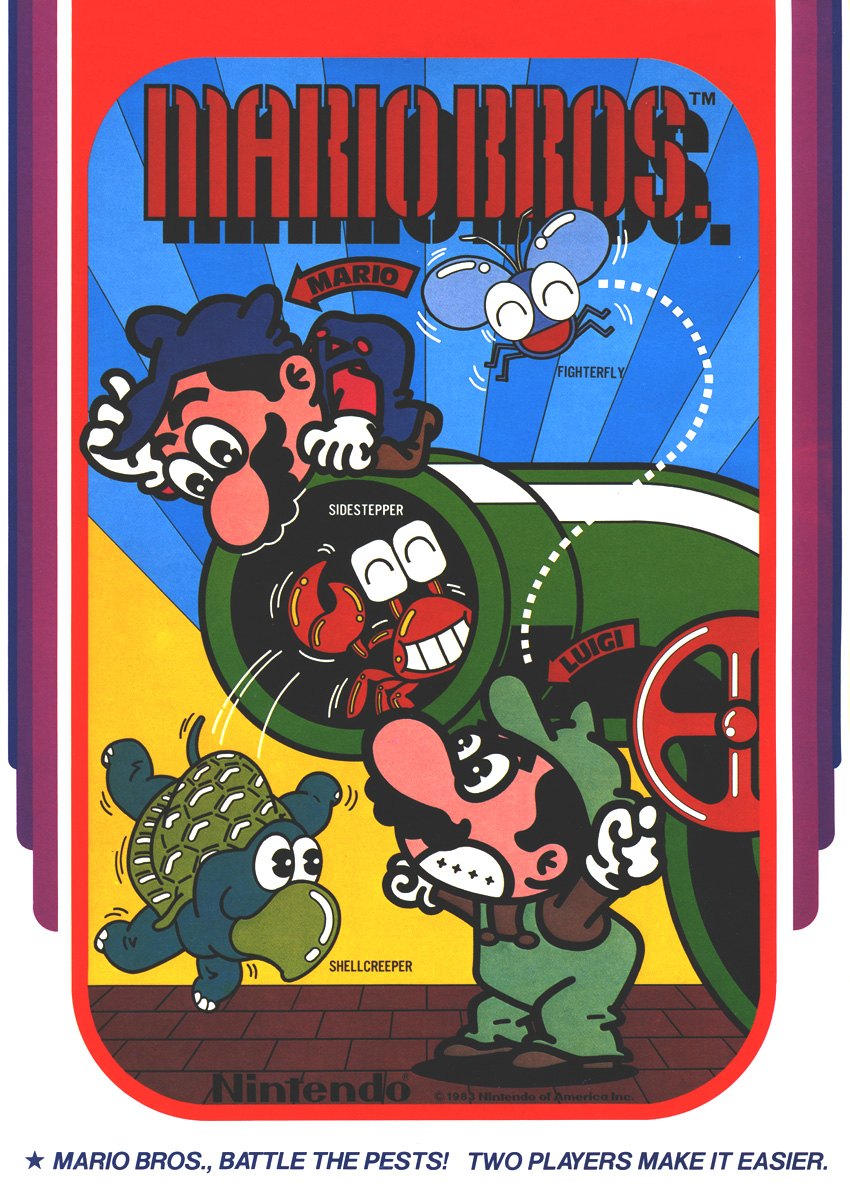
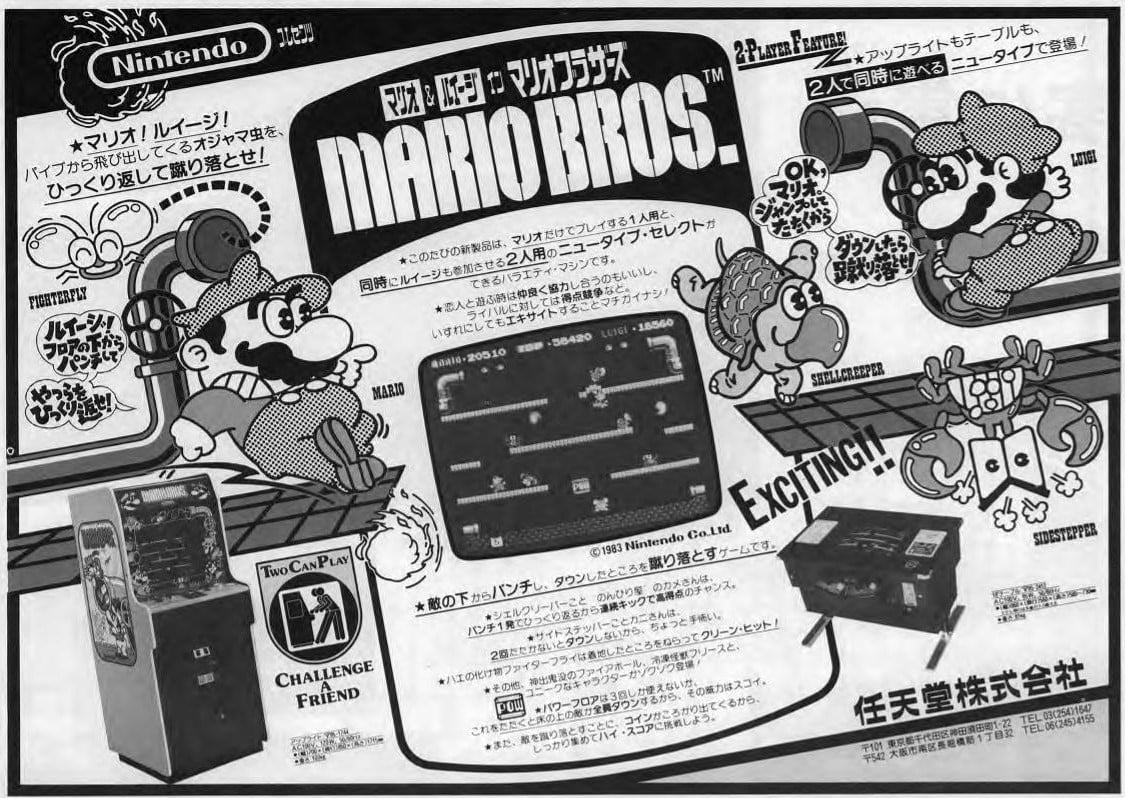
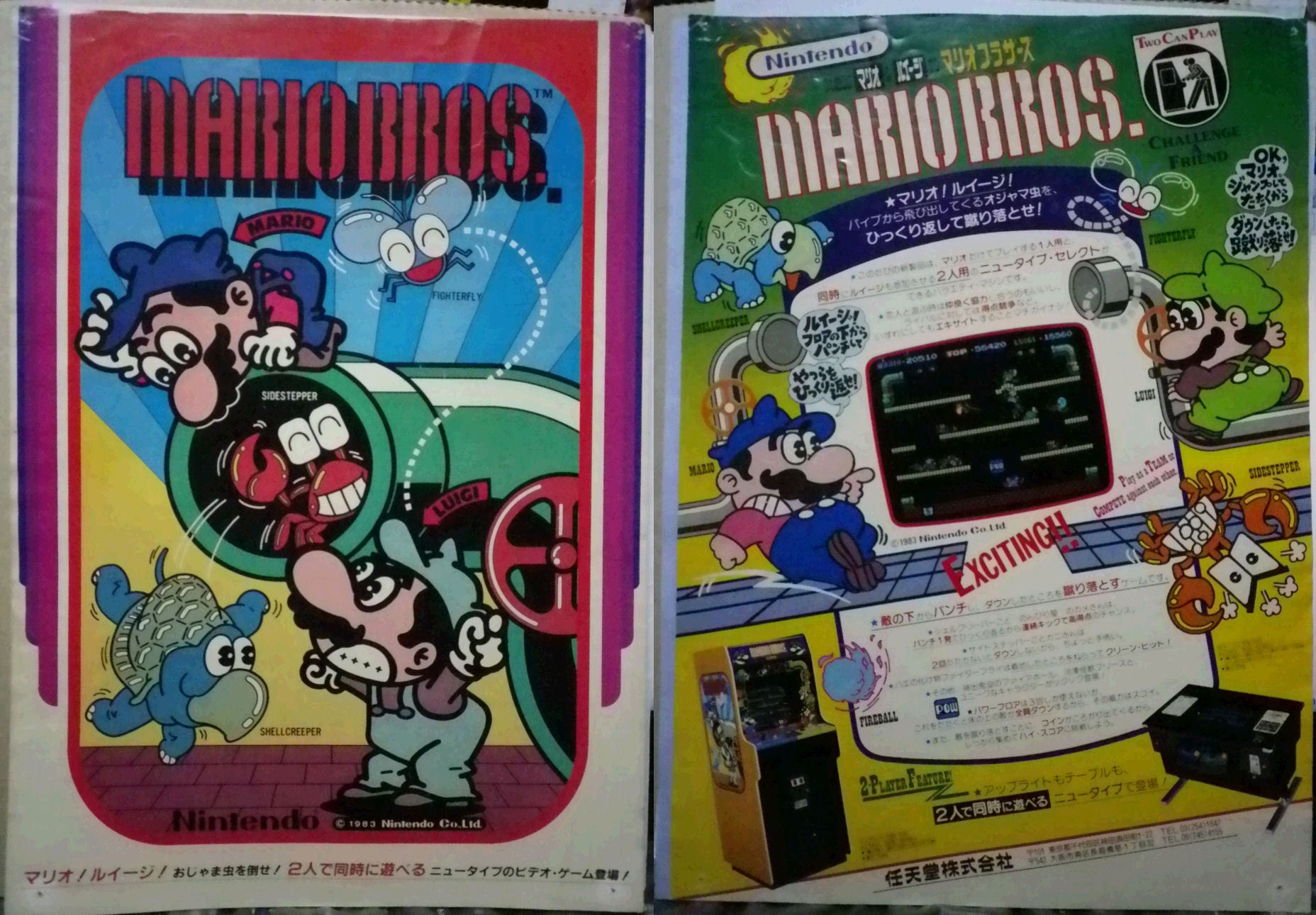
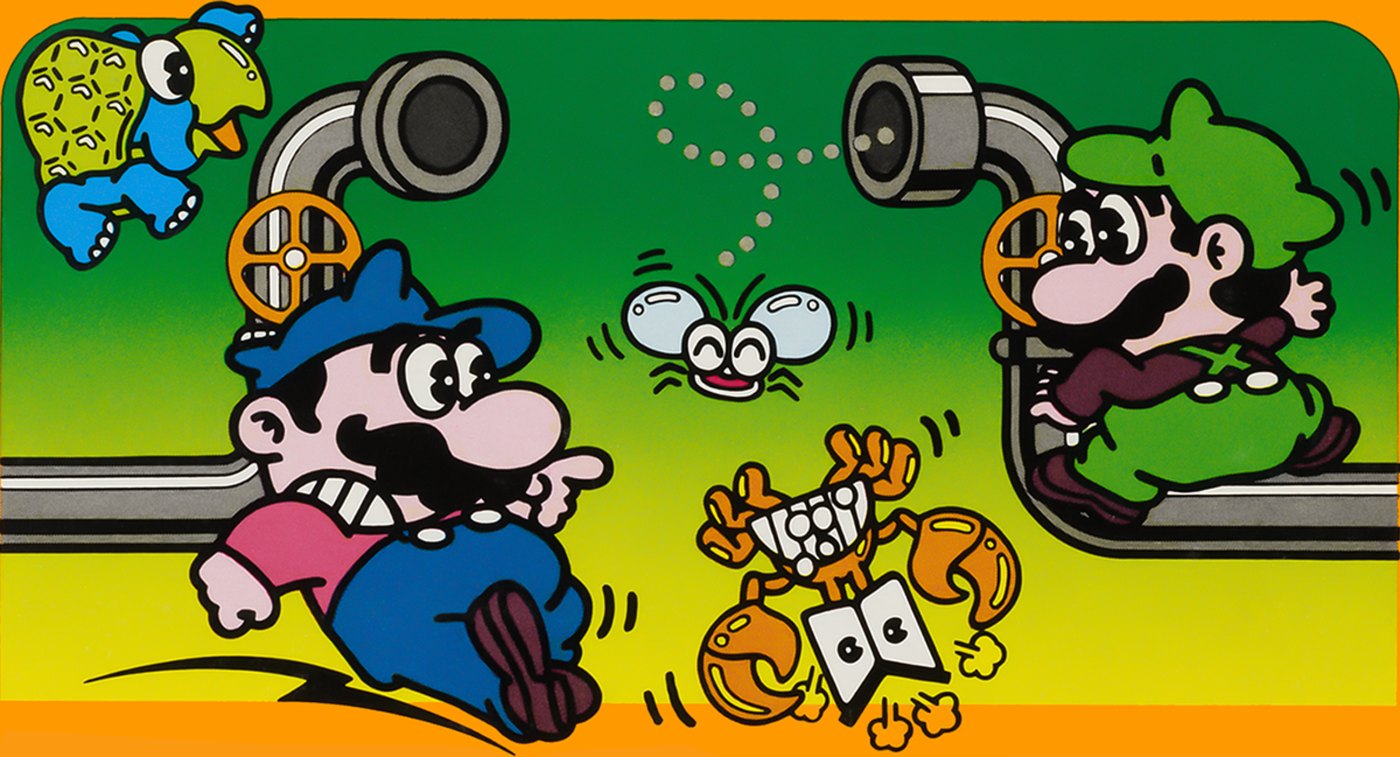
The English-language arcade flyer.
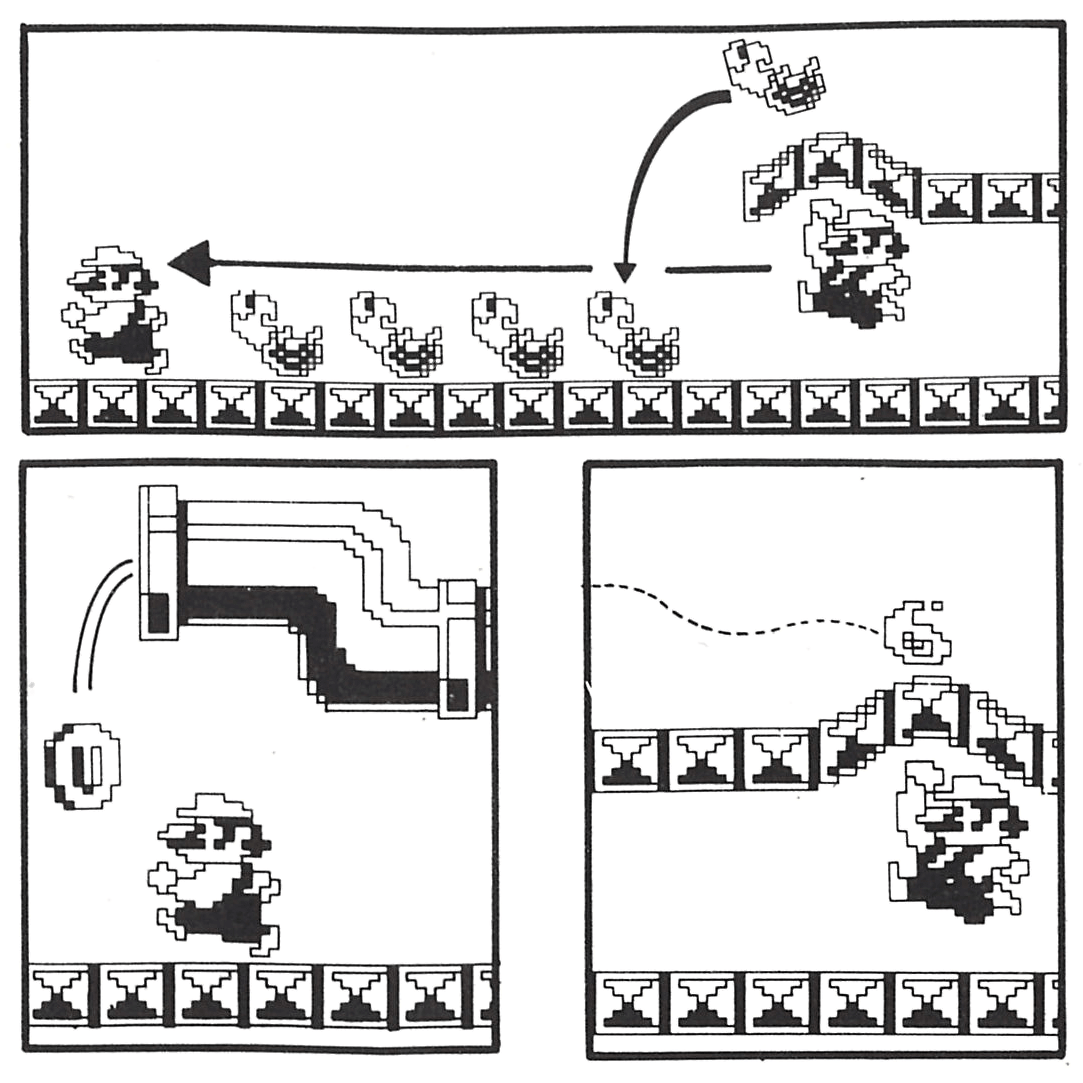
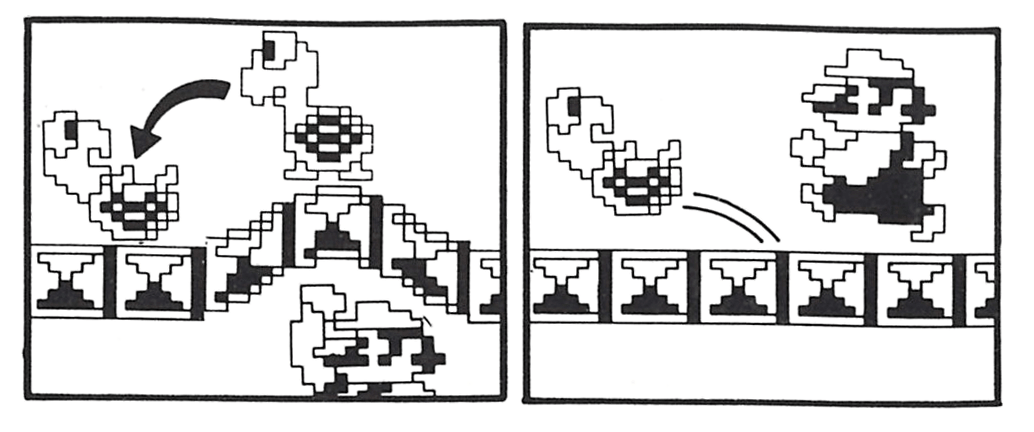
Mario Bros. is one screen, a handful of ledges and four green pipes, and it is one of the most important rooms in the history of the series. Creatures pour out of the pipes at the top, crawl along the floors and drop out of the pipes at the bottom to start all over again. You cannot jump on them. Instead you jump up and thump the floor from underneath, which flips whatever is standing above you onto its back, and then you run over and kick it off the screen before it wriggles free.
That simple trick is stretched across an endless run of phases. Turtle-like Shellcreepers come first, then Sidestepper crabs that need two bumps, Fighterflies that can only be caught when they land, Slipice that turn the floors to ice, icicles that grow under the ledges and fireballs that bounce around the room. A POW Block in the middle of the screen flips everything on the floor at once, but it only takes three hits. Every few phases there is a bonus round of coins against the clock.
It is also a two-player game in a way that Donkey Kong was not. Mario and Luigi are on the screen at the same time, sharing the same enemies, the same coins and the same POW Block, which makes them partners and rivals at once. Gunpei Yokoi had asked for a competitive game, and that is what Mario Bros. became.
It came home almost everywhere. The Famicom got it in September 1983 and the NES in 1986; Atari made versions for the 2600 and 5200 and later the 7800 and its 8-bit computers; Japan had a PC-8001 conversion and Europe had versions for the Amstrad CPC, Commodore 64 and ZX Spectrum. Since then it has appeared on the e-Reader, the Virtual Console of three consoles, the NES Classic Edition and Nintendo Switch, and as a bonus game inside Super Mario Bros. 3 and every Super Mario Advance.
Mario Bros. is a treasure trove of gaming history. The follow-up to the hit Donkey Kong, it was not only the first time our hero was known as Mario, it also introduced his brother Luigi, green pipes, coins and even more now-familiar elements of the Mario series.
The gameplay is simple yet challenging: eliminate all the enemies in each level for a big score. However, Mario cannot jump on enemies from above so must hit them from below and finish them off with a kick. Add a second player as Luigi for even more fun!
— Official description (Nintendo UK, 2006)
Why it matters to Mario fansThis is where Mario becomes a plumber, where Luigi first stands beside him in an arcade game and where the series finds its pipes, its coins and its POW Block. The Shellcreepers are the ancestors of the Koopa Troopas, the Sidesteppers and Fighterflies keep coming back, and the arena itself has turned up in Super Mario Bros. 3, Smash Bros., New Super Mario Bros. and Super Mario 3D World. Play it and you can see Super Mario Bros. taking shape.
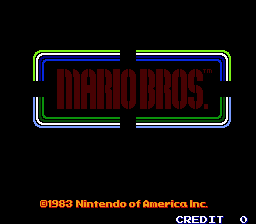
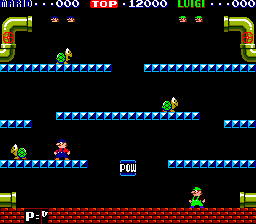
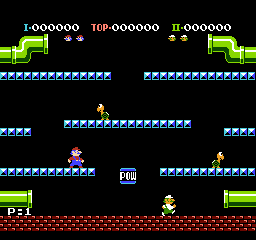
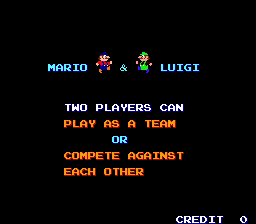
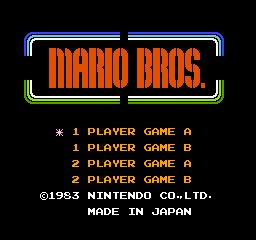
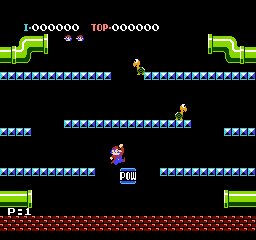
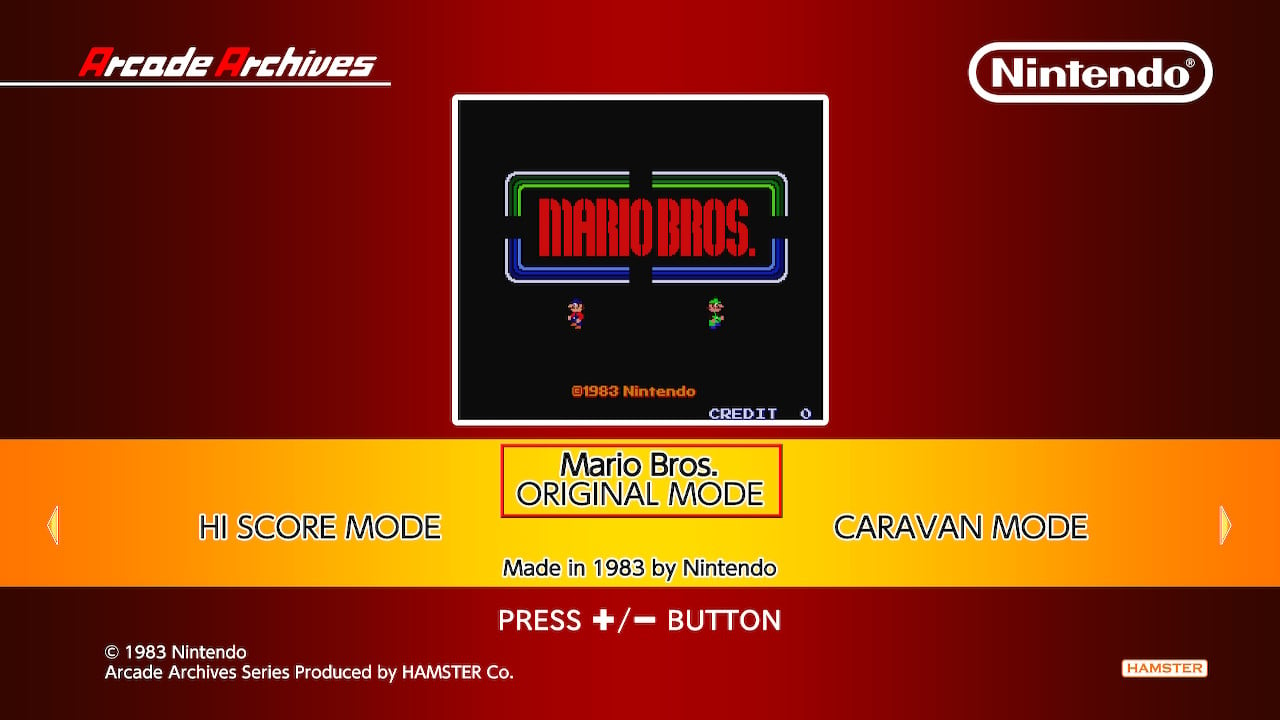
The arcade title screen.Mario and Luigi together in the first phase of the arcade game.The 1983 Famicom/NES version, with two players.
“Since we’ve got all these floors, why don’t we make it so that Mario can hit the floors from beneath, and defeat the enemy?”
Gunpei Yokoi’s suggestion, as recalled by Shigeru Miyamoto in Iwata Asks: New Super Mario Bros. Wii, Volume 1 (Nintendo, 2009)
The idea that turned the hero of Donkey Kong into a floor-thumping plumber.
Quick Answers
The questions people ask most about Nintendo’s 1983 arcade game.
Is Mario Bros. the same game as Super Mario Bros.?
No. Mario Bros. (1983) is a single-screen arcade game about clearing pests out of the sewers. Super Mario Bros. (1985) is the scrolling adventure through the Mushroom Kingdom that followed it. More →
Is Mario Bros. Luigi’s first appearance?
It is his first arcade game and the one usually named as his debut, but the Game & Watch handheld also called Mario Bros., released on 14 March 1983, featured Luigi three months before the arcade game. More →
Who made Mario Bros.?
Nintendo R&D1. Shigeru Miyamoto designed it and Gunpei Yokoi produced it; Yukio Kaneoka and Hirokazu Tanaka are usually credited with the music. More →
Why is Mario a plumber?
Miyamoto has explained that the enemies (turtles, crabs and flies) suggested somewhere underground, so the brothers became plumbers working in the pipes. Some accounts place the sewers under New York. More →
How do you beat the enemies?
Jump up and hit the floor under them to flip them over, then kick them off the screen. Sidesteppers need two hits and Fighterflies can only be flipped while they are touching the floor. More →
What does the POW Block do?
Hitting it shakes the whole screen and flips every enemy standing on a floor. It can be used three times before it vanishes; later bonus rounds restore it. More →
How many phases are there?
By most counts there are 22 different phases, which then repeat in a loop; the second phase of the Japanese game was cut elsewhere. The counter stops at Phase 98, or 99 in Japan, but the game carries on. More →
Where can I play Mario Bros. today?
On Nintendo Switch, as Arcade Archives Mario Bros. (the Japanese arcade original, 2017) or in the NES library of Nintendo Switch Online, which has had it since launch in September 2018. More →
How many copies did it sell?
Wikipedia gives 2.28 million for the Famicom and NES version, citing CESA, and 1.59 million for the Atari 2600 cartridge, citing Complex. In the arcades, an Atari memo put Nintendo’s US sales at about 3,800 cabinets by November 1983. More →
Story & Phases
The screen that introduces the two brothers.
There is not much plot in an arcade game of 1983, and what there is depends on whom you ask. In interviews Nintendo’s designers describe two plumber brothers at work in the sewers; Atari’s manual for its home versions instead has Mario as a carpenter whose house pipes have been blocked by nests of creepy-crawlies, and warns that if he and Luigi cannot clear them out, neither of them will ever get a bath again.
Either way, the job is the same: clear every pest off the screen, phase after phase, for as long as your lives last. Here is how a game unfolds, using the international numbering (add one for the Japanese boards after the opening phase).
Phase 1: turtles first
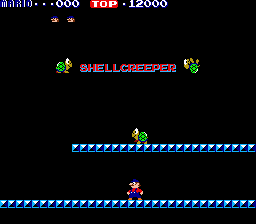
The arcade game opens by teaching you the rules. A short demonstration shows how to deal with a Shellcreeper, to the opening bars of Mozart’s Eine kleine Nachtmusik. Then the Shellcreepers start dropping out of the pipes, and the brothers get to work. The Japanese game follows this with a second phase of four Shellcreepers; elsewhere it goes straight on to the next.
The Shellcreeper demonstration screen.Arcade artwork of a Shellcreeper.
Test Your Skill
After the opening Shellcreeper phases the enemies vanish and coins appear on the ledges. Twenty seconds to grab them all, and 5,000 points if you manage it. The first bonus round is the only one with ordinary floors: from the second on, the ledges are coated in ice.
The coin, from the NES manual.
Crabs and flies
The next phase brings the Sidesteppers, crabs that shrug off the first bump, get angry and scuttle faster; they need a second hit before they flip. One phase mixes them with Shellcreepers, and then the Fighterflies arrive, hopping along so that they can only be caught at the moment they touch down. From here on, every normal phase has one or two flies in it.
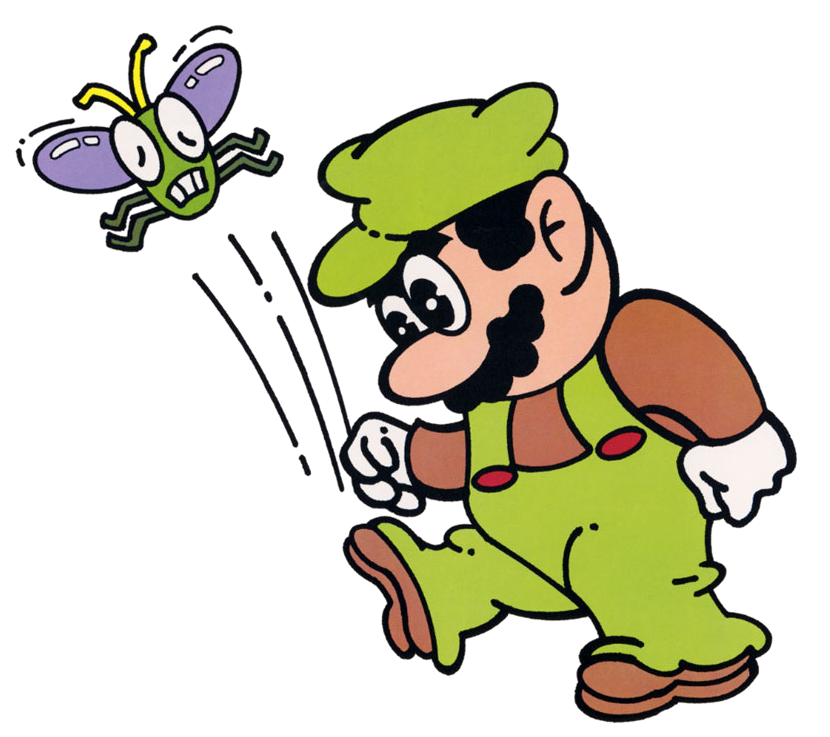
An angry Sidestepper after its first hit.Luigi kicking a Fighterfly, from the arcade artwork.
Ice and fire
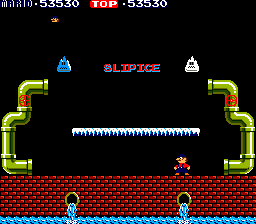
Phase 9 introduces the Slipice, a block of living ice that wanders onto a ledge and bursts, glazing the floor so that the brothers slide about. They are not counted as targets, so a phase can be cleared without them, but they are a menace while they are around. Fireballs can turn up from the very first phase: green ones skim straight across the screen and red ones bounce diagonally off everything. Both can be knocked out by a bump from below as they touch a floor, or by the POW Block.
The Slipice introduction screen.A red fireball.
Icicles
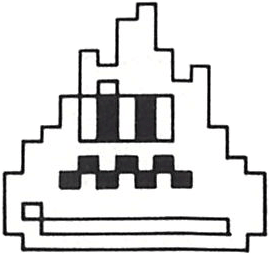
From Phase 16, drops of water begin to form under the ledges and freeze into icicles that fall on anyone standing beneath. Getting caught by ice gives the brothers a special frozen death animation; fireballs leave them burnt.
An icicle forming.The frozen death sprite.
The endless sewer
After the last of its unique phases the game simply starts its sequence again. There is no ending. The phase counter goes up to 98 on international boards and 99 in Japan and then stays there, and the score display rolls back to zero after 999,990. Mario Bros. is about how long you last and how much your brother lets you score.
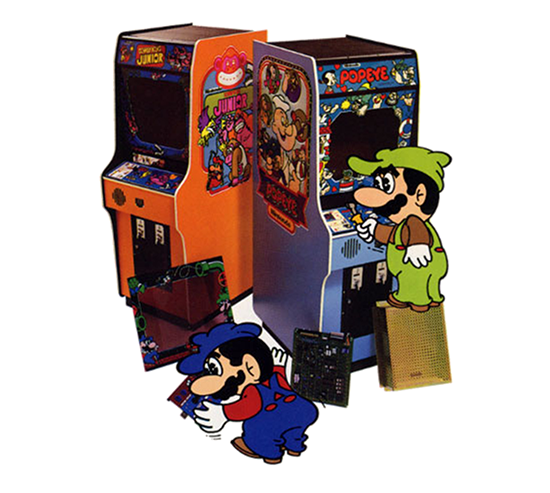
Promotional artwork of Mario and Luigi repairing arcade machines.
How the phases unfold
The key phases of the arcade game, with the international number first and the Japanese one in brackets.
Phase 1Shellcreepers · demonstration firstTurtles only. The game shows you how to flip one before it begins.
Phase 2 (Japan only)Four ShellcreepersA second turtle phase, cut from the international boards.
Phase 3 (4)First bonus phase · 20 seconds · 5,000 pointsCoins on every ledge and the only bonus round with normal floors.
Phase 4 (5)Sidesteppers arriveCrabs that need two hits; the next phase mixes them with Shellcreepers.
Phase 6 (7)Fighterflies arriveHopping flies that can only be flipped as they land.
Phase 8 (9)Second bonus phase · 15 seconds · 8,000 pointsIcy floors from now on in the bonus rounds, and the POW Block comes back afterwards.
Phase 9 (10)Slipice arriveWalking ice blocks that freeze the ledges.
Phase 16 (17)Icicles arriveWater drops that turn into falling icicles under the ledges.
Phase 98 (99)The counter stopsThe phases go on looping, but the number on screen never goes higher.
Gameplay & Controls
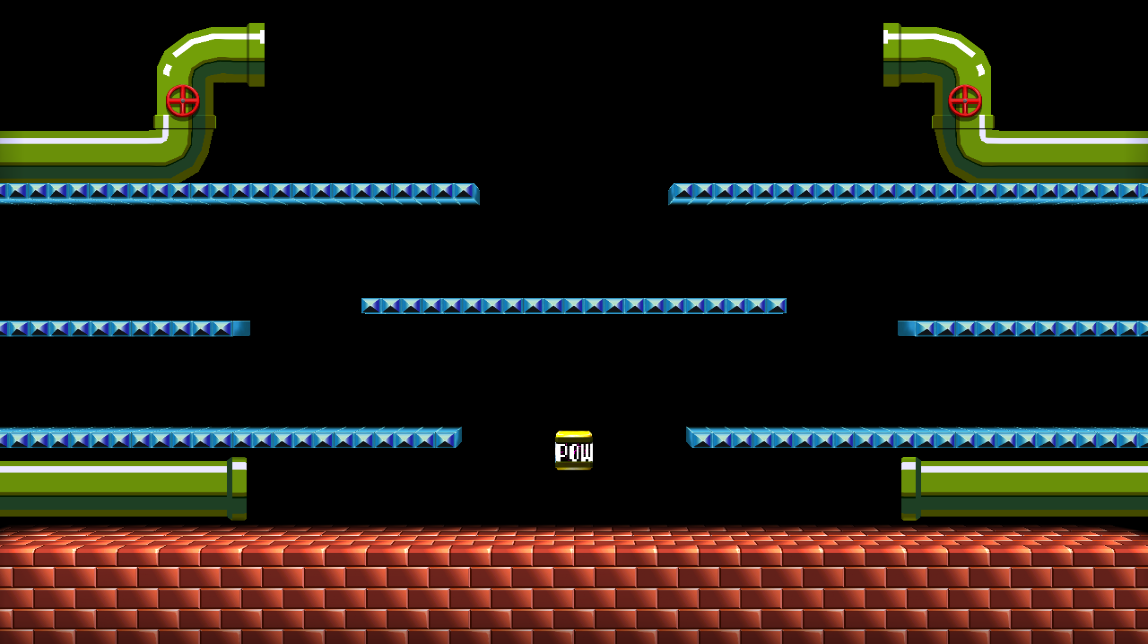
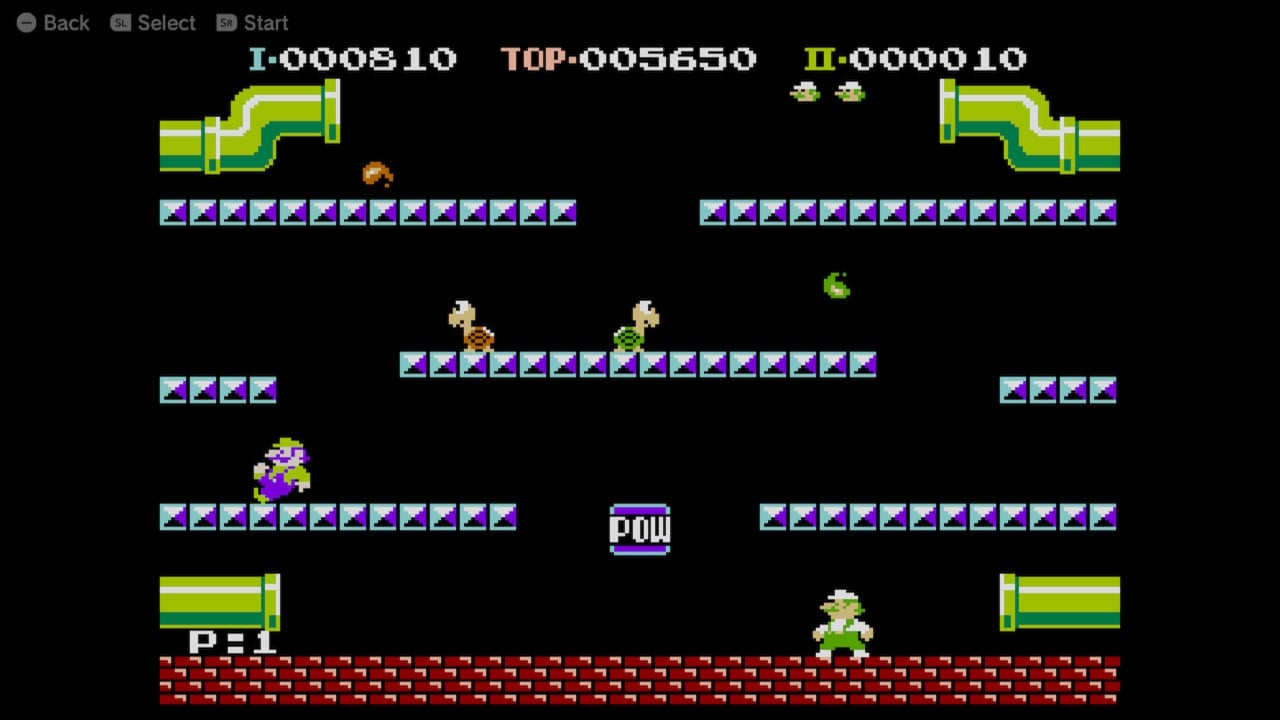
Every phase takes place on the same screen: a floor at the bottom, three levels of ledges above it, a pipe in each top corner and one in each bottom corner, and the POW Block in the middle. Walk off one side and you come back on the other. A phase is over when every enemy has been knocked away.
Controls
The arcade game uses a joystick for left and right and a single jump button. On the Famicom and NES the D-pad moves, A jumps (and so hits the floor from below), Start pauses and Select picks the game. The NES version has two difficulty settings, Game A for beginners and Game B for experts, each for one or two players.
Jumps are committed: in the original game and the first NES version, once Mario has left the ground he cannot change direction. The 1988 Famicom Disk remake lets the brothers turn round in mid-air.
Flip, kick, repeat
Hit the floor directly underneath an enemy and it flips onto its back, helpless. Run over and kick it to knock it off the screen for 800 points. Kick several flipped enemies in quick succession and each one is worth 800 more than the last, up to 3,200 a kick. Wait too long and the enemy rights itself and carries on, faster than before. Touching an upright enemy costs a life.
The last enemy in a phase always comes out at full speed, unless it happens to be a Fighterfly. Enemies that reach the bottom slip into a pipe and come out of the top again, so nothing is ever cleared until it has been kicked away.
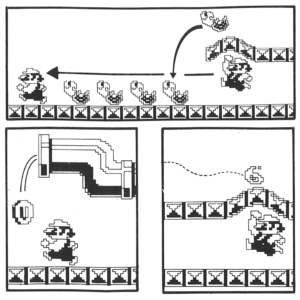
A flipped Shellcreeper, ready to be kicked.Mario knocking down a turtle, from the NES manual.
The POW Block and coins
The POW Block sits in the middle of the screen. Bump it from below and every enemy on a floor is flipped at once, which can rescue a hopeless situation. It disappears after the third use. It comes back after the second bonus round and after every bonus round from then on.
Each time an enemy is kicked away a coin rolls out of a pipe at the top, worth another 800 points if you catch it. The last enemy of a phase does not leave one. The Atari 2600 version calls the coin a wafer.
The arcade POW Block.The arcade coin.
Test Your Skill: the bonus phases
Every so often the enemies stay away and the screen fills with coins. Collect all of them before the timer runs out and you earn a bonus: 5,000 points in the first round and 8,000 in every one after that. The first bonus round gives 20 seconds and later ones 15; every bonus round after the first has icy floors. The bonus rounds are usually listed at Phases 4 and 9 and then every seventh phase, numbering that matches the Japanese arcade game (whose first bonus round is Phase 4); the international boards, without the extra turtle phase, reach the first one at Phase 3. The NES version has one at Phase 3 and then one every fifth phase.
Two plumbers, one screen
Player one is Mario and player two is Luigi, and both are on the screen at once, working the same floors for the same enemies and coins. Each kick and each coin is a score for one brother and not the other, so the game is as much a contest between the two as a fight against the sewer, which is just what Yokoi had asked for. The Cutting Room Floor even found an unused alternate of the sprite shown when one brother is jumped on by the other.
Japanese and international boards
The Japanese arcade game has a second phase of four Shellcreepers that was taken out of the version sold elsewhere, so every later phase is numbered one lower outside Japan. The Cutting Room Floor also notes that the Japanese board awards an extra life at 20,000 points and then every 30,000, while the American one gives one every 20,000. The title screens differ too: the American one adds a trademark and an updated copyright line.
Items and objects
There are no power-ups in Mario Bros.: just two things to hit or collect, and the pipes that keep the enemies coming.
POW BlockFlips every enemy on a floor. Three uses, then gone until a later bonus round restores it.
CoinRolls out of a top pipe after each enemy is kicked away; 800 points. In bonus phases the screen is full of them.
WaferWhat the Atari 2600 version has in place of the coin.
PipeEnemies enter at the top corners and leave at the bottom, only to return. The first pipes in a Mario game.
Cartoons, Comics & Other Media
The sewer arena and its creatures have been turning up in Nintendo games ever since. These are the most notable returns.
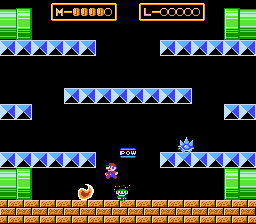
Super Mario Bros. 3: Battle modeNESIn two-player games, one player can challenge the other on the map to a round of Mario Bros. played with Super Mario Bros. 3’s physics. The brothers fight over the cards they have earned, and the winner carries on with the main game. It was the first version to replace Shellcreepers with Spinies, which cannot be stomped, and adds two new bonus rounds.
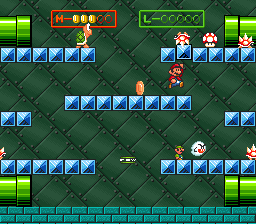
Super Mario All-Stars: Battle GameBattle GameChosen from the Super Mario Bros. 3 title screen. No bonus rounds, a Koopa Troopa in every round whose shell hurts the brothers, Boos in place of fireballs, Super Mushrooms from the pipes and a POW Block that can come back at random.
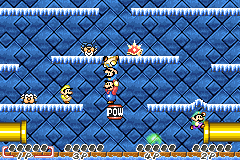
Super Mario Advance seriesGame Boy AdvanceEvery Super Mario Advance carries a remake for up to four players by link cable, with Classic and Battle modes, two POW Blocks you can pick up and Super Mario Bros. 2’s Power Squat Jump. Mario & Luigi: Superstar Saga on the GBA has it too.
Mario ClashVirtual BoyBegan as a straight remake, Mario Bros. VB, and became a two-plane reworking in stereoscopic 3D in which Mario throws Koopa shells. Sidesteppers, fireballs and icicles return.
Super Smash Bros. Brawl and UltimateStageThe Mario Bros. stage is based on the opening phases of the arcade game; in Brawl it is unlocked by clearing the event Wario Bros., and Brawl also has an arranged version of the title music.
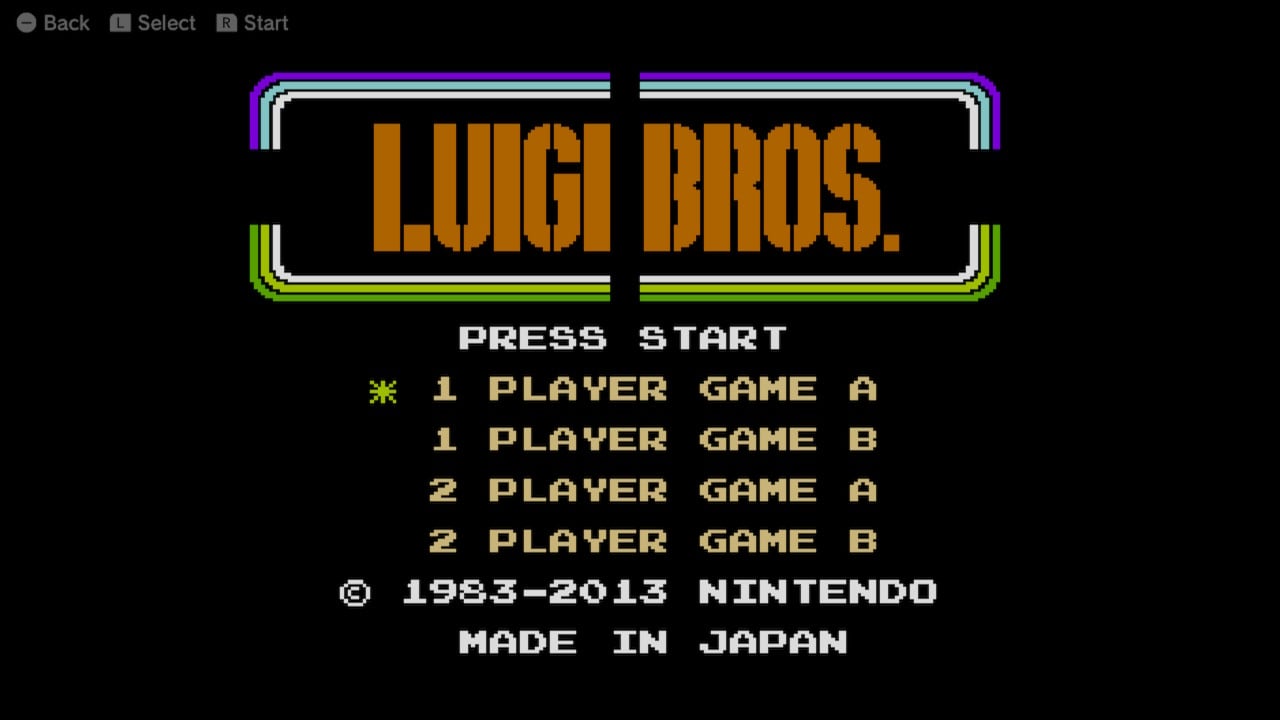
Luigi Bros.Super Mario 3D WorldThe NES version again, with Luigi in his modern colours as player one; unlocked by finishing the main game, or available at once with New Super Luigi U save data on the same Wii U.
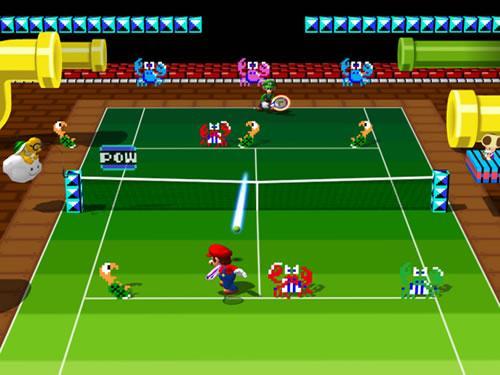
Mario Power TennisCourtThe Mario Classic Court is dressed with Shellcreepers and POW Blocks and plays music in the same style.
Dance Dance Revolution: Mario MixMusicUnderground Mozart builds on the first stage theme, sound effects and all, over the same Mozart piece.
WarioWare microgamesTwisted!, D.I.Y. Showcase, GoldMario Bros. has been turned into a microgame in 9-Volt’s stage in WarioWare: Twisted!, in 18-Volt’s stage in WarioWare: D.I.Y. Showcase and again in WarioWare Gold.
Mario’s Time MachineNESOne stage is laid out like the Mario Bros. arena.
New Super Mario Bros. gamesCoin worlds and ClassicsWorld Coin-1 in New Super Mario Bros. Wii starts like the arcade screen, New Super Mario Bros. 2 rebuilds it for the Gold Classics Pack, as that pack’s second course, and World Coin-2 in New Super Mario Bros. U echoes it again.
Super Mario MakerCostumesCostumes based on the arcade Mario, a Shellcreeper and a Sidestepper are among the 100 Mario Challenge rewards, and a Fighterfly costume is earned in a harder Gnat Attack.
Super Mario Bros. WonderMusicThe KO Arena music is rearranged from the demonstration and phase-start tunes.
Mario Kart and RabbidsMario Kart Wii, Tour and World · Mario + RabbidsMario Kart Wii brought the POW Block to the karting series, Mario Kart Tour has a Mario Bros. Parafoil glider and Mario Kart World shows the logo on an advertising board. Mario + Rabbids Kingdom Battle parodies the cabinet on its Battle mode title screen.
Advertisement
Characters
Two playable brothers and a sewer full of creatures. Several of them became regulars.
Character
Who they are
In this game
Abilities & notes
MarioPlayer one
The hero of Donkey Kong and Donkey Kong Junior, now cast as a plumber. He is usually called the older of the two brothers.
Player one. Runs, jumps and bumps floors from below to flip enemies, then kicks them away. Atari’s manual still calls him a carpenter.
Can fall from any height, unlike in Donkey Kong. Three death animations: ordinary, frozen and burnt.
LuigiPlayer two
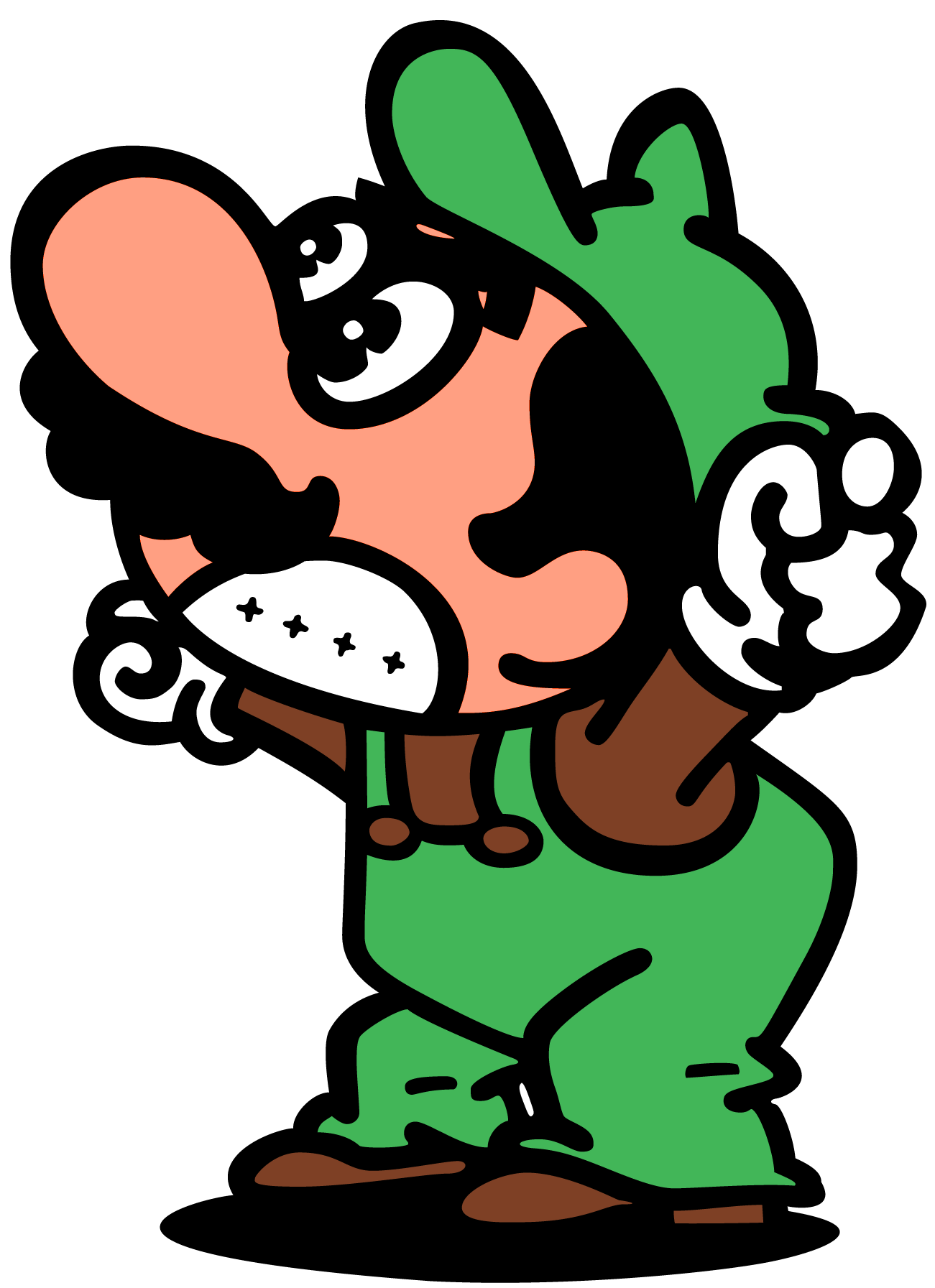
Mario’s younger brother, made by recolouring Mario’s sprite. He had already appeared in the Game & Watch Mario Bros. in March 1983, but this is his first arcade game.
Player two, on screen at the same time as Mario. Helps, or hinders, his brother.
Identical to Mario apart from his colours.
Enemies and hazards
The three target enemies must all be knocked away to clear a phase; the rest are hazards.
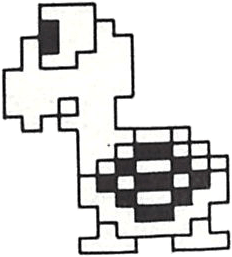
ShellcreeperFrom Phase 1A turtle that is flipped by one bump. The first enemy of the game and the model for the Koopa Troopa; remakes swap it for a Spiny.
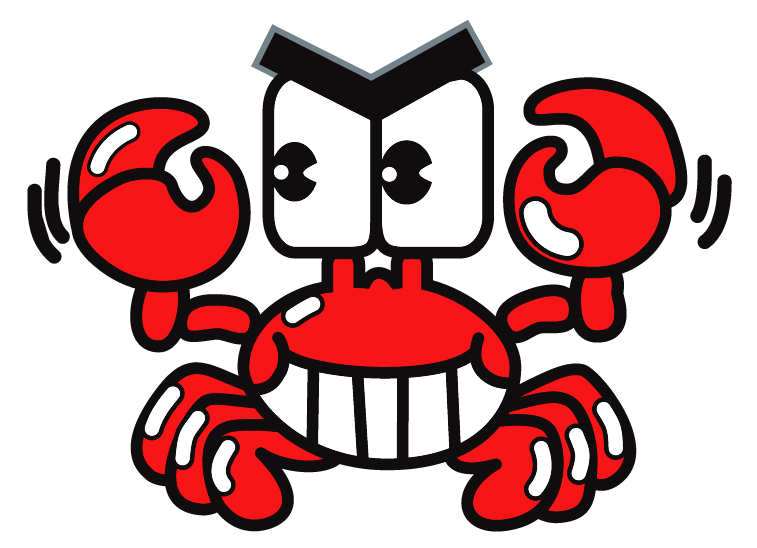
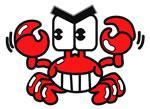
SidestepperFrom Phase 4 (5 in Japan)A crab that gets angry and faster after one bump and flips after the second. The commonest target in the game.
FighterflyFrom Phase 6 (7 in Japan)Hops along and can only be flipped at the moment it lands.
SlipiceFrom Phase 9 (10 in Japan)A living block of ice that bursts and freezes a ledge. Later known as Freezie.
IcicleFrom Phase 16 (17 in Japan)Forms from a drop of water under a ledge and falls on whoever is below.
Red fireballThroughoutBounces diagonally around the screen. Bump it as it touches a floor, or use the POW Block.
Green fireballThroughoutTravels straight across the screen at ledge height.
Snake (unused)Arcade data onlyA creature that never appears in play, possibly a planned fourth enemy, found in the arcade graphics by The Cutting Room Floor.
Key people
The arcade game has no credits screen; these are the names the interviews and other references give.
Shigeru MiyamotoGame designerDesigned the arcade and NES versions, came up with the turtles and the pipes, and turned Mario into a plumber.
Gunpei YokoiProducerProposed a competitive game, let Mario fall from any height and suggested hitting enemies from below.
Hirokazu TanakaMusic and sound (arcade)Suggested, over a drink with Miyamoto, that the turtles should pop out of their shells and flail when knocked over.
Yukio KaneokaMusicCredited with the music of the arcade and NES versions.
Hiroshi YamauchiExecutive producerNintendo’s president.
Intelligent SystemsFamicom/NES portNamed by Wikipedia and other references as the developer of the 1983 home conversion.
Atari, Inc.Atari 2600 and 5200 versionsLicensed the overseas home rights in 1983.
MISA and Westside Soft HousePC-8001 versionDeveloper and publisher of the 1984 Japanese computer conversion.
Ocean SoftwareEuropean computer versionsPublished the Amstrad CPC and ZX Spectrum versions (programmed by Choice Software) and the Commodore 64 version, with music by Fred Gray.
Sculptured Software and ITDCAtari 8-bit and 7800 versionsMade the 1988 versions published by Atari Corporation.
HAMSTERArcade ArchivesEmulated the Japanese arcade board for Nintendo Switch in 2017.
How It Was Made
Mario Bros. was made by Nintendo’s R&D1 team, with Gunpei Yokoi producing and Shigeru Miyamoto designing. Miyamoto has told its story in Iwata Asks and in a 2000 interview translated by Shmuplations.
A game for two at once
According to Miyamoto, the project started with Yokoi proposing a competitive game. Two players on the screen together was unusual at the time, and Miyamoto has named Williams’ Joust (1982), in which players fly ostriches against each other, as the famous American example. Wikipedia, citing a 2006 games guide, also says the two-player mode drew on Joust.
Hit it from underneath
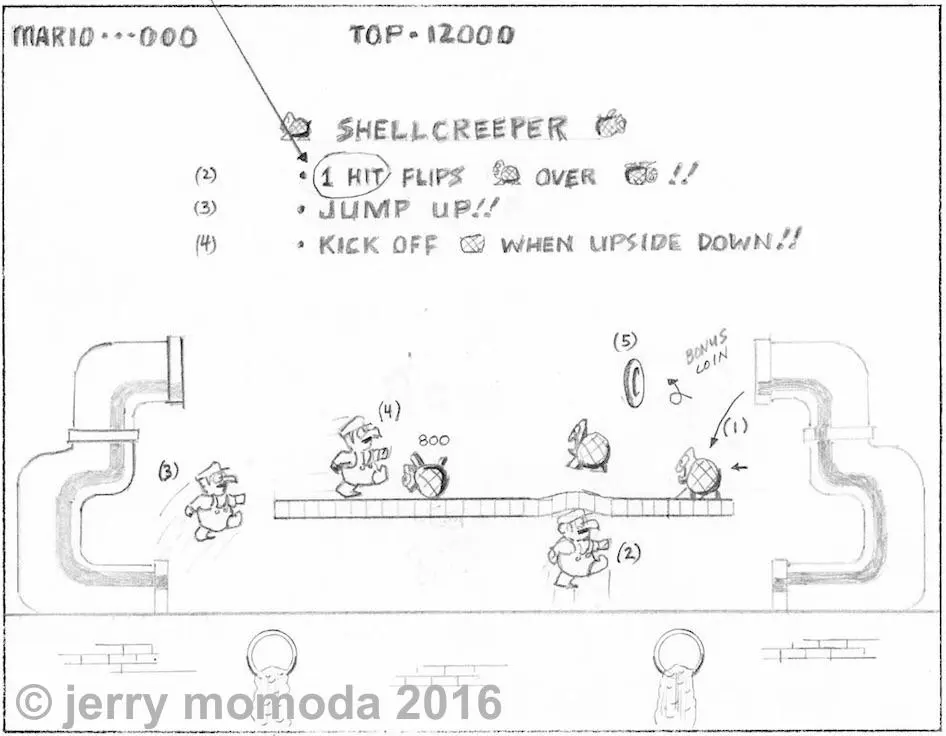
Concept art for the demonstration that teaches the player how to flip an enemy.
In Donkey Kong, Mario died from any fall taller than himself. In Iwata Asks, Miyamoto remembers Yokoi asking why Mario should not be allowed to jump down from greater heights, and then, since the new game had so many floors, why he should not defeat enemies by hitting those floors from below. That turned out to be too easy, so the team made the bump only knock the enemy over, with a second action needed to finish it off.
That needed an enemy that could survive being knocked over and get up again, and Miyamoto says the answer came to him at once: turtles. In his 2000 interview he credits the sound designer, Hirokazu Tanaka, with suggesting over a drink that the turtles should pop out of their shells and flail about. There is also a different account from Yokoi, quoted in a Japanese book about him, in which a cartoon turtle taking off its shell gave him the idea.
A pipe on the way home
Enemies that fell to the bottom of the screen would simply pile up there, so Miyamoto needed a way to send them back to the top. Simply joining the top and bottom of the screen felt odd. Then, walking home, he noticed drainage pipes sticking out of a concrete wall (in Kyoto, he says in the 2000 interview), and the pipes of Mario Bros. were born.
Asked by Satoru Iwata why the pipes were green, when real ones are usually grey, Miyamoto said he did not remember, but that there were not many colours to choose from and that green looked good in two shades.
Why plumbers?
With turtles, crabs and flies as the enemies, Miyamoto reasoned in 2000 that the only place they could all live together was underground, and the pipes made the brothers plumbers. Wikipedia, citing David Sheff’s book Game Over, says he pictured the sewers of New York; it also cites a 2023 Nintendo Dream interview in which Miyamoto describes the original concept as brothers under New York, probably in Brooklyn. Wikipedia, citing IGN, adds that the overalls Mario already wore in Donkey Kong fitted the new job.
Luigi, the colour swap
Player two needed a character of his own, and the easiest way to make one was to recolour Mario. In his 2000 interview Miyamoto says Yokoi wanted a game players would understand at a glance, which is how Luigi came about. The brothers share every frame of animation; only the colours tell them apart.
Mozart in the sewers
The music is usually credited to Yukio Kaneoka, with Hirokazu Tanaka also named on the arcade game. The demonstration before the first phase in the arcade game, and the start of the first phase on the Famicom and NES, plays the opening of Mozart’s Eine kleine Nachtmusik.
Chicago, then Japan
A pre-release advert in Game Machine, 15 June 1983.
The game was previewed at the Amusement Operators Expo at Chicago’s O’Hare Exposition Center on 25–27 March 1983. Steve Arrants of Creative Computing Video & Arcade Games picked it as his favourite of the ten games he reported on, but the prototype was hard and its controls slippery. Japanese production began in June, and the version that went on sale was noticeably easier than the one shown at the expo.
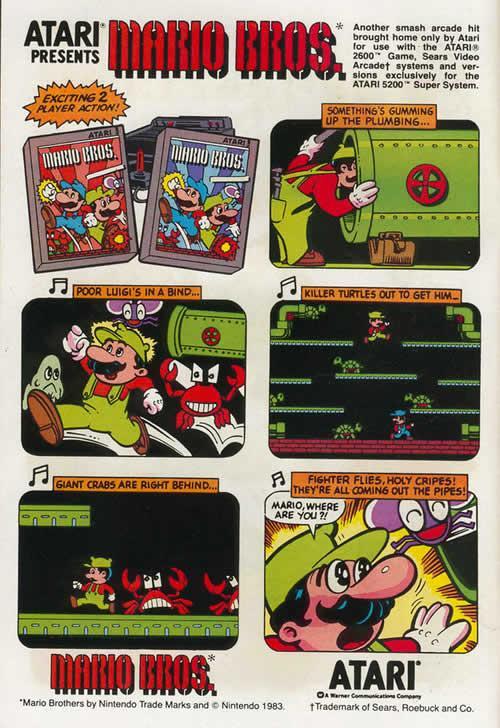
Wikipedia, citing the Japanese trade paper Game Machine, says Nintendo kept the home rights in Japan and licensed them abroad to Atari, which published the 2600 version for Christmas 1983. The deal was reportedly made about a week after Coleco demonstrated Donkey Kong at the June 1983 Consumer Electronics Show.
The Famicom version
The Famicom version arrived on 9 September 1983. It is usually credited to Intelligent Systems. It keeps the international phase order for the first eleven phases, but drops the demonstration scenes and the icicles, shrinks the fireballs, simplifies the animation and moves the bonus rounds. It also dressed Mario in a red cap and shirt with blue overalls, the colour scheme he has worn ever since.
Series Firsts
Simultaneous two-player play, coins, pipes and POW Blocks are usually counted as series firsts, and in 2009 Satoru Iwata singled out the pipes, the coins and the multiplayer mode; the other firsts below concern the ports, characters and enemies.
1PipesThe green pipes in the corners are the first in the series; Super Mario Bros. turned them into warp pipes.
2CoinsA coin for every enemy kicked away, and whole screens of them in the bonus rounds.
3The POW BlockThe screen-shaking block made its debut here and later returned in Super Mario Bros. 2, Mario Kart Wii and many more.
4Simultaneous two-player playDonkey Kong took turns; here Mario and Luigi share the screen at the same time.
5Mario the plumberThe carpenter of Donkey Kong becomes the plumber he has been ever since, at least in Nintendo’s own telling.
6Luigi in an arcade gameHis first arcade appearance. The Game & Watch Mario Bros. had him three months earlier.
7Shellcreepers, Sidesteppers and FighterfliesAll three enemies debut here; the Shellcreeper inspired the Koopa Troopa, and Slipice later became Freezie.
8Mario in red and blueThe Famicom/NES version introduced the red cap and shirt with blue overalls that became his standard look.
Cheats & Secrets
There are no codes in the arcade game. What it rewards is timing, positioning and, in two-player games, a little ruthlessness. These tips come from the rules as The Cutting Room Floor documents them.
Chain your kicks
Flip several enemies and kick them one after another: the first is worth 800 points and each following one 800 more, up to 3,200 a kick. Bumping a crowd from below, or using the POW Block, sets up the biggest chains.
Save the POW Block
Three uses, then it is gone until the bonus rounds restore it (from the second bonus round onwards). Keep it for a crowded floor or an angry last enemy rather than spending it early.
Mind the last enemy
The final target in every phase comes out at top speed. If it is a Fighterfly it does not, which makes a fly the friendliest enemy to leave until last.
Two bumps for a crab
A Sidestepper hit once only gets angry. Hit it a second time to flip it, and do not stand in its way in between.
Bonus life thresholds
On the Japanese arcade board the first extra life comes at 20,000 points and then every 30,000; on the American board it is every 20,000, according to The Cutting Room Floor.
Unlocking Luigi Bros.
In Super Mario 3D World, finish The Great Tower of Bowser Land to unlock Luigi Bros. on the title screen; on Wii U it is available straight away if New Super Luigi U save data is on the console. New Super Luigi U data in New Super Mario Bros. U Deluxe does not unlock it in Super Mario 3D World + Bowser’s Fury.
Mario Bros. in Animal Crossing
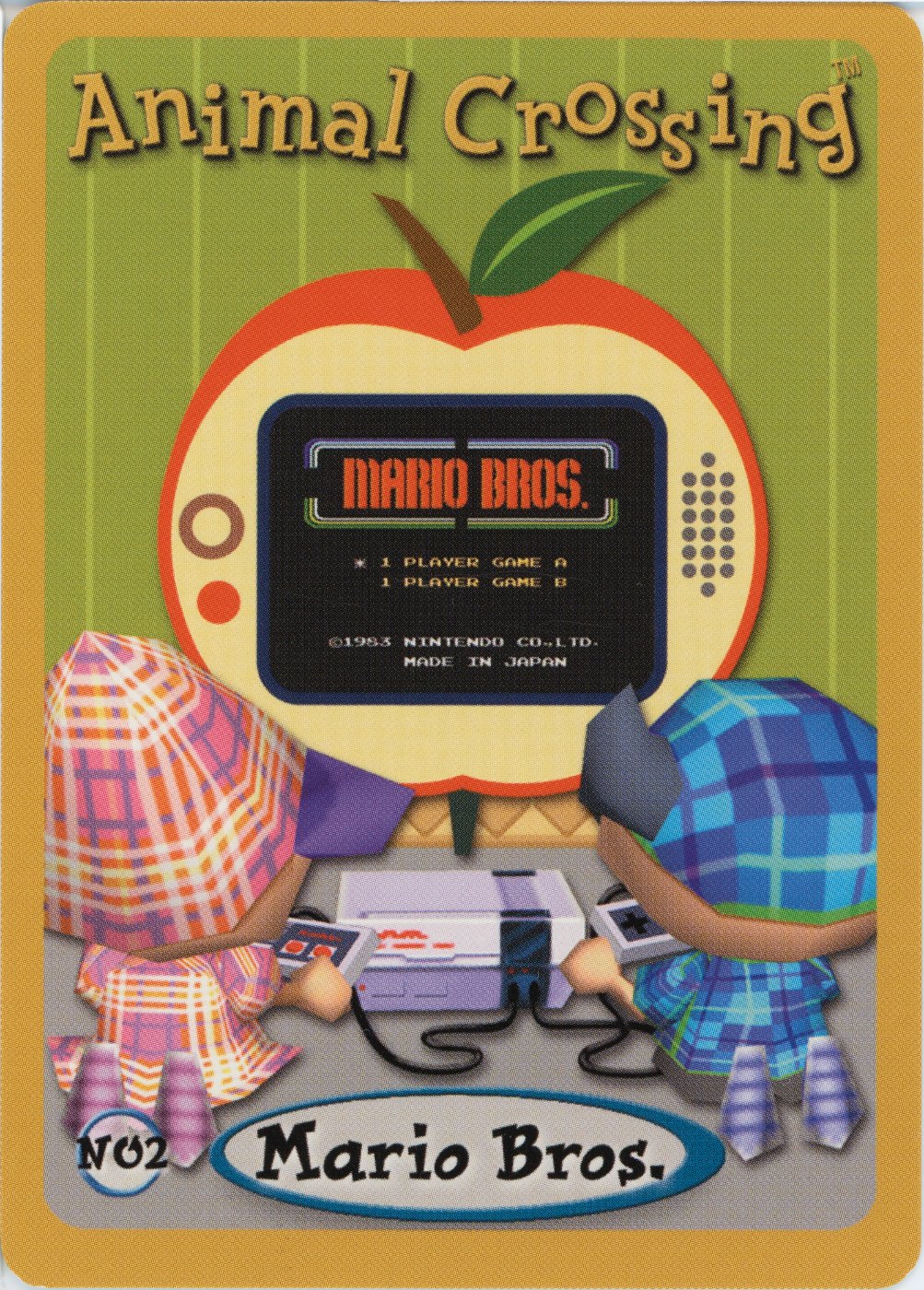
A North American e-Reader card released on 12 May 2003 unlocks Mario Bros. as a playable NES game in Animal Crossing on GameCube, scanned with the e-Reader and Game Boy Advance plugged into the GameCube.
Glitches & Oddities
Mario Bros. has no famous game-breaking glitch, but its counters do some odd things if you play long enough.
The score rolls over
The highest score the display can show is 999,990. Score any more and it overflows and carries on from zero.
Phase 0 on the NES
Reach Phase 100 in the NES version and the counter shows Phase 0, then starts climbing again. The arcade counter instead stops at 98 (99 in Japan) while the phases carry on.
KO on the counter
From Phase 25 the counter at the bottom of the arcade screen shows KO in place of a number.
Videos
A period television advert for Atari’s home versions, and the trailer that announced the arcade original on Nintendo Switch.
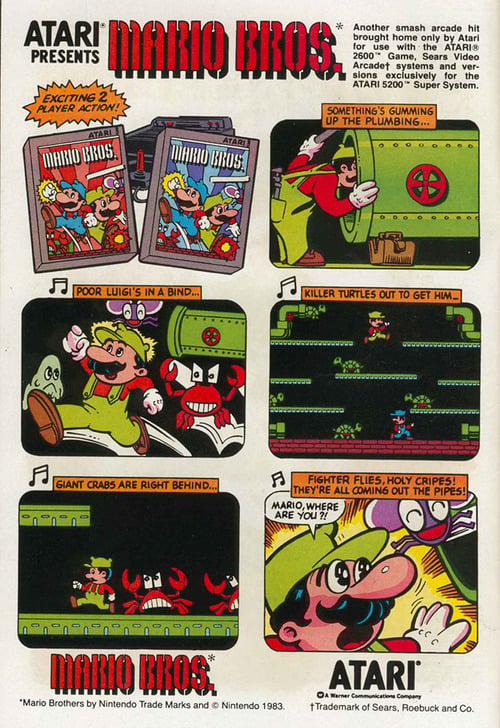
Third-party upload of Atari’s 1980s television advert for its home versions; the jingle is sung to the theme of the sitcom Car 54, Where Are You?
Third-party upload, by GameTrailers, of the 2017 announcement trailer for HAMSTER’s Arcade Archives release.
Trivia & Interesting Facts
The Game & Watch handheld Mario Bros. (model MW-56, 14 March 1983) came out three months before the arcade game. Apart from starring Mario and Luigi, at work in a bottling plant, it has nothing in common with it.
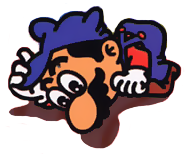
The unused snake-like creature from the arcade graphics.The arcade graphics hold a snake-like creature that never appears, perhaps a planned fourth enemy, and unused poses of Mario, including one of him sitting down and puffing out a breath.
Mario and Luigi have three ways to lose a life: an ordinary death, a frozen one when Slipice or an icicle gets you, and a scorched one for fireballs.
Nintendo’s promotional photo of the game puts Shellcreepers and Sidesteppers side by side in Phase 4, a mix found in neither the Japanese nor the international release, and a red Shellcreeper in place of the P in the phase counter.
The jingle in Atari’s television advert is sung to the theme tune of the 1960s American sitcom Car 54, Where Are You?
The Atari 2600 version calls the coins wafers.
Mozart’s Eine kleine Nachtmusik, heard at the start of the game, has followed Mario Bros. into Dance Dance Revolution: Mario Mix, Super Smash Bros. Brawl and Super Mario Bros. Wonder.
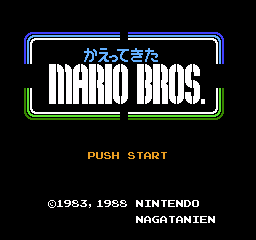
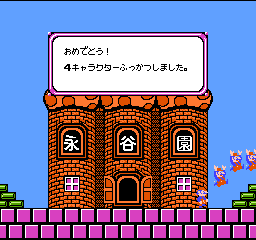
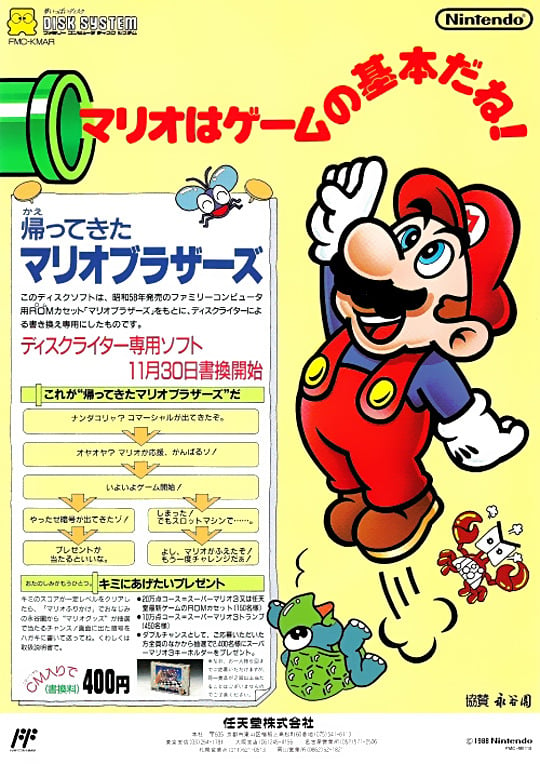
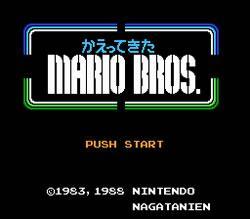
The title screen of Mario Bros. Returns.Mario Bros. Returns (Kaettekita Mario Bros.), the 1988 Famicom Disk System remake, was co-published by the food company Nagatanien and was the last Super Mario game of Japan’s Shōwa era, released about a month before Emperor Hirohito died.
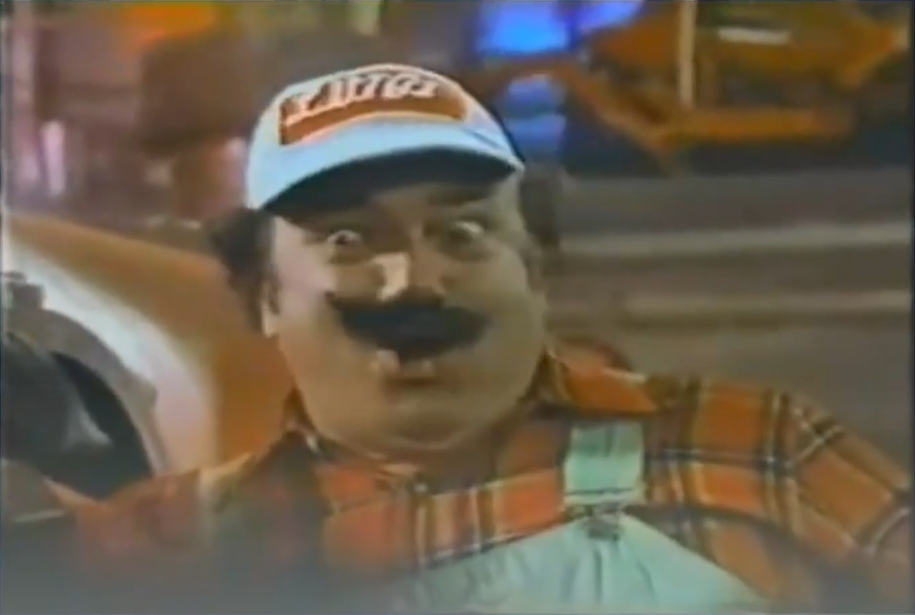
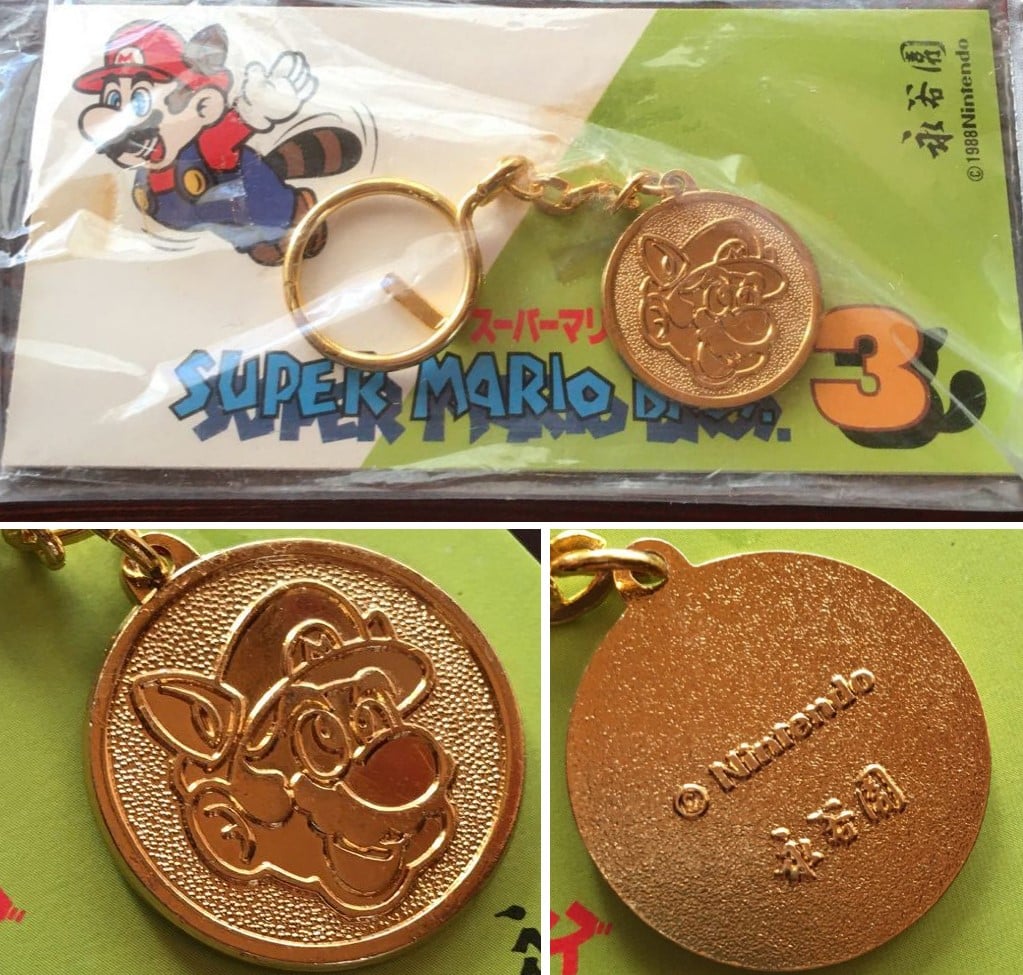
Mario Bros. Returns opens with a Nagatanien advert, one of them starring the singer and actor Saburō Kitajima, and its prizes for high scorers included Super Mario Bros. 3 playing cards, a Super Mario Bros. 3 cartridge and a gold keychain.
Luigi Bros. keeps the 4:3 picture of the NES game inside Super Mario 3D World, and while player one’s Luigi wears his modern colours, player two’s Luigi keeps the old white-and-green look.
The NES Classic Edition’s menu music mixes in sound effects from Mario Bros. and Super Mario Bros., and a hidden idle animation on its menu uses the NES Mario Bros. sprites.
The cocktail table version of the cabinet was sold only in Japan.
Mario + Rabbids Kingdom Battle parodies the cabinet on its Battle mode title screen, with Rabbid Mario and Rabbid Luigi and birds, mice and bees in place of the enemies.
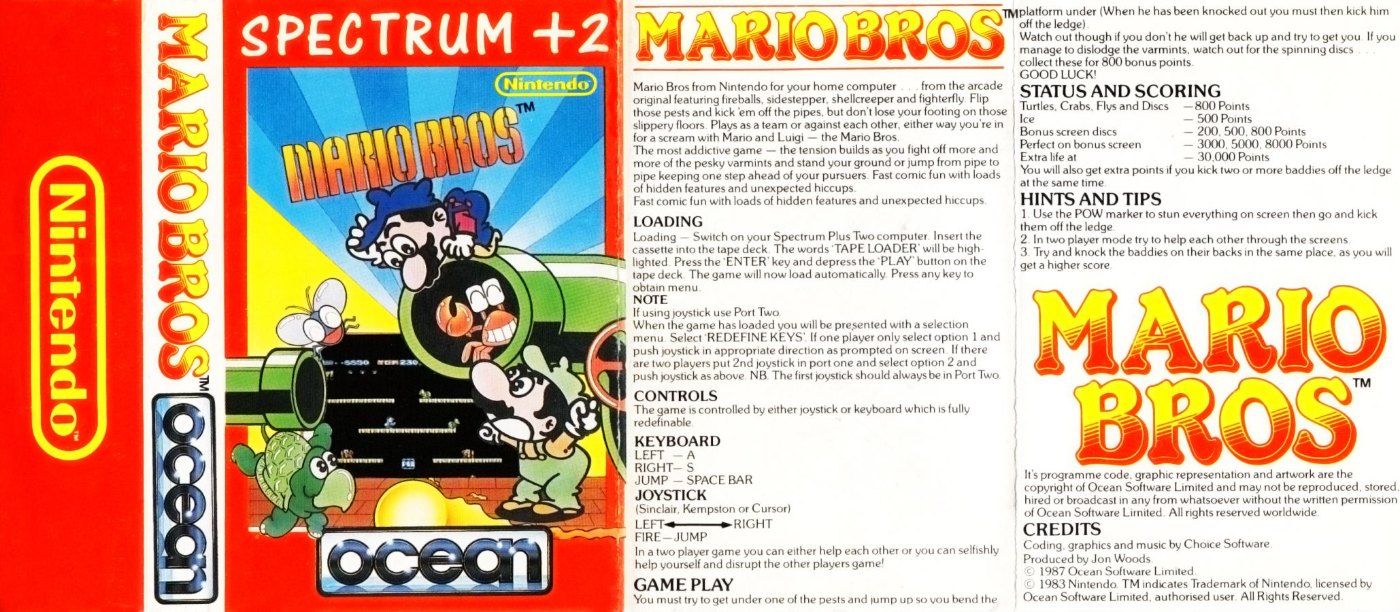
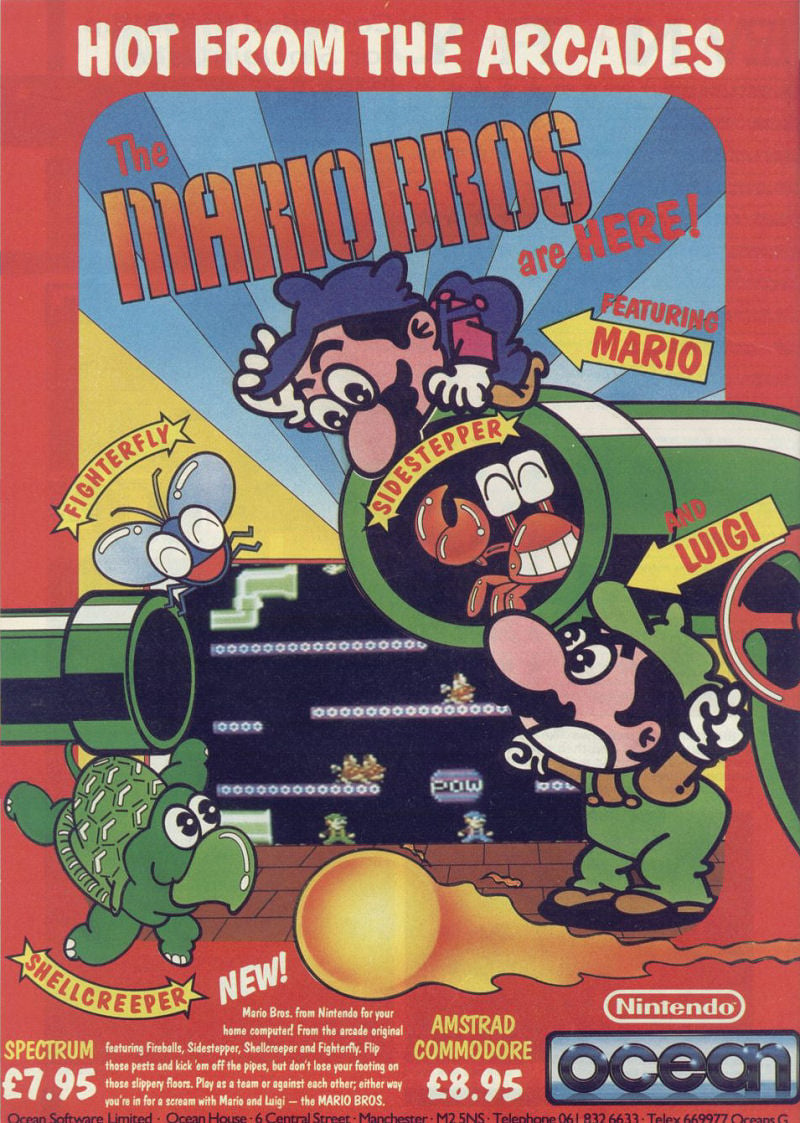
The Amstrad CPC, ZX Spectrum and Commodore 64 versions were published by Ocean Software in 1987; the Commodore 64 one is noted for its strange visuals and music.
In Super Smash Bros. Brawl, Wario’s red costume resembles Mario’s look in this game.
Regional Box Art
The NES game was sold in Nintendo’s Arcade Classics Series boxes; the computer and Atari versions each had their own art.
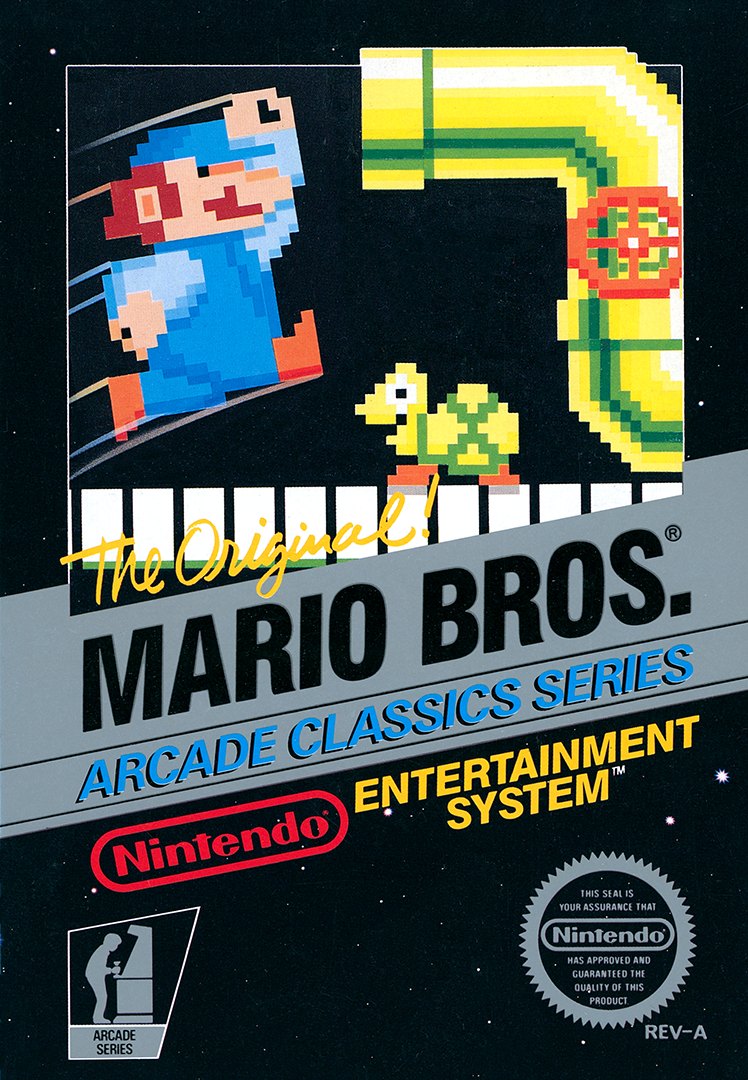
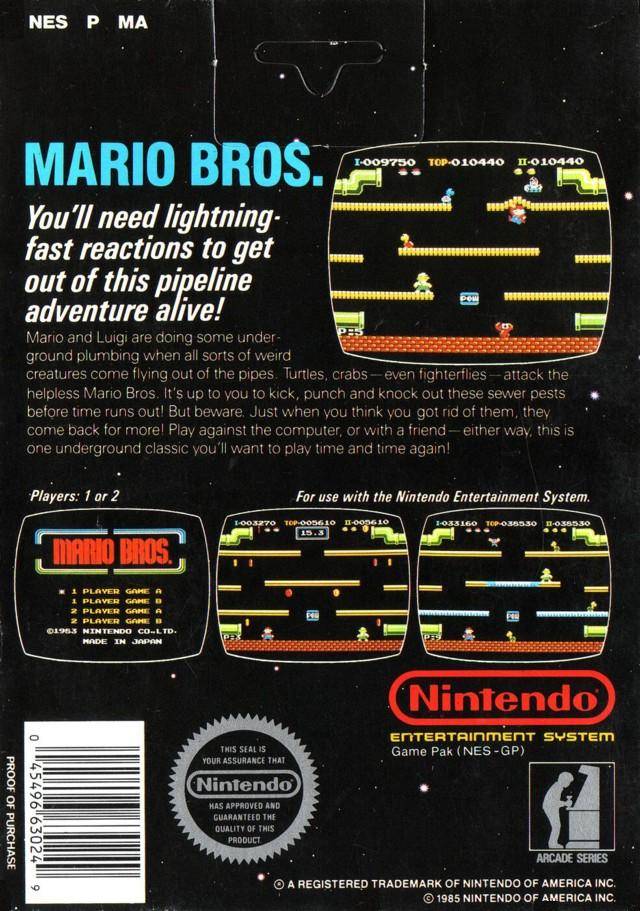
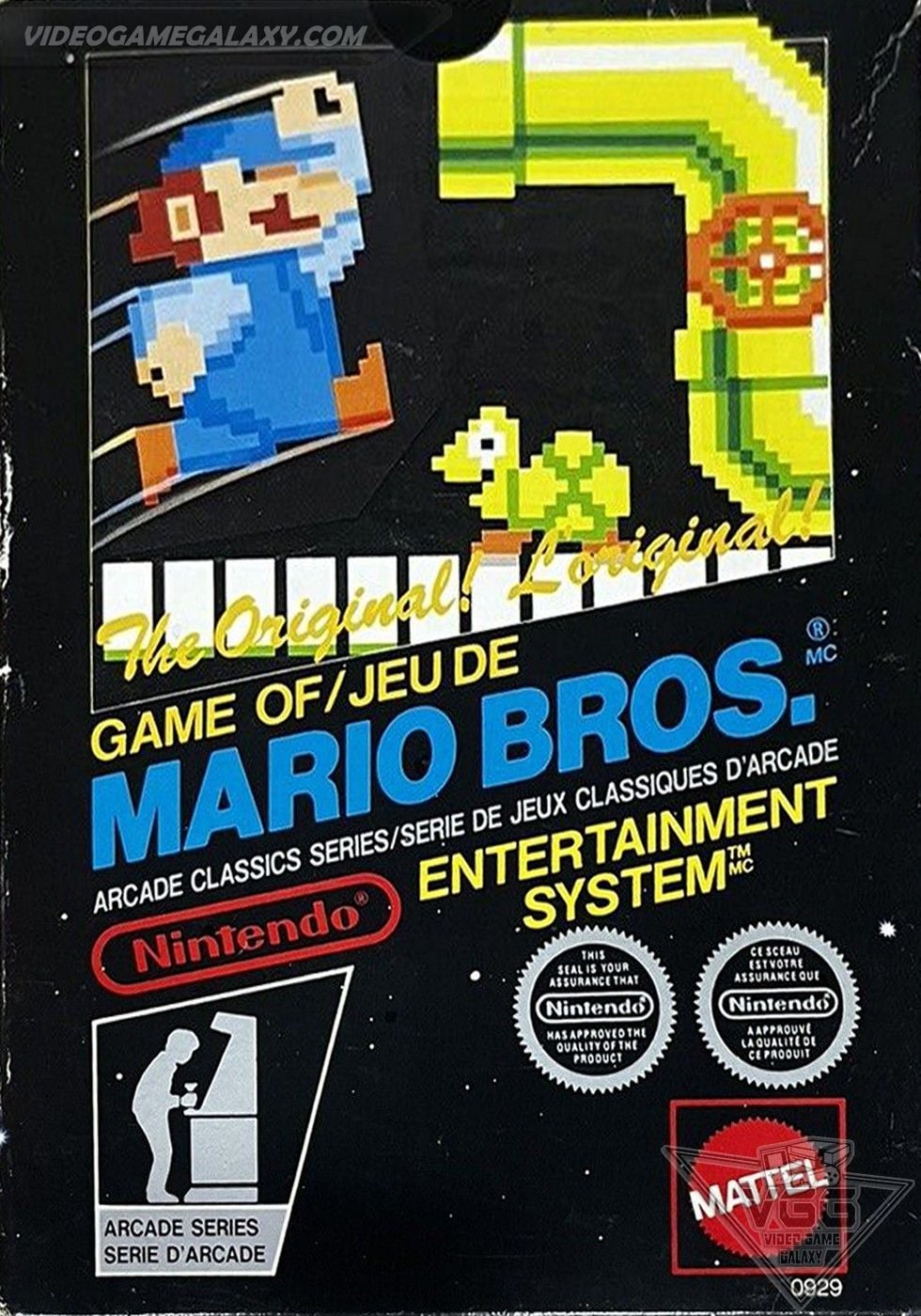
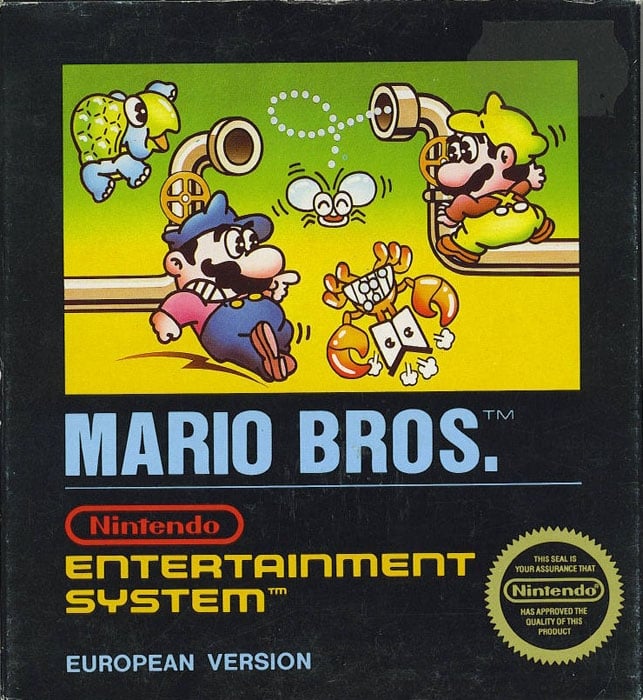
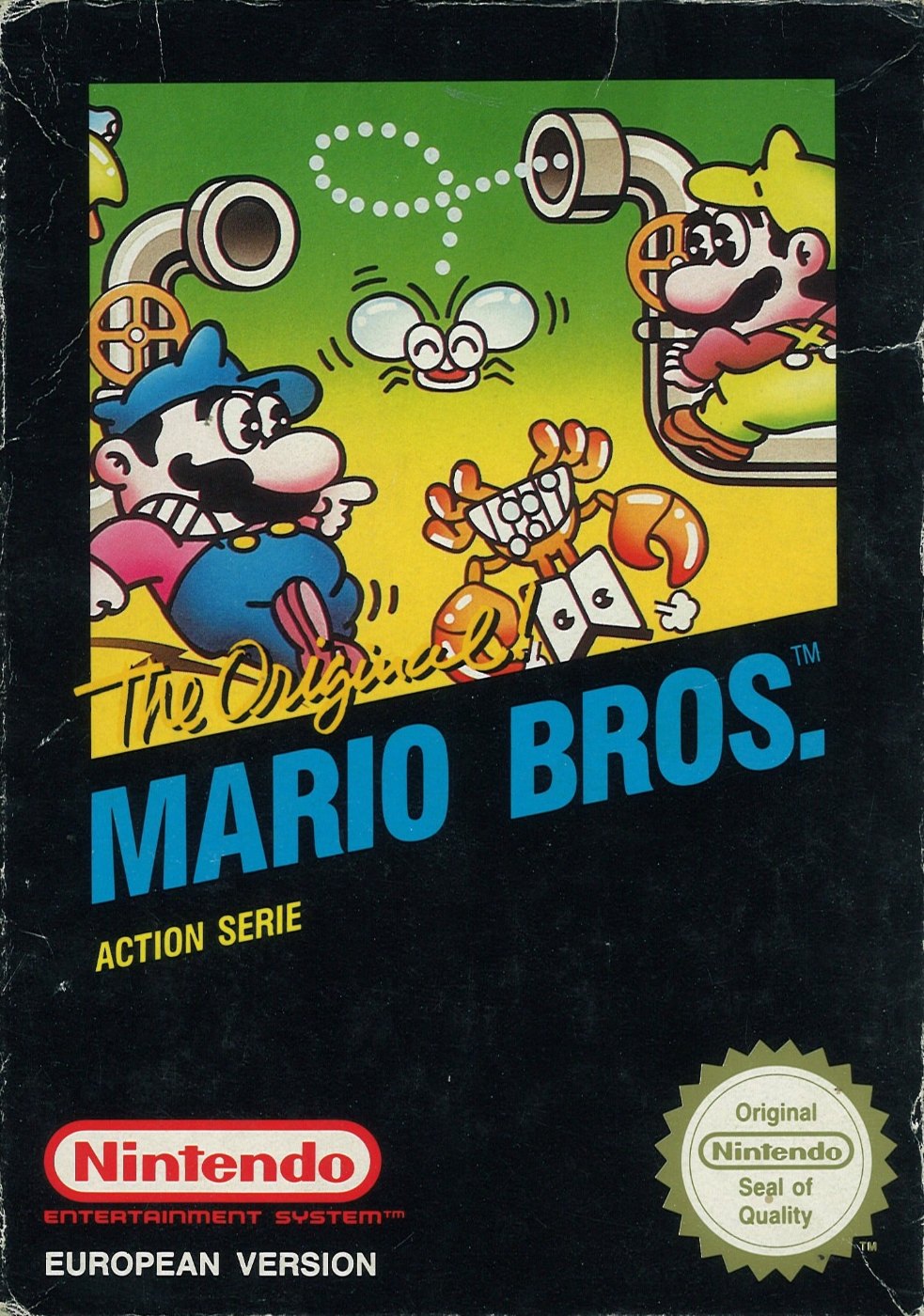
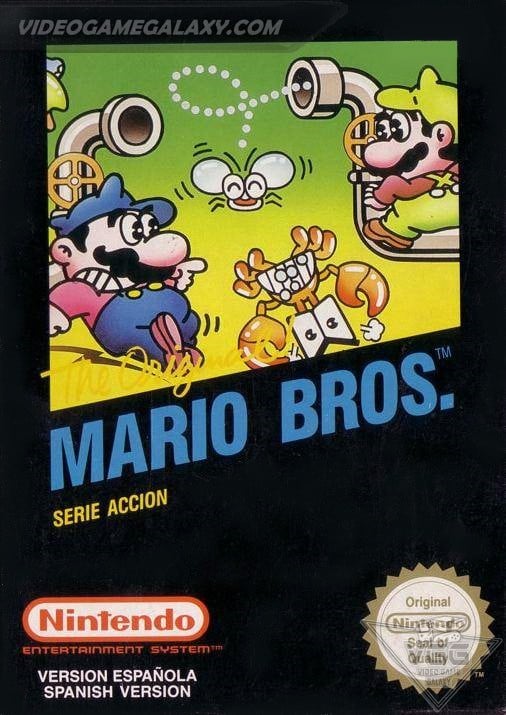
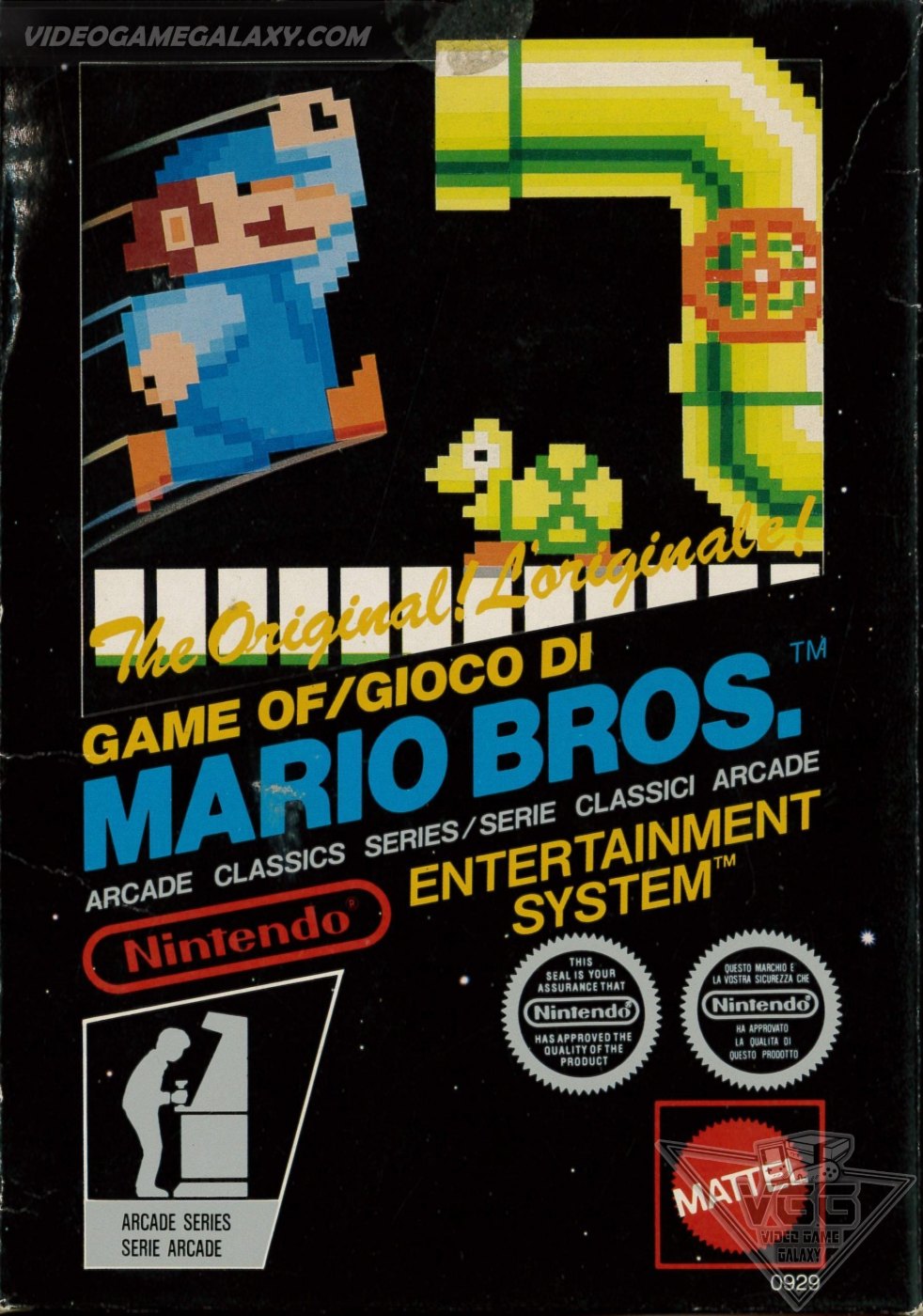
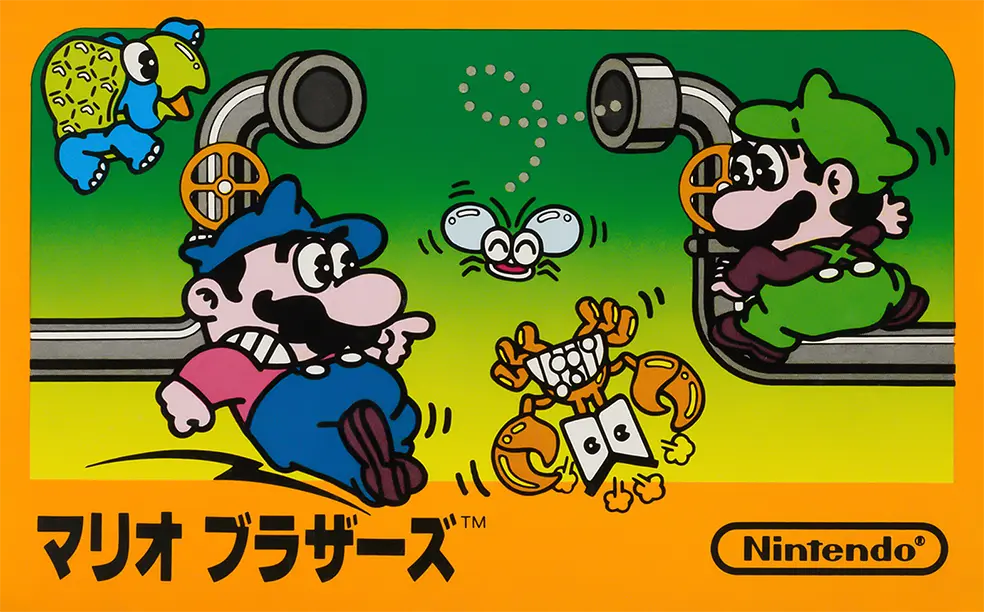
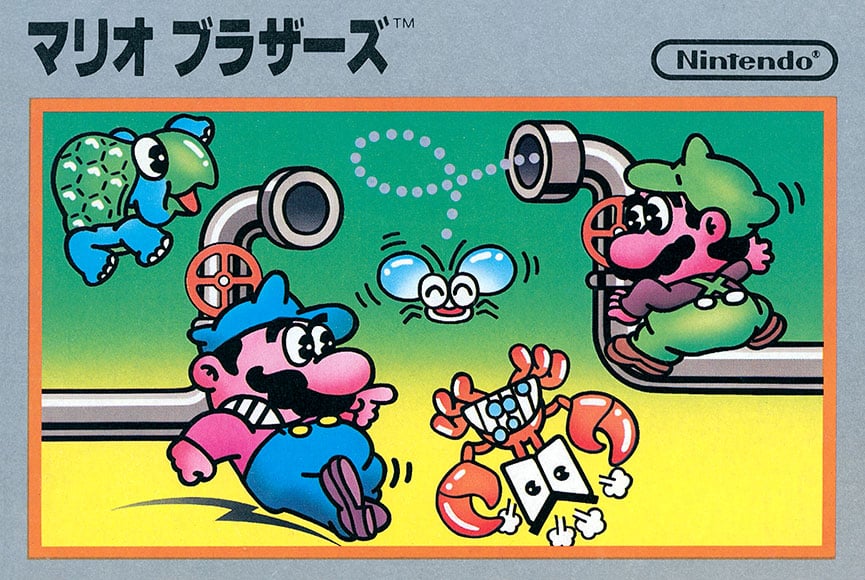
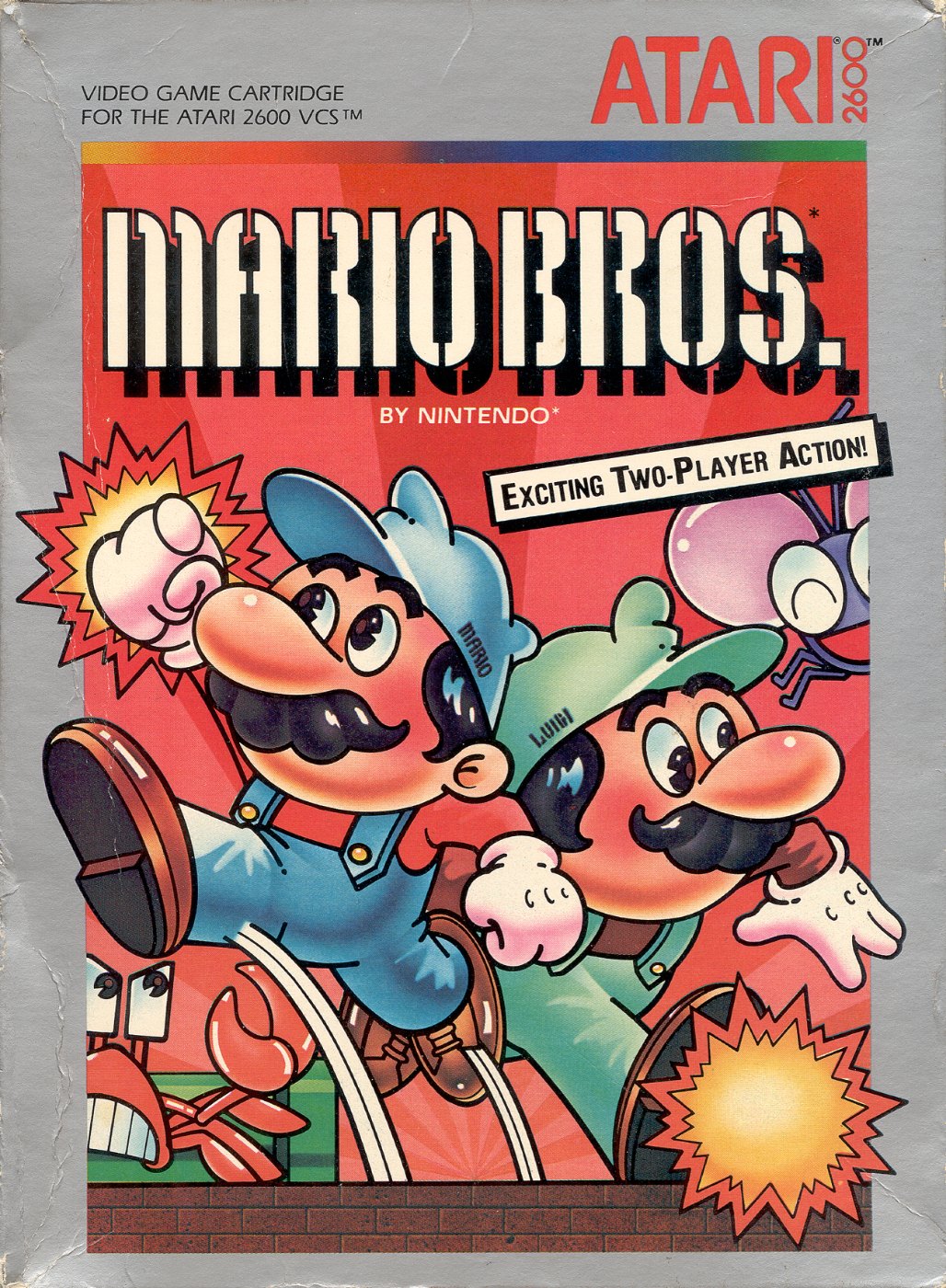
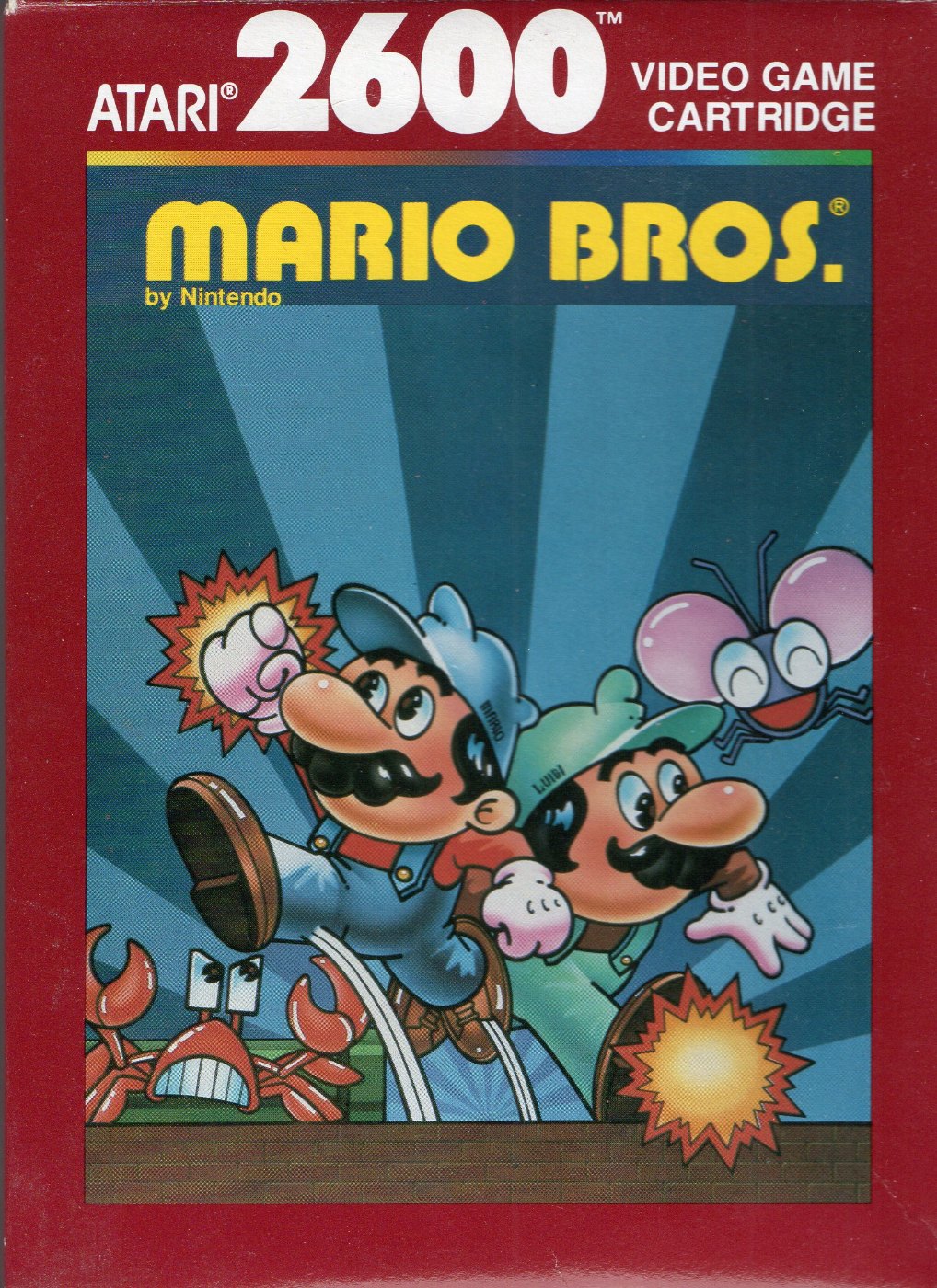
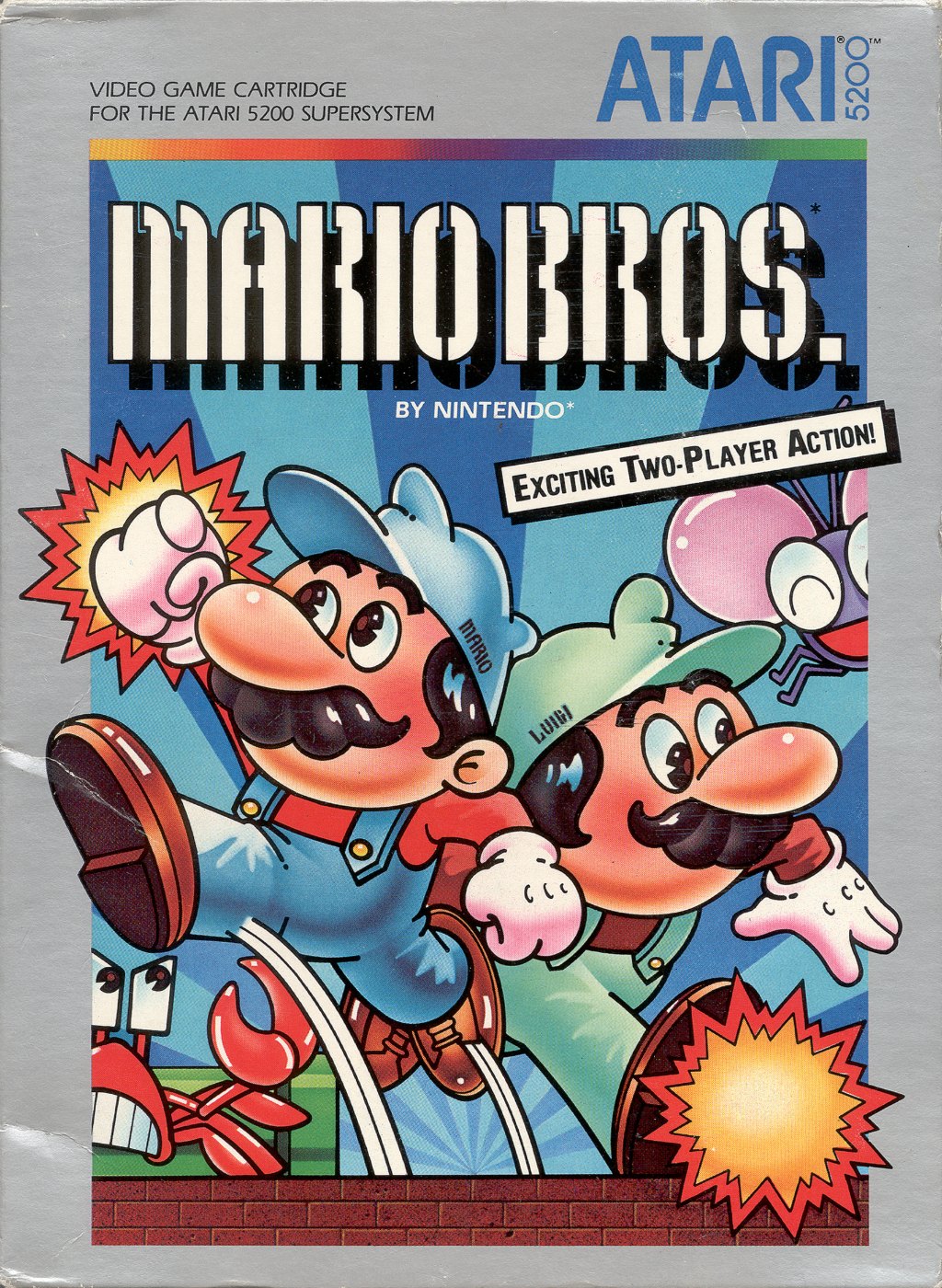
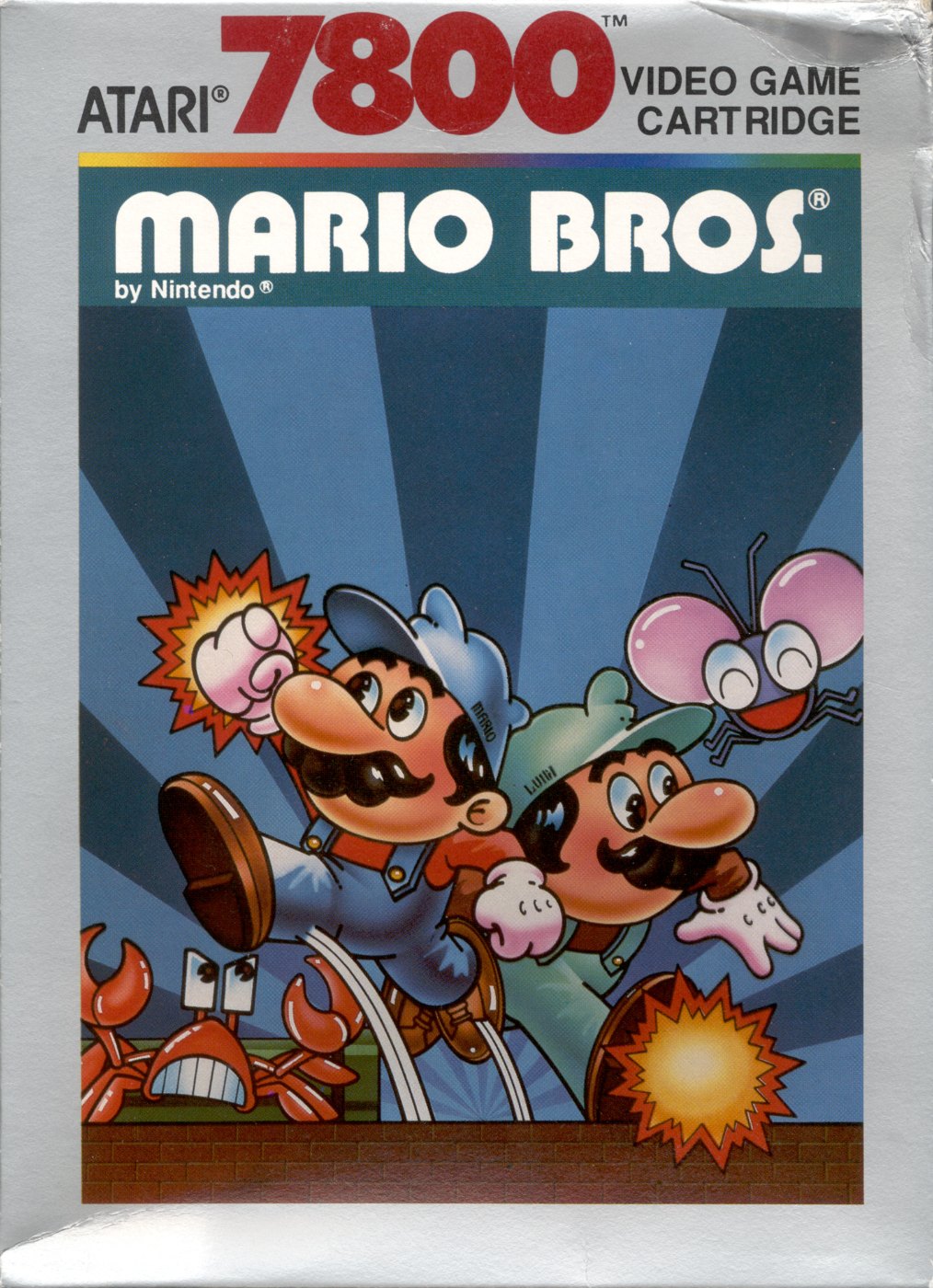
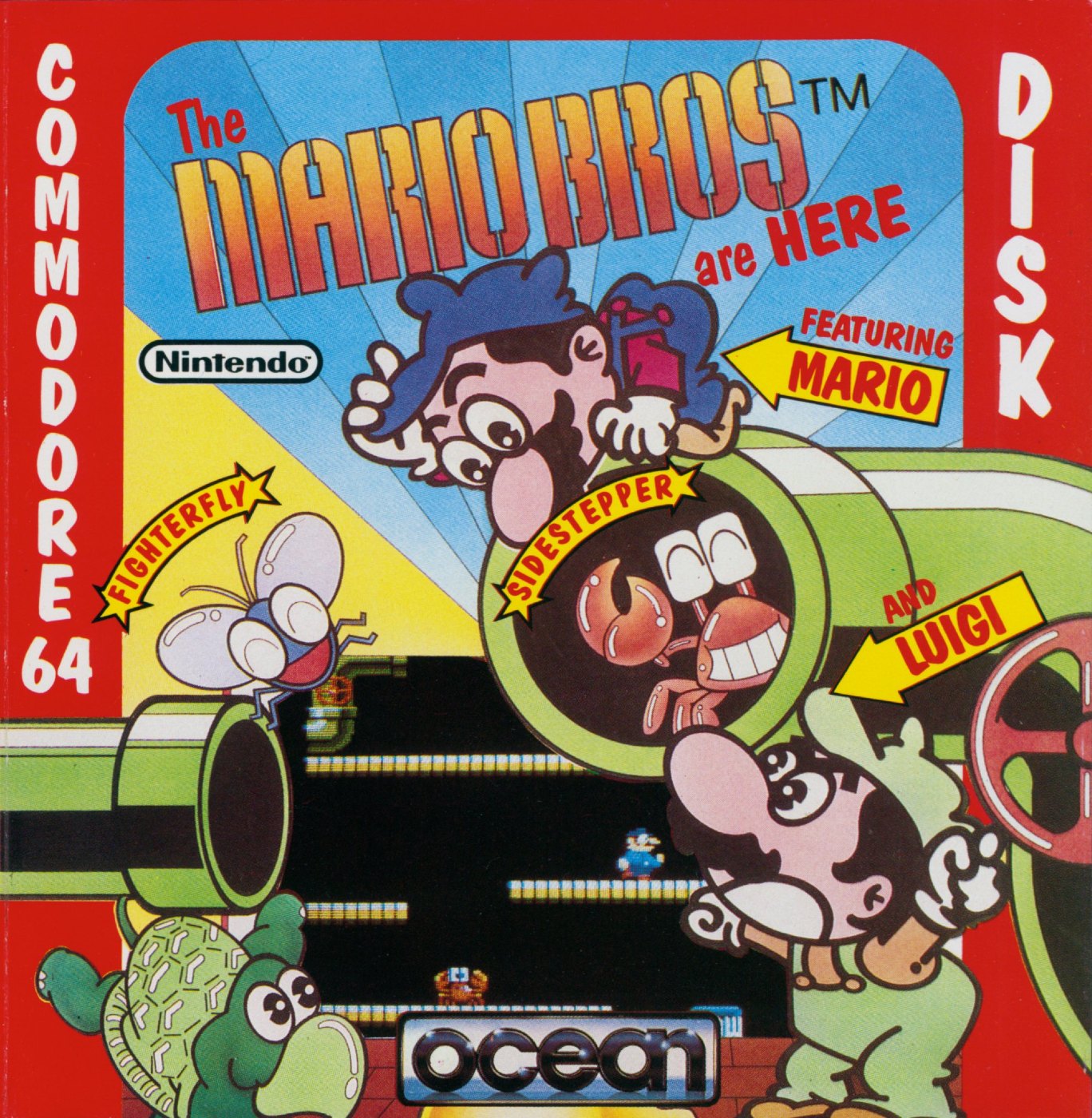
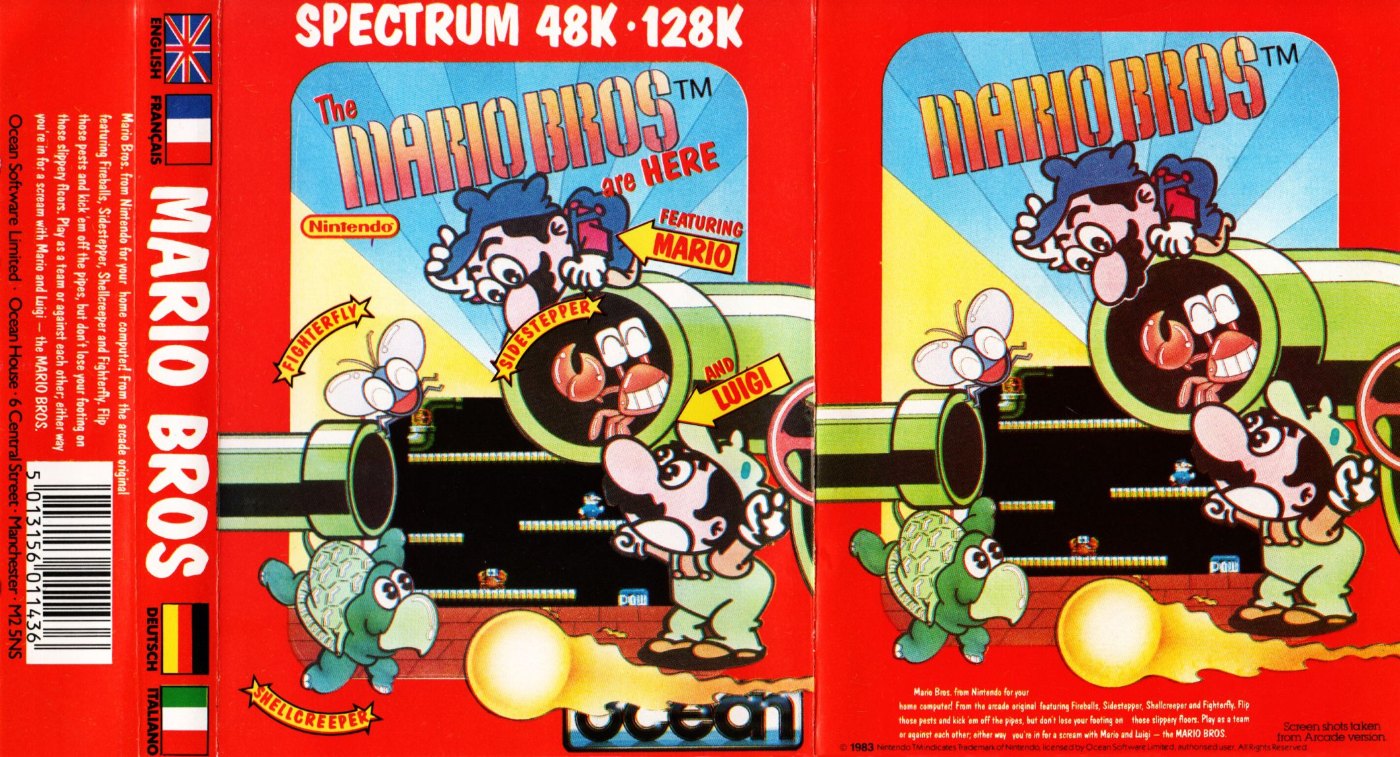
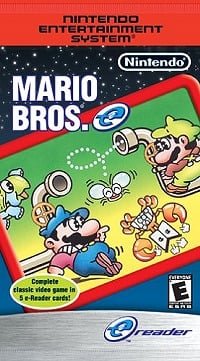
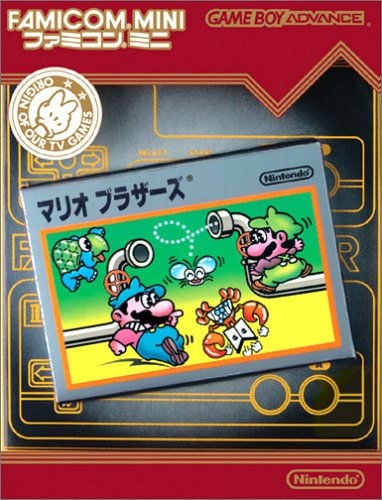
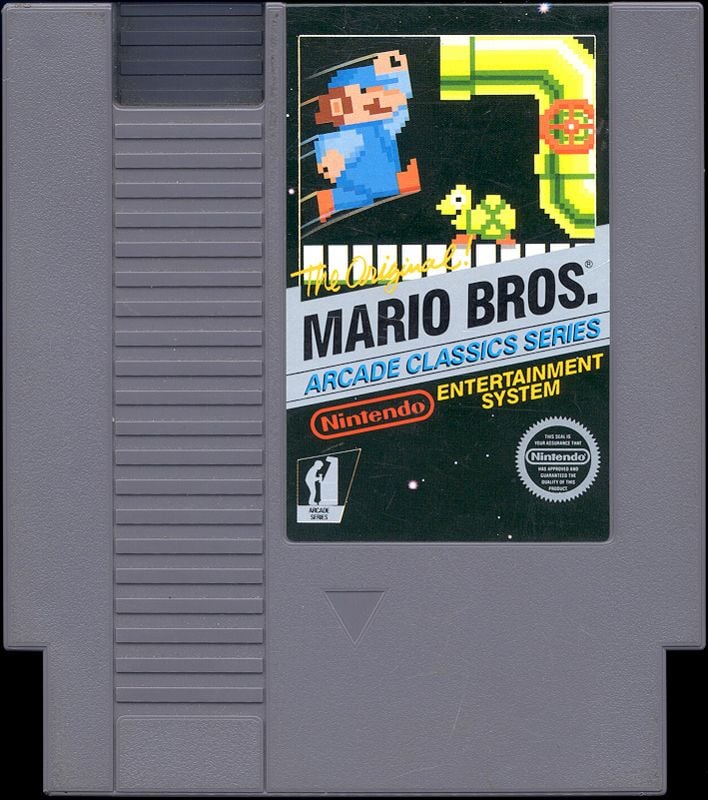
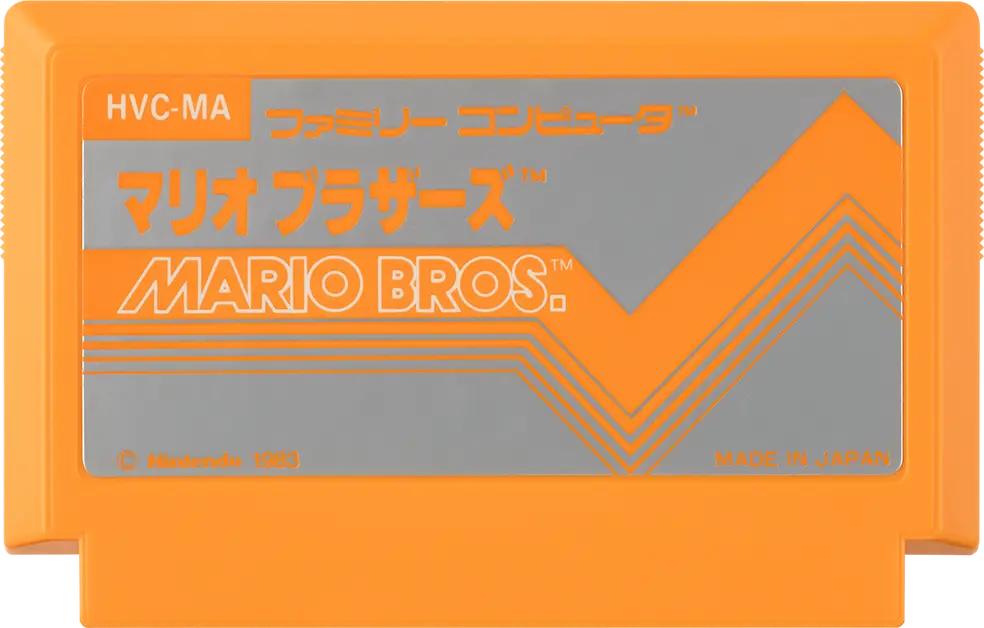
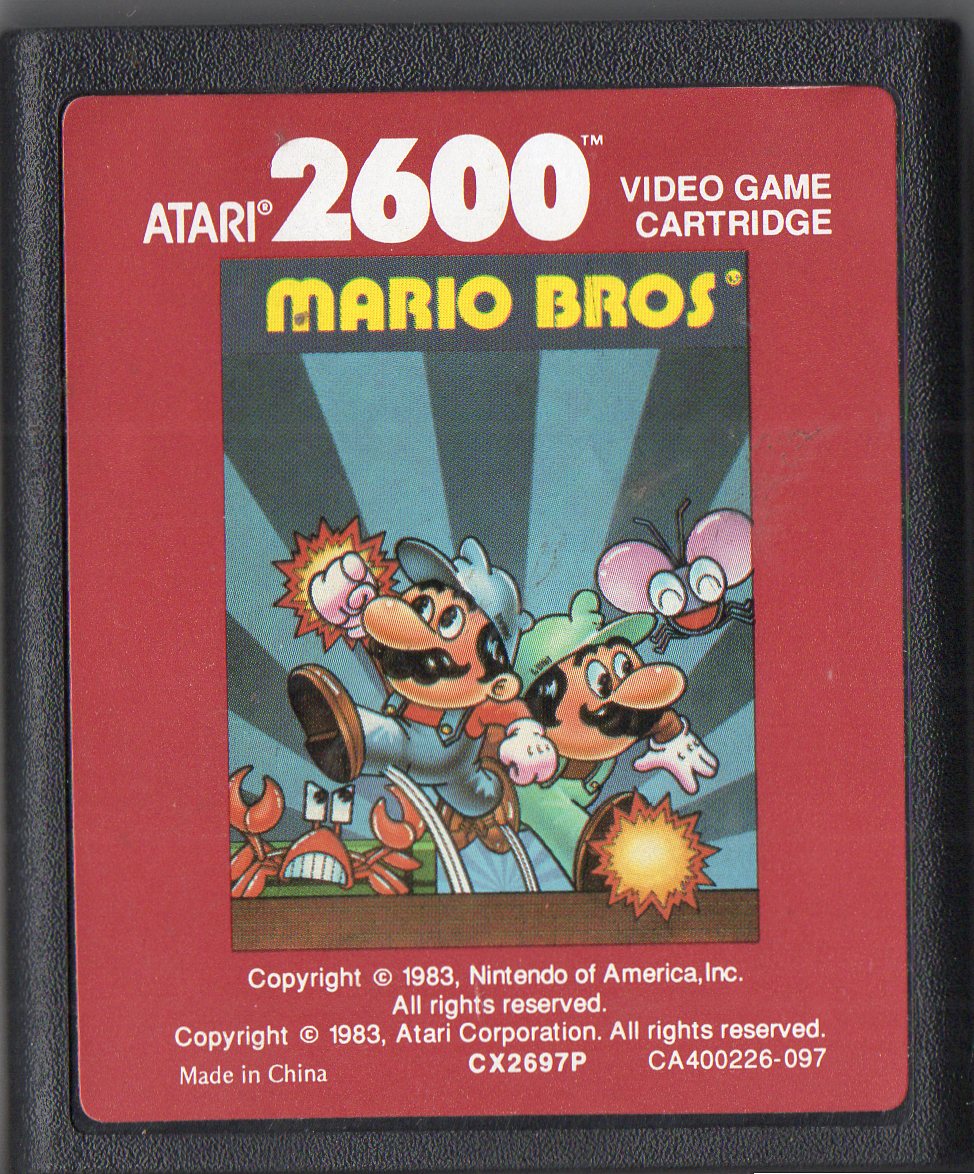
NES, North AmericaArcade Classics Series box.NES, North America (back)NES, CanadaNES, EuropeNES, GermanyNES, SpainNES, ItalyFamicom, JapanFamicom, Japan (back)Famicom, Japan (alternative box)Atari 2600, North AmericaAtari 2600, EuropeAtari 5200Atari 7800NEC PC-8001, JapanCommodore 64ZX Spectrum 48K/128KZX Spectrum +2e-Reader, North America (2002)Mario Bros.-e, a pack of e-Reader cards.Famicom Mini, Japan (2004)
Advertisement
Screenshots
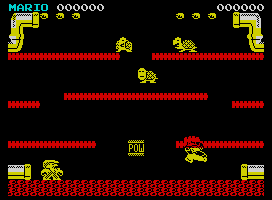
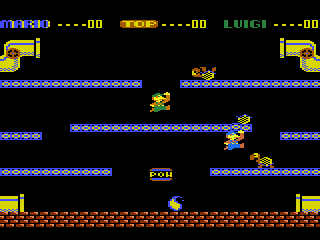
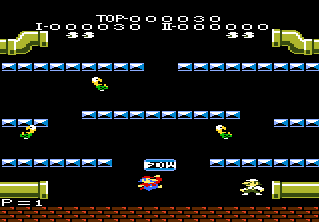
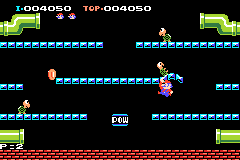
The same sewer on a dozen machines.
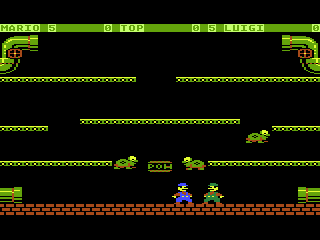
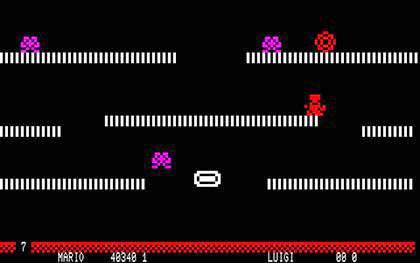
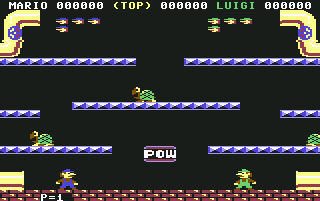
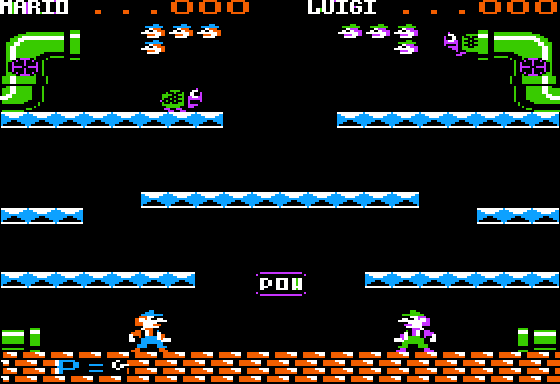
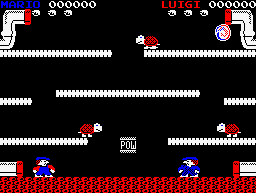
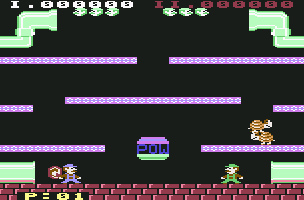
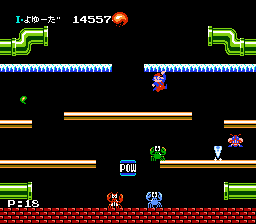
The Famicom title screen.Mario in the 1983 NES version.Mario in the Atari 2600 version.Both brothers on the Atari 5200.Mario in the PC-8001 version.The unreleased Atarisoft version for the American Commodore 64 (1984).The unreleased Apple II version.The Amstrad CPC version.Ocean’s 1987 Commodore 64 version.The ZX Spectrum version.The 1988 Atari 8-bit and XE Game System version.The Atari 7800 version.The 2004 Famicom Mini edition.The Arcade Archives title screen on Nintendo Switch.
Artwork & Media Gallery
Artwork, flyers, adverts, sprites and hardware.
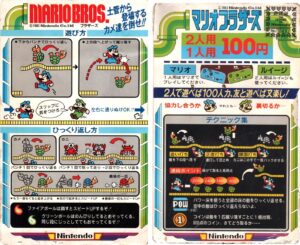
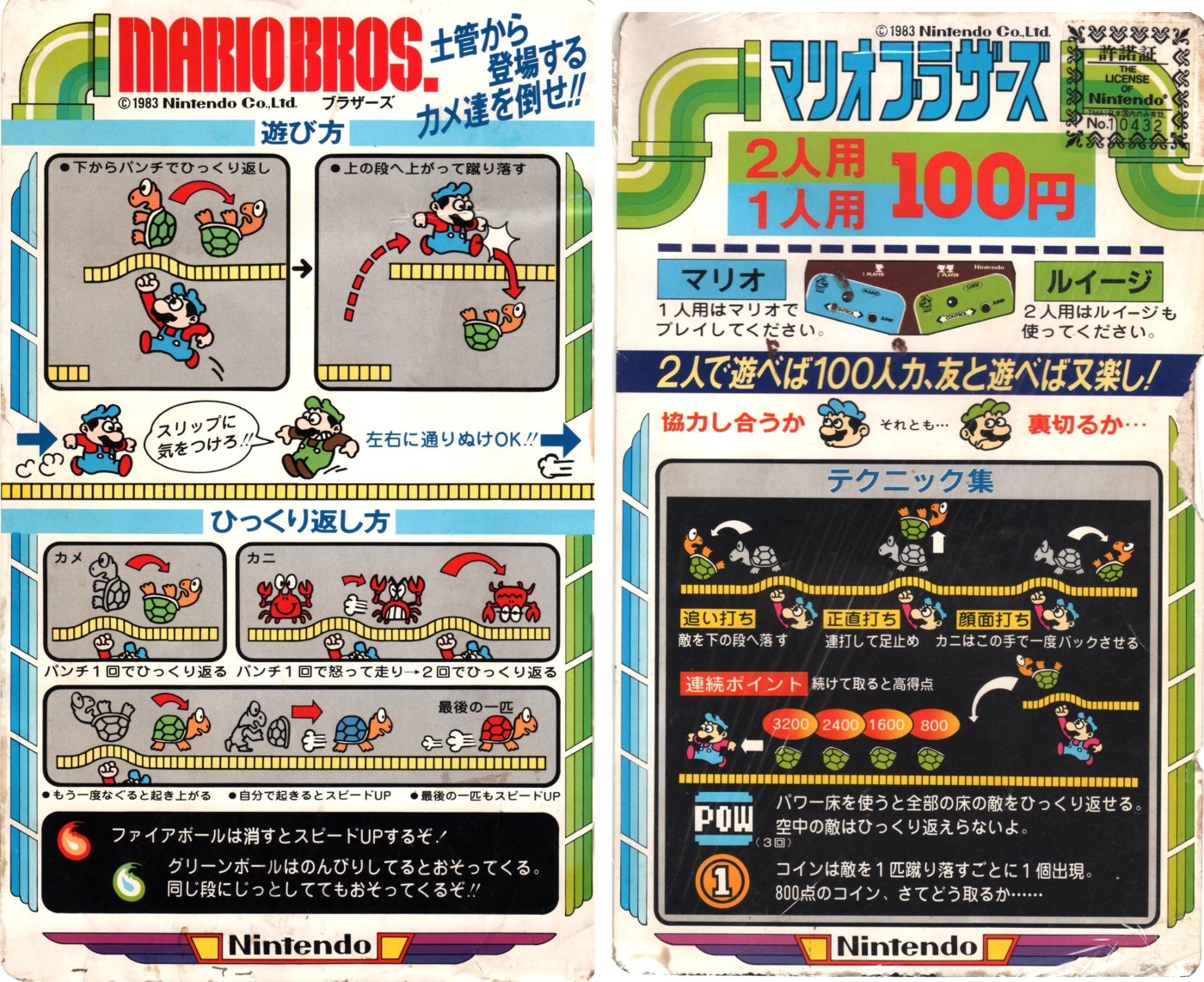
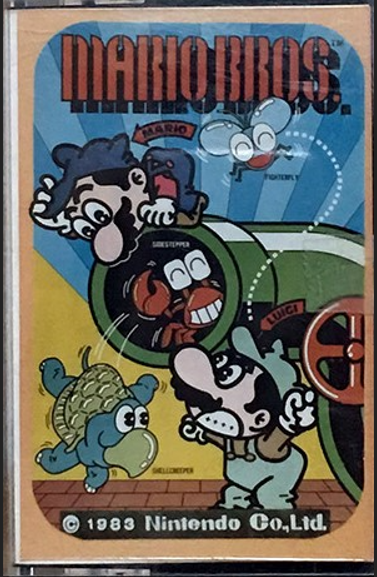
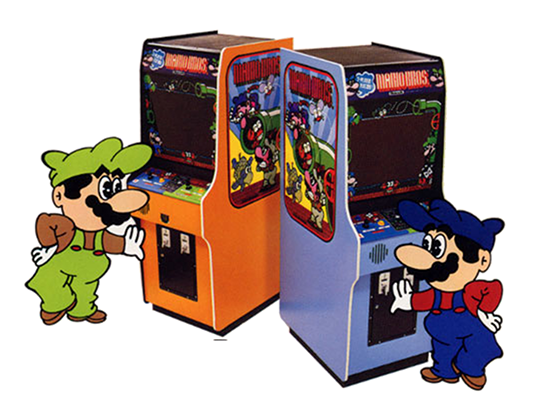
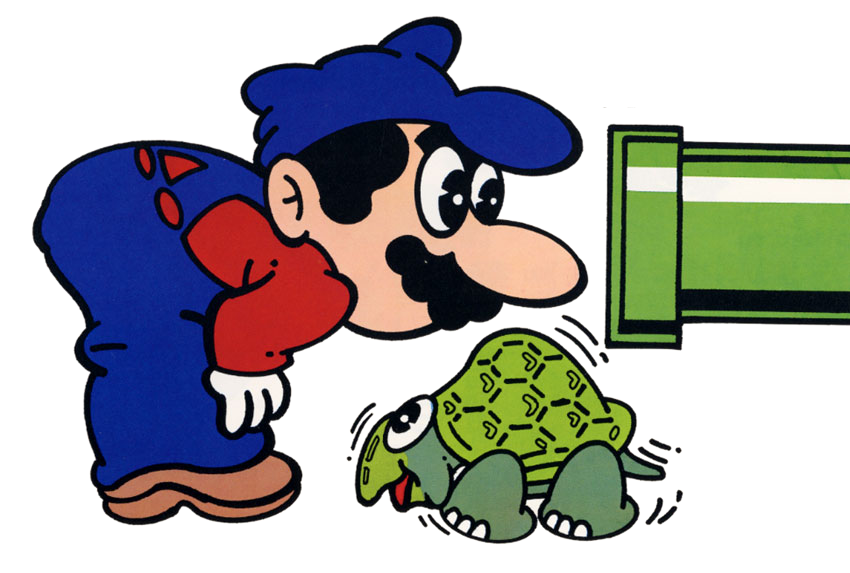
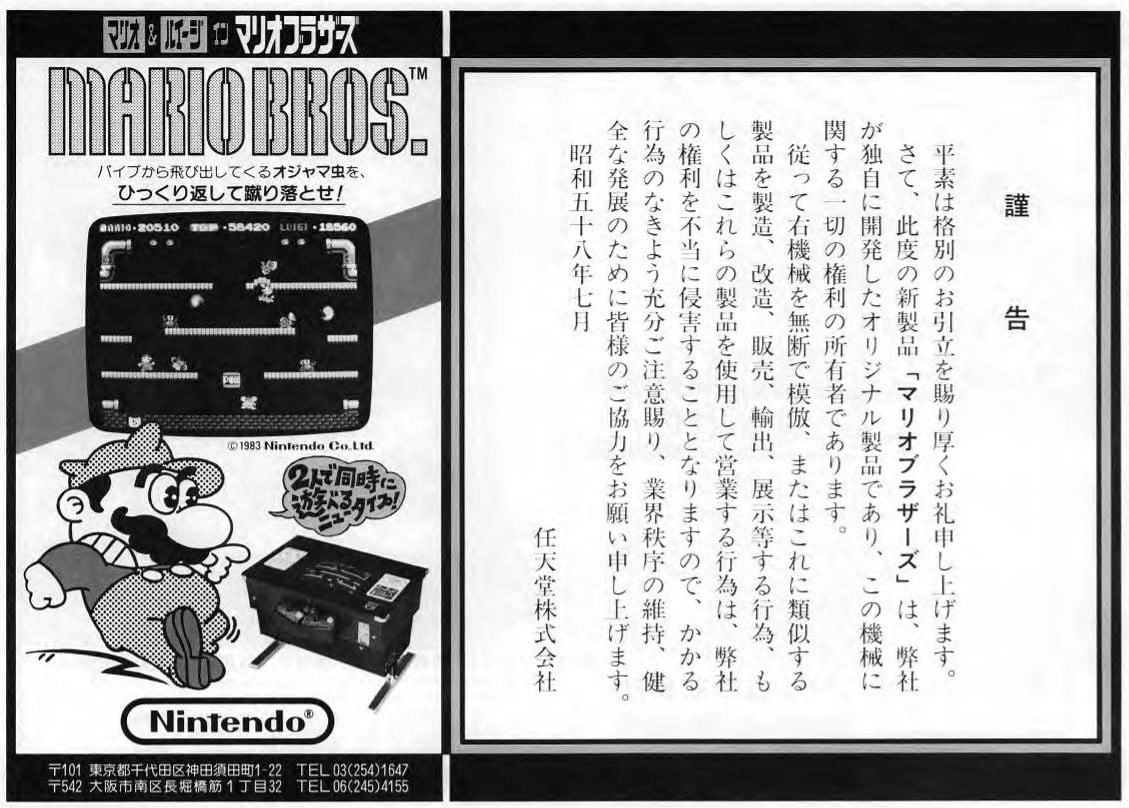
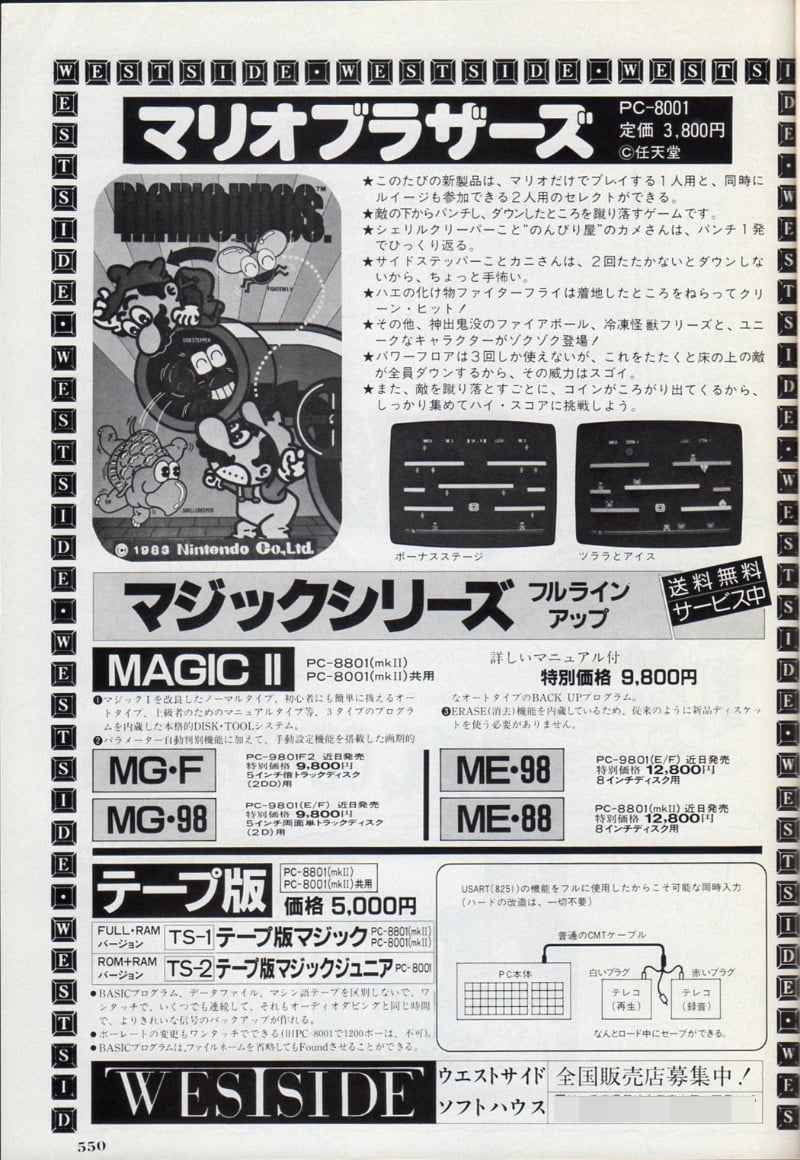
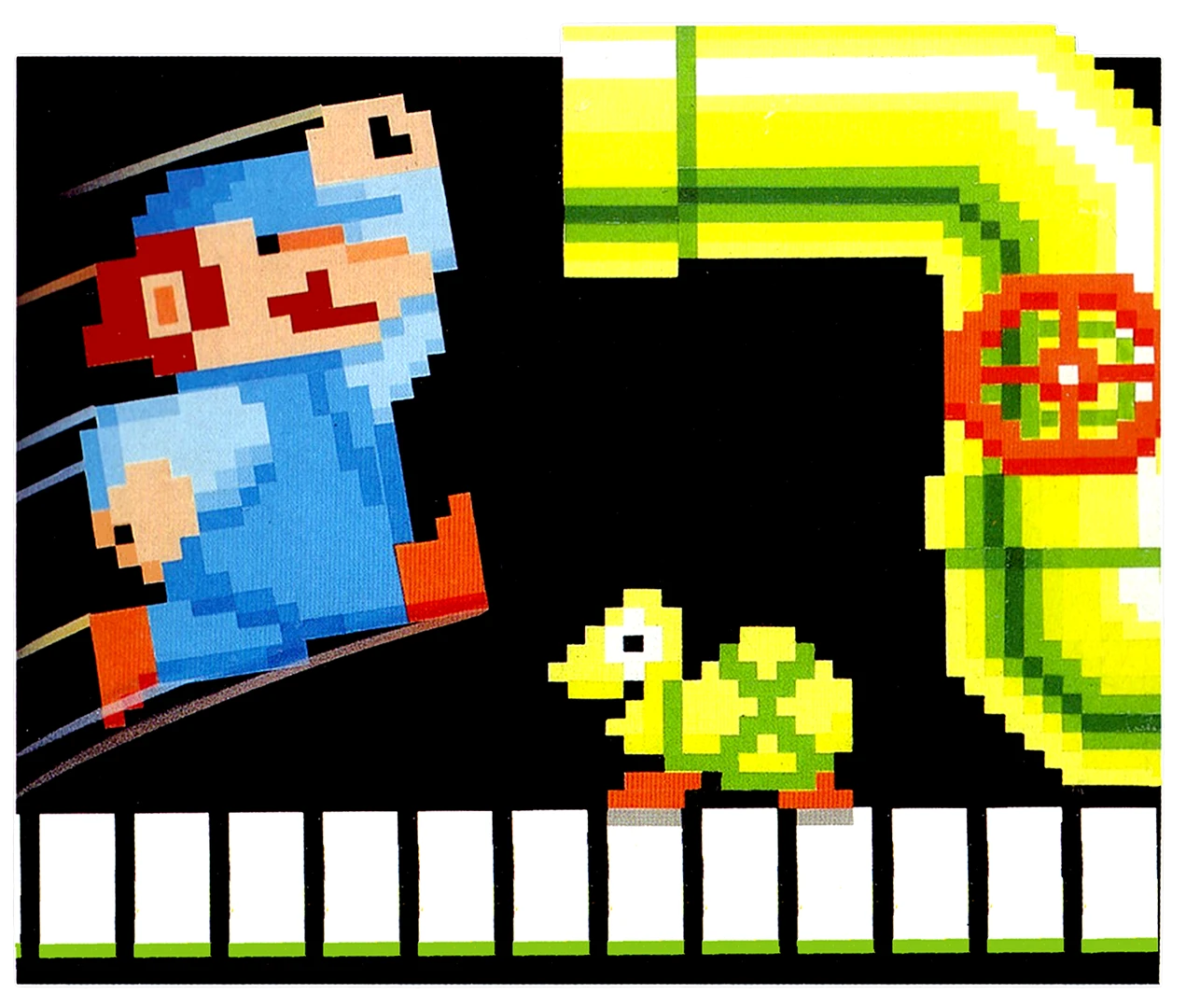
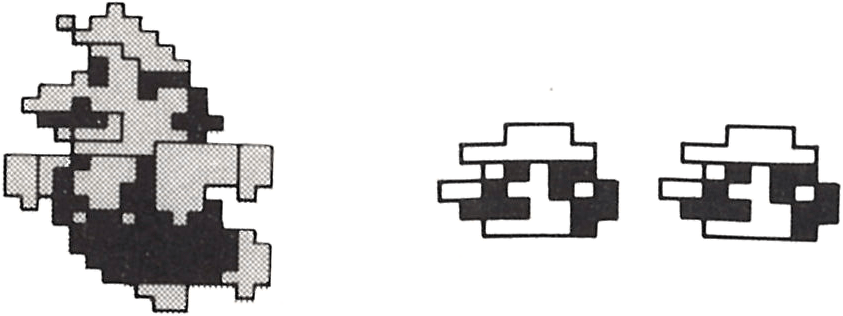
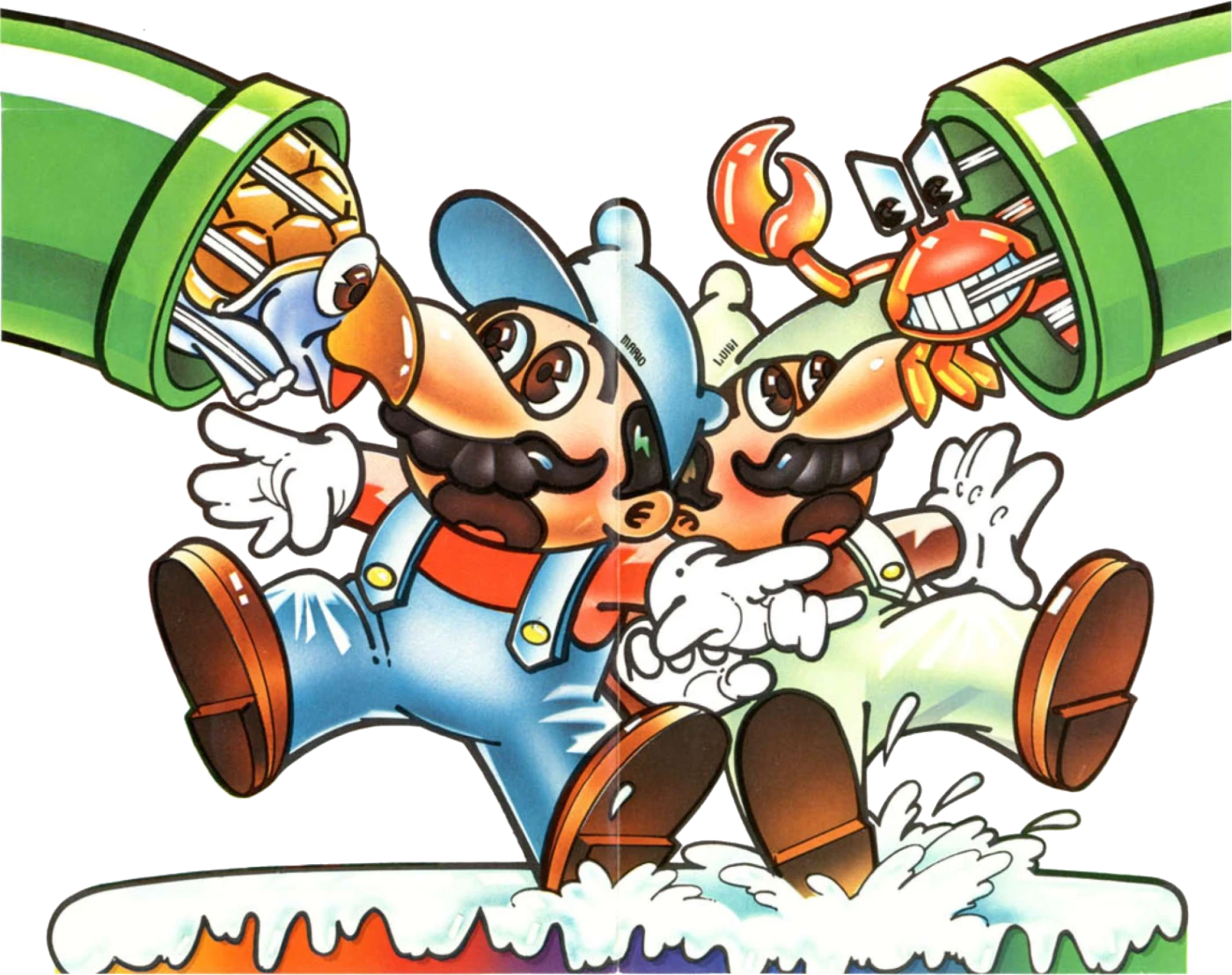
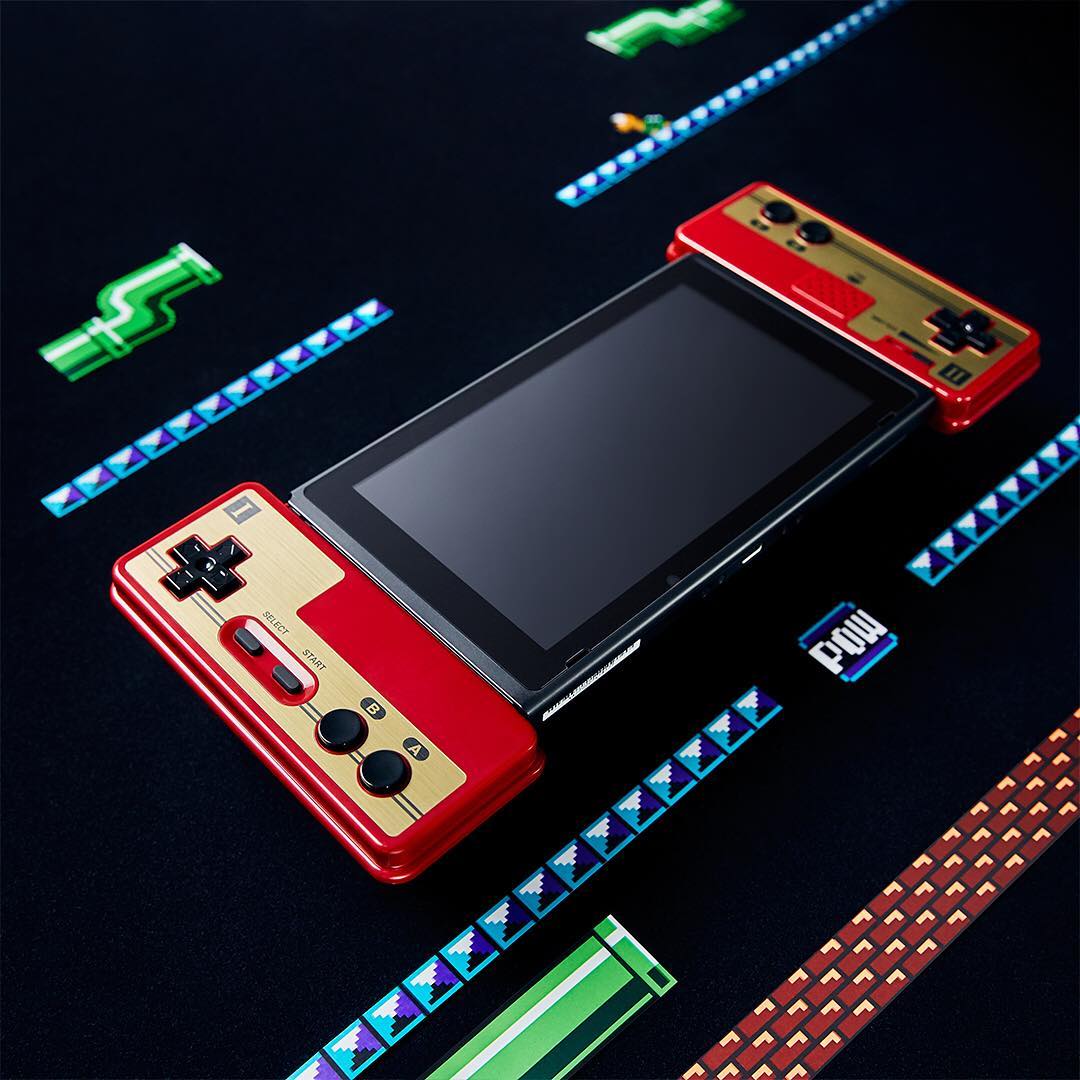
Mario and Luigi, from the arcade flyer.Mario, a pipe and a Shellcreeper.The Japanese arcade flyer.An advert in Game Machine, 1 July 1983.Advert for the Atari 2600 and 5200 versions.Advert for the PC-8001 version.European flyer for the Amstrad CPC, Commodore 64 and ZX Spectrum versions.Famicom cover artwork.NES cover artwork.Mario losing a life, from the NES manual.Fireballs, from the NES manual.Atari 2600 artwork.Atari’s artwork of a Slipice.The arcade logo.Mario’s arcade sprite.Luigi’s arcade sprite.Mario’s death animation in the arcade game.The burnt death sprite.Mario’s NES sprite, in his new red and blue.Luigi’s NES sprite.A 1983 upright cabinet.The Japan-only cocktail table.Namco’s 2004 Donkey Kong / Donkey Kong Junior / Mario Bros. upright.The North American NES cartridge.The Famicom cartridge.The European Atari 2600 cartridge.Luigi in Atari’s television advert.Nintendo’s photo of its Famicom controllers for Nintendo Switch Online, set against a Mario Bros. background.Phase 18 of Mario Bros. Returns.The Nagatanien slot machine in Mario Bros. Returns.An advert for Mario Bros. Returns.The gold keychain prize.Luigi Bros. in Super Mario 3D World.The Animal Crossing e-Reader card for Mario Bros.
Legacy & Re-releases
Mario Bros. has hardly ever been out of print. Here is where it has been.
Releases and re-releases
Arcade1983Previewed in Chicago on 25–27 March; Japan from June (some sources give 21 June) and North America that summer (20 July).
Famicom9 September 1983The home conversion, usually credited to Intelligent Systems.
Atari 2600December 1983Atari, Inc., for Christmas.
Atari 5200February 1984Missed Christmas and arrived the next year.
NEC PC-8001February 1984Japan; made by MISA, published by Westside Soft House. Loud, rough, but with icicles.
NES1986North America on 20 June; Europe later that year; PlayChoice-10 arcades from August.
Amstrad CPC, ZX Spectrum, Commodore 641987Europe, from Ocean Software.
Atari 8-bit and 7800November–December 1988Atari Corporation; the 8-bit version is the arcade-accurate one, the 7800 looks like the NES game.
Famicom Disk System30 November 1988Mario Bros. Returns (Kaettekita Mario Bros.), Japan only, through the Disk Writer kiosks, with Nagatanien.
NES Classic Series (Germany)1993A new version based on Mario Bros. Returns, with the arcade intermissions.
e-Reader11 November 2002Mario Bros.-e, the NES game on cards, one player only; Australia in October 2003.
Arcade2004Namco’s Donkey Kong / Donkey Kong Junior / Mario Bros. machine for North America.
Famicom Mini21 May 2004Japan, Game Boy Advance.
Wii Virtual ConsoleNovember–December 2006North America 19 November, Europe 8 December, Japan 12 December.
Wii U and 3DS Virtual Console2013–2014Wii U in June 2013 in the West; 3DS in Japan in May 2013 and Europe and North America in January 2014.
Super Mario 3D World2013Luigi Bros., an unlockable version starring Luigi.
NES Classic EditionNovember 2016One of the built-in games, also on the Japanese Classic Mini Family Computer.
Arcade Archives (Switch)27 September 2017HAMSTER’s emulation of the Japanese arcade original, with two players on Joy-Con.
Nintendo Switch OnlineSeptember 2018In the NES library from launch, with online play.
Nintendo Music21 July 2025The NES soundtrack added to Nintendo’s music app.
The home versions
The Famicom and NES version is the one most people know, and the one Nintendo keeps re-releasing. It loses the demonstration scenes and the icicles but adds two difficulty settings. Icicles survived in the PC-8001 conversion and in the Disk System remake, and Wikipedia says the 1988 Atari 8-bit version had them too. Atarisoft also finished versions for the Apple II and the American Commodore 64 that were never released, though both leaked.
The rarest of all is Mario Bros. Returns, sold only by rewriting a Famicom Disk at a Disk Writer kiosk from November 1988. It lets the brothers change direction in mid-air, puts back the icicles, saves the top five scores and adds a Nagatanien World mode with adverts and a slot machine. It has never been re-released, and nor has the 1993 German Classic Series cartridge built from it.
Sequels and remakes
Hudson Soft made two follow-ups for Japanese computers in 1984, Mario Bros. Special and Punch Ball Mario Bros., and in 1995 the Virtual Boy got Mario Clash. The battle mode of Super Mario Bros. 3, the Battle Game of Super Mario All-Stars and the four-player remake in Super Mario Advance and its sequels kept the arena alive, with Spinies in place of the Shellcreepers so that nobody would try to stomp them.
What it gave Mario
Pipes, coins, the POW Block, a plumber’s job and a brother: in 2009 Satoru Iwata pointed out how much of New Super Mario Bros. Wii, with its pipes, coins and multiplayer, goes back to this one screen. Two years after Mario Bros., Super Mario Bros. took the brothers out of the sewer and into the Mushroom Kingdom.
Reviews & Sales
Sales
There is no single official figure. In the arcades, Wikipedia cites internal Atari memos estimating that Nintendo had sold about 2,000 cabinets in the United States by July 1983 and about 3,800 by November, and the Japanese trade paper Game Machine placing it third among new table cabinets for July 1983. It was not a Donkey Kong-sized hit, and Wikipedia, citing a 2024 article on the website Marios.Games, says the cabinets are now mildly rare.
The home versions sold far more. Wikipedia gives 2.28 million for the Famicom/NES cartridge, citing the CESA Games White Papers, with more than 1.63 million of those sold in Japan according to a sales chart on the fan site The Magic Box; more than 90,000 copies of the 2004 Famicom Mini edition, citing Nintendojo; and 1.59 million for the Atari 2600 version, citing a 2013 article in Complex. None of these comes from Nintendo’s own investor figures.
3,800US arcade cabinets by November 1983 (Atari memo, via Wikipedia)
2.28 millionFamicom/NES cartridges (CESA, via Wikipedia)
1.59 millionAtari 2600 cartridges (Complex, via Wikipedia)
90,000+Famicom Mini copies in Japan (Nintendojo, via Wikipedia)
Reviews
Mixed at the time and mixed since. The scores below are those Wikipedia lists with their outlets.
Computer and Video GamesMean Machines section · November 1988
80%
AllGameNES version · Brett Alan Weiss
4.5/5
IGNe-Reader version · Craig Harris · 15 November 2002
6/10
GameSpotNES version on Wii Virtual Console
4.9/10
IGNNES version on Wii Virtual Console · 8 December 2006
4.5/10
The first reviews were of the prototype shown in Chicago. Steve Arrants loved it; William Michael Brown of Electronic Fun with Computer Games called it a dud because it was so hard, and John Holmstrom of Video Games complained about the slippery controls, both in July 1983. By November Brown was reporting that the finished game was much easier than the expo version.
The 1989 Complete Guide to Consoles from Computer and Video Games found the NES version great fun, especially with two players, and the Atari VCS version just as enjoyable within the limits of its graphics. The Virtual Console release on Wii met a cooler welcome: GameSpot called it a poor conversion of the arcade game, and IGN liked the game but not Nintendo’s choice of the weaker NES version at 500 Wii Points. IGN’s review of the e-Reader edition praised the play and regretted the loss of two-player mode. The Classic mode in the Super Mario Advance games drew mixed notices, though some reviewers thought four-player Mario Bros. reason enough to plug in a link cable. IGN placed the NES version 91st in its Top 100 NES Games.
SLB User Reviews
Mario Bros. has yet to receive a community review on Super Luigi Bros.
If you’ve played Mario Bros. and would like to submit a review, please get in touch.
More from the Super Luigi Bros Guide
These picture lists come from the earlier Super Luigi Bros guide to Mario Bros. and are kept here in full.
Characters
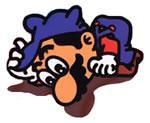
Mario
Fighter Fly
Shellcreeper
Sidestepper
In this section you can find out more about the only 2 characters that appear in the game (Mario and Luigi). It’s not that you don’t know enough already, but……..every additional information can’t hurt you, can it?
Mario Is there really anything to say about him that you don’t know already? This is the actual game where our favourite plumber was born in the way we know him today.
Sure, he existed as Jumpman in the first two Donkey Kong games, but look at it this way – we know what happens in the process of giving birth, the foetus is first “conceived” and then born. Our hero was conceived in those 2 games, and the baby was finally born in this game!
Needless to say, this baby is healthier than ever! Instead of saving Princess Peach from Bowser, in this game, Mario is located in the sewers and, together with his brother Luigi, he must stop a stampede of various enemies and earn some money to survive.
A profession of a plumber is not easy, you know. Luigi A true Mario game is not a true Mario game if we don’t have him in it.
Mario’s brother and sidekick also makes his first appearance in this game. Since he is also a plumber, he has the same issues like his brother, so in order for all those nasty enemies who appear in the sewers to finally disappear, the two brothers must cooperate and work together to eradicate all of them.
People don’t say that nothing is stronger than when two brothers are united for nothing, don’t they?
A flyer showing the main cast of Mario Bros, including Mario, Luigi, Sidestepper, Fighterfly and Shellcreeper
Releases
NES / Famicom
Atari 2600
Atari 5200
Atari 7800
Amstrad CPC
Commodore 64
e-Reader
Atari 2600 box art
This classic was not an exclusive of a single platform and/or system – it was, instead, released on multiple different systems. Along with the arcade version, this game was released in forms of various home versions as well (such as: Apple II, Atari 2600, Atari 5200, Atari 7800, Atari 8-bit, Amstrad CPC and ZX Spectrum).
Commodore 64 was packed with 2 different versions: the Atarisoft version (which never saw the light of the day in a commercial form) and the Ocean Software version. It is interesting to note that the falling icicles, missing from most home versions, do appear in a few ports such as the Japanese PC-8001 version.
Mario Bros. was also re-released on the Virtual Console for the Wii, Nintendo 3DS and Wii U. It was also remade on the Game Boy Advance, as part of the Super Mario Advance games, as well as Mario & Luigi: Superstar Saga.
It was also included as a minigame in the multiplayer mode of Super Mario Bros. 3. There are some indications that we may see a 3D version of this game as well.
If this happens, it would be the second release of the game, and it would be released in form of 3D Classics remake, on the Nintendo 3DS. The game would have a camera support, full 3D support and/or analog support.
Segments from this release were seen among segments of other games from the NES and the SNES that were meant to be rereleased on the Nintendo 3DS on a tech demo titled: “Classic Games” at E3 2010 in Los Angeles. The NES version of the game appeared as part of furniture in the Nintendo GameCube title Animal Crossing.
Even though it wasn’t the only NES game that appeared here, this was one of the games that required a Nintendo e-Reader (the add-on for Game Boy Advance) as well as the exclusive Animal Crossing e-Card. This version later came out as part of the NES e-Cards, and it was also re-released via Famicom Mini series (that means that it never came out outside Japan).
An improved version of the game called Kaette Kita Mario Bros. was released on the Famicom in Japan. It had improvements in both graphics and the gameplay.
It also had cutscenes and some Nagatanien advertisements as well (Nagatanien is a Japanese food company). It should be mentioned that this is a very rare game, and it comes as no surprise, since it was only available in a form of a Disk Writer promotion.
Another NES version of the game was released as late as 1993. It was named Mario Bros.
Classic. This version was a better port than its predecessor and it was much closer to the original arcade version, both in terms of controls and level design as well as the intermissions. 1984 saw two different versions of Mario Bros. being released, and both were made by the same developer (Hudson Soft).
The first game was called Mario Bros. Special and it was basically a classic remake of the original game, only with new elements and with a bit different gameplay.
The second game is Punch Ball Mario Bros. which was significant for adding a new concept to the original gameplay (it was an ability to stun your enemies by punching small balls towards them). Both of these games were released for the PC-8801, FM-7 and X1 and both of them were described as average games (they were not the best games in the series, but not the worst either).
Mario Bros. got a sequel as well. It was called Mario Clash and it was released in 1995 for the Virtual Boy.
It is actually the first 3D Mario game directly inspired by the original concept of Mario Bros. The goal of this game is to knock off all the enemies on screen in a certain and correct pattern.
However, instead of knocking them on their backs by hitting them from underneath like in the Mario Bros. game, in Mario Clash you knock off your enemies by hitting them with Koopa Shells. The Wii U exclusive Super Mario 3D World has Luigi Bros, a remake of the original Mario Bros. where you get to play with Luigi instead of Mario.
This feature is unlocked if the console itself contains save files from New Super Luigi U or if you beat Meowser in The Great Tower of Bowser Land in World 8. This game is also a part of the Game & Watch series.
However, even though it has the same title, this is a completely different experience than the actual Mario Bros. Instead of doing their plumbing jobs, Mario and Luigi work in a bottling factory and they must prepare and load bottle packages onto a delivery truck.
The gameplay is also slightly different. First of all, it is played on two screens (Luigi is controlled on the left screen and Mario on the right).
Basically, Mario needs to get the package towards the end of the conveyor belt, so that Luigi can take it and place it on the above conveyer belt, which will return it to Mario……….the process repeats until the package is sealed. After this happens, Luigi needs to carry it into the truck that leaves after it gets filled, which gives you some time to take a break, until it returns ready for new deliveries.
It is also interesting to add that the game has no ending. You literally play it until you get bored.
Of course, the challenges become tougher and tougher……..but that’s about it. An advertisement flyer by Nintendo of America for 2 player Mario Bros on the arcade machine
Notable Differences Between Console Versions
Atari advertising flyer
Kaettekita Mario Bros. (JP only)
Kaettekita — slot game element
Mario Power Tennis tribute court
By now, you already know that there are various versions of Mario Bros. available for many different platforms and systems. What has to be noted and/or repeated is that (almost) every time you play a different version of the game, you will get a, more or less, different experience.
So, there are differences between each of the versions, especially between the console versions of the game. And since it is our duty to educate you as much as we can about all of those differences, we dedicated the following lines to explain you all the notable differences between each of the console versions of this game, in order to describe what can you actually expect from each of them…
Please note: We will also present our personal opinion about the differences in each of the games, as well as the games themselves, so don’t take it bad if we say something bad about the game that you like.
This is only our personal opinion. Once we have cleared all that up, we can get straight to business… NES Whatever may be read and/or heard about the NES version, it is safe to say that, while not a perfect port, it is still the closest it could be to the arcade original.
It is also the version that majority of us played, at one point or another. The level design is pretty similar to the original version, the frame rate is good, the controls are also good.
Some special elements (such as the cut scenes, POW block’s color changing ability, etc…) were left off, and there is something strange in the way Mario looks in this game. While he does have the usual and standard look, he looks a bit overweight in this game.
His whole body is disproportional, and he simply looks……..weird. But, when all those things are put aside, this is a good game, very playable, and a pretty decent port of the original game, in our personal opinion.
Apart from the official NES game, there is also a Mario Bros. minigame that is a part of Super Mario Bros. 3. It looks similar to the recognizable title, but it is available only in the multiplayer mode of the game (where one player controls Mario and the other one Luigi).
Also, instead of the usual objective (clear the stage of all the enemies in order to beat it), this version of Mario Bros. is played in a versus mode, and the player who becomes first to beat 3 or 5 enemies, or the first one to survive – wins the minigame. Another change to the official NES game is that there are Spinies in this version and they replace Shellcreepers.
The rest of the enemies are the same. Whatever you may think of this version, it cannot be denied that it is a very interesting add-on to the (already) brilliant game, that Super Mario Bros. 3 definitely is.
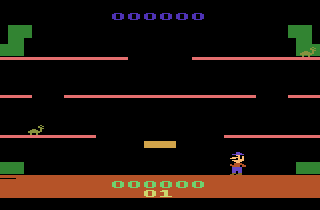
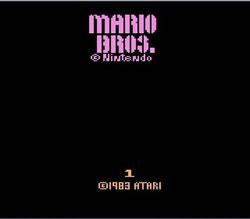
Atari 2600 There were 3 different versions of this game on the Atari systems and this one, logically, is the weakest one. Considering the overall standards of the particular console, this is a “good” game, but it is so much inferior to pretty much every other version that we don’t even know where to start.
It is as basic as it can be, which is not a bad thing per se, but the levels just feel monotone, soulless and non-inspirative. Mario looks like he is hand-drawn by somebody who has reeeeally poor drawing skills.
And this is the case with other things in this game as well. What was supposed to be a coin, for example, looks like a random blinking square, and what was supposed to be a POW block is just a yellow single line.
Not to mention the sound effects that were reasonable for the time (at some point), but nowadays they are just very annoying (for example, when Mario is walking you get to hear something that sounds like a horse that is galloping, and it is very irritating). Generally, for Atari 2600 ( the same console that gave us the infamous E.T.), this is a good game, but it is a very poor imitation of Mario Bros. on almost every level, so our advice is to avoid it, unless you are a really huge fan of the game.
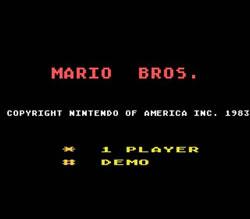
Atari 5200 A huge difference compared to the previous version is seen from the first moment when you start playing the game. The graphics are improved, the sound is better, the gameplay is better and the controls feel much more smooth.
The characters’ and items’ design is vastly improved and you can now easily differentiate what is what in the game. Sure, it’s not a perfect port and there are flaws (Mario is disproportioned in this game as well, and once again, he looks overweight.
His head is rather small compared to the body that is huge. He also doesn’t look like actual Mario at all), but it’s a better game than the Atari 2600 version and definitely a better experience as well.
Atari 7800 And this is, hands down, the best version of Mario Bros. on Atari. As much as the Atari 5200 version was a huge improvement compared to the 2600 version, this version is a huge improvement over the 5200 version, and a drastic improvement in every single way compared to the 2600 version.
This version pretty much got it all right. It has more complexity than the previous 2 games, it has that good old arcade feel to it (it looks and sounds very similar like the original arcade version of the game), the gameplay is fun and challenging, the framerate is also good, the enemies are finally designed in a way they should have been done even in the 2600 version, and Mario finally has the appropriate and familiar look.
Our personal opinion is that this is also not only the best version on Atari, but the best non-arcade version as well. It was the closest try to reach the heights of the original.
Of course, you are free to disagree. Atari 8-bit This is a huge step backwards compared to the version that we previously described.
While it definitely IS better than the 2600 version, it is worse than the 5200 version and much worse than the 7800 version (at least in our opinion). There are many things that don’t seem right here.
For example, Mario and Luigi look extremely weird here. You could barely differentiate and say who is who here.
The colors of their outfits are almost identical. Also, they appear to have no moustaches at all!
When we speak of a Mario game, and Mario doesn’t have moustaches……..then everything is said. The colors are very messed up.
Even the colors of the environment and the enemies are way off. For example, Shellcreepers have yellow (?!) shells in the first level and the pipes are yellow as well, while the color of the bricks at the bottom of the first level is purple.
The controls are also quite messy and the sound effects are annoying and disturbing. Unless you really love the game, it would be better to skip this version because, trust us on this, you won’t miss anything.
An comic style advertising poster for the Atari version of Mario Bros. Commodore 64 Since we are sticking to the console versions , and Commodore 64 isn’t a console, you have all rights to complain about our description of Mario Bros. for Commodore 64.
However, it was a very influential sort-of-a console back at the time, just like PC is now, so we’ll make a little exception here. Generally, this is a good port.
Even though the colors are also a bit off, just like in the Atari 8-bit version (the pipes are yellow again, for example), the rest of the visuals are spot on. Mario looks a bit weird in this version, but he doesn’t look like an obese grumpy old man like in the NES and the Atari 5200 versions of the game.
You can easily differentiate between Mario and Luigi as well. The controls are good, the sounds are also very good, and the POW block is changing colors just like in the arcade original!
Hooray! Not the best version of Mario Bros. but a good one, and it is definitely worth a try.
SNES On the SNES, you can find a Mario Bros. minigame on the Super Mario All-Stars cartridge, as a Battle Mode in Super Mario Bros. 3. It is the same game like the one we can find in the NES version of SMB 3, but it has updated graphics, updated sprites of Mario and Luigi, a background and improved sound effects as well.
The goal is still the same, just like the enemies. Game Boy Advance There wasn’t a sole Mario Bros. game on the Game Boy Advance, but instead, they came as part of the other games (every game from Super Mario Advance series + Mario & Luigi Superstar Saga).
First thing that has to be noted is that, from the technical side, this is the most superior version of the game. The graphics are drastically improved in every possible way, the sound effects are awesome, Mario and Luigi have new sprites (that remind of those from Super Mario Bros. 3), and they have voices as well!
Not to mention that levels have backgrounds as well. Still, even though it all looks, sounds and plays really well, we have to say that the old-school flavor of the traditional Mario Bros. game(s) is almost completely lost.
This feels like an entirely different experience, even though it is still the same game. However, if you want to play a modern version of Mario Bros. and if you are not a retro gamer (or at least not a REAL retro gamer), you have to try this. e-Reader Yes, there is even a version for the e-Reader.
This is a direct port of the NES version so it is almost completely identical to that version. The only difference is that there are 4 types of Shellcreepers in this game (red, green, yellow and blue) and there is no multiplayer.
Everything else is completely the same, so if you like the NES version, you will definetly love this one as well. Virtual Console The newest installment of this game was launched on a Virtual Console (for the Wii, Nintendo 3DS and Wii U).
Just like the e-Reader version, this is yet another recycle of an old NES version. This one is actually completely identical, so it retains all the positive and negative aspects of the NES original.
So, the only difference here is that you are playing the game on a Virtual Console service and not on the NES. They could have added some variety, couldn’t they?
References in later games As this was the first huge game where our favorite plumber appeared (and where he made his debut as Mario), it is just obvious that this title has many references in the later releases. We will now mention each and every one of them………..
Super Mario Bros. 3 – The game appears as a “minigame” in the multiplayer mode of this game (the “Battle Mode”)
Mario & Luigi: Superstar Saga – There is a level that is heavily influenced by this game and its elements in this title. Also, a version of this game (as in the Advance ports) is added on, along with Fighterfly as an enemy
Mario Power Tennis – One court got its name after this game, and many of its elements reappear in this title (POW blocks, Shellcreepers, etc….)
Dance Dance Revolution: Mario Mix: The “Underground Mozart” music theme is actually a cover of the first “Stage Start” theme from this game
WarioWare: Twisted! – A microgame based on this game can be seen in 9-Volt’s stage
Super Smash Bros. Brawl. – One stage in this game is directly inspired by the starting stages of this game. A cover of the title music theme can be heard as well
Mario’s Time Machine – One stage in the NES version of the game is based on the severs from this game
WarioWare D.I.Y. Showcase: A microgame based on this game can be seen in 18-Volt’s stage
New Super Mario Bros. Wii – One of the underground coin battle arenas is based on the overall level design of this game
New Super Mario Bros. 2 – The first round was remade as part of the Gold Classics Pack (a downloadable course package). Also, White Racoon Mario looks almost completely identical to Player 3
New Super Mario Bros. U – The second Coin Battle level is directly inspired by the overall level design of this game
Super Mario 3D World – Luigi Bros. (a remake of the original Mario Bros. with Luigi as a starring character), appears in this game. It is unlocked as soon as you beat The Great Tower of Bowser Land stage. Also, if you have save data for New Super Luigi U on your Wii U, Luigi Bros becomes available from the very beginning of the game
Super Smash Bros. for Nintendo 3DS/Wii U – Mario’s blue combination is identical to the color scheme that he is wearing in the Japanese artwork of this game.
Videos – Gameplay, Trailers & Commercials A showcase of the 2 player gameplay in Mario Bros (NES version) A North American TV commercial from back in 1983 advertising Mario Bros’ launch on the Atari 2600 and 5200. Reception and Sales The game was very successful and it got many great reviews from both the players and the gaming critics.
However, the reactions were, generally, quite mixed in different parts of the world. For example, it was only mildly successful in Japan, mainly because of a certain shortage of arcade cabinets back at the time.
Still, the NES version of the game managed to sell more than 1.63 million copies, while the Famicom mini re-release of the same game has sold more than 90 000 copies in this country. Even though it was released in the time period when the North American video game crash of 1983 was happening, this game didn’t suffer any bad consequences because of this fact.
Editor Dave Ellis stated that this is one of the more memorable classic games. Opinions on the NES version of the game were mostly mixed as well, but the positive opinions (especially among the players themselves) are dominating here.
However, in a review of the Virtual Console version of the game, GameSpot stated that the NES version is only a bad port of the arcade original, and the Virtual Console version itself got a pretty bad review. It was said that not only it is a port of an already badly ported game, but it also has all the technical flaws of its predecessor.
The same source also criticizes all ports of this game, in general as well, and adds that this is just one of the many ports that Nintendo has made throughout its long history, and that the game simply doesn’t stand out. On the other hand, IGN gave a lot of compliments about the gameplay of the Virtual Console version of the game, while they also criticized the decision to make an additional port of an inferior Mario Bros. game.
They also agreed with GameSpot about the number of different ports of this game. They also added that since many people posses Mario Bros. as part of at least one of the games from the Super Mario Advance series, this version isn’t worth 500 Wii points.
The e-Reader version of the game received better critics from IGN. They praised the gameplay, but they also criticized the lack of the multiplayer option and they added that people have no reason to buy it, since they can literally play the same game in either of the Super Mario Advance games.
Artwork from the e-Reader version of Mario Bros. The games from the Super Mario Advance series, as well as Mario & Luigi: Superstar Saga were all packed with the same version of this game in them.
The game was originally added to the first Super Mario Advance game, and IGN praised this aspect for being simple and fun, but they added that it would have been better if the developers implemented a new and different game instead. IGN’s review of Yoshi’s Island: Super Mario Advance 3 criticizes it even more since the multiplayer option was completely left off in this release.
A review of GameSpot on Super Mario Bros. 3: Super Mario Advance 4 states that it is “a throwaway feature that could have simply been gutted”. Other editors were not so critical about it.
Even though its use was bashed in many reviews of Super Mario Advance games, a GameSpy review stated that the version that can be played in Super Mario Advance 2 is “a blast to play in multiplayer”, as it involves at least 2 Game Boy Advance consoles, one copy of the game itself and a link cable as well. Sales The NES version of the game managed to sell 2.28 million copies globally.
Of that number, 22.5 % (0.51 million) copies were sold in North America, 5.2 % (0.12 million) copies were sold in Europe and 71.5% (1.63 million) copies were sold in Japan. 0.8% (0.02 million) copies were sold in rest of the world. The Atari 2600 version of the game sold 1.59 million copies globally.
Of that number, 93.4% (1.48 million) copies were sold in North America, 5.6 % (0.09 million) copies were sold in Europe and 1.0% (0.02 million) copies were sold in rest of the world. Trivia and Facts
This is the first game where Mario appears as a plumber (he had already been called Mario in US Donkey Kong materials and in Donkey Kong Jr.), and it is the first game where he got the personality that is familiar even nowadays.
It is the game where Mario’s brother Luigi makes his debut appearance.
This game is a prototype for all the future Mario games. It is the first Mario game with coins to collect. It is also the first game that introduced “pipes”.
Enemies such as: Shellcreepers, Sidesteppers, Fighter Flies, Slipices, Icicles and Fireballs all made their debuts in this game, respectively.
The second stage (Phase 2) was removed from the non-Japanese versions of the game.
The music theme that you can hear once you start playing the first level is actually a composition of Mozart (Eine Kleine Nachtmusik). The same theme can be heard in Dance Dance Revolution: Mario Mix as well as Super Smash Bros. Brawl.
No home port of this game can actually match the experience that you get while playing the arcade version of it. The closest version to the arcade original is the Classic Series of the game for the NES. That version was released in 1993 and it was based on Kaettekita Mario Bros. (an updated version of Mario Bros. that was released in Japan only).
Kaettekita Mario Bros; a direct descendant of Mario Bros, the title roughly translates to “Return of the Mario Bros” Reference / Information
Duck Hunt Replacement Game Manual (246kb PDF)
Mario Bros. Amstrad CPC version – Cheats / Unlockables / Hints
Mario Bros. Atari 2600 version – Cheats / Unlockables / Hints
Mario Bros. Atari 2600 version – Online Game Manual
Mario Bros. Atari 5200 version – Cheats / Unlockables / Hints
Mario Bros. Atari 5200 version – Online Game Manual
Mario Bros. Atari 7800 version – Cheats / Unlockables / Hints
Mario Bros. Atari 7800 version – Online Game Manual
Mario Bros. Commodore 64 version – Cheats/ Unlockables / Hints
Mario Bros. NES version – Online Game Manual (Text)
Mario Bros. NES version – Replacement Game Manual (978kb PDF)
Mario Bros, NES version + Duck Hunt, WCTM – Cheats / Unlockables / Hints
Media / Downloads
Mario Bros. Amstrad CPC version – Box Art
Mario Bros. Atari 2600 version – Box Art
Mario Bros. Atari 2600 version – Screenshots
Mario Bros. Atari 5200 version – Box Art
Mario Bros. Atari 5200 version – Screenshots
Mario Bros. Atari 7800 version – Box Art
Mario Bros. Atari 7800 version – Screenshots
Mario Bros. NES version – Box Art
Mario Bros. NES version – Screenshots
Mario Bros, NES version + Duck Hunt Screenshots
Mario Bros. NES version + World Class Track Meet Screenshots
Mario Bros. Official artwork from various versions of the game
Categories General Tags atari, Commodore 64, Comparisons, e-Reader, Enemies, gameplay, Mario bros, nes, Sales, trivia, Versions, Videos Dr. Mario (NES)Mario is Missing (NES, SNES, PC) – a once in a lifetime (hopefully) edutainment journey
Reference / Information
As this was the first huge game where our favorite plumber appeared (and where he made his debut as Mario), it is just obvious that this title has many references in the later releases. We will now mention each and every one of them………..
Super Mario Bros. 3 – The game appears as a “minigame” in the multiplayer mode of this game (the “Battle Mode”)
Mario & Luigi: Superstar Saga – There is a level that is heavily influenced by this game and its elements in this title. Also, a version of this game (as in the Advance ports) is added on, along with Fighterfly as an enemy
Mario Power Tennis – One court got its name after this game, and many of its elements reappear in this title (POW blocks, Shellcreepers, etc….)
Dance Dance Revolution: Mario Mix: The “Underground Mozart” music theme is actually a cover of the first “Stage Start” theme from this game
WarioWare: Twisted! – A microgame based on this game can be seen in 9-Volt’s stage
Super Smash Bros. Brawl. – One stage in this game is directly inspired by the starting stages of this game. A cover of the title music theme can be heard as well
Mario’s Time Machine – One stage in the NES version of the game is based on the severs from this game
WarioWare D.I.Y. Showcase: A microgame based on this game can be seen in 18-Volt’s stage
New Super Mario Bros. Wii – One of the underground coin battle arenas is based on the overall level design of this game
New Super Mario Bros. 2 – The first round was remade as part of the Gold Classics Pack (a downloadable course package). Also, White Racoon Mario looks almost completely identical to Player 3
New Super Mario Bros. U – The second Coin Battle level is directly inspired by the overall level design of this game
Super Mario 3D World – Luigi Bros. (a remake of the original Mario Bros. with Luigi as a starring character), appears in this game. It is unlocked as soon as you beat The Great Tower of Bowser Land stage. Also, if you have save data for New Super Luigi U on your Wii U, Luigi Bros becomes available from the very beginning of the game
Super Smash Bros. for Nintendo 3DS/Wii U – Mario’s blue combination is identical to the color scheme that he is wearing in the Japanese artwork of this game.
To provide the best experiences, we use technologies like cookies to store and/or access device information. Consenting to these technologies will allow us to process data such as browsing behavior or unique IDs on this site. Not consenting or withdrawing consent, may adversely affect certain features and functions.
Functional
Always active
The technical storage or access is strictly necessary for the legitimate purpose of enabling the use of a specific service explicitly requested by the subscriber or user, or for the sole purpose of carrying out the transmission of a communication over an electronic communications network.
Preferences
The technical storage or access is necessary for the legitimate purpose of storing preferences that are not requested by the subscriber or user.
Statistics
The technical storage or access that is used exclusively for statistical purposes.The technical storage or access that is used exclusively for anonymous statistical purposes. Without a subpoena, voluntary compliance on the part of your Internet Service Provider, or additional records from a third party, information stored or retrieved for this purpose alone cannot usually be used to identify you.
Marketing
The technical storage or access is required to create user profiles to send advertising, or to track the user on a website or across several websites for similar marketing purposes.






 Phase 1Shellcreepers · demonstration firstTurtles only. The game shows you how to flip one before it begins.
 Phase 2 (Japan only)Four ShellcreepersA second turtle phase, cut from the international boards.
 Phase 3 (4)First bonus phase · 20 seconds · 5,000 pointsCoins on every ledge and the only bonus round with normal floors.
 Phase 4 (5)Sidesteppers arriveCrabs that need two hits; the next phase mixes them with Shellcreepers.
 Phase 6 (7)Fighterflies arriveHopping flies that can only be flipped as they land.
 Phase 8 (9)Second bonus phase · 15 seconds · 8,000 pointsIcy floors from now on in the bonus rounds, and the POW Block comes back afterwards.
 Phase 9 (10)Slipice arriveWalking ice blocks that freeze the ledges.
 Phase 16 (17)Icicles arriveWater drops that turn into falling icicles under the ledges.
 Phase 98 (99)The counter stopsThe phases go on looping, but the number on screen never goes higher.



 WaferWhat the Atari 2600 version has in place of the coin.
 PipeEnemies enter at the top corners and leave at the bottom, only to return. The first pipes in a Mario game.
 Super Mario Bros. 3: Battle modeNESIn two-player games, one player can challenge the other on the map to a round of Mario Bros. played with Super Mario Bros. 3’s physics. The brothers fight over the cards they have earned, and the winner carries on with the main game. It was the first version to replace Shellcreepers with Spinies, which cannot be stomped, and adds two new bonus rounds.
 Super Mario All-Stars: Battle GameBattle GameChosen from the Super Mario Bros. 3 title screen. No bonus rounds, a Koopa Troopa in every round whose shell hurts the brothers, Boos in place of fireballs, Super Mushrooms from the pipes and a POW Block that can come back at random.
 Super Mario Advance seriesGame Boy AdvanceEvery Super Mario Advance carries a remake for up to four players by link cable, with Classic and Battle modes, two POW Blocks you can pick up and Super Mario Bros. 2’s Power Squat Jump. Mario & Luigi: Superstar Saga on the GBA has it too.
 Mario ClashVirtual BoyBegan as a straight remake, Mario Bros. VB, and became a two-plane reworking in stereoscopic 3D in which Mario throws Koopa shells. Sidesteppers, fireballs and icicles return.
 Super Smash Bros. Brawl and UltimateStageThe Mario Bros. stage is based on the opening phases of the arcade game; in Brawl it is unlocked by clearing the event Wario Bros., and Brawl also has an arranged version of the title music.
 Luigi Bros.Super Mario 3D WorldThe NES version again, with Luigi in his modern colours as player one; unlocked by finishing the main game, or available at once with New Super Luigi U save data on the same Wii U.
 MarioPlayer one
 LuigiPlayer two
 Snake (unused)Arcade data onlyA creature that never appears in play, possibly a planned fourth enemy, found in the arcade graphics by The Cutting Room Floor.



 Mario
 Fighter Fly
 Shellcreeper
 Sidestepper
 NES / Famicom
 Atari 2600
 Atari 5200
 Atari 7800
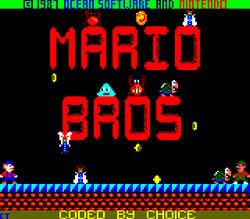 Amstrad CPC
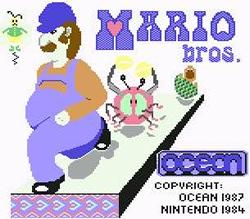 Commodore 64
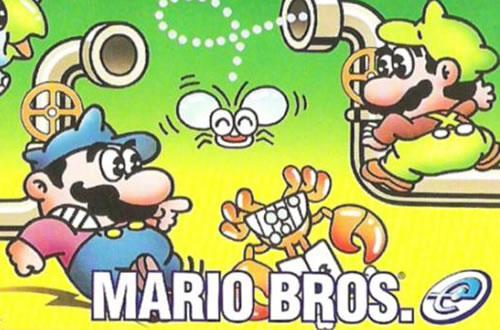 e-Reader
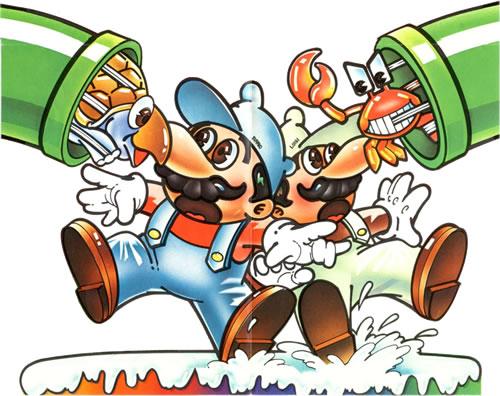 Atari 2600 box art
 Atari advertising flyer
 Kaettekita Mario Bros. (JP only)
 Kaettekita — slot game element
 Mario Power Tennis tribute court