The Mario Party with a sun, a moon and a microphone in the box. Mario Party 6 came out in Japan on 18 November 2004, in North America on 6 December, in Europe on 18 March 2005 and in Australia that September. Brighton the sun and Twila the moon, the hosts of Mario Party World, have fallen out over which of them is the more impressive, and Mario proposes to end the quarrel by filling the Star Bank. Their feud is the game’s big idea: every three turns day turns to night or back again, and with it the routes, the events, the price of a Star and even the minigames change. Capsules have become Orbs, 23 of them, bought in Orb Huts and laid as traps that only catch your rivals. Toadette makes her Mario Party debut as an eleventh playable character. There are 82 minigames, five of them played by shouting into the bundled Nintendo GameCube Microphone, six Party Mode boards that hand out Stars in five different ways, a Solo Mode with three boards of its own and a shop where Stars buy everything else.
Developer:Hudson Soft (Super Mario Wiki also lists CAProduction and Nintendo SPD Group No. 4)
Publisher:Nintendo
Platform:Nintendo GameCube, sold with the Nintendo GameCube Microphone
Genre:Party / board game
Japan:18 November 2004
N. America:6 December 2004
Europe:18 March 2005
Australia:16 September 2005 (Super Mario Wiki; Wikipedia has 15 September)
Players:1–4 (Solo Mode and Star Sprint are for one)
Playable characters:11: Mario, Luigi, Peach, Yoshi, Wario, Daisy, Waluigi, Toad, Boo, Koopa Kid and the unlockable Toadette
Boards:6 in Party Mode (Clockwork Castle to unlock) and 3 in Solo Mode
Minigames:82 by Super Mario Wiki’s count, 5 of them for the microphone
Orbs:23
Sales:1.63 million (Wikipedia, citing Nintendo’s 2005 annual report)
Advertisement
Overview
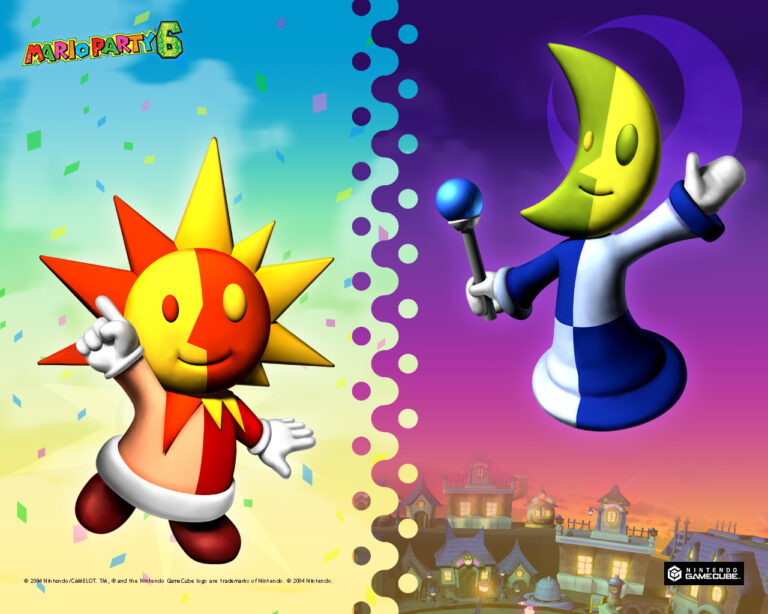
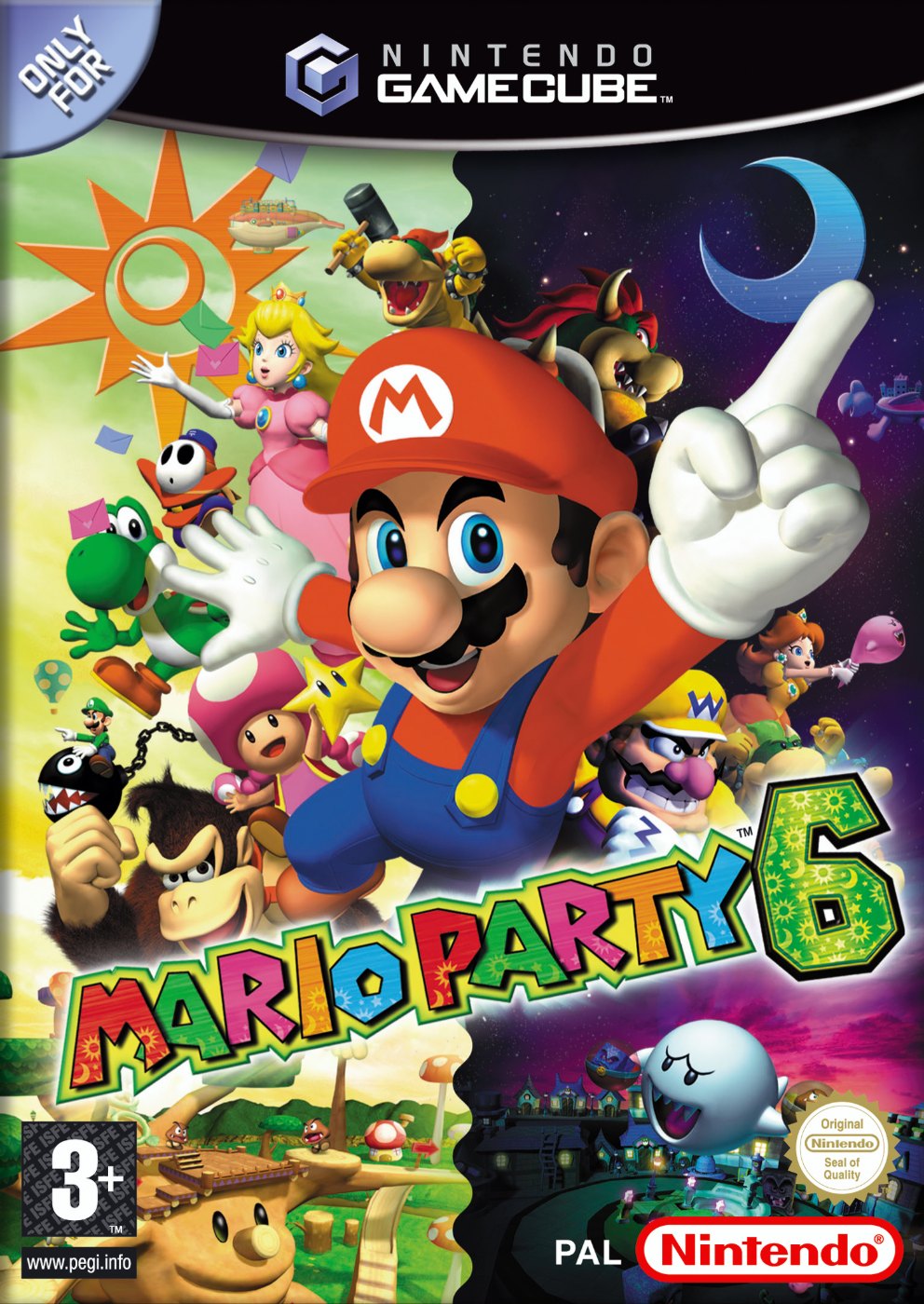
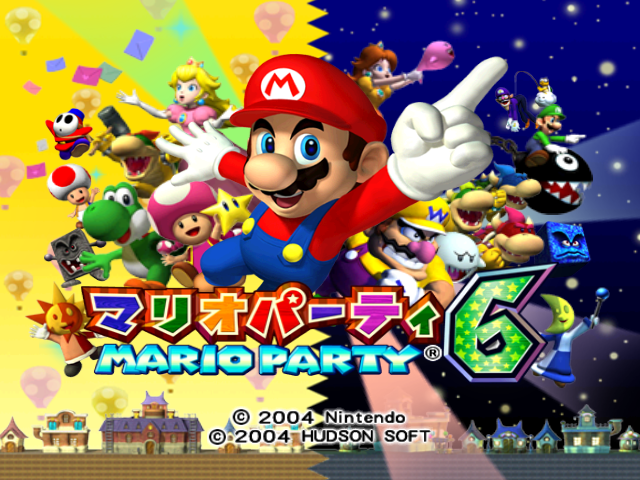
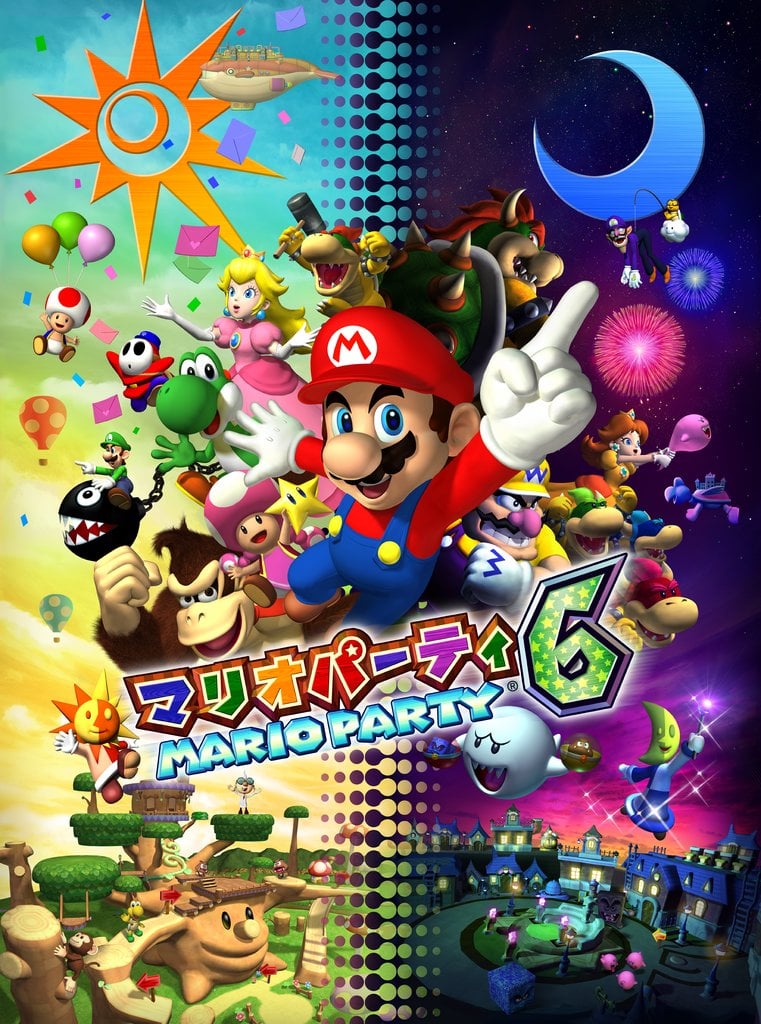
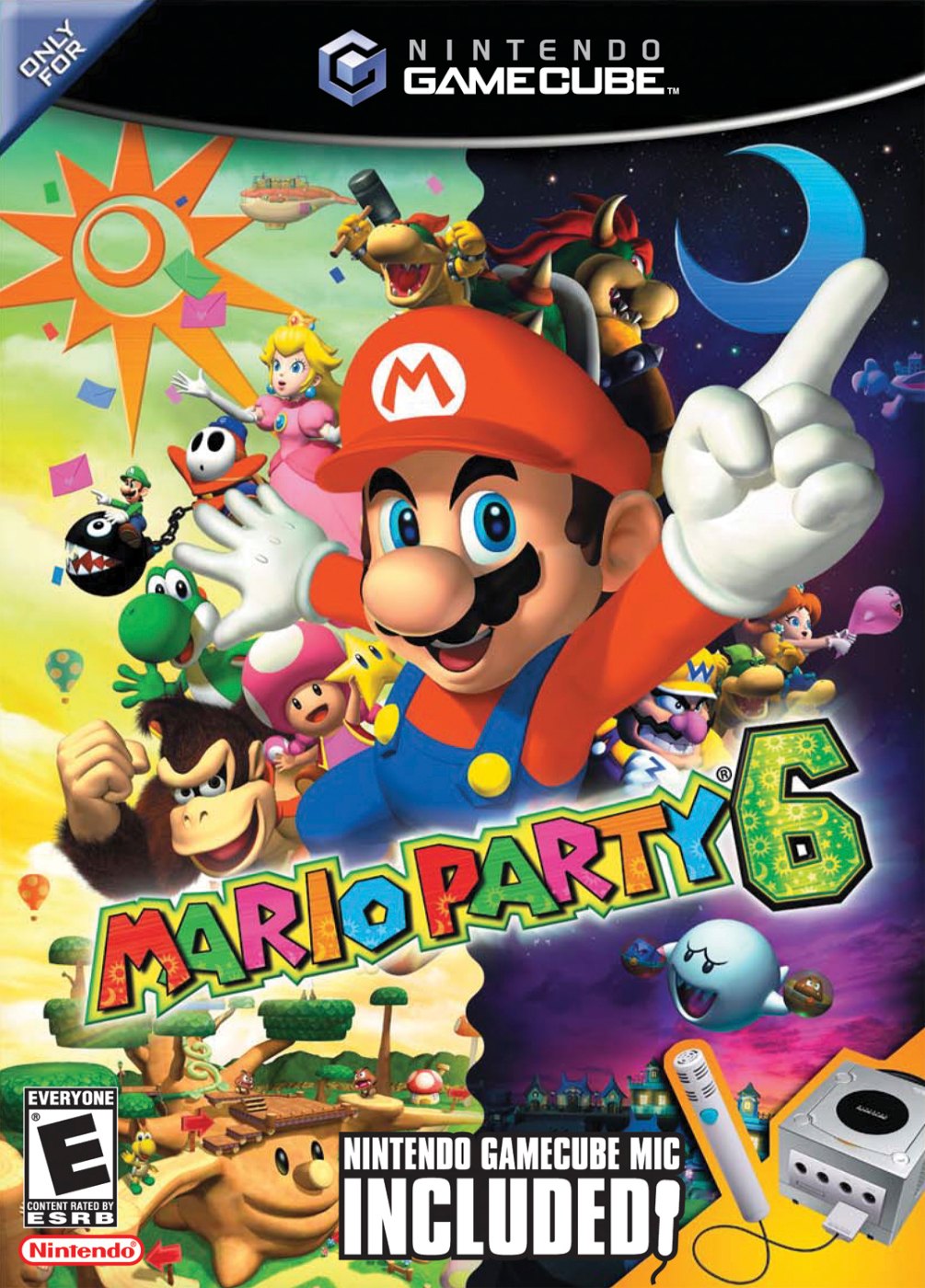
The group artwork, with day on one side and night on the other.
By 2004 a new Mario Party every Christmas was a fixture, and the complaint about each was that it was the last one again. Mario Party 6 is Hudson Soft’s answer, made under a new director, Shuichiro Nishiya. It keeps the cast of Mario Party 5 and rethinks the board game they play.
The headline is the day and night cycle. A game begins in daylight with Brighton as host. After three turns the sun sets, Twila takes over and the board changes under the players’ feet: gates open and close, paths lengthen, friendly characters go home and unfriendly ones come out, Donkey Kong’s spaces become Bowser’s. Three turns later it is morning again. Many minigames have a day and a night version too, some differing only in the lighting and some in the rules.
The second change is to how Stars are won. Only two of the six boards use the old rule of a 20-coin Star that moves about. On Faire Square the Star stays put and its price swings from 5 to 40 coins after dark. On Snowflake Lake nobody can buy one at all: everyone starts with five and sets Chain Chomps on each other to steal them. On Castaway Bay and Clockwork Castle the Star is in the hands of Donkey Kong, and Bowser is waiting to take one back.
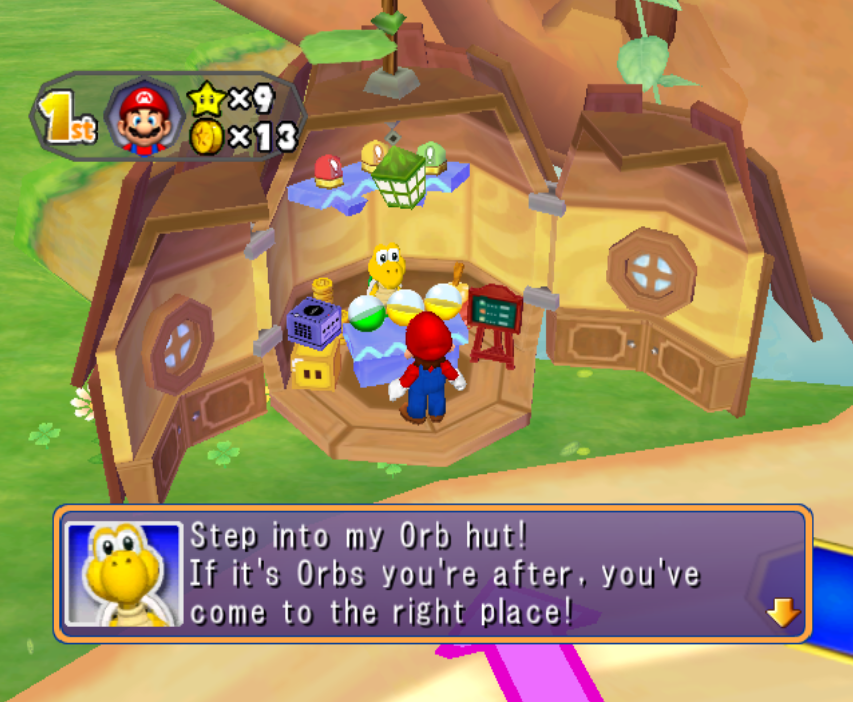
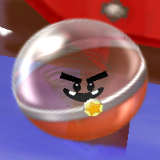
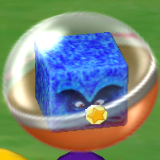
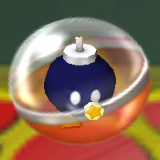
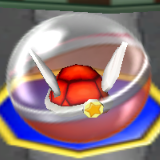
The capsules of Mario Party 5 return as Orbs, with one crucial difference: a trap you lay now belongs to you. Your space carries your face, rivals who stop there or pass it suffer, and you collect 5 coins for landing on it yourself. Orbs are bought at Orb Huts as well as picked up free.
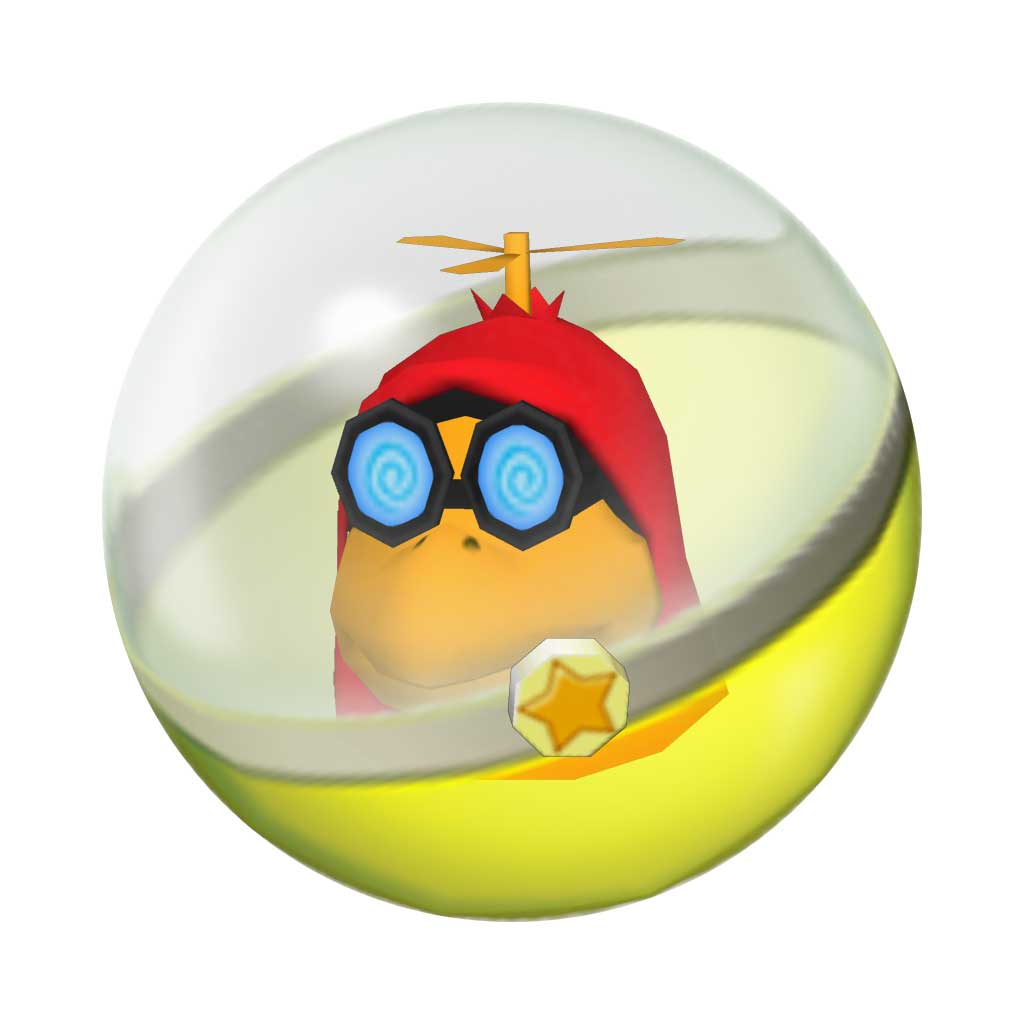
And then there is the microphone, which came in the packaging. Five minigames, a quiz show and an obstacle race are played by speaking into it, which made this, by Super Mario Wiki’s account, the first Mario Party with voice-controlled minigames, and by Wikipedia’s the first GameCube game to use a microphone at all. Everything you win, in any mode, pays Stars into the Star Bank, where they buy Toadette, a sixth board, harder opponents and the twenty pages of the Miracle Book that ends the story.
Mario, Luigi, and the whole gang are back – which means it’s time for a brand new party!
This latest instalment of the ever-popular series packs over 75 all-new mini-games, five multiplayer game boards and three solo boards to play across – and a Nintendo GameCube Microphone, essential for those new games!
The boards and mini-games differ depending on the new day and night system, while veteran party players will be glad to learn that the time taken between turns has been cut down.
— Official description (Nintendo UK, 2005)
Why Mario Party 6 matters to Mario fans
This is Toadette’s first Mario Party, a year after her debut in Mario Kart: Double Dash!!, and the game that introduced Brighton and Twila. Its day and night system gave every board two faces, its boards found new rules for winning Stars, and its Orbs gave every trap an owner. Twelve of its minigames, among them Snow Whirled, Catch You Letter, Pit Boss and Burnstile, were remade for Mario Party Superstars.
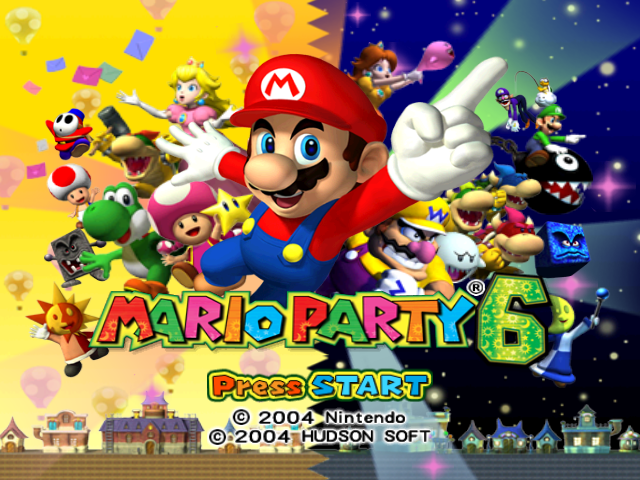
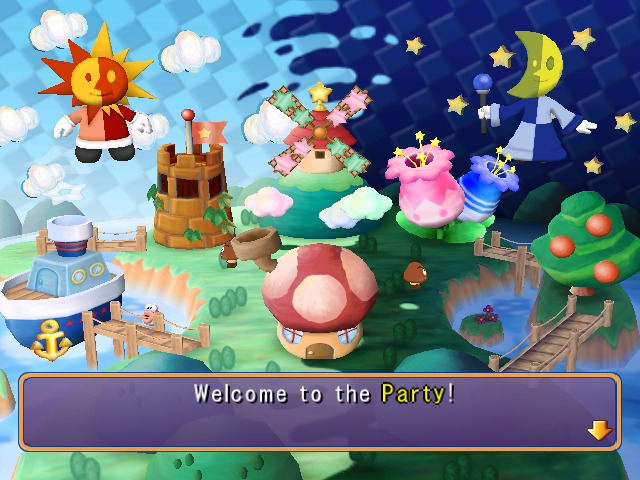
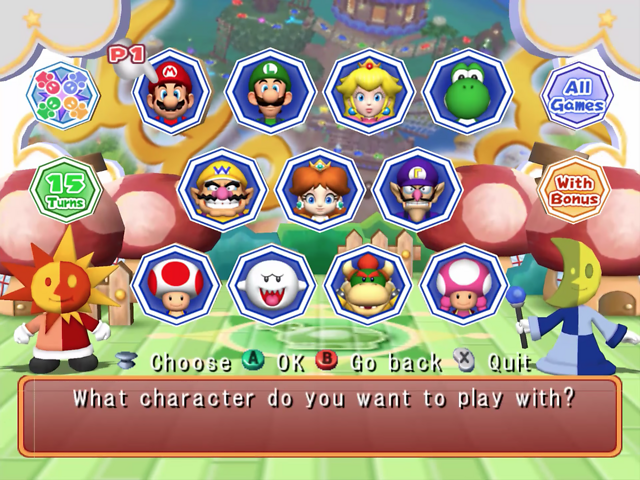
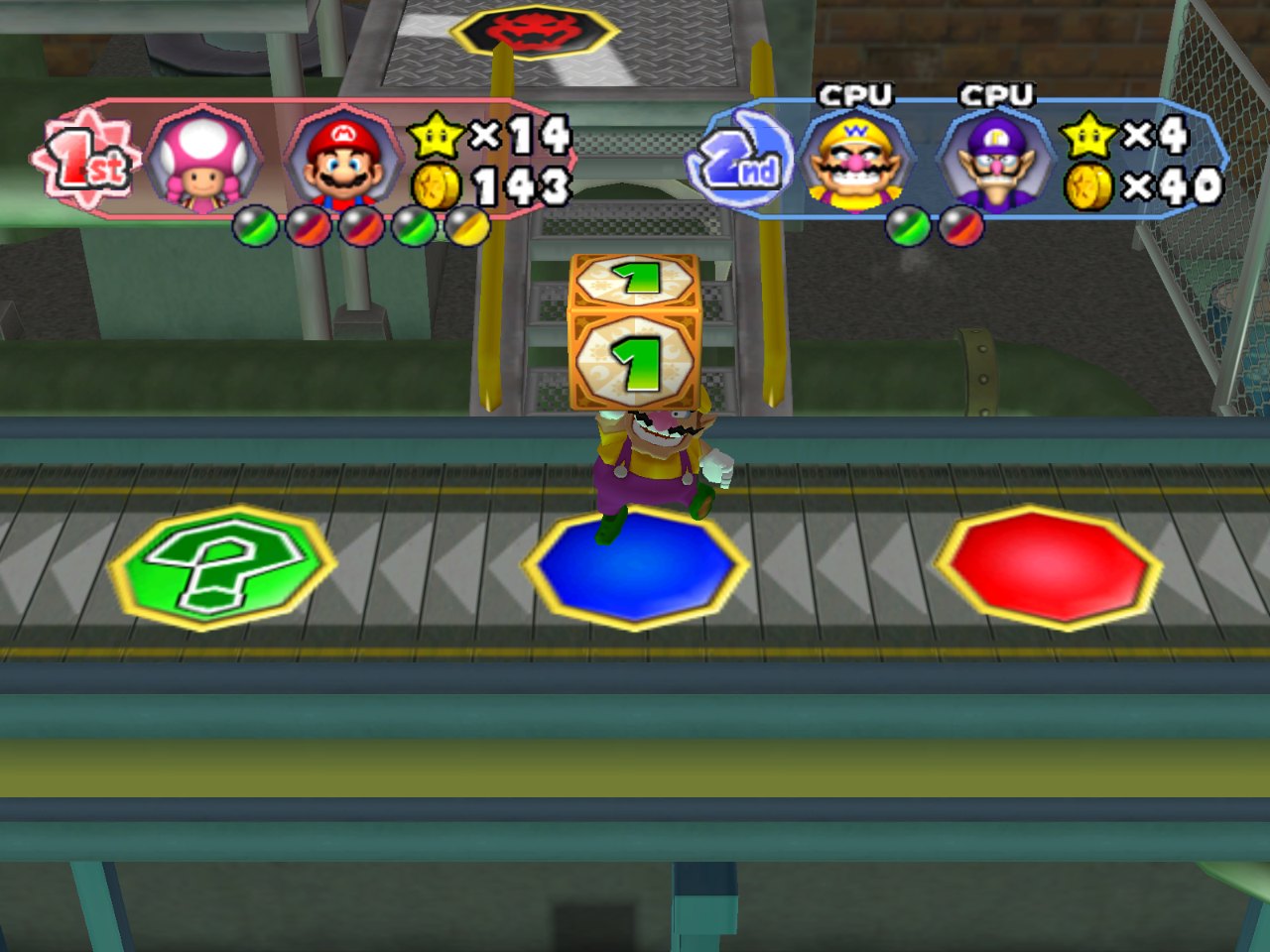
The title screen, with the rooftops of Faire Square.The main menu: Mario Party World.Choosing a character.Wario hits the Dice Block.
“Party On!”
The last words on screen in the ending (as described by Super Mario Wiki)
By then Brighton and Twila have made up, and in Super Mario Wiki’s telling they watch over Mario Party World until the end of time.
Quick Answers
The questions people ask most about Mario Party 6, answered briefly here and in depth further down the page.
When did Mario Party 6 come out?
Japan: 18 November 2004. North America: 6 December 2004. Europe: 18 March 2005. Australia: 16 September 2005 according to Super Mario Wiki, 15 September according to Wikipedia. More →
Who is playable in Mario Party 6?
The ten characters of Mario Party 5, Mario, Luigi, Peach, Yoshi, Wario, Daisy, Waluigi, Toad, Boo and Koopa Kid, plus Toadette, who is new to the series and has to be unlocked. More →
How do you unlock Toadette?
Buy her at the Star Bank for 30 Stars. Stars won in any mode are paid into the bank. More →
What are the boards?
Party Mode: Towering Treetop, E. Gadd’s Garage, Faire Square, Snowflake Lake, Castaway Bay and Clockwork Castle, which costs 100 Stars to buy at the Star Bank. Solo Mode: Thirsty Gulch, Astro Avenue and Infernal Tower. More →
How many minigames are there?
Eighty-two on Super Mario Wiki’s list: 23 for four players, 11 one-against-three, 5 microphone games, 12 two-against-two, 6 Battle, 15 Duel, 3 DK, 3 Bowser and 4 rare ones. More →
How does day and night work?
Every board starts by day. After three turns it becomes night for three turns, then day again, and so on. Each change alters the board’s routes and events, swaps DK Spaces for Bowser Spaces and decides which version of many minigames is played. More →
Do you need the microphone to play?
No. The mic can be switched off, in which case the five Mic minigames simply do not come up, or set to “controller”, which lets you pick the voice commands from a menu with the R Button instead. More →
What is the Star Bank?
A shop that keeps every Star you earn and sells unlockables for them: Toadette, Clockwork Castle, Brutal difficulty, extra modes and minigames, sound tests and the Miracle Book with its twenty pages. Buying everything takes 1,340 Stars. More →
Is Mario Party 6 on Nintendo Switch?
Not at the time of writing. Super Mario Wiki lists no re-release, and it is not among the GameCube games Nintendo Life lists for the Switch 2 Nintendo Classics library. Twelve of its minigames are in Mario Party Superstars. More →
Boards & Modes
Brighton and Twila in the opening.
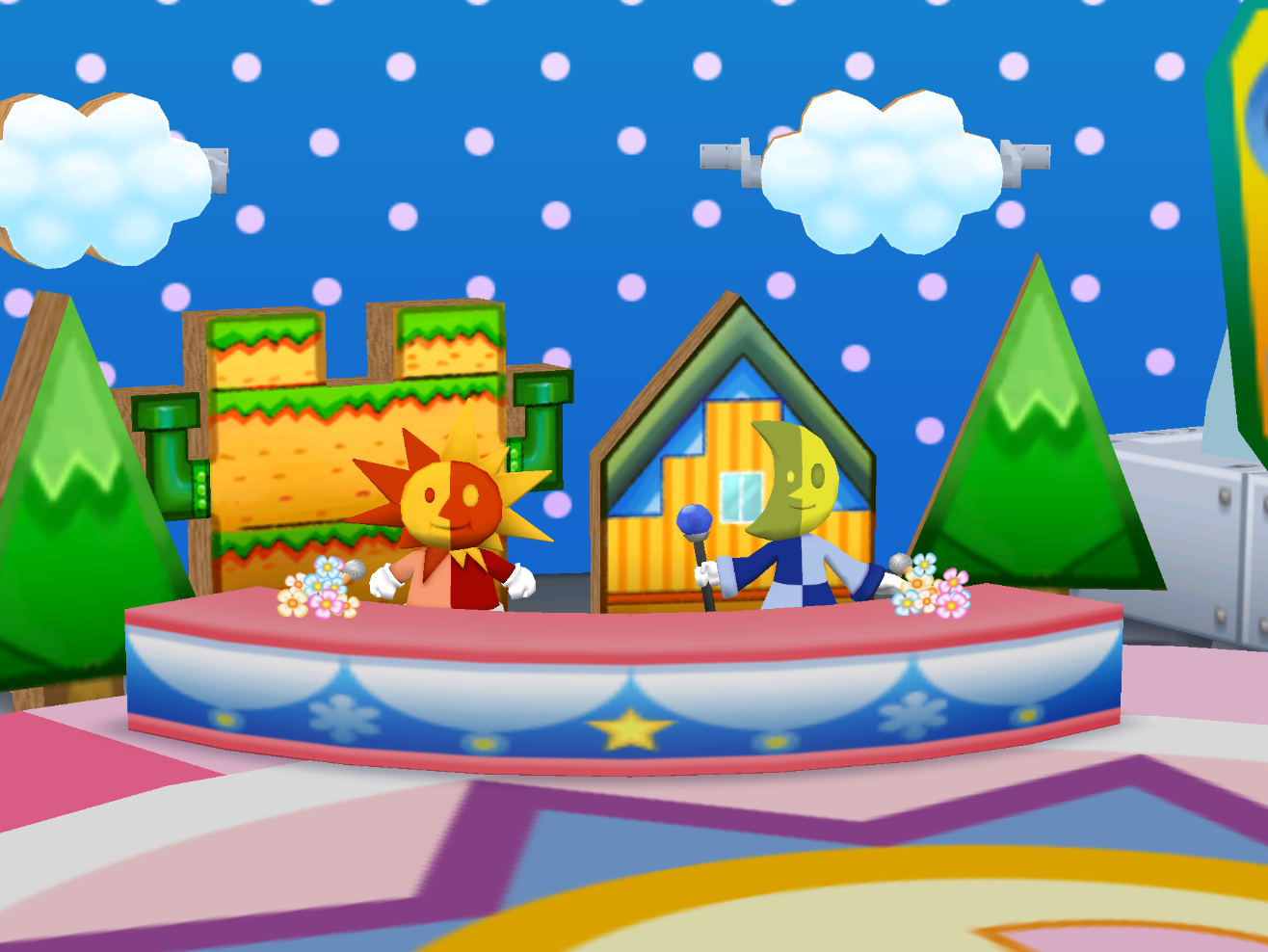
Brighton the sun and Twila the moon look down on Mario Party World from above and are known for throwing the best parties in it. They have been friends for as long as anyone can remember. Then, one day, Brighton puts it to Twila: which of the two of them is the more impressive, and the argument that follows is fierce enough to make the heavens rumble.
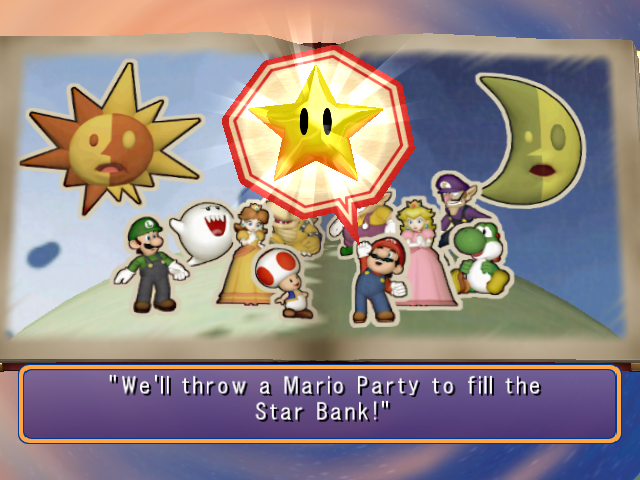
Mario and his friends try to talk them round and get nowhere. So Mario suggests a grand Mario Party instead: collect enough Stars to fill the Star Bank, and let the power of the Stars end the feud. That is the frame for everything in the game. Every mode pays Stars into the bank, and the bank sells the pages of the Miracle Book, the pop-up book the story is told in. When its twentieth page is bought, Brighton and Twila look at the full bank, see how hard everyone has worked, apologise and make up, and send the Stars soaring back into the sky.
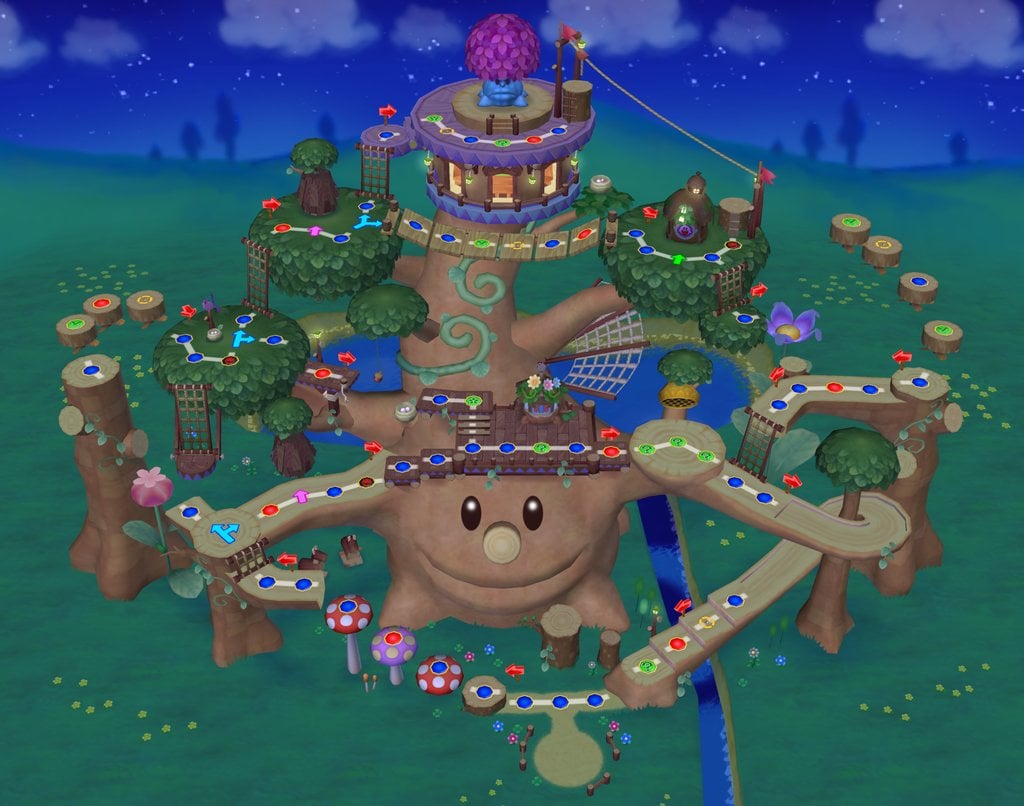
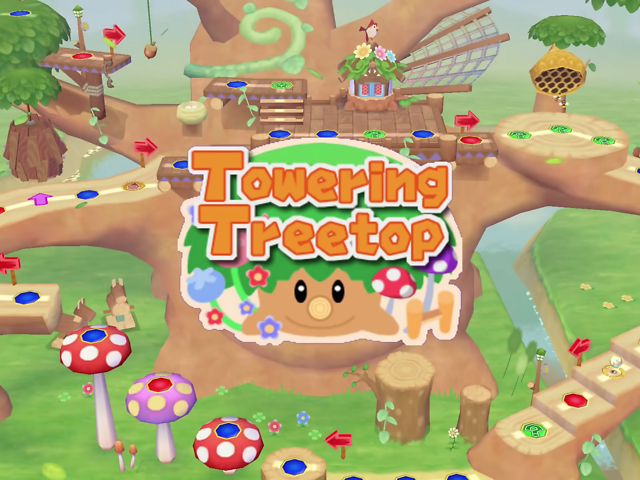
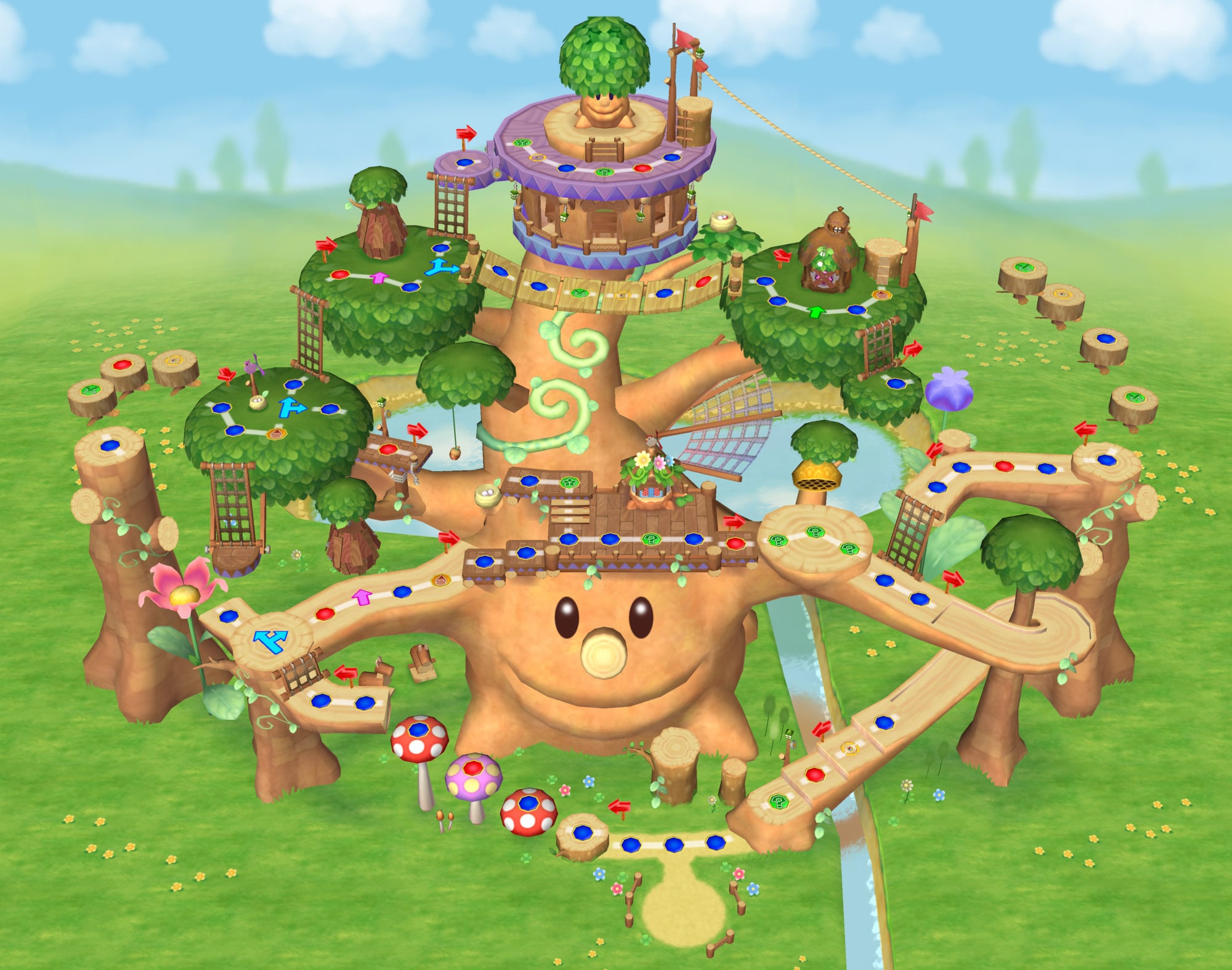
Towering Treetop
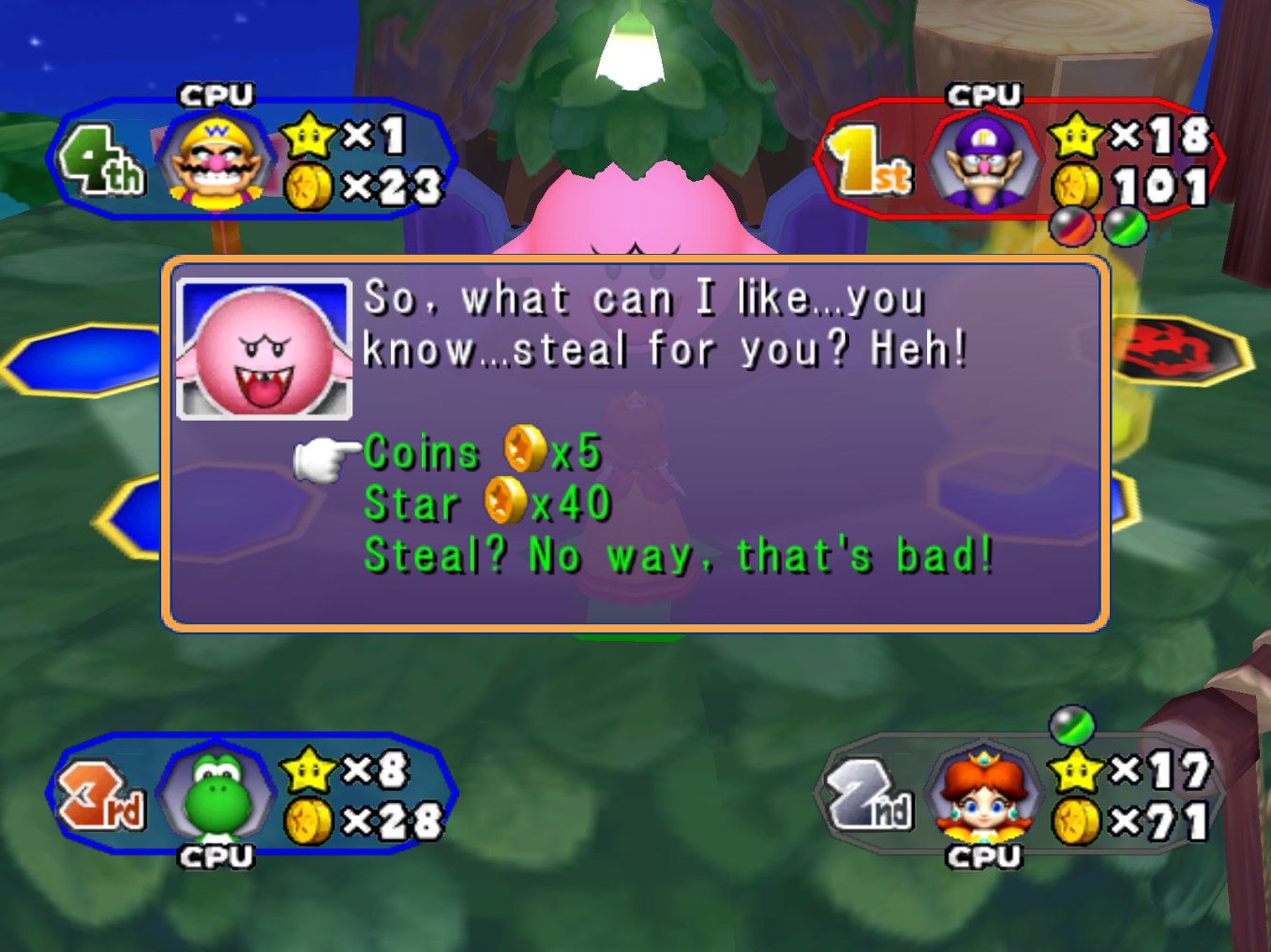
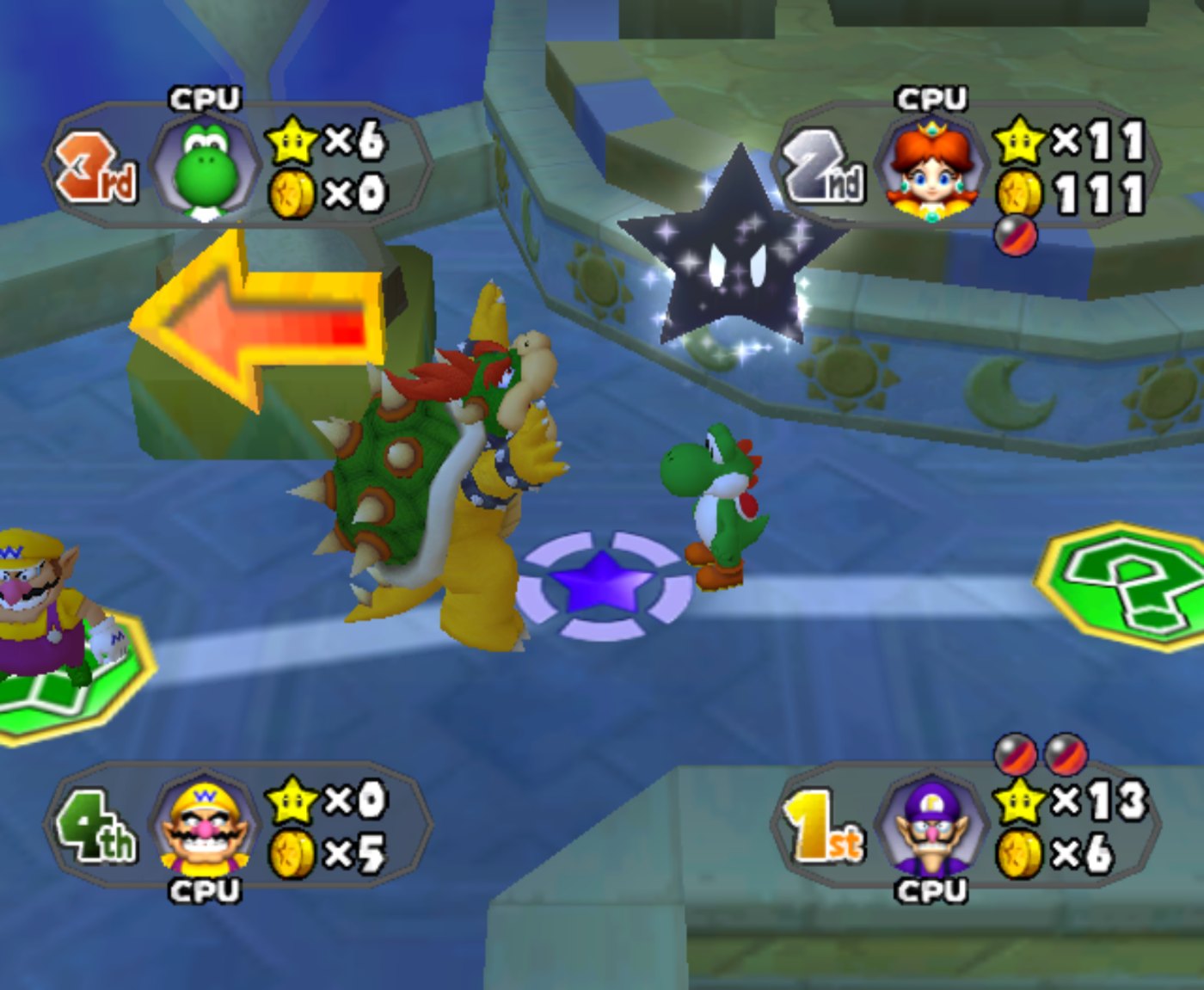
A great tree with smaller ones round it and a lake behind, and the most traditional board in the game: the Star costs 20 coins and moves each time one is bought. Several of the paths end in a slide back to the start. By day a pink flower on the left is open and lets you through; by night a purple one on the right opens instead, and Pink Boo comes out to steal coins for 5 coins or a Star for 40.
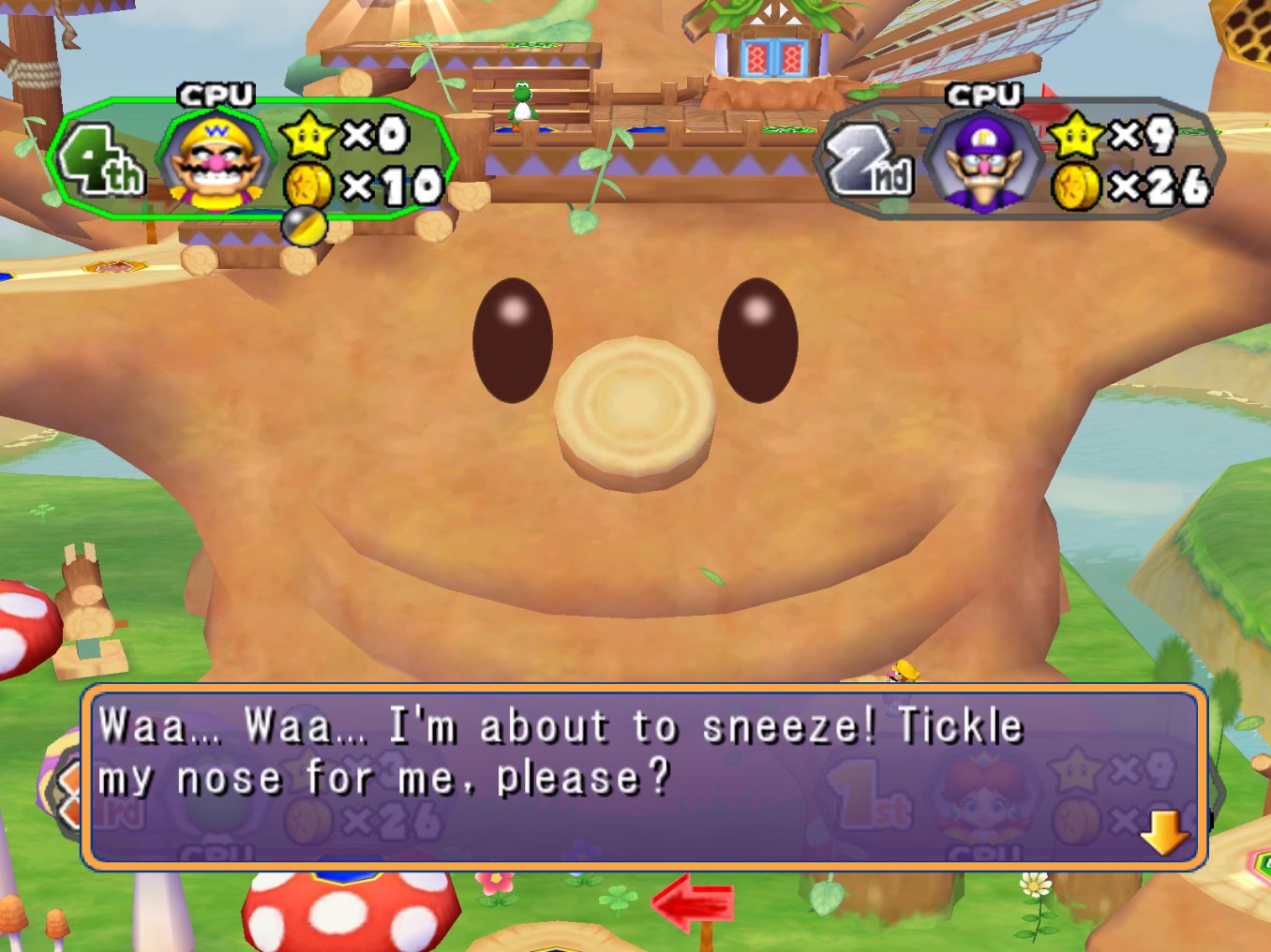
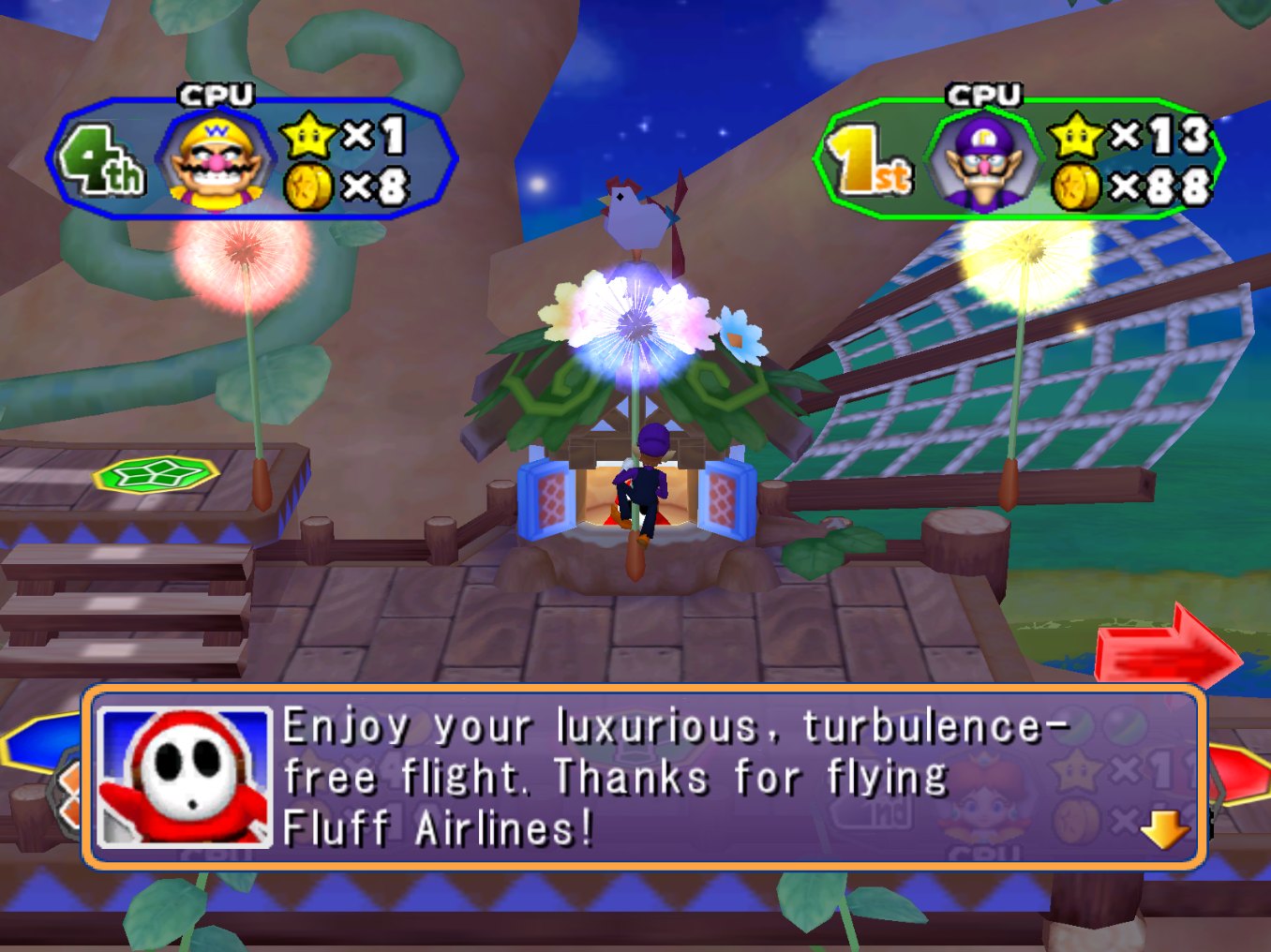
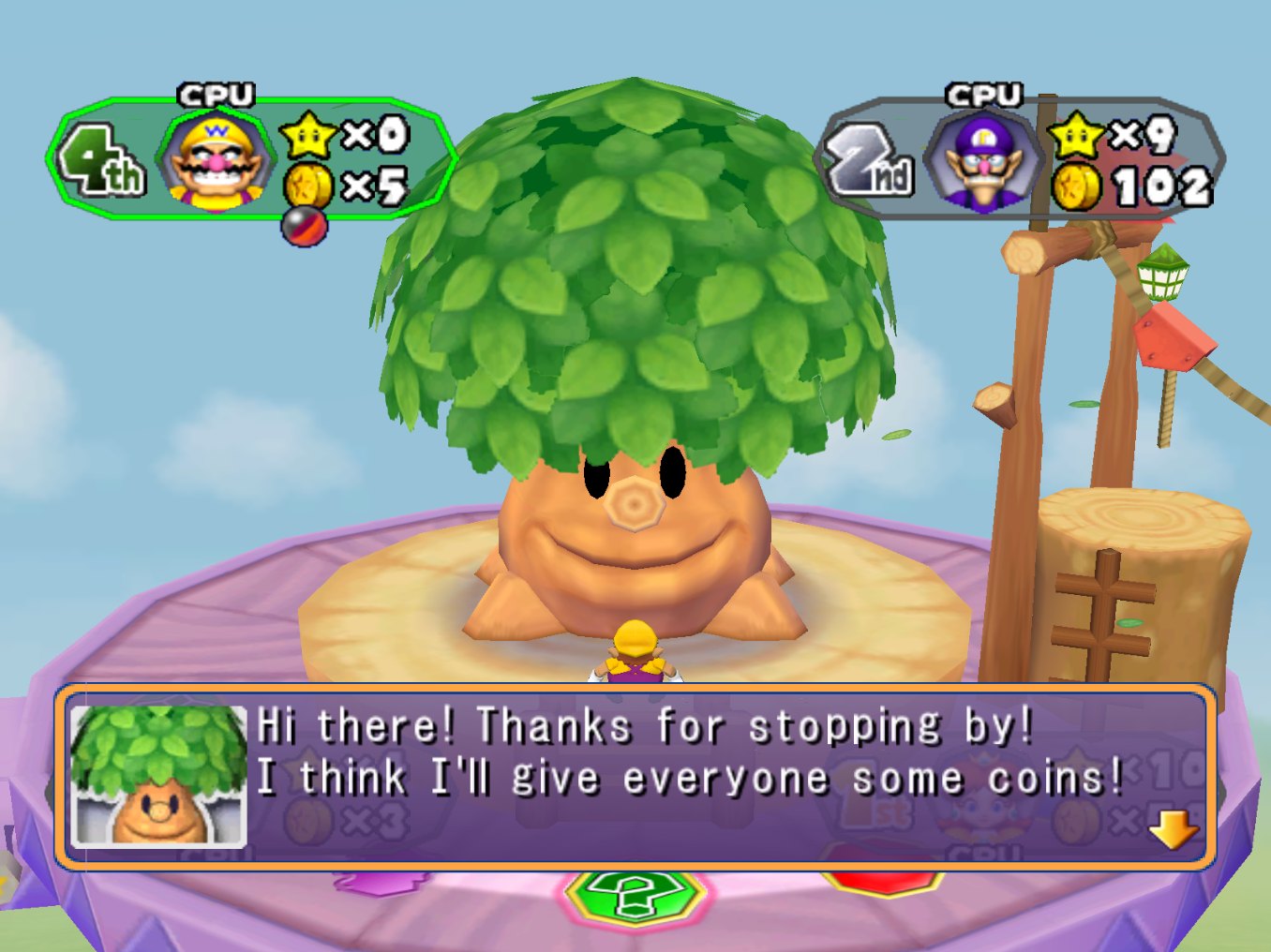
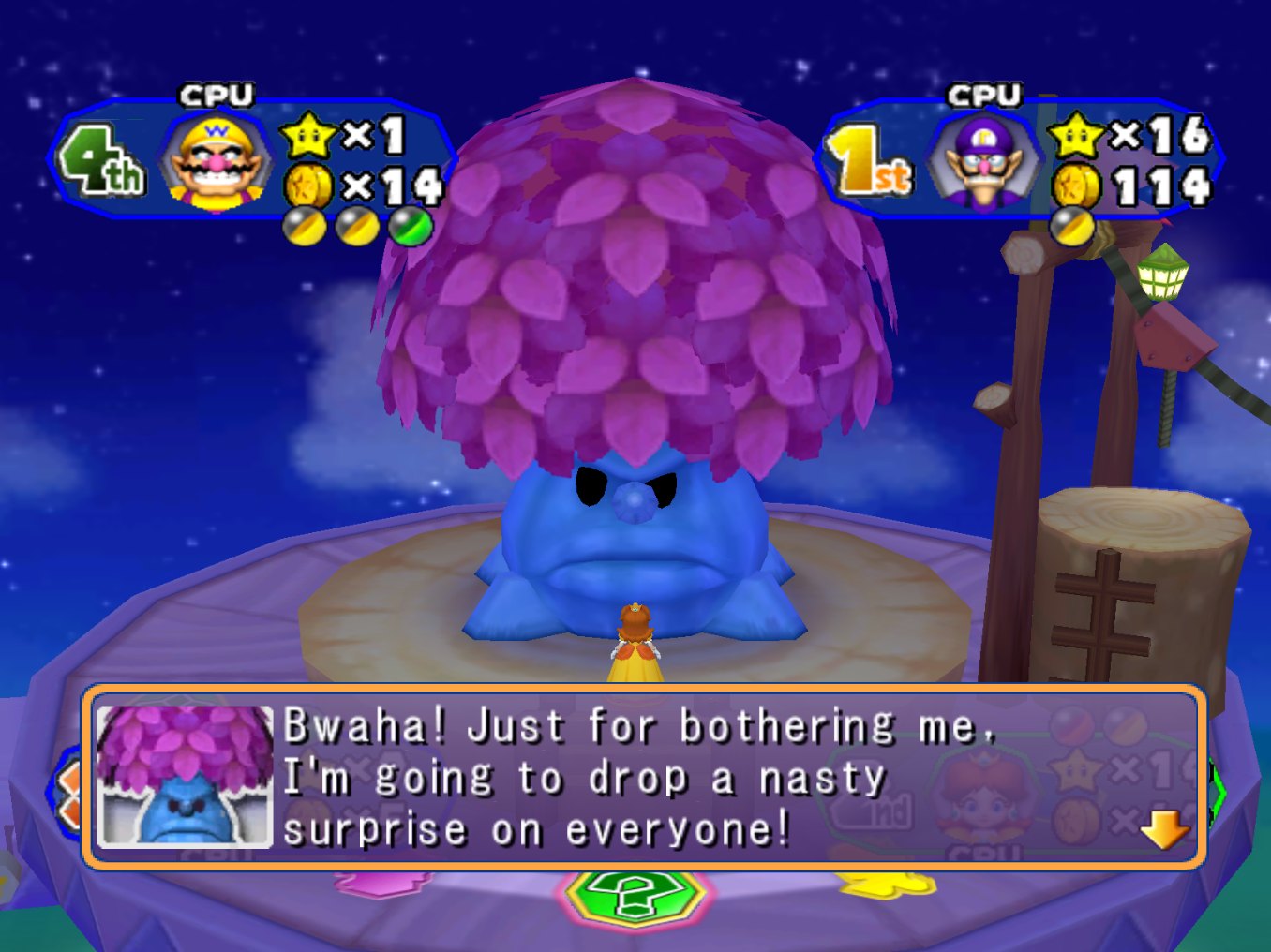
Woody, the talking tree who offered fruit in Woody Woods in Mario Party 3, lives at the top. By day he showers everybody with coins. By night his place is taken by Evil Woody, who rains Spiny eggs that knock coins out of everyone. Lower down you can tickle the big tree’s nose with a feather until it sneezes most of your rivals off their branches, take a free ride on a ball of fluff with Fluff Airline, or blunder into a beehive and pay in coins for every sting.
Towering Treetop is introduced.Woody’s coin shower.Evil Woody’s Spiny eggs.Pink Boo appears at night.
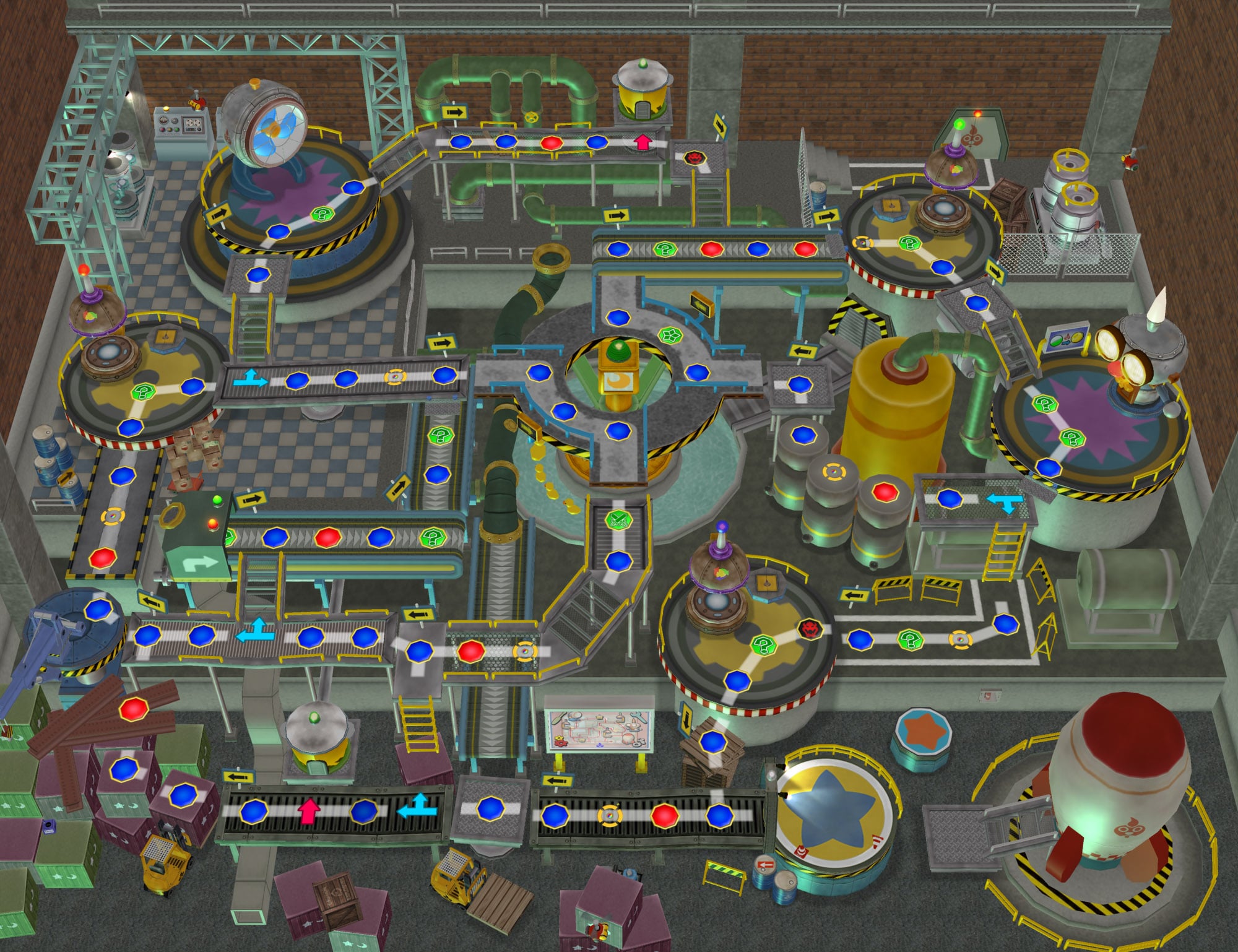
E. Gadd’s Garage
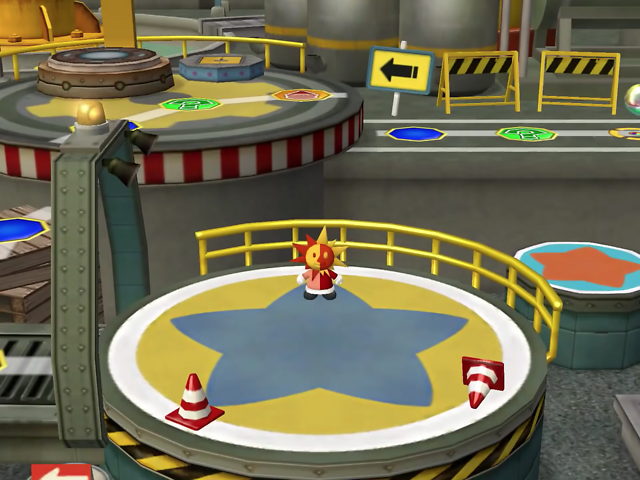
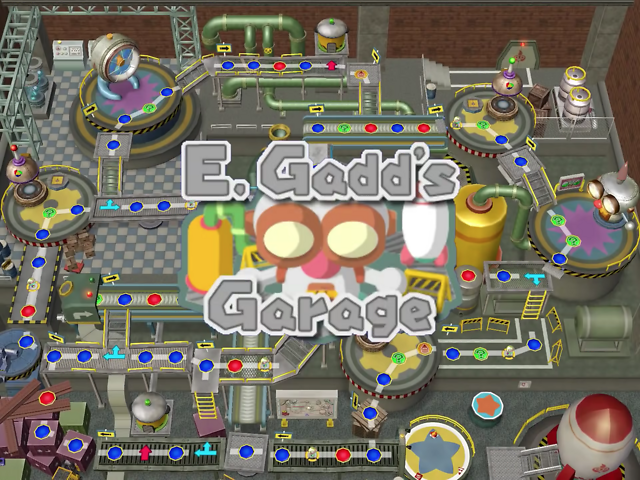
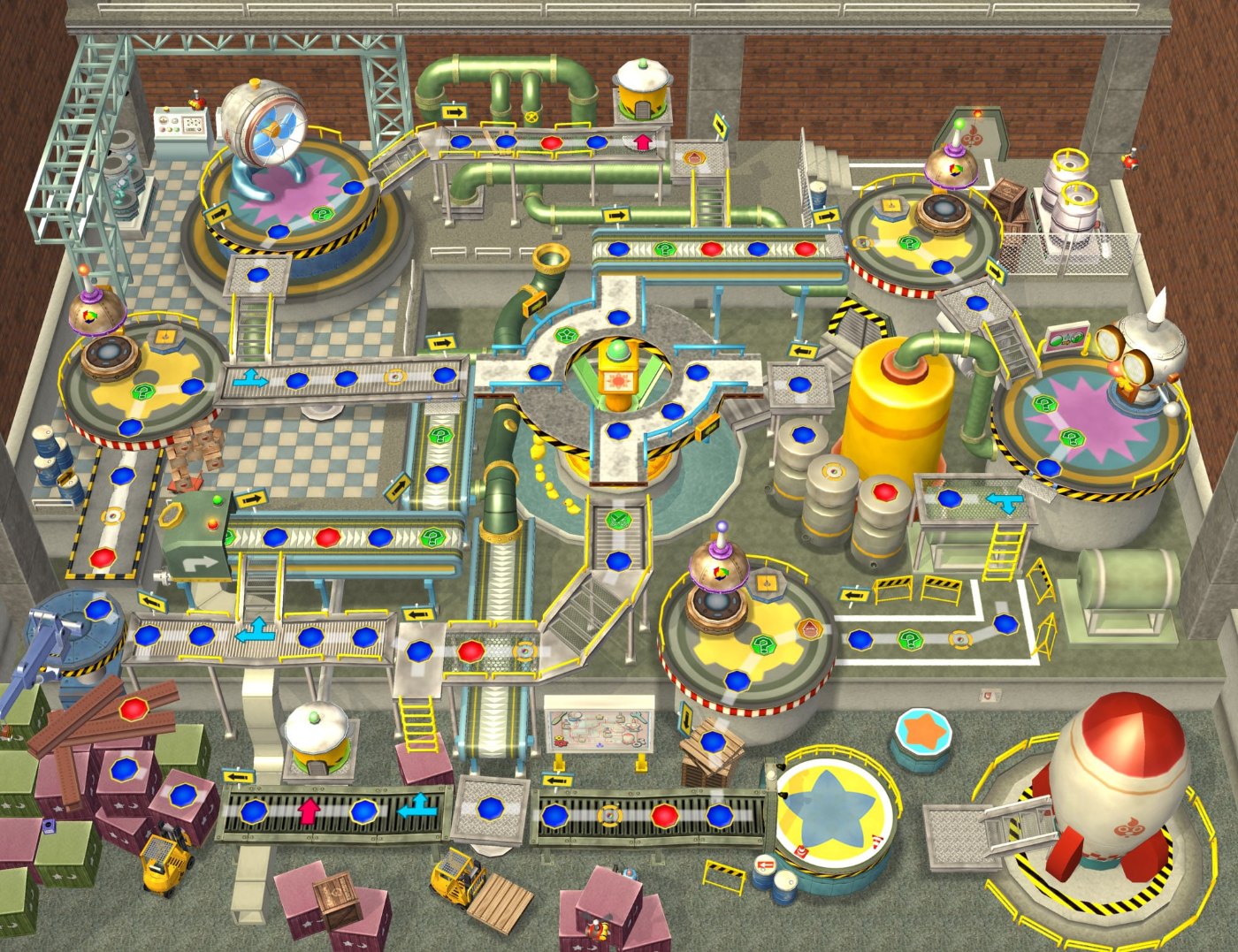
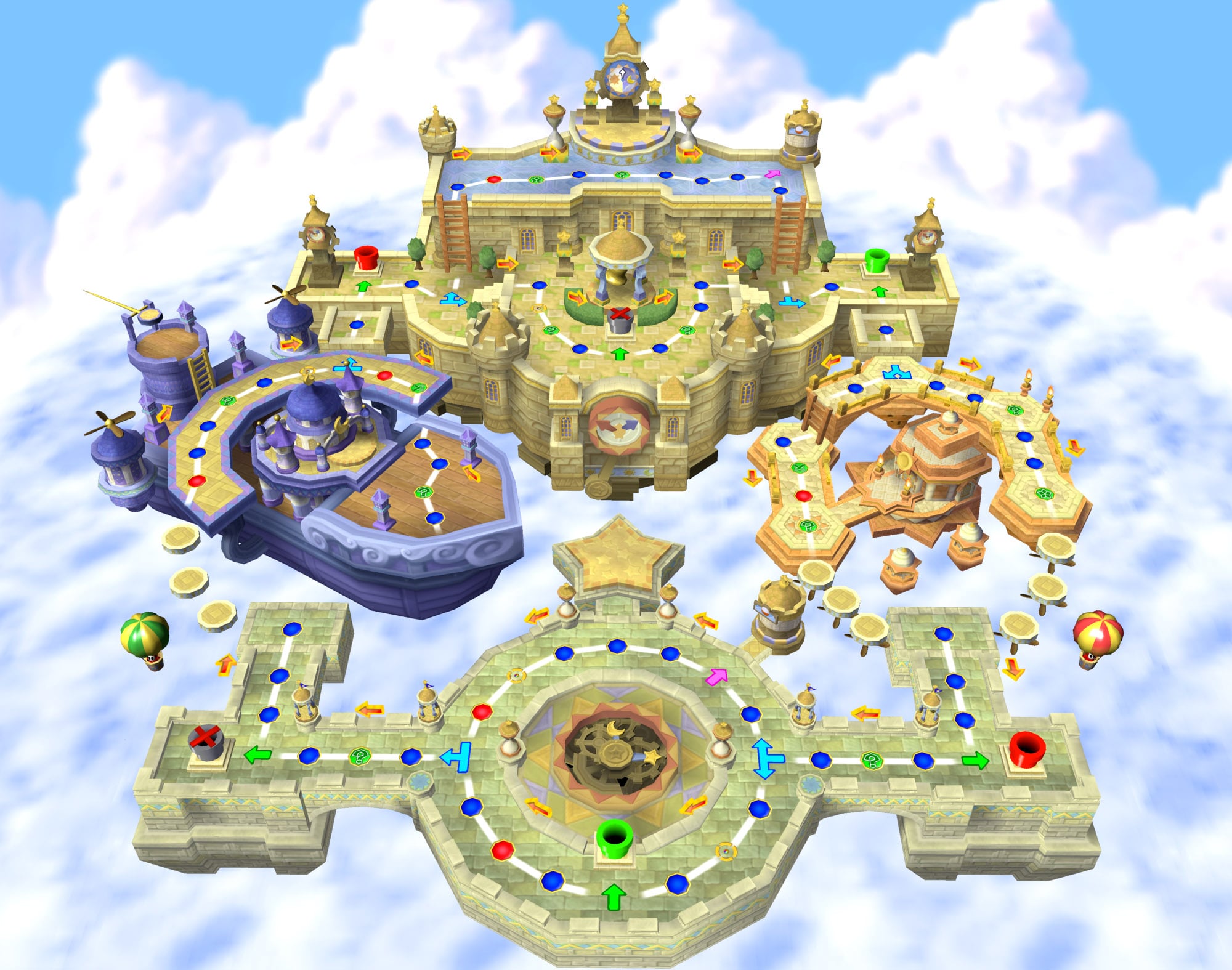
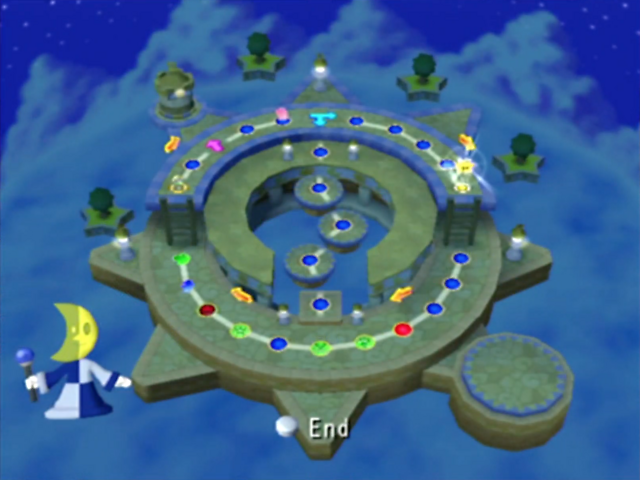
Professor E. Gadd’s laboratory, cluttered with crates of Orbs, Piranha Plants in tanks and a GameCube. Stars work as they do in Towering Treetop. The central platform turns a notch clockwise whenever day changes to night or night to day, re-routing the paths that cross it.
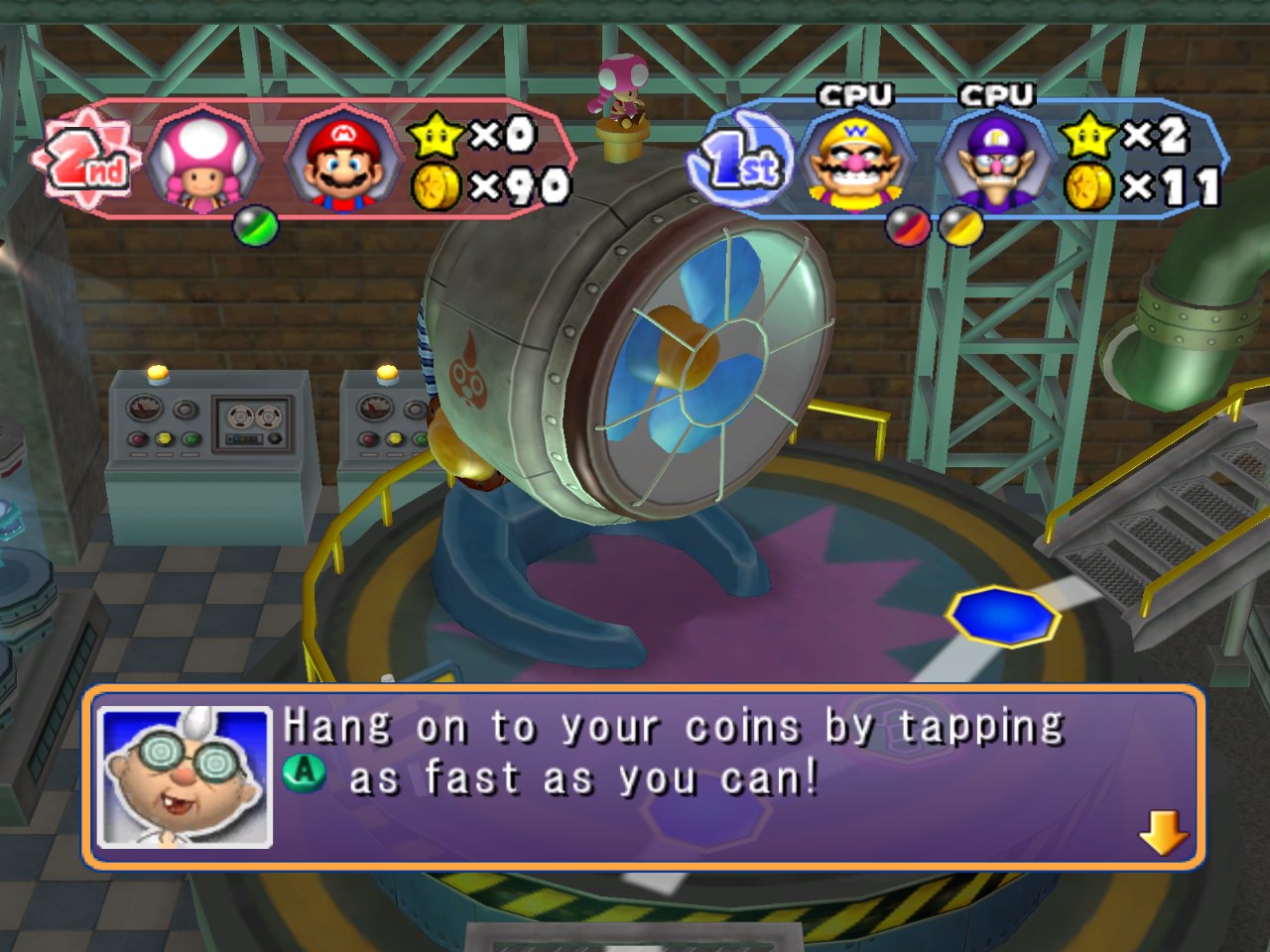
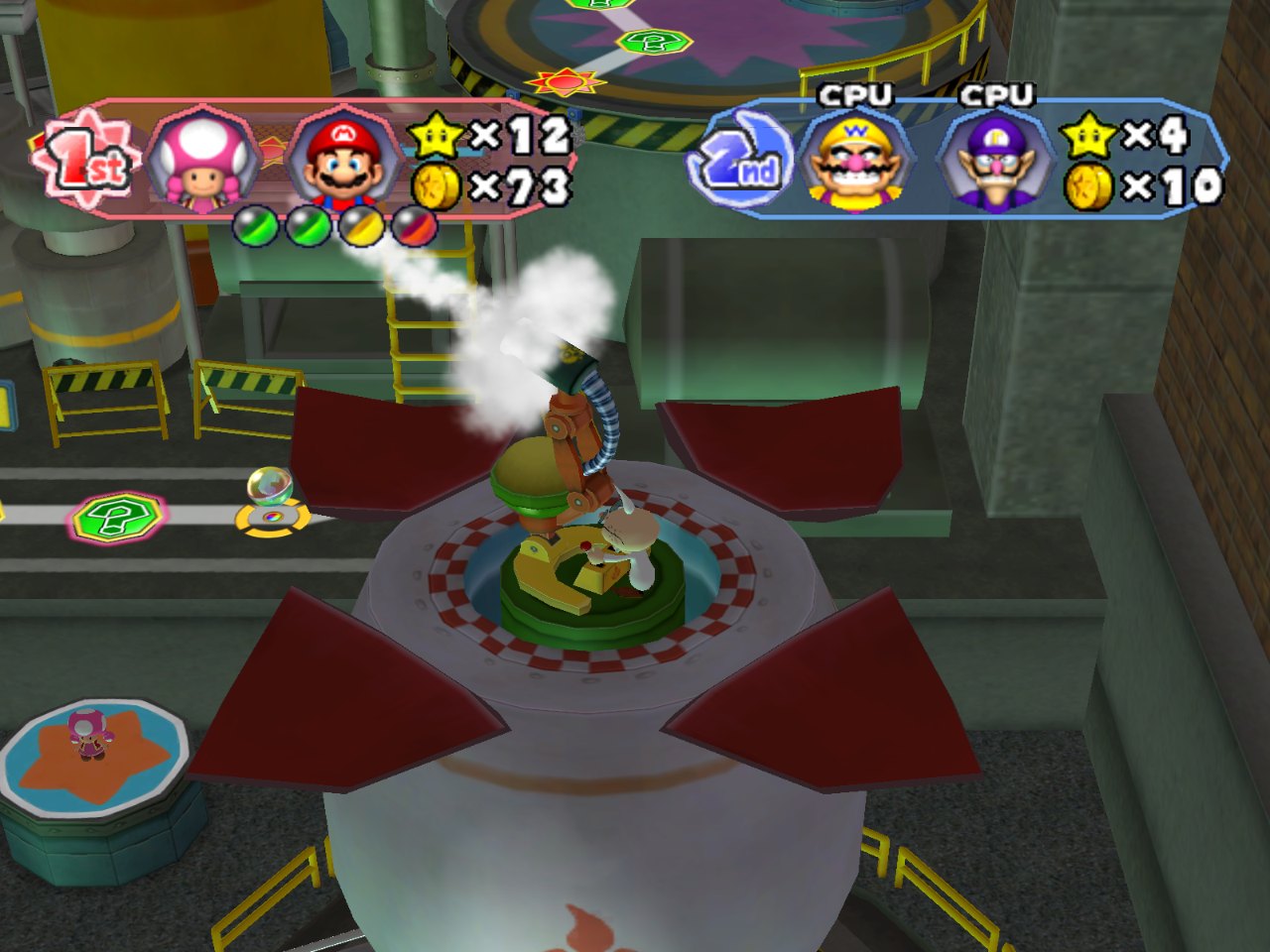
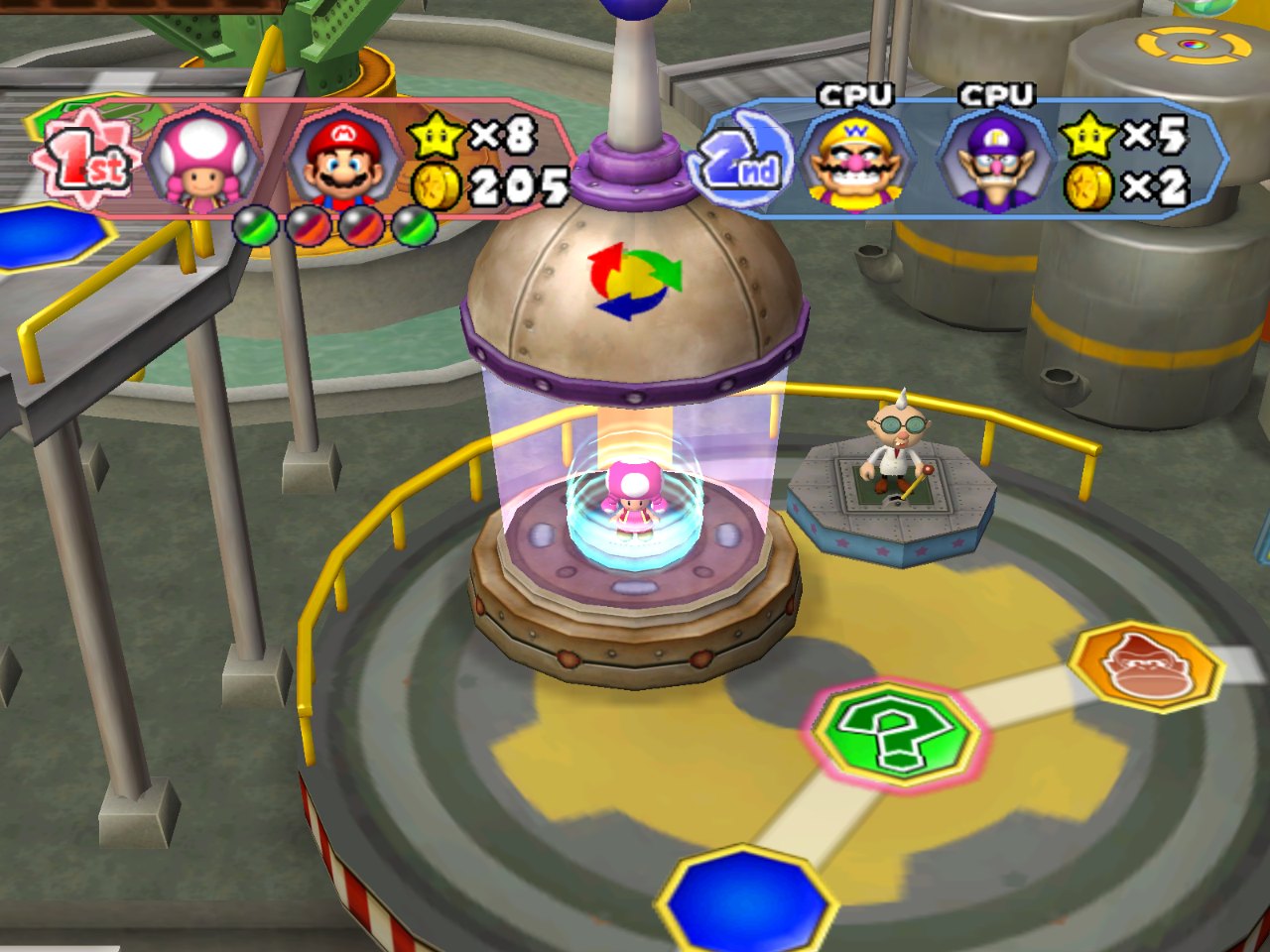
The board’s ten ? Spaces set off the professor’s inventions. The conveyor belts carry everyone standing on them back towards the first junction, wipe out the traps there and swap the Blue and Red Spaces round. Three teleporters link the corners. The giant fan, properly the Wealth Suckage Apparatus, sucks coins out of your rivals’ pockets while they hammer A to hang on to them. The Calamity Launcher lets you pay to scatter up to five traps of your own, at a price that rises with your position. The Shuffle-o-tron turns all your Orbs into different Orbs by day, and into their shop value in coins by night. It also stocks more kinds of Orb than any other board.
E. Gadd’s Garage is introduced.The giant fan.The Calamity Launcher.One of the three teleporters.
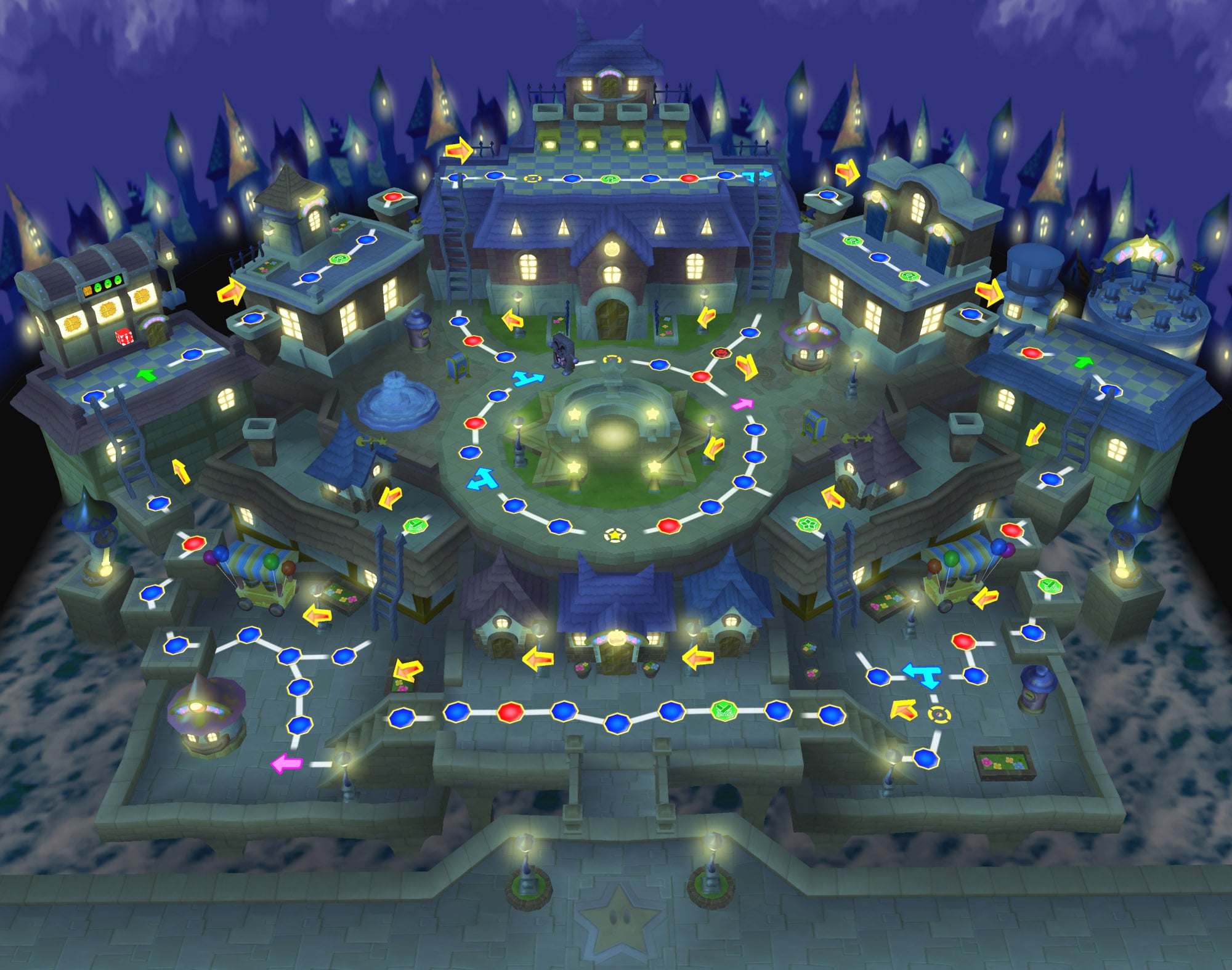
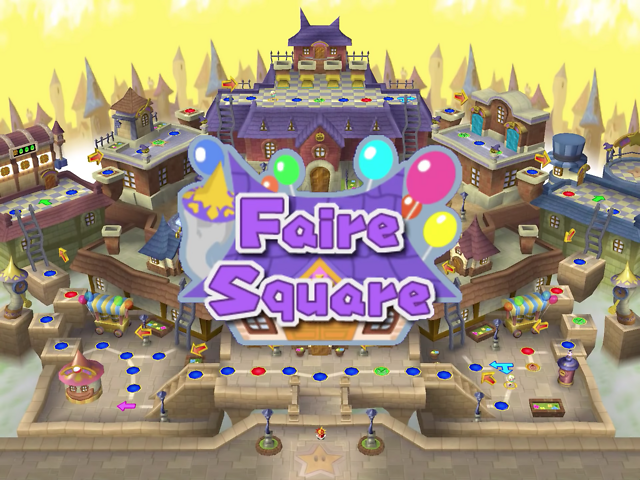
Faire Square
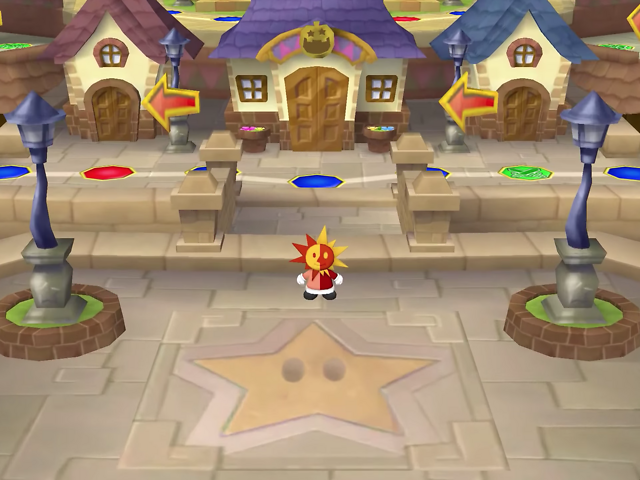
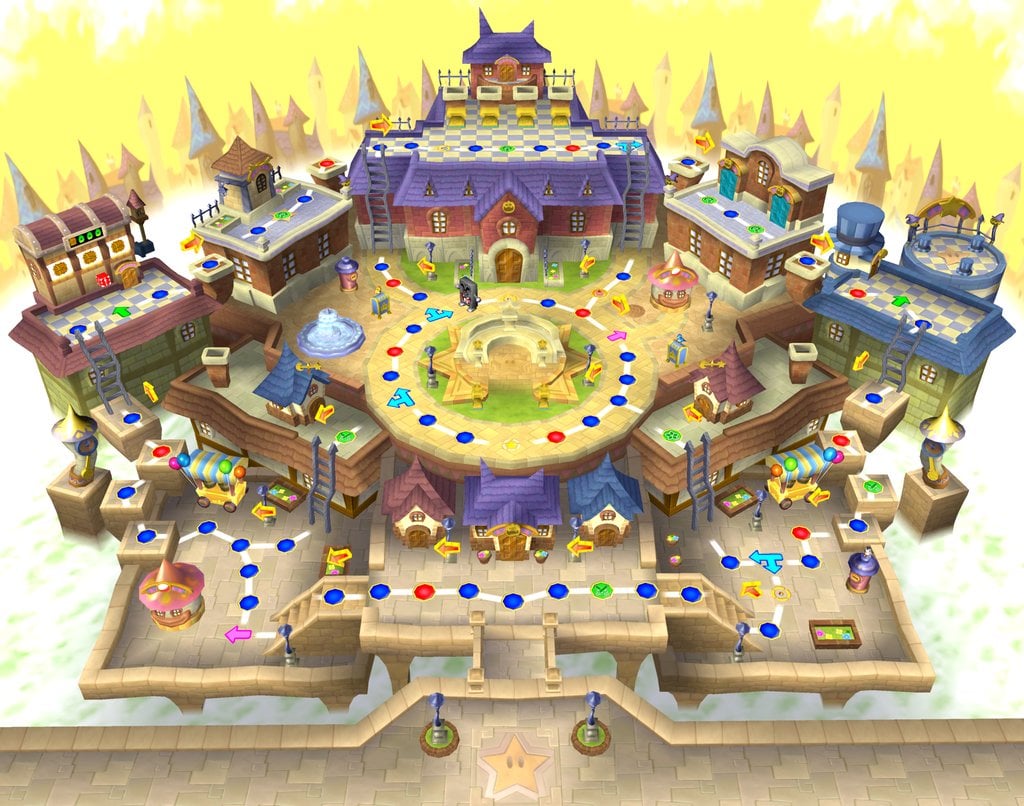
An autumn fair in a fairy-tale town, all pumpkin lanterns and striped roofs, with a name that puns on “fair and square”. The Star Space never moves from the middle and will sell you up to five Stars at a time. By day Brighton charges the usual 20 coins each. By night Twila rolls a die first and the price becomes 5, 10, 30 or 40. Arriving rich on a 5-coin night can settle a game, which is why the centre is usually ringed with traps and why the Whomp on the short cut wants 10 coins.
The side-shows are all gambles. The Luck Wheel costs 5 coins by day and 10 by night, for bigger prizes. Star Shuffle costs a Star to play: find the right hat out of three by day to win two Stars, or out of six by night to win three. At the top of the board every player is dragged into a contest to grow the tallest plant out of a chimney, for a pot of 10 coins a head by day and a Star a head by night. A broom sweeps you into the centre from one building; two others send you back to the start.
Faire Square is introduced.The start of a game.
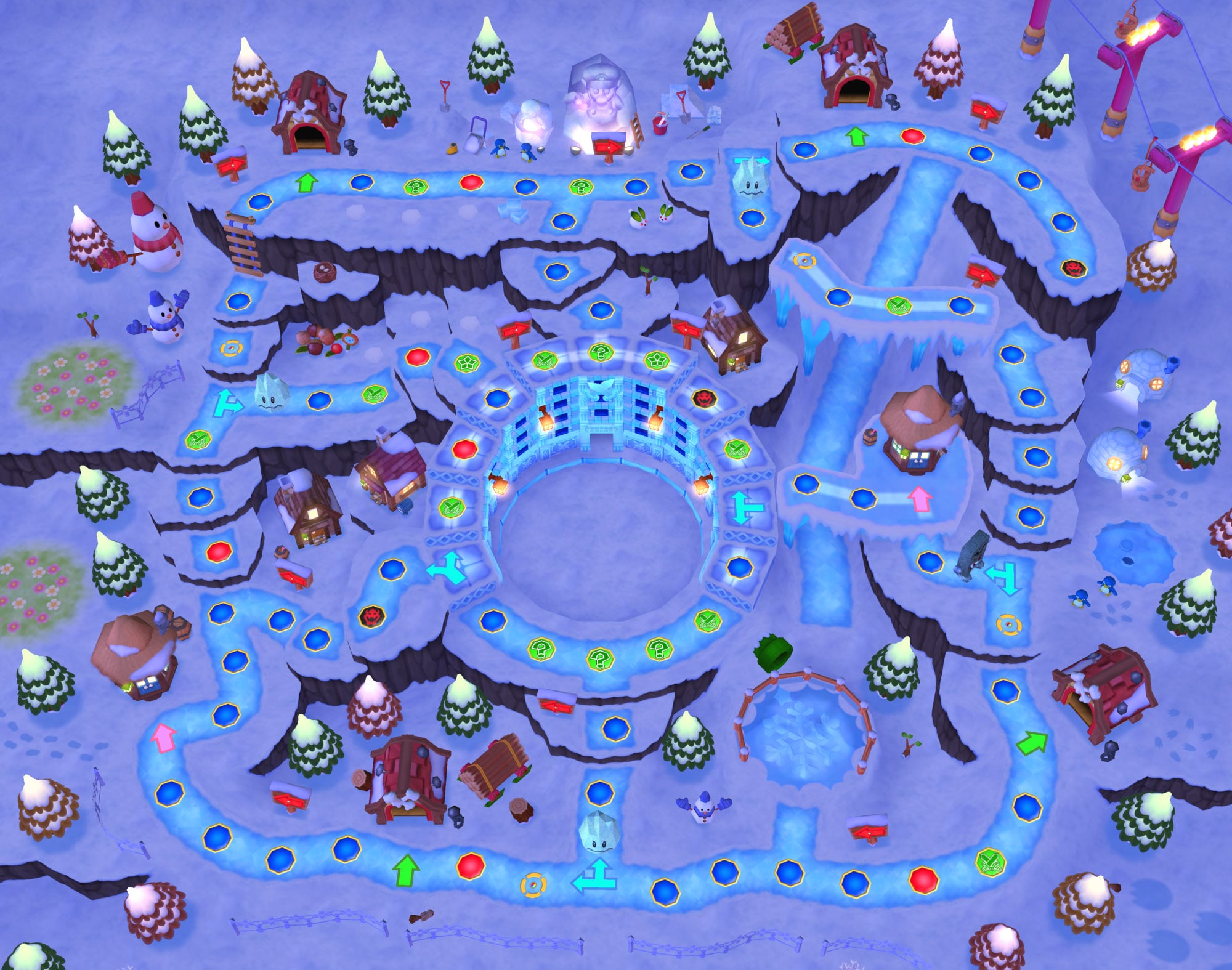
Snowflake Lake
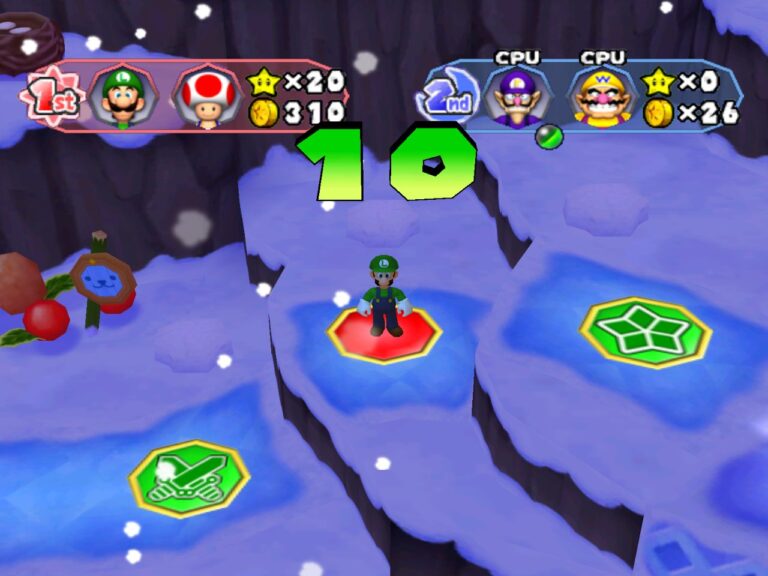
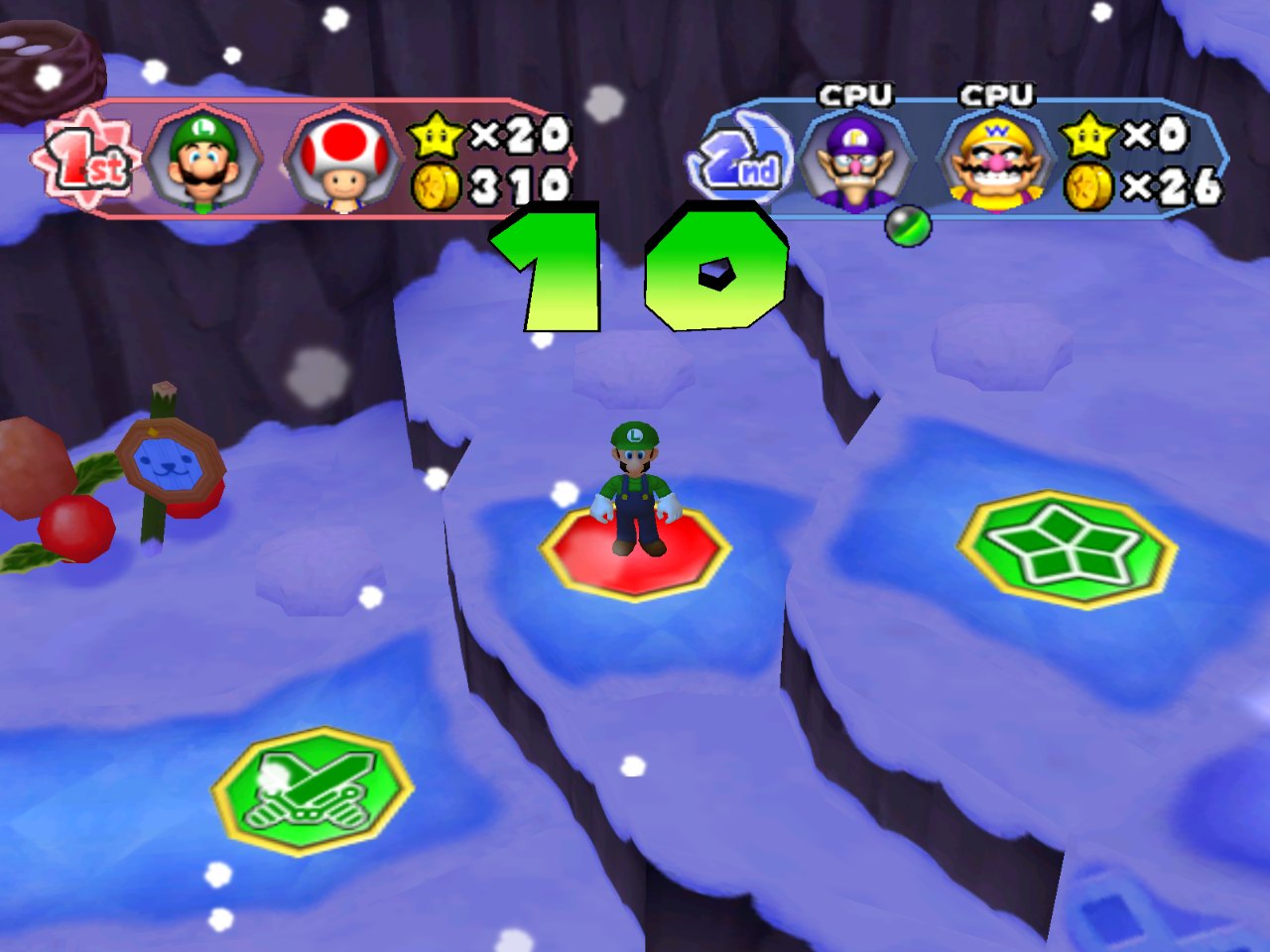
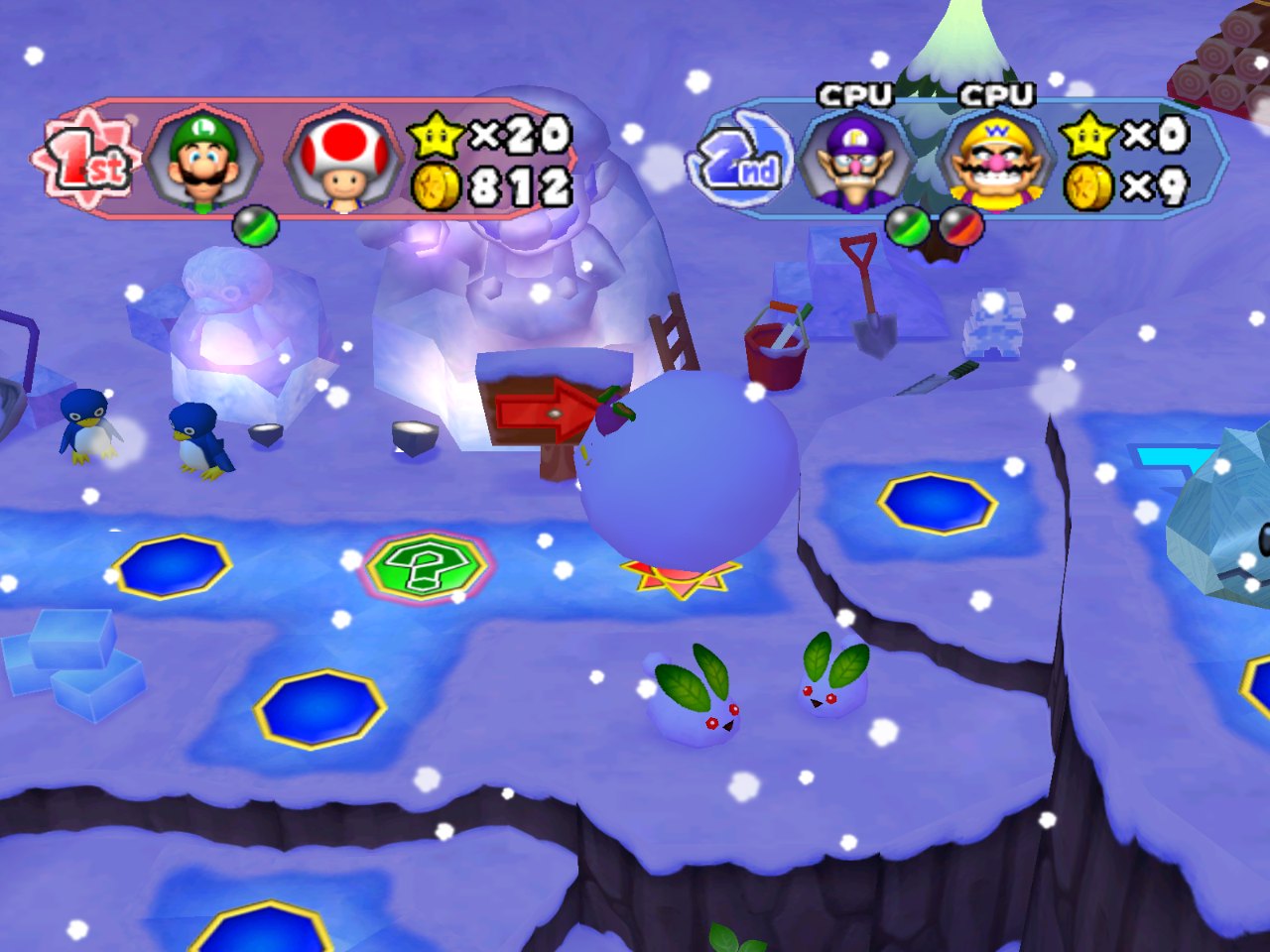
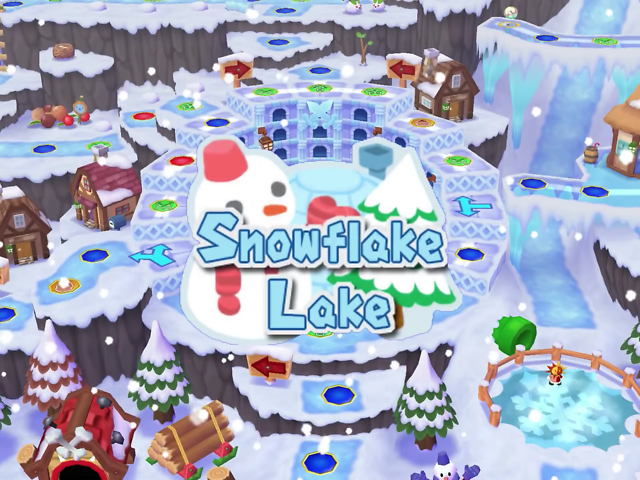
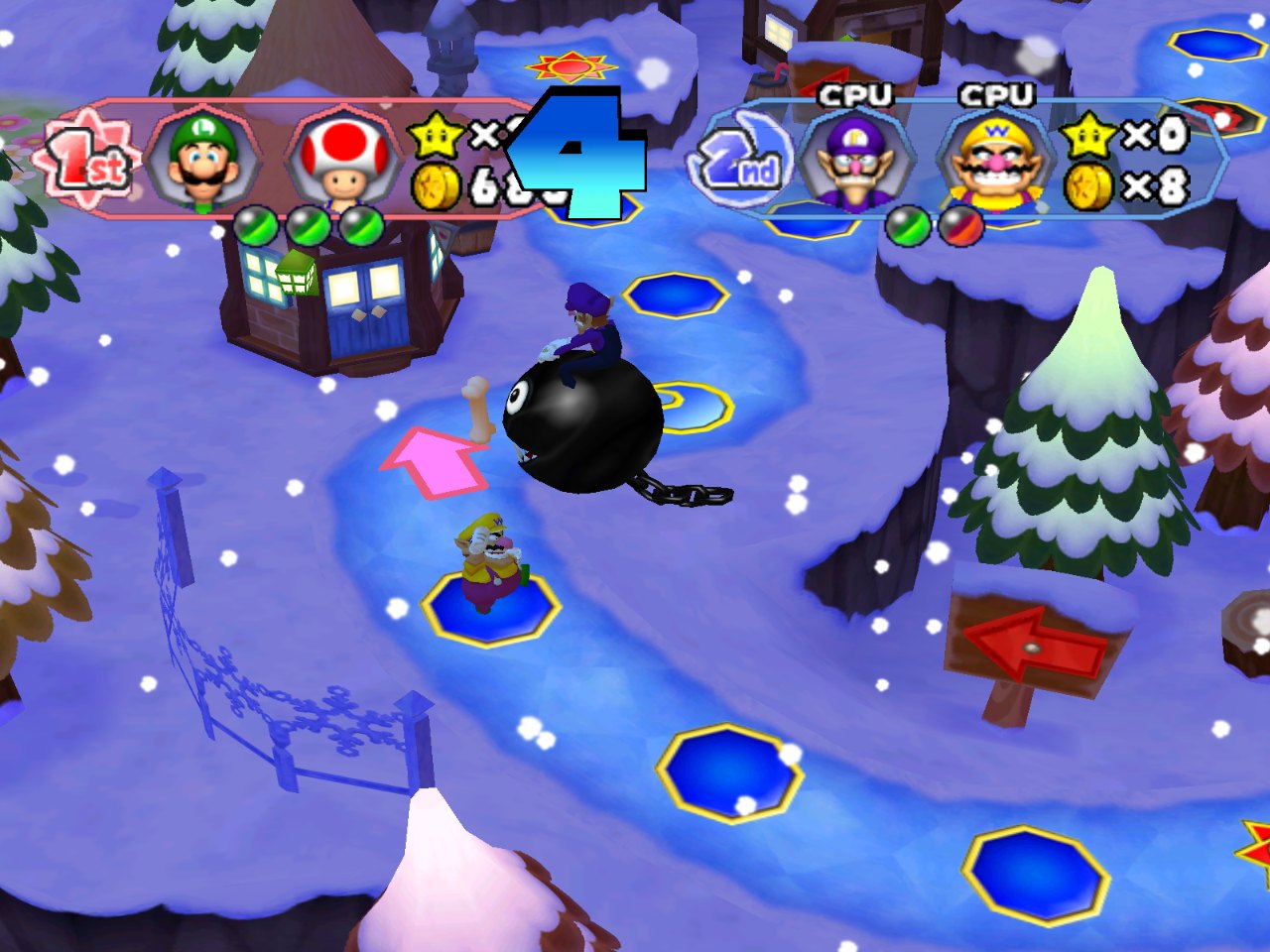
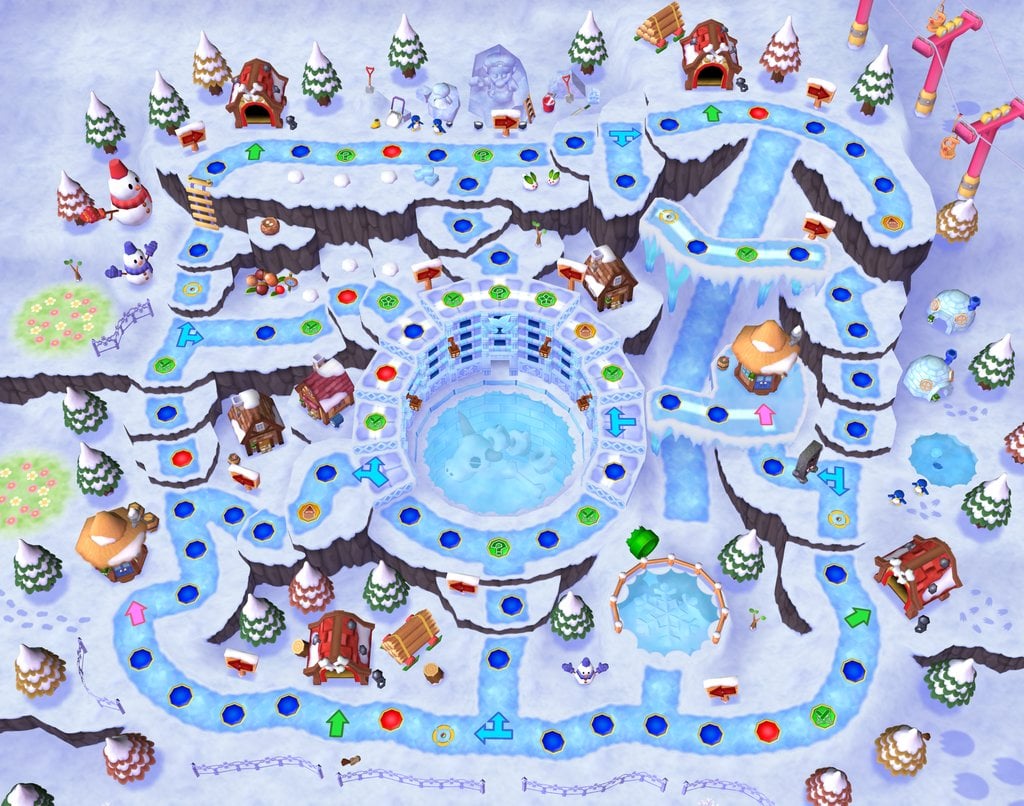
A snowy board in the spirit of Chilly Waters, with a frozen pond, a ski lift and snowmen, and the biggest in the game at 72 spaces. There is no Star Space. Everybody begins with five Stars, and the only way to get more is to take them. Four kennels round the board hire out Chain Chomps: by day 20 coins buys a ride on one Dice Block, by night up to three Dice Blocks at 10 coins each, and every rival you run down on the way loses a Star to you unless they are holding a Snack Orb.
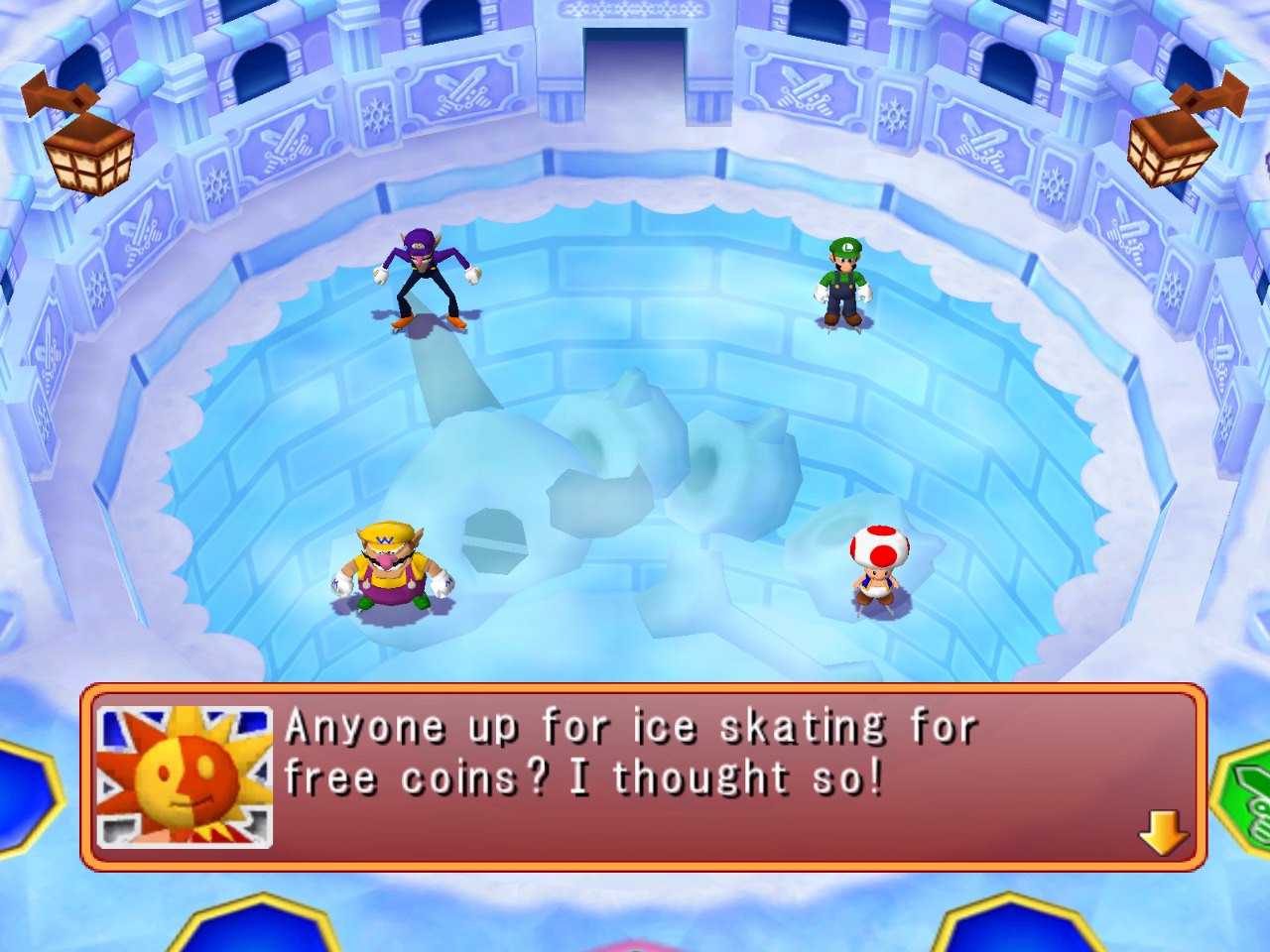
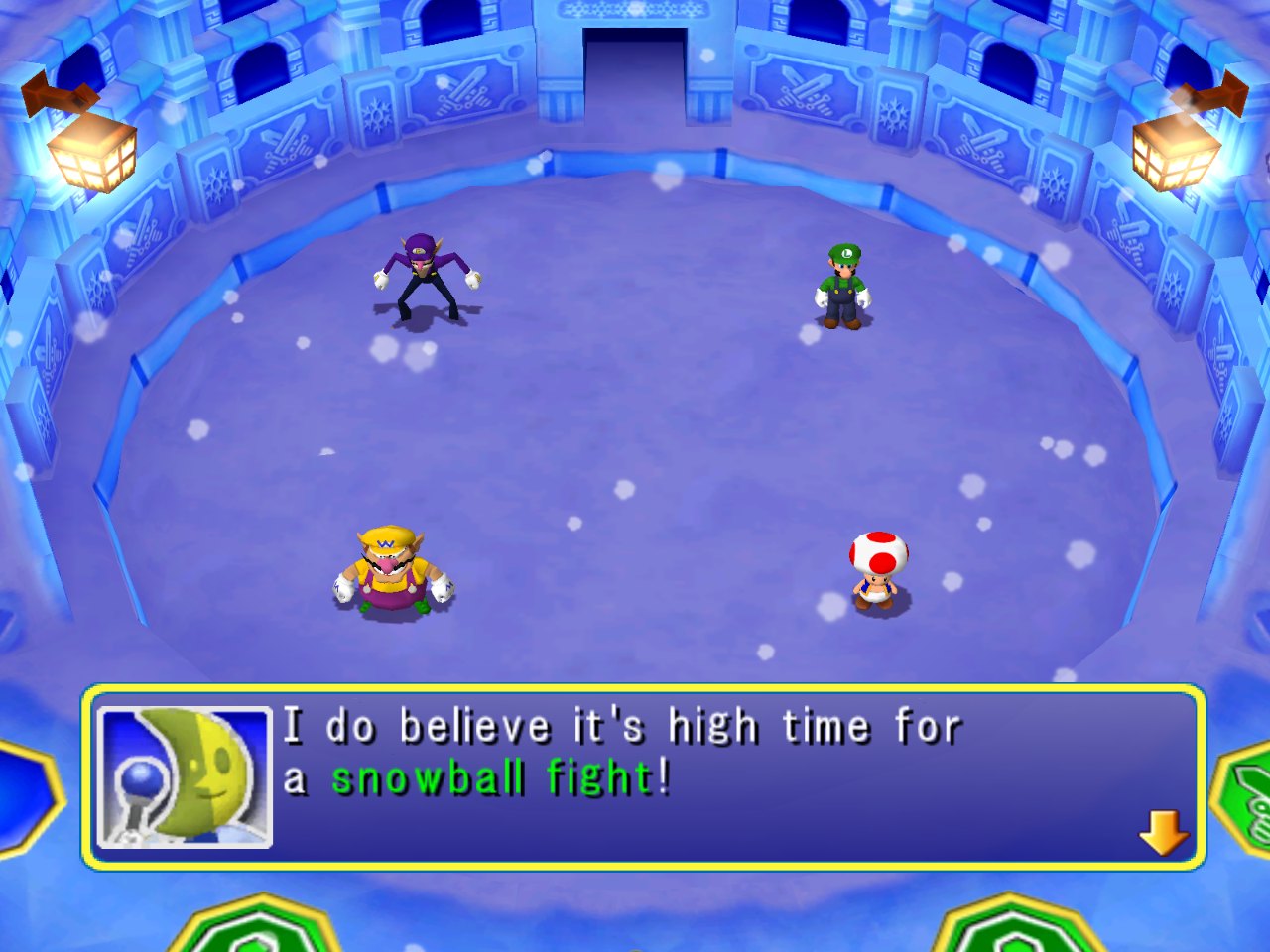
At night Freezies block the paths across the middle and the pond gains two extra ? Spaces. Land on the pond in daylight and everyone skates for coins that Brighton tosses on to the ice; after dark it is a snowball fight to knock coins out of each other. At the top of the board a snowman rolls a snowball down the slope that carries everyone in its way back to the start. A Whomp takes 10 coins to let you by.
Snowflake Lake is introduced.Skating for coins by day.The snowball fight by night.A Snack Orb saves a Star from a Chain Chomp.
Castaway Bay
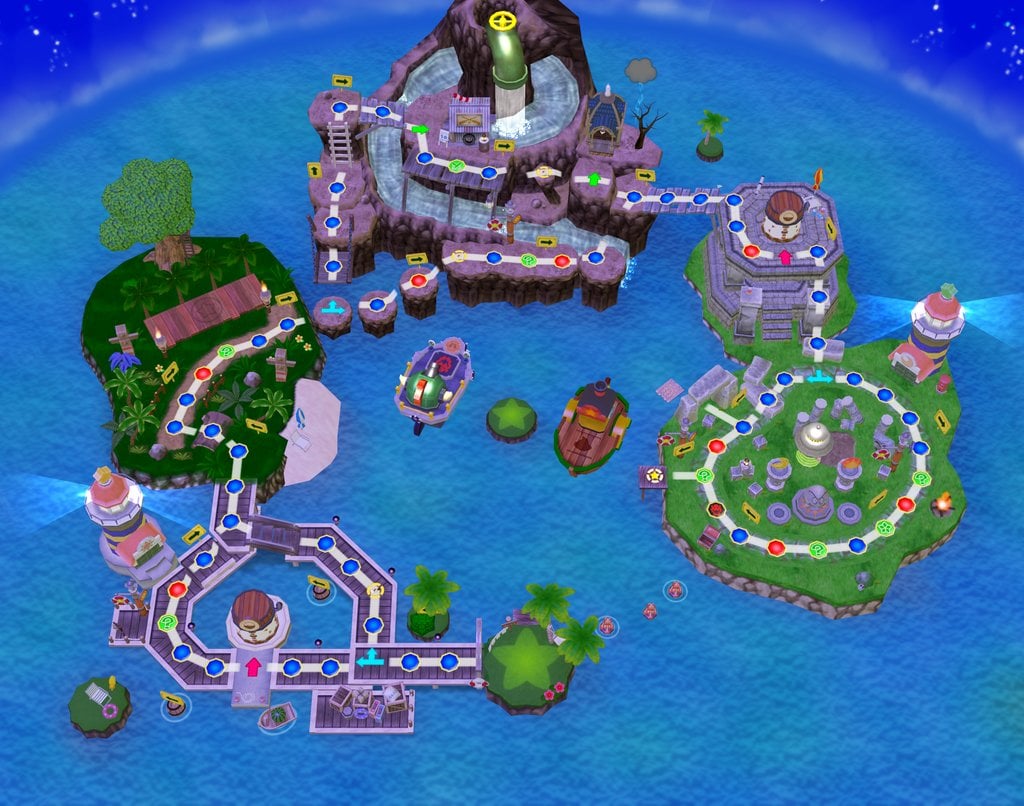
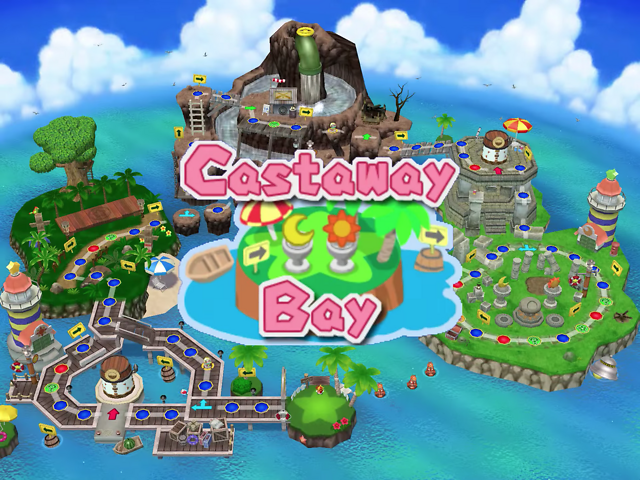
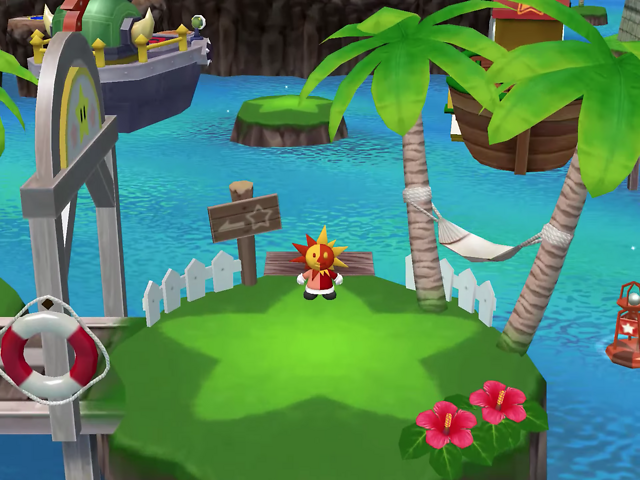
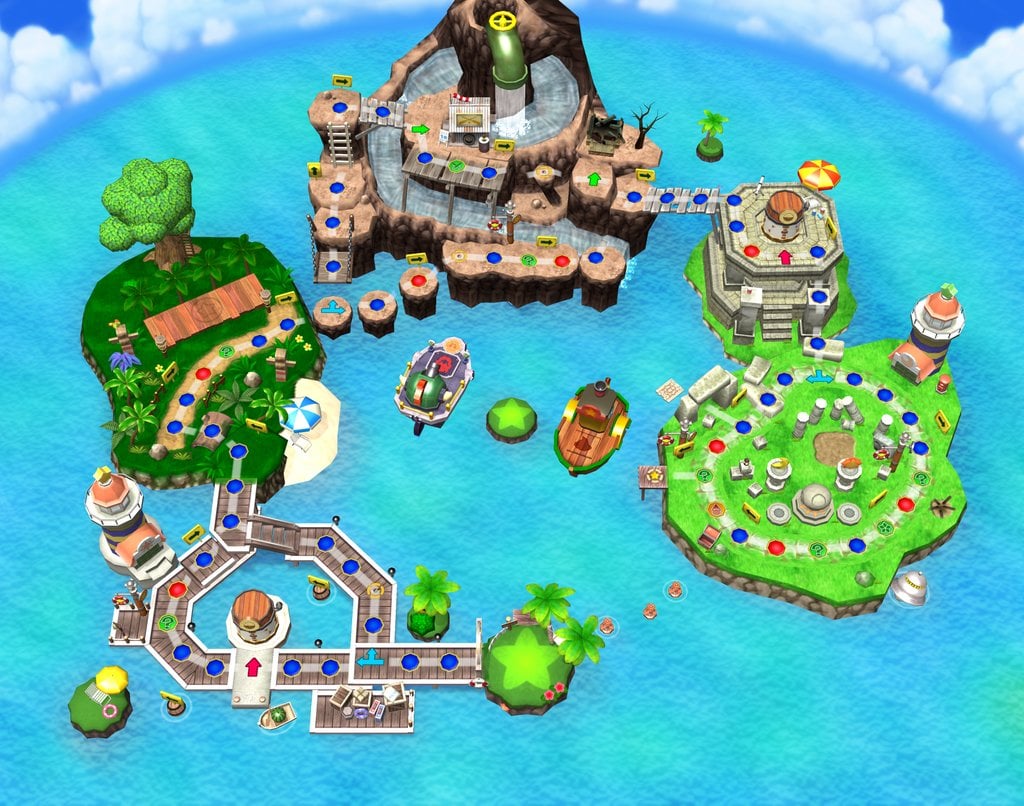
Three tropical islands and a one-way route between them, ending at a jetty where a boat is moored. Super Mario Wiki compares the arrangement to Mario’s Rainbow Castle in the first Mario Party. If the boat is DK’s Riverboat, Donkey Kong sells you a Star for 20 coins and sends you back to the start. If it is Bowser’s Battle Yacht, Bowser gives you a Shadow Star, which costs you a Star, or 20 coins if you have none. The two boats change places each time somebody reaches DK. Hitting the target on a pole along the way rings a bell and swaps them too.
On the first island an Ukiki in a tree throws coins, and Spiny eggs, for you to catch. On the third, the Great Mushroom Spirit may grant an Orb or coins by day, while at night the Great Goomba Spirit has Paragoombas shuffle the players’ positions. A Shy Guy will raft you down the northern river for 10 coins, but if DK is at the jetty Bowser fires cannonballs at the raft. Pink Boo works here at night as well, and a flying saucer hovers over the bay after dark for no reason anyone has explained.
Castaway Bay is introduced.The start of a game.Ukiki throws coins at Wario.The bay by day and by night.
Clockwork Castle
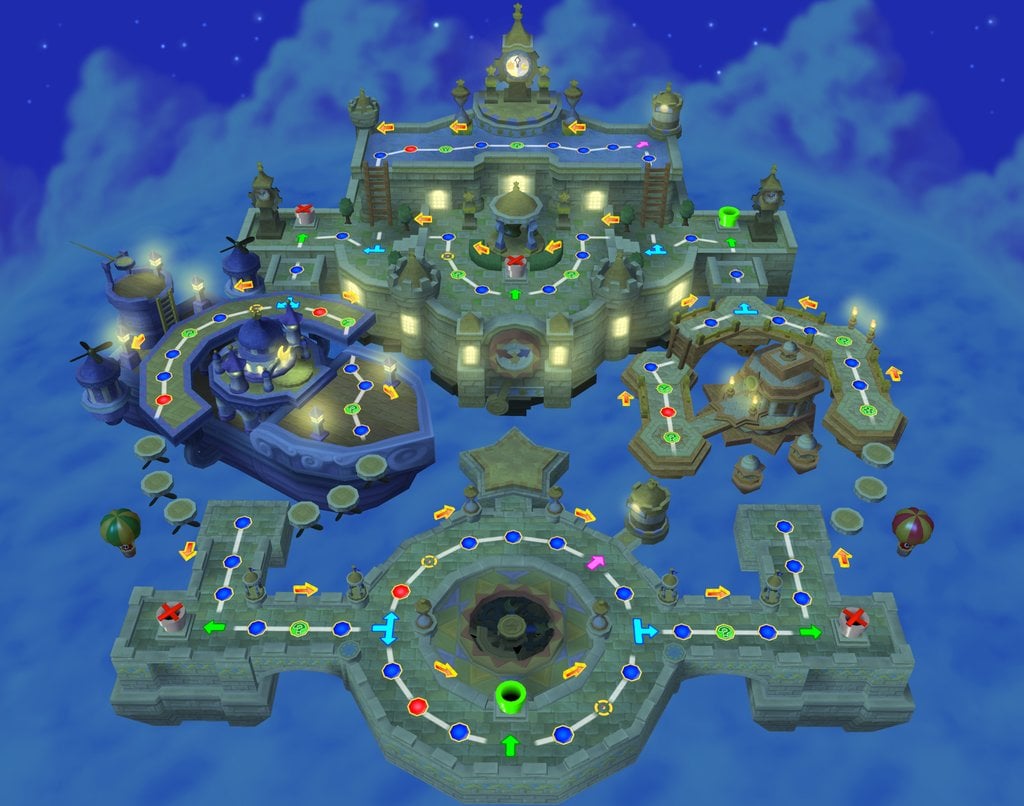
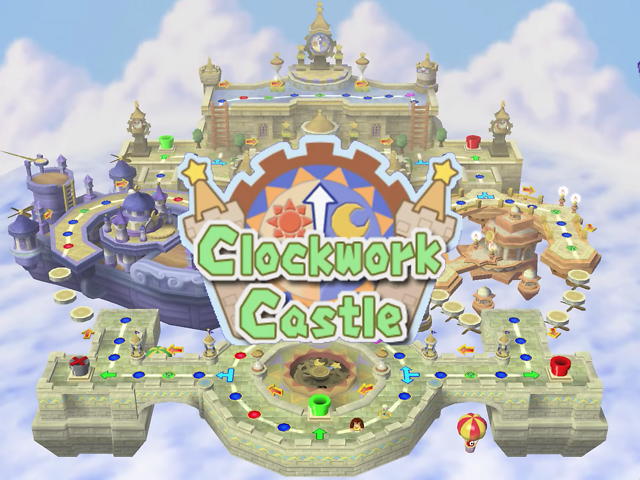
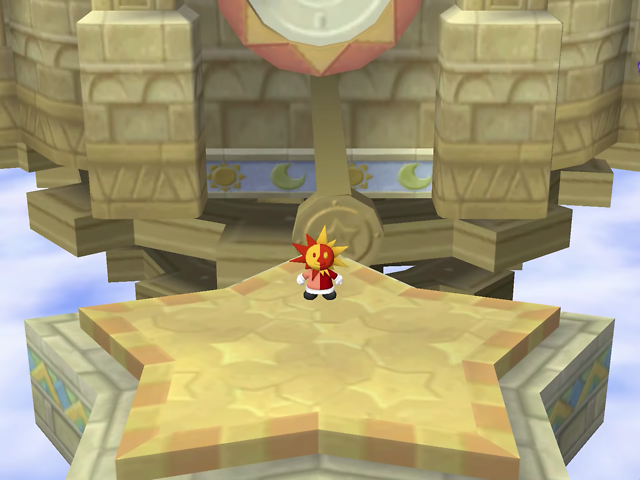
The sixth board is bought at the Star Bank for 100 Stars. It is a castle in the sky with a courtyard, Brighton’s Temple on one side and Twila’s Airship on the other, and it has no Star Space, DK Space or Bowser Space at all, because Donkey Kong and Bowser are walking round it themselves.
By day everyone travels clockwise and Donkey Kong strolls ahead of you. He rolls after the players have moved, twice if he stops to eat a banana, and whoever catches him can buy a Star for 20 coins. At night the direction of travel reverses and Bowser comes the other way, rolling twice when he breathes fire. Meet him and he takes a Star, or 20 coins. Neither of them is stopped by roadblock Orbs.
Warp Pipes on the top and bottom edges link the two sides, though at night only the green ones work. Brighton by day and Twila by night hand out presents from their own ? Spaces; a pair of treasure chests in front of the temple or the airship hides a Star in one and coins in the other; you can fish for an Orb off the back of the airship at the risk of hooking a Bob-omb that destroys the ones you have; and the ? Space at the very top of the castle has an even chance of changing day to night on the spot.
Clockwork Castle is introduced.The start of a game.Bowser presents Yoshi with a Shadow Star.
Solo Mode
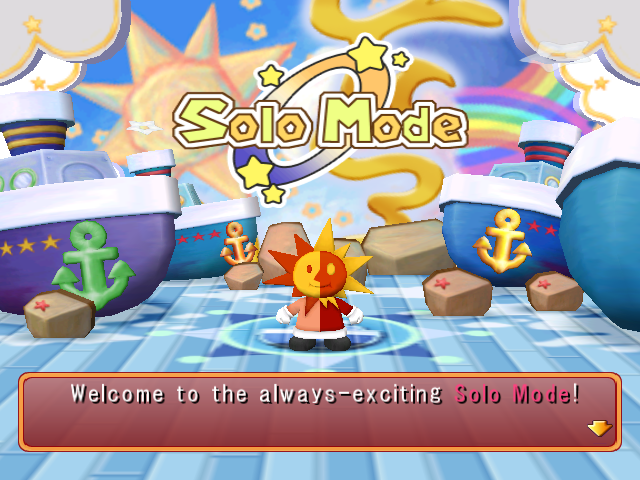
Solo Mode replaces the Story Mode of the last three games with something closer to a dice game. Brighton hosts. You walk a single track, rolling a die that only goes up to 6, and every space is a challenge: a 4-Player, 1-vs-3, 2-vs-2 or Battle minigame against computer players, a Duel against the Red, Green or Blue Koopa Kid whose colour the space is, a ? Space or a Bowser Space. There are no Stars to buy. What you are collecting is the minigames themselves, which are unlocked for the other modes, and bonus coins.
At the far end is the Rare Mini-Game Space. Stop on it exactly and you clear the board and win a rare minigame, Dunk Bros., Lab Brats or Block Star. Overshoot it and you fall off the end and lose everything you had gathered. You may also call it quits at any point and bank what you have, and the only Orbs on offer, the Sluggish ’Shroom and the Cursed Mushroom, are there to help you roll the number you need.
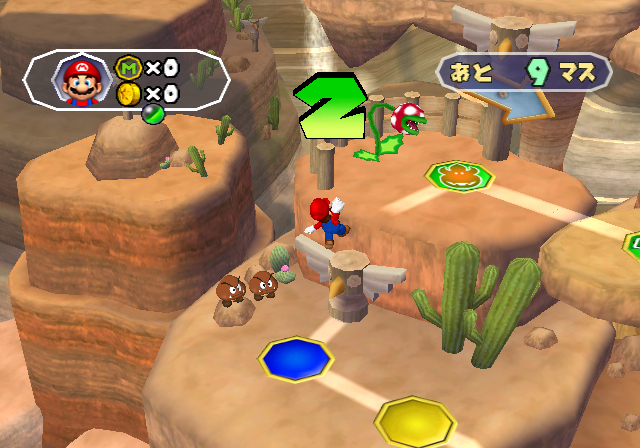
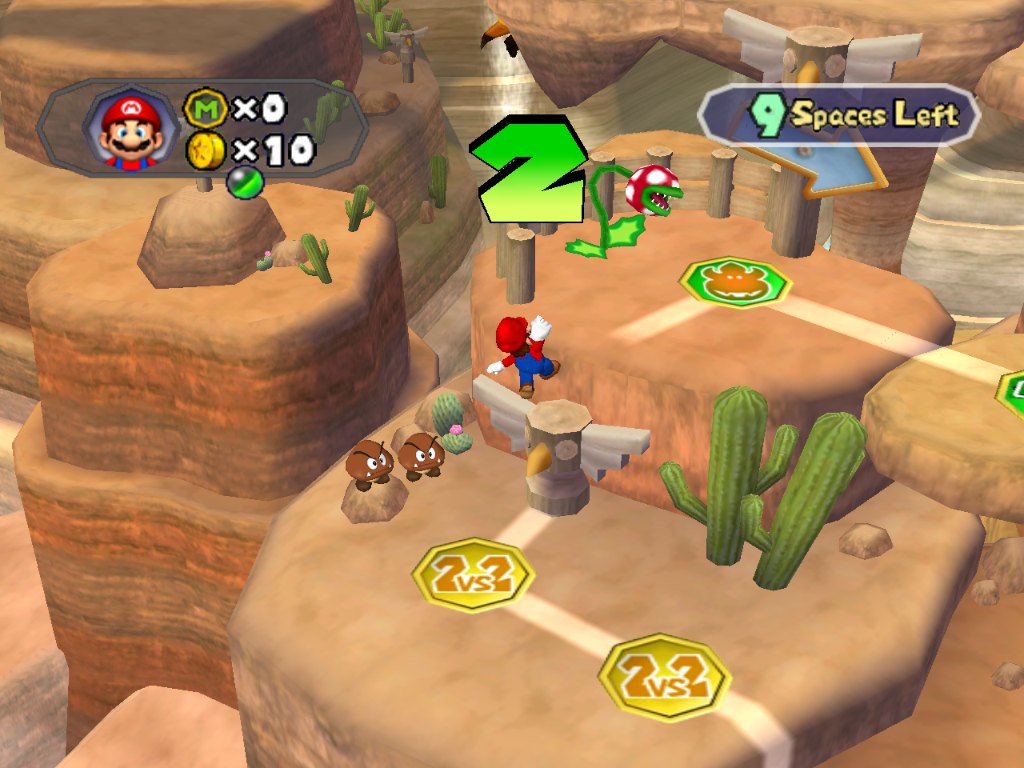
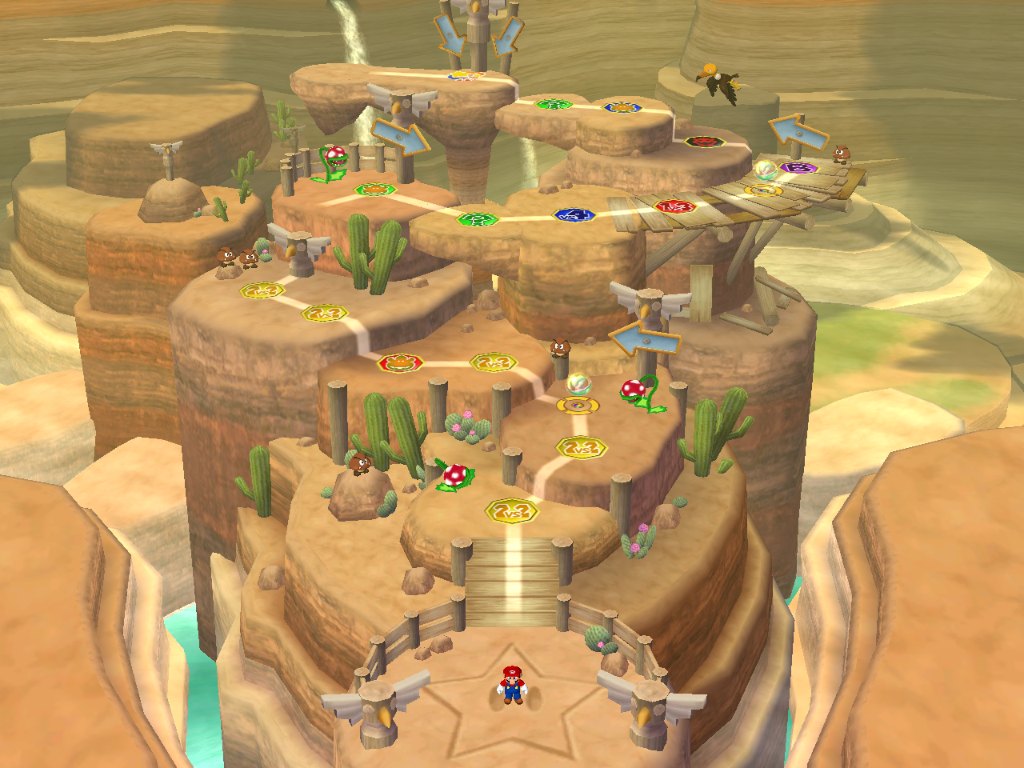
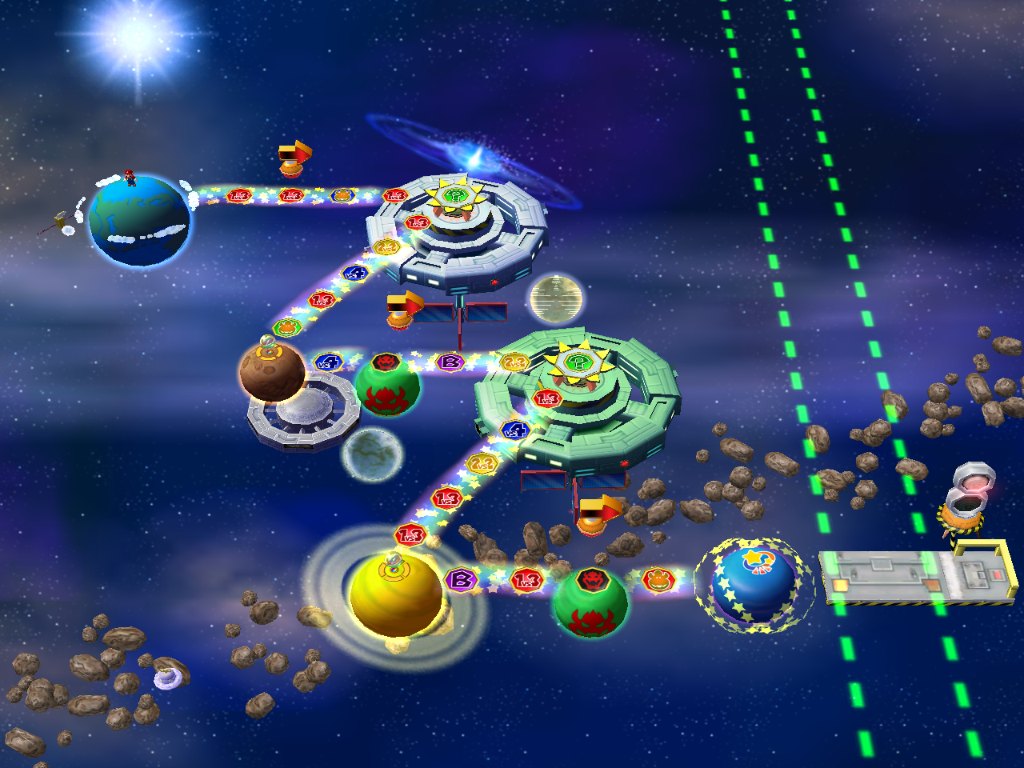
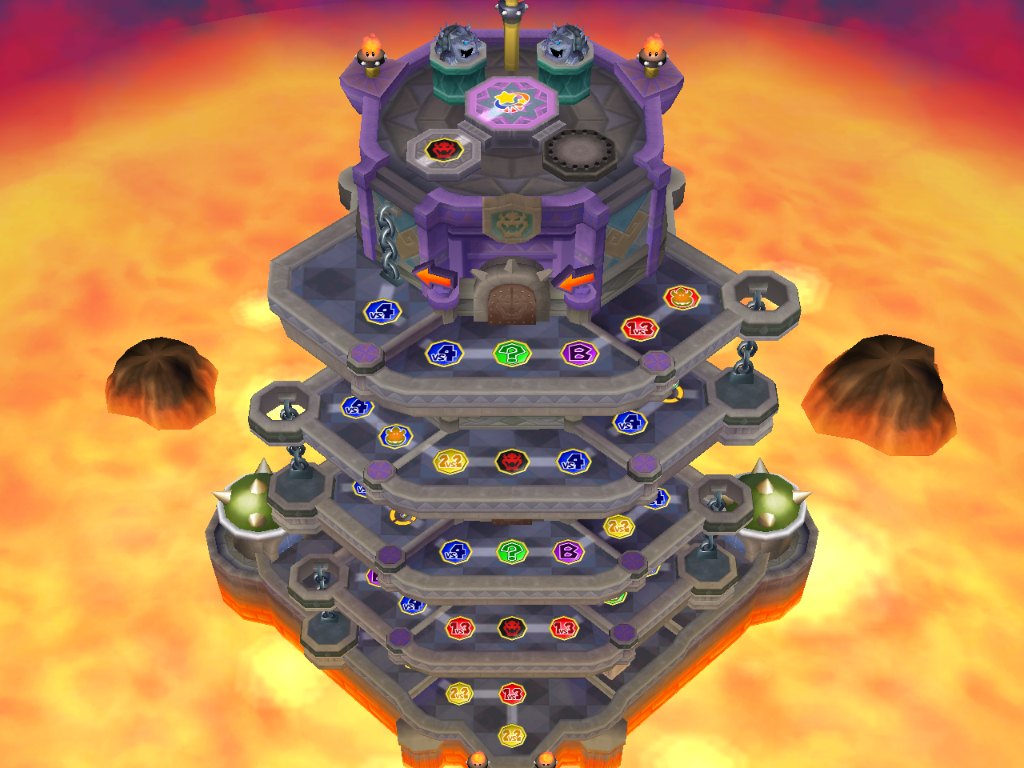
There are three boards. Thirsty Gulch is a short desert trail above an abyss. Astro Avenue is a middling one in outer space whose ? Spaces move you nearer the goal. Infernal Tower is a long climb through Bowser’s domain where a ? Space means Chain Chomps chasing you back to the start. At the end the bonuses are added up, from 10 coins for a minigame won on Easy to 300 for landing on every kind of space, and every 20 coins becomes one Star in the bank.
Brighton introduces Solo Mode.Mario on Thirsty Gulch.
Mic Mode: Speak Up and Star Sprint
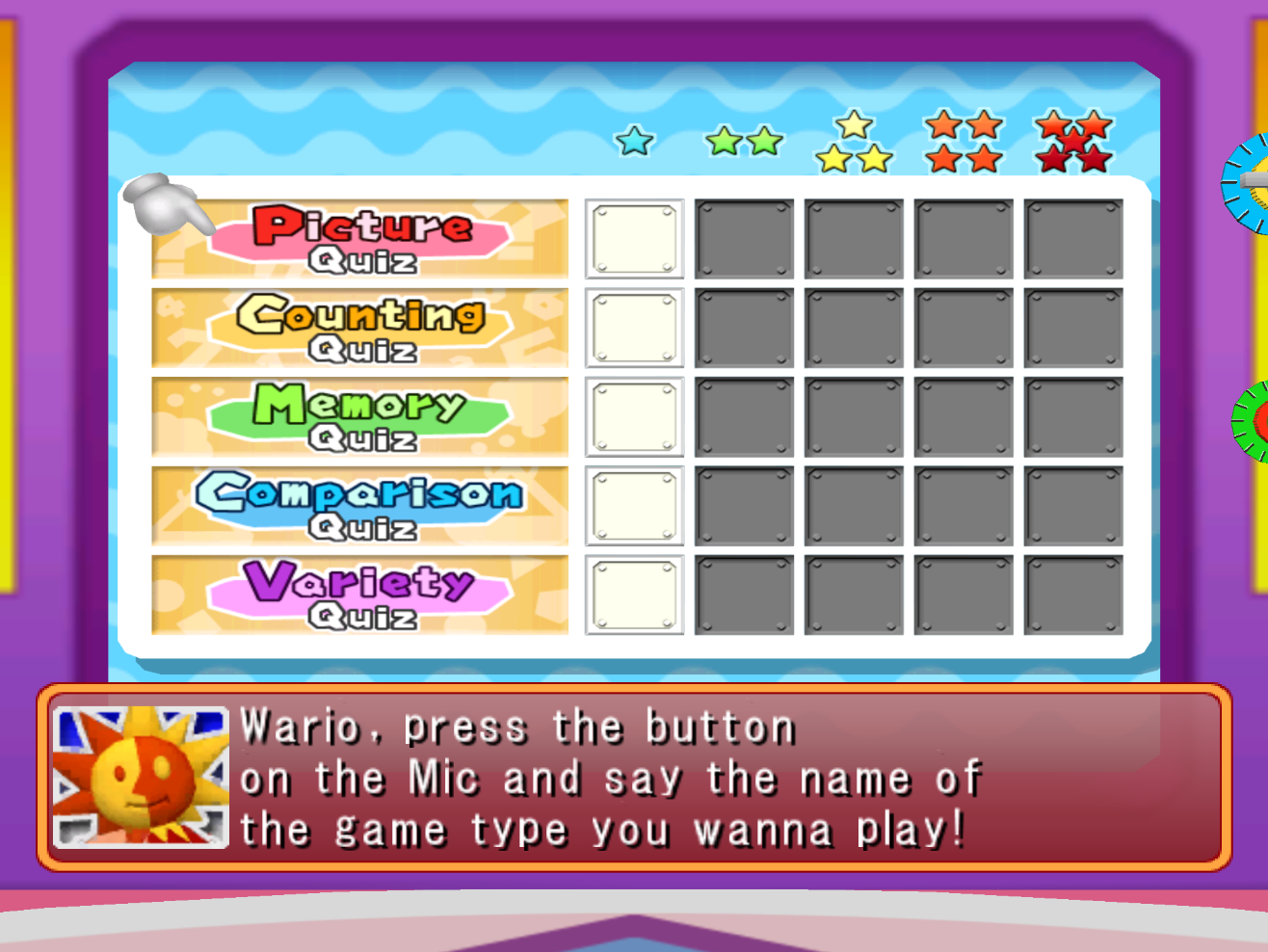
Speak Up is a quiz show for two to four human players, with no computer contestants. Over three rounds you answer into the microphone, quick answers scoring more, in five categories: Picture, Counting, Memory, Comparison and Variety. Harder questions, rated up to five stars, are worth more points, each allows one hint, and a wrong answer lets the others steal. Now and then Bowser barges in and takes over as quizmaster.
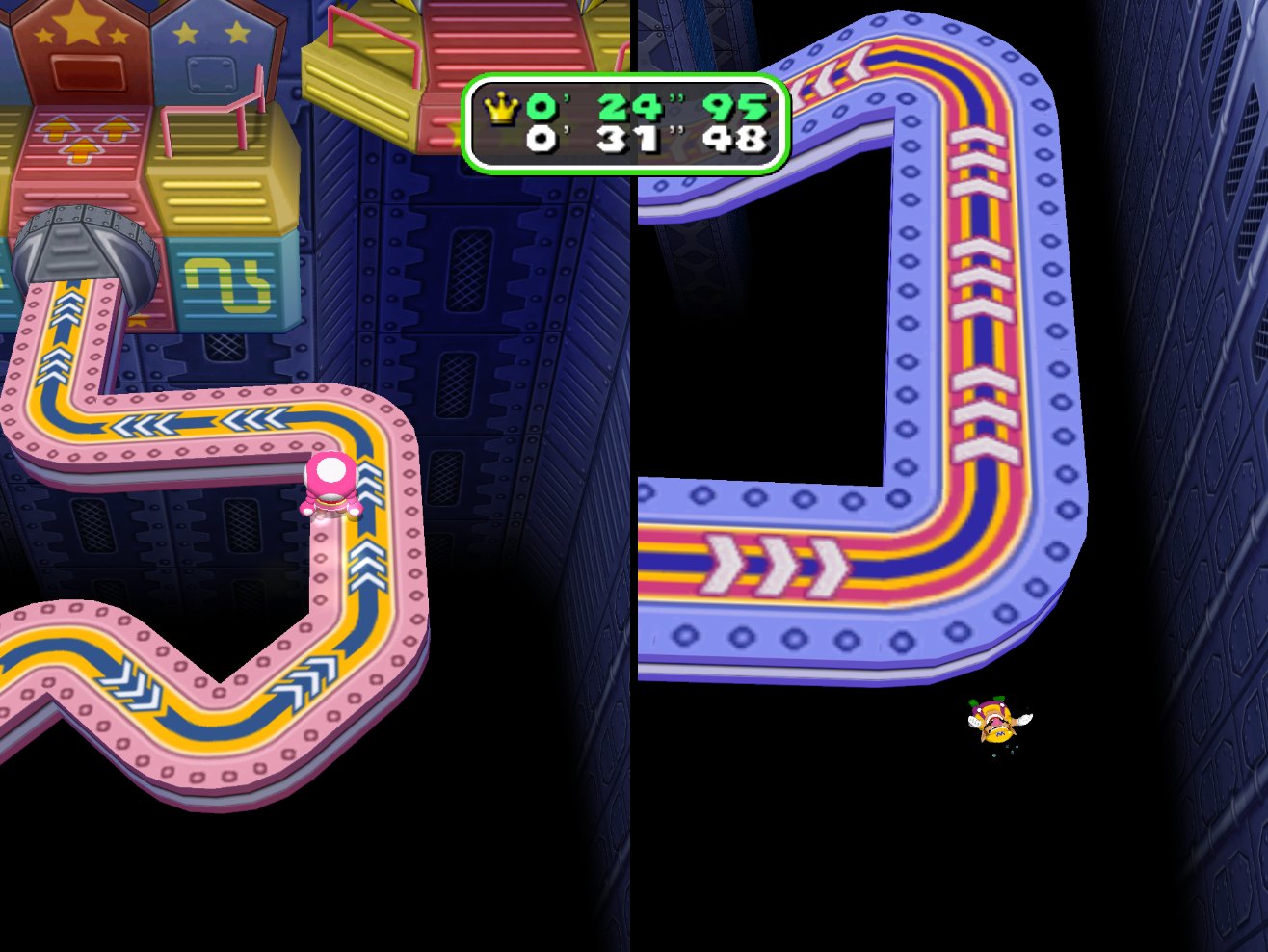
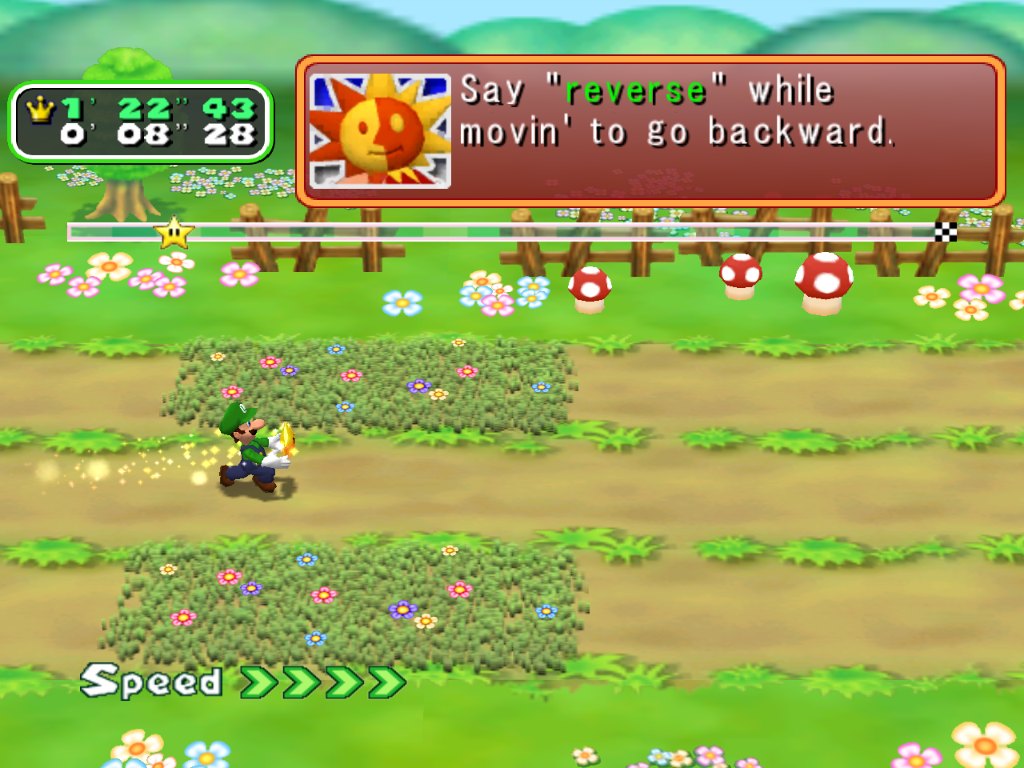
Star Sprint is for one player. You pick a character and three partners and guide a Star along an obstacle course by voice alone: “Run”, “Jump”, “Move up”, “Move down”, “Freeze”. For the biggest obstacle the cry is “Mario Party” and your partners join in to help. There are three courses, Meadow Road, Dark Path and Magma Flow, the last of which has to be bought at the Star Bank, and the aim is simply the fastest time.
Speak Up.A question in Speak Up.Star Sprint: Meadow Road.
The Star Bank and the Miracle Book
The Star Bank is a windmill on the main menu where Brighton and Twila keep every Star you have earned, whether from winning Party Mode games or from Solo Mode bonuses, and sell 55 things in exchange. The full price list is under Cheats below.
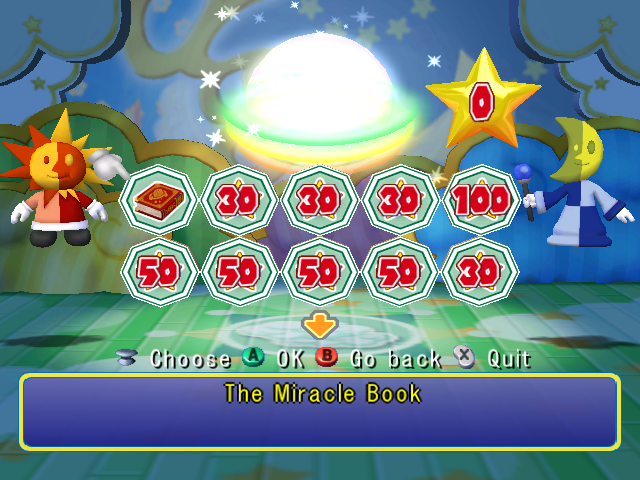
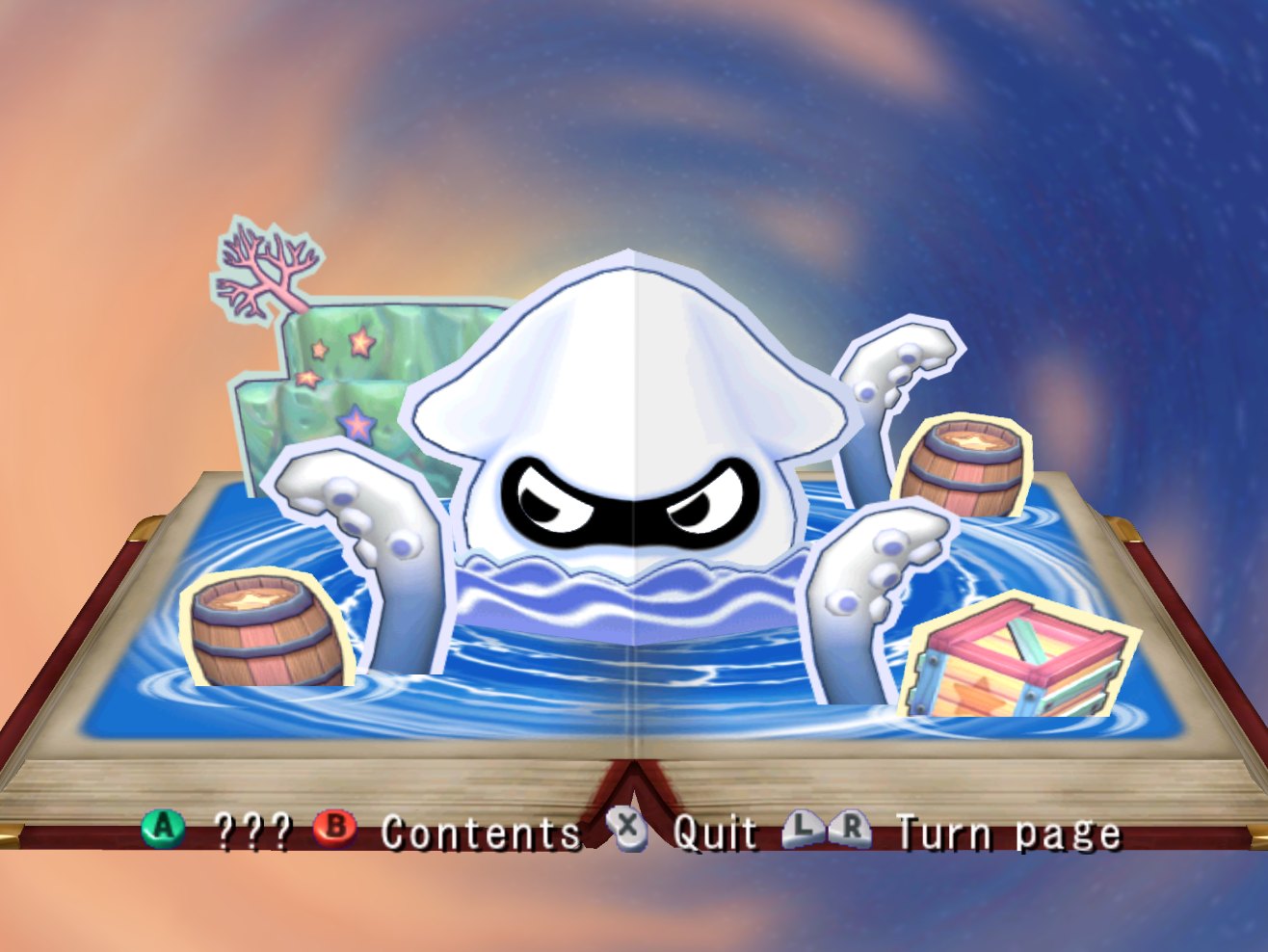
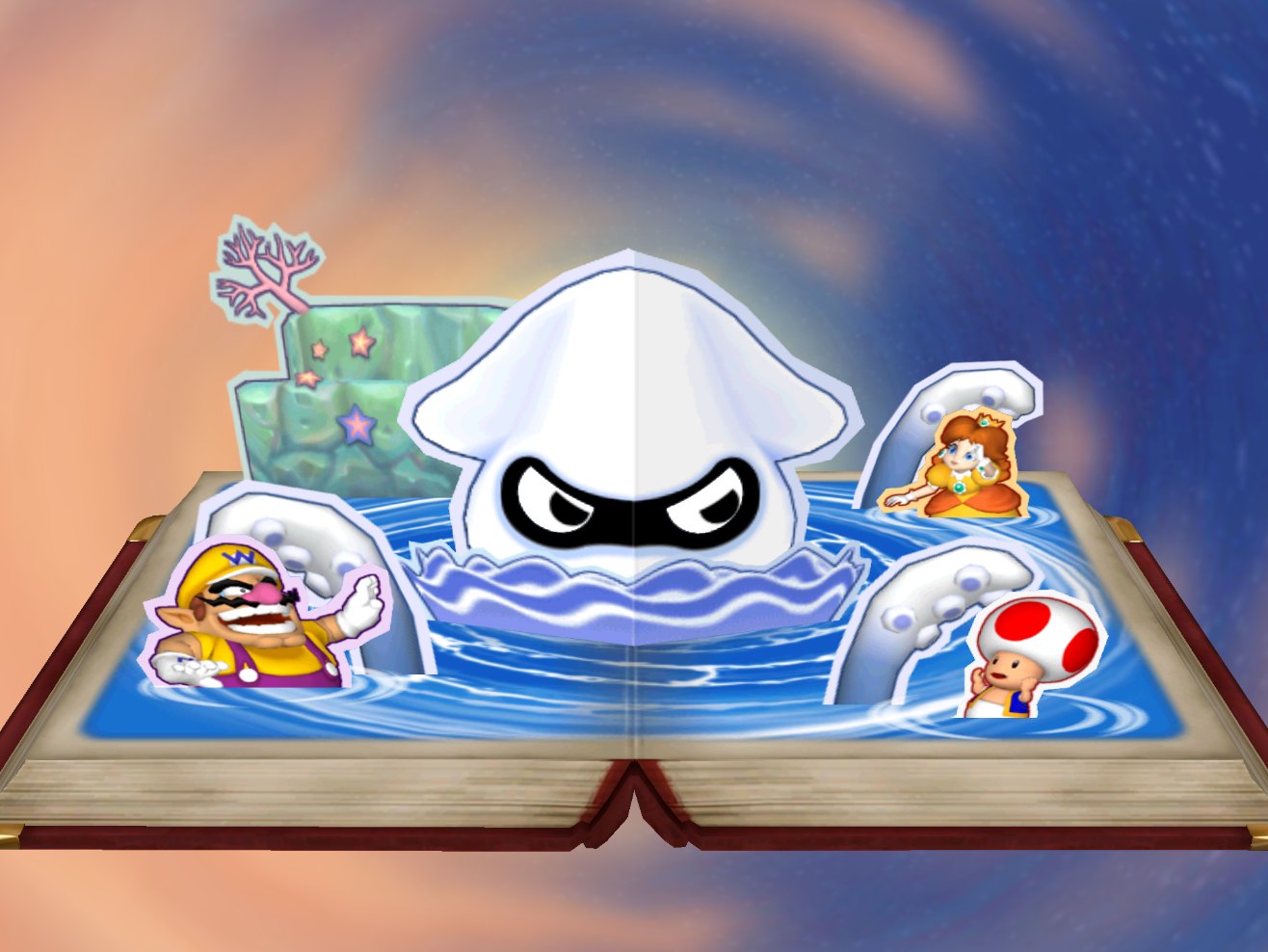
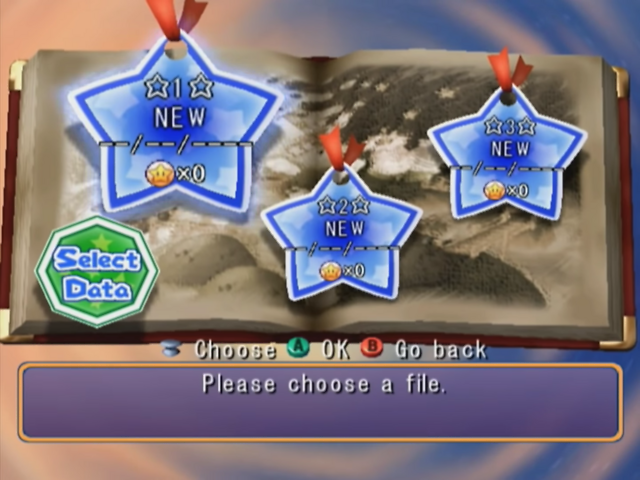
The Miracle Book is the heart of it. The book itself costs 10 Stars and each further page between 10 and 40. Every page is a pop-up scene based on a minigame, with titles of its own: Blooper, Ahoy for Blooper Scooper, Golden Goomba for Trap Ease Artist, Yoshi’s Revenge for Snow Brawl, Kitchen Monkeys for Strawberry Shortfuse. The book also appears in the opening film and on the file select screen, and completing it is what the game counts as finishing.
Inside the Star Bank.Miracle Book: Blooper, Ahoy.The same page, opened.The file select screen.
Every board in Mario Party 6
The six Party Mode boards with their sizes, from Super Mario Wiki’s space tables, and the rule each uses for Stars, then the three Solo Mode boards. The wiki records no difficulty ratings for this game.
Towering Treetop66 spaces · Star: 20 coins, moves after each saleWoody by day, Evil Woody and Pink Boo by night, and a tree that can be made to sneeze.
E. Gadd’s Garage69 spaces · Star: 20 coins, moves after each saleA laboratory of coin-sucking fans, teleporters and a machine that scrambles your Orbs.
Faire Square66 spaces · Stars: up to five at once; 20 coins by day, 5 to 40 by nightA fixed Star in the middle of a fairground of gambling stalls.
Snowflake Lake72 spaces · Stars: start with five, steal the rest by Chain ChompNo Star Space at all: hire a Chain Chomp and run your rivals down.
Castaway Bay62 spaces · Star: 20 coins from DK, unless Bowser’s yacht is inOne road to the jetty, where either Donkey Kong or Bowser is waiting.
Clockwork Castle64 spaces · 100 Stars at the Star Bank · chase DK by day, flee Bowser by nightThe direction of play reverses at nightfall, and the Star walks round the board.
Thirsty GulchSolo Mode · shortA desert trail where ? Spaces drop you to a lower level.
Astro AvenueSolo Mode · mediumOuter space. Rolling 5, 3 and 2 reaches the goal without playing a single minigame.
Infernal TowerSolo Mode · longBowser’s tower, with a cage waiting for anyone who overshoots.
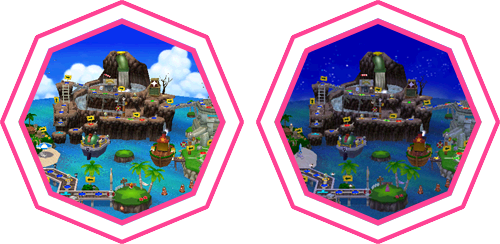
Each Party Mode board changes at night; the night-time maps are in the gallery below.
Advertisement
Gameplay & Controls
The basics have not moved: a Dice Block numbered 1 to 10, 10 coins to start with, a minigame at the end of every round, most Stars wins. What surrounds them is new or reworked: the clock, the Orbs, the way each board gives out Stars, and a microphone.
How a game works
Up to four players roll for the order of play and set off with 10 coins each. Blue Spaces give 3 coins and Red Spaces take 3. When everyone has moved, the colours landed on choose a 4-Player, 1-vs-3 or 2-vs-2 minigame and the winner, or winning side, gets 10 coins. Games last from 10 to 50 turns in steps of five, and the game saves after every minigame.
Now and then a Battle minigame is called instead, with coins from every player in the pot and bigger shares for the higher places. Here the players vote on which Battle game to play, where a roulette would otherwise have chosen. Duels begin on Duel Spaces, where the challenger picks an opponent and the stake: coins, Stars, or a Star and 40 coins from each side.
How you get a Star depends entirely on which board you are on, and is described board by board below. The minigame sets you can choose from are all, easy, action, hard and weird, and the computer players come in weak, normal, hard and, once bought, brutal.
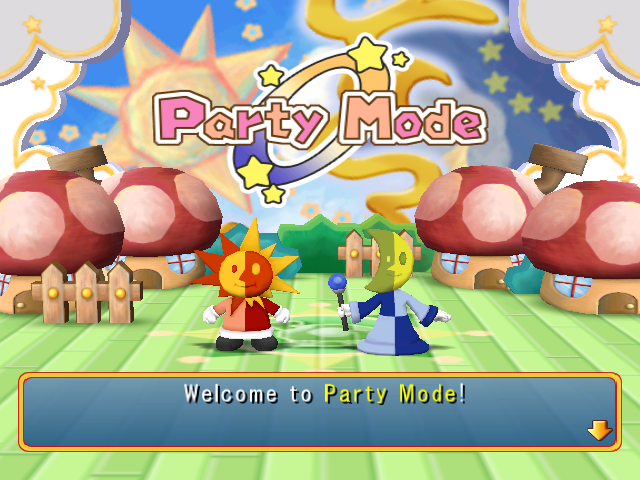
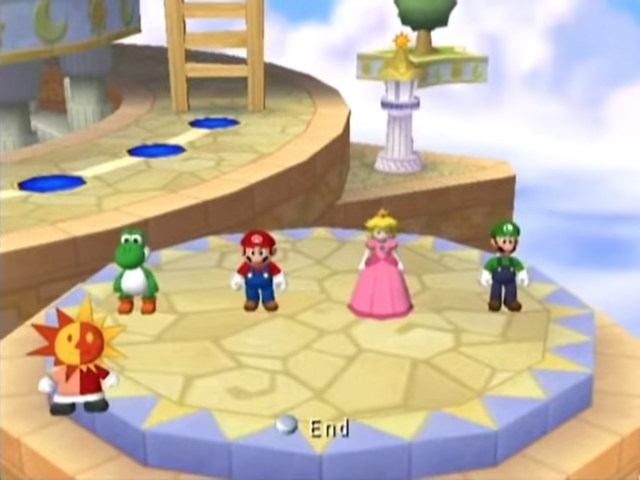
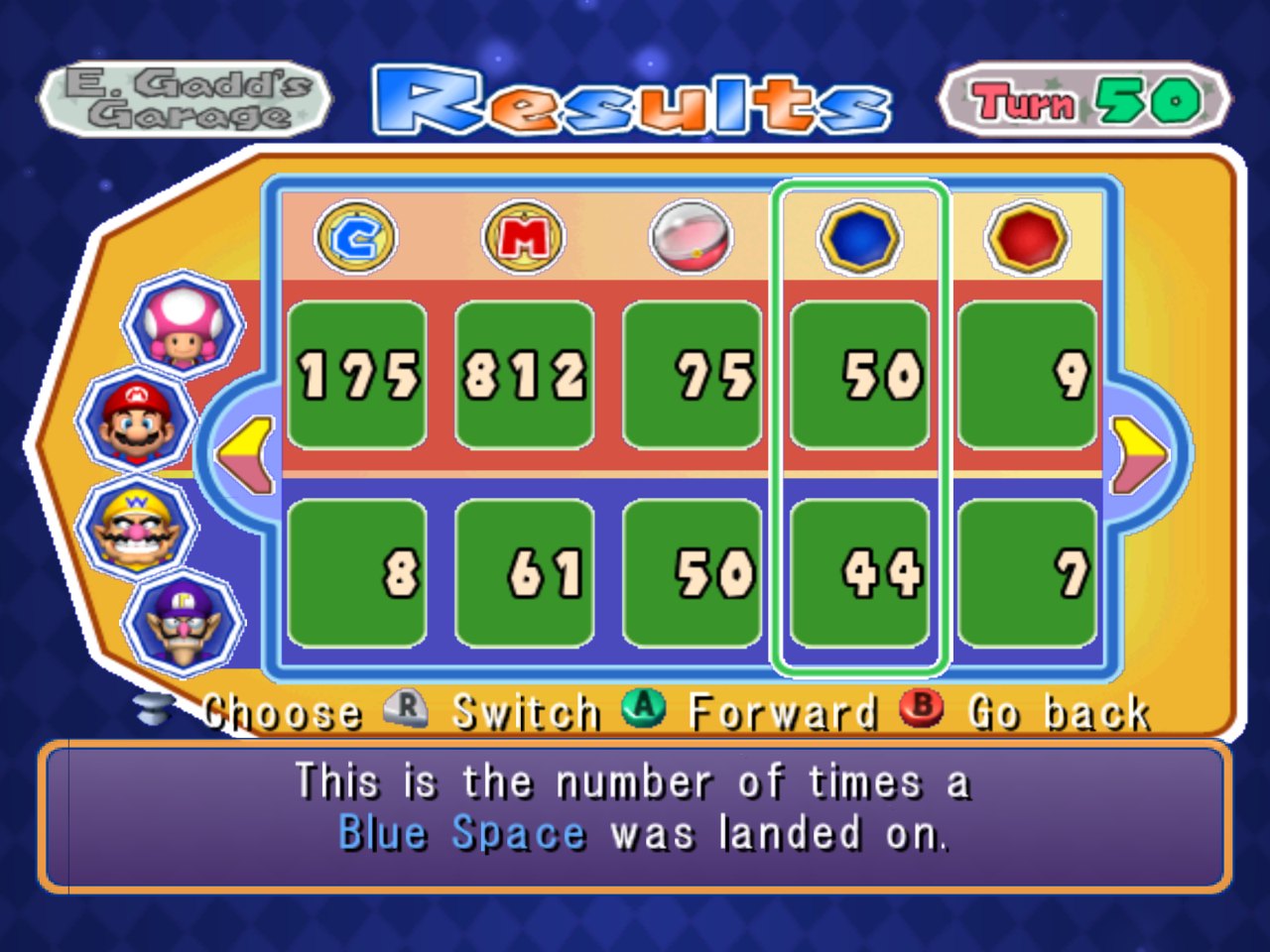
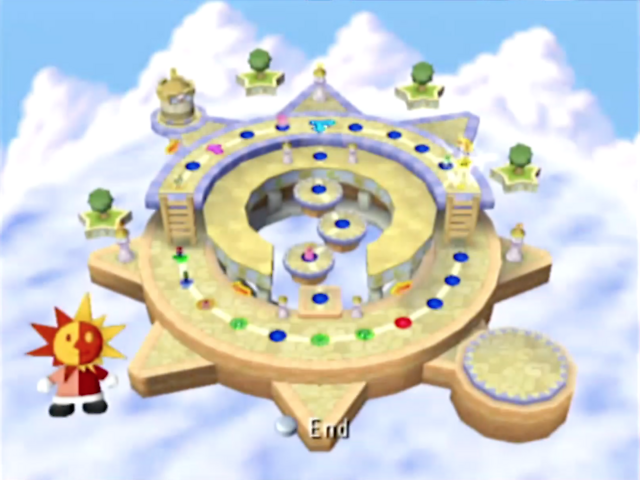
Brighton and Twila welcome you to Party Mode.The start of a board game.The statistics after a game, with graphs of coins and Stars.
Day and night
A meter at the start of each turn shows how long is left before the sun or the moon takes over. Day lasts three turns, with Brighton hosting. Night lasts three, with Twila. The idea was first tried on a single board, Horror Land in Mario Party 2; here it runs through the whole game.
Some of what changes is common to every board. DK Spaces exist only by day and turn into Bowser Spaces at night. The Orb Huts are kept by a Koopa Troopa in the daytime and a Shy Guy after dark. The rest is local: flowers that open and close in Towering Treetop, a rotating platform in E. Gadd’s Garage, Star prices in Faire Square, Freezies blocking the paths of Snowflake Lake, the direction of travel in Clockwork Castle.
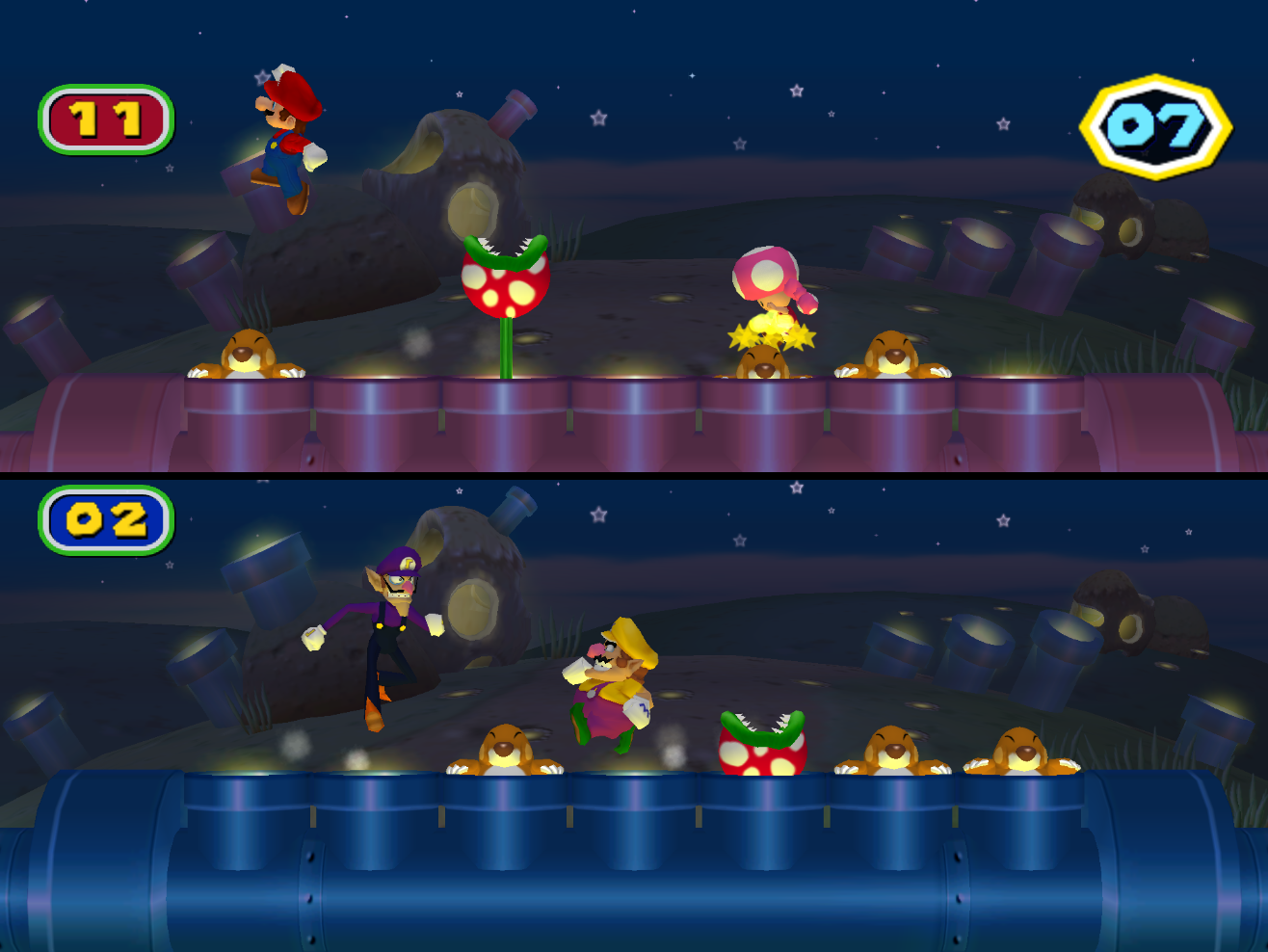
Minigames follow the clock as well. DK’s three minigames can only come up by day and Bowser’s three only by night, and a handful of others are tied to one or the other. Many more have two versions. Usually the difference is scenery, but not always: What Goes Up… is a climb by day and a descent by night, and in Mole-it! you jump on the moles in daylight and ground-pound them in the dark.
The explanation board by day.And by night.Mole-it! at night, when Piranha Plants share the pipes.
Orbs
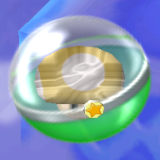
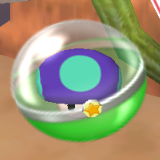
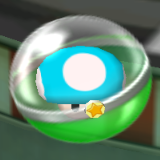
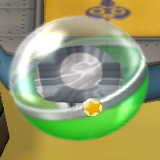
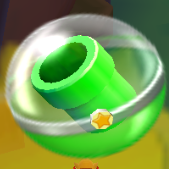
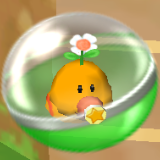
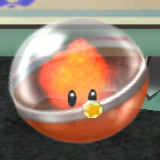
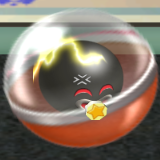
Orbs are the capsules of Mario Party 5 under a new name, and in four colours. They can be bought at an Orb Hut as you pass, picked up free from an Orb Space, which does not count as a step, or won in some board events. Each board stocks its own selection.
Green Orbs are used on yourself: extra dice, a ride to the Star, protection from traps. Red and Yellow Orbs are traps, thrown on to a Blue or Red Space up to five spaces ahead of you or behind you, half the range of a capsule. The space becomes a Character Space showing your face. A red trap is a roadblock that goes off when a rival passes it; a yellow one waits for a rival to land on it. Your own traps never hurt you, and landing on one pays you 5 coins. Blue Orbs cannot be used at all: they sit in your hand and automatically see off one thief.
A trap stays where it is until another is thrown on top of it or a Star Space appears on the spot. In Team Battle partners share Orbs and cannot set off each other’s traps.
An Orb Hut in Towering Treetop.An Orb Space.
Spaces
Party Mode has eleven kinds of space. Besides Blue, Red and the board’s own ? Spaces, there are Duel Spaces, the Orb and Character Spaces already described, and the Star Space. The Miracle Space is this game’s wheel of fortune, on which Stars or coins can change hands between players.
On a DK Space Donkey Kong either starts one of his banana minigames, with the bananas turned into coins, or offers the DK Bonus: a barrel-shaped die that pays 5, 10, 20 or 30 coins, or a Star. At night the same space is a Bowser Space. Bowser may hold a Bowser minigame in which the losers forfeit half their coins, all their coins or all their Orbs, or roll his own die to take 5, 10, 20 or 30 coins or a Star from whoever landed. A player with no coins at all gets 10 from him.
The Shadow Star Space, found only on Castaway Bay and Clockwork Castle, is the Star Space’s evil twin. Bowser hands you a Shadow Star, which takes one of your Stars away, or coins if you have none.
Blue Space.Red Space.? Space.Duel Space.DK Space (day).Bowser Space (night).Miracle Space.Character Space: Mario’s trap.Orb Space.Star Space.Shadow Star Space.
Team Battle, the last five turns and Bonus Stars
Team Battle splits the four into a Sun team and a Moon team who share coins, Stars and Orbs. The team names of Mario Party 5 all return, with ten new ones for Toadette: she and Toad are the Shroommates, she and Peach the Pink Punishers, she and Yoshi the Racing Champs.
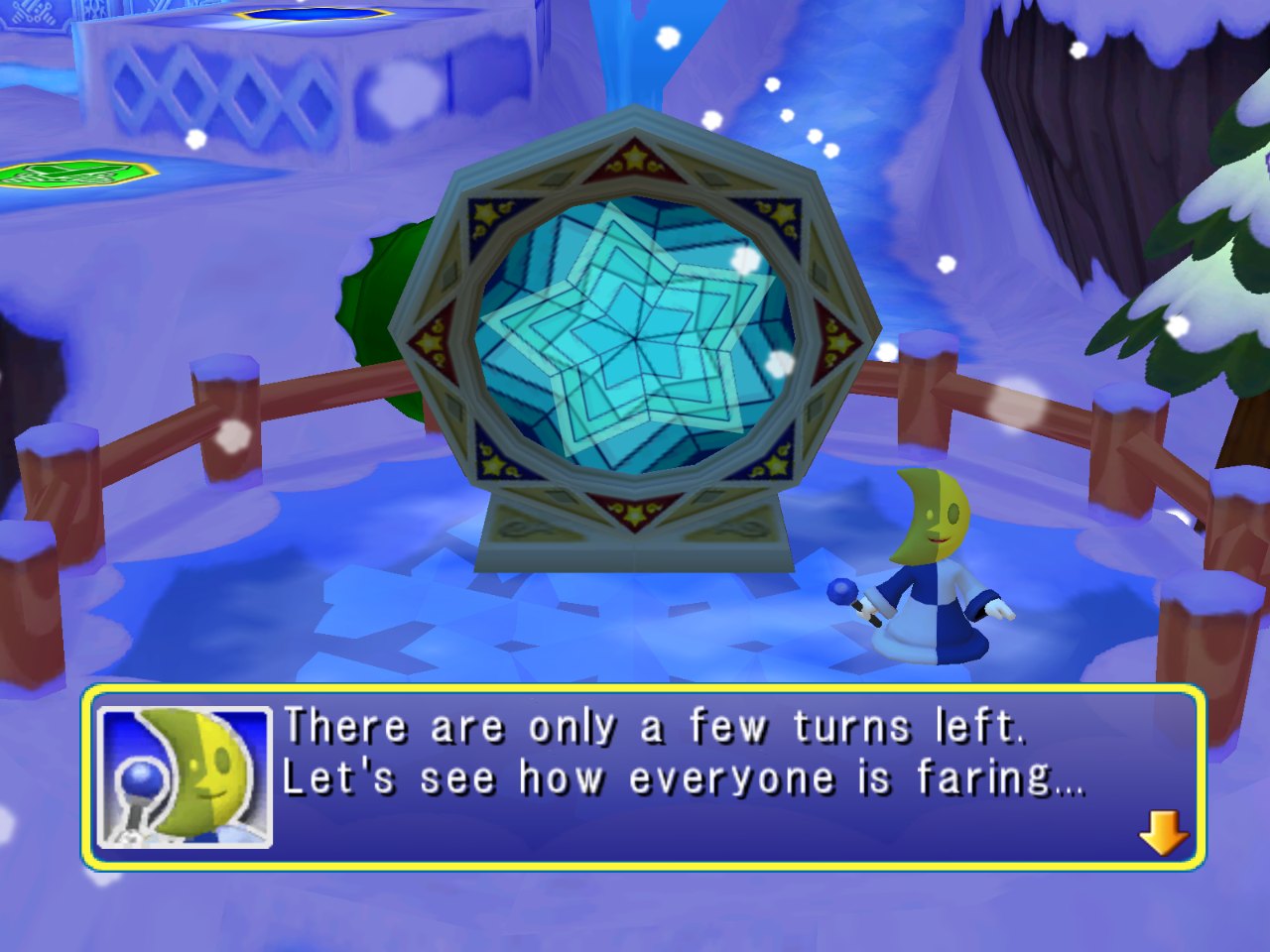
When five turns remain, Brighton or Twila, whichever is on duty, reads out the standings and the player in fourth place spins a bonus wheel whose results tend to favour whoever is behind; one of them trebles the coins on Blue and Red Spaces. For the rest of the game any two players who land on the same space fight a Duel.
If Bonus Stars are switched on, three are given at the end: the Mini-Game Star for most coins won in minigames, the Orb Star for most Orbs used and the Action Star for most ? Spaces landed on. The Orb Star takes the place of the old Coin Star. Ties on Stars are settled by coins and then by a roll of the dice.
The Last Five Turns Event.
The microphone
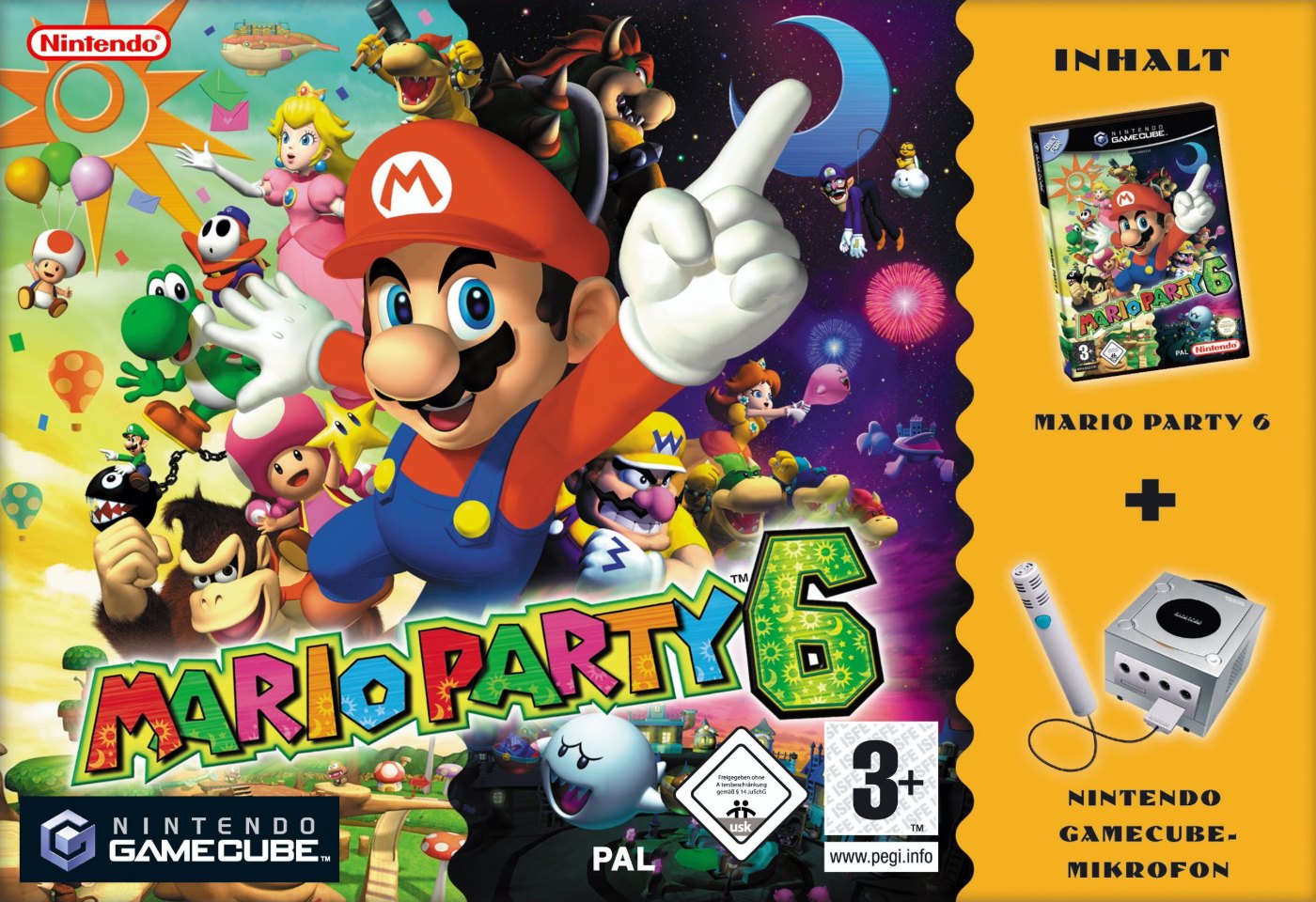
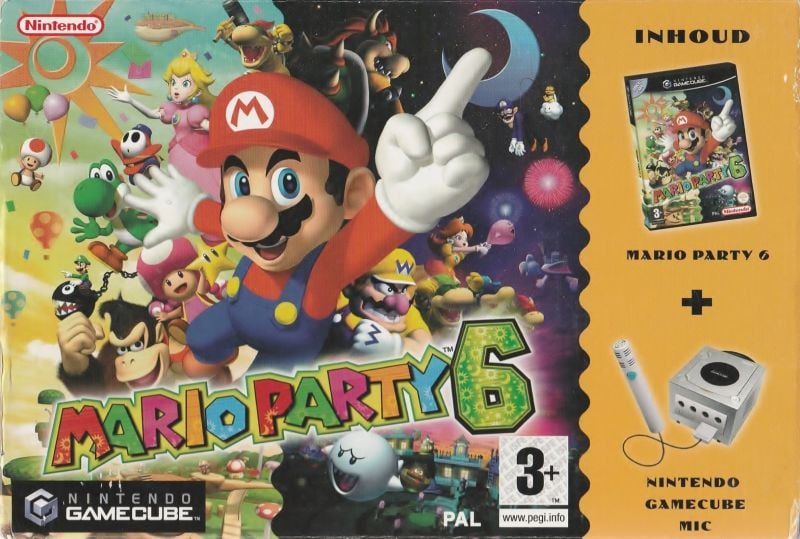
Mario Party 6 was sold with the Nintendo GameCube Microphone in the box. Nintendo UK’s support pages note that it came inside the game’s original packaging and works only with games designed for it. In the Option Mode it can be set to on, off or “controller”, and there is a Mic Test to check it is working.
With the mic on, five extra Mic minigames join the 1-vs-3 pool in Party and Solo Mode. In each, the player on their own holds the microphone and gives orders: firing a battle cruiser’s weapons by name in Verbal Assault, calling numbers to launch Bullet Bills in Shoot Yer Mouth Off, naming the fruit that will be left standing in Fruit Talktail. The other three use their controllers as usual. In Solo Mode you can even call your Dice Block roll aloud and earn a bonus if the number comes up.
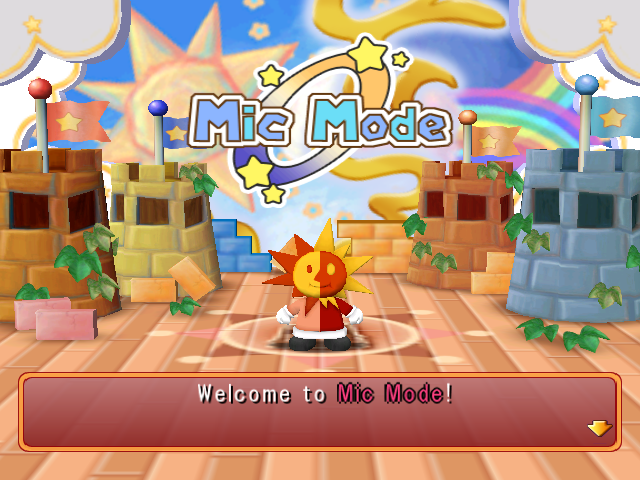
Mic Mode, hosted by Brighton, holds the two bigger voice games, Speak Up and Star Sprint, described with the modes below. If you would rather not talk to your television, the controller setting brings up the list of commands when you press R.
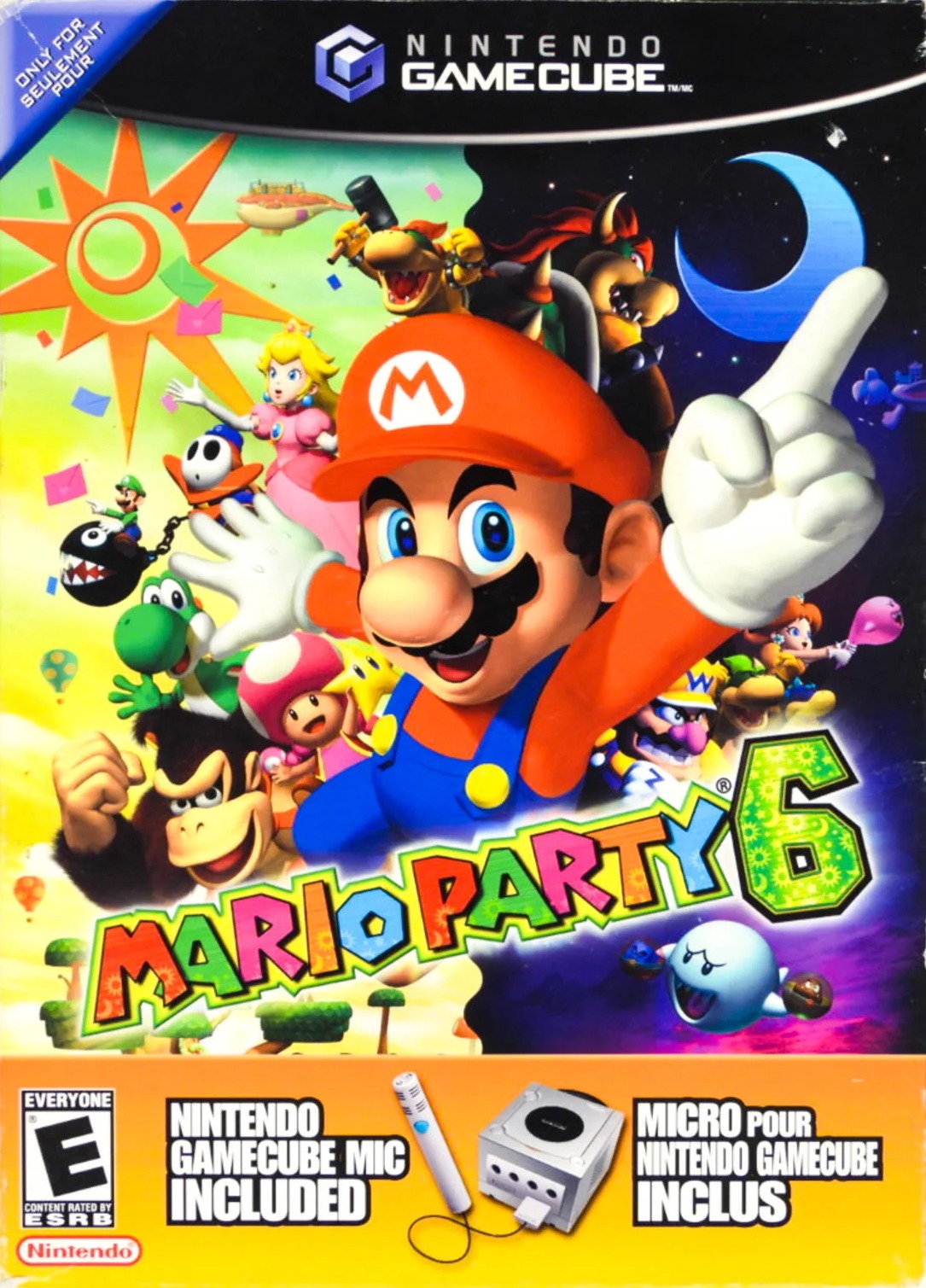
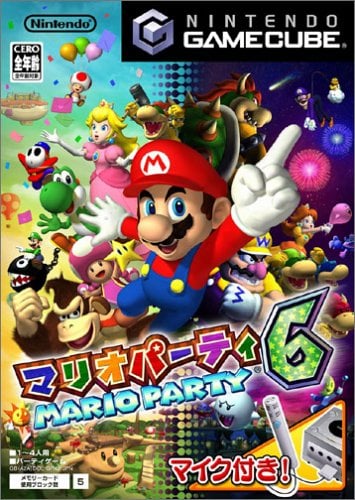
Brighton introduces Mic Mode.The North American box, with the microphone bundled.
Mini-Game Mode
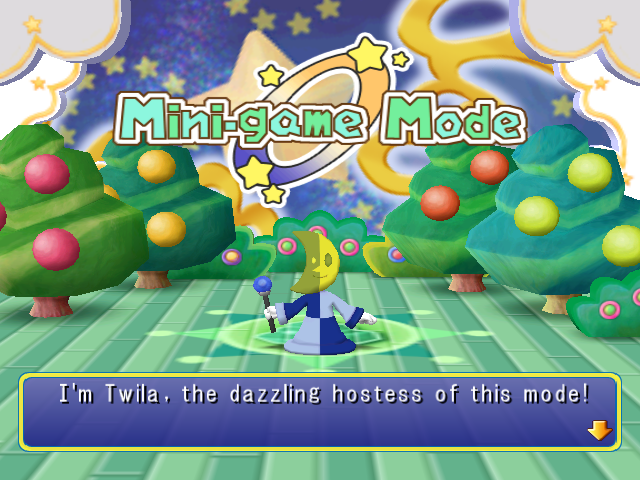
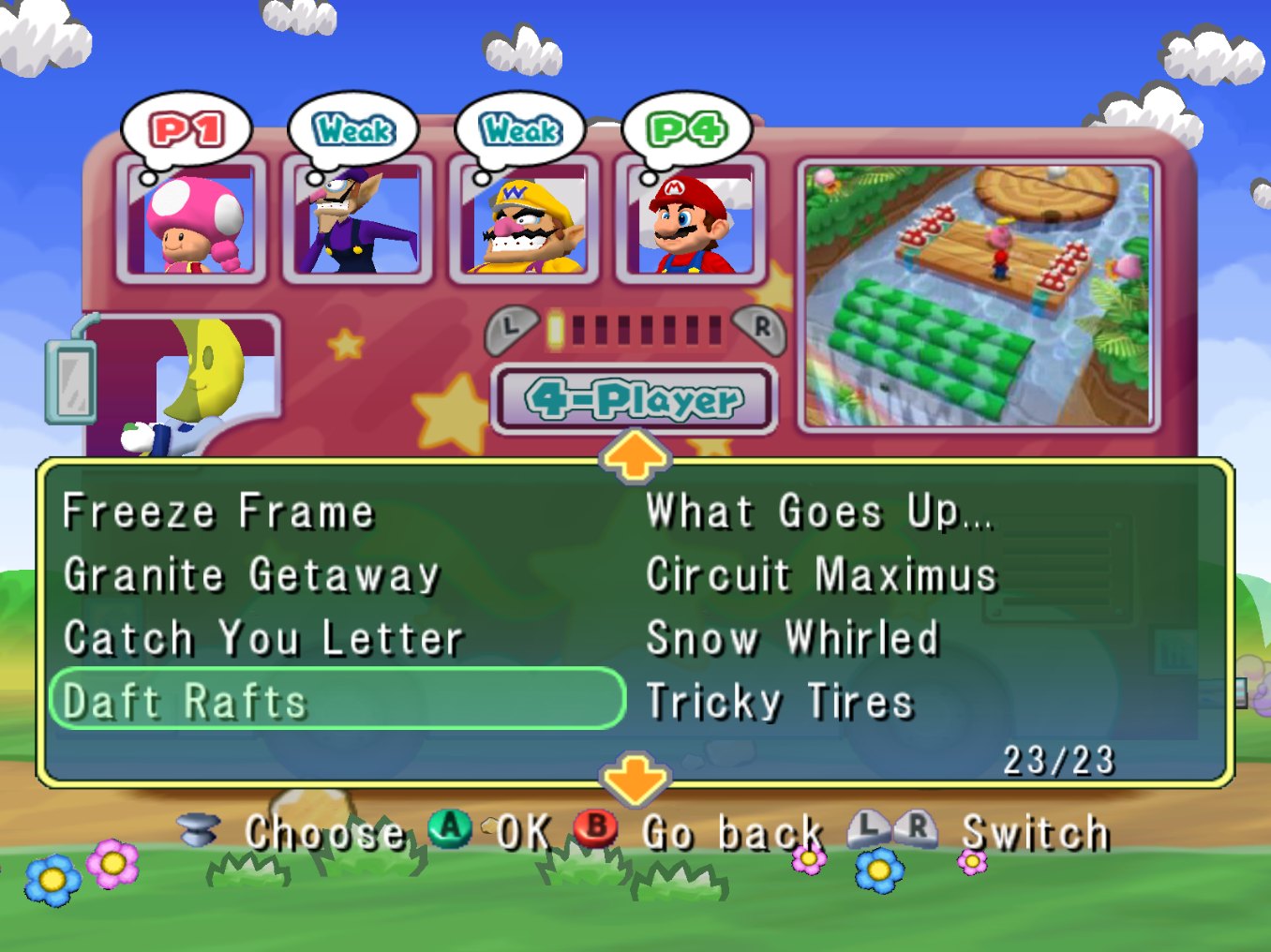
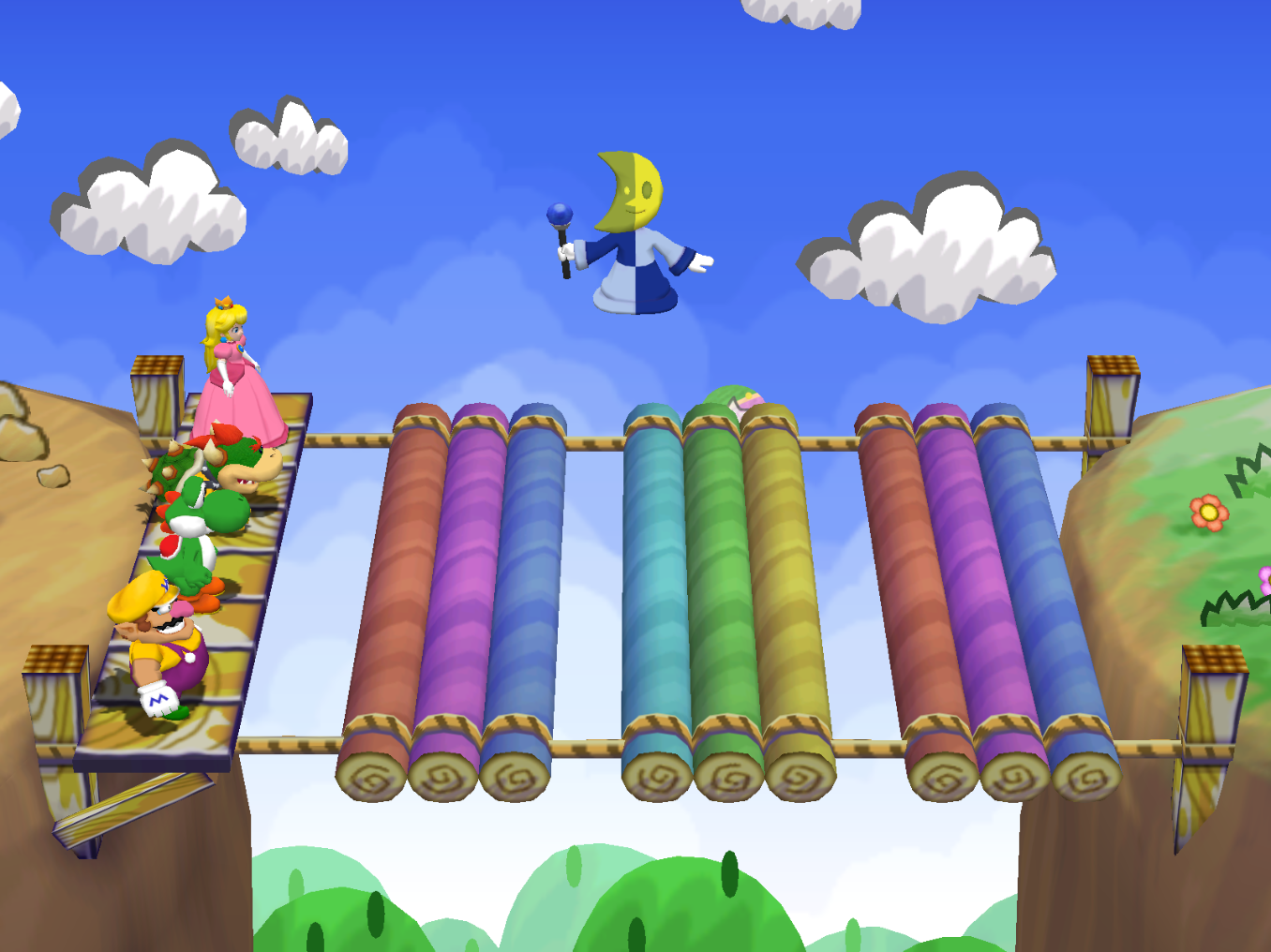
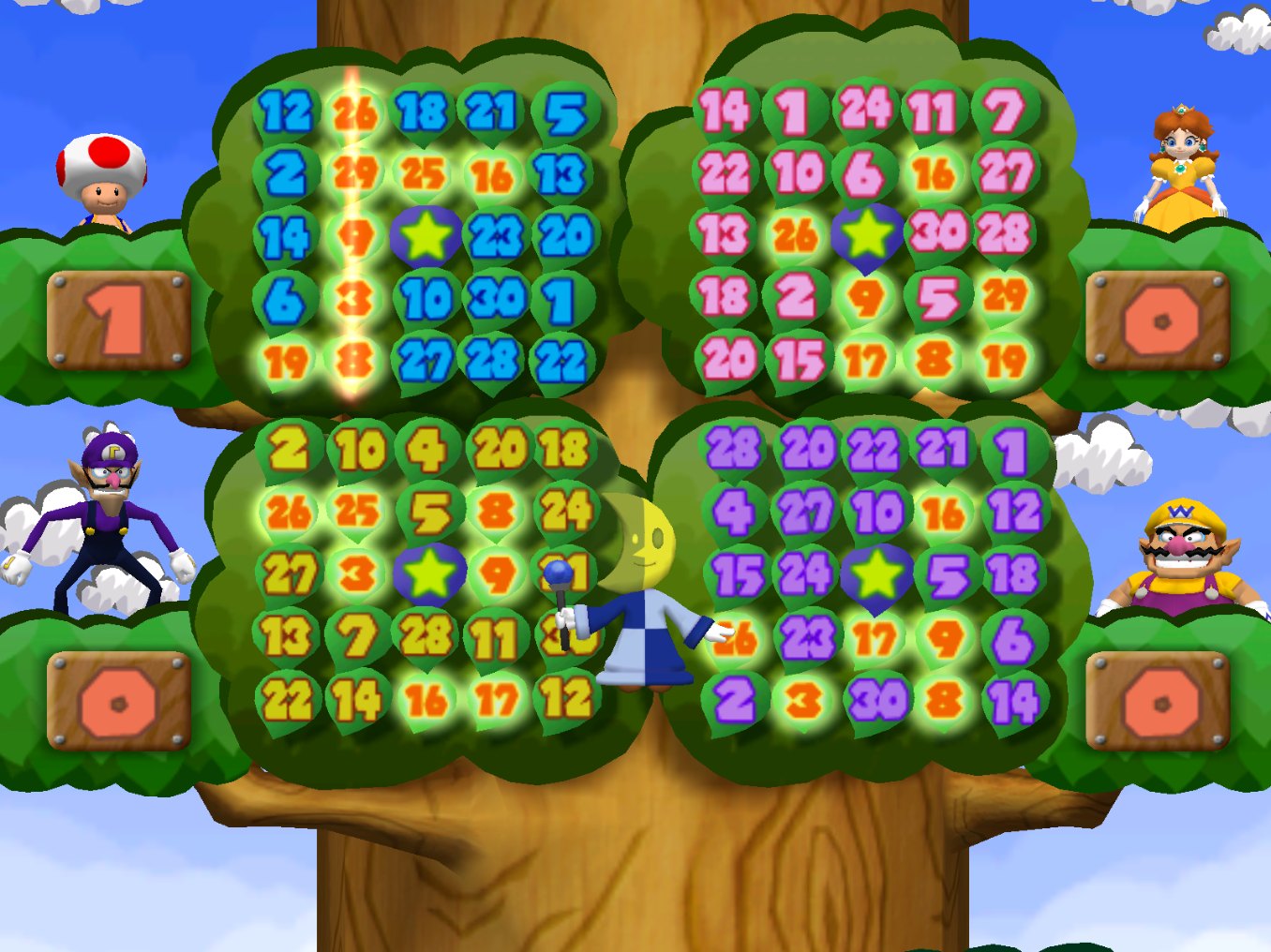
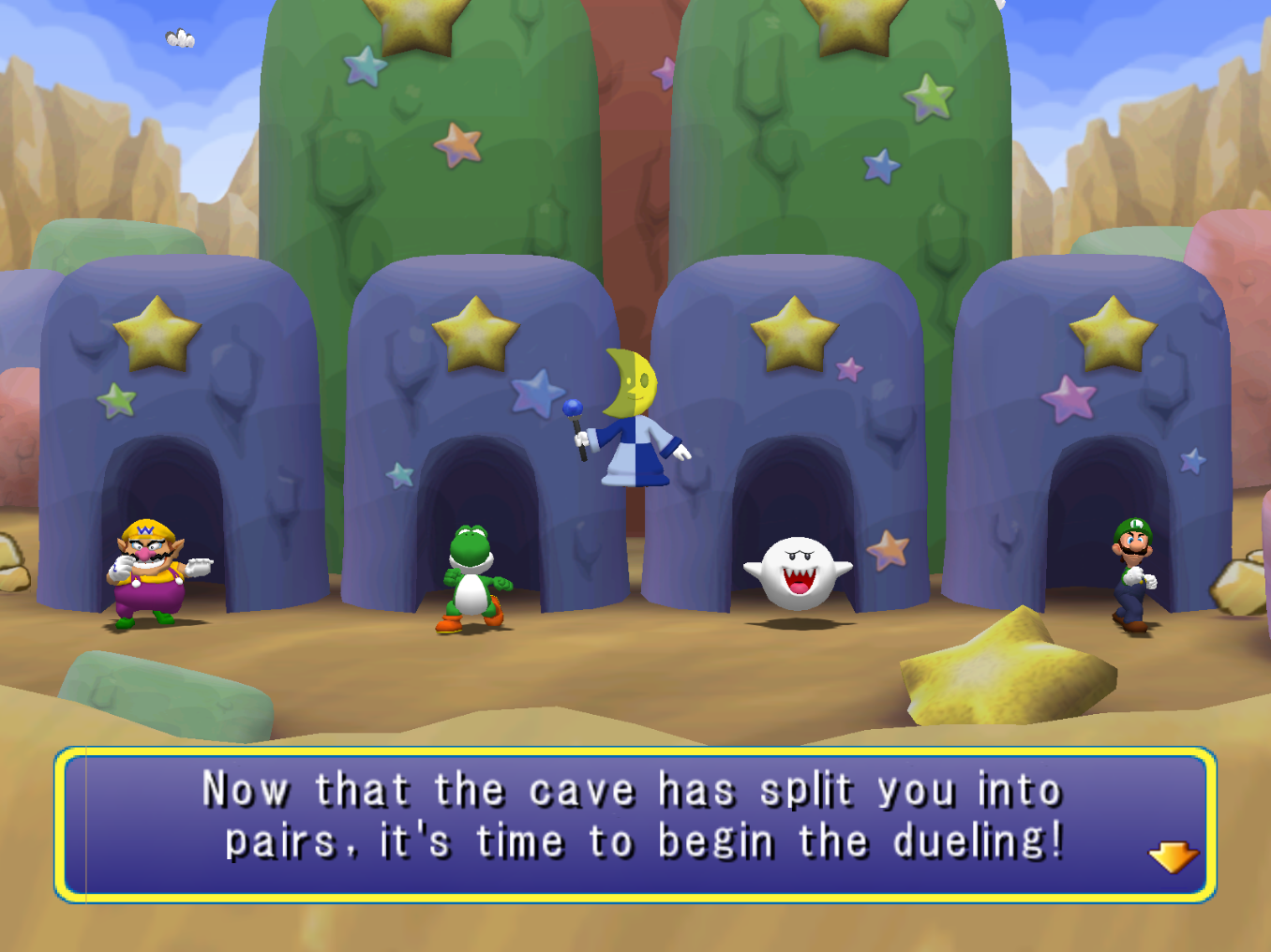
Twila runs Mini-Game Mode, six attractions built round the minigames you have unlocked. Mini-game Tour is free play, aboard a bus. Battle Bridge is a race across a bridge over three, five or seven games. Treetop Bingo is bingo with minigame wins uncovering the numbers. Mount Duel is a knockout tournament of Duels up a mountain.
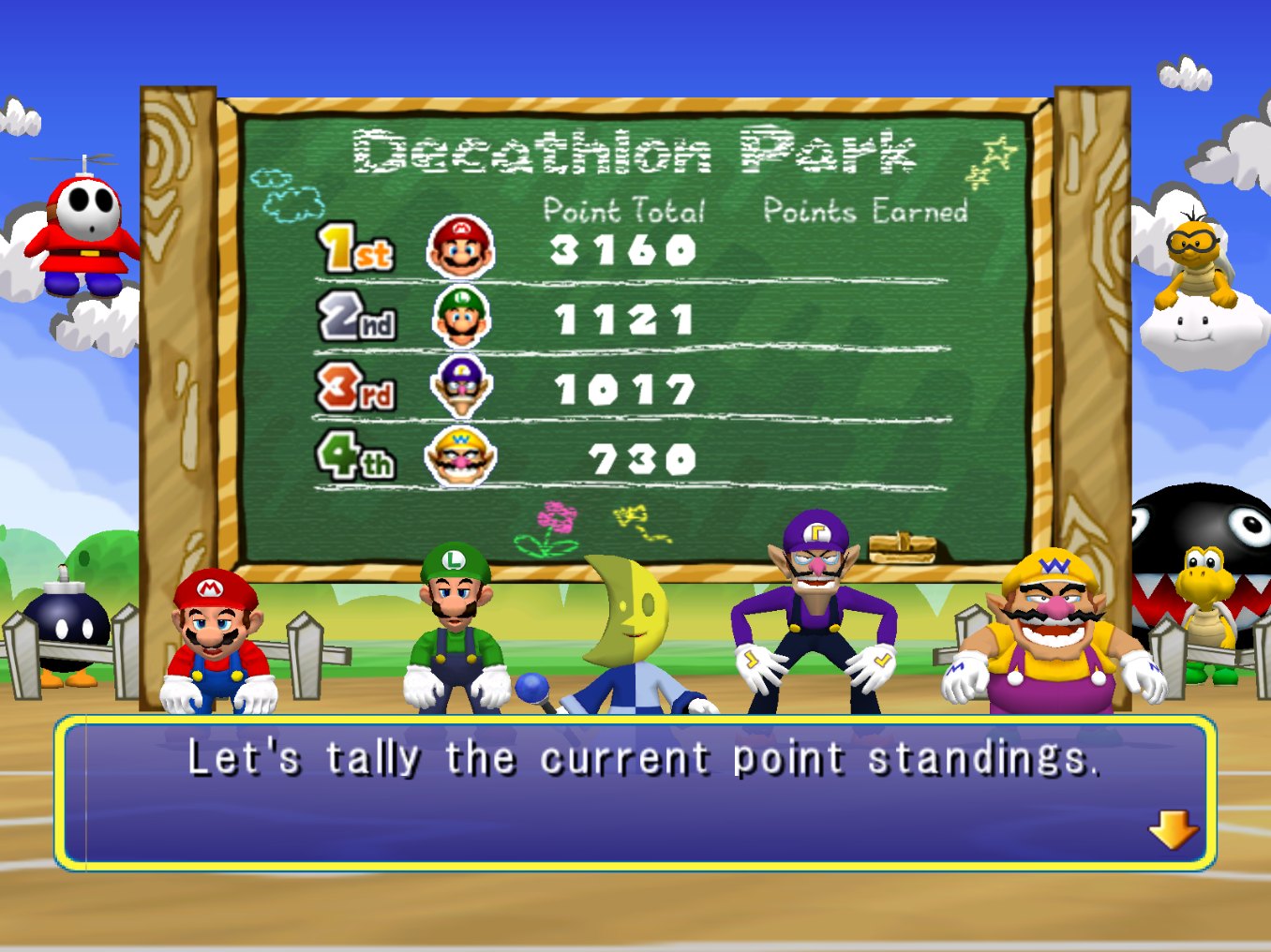
Decathlon Park scores ten fixed events: Smashdance, What Goes Up…, Circuit Maximus, Snow Whirled, Note to Self, Pokey Punch-out, Sunday Drivers, Throw Me a Bone, Hyper Sniper and Stamp By Me. Endurance Alley, which has to be bought at the Star Bank, asks how many of 100 minigames in a row you can win before your first defeat or draw.
Twila in Mini-Game Mode.Mini-game Tour.Battle Bridge.Treetop Bingo.Mount Duel.Decathlon Park.Endurance Alley.
Every Orb in Mario Party 6
All 23, by colour. Prices are what an Orb Hut charges, from Super Mario Wiki’s table; not every Orb is sold on every board. The Cursed Mushroom appears only in Solo Mode.
Mushroom OrbGreen · 5 coins. Roll two Dice Blocks.
Super ’Shroom OrbGreen · 15 coins. Roll three Dice Blocks.
Cursed Mushroom OrbGreen · Solo Mode only. Your die is limited to 1, 2 and 3, which in Solo Mode can be exactly what you want.
Sluggish ’Shroom OrbGreen · 10 coins. The Dice Block turns slowly, which makes it far easier to hit the number you want.
Metal Mushroom OrbGreen · 10 coins. Move without being harmed by rivals’ traps. Not sold in Towering Treetop or Faire Square.
Bullet Bill OrbGreen · 20 coins. Ride a Bullet Bill and take 20 coins from an opponent you overtake. Sold in E. Gadd’s Garage and Faire Square.
Warp Pipe OrbGreen · 10 coins. Swap places with a player picked by roulette.
Flutter OrbGreen · 30 coins. Flutter carries you straight to the Star Space. Sold in Towering Treetop and E. Gadd’s Garage, the two boards with a moving Star.
Podoboo OrbRed · 5 coins. A rival who passes loses 10 coins.
Zap OrbRed · 15 coins. A rival who passes loses 5 coins for every space they go on to move.
Tweester OrbRed · 5 coins. A rival who passes is blown away to another space.
Thwomp OrbRed · 10 coins. A rival who passes is flattened and has to stop there.
Bob-omb OrbRed · 10 coins. A rival who passes may move only half of what is left of their roll.
Koopa Troopa OrbRed · 10 coins. A rival who passes is made to swap places with you.
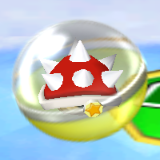
Spiny OrbYellow · 5 coins. A rival who lands loses 10 coins.
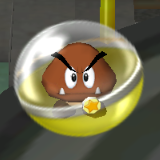
Goomba OrbYellow · 10 coins. A rival who lands rolls a die and pays you that many coins.
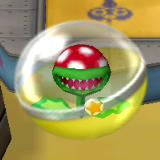
Piranha Plant OrbYellow · 15 coins. A rival who lands hands you half their coins.
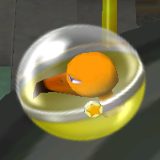
Klepto OrbYellow · 5 coins. A rival who lands is carried back to the start.
Toady OrbYellow · 5 coins. You take an Orb from the rival who lands.
Kamek OrbYellow · 10 coins. You take over one of the traps already laid by the rival who lands.
Mr. Blizzard OrbYellow · 10 coins. A rival who lands loses every Orb they are carrying.
Snack OrbBlue · 10 coins. Sold only on Snowflake Lake. Buys off one Chain Chomp sent to steal your Star.
Boo-Away OrbBlue · 10 coins. Drives off Pink Boo once. The Gaddlight of Mario Party 4 in a new shape.
Cartoons, Comics & Other Media
Mario Party 6 was sold on its microphone, promoted with browser games and bubble gum, and has kept turning up in later Mario games in small ways.
The microphone bundleHardware · 2004The game was sold in a large box with the Nintendo GameCube Microphone inside; Super Mario Wiki archives bundle packaging from North America, Canada, Japan, Britain, the Netherlands and Germany. Wikipedia calls Mario Party 6 the first GameCube game to use a microphone accessory. Mario Party 7 has Mic Spaces of its own.
Browser games on the official sitePromotion · 2004According to Super Mario Wiki’s minigame articles, the official website carried simple games based on four minigames: Night Driver (Sunday Drivers), Bug Race (Insectiride), Freeze-It (Surge and Destroy) and Tic-Tac-Whoa! (O-Zone). It also offered desktop wallpapers, and more were given away on the website of Bubble Tape chewing gum.
Print advertsEurope · 2005Super Mario Wiki archives British and German magazine adverts for the game’s European release in March 2005.
Mario Party 7GameCube · 2005The sequel reuses this game’s engine, announcer and several pieces of music: a slowed-down Castaway Bay theme plays on its main menu and the Speak Up tune on its Mic Spaces.
Mario Party DSNintendo DS · 2007Block Star returns as one of its puzzle minigames.
Super Smash Bros. BrawlWii · 2008Brighton, Twila, Toadette, Toad and a Bowser Space all appear as stickers, the last of them mislabelled “Bowser Coin”.
Mario Party: The Top 100Nintendo 3DS · 2017Nine minigames return: Block Star, Catch You Letter, Crate and Peril, Dizzy Rotisserie, Rocky Road, Slot Trot, Snow Whirled, Strawberry Shortfuse and Trap Ease Artist. Brighton and Twila have a cameo in its series guide.
Mario Party SuperstarsNintendo Switch · 2021Twelve minigames return, by Super Mario Wiki’s count: Catch You Letter, Trap Ease Artist, What Goes Up…, Snow Whirled, Dark ‘n’ Crispy, Pit Boss, Burnstile, Rocky Road, Cashapult, Mass Meteor, Block Star and Money Belt, which is renamed X-Ray Payday.
Super Mario Party JamboreeNintendo Switch · 2024Granite Getaway, Snow Brawl and Jump the Gun are among its returning minigames.
Characters
Eleven playable characters: the ten of Mario Party 5 and one newcomer. Each was drawn for this game in the middle of a particular minigame, noted below. Voices are as listed by Super Mario Wiki, which says the actors are not credited in the staff roll. The hosts and the rest of the cast follow.
Character
Who they are
In this game
Abilities & notes
MarioPlayable
Pictured in the thick of Snow Brawl.
It is Mario who proposes filling the Star Bank to end the quarrel between sun and moon.
With Toadette: Unexpected Pair. Voice: Charles Martinet.
LuigiPlayable
Pictured snowboarding in Snow Whirled.
Playable throughout. Gets a line of dialogue all to himself at the teleporters in E. Gadd’s Garage.
With Toadette: Forgotten Force. Voice: Charles Martinet.
Princess PeachPlayable
Pictured in Odd Card Out.
Playable throughout.
With Toadette: Pink Punishers. Voice: Jen Taylor.
YoshiPlayable
Pictured in Stamp By Me.
Playable throughout.
With Toadette: Racing Champs. Voice: Kazumi Totaka.
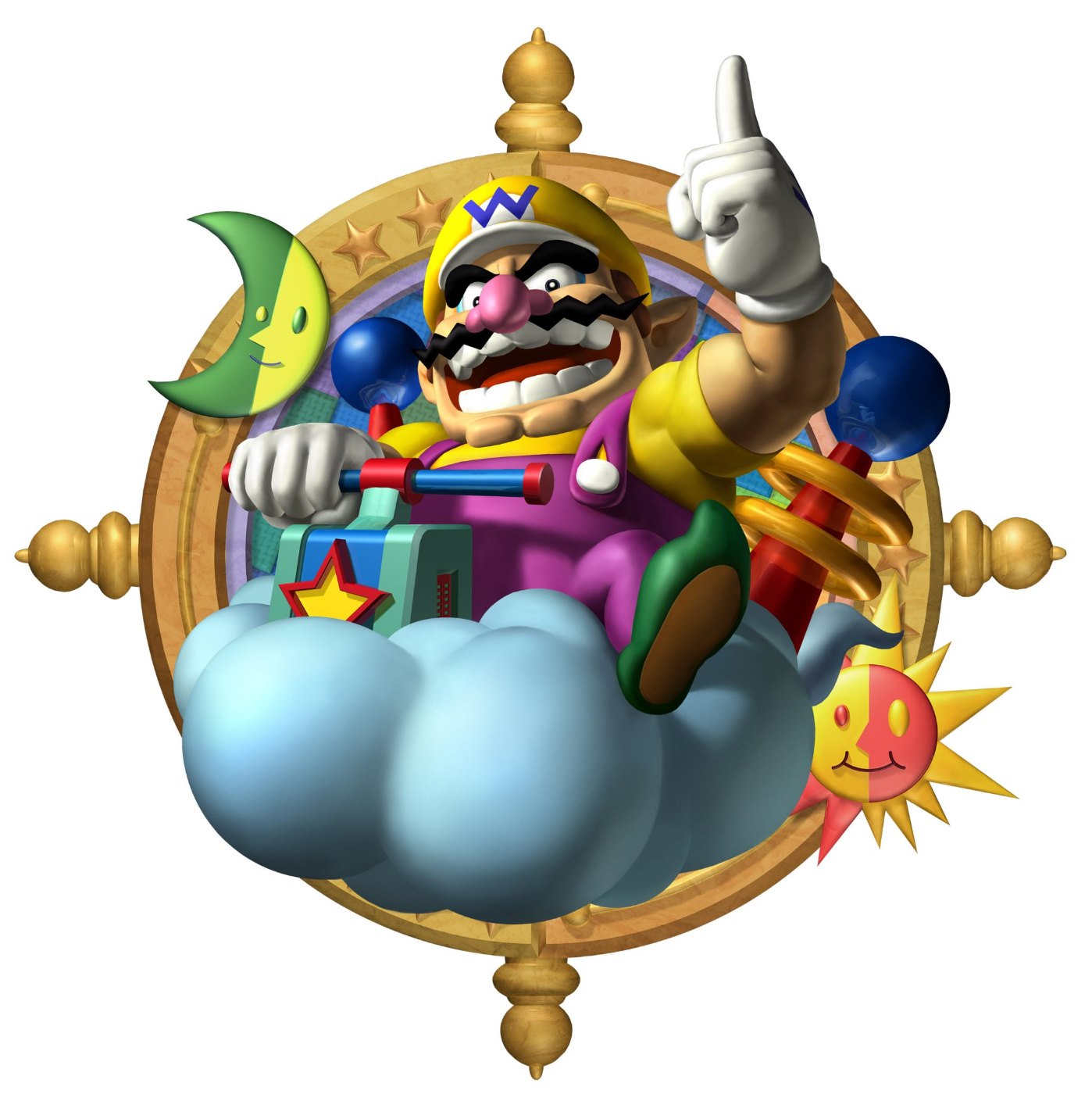
WarioPlayable
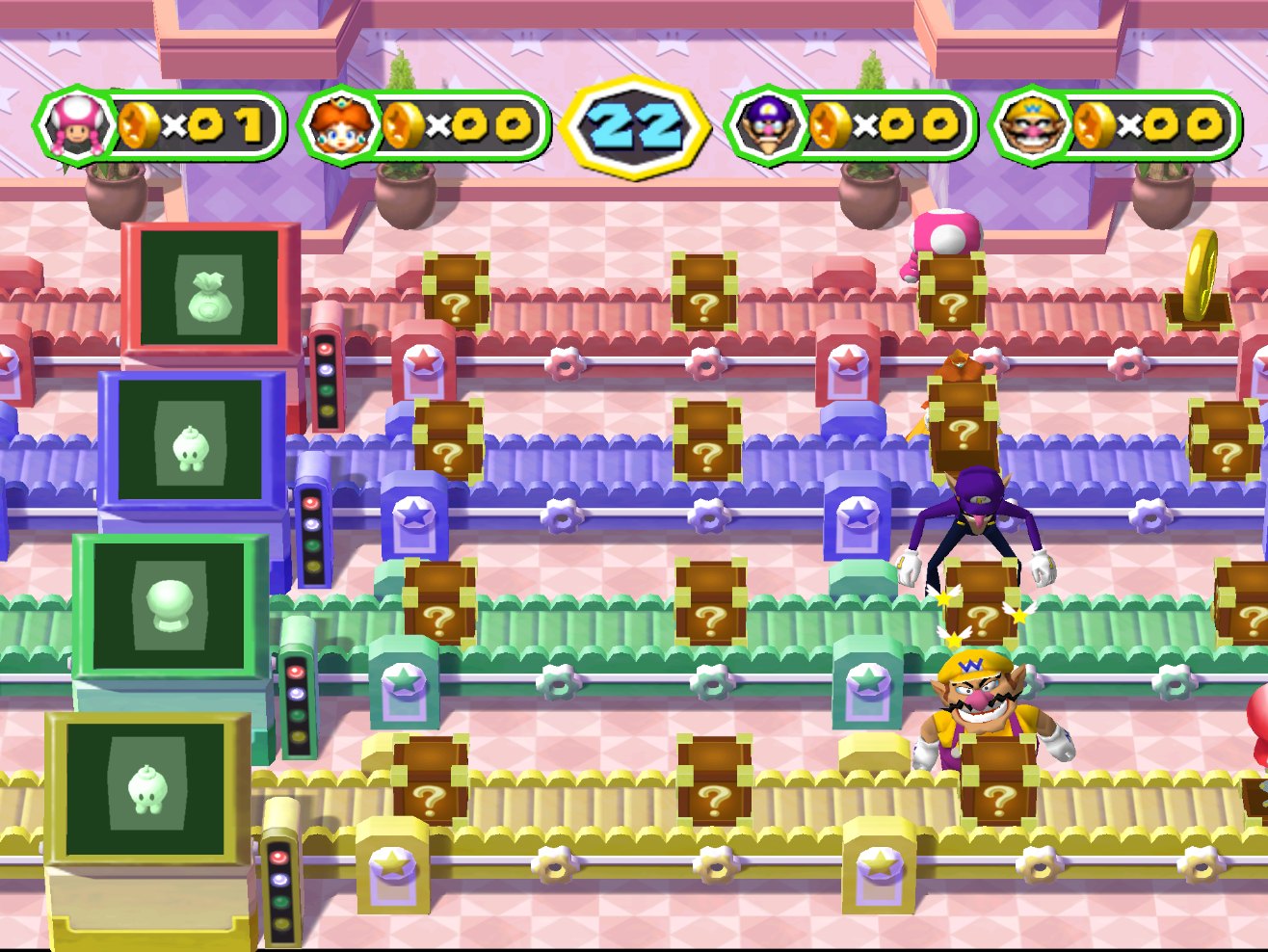
Pictured in Conveyor Bolt.
Playable throughout.
With Toadette: Secret Friends. Voice: Charles Martinet.
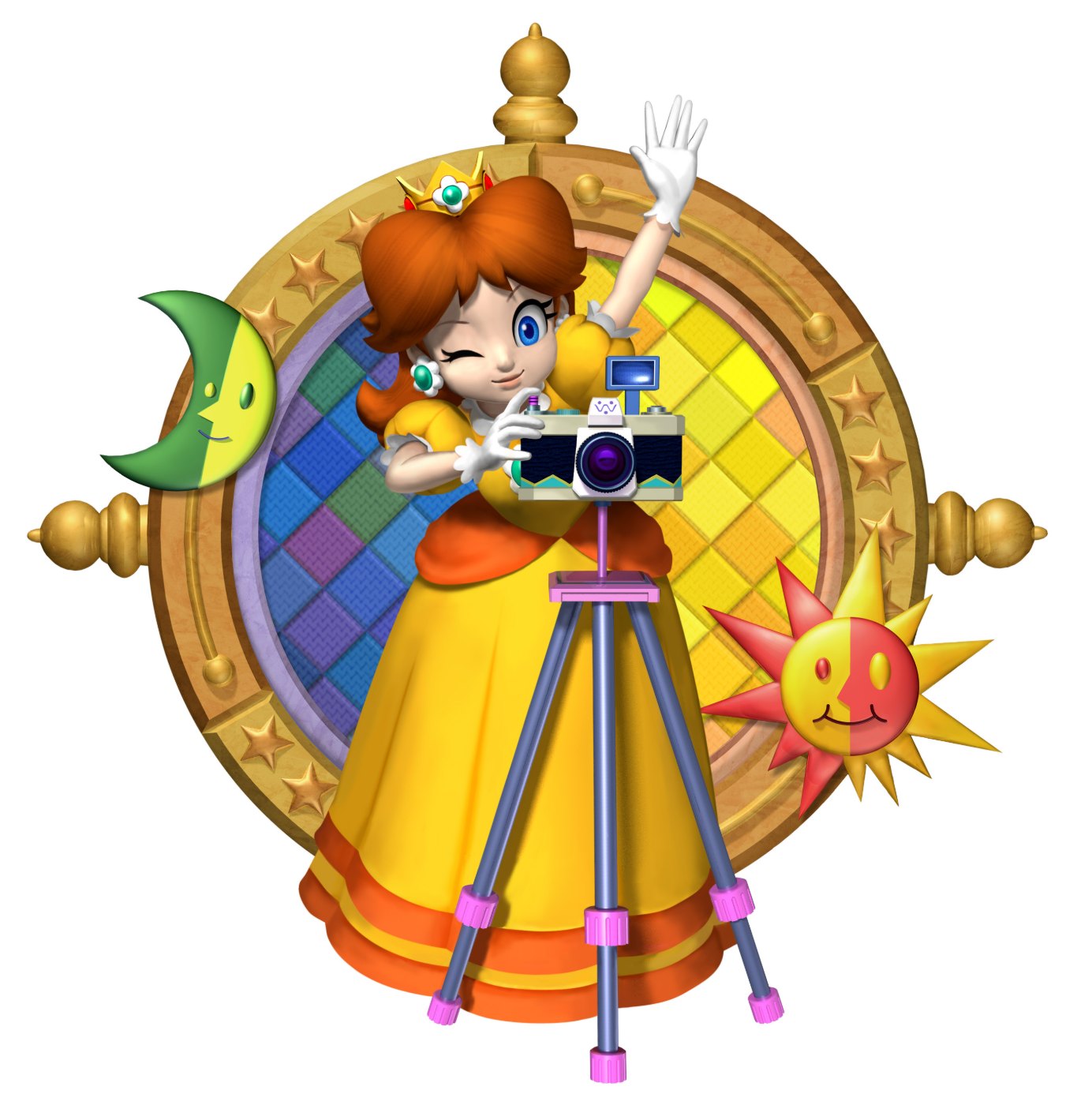
Princess DaisyPlayable
Pictured with a camera in Freeze Frame. Mario Kart Wii later reused the artwork on a trackside advert at Daisy Circuit.
Playable throughout.
With Toadette: Shopping Buddies. Voice: Deanna Mustard.
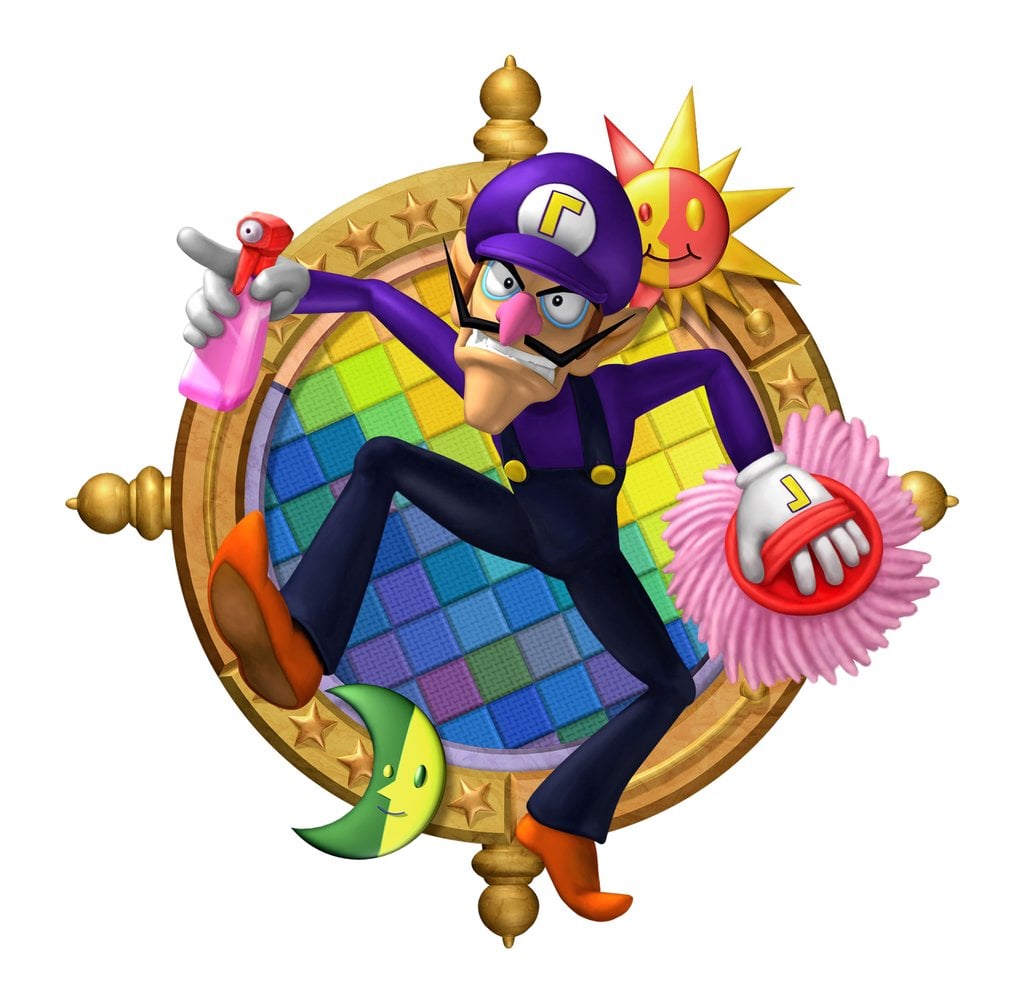
WaluigiPlayable
Pictured washing windows in Clean Team.
Playable throughout.
With Toadette: Diabolical Duo. Voice: Charles Martinet.
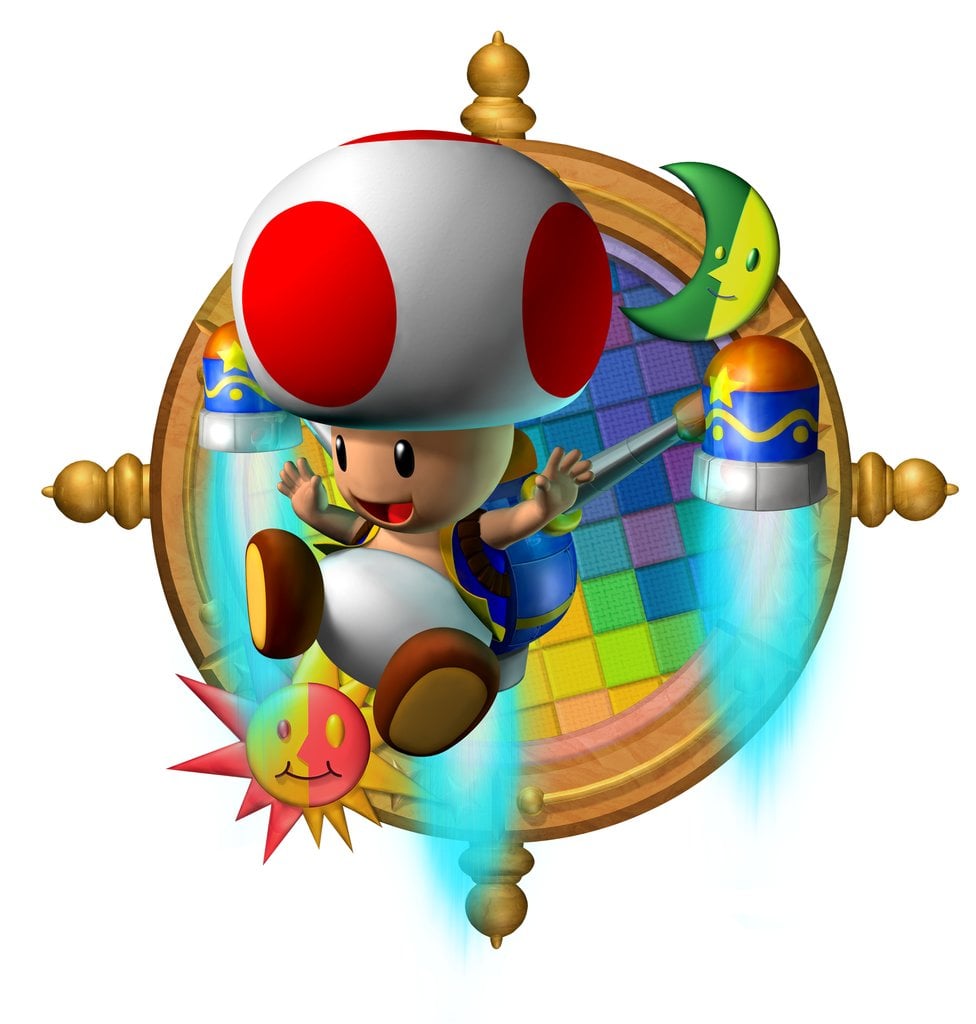
ToadPlayable
Pictured with a jetpack in Lunar-tics.
In his second game as a player.
With Toadette: Shroommates. Voice: Jen Taylor.
BooPlayable
Pictured herding his pink cousins in Boonanza!
Playable throughout. The thieving on the boards is done by Pink Boo.
With Toadette: Terrifying Twosome.
Koopa KidPlayable
Pictured in Insectiride. Mini Bowser in PAL versions.
Playable in all modes this time, while his red, green and blue brothers are the Duel opponents of Solo Mode.
With Toadette: Potent Pals.
ToadettePlayable · new · unlockable
The newcomer, pictured in Catch You Letter.
Makes her first Mario Party appearance. She is the only character who has to be unlocked.
Price: 30 Stars at the Star Bank. Voice: Jen Taylor.
BrightonHost · the sun
One of the two keepers of Mario Party World.
Hosts every board by day, sells the Stars on Faire Square at the standard price, and runs Solo Mode and Mic Mode. In German he is a she, Sonnja, because the sun is feminine in that language.
On duty for three turns at a time.
TwilaHost · the moon
Brighton’s old friend and new rival.
Hosts every board by night, rolls for the price of Stars on Faire Square, and runs Mini-Game Mode and Option Mode. In German she is Raimond, and male.
Night prices on Faire Square: 5, 10, 30 or 40 coins.
Donkey KongBoard character
Still off the playing roster, as in Mario Party 5.
Hosts the DK Space by day, with a barrel die and three banana minigames. Sells the Stars himself on Castaway Bay and Clockwork Castle.
DK Bonus: 5, 10, 20 or 30 coins, or a Star.
BowserVillain
Voiced, according to Super Mario Wiki, by Scott Burns.
Takes over every DK Space at night, captains the Battle Yacht on Castaway Bay, stalks Clockwork Castle with Shadow Stars and sometimes hijacks the quiz in Speak Up.
Bowser Bonus: takes 5, 10, 20 or 30 coins, or a Star.
Pink BooBoard character
A pink Boo who does the stealing that Boo himself used to do.
Appears at night on Towering Treetop and Castaway Bay. Also the quarry in two Duel minigames.
Fees: 5 coins to steal coins, 40 for a Star. Blocked by a Boo-Away Orb.
Woody and Evil WoodyBoard characters
The kindly tree and his spiteful double from Mario Party 3.
Share the top of Towering Treetop. Woody gives everyone coins by day; Evil Woody takes them away by night.
One ? Space, two outcomes.
Professor E. GaddBoard character
The inventor from Luigi’s Mansion, voiced by Kazumi Totaka.
Owner of E. Gadd’s Garage and all its contraptions, and master of ceremonies in the maze minigame Lab Brats.
His board sells 15 kinds of Orb, more than any other.
Every minigame in Mario Party 6
All 82 in Super Mario Wiki’s order: 23 for four players, 11 one-against-three, 5 for the microphone, 12 two-against-two, 6 Battle, 15 Duel, 3 DK, 3 Bowser and 4 rare. “Coin” marks the three coin-collecting games; “day only” and “night only” are noted where a game is tied to one or the other. Later appearances are from the wiki’s lists for The Top 100 and Superstars and its notes on Jamboree.
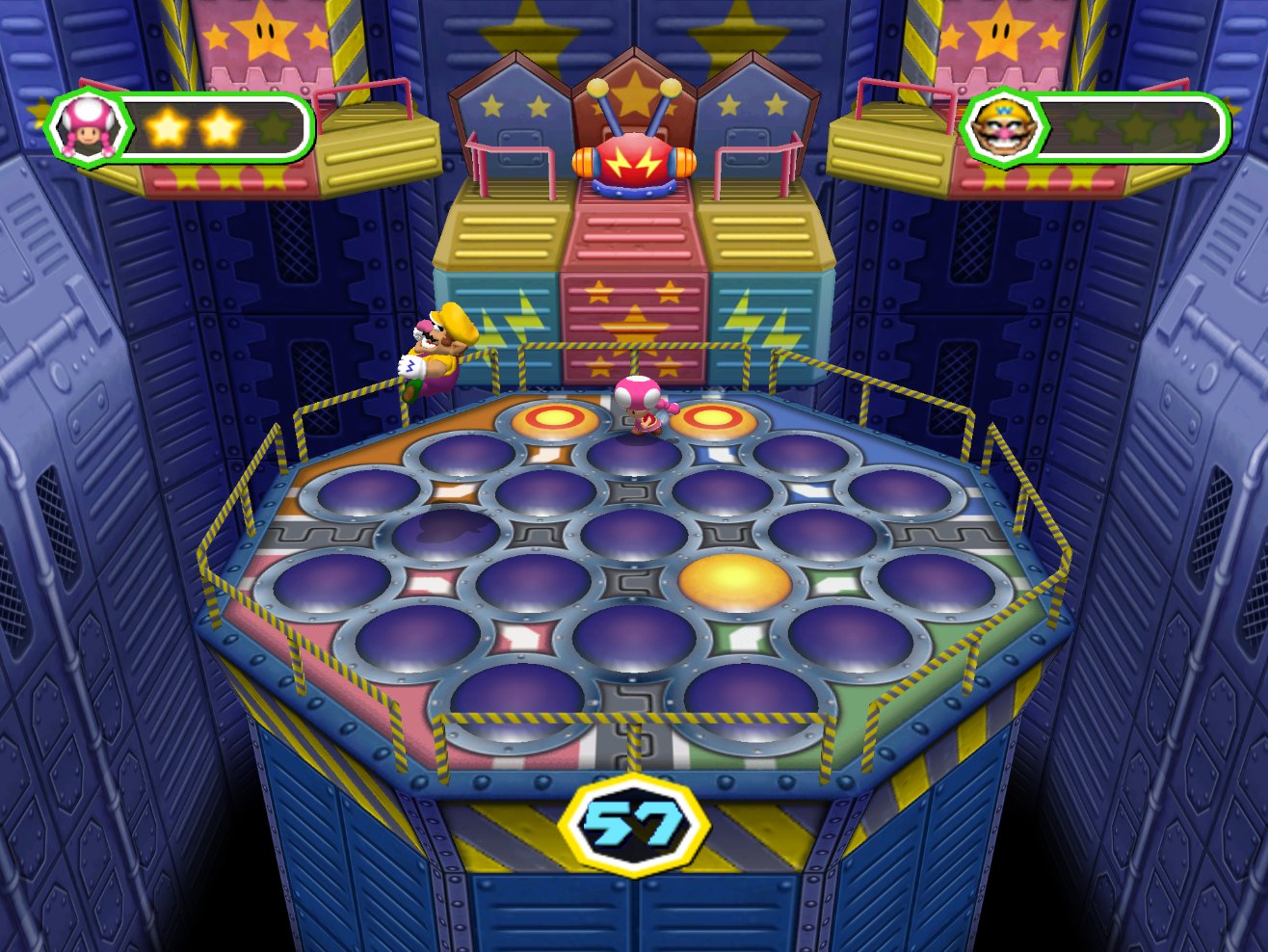
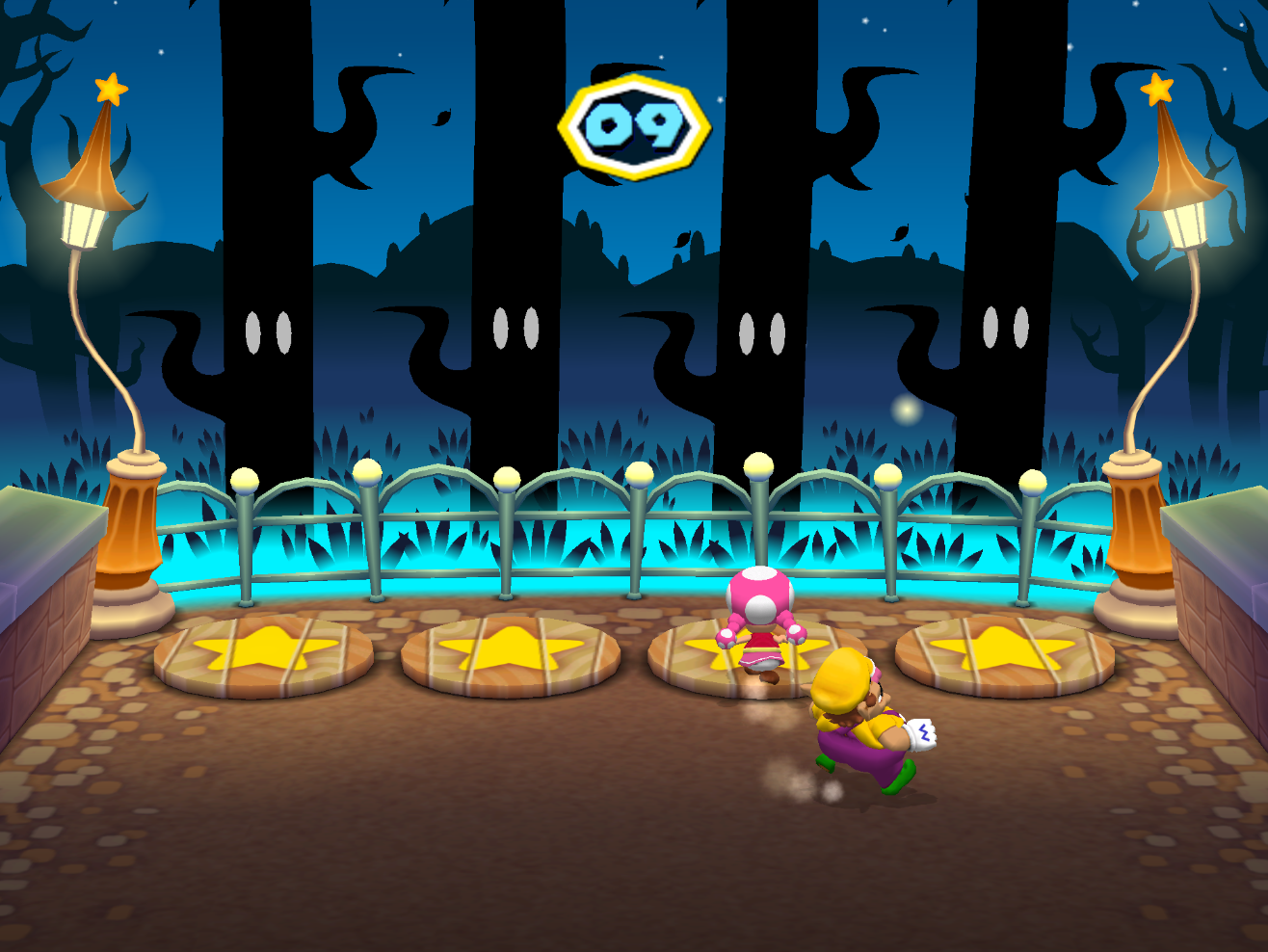
Smashdance4-PlayerGround-pound the dance-floor panels as they light up, a point a time. Landing on a rival stuns them.
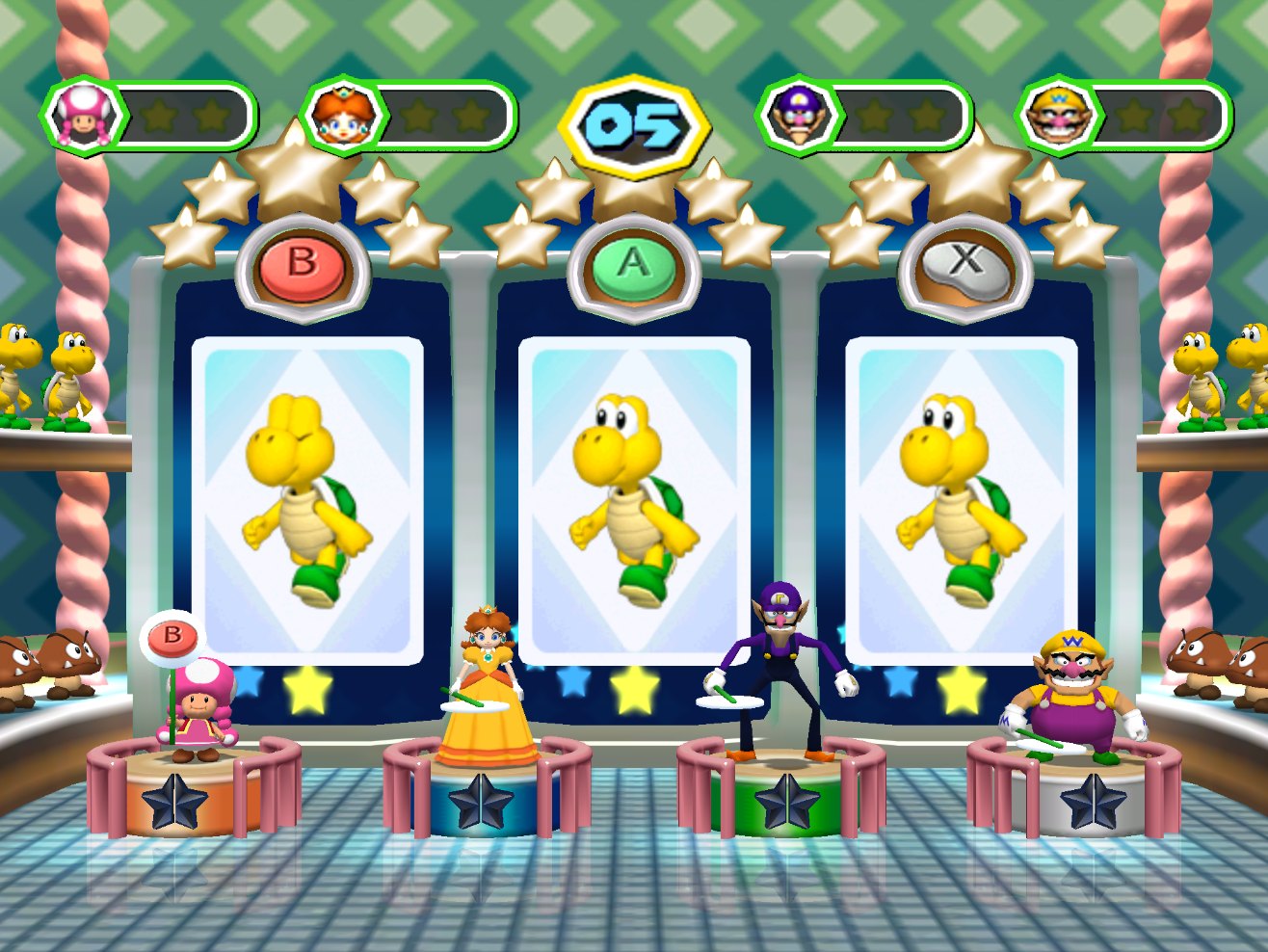
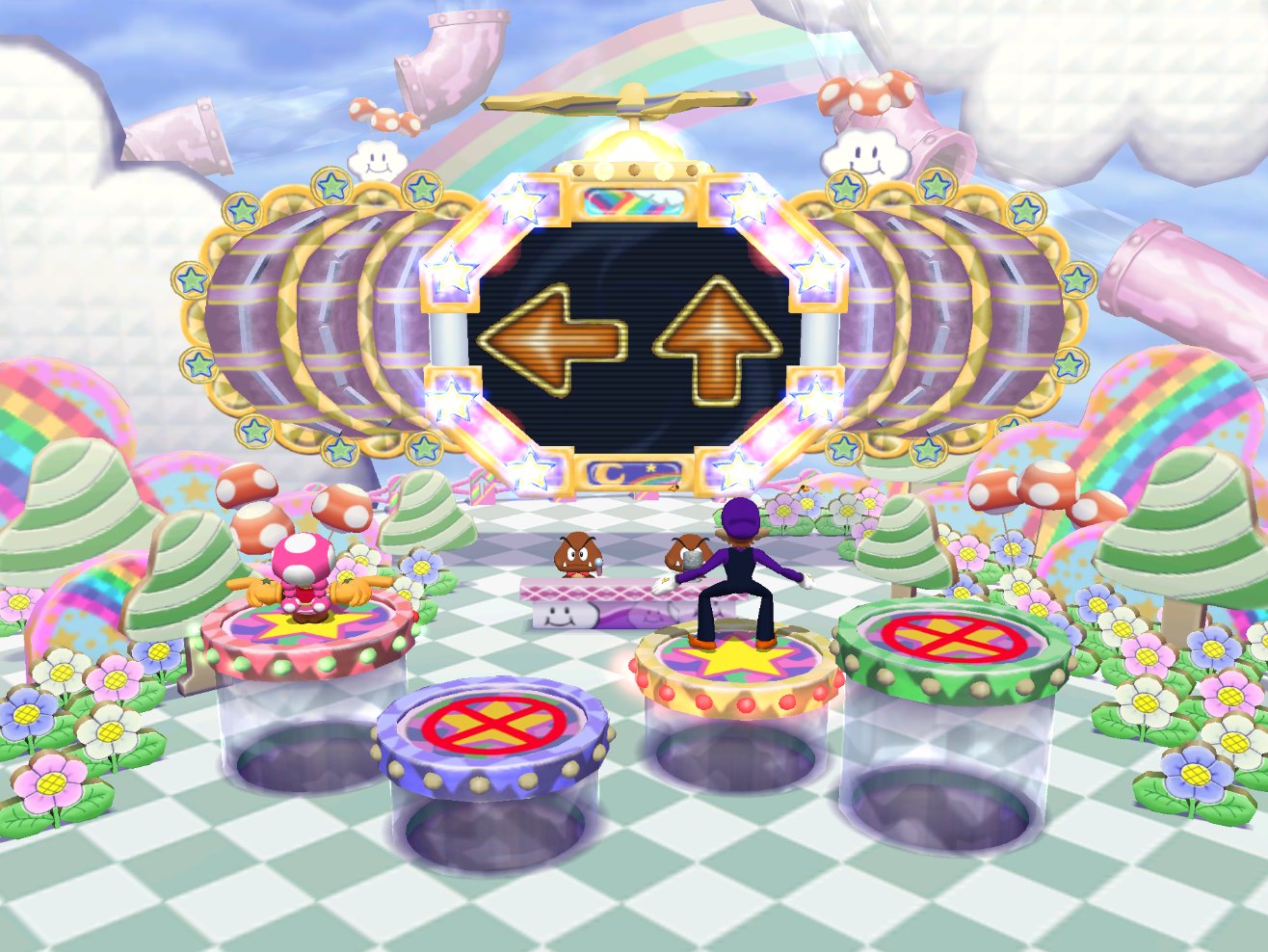
Odd Card Out4-PlayerSpot the card that does not belong and press its button first. Two points wins; a wrong answer brings down a Thwomp.
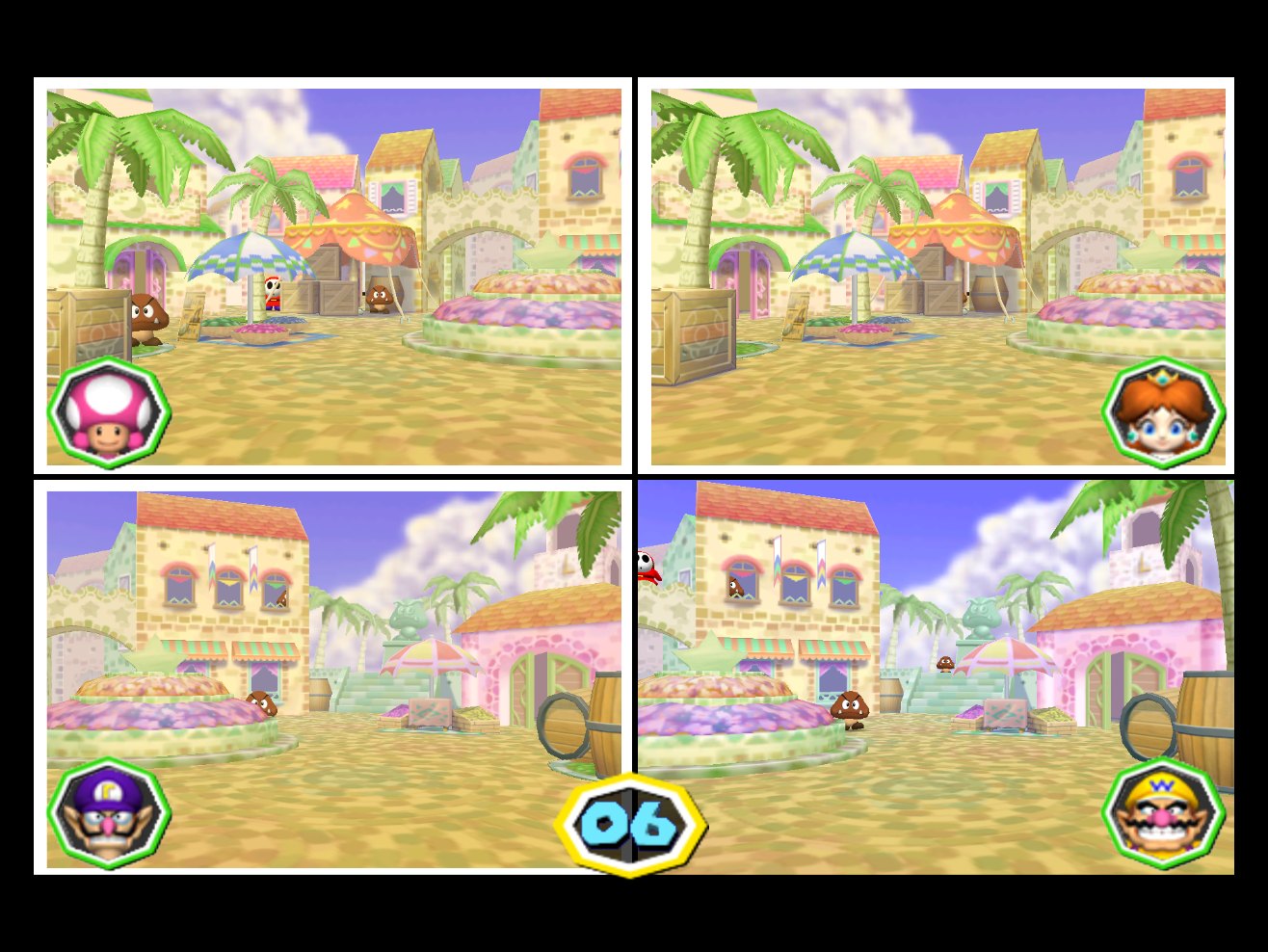
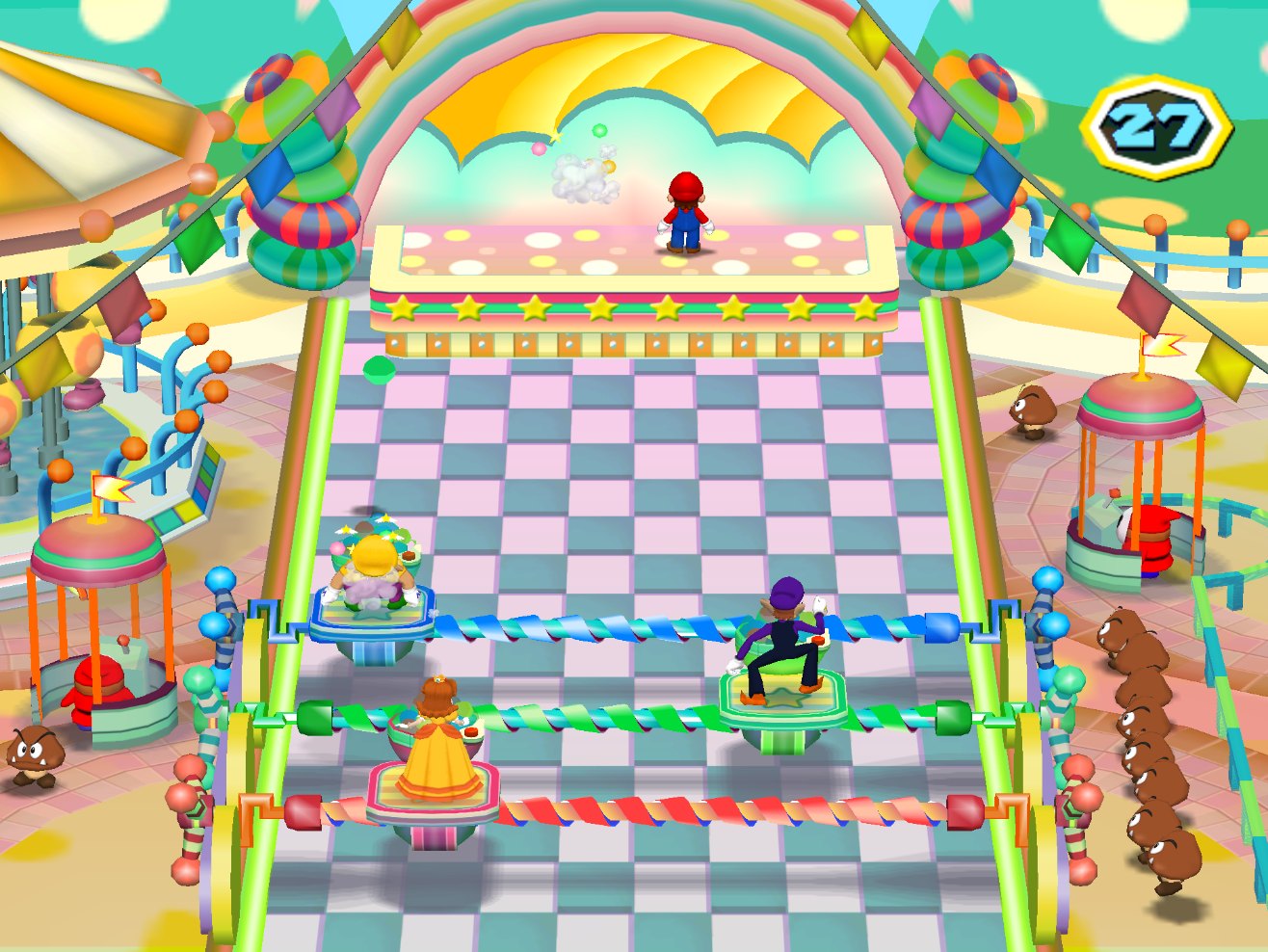
Freeze Frame4-PlayerOne photograph and ten seconds to take it: get as many Goombas in shot as you can. A Shy Guy by day, or a UFO by night, counts triple.
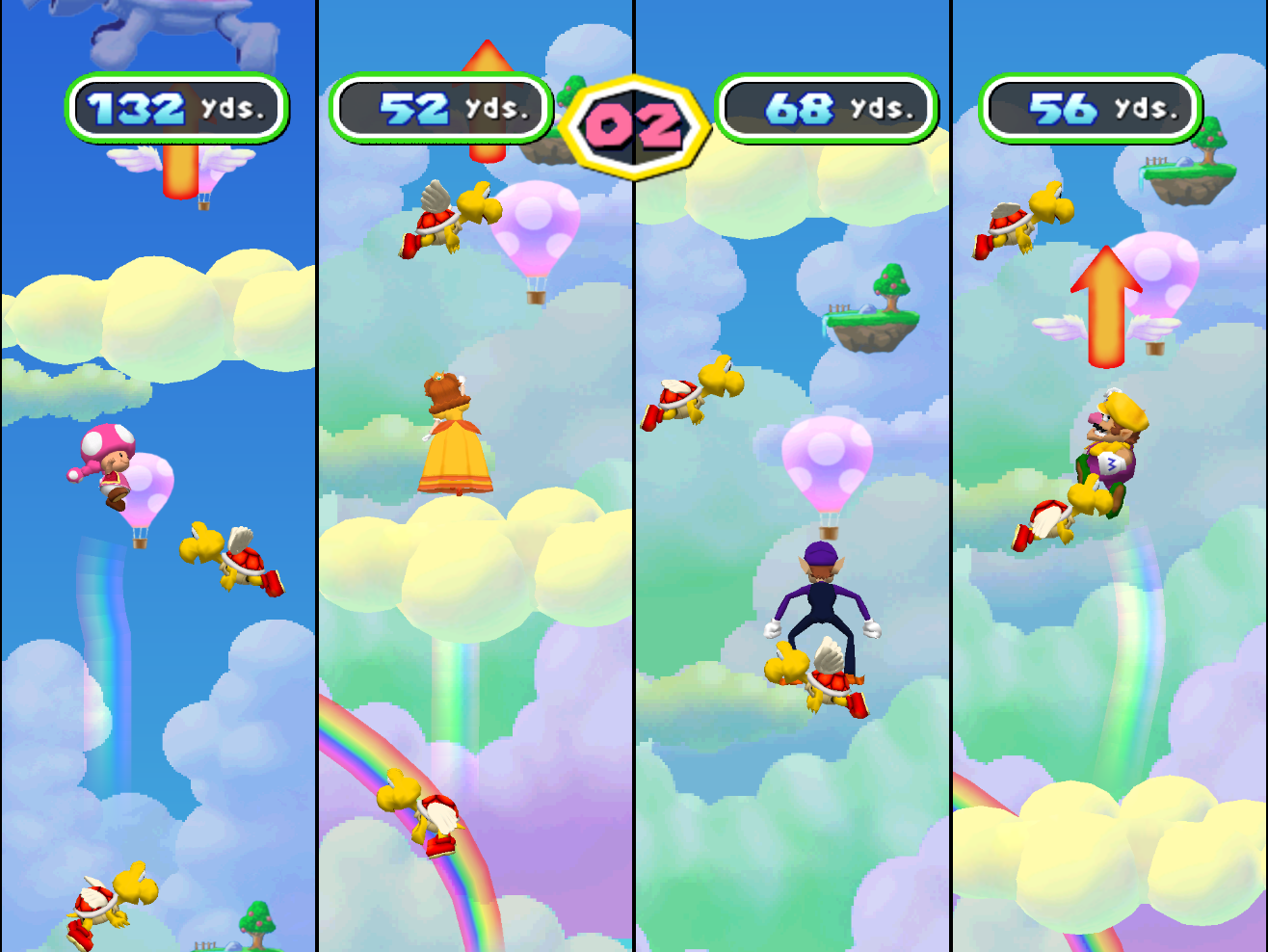
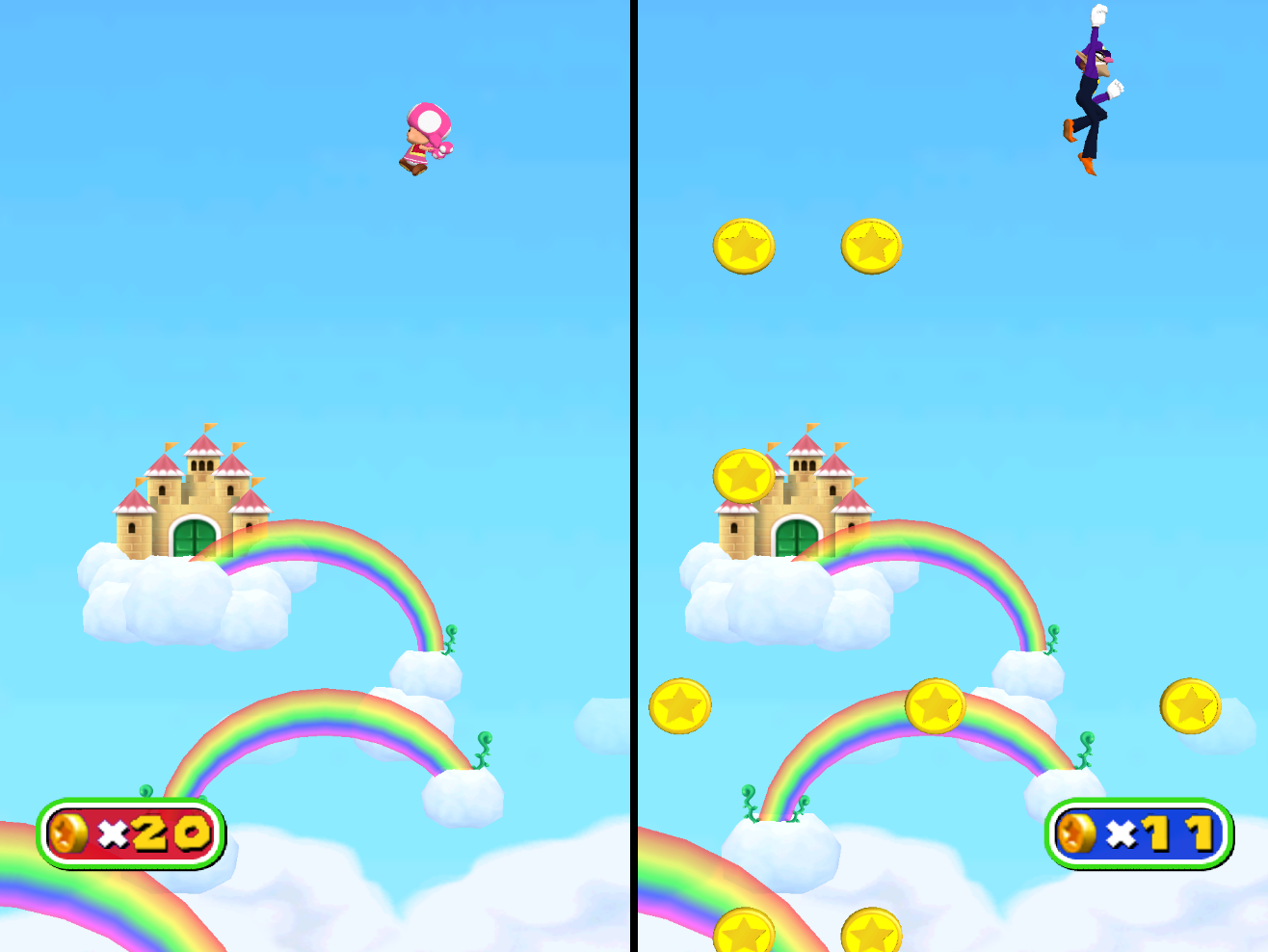
What Goes Up…4-PlayerBy day, climb as high as you can in 30 seconds on clouds and Paratroopas. By night the race is to the bottom. In Superstars.
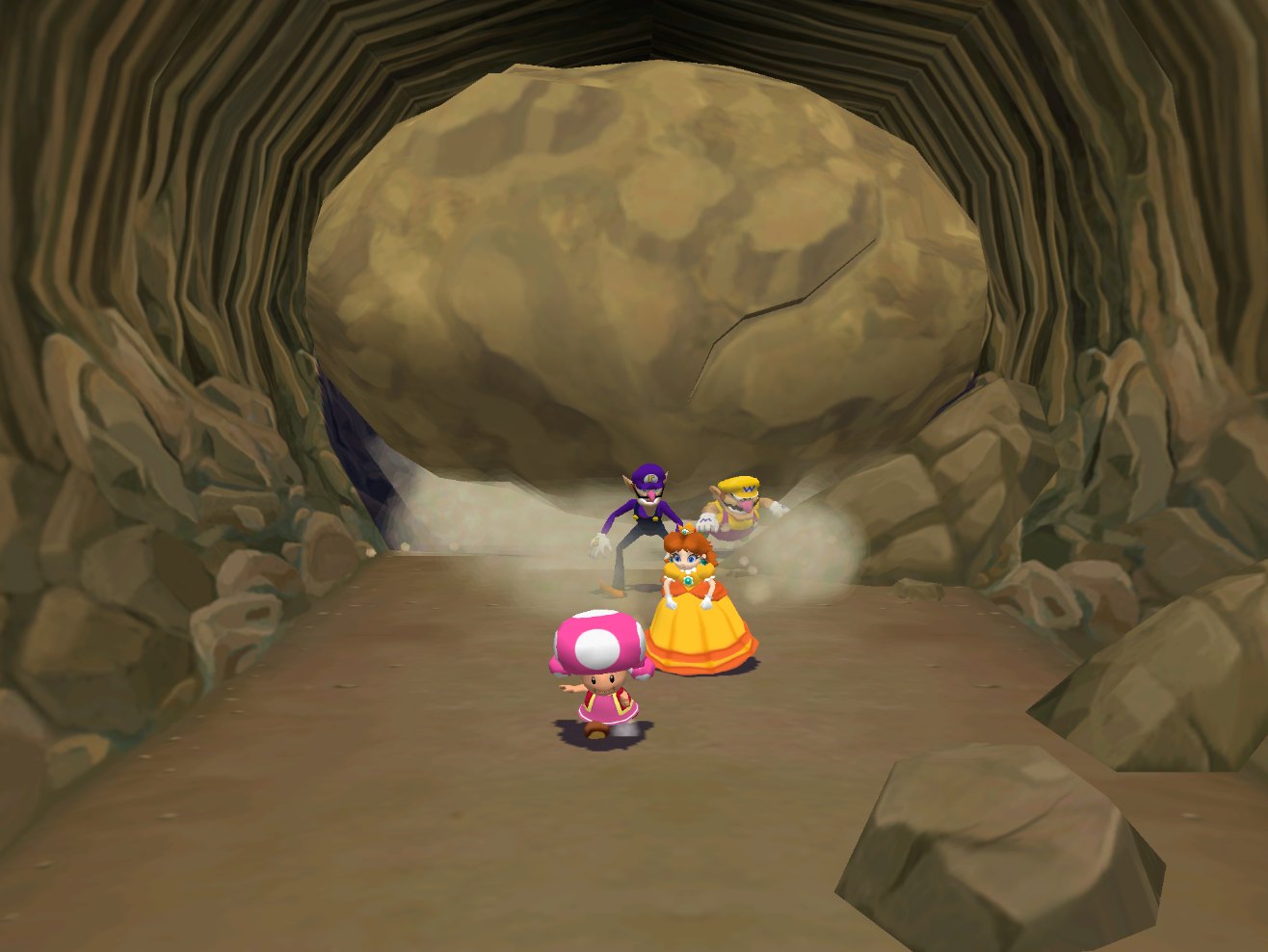
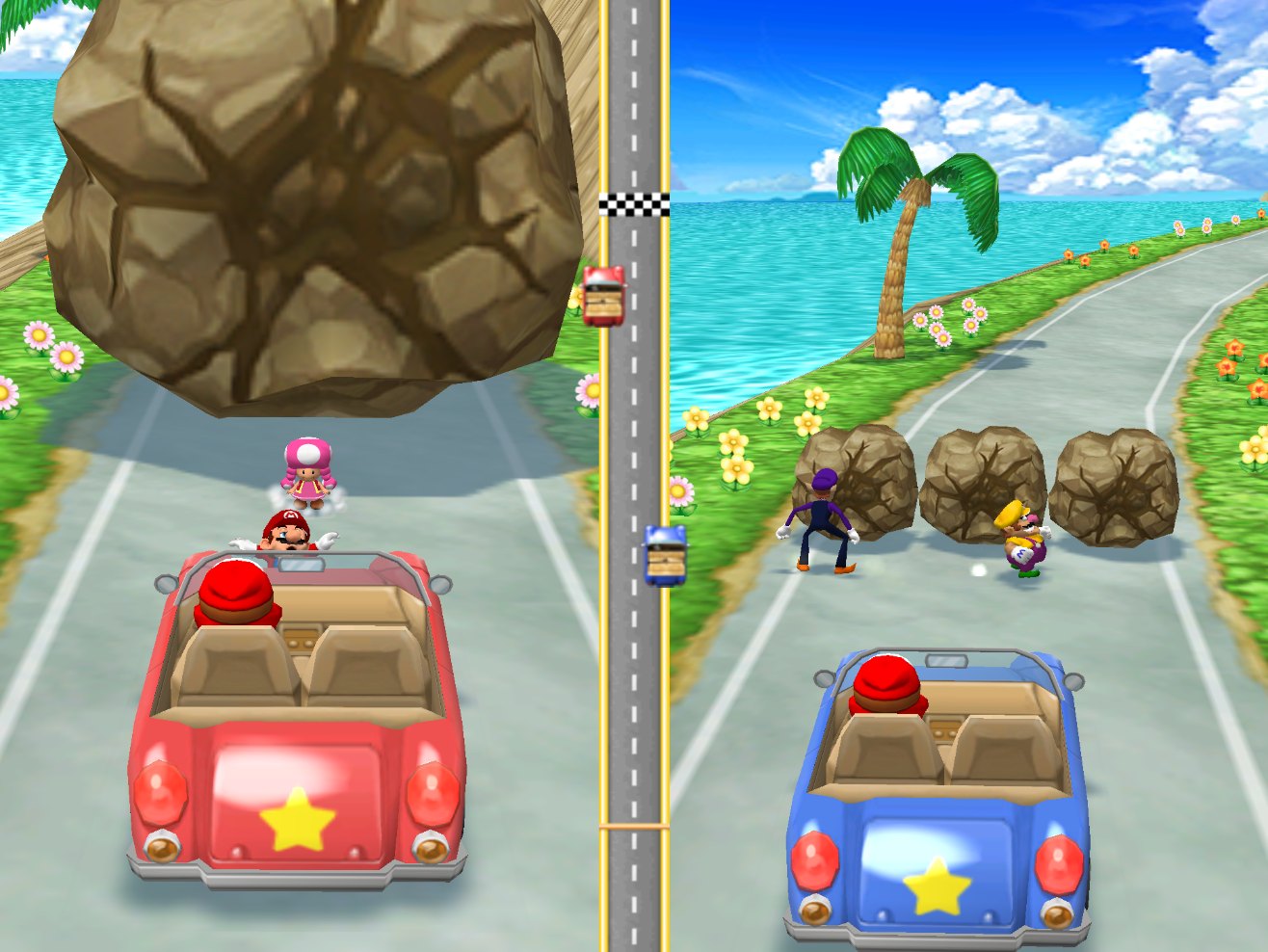
Granite Getaway4-PlayerRun from a rolling boulder, hurdling whatever is in the way, and reach the wooden floor in one piece. In Jamboree.
Circuit Maximus4-PlayerA race round an eight-sided track, through the gates and past Amps that stun on contact.
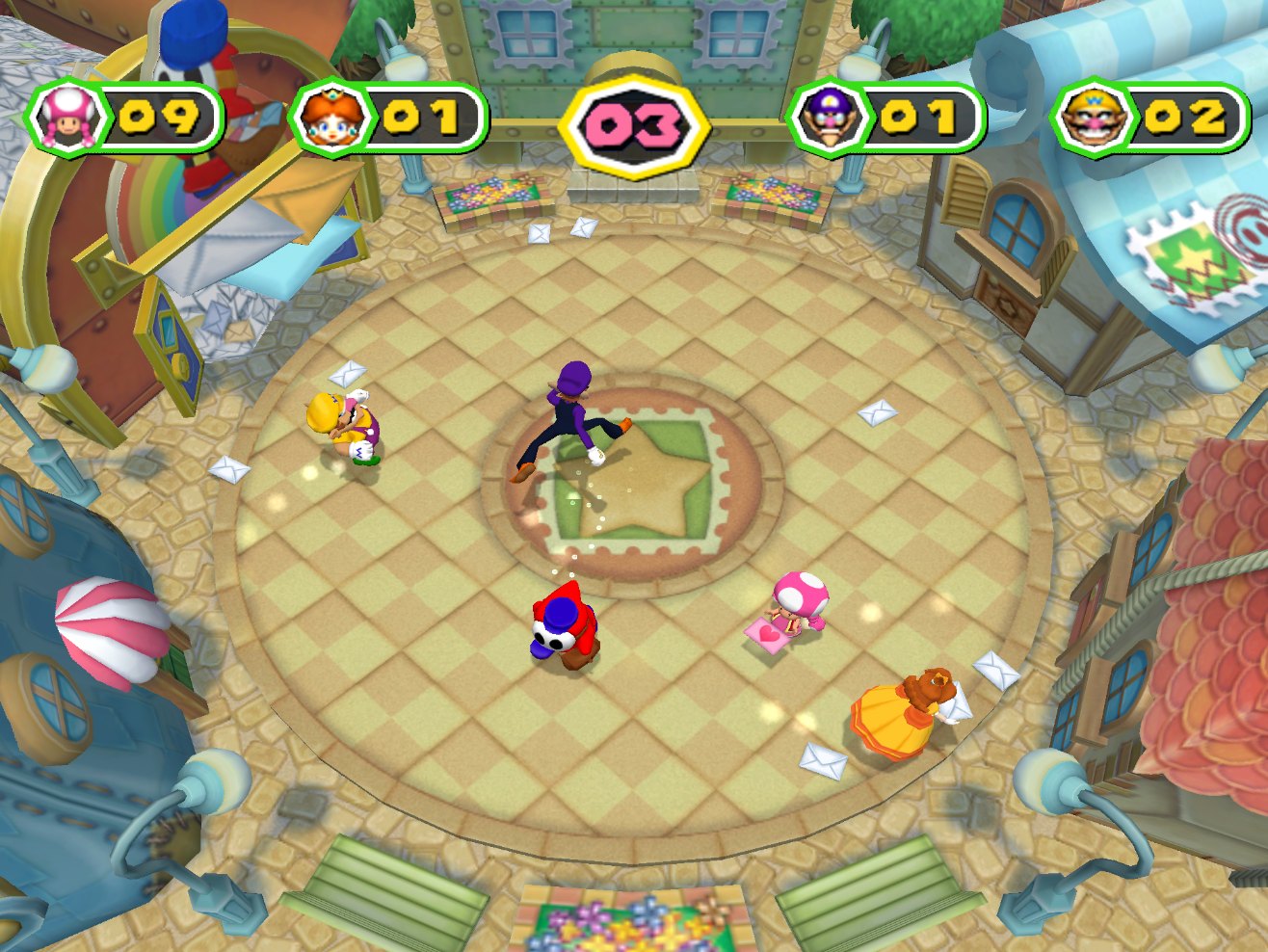
Catch You Letter4-PlayerSnatch letters as they flutter down and hand them to the Shy Guy. In The Top 100 and Superstars.
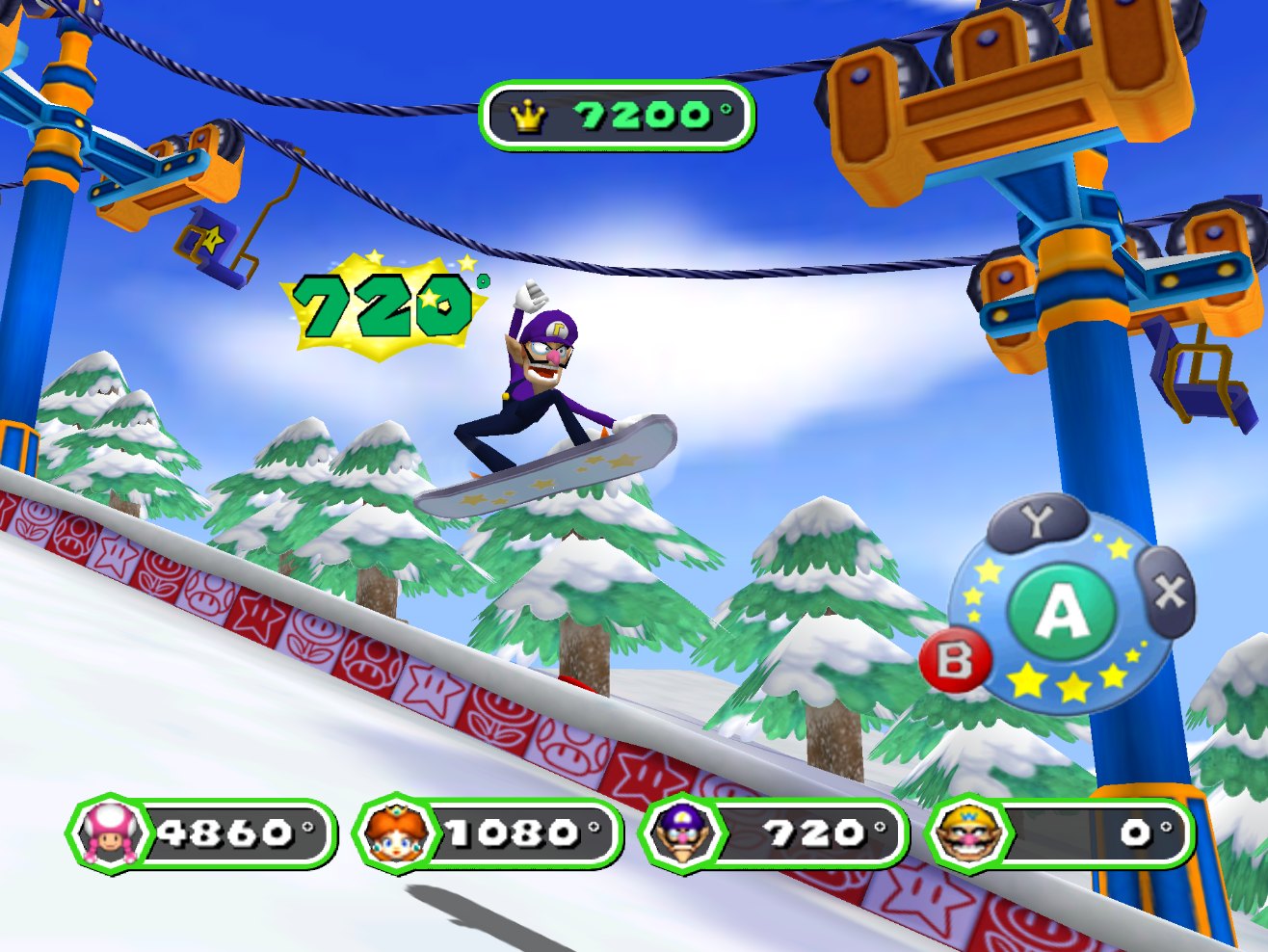
Snow Whirled4-PlayerSnowboard off a jump and press A, B, Y and X in order, over and over, to spin in the air. Most spins wins. In The Top 100 and Superstars.
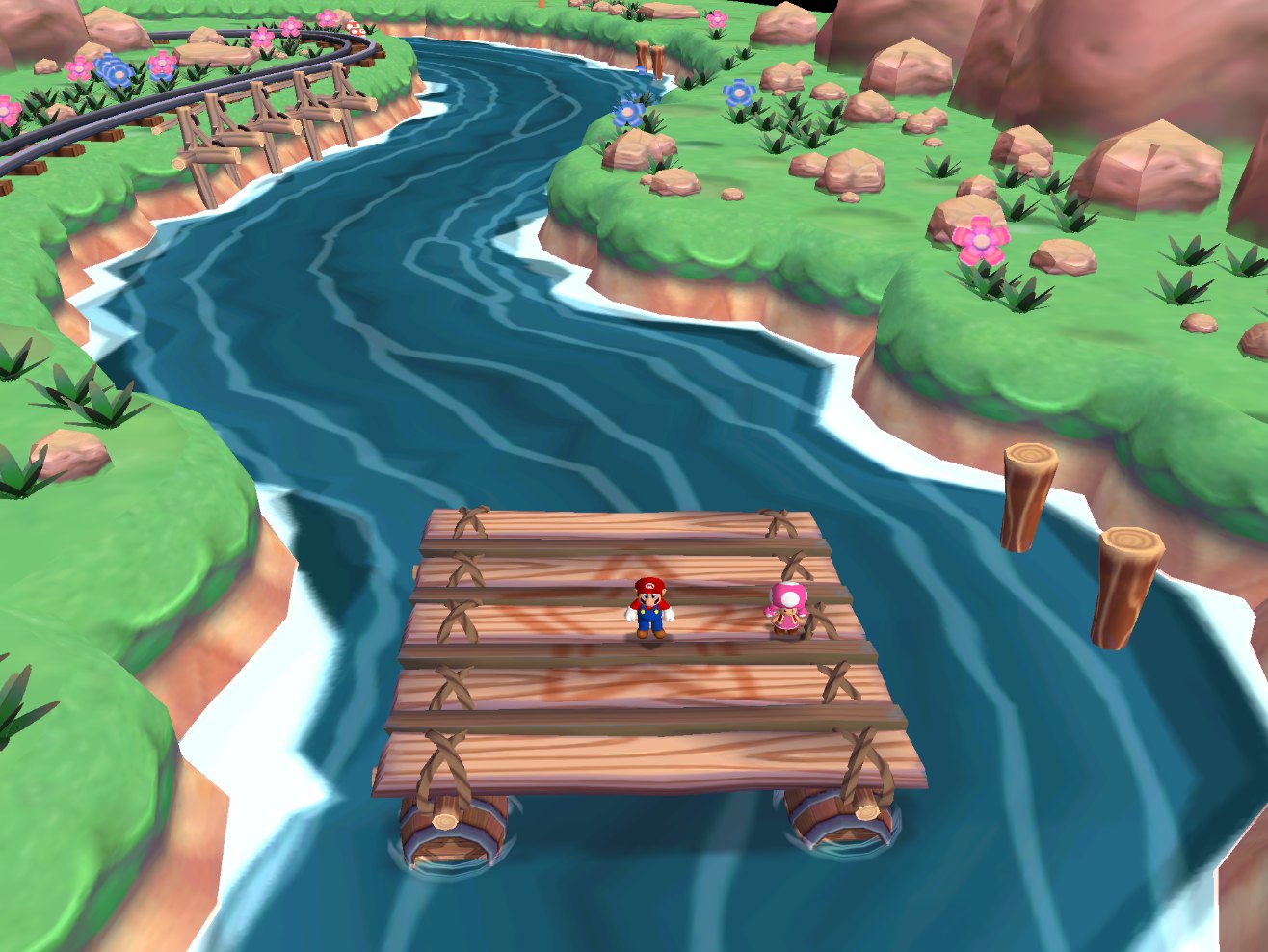
Daft Rafts4-PlayerHop from raft to drifting raft to the last one. Spinies get in the way by day and Podoboos by night.
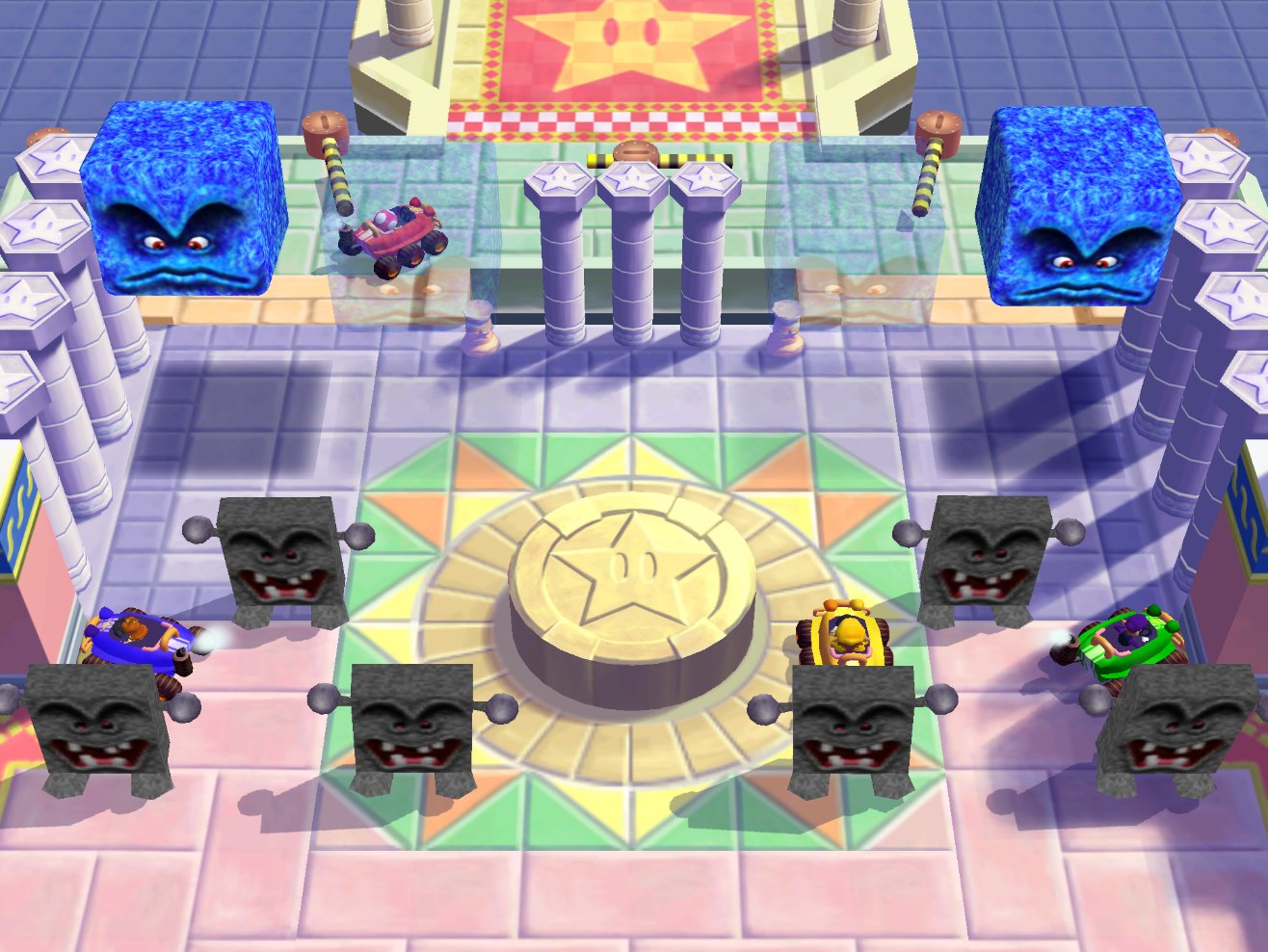
Tricky Tires4-PlayerSteer a six-wheeled buggy through a temple past Whomps and Thwomps. At night there is lava as well.
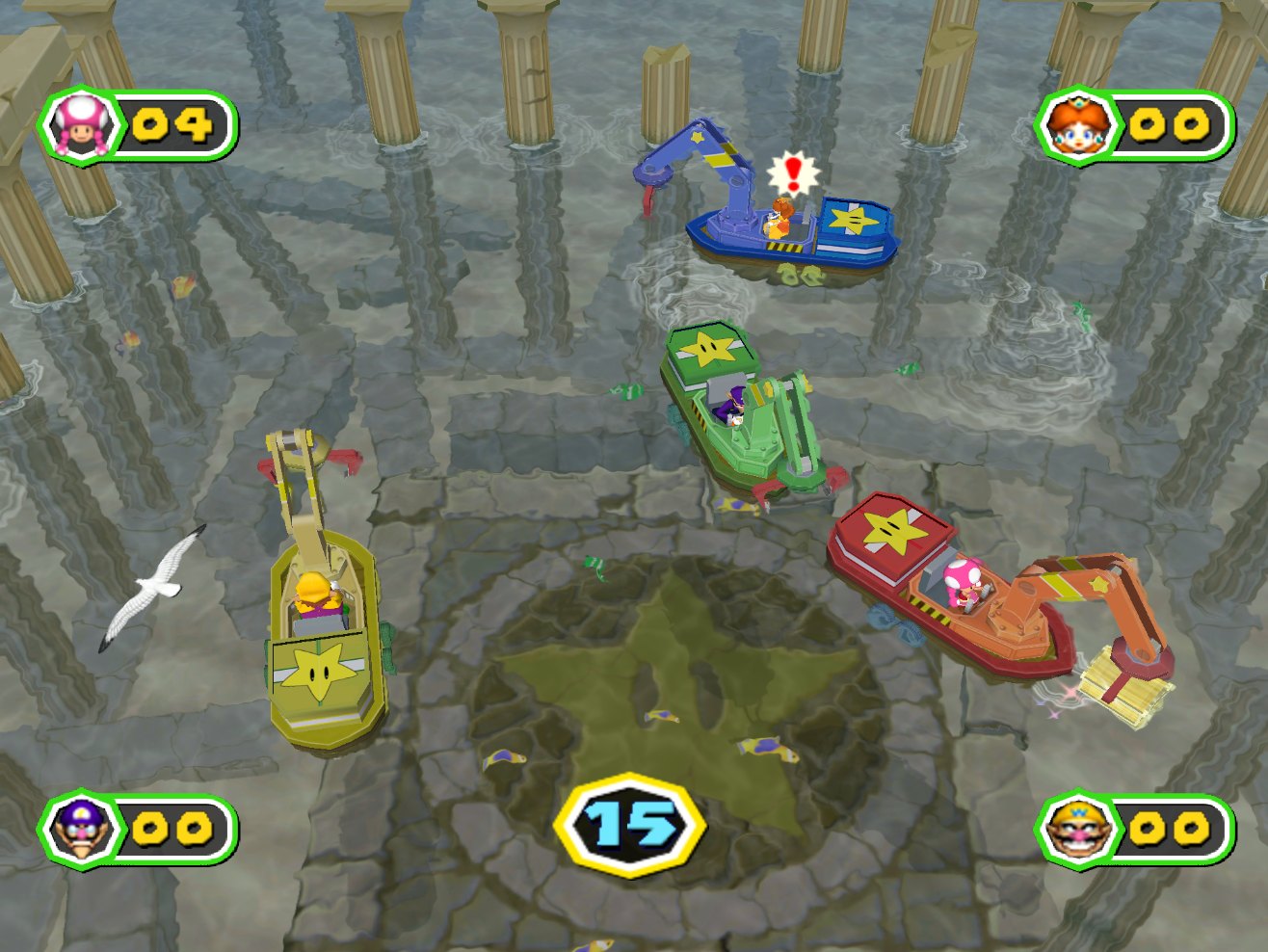
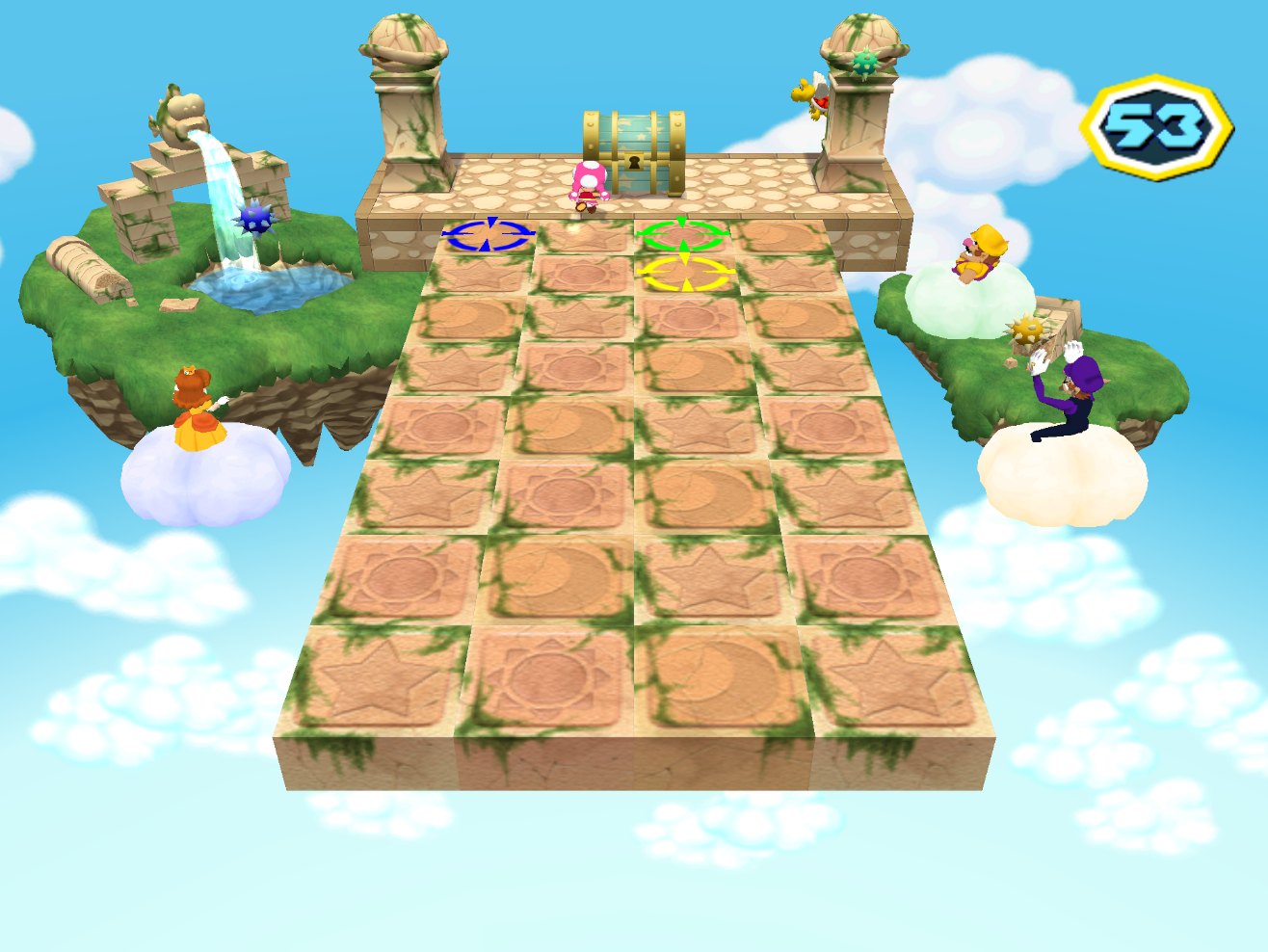
Treasure Trawlers4-PlayerLower your crane when the controller rumbles to haul treasure chests off the sea bed. Gold ones score three.
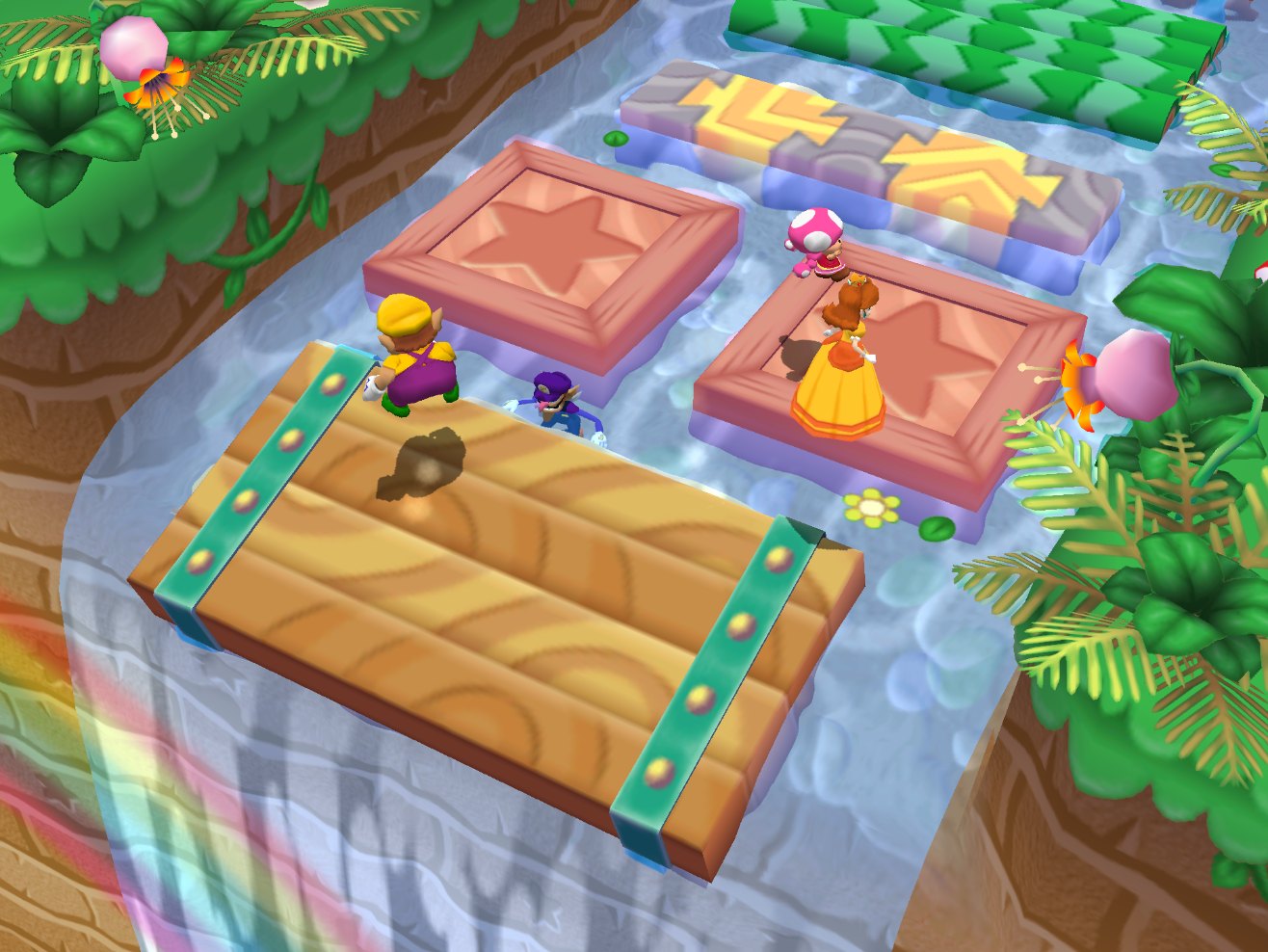
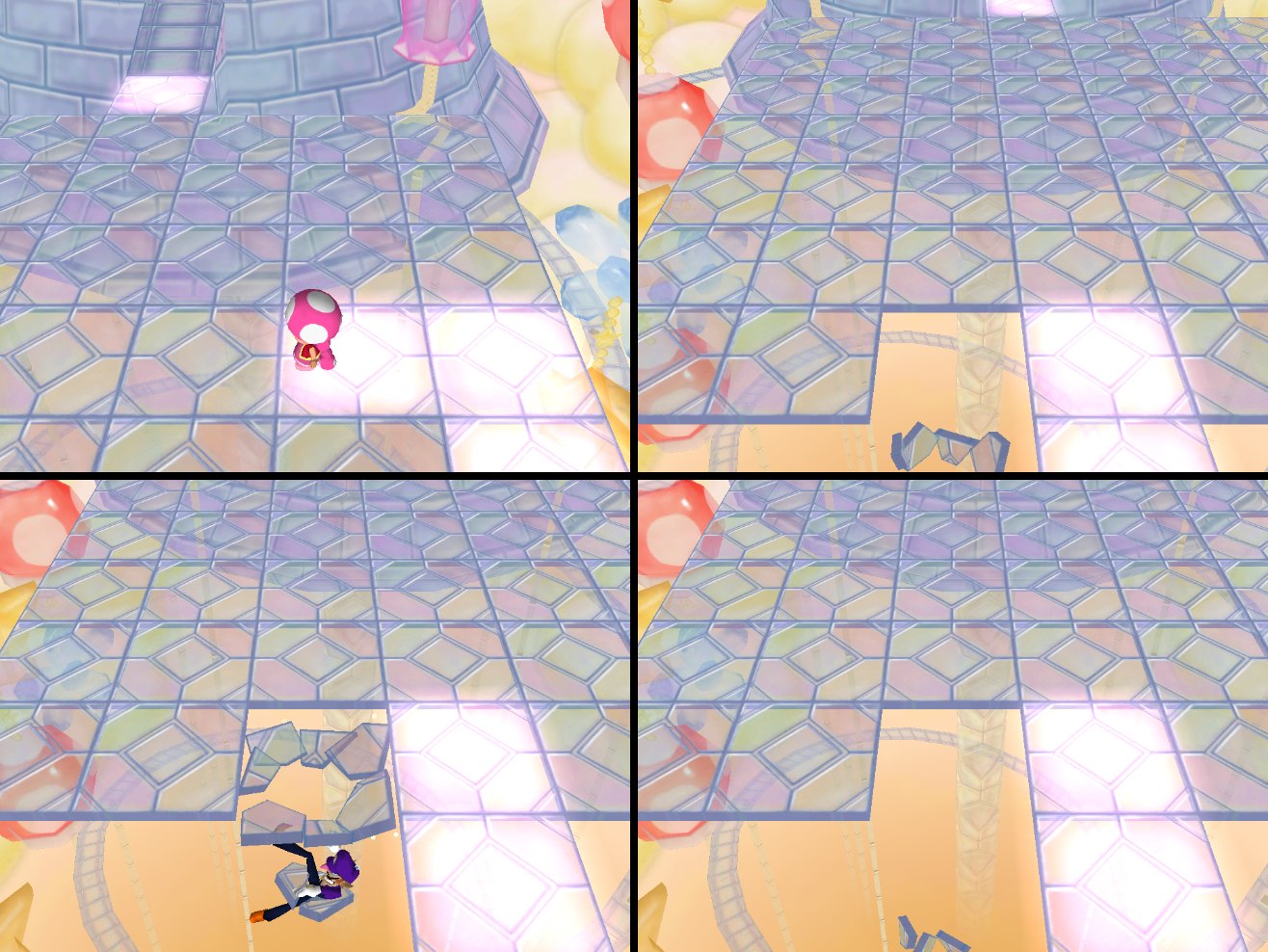
Memory Lane4-PlayerWatch the route a Shy Guy takes across a tiled floor, then follow it exactly. A wrong step and the floor gives way.
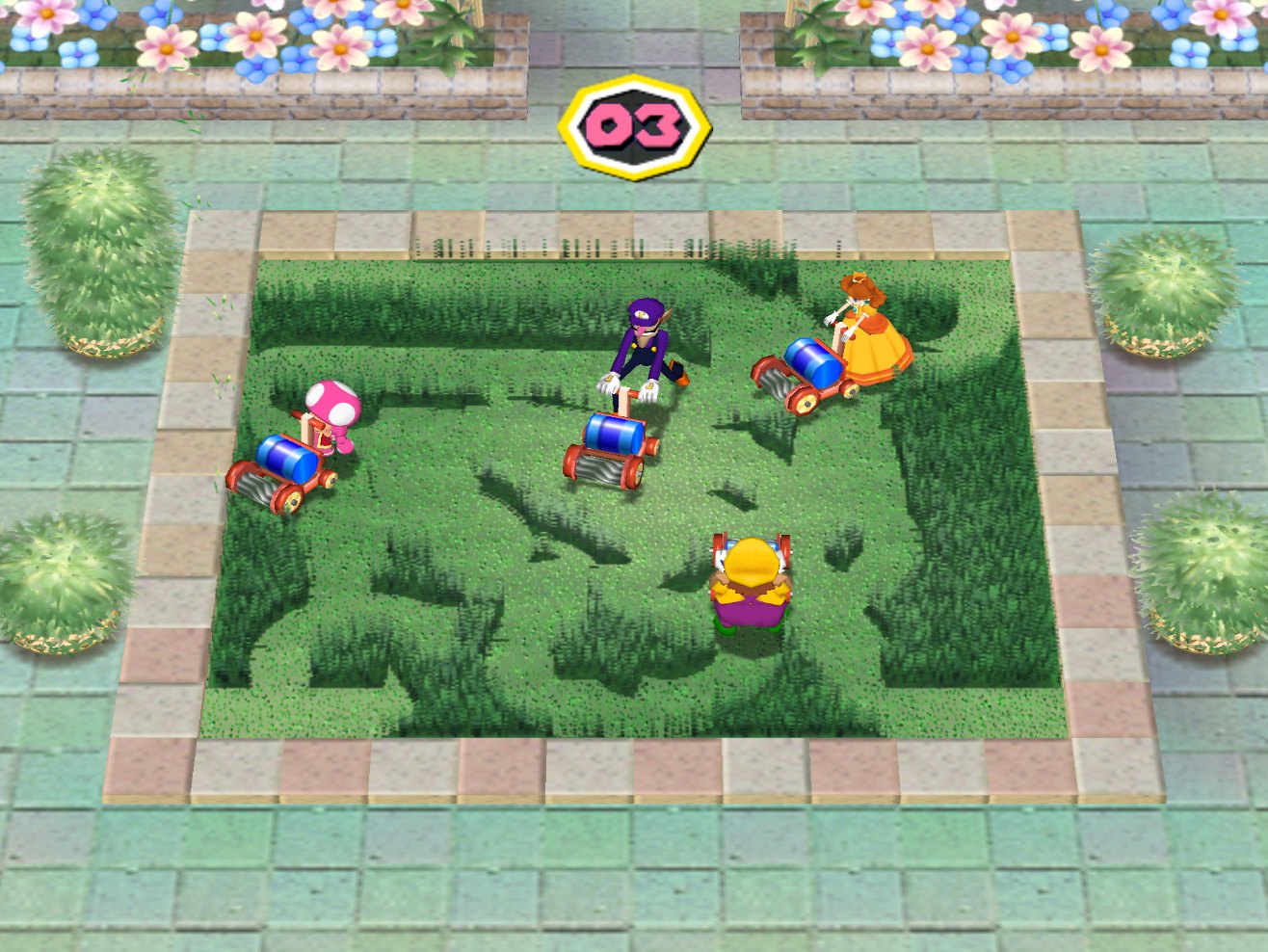
Mowtown4-PlayerDrive a mower round a lawn and collect more cuttings than anyone else.
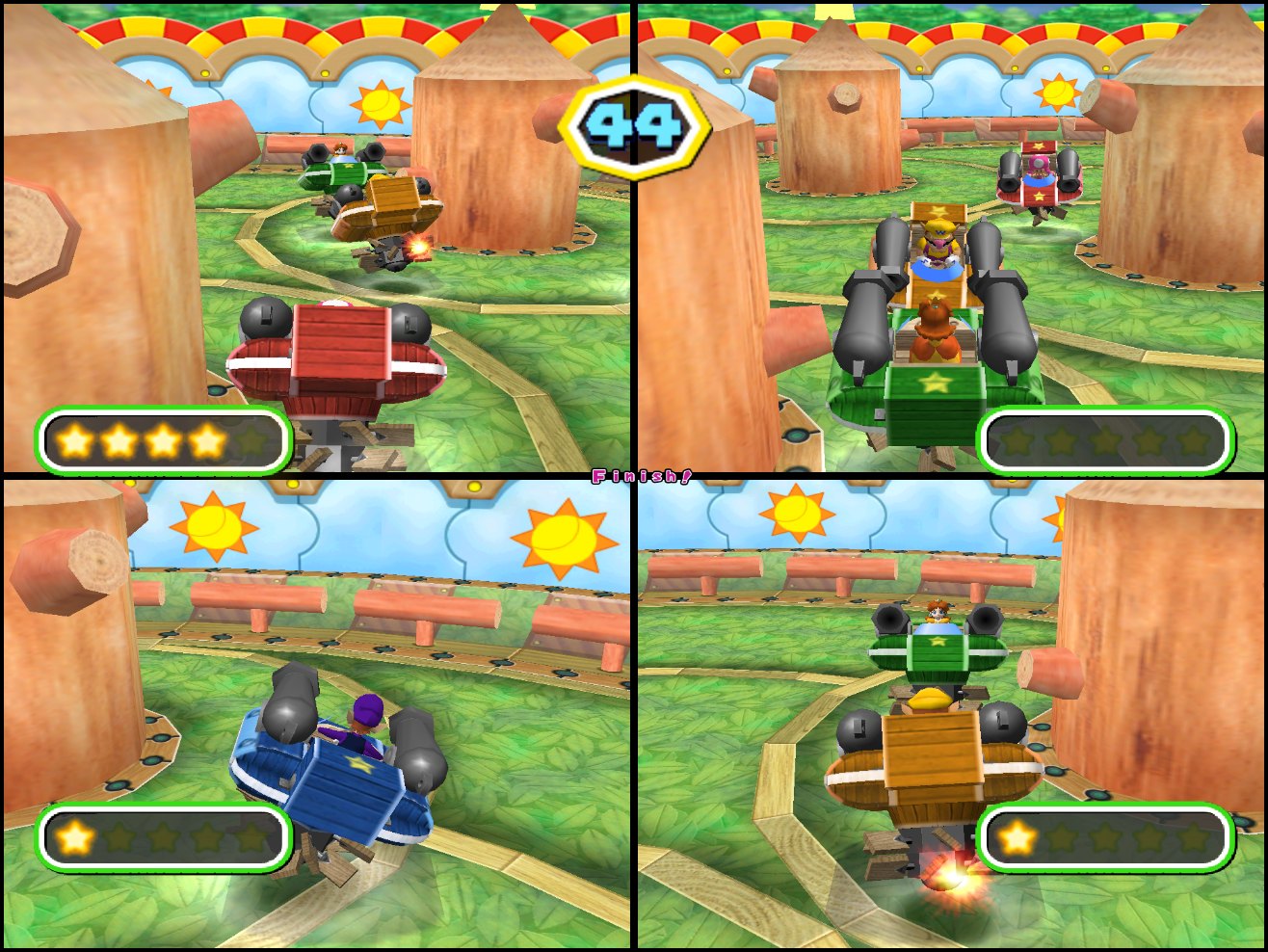
Cannonball Fun4-PlayerHovercraft with cannons. First to land five hits wins.
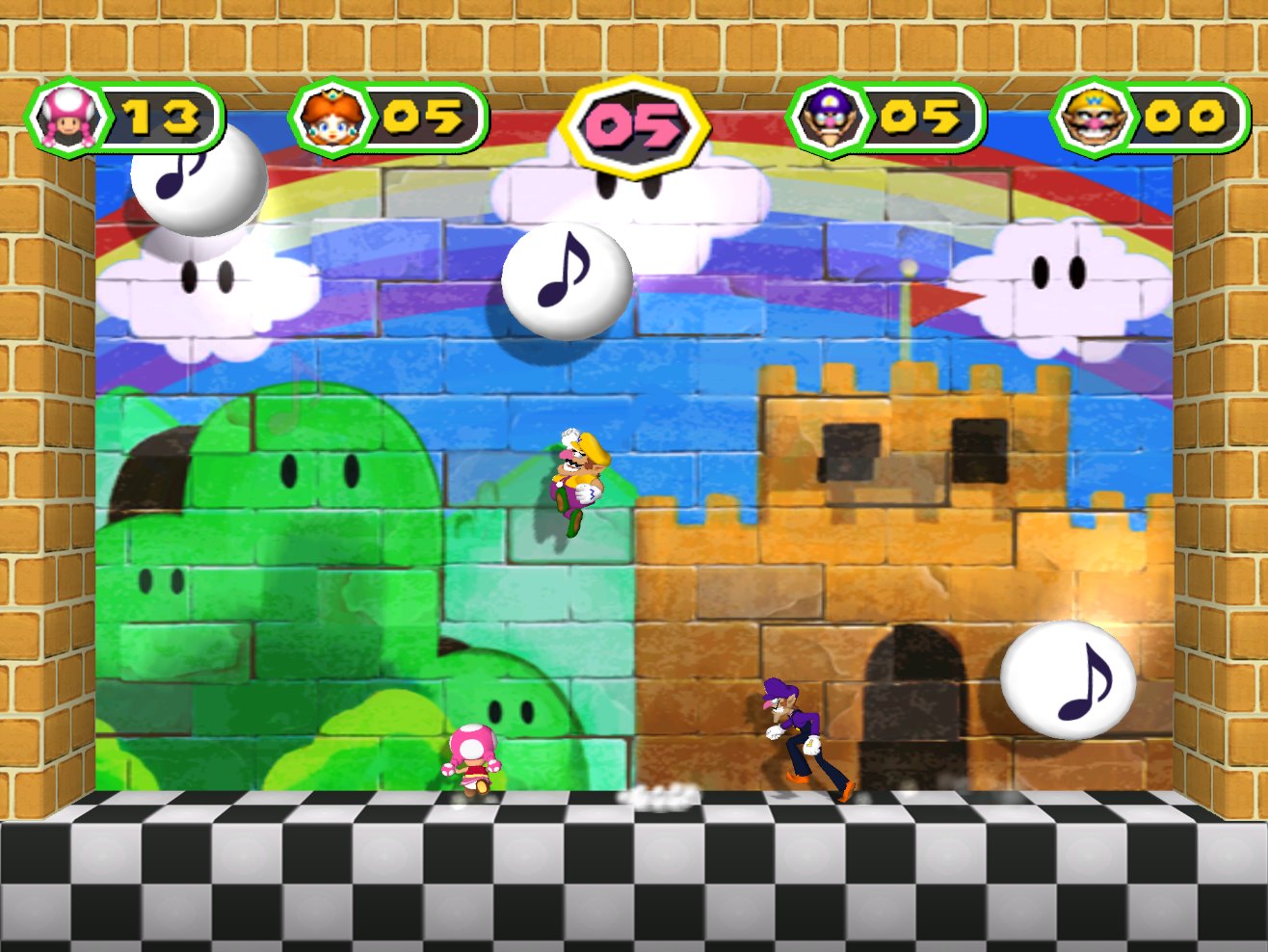
Note to Self4-PlayerJump up and head musical notes for 30 seconds. Bouncing on a rival’s head stuns them.
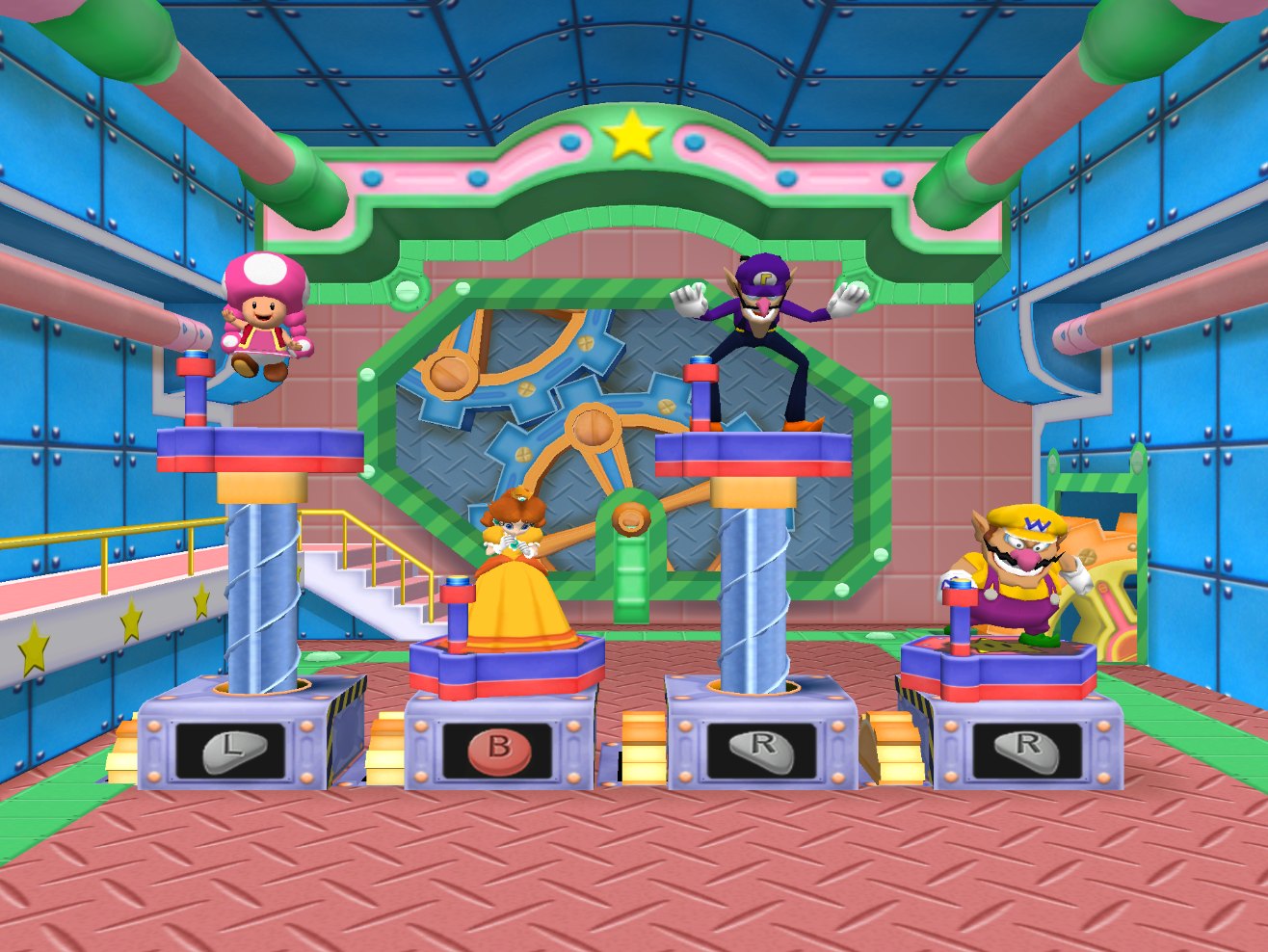
Same Is Lame4-PlayerChoose B, A, L or R. Your podium only rises if nobody else chose the same. First to rise three times wins.
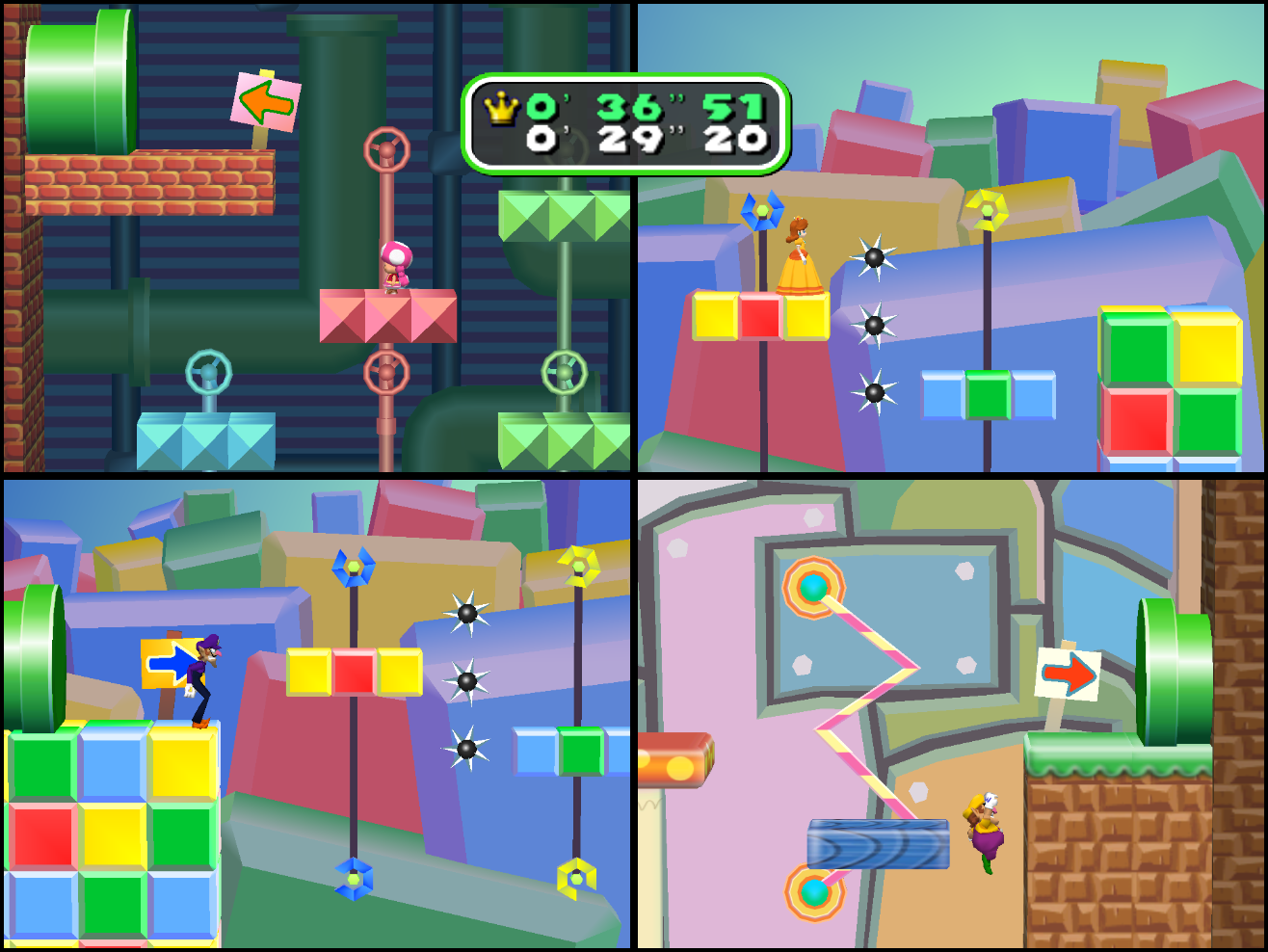
Lift Leapers4-PlayerLeap across moving lifts and over spikes through four sections. First to the end wins.
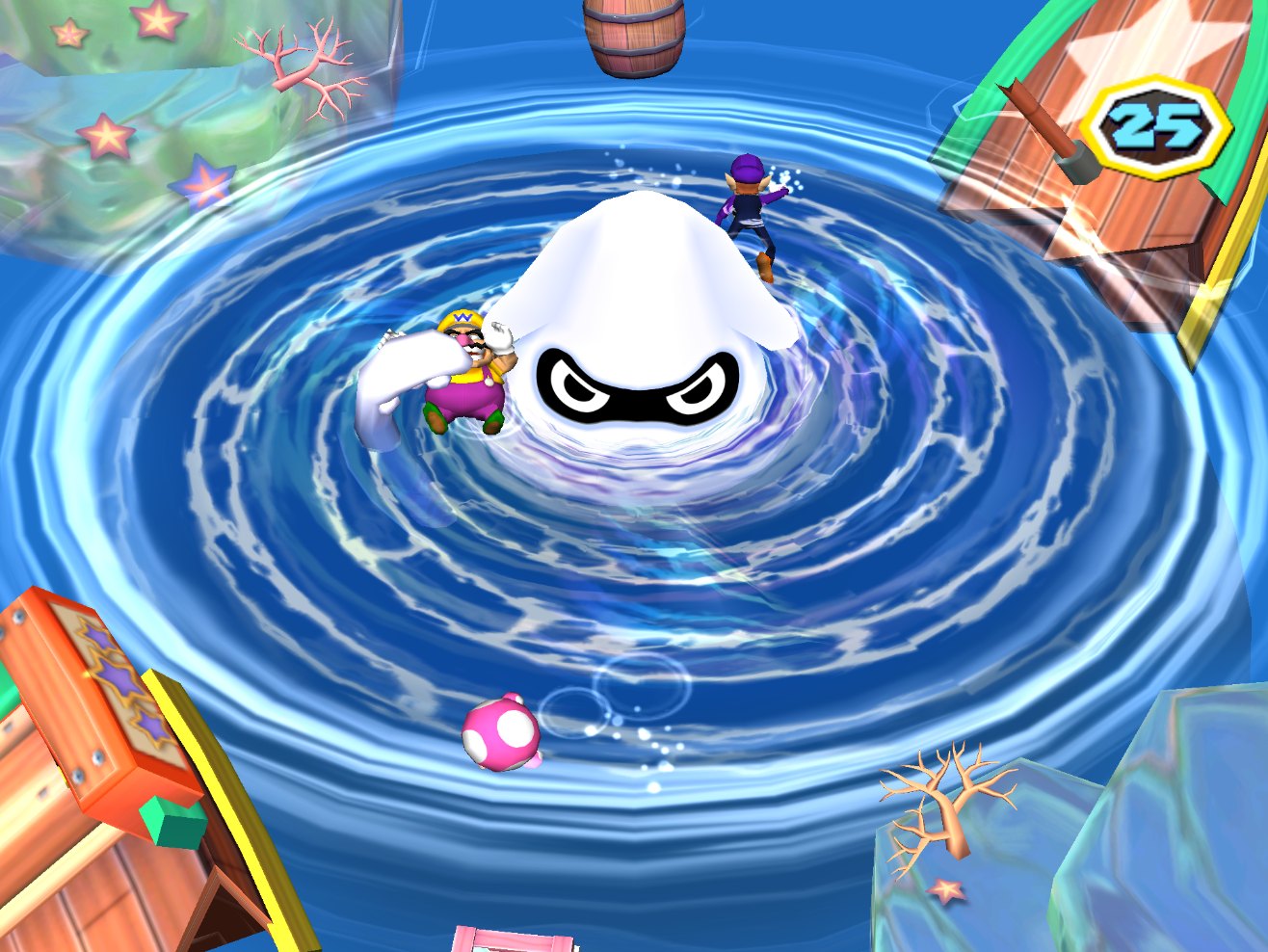
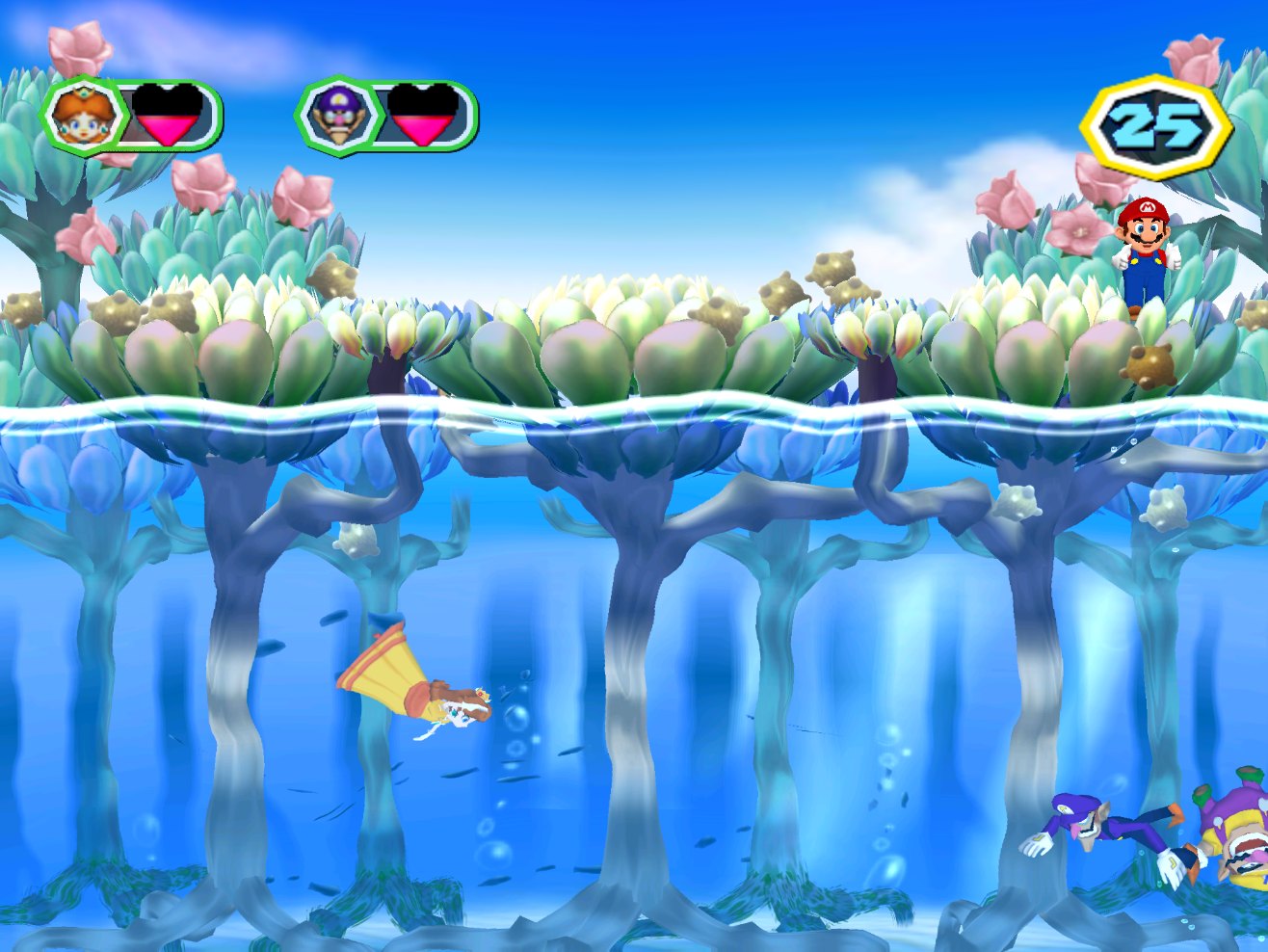
Blooper Scooper4-PlayerSwim for your life against the whirlpool made by a giant Blooper. Last one out of its tentacles wins.
Trap Ease Artist4-Player · day onlyDrop a cage on passing Goombas: one point each and three for a golden one. In The Top 100 and Superstars.
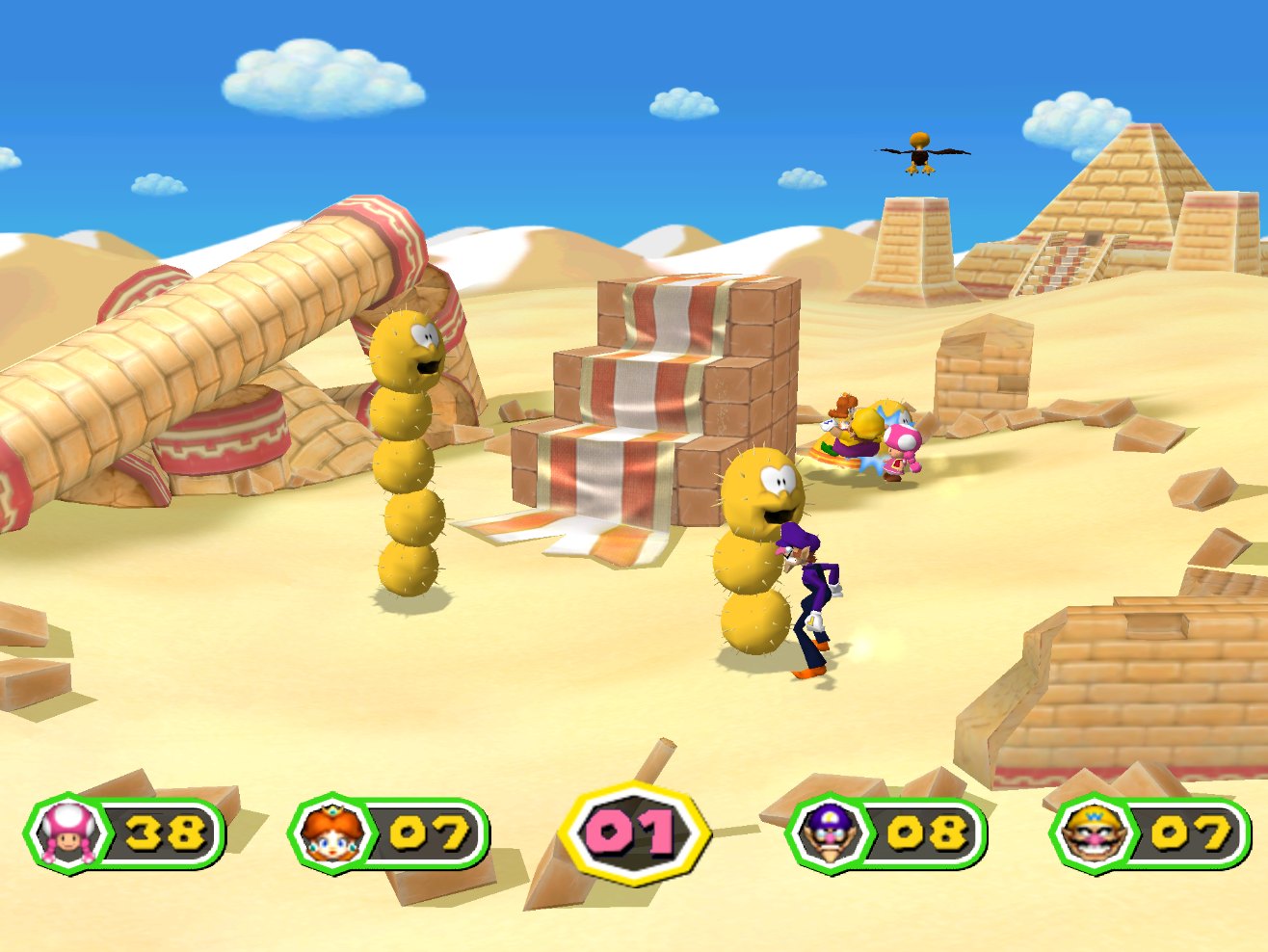
Pokey Punch-out4-PlayerPunch and kick the segments out of Pokeys for points until time runs out.
Money Belt4-Player · coinBoxes ride past on a conveyor. Open the ones with coins in, using the X-ray scanner to peek. Renamed X-Ray Payday in Superstars.
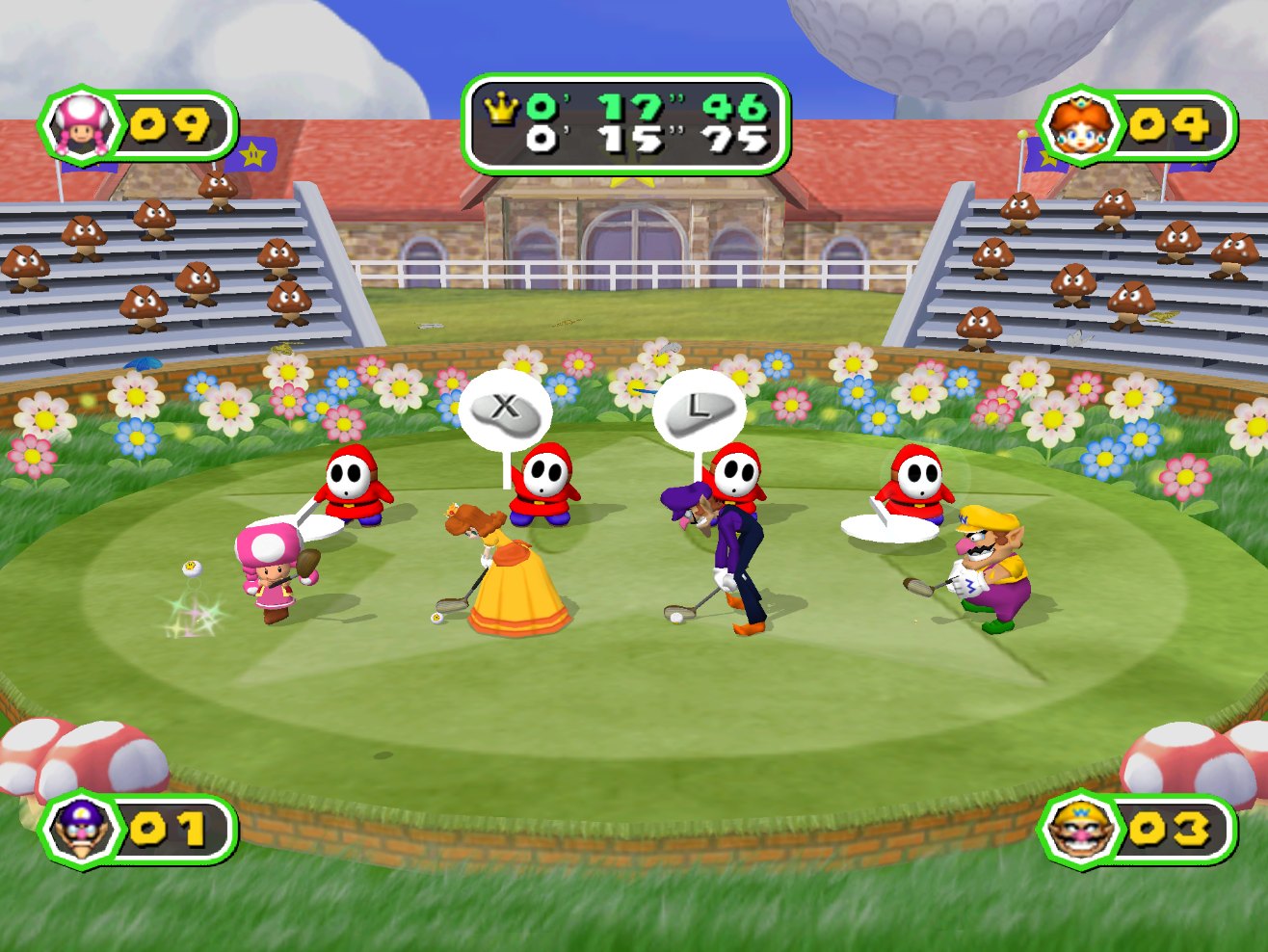
Sunday Drivers4-PlayerA driving range: press the button on the Shy Guy’s sign to hit the ball. First to ten clean hits wins.
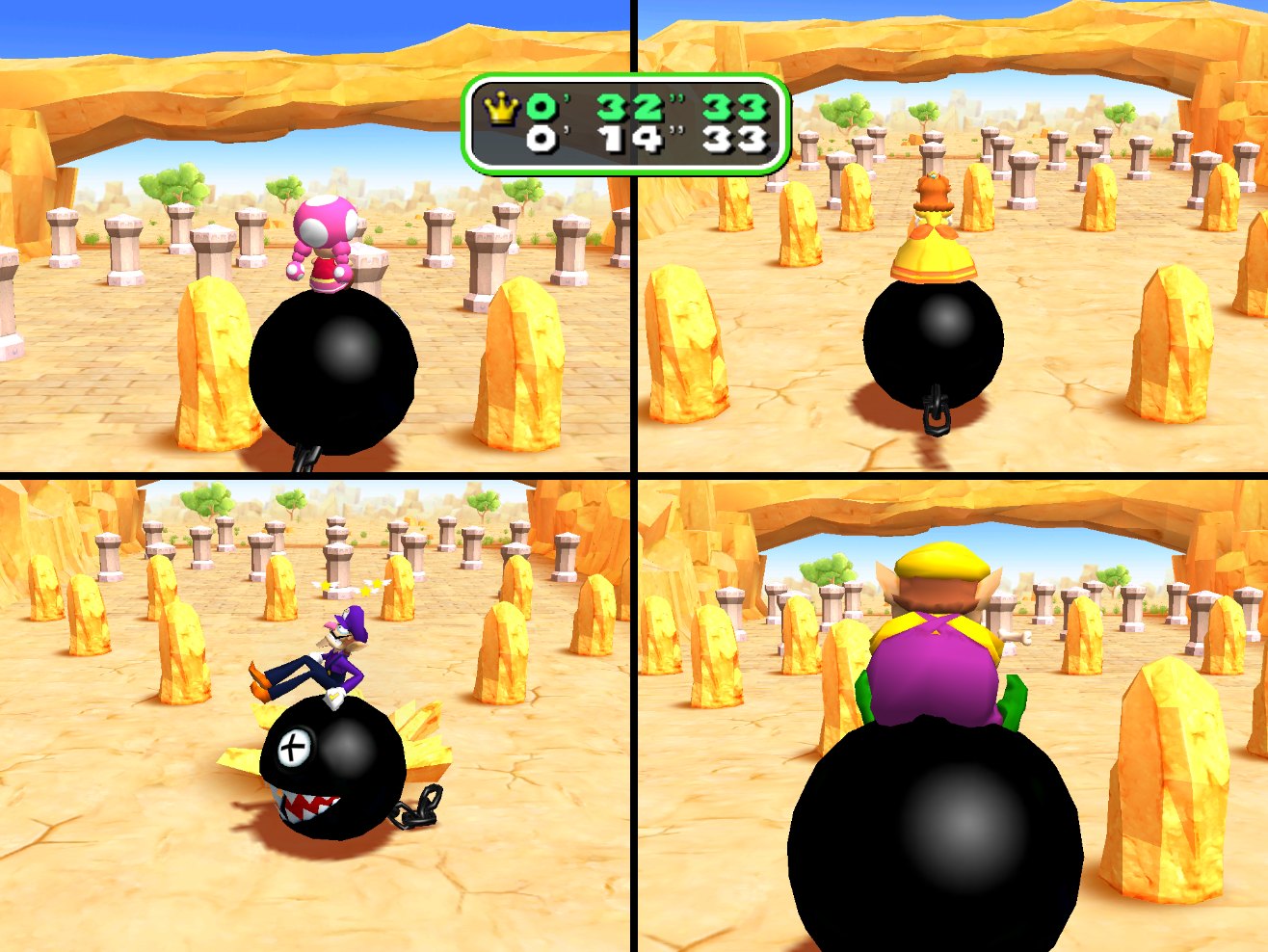
Throw Me a Bone4-PlayerLure a Chain Chomp to the finish by throwing bones for it, stopping a swinging arrow to aim each one.
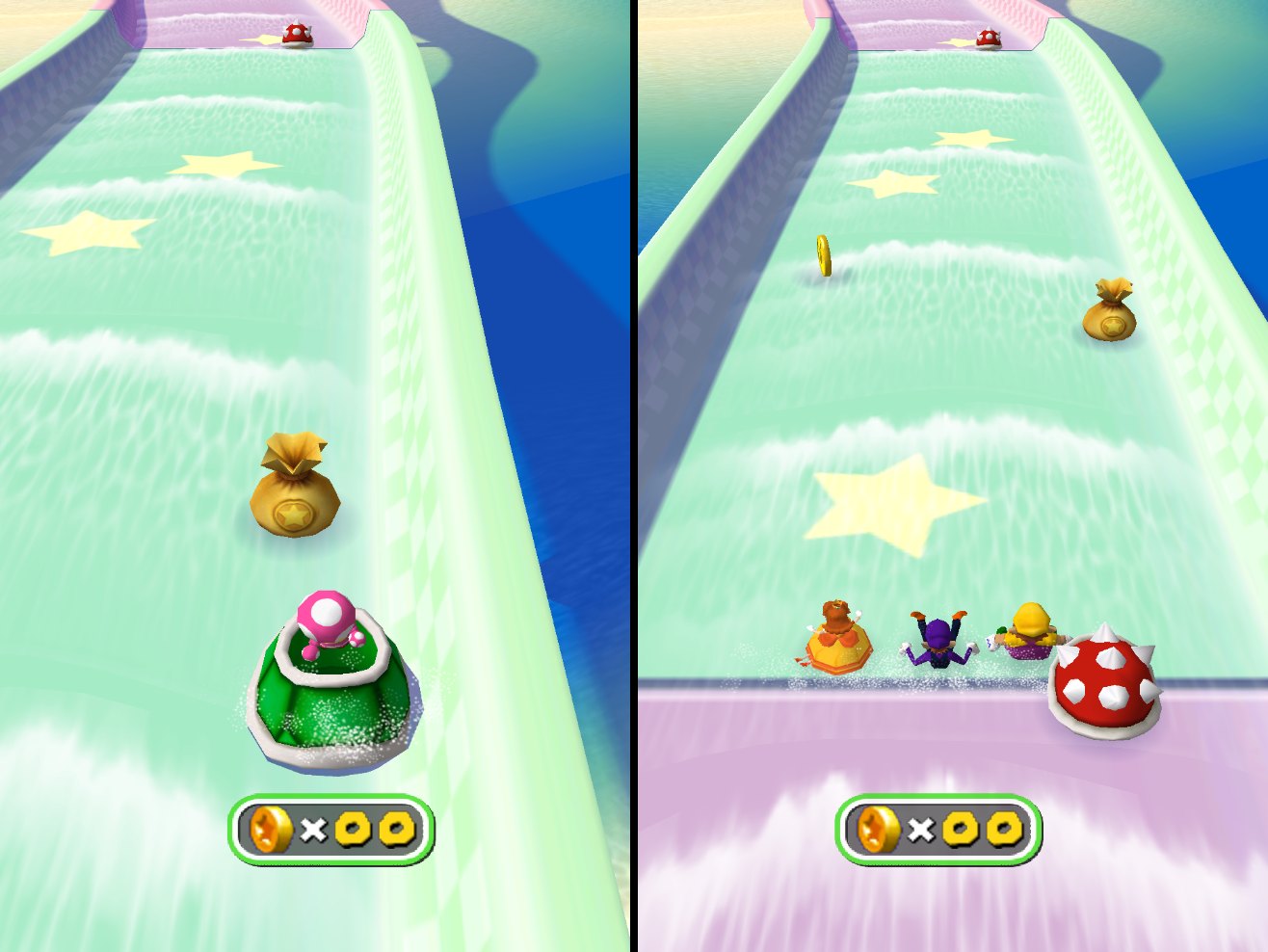
Cash Flow1-vs-3 · coinGrab coins and coin bags on the way down a water slide, and mind the Spiny Shells.
Sink or Swim1-vs-3The soloist drops mines into a pool on three swimmers. If one is still afloat at the end, the swimmers win.
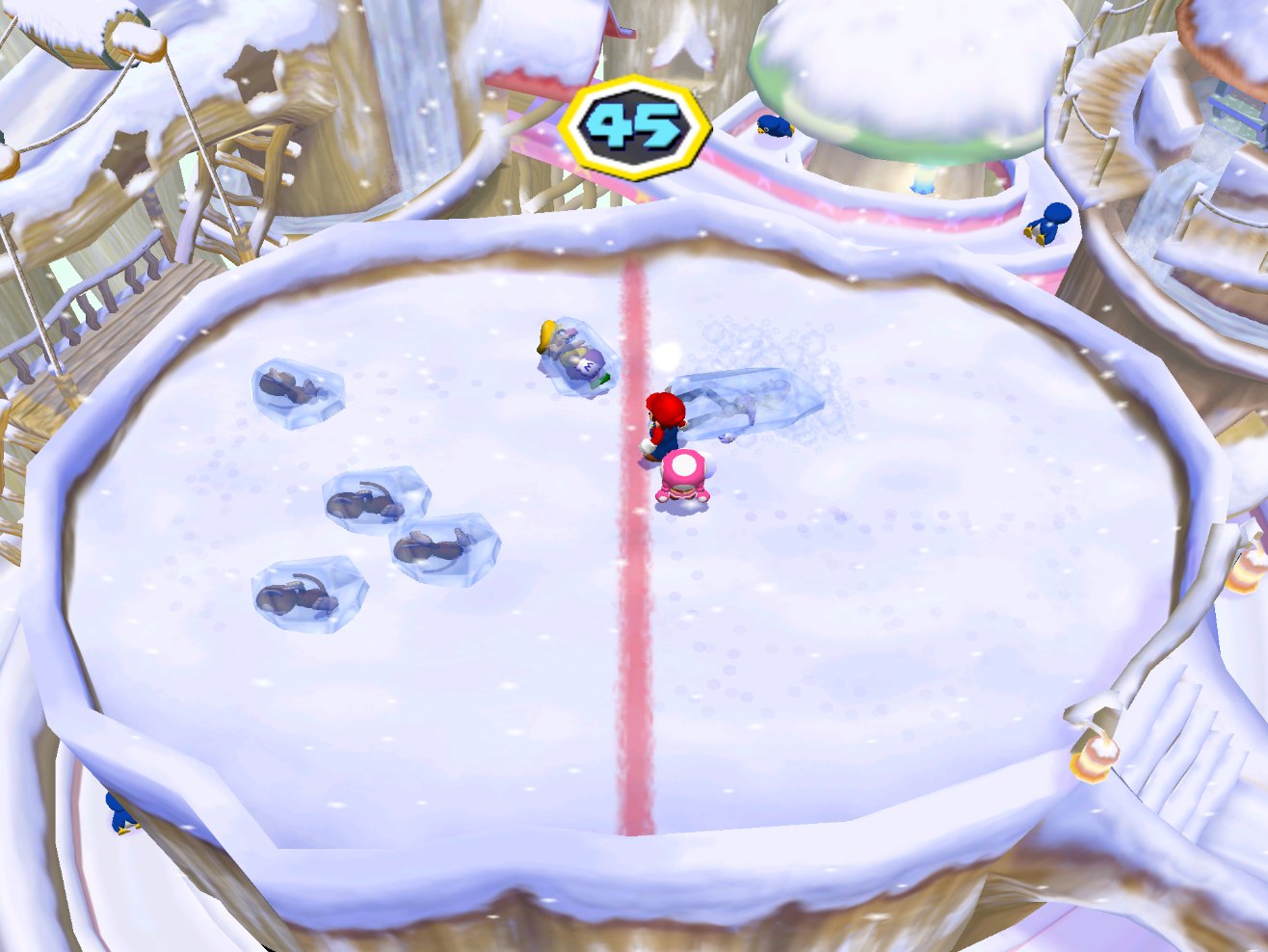
Snow Brawl1-vs-3A snowball fight in which a hit freezes you. The soloist, backed by Ukikis by day and Shy Guys by night, must freeze all three. In Jamboree.
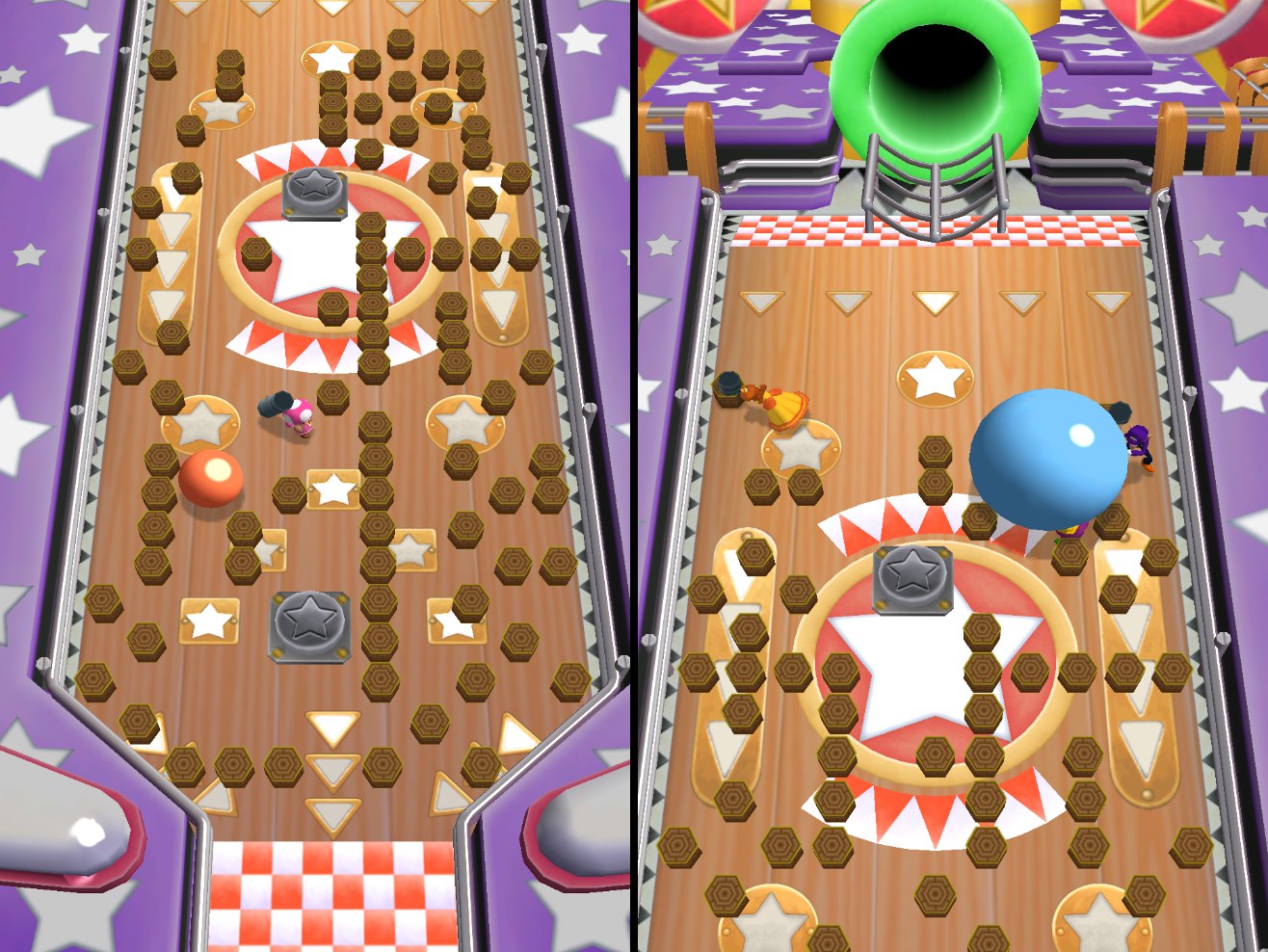
Ball Dozers1-vs-3Hammer away the pegs under your ball so that it rolls to the bottom before the other side’s does.
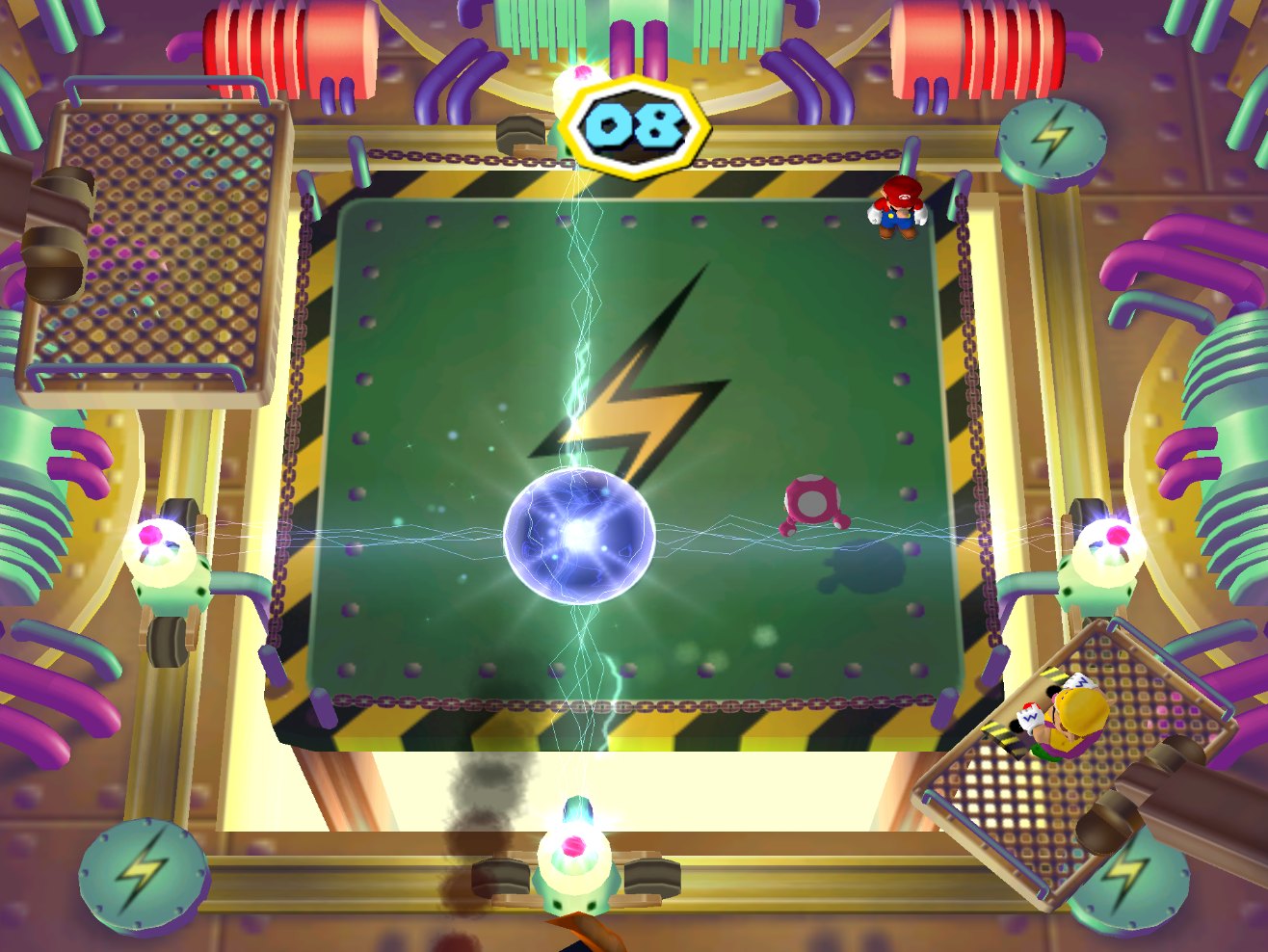
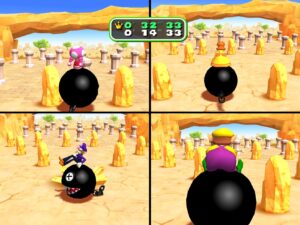
Surge and Destroy1-vs-3The soloist steers a ball of electricity at three players who must stay alive for 30 seconds.
Pop Star1-vs-3A race to burst a balloon: the soloist pumps with a hammer, the three by ground-pounding.
Stage Fright1-vs-3Three players fire balls at the one on stage, who has to dodge them for 30 seconds.
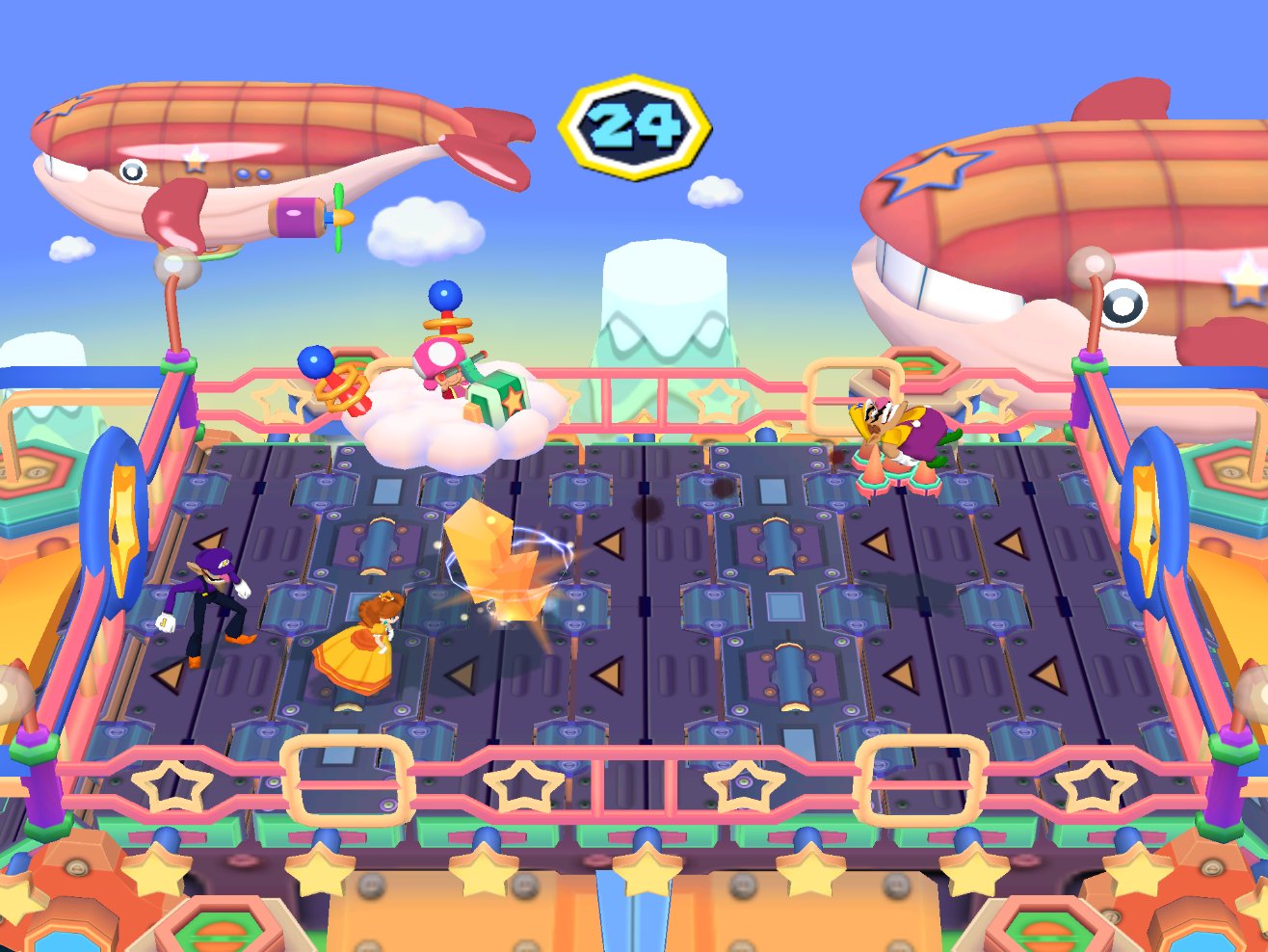
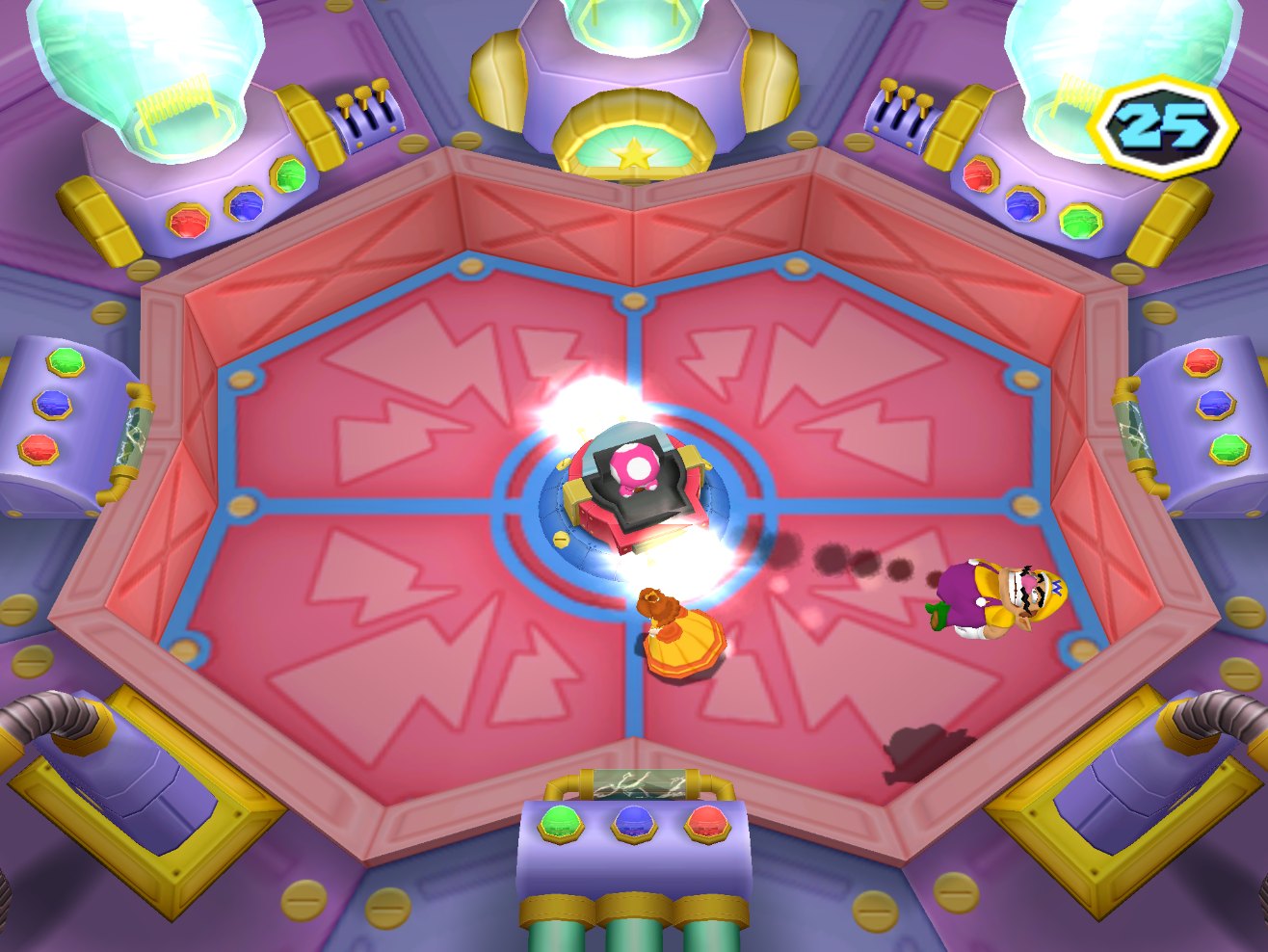
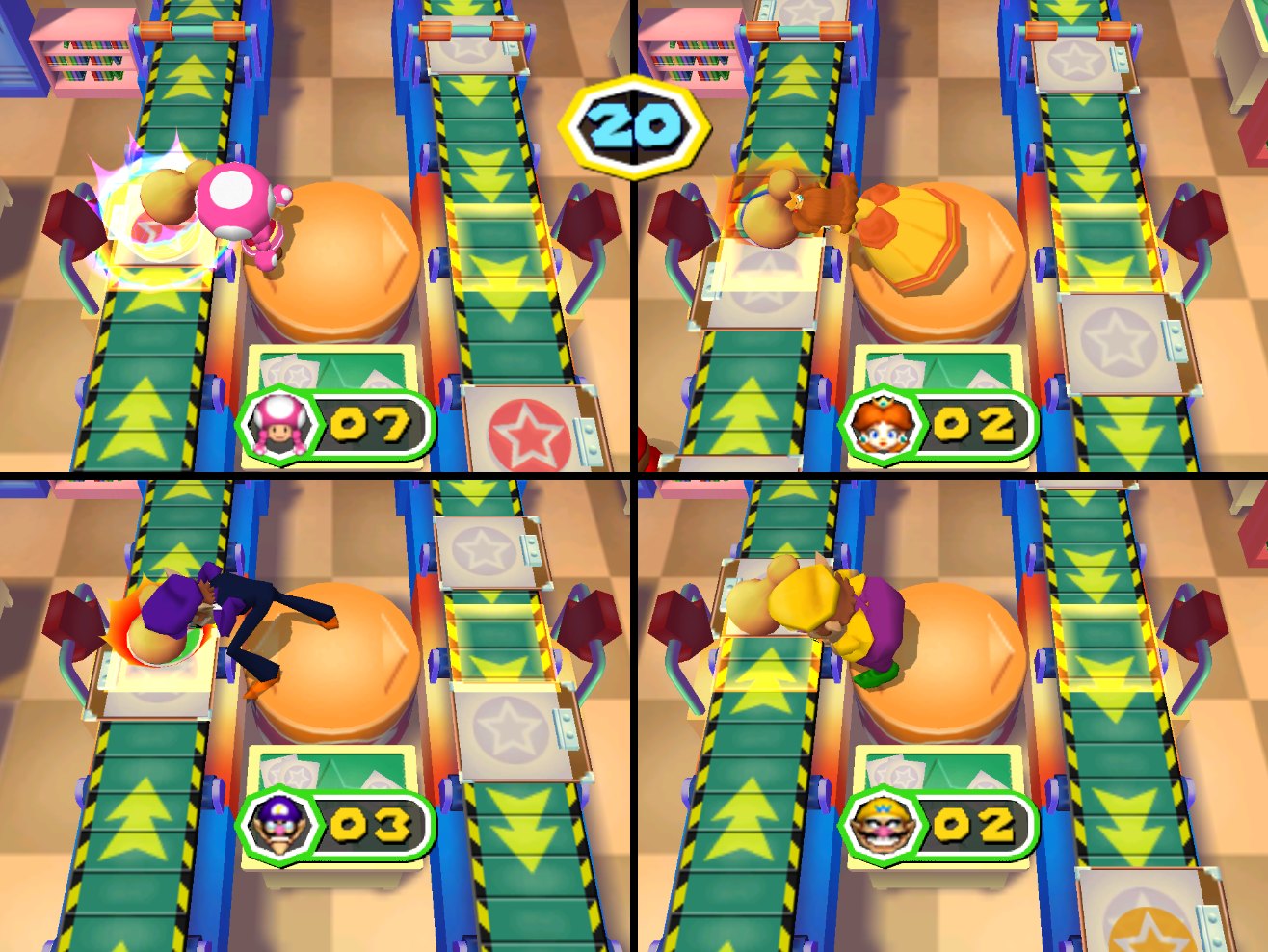
Conveyor Bolt1-vs-3The soloist rides a cloud dropping lightning bolts on three players below.
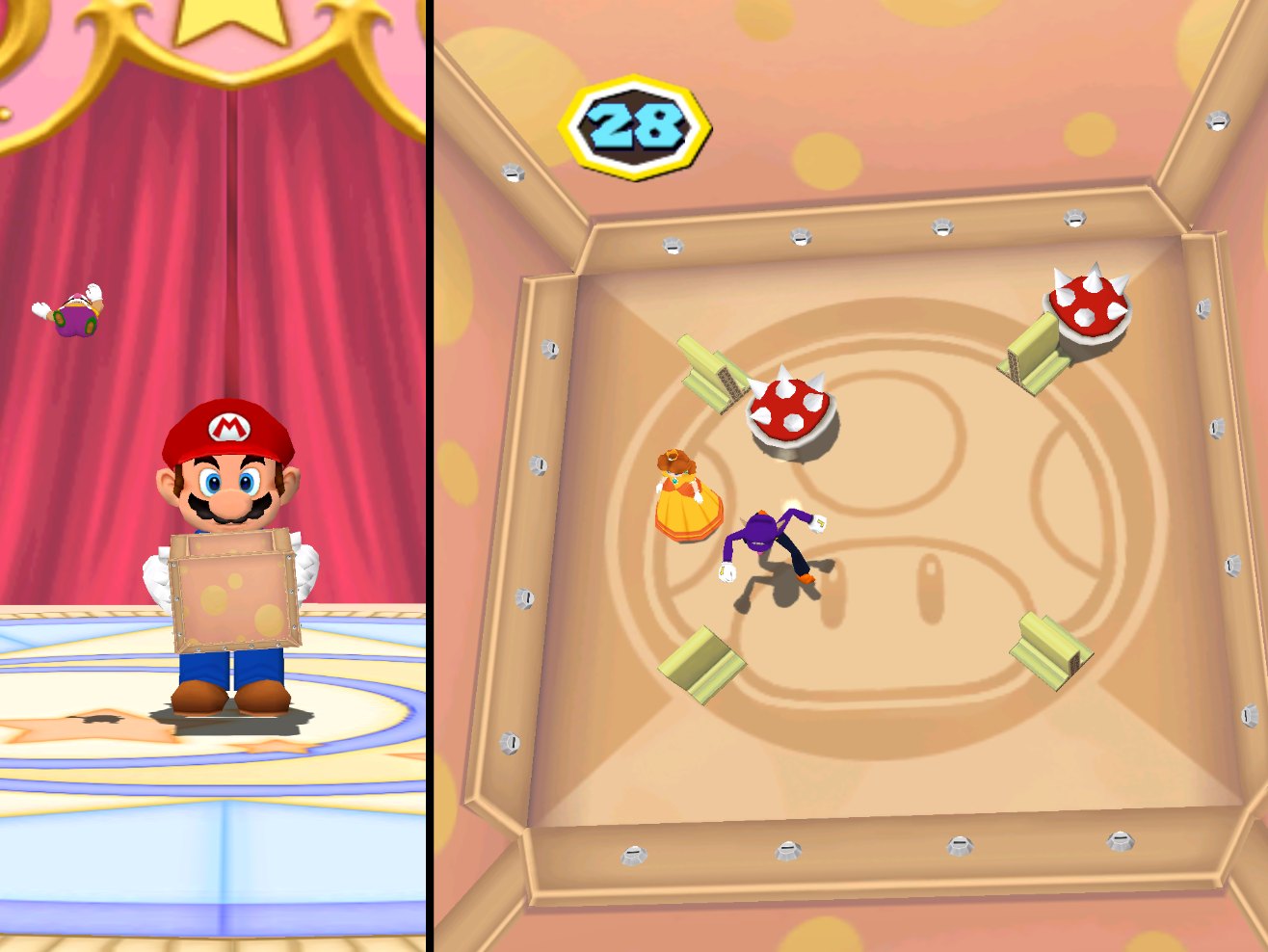
Crate and Peril1-vs-3Three players are shut in a crate with Spiny Shells and the soloist tilts it. Survive 30 seconds. In The Top 100.
Ray of Fright1-vs-3The soloist fires laser beams that bounce off the walls. The three win if any of them lasts 30 seconds.
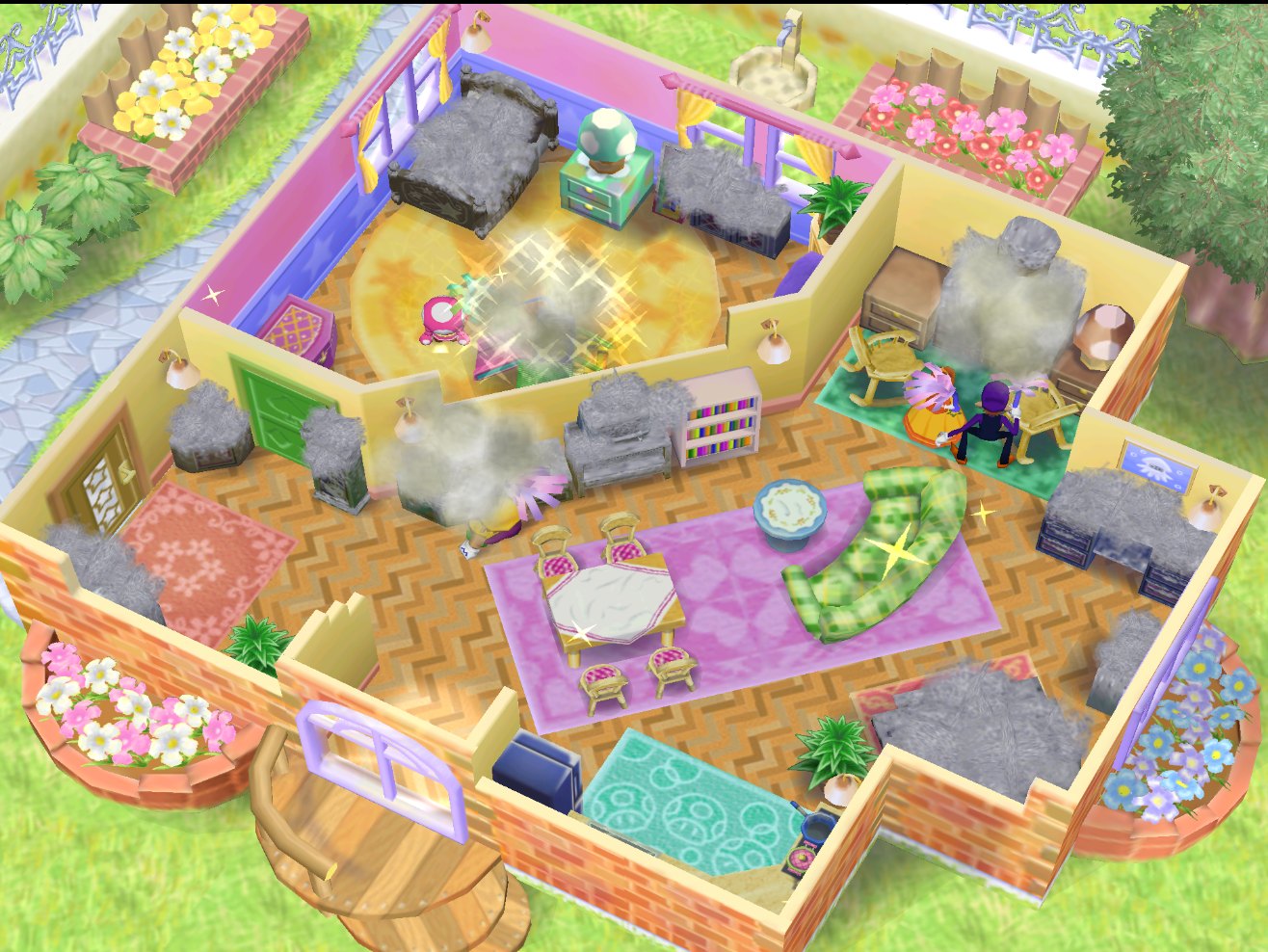
Dust ’til Dawn1-vs-3Housework as a race: each side dusts everything in its room, and the first to finish wins.
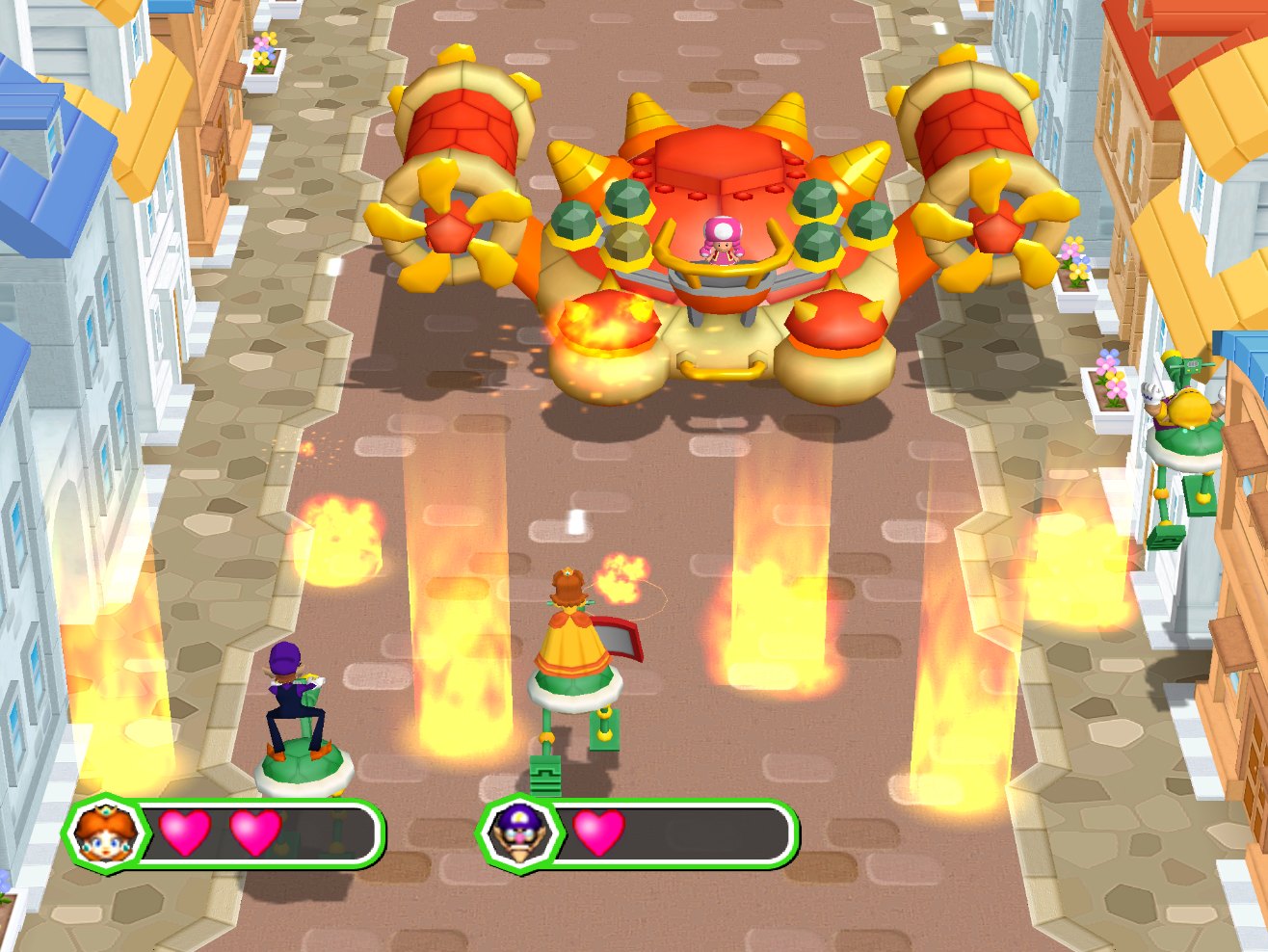
Verbal Assault1-vs-3 · MicThe mic player commands a battle craft by voice, calling “Fire” or “Laser”, against three walkers that shoot back.
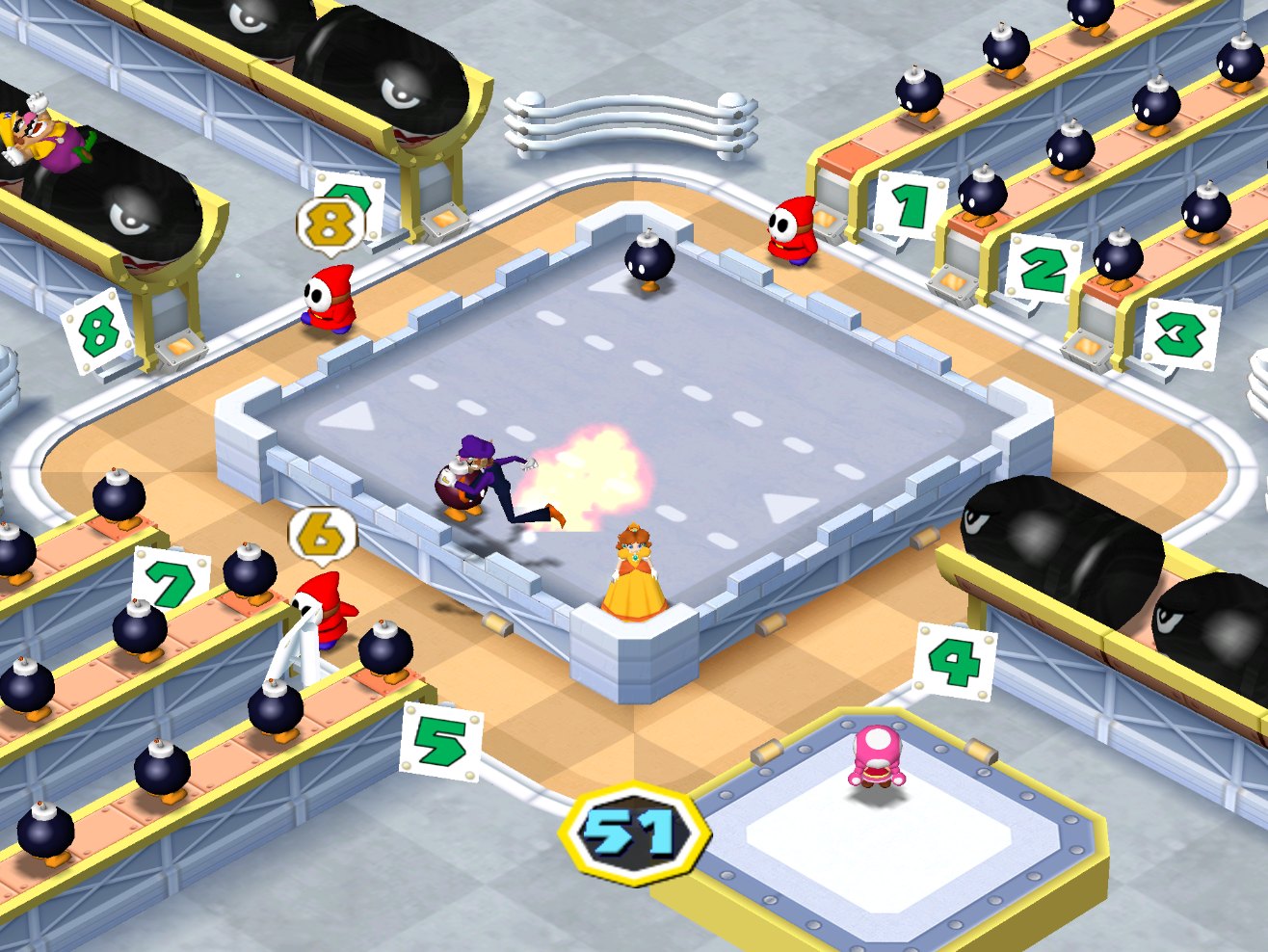
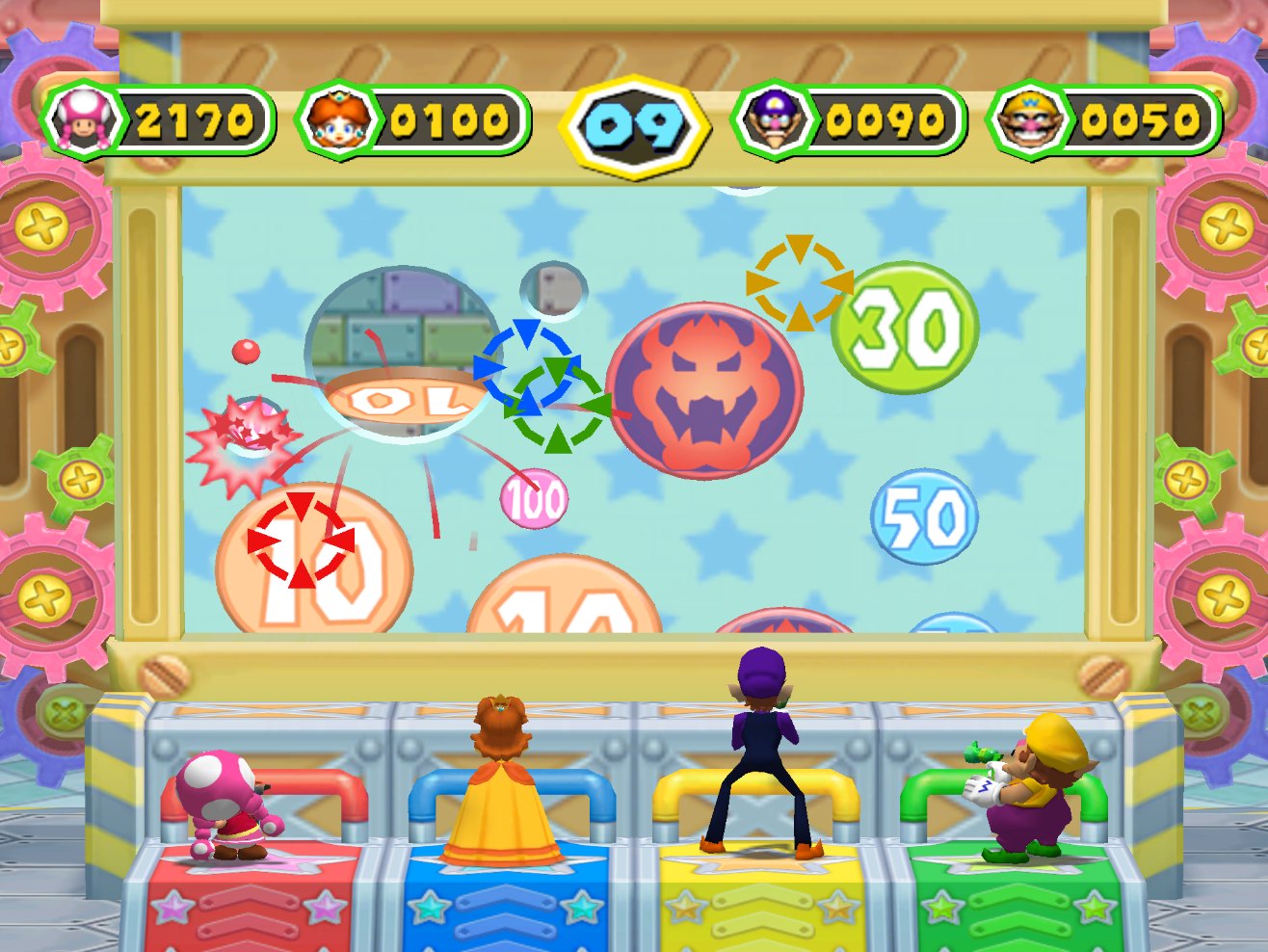
Shoot Yer Mouth Off1-vs-3 · MicThe mic player calls out numbers to launch Bullet Bills and Bob-ombs at three players, who must last 60 seconds.
Talkie Walkie1-vs-3 · MicThe mic player walks to a treasure chest by spoken directions while three players pelt them with Spinies.
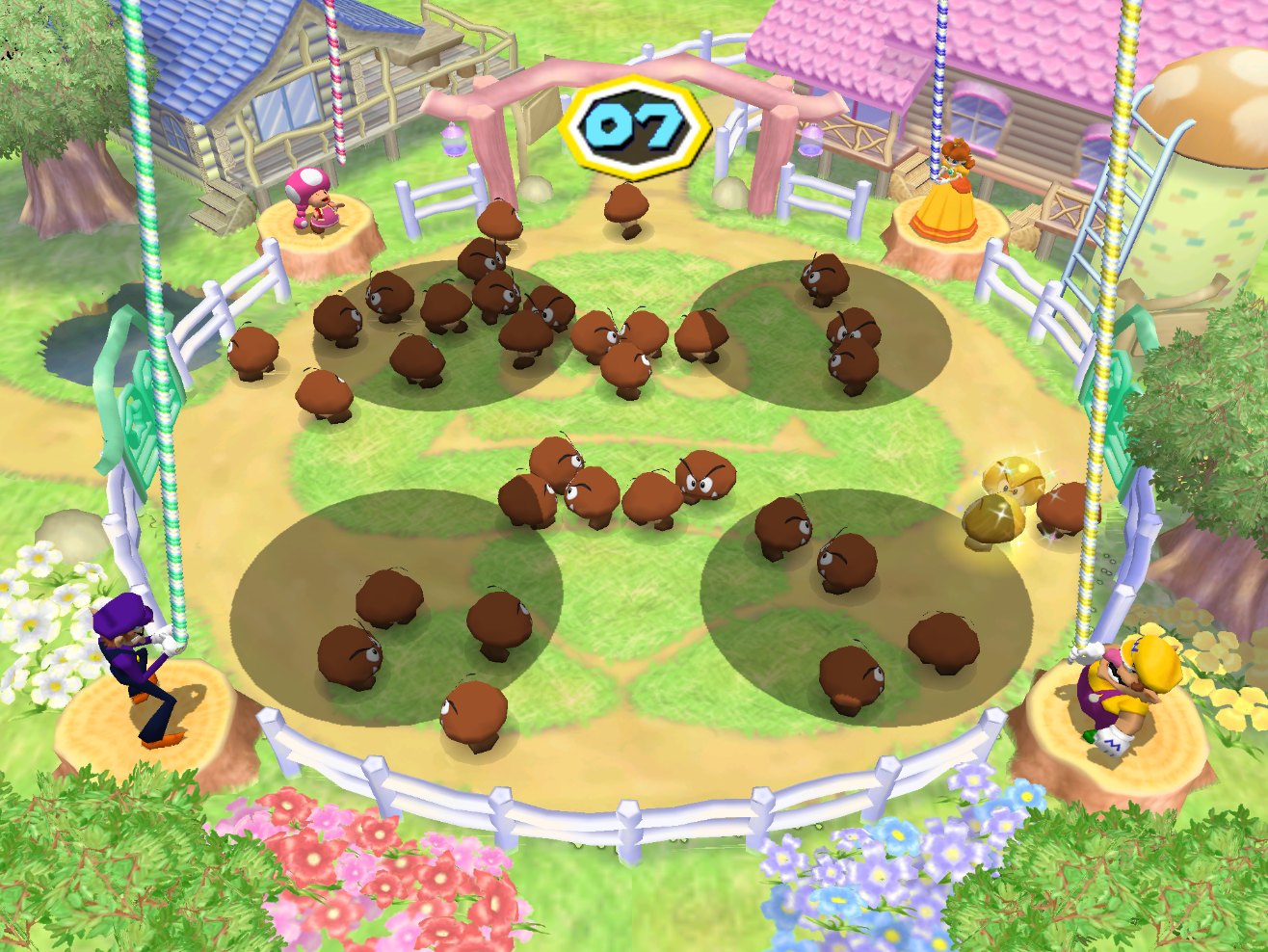
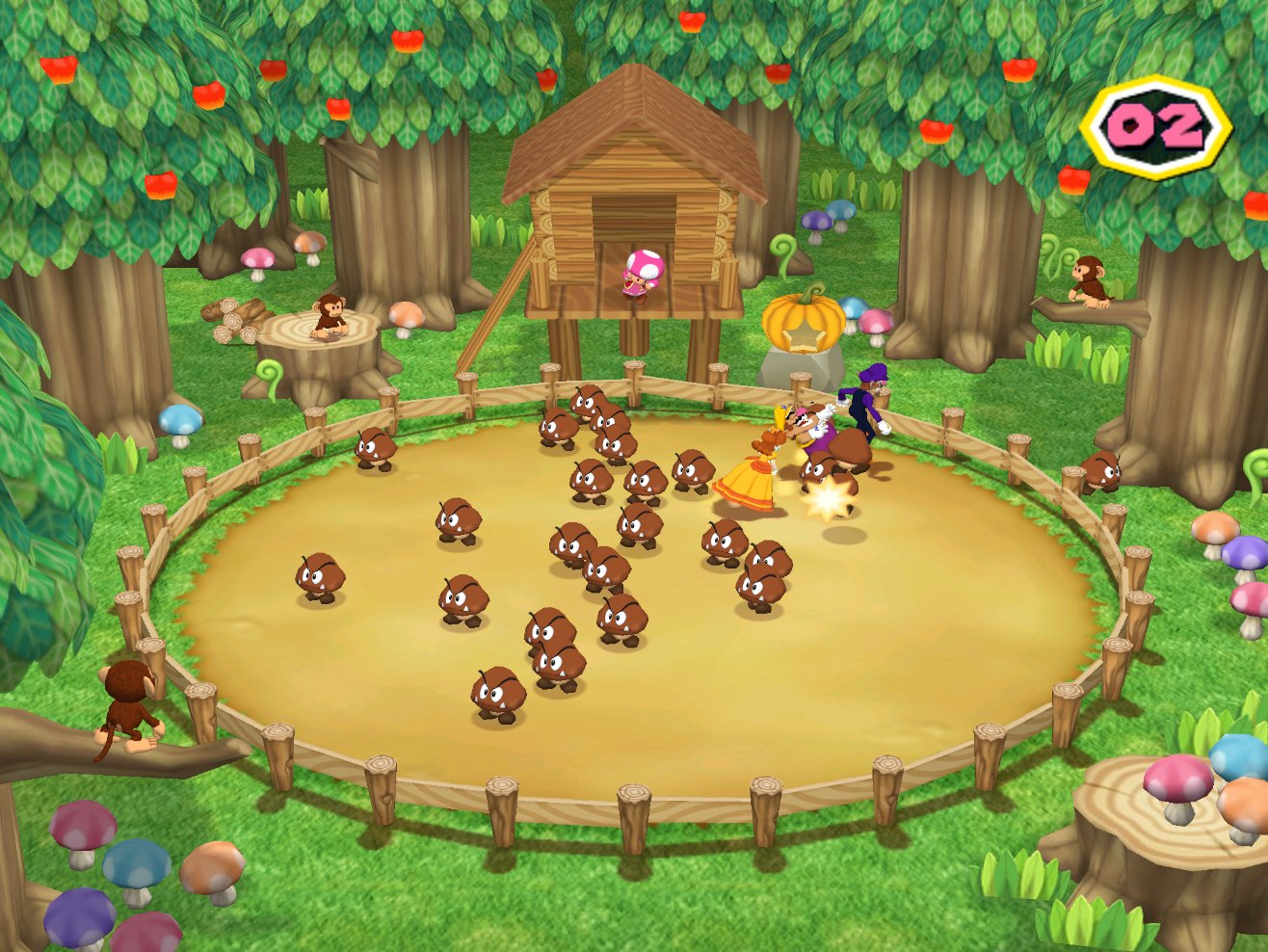
Word Herd1-vs-3 · MicThe mic player herds Goombas by shouting directions, or “Scramble”, while the three try to punch them all out in 30 seconds.
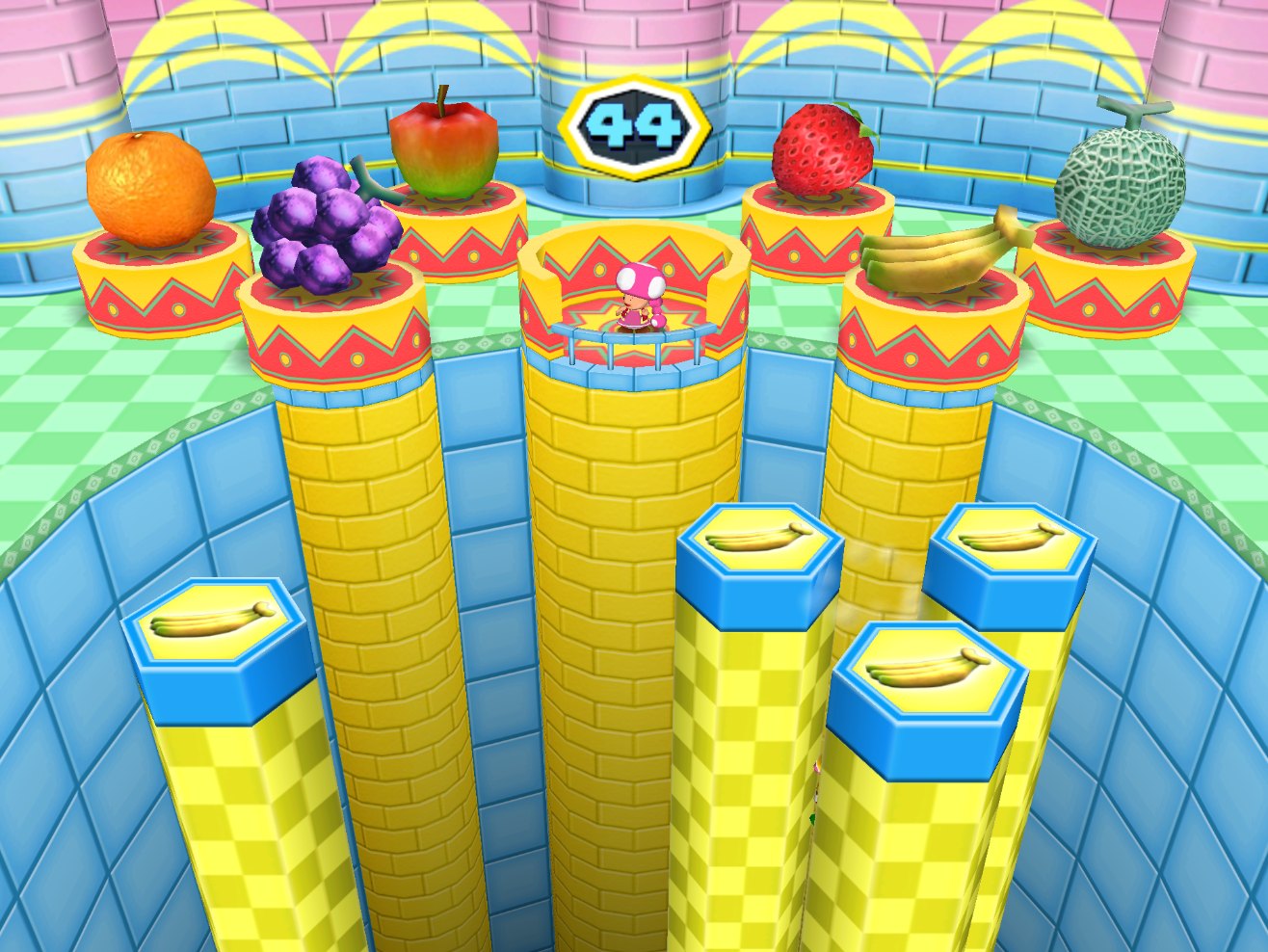
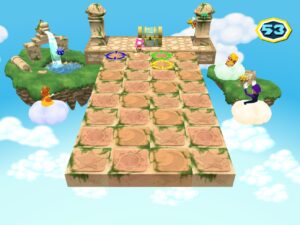
Fruit Talktail1-vs-3 · MicThe mic player names a fruit and every platform but that fruit’s collapses. The three must get there in time.
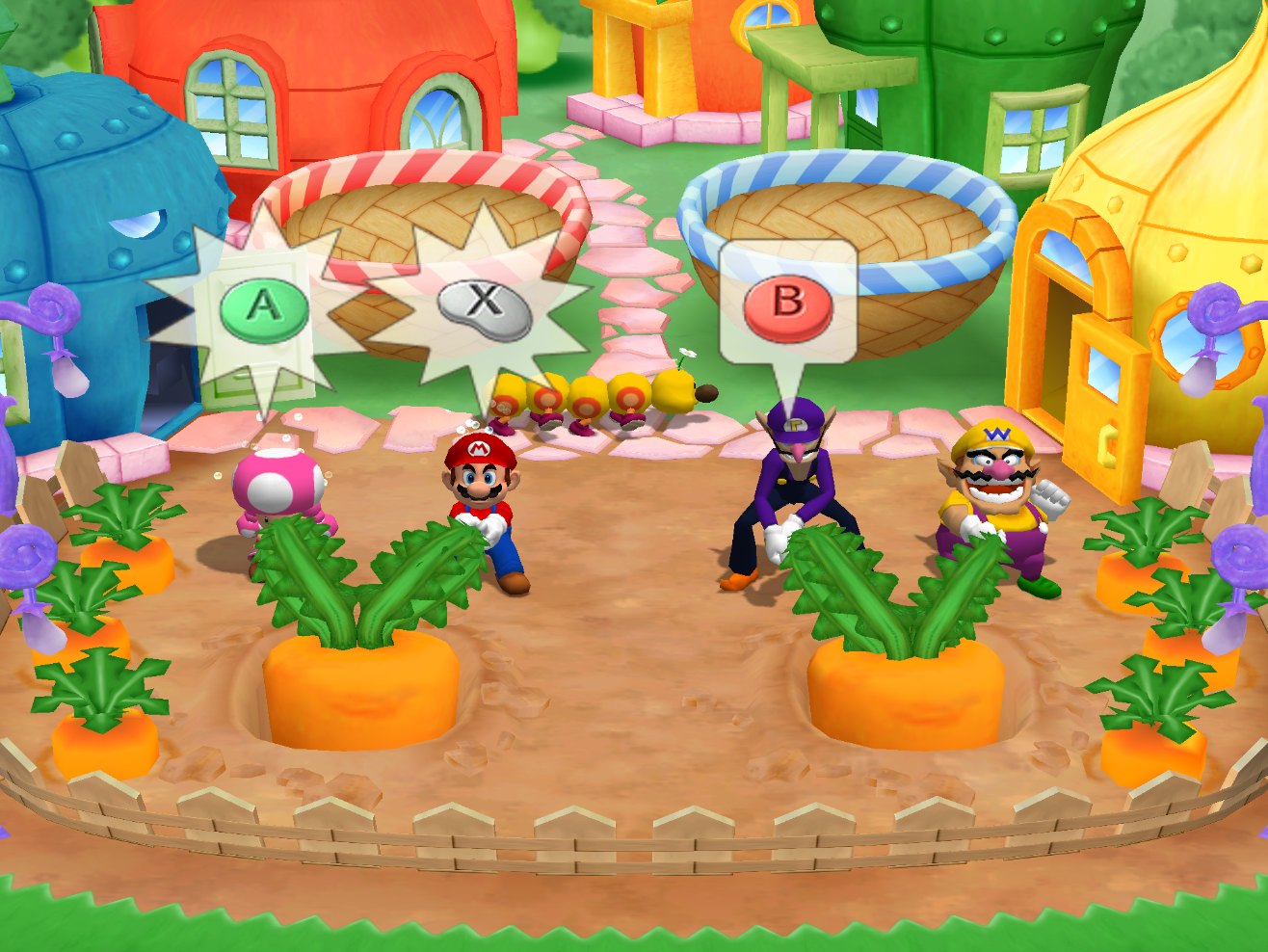
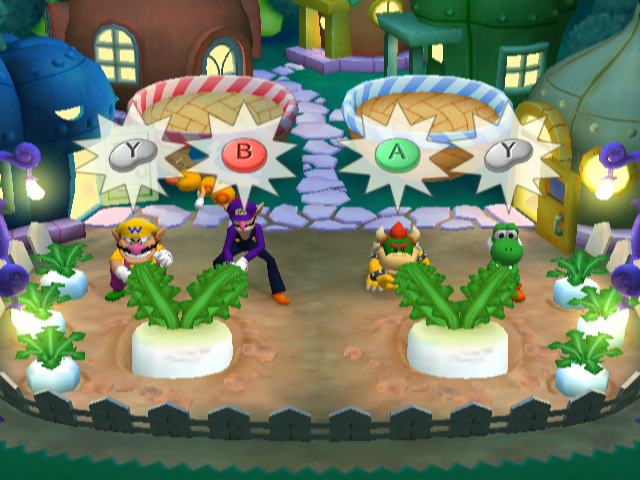
Garden Grab2-vs-2Take turns pressing the buttons shown to heave a giant carrot out of the ground. In Japan it is a daikon.
Pixel Perfect2-vs-2Ground-pound floor panels to copy a pixel picture from Super Mario Bros. 3. First pair to finish two wins.
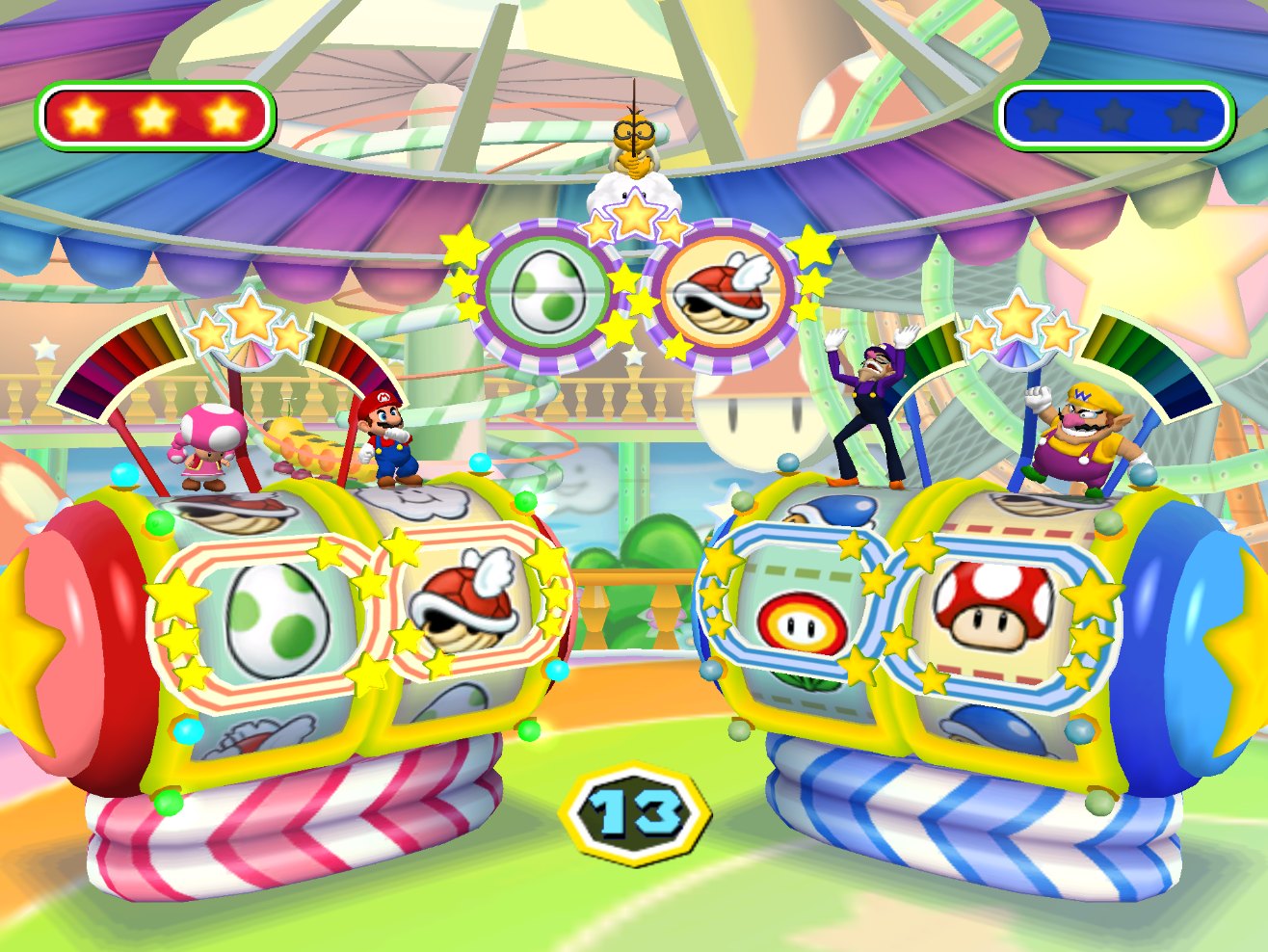
Slot Trot2-vs-2Spin your wheels to match the symbols Lakitu holds up. Three points wins. In The Top 100.
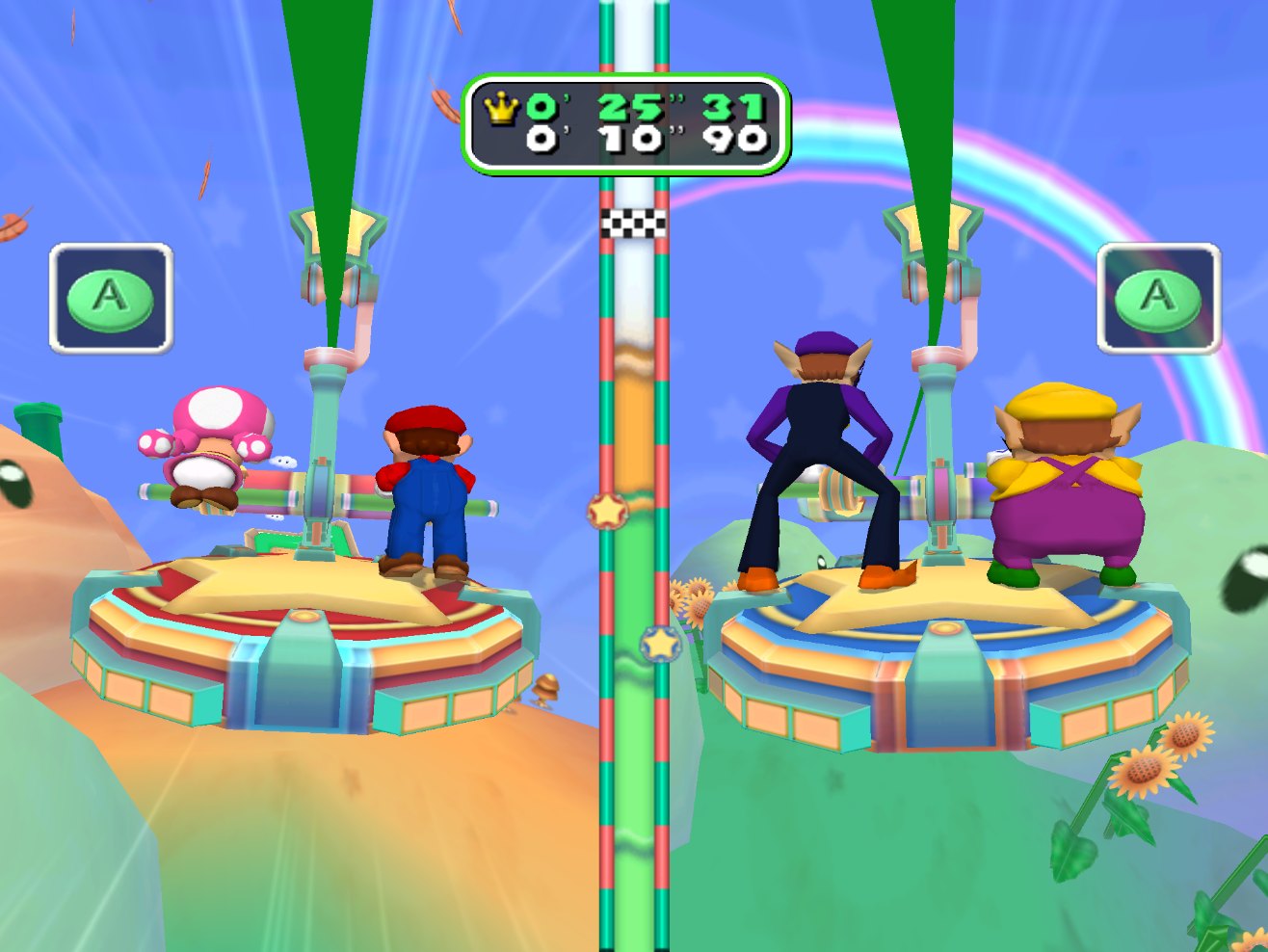
Gondola Glide2-vs-2Press the buttons shown, A and B by turns, to speed your cable car to the top.
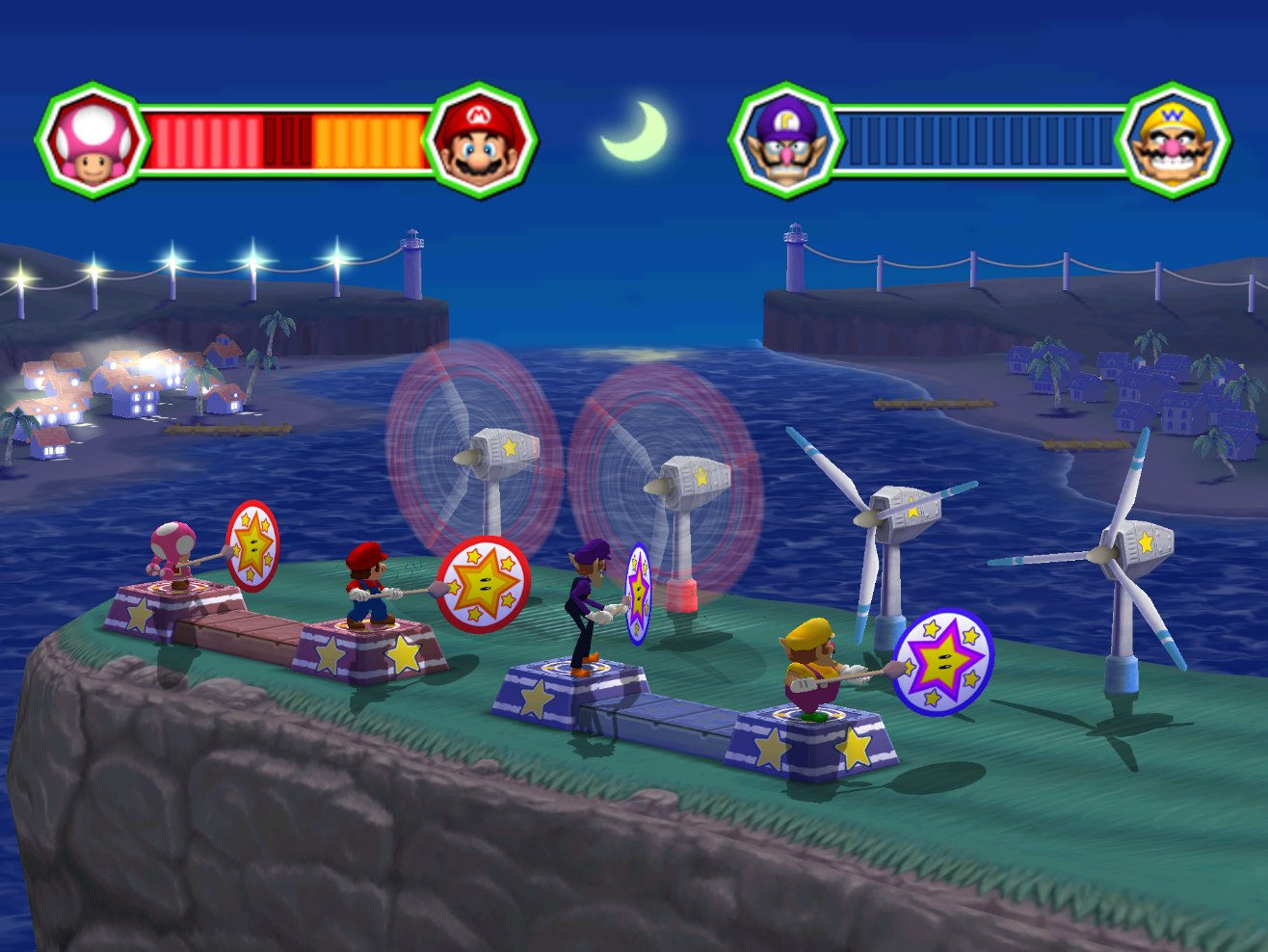
Light Breeze2-vs-2 · night onlyAlternate L and R to spin a turbine and fill your side’s power meter first.
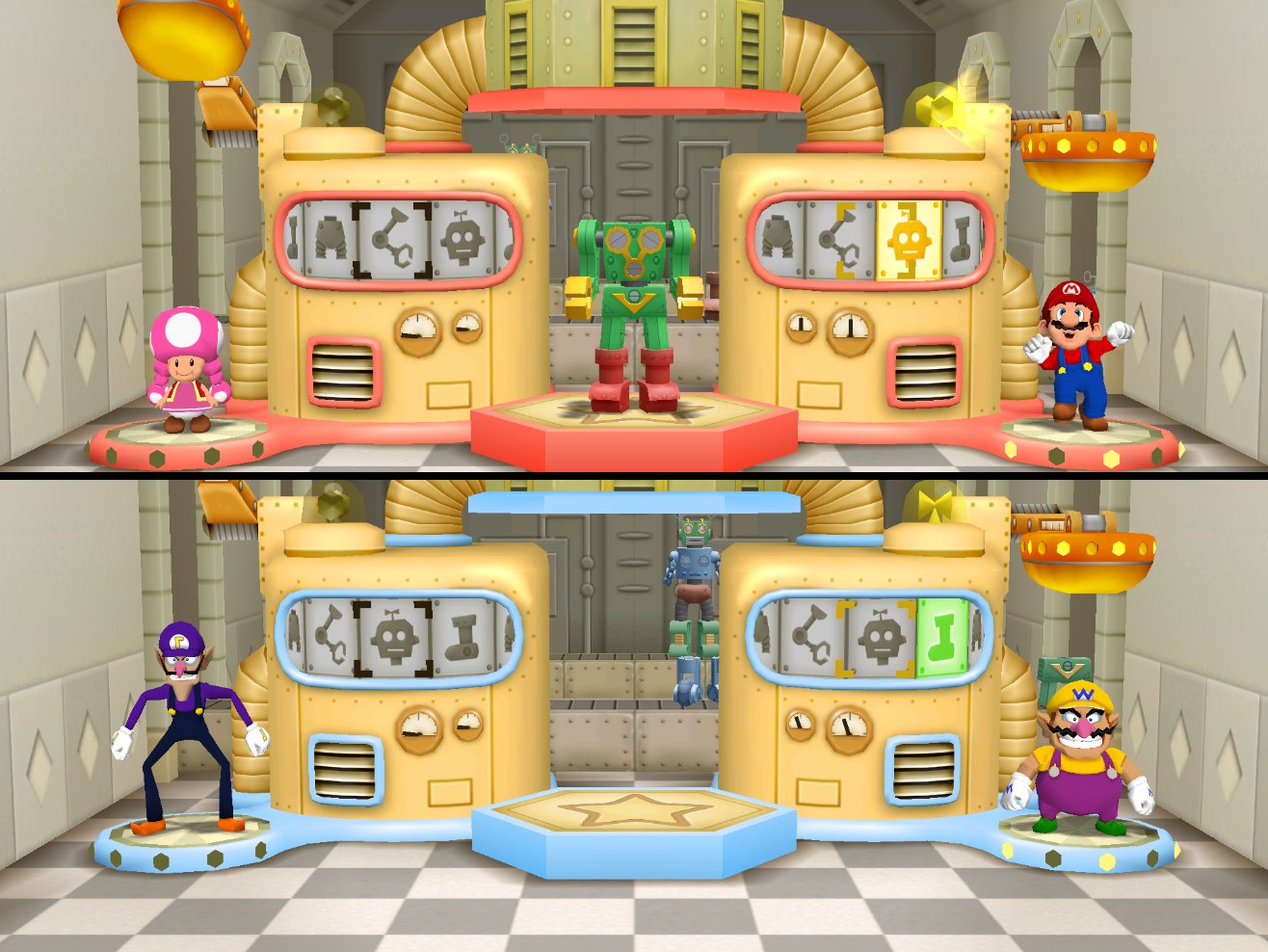
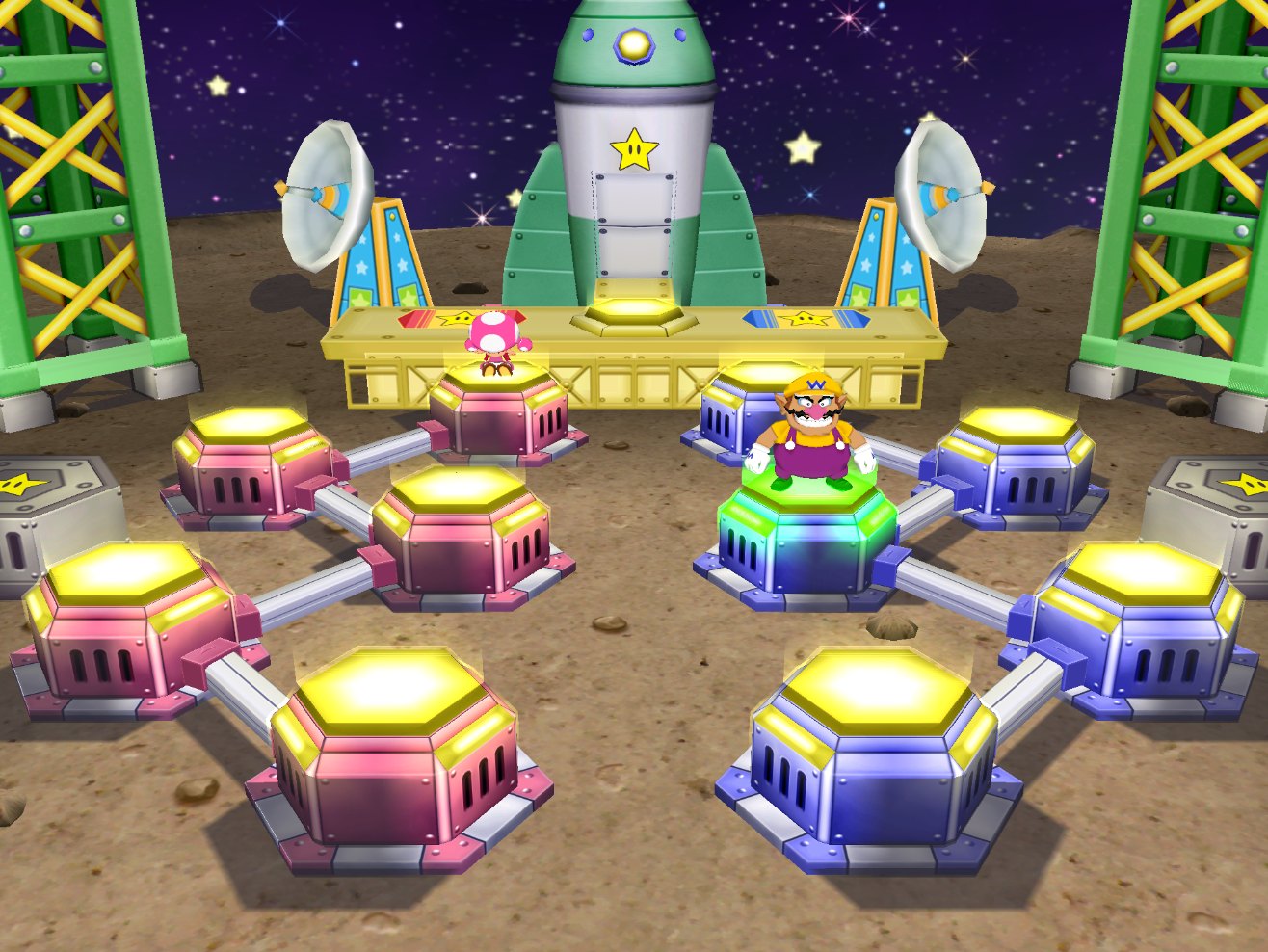
Body Builder2-vs-2Take turns stopping a wheel on the lit segment to bolt a robot together, part by part.
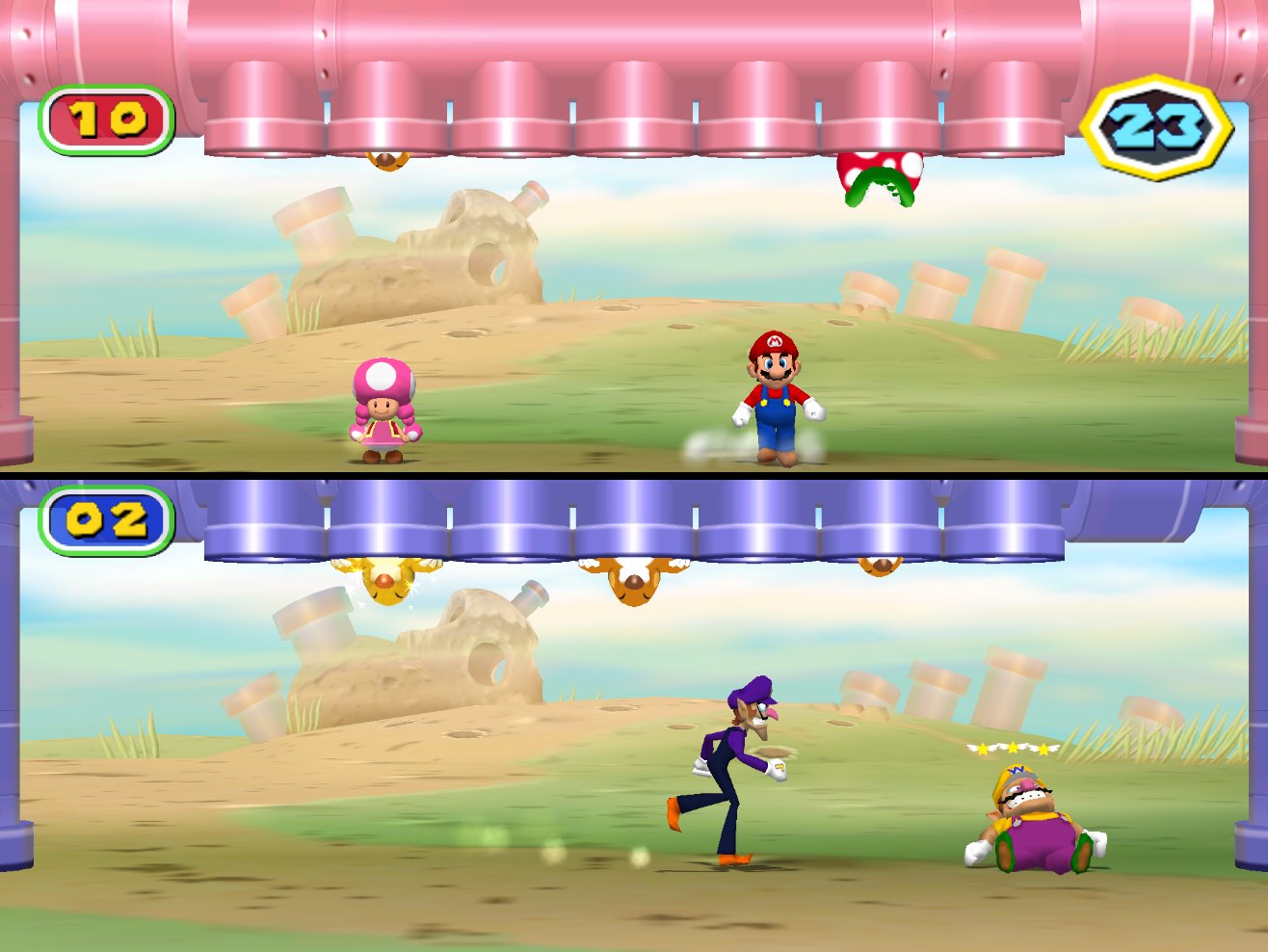
Mole-it!2-vs-2Whack the Monty Moles that pop out of pipes, and not the Piranha Plants. Jump on them by day; ground-pound them by night.
Cashapult2-vs-2 · coinCatapult your partner into the sky to grab floating coins, then swap. Two jumps each. In Superstars.
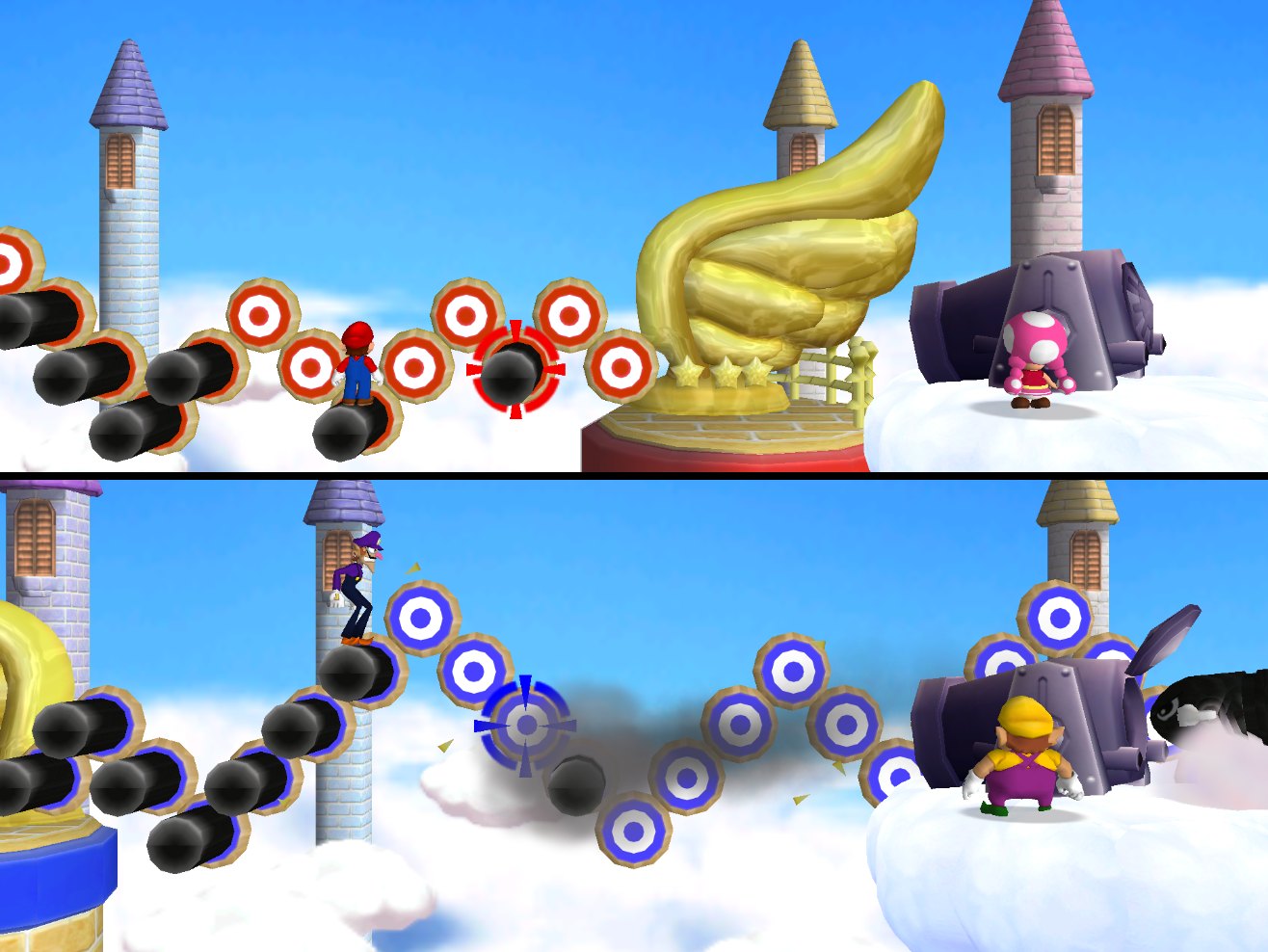
Jump the Gun2-vs-2One partner fires Bullet Bills and the other uses them as stepping stones to the goal. In Jamboree.
Rocky Road2-vs-2Punch and kick your way through the boulders blocking a road. In The Top 100 and Superstars.
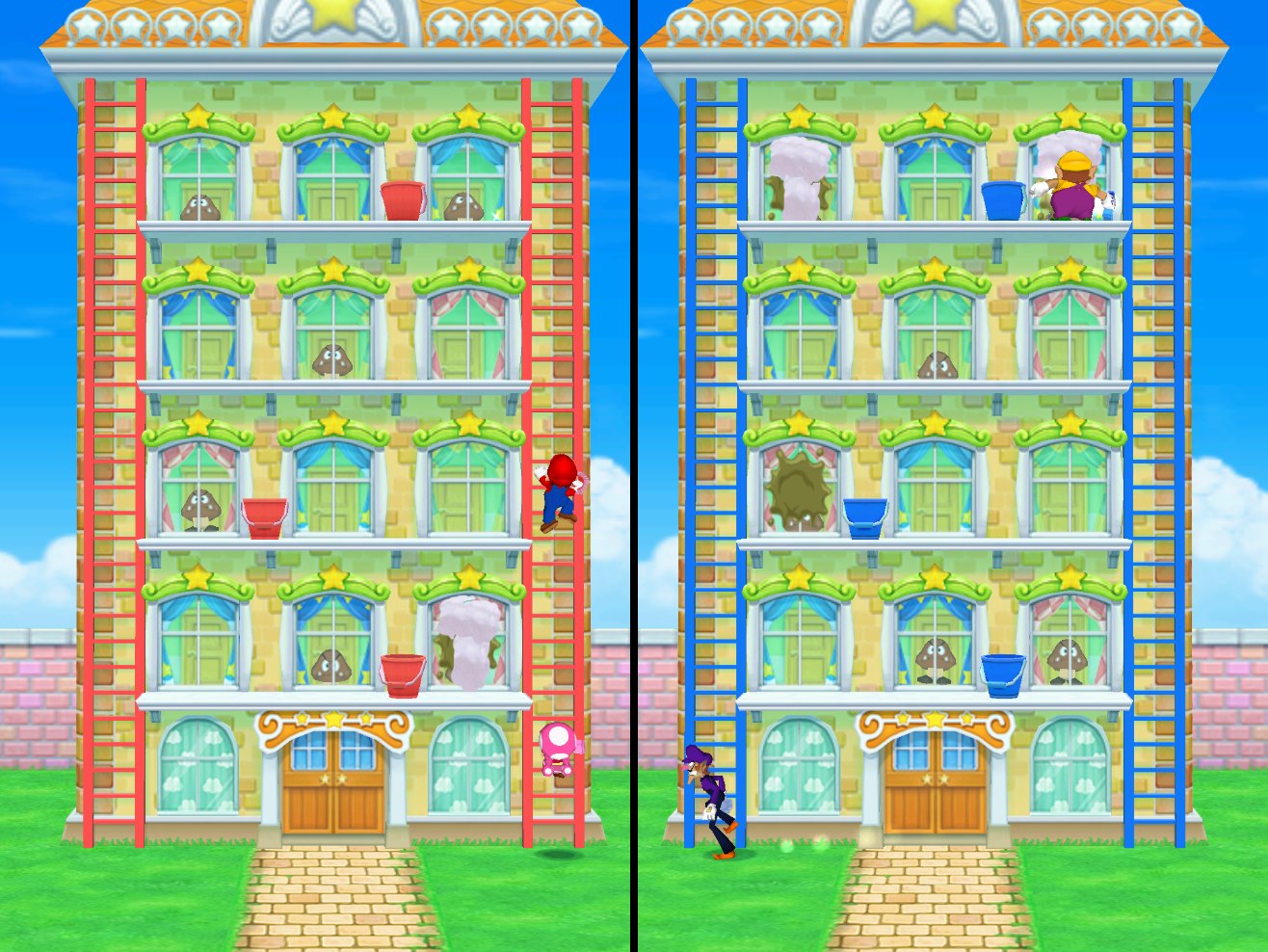
Clean Team2-vs-2Window cleaning for two: one sprays the foam on, the other wipes it off.
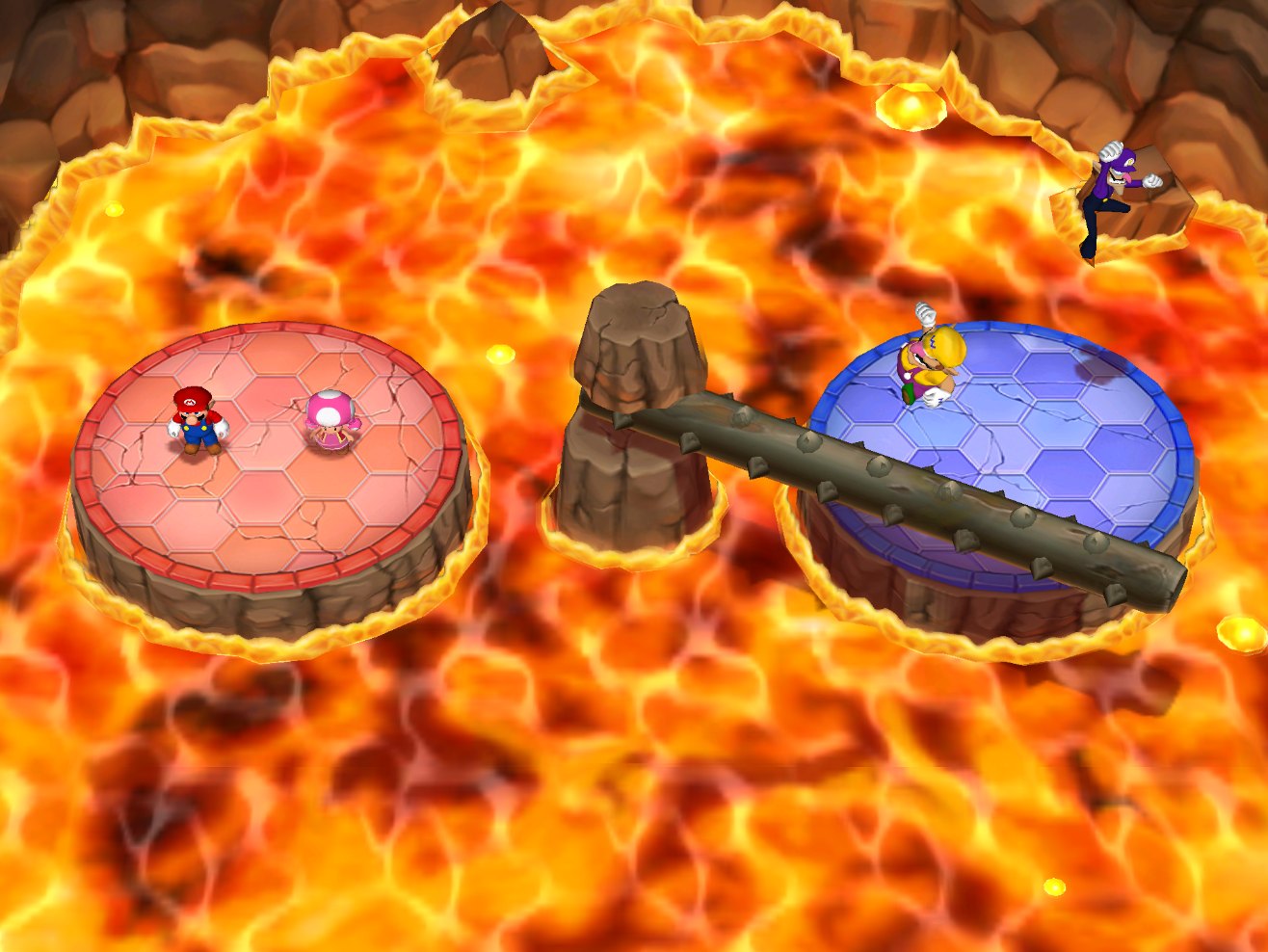
Burnstile2-vs-2Jump the arms of a turnstile as it sweeps over platforms above lava. Last team with a player standing wins. In Superstars.
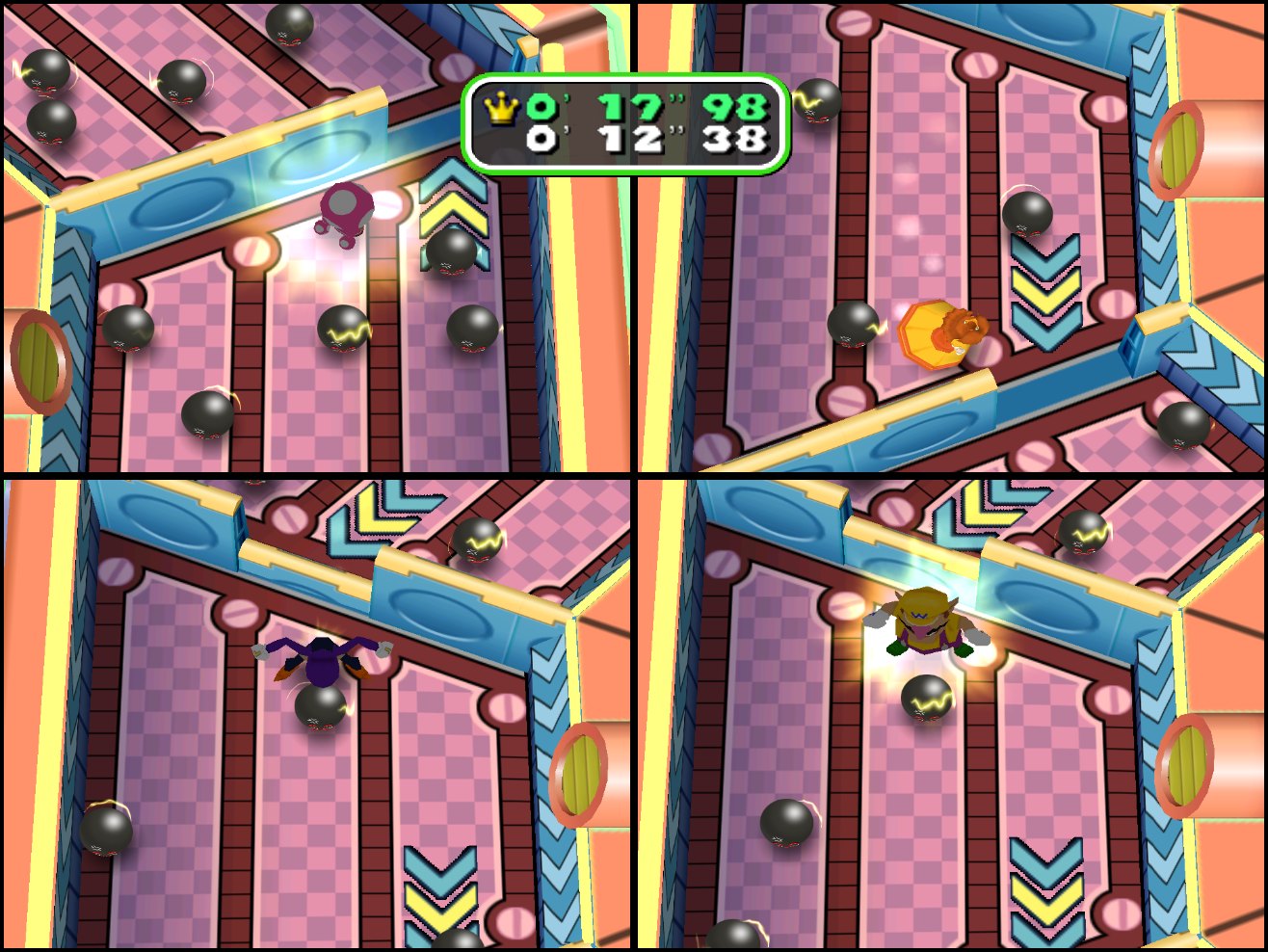
Hyper SniperBattleThirty seconds of target shooting through a scope. Hit a Bowser target and your score goes back to nothing.
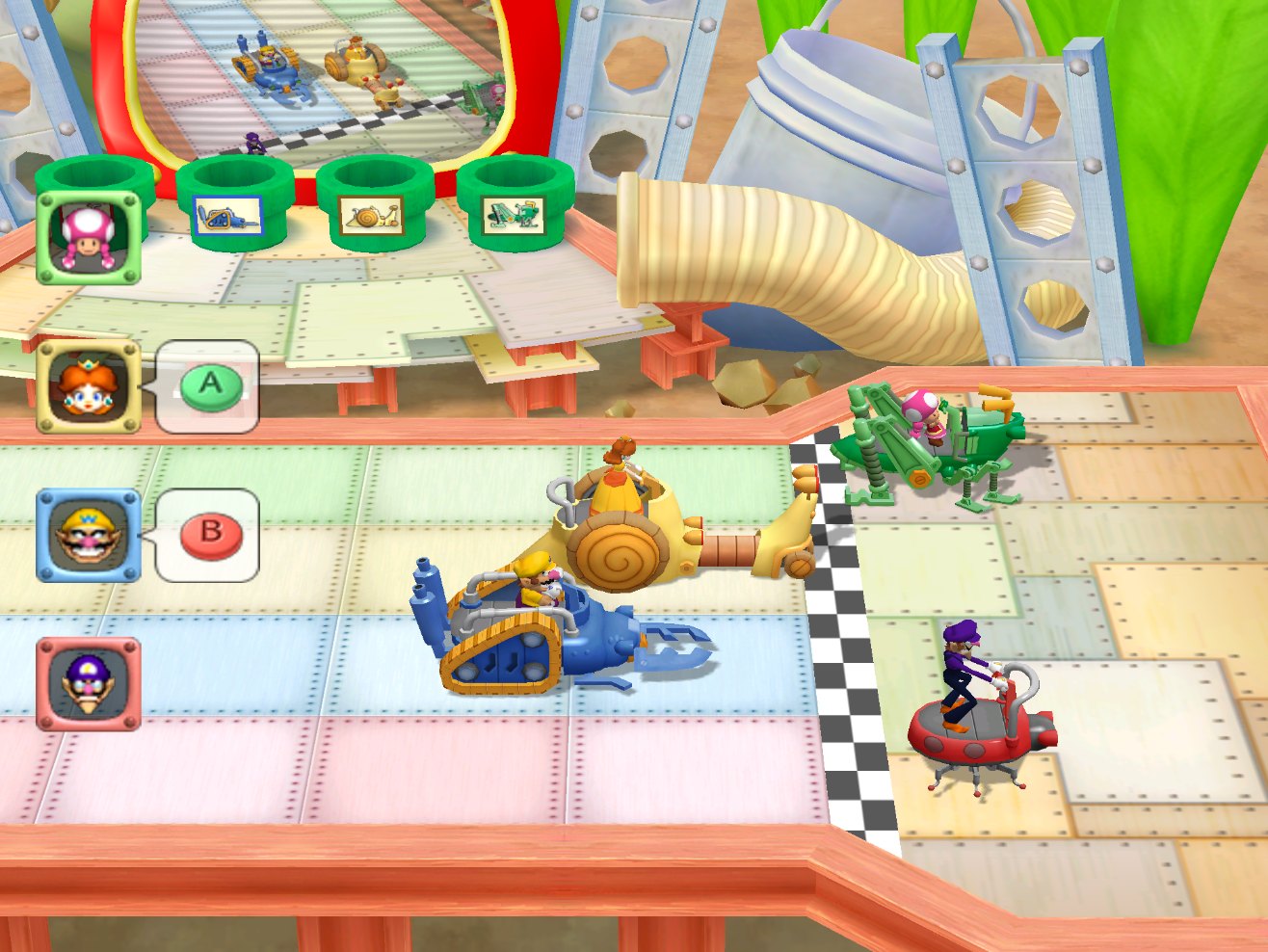
InsectirideBattleChoose an insect to ride, each with its own pattern of buttons, and race it to the line.
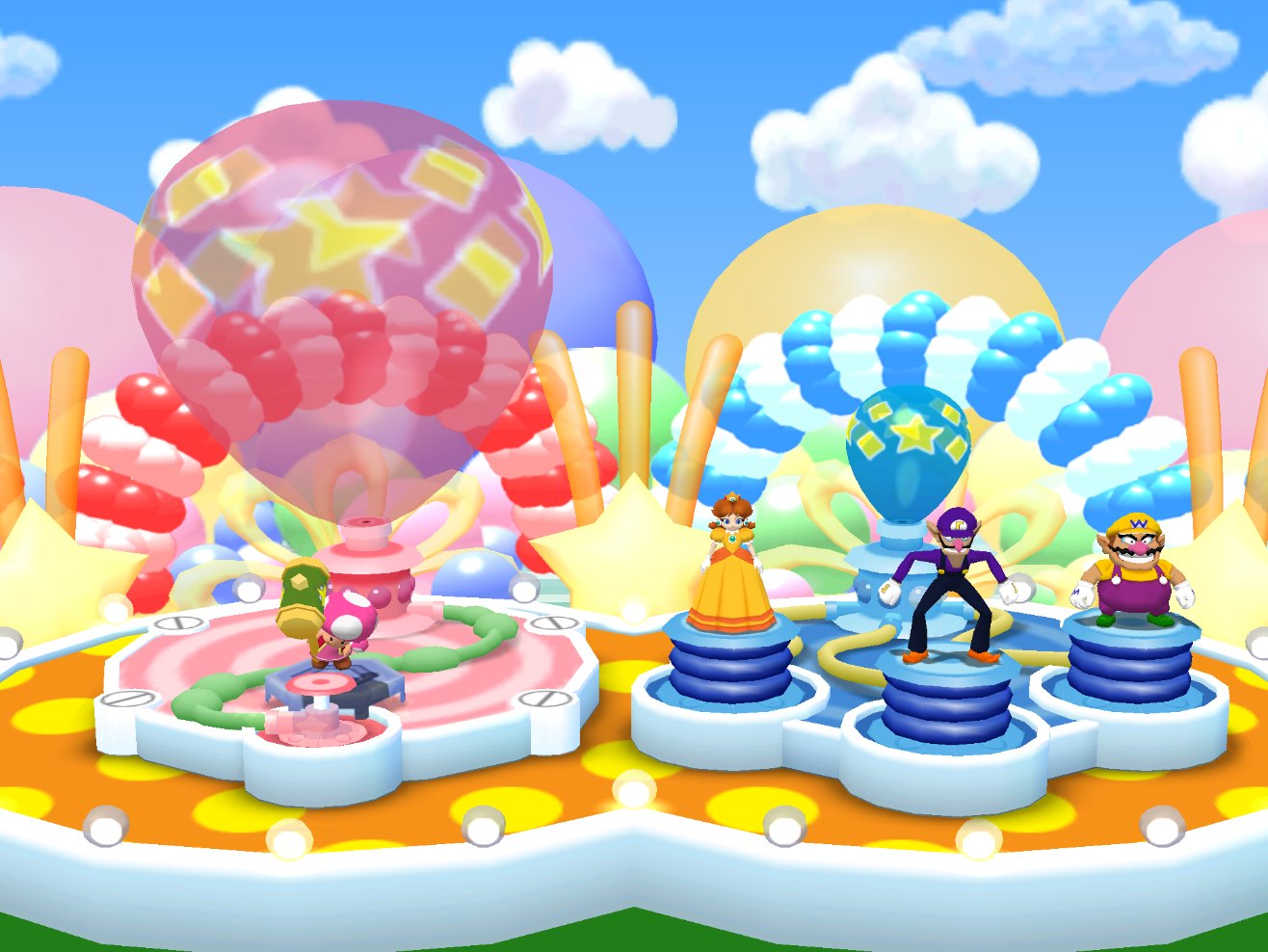
Stamp By MeBattlePapers pass on two conveyor belts: A stamps the right-hand one, B the left. Most papers stamped wins.
Wrasslin’ RapidsBattleA free-for-all on a raft going down river. Punch, kick and jump the others overboard.
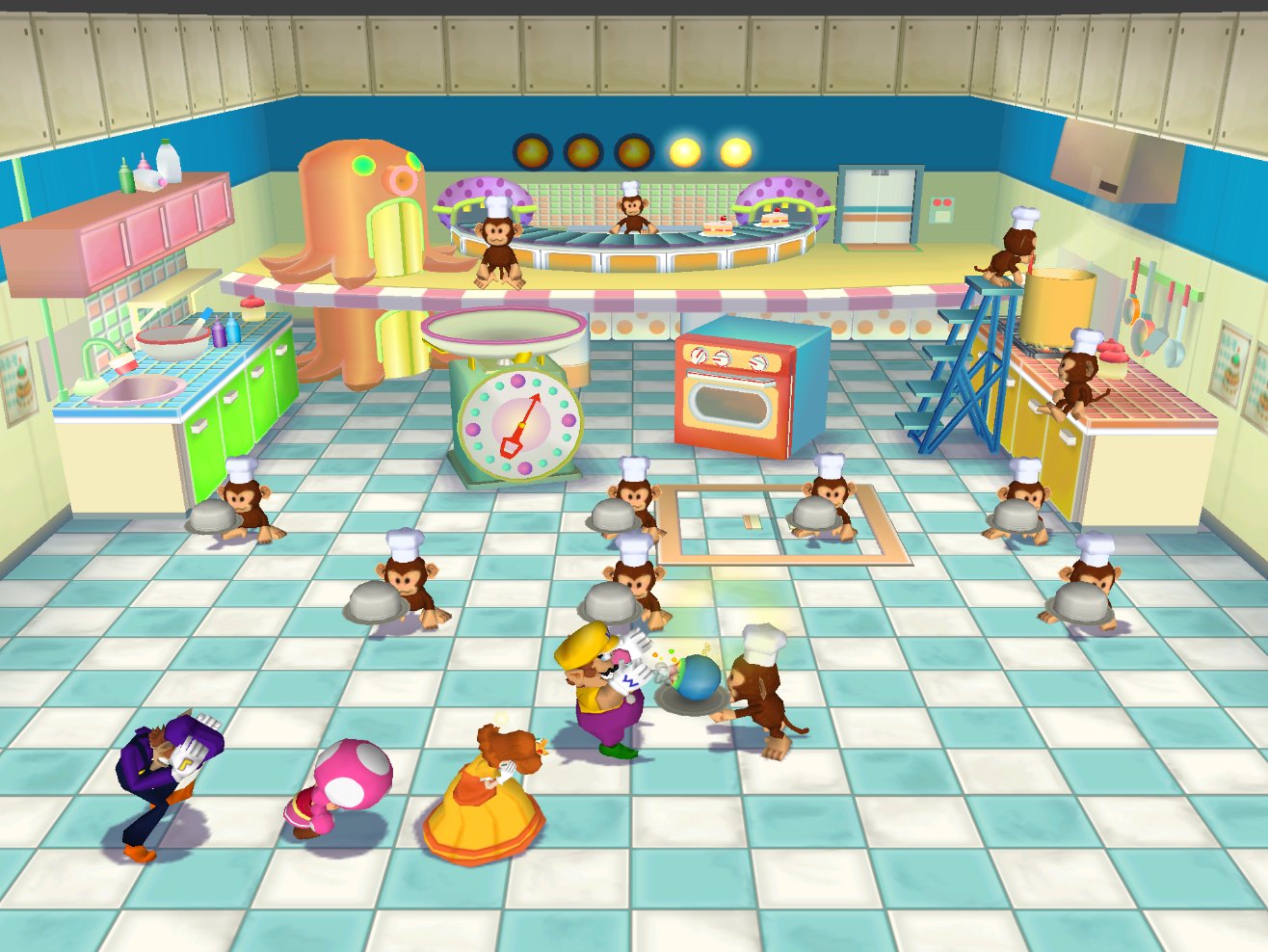
Strawberry ShortfuseBattleUkikis carry covered dishes. Pick one: a cake keeps you in, a bomb puts you out. In The Top 100.
Control ShtickBattleCopy the pose on screen by tilting the Control Stick and the C Stick the right ways. Get it wrong and you are out.
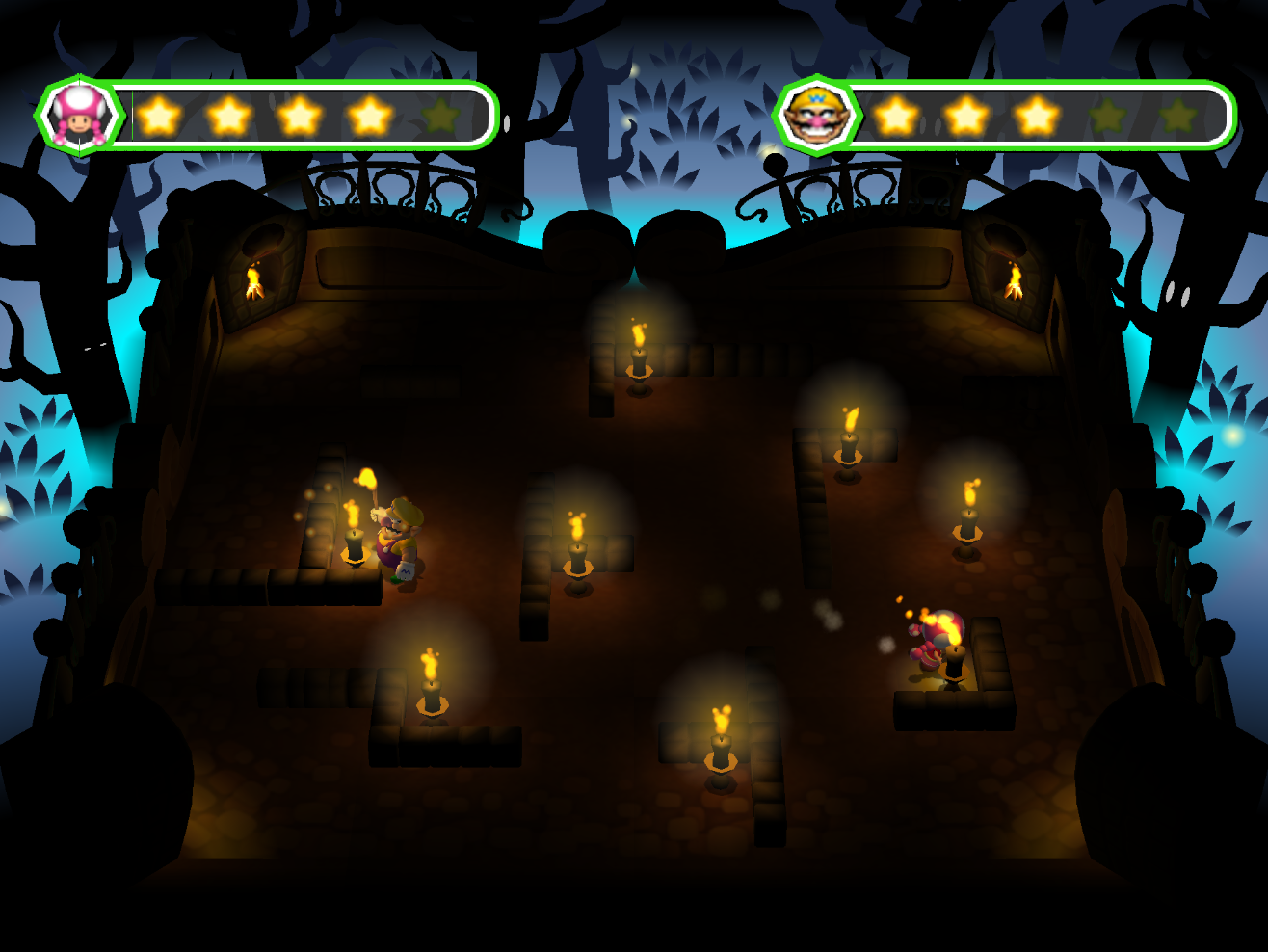
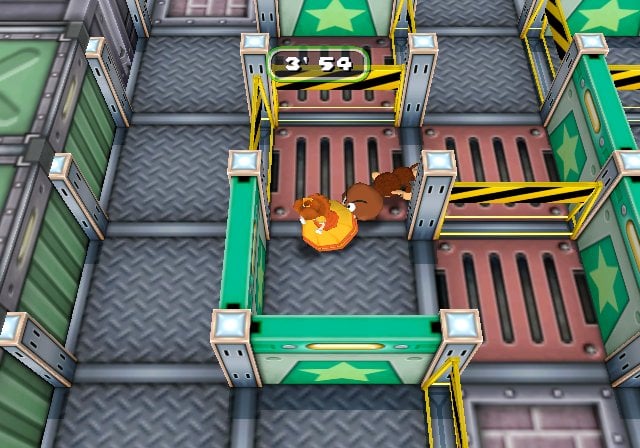
Light Up My NightDuel · night onlyCarry a torch through a dark maze lighting candles. First to five wins.
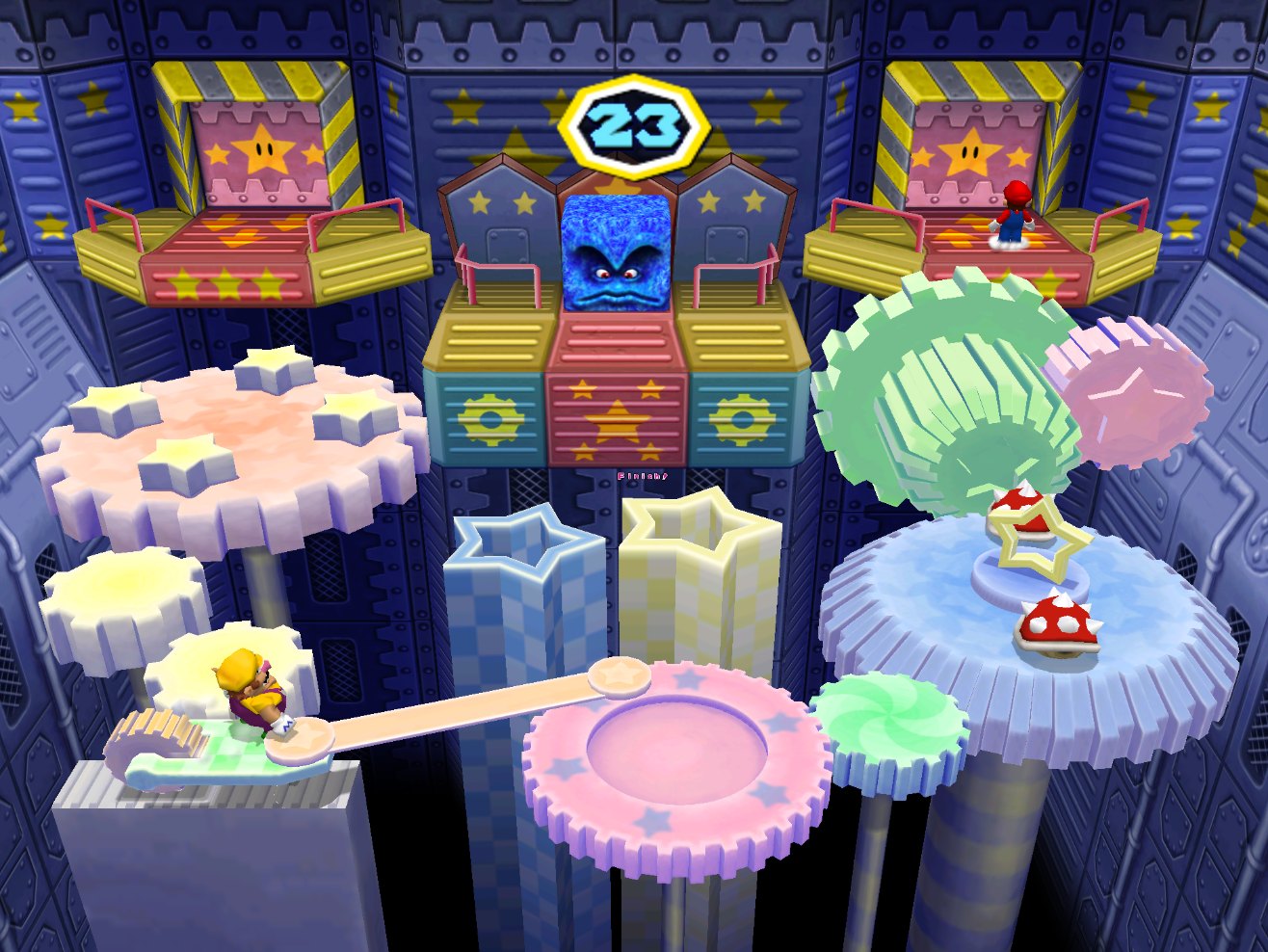
Cog JogDuelHop across turning cogwheels to the goal. A fall or a Spiny Shell sends you back to the beginning.
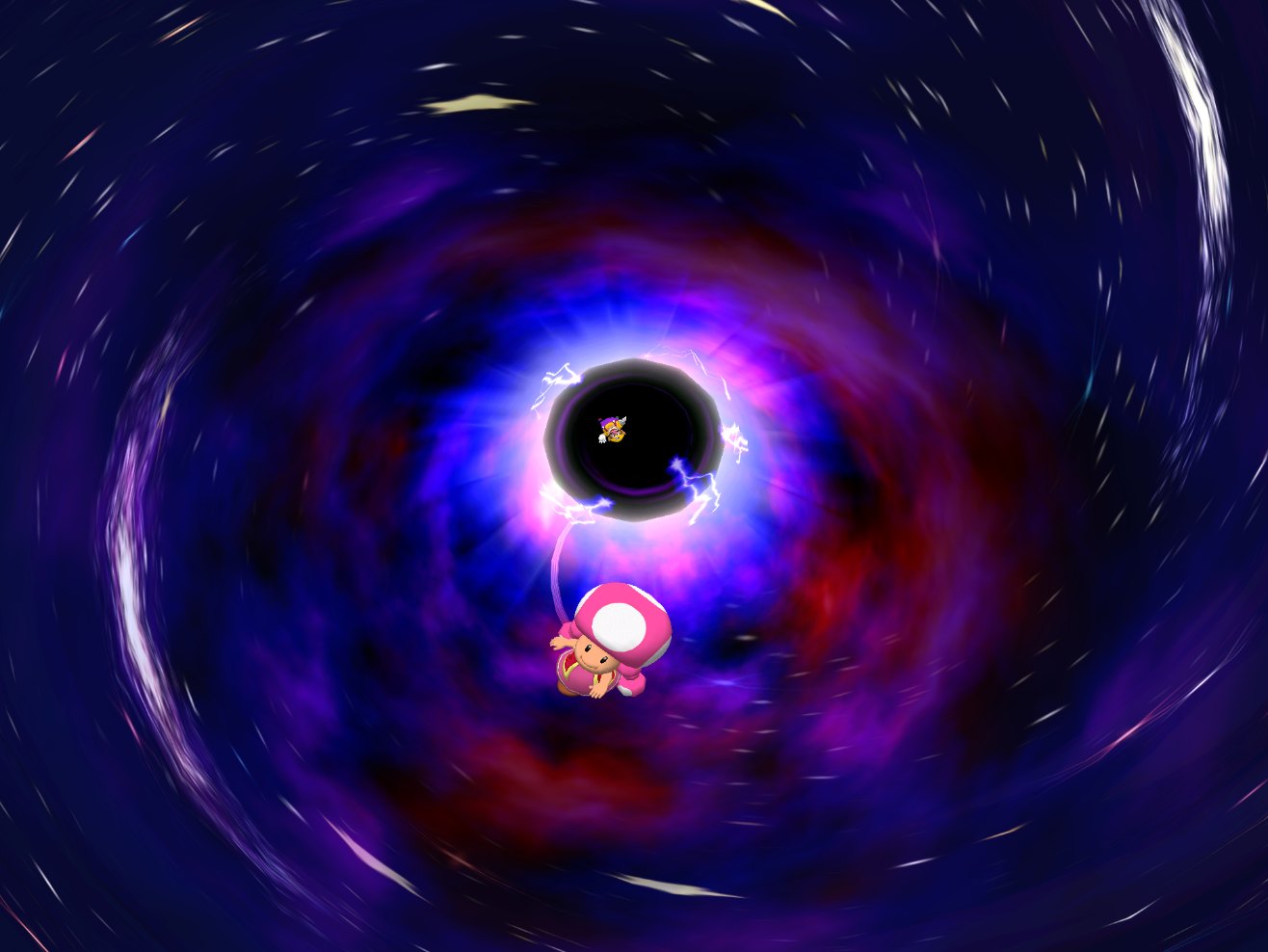
Black Hole BoogieDuelHammer A to swim away from a black hole. The first one sucked in loses.
Full TiltDuelA race across a bridge that tips as you run.
Sumo of Doom-oDuelDrive a little vehicle with both sticks, one for each side’s wheels, and shove your rival off a crumbling platform.
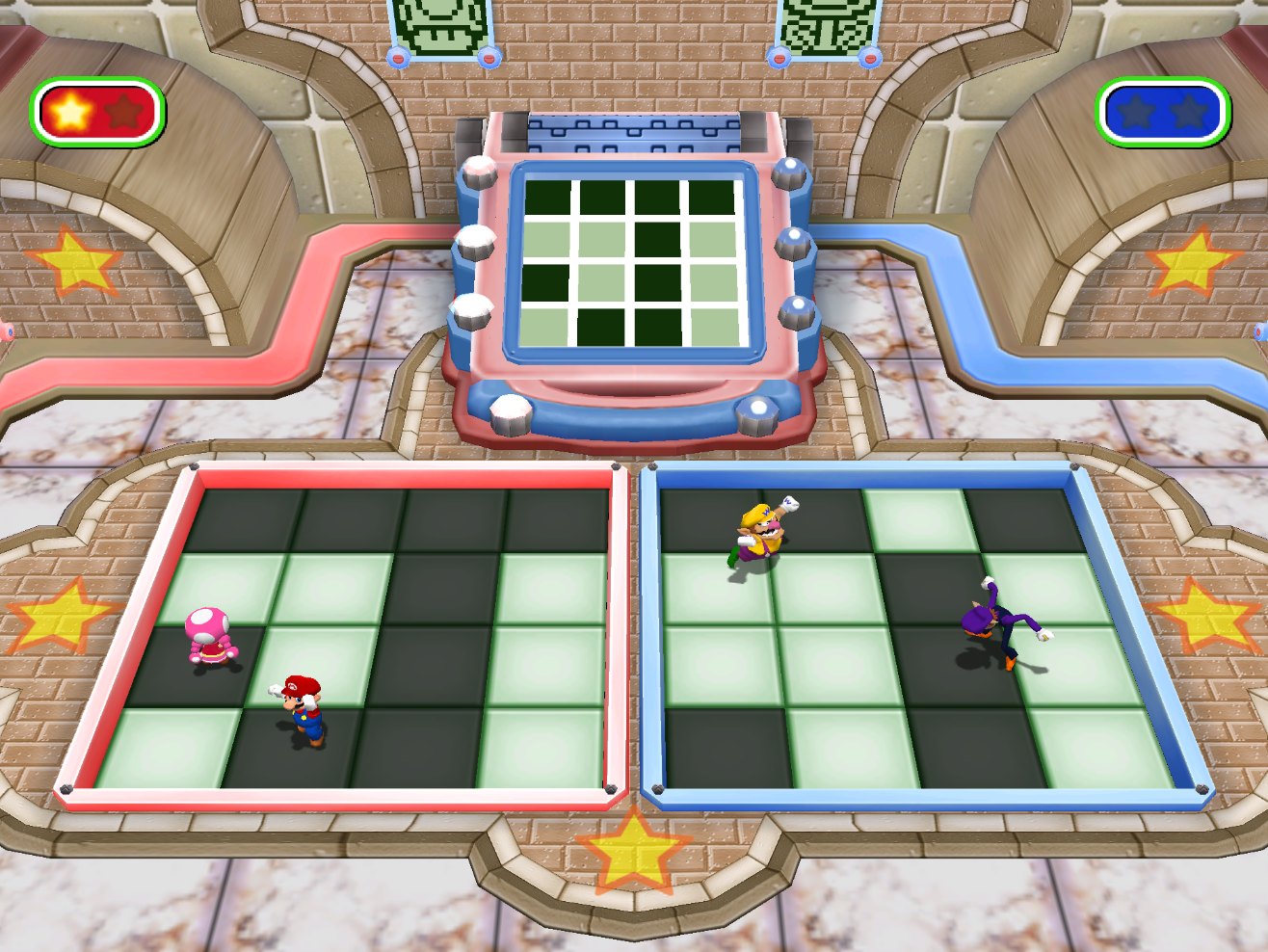
O-ZoneDuelGround-pound panels to find the Os. An X stuns you. First to three Os wins.
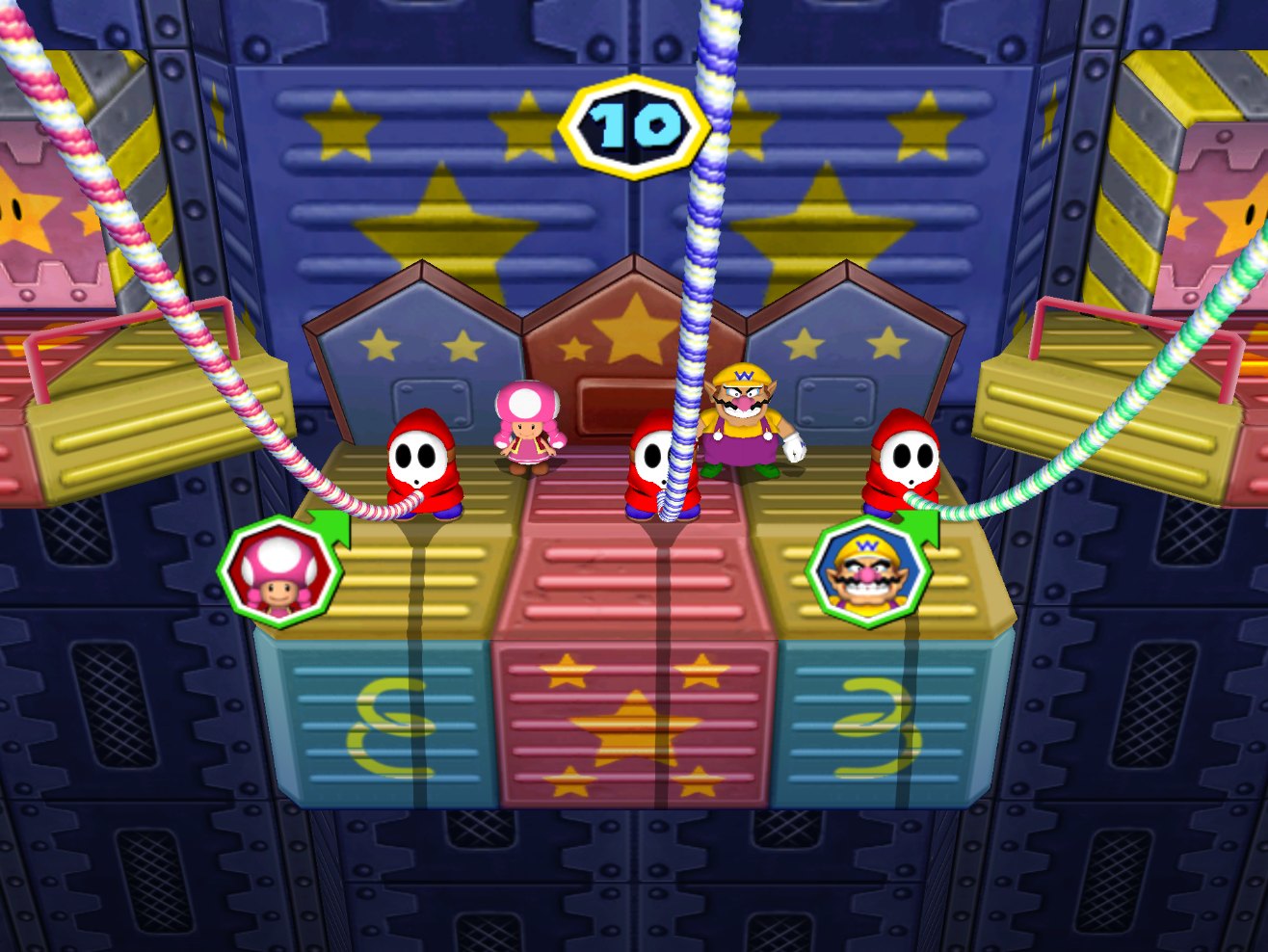
PitifallDuelChoose a rope and swing. Only one of them will put you down on the hidden platform.
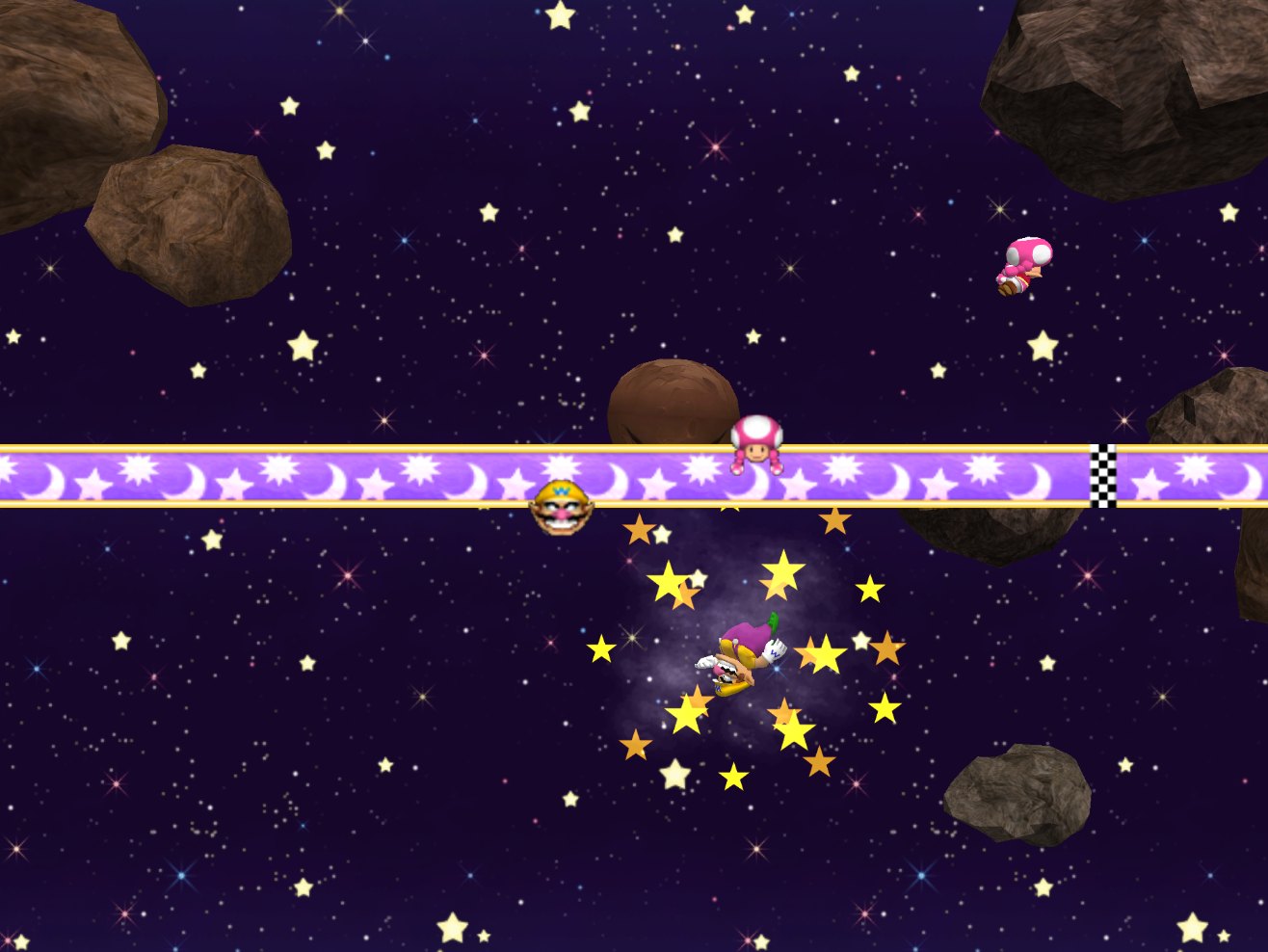
Mass MeteorDuelFly through a field of asteroids to the chequered goal. In Superstars.
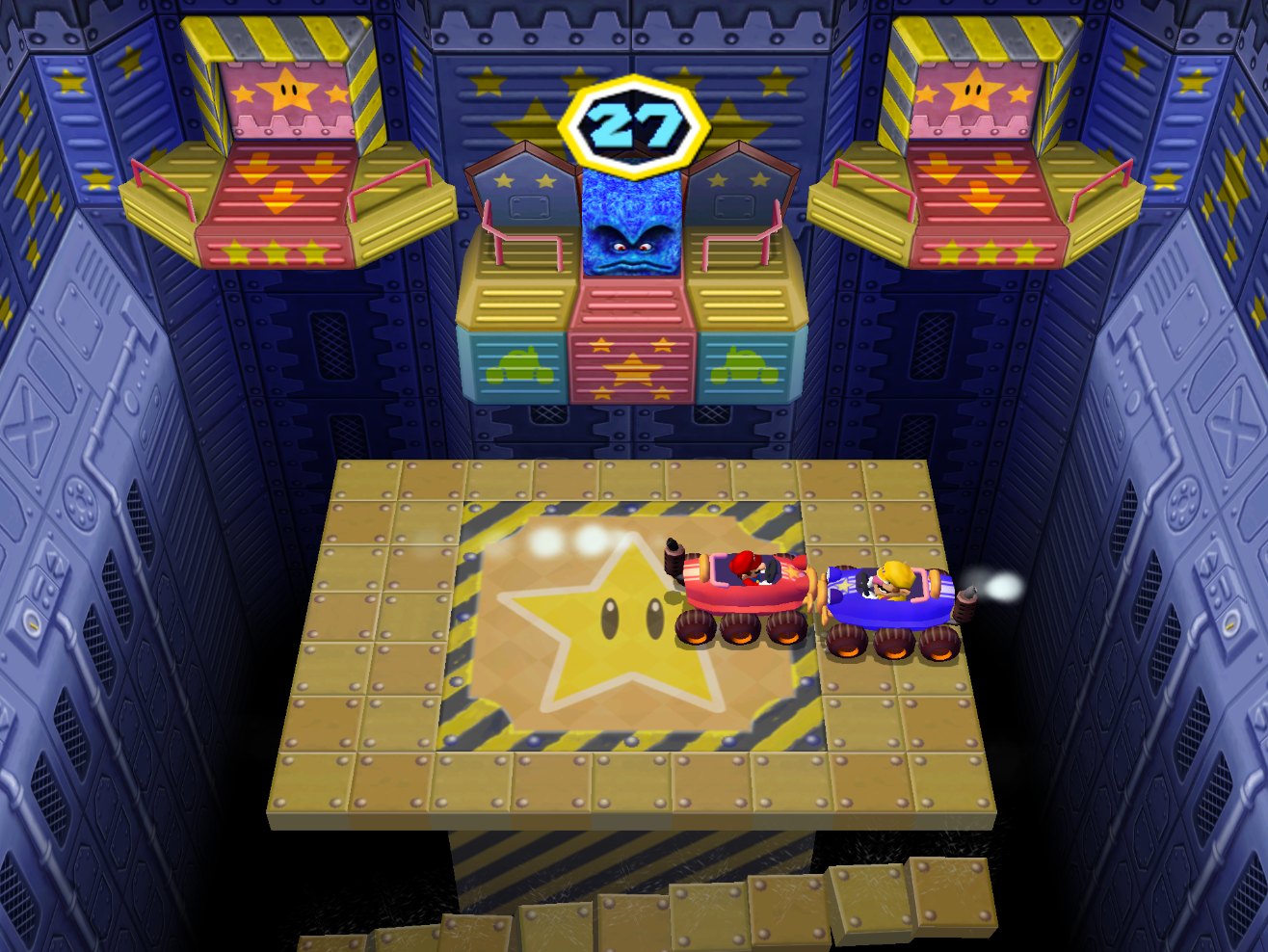
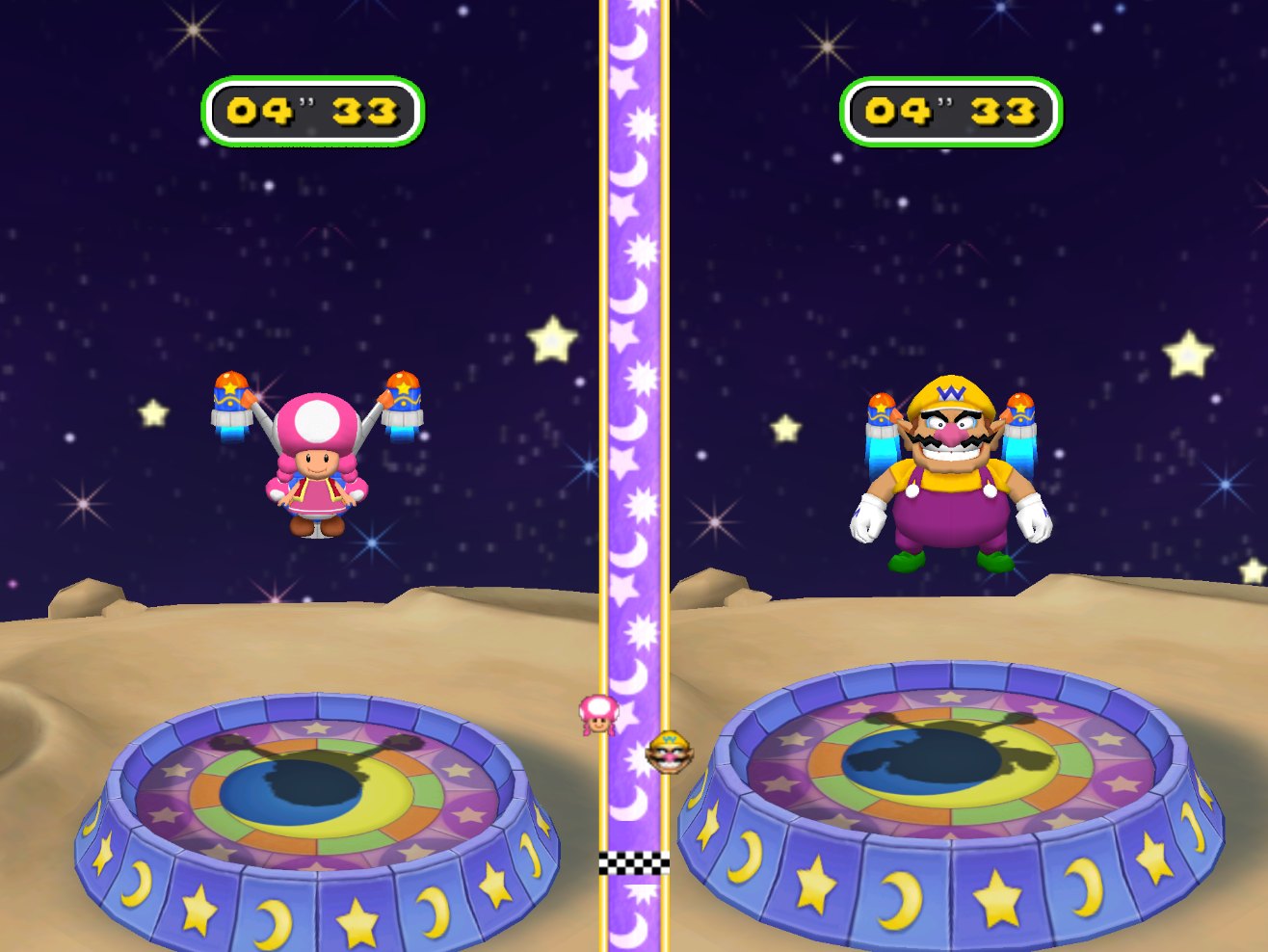
Lunar-ticsDuelDrop towards the Moon with a jetpack, holding A to slow down, and touch down as close to 0.00 on the clock as you can.
T Minus FiveDuelGround-pound the green panels to warp forward and keep off the yellow ones, which shock. First to the last panel wins.
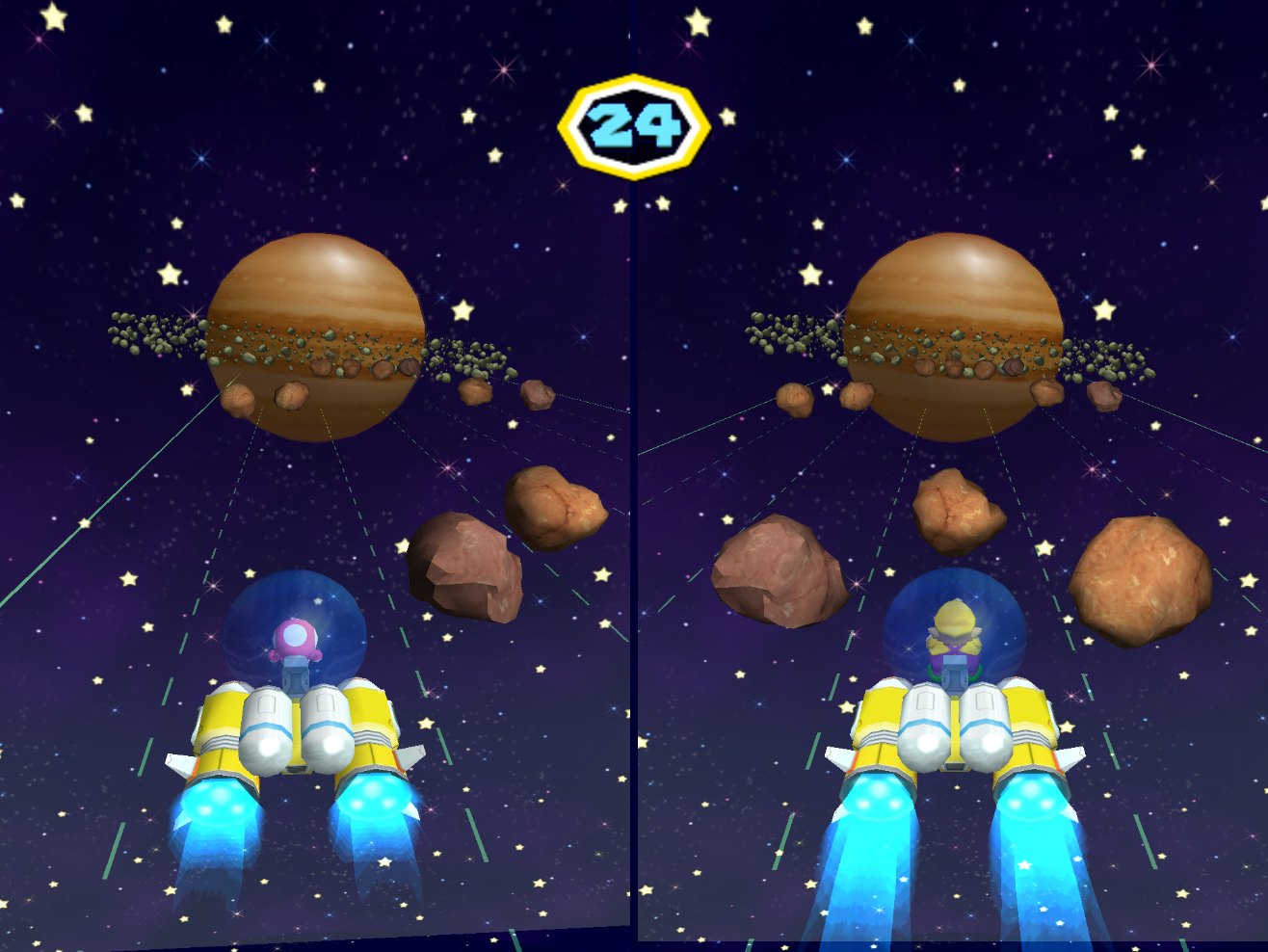
Asteroad RageDuelSteer a spaceship through 30 seconds of asteroids. The last one not hit wins.
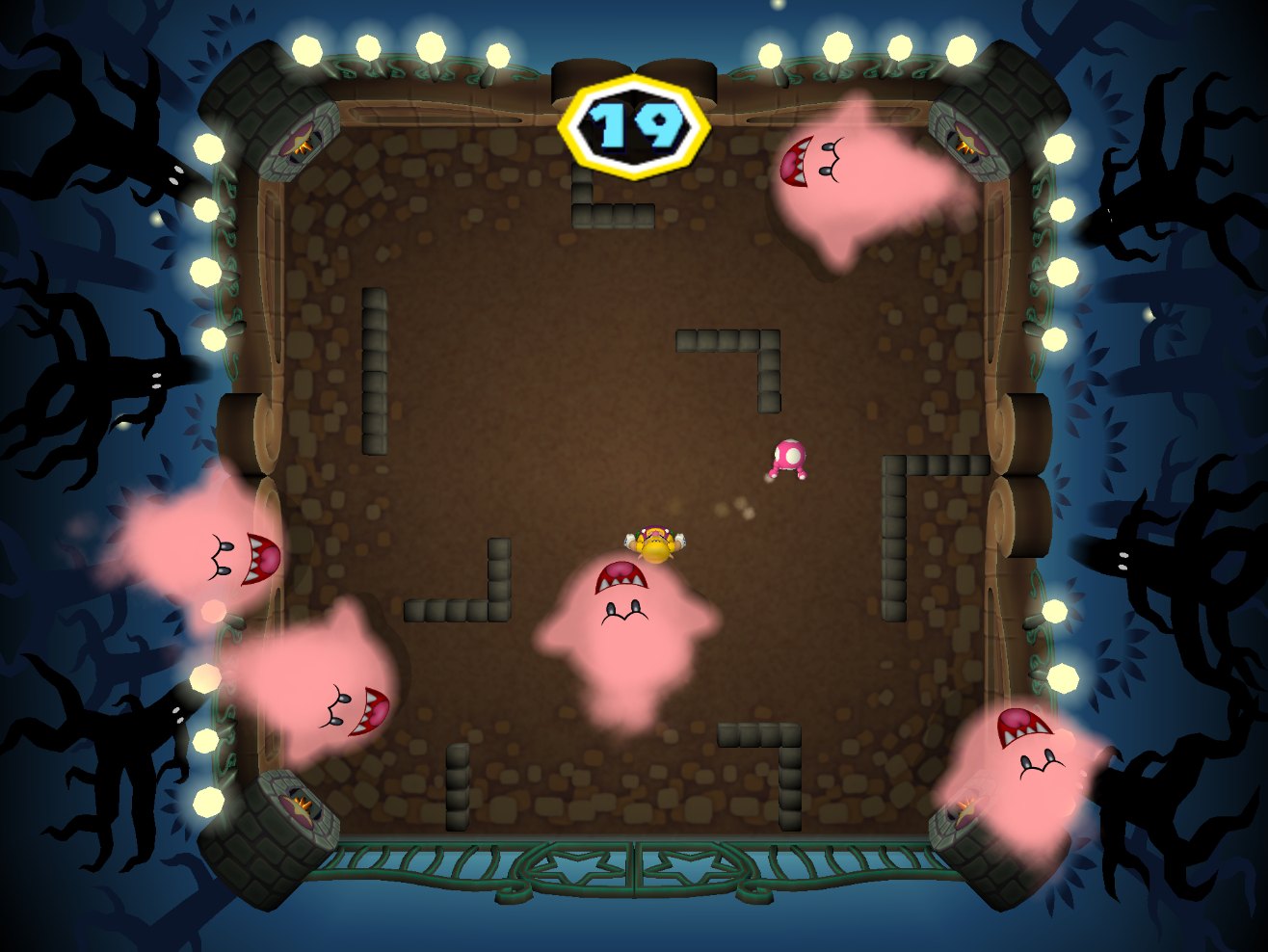
Boo’d Off the StageDuel · night onlyKeep away from a swarm of Pink Boos for 30 seconds. First one caught loses.
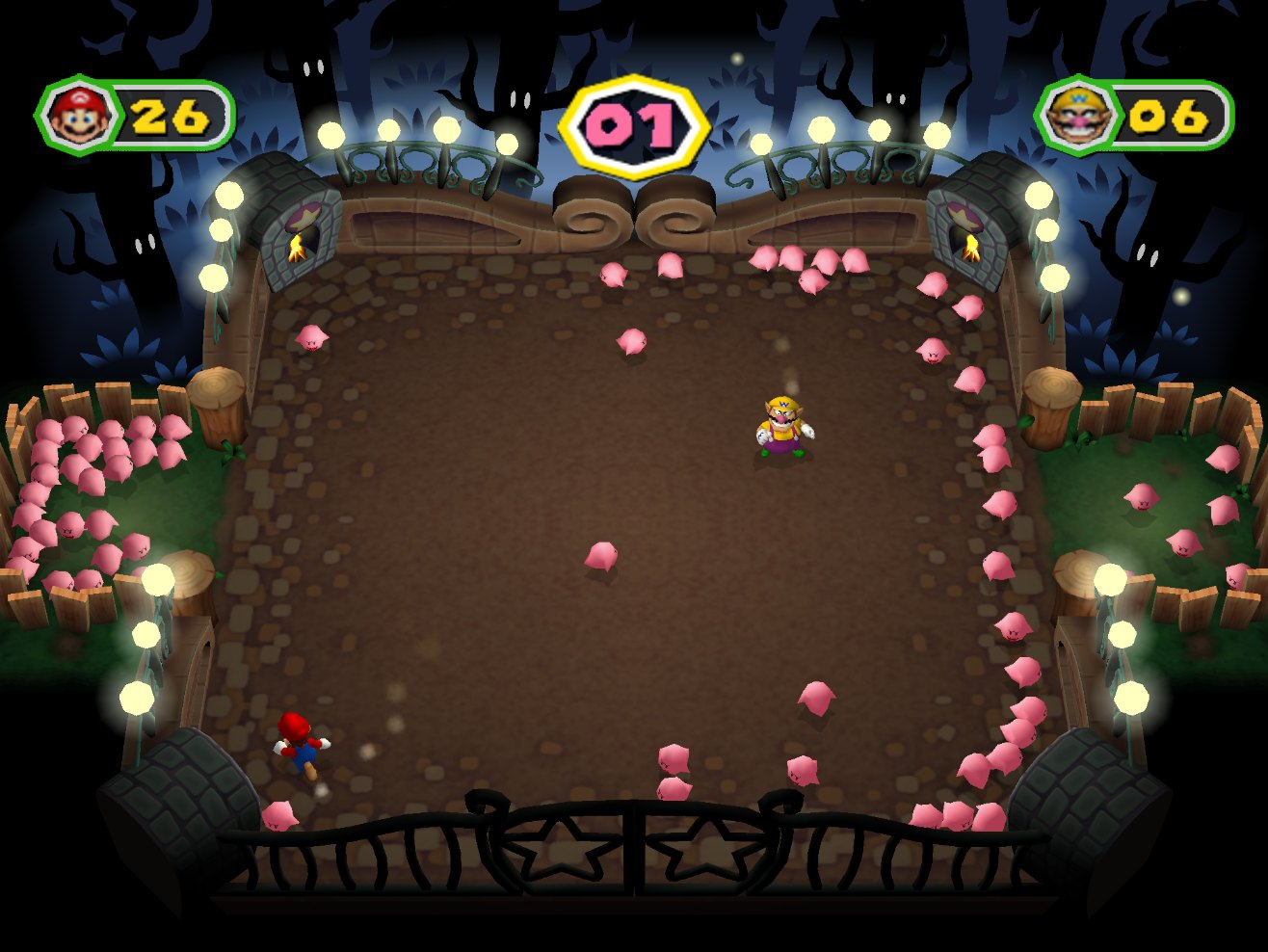
Boonanza!Duel · night onlyHerd Pink Boos into your own pen. Whoever has more when time is up wins.
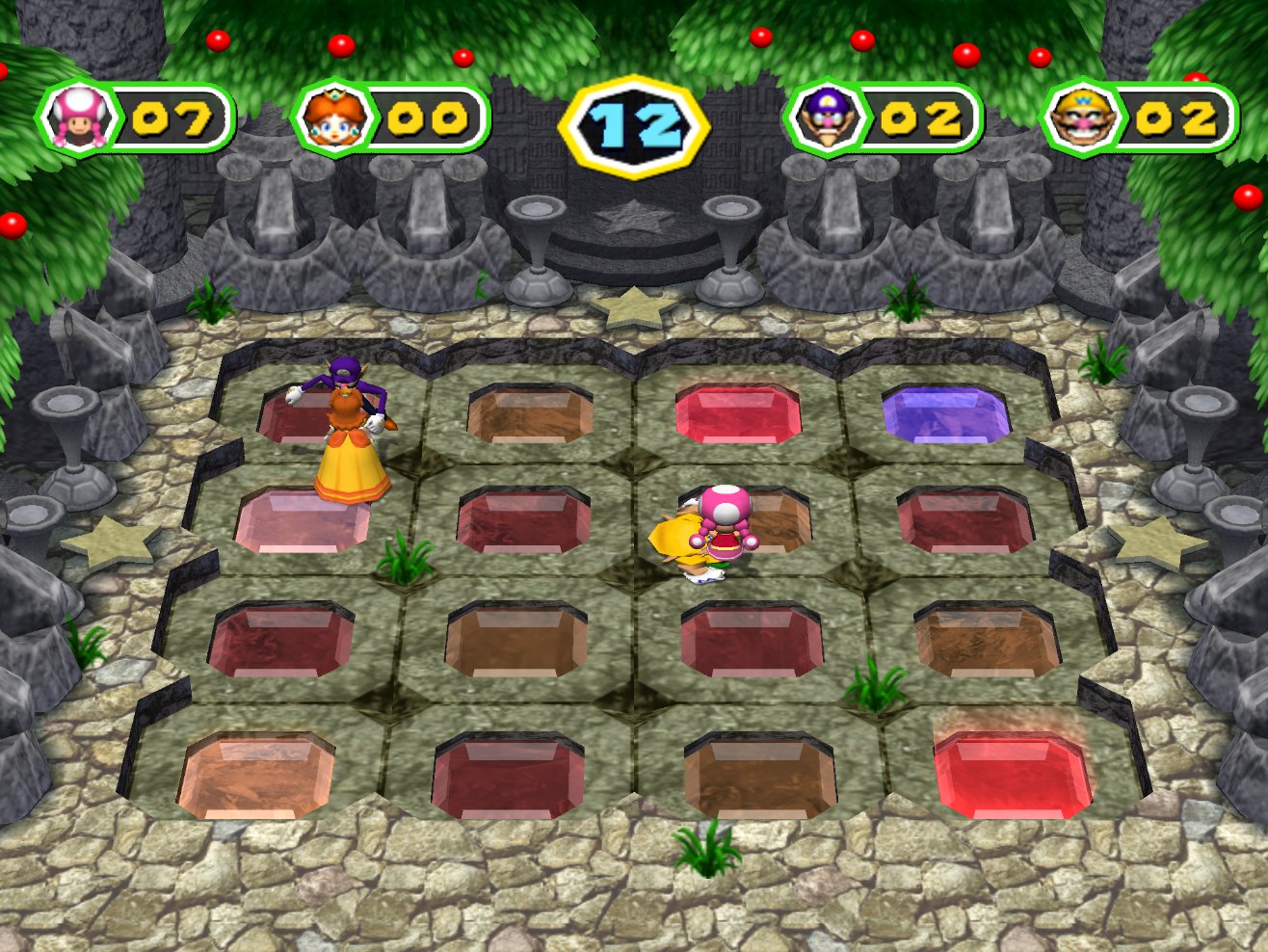
Trick or TreeDuel · night onlyPick a tree and bounce on its branches to make it grow. The taller tree wins, and there is no telling which that will be.
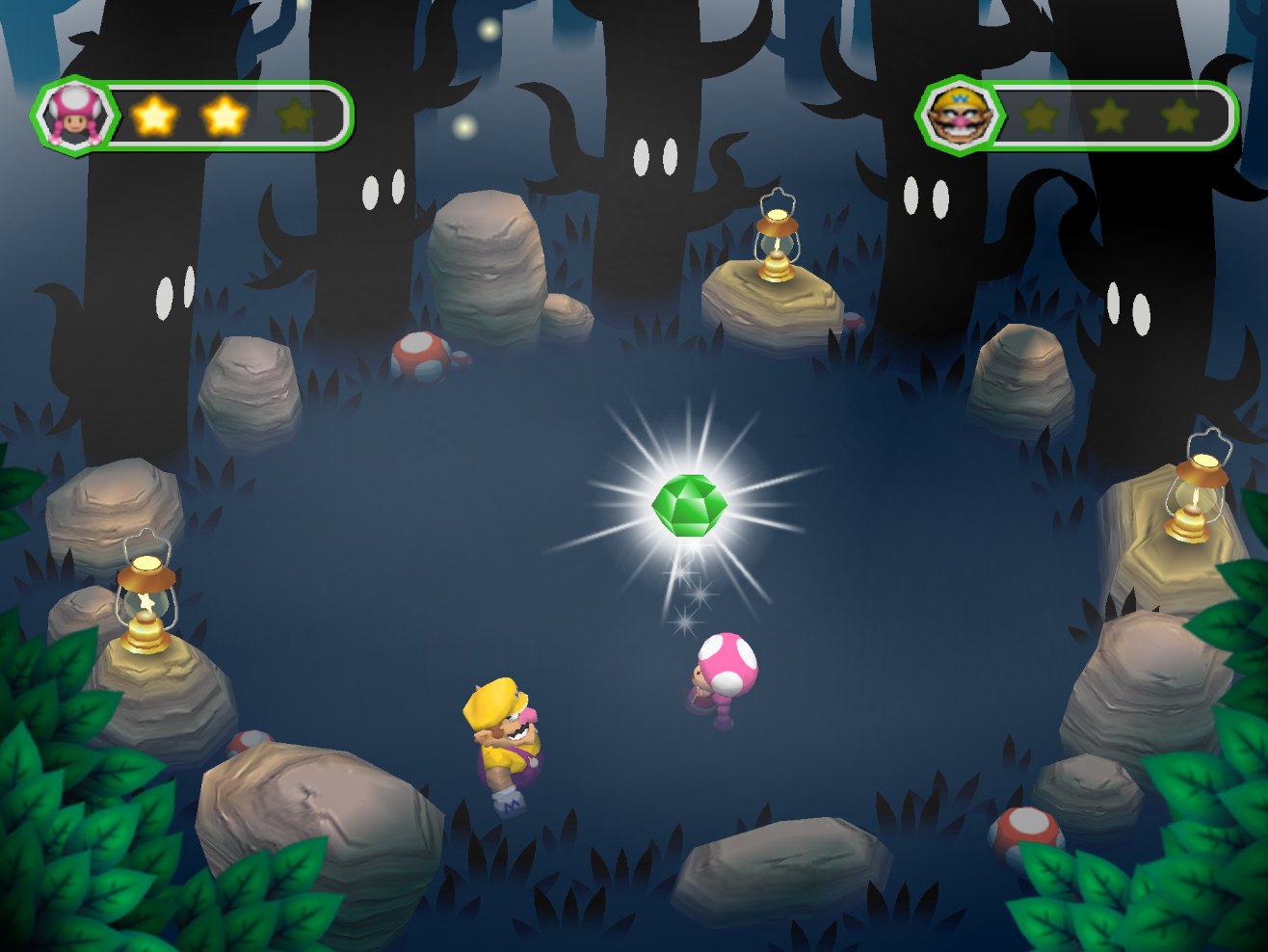
Something’s AmistDuel · night onlyFeel for gemstones hidden in fog by the rumble of the controller. First to find three wins.
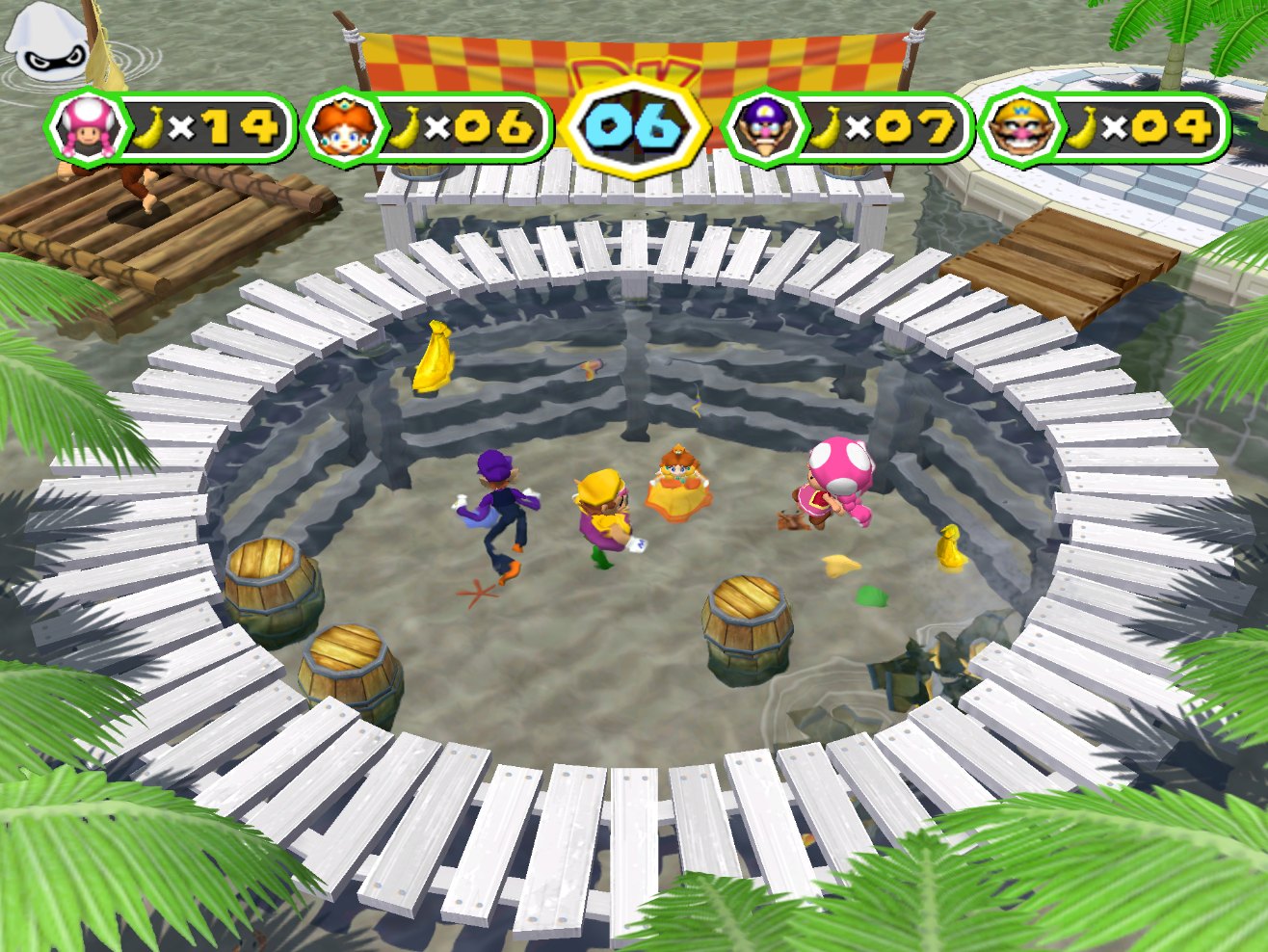
Tally Me BananaDK · day onlyFifteen seconds to hop between barrels floating in a pool, taking a banana from each.
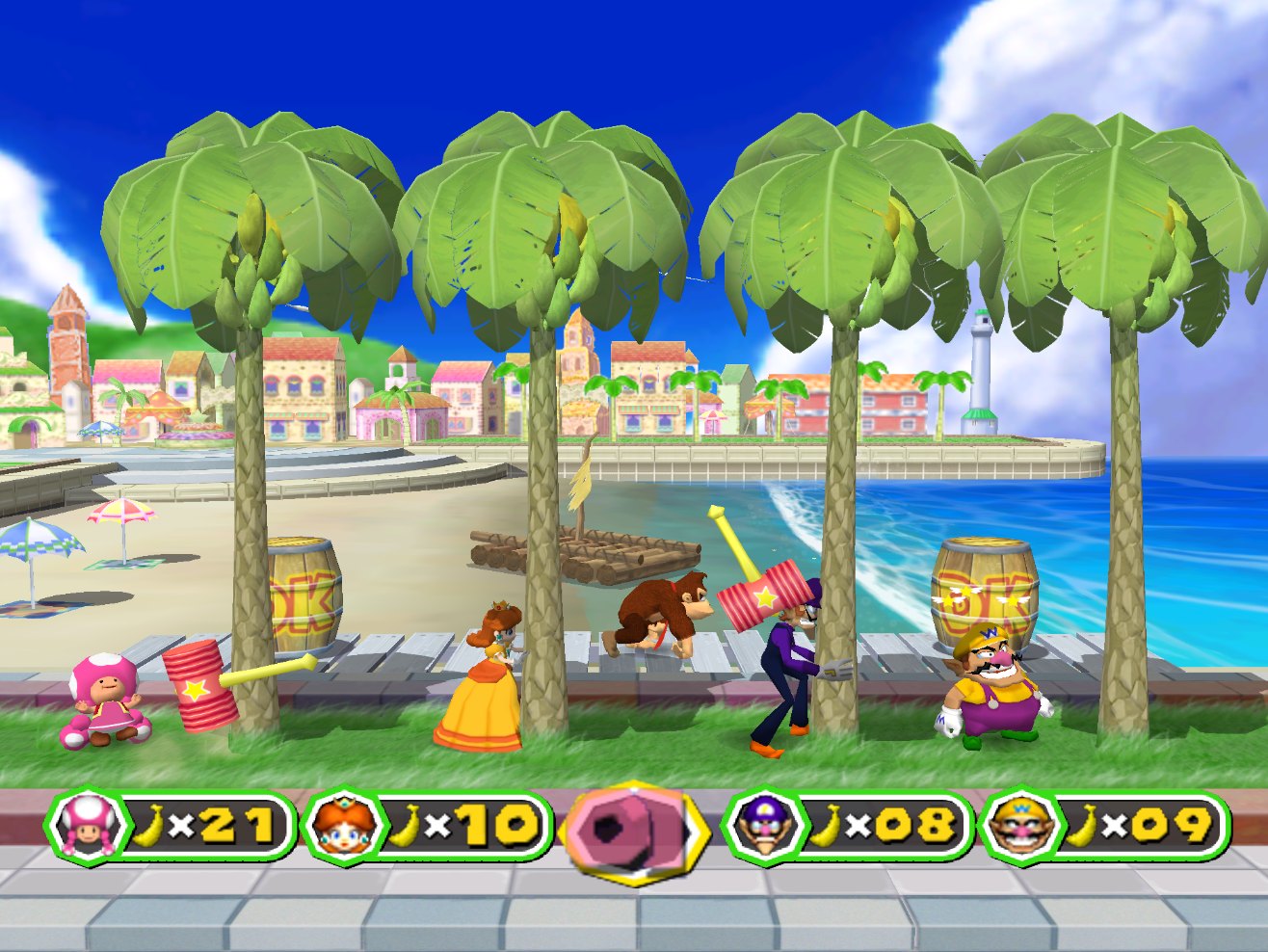
Banana ShakeDK · day onlyFifteen seconds to shake bananas out of the trees with A, and to dodge the hammers that fall with them with B.
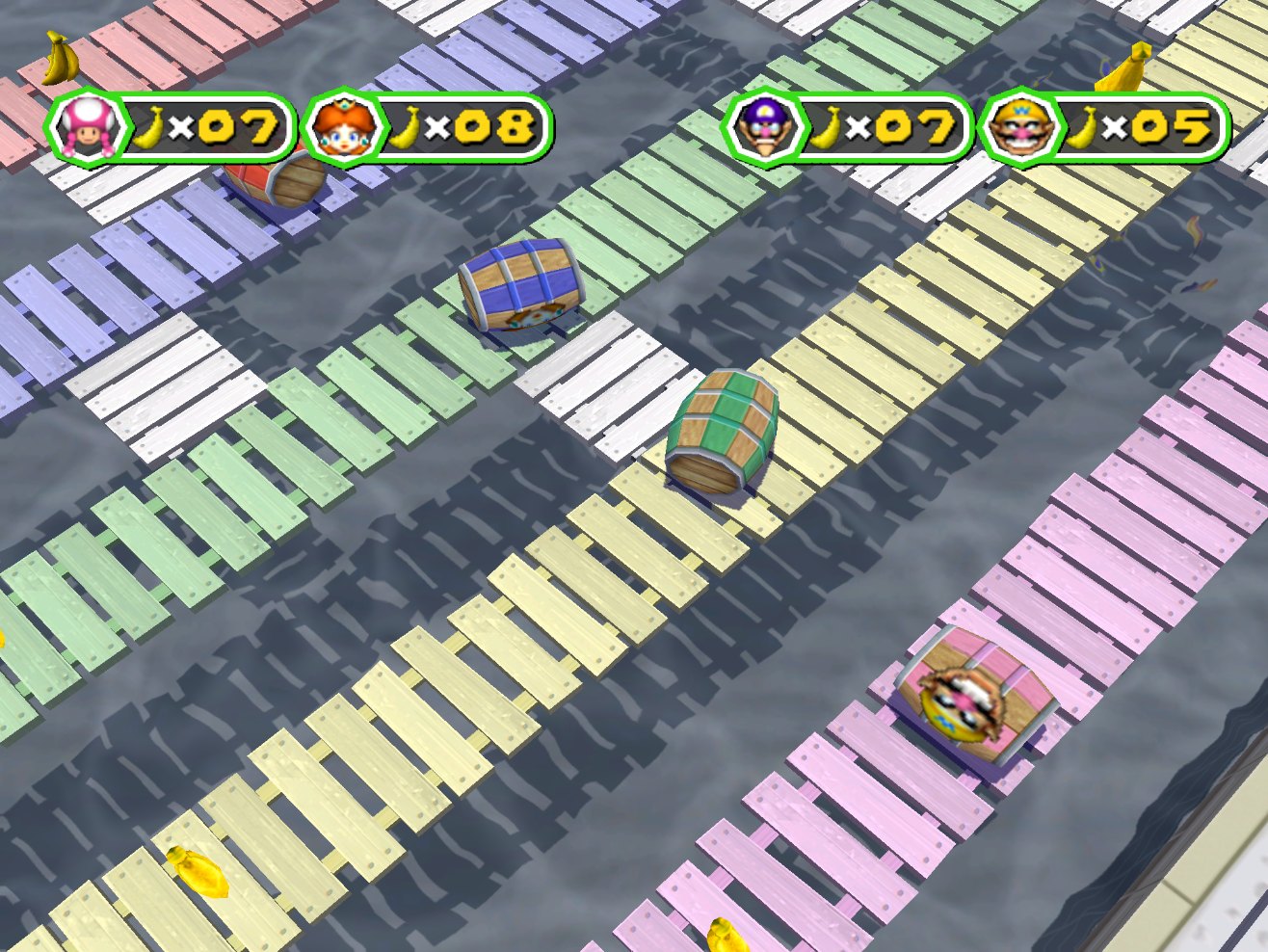
Pier FactorDK · day onlyChoose one of five barrels. They roll down a pier scooping up bananas, which a roulette then prices at one to three coins each.
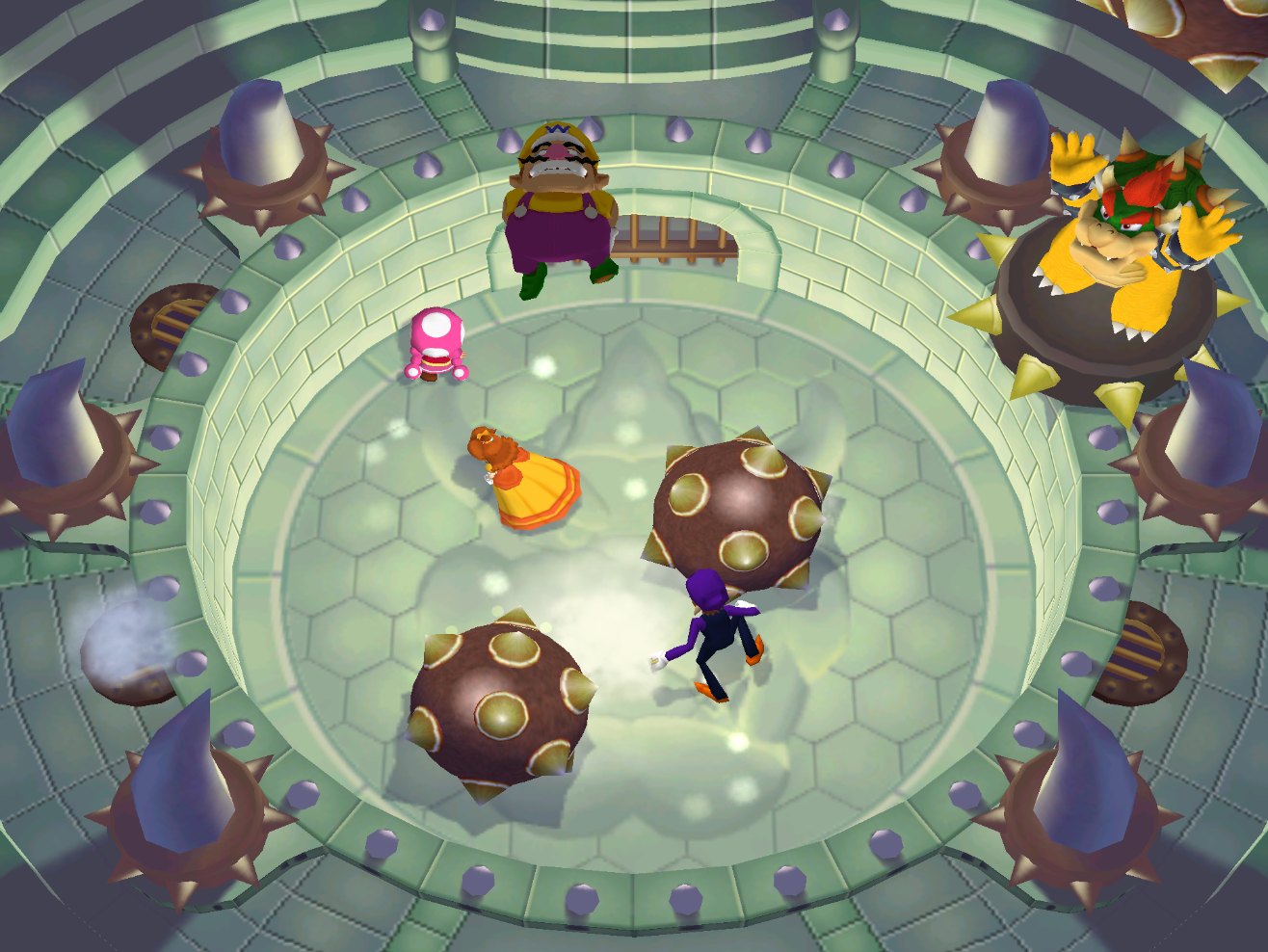
Pit BossBowser · night onlyDodge the spiked balls Bowser sends rolling round a pit until they stop. In Superstars.
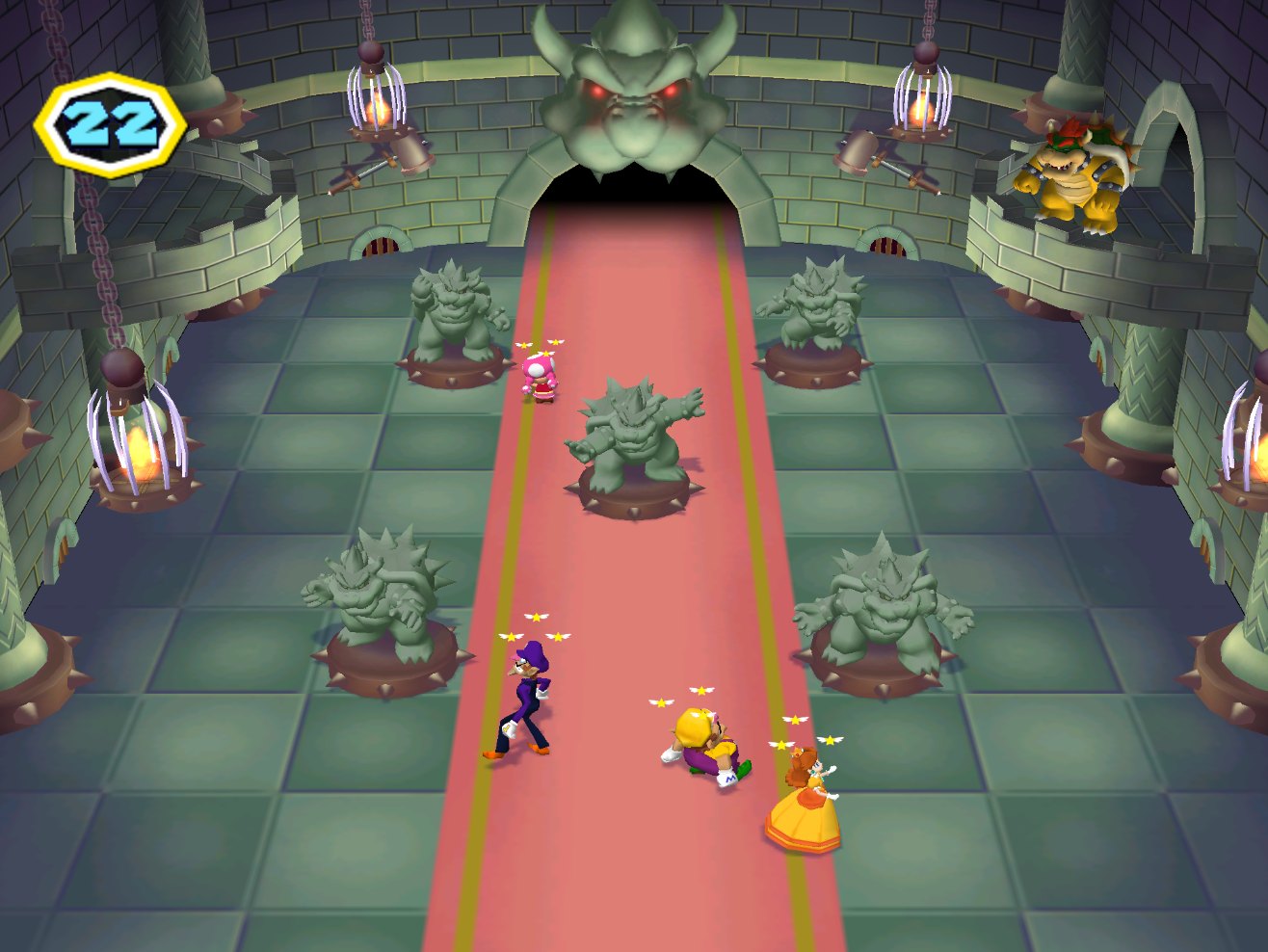
Dizzy RotisserieBowser · night onlySpun dizzy, stagger out of a hall in Bowser’s Castle before the statues breathe fire. In The Top 100.
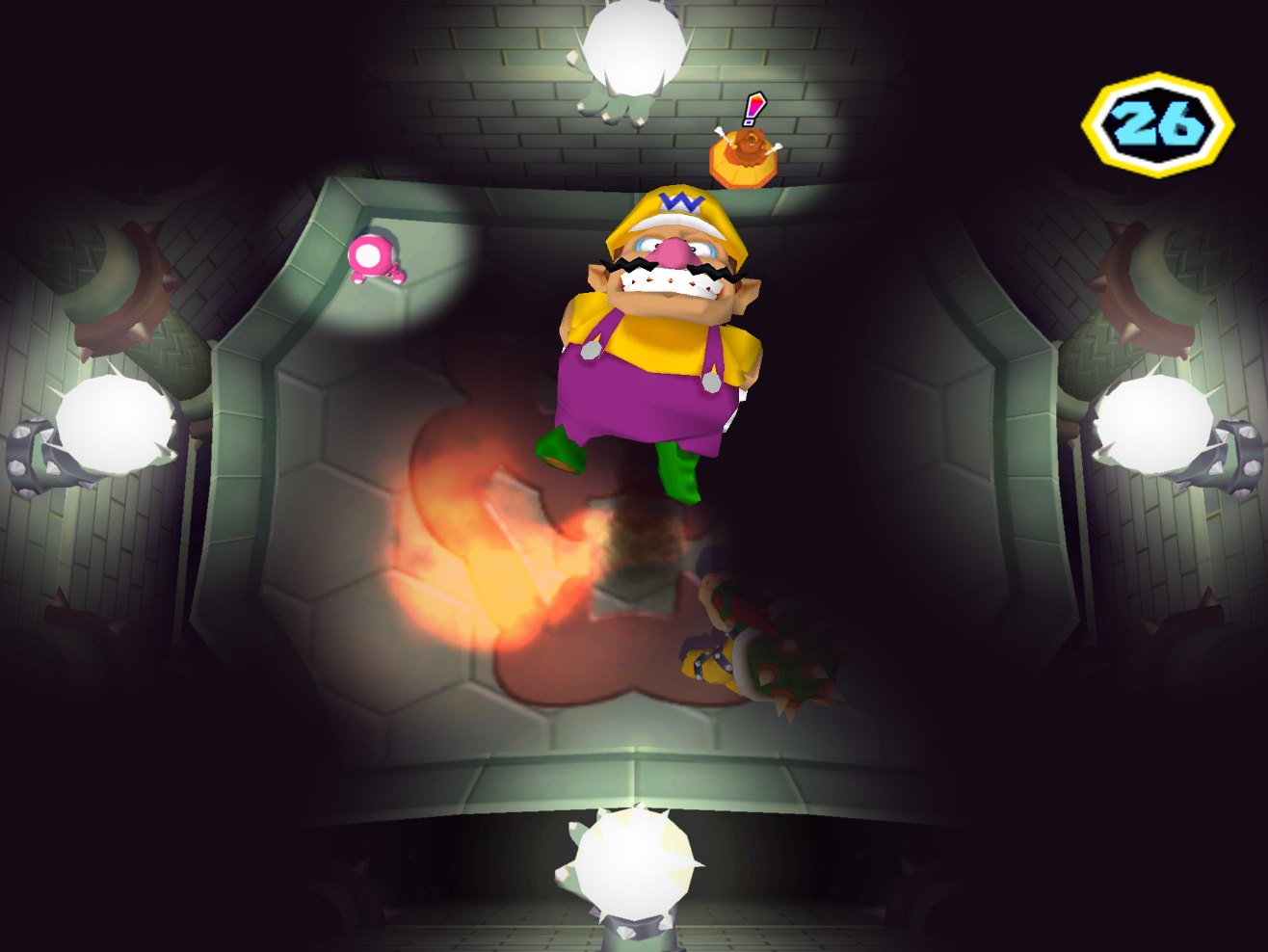
Dark ‘n’ CrispyBowser · night onlyIn the dark, keep clear of an unseen Bowser’s flames without stepping into the pit. In Superstars.
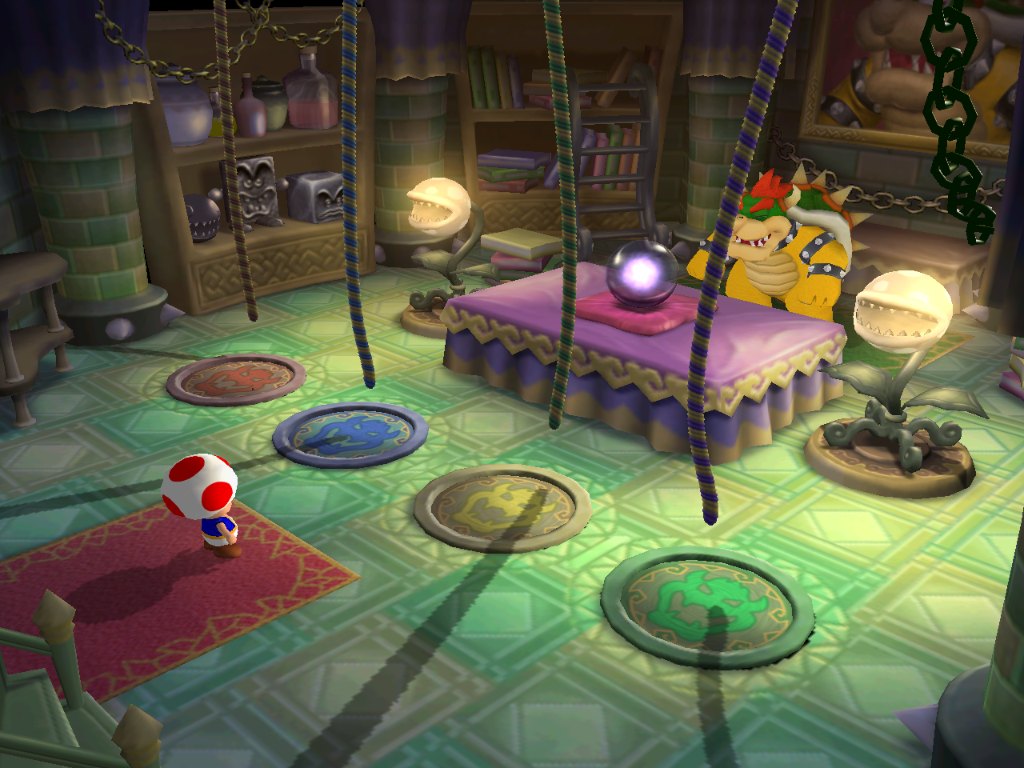
Seer TerrorRarePull one of four ropes and have your fortune told by Bowser. Costs 50 Stars at the Star Bank.
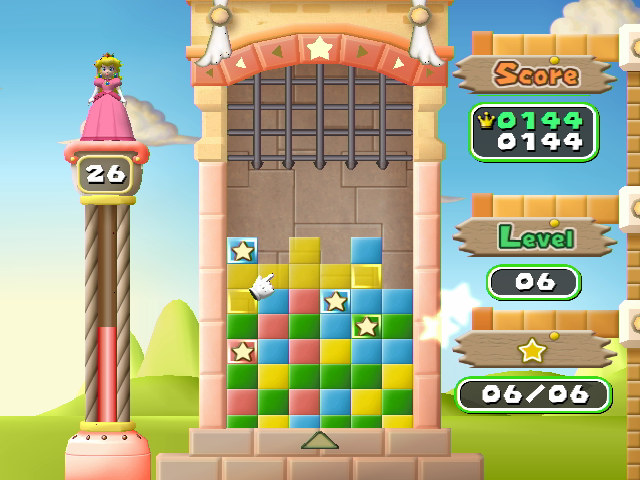
Block StarRareA puzzle game, won in Solo Mode, with a two-player version sold at the Star Bank. Returned in Mario Party DS, The Top 100 and Superstars.
Lab BratsRareFive mazes in five minutes in Professor E. Gadd’s laboratory, with hidden characters to find for a better rank. Won in Solo Mode.
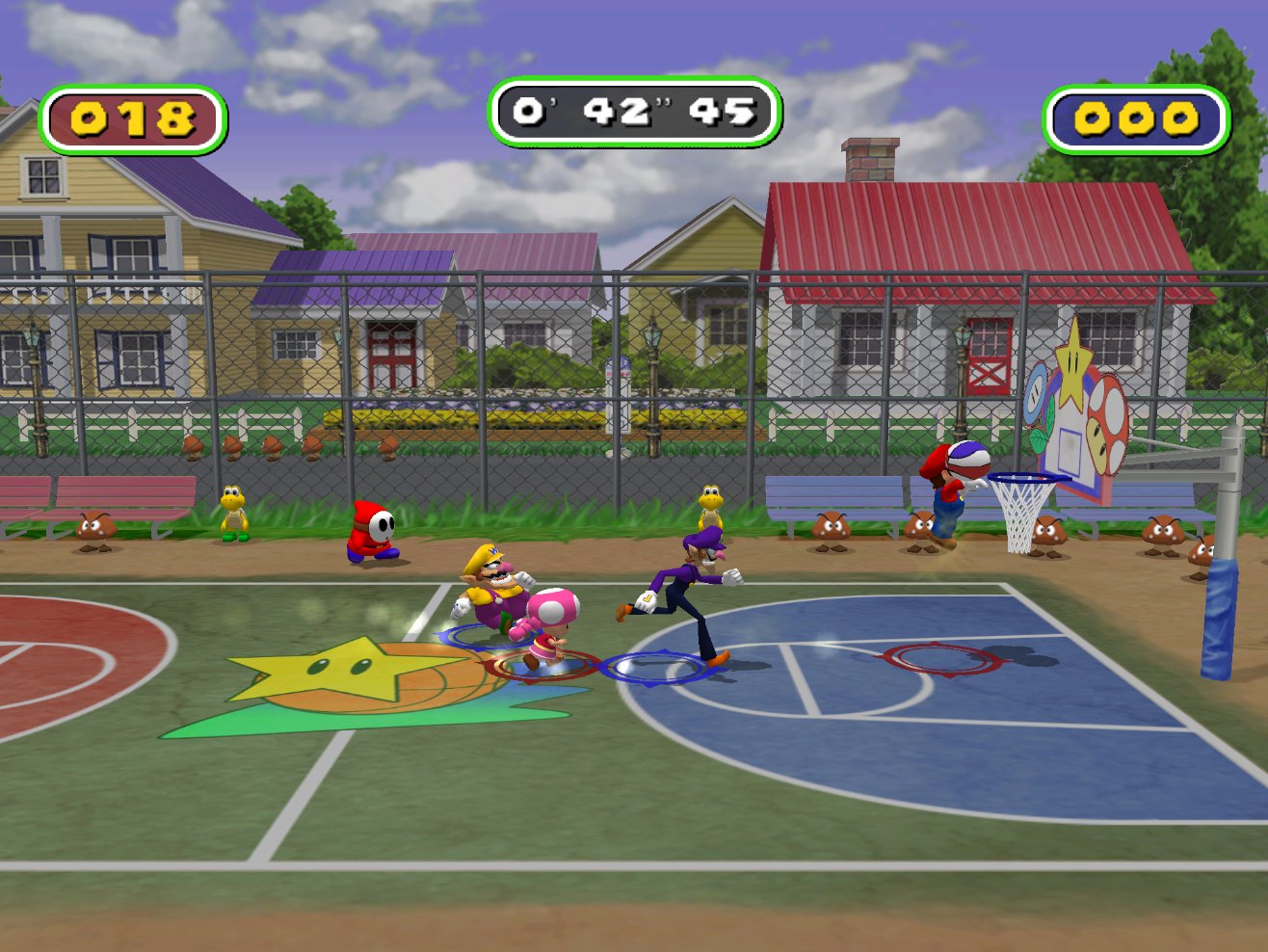
Dunk Bros.RareTwo-a-side basketball with dribbling, passing, stealing and stomping. Won in Solo Mode.
The people who made it
Names and roles from the staff roll, as transcribed by Super Mario Wiki.
Shuichiro NishiyaGame directorPlanning director of Mario Party 5, directing for the first time. Credited as Syuichiro in the earlier games.
Kenji KikuchiSenior directorDirector of the first five games, now one step back.
Shinichi NakataPlanning directorReturns to the post he held on Mario Party 4.
Atsushi Ikeda and Hiroshi SatoProducersAs on Mario Party 5, with Shinji Hatano as senior producer.
Satoru Iwata and Hiroshi KudoExecutive producersUnchanged since Mario Party 4.
Shigeru Miyamoto, Takashi Tezuka and Hidetoshi EndoSupervisorsAs on Mario Party 5.
Yukinori GotoDesign directorArt design director of the third and fourth games.
Hideki SahashiProgramming directorIn charge of programming since Mario Party 2; a chief programmer on the first game.
Hironobu Yahata and Shinya OutougeMusicA new pair of composers, with Keita Hoshi as sound director.
Charles Martinet, Jen Taylor, Deanna Mustard, Scott Burns and Kazumi TotakaVoicesMartinet as Mario, Luigi, Wario and Waluigi; Taylor as Peach, Toad and Toadette; Mustard as Daisy; Burns as Bowser; Totaka as Yoshi and Professor E. Gadd. All uncredited, according to Super Mario Wiki.
Terence French and nine colleaguesVoice recognition system supportTen people are credited with supporting the voice recognition system, among them Sofía Marín Aguilar-Galindo, Spanish translator of Mario Party 4.
Erik Peterson, Reiko Ninomiya and Rich AmtowerNorth American localisationUnder Jeff Miller, Leslie Swan and Bill Trinen.
Advertisement
How It Was Made
The sixth Mario Party was the third for the GameCube in three years, but it was not made quite like the others: it had a new director, new composers and a piece of hardware to support.
Announcement
According to Wikipedia, citing IGN’s report of 11 May 2004, the game was announced at E3 2004 with nothing but a title. The microphone was revealed later that summer: GameSpot’s story of 26 August 2004 was headed “Mario Party 6 to use microphone controller”. It was at first dated for the same day as Mario Party Advance, the series’ Game Boy Advance entry, which in the end followed in 2005.
It was released in Japan first, on 18 November 2004, and in North America on 6 December. Super Mario Wiki points out that it is the only one of the four GameCube Mario Party games to have come out in Japan before anywhere else. Europe waited until 18 March 2005 and Australia until September.
A change at the top
Kenji Kikuchi had directed every Mario Party up to this point. On this one he is credited as senior director, and the director’s chair goes to Shuichiro Nishiya, who had risen from planning advisor on the fourth game to planning director on the fifth. The producers, Atsushi Ikeda and Hiroshi Sato, the supervisors and the heads of programming all stayed where they were.
The score is by a new pair of composers, Hironobu Yahata and Shinya Outouge, after Aya Tanaka’s music for Mario Party 5. Super Mario Wiki’s infobox lists two co-developers beside Hudson Soft: CAProduction, as on the earlier GameCube games, and Nintendo’s own Software Planning & Development Group No. 4.
Teaching Mario Party to listen
Garden Grab in the Japanese version, with a daikon where the carrot would be.
Voice recognition had to work in every language the game was sold in, and the staff roll includes a credit for Voice Recognition System Support, with ten names, one of them the Spanish translator of Mario Party 4.
The localisers made other adjustments. In the German version Brighton and Twila change sex, becoming Sonnja and Raimond, because in German the sun takes the feminine article and the moon the masculine. Outside Japan the two have no voices at all. The giant vegetable in Garden Grab is a daikon in Japan and a carrot elsewhere. And in PAL versions, which run at 50 frames a second where the others run at 60, the time limit of Fruit Talktail is stretched from 60 seconds to 72.
Early versions and leftovers
An early version of Thirsty Gulch.
An early screenshot of Solo Mode shows Thirsty Gulch with plain coloured spaces where the finished game has its 4-Player, 1-vs-3 and 2-vs-2 spaces. Promotional shots of Faire Square have a Blue Space in the south-east corner that became a DK Space.
The data holds one Orb that was never used. The Barrel Orb, number 20 in the list, would have made its user immune to Duels for a turn; it has no graphics and no text of its own. Several other Orbs were set up to trigger board events, perhaps for testing, and removed.
Series Firsts
What Mario Party 6 added to the series, checked against the five games before it. Most are listed as firsts by Super Mario Wiki or Wikipedia.
1Day and nightA day and night system running through every board is new to the series. The idea itself first appeared on one board, Horror Land in Mario Party 2.
2Voice-controlled minigamesThe first Mario Party with a set of minigames controlled by voice, and, according to Wikipedia, the first GameCube game to use a microphone accessory.
3ToadettePlayable in a Mario Party for the first time.
4OrbsThe capsules of Mario Party 5 become Orbs: sold in shops as well as given away, thrown backwards as well as forwards, and owned by the player who laid them.
5The Star BankStars won in every mode are banked and spent on unlockables, from a character and a board to the pages of the Miracle Book.
6New rules for StarsOnly two boards sell a moving Star for 20 coins. The other four have rules of their own: five at a time, steal-only, and Stars in the keeping of Donkey Kong.
7The Orb StarA new Bonus Star for using the most Orbs replaces the Coin Star, as Wikipedia notes.
8Solo ModeA one-player mode with boards of its own and no plot takes the place of the Story Mode of Mario Party 3, 4 and 5.
9Japan firstThe only GameCube Mario Party released in Japan before North America.
Cheats & Secrets
There are no codes. Everything in Mario Party 6 is bought with Stars at the Star Bank, and the quickest way to fill the bank is to know what pays.
Star Bank: characters, boards and modes
The Miracle Book: 10 Stars. Toadette: 30. Brutal difficulty for computer players: 30. Harder difficulty for Solo Mode: 30. The Mushroom Bus: 30. Seer Terror: 50. Endurance Alley: 50. Two-player Block Star: 50. Magma Flow, the third Star Sprint course: 50. Clockwork Castle: 100. The credit roll: 100.
Star Bank: the Miracle Book
After the book itself, pages 2 to 6 cost 10 Stars each, pages 7 to 11 cost 20, pages 12 to 16 cost 30 and pages 17 to 20 cost 40. That is 470 Stars for the complete book, plus 10 for a Miracle Book Secret. Buying the last page brings on the ending.
Star Bank: sounds and secrets
Five sound tests at 30 Stars each: Party Mode, Solo Mode, Mini-game and Variety Sound Checks and the Character Voice Check. A taunt for each of the ten starting characters at 10 Stars. Seven Mic Secrets, a Mini-game Mode Secret and a Mini-game Secret at 10 each. Super Mario Wiki counts 55 items in all and 1,340 Stars to buy the lot.
Unlock the rare minigames
Dunk Bros., Lab Brats and Block Star are the prizes for stopping exactly on the Rare Mini-Game Space found at the end of a Solo Mode board. Seer Terror is the odd one out and is bought at the bank.
Solo Mode: roll the right number
The die runs from 1 to 6 and overshooting the last space loses everything, so save a Cursed Mushroom Orb (1 to 3) or a Sluggish ’Shroom Orb (a slow die) for the final approach. If in doubt, call it quits: you keep what you have won.
Solo Mode: the bonuses worth chasing
Every 20 bonus coins is a Star. The big ones are 100 coins for reaching a Rare Mini-Game Space (three times only), 100 for playing ten minigames on one board, 100 for ten rolls on one board, 50 for beating all three Koopa Kids on their Duel Spaces and 300, once, for landing on every kind of space on every board and winning every game. On Astro Avenue, rolling 5, 3 and 2 reaches the goal without a single minigame, which is worth 100.
Use the microphone on the dice
In Solo Mode, saying a number into the mic as you hit the Dice Block earns 10 coins when that number comes up, 5 for using the mic on every roll and 50 for calling every roll correctly.
Faire Square: shop at night
Twila’s die sets the price of a Star at 5, 10, 30 or 40 coins, and you may buy up to five. Reach the centre with plenty of coins on a cheap night and you can take five Stars for 25 coins. There are no Metal Mushroom Orbs on this board, so expect the approach to be mined.
Snowflake Lake: ride at night
A Chain Chomp costs 20 coins for one Dice Block by day, but at night you can buy up to three dice at 10 coins each. A message in the game wrongly quotes 20 at night. Carry a Snack Orb, sold only here, to keep your own Stars.
Castaway Bay: watch the boats
The boats swap every time someone reaches Donkey Kong, so the player directly behind a buyer is walking towards Bowser. Hit a pole target to swap them back, or let someone else go first.
Own your traps
Landing on your own Character Space pays 5 coins, or 15 if the last-five-turns wheel has trebled the spaces. A Star Space appearing on a trap wipes it out.
Decathlon Park
It opens only when all ten of its events have been unlocked: Smashdance, What Goes Up…, Circuit Maximus, Snow Whirled, Note to Self, Pokey Punch-out, Sunday Drivers, Throw Me a Bone, Hyper Sniper and Stamp By Me.
SLB’s own cheats page for the game is linked under Reference below.
Videos
We could not find Mario Party 6 footage on Nintendo’s own channels, so both of these are archive copies of official material.
Third-party upload of a 30-second television commercial from 2004.
Third-party upload of the game’s trailer, from a channel that archives GameCube trailers.
Trivia & Interesting Facts
Nintendo UK’s page for the game promises “over 75 all-new mini-games” and five multiplayer boards. Super Mario Wiki counts 82 minigames, and the sixth board, Clockwork Castle, is the one that has to be bought.
In the German version the sun is a woman and the moon a man: Brighton becomes Sonnja and Twila becomes Raimond, to agree with the genders of die Sonne and der Mond.
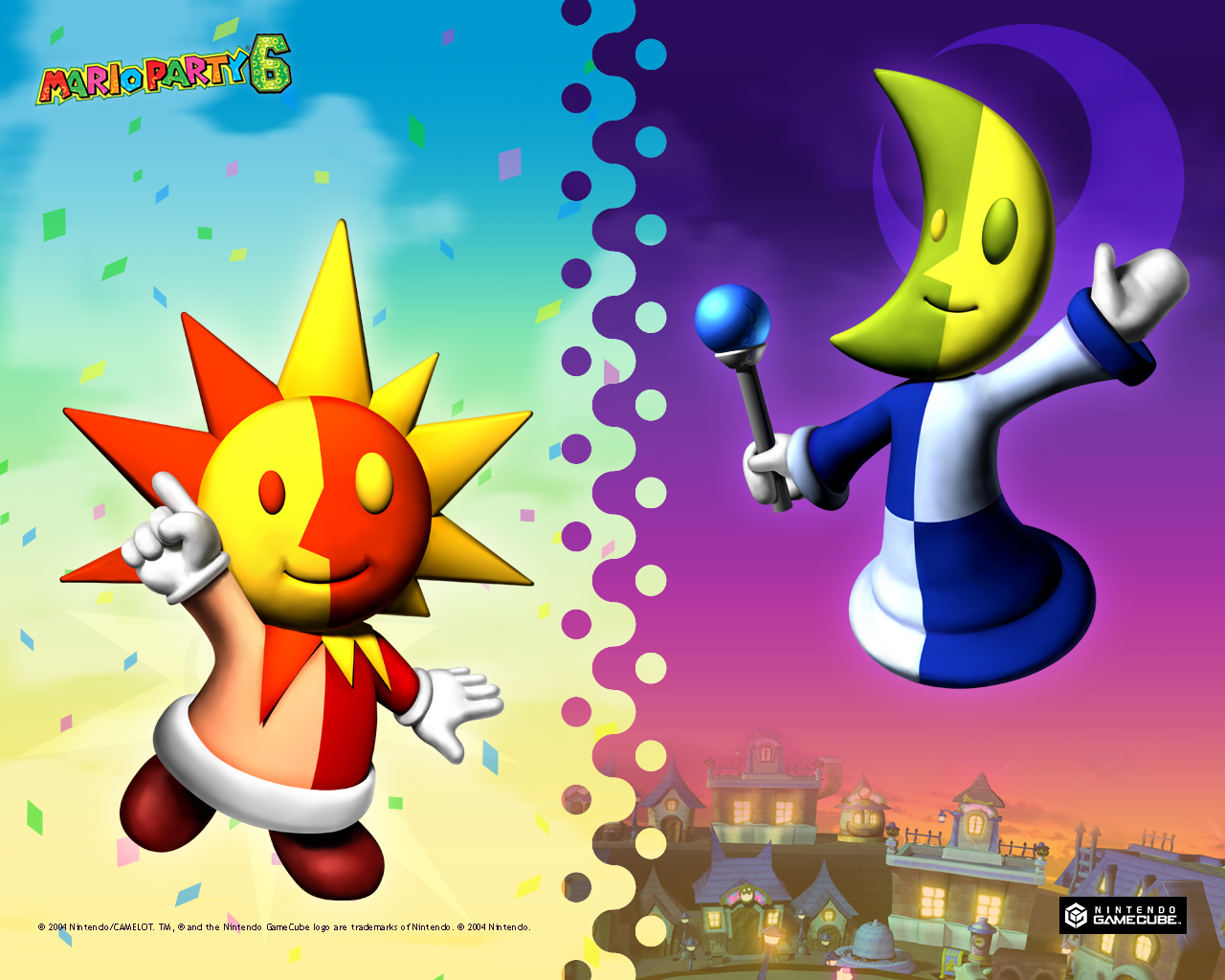
Twila and Brighton on a wallpaper from the official website.Brighton and Twila have no voices in the Western releases.
Luigi beside the Whacka sign on Snowflake Lake.Snowflake Lake is full of visitors from other games: Whackas and creatures like the Snow Bunnies of Paper Mario, Freezies from Mario Bros., and an ice sculpture of the small Mario sprite from Super Mario Bros.
Three minigames, Banana Shake, Pier Factor and Freeze Frame, are set in or near Delfino Plaza from Super Mario Sunshine, and the backdrop of Jump the Gun is modelled on the Tower of the Wing Cap from Super Mario 64.
The tune that plays when Professor E. Gadd speaks before and after Lab Brats, “Maze Jam”, is a medley of two themes from Luigi’s Mansion.
Money Belt was renamed X-Ray Payday for Mario Party Superstars, perhaps to avoid confusion with Money Belts, a different minigame from Mario Party 4 that is in the same collection.
The fruit-guessing round in Speak Up reuses the idea of Fruits of Doom, one of Bowser’s minigames in Mario Party 4.
PAL copies leave Trap Ease Artist, Same Is Lame, Pitifall and Trick or Tree out of Endurance Alley. Super Mario Wiki suggests it is because they come down to luck.
In PAL versions the Battle Space shows a lightning bolt, as it did in Mario Party 2, where the American version has a capital B.
Clockwork Castle is the only board in the game with no DK Space or Bowser Space, Castaway Bay the only one where Bowser is about by day and Donkey Kong by night, and Snowflake Lake the only one where a Duel Space can be reached on the very first turn.
Solo Mode has a limit of 50 turns that the game never shows you.
A flying saucer appears over Castaway Bay at night, and its wreck lies in the water by day. It has no effect on the game. A UFO also drifts into shot in the night version of Freeze Frame, where photographing it is worth three points.
World 5-1 of Super Mario 3D Land has a rising-platform section that Super Mario Wiki compares to Pit Boss, and in Mario Party 10 the winner flies off into space, which the wiki lists as a nod to this game.
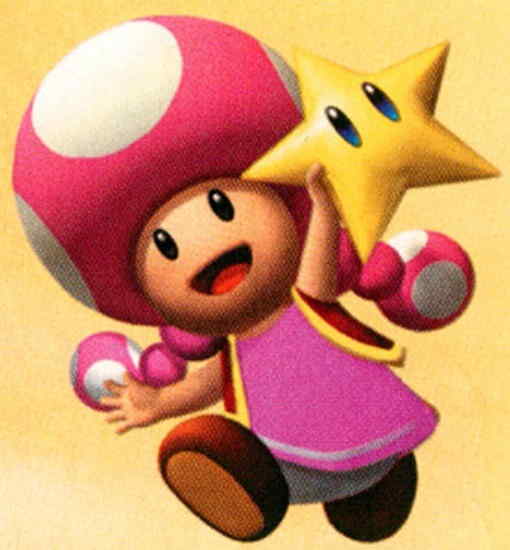
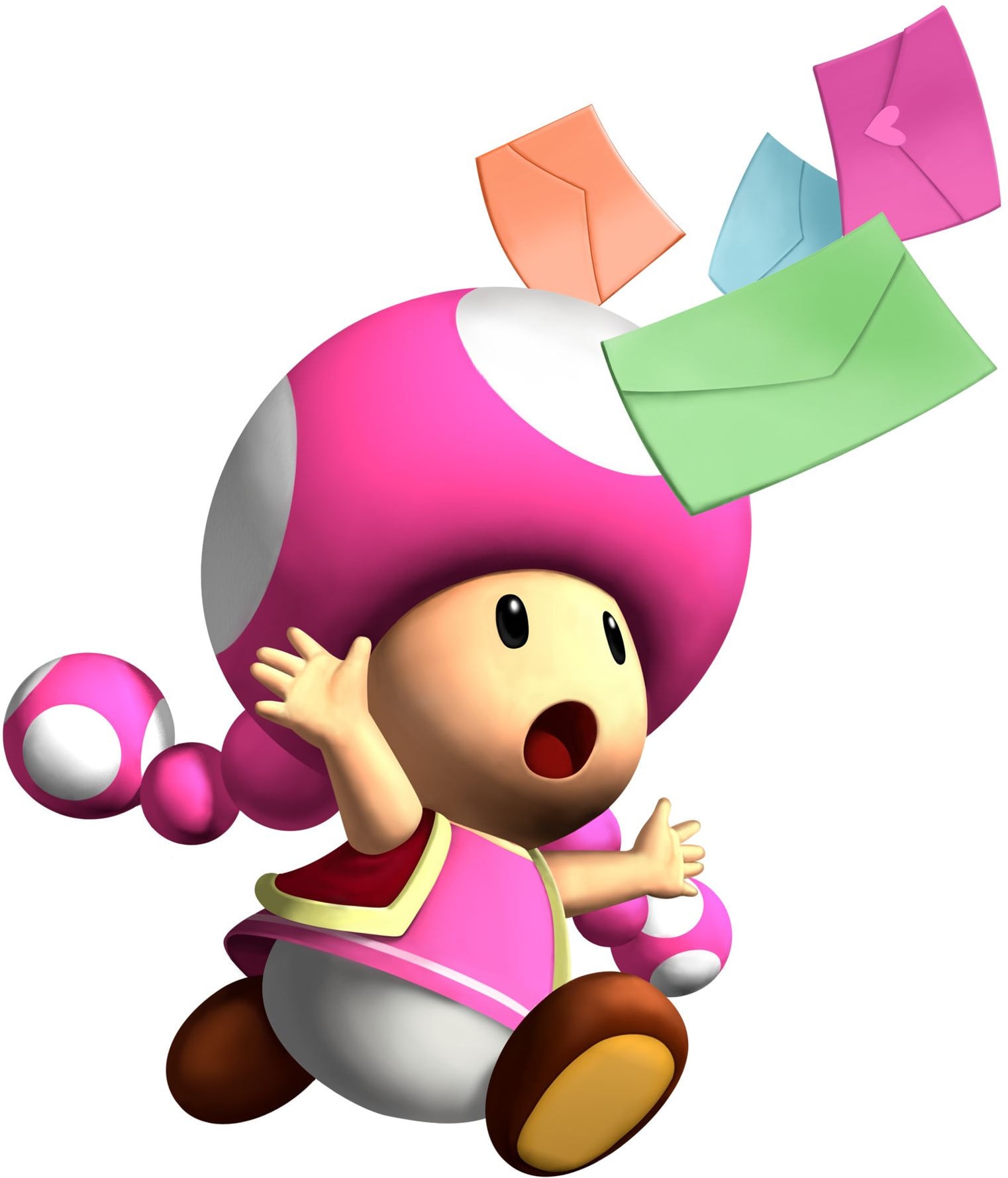
Toadette, from the group artwork.Each of the eleven character pictures shows a different minigame. Toadette’s is Catch You Letter.
Faire Square is the board shown on the night-time half of the promotional artwork, and its rooftops are on the title screen.
Regional Box Art
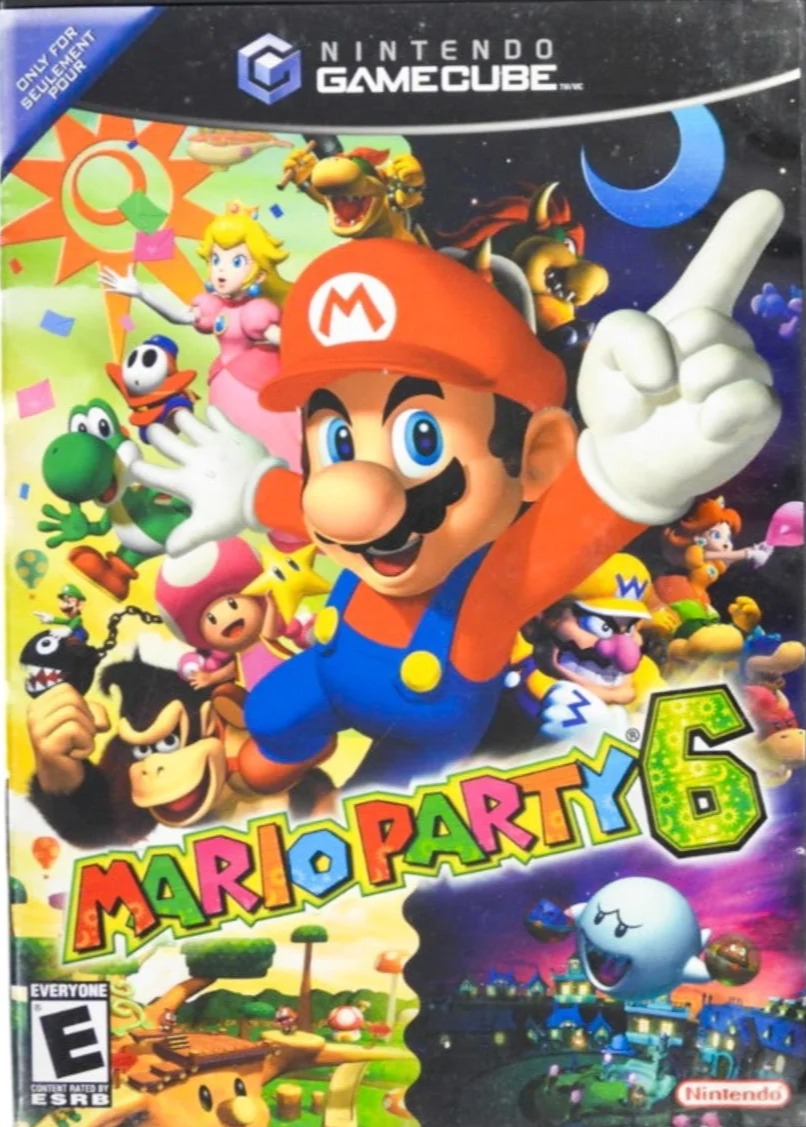
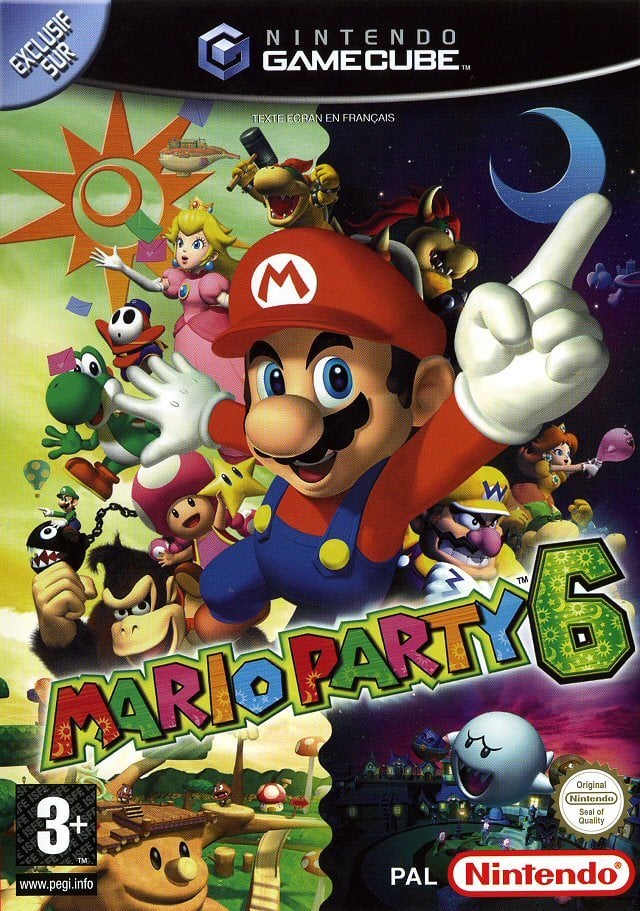
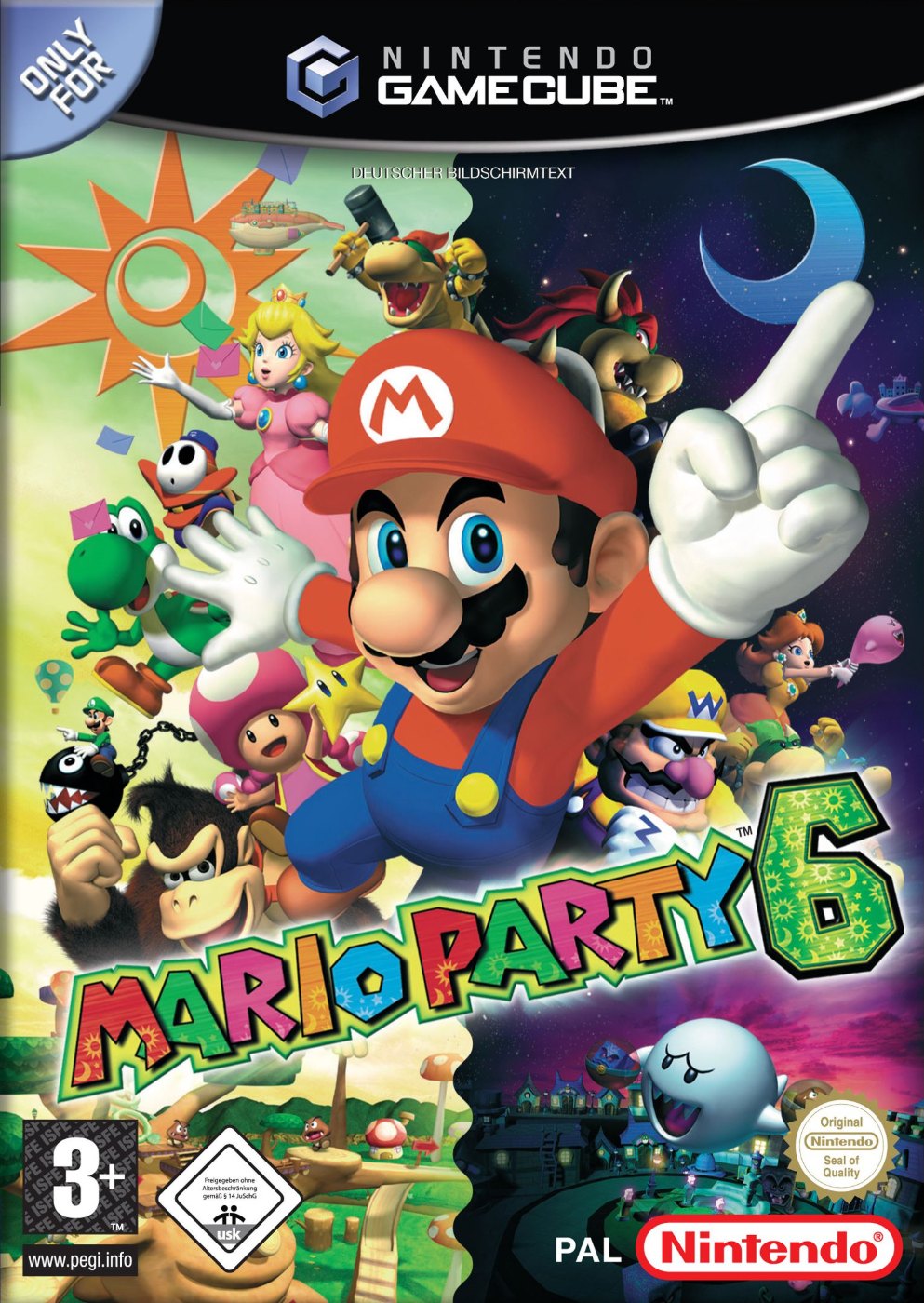
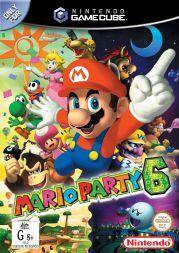
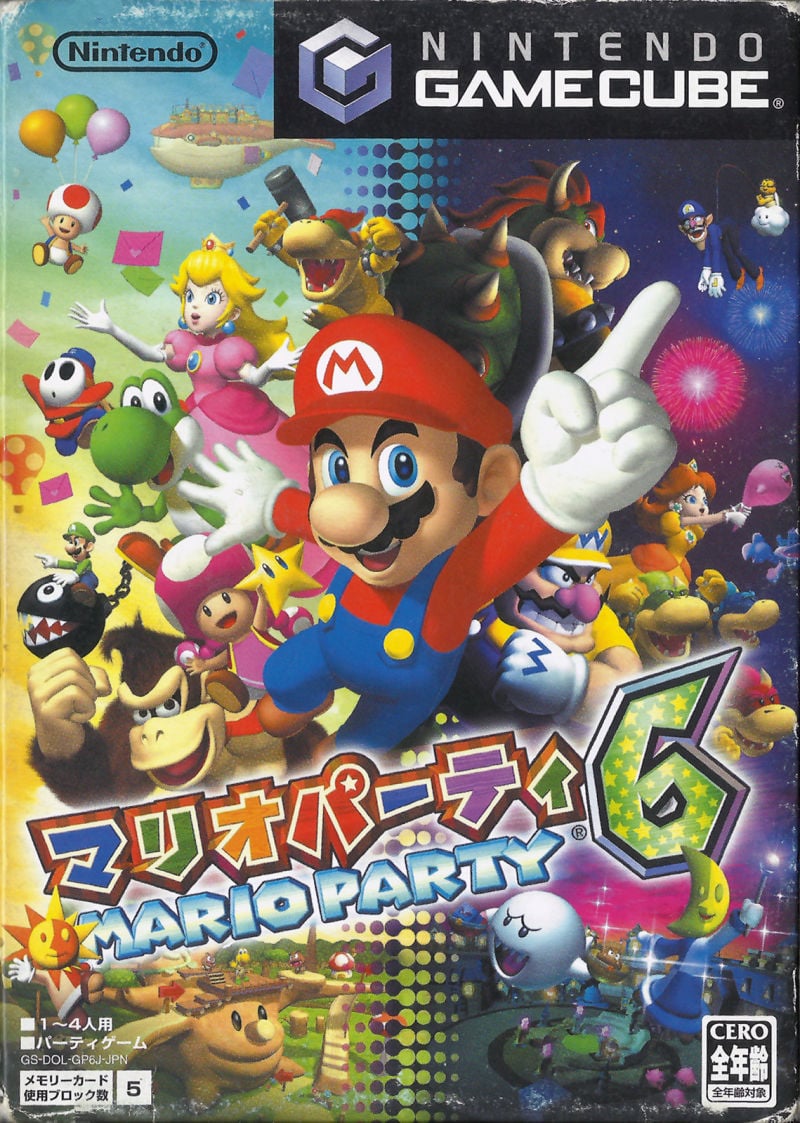
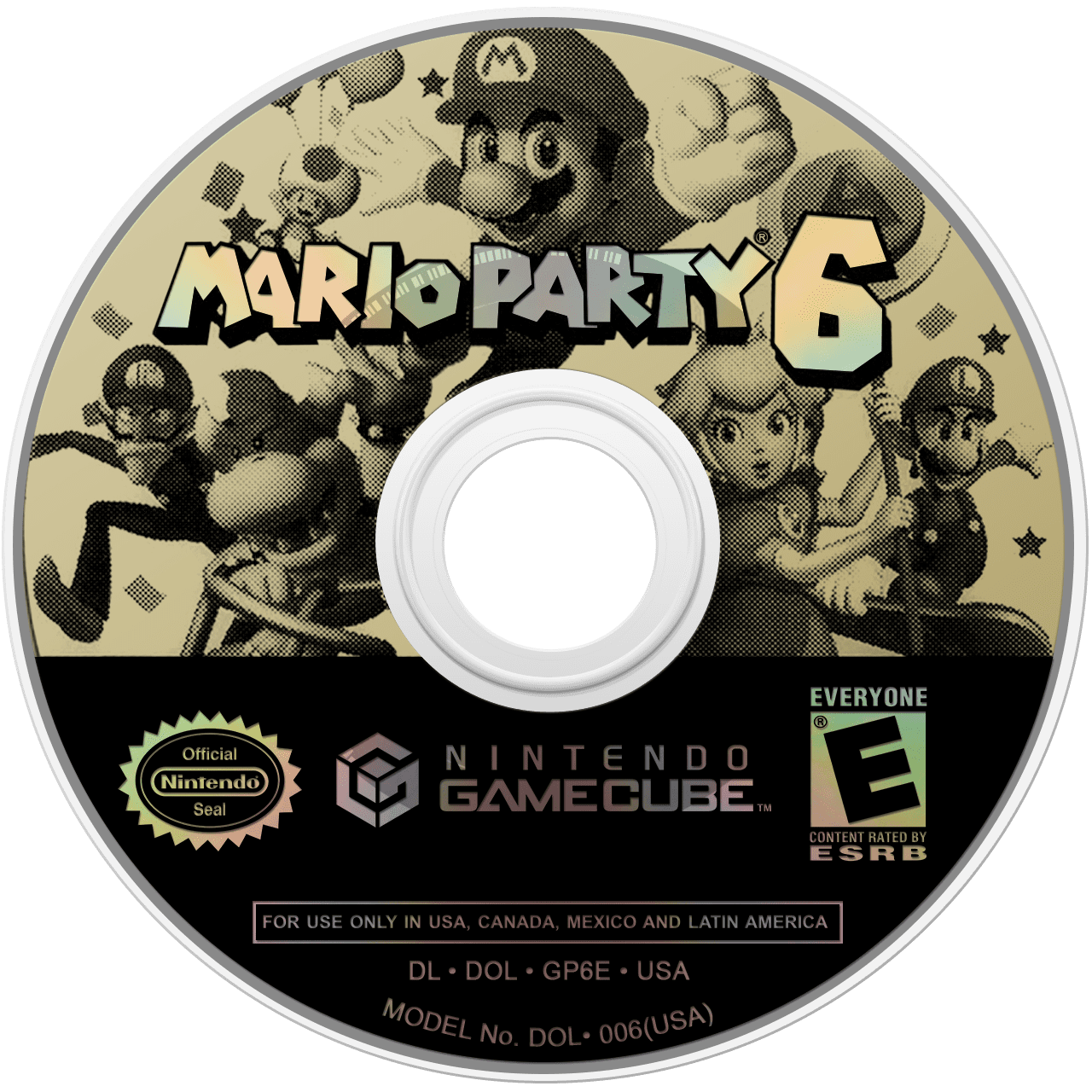
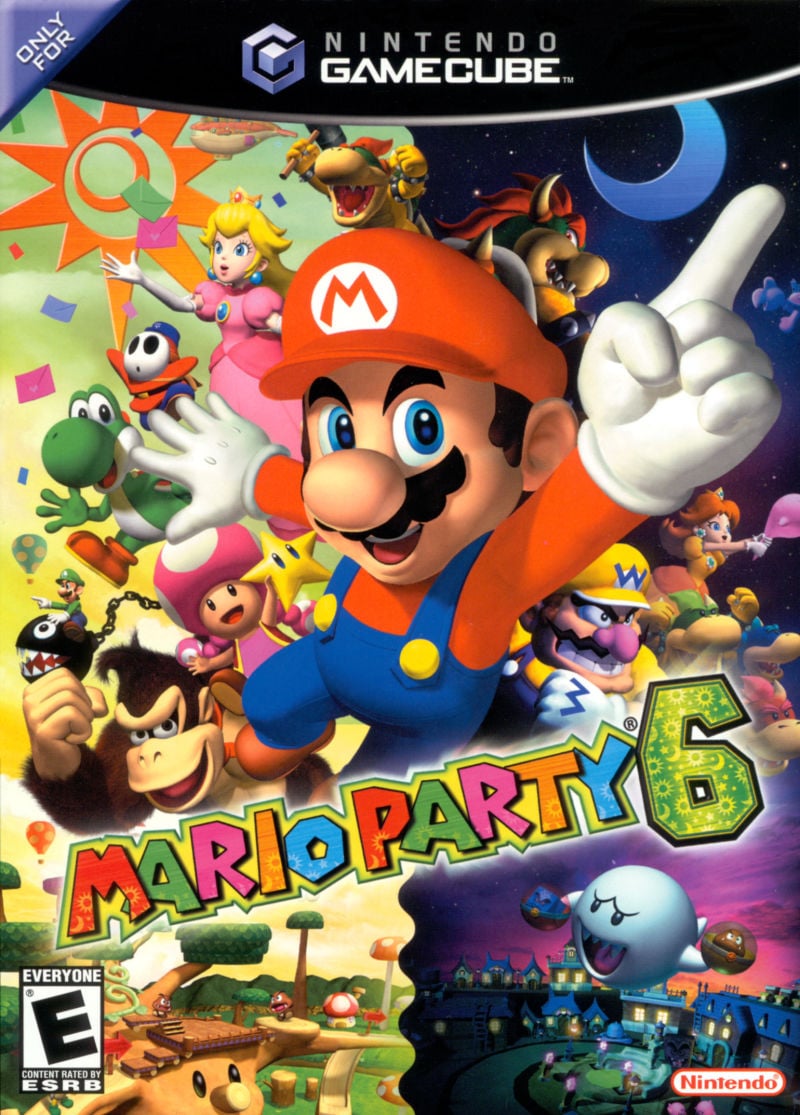
Super Mario Wiki archives two sets of covers: the standard case and the larger box that held the microphone.
North America (2004)Standard case.North America, microphone bundleCanadaCanada, microphone bundleEurope (2005)Europe, microphone bundleFranceGermanyGermany, microphone bundleNetherlands, microphone bundleAustralia (2005)Japan (2004)Japan, microphone bundleNorth American disc
Screenshots
The six Party Mode boards after dark, and a few more from the opening and the menus.
Towering Treetop by night.E. Gadd’s Garage by night.Faire Square by night.Snowflake Lake by night, with Freezies on the paths.Castaway Bay by night.Clockwork Castle by night.The tree sneezes in Towering Treetop.Fluff Airline.The start of a game in E. Gadd’s Garage.A snowman sends a snowball down the path on Snowflake Lake.The Japanese title screen.
Artwork & Media Gallery
Logos, official artwork of the cast and the hosts, board logos, the Solo Mode boards and promotional pieces.
The international logo.The Japanese logo.Toadette, without the background.Board logo: Towering Treetop.Board logo: E. Gadd’s Garage.Board logo: Faire Square.Board logo: Snowflake Lake.Board logo: Castaway Bay.Board logo: Clockwork Castle.Twila introduces Option Mode.
Legacy & Re-releases
Mario Party 6 has not been re-released on a later system. Its sun and moon were never hosts again, but a good deal of what they introduced stayed.
Every release
GameCube (Japan)18 November 2004The original release, with the microphone.
GameCube (North America)6 December 2004Bundled with the microphone.
GameCube (Europe)18 March 2005In English, French, German, Spanish and Italian.
GameCube (Australia)16 September 2005Super Mario Wiki’s date; Wikipedia gives 15 September.
Later systemsNone so farNo Virtual Console or Nintendo Switch Online release. It is not in Nintendo Life’s list of GameCube titles for the Switch 2 Nintendo Classics library.
What came next
Mario Party Advance followed on the Game Boy Advance in 2005, and Mario Party 7 on the GameCube the same year, built on this game’s engine and with Mic Spaces of its own. Brighton and Twila did not return as hosts; they are remembered in a pair of Super Smash Bros. Brawl stickers and a cameo in the series guide of Mario Party: The Top 100.
Where its minigames went
Block Star was the first to come back, in Mario Party DS. The Top 100 took nine, Mario Party Superstars twelve, and Super Mario Party Jamboree revived Granite Getaway, Snow Brawl and Jump the Gun. Superstars uses the daytime versions of What Goes Up… and Cashapult only. For the rest of the series, see the games hub.
Reviews & Sales
Sales
Wikipedia gives worldwide sales of 1.63 million copies, citing Nintendo’s annual report for 2005 and a trade report in MCV, and calls it the lowest-selling Mario Party for a home console. It also places the game fifteenth among GameCube best-sellers, from the 2020 CESA Games White Paper.
Super Mario Wiki has figures for the first ten weeks only: between 18 November 2004 and 30 January 2005 it sold 483,362 copies in America and 469,014 in Japan, the tenth best-selling GameCube game of that period, from a Japanese ranking published on 11 February 2005. The wiki adds that Mario Party 7 went on to outsell it despite arriving later in the console’s life.
1.63 millionworldwide (Wikipedia, citing Nintendo’s 2005 annual report and MCV)
483,362America to 30 January 2005 (Japanese sales ranking, via Super Mario Wiki)
469,014Japan to 30 January 2005 (same source)
71Metacritic score, 33 reviews
Reviews
Scores as listed by Wikipedia and Super Mario Wiki from the original reviews.
GamePro
4.5/5
GameSpyBryn Williams
4/5
Nintendo Power
3.8/5
1UP.comChris Kohler · 8 December 2004 · B on Wikipedia, 7.5 on Super Mario Wiki
Reviewers were kinder to the sixth game than to the fifth, on the whole, and for a reason they could name. GameSpy’s Bryn Williams found it more polished and more enjoyable than either earlier GameCube entry, while admitting there was little that was new beyond the microphone. 1UP’s Chris Kohler called it a polished upgrade with solid improvements. Nintendo Power liked the range of boards and modes. Looking back, writers have tended to single out the day and night system as the thing that sets this entry apart.
The familiar reservations remained. IGN’s Peer Schneider noted the recycled material and was unconvinced by the microphone, but concluded that it “is a really fun multiplayer game when three friends are invited to the party”. GameSpot’s Ryan Davis thought it very like its predecessors and a fine choice for families all the same.
Eurogamer’s Ellie Gibson was having none of it. Her review, the lowest of the set at 4 out of 10, complained about the dialogue, the punning titles, the microphone and the waiting, and ended: “Offers too much tedium and not nearly enough fun, mic or no mic.”
Honours
Academy of Interactive Arts & Sciences · 8th Annual Interactive Achievement Awards (2005)NomineeConsole Children’s Game of the Year.
SLB User Reviews
Mario Party 6 has yet to receive a community review on Super Luigi Bros.
If you’ve played Mario Party 6 and would like to submit a review, please get in touch.
To provide the best experiences, we use technologies like cookies to store and/or access device information. Consenting to these technologies will allow us to process data such as browsing behavior or unique IDs on this site. Not consenting or withdrawing consent, may adversely affect certain features and functions.
Functional
Always active
The technical storage or access is strictly necessary for the legitimate purpose of enabling the use of a specific service explicitly requested by the subscriber or user, or for the sole purpose of carrying out the transmission of a communication over an electronic communications network.
Preferences
The technical storage or access is necessary for the legitimate purpose of storing preferences that are not requested by the subscriber or user.
Statistics
The technical storage or access that is used exclusively for statistical purposes.The technical storage or access that is used exclusively for anonymous statistical purposes. Without a subpoena, voluntary compliance on the part of your Internet Service Provider, or additional records from a third party, information stored or retrieved for this purpose alone cannot usually be used to identify you.
Marketing
The technical storage or access is required to create user profiles to send advertising, or to track the user on a website or across several websites for similar marketing purposes.

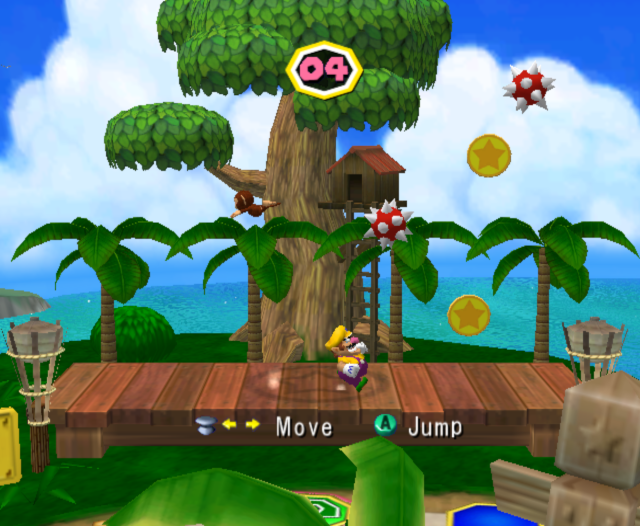
 Towering Treetop66 spaces · Star: 20 coins, moves after each saleWoody by day, Evil Woody and Pink Boo by night, and a tree that can be made to sneeze.
 E. Gadd’s Garage69 spaces · Star: 20 coins, moves after each saleA laboratory of coin-sucking fans, teleporters and a machine that scrambles your Orbs.
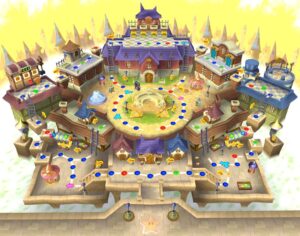 Faire Square66 spaces · Stars: up to five at once; 20 coins by day, 5 to 40 by nightA fixed Star in the middle of a fairground of gambling stalls.
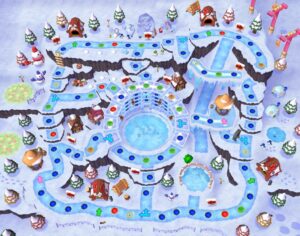 Snowflake Lake72 spaces · Stars: start with five, steal the rest by Chain ChompNo Star Space at all: hire a Chain Chomp and run your rivals down.
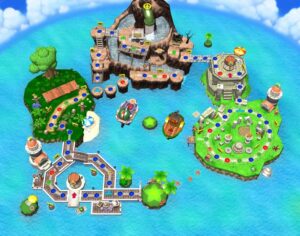 Castaway Bay62 spaces · Star: 20 coins from DK, unless Bowser’s yacht is inOne road to the jetty, where either Donkey Kong or Bowser is waiting.
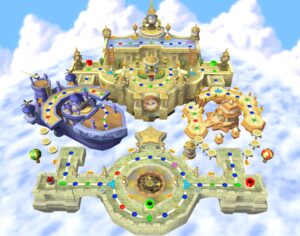 Clockwork Castle64 spaces · 100 Stars at the Star Bank · chase DK by day, flee Bowser by nightThe direction of play reverses at nightfall, and the Star walks round the board.
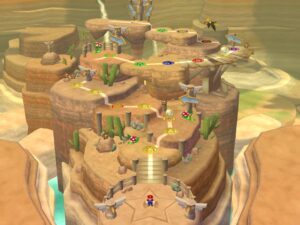 Thirsty GulchSolo Mode · shortA desert trail where ? Spaces drop you to a lower level.
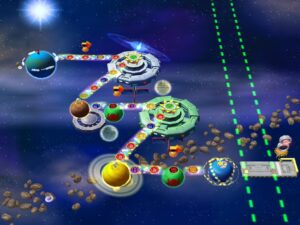 Astro AvenueSolo Mode · mediumOuter space. Rolling 5, 3 and 2 reaches the goal without playing a single minigame.
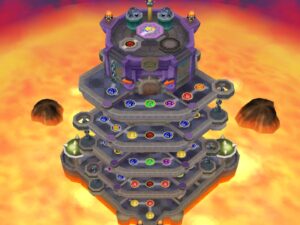 Infernal TowerSolo Mode · longBowser’s tower, with a cage waiting for anyone who overshoots.


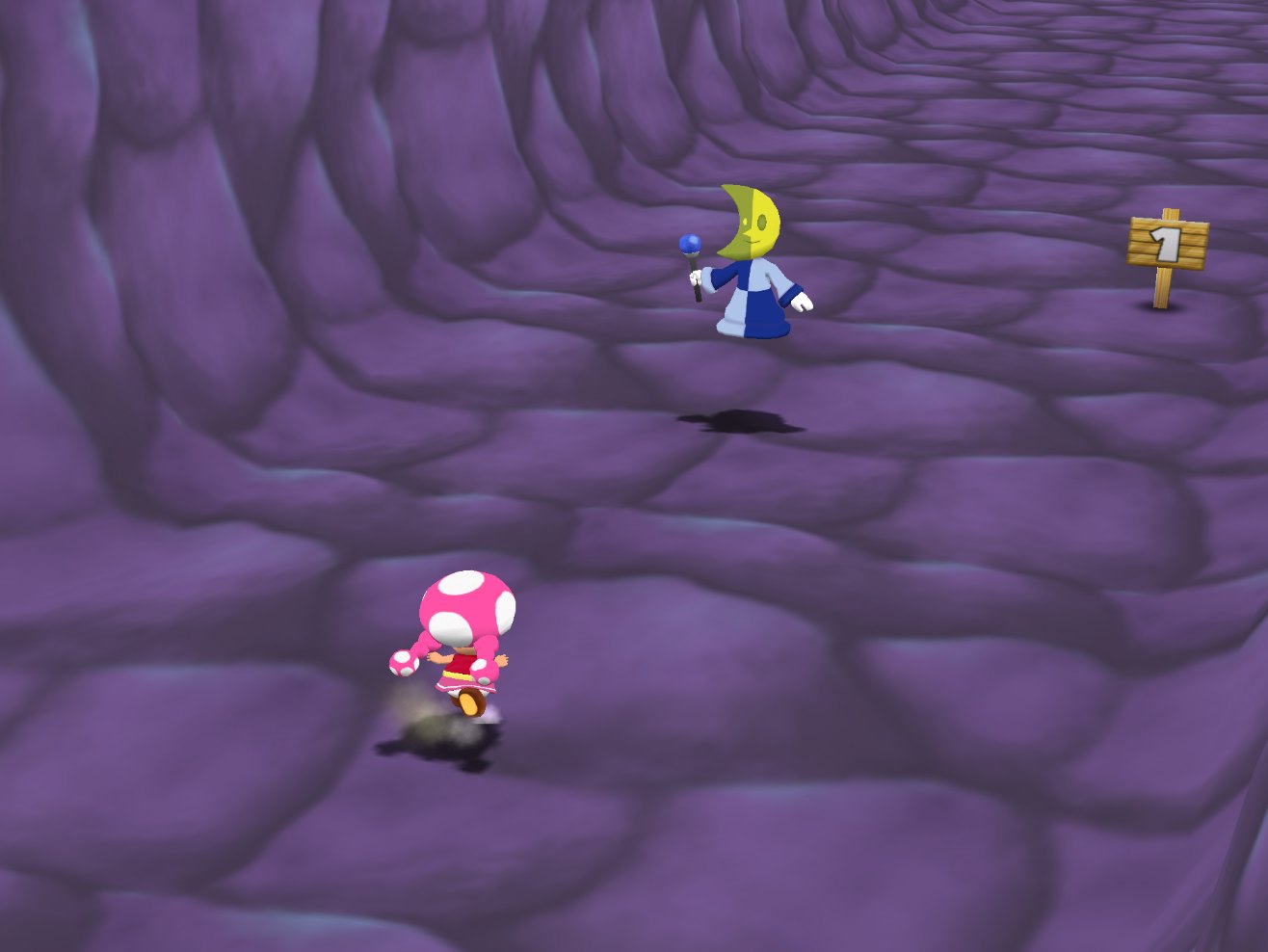
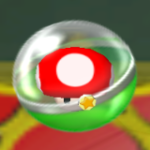 Mushroom OrbGreen · 5 coins. Roll two Dice Blocks.
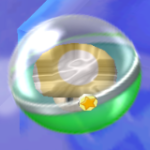 Super ’Shroom OrbGreen · 15 coins. Roll three Dice Blocks.
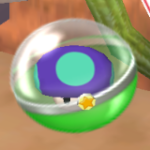 Cursed Mushroom OrbGreen · Solo Mode only. Your die is limited to 1, 2 and 3, which in Solo Mode can be exactly what you want.
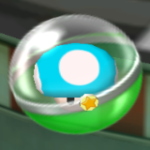 Sluggish ’Shroom OrbGreen · 10 coins. The Dice Block turns slowly, which makes it far easier to hit the number you want.
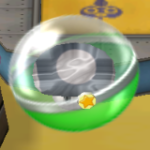 Metal Mushroom OrbGreen · 10 coins. Move without being harmed by rivals’ traps. Not sold in Towering Treetop or Faire Square.
 Bullet Bill OrbGreen · 20 coins. Ride a Bullet Bill and take 20 coins from an opponent you overtake. Sold in E. Gadd’s Garage and Faire Square.
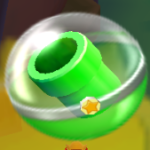 Warp Pipe OrbGreen · 10 coins. Swap places with a player picked by roulette.
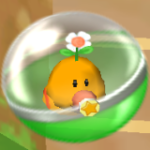 Flutter OrbGreen · 30 coins. Flutter carries you straight to the Star Space. Sold in Towering Treetop and E. Gadd’s Garage, the two boards with a moving Star.
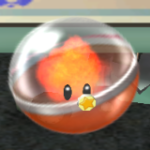 Podoboo OrbRed · 5 coins. A rival who passes loses 10 coins.
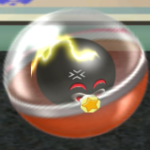 Zap OrbRed · 15 coins. A rival who passes loses 5 coins for every space they go on to move.
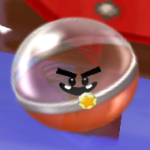 Tweester OrbRed · 5 coins. A rival who passes is blown away to another space.
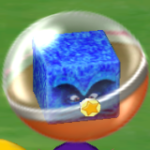 Thwomp OrbRed · 10 coins. A rival who passes is flattened and has to stop there.
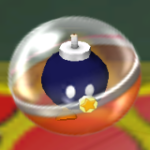 Bob-omb OrbRed · 10 coins. A rival who passes may move only half of what is left of their roll.
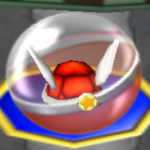 Koopa Troopa OrbRed · 10 coins. A rival who passes is made to swap places with you.
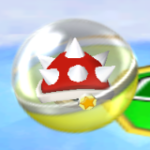 Spiny OrbYellow · 5 coins. A rival who lands loses 10 coins.
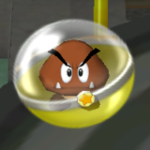 Goomba OrbYellow · 10 coins. A rival who lands rolls a die and pays you that many coins.
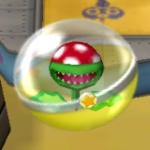 Piranha Plant OrbYellow · 15 coins. A rival who lands hands you half their coins.
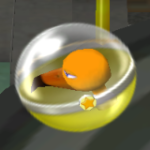 Klepto OrbYellow · 5 coins. A rival who lands is carried back to the start.
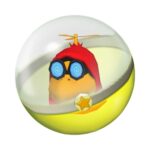 Toady OrbYellow · 5 coins. You take an Orb from the rival who lands.
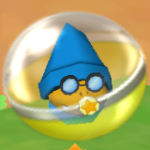 Kamek OrbYellow · 10 coins. You take over one of the traps already laid by the rival who lands.
 Mr. Blizzard OrbYellow · 10 coins. A rival who lands loses every Orb they are carrying.
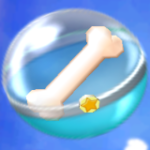 Snack OrbBlue · 10 coins. Sold only on Snowflake Lake. Buys off one Chain Chomp sent to steal your Star.
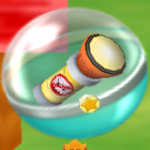 Boo-Away OrbBlue · 10 coins. Drives off Pink Boo once. The Gaddlight of Mario Party 4 in a new shape.

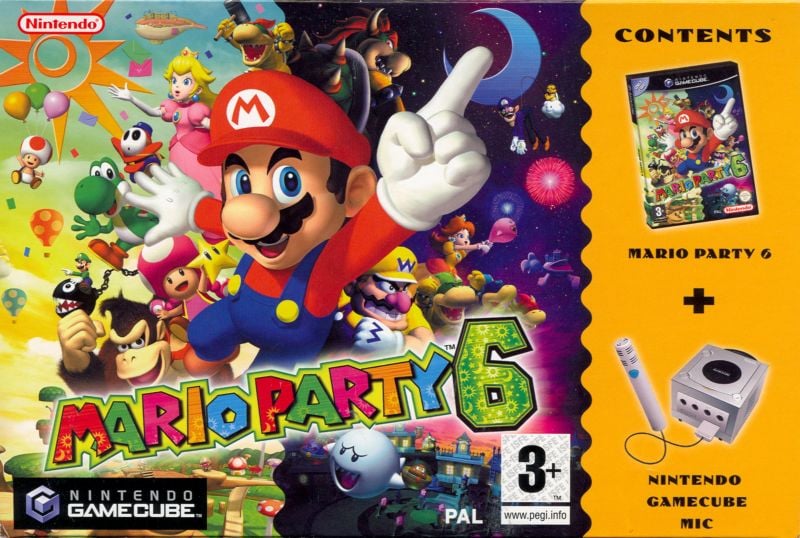 The microphone bundleHardware · 2004The game was sold in a large box with the Nintendo GameCube Microphone inside; Super Mario Wiki archives bundle packaging from North America, Canada, Japan, Britain, the Netherlands and Germany. Wikipedia calls Mario Party 6 the first GameCube game to use a microphone accessory. Mario Party 7 has Mic Spaces of its own.
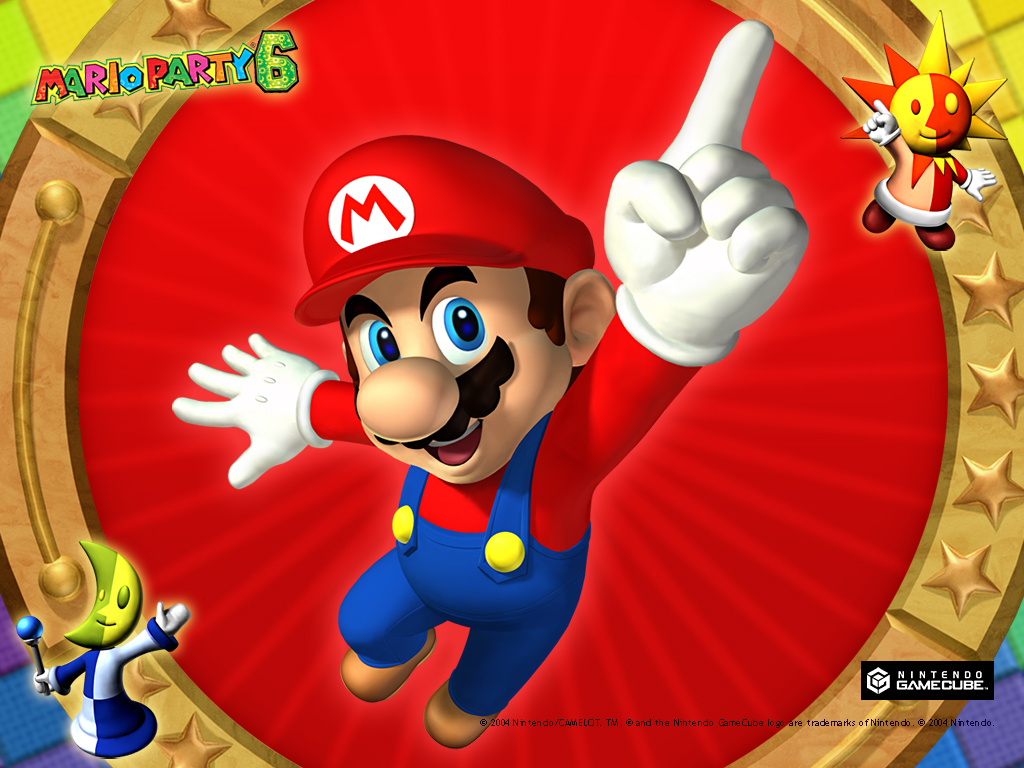 Browser games on the official sitePromotion · 2004According to Super Mario Wiki’s minigame articles, the official website carried simple games based on four minigames: Night Driver (Sunday Drivers), Bug Race (Insectiride), Freeze-It (Surge and Destroy) and Tic-Tac-Whoa! (O-Zone). It also offered desktop wallpapers, and more were given away on the website of Bubble Tape chewing gum.
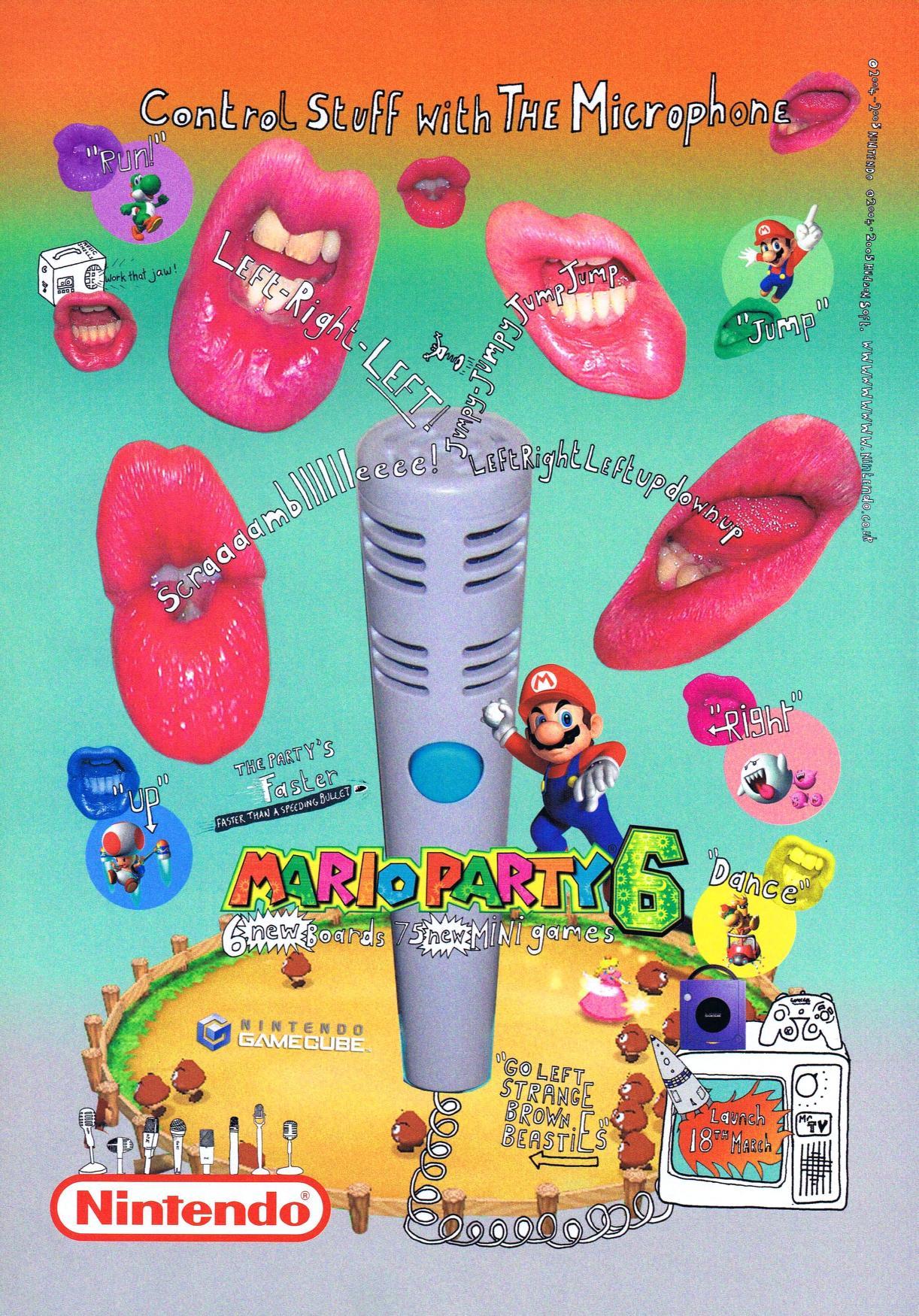 Print advertsEurope · 2005Super Mario Wiki archives British and German magazine adverts for the game’s European release in March 2005.
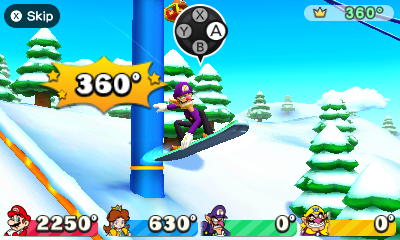 Mario Party: The Top 100Nintendo 3DS · 2017Nine minigames return: Block Star, Catch You Letter, Crate and Peril, Dizzy Rotisserie, Rocky Road, Slot Trot, Snow Whirled, Strawberry Shortfuse and Trap Ease Artist. Brighton and Twila have a cameo in its series guide.
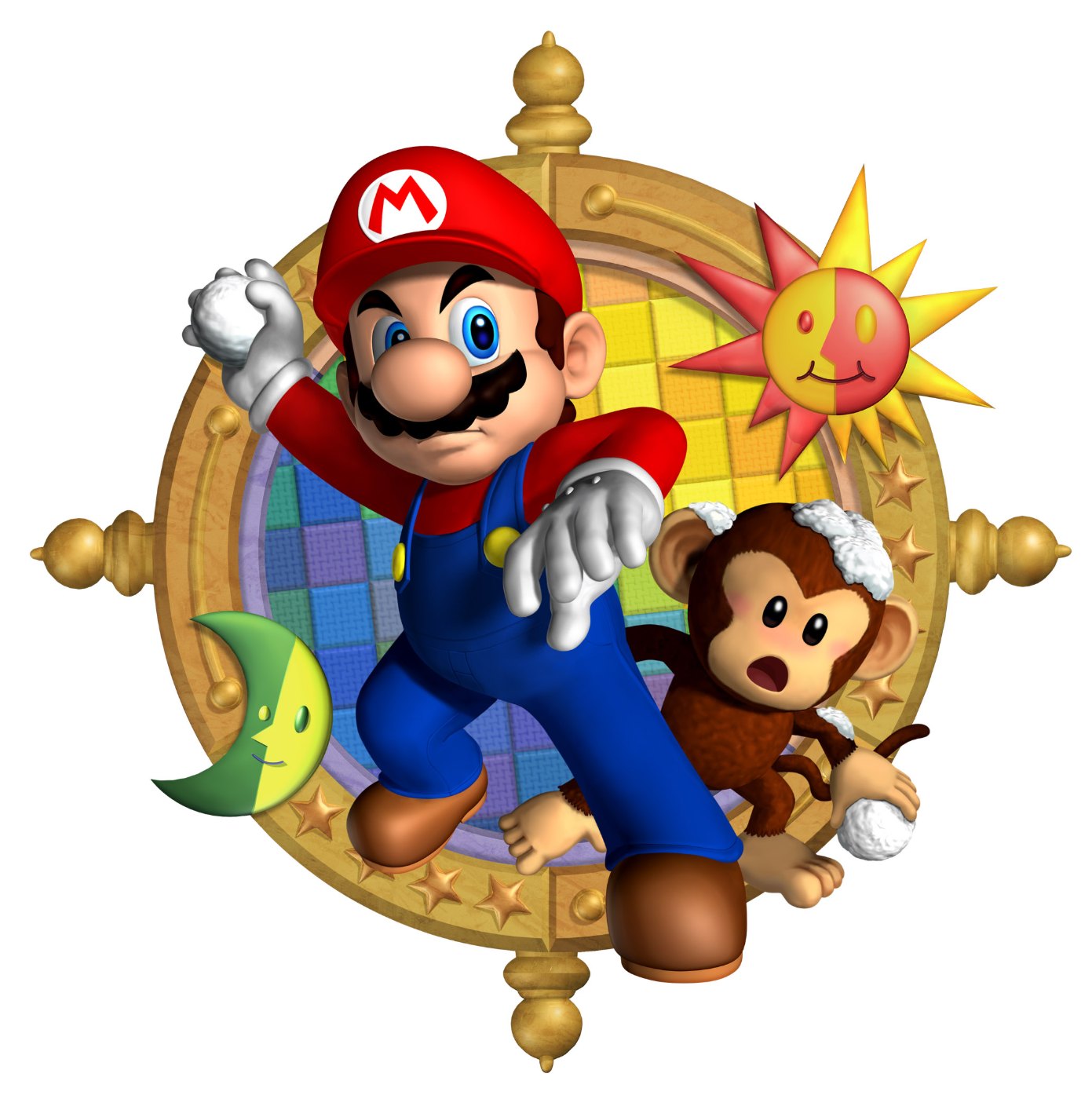 MarioPlayable
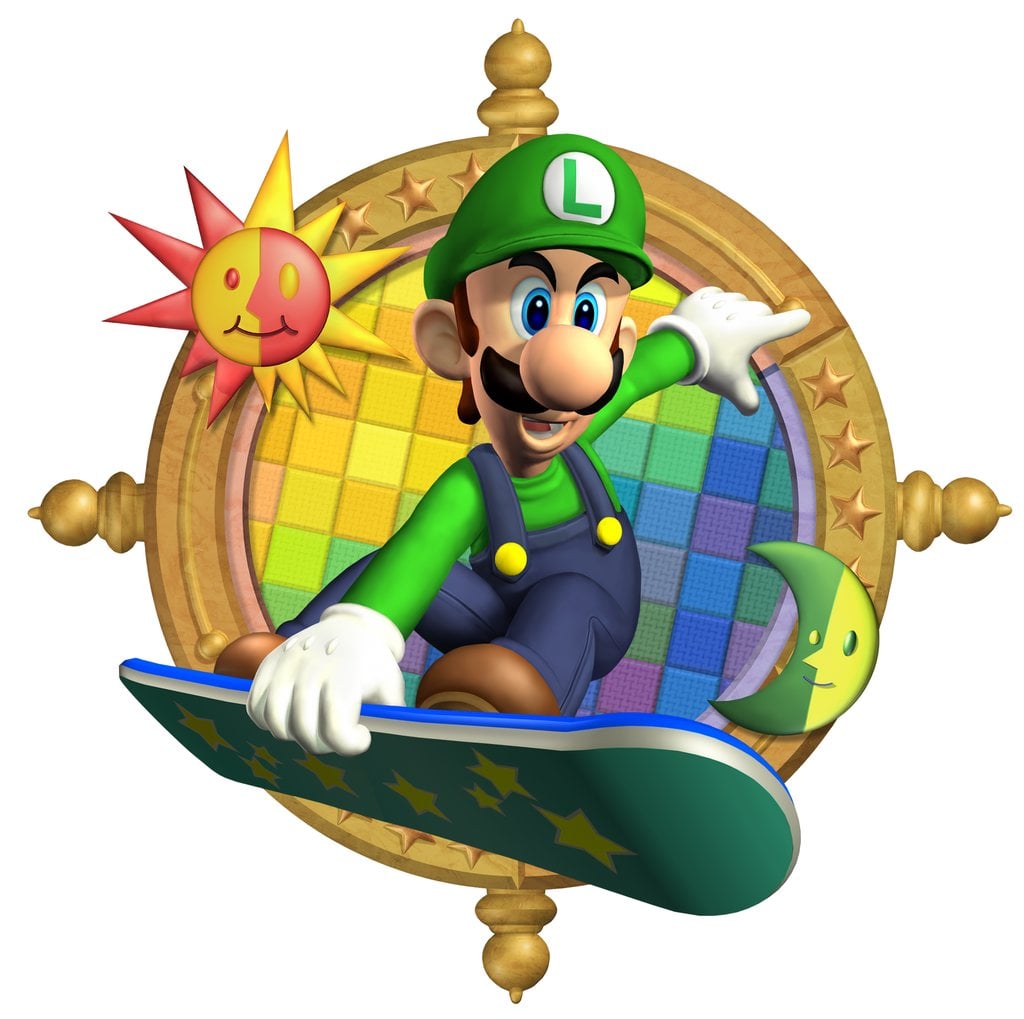 LuigiPlayable
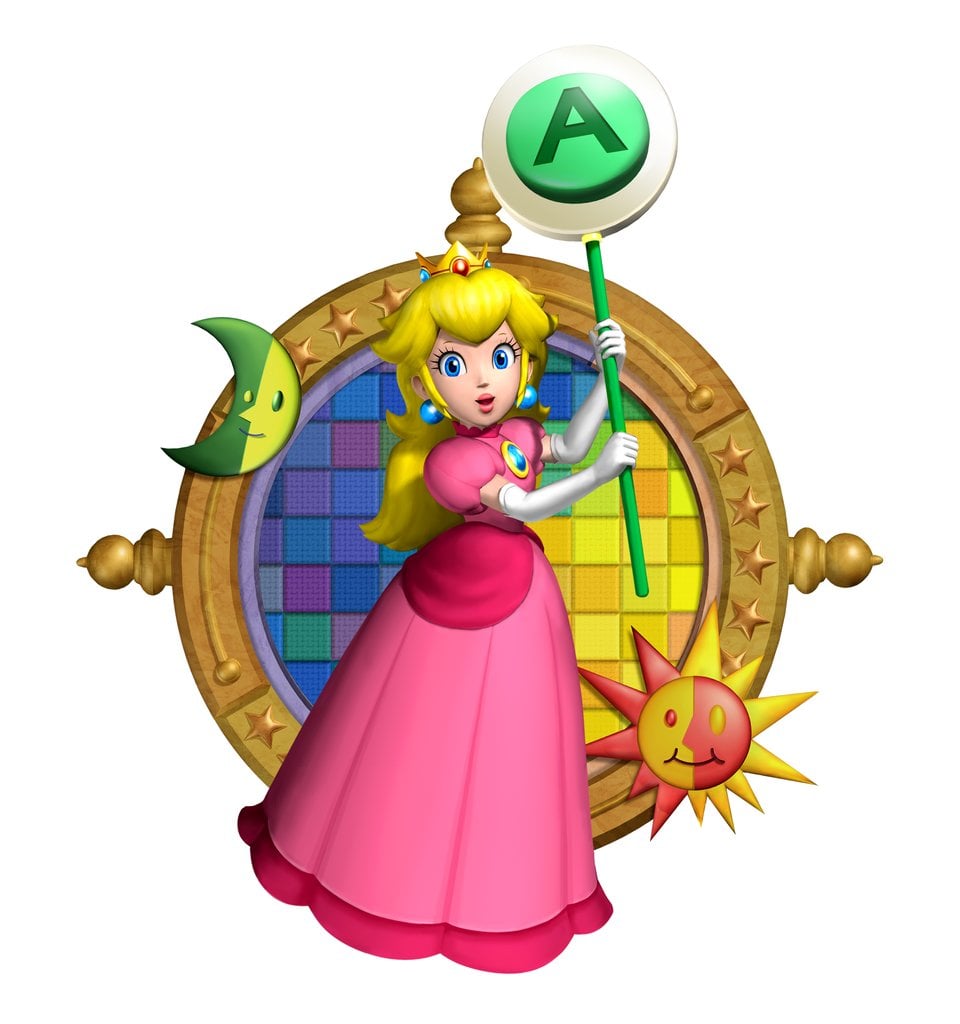 Princess PeachPlayable
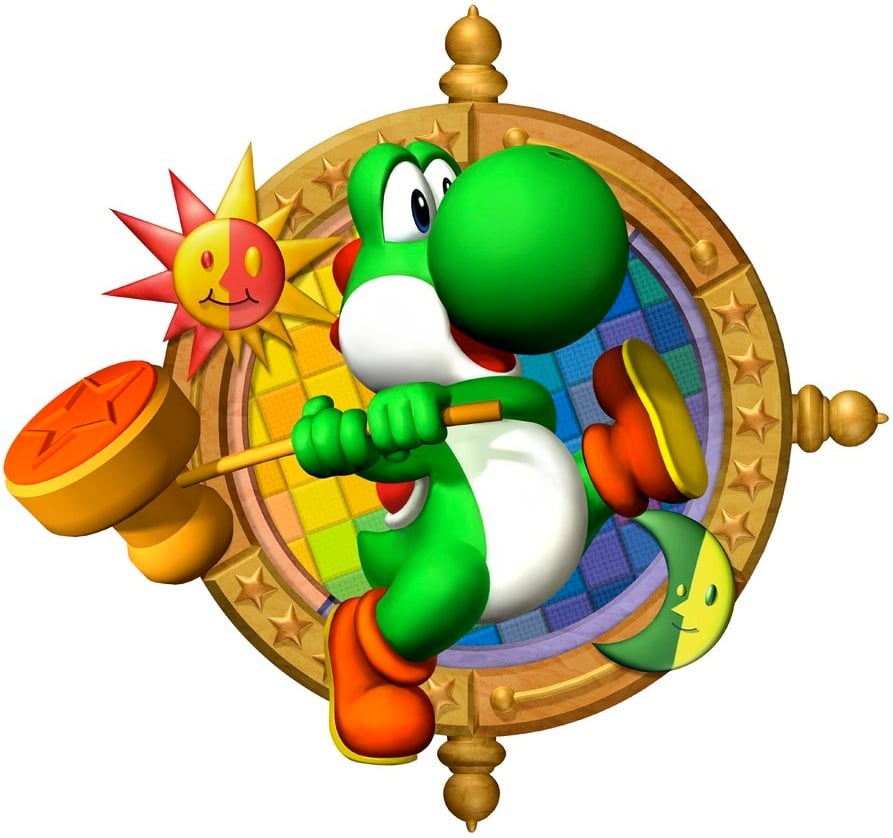 YoshiPlayable
 WarioPlayable
 Princess DaisyPlayable
 WaluigiPlayable
 ToadPlayable
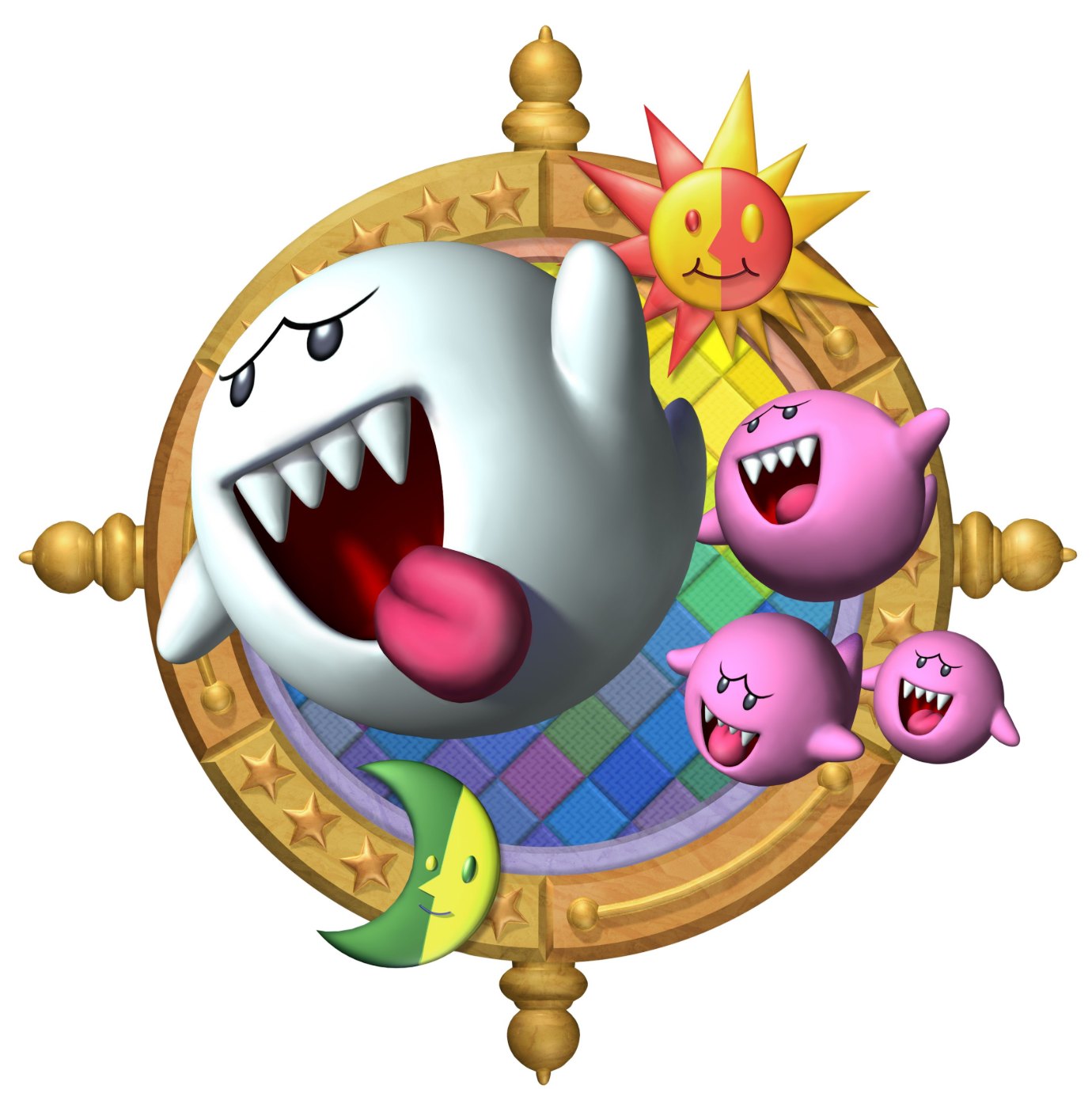 BooPlayable
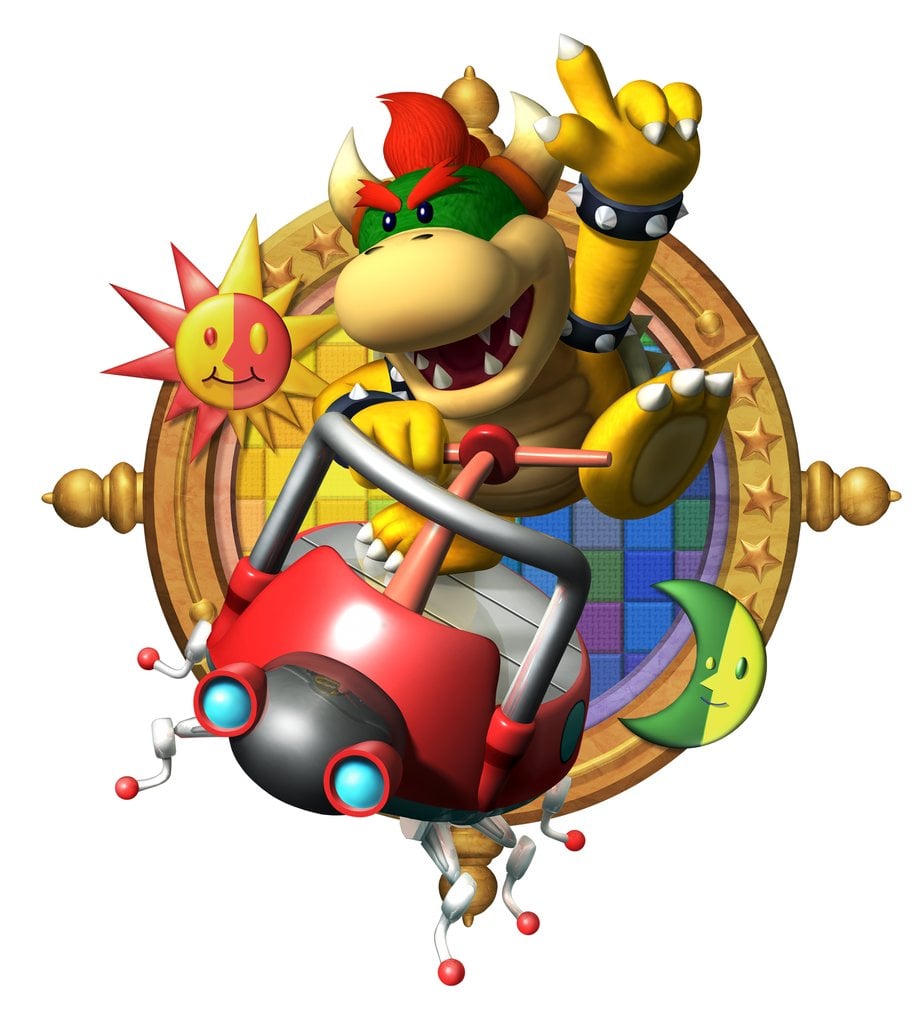 Koopa KidPlayable
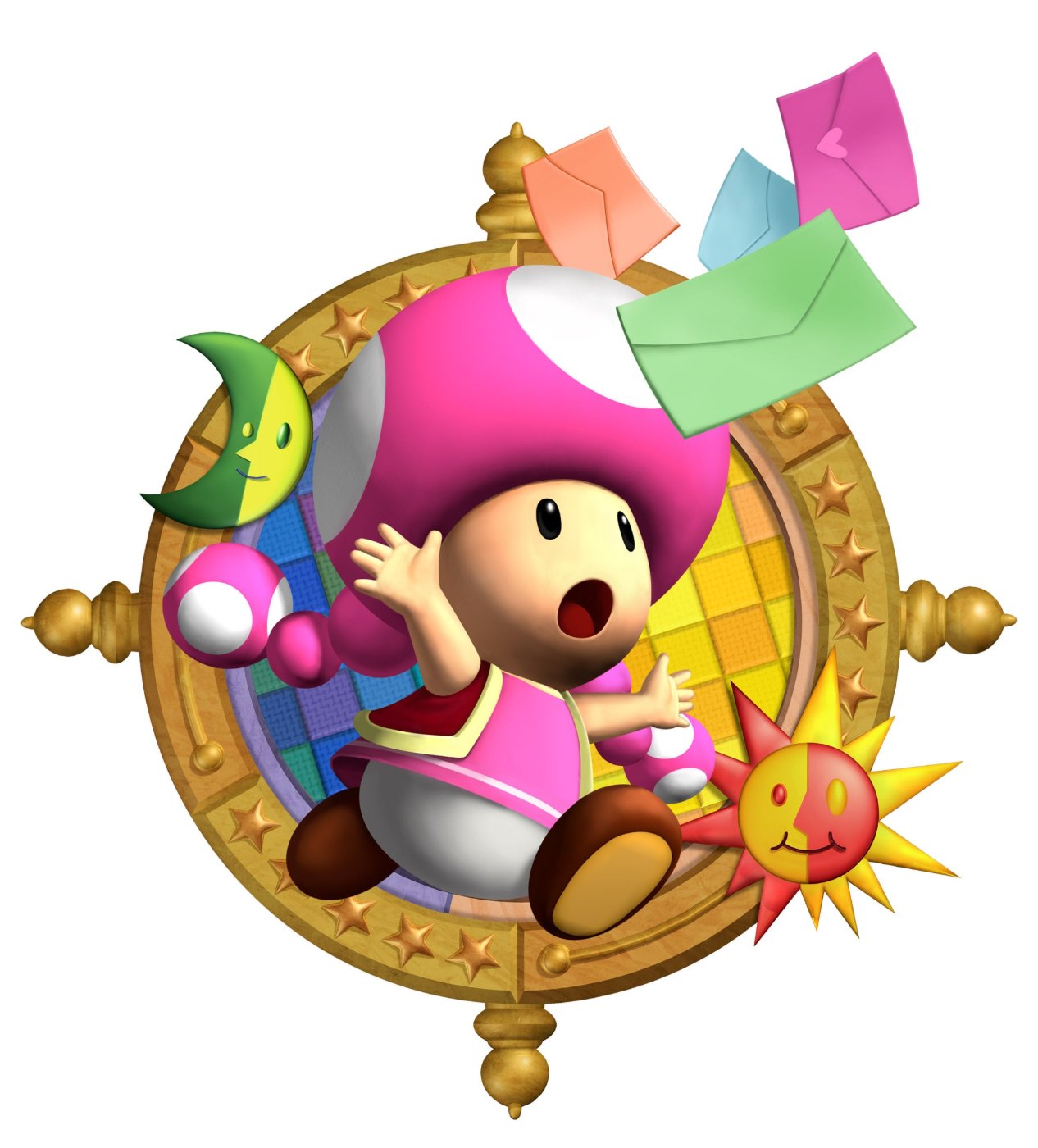 ToadettePlayable · new · unlockable
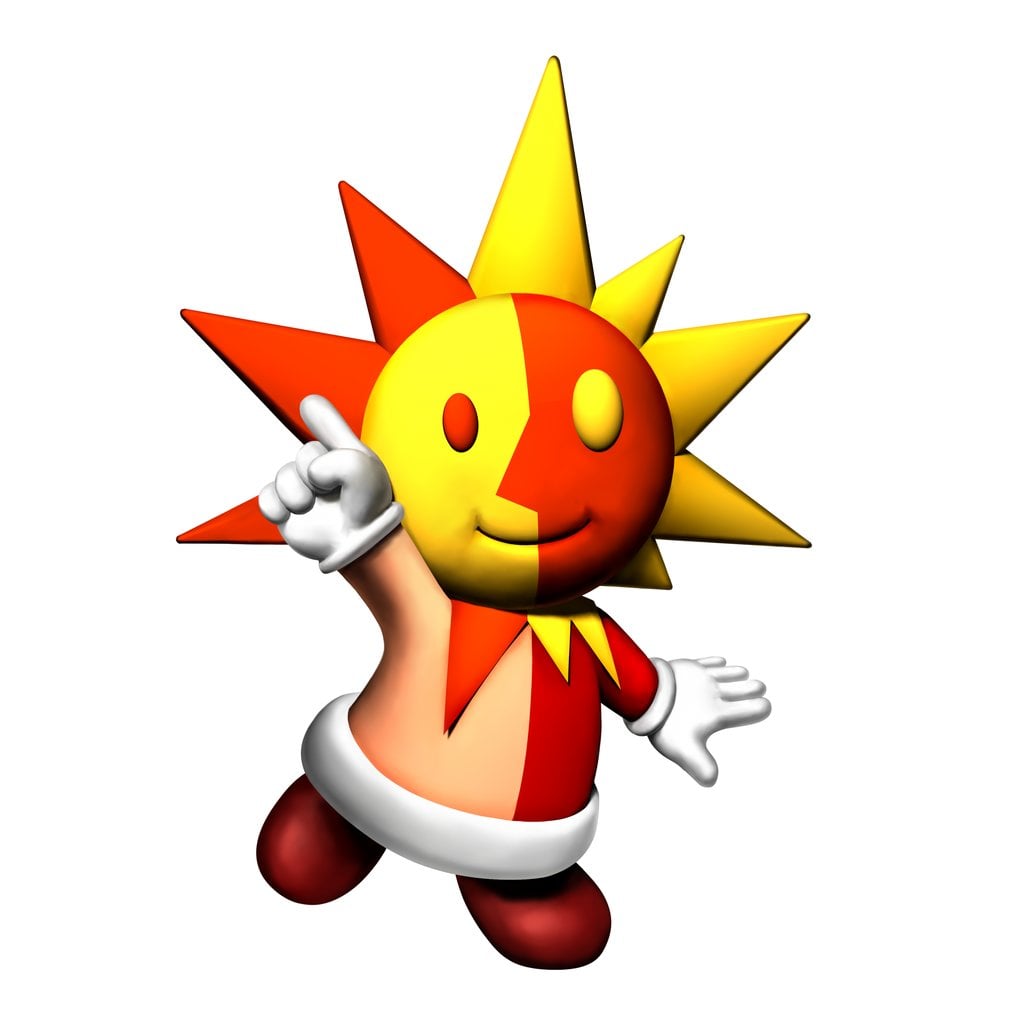 BrightonHost · the sun
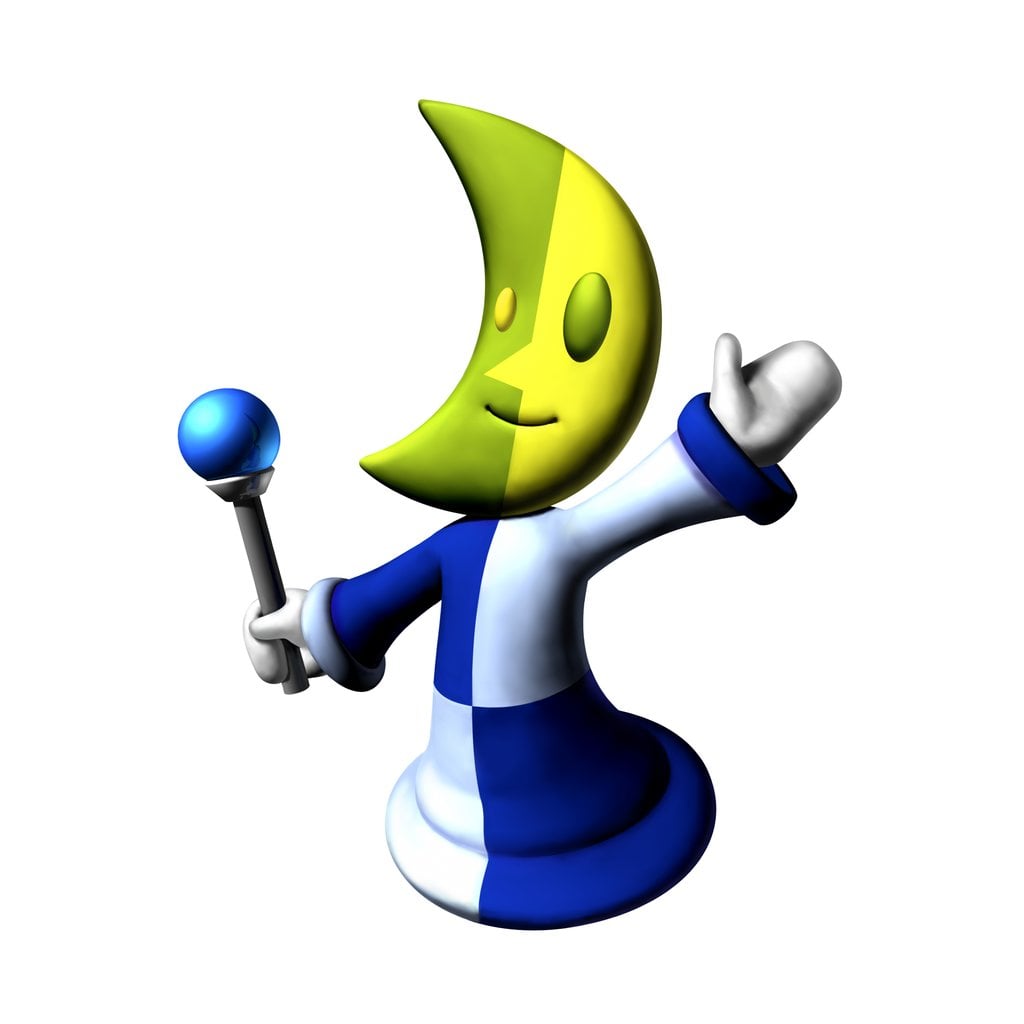 TwilaHost · the moon
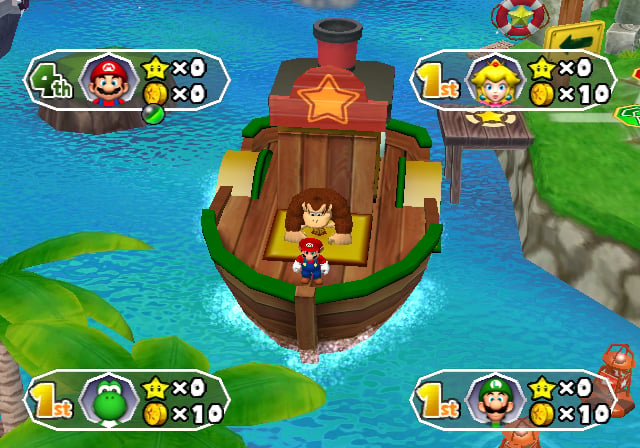 Donkey KongBoard character
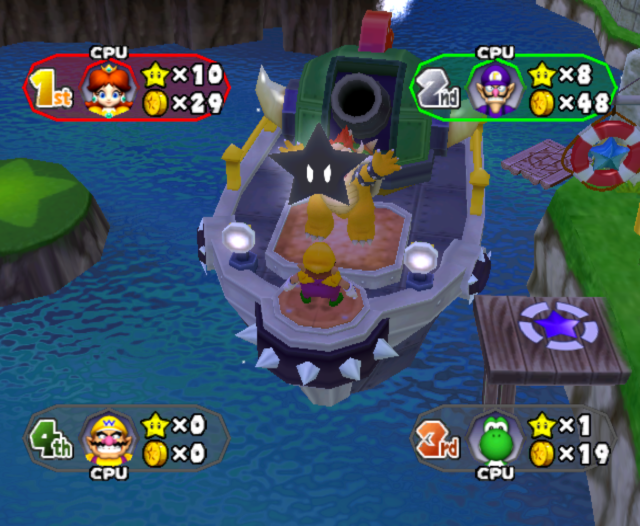 BowserVillain
 Pink BooBoard character
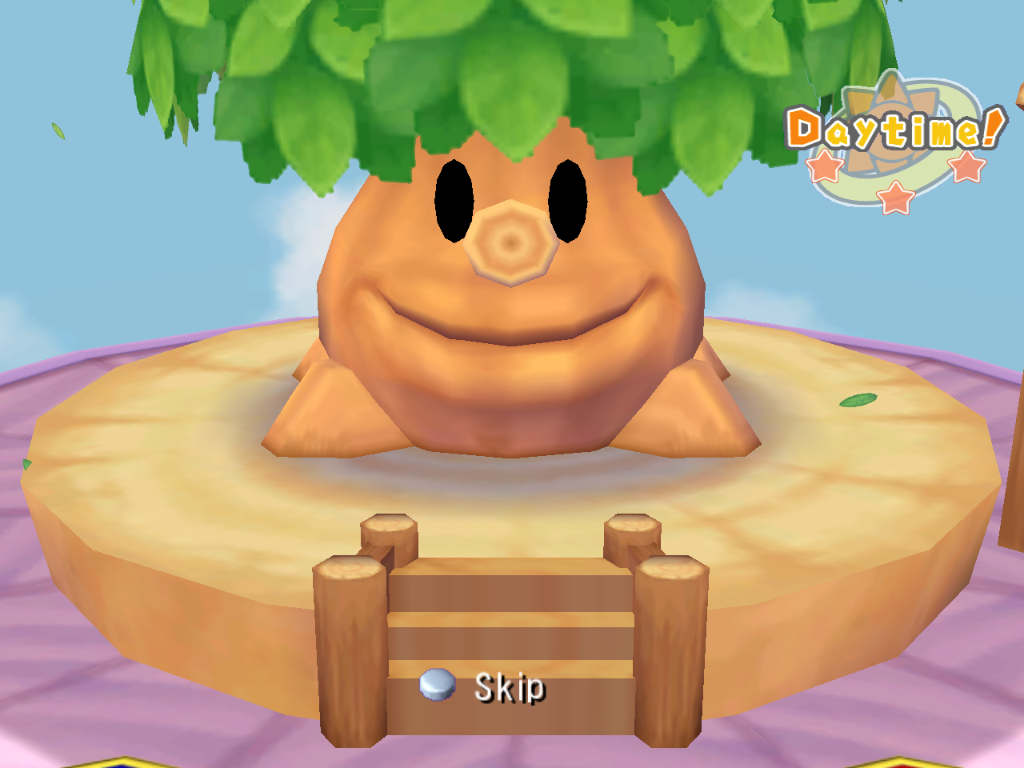 Woody and Evil WoodyBoard characters
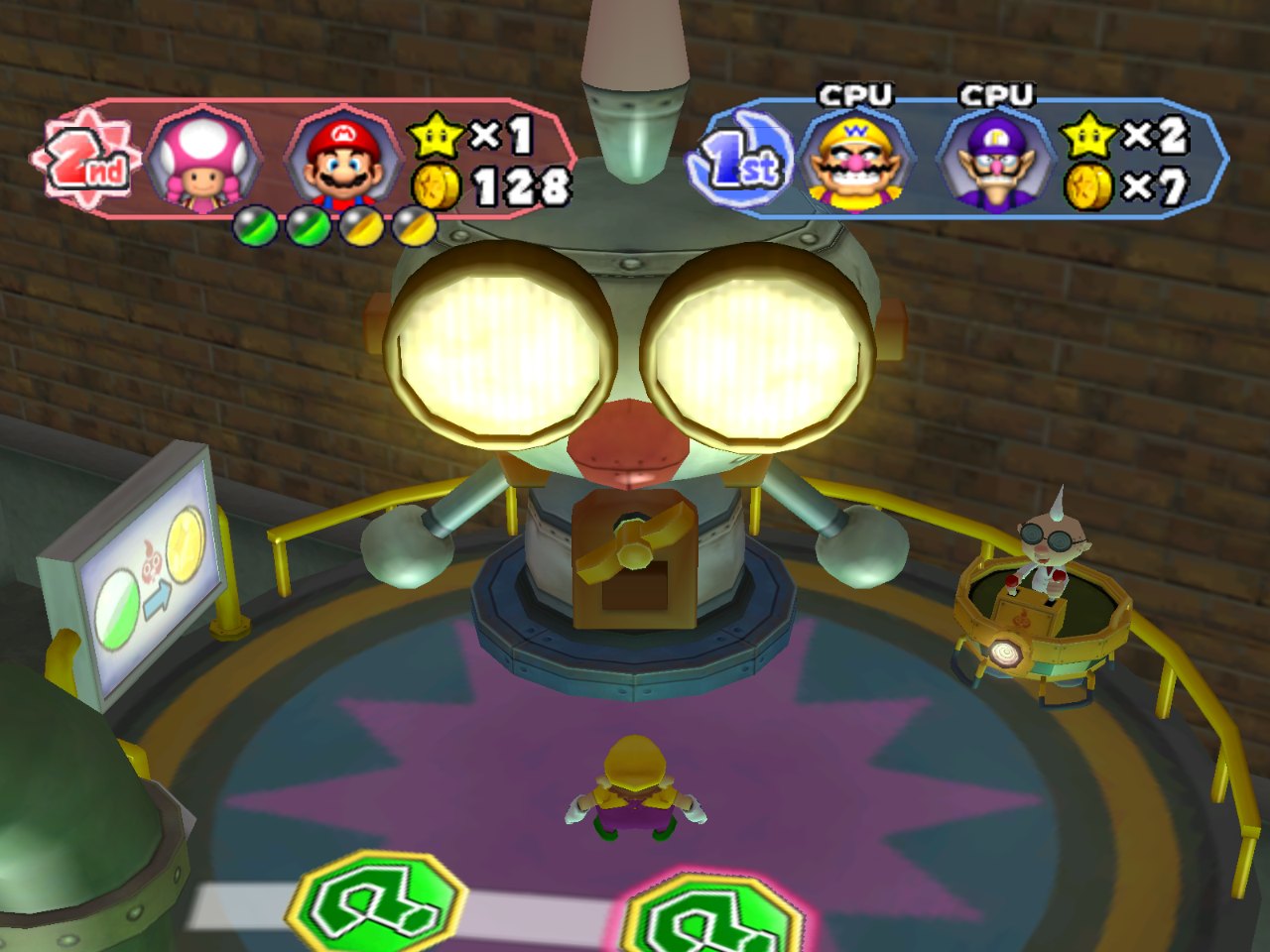 Professor E. GaddBoard character
 Smashdance4-PlayerGround-pound the dance-floor panels as they light up, a point a time. Landing on a rival stuns them.
 Odd Card Out4-PlayerSpot the card that does not belong and press its button first. Two points wins; a wrong answer brings down a Thwomp.
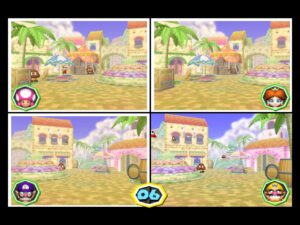 Freeze Frame4-PlayerOne photograph and ten seconds to take it: get as many Goombas in shot as you can. A Shy Guy by day, or a UFO by night, counts triple.
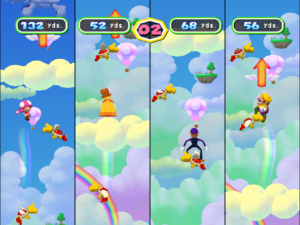 What Goes Up…4-PlayerBy day, climb as high as you can in 30 seconds on clouds and Paratroopas. By night the race is to the bottom. In Superstars.
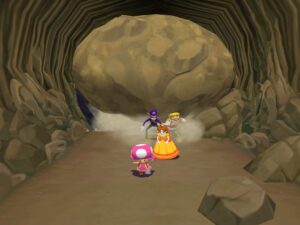 Granite Getaway4-PlayerRun from a rolling boulder, hurdling whatever is in the way, and reach the wooden floor in one piece. In Jamboree.
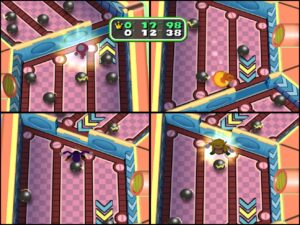 Circuit Maximus4-PlayerA race round an eight-sided track, through the gates and past Amps that stun on contact.
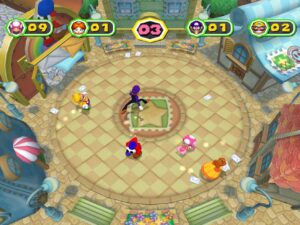 Catch You Letter4-PlayerSnatch letters as they flutter down and hand them to the Shy Guy. In The Top 100 and Superstars.
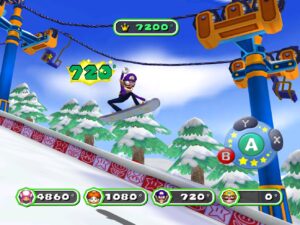 Snow Whirled4-PlayerSnowboard off a jump and press A, B, Y and X in order, over and over, to spin in the air. Most spins wins. In The Top 100 and Superstars.
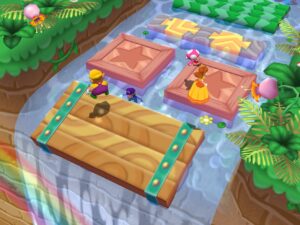 Daft Rafts4-PlayerHop from raft to drifting raft to the last one. Spinies get in the way by day and Podoboos by night.
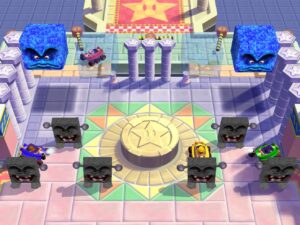 Tricky Tires4-PlayerSteer a six-wheeled buggy through a temple past Whomps and Thwomps. At night there is lava as well.
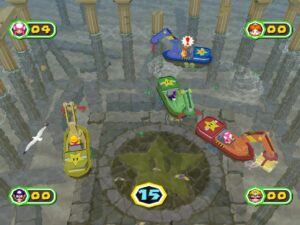 Treasure Trawlers4-PlayerLower your crane when the controller rumbles to haul treasure chests off the sea bed. Gold ones score three.
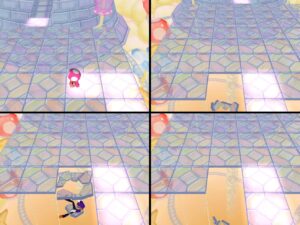 Memory Lane4-PlayerWatch the route a Shy Guy takes across a tiled floor, then follow it exactly. A wrong step and the floor gives way.
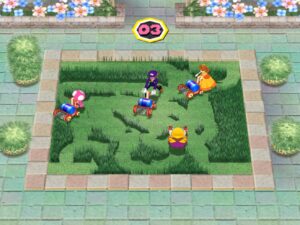 Mowtown4-PlayerDrive a mower round a lawn and collect more cuttings than anyone else.
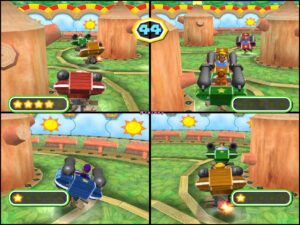 Cannonball Fun4-PlayerHovercraft with cannons. First to land five hits wins.
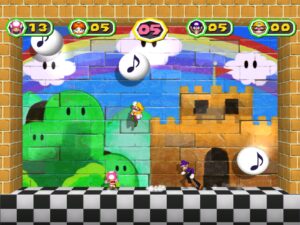 Note to Self4-PlayerJump up and head musical notes for 30 seconds. Bouncing on a rival’s head stuns them.
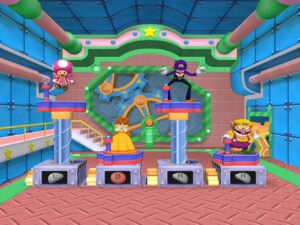 Same Is Lame4-PlayerChoose B, A, L or R. Your podium only rises if nobody else chose the same. First to rise three times wins.
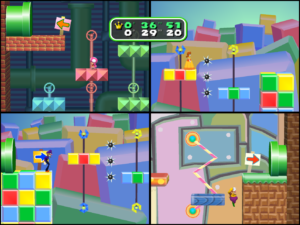 Lift Leapers4-PlayerLeap across moving lifts and over spikes through four sections. First to the end wins.
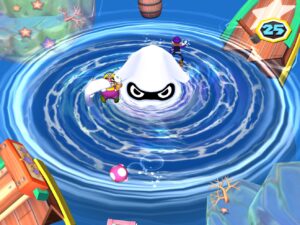 Blooper Scooper4-PlayerSwim for your life against the whirlpool made by a giant Blooper. Last one out of its tentacles wins.
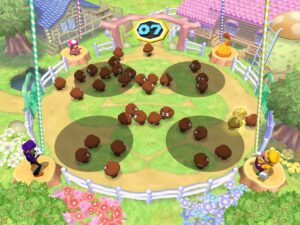 Trap Ease Artist4-Player · day onlyDrop a cage on passing Goombas: one point each and three for a golden one. In The Top 100 and Superstars.
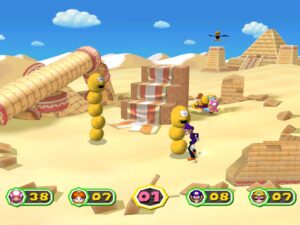 Pokey Punch-out4-PlayerPunch and kick the segments out of Pokeys for points until time runs out.
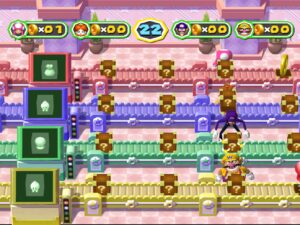 Money Belt4-Player · coinBoxes ride past on a conveyor. Open the ones with coins in, using the X-ray scanner to peek. Renamed X-Ray Payday in Superstars.
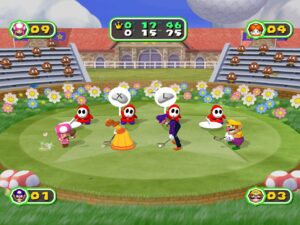 Sunday Drivers4-PlayerA driving range: press the button on the Shy Guy’s sign to hit the ball. First to ten clean hits wins.
 Throw Me a Bone4-PlayerLure a Chain Chomp to the finish by throwing bones for it, stopping a swinging arrow to aim each one.
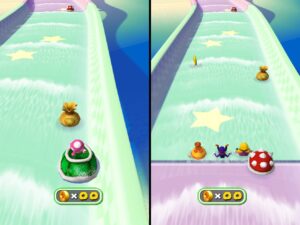 Cash Flow1-vs-3 · coinGrab coins and coin bags on the way down a water slide, and mind the Spiny Shells.
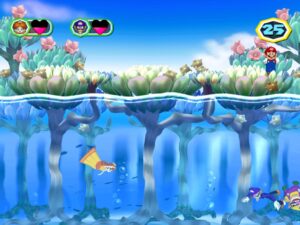 Sink or Swim1-vs-3The soloist drops mines into a pool on three swimmers. If one is still afloat at the end, the swimmers win.
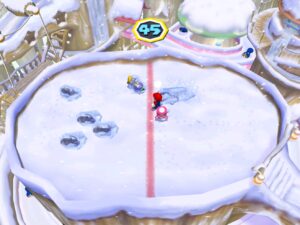 Snow Brawl1-vs-3A snowball fight in which a hit freezes you. The soloist, backed by Ukikis by day and Shy Guys by night, must freeze all three. In Jamboree.
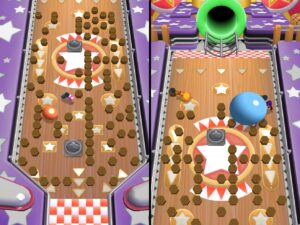 Ball Dozers1-vs-3Hammer away the pegs under your ball so that it rolls to the bottom before the other side’s does.
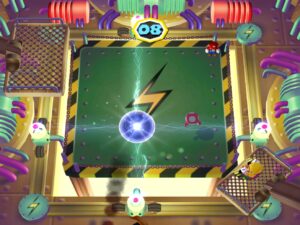 Surge and Destroy1-vs-3The soloist steers a ball of electricity at three players who must stay alive for 30 seconds.
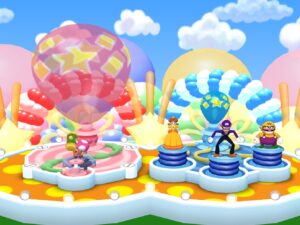 Pop Star1-vs-3A race to burst a balloon: the soloist pumps with a hammer, the three by ground-pounding.
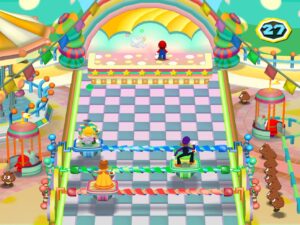 Stage Fright1-vs-3Three players fire balls at the one on stage, who has to dodge them for 30 seconds.
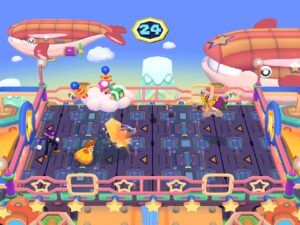 Conveyor Bolt1-vs-3The soloist rides a cloud dropping lightning bolts on three players below.
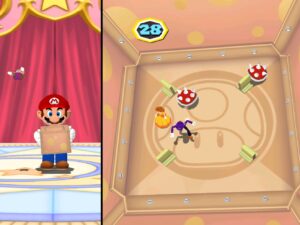 Crate and Peril1-vs-3Three players are shut in a crate with Spiny Shells and the soloist tilts it. Survive 30 seconds. In The Top 100.
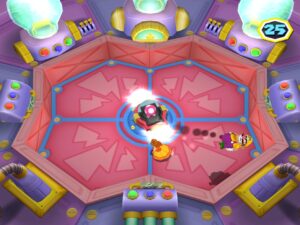 Ray of Fright1-vs-3The soloist fires laser beams that bounce off the walls. The three win if any of them lasts 30 seconds.
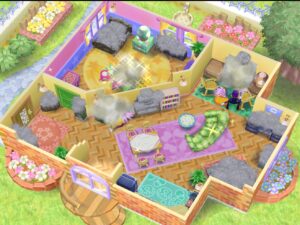 Dust ’til Dawn1-vs-3Housework as a race: each side dusts everything in its room, and the first to finish wins.
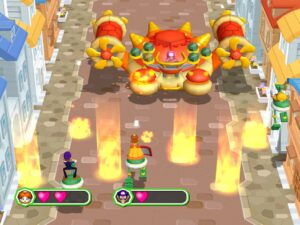 Verbal Assault1-vs-3 · MicThe mic player commands a battle craft by voice, calling “Fire” or “Laser”, against three walkers that shoot back.
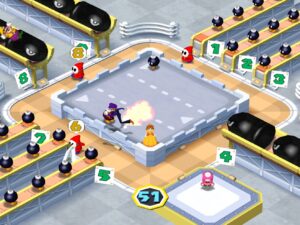 Shoot Yer Mouth Off1-vs-3 · MicThe mic player calls out numbers to launch Bullet Bills and Bob-ombs at three players, who must last 60 seconds.
 Talkie Walkie1-vs-3 · MicThe mic player walks to a treasure chest by spoken directions while three players pelt them with Spinies.
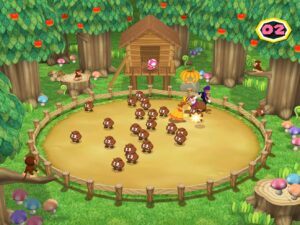 Word Herd1-vs-3 · MicThe mic player herds Goombas by shouting directions, or “Scramble”, while the three try to punch them all out in 30 seconds.
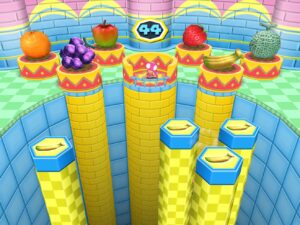 Fruit Talktail1-vs-3 · MicThe mic player names a fruit and every platform but that fruit’s collapses. The three must get there in time.
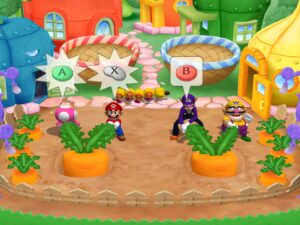 Garden Grab2-vs-2Take turns pressing the buttons shown to heave a giant carrot out of the ground. In Japan it is a daikon.
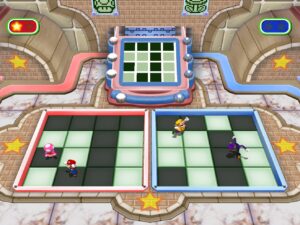 Pixel Perfect2-vs-2Ground-pound floor panels to copy a pixel picture from Super Mario Bros. 3. First pair to finish two wins.
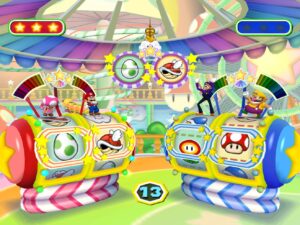 Slot Trot2-vs-2Spin your wheels to match the symbols Lakitu holds up. Three points wins. In The Top 100.
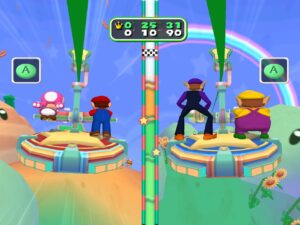 Gondola Glide2-vs-2Press the buttons shown, A and B by turns, to speed your cable car to the top.
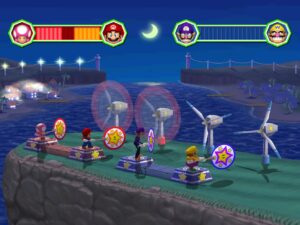 Light Breeze2-vs-2 · night onlyAlternate L and R to spin a turbine and fill your side’s power meter first.
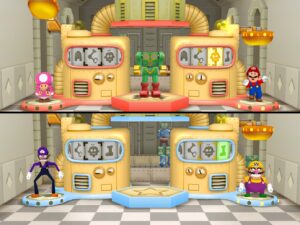 Body Builder2-vs-2Take turns stopping a wheel on the lit segment to bolt a robot together, part by part.
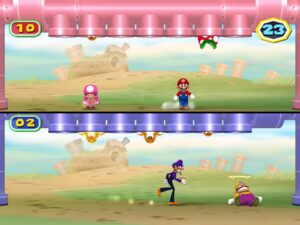 Mole-it!2-vs-2Whack the Monty Moles that pop out of pipes, and not the Piranha Plants. Jump on them by day; ground-pound them by night.
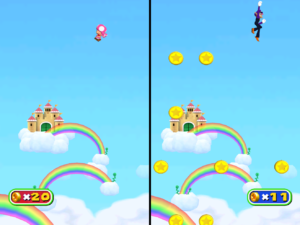 Cashapult2-vs-2 · coinCatapult your partner into the sky to grab floating coins, then swap. Two jumps each. In Superstars.
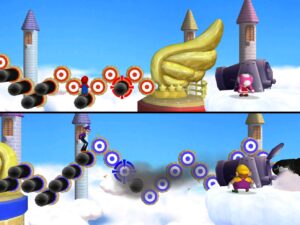 Jump the Gun2-vs-2One partner fires Bullet Bills and the other uses them as stepping stones to the goal. In Jamboree.
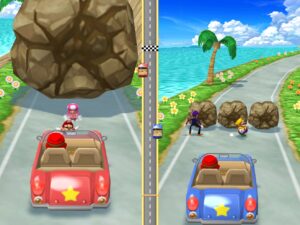 Rocky Road2-vs-2Punch and kick your way through the boulders blocking a road. In The Top 100 and Superstars.
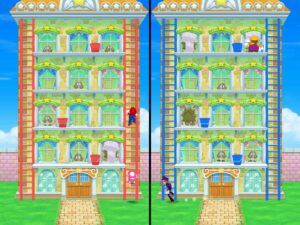 Clean Team2-vs-2Window cleaning for two: one sprays the foam on, the other wipes it off.
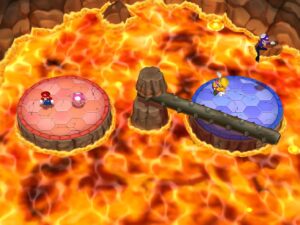 Burnstile2-vs-2Jump the arms of a turnstile as it sweeps over platforms above lava. Last team with a player standing wins. In Superstars.
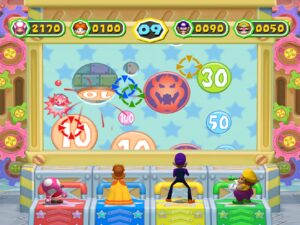 Hyper SniperBattleThirty seconds of target shooting through a scope. Hit a Bowser target and your score goes back to nothing.
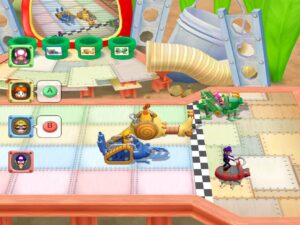 InsectirideBattleChoose an insect to ride, each with its own pattern of buttons, and race it to the line.
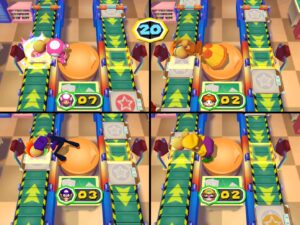 Stamp By MeBattlePapers pass on two conveyor belts: A stamps the right-hand one, B the left. Most papers stamped wins.
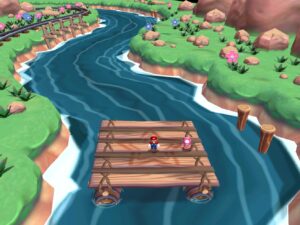 Wrasslin’ RapidsBattleA free-for-all on a raft going down river. Punch, kick and jump the others overboard.
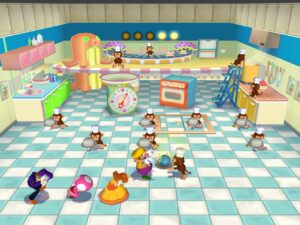 Strawberry ShortfuseBattleUkikis carry covered dishes. Pick one: a cake keeps you in, a bomb puts you out. In The Top 100.
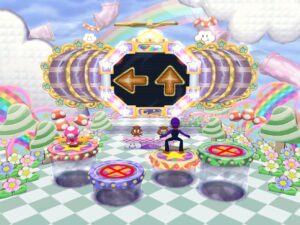 Control ShtickBattleCopy the pose on screen by tilting the Control Stick and the C Stick the right ways. Get it wrong and you are out.
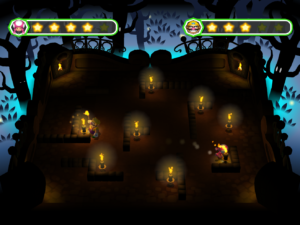 Light Up My NightDuel · night onlyCarry a torch through a dark maze lighting candles. First to five wins.
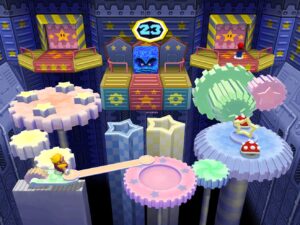 Cog JogDuelHop across turning cogwheels to the goal. A fall or a Spiny Shell sends you back to the beginning.
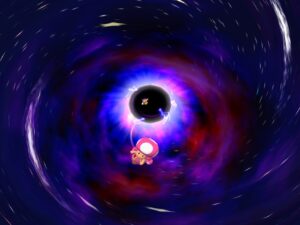 Black Hole BoogieDuelHammer A to swim away from a black hole. The first one sucked in loses.
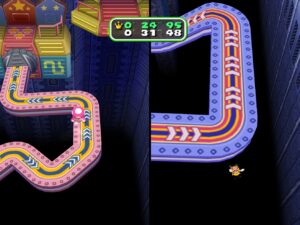 Full TiltDuelA race across a bridge that tips as you run.
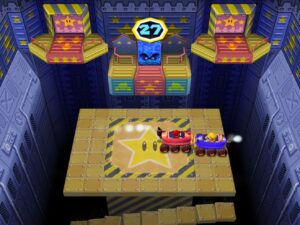 Sumo of Doom-oDuelDrive a little vehicle with both sticks, one for each side’s wheels, and shove your rival off a crumbling platform.
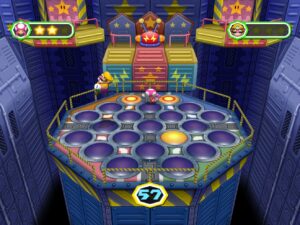 O-ZoneDuelGround-pound panels to find the Os. An X stuns you. First to three Os wins.
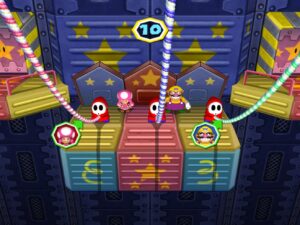 PitifallDuelChoose a rope and swing. Only one of them will put you down on the hidden platform.
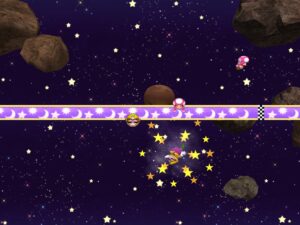 Mass MeteorDuelFly through a field of asteroids to the chequered goal. In Superstars.
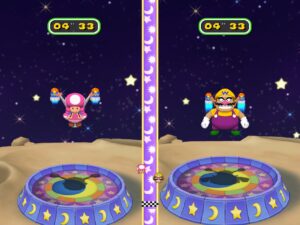 Lunar-ticsDuelDrop towards the Moon with a jetpack, holding A to slow down, and touch down as close to 0.00 on the clock as you can.
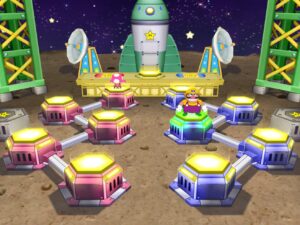 T Minus FiveDuelGround-pound the green panels to warp forward and keep off the yellow ones, which shock. First to the last panel wins.
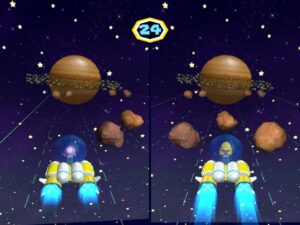 Asteroad RageDuelSteer a spaceship through 30 seconds of asteroids. The last one not hit wins.
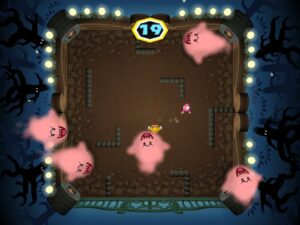 Boo’d Off the StageDuel · night onlyKeep away from a swarm of Pink Boos for 30 seconds. First one caught loses.
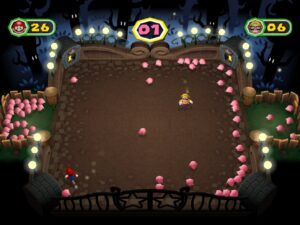 Boonanza!Duel · night onlyHerd Pink Boos into your own pen. Whoever has more when time is up wins.
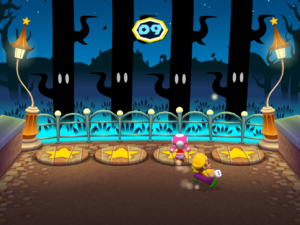 Trick or TreeDuel · night onlyPick a tree and bounce on its branches to make it grow. The taller tree wins, and there is no telling which that will be.
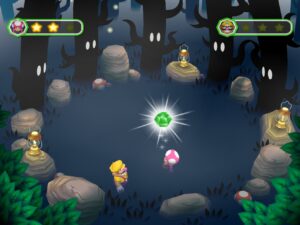 Something’s AmistDuel · night onlyFeel for gemstones hidden in fog by the rumble of the controller. First to find three wins.
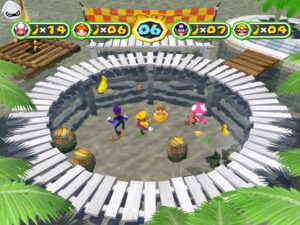 Tally Me BananaDK · day onlyFifteen seconds to hop between barrels floating in a pool, taking a banana from each.
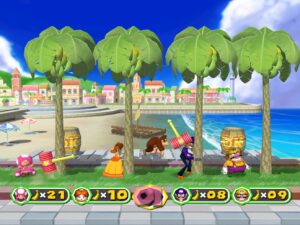 Banana ShakeDK · day onlyFifteen seconds to shake bananas out of the trees with A, and to dodge the hammers that fall with them with B.
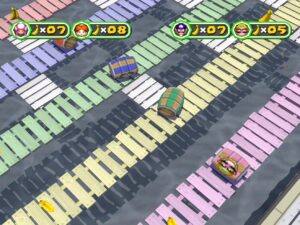 Pier FactorDK · day onlyChoose one of five barrels. They roll down a pier scooping up bananas, which a roulette then prices at one to three coins each.
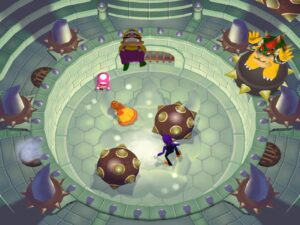 Pit BossBowser · night onlyDodge the spiked balls Bowser sends rolling round a pit until they stop. In Superstars.
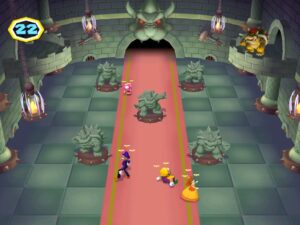 Dizzy RotisserieBowser · night onlySpun dizzy, stagger out of a hall in Bowser’s Castle before the statues breathe fire. In The Top 100.
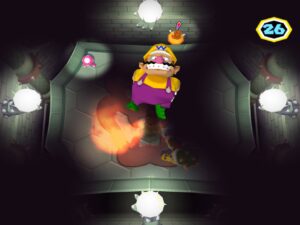 Dark ‘n’ CrispyBowser · night onlyIn the dark, keep clear of an unseen Bowser’s flames without stepping into the pit. In Superstars.
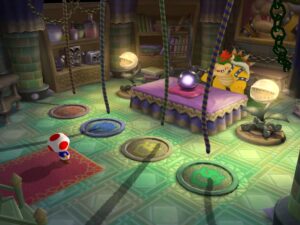 Seer TerrorRarePull one of four ropes and have your fortune told by Bowser. Costs 50 Stars at the Star Bank.
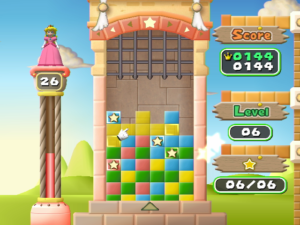 Block StarRareA puzzle game, won in Solo Mode, with a two-player version sold at the Star Bank. Returned in Mario Party DS, The Top 100 and Superstars.
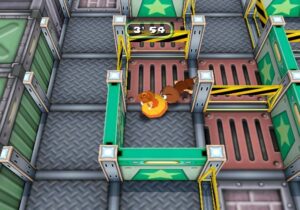 Lab BratsRareFive mazes in five minutes in Professor E. Gadd’s laboratory, with hidden characters to find for a better rank. Won in Solo Mode.
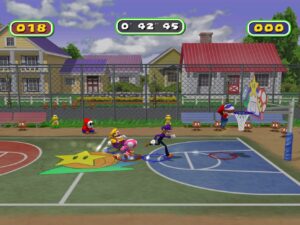 Dunk Bros.RareTwo-a-side basketball with dribbling, passing, stealing and stomping. Won in Solo Mode.