Wii2010Super NES original: 1993CompilationNintendo EADFour games, 16-bit remakes10.55 million on SNESSoundtrack CD + bookletThe Lost Levels reaches the West
Super Mario All-Stars 25th Anniversary Edition
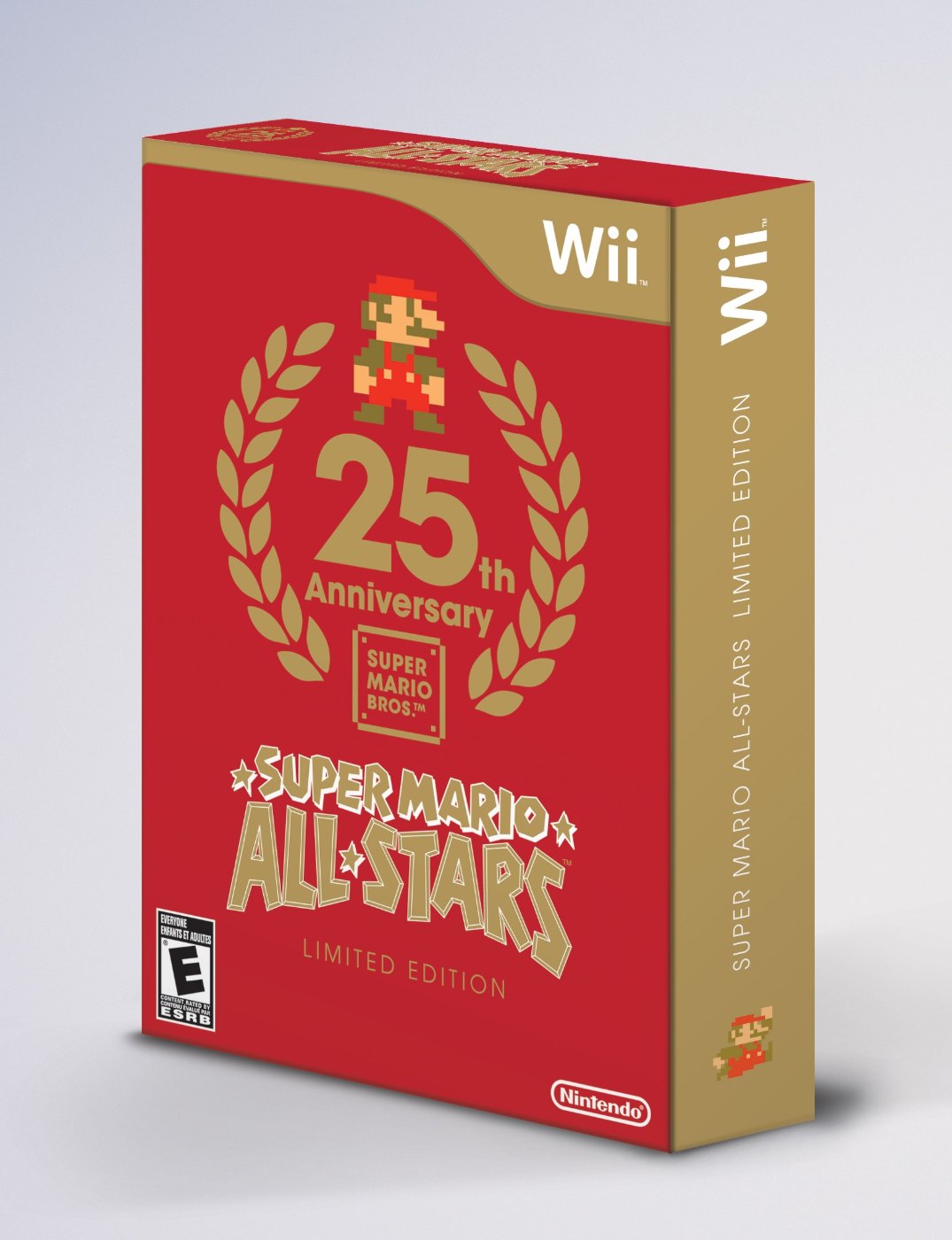
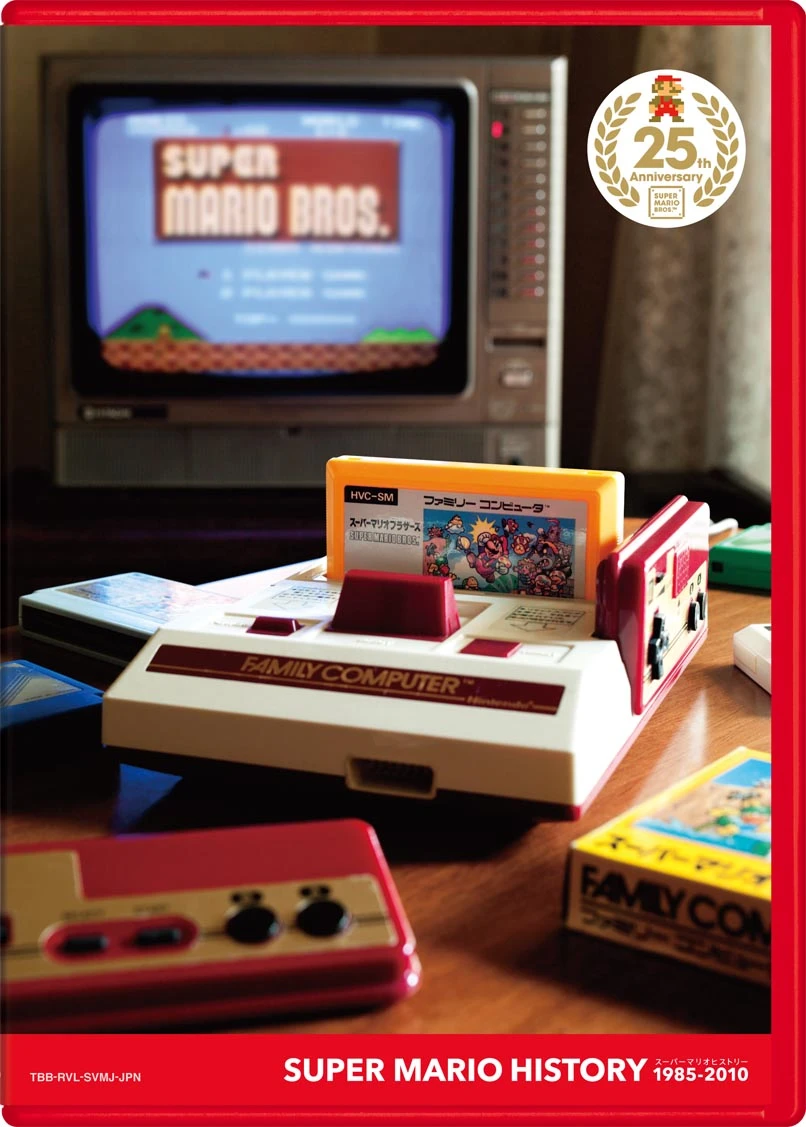
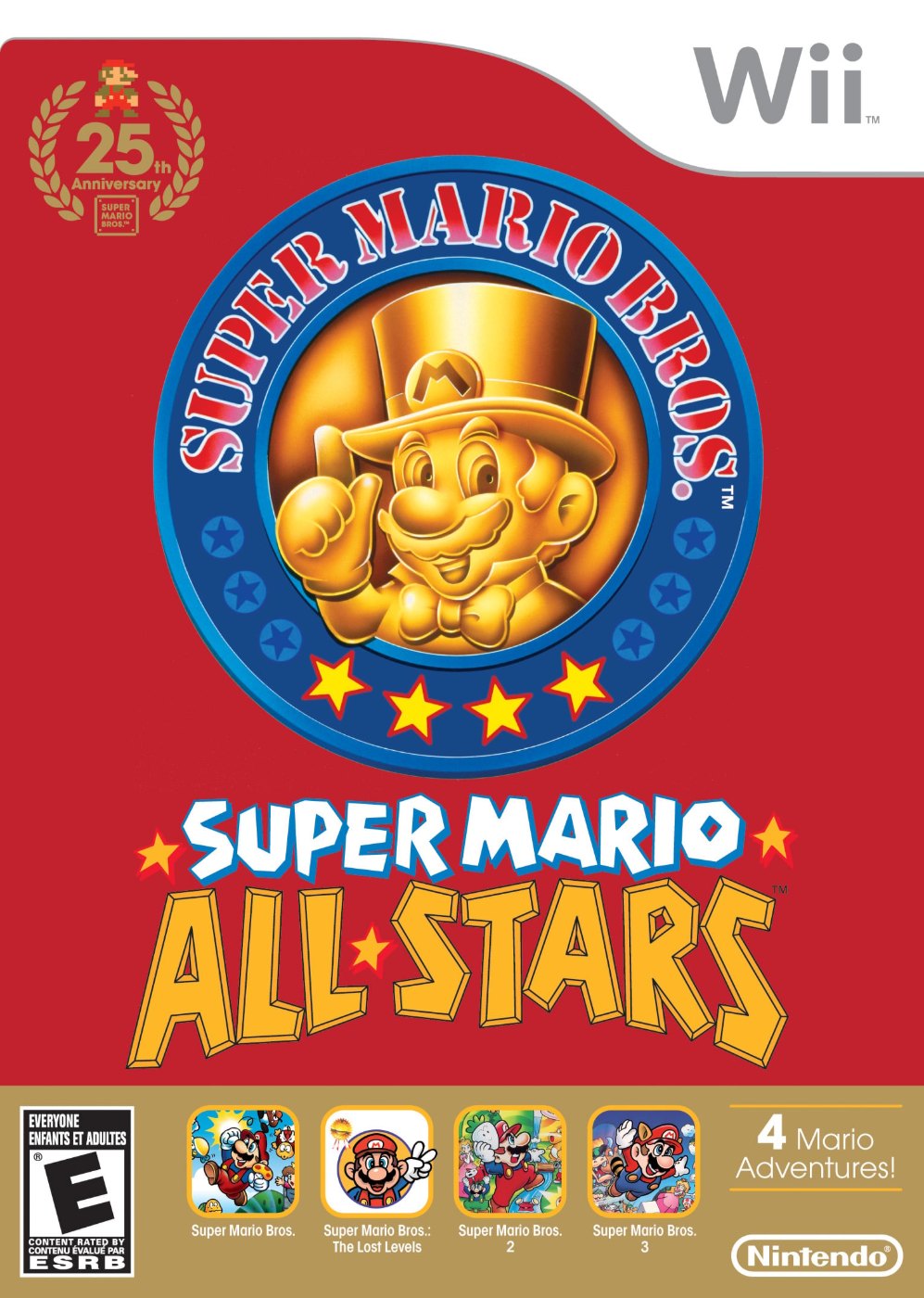
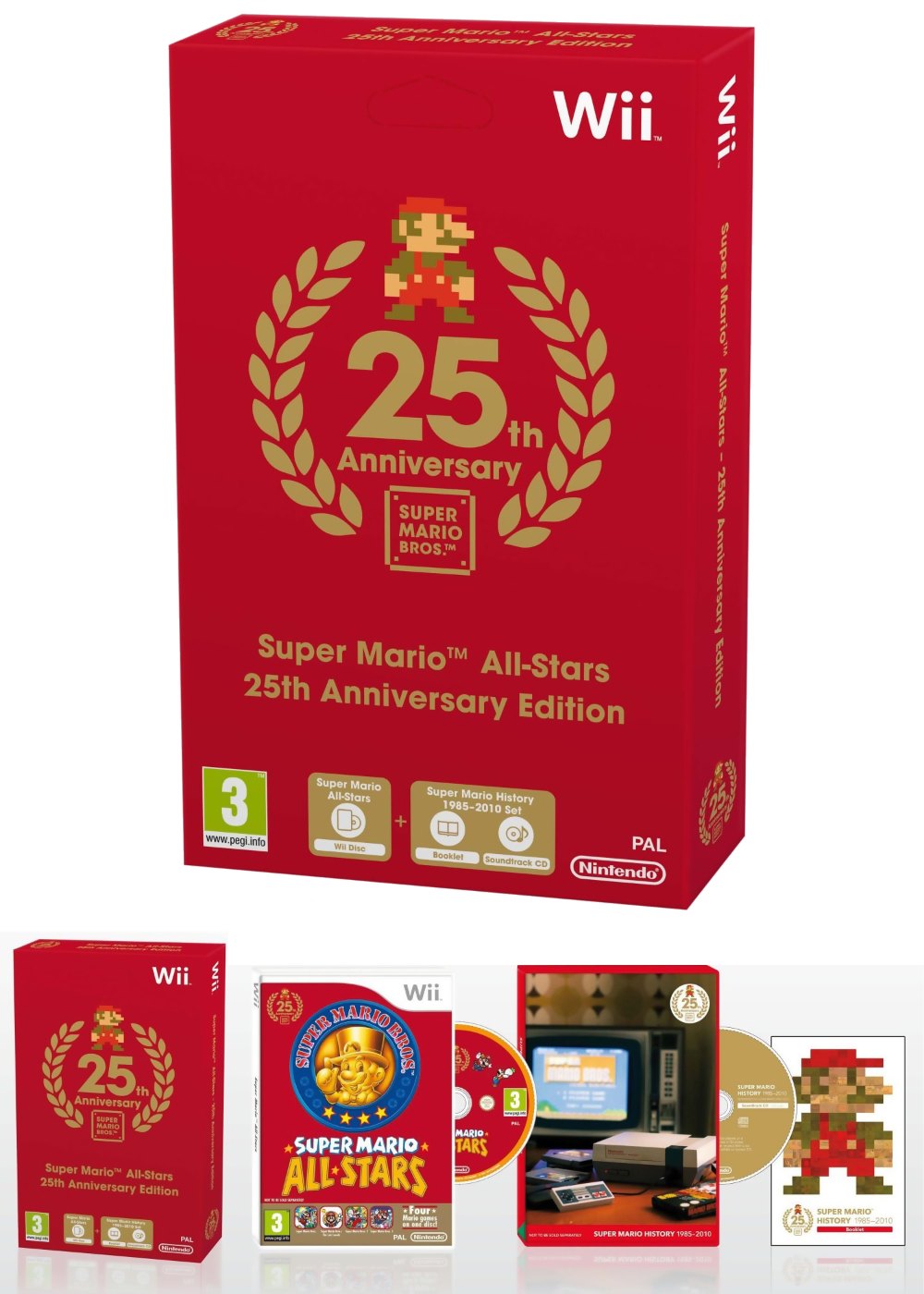
For Mario’s 25th birthday Nintendo reached back seventeen years and put a Super NES cartridge on a Wii disc. Super Mario All-Stars 25th Anniversary Edition (Limited Edition in North America, Super Mario Collection Special Pack in Japan) arrived between October and December 2010 with the complete 1993 Super Mario All-Stars on the disc, a 32-page Super Mario History booklet and a 20-track soundtrack CD in the case.
The game itself is the 16-bit remake of Super Mario Bros., The Lost Levels, Super Mario Bros. 2 and Super Mario Bros. 3, redrawn in the style of Super Mario World, re-scored, given save files and a two-player Battle Game, and famous for letting the West play Japan’s fearsome Super Mario Bros. 2 for the first time. The cartridge sold 10.55 million and was the Super NES pack-in; the Wii reissue sold 2.24 million in a few months, vanished from American shelves within days, and was still criticised as the laziest birthday present Nintendo could have wrapped. This page covers both.
Developer:Nintendo EAD
Publisher:Nintendo
Platform:Wii (2010) · originally Super Famicom / Super NES (1993)
Wii: Japan:21 October 2010 (Super Mario Collection Special Pack)
Wii: Australia / Europe:2 December 2010 · 3 December 2010
Wii: N. America:12 December 2010 (Limited Edition)
SNES original:Japan 14 July 1993 · North America August 1993 (1 August in some sources, 11 August according to Wikipedia) · Europe and Australia 16 December 1993
+ Super Mario World:December 1994 (North America), 1995 (Europe); never released in Japan
Players:1–2
Director / producer (1993):Takashi Tezuka · Shigeru Miyamoto
Music:Koji Kondo, Soyo Oka
In the Wii box:Game disc, 32-page Super Mario History 1985-2010 booklet, 20-track soundtrack CD
Price (Wii):US$29.99 · £25 · €30
Sales:10.55 million (SNES) · 2.24 million (Wii, to March 2011)
Re-releases:Nintendo Selects (North America, 2016, disc only) · Nintendo Switch Online (2020)
Advertisement
Overview
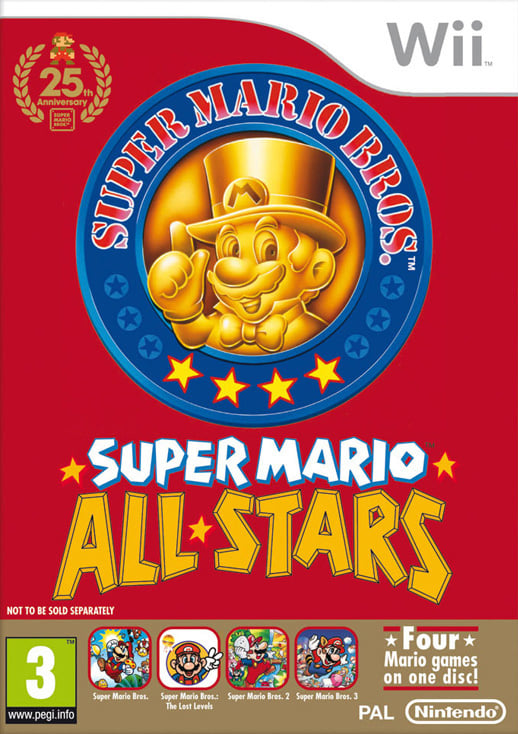
Everything in the European 25th Anniversary Edition: game, booklet and CD.
There are two stories here, seventeen years apart. The first is Super Mario All-Stars, which Japan called Super Mario Collection: a 1993 Super NES cartridge that gathered up the four Famicom and NES Mario platformers and rebuilt them for 16-bit hardware. It was Shigeru Miyamoto’s idea, floated shortly after Super Mario Kart was finished, of a “value pack” that would also let everyone play the Disk System’s Super Mario Bros. 2, the brutal sequel that had been kept out of the West. The team called it “Mario Extravaganza” all the way through development.
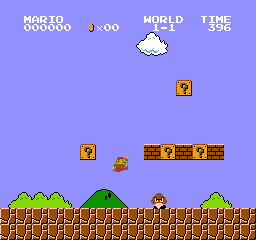
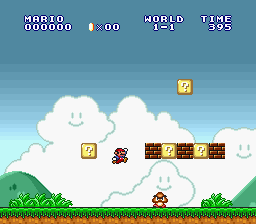
These are remakes, not ports. Every background was redrawn with the Super Famicom’s colours, with hills, waterfalls and starry skies where the NES had flat blue or black; Mario and Luigi were restyled after Super Mario World and given a black outline; Koji Kondo’s music was rearranged for the new sound chip. Each game got four save files, five lives to start with and, in Super Mario Bros. 3, a separate two-player Battle Game. The level designs and Mario’s movement were deliberately left alone, give or take one notorious change to what happens when he smashes a brick.
The second story is the 2010 Wii disc made to mark a quarter of a century since Super Mario Bros. Nintendo took the Super NES game, untouched, put it on a Wii disc and packed it with a booklet of design documents and staff comments and a CD of ten themes and ten sound effects. In North America it was announced as a limited edition, sold out almost at once and had to be given a final extra run in March 2011.
Critics were split in a way the games themselves have never been. Nobody disputed that these are some of the finest platformers ever made. Plenty disputed whether one emulated cartridge on a disc with room to spare, with Super Mario World left off and nothing new beyond a thin booklet and a short CD, was a worthy celebration. Both things are true.
Bring Super Mario history home and rediscover four classic platform games on one Wii Game Disc with Super Mario All-Stars – 25th Anniversary Edition! With four seminal games from the NES era polished with SNES-style graphics and sound, classic gameplay that requires just a Wii Remote (or another controller of choice) and the freedom to save your progress and revisit already cleared worlds whenever you like, now is the perfect time for Wii players to discover Mario’s roots!
— Official description (Nintendo UK, 2010)
Why Super Mario All-Stars Matters to Mario Fans
For a generation of players, this cartridge is the NES trilogy. It was the Super NES pack-in, it was how the West first met The Lost Levels, and its redrawn sprites were reused for the Game Boy Advance remakes of Super Mario Bros. 2 and Super Mario Bros. 3. It set the pattern Nintendo has followed for every anniversary since, right up to Super Mario 3D All-Stars in 2020. The Wii edition adds the only official booklet of Mario design documents many fans will ever hold, and the first official soundtrack release of the most famous tune in video games.
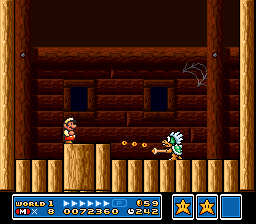
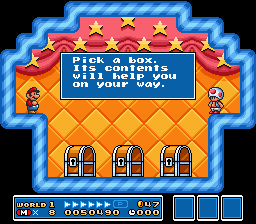
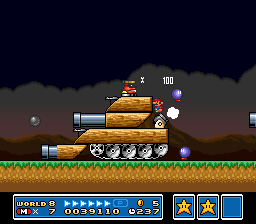
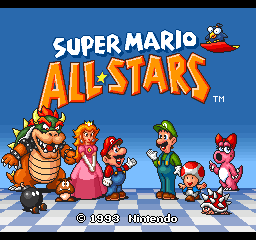
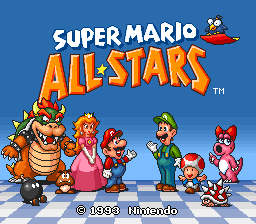
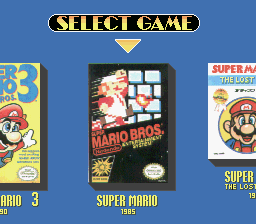
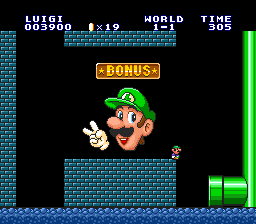
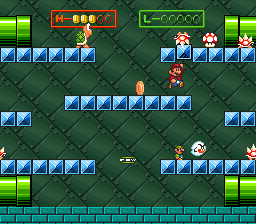
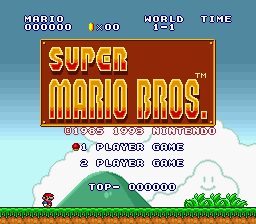
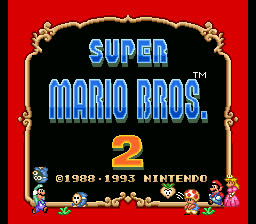
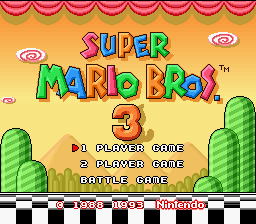
The All-Stars title screen: the whole cast in the dark until you press Start.The game select screen, with each game shown as its original box.Luigi, with a sprite of his own at last, in a Super Mario Bros. bonus room.The Battle Game added to Super Mario Bros. 3.
“It was a single game cartridge packed full of the first ten years of Nintendo’s rich history.”
Satoru Iwata, Iwata Asks: Super Mario All-Stars, Volume 2: The Developers (Nintendo, 2010).
Satoru Iwata, looking back on the 1993 cartridge while interviewing two of its designers for the Wii release. In the same conversation Tadashi Sugiyama confirmed the working title: “Yeah, we called it Mario Extravaganza the whole time.”
Quick Answers
Quick answers about the Wii anniversary package and the Super NES game inside it.
What is Super Mario All-Stars 25th Anniversary Edition?
A 2010 Wii release marking 25 years of Super Mario Bros. It contains the 1993 Super NES compilation Super Mario All-Stars on a Wii disc, plus a Super Mario History 1985-2010 booklet and a soundtrack CD. It is called Super Mario All-Stars Limited Edition in North America and Super Mario Collection Special Pack in Japan. More →
No. Super Mario World was only added to the later cartridge Super Mario All-Stars + Super Mario World (December 1994 in North America, 1995 in Europe). The Wii disc uses the original four-game version. More →
When did it come out?
On Wii: Japan 21 October 2010, Australia 2 December, Europe 3 December and North America 12 December 2010. The Super NES original: Japan 14 July 1993, North America in August 1993 (sources give either the 1st or the 11th) and Europe on 16 December 1993. More →
Is the Wii version different from the Super NES game?
Barely. It is the Super NES game running in an emulator, down to the Super NES controller drawn on the options screen. It adds Wii Remote, Classic Controller and GameCube controller support, plays in 4:3 with borders, and tones down some flashing backgrounds in Super Mario Bros. 2 and 3. More →
What is on the soundtrack CD?
Twenty tracks. Ten are themes, one each from Super Mario Bros., Super Mario Bros. 2, Super Mario Bros. 3, Super Mario World, Super Mario 64, Super Mario Sunshine, New Super Mario Bros., Super Mario Galaxy, New Super Mario Bros. Wii and Super Mario Galaxy 2. The other ten are sound effects from the original Super Mario Bros., from the coin chime to the world-clear fanfare. More →
What did All-Stars change from the NES games?
New 16-bit graphics and backgrounds, rearranged music, four save files per game, five starting lives, a distinct Luigi sprite, a Battle Game for Super Mario Bros. 3 and a long list of small fixes, including the removal of the Minus World. Level layouts and controls were kept as they were. More →
Was it really a limited edition?
In North America, yes, for a while. It sold out at most shops within days of 12 December 2010 and Nintendo of America shipped one final run on 13 March 2011. A disc-only Nintendo Selects reprint followed on 11 March 2016, without the booklet or CD. More →
How many copies did it sell?
The Super NES game sold 10.55 million worldwide, second only to Super Mario World on that console. Nintendo reported 2.24 million for the Wii edition by the end of March 2011: 920,000 in Japan and 1.32 million elsewhere. More →
Can I play it today?
Yes. Super Mario All-Stars has been part of the Super NES library for Nintendo Switch Online subscribers since 3 September 2020. The Wii disc also runs on a Wii U. More →
Story
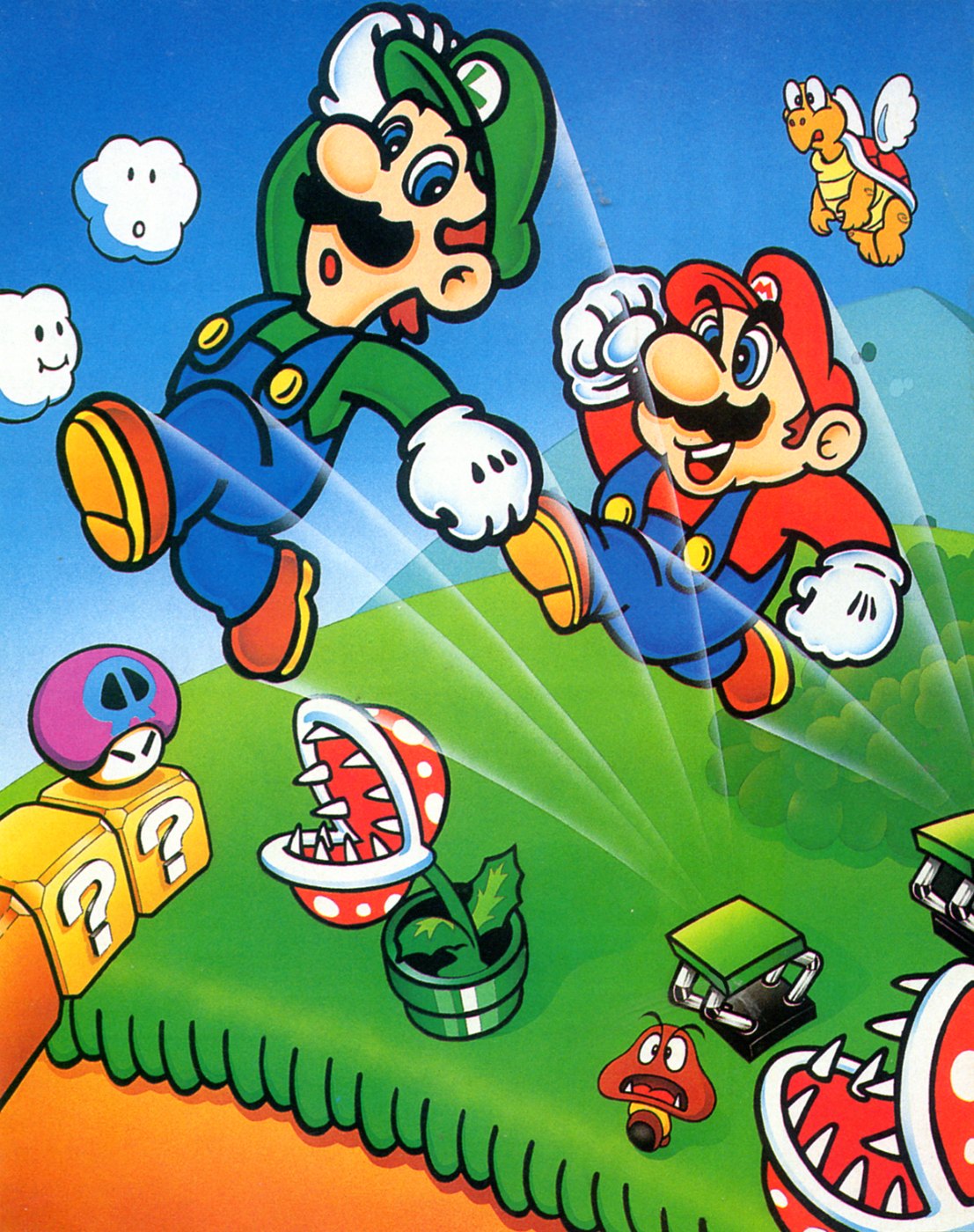
Promotional artwork of the Mushroom Kingdom made for the collection.
A compilation has no plot of its own, so here are the four tales in the order the menu offers them, with the touches All-Stars added. Each game has its own page on Super Luigi Bros with the full story.
Super Mario Bros.
Bowser and his Koopa army overrun the Mushroom Kingdom, and Mario (or Luigi) crosses eight worlds of four courses each to free Princess Toadstool. The remake stages the old “our princess is in another castle” routine with more ceremony: at the end of each castle a growing crowd of Toads tumbles out of sacks, and the finale has the princess lowered from a cage above the lava to kiss her rescuer, who blushes. Read the full story on our Super Mario Bros. page.
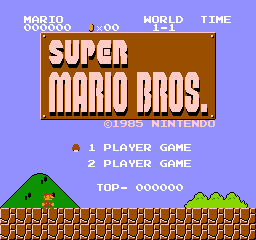
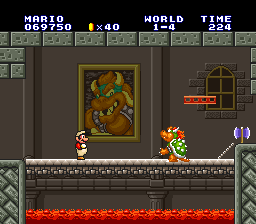
The Super Mario Bros. title screen.The first false Bowser, World 1-4.World 8-4, the final castle.
Super Mario Bros.: The Lost Levels
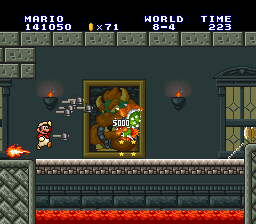
The same rescue, turned up to eleven: Poison Mushrooms, gusting wind, backwards Warp Zones and jumps that demand a bounce off a flying Koopa. This was Japan’s Super Mario Bros. 2 of 1986, held back from the West as too hard, and All-Stars was where Western players first got to try it. Beyond World 8 lie the fantasy World 9 and the four lettered worlds, A to D, where even Bowser’s stand-ins throw hammers. Mario gets heart-shaped eyes when the princess kisses him here. More on our Lost Levels page.
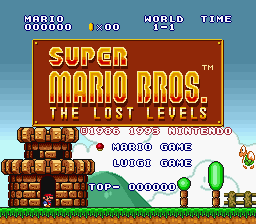
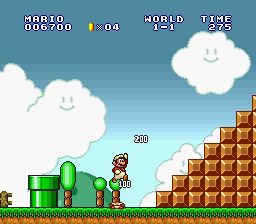
The Lost Levels title screen.World 1-1 of The Lost Levels.World 8-4 ends with Bowser.
Super Mario Bros. 2
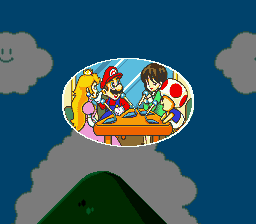
Mario, Luigi, Toad and the princess are drawn into Subcon, the land of dreams, which the frog king Wart has cursed. Any of the four can be chosen for each stage, and they pluck vegetables and hurl them at Shyguys, Birdos and bosses across seven worlds until Wart is beaten and the captive Subcons are set free. The All-Stars ending plays the celebration to an orchestrated score and the closing shot of Mario asleep in bed is in full colour. Full details on our Super Mario Bros. 2 page.
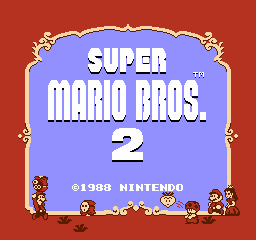
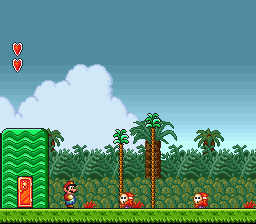
The Super Mario Bros. 2 title screen.World 1-1 of Subcon.Wart, defeated.
Super Mario Bros. 3
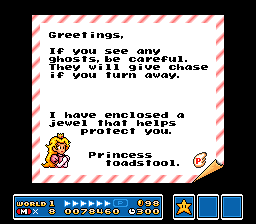
The seven Koopalings seize the magic wands of seven kingdoms and turn their kings into animals. Mario and Luigi chase each Koopaling onto an airship, restore the king and collect a letter from Princess Toadstool, until the seventh letter turns out to be from Bowser, who has taken her to Dark Land. All-Stars gives every king a new form, colours the princess’s portrait in her letters and swaps the NES ending’s illustrations for screenshots of each world. The whole saga is on our Super Mario Bros. 3 page.
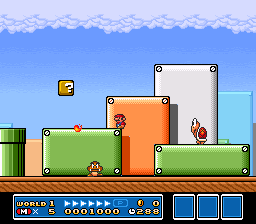
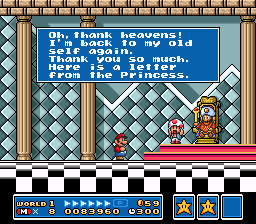
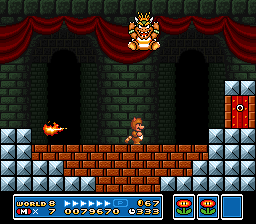
World 1-1 of Grass Land.The Grass Land king, restored.The princess’s letter after World 1.Tanooki Mario against Bowser in World 8.
The games on the menu
Four adventures and one bonus, in menu order. The 1994 cartridge added a fifth.
Super Mario Bros.Originally 1985 · 8 worlds, 32 courses · Final boss: BowserThe original, with new scenery, a save after every world and a hard mode marked by a star beside the world number.
Super Mario Bros.: The Lost LevelsOriginally 1986 (Japan only) · Worlds 1–8, 9 and A–D · Final boss: BowserJapan’s Super Mario Bros. 2, in the West for the first time, with a save after every course to take the edge off.
Super Mario Bros. 2Originally 1988 · 7 worlds · Final boss: WartFour playable heroes in the dream land of Subcon, with unlimited continues and a livelier slot machine.
Super Mario Bros. 3Originally 1988 · 8 worlds · Bosses: the Koopalings and BowserThe biggest of the four, finally with save files, redrawn kings and stormy airship skies.
Battle Game2 players · from the Super Mario Bros. 3 title screenA stand-alone version of the Mario Bros.-style duel, with the new ? Kinoko item.
Super Mario World1994 cartridge only · not on the Wii discAdded to Super Mario All-Stars + Super Mario World with a fourth save file and a redrawn, lankier Luigi.
The menu shows each game as a box with its original release year; the Japanese cartridge uses Famicom packaging, and the Lost Levels “box” on Western cartridges is an edited Disk System manual cover, since the game had never had a Western box.
Gameplay & Controls
Switch on and the whole cast is gathered in the dark; press Start, the lights come up, and a menu presents each game as its original box. Pick one, pick one of its four save files and set the button layout to taste. Pausing lets you leave a game for the menu at any time.
Underneath the new paint these are the same games, and the team worked hard to keep it that way: assistant director Tadashi Sugiyama kept the original Super Mario Bros. running beside the remake to compare the feel. What changed is listed below, game by game.
Super Mario Bros. and The Lost Levels
The two oldest games share an engine and got the same makeover. The ground is turf instead of brick, every course has a background (mountains, night skies, waterfalls behind the treetop stages, a rippling distortion underwater), the lava boils and Bowser’s own castle crackles with thunder and lightning. Bowser borrows his Super Mario Bros. 3 look, flinches when a fireball lands and makes a splash when he falls. Luigi finally gets his own sprite, and both brothers flash a V sign as they leave a course. The seven Toads are found tied up in sacks, more of them with each world, and Peach waits in a cage over the lava before rewarding Mario with a kiss.
Play is gentler. You start with five lives, the counter runs to 128 without the overflow that used to end the game, and Game Over offers to continue and save. In Super Mario Bros. a continue restarts the world; in The Lost Levels it restarts the course, and that game saves after every single level, which the manual puts down to its difficulty. The maze castles now chime when you take the right path and buzz when you do not. Two-player alternates after every course, as in Super Mario Bros. 3. Gone are the Minus World and a handful of other glitches that could trap a player.
The Lost Levels keeps its secret worlds but changes the rules: finish the game once to open Worlds A to D (Goombas there are replaced by Buzzy Beetles), and reach World 9 only by clearing Worlds 1 to 8 without using a single Warp Zone on that save file. World 9 itself is redrawn to look like a normal world instead of the scrambled oddity of the Disk System original.
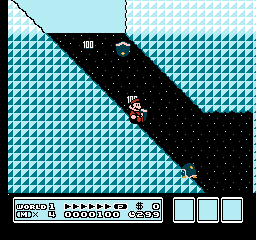
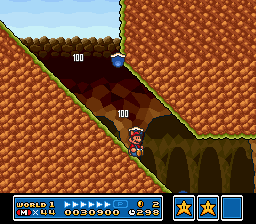
World 1-1 on the NES……and in All-Stars.
The brick that bites back
One change is infamous. On the NES, Mario bounces straight back down when he smashes a brick. In the All-Stars versions of Super Mario Bros. and The Lost Levels he carries on upwards through the debris and then sinks slowly, losing his momentum. It sounds trivial and it alters the rhythm of two games built on momentum; Nintendo Life’s 2020 review called the result a “fundamentally incorrect version of a platforming classic”. Modders who have studied the code suspect it was a bug, not a design decision.
Super Mario Bros. 2
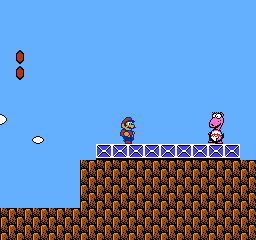
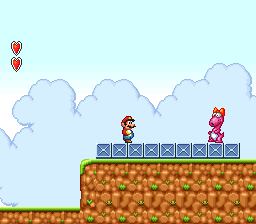
The dream world of Subcon gained the most from the extra colours: clouds and trees fill the skies, caves and boss rooms have proper interiors instead of black voids, and entering Subspace ripples the screen. Many enemies were recoloured (pink Shyguys became blue, both Mousers grey, the Tryclydes green), the health meter uses hearts, and a character down to one heart shrinks from head to toe.
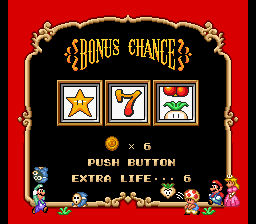
It is also more forgiving. Continues are unlimited where the NES allowed two, you may switch character after every lost life instead of being locked in, the Bonus Chance slot machine is bigger and pays out ten lives for three sevens, and Birdo now drops her crystal ball instead of holding it. The key rooms have a giant Phanto carved into the wall whose eyes flash red when the key is lifted.
A Birdo fight on the NES……and in All-Stars.
Super Mario Bros. 3
The newest game needed the least work and got the most colour: parallax backgrounds on every course, stormy skies behind the airships, animated map panels and a taller, thinner Luigi. Fire Mario is no longer orange, the title screen gains a jazzy tune where the NES had silence, and several effects are borrowed from Super Mario World. The seven transformed kings were redrawn as creatures from other games: a Cobrat, a Hoopster, a Dino Rhino, Donkey Kong Jr., an Albatoss, a Monty Mole and, in Pipe Land, a Yoshi.
Saving is the big practical change: the eight-world marathon no longer has to be done in a sitting or with whistles. A couple of courses use their Western NES layouts, a few blocks were nudged to close off exploits in 3-9 and 7-5, and the Frog, Tanooki and Hammer suits now fly off when Mario is hit and leave him as Super Mario.
A World 1-5 cave on the NES……and in All-Stars.
The Battle Game
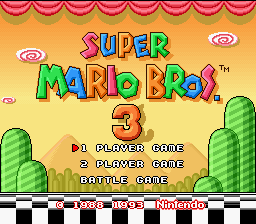
The Super Mario Bros. 3 title screen, where the Battle Game is offered.
The two-player Mario Bros. duel that hid inside Super Mario Bros. 3’s map screen can now be chosen directly from that game’s title screen. Mario and Luigi fight it out among the crabs and Fighter Flies of the 1983 arcade game, the winner throws a V sign, and a new mystery item, the ? Kinoko, joins in.
On Wii: controllers, the CD and the booklet
The Wii disc plays with a Wii Remote held sideways (1 and 2 standing in for B and A, with + and − to change game), a Classic Controller or Classic Controller Pro, or a GameCube pad. The button-layout option only affects the last two. The picture is 4:3 with borders added on a widescreen television.
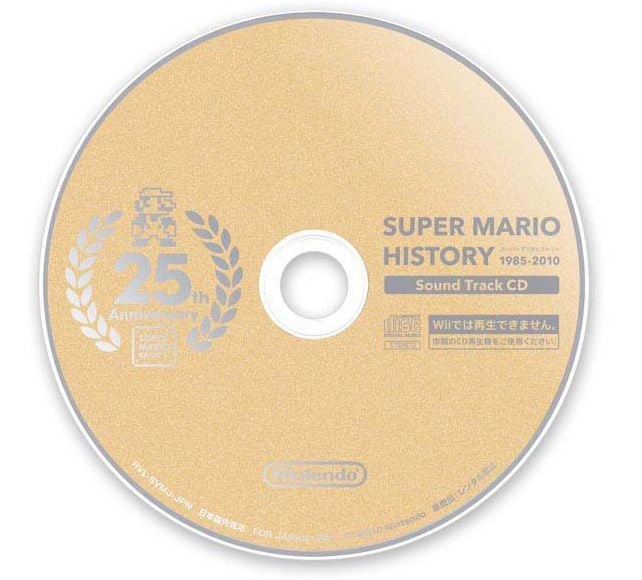
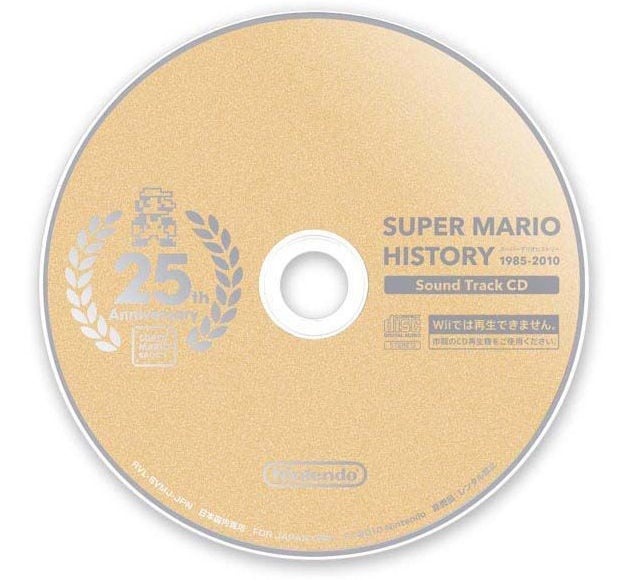
The soundtrack CD, Super Mario History 1985-2010, runs to twenty tracks: the Ground Theme of Super Mario Bros. (3:11), the Ground Theme of Super Mario Bros. 2, the Athletic Theme of Super Mario Bros. 3, the Ground Theme of Super Mario World, Slider from Super Mario 64, Delfino Plaza from Super Mario Sunshine, the main themes of New Super Mario Bros. and Super Mario Galaxy, the title theme of New Super Mario Bros. Wii and the trailer arrangement of Super Mario Galaxy 2’s main theme, followed by ten short sound effects from the 1985 game: coin, jump, power-up, 1-Up, pipe, hurry up, lost life, Game Over, course clear and world clear.
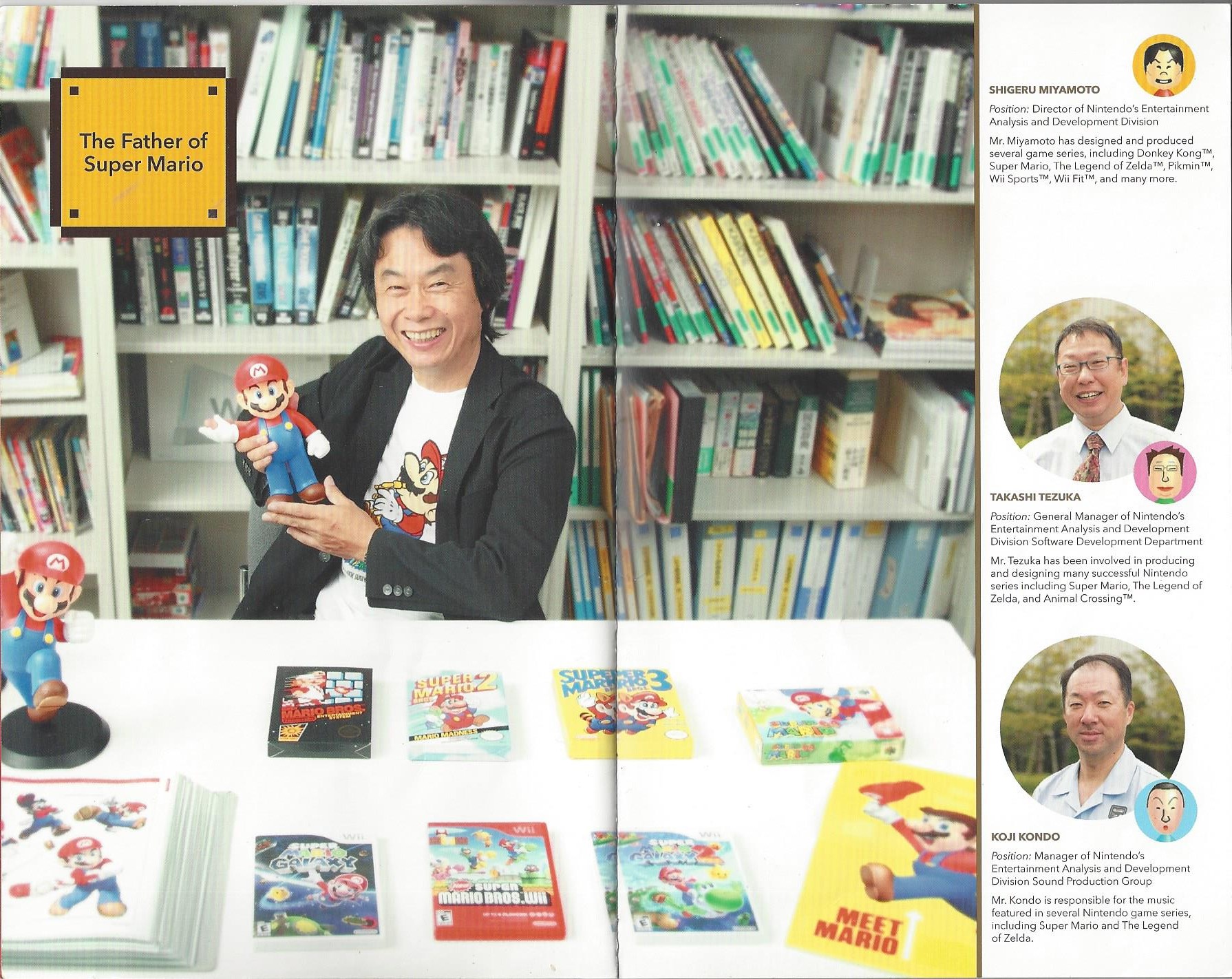
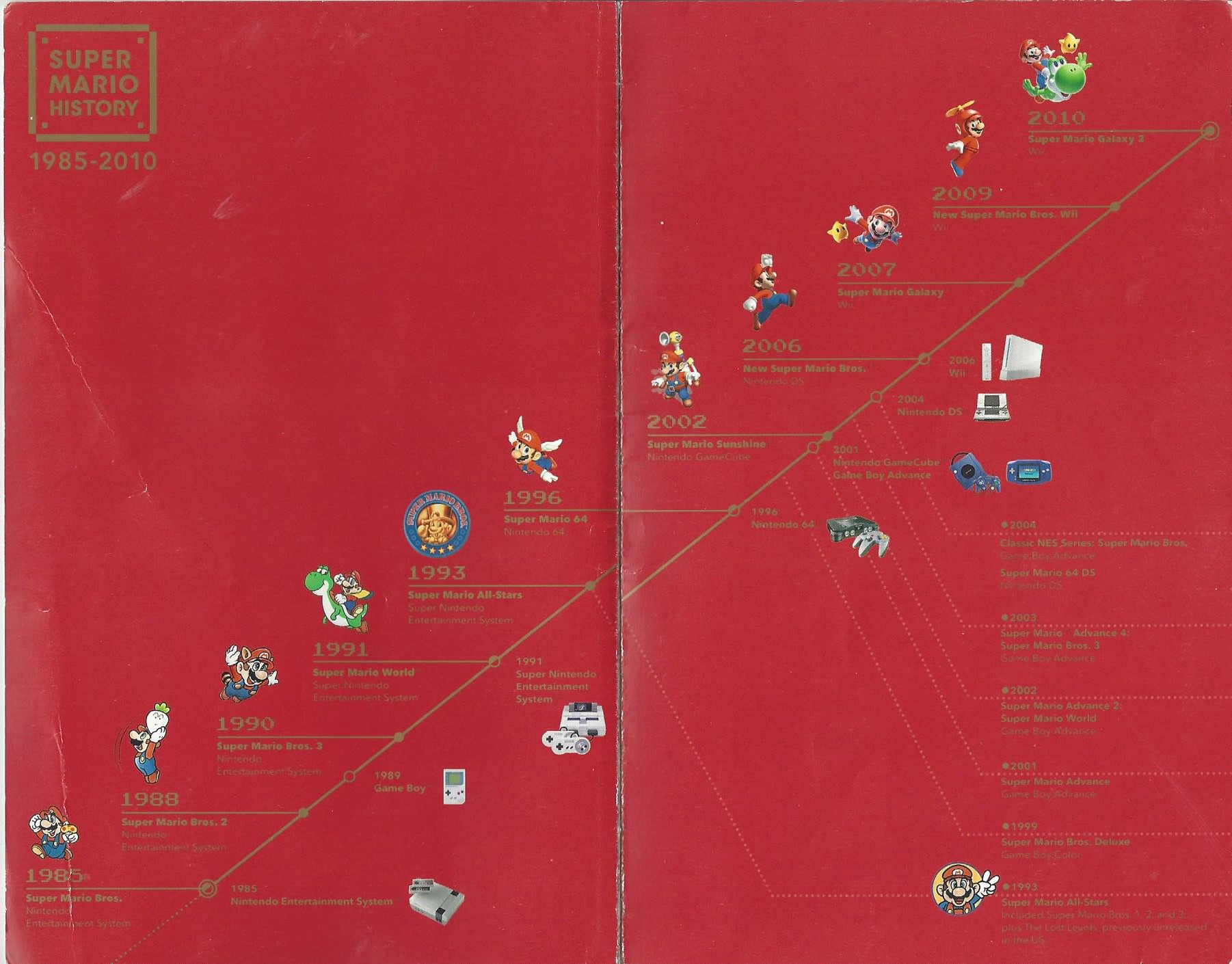
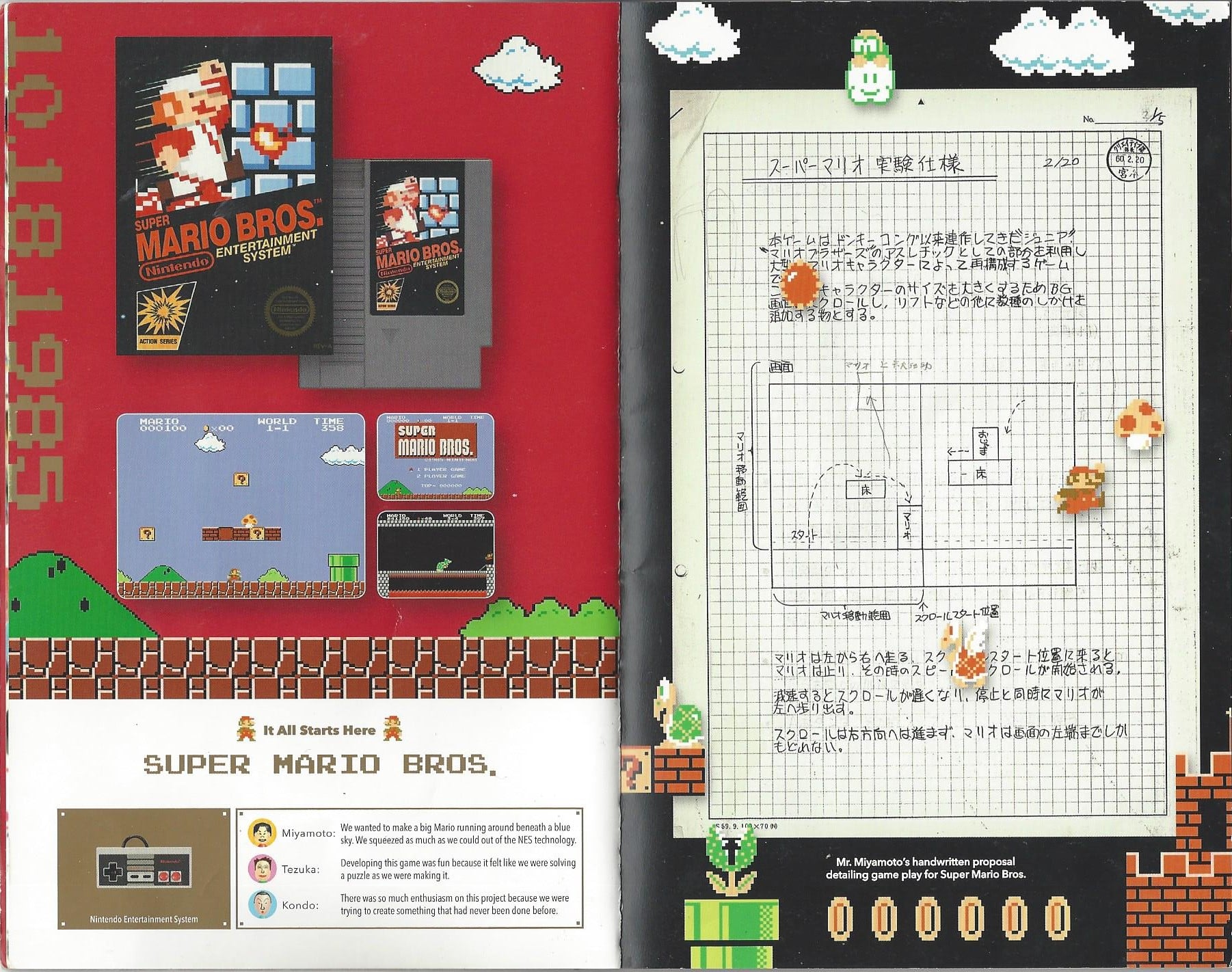
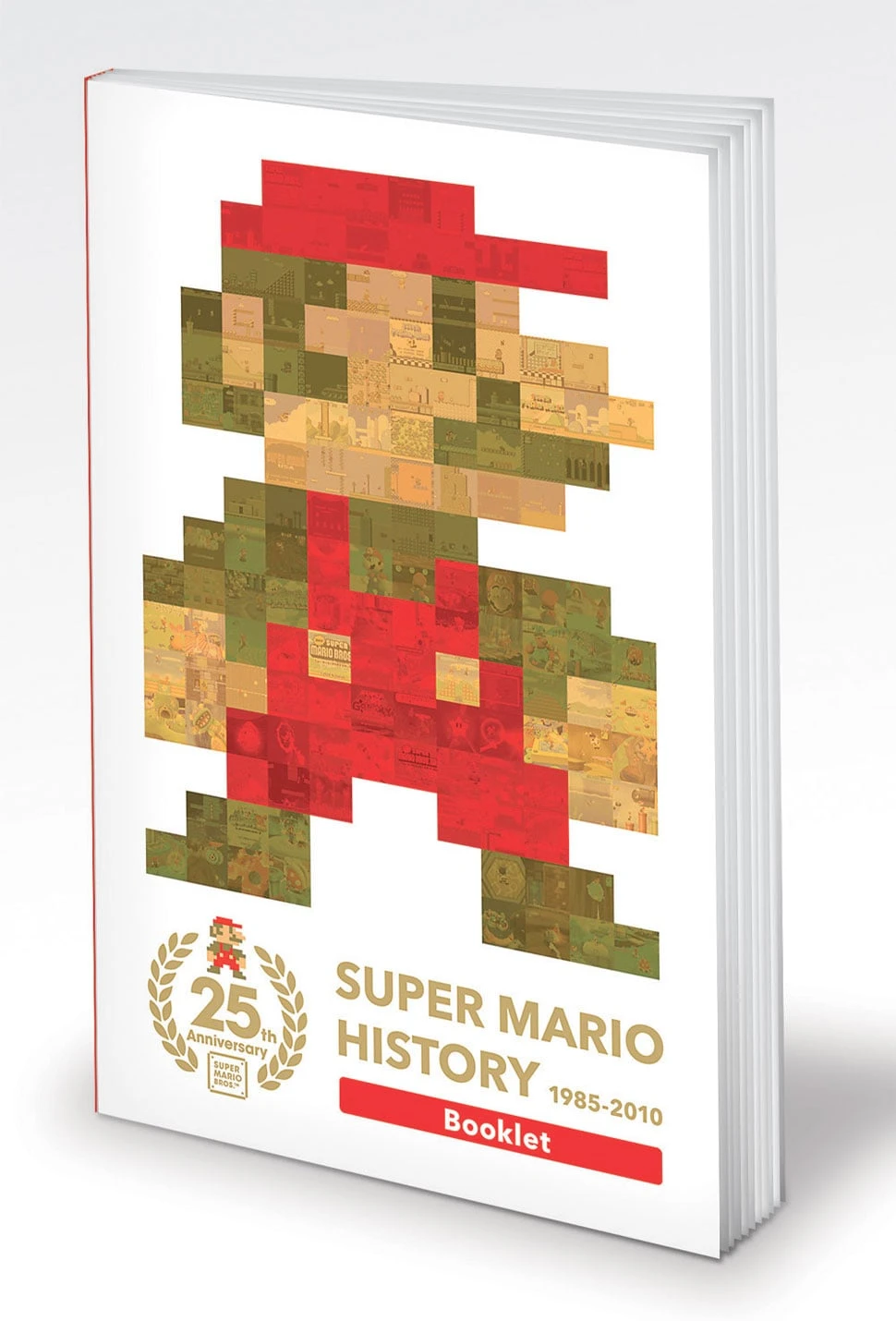
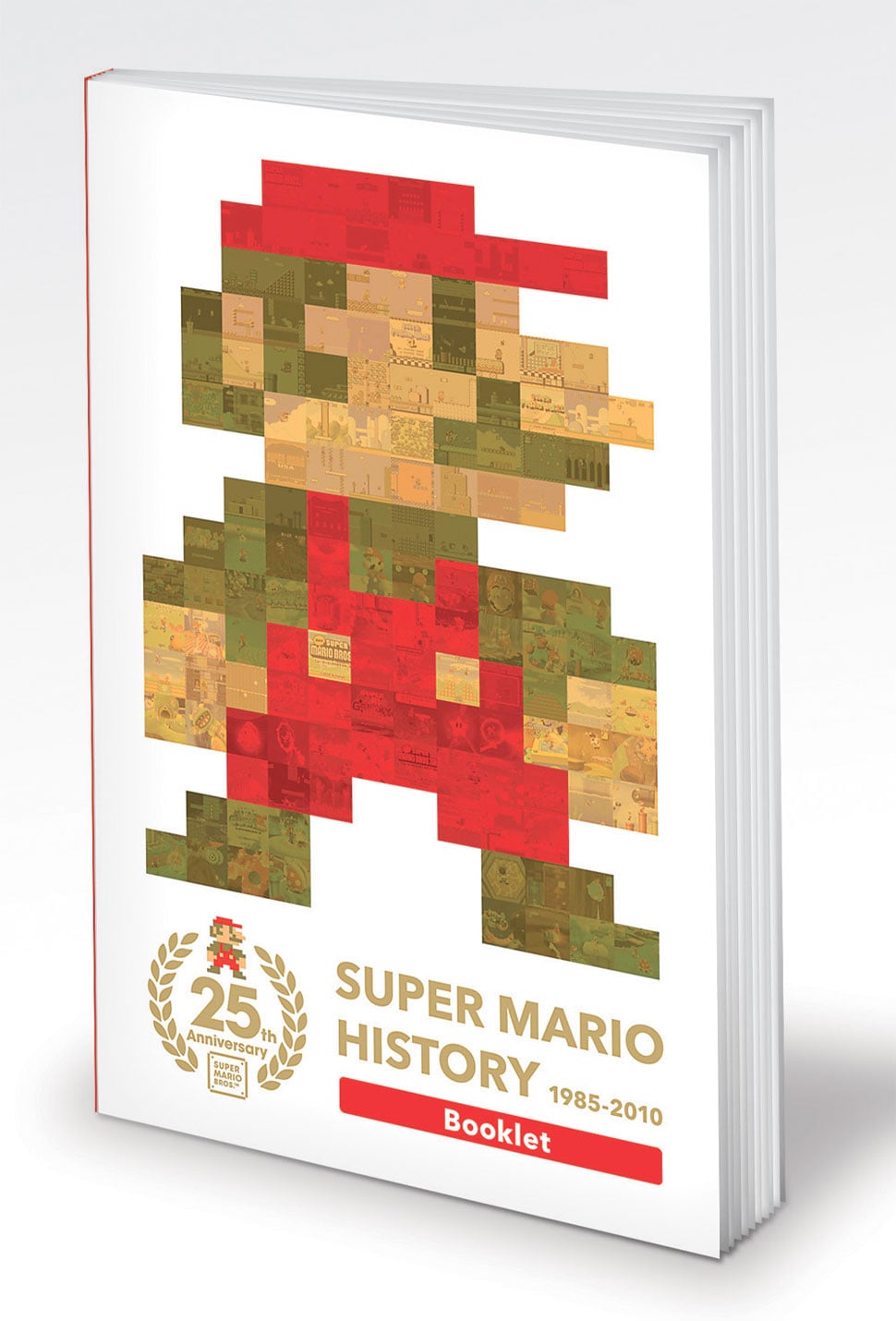
The 32-page booklet walks through the series from 1985 to Super Mario Galaxy 2 with release dates, artwork, original sketches and planning documents, and a short comment on every game from Shigeru Miyamoto, Takashi Tezuka and Koji Kondo.
The Super Mario History booklet (Japanese edition).The soundtrack CD.
Items and power-ups, redrawn
Nintendo produced new artwork for many of the items for the All-Stars manual. A selection from across the four games:
Super LeafSuper Mario Bros. 3: turns Mario into Raccoon Mario. Brown in the All-Stars inventory.
Frog SuitSuper Mario Bros. 3: the swimming suit. In All-Stars it flies off when you are hit, leaving Super Mario.
Tanooki SuitSuper Mario Bros. 3: Raccoon powers plus the statue. Lost the same way as the Frog Suit.
P-WingSuper Mario Bros. 3: the flying power-up. The 28 of them handed over in the NES ending are gone.
Magic WhistleSuper Mario Bros. 3: warps to World 9. It no longer works aboard the World 3 boat.
HammerSuper Mario Bros. 3: a map item, redrawn for the new blue inventory.
Music BoxSuper Mario Bros. 3: a map item. Its tune changes pitch in All-Stars.
AnchorSuper Mario Bros. 3: a map item. Silver in the new inventory.
Jugem’s CloudSuper Mario Bros. 3: a map item, given new artwork.
VegetableSuper Mario Bros. 2: pluck and throw. A new sound plays as it comes out of the ground.
Magical PotionSuper Mario Bros. 2: opens a door to Subspace, now with a wavy transition.
CherrySuper Mario Bros. 2: land one first on the Bonus Chance reels and the screen now flashes with a fanfare.
POW BlockSuper Mario Bros. 2: clears the screen of enemies. Green in the Battle Game.
KeySuper Mario Bros. 2: wakes Phanto. It now vanishes once the door is unlocked.
MushroomSuper Mario Bros. 2: the extra-heart mushroom, with a smaller white spot than on the NES.
1-Up MushroomGreen with white spots in every game now, matching Super Mario Bros. 3.
Advertisement
Cartoons, Comics & Other Media
All-Stars was promoted with a film-premiere advert, turned into manga twice over, and has been quietly quoted by Nintendo ever since. The 2010 edition added a press stunt of its own.
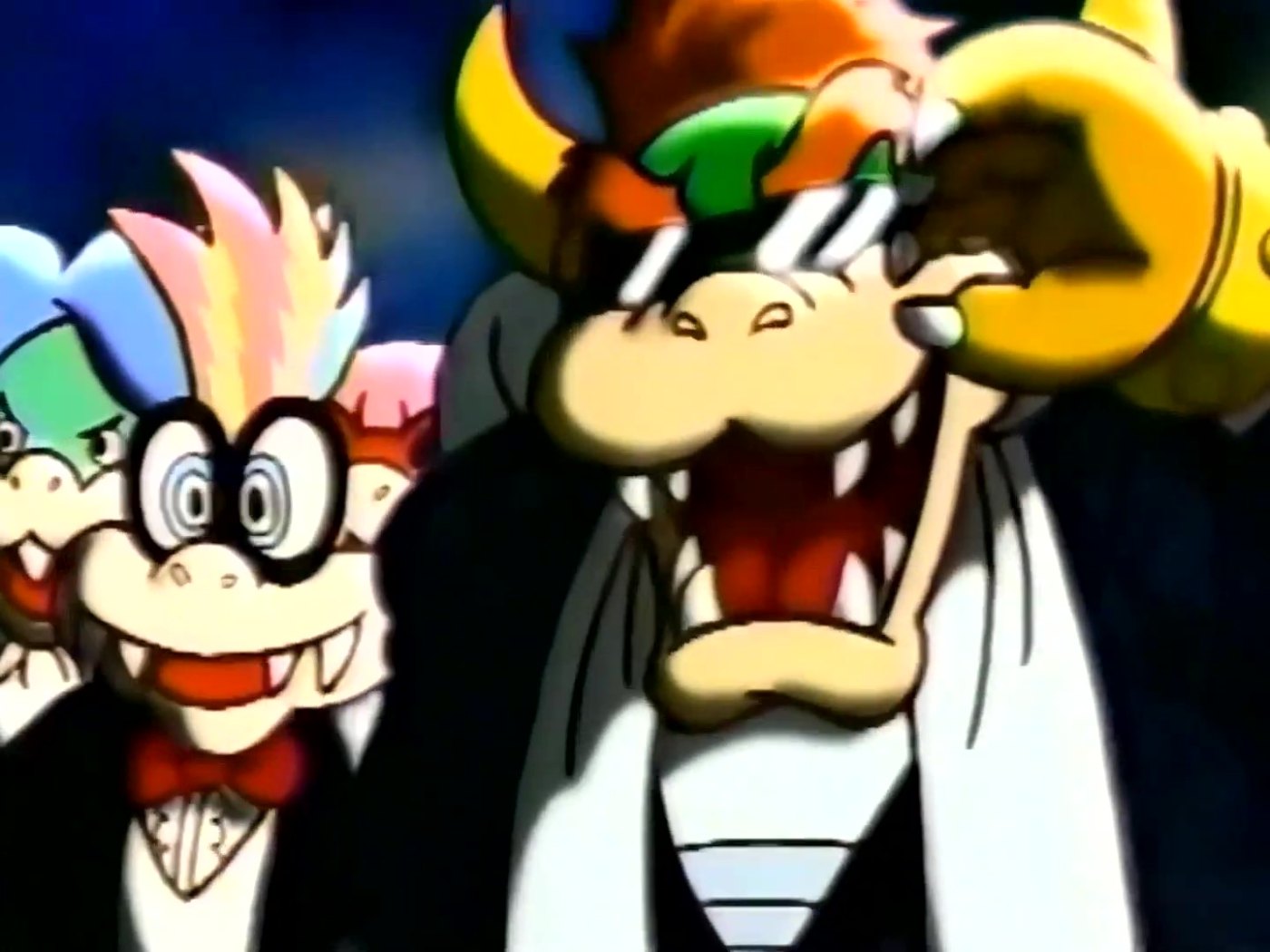
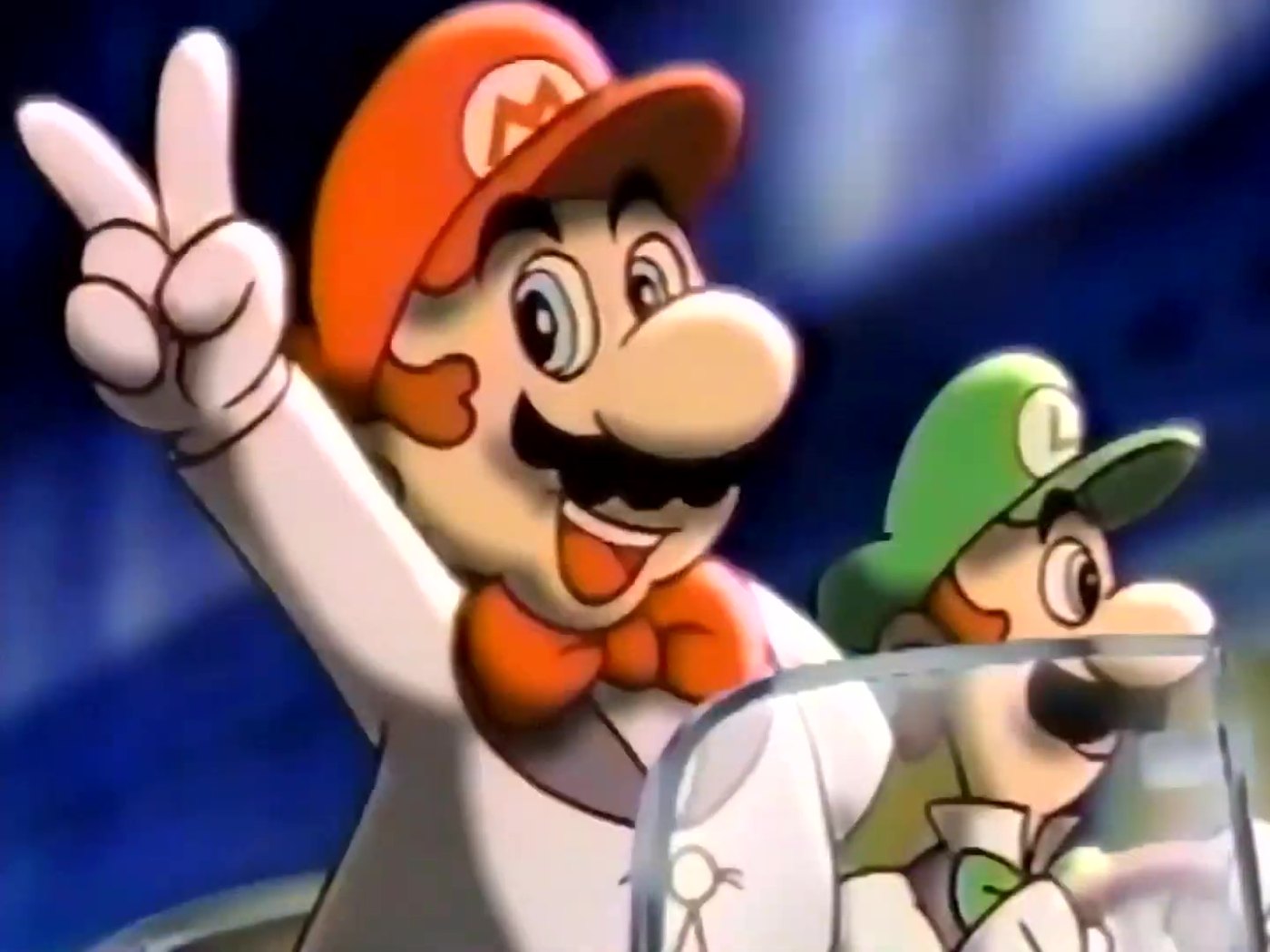
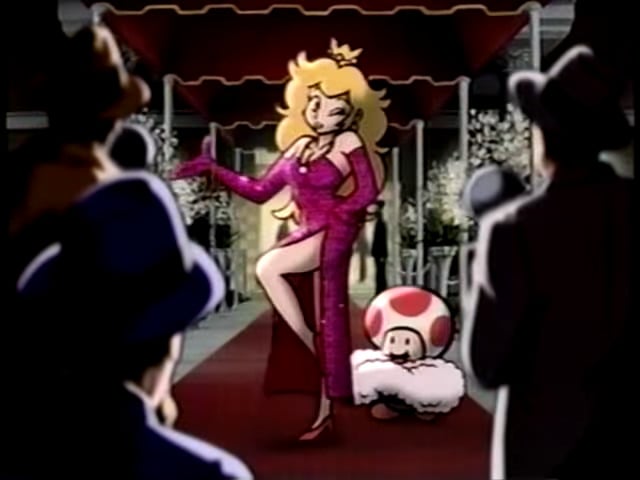
The Japanese TV commercialNintendo · 1993Staged as a film premiere, apparently with an eye on the live-action Super Mario Bros. film then due: Peach, Toad, Bowser and the Koopalings, Birdo, Wart, Mario and Luigi arrive on a red carpet in front of photographers, take their seats, and the curtain rises on the game.
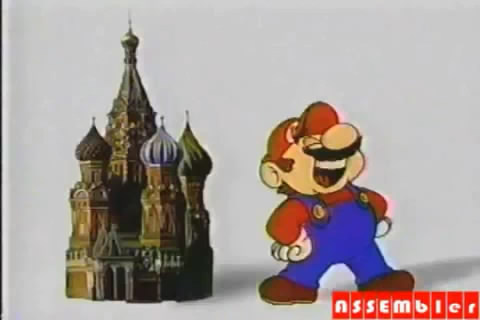
The North American commercialNintendo of America · 1993Nintendo of America made an advert of its own; surviving stills show Bowser and a laughing Mario.
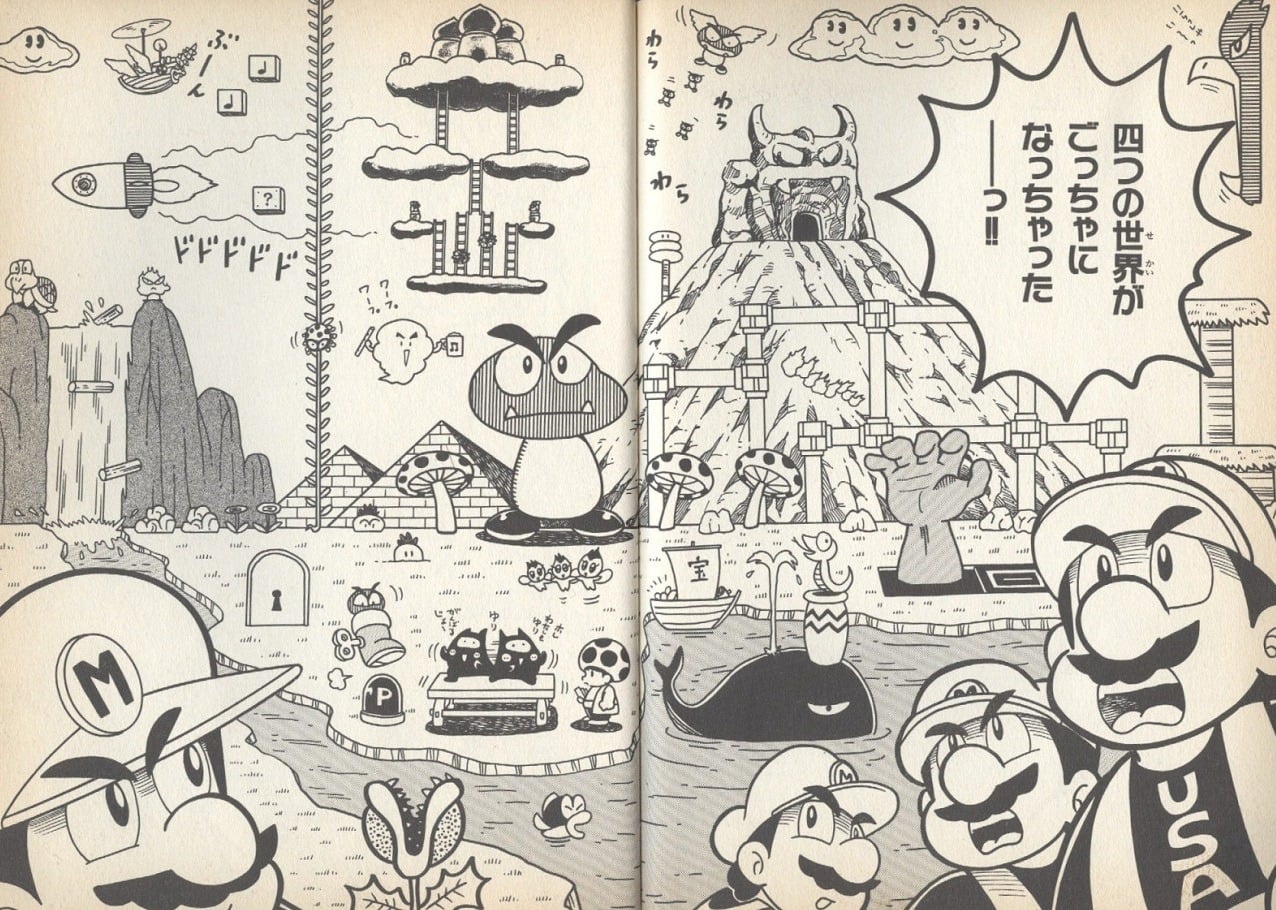
Super Mario (Kodansha manga)Comic BomBom summer special · 1993A one-off chapter based on the commercial. Wart, fed up with being the forgotten villain, steals a golden statue of Peach from the red-carpet event; four Marios, one from each game, chase him through the collection, and Wart and the Lost Levels Bowser try and fail to merge their worlds. Reprinted in Super Mario: Donkey Kong 2.
Super Mario-kunManga · volumes 9 and 10Volume 9 has a chapter built around the Battle Game, and volume 10 a two-part bonus stage in which Bowser, Wart and Wario set Mario puzzles for the reader to solve.
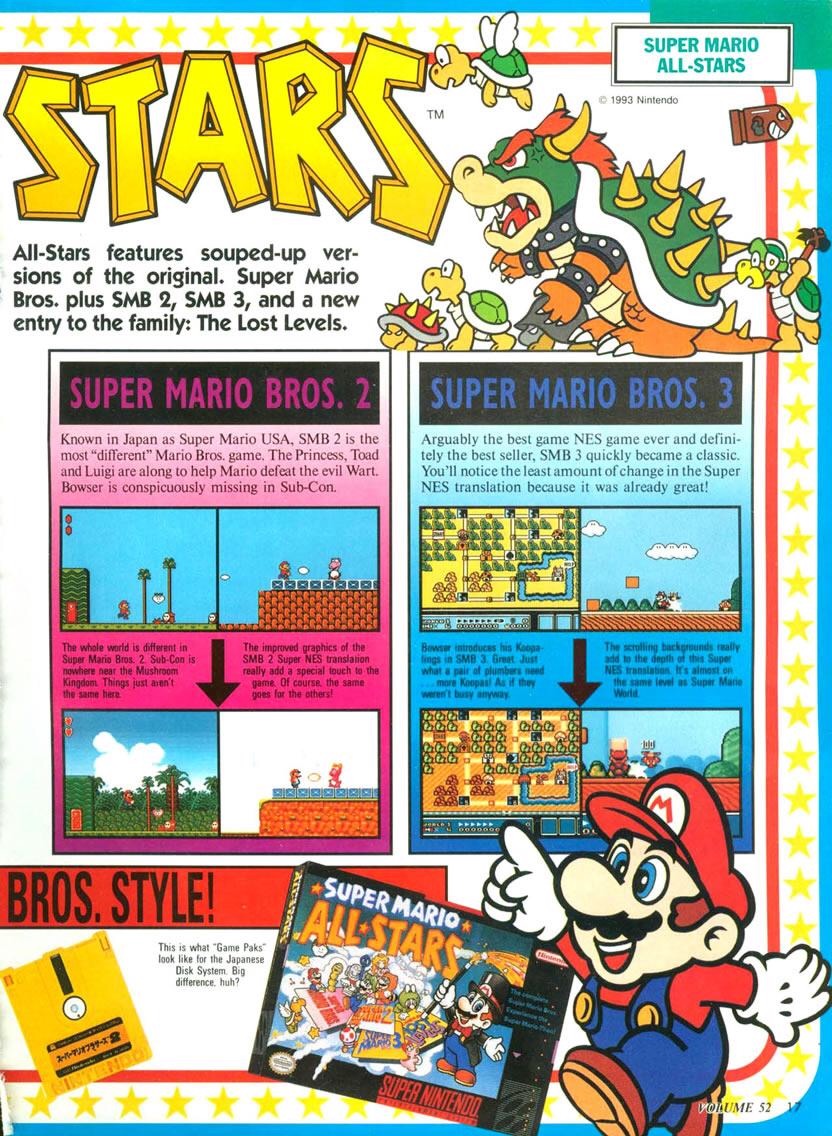
Nintendo Power’s World 9 ChallengeNintendo Power Vol. 52 · September 1993Reach World 9 of The Lost Levels (“Absolutely no warping!”), pause, photograph the screen and post it to Redmond by 31 October 1993, and Nintendo sent back an iron-on patch declaring you a certified Mario maniac. The same issue scored the game 16.3 out of 20.
Nintendo Player’s GuideNintendo of America · 1993The official guide to all four games, with maps of every course.
Princess Peach’s press letterNintendo · 2010To launch the Wii edition, journalists received a letter “written” by Princess Peach in the manner of her notes to Mario in Super Mario Bros. 3. A promotional video ran on the Wii’s Nintendo Channel and the anniversary websites, using footage of the Japanese version in every region.
Super Mario Bros. DeluxeNintendo · Game Boy ColorBorrows All-Stars touches for its versions of Super Mario Bros. and The Lost Levels, including the princess kissing Mario or Luigi at the rescue.
Super Smash Bros.Nintendo · Melee and UltimateThe Mushroom Kingdom II stage in Melee is drawn in the style of the All-Stars Super Mario Bros. 2, and Ultimate switched it to the actual All-Stars graphics.
Mario Party 5Nintendo · GameCubeThe Panic Pinball minigame is decorated with All-Stars fortresses, hills and bricks from Super Mario Bros. and The Lost Levels.
Super Mario Odyssey, Tetris 99 and the 2023 filmLater nodsMario’s black top hat in Odyssey comes from All-Stars (minus the M); Tetris 99 ran an All-Stars theme for the 35th anniversary; and in The Super Mario Bros. Movie signs around the Mushroom Kingdom use All-Stars sprites, while a Brooklyn barbershop is modelled on the N-Mark Spade Panel game.
Characters
Four games’ worth of heroes and villains share one cartridge. Here are the leads, and how All-Stars redrew them.
Character
Who they are
In this game
Abilities & notes
MarioHero of all four games
The plumber himself, redrawn for 16 bits with a black outline in the style of Super Mario World.
Rescues the princess from Bowser three times and Subcon from Wart once. The black top hat he wears in All-Stars later became a costume in Super Mario Odyssey.
In Super Mario Bros. and The Lost Levels his sprite wears red overalls over a blue shirt; in Super Mario Bros. 2 and 3 his overalls are blue.
LuigiNo longer a recolour
Mario’s brother, who on the NES was simply Mario in green in three of these games.
All-Stars gives him his own taller, thinner sprite in Super Mario Bros., The Lost Levels and Super Mario Bros. 3, and the 1994 edition extended that to Super Mario World.
His standing pose in the first two games is based on his Super Mario Bros. 3 look, and he wears green overalls over a purple shirt there.
Princess ToadstoolCaptive and heroine
The ruler of the Mushroom Kingdom, still called Toadstool in the West in 1993.
Kidnapped in three of the four games and playable in Super Mario Bros. 2. All-Stars has her kiss her rescuer in the first two games and colours her portrait in the Super Mario Bros. 3 letters.
Her Super Mario Bros. 2 sprite went from brown hair to blonde in the remake, and her hair shortens when she is down to one heart.
ToadRetainer and fourth hero
The princess’s mushroom-capped attendant.
Seven of him are freed from sacks in Super Mario Bros. and The Lost Levels; he is one of the four heroes of Super Mario Bros. 2 and keeps the Toad Houses in Super Mario Bros. 3, where he was redrawn.
His spots changed from blue to red in the Super Mario Bros. 2 remake.
BowserKing of the Koopas
The villain of three of the four games, drawn throughout in his Super Mario Bros. 3 design.
Waits on a bridge in both Super Mario Bros. and The Lost Levels, and his impostors turn out to be other enemies in disguise, and in a castle in Dark Land in Super Mario Bros. 3.
New reactions in the first two games: he looks startled by a fireball and dazed after several. In The Lost Levels’ Worlds A to D he and his doubles throw hammers but breathe no fire.
WartTyrant of Subcon
The frog king who has cursed Subcon in Super Mario Bros. 2.
Final boss of the dream world. He turns up at the premiere in the Japanese commercial, and the 1993 Kodansha manga makes him the lead villain of the whole collection.
In All-Stars the music cuts out as he is beaten, before the door to the captive Subcons appears.
BirdoEgg-spitting gatekeeper
The bow-wearing boss who ends most stages of Super Mario Bros. 2.
Guards the crystal ball that opens each exit. She also decorates the remake’s Game Over and warp screens and appears on the All-Stars title screen.
Now drops the crystal ball when beaten instead of holding it; the grey variety was recoloured green.
The KoopalingsBowser’s seven
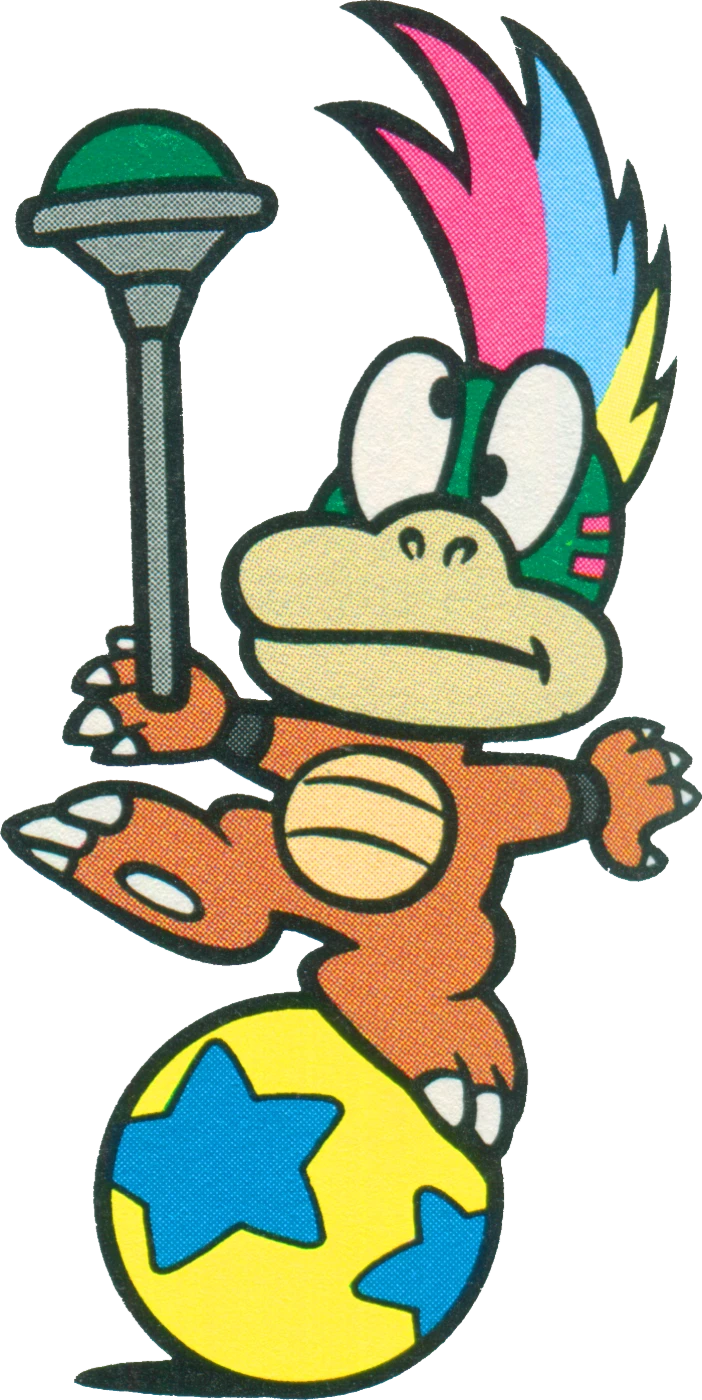
Larry, Morton, Wendy, Iggy, Roy, Lemmy and Ludwig, the airship captains of Super Mario Bros. 3.
Each steals a king’s wand and is fought at the end of an airship. All seven attend the premiere in the Japanese advert.
Their airships are consistently brown now, with cabin windows and a shared stormy sky.
The seven kingsVictims of the wands
The rulers of Grass Land to Pipe Land.
Transformed by the Koopalings and changed back by Mario.
All-Stars swaps the NES animals for cameos: Cobrat, Hoopster, a blue Dino Rhino, Donkey Kong Jr., Albatoss, Monty Mole and Yoshi. Their throne rooms follow the Japanese layout.
The SubconsDream fairies
The little people of Subcon whom Wart has bottled up.
Freed at the end of Super Mario Bros. 2 to carry the heroes shoulder-high.
Redrawn with rounder heads and pointed hair, in a room that gained stained-glass windows.
A rogues’ gallery, recoloured
Every enemy from the four games is here; these are the ones All-Stars visibly changed, plus a few favourites.
GoombaSuper Mario Bros., The Lost LevelsBlue underground and grey-brown in castles. Replaced by Buzzy Beetles in Worlds A to D.
Koopa TroopaSuper Mario Bros., The Lost LevelsGreen ones stay green everywhere now; kicked shells spin.
Hammer BrotherSuper Mario Bros., The Lost LevelsA new sound for the hammers. They charge the player in Worlds A to D.
BlooberSuper Mario Bros., The Lost LevelsPink instead of white, including the airborne ones.
Cheep-CheepSuper Mario Bros., The Lost LevelsThe grey ones turned green.
Buzzy BeetleSuper Mario Bros., The Lost LevelsTakes over from the Goombas in Worlds A to D.
Bullet BillSuper Mario Bros., The Lost LevelsHis arms are animated.
ShyguySuper Mario Bros. 2The pink ones are blue in the remake.
SnifitSuper Mario Bros. 2Pink became blue, and the desert’s green ones grey.
NinjiSuper Mario Bros. 2Purple instead of black.
PhantoSuper Mario Bros. 2Now watched over by a giant carving of himself in every key room.
BeezoSuper Mario Bros. 2Green and grey ones became red; red ones became yellow.
PanserSuper Mario Bros. 2Pink became blue and grey became green.
OstroSuper Mario Bros. 2Pink instead of black.
PorcupoSuper Mario Bros. 2Purple instead of black.
AutobombSuper Mario Bros. 2Gains a flame sound when a Shyguy is driving.
AlbatossSuper Mario Bros. 2Also the new form of the Sky Land king in Super Mario Bros. 3.
CobratSuper Mario Bros. 2Likewise the Grass Land king’s new shape.
PokeySuper Mario Bros. 2Redrawn with the rest of the Subcon cast.
Angry SunSuper Mario Bros. 3Redrawn for 16 bits.
Boss BassSuper Mario Bros. 3A new diving sprite, and the sea he swims in is transparent.
“Boo” DiddlySuper Mario Bros. 3Boo Buddies and Roto-Discs now leave motion trails.
Boomerang BrotherSuper Mario Bros. 3All of them are green, with a new map icon.
Bob-ombSuper Mario Bros. 3Blue in the remake.
Chain ChompSuper Mario Bros. 3Redrawn for 16 bits.
Dry BonesSuper Mario Bros. 3Collapses to a Super Mario World sound effect.
The people who made it
The remake was handled by Nintendo EAD with the original programmers at SRD on hand, and the original designers down the corridor to consult.
Shigeru MiyamotoProducerProposed the “value pack” of every Super Mario game once Super Mario Kart was out of the door.
Takashi TezukaDirectorCredited as director of the compilation.
Tadashi SugiyamaAssistant director and designerKept the Famicom original running beside the remake to match its feel, and explained the 128-life ceiling on the infinite 1-Up trick.
Naoki MoriDesignerIn about his third year at Nintendo. His first job was the first Bowser’s castle; he drew the backgrounds for Super Mario Bros. and The Lost Levels and debugged Super Mario Bros. 2.
Shigefumi Hino, Soichiro Tomita, Kenta UsuiArtistsThe rest of the art team credited for the 16-bit redraw.
Toshihiko Nakago and SRDProgrammingThe programmers of the NES originals, back to rebuild them.
Koji Kondo and Soyo OkaMusicKondo’s themes, rearranged for the Super NES sound chip, with new pieces for bonus rooms and Bowser battles.
Koji Kondo, Mahito Yokota, Ryo NagamatsuComposers on the 2010 CDThe writers of the ten themes on the Super Mario History disc, though the CD itself credits nobody.
How It Was Made
Nintendo told the story itself in 2010, when Satoru Iwata sat down with two of the 1993 team, Tadashi Sugiyama and Naoki Mori, for an Iwata Asks interview to promote the Wii release.
A value pack called Mario Extravaganza
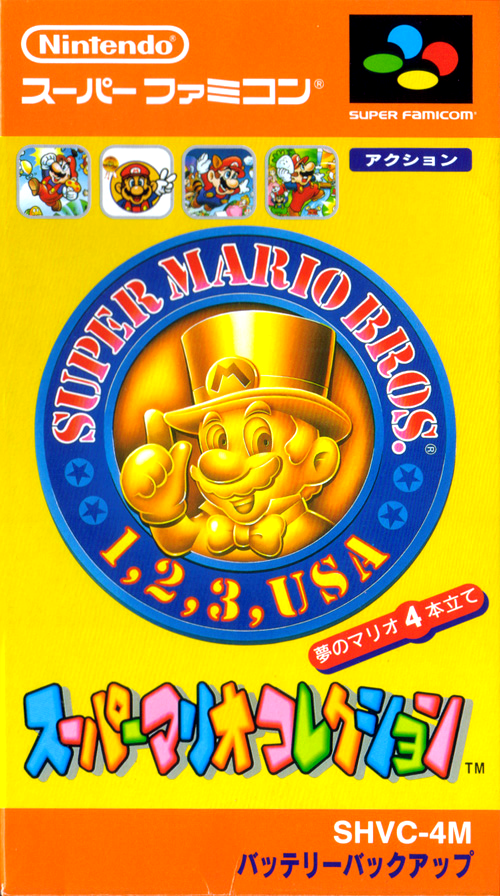
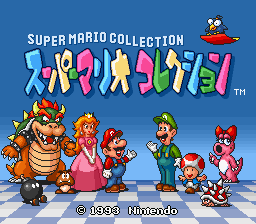
Super Mario Collection, the Super Famicom original.
The proposal came from Miyamoto a little while after Super Mario Kart was finished in 1992, in a gap in the schedule before Yoshi’s Island. His idea was a value pack of the Super Mario series for Super Famicom owners, and in particular a second chance for The Lost Levels, which few people had played on the Disk System and which Nintendo of America had passed over as too hard in favour of a reworked Doki Doki Panic.
The four games would be remade, not ported. Internally the project was “Mario Extravaganza” from start to finish; it shipped in Japan on 14 July 1993 as Super Mario Collection and abroad as Super Mario All-Stars.
Redrawing a classic with no blueprints
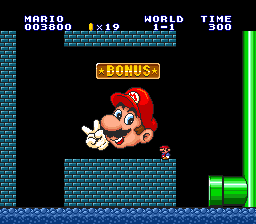
A bonus room in Super Mario Bros., no longer a plain black box.
The first surprise was that almost nothing survived. The original specifications and much of the graphic data were gone; Sugiyama turned up some scribbled notes and Mori found nothing at all, so the new art was made by hand with the old games as the reference. Mori, then about three years into his career and by his own account intimidated by the assignment, was told to start by updating the graphics and began with the first Bowser’s castle.
Mario himself gained no new moves or animations; what the Super Famicom’s extra colours and tiles bought was scenery. The plain black of the NES castles and bonus rooms was filled in, down to portraits of Bowser and Mario on the walls, while the characters took their cue from Super Mario World and Mario picked up a black outline.
Which glitches to keep
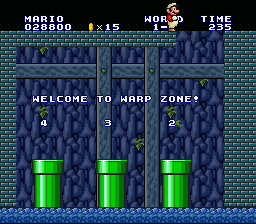
The World 1-2 Warp Zone survives; the Minus World beyond it does not.
The rule the team settled on was that harmless tricks stayed and anything that could stop a player dead was fixed. So the staircase 1-Up trick survives (“we left in infinite 1-UPs, but actually set a limit of about 128,” Sugiyama said) while the Minus World does not. Those fixes are also why sharp-eyed players felt slight differences in control.
There were no dedicated testers in those days, so the designers divided the four games among themselves and played them to destruction; Mori took Super Mario Bros. 2 and others drew The Lost Levels, which Iwata conceded was hard going even for a developer. Starting lives went up from three to five, and battery-backed cartridges made it possible to save after every level of that game, a change Sugiyama said was intended “to offer some significant help”.
Five stars: adding Super Mario World
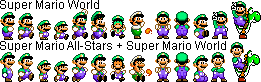
Luigi in the original Super Mario World (top) and in the 1994 All-Stars edition.
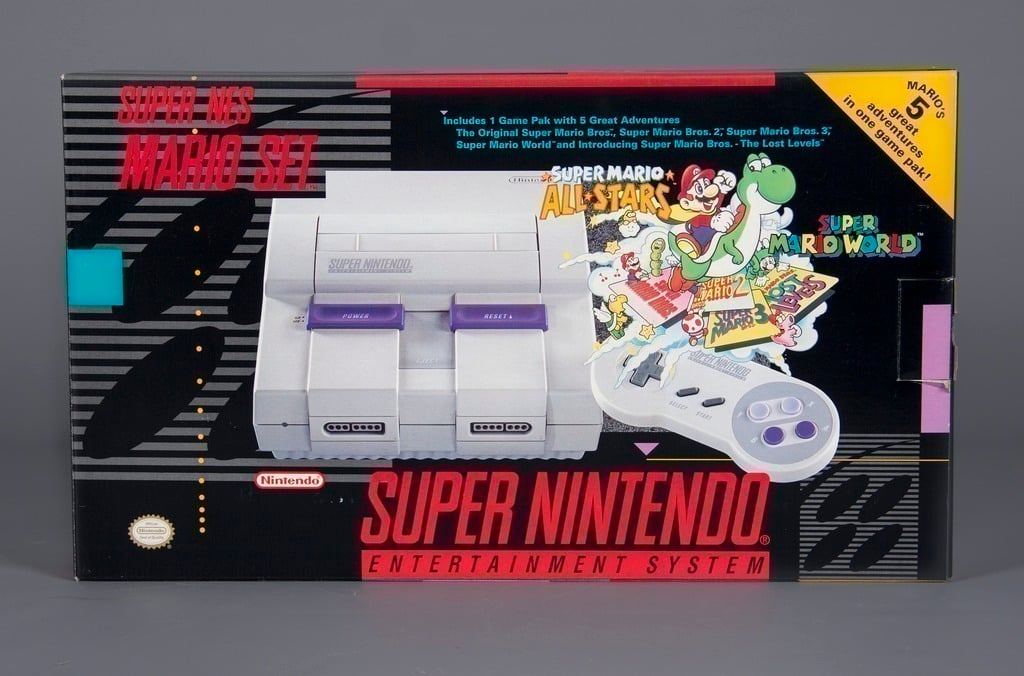
In December 1994 Nintendo of America released Super Mario All-Stars + Super Mario World, sold in North America only as part of the Super NES Mario Set; a boxed European release followed in 1995 and Japan never received it. The title screen turned orange and made room for Yoshi, the Lost Levels box on the menu was stamped as unreleased in the USA (or Europe), and Super Mario World gained a fourth save file and a new set of Luigi sprites: taller, slimmer, sliding on his knees and spitting his fireballs instead of throwing them.
The 2010 package
The booklet’s spread on the key Super Mario staff.
For the 25th anniversary Nintendo did not remake the remake. The Wii disc holds the Super NES game exactly as it was, running in an emulator, and the effort went into the box: the Super Mario History 1985-2010 booklet and the soundtrack CD, which Nintendo’s press release described as the Ground Theme from Super Mario Bros. getting its first official release. Japan got it on 21 October 2010; Nintendo of America announced its version a week later, for 12 December at $29.99 and only “while supplies last”.
Supplies did not last. Nearly every American retailer sold out within days, and Nintendo of America produced what it called a final run that reached shops on 13 March 2011. The only real alteration to the game is a kindness: flashing backgrounds in Super Mario Bros. 2 and 3 were softened, a change carried over to the Switch Online version.
Advertisement
Series Firsts
A remake collection is not where you look for firsts, but All-Stars has a handful that can be verified.
1The Lost Levels in the WestThe first release anywhere outside Japan of the 1986 Super Mario Bros. 2.
2Save files for the NES trilogyNone of the four originals could save. Here each has four files, and The Lost Levels saves after every course.
3A Luigi of his ownThe first versions of Super Mario Bros., The Lost Levels and Super Mario Bros. 3 in which Luigi is not simply Mario in different colours.
4The ? KinokoThe stand-alone Battle Game introduces a new mystery mushroom item.
5Shrinking heroes in SubconAt one heart the whole character now shrinks, not just the body, a detail kept by the Game Boy Advance remake and by later appearances of the Super Mario Bros. 2 cast.
6The Ground Theme on CDAccording to Nintendo’s own announcement, the 2010 soundtrack disc was the first official release of the original Super Mario Bros. Ground Theme.
Cheats & Secrets
Most of the secrets of the four games work exactly as they do on the NES and are covered on the individual game pages. These are the ones that are new or different in All-Stars.
Reaching World 9 in The Lost Levels
Clear Worlds 1 to 8 without entering a Warp Zone, including the ones that send you backwards. Use one and World 9 is closed to that save file for good. Unlike the original, you keep your stock of lives when you get there, and afterwards the world can be replayed from the level select.
Worlds A, B, C and D
Finish The Lost Levels once and the four lettered worlds open. They have no midway points until World D, the Hammer Brothers advance on you, and the Bowsers trade fire for hammers.
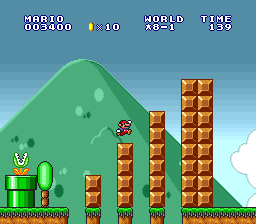
Hard mode in Super Mario Bros.
The harder second quest is still here, and All-Stars marks it with a star beside the world number.
The 1-Up staircase
The famous shell-on-the-stairs trick still works. The counter now stops at 128 lives instead of rolling over into an instant Game Over, and totals above nine display properly.
Listen to the mazes
In the looping castles (4-4, 7-4 and 8-4 in Super Mario Bros.; 3-4, 5-3, 6-4, 7-2, 8-4 and D-4 in The Lost Levels) a chime now tells you that you chose the right path and a buzzer that you did not.
Lucky sevens
In Super Mario Bros. 2’s Bonus Chance, three 7s now pay out ten extra lives. Lives top out at 99.
Giving up gracefully in Super Mario Bros. 2
Stuck somewhere with no way out? Pause, hold L and R and press Select to forfeit a life.
A Hammer Suit in Ice Land
The first Toad House on the World 6 map of Super Mario Bros. 3 always contains a Hammer Suit in this version.
Wii controls
With the Wii Remote, + and − flip between games on the menu. The A/B layout option on the Game Select screen changes only the Classic Controller and GameCube pad.
Luke’s original cheats page for the Wii edition is linked under Reference / Information below.
Glitches & Oddities
All-Stars removed most of the NES games’ famous bugs and introduced a few of its own.
The brick bounce
The best-known quirk of the collection: in Super Mario Bros. and The Lost Levels Mario rises through a brick he has just broken and then sinks slowly, instead of rebounding at once as on the NES. It costs him speed and makes some Lost Levels jumps harder than their designers intended.
What was taken out
The Minus World, the Small Fire Mario trick, “Mushroom Magic” and the bug that could leave Mario stuck at the end of an underwater course are all gone from Super Mario Bros. Two block arrangements in Super Mario Bros. 3 (in 3-9 and 7-5) were reshaped to close off exploits, and the pipe in the first Piranha Plant stage of World 7 was raised so that it cannot be flown over.
The title-screen music slip
On Western cartridges, pressing Start at exactly the right instant on the title screen lets the chatter music carry on through the first transition sound before it is cut off. The Japanese version goes straight to the menu and cannot do it.
The old debug mode wakes up
A leftover NES-era debug mode is still in the code, and The Cutting Room Floor notes that on real Super NES hardware it can occasionally switch itself on.
The quickening pause
In the Super Mario Bros. 2 on the All-Stars + Super Mario World cartridge, the pause screen appears a little faster every time it is used, and a Magical Potion door could lock the game up; the European edition fixed the second.
The Spiny egg bug
One bug was inherited rather than fixed: The Cutting Room Floor notes that the NES game’s Spiny egg bug is still present in the remake, and that fans have since patched it.
Videos
Nintendo’s trailer for the Wii edition, as uploaded by the British retailer GAME, and the first part of World of Longplays’ complete run through the Super NES cartridge. We could not find the trailer on an official Nintendo channel.
Nintendo’s trailer for the 25th Anniversary Edition, uploaded by the retailer GAME.
A complete playthrough of the All-Stars Super Mario Bros.; parts 2 to 4 cover Super Mario Bros. 2, Super Mario Bros. 3 and The Lost Levels.
Trivia & Interesting Facts
The working title, used “the whole time” according to Tadashi Sugiyama, was Mario Extravaganza.
In the All-Stars Super Mario Bros. and Lost Levels, Mario’s sprite wears red overalls and a blue shirt, the reverse of his usual outfit, and Luigi wears green overalls over purple.
The Super Mario Bros. 2 manual was not fully updated: it still says you lose a life when “all of the hearts turn white”, although empty hearts in the remake are blue.
The Super Mario Collection title screen.The Japanese title screen has extra animations for a Goomba, a Bob-omb and Birdo that the Western cartridges lack.
The menu dates Super Mario Bros. 3 to 1988 on Japanese cartridges and 1990 on American ones, following each region’s own release.
The made-up Western “box” for The Lost Levels.Since The Lost Levels had never had a Western box, Nintendo made one for the menu by editing the cover of the Japanese Disk System manual.
The Wii disc is such a faithful copy that the options screen still shows a Super NES controller, whichever controller you are holding.
Buying the four games separately on the Wii Virtual Console cost 2,100 Wii Points, about $21, against $30 for the disc, though those were the NES versions. Unlike the downloads, the disc could simply be moved to a Wii U.
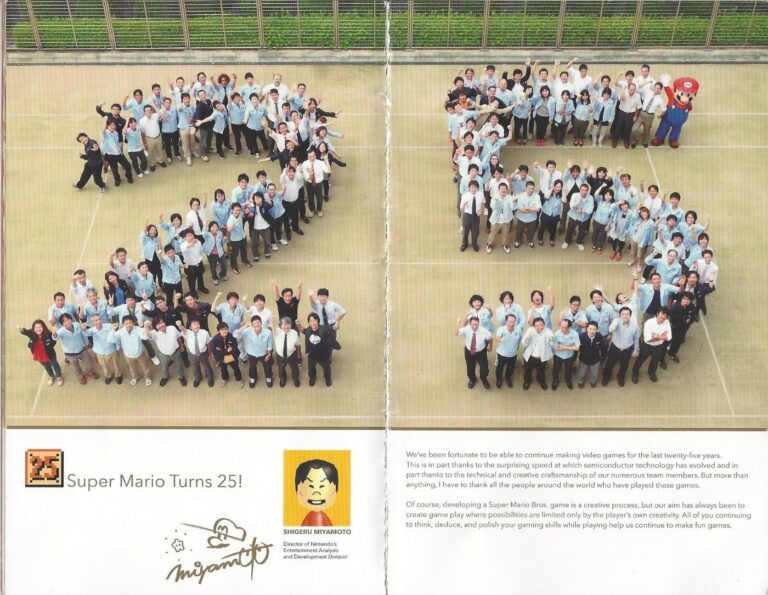
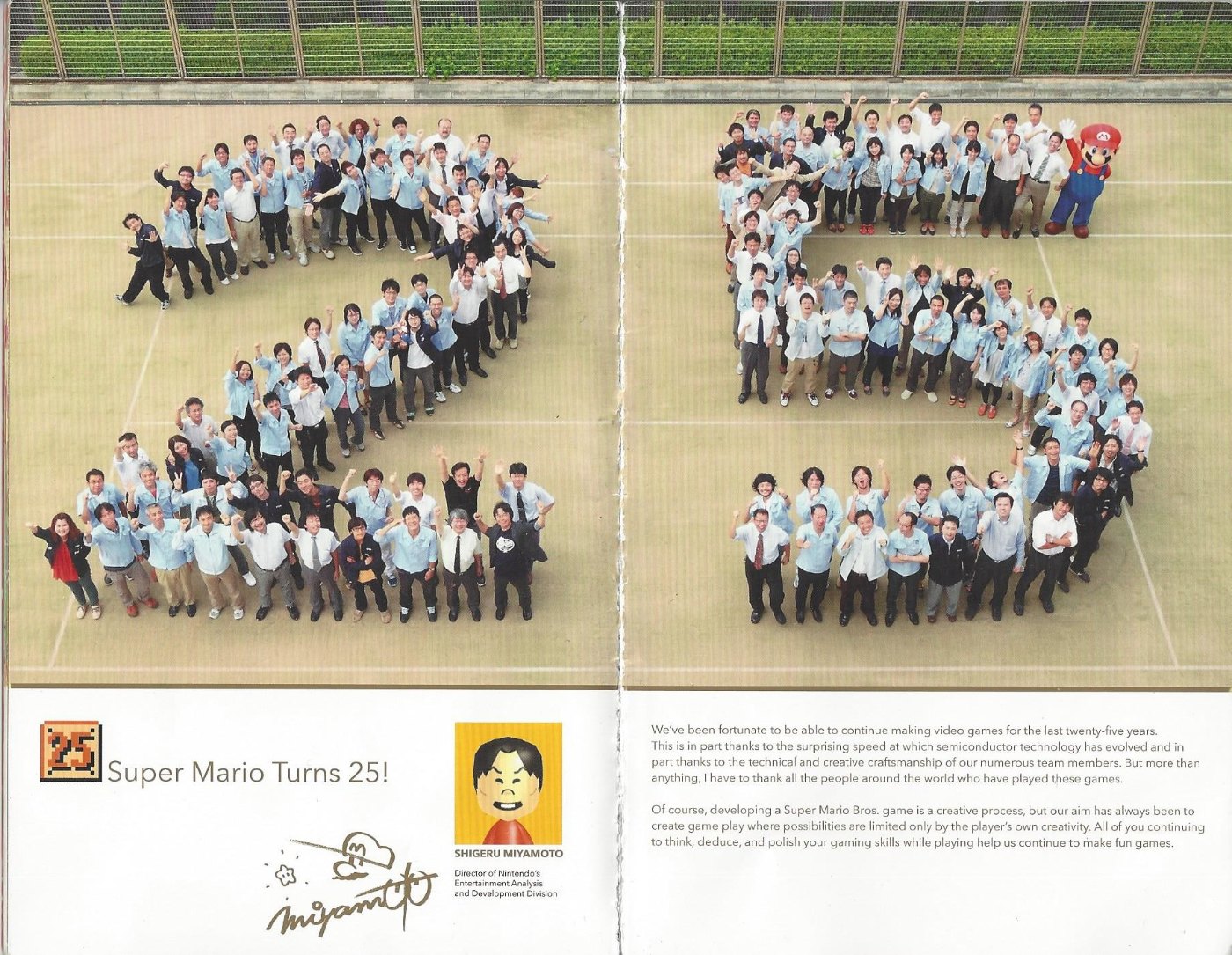
The Super Mario staff form a “25”.The booklet includes a group photograph of Super Mario staff standing in the shape of the number 25. Sugiyama pointed out to Iwata that he is in it.
The American booklet differs from the others: it shows only US box art and dates, swaps the Japanese promotional posters for promotional toys, and lists Super Mario All-Stars where the Japanese, European and Australian editions list The Lost Levels.
Two of the CD’s tracks, the Super Mario World Ground Theme and Delfino Plaza, are the versions with the extra “riding Yoshi” percussion.
Hotel guests could play it too: the game was offered on LodgeNet’s in-room system in the United States from some point between July 1993 and June 1994.
The Satellaview version, BS Super Mario Collection, replaced the in-game music with broadcast audio that included Huey Lewis and the News’ “The Power of Love” and “The NeverEnding Story”.
The copyright on the title screen of the 1994 All-Stars + Super Mario World cartridge still reads 1993.
The cartridge checks its own save memory as an anti-piracy measure.
Unused in the code: a mossy grey palette for the treetop stages, an alternative palette for Bowser, and a separate palette for Bowser’s Brother in The Lost Levels, who in All-Stars simply looks like Bowser.
According to Eurogamer, Nintendo’s internal name for 2020’s Super Mario 3D All-Stars was “Super Mario All-Stars 2”.
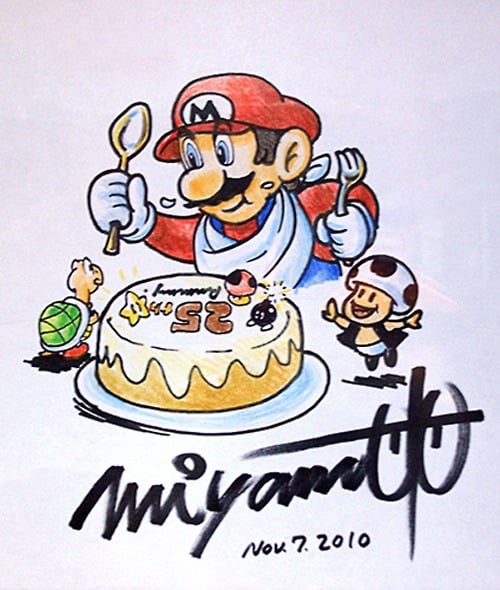
Miyamoto’s 25th anniversary drawing.Shigeru Miyamoto drew a new picture for the 25th anniversary.
Regional Box Art
The Wii edition came as a card sleeve around a keep case, booklet and CD, and every region dressed it differently; the Super NES original is one of the most reprinted boxes of its generation.
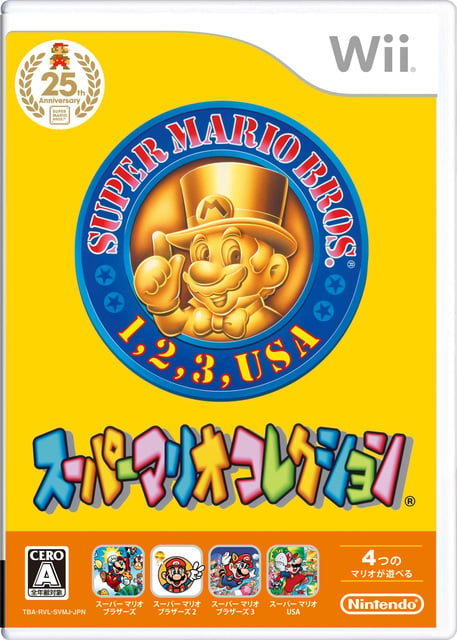
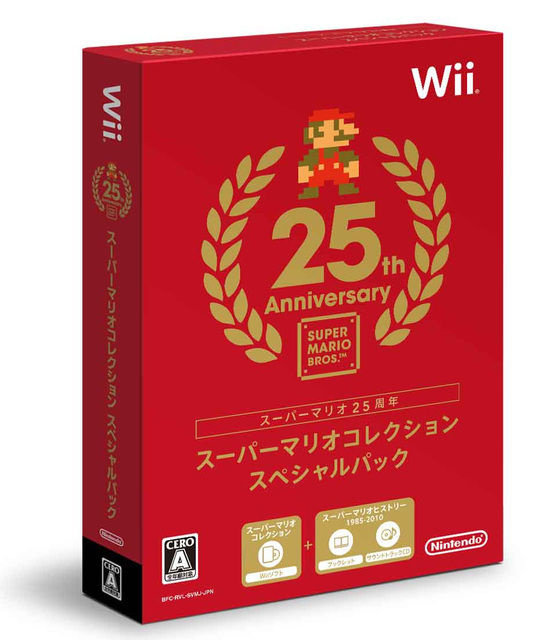
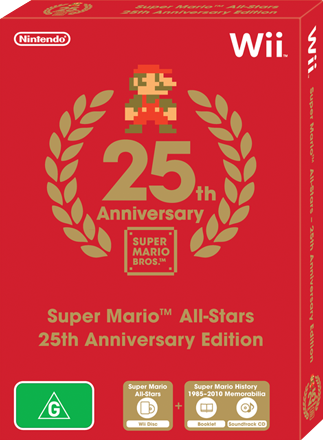
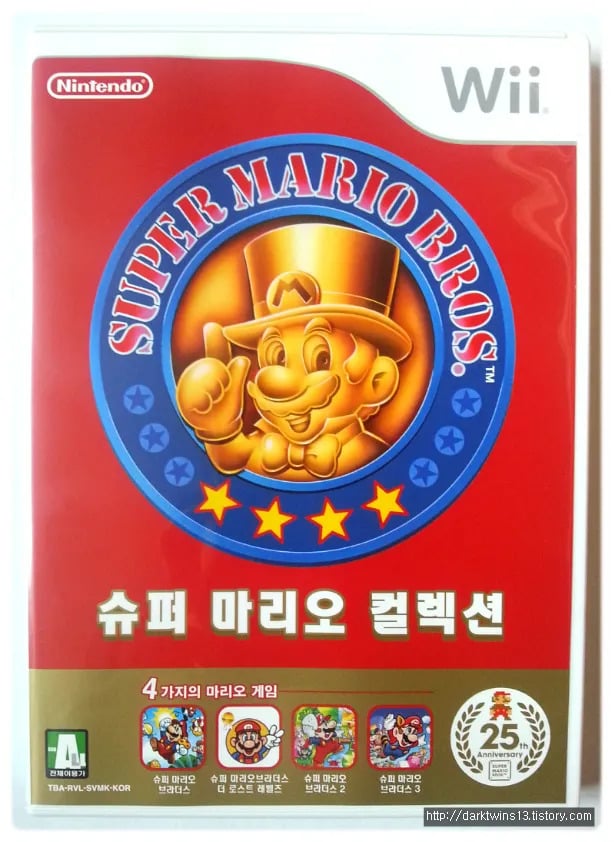
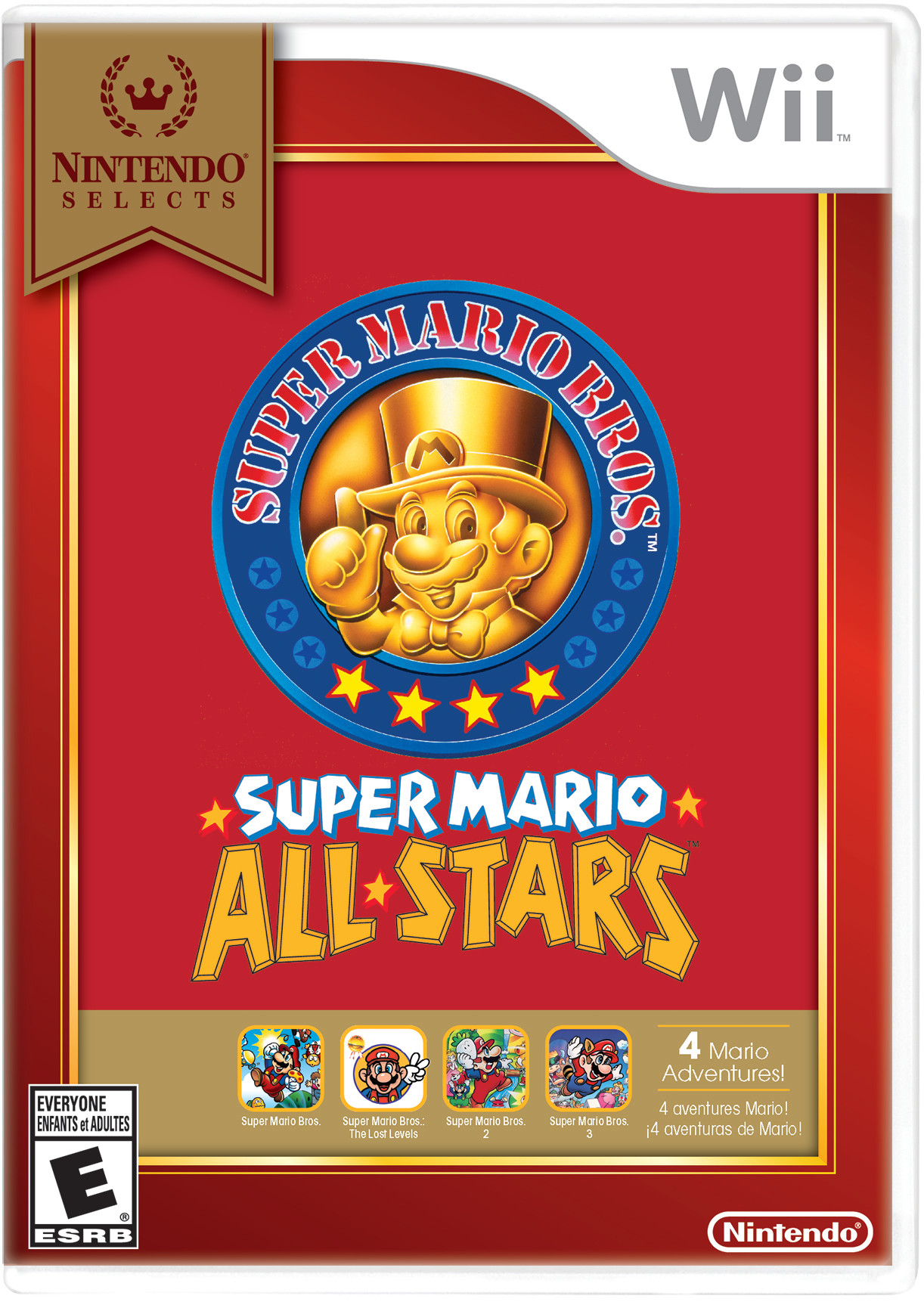
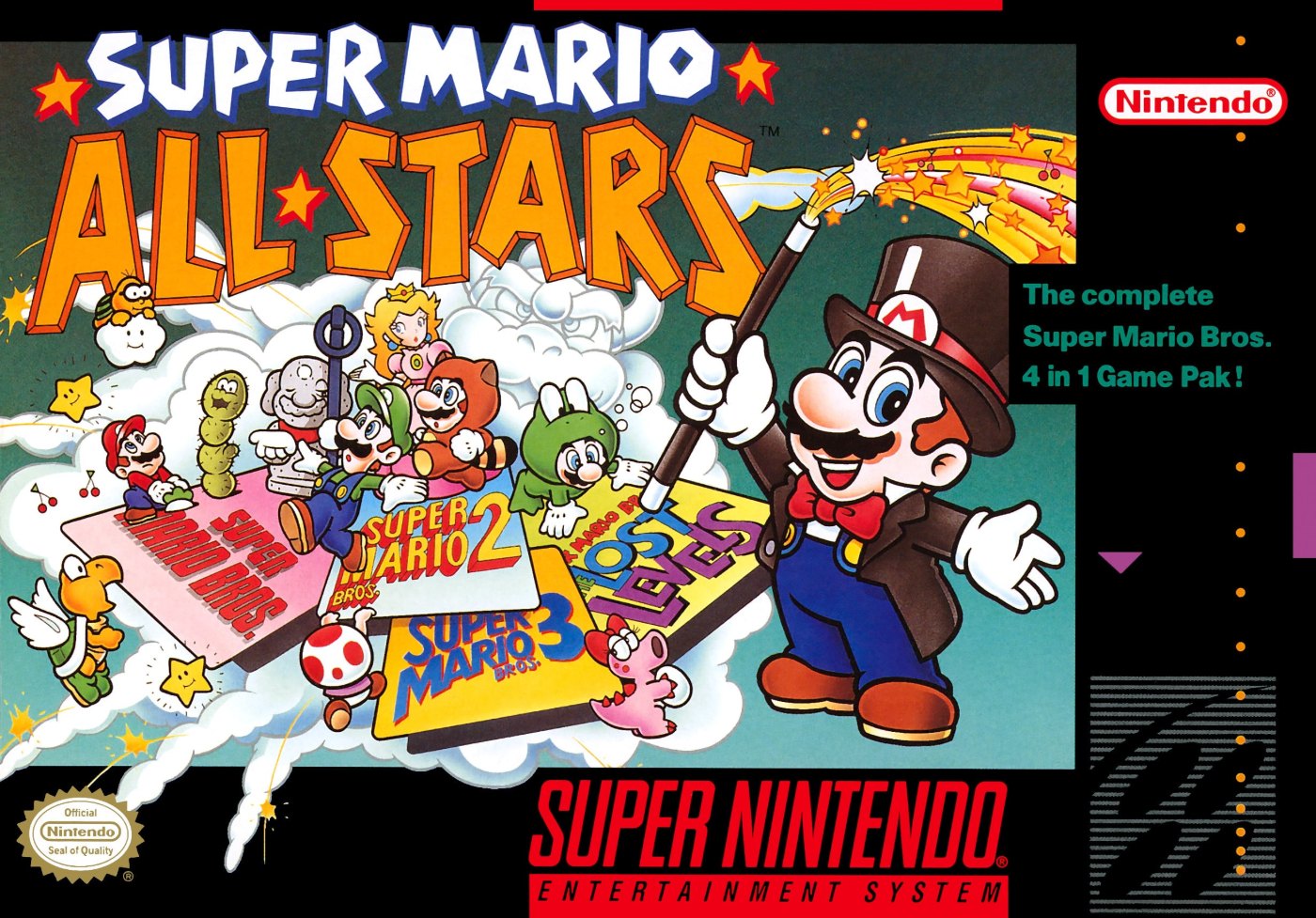
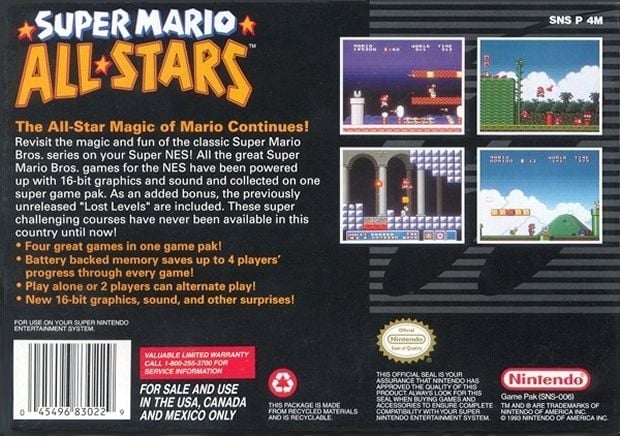
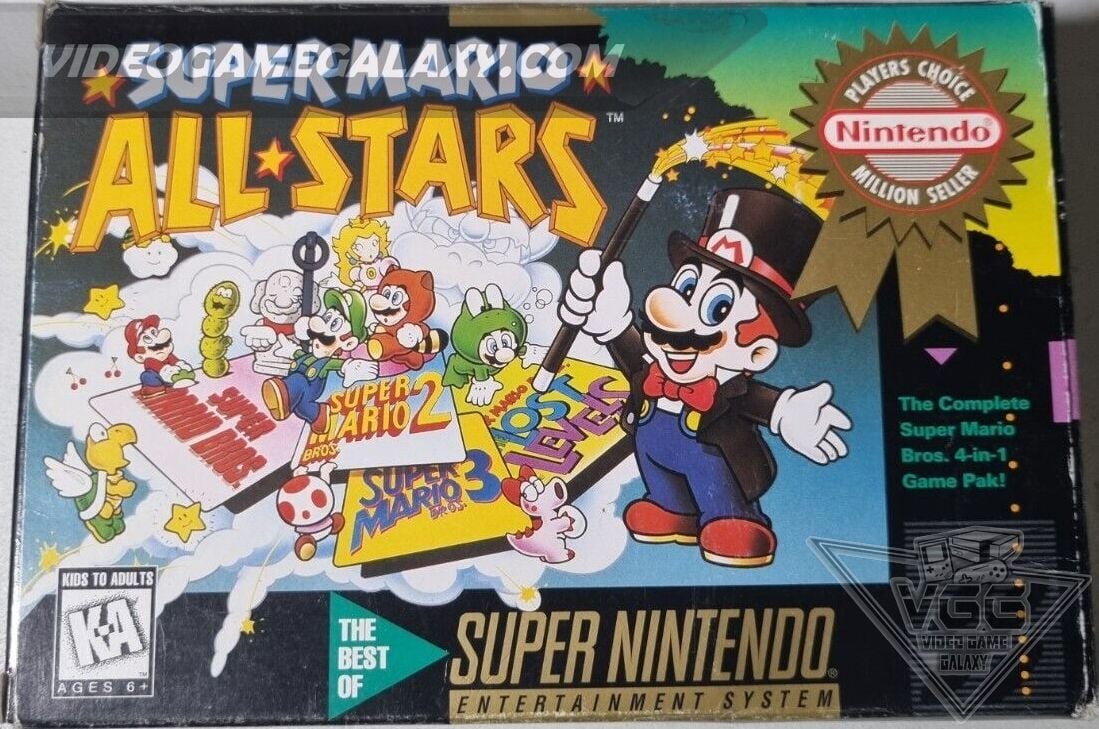
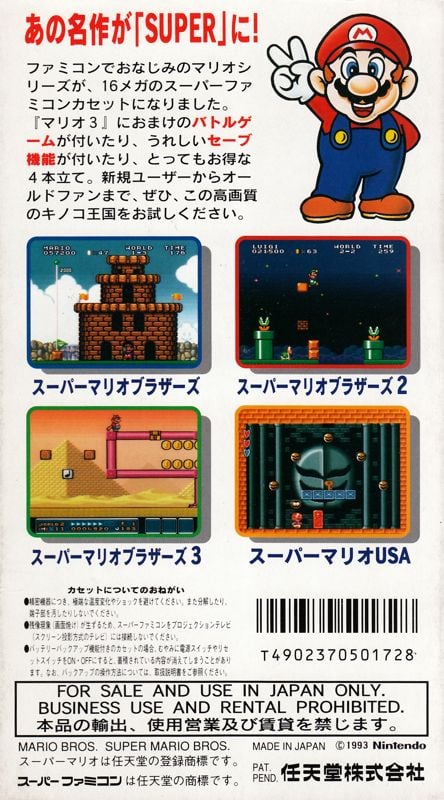
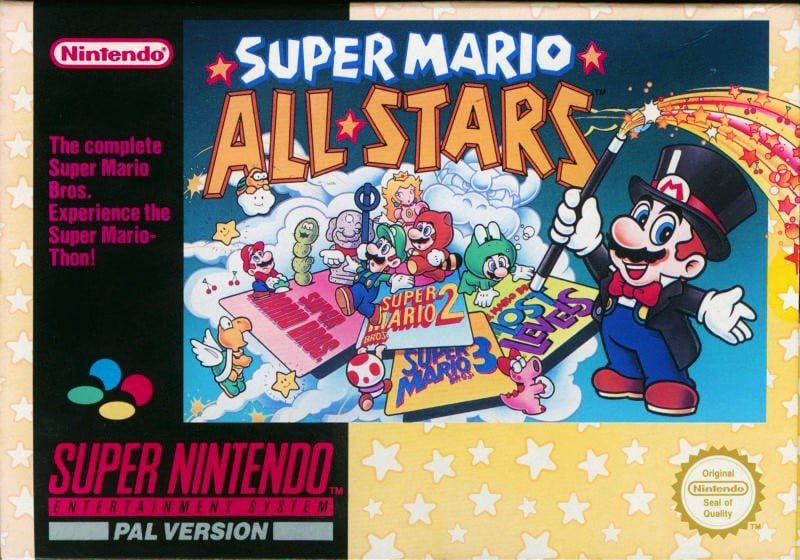
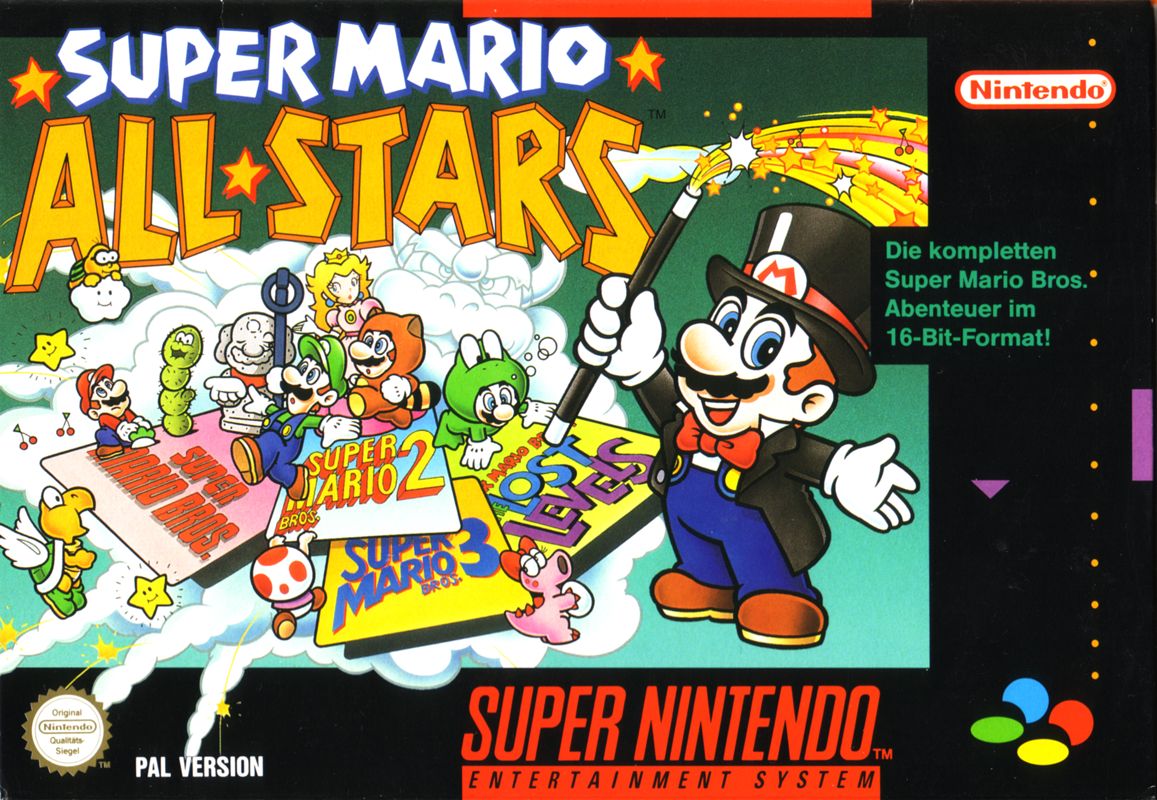
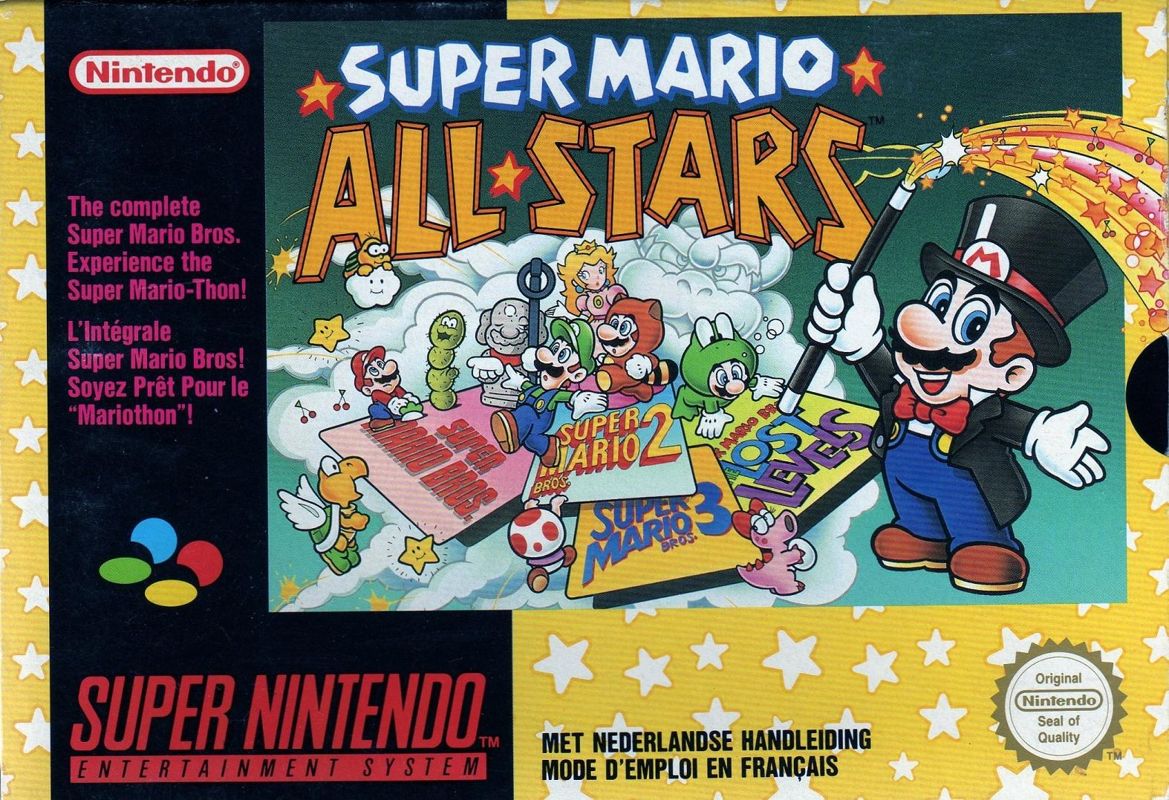
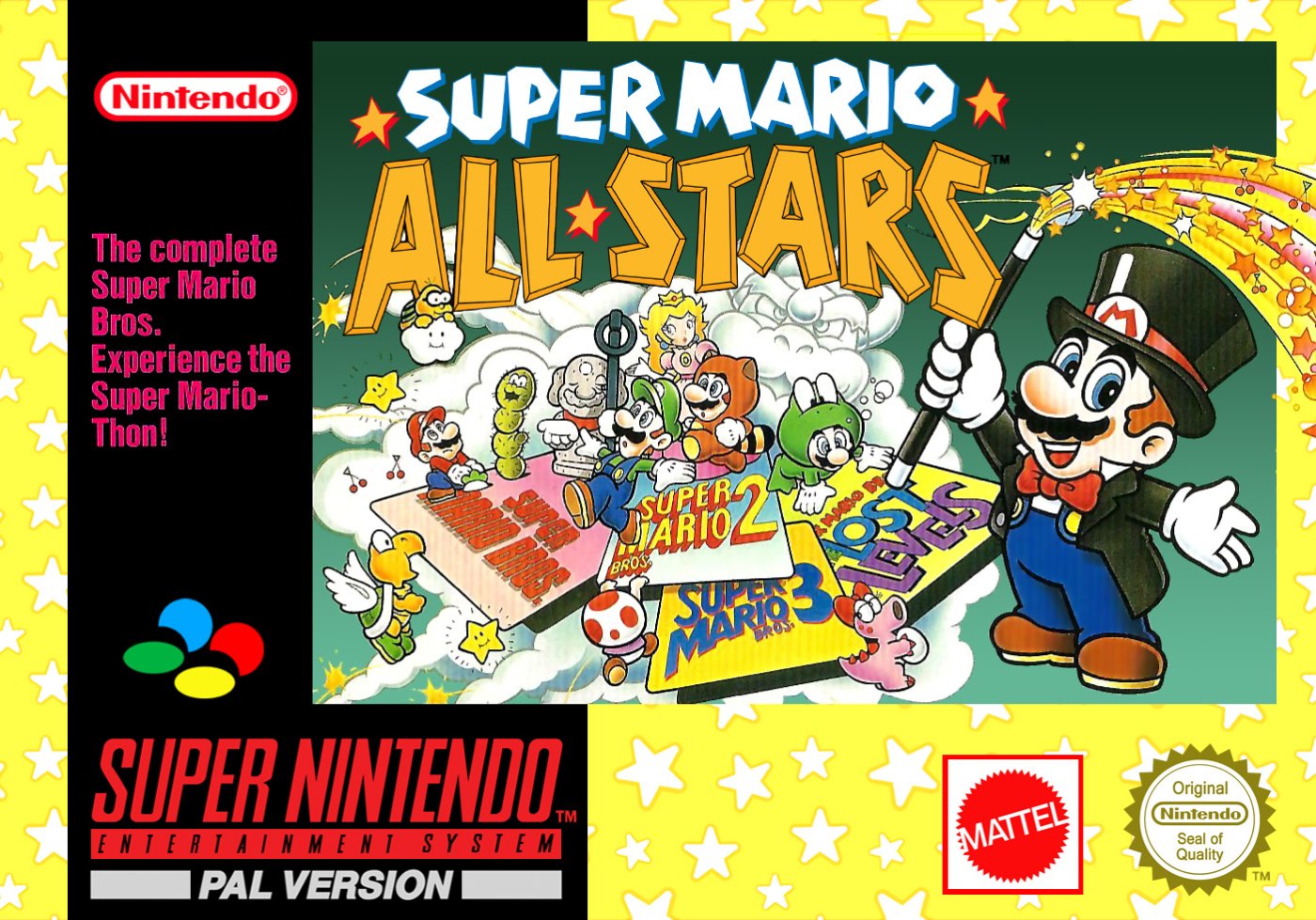
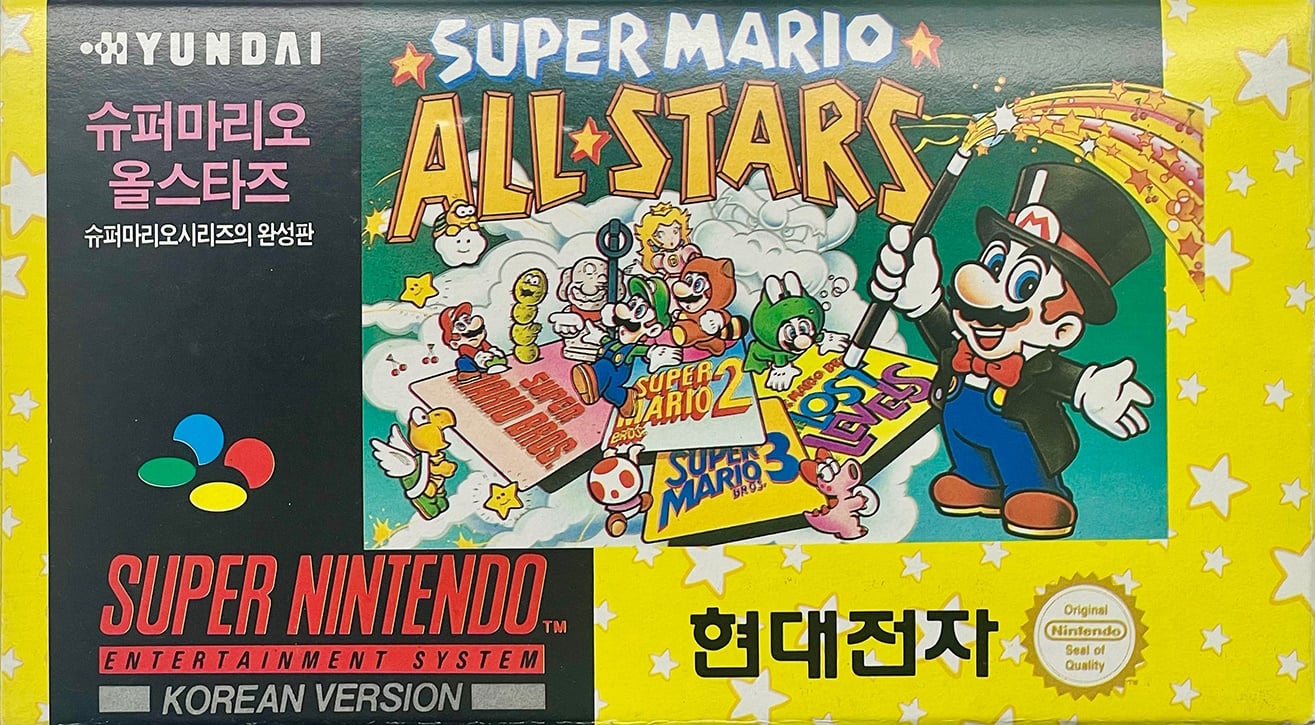
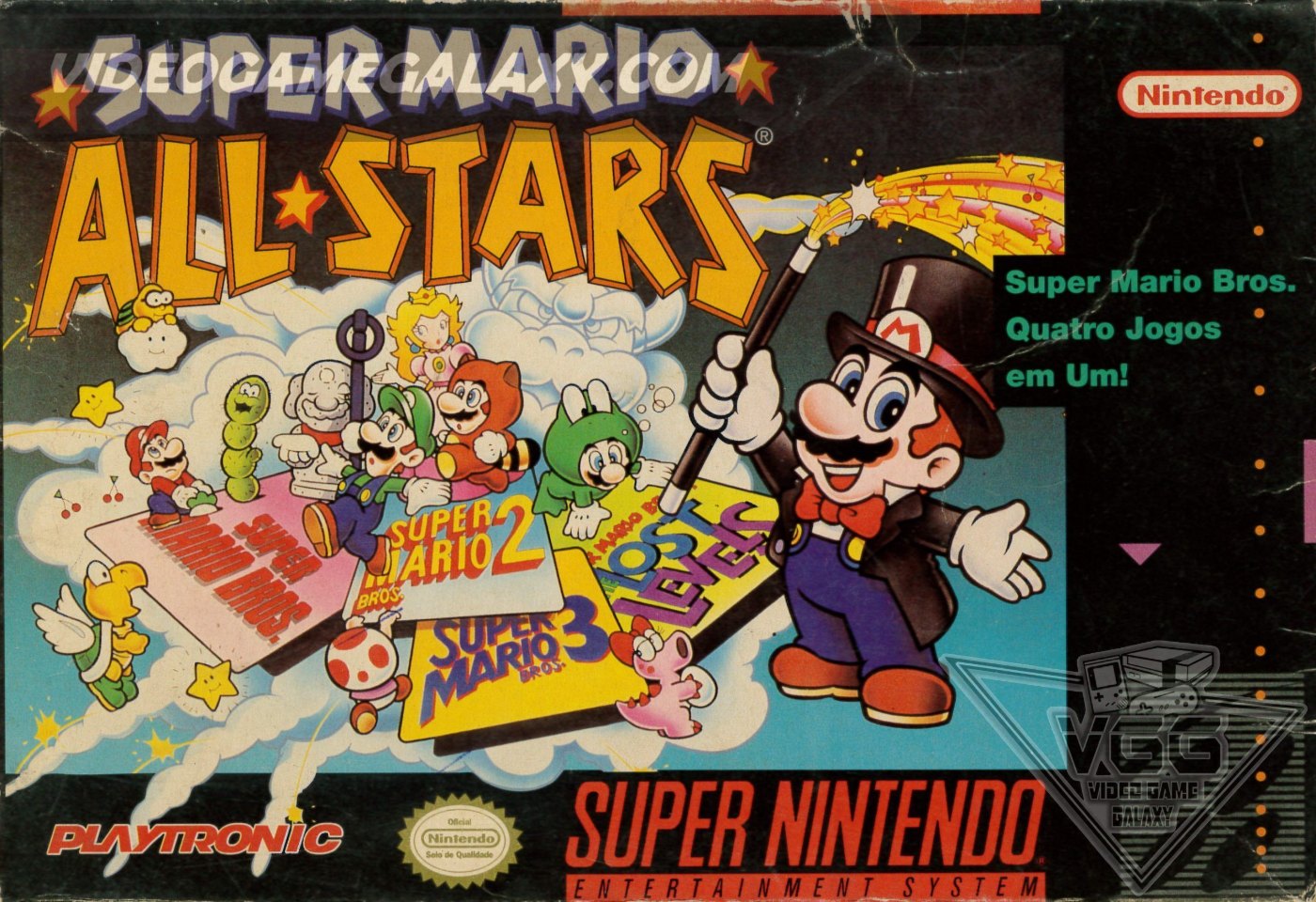
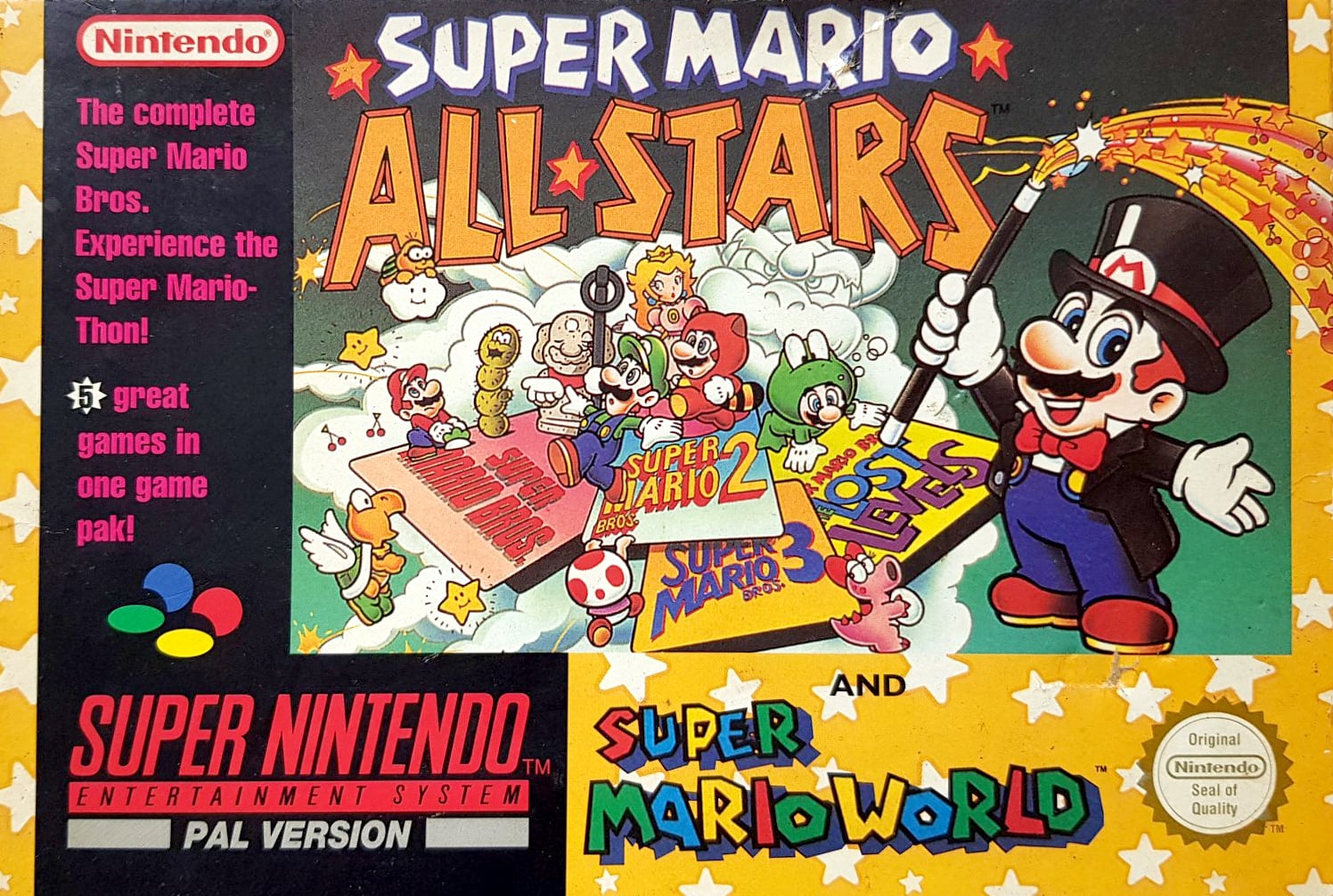
Wii: North AmericaLimited Edition, 12 December 2010.Wii: North American packageThe outer box.Wii: Europe25th Anniversary Edition, 3 December 2010.Wii: JapanSuper Mario Collection Special Pack, 21 October 2010.Wii: Japanese packageWii: Australian package2 December 2010.Wii: South Korea11 December 2010.Wii: Nintendo Selects (North America)11 March 2016, disc only.Super NES: North AmericaAugust 1993.Super NES: North America (back)Super NES: Player’s ChoiceSeptember 1996.Super Famicom: JapanSuper Mario Collection, 14 July 1993.Super Famicom: Japan (back)Super NES: Europe (UK)1993.Super NES: GermanySuper NES: France and the NetherlandsSuper NES: AustralasiaSuper NES: South KoreaSuper NES: BrazilDecember 1993.All-Stars + Super Mario World: Europe1995.Super NES Mario Set (North America)The only way to get the five-game cartridge in the USA.
Screenshots
A walk through the four games as All-Stars redrew them.
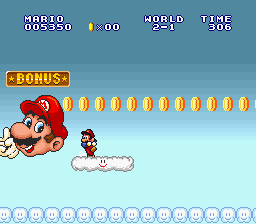
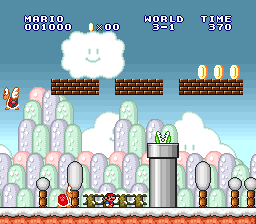
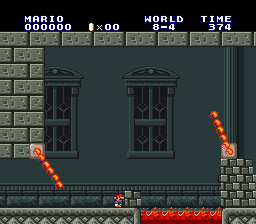
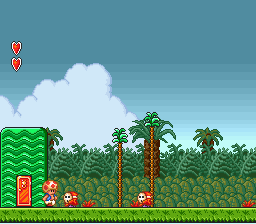
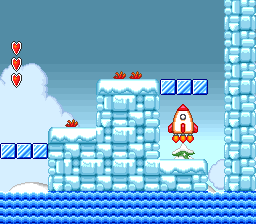
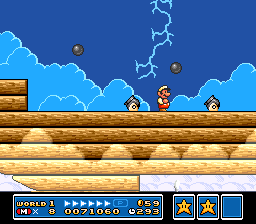
Super Mario Bros.: Coin Heaven above World 2-1.Super Mario Bros.: World 8-1 in hard mode, with the star beside the world number.The Lost Levels: World 3-1.The Lost Levels: World 8-4.Super Mario Bros. 2: Toad in World 1-1.Super Mario Bros. 2: the rocket of World 4-1.Super Mario Bros. 2: the enlarged Bonus Chance.Super Mario Bros. 3: the World 1 airship under a stormy sky.Super Mario Bros. 3: Larry Koopa.Super Mario Bros. 3: a Toad House.Super Mario Bros. 3: the tanks of Dark Land.The title screen as it appears on Wii.
Artwork & Media Gallery
Logos, artwork, adverts and pages from the anniversary booklet. Select any image to view it larger.
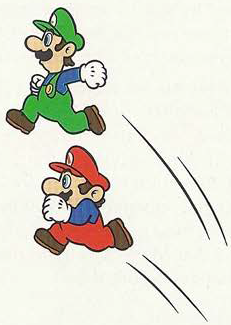
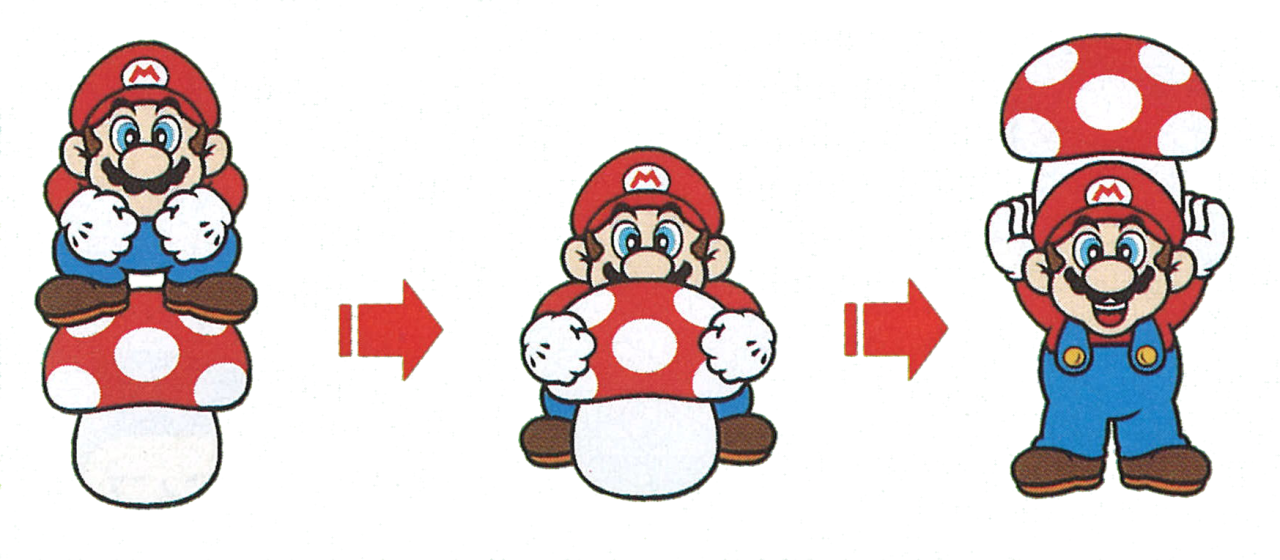
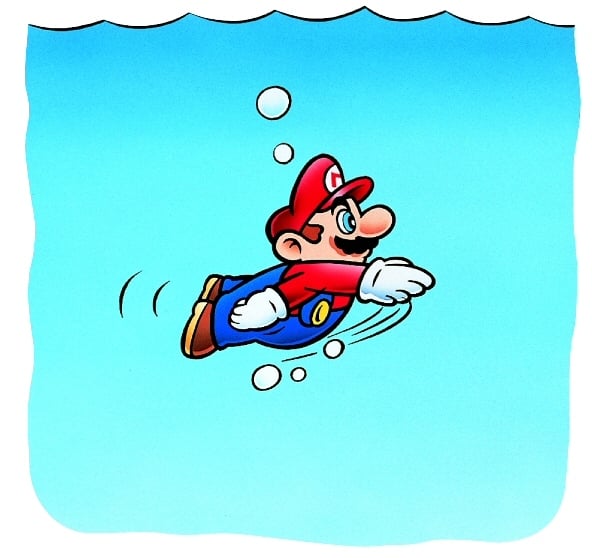
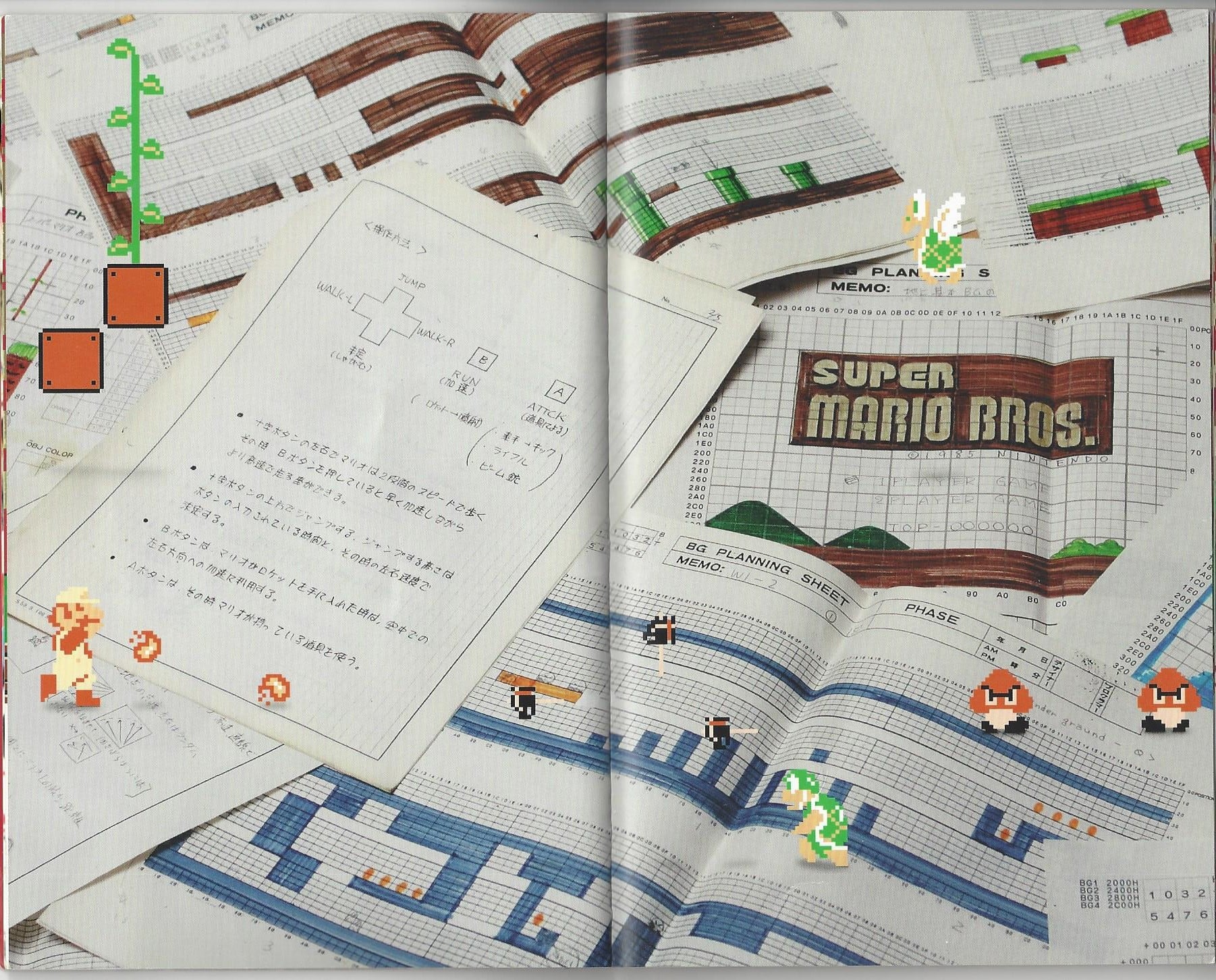
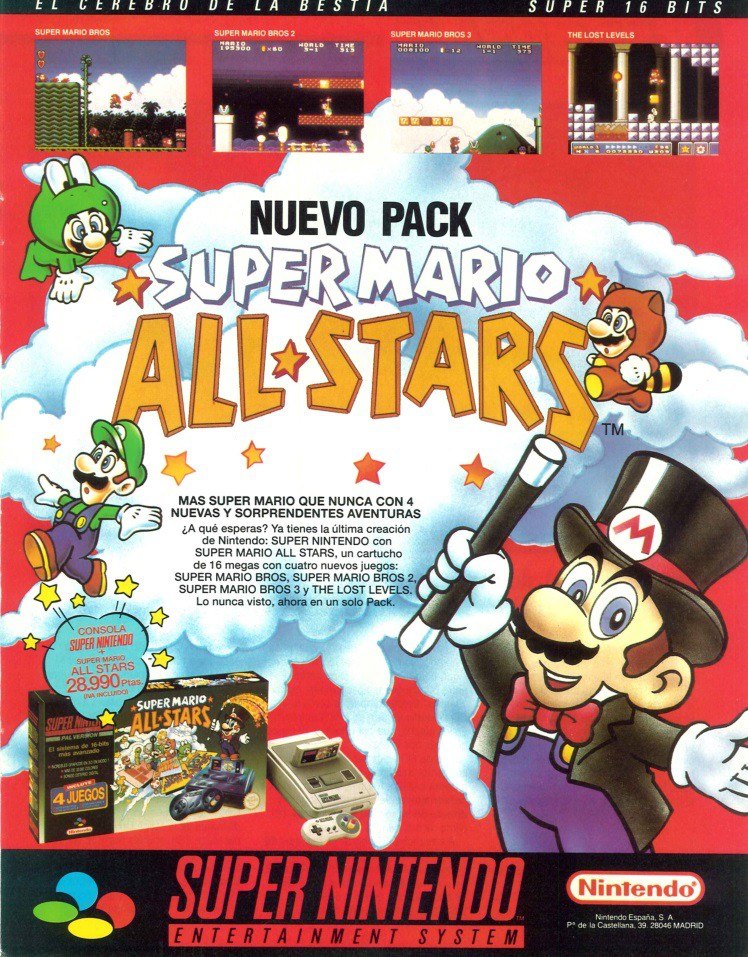
The international Super Mario All-Stars logo.The Super Mario Collection logo.The Super Mario Bros. 25th Anniversary logo.Mario and Luigi, artwork for the collection.Mario plucking a mushroom, from the Super Mario Bros. 2 artwork set.Mario swimming, Super Mario Bros. 3 artwork.Lemmy Koopa.The emblem from the Wii box.Mario hits a “25” block.Bowser and three of the Koopalings in the Japanese commercial.Mario and Luigi arrive at the premiere.The booklet’s timeline of games and consoles.The booklet’s Super Mario Bros. page.Original Super Mario Bros. sketches reproduced in the booklet.A Spanish advert for a Super NES bundle with the game.BS Super Mario Collection on Satellaview, with host Nae Yūki.
Legacy & Re-releases
Few games have been reissued in quite so many forms: twice on cartridge, once by satellite, once on disc and once by subscription.
Releases and re-releases
Super Famicom14 July 1993Released in Japan as Super Mario Collection.
Super NESAugust–December 1993North America in August 1993 (some sources give the 1st, Wikipedia the 11th), Europe and Australia on 16 December 1993, Brazil in December and South Korea the same year. Britain appears to have had it early: Wikipedia’s infobox gives a UK release of 24 September 1993, and it topped the UK chart for that month.
Super Mario All-Stars + Super Mario WorldDecember 1994 / 1995Five games on one cartridge. Bundled with the console in North America as the Super NES Mario Set; sold boxed in Europe in 1995. Not released in Japan.
Player’s ChoiceSeptember 1996Budget reissue of the original four-game cartridge in North America.
Satellaview28 December 1997 – 24 January 1998BS Super Mario Collection, broadcast in Japan in four weekly parts with live audio: Super Mario Bros. Worlds 1–3, Super Mario Bros. 3 Worlds 1–3 and 4–6, and The Lost Levels Worlds 1–3. Two of the four broadcasts are not known to survive.
WiiOctober–December 2010Japan 21 October, Taiwan and Hong Kong 27 November, Australia 2 December, Europe 3 December, South Korea 11 December, North America 12 December. A final North American run shipped on 13 March 2011.
Nintendo Selects11 March 2016North American budget reprint of the Wii disc, without booklet or CD.
Nintendo Switch Online3 September 2020Added to the Super NES library worldwide on the day of the Super Mario Bros. 35th anniversary announcements.
The look that stuck
When Nintendo remade Super Mario Bros. 2 as Super Mario Advance in 2001 and Super Mario Bros. 3 as Super Mario Advance 4 in 2003, it started from the All-Stars graphics and sound, not the NES ones. For years afterwards the 16-bit versions were the default image of those games, and Electronic Gaming Monthly bent its own no-compilations rule in 1997 to rank them individually among the best games ever made.
A template for birthdays
The 2010 disc established how Nintendo marks a Mario anniversary: old games, lightly wrapped, for a limited time. Ten years later the 35th brought Super Mario 3D All-Stars, which Nintendo is reported to have called “Super Mario All-Stars 2” internally, and put the original All-Stars on Switch Online.
Opinion on the remakes themselves has shifted a little. Reviewing the Switch Online release in 2020, Nintendo Life gave the cartridge 7 out of 10, judged Super Mario Bros. 2 the pick of the set and the best way to play that game, and argued that the brick physics and some of the redrawn scenery of Super Mario Bros. 3 make the NES originals the better choice for the rest. In 1993 nobody would have believed it.
Reviews & Sales
Sales figures
The cartridge was one of the Super NES’s great successes. It was the best-selling game in Britain in September 1993, became the console’s pack-in, sold more than a million in North America and was reissued there as a Player’s Choice title in September 1996. The lifetime total is 10.55 million, 2.12 million of them in Japan, which makes it the second best-selling game on the system behind Super Mario World.
The Wii edition did brisk business for a reissue. Nintendo’s results for the year to March 2011 put it at 2.24 million: 920,000 in Japan and 1.32 million overseas.
10.55mSuper NES, worldwide
2.12mof those in Japan
2.24mWii edition, to March 2011
90%GameRankings, Super NES
70Metacritic, Wii
Reception and review scores
A page of Nintendo Power’s 1993 coverage of the game.
Two sets of reviews, seventeen years apart, and two quite different moods. Scores are as listed by Wikipedia; GameRankings averaged 90 per cent for the Super NES game and 72.63 per cent for the Wii edition, which has a Metacritic score of 70.
Official Nintendo MagazineWii · Chris Scullion, 2 Dec 2010
90%
Nintendo PowerSNES · Vol. 52, Sept 1993
16.3/20
EdgeSNES · 1993
8/10
FamitsuSuper Famicom · 8, 10, 8, 6
32/40
EurogamerWii · Simon Parkin
8/10
GamesRadarWii · Brett Elston, 11 Dec 2010
4/5
VideoGamerWii
8/10
Nintendo LifeSNES (Switch Online) · Stuart Gipp, 4 Sept 2020
7/10
IGNWii · Richard George, 10 Dec 2010
7/10
The GuardianWii · Greg Howson, 6 Dec 2010
3/5
G4Wii · 17 Dec 2010
3/5
Nintendo World ReportWii · Pedro Hernandez, 17 Dec 2010
6/10
Nintendo LifeWii · Damien McFerran, 21 Dec 2010
5/10
In 1993 the verdict was close to unanimous. Electronic Gaming Monthly gave it a Platinum Editors’ Choice award, with a ten from Ed Semrad and Martin Alessi’s “Too awesome!”; Computer and Video Games, SNES Force and Nintendo Magazine System all scored it in the nineties and praised the new graphics, the save feature and the sheer amount of game, with Nintendo Magazine System reckoning it could last a player a year. The quibbles were about novelty (it was, after all, four old games), about The Lost Levels being punishingly hard, and in Famitsu about a ¥9,800 price tag. Edge liked the first and third games rather more than the second.
In 2010 the games were as good as ever and the argument was about the box. IGN called it a straight Super NES port, Nintendo Life a low-effort product with pointless extras, and The A.V. Club a failure on nearly every level; several reviewers pointed out that the booklet was thin, that half the CD was sound effects and that the same four games, in their NES forms, could be bought on the Virtual Console for 2,100 Wii Points. On the other side, the Official Nintendo Magazine gave it 90 per cent, Eurogamer’s Simon Parkin admired its value and its physical presentation, and GamesRadar thought Miyamoto’s original design outline alone was worth the price.
Honours
Electronic Gaming Monthly · 1993Platinum Editors’ ChoiceAwarded in issue 50 alongside scores of 9, 10, 9 and 9.
Golden Joystick AwardsGame of the Year (console)As recorded in Wikipedia’s awards table.
Total! · 1995Number one Super NES gameTop of the magazine’s Top 100, described as possibly the best cartridge on any system.
GamesMaster · 1996Third-best Super NES gameIn the magazine’s ranking of the format.
Electronic Gaming Monthly · 1997100 Best Games of All TimeThe list barred compilations but admitted the All-Stars versions of the three NES games individually, with Super Mario Bros. 3 at number two.
Complex · 2018Tenth-best Super NES gameA modern ranking; Famitsu in 2005 called it a role model for remakes.
SLB User Reviews
Super Luigi Bros readers have reviewed Super Mario All-Stars 25th Anniversary Edition over the years. Their write-ups are kept exactly as they were sent in:
Played it? If you’d like to add your own review, please get in touch.
More from the Super Luigi Bros Guide
These picture lists come from the earlier Super Luigi Bros guide to Super Mario All-Stars 25th Anniversary Edition and are kept here in full.
What’s in the box
The 25th Anniversary package contains three distinct items, each adding a different dimension to the celebration:
💿
The Game Disc
Super Mario All-Stars — all four SNES-enhanced games on a single Wii disc. Super Mario Bros., Super Mario Bros.: The Lost Levels, Super Mario Bros. 2 and Super Mario Bros. 3 — each with the visual and audio overhaul that the SNES version introduced in 1993.
📖
Super Mario History 1985–2010 Booklet
A glossy illustrated booklet tracing the Super Mario series from its 1985 NES debut through to 2010’s Super Mario Galaxy 2. Contains information about each major game, the key people involved in making them, and reflections on how the series evolved over 25 years.
🎵
Super Mario History Soundtrack CD
A CD containing music from across the Super Mario series — spanning every major game from Super Mario Bros. (1985) through Super Mario Galaxy 2 (2010). Also includes iconic sound effects such as the coin collection sound and the level clear jingle.
Regional packaging
JapanOctober 21, 2010
The first release worldwide — Japanese packaging with distinctive red and gold design.
EuropeDecember 3, 2010
The European release titled “25th Anniversary Edition” — slightly different box design.
North AmericaDecember 12, 2010
US packaging — “Limited Edition” branding. Last major region to receive the package.
Nintendo Selects (2016)March 11, 2016
A later US reprint under Nintendo Selects — disc only, no booklet or CD.
The four games
All four games are the SNES Super Mario All-Stars versions — not the original NES ROMs. This means updated 16-bit graphics, remastered music, and save game support that the originals never had. Each game is playable from the title screen selector:
Super Mario Bros.1985 • NES original
The one that started it all. Eight worlds, Bowser, Princess Peach, the Mushroom Kingdom. Updated with SNES visuals — the classic is still completely playable and endlessly enjoyable over 25 years later.
The unusual one — a reskin of Doki Doki Panic with four playable characters (Mario, Luigi, Toad, Peach each with different abilities). Vegetables as weapons. Wart as the villain. Genuinely different from any other Mario game.
Widely regarded as one of the greatest games ever made. Eight worlds, the Koopalings, the Tanooki Suit, the Frog Suit, the overworld map. The SNES upgrade makes an already stunning game look and sound even better.
Super Mario Bros.: The Lost Levels1986 • Japan only (Famicom)
Originally released as Super Mario Bros. 2 in Japan, The Lost Levels is brutally hard using the original SMB engine. Wind, poison mushrooms and lethal level design make it the most challenging game in the package — and until All-Stars, it had never been officially released outside Japan.
“If you missed out on them the first time, now’s your chance to discover four of the reasons why Super Mario has been one of gaming’s most loved series’ of all time.” — superluigibros.com original coverage
To provide the best experiences, we use technologies like cookies to store and/or access device information. Consenting to these technologies will allow us to process data such as browsing behavior or unique IDs on this site. Not consenting or withdrawing consent, may adversely affect certain features and functions.
Functional
Always active
The technical storage or access is strictly necessary for the legitimate purpose of enabling the use of a specific service explicitly requested by the subscriber or user, or for the sole purpose of carrying out the transmission of a communication over an electronic communications network.
Preferences
The technical storage or access is necessary for the legitimate purpose of storing preferences that are not requested by the subscriber or user.
Statistics
The technical storage or access that is used exclusively for statistical purposes.The technical storage or access that is used exclusively for anonymous statistical purposes. Without a subpoena, voluntary compliance on the part of your Internet Service Provider, or additional records from a third party, information stored or retrieved for this purpose alone cannot usually be used to identify you.
Marketing
The technical storage or access is required to create user profiles to send advertising, or to track the user on a website or across several websites for similar marketing purposes.

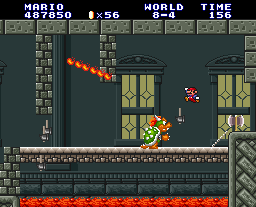
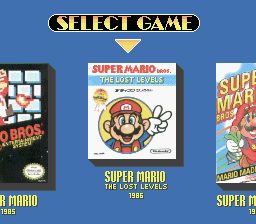 Super Mario Bros.: The Lost LevelsOriginally 1986 (Japan only) · Worlds 1–8, 9 and A–D · Final boss: BowserJapan’s Super Mario Bros. 2, in the West for the first time, with a save after every course to take the edge off.
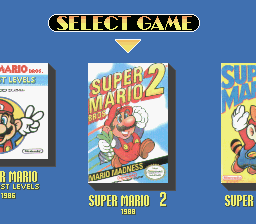 Super Mario Bros. 2Originally 1988 · 7 worlds · Final boss: WartFour playable heroes in the dream land of Subcon, with unlimited continues and a livelier slot machine.
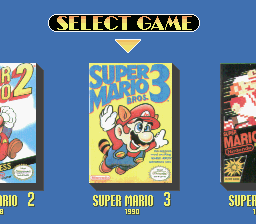 Super Mario Bros. 3Originally 1988 · 8 worlds · Bosses: the Koopalings and BowserThe biggest of the four, finally with save files, redrawn kings and stormy airship skies.
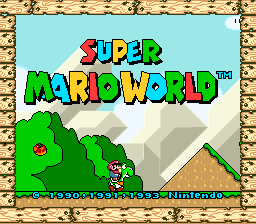 Super Mario World1994 cartridge only · not on the Wii discAdded to Super Mario All-Stars + Super Mario World with a fourth save file and a redrawn, lankier Luigi.
 Super LeafSuper Mario Bros. 3: turns Mario into Raccoon Mario. Brown in the All-Stars inventory.
 Frog SuitSuper Mario Bros. 3: the swimming suit. In All-Stars it flies off when you are hit, leaving Super Mario.
 Tanooki SuitSuper Mario Bros. 3: Raccoon powers plus the statue. Lost the same way as the Frog Suit.
 P-WingSuper Mario Bros. 3: the flying power-up. The 28 of them handed over in the NES ending are gone.
 Magic WhistleSuper Mario Bros. 3: warps to World 9. It no longer works aboard the World 3 boat.
 HammerSuper Mario Bros. 3: a map item, redrawn for the new blue inventory.
 Music BoxSuper Mario Bros. 3: a map item. Its tune changes pitch in All-Stars.
 AnchorSuper Mario Bros. 3: a map item. Silver in the new inventory.
 Jugem’s CloudSuper Mario Bros. 3: a map item, given new artwork.
 VegetableSuper Mario Bros. 2: pluck and throw. A new sound plays as it comes out of the ground.
 Magical PotionSuper Mario Bros. 2: opens a door to Subspace, now with a wavy transition.
 CherrySuper Mario Bros. 2: land one first on the Bonus Chance reels and the screen now flashes with a fanfare.
 POW BlockSuper Mario Bros. 2: clears the screen of enemies. Green in the Battle Game.
 KeySuper Mario Bros. 2: wakes Phanto. It now vanishes once the door is unlocked.
 MushroomSuper Mario Bros. 2: the extra-heart mushroom, with a smaller white spot than on the NES.
 1-Up MushroomGreen with white spots in every game now, matching Super Mario Bros. 3.

 The Japanese TV commercialNintendo · 1993Staged as a film premiere, apparently with an eye on the live-action Super Mario Bros. film then due: Peach, Toad, Bowser and the Koopalings, Birdo, Wart, Mario and Luigi arrive on a red carpet in front of photographers, take their seats, and the curtain rises on the game.
 The North American commercialNintendo of America · 1993Nintendo of America made an advert of its own; surviving stills show Bowser and a laughing Mario.
 Super Mario (Kodansha manga)Comic BomBom summer special · 1993A one-off chapter based on the commercial. Wart, fed up with being the forgotten villain, steals a golden statue of Peach from the red-carpet event; four Marios, one from each game, chase him through the collection, and Wart and the Lost Levels Bowser try and fail to merge their worlds. Reprinted in Super Mario: Donkey Kong 2.
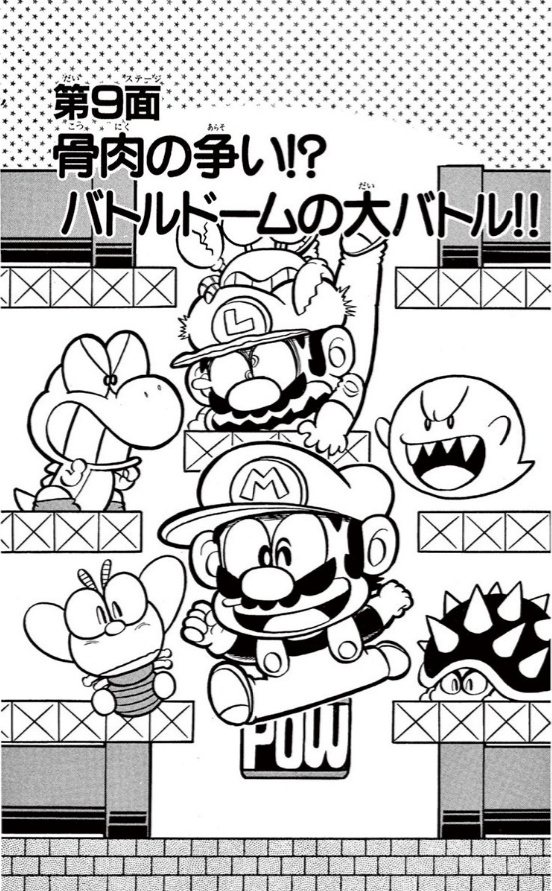 Super Mario-kunManga · volumes 9 and 10Volume 9 has a chapter built around the Battle Game, and volume 10 a two-part bonus stage in which Bowser, Wart and Wario set Mario puzzles for the reader to solve.
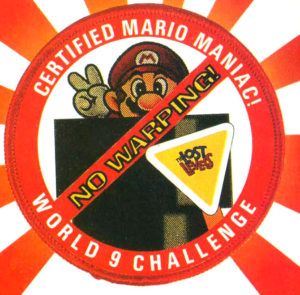 Nintendo Power’s World 9 ChallengeNintendo Power Vol. 52 · September 1993Reach World 9 of The Lost Levels (“Absolutely no warping!”), pause, photograph the screen and post it to Redmond by 31 October 1993, and Nintendo sent back an iron-on patch declaring you a certified Mario maniac. The same issue scored the game 16.3 out of 20.
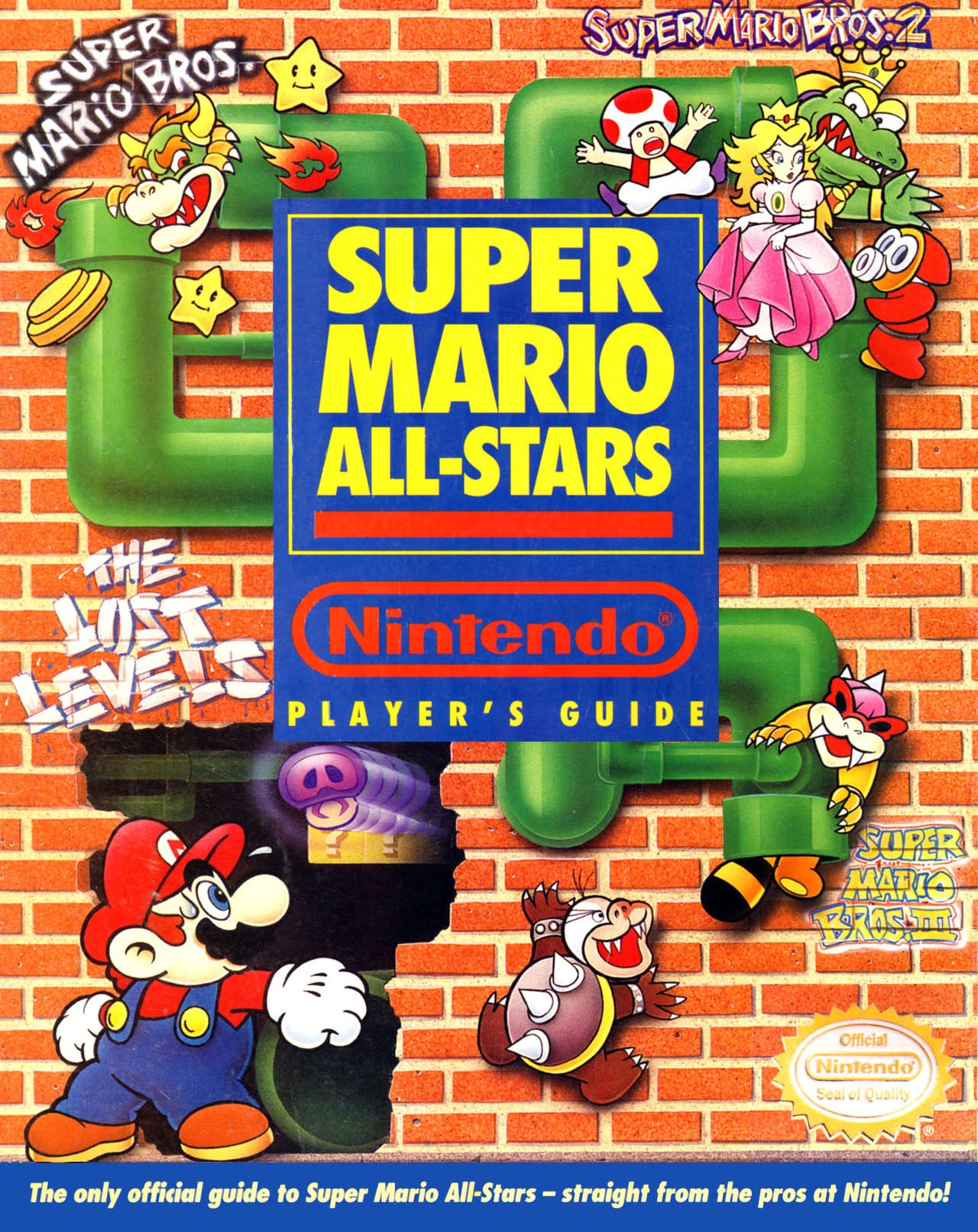 Nintendo Player’s GuideNintendo of America · 1993The official guide to all four games, with maps of every course.
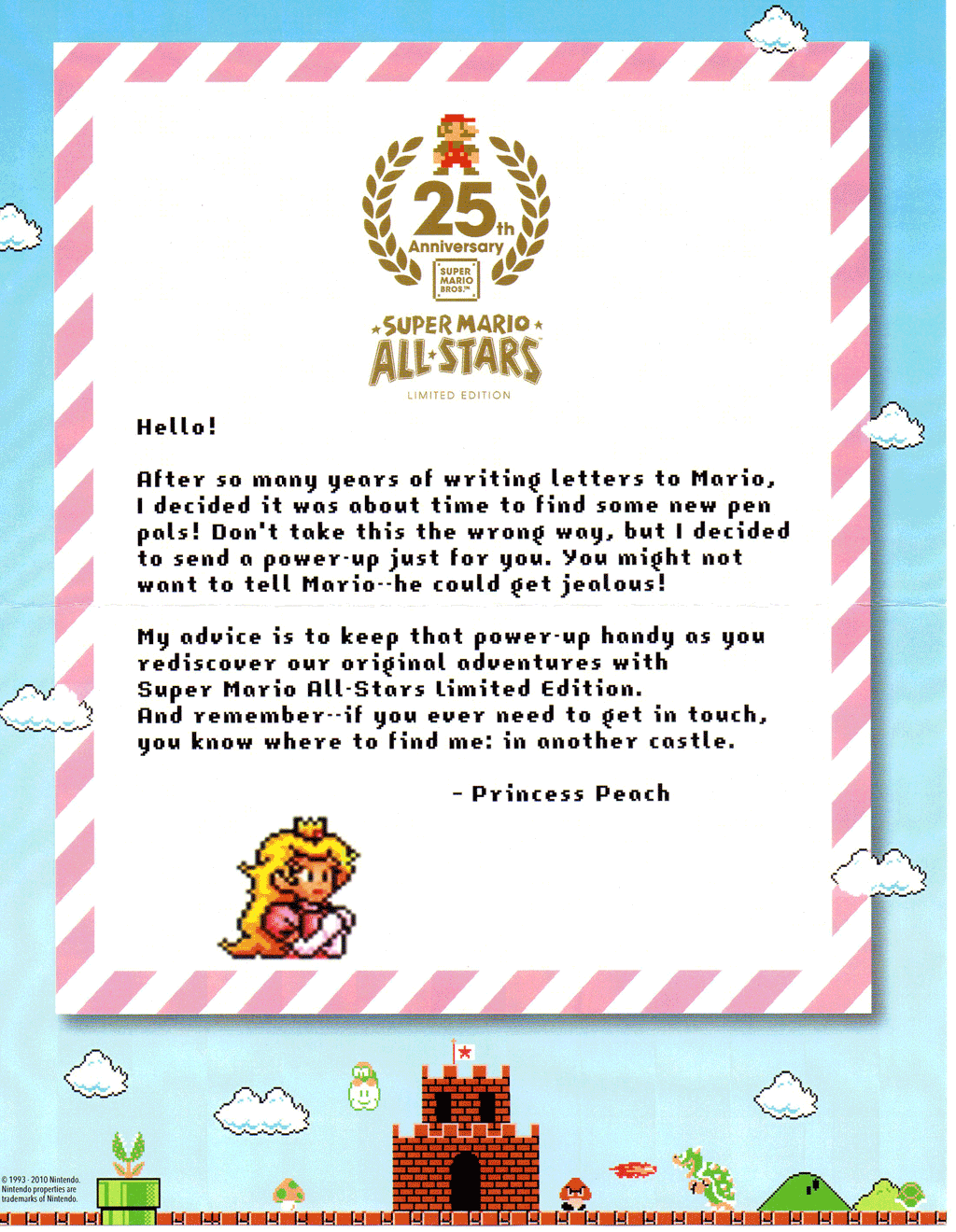 Princess Peach’s press letterNintendo · 2010To launch the Wii edition, journalists received a letter “written” by Princess Peach in the manner of her notes to Mario in Super Mario Bros. 3. A promotional video ran on the Wii’s Nintendo Channel and the anniversary websites, using footage of the Japanese version in every region.
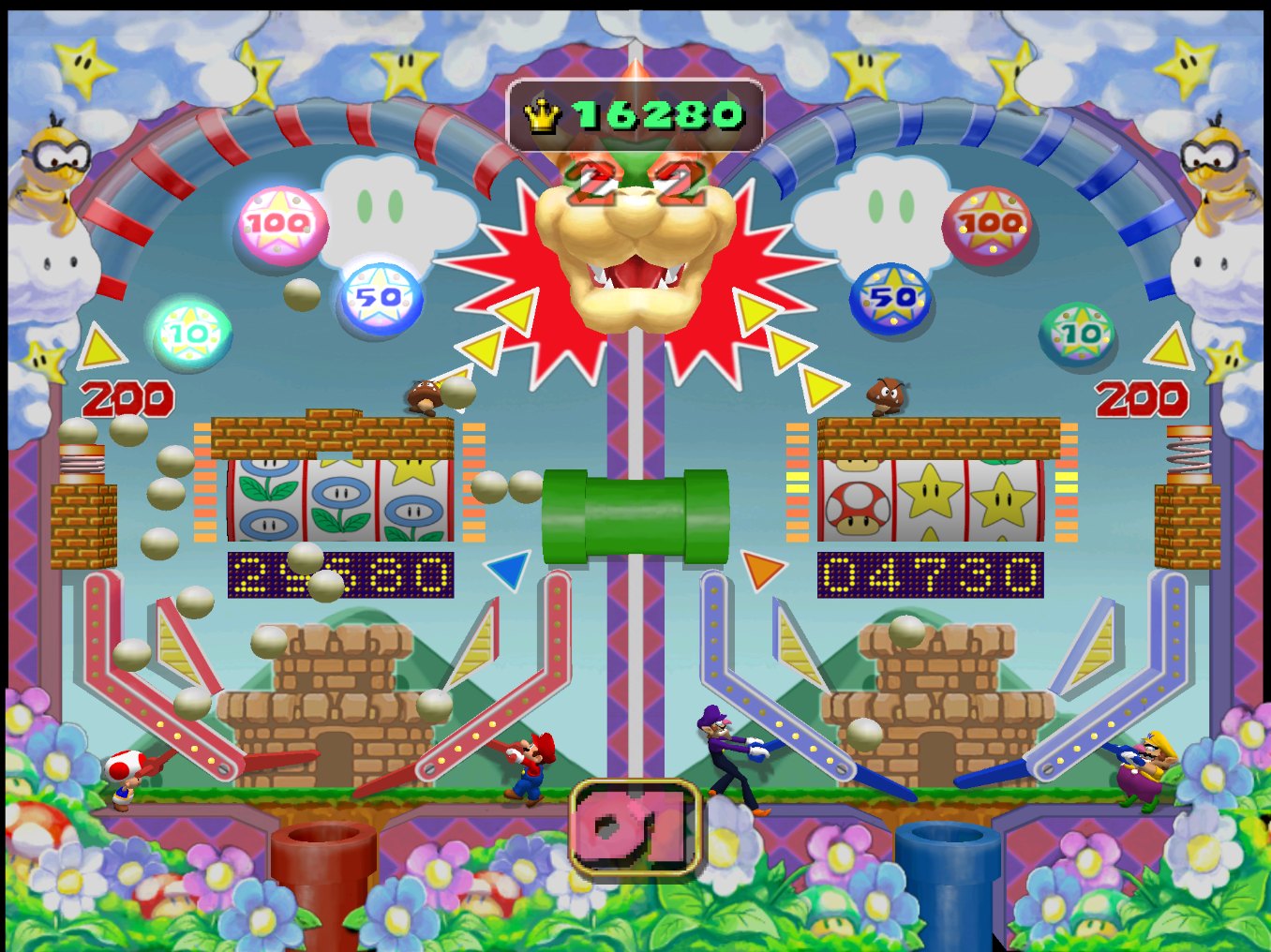 Mario Party 5Nintendo · GameCubeThe Panic Pinball minigame is decorated with All-Stars fortresses, hills and bricks from Super Mario Bros. and The Lost Levels.
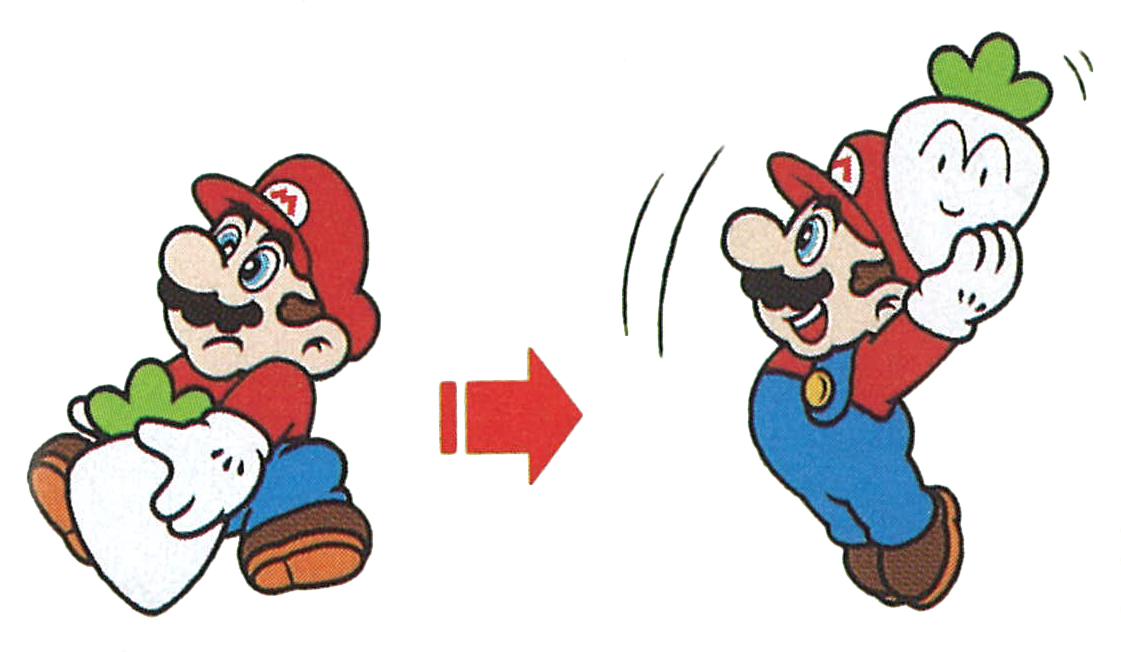 MarioHero of all four games
 LuigiNo longer a recolour
 Princess ToadstoolCaptive and heroine
 ToadRetainer and fourth hero
 BowserKing of the Koopas
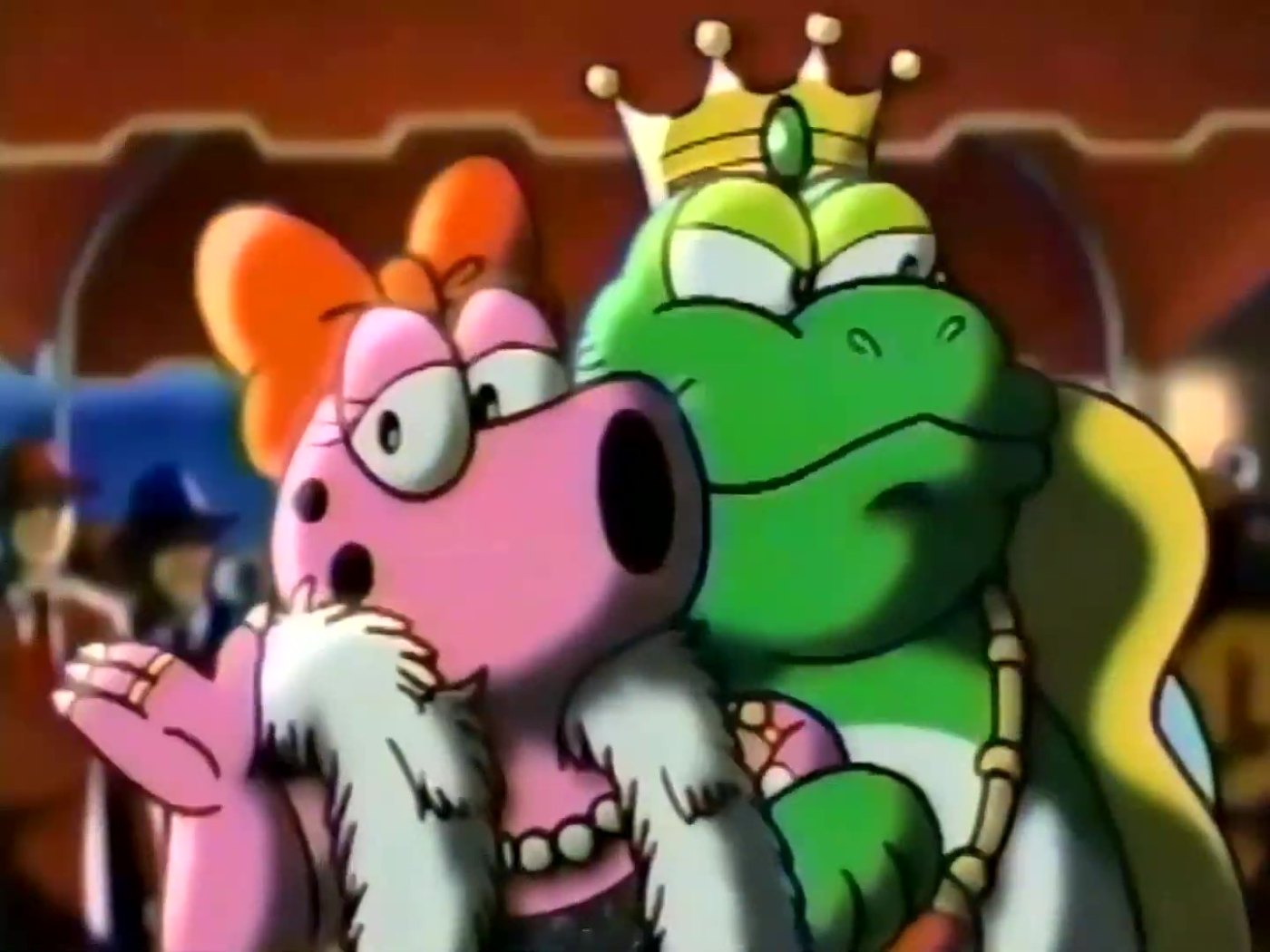 WartTyrant of Subcon
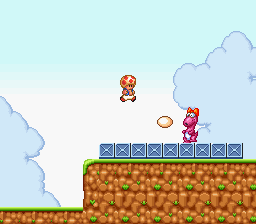 BirdoEgg-spitting gatekeeper
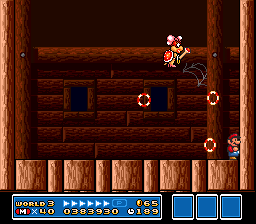 The KoopalingsBowser’s seven
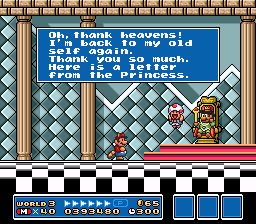 The seven kingsVictims of the wands
 The SubconsDream fairies
 GoombaSuper Mario Bros., The Lost LevelsBlue underground and grey-brown in castles. Replaced by Buzzy Beetles in Worlds A to D.
 Koopa TroopaSuper Mario Bros., The Lost LevelsGreen ones stay green everywhere now; kicked shells spin.
 Hammer BrotherSuper Mario Bros., The Lost LevelsA new sound for the hammers. They charge the player in Worlds A to D.
 BlooberSuper Mario Bros., The Lost LevelsPink instead of white, including the airborne ones.
 Cheep-CheepSuper Mario Bros., The Lost LevelsThe grey ones turned green.
 Buzzy BeetleSuper Mario Bros., The Lost LevelsTakes over from the Goombas in Worlds A to D.
 Bullet BillSuper Mario Bros., The Lost LevelsHis arms are animated.
 ShyguySuper Mario Bros. 2The pink ones are blue in the remake.
 SnifitSuper Mario Bros. 2Pink became blue, and the desert’s green ones grey.
 NinjiSuper Mario Bros. 2Purple instead of black.
 PhantoSuper Mario Bros. 2Now watched over by a giant carving of himself in every key room.
 BeezoSuper Mario Bros. 2Green and grey ones became red; red ones became yellow.
 PanserSuper Mario Bros. 2Pink became blue and grey became green.
 OstroSuper Mario Bros. 2Pink instead of black.
 PorcupoSuper Mario Bros. 2Purple instead of black.
 AutobombSuper Mario Bros. 2Gains a flame sound when a Shyguy is driving.
 AlbatossSuper Mario Bros. 2Also the new form of the Sky Land king in Super Mario Bros. 3.
 CobratSuper Mario Bros. 2Likewise the Grass Land king’s new shape.
 PokeySuper Mario Bros. 2Redrawn with the rest of the Subcon cast.
 Angry SunSuper Mario Bros. 3Redrawn for 16 bits.
 Boss BassSuper Mario Bros. 3A new diving sprite, and the sea he swims in is transparent.
 “Boo” DiddlySuper Mario Bros. 3Boo Buddies and Roto-Discs now leave motion trails.
 Boomerang BrotherSuper Mario Bros. 3All of them are green, with a new map icon.
 Bob-ombSuper Mario Bros. 3Blue in the remake.
 Chain ChompSuper Mario Bros. 3Redrawn for 16 bits.
 Dry BonesSuper Mario Bros. 3Collapses to a Super Mario World sound effect.