NES · Game Boy · Super NES1992PuzzleNintendo R&D1 · Bullet-Proof SoftwarePuzzles by Tetris creator Alexey PajitnovBegan as the arcade game HermeticaGameCube remake in JapanHidden rounds 11–99
Yoshi’s Cookie
Mario is minding a cookie factory, and the cookies keep on coming. In Yoshi’s Cookie cookies pour onto a grid from the top and the right, and you slide whole rows and columns around, wrapping them from one edge to the other, until a line is all one shape and disappears. The Yoshi Cookie is the wild card. Let any line grow past seven and it is all over. It began life as Hermetica, an alchemy-themed arcade game by Home Data that flopped in location tests and was sold to Bullet-Proof Software; Nintendo turned it into a Mario game for the Famicom/NES and Game Boy (Japan, 21 November 1992; North America, April 1993), produced by Gunpei Yokoi. Bullet-Proof made its own Super NES version in 1993, adding computer opponents and a Puzzle mode of 100 brain-teasers by Alexey Pajitnov, the creator of Tetris. Japan later got a promotional oven edition and a GameCube remake in Nintendo Puzzle Collection (2003).
Developers:Nintendo R&D1 (Famicom/NES, Game Boy; Wikipedia credits TOSE); Bullet-Proof Software (Super Famicom/Super NES)
Publishers:Nintendo (NES, Game Boy); Bullet-Proof Software (Super NES)
Platforms:Famicom / NES; Game Boy; Super Famicom / Super NES; GameCube (remake, Japan)
Genre:Puzzle
Japan:21 November 1992 (Famicom and Game Boy); 9 July 1993 (Super Famicom)
N. America:April 1993 (NES and Game Boy); June 1993 (Super NES)
Europe:1993 (NES, Game Boy and Super NES); Sweden 28 April 1994 (NES)
Players:1–2 (up to 4 in the GameCube remake)
Producer:Gunpei Yokoi (NES and Game Boy)
Puzzle design:Alexey Pajitnov (Super NES Puzzle mode)
Original concept:Hermetica (later Archimedes), an unreleased Home Data arcade game
Modes:Action and VS (all versions); Puzzle (Super NES only); Story (GameCube remake)
Action rounds:10 rounds of 10 stages, plus hidden rounds 11–99 on NES and Game Boy
Japanese title:Yosshī no Cookie (ヨッシーのクッキー)
Other editions:Kuruppon Oven de Cookie (Super Famicom, 1994, 500 copies); Nintendo Puzzle Collection (GameCube, 7 February 2003)
Re-releases:Wii Virtual Console, NES version (April–November 2008; withdrawn in 2013)
Advertisement
Overview
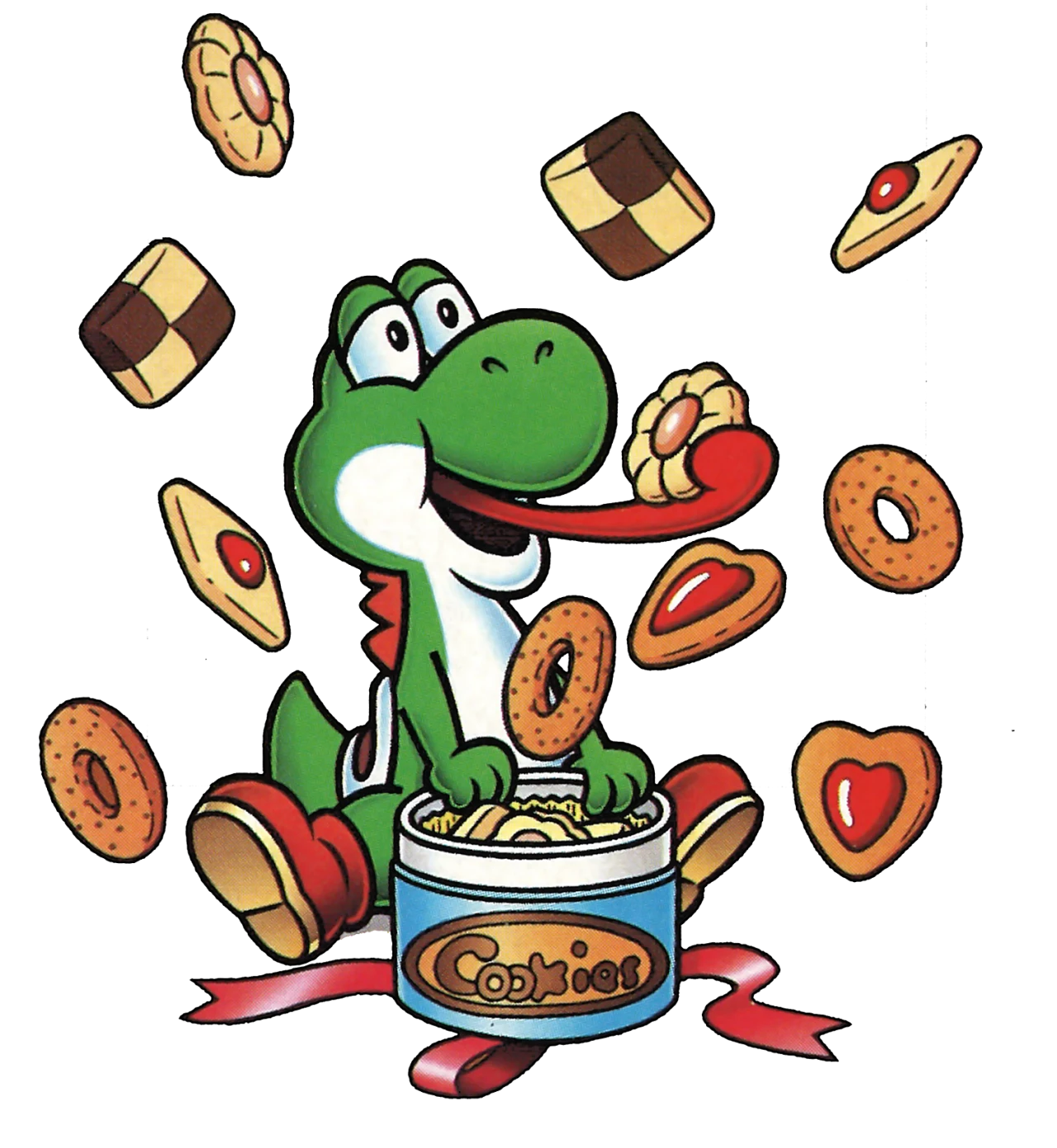
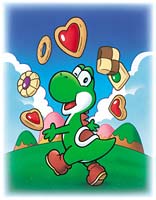
Yoshi with a selection of cookies.
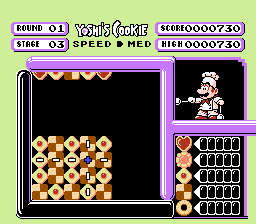
Yoshi’s Cookie is a sliding puzzle rather than a stacking one: it gives you a tray. Cookies of five shapes, hearts, flowers, diamonds, chequerboards and rings, sit in a grid, and you pick one and push its whole row or column along, the end cookie wrapping round to the other side. Make a row or column of one shape and it clears. More cookies keep arriving from the top and the right, faster the longer you take, and the stage ends when the grid is empty.
The joker in the pack is the Yoshi Cookie, which counts as any shape. In Action mode one is baked for you every time you clear fifteen of a single kind. In VS mode it becomes a weapon, firing off random effects that blind, scramble or even take control of your opponent’s board.
Behind the cookies lies an unusual history. The idea came from Hermetica, an arcade game about alchemy made by the small Japanese company Home Data, which tested so badly that Home Data sold the rights to Bullet-Proof Software. Nintendo turned it into a Mario game for the Famicom/NES and Game Boy under Gunpei Yokoi, while Bullet-Proof kept the Super NES rights and made a richer version of its own, with a Puzzle mode designed by Alexey Pajitnov.
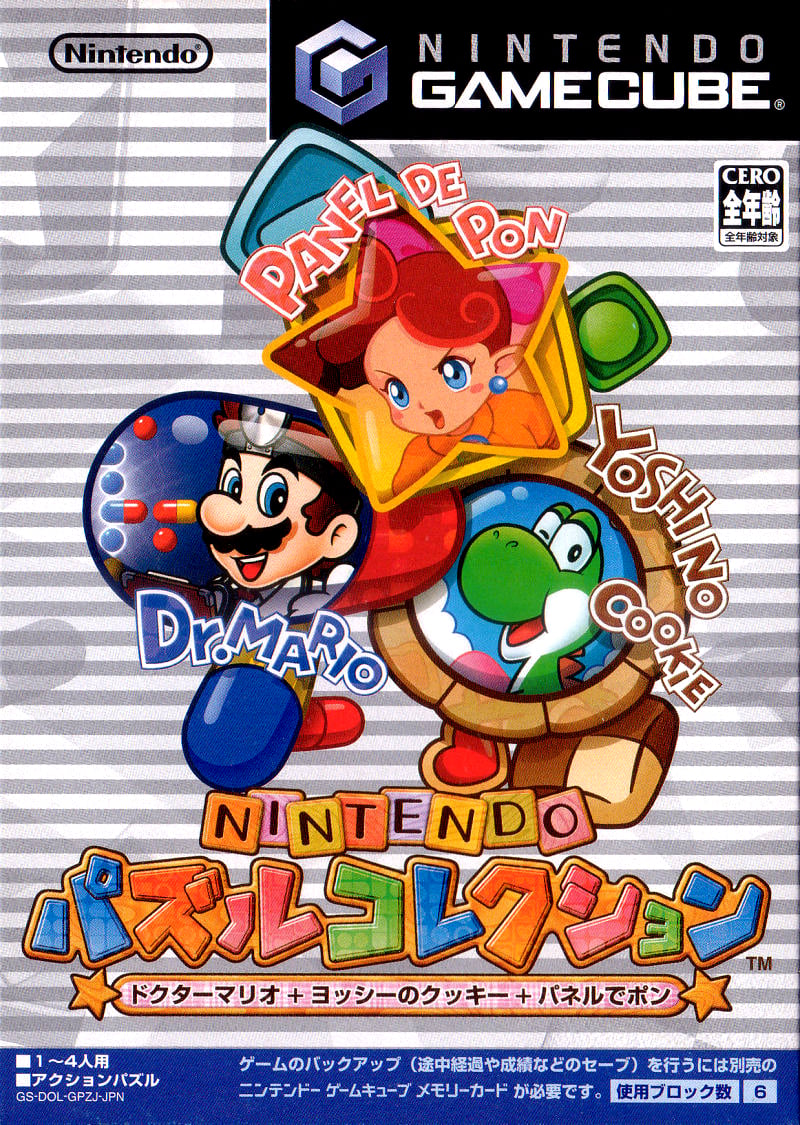
So there are really three games here, plus a fourth: a 2003 GameCube remake in the Japan-only Nintendo Puzzle Collection, which gave Bowser a cookie-stealing story mode and let four people play at once.
Mario and Yoshi are filling in at the cookie factory, and they need your help! As freshly baked cookies roll out of the ovens, you must sort and stack them before they pile too high.In this fast-paced puzzle classic, line up rows of matching cookies horizontally or vertically to make them vanish. Clear the screen and you’ll move on to a new level of cookie chaos.Play for a high score or go head-to-head against a friend in the frantic two-player mode. And if you lose, don’t worry; that’s the way the cookie crumbles!
— Official description (Nintendo UK, 2008)
Why Yoshi’s Cookie matters to Mario fans
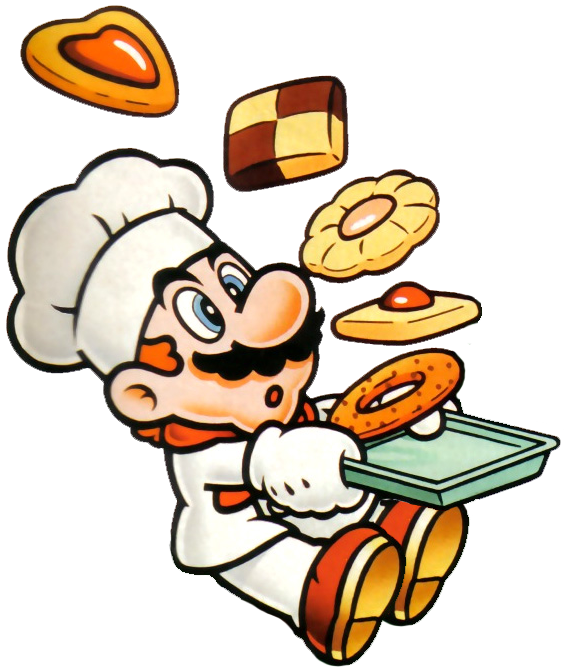
The Super NES version gave Yoshi the bigger head, longer arms and shorter neck that Super Mario World 2: Yoshi’s Island and later games kept, and by most accounts it was the first game in which Yoshi’s voice simply says his name, something Yoshi’s Story later made famous. Its chef’s whites for Mario came back as an outfit in Super Mario Odyssey, its cookies turn up in Mario Kart: Double Dash!! and Yoshi’s Woolly World, and Bowser joins the party in the ending of the Super NES version instead of spoiling it.
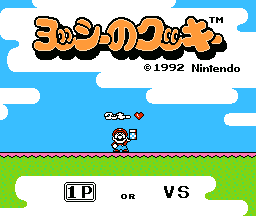
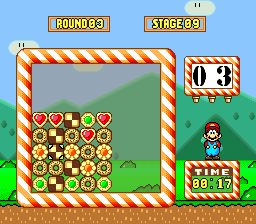
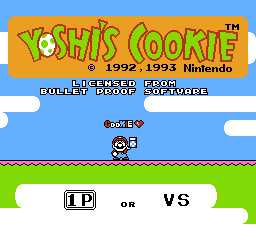
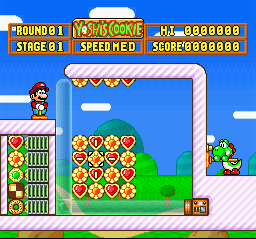
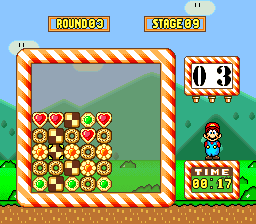
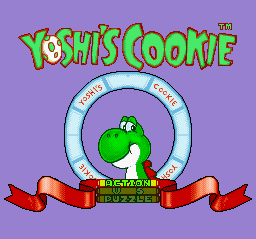
The NES title screen.Action mode on the NES.Action mode on the Super NES.One of Pajitnov’s puzzles on the Super NES.
Quick Answers
The questions people ask most about Yoshi’s Cookie, answered briefly here and in depth below.
When did Yoshi’s Cookie come out?
In Japan on 21 November 1992 for the Famicom and Game Boy, and in North America in April 1993. The Super NES version followed in North America in June 1993 and in Japan on 9 July 1993. More →
Who made it?
Nintendo R&D1 made the NES and Game Boy versions, with Gunpei Yokoi producing (Wikipedia credits TOSE as developer). Bullet-Proof Software developed and published the Super NES version. More →
Where did the idea come from?
From Hermetica, an alchemy-themed arcade game by Home Data that tested badly. Home Data sold the rights to Bullet-Proof Software, which took the game to Nintendo. More →
Did Alexey Pajitnov design it?
He designed the puzzles: the 100 stages of the Super NES Puzzle mode. The core game came from Hermetica. More →
How do you clear cookies?
Slide a row or column until a whole line is the same shape. Yoshi Cookies count as any shape. If any line grows longer than seven cookies, the game is over. More →
What are the differences between the versions?
All have Action and VS. The NES VS mode is two-player only with no character choice; Game Boy and Super NES add a computer opponent and four characters; only the Super NES has Puzzle mode. More →
How do you reach the hidden rounds?
On NES and Game Boy, set the music to Off, the speed to Hi and the round to 10, then hold Up and Select to go on to round 11. Rounds 11 to 99 use Mario enemies instead of cookies. More →
What is Nintendo Puzzle Collection?
A Japan-only GameCube compilation from 7 February 2003 with a remade Yoshi no Cookie, Dr. Mario and Panel de Pon. Its version adds a story mode and four-player VS. More →
Can I play it today?
Not officially. The NES version was on the Wii Virtual Console from 2008 until it was withdrawn in 2013, a Wii U release never happened, and it is not in the Switch Online NES library. More →
Modes & Levels
Mario the cookie chef.
There is not much plot. Nintendo’s description has Mario and Yoshi filling in at a cookie factory, and the cookies are piling up. What the game does have is a running joke: after every round of Action mode, Mario chases a runaway Yoshi Cookie that rolls about the screen with a mind of its own.
Here is every mode across the three original versions, plus the two Japanese editions.
Action mode and the runaway cookie
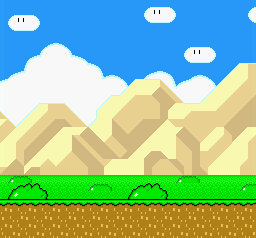
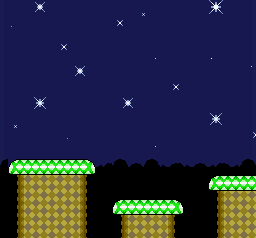
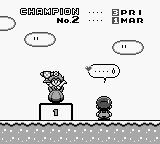
Action mode has ten rounds of ten stages, chosen along with the speed and music before you start. Clear a round and a cutscene plays. Mario catches the cookie and poses; grabs it and gets carried away; is chased off by a much bigger cookie, apparently its parent; is flattened when it bounces back off a wall; and watches Yoshi gobble it up. Later he outruns it downhill, squashes it, trips over it without noticing, and sees it roll off a cliff and float back up as an angel. In the last scene Mario and Yoshi corner it together.
On the NES and Game Boy the title screen has its own gag, in which Mario struggles with a cookie jar that Yoshi swallows whole and Mario gets back empty. The Super NES version adds a little more animation and reveals that the runaway is a piece of a fallen Yoshi Cookie shop sign; at the end of round 10, Peach and Bowser join the celebration during the credits.
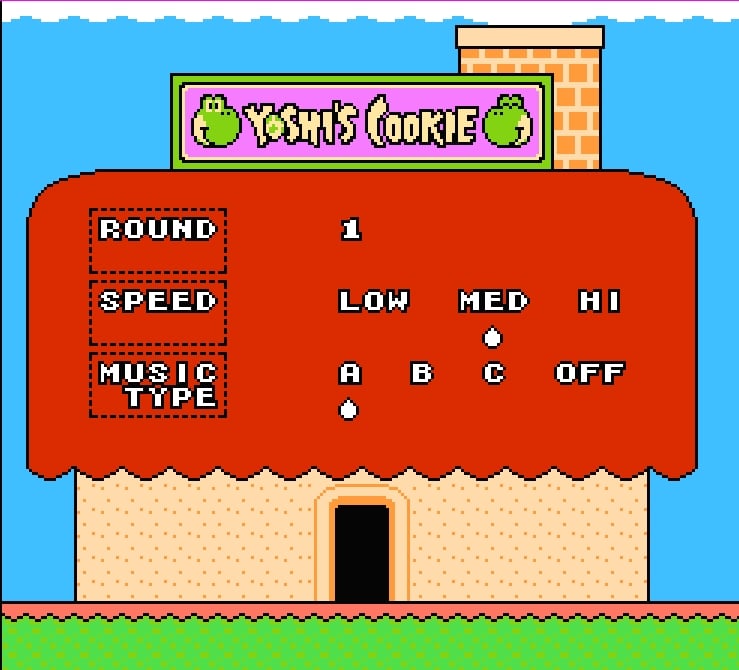
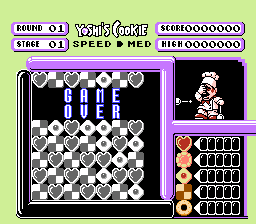
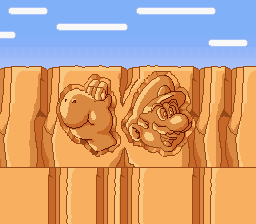
The selection screen: round, speed and music.Game Over in Action mode on the NES.The Super NES ending backdrop.
The hidden rounds
The NES and Game Boy versions hide 89 more rounds behind a code (see Cheats). In rounds 11 to 99 the cookies give way to Mario pieces: Goombas, Boos, Bloobers, Jumpin’ Piranha Plants and Super Mushrooms, with Yoshi heads as the wild card. Green shells also appear, and only a Yoshi piece can get rid of them.
The green shell of the hidden rounds.A Goomba piece.
VS mode
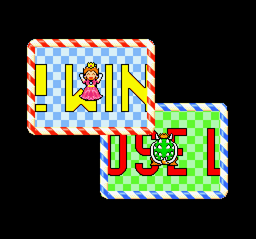
The head-to-head game exists in every version. On the NES it is for two people only. The Game Boy and Super NES let you take on the computer and choose a character, each with a different temperament: Mario is balanced; Yoshi shrugs off attacks, which last half as long against him; Princess Peach suffers longer from them; and Bowser hits harder but his timer runs down faster.
On the Super NES, beating the four computer characters in a row unlocks four more: palette-swapped versions with their own attributes, namely a green Mario, a red Yoshi, a light-blue Peach and a blue Bowser.
Mario in Super NES VS.Princess Peach in Super NES VS.Yoshi in Super NES VS.Koopa, as the Super NES version calls Bowser.
Puzzle mode (Super NES)
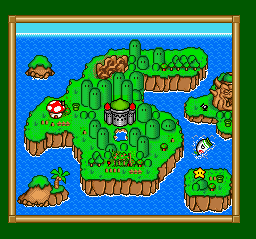
Only the Super NES version has it, and it is the reason many players prefer that cartridge. Each of its 100 puzzles, arranged as ten rounds of ten on a world map styled after Super Mario World’s, sets out a fixed grid that must be cleared in a limited number of moves, starting simple and ending fiendish. A password for each puzzle lets you carry on later. Nintendo Power credited the puzzles to Alexey Pajitnov.
Finish them all and Mario appears in a cape and Yoshi takes to the air.
A Puzzle mode stage.The Puzzle mode world map.Mario after completing Puzzle mode.
Story mode (Nintendo Puzzle Collection)
The 2003 GameCube remake gives the game an actual plot. Mario and Yoshi bake cookies for Princess Peach’s birthday, fall asleep, and wake to find that Bowser has pinched the lot and left a note. Chasing him means beating a run of VS opponents drawn mostly from Super Mario World, five per difficulty: Galoomba, Cheep Cheep, Koopa Paratroopa, Boo and Spiny on Easy; Koopa Troopa, Blooper, Bullet Bill, Eerie and Piranha Plant on Normal; Buzzy Beetle, Rip Van Fish, Lakitu, Fishin’ Boo and Hammer Bro on Hard. At Bowser’s Castle come Thwomp and Kamek, then a best-of-five against Bowser himself. The cookies reach Peach as day turns to night.
The Nintendo Puzzle Collection box.Yoshi artwork for the collection.
Kuruppon Oven de Cookie
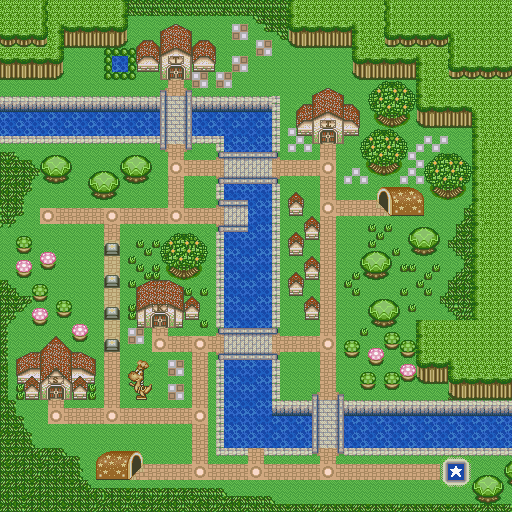
The rarest version of all was a promotion. In 1994 National, then a Panasonic brand, produced a Super Famicom edition, published by Bullet-Proof Software, to advertise its new Kuruppon oven, and only 500 copies were made. Alongside an unchanged copy of the game it adds a Cooking mode in which Yoshi wanders a little map visiting buildings: a classroom that explains recipes for cut-out, piped and icebox cookies, a house where you weigh ingredients and pick the right steps, and two timed hunts through kitchen cupboards for ingredients and utensils.
The Kuruppon Oven de Cookie box.The Cooking mode map.The Cookie Kyōshitsu recipe lessons.
Every round and mode
The ten Action rounds (Super NES backgrounds, NES/Game Boy cutscenes), then the other modes.
Round 1Action · 10 stagesMario catches the runaway cookie and strikes a pose.
Round 2Action · 10 stagesHe grabs it and is carried off rolling with it.
Round 3Action · 10 stagesA much larger cookie chases Mario away.
Round 4Action · 10 stagesThe cookie rebounds off a wall and bowls Mario over. The Super NES backdrop is modelled on Chocolate Island 4.
Round 5Action · 10 stagesYoshi eats the cookie, to Mario’s horror.
Round 6Action · 10 stagesMario chases it downhill and overtakes it.
Round 7Action · 10 stagesIt rolls back off a wall and Mario jumps on it.
Round 8Action · 10 stagesMario trips over the cookie without seeing it and lands on his back.
Round 9Action · 10 stagesThe cookie rolls off a cliff and rises as an angel.
Round 10Action · 10 stages · endingMario and Yoshi catch it together; on Super NES, Peach and Bowser join the celebration.
Rounds 11–99NES and Game Boy · hiddenMario pieces instead of cookies, plus shells that only a Yoshi piece can clear.
VSAll versions5×5 grids, first to 25 points, Yoshi Cookie effects; best of five rounds.
PuzzleSuper NES only · 100 puzzlesTen rounds of ten move-limited puzzles by Alexey Pajitnov, with passwords.
StoryGameCube remake · JapanChase Bowser and the stolen birthday cookies through 15 opponents, Thwomp and Kamek.
CookingKuruppon Oven de Cookie · JapanRecipe lessons and kitchen errands for a 500-copy oven promotion.
Advertisement
Gameplay & Controls
Each Action stage starts with a grid of cookies. Press A on a cookie and then a direction, and the entire row or column slides one space that way, with the cookie pushed off one edge reappearing at the other. Whenever a full row or column (at least two cookies long) is one shape, it vanishes.
Fresh cookies keep sliding in from the top and the right, and the longer you dawdle on a stage the faster they come. Clear everything to win the stage. If any row or column ends up holding more than seven cookies, it is game over.
The Yoshi Cookie
Alongside the five plain cookies there is a sixth, shaped like Yoshi’s head, that matches anything. In Action mode a counter tracks every type you clear; reach fifteen of one kind and a Yoshi Cookie is added to the grid and that counter starts again from zero. Saving them for awkward lines is the main tactic of the game.
The Yoshi Cookie (NES).A Yoshi Cookie in official artwork.
VS rules
In VS each player has a 5×5 grid and scores a point for every line cleared; the first to 25 wins the round (a handicap can start a player with extra points), and running out the clock loses it. Three rounds win the match.
Lining up Yoshi Cookies in VS triggers a random effect. Blind hides the middle nine squares of the target’s grid; Panic shuffles it and freezes its owner while it does; Slave hands control of the victim’s board to the attacker; and the rest add or subtract three points, or take seven away.
VS mode on the Game Boy.The Super NES VS results screen.
NES, Game Boy, Super NES
The NES and Game Boy games are close cousins: the same rounds, the same cutscenes and the same hidden-round code. The NES VS mode is strictly two players with no choice of character; the Game Boy adds a computer opponent and a choice of Mario, Yoshi, Princess Peach or Bowser. In the NES version Mario wears chef’s whites during play but his usual overalls in the cutscenes.
Bullet-Proof’s Super NES version keeps the rules but rebuilds the presentation, with backgrounds modelled on Super Mario World and a new-look Yoshi, and adds the Puzzle mode. Its VS mode has the four characters, a computer opponent and four unlockable rivals. Critics have generally rated it the best of the three.
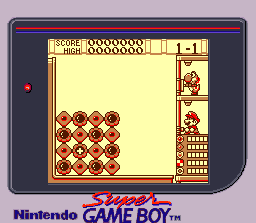
The Game Boy version on a Super Game Boy.The Super NES title screen, a send-up of the MGM lion.
Cookies and other pieces
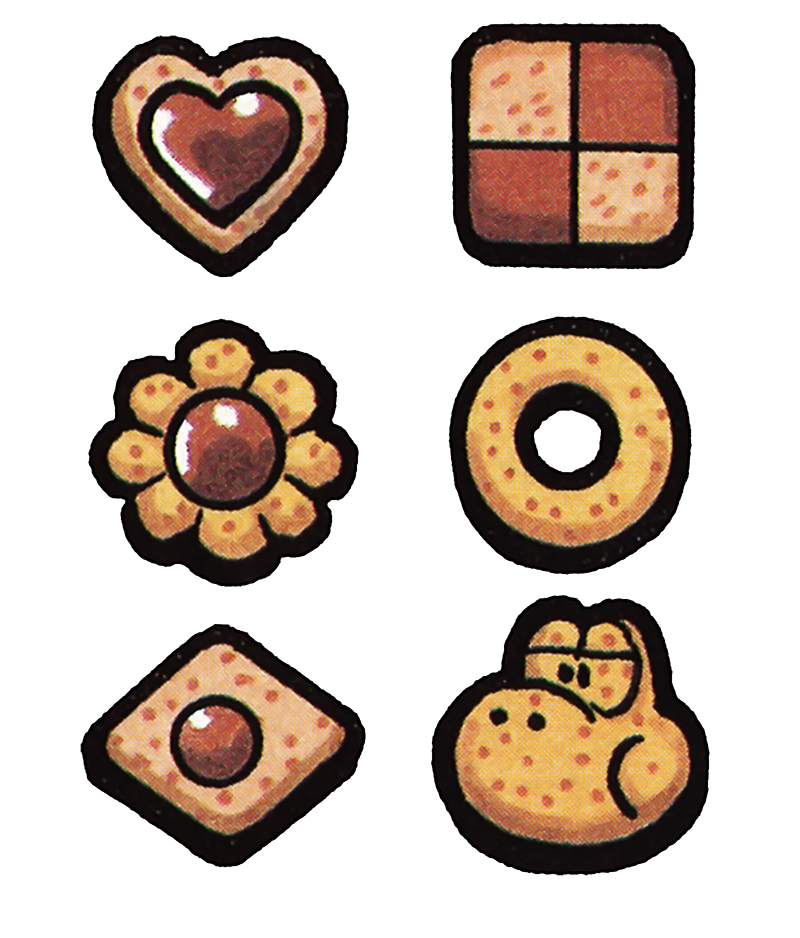
The six cookies (NES sprites), then the Mario pieces that replace them in the hidden rounds 11–99.
Heart cookieOne of the five plain shapes.
Flower cookieA plain shape.
Diamond cookieA plain shape; an octagon on the Super NES.
Chequered cookieA plain shape.
Ring cookieA plain shape.
Yoshi CookieWild card: matches anything. Earned by clearing 15 of one kind.
GoombaHidden rounds only.
BooHidden rounds only.
BlooberHidden rounds only.
Jumpin’ Piranha PlantHidden rounds only.
Super MushroomHidden rounds only.
Green ShellHidden rounds only. Shells can only be cleared with a Yoshi Cookie.
Yoshi headThe hidden-round piece shaped like Yoshi’s head.
Cartoons, Comics & Other Media
The cookies have become a recurring prop in Nintendo games, and Mario’s baker’s outfit has come back more than once.
Game & Watch Gallery 3 and 4Game & Watch Gallery seriesIn the modern version of Egg, Yoshi eats cookies with Yoshi’s Cookie designs; in the fourth collection, the modern Mario’s Cement Factory has Mario baking Yoshi Cookies instead of mixing cement.
Mario Kart: Double Dash!!GameCubeThe Cookie Land battle course reuses the game’s cookies.
Tetris DSNintendo DSOne of its stages is based on Yoshi’s Cookie.
Super Mario Odyssey and Mario Kart TourNintendo Switch · mobileMario can wear a chef outfit identical to the one from the NES version; Mario Kart Tour brought it back as Mario (Chef) and added a Yoshi’s Cookies glider.
Yoshi’s Woolly World and Yoshi’s Crafted WorldWii U · Nintendo SwitchWoolly World has a stage called Yoshi and Cookies with Yoshi Cookies as level elements; Crafted World’s cookie boxes show the cookies too.
Paper MarioThe Thousand-Year Door · Super Paper MarioA cookie in the Zess Cookie and Sweet Cookie Snack icons resembles the chequered cookie.
Pikmin 4 and Princess Peach: Showtime!Nintendo SwitchSeveral Pikmin 4 treasures are based on the cookies, and Patissiere Peach holds some in her official artwork.
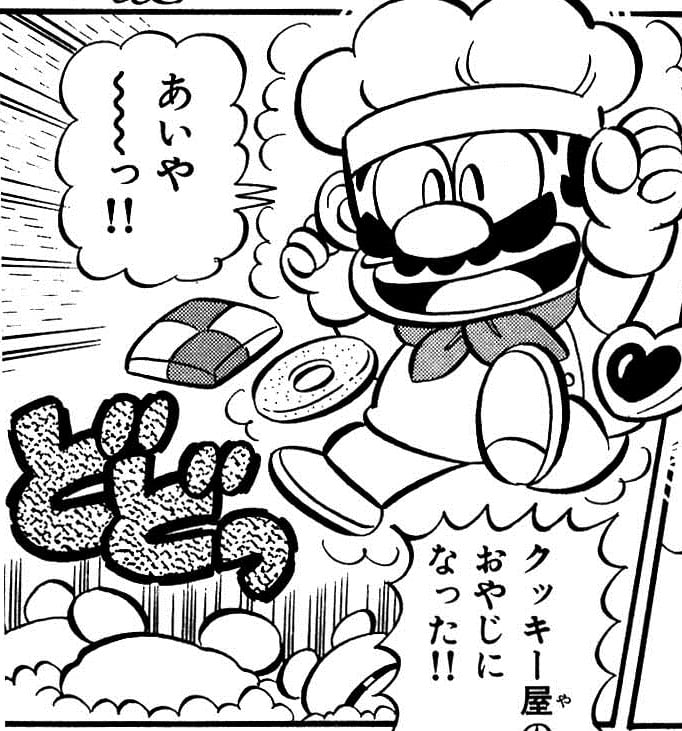
Super Mario-kunMangaChef Mario appears in this manga as part of the game’s legacy.
Nintendo PowerVol. 47 (April 1993) and Vol. 49Nintendo’s magazine covered the NES and Game Boy versions in Vol. 47 and previewed the Super NES version in Vol. 49; Super Luigi Bros has archive pages for both. It later named the NES game fifth among its top NES titles of 1993.
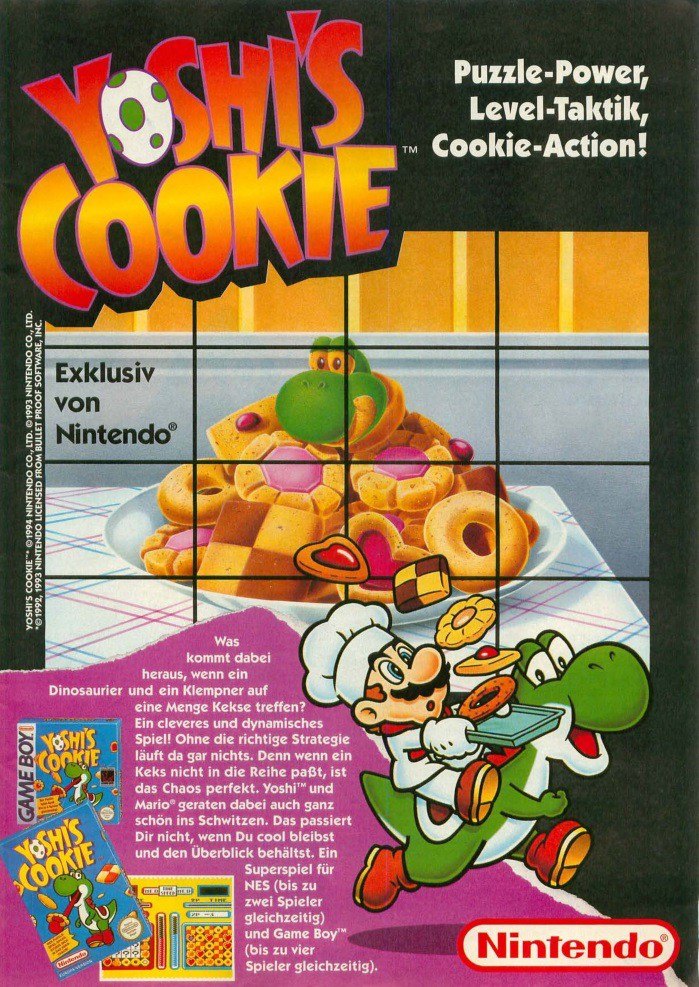
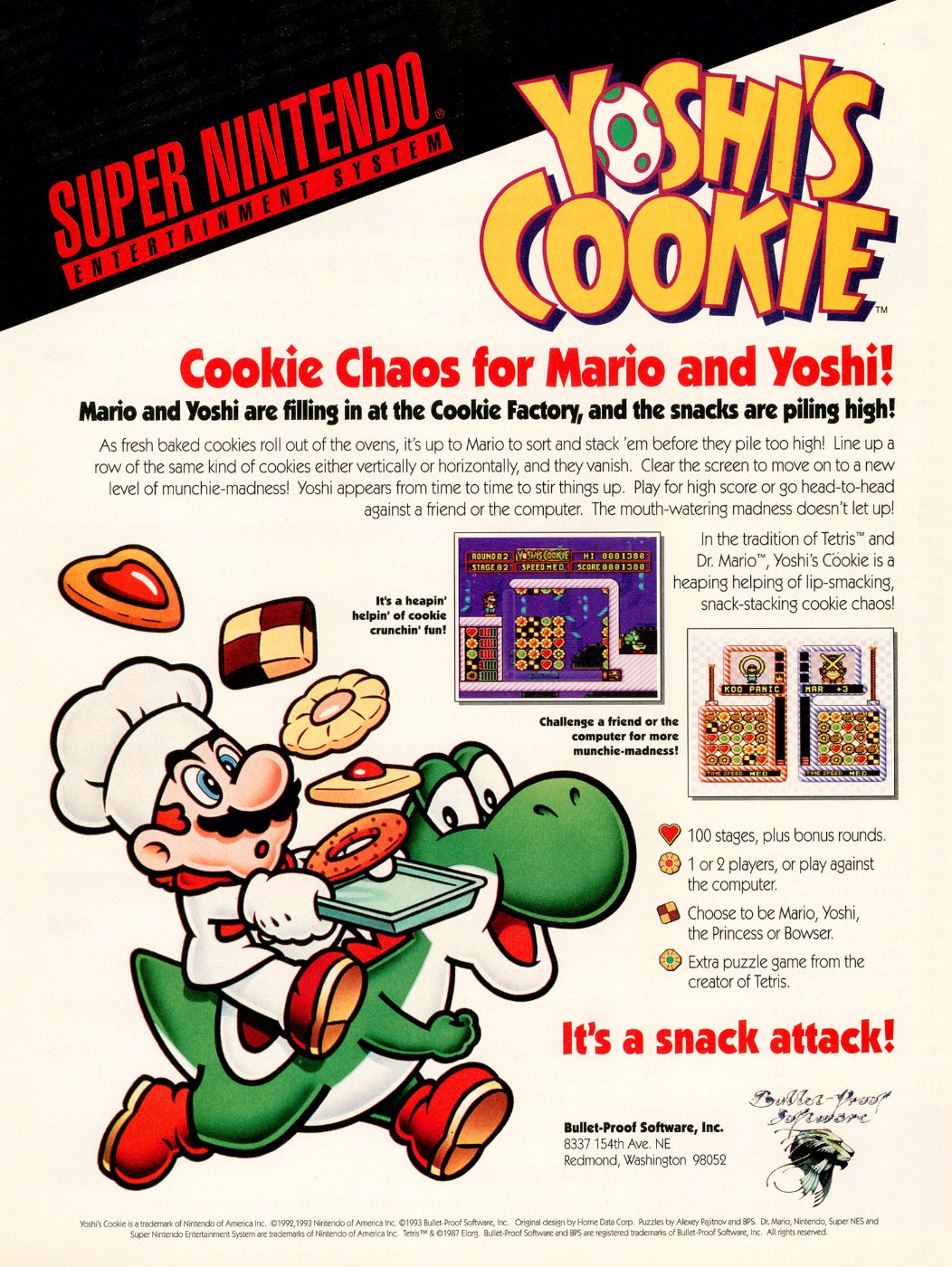
Print advertsUSA and GermanyMagazine adverts for the game.
Characters
Four familiar faces and one runaway biscuit. The characters only matter in the cutscenes and the VS mode, but each version treats them a little differently.
Character
Who they are
In this game
Abilities & notes
MarioCookie chef
The hero, filling in at the cookie factory.
Moves the rows and columns in every version and stars in the cutscenes. On NES (and the GBA re-release) he wears a chef’s outfit during play but his usual clothes in cutscenes.
VS: balanced. Super NES unlockable rival: a green Mario.
YoshiPartner
Mario’s dinosaur friend, here with a Super NES redesign later adopted by Yoshi’s Island.
Appears with Mario in most cutscenes and eats the runaway cookie in round 5. On Game Boy and Super NES he helps move the rows and is playable in VS.
VS: strong defence; attacks on him last half as long. Unlockable rival: a red Yoshi.
Princess PeachVS character
Called Princess in the game.
Joins the ending celebration. Playable in VS on Game Boy and Super NES.
VS: weak defence; effects on her last longer. Unlockable rival: a light-blue Peach.
BowserVS character
Called Koopa in the Super NES version.
For once not a villain: he celebrates with everyone in the ending, by most accounts one of his first non-villainous roles. Playable in VS on Game Boy and Super NES; the cookie thief of the GameCube story mode.
VS: strongest attacks, but his timer drains faster. Unlockable rival: a blue Bowser.
The runaway cookieCutscene star
A seemingly living Yoshi Cookie (the name is a description, not an official one).
Rolls away from Mario after every round, usually to his cost. The Super NES version reveals that it fell off a Yoshi Cookie shop sign.
Caught at last in round 10.
Story mode opponents (GameCube)
The VS rivals of the Nintendo Puzzle Collection story mode, in order; all but Blooper and Hammer Bro come from Super Mario World.
GaloombaEasy · 1Opening opponent on Easy.
Cheep CheepEasy · 2Easy difficulty.
Koopa ParatroopaEasy · 3Easy difficulty.
BooEasy · 4Easy difficulty.
SpinyEasy · 5Easy difficulty.
Koopa TroopaNormal · 1Opening opponent on Normal.
BlooperNormal · 2Normal difficulty.
Bullet BillNormal · 3Normal difficulty.
EerieNormal · 4Normal difficulty.
Piranha PlantNormal · 5Normal difficulty.
Buzzy BeetleHard · 1Opening opponent on Hard.
Rip Van FishHard · 2Hard difficulty.
LakituHard · 3Hard difficulty.
Fishin’ BooHard · 4Hard difficulty.
Hammer BroHard · 5Hard difficulty.
ThwompBowser’s CastleStage 6, first fight.
KamekBowser’s CastleStage 6, second fight.
BowserStage 7A best-of-five showdown for the cookies.
The people who made it
Credits for the three original versions, from Wikipedia and Nintendo Power:
Gunpei YokoiProducer (NES and Game Boy)Produced the Famicom/NES and Game Boy versions.
Alexey PajitnovPuzzle design (Super NES)The creator of Tetris designed the 100 stages of Puzzle mode.
David NolteDesigner; Super NES producerBullet-Proof Software designer whose version was shown at CES in 1992; co-producer of the Super NES game with Yasuaki Nagoshi.
Shigefumi Hino, Chieko Matsumoto, Mika InoueArtistsAs listed in Wikipedia’s credits.
Akira Satou, Nobuya Ikuta, Noriko NishizakaMusicCredited composers, with a fourth credited only as Tsutomu. The score includes an arrangement of Hermann Necke’s Csikós Post.
Hermetica’s creatorOriginal concept (Home Data)The unnamed Home Data programmer who planned and coded Hermetica, and later answered Pajitnov’s design questions.
Advertisement
How It Was Made
The story of Yoshi’s Cookie starts in an arcade and passes through three companies before it reaches Mario.
Hermetica: the arcade flop
The Japanese Famicom box.
The game began at Home Data, a small Japanese developer, as a way of using up a stock of old arcade boards. Its creator, who has described the project in posts translated by the Game Developer Research Institute, prototyped it on a Sharp X68000 and gave it an alchemy theme: lines of matching pieces turned to gold before vanishing. Called Hermetica and later Archimedes, it went out for location tests at Japanese arcades and did very badly; by its creator’s account even the distributor thought it was rubbish.
Home Data gave up on it and sold the rights. Bullet-Proof Software made the best offer, handled the conversion, and took the game to Nintendo. The creator says he had nothing to do with the reworking beyond answering design questions from Alexey Pajitnov, and that its sales were vastly higher than anyone expected. Around 1991 Bullet-Proof reportedly built a generic version called Inaro, and the Wii Virtual Console release still carries an Inaro copyright line.
Nintendo’s version and Bullet-Proof’s
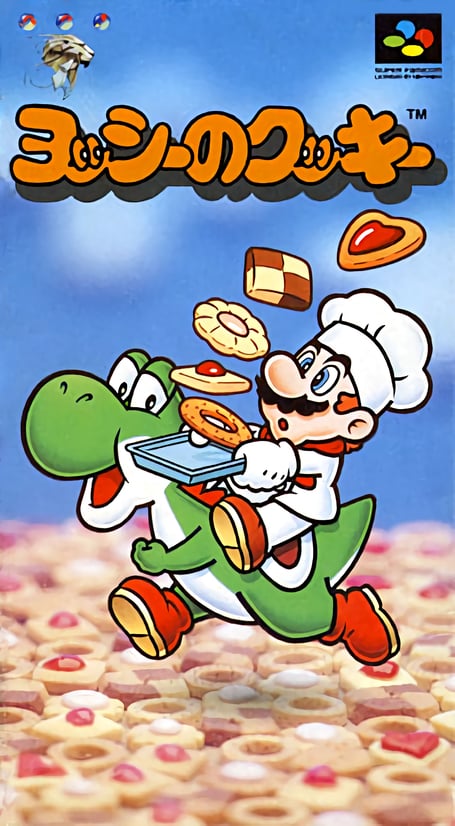
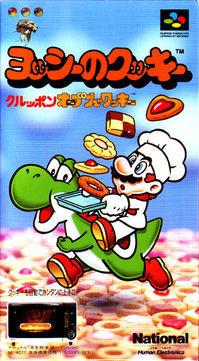
The Japanese Super Famicom box, published by Bullet-Proof Software.
According to Wikipedia, Bullet-Proof first produced a Super NES version designed by David Nolte, which was shown at the Consumer Electronics Show in 1992 (Nintendo Power Vol. 39). Nintendo licensed the 8-bit rights and made the Famicom/NES and Game Boy games itself under Gunpei Yokoi, adding the Mario characters; some sources credit Nintendo R&D1, while Wikipedia names TOSE as the developer. Nintendo also lent Bullet-Proof its characters and the Yoshi’s Cookie name for the Super NES game, whose rights stayed with Bullet-Proof (Nintendo Power Vol. 47, April 1993).
The Super NES game was published by Bullet-Proof rather than Nintendo, and it reached North America in June 1993, a month before Japan. Its Puzzle mode was designed by Alexey Pajitnov (Nintendo Power Vol. 43, as cited by Wikipedia).
Series Firsts
Two series firsts credited to the Super NES version.
1Yoshi’s new lookThe Super NES version introduced the bigger head, longer arms and shorter neck that Super Mario World 2: Yoshi’s Island and later games adopted.
2Yoshi says “Yoshi”The first game in which Yoshi’s voice is his own name, a habit he keeps in Yoshi’s Story and popularised by Super Smash Bros.
Cheats & Secrets
One famous code, and a few things worth knowing.
Hidden rounds 11–99 (NES and Game Boy)
On the Action mode selection screen, set Music to Off, Speed to Hi and Round to 10, then hold Up + Select to advance the round number to 11. Rounds 11 to 99 replace the cookies with Mario pieces and add shells that only a Yoshi piece can clear.
Bank your Yoshi Cookies
Every fifteen of one cookie type earns a Yoshi Cookie in Action mode. Use them to finish lines that are one cookie short rather than straight away.
Watch the seven
The game ends when any row or column holds more than seven cookies, so keep the top and right edges, where new cookies arrive, under control.
Unlock four rivals (Super NES)
Beat the four computer opponents in VS to unlock their palette-swapped twins: green Mario, red Yoshi, light-blue Peach and blue Bowser.
Puzzle passwords (Super NES)
Every Puzzle mode stage has a password, so note them down rather than replaying from the start.
Pick your VS fighter
On Game Boy and Super NES, Yoshi is the safe choice against Yoshi Cookie attacks, while Bowser hits hardest but has less time.
Super Luigi Bros’ separate cheats page is linked below.
Trivia & Interesting Facts
Japanese title: Yosshī no Cookie, “Yoshi’s Cookie”.
Yoshi’s head from the Super NES title screen.The Super NES title screen is a parody of the MGM logo, starring Yoshi.
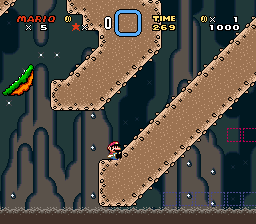
The Chocolate Island 4 background in Super Mario World.The Super NES backgrounds are modelled on Super Mario World; round 4’s copies the lava backdrop of Chocolate Island 4.
The game’s arcade ancestor, Hermetica, turned its matched pieces to gold: an alchemist’s puzzle before it was a baker’s.
The Super NES version was released in North America about a month before it reached Japan.
Bowser, credited as Koopa on the Super NES, ends the game celebrating with Mario, Yoshi and Peach.
On NES, Mario’s in-game sprite wears chef’s whites; that outfit returned as a costume in Super Mario Odyssey and as Mario (Chef) in Mario Kart Tour.
Only 500 copies of Kuruppon Oven de Cookie were made. Wired reported in 2010 that one was valued at ¥157,500.
The GameCube remake reuses tilesets from Yoshi’s Island for its backgrounds and remixes the NES and Game Boy music.
Nintendo Puzzle Collection lets you send the original Famicom game to a Game Boy Advance over the link cable; that version drops VS mode.
A Wii U Virtual Console release was planned but never happened, and the Wii version was withdrawn from sale in October 2013 (in South Korea it lasted until the Wii Shop closed).
Sanrio’s Hello Kitty no Beads Factory (1999) plays so much like it that its copyright screen credits Nintendo, 1992.
Regional Box Art
Three formats with their own covers in most regions, plus two Japan-only editions. Note the publisher on the Super NES boxes: Bullet-Proof Software, not Nintendo.
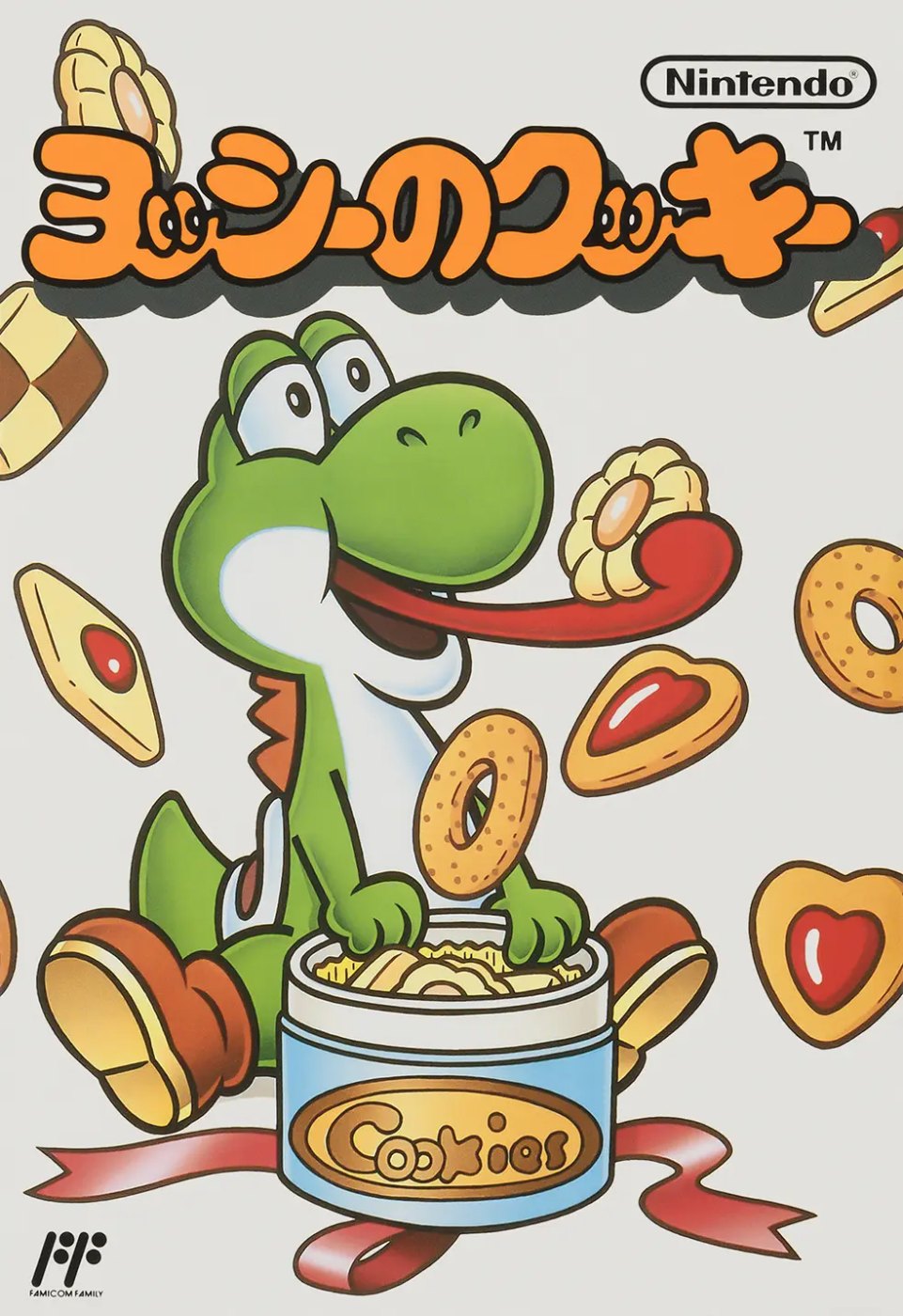
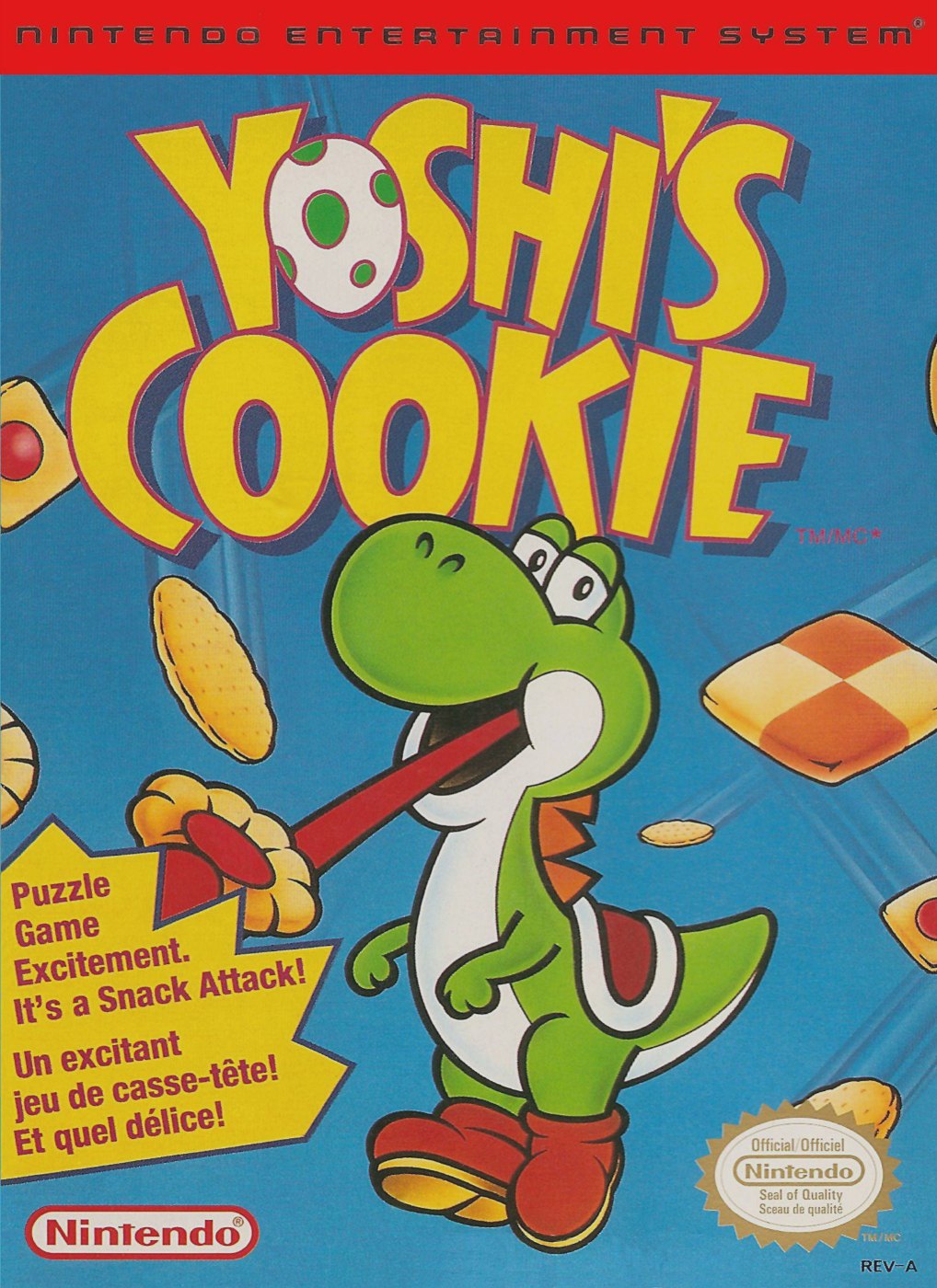
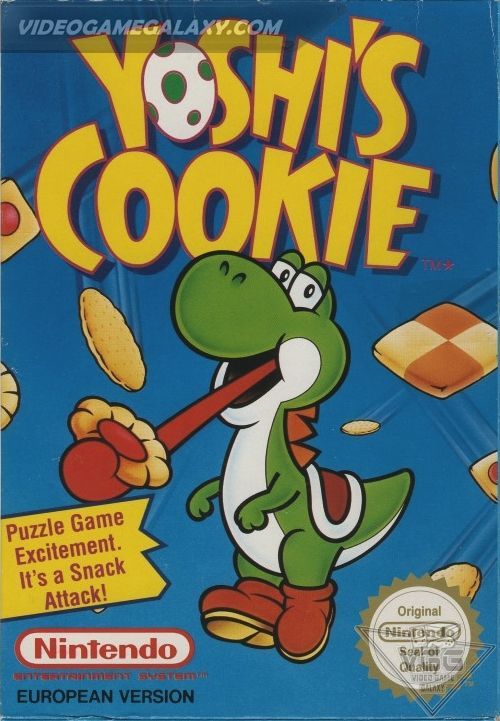
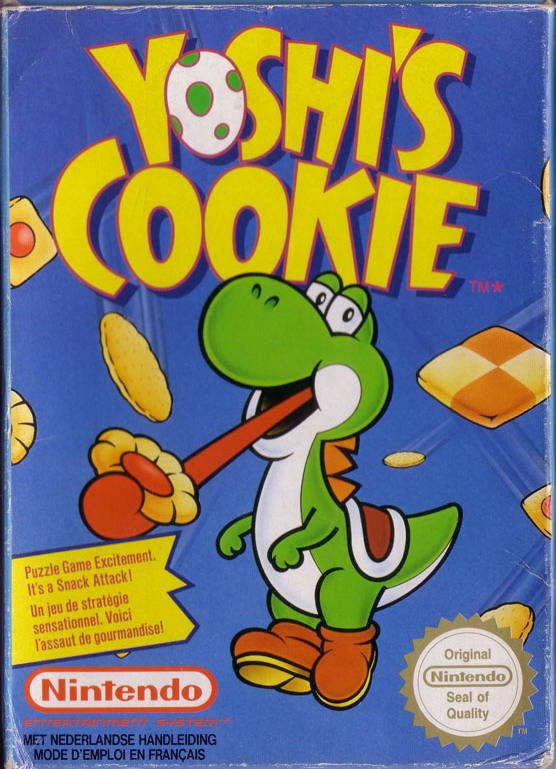
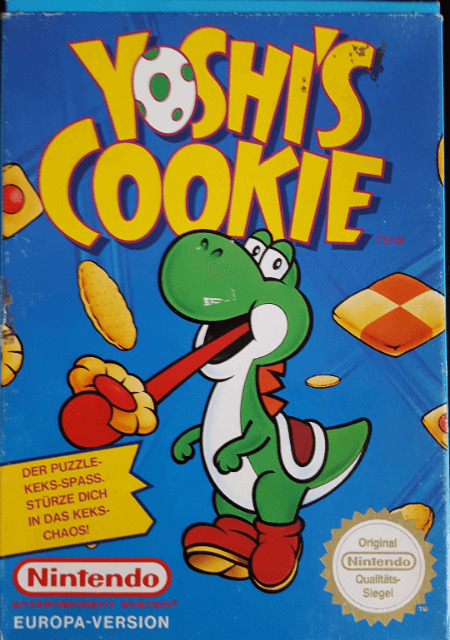
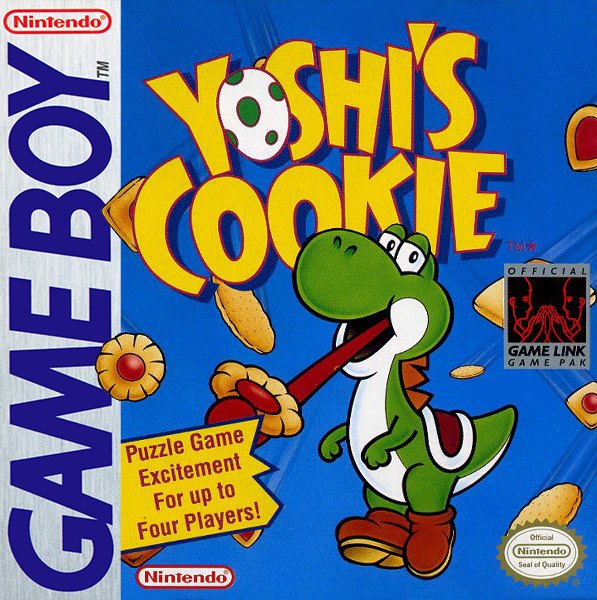
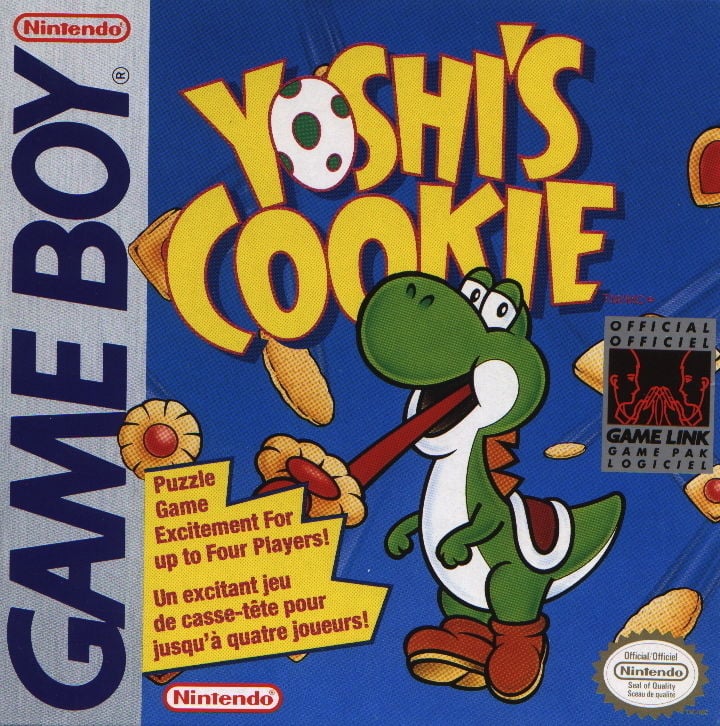
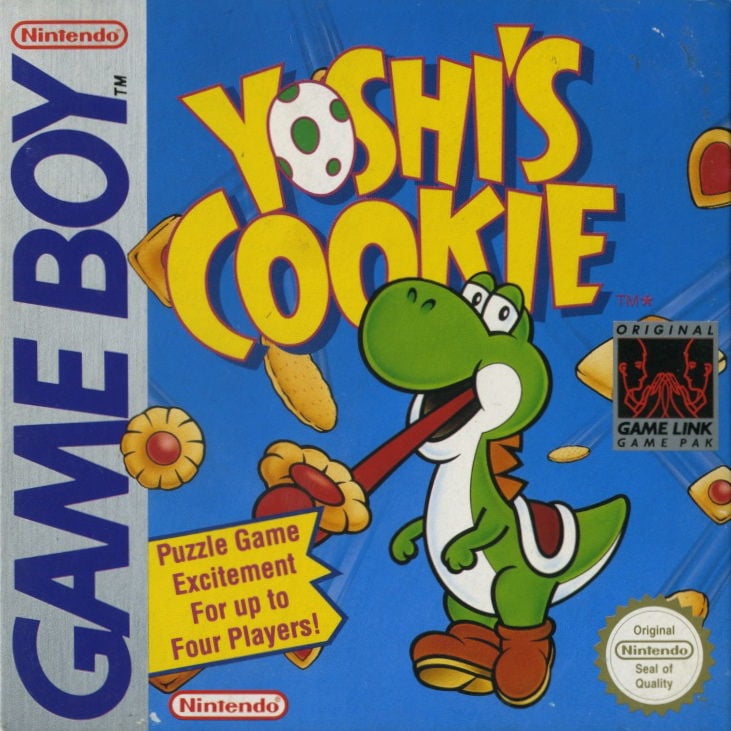
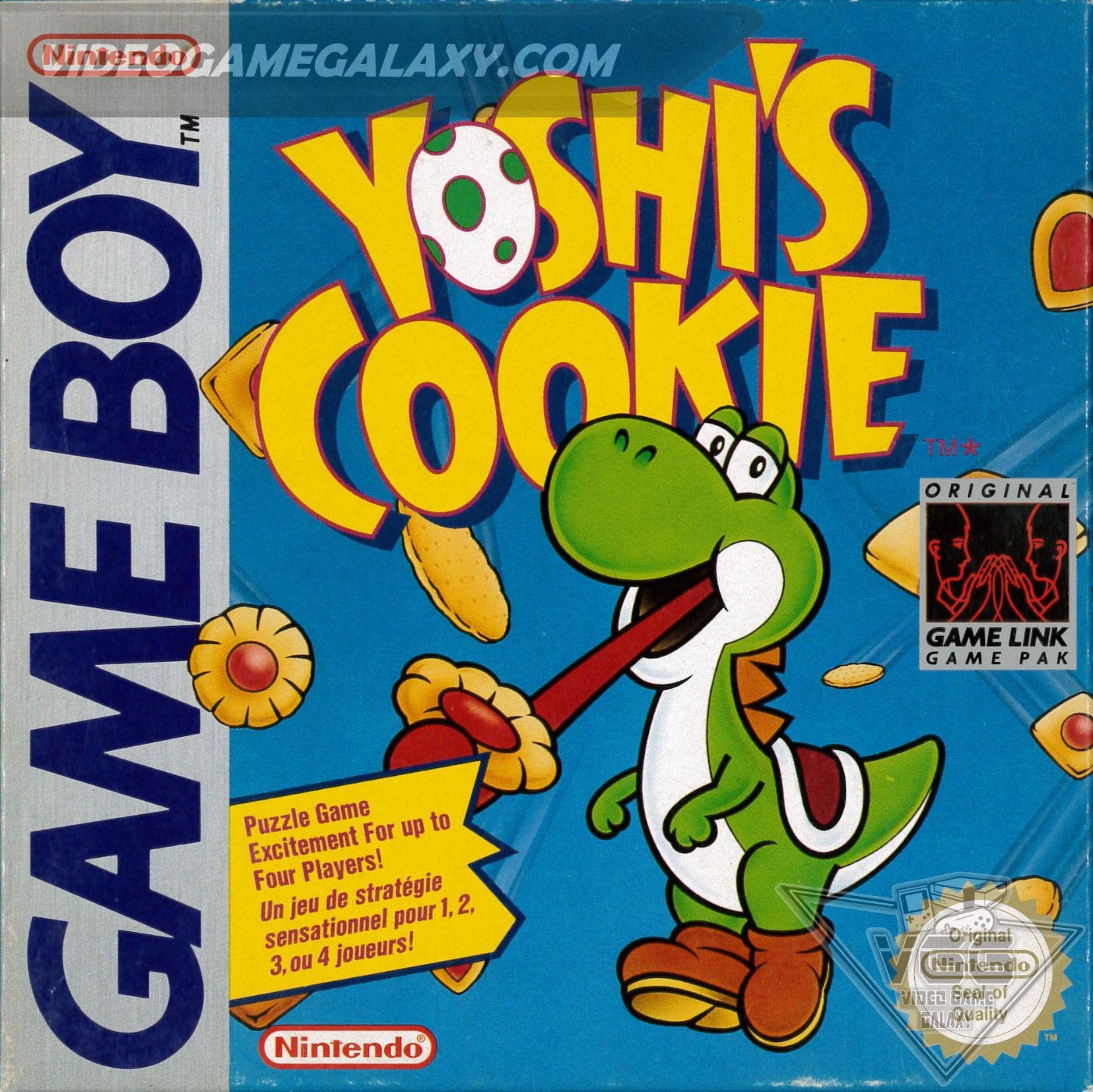
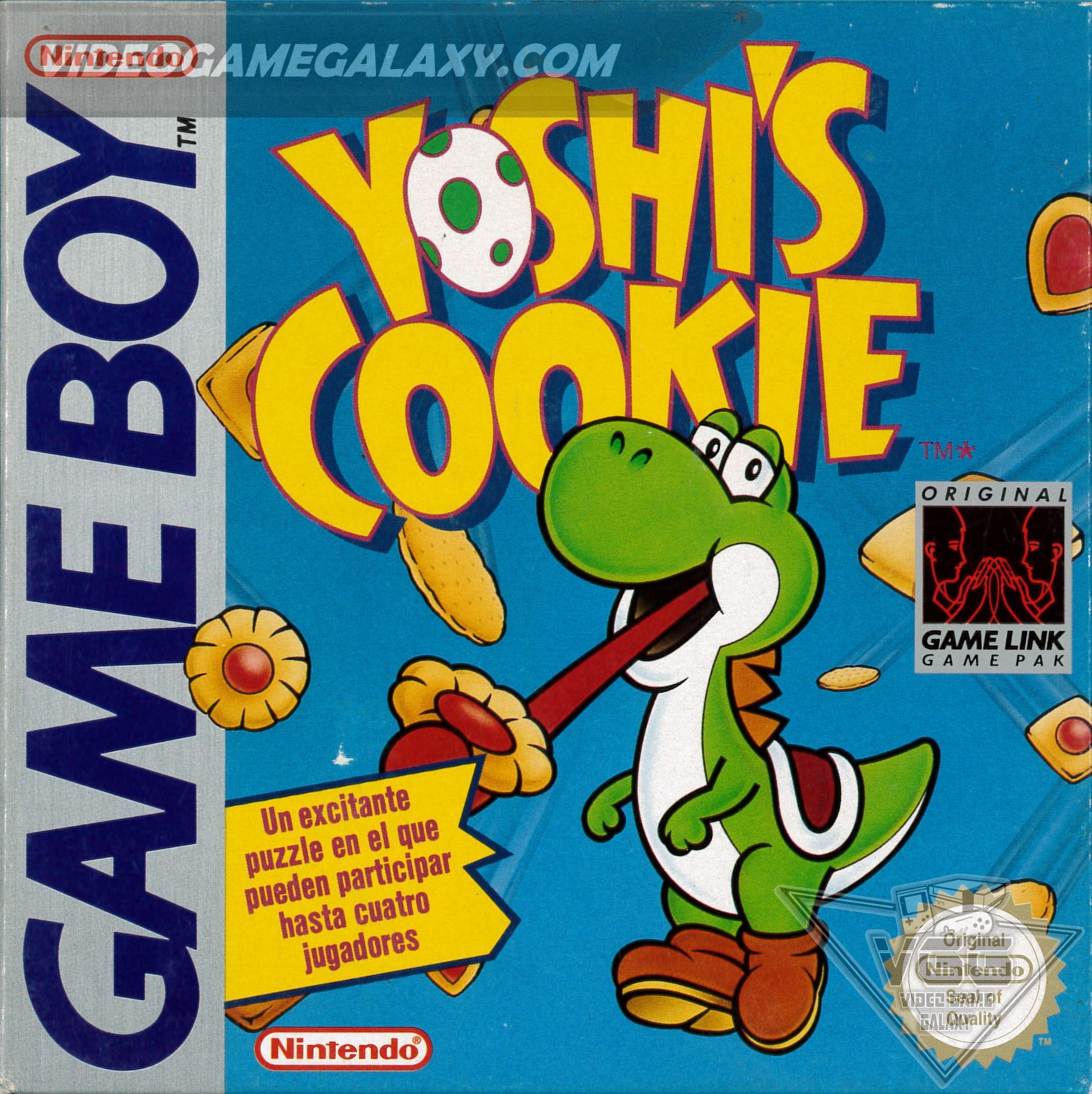
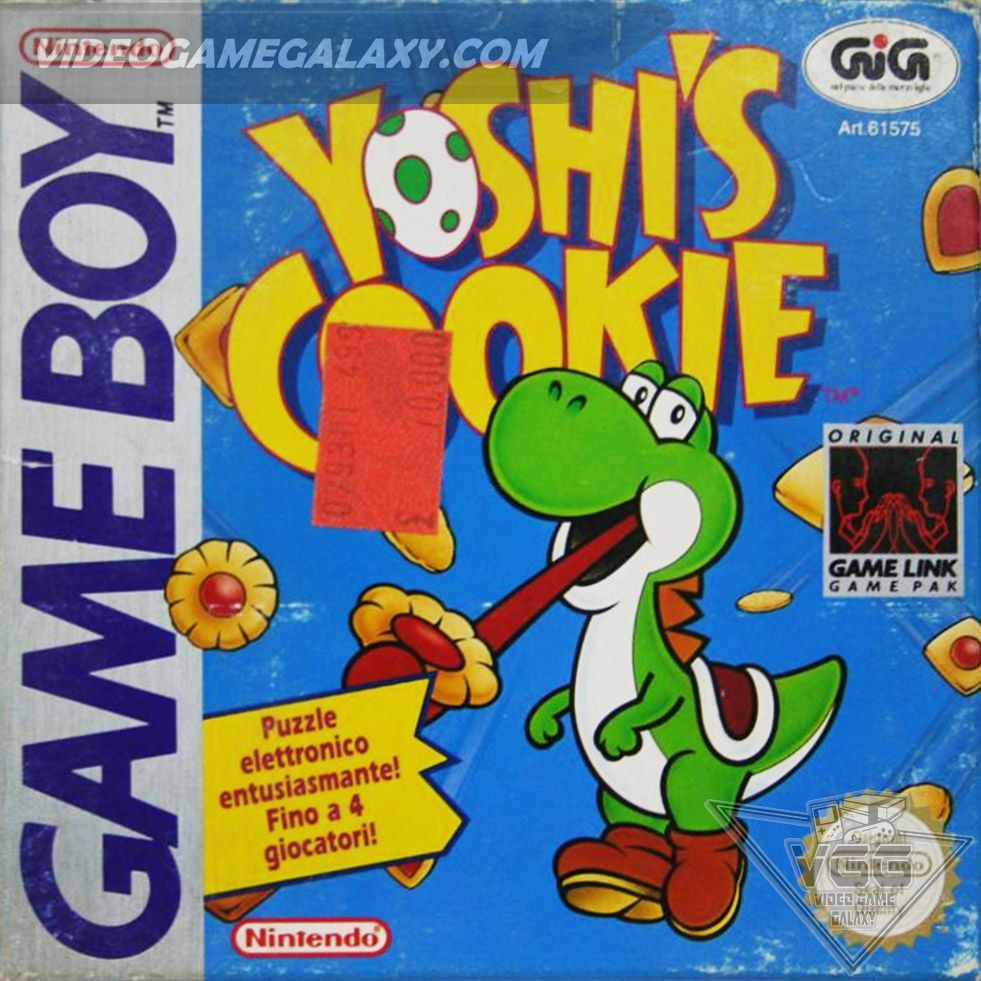
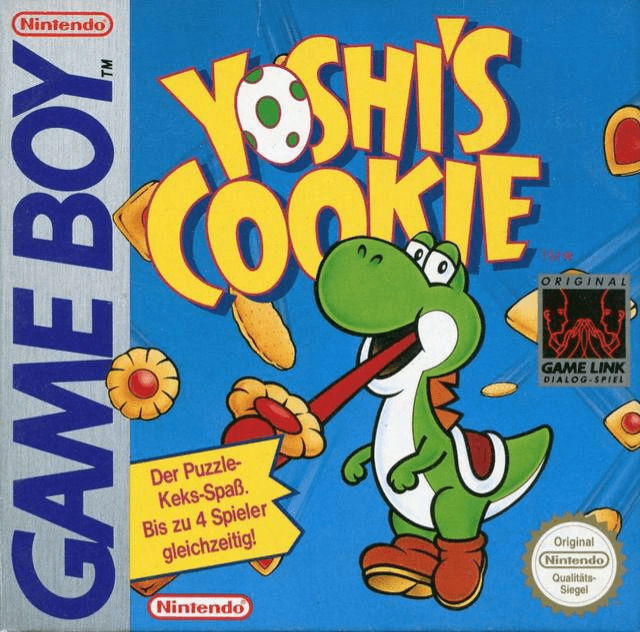
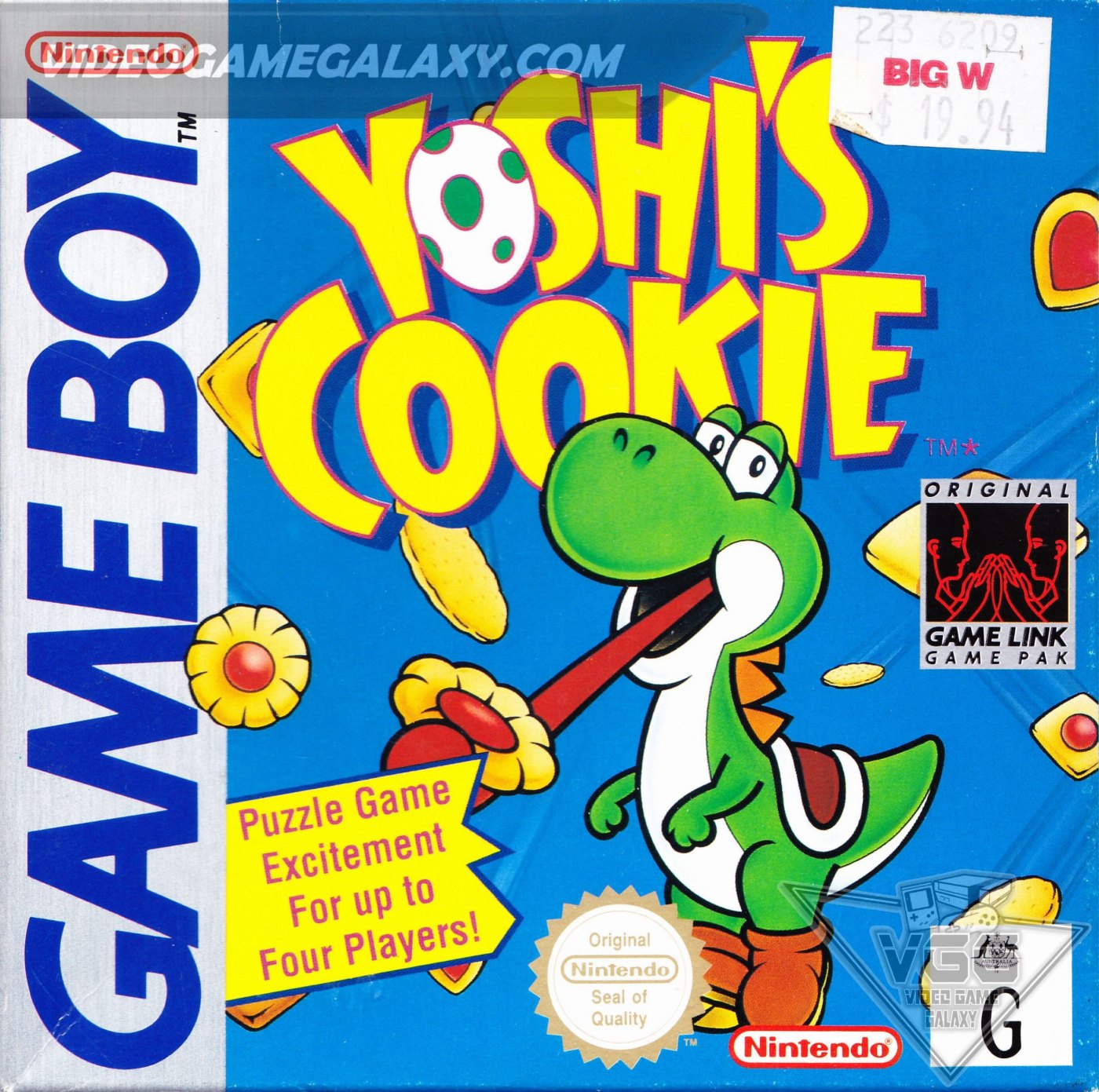
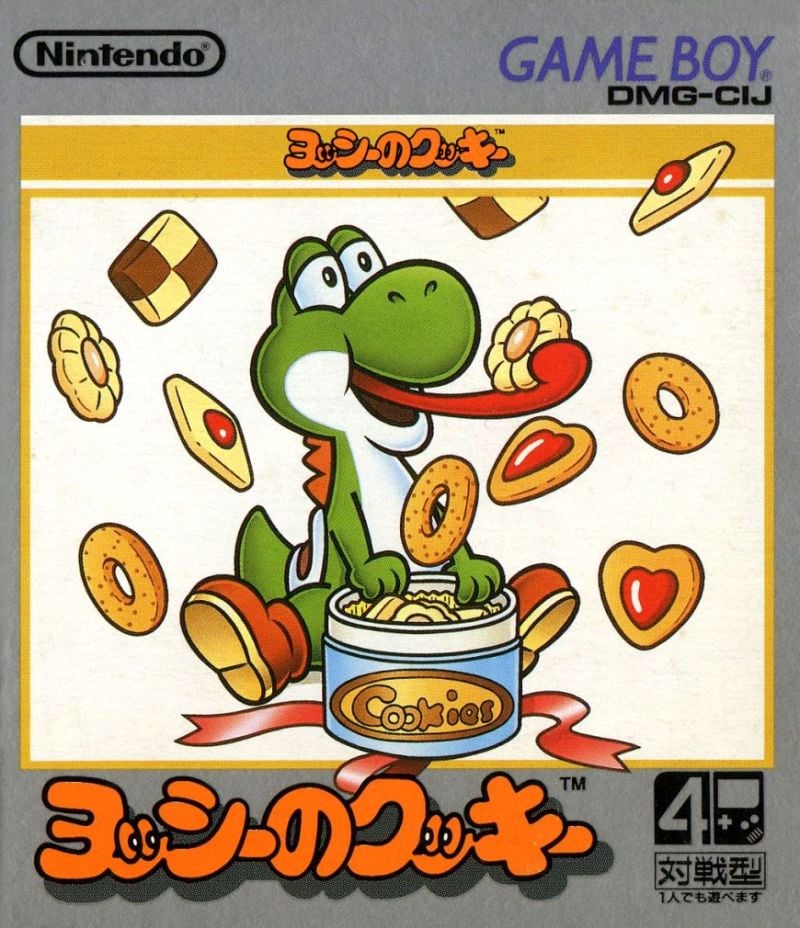
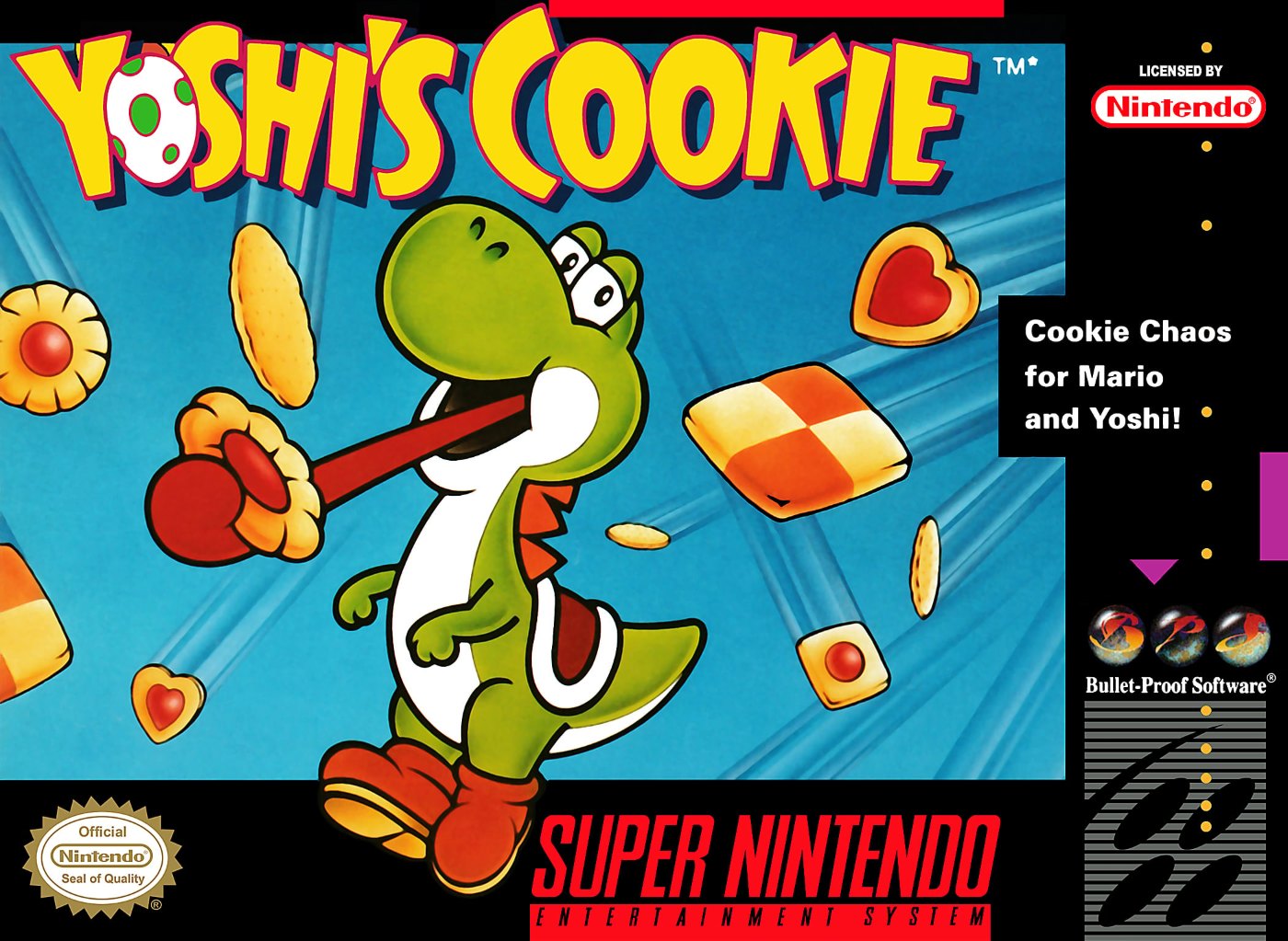
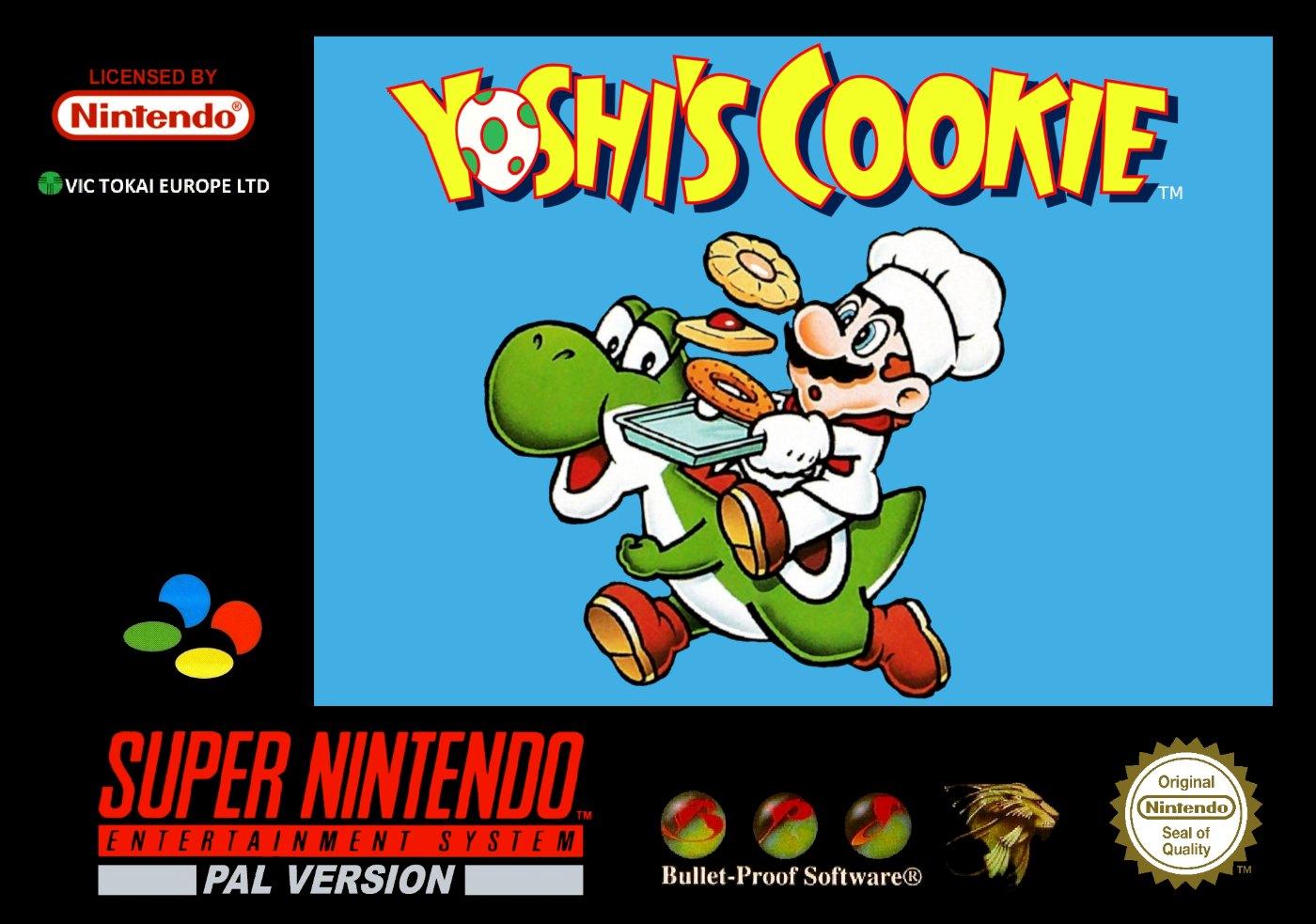
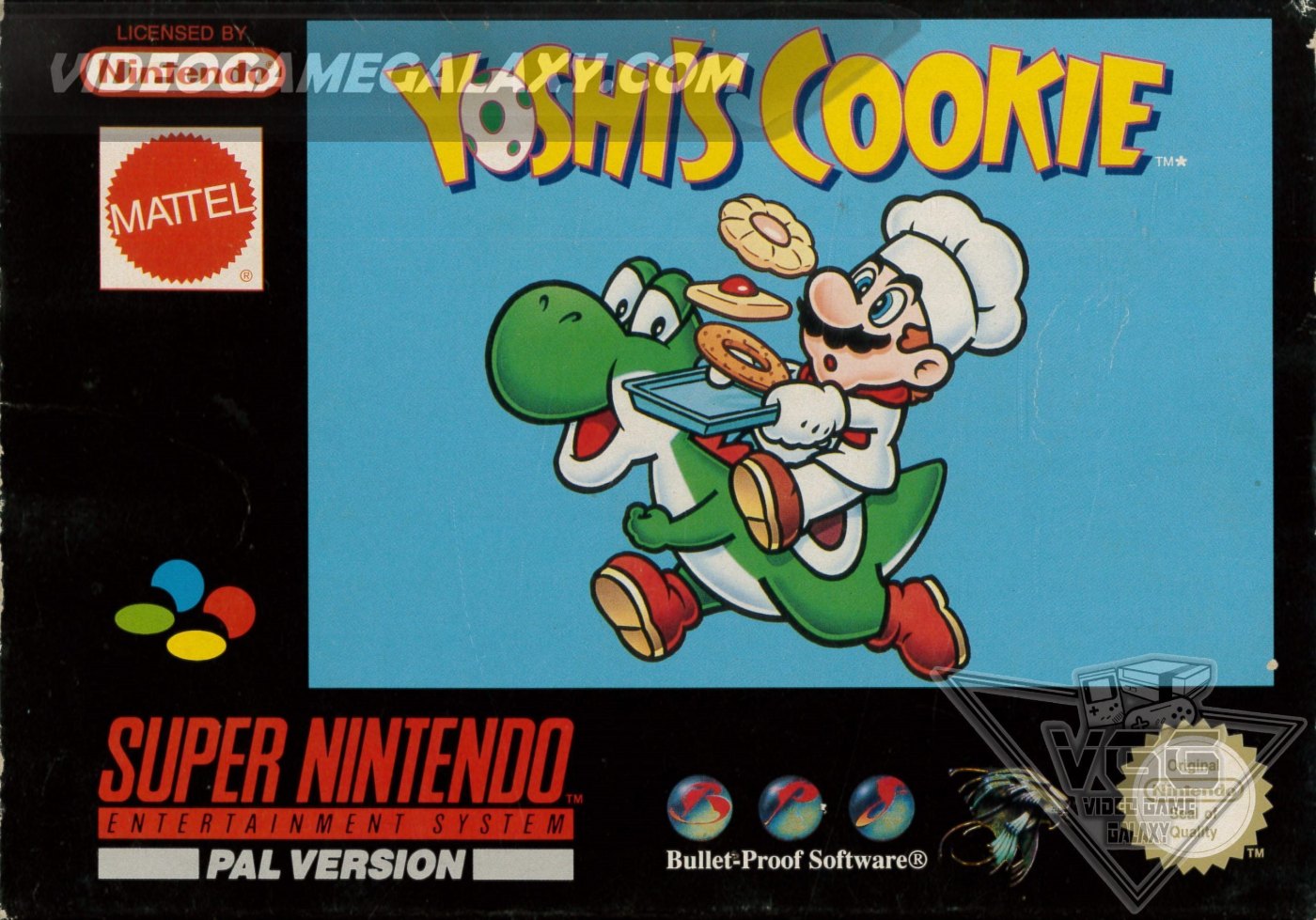
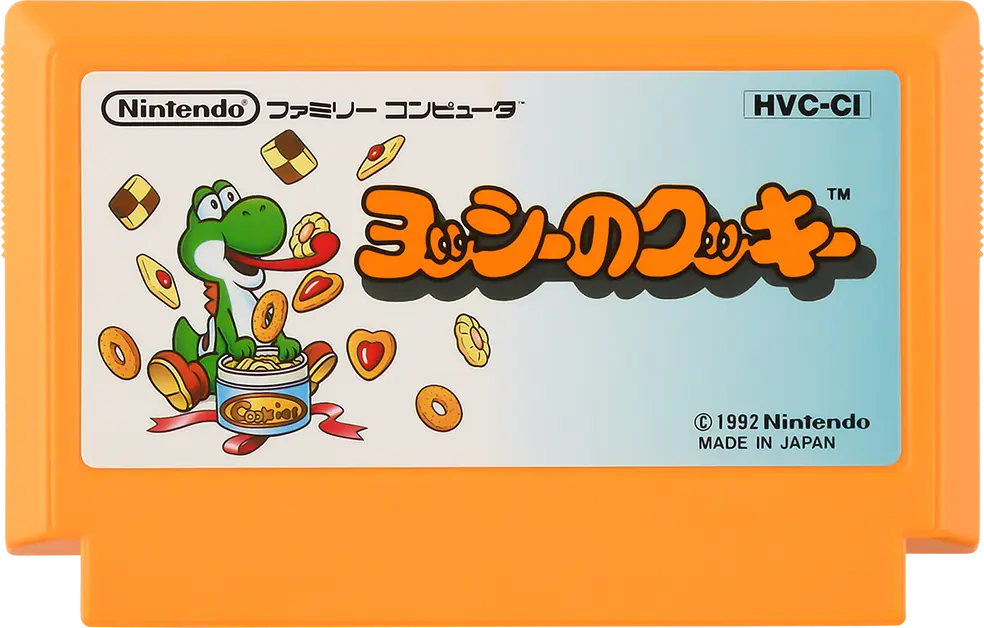
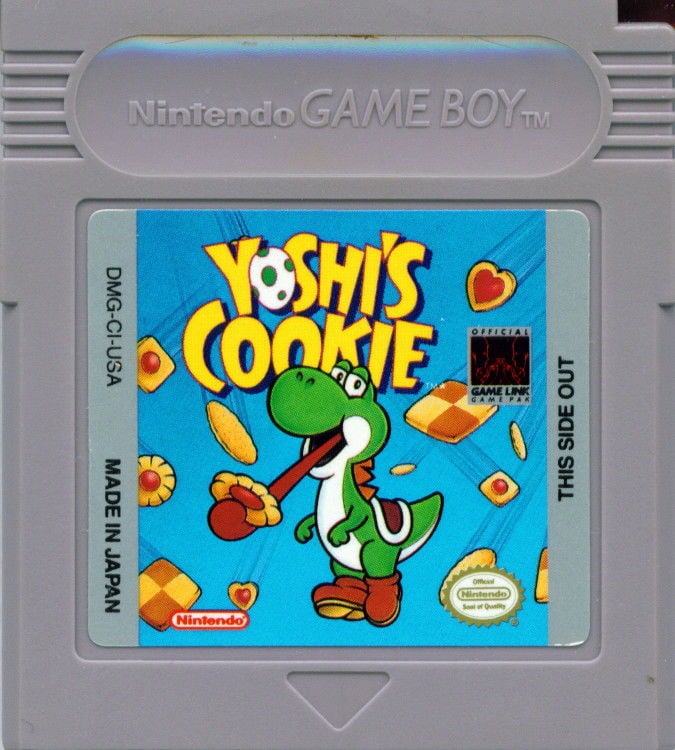
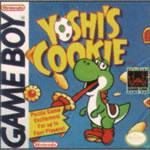
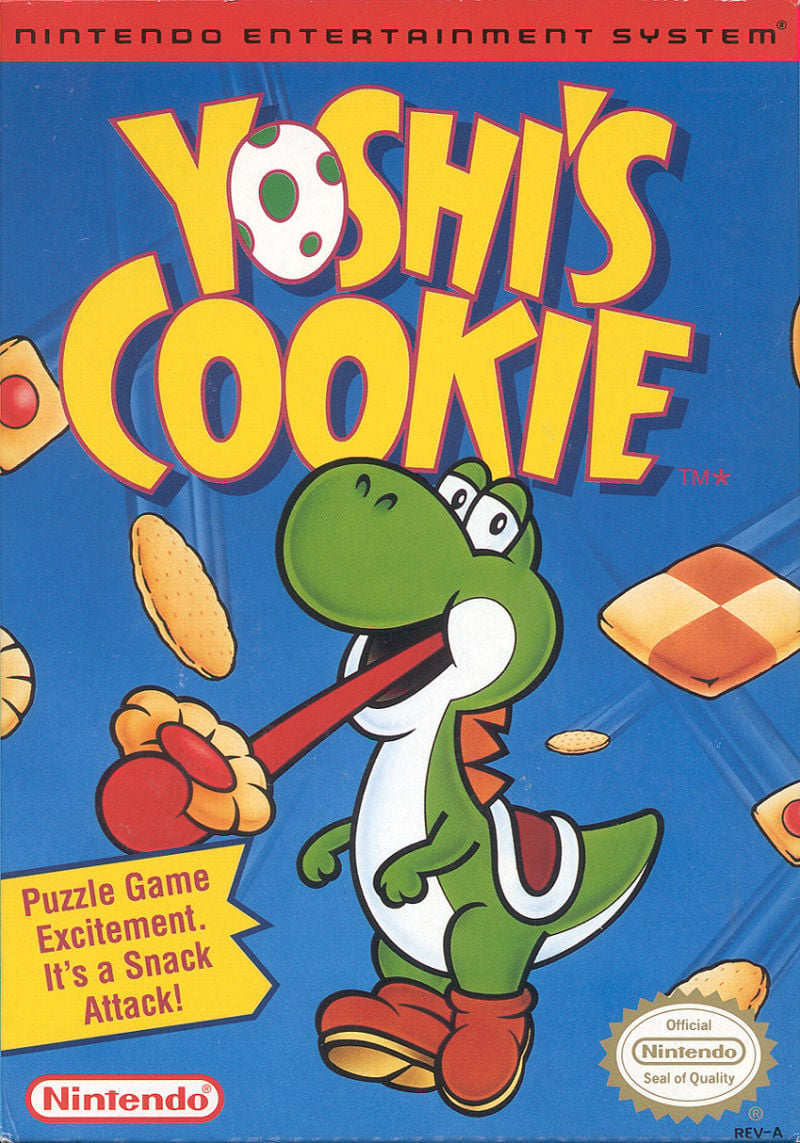
NES · North America (1993)NES · CanadaNES · Europe and ScandinaviaNES · France and the NetherlandsNES · GermanyFamicom · Japan (1992)Game Boy · North America (1993)Game Boy · CanadaGame Boy · EuropeGame Boy · France and the NetherlandsGame Boy · SpainGame Boy · ItalyGame Boy · GermanyGame Boy · AustraliaGame Boy · Japan (1992)Super NES · North America (1993)Super NES · EuropeSuper NES · AustraliaSuper Famicom · Japan (1993)Kuruppon Oven de Cookie · Japan (1994)Nintendo Puzzle Collection · GameCube, Japan (2003)Famicom cartridgeGame Boy cartridge
Screenshots
Title screens and more from the three original versions.
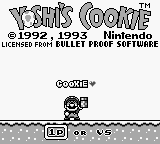
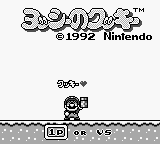
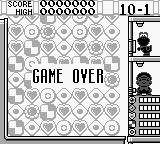
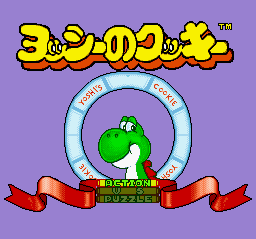
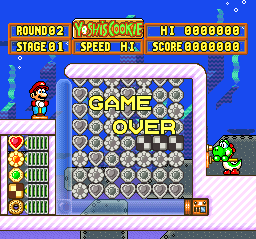
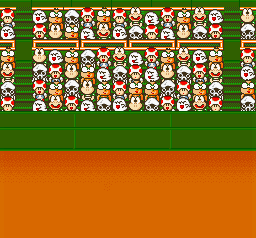
The Japanese Famicom title screen.The Game Boy title screen.The Japanese Game Boy title screen.Game Over on the Game Boy.The Japanese Super Famicom title screen.Game Over on the Super NES.The Super NES options screen backdrop.The VS mode audience on the Super NES.
Artwork & Media Gallery
Official artwork, sprites, logos and adverts for Yoshi’s Cookie. Select any image to enlarge it.
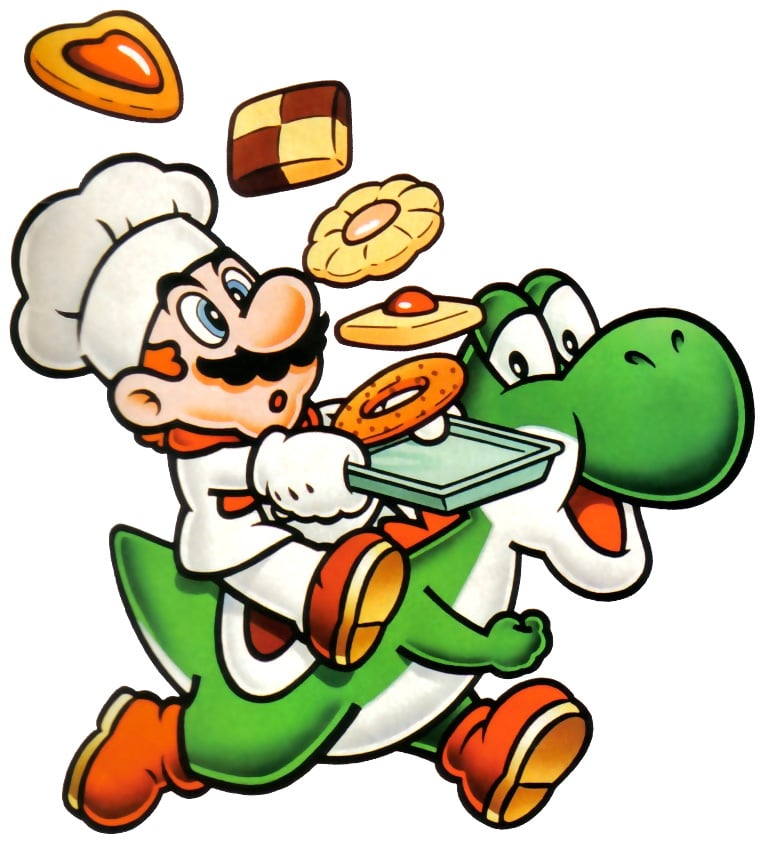
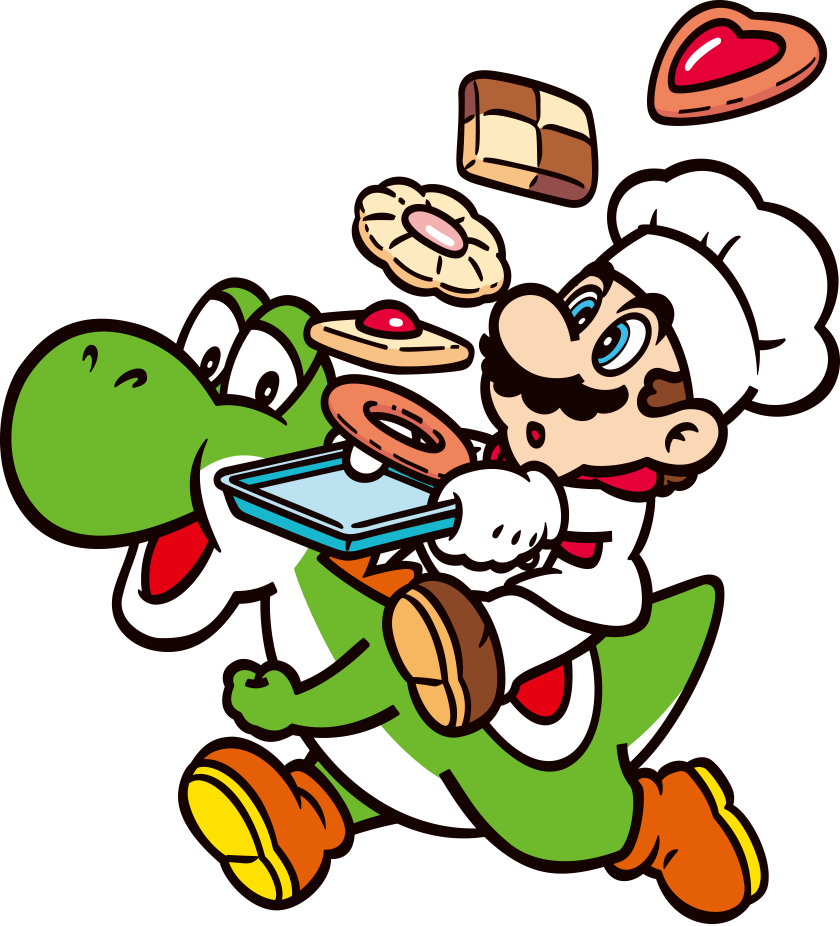
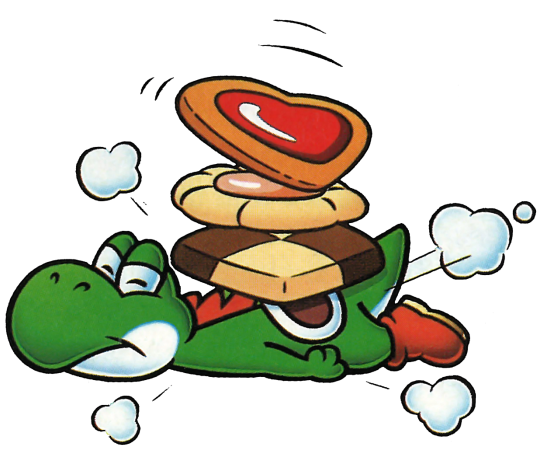
Mario riding Yoshi.Mario riding Yoshi, redrawn for the Famicom’s 40th anniversary.Yoshi being squished.Yoshi eating a cookie.Yoshi Cookies.A flower cookie.A ring cookie.A diamond cookie.A heart cookie.A square cookie.The international logo.An alternate international logo.The Japanese logo.Mario’s NES sprite.Chef Mario on NES.Yoshi on NES.Princess on NES.Bowser on NES.Mario on Game Boy.Yoshi on Game Boy.Princess on Game Boy.Bowser on Game Boy.Mario on Super NES.Yoshi flying after Puzzle mode is completed.The red Yoshi of player 2.The Super NES octagon cookie.The Super NES Yoshi Cookie.A German print advert.A Yoshi Cookie from the Japanese Game Boy website.
Legacy & Re-releases
One game, five editions, and a Virtual Console run that ended in 2013.
Releases and re-releases
Famicom and Game Boy21 November 1992Released in Japan as Yoshi no Cookie.
NES and Game BoyApril 1993North America; Europe later in 1993 (the NES in Sweden on 28 April 1994).
Super NESJune 1993North America, published by Bullet-Proof Software; the UK and Australia followed in 1993.
Super Famicom9 July 1993Japan.
Kuruppon Oven de Cookie1994A 500-copy Super Famicom promotional edition for National’s Kuruppon oven, with a Cooking mode.
Nintendo Puzzle Collection7 February 2003GameCube, Japan only: a remake with story mode and four-player VS, plus the Famicom original for Game Boy Advance.
Wii Virtual Console2008NES version. Europe and Australia 4 April, North America 7 April, Japan 10 June, South Korea 11 November. Withdrawn in October 2013 (South Korea later).
The GameCube remake
Nintendo Puzzle Collection, developed by Intelligent Systems, TOSE and Nintendo Software Technology and released only in Japan, is the most complete version of the game. Its Yoshi no Cookie is a full rebuild in 480p with Yoshi’s Island-style backgrounds, new cutscenes, tutorials for both main modes, the story mode against Bowser and up to four players in VS. The bundled GameCube–Game Boy Advance cable can also send the original Famicom game to a Game Boy Advance.
Where is it now?
The NES version’s Virtual Console run ended in 2013, a planned Wii U release never appeared, and as of November 2026 the game is not in the NES library of Nintendo Switch Online, unlike its stablemate Yoshi. The Super NES version, whose rights stayed with Bullet-Proof, has not been re-released since the 1994 oven edition. Its cookies live on in later Nintendo games. For its puzzle cousins see Wario’s Woods, Mario & Wario and the full games list.
Reviews & Sales
Reviews and scores
Reviews were generally positive, especially for the Super NES version. Nintendo has published no sales figure, and none could be traced to another reliable source.
Defunct GamesNES · Tom Lenting
A
AllGameNES · Brett Alan Weiss
4/5
AllGameSuper NES · Scott Alan Marriott
4/5
FamitsuJapan · Game Boy · No. 206, 27 November 1992 (7, 7, 8, 7)
29/40
Official Nintendo MagazineUK · Wii Virtual Console · Chris Scullion, 4 April 2008
FamitsuJapan · Super Famicom · No. 238, 9 July 1993 (8, 7, 7, 5)
27/40
Nintendo LifeWii Virtual Console · Marcel van Duyn, 5 April 2008
6/10
IGNWii Virtual Console · Lucas M. Thomas, 7 April 2008
6/10
EurogamerWii Virtual Console · 11 April 2008
6/10
Famitsu’s reviewers liked the NES game’s addictive pull and thought it best with two players; the Game Boy version was harder to read but scored highest. The Washington Post, in May 1993, called it simple but addictive, like every Nintendo puzzler, and Nintendo Power placed it fifth among the best NES games of 1993.
The 2008 Virtual Console release met a cooler reception, generally sixes out of ten. Nintendo Life’s Marcel van Duyn found it decent and a little more original than the falling-block crowd, but thin beyond its two-player mode, and suggested waiting for the Super NES version. IGN’s Lucas M. Thomas called it one of Nintendo’s more obscure puzzle designs. The Super NES version has fared better in retrospect: IGN ranked it 50th among the best Super NES games, and GamesRadar put the Game Boy version 48th in its list of the best Game Boy games.
Honours
Nintendo Power · Top Titles of 1993 (Vol. 56)No. 5Among the year’s best NES games.
IGN · Top 100 SNES GamesNo. 50The Super NES version.
GamesRadar · Best Game Boy games (2012)No. 48The Game Boy version.
SLB User Reviews
Super Luigi Bros readers have reviewed Yoshi’s Cookie over the years. Their write-ups are kept exactly as they were sent in:
Played it? If you’d like to add your own review, please get in touch.
More from the Super Luigi Bros Guide
These picture lists come from the earlier Super Luigi Bros guide to Yoshi’s Cookie and are kept here in full.
Game modes
Action Mode
The main single-player mode. 10 rounds × 10 stages each. Before starting, the player chooses their round, speed and music. Stages must be cleared completely before moving on — as time passes, new cookies drop in faster. Completing each round rewards a short cutscene featuring Mario and a rolling Yoshi Cookie.
Hidden rounds 11–99: Unlockable by setting music to Off, speed to Hi and round to 10, then holding Up + Select at the round select. In these rounds the cookie tiles are replaced by Mario enemy sprites (from the original Yoshi game), and Koopa Shell tiles are added — these can only be cleared using Yoshi Cookies.
The distinctive background of SNES Round 4
VS Mode
A competitive 2-player mode (SNES and Game Boy also support vs. CPU). Each player has a 5×5 board and must reach 25 match points before their opponent. Matches must be made within a time limit — if the bar fills (or the fuse burns out), that player loses the round. First to win three rounds takes the match.
Players choose from four characters, each with different attributes:
Mario
Balanced — no particular strengths or weaknesses. The best starting character.
Yoshi
Stronger defence — effects received from opponents last half as long.
Princess Peach
Weaker defence — effects from opponents last longer. High-risk, high-reward.
Bowser
Stronger attacks, but the timer drains faster — aggressive playstyle.
Yoshi Cookie special effects in VS Mode — aligning a row of Yoshi Cookies triggers a random special effect on the opponent:
Blind — opponent temporarily cannot see the middle 9 tiles of their board
Panic — opponent’s board is shuffled and they cannot act during the shuffle
Slave — opponent temporarily loses control; their board mirrors your moves exactly
−3 / +3 — subtracts or adds three match points
−7 — subtracts seven match points (the most powerful effect)
Beating all four CPU opponents in the SNES version unlocks four palette-swap opponents: a green Mario (Fire Luigi colours), a red Yoshi, a light-blue Princess and a blue Bowser — each with different attributes.
Puzzle Mode (SNES exclusive)
100 puzzles across 10 rounds, each requiring the player to clear the field using a limited number of moves. Puzzles range from beginner to highly complex. A password system lets players save and resume progress.
Puzzle Mode — SNES exclusive
Characters
The four VS Mode characters also appear in the Action Mode cutscenes. Mario’s design differs between versions — he wears a chef outfit in the NES/GBA versions but his standard look on SNES and Game Boy.
Mario
The main protagonist, controlling the cookie rows throughout the game. Wears a chef’s outfit in the NES and GBA cutscenes — one of the very few times Mario appears as a chef in an official Nintendo game.
Yoshi
The other protagonist, appearing alongside Mario in most cutscenes. On Game Boy and SNES he helps control the cookie rows and is a VS Mode character.
Princess Peach
Celebrates with Mario, Yoshi and Bowser in the ending cutscenes. Playable in VS Mode on SNES and Game Boy.
Bowser
In one of his earliest non-villainous roles, Bowser joins the celebration in the ending. Playable in VS Mode on SNES and Game Boy. Known as “Koopa” in the SNES version’s credits.
Rolling Cookie
A seemingly sentient Yoshi Cookie that Mario chases through most of the cutscenes, usually in comedic slapstick fashion. Eventually revealed (in the SNES version) to be a piece of the Yoshi Cookie shop sign that fell off.
To provide the best experiences, we use technologies like cookies to store and/or access device information. Consenting to these technologies will allow us to process data such as browsing behavior or unique IDs on this site. Not consenting or withdrawing consent, may adversely affect certain features and functions.
Functional
Always active
The technical storage or access is strictly necessary for the legitimate purpose of enabling the use of a specific service explicitly requested by the subscriber or user, or for the sole purpose of carrying out the transmission of a communication over an electronic communications network.
Preferences
The technical storage or access is necessary for the legitimate purpose of storing preferences that are not requested by the subscriber or user.
Statistics
The technical storage or access that is used exclusively for statistical purposes.The technical storage or access that is used exclusively for anonymous statistical purposes. Without a subpoena, voluntary compliance on the part of your Internet Service Provider, or additional records from a third party, information stored or retrieved for this purpose alone cannot usually be used to identify you.
Marketing
The technical storage or access is required to create user profiles to send advertising, or to track the user on a website or across several websites for similar marketing purposes.





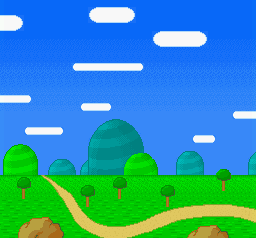 Round 1Action · 10 stagesMario catches the runaway cookie and strikes a pose.
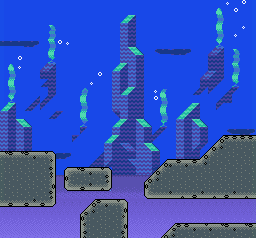 Round 2Action · 10 stagesHe grabs it and is carried off rolling with it.
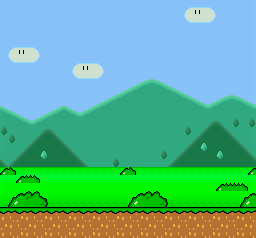 Round 3Action · 10 stagesA much larger cookie chases Mario away.
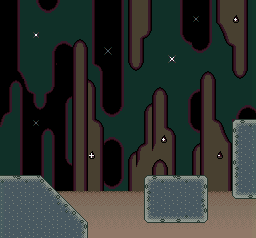 Round 4Action · 10 stagesThe cookie rebounds off a wall and bowls Mario over. The Super NES backdrop is modelled on Chocolate Island 4.
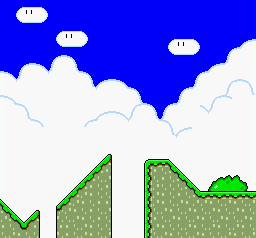 Round 5Action · 10 stagesYoshi eats the cookie, to Mario’s horror.
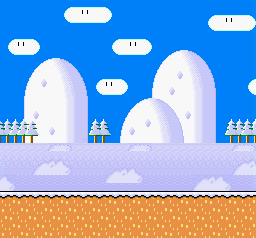 Round 6Action · 10 stagesMario chases it downhill and overtakes it.
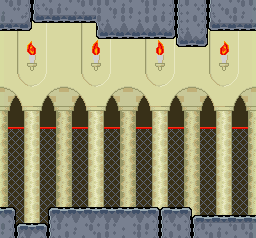 Round 7Action · 10 stagesIt rolls back off a wall and Mario jumps on it.
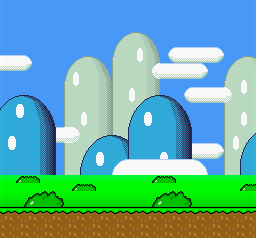 Round 8Action · 10 stagesMario trips over the cookie without seeing it and lands on his back.
 Round 9Action · 10 stagesThe cookie rolls off a cliff and rises as an angel.
 Round 10Action · 10 stages · endingMario and Yoshi catch it together; on Super NES, Peach and Bowser join the celebration.
 VSAll versions5×5 grids, first to 25 points, Yoshi Cookie effects; best of five rounds.


 Heart cookieOne of the five plain shapes.
 Flower cookieA plain shape.
 Diamond cookieA plain shape; an octagon on the Super NES.
 Chequered cookieA plain shape.
 Ring cookieA plain shape.
 BooHidden rounds only.
 BlooberHidden rounds only.
 Jumpin’ Piranha PlantHidden rounds only.
 Super MushroomHidden rounds only.
 Yoshi headThe hidden-round piece shaped like Yoshi’s head.
 Super Mario-kunMangaChef Mario appears in this manga as part of the game’s legacy.
 Print advertsUSA and GermanyMagazine adverts for the game.
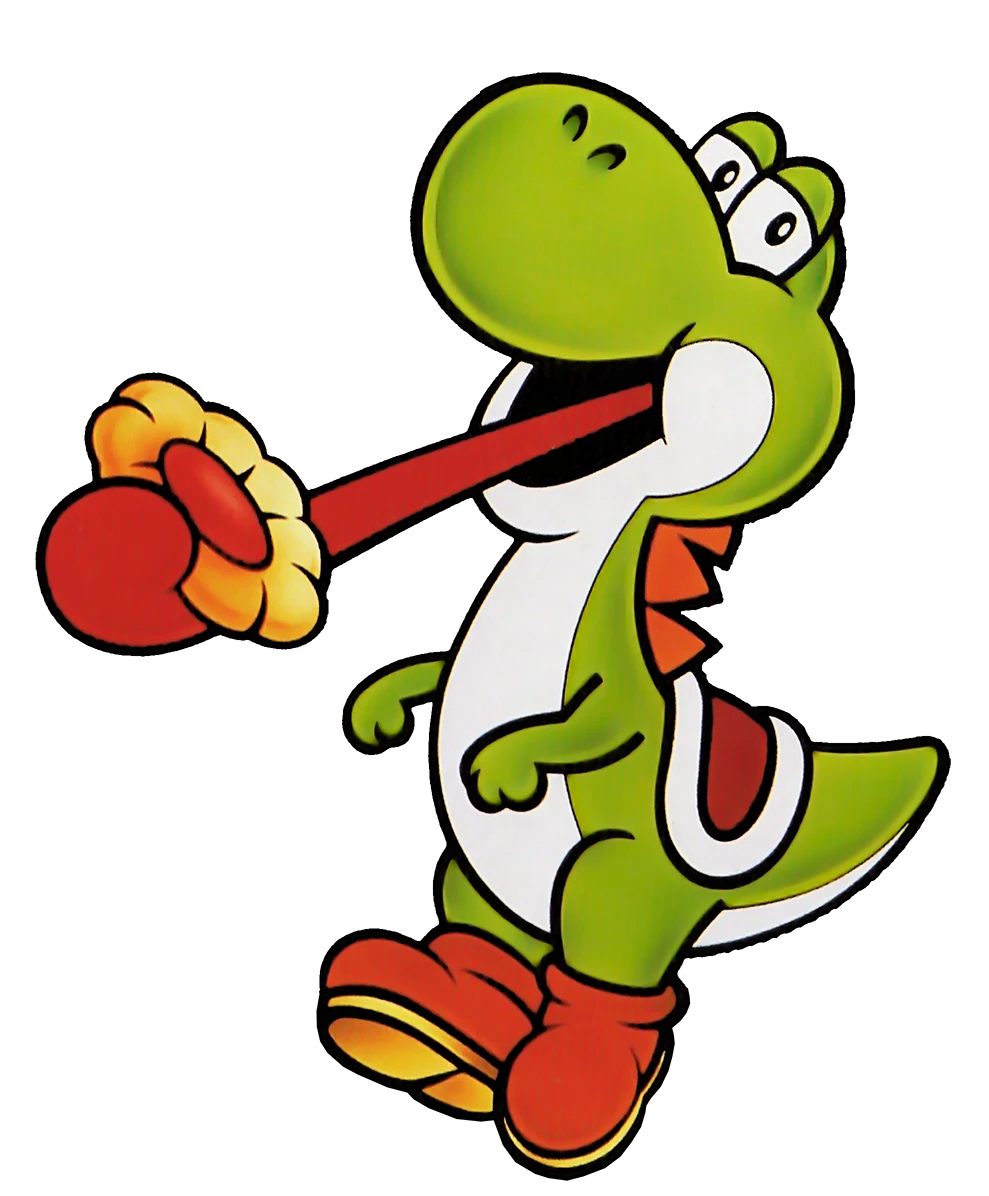 YoshiPartner