
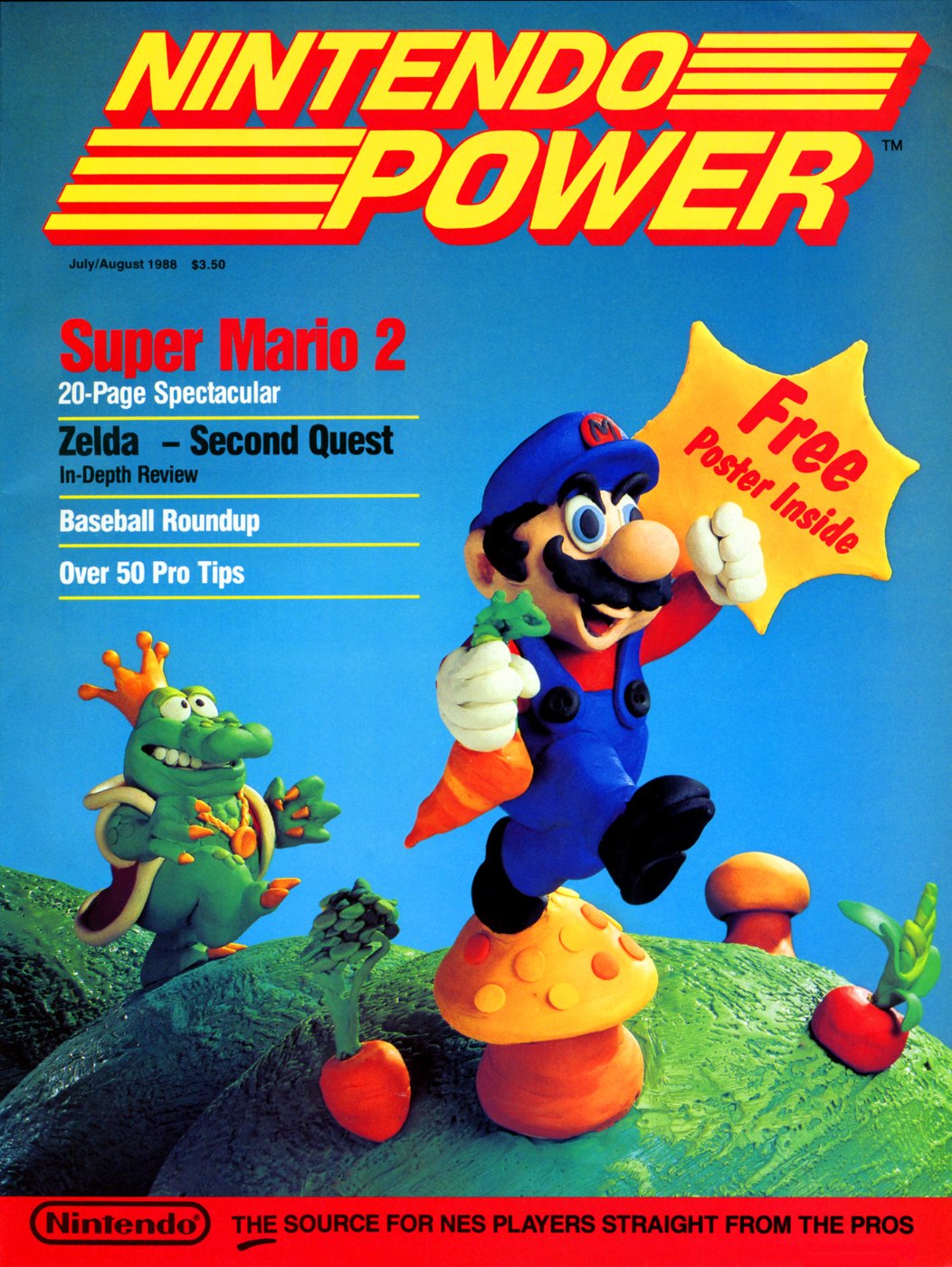
Super Mario in Nintendo Power Magazine
Guides, previews, behind-the-scenes features and competitions on Mario games, scanned from Nintendo Power between 1988 and 1998. From the clay-modelled Super Mario Bros. 2 cover of the very first issue to wall-to-wall Super Mario 64 and Mario Kart 64 coverage in the Nintendo 64 years, this is a decade of Mario as American players first read about him.
Overview
Welcome to the Nintendo Power magazine section. Here you will find articles on the Super Mario Bros. series that were featured in Nintendo Power magazine since 1988, including guides, previews, information on how games were made, tricks and tips from Nintendo and more. Don’t miss the twelve-part Super Mario Adventures comic that ran in the magazine in 1992.
Articles are grouped by year – search for a game or jump straight to a year.
For a whole generation of American and Canadian players, Nintendo Power was where Mario lived between game releases. Because it was Nintendo’s own magazine, it could run maps of every world, previews months ahead of launch, making-of features straight from Kyoto and competitions built around the games. That inside track is what makes these scans fun to read today. You can watch Super Mario Bros. 3 go from preview to making-of feature to an entire issue-sized strategy guide within a year, or follow Super Mario 64 from its first look in Vol. 80 to readers’ game faces in Vol. 96.
The archive covers the magazine’s first ten years, Vols 1 to 106, and is arranged by year, so the jump from NES maps to Super NES features to Nintendo 64 coverage happens as you scroll. Each card opens a gallery of full-page scans. Mario’s main games are all here, but so are the stranger corners of his career: the Super Mario Bros. movie, the edutainment of Mario is Missing, a Domino’s Pizza tie-in and a Taco Bell Mario Kart contest. For the twelve-part comic that ran through 1992, see our Super Mario Adventures section.
- Vol. 1 – where it all began: the Super Mario Bros. 2 cover feature from the first issue.
- Vol. 10 – The Making of Super Mario Bros. 3, with Miyamoto’s concept art.
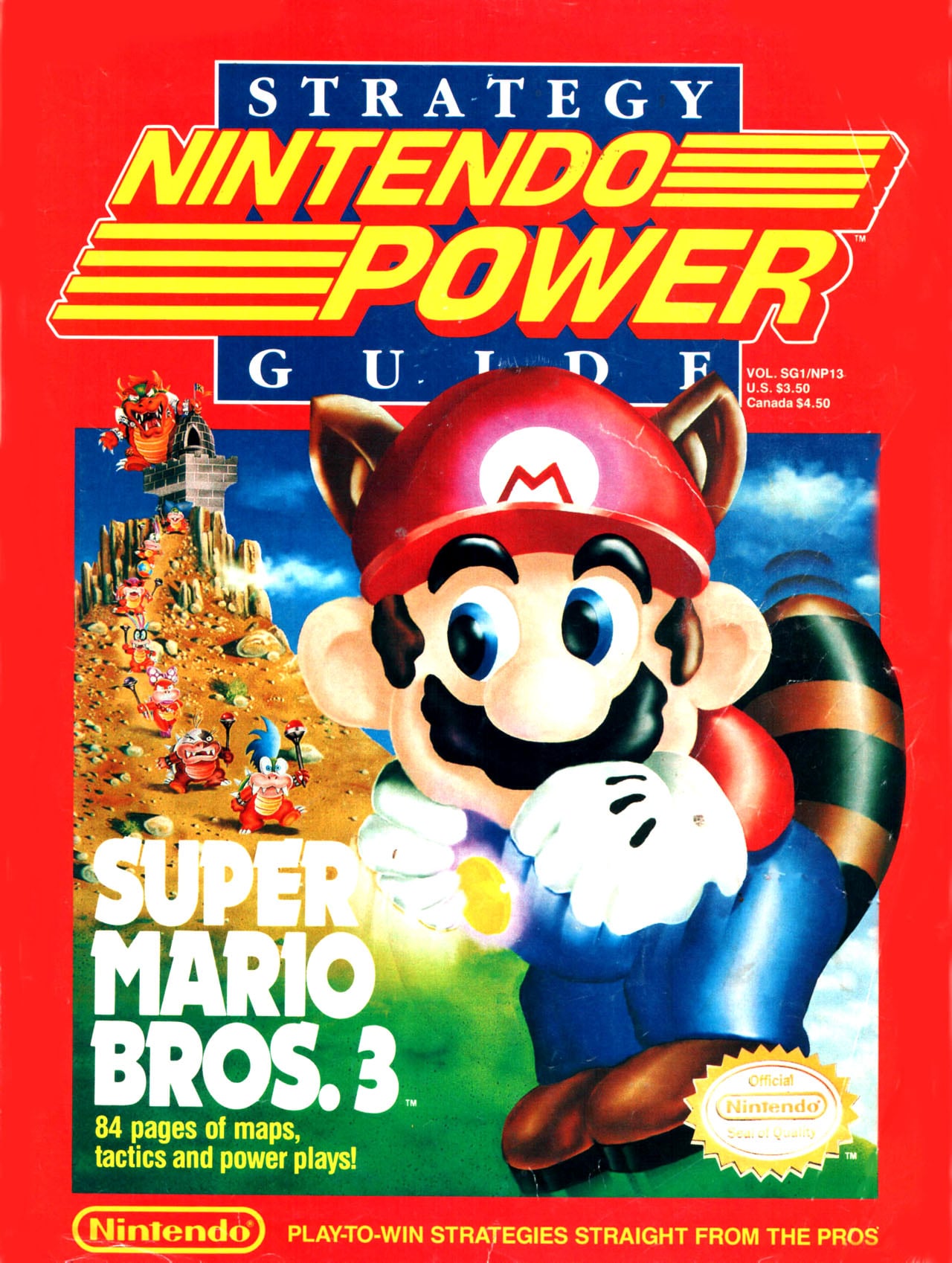
- Vol. 13 – the Super Mario Bros. 3 Strategy Guide, 84 scanned pages of maps and secrets.
- Vol. 88 – the ten-page Super Mario 64 exclusive.
- Vol. 102 – Mario Kart 64 meets fast food in the Taco Bell competition.


Quick Answers
Quick answers to the questions people ask most about Nintendo Power and Mario.
When did Nintendo Power start and end?
The first issue was dated July/August 1988 and the last, Vol. 285, was dated December 2012 and released on 11 December that year. Nintendo of America published it until 2007, when Future US took over. More →
What was on the first Nintendo Power cover?
Super Mario Bros. 2, shown as a scene made from modelling clay with sculpted figures of Mario and Wart. The final issue in 2012 recreated that clay look as a farewell. More →
How many Nintendo Power covers featured Mario?
Lots of them. Mario was on the very first issue in 1988, with Super Mario Bros. 2, and on the very last one, with New Super Mario Bros. U, and on many of the 285 issues in between. The archive below collects the Mario articles from the first decade. More →
Who were Howard and Nester?
The stars of the magazine’s comic strip. Howard was based on Howard Phillips, Nintendo of America’s spokesman and the magazine’s co-editor, and Nester was a character Phillips created for the strip. Howard was written out in 1991 and the strip carried on as Nester’s Adventures until Vol. 55 (December 1993). More →
Did Nintendo Power publish a Super Mario Bros. 3 strategy guide?
Yes. Vol. 13 (1990) was a stand-alone Strategy Guide devoted entirely to Super Mario Bros. 3, the first of a short run of Strategy Guide issues. Our archive has it in full. More →
Where can I read old Nintendo Power Mario articles?
Right here: the archive on this page has 92 Mario-related articles from Vols 1 to 106, scanned page by page and grouped by year. More →
Did Nintendo Power have a Mario comic?
Yes. Super Mario Adventures ran in twelve parts through 1992, followed by two Mario vs. Wario specials. You can read them all in our comics section. More →
Is Nintendo Power coming back?
Not as a magazine. Nintendo revived the name for a podcast in December 2017, hosted by former editor-in-chief Chris Slate; its May 2023 episode on Tears of the Kingdom was announced as the last planned one. More →
Browse the Nintendo Power Archive
Browse by year
1988–1990 · Vols 1–19
12 articlesSuper Mario Bros. 2Nintendo Power Vol. 112 pages Super Mario Bros. 2Nintendo Power Vol. 25 pages
 Super Mario Bros. 1 UP GuideNintendo Power Vol. 7
 Super Mario Bros. 2 – 1 UP GuideNintendo Power Vol. 7
 Super Mario Bros. Super ShowNintendo Power Vol. 72 pages
 SML / Gameboy showcaseNintendo Power Vol. 92 pages
 Super Mario Bros. 3 PreviewNintendo Power Vol. 9
 The Making of SMB3Nintendo Power Vol. 104 pages
 Super Mario Bros. 3 FeatureNintendo Power Vol. 119 pagesSuper Mario Bros. 3 Full guideNintendo Power Vol. 1384 pages
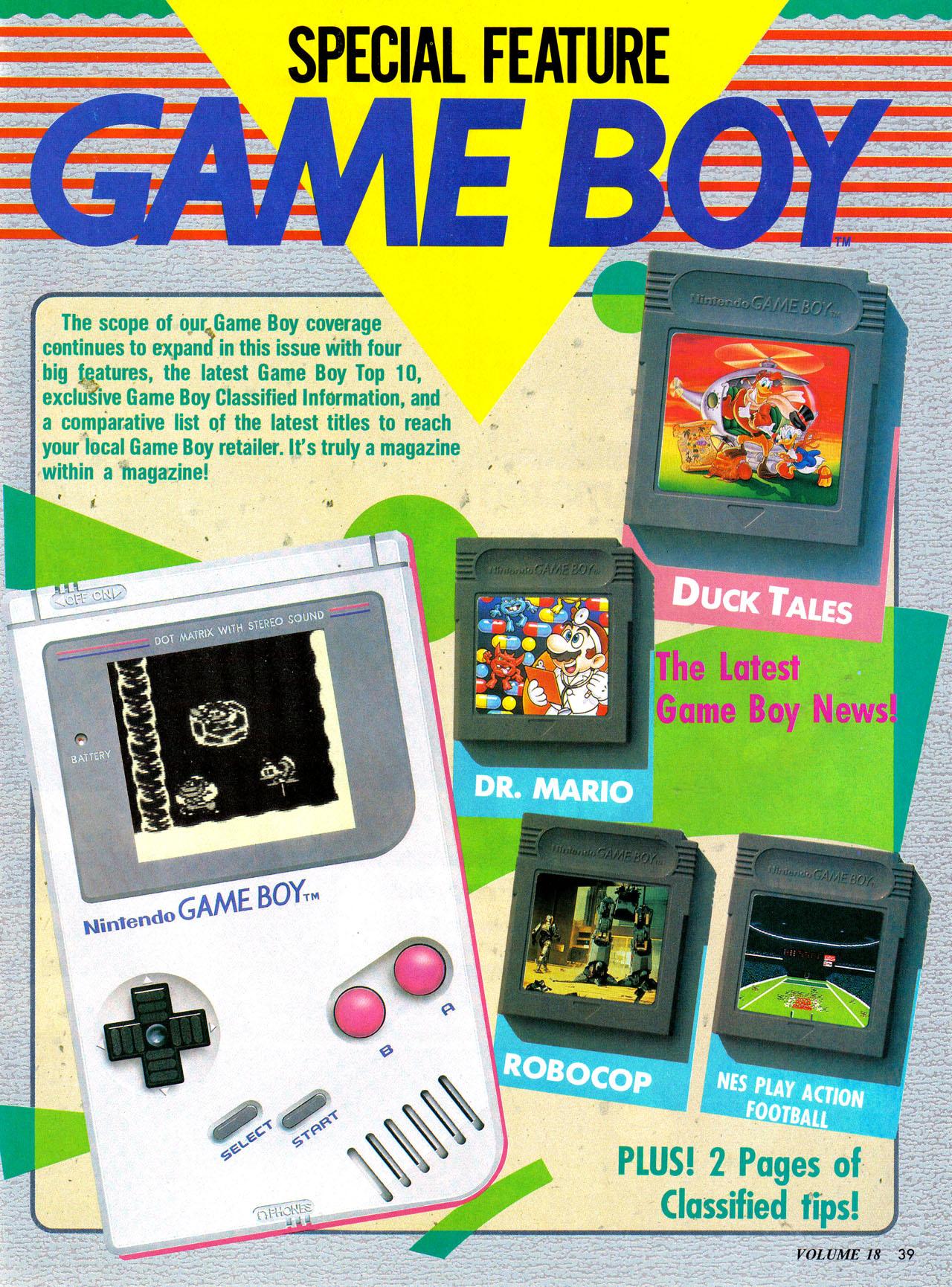 Dr. Mario & GameboyNintendo Power Vol. 182 pages
 Dr. Mario FeatureNintendo Power Vol. 1810 pages
1991 · Vols 20–31
5 articles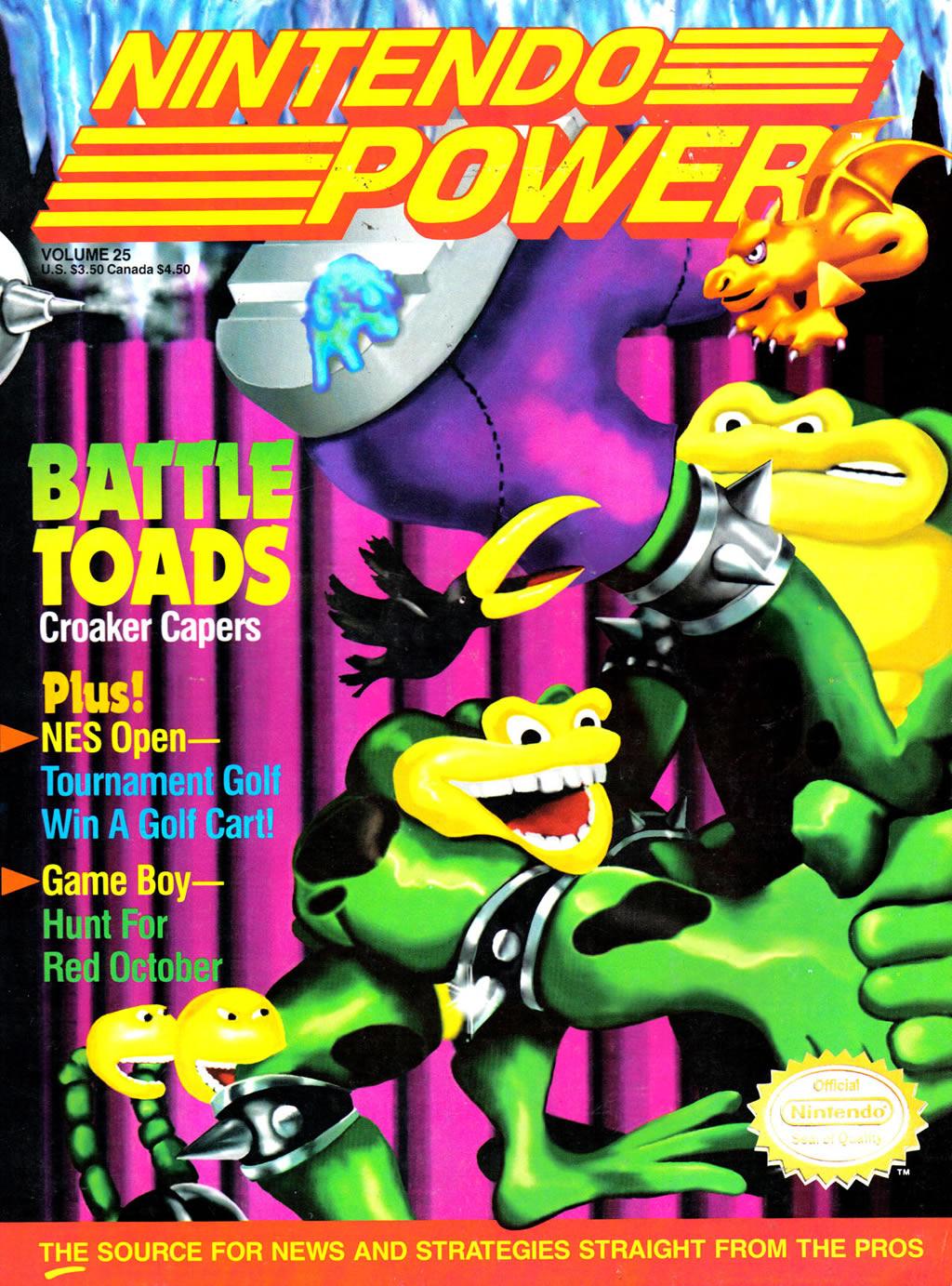


1992 · Vols 32–43
7 articles Yoshi featureNintendo Power Vol. 354 pages
 Super Mario Kart Pak Watch PreviewNintendo Power Vol. 38
 Three random Super Mario themed articlesNintendo Power Vol. 383 pages
 Mario PaintNintendo Power Vol. 399 pages
 Super Mario Kart mini-guideNintendo Power Vol. 4110 pages
 Super Mario Land 2 pre-release featureNintendo Power Vol. 424 pages
 Super Mario Land 2 post-release featureNintendo Power Vol. 438 pages
1993 · Vols 44–55
14 articles Mario Paint 16-page advanced features guideNintendo Power Vol. 4416 pages
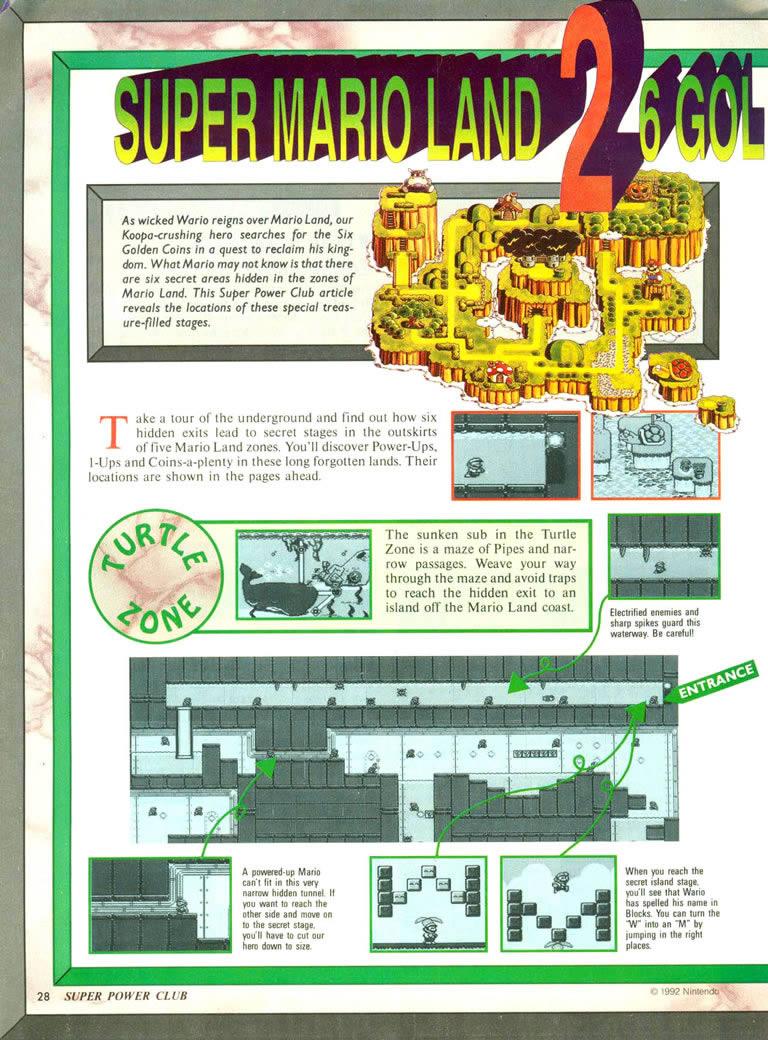 Super Mario Land 2: Secret areas featureNintendo Power Vol. 444 pages
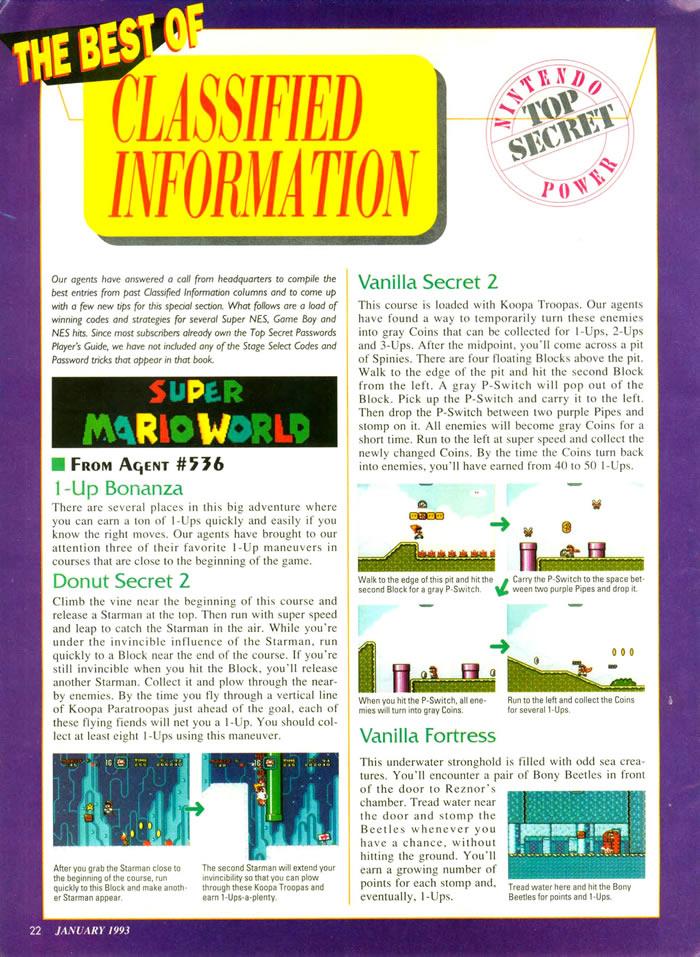 Super Mario World – Bonus 1 Up’s and hidden areas such as Vanilla SecretNintendo Power Vol. 44
 Super Mario Kart CheatsNintendo Power Vol. 45
 Yoshi’s Cookie featureNintendo Power Vol. 474 pages
 Mario Bros. The Movie featureNintendo Power Vol. 485 pages
 Dr. Mario beginner strategiesNintendo Power Vol. 49Mario Paint AdvertsNintendo Power Vol. 49
 Yoshi’s Cookie (SNES) PreviewNintendo Power Vol. 492 pages
 Mario is Missing articleNintendo Power Vol. 502 pages
 Mario meets his fansNintendo Power Vol. 51
 Super Mario Allstars featureNintendo Power Vol. 529 pages
 Super Mario Dominos Pizza competitionNintendo Power Vol. 54
 Yoshi’s Safari featuresNintendo Power Vol. 552 pages
1994 · Vols 56–67
8 articles Super Mario Land 3: Wario Land – massive 16 page guideNintendo Power Vol. 5816 pages
 Super Mario Land 3: Wario Land How To’s in Nintendo Power Vol. 59 & 60Nintendo Power Vol. 592 pages
 Donkey Kong featureNintendo Power Vol. 617 pages
 Donkey Kong Country featureNintendo Power Vol. 644 pages
 Donkey Kong Country feature introducing Kongs Pals and enemiesNintendo Power Vol. 658 pages
 Donkey Kong Country: 10 page strategy & lands guideNintendo Power Vol. 6611 pages
 Wario Blasts explosive previewNintendo Power Vol. 674 pages
 Wario’s Woods options and techniques previewNintendo Power Vol. 674 pages
1995 · Vols 68–79
10 articles Donkey Kong Land pre-release featureNintendo Power Vol. 696 pages
 Dr. Mario & Tetris combo pak previewNintendo Power Vol. 704 pages
 Mario’s Picross “A chip off the old block” featureNintendo Power Vol. 714 pages
 Donkey Kong Land 14-page specialNintendo Power Vol. 7417 pages
 Super Mario World 2 featureNintendo Power Vol. 756 pages
 Virtual Boy Special feature: Mario ClashNintendo Power Vol. 754 pages
 Virtual Boy Special feature: Mario’s TennisNintendo Power Vol. 754 pages
 A behind the scenes look at Donkey Kong Country 2Nintendo Power Vol. 766 pages
 Super Mario RPG ACM Graphics previewNintendo Power Vol. 774 pages
 Super Mario World 2 featureNintendo Power Vol. 7717 pages
1996 · Vols 80–91
21 articles N64 / Super Mario 64 PreviewNintendo Power Vol. 808 pages
 Donkey Kong Country 2 Top 10 tips to getting 102%.Nintendo Power Vol. 814 pages
 Super Mario Kart mini-guideNintendo Power Vol. 826 pages
 Super Mario RPG power previewNintendo Power Vol. 8210 pages
 Super Mario Kart competitionNintendo Power Vol. 832 pages
 Super Mario RPG featureNintendo Power Vol. 838 pages
 Super Mario Allstars featureNintendo Power Vol. 846 pages
 Super Mario 64 featureNintendo Power Vol. 853 pages
 Tetris Attack featureNintendo Power Vol. 862 pages
 Donkey Kong Land 2 featureNintendo Power Vol. 872 pages
 Super Mario 64 previewNintendo Power Vol. 8710 pages
 Tetris Attack featureNintendo Power Vol. 8710 pages
 Yoshi’s Island “Beat the Boss” featureNintendo Power Vol. 872 pages
 Donkey Kong Country 3 previewNintendo Power Vol. 882 pages
 Donkey Kong Land 2 previewNintendo Power Vol. 888 pagesSuper Mario 64 exclusiveNintendo Power Vol. 8810 pages
 Donkey Kong Country 3: Dixie Kongs Double Trouble teaserNintendo Power Vol. 896 pages
 Super Mario 64 competitionNintendo Power Vol. 892 pages
 Super Mario RPG strategyNintendo Power Vol. 894 pages
 Tetris Attack featureNintendo Power Vol. 894 pages
 Mario Kart 64 previewNintendo Power Vol. 912 pages
1997 · Vols 92–103
11 articles Mario Kart 64: 11 page “crash course”Nintendo Power Vol. 9312 pages
 Mario Kart 64 driver data cardsNintendo Power Vol. 942 pages
 Mario Kart 64 Power Cup competitionNintendo Power Vol. 943 pages
 Mario Kart 64 Time Trials: Be the Ghost with the mostNintendo Power Vol. 948 pages
 Super Mario 64 questions and answersNintendo Power Vol. 94
 Super Mario RPG “Beat the bosses”Nintendo Power Vol. 946 pages
 Game & Watch Gallery featureNintendo Power Vol. 954 pages
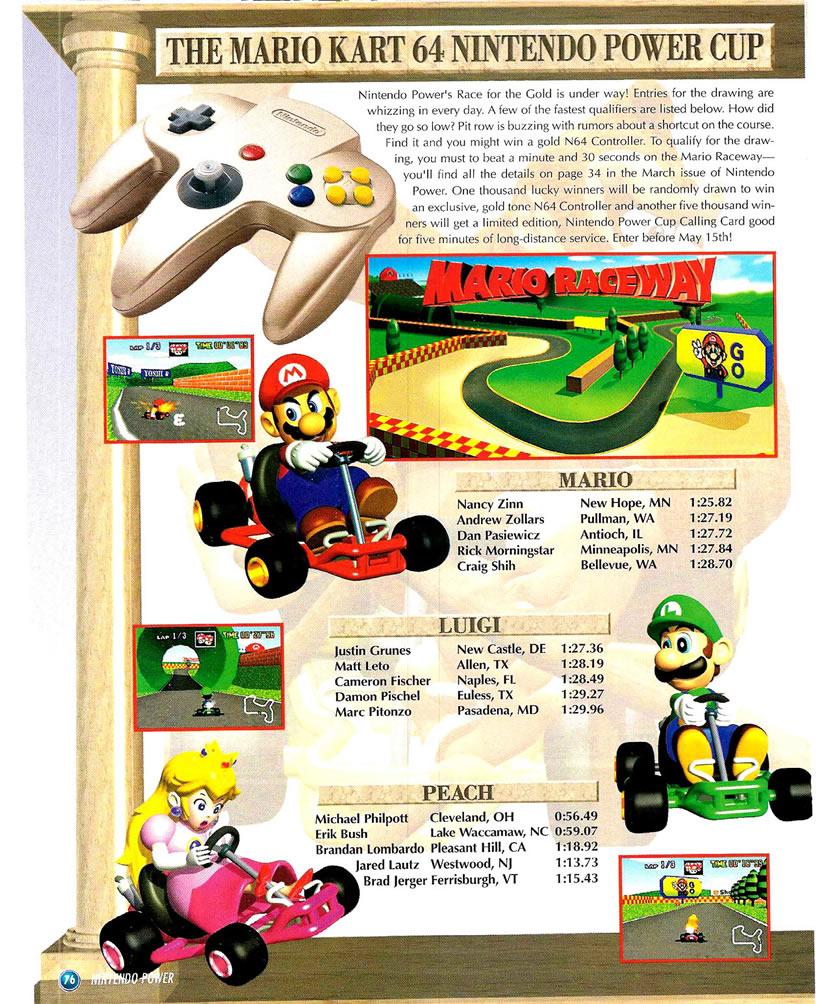 Mario Kart power cupNintendo Power Vol. 962 pages
 Super Mario 64 game-facesNintendo Power Vol. 962 pages
 Yoshi’s Story previewNintendo Power Vol. 1002 pagesMario Kart 64 Taco Bell competitionNintendo Power Vol. 1022 pages
1998 · Vols 104–115
4 articles


Nothing matches that search – try a shorter name.
Mario and Nintendo Power: A Short History
How a members’ newsletter became the magazine that taught North America to play Mario, and what its first ten years of Mario coverage look like from the inside.
From Fun Club News to Vol. 1 (1987–1990)
Before the magazine there was the Nintendo Fun Club News, a free newsletter, first issued in 1987, for members of the Fun Club, whose first “President” was Howard Phillips. It only covered Nintendo’s own games, and after seven issues it was wound up in mid-1988. In its place came Nintendo Power, set up by Gail Tilden of Nintendo of America’s marketing team with Phillips’s backing, and built to cover games from licensees such as Konami and Capcom too.
Mario led from the front. The first issue, dated July/August 1988, put Super Mario Bros. 2 on its cover and gave it twenty pages inside (pages 6–25): the story, the four playable heroes, items, enemies, a two-page poster and guides to the opening levels. Elsewhere in the issue, Counselors’ Corner explained an endless 1-up trick in the original Super Mario Bros., which also sat fourth in the first Top 30 chart. Roughly 3.6 million copies were printed, and every Fun Club member was sent one.
The magazine came out every other month at first. In 1990 Nintendo began slipping stand-alone Strategy Guides between the regular issues, each counted as a volume of the magazine. The first, Vol. 13, was all about Super Mario Bros. 3. From 1991 Nintendo Power was monthly.
Landmark Mario issues
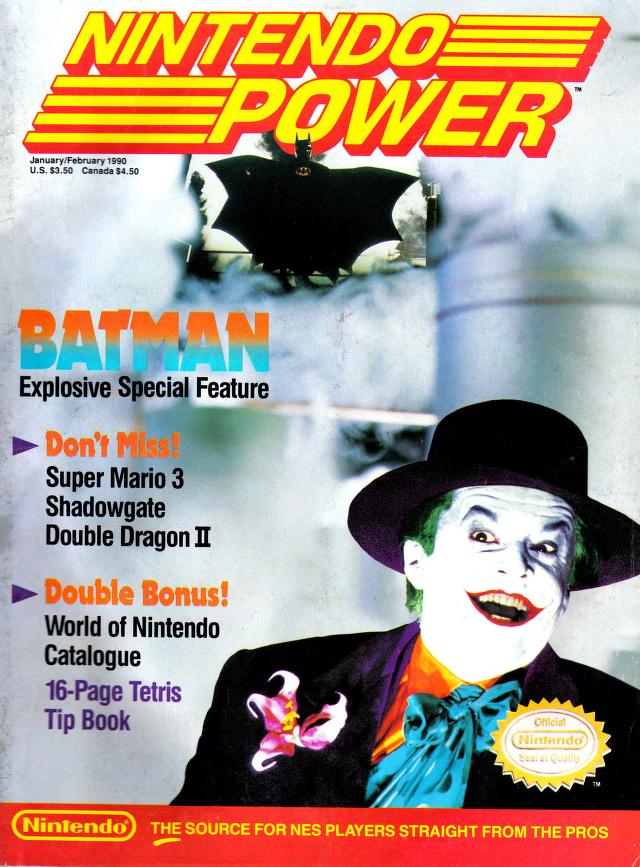
The Super Mario Bros. 3 build-up is the magazine at its best. Vol. 9 previewed the game; Vol. 10 (January/February 1990) ran a four-page making-of feature on pages 20–23 with photos of concept art, in which Shigeru Miyamoto said he wanted a game that players of every skill level could enjoy, plus a preview that scored it 4.5 in every category; Vol. 11 followed with a full feature; and Vol. 13 handed the whole issue over to a strategy guide. The same Vol. 10 had a reader asking, in Player’s Pulse, whether Mario had had his nose done. The editors assured him he had not.
Super Mario World got the same treatment in 1991, with features in Vols 26 and 27, a sixteen-page guide in Vol. 28 and secrets in Vol. 29. Then came 1992 and a different kind of landmark: the Super Mario Adventures comic, which ran in every issue of the year alongside an adaptation of A Link to the Past. The fiftieth issue, Vol. 50 (July 1993), marked the magazine’s fifth anniversary and offered readers the comic as a book.
Along the way the archive picks up the oddities that only a house magazine would print: a feature on the Super Mario Bros. movie in Vol. 48, a report on Mario meeting his fans in Vol. 51 and a Domino’s Pizza competition in Vol. 54.


Super Mario 64 and the Nintendo 64 years
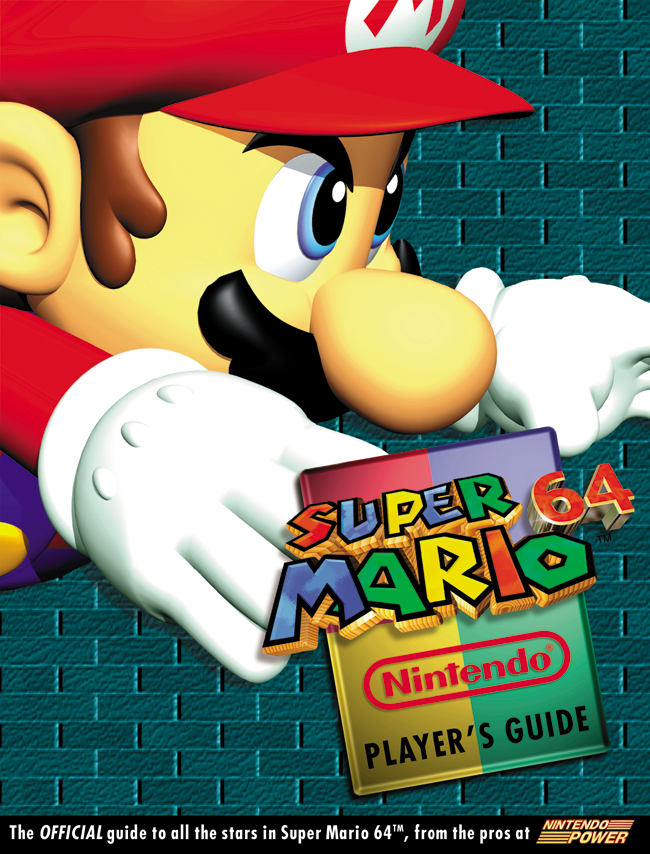
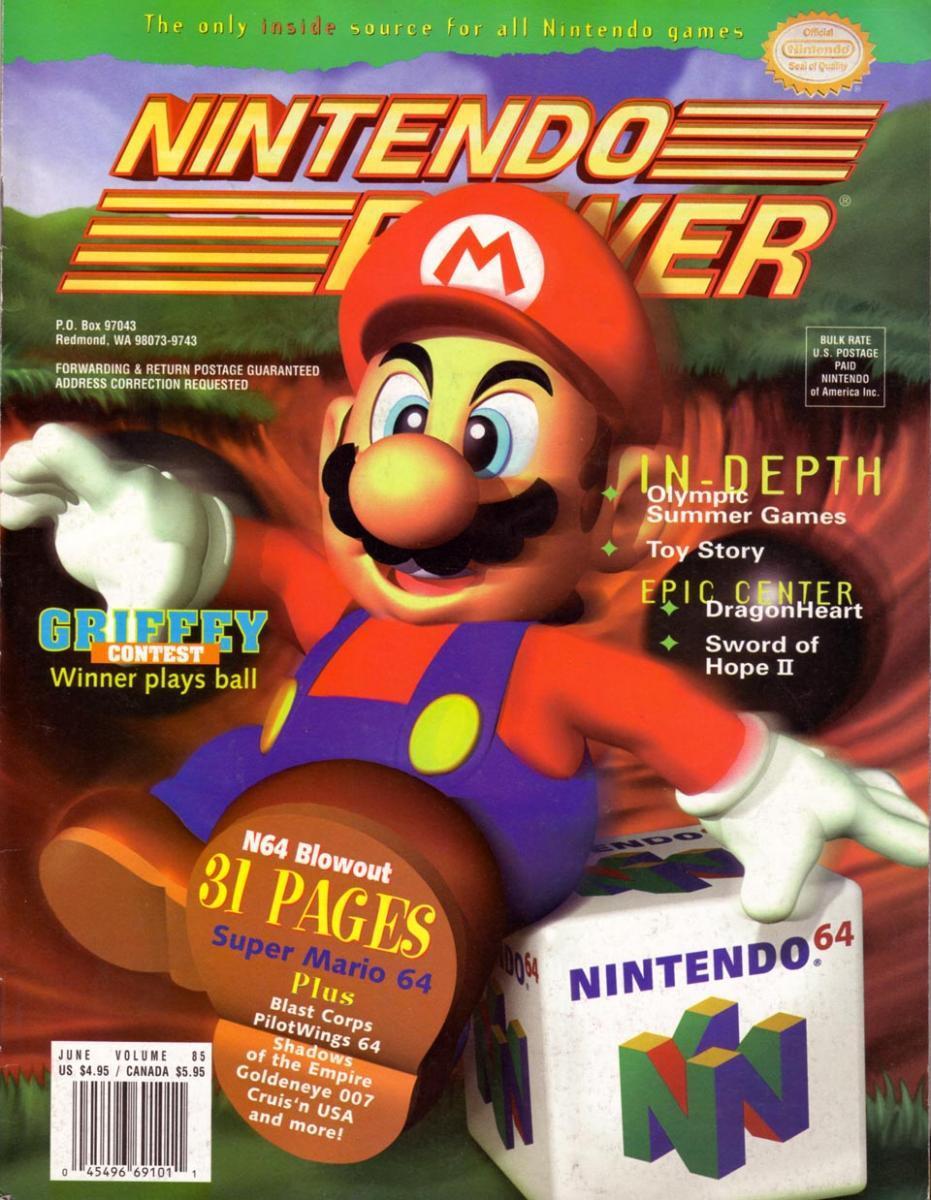
No single Mario game turns up in more of our articles than Super Mario 64, which appears in seven separate articles. Vol. 80 (1996) opened with an eight-page first look at the Nintendo 64 and its launch game; Vol. 85 (June 1996) put Mario on the cover; Vol. 86 shared its cover with Super Mario RPG, Donkey Kong Country 2 and Tetris Attack; Vol. 87 ran a ten-page preview; and Vol. 88 followed with a ten-page exclusive and another Mario cover. After launch came a reader competition in Vol. 89, a questions-and-answers page in Vol. 94 and a gallery of players’ “game faces” in Vol. 96, and the magazine also published a full Player’s Guide.
There was a personal link, too. Leslie Swan, a senior editor of Nintendo Power, wrote the English script for Super Mario 64 and voiced Princess Peach in its international release. Mario Kart 64 then matched the platformer article for article: a preview in Vol. 91, a cover in Vol. 93 with an eleven-page “crash course”, driver data cards, a time-trial ghost guide and a Power Cup contest in Vol. 94, and in Vol. 102 a Taco Bell competition. By 1998 the archive closes with Yoshi’s Story (four articles, Vols 100–106) and a ten-page Wario Land 2 guide.
Howard & Nester
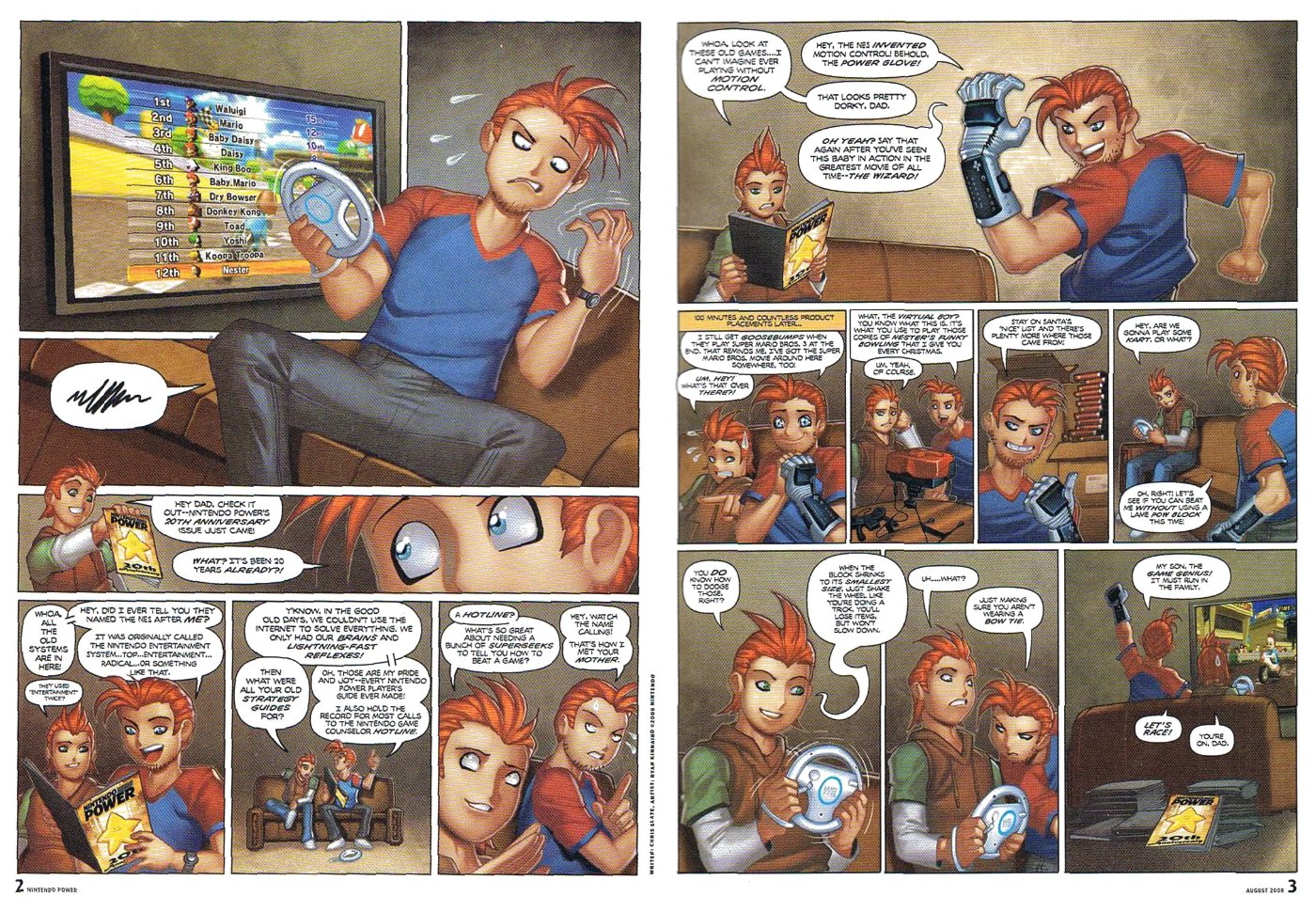
The magazine had its own comic strip, Howard & Nester. Howard was based on Howard Phillips himself, Nintendo of America’s spokesman and the magazine’s co-editor, and Nester was a character Phillips created to star beside him. From 1989 to 1993 even the Nintendo Power Awards trophies were Nester-shaped, and known as “Nesters”.
In June 1991 Phillips was written out. The following issue the strip became Nester’s Adventures, which lasted until Vol. 55 (December 1993). Nester never quite left, though. Issue 100 showed him as a college student, issue 231 made him a dad playing Mario Kart Wii with nods to Super Mario Bros. 3, the Super Mario Bros. movie and the POW Block, and the very last issue had a final strip, “Nester & Max”, in which his son asks him to join a game of New Super Mario Bros. U, with the clay Mario and Wart from the first cover in the background.
Future, the final issue and the podcast
The magazine changed with its audience. Outside advertising arrived in mid-1998, a 2005 redesign added more staff reviews and a bigger letters section, and a spin-off, Nintendo Power Advance, ran for four issues from 2001, the last of them a guide to Super Mario Advance 2. On 19 September 2007 Nintendo announced that Future US would take over publishing; its first issue, Vol. 222, was dated December 2007.
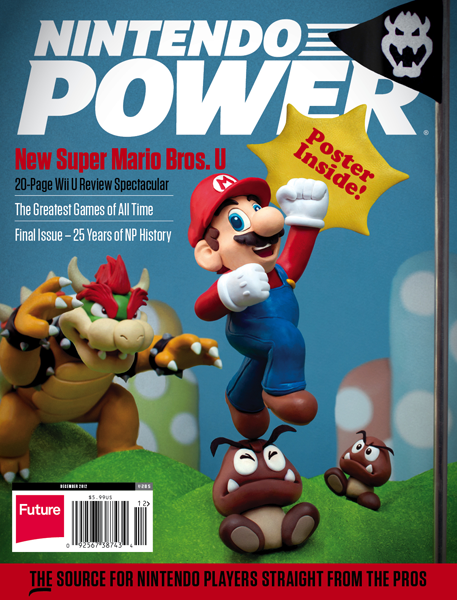
On 21 August 2012 Nintendo said it would not renew the licence. The final issue, Vol. 285, went on sale on 11 December 2012 with New Super Mario Bros. U on a cover that deliberately recreated the clay-sculpted look of Vol. 1. Circulation that year stood at about 475,000. The name has lived on since: the old tips hotline answered calls again as automated messages for three days in November 2016, and in December 2017 Nintendo launched a Nintendo Power podcast with former editor-in-chief Chris Slate as host, which wound down after its May 2023 Tears of the Kingdom episode.
What the archive shows
Read the archive from top to bottom and you can see the magazine change. The NES years are dense, practical and map-heavy: full guides, 1-up hunts, the Super Mario Bros. Super Show and a Game Boy showcase for Super Mario Land. The Super NES era brings bigger features and more side projects: three Mario Paint articles (one of them a sixteen-page guide to its advanced features), five on Super Mario Kart, three on Super Mario Land 2 and a sixteen-page Wario Land guide in Vol. 58.
From 1994 the Donkey Kong games take over the conversation, with twelve articles between them, and 1995 brings Virtual Boy features on Mario Clash and Mario’s Tennis. The Nintendo 64 years are the most interactive of all, as previews give way to competitions, reader photos and question pages. Taken together, the 92 articles are a snapshot of how Nintendo itself wanted Mario to be seen, one issue at a time.
Timeline of Key Mario Issues
The Mario milestones in Nintendo Power’s 24 years, with the issues you can read in our archive linked.
Key Mario issues
- Nintendo Fun Club News 1987–1988The Fun Club’s free members’ newsletter runs for seven issues.
- Vol. 1 Jul/Aug 1988Super Mario Bros. 2 on a clay-modelled cover and twenty pages inside. Read it.
- Vol. 7 19891-up guides for Super Mario Bros. and Super Mario Bros. 2, plus the Super Mario Bros. Super Show.
- Vol. 9 1989A Super Mario Bros. 3 preview and a Super Mario Land showcase.
- Vol. 10 Jan/Feb 1990The Making of Super Mario Bros. 3.
- Vol. 13 1990The Super Mario Bros. 3 Strategy Guide, the first of the Strategy Guide issues. Read it.
- Vol. 18 1990Dr. Mario on the cover, with a ten-page feature.
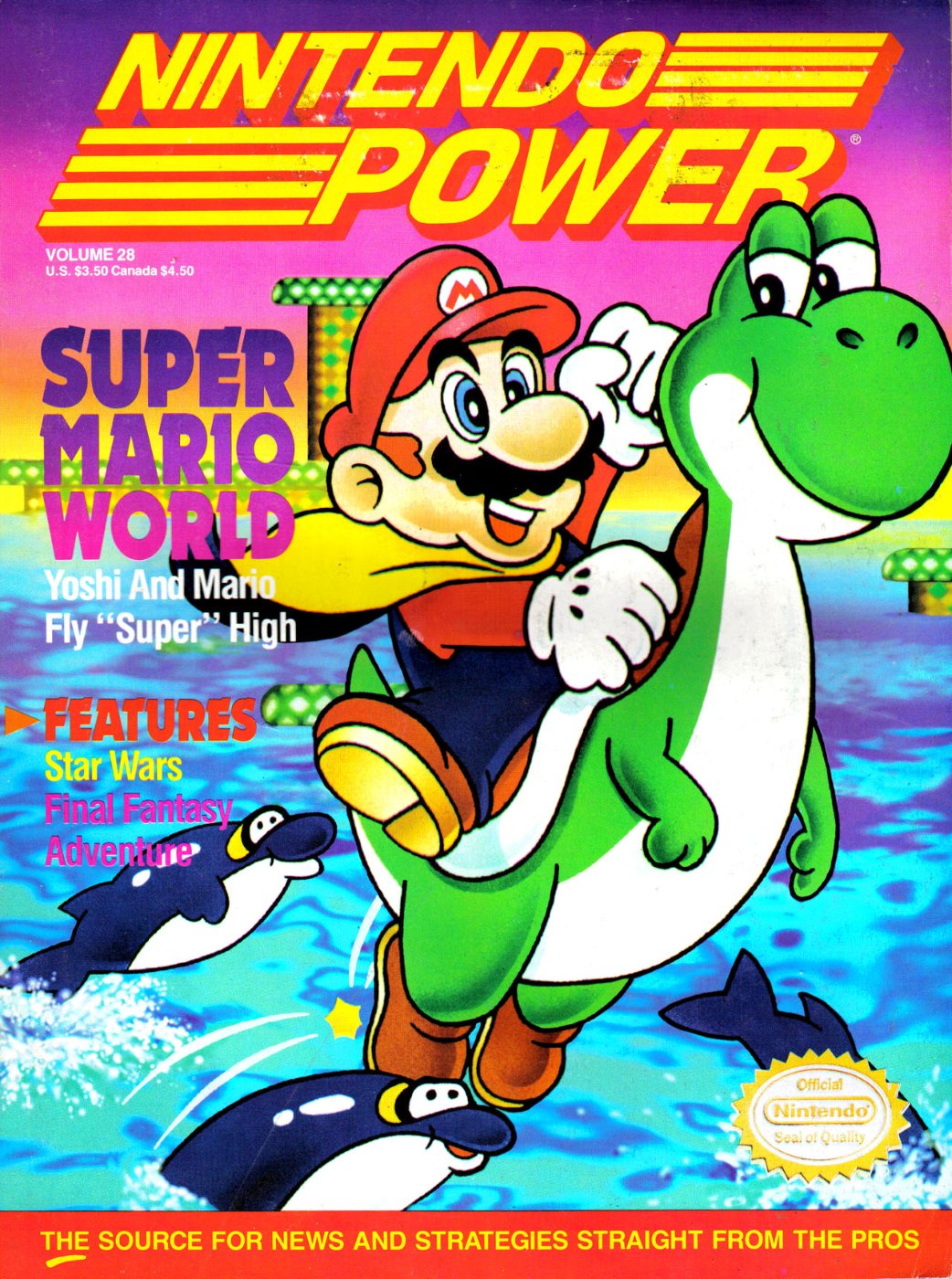
- Vols 26–29 1991Super Mario World features, a sixteen-page guide (Vol. 28, also a cover) and secrets.
- Vols 32–43 1992The Super Mario Adventures comic runs all year; Mario Paint (Vol. 39) and Super Mario Kart (Vol. 41) take covers.
- Vol. 50 Jul 1993Fiftieth issue and fifth anniversary.
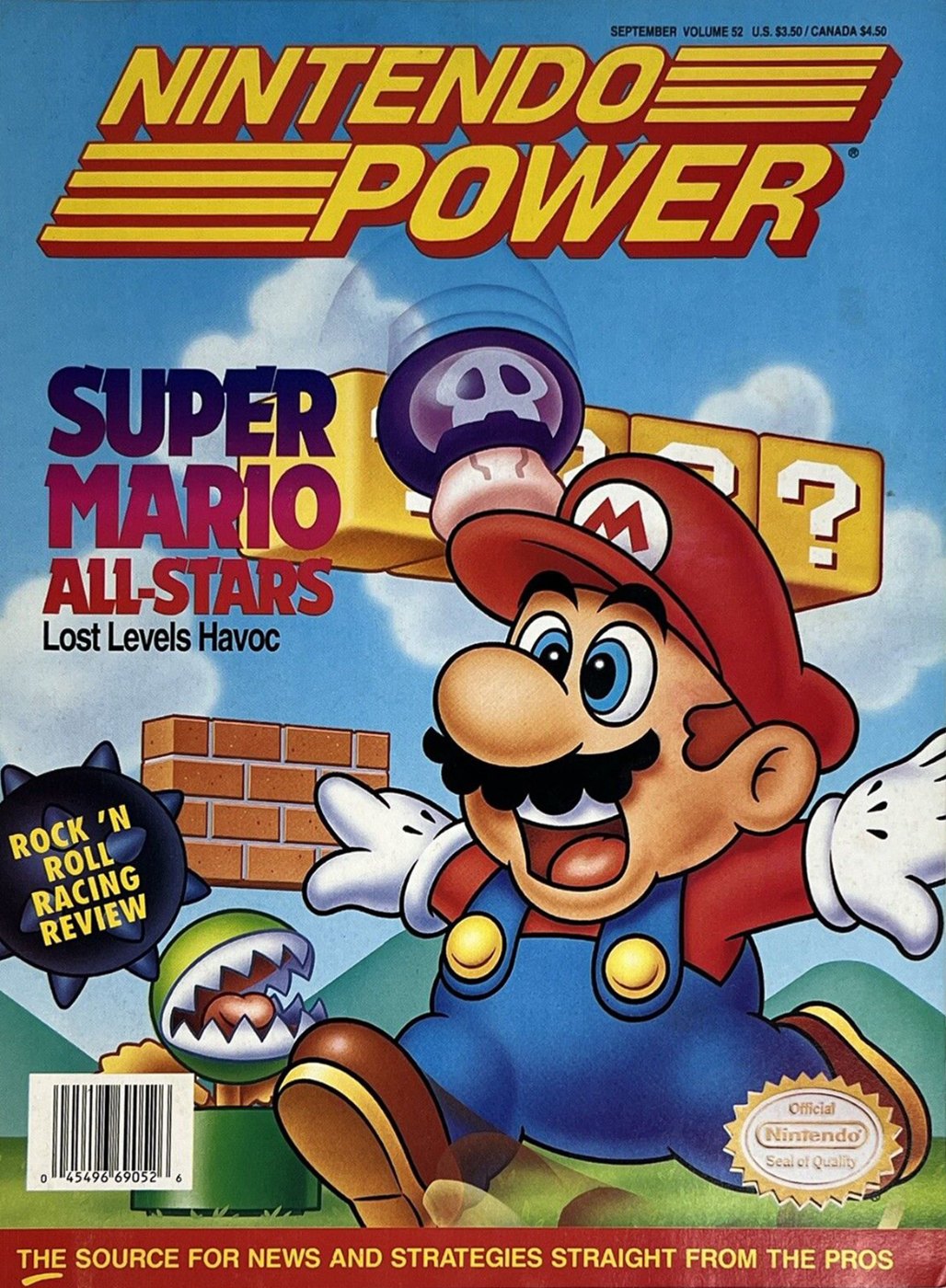
- Vol. 52 1993Super Mario All-Stars cover and nine-page feature.
- Vol. 55 Dec 1993Last instalment of Nester’s Adventures.
- Vol. 58 1994Wario Land: Super Mario Land 3 cover and sixteen-page guide.
- Vol. 77 1995Super Mario World 2: Yoshi’s Island cover.
- Vols 80–96 1996–1997Super Mario 64: first look (Vol. 80), covers on Vols 85, 86 and 88, competition, Q&A and game faces.
- Vol. 93 1997Mario Kart 64 cover and crash course.
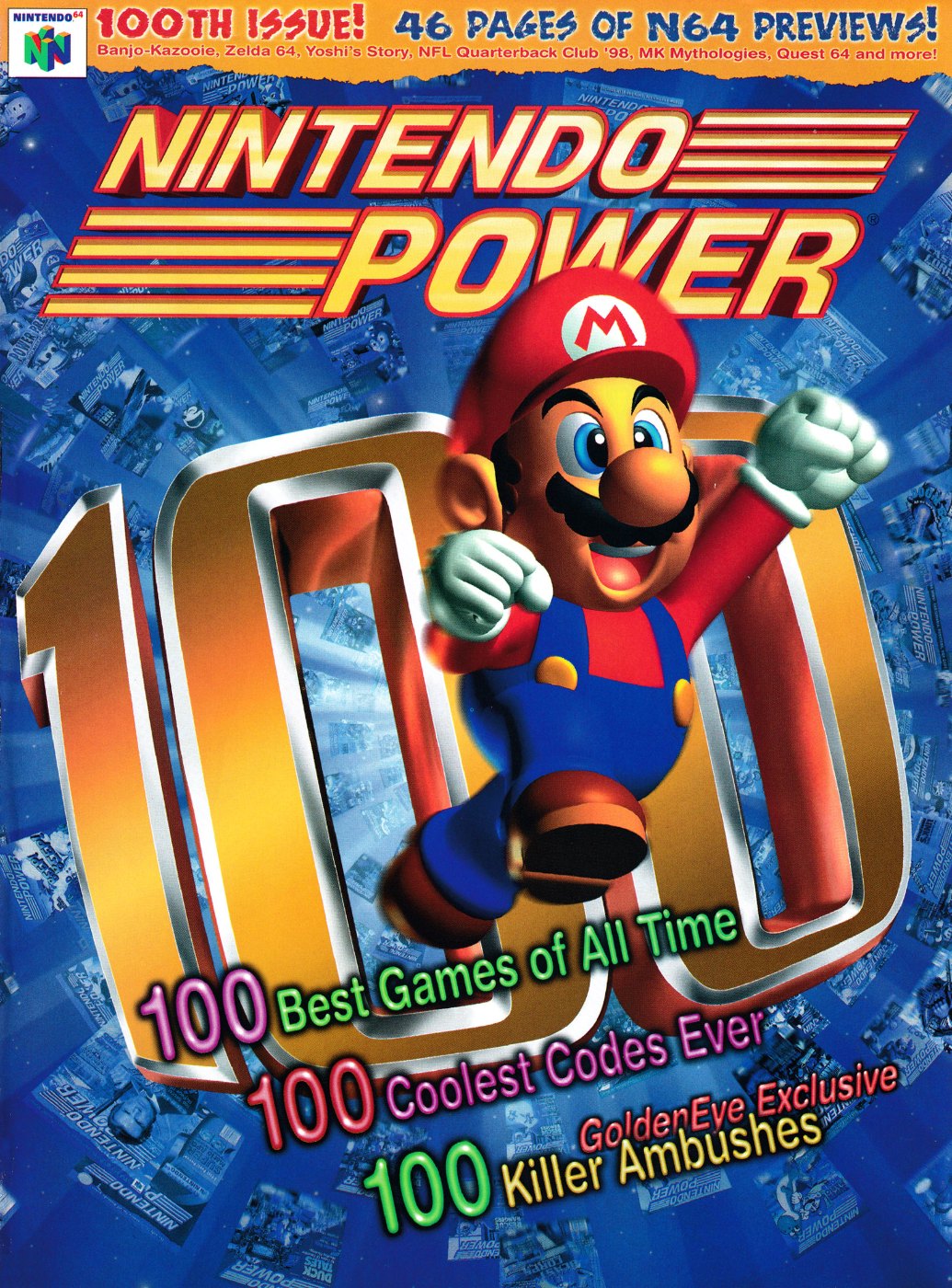
- Vol. 100 1997Mario on the cover of the 100th issue with a golden Game Boy Pocket.
- Vol. 106 1998Yoshi’s Story secrets and a Wario Land 2 guide close our archive.
- Vol. 222 Dec 2007First issue from new publisher Future US.
- Vol. 285 Dec 2012Final issue: New Super Mario Bros. U on a clay cover that echoes Vol. 1.
- Podcast Dec 2017Nintendo Power returns as a podcast hosted by Chris Slate (last planned episode May 2023).
Trivia & Interesting Facts
- In the very first Top 30 chart (Vol. 1), Super Mario Bros. was fourth, while the arcade-era Mario Bros. scraped in at 25th.
- Vol. 1’s Counselors’ Corner was already teaching an infinite 1-up trick for Super Mario Bros.; our archive has a whole 1-up guide from Vol. 7.
- A reader wrote in to Vol. 10 to ask whether Mario had had his nose fixed. The magazine replied that, as far as it knew, Mario had not had cosmetic surgery.
- Vol. 10’s NES Journal reported on contest winners who got to play Super Mario Bros. 3 at an awards do held at Cafe Mario.
- The Nintendo Power Awards trophies handed out from 1989 to 1993 were statuettes of Nester, nicknamed “Nesters”.
- The clay models of Mario and Wart made for the first cover in 1988 turn up again in the final Nester comic, 24 years later.
- Leslie Swan, the magazine’s senior editor who polished the English of Super Mario Adventures, became the voice of Peach in the international version of Super Mario 64.
- The fourth and final issue of the spin-off Nintendo Power Advance was a guide to Super Mario World: Super Mario Advance 2.
- The Nintendo Power Line tips hotline ran from 1988 to June 2010, and came back as recorded messages for three days, 11–13 November 2016.
- In the 20th-anniversary comic (issue 231), a grown-up Nester is playing Mario Kart Wii.
Mario on the Cover
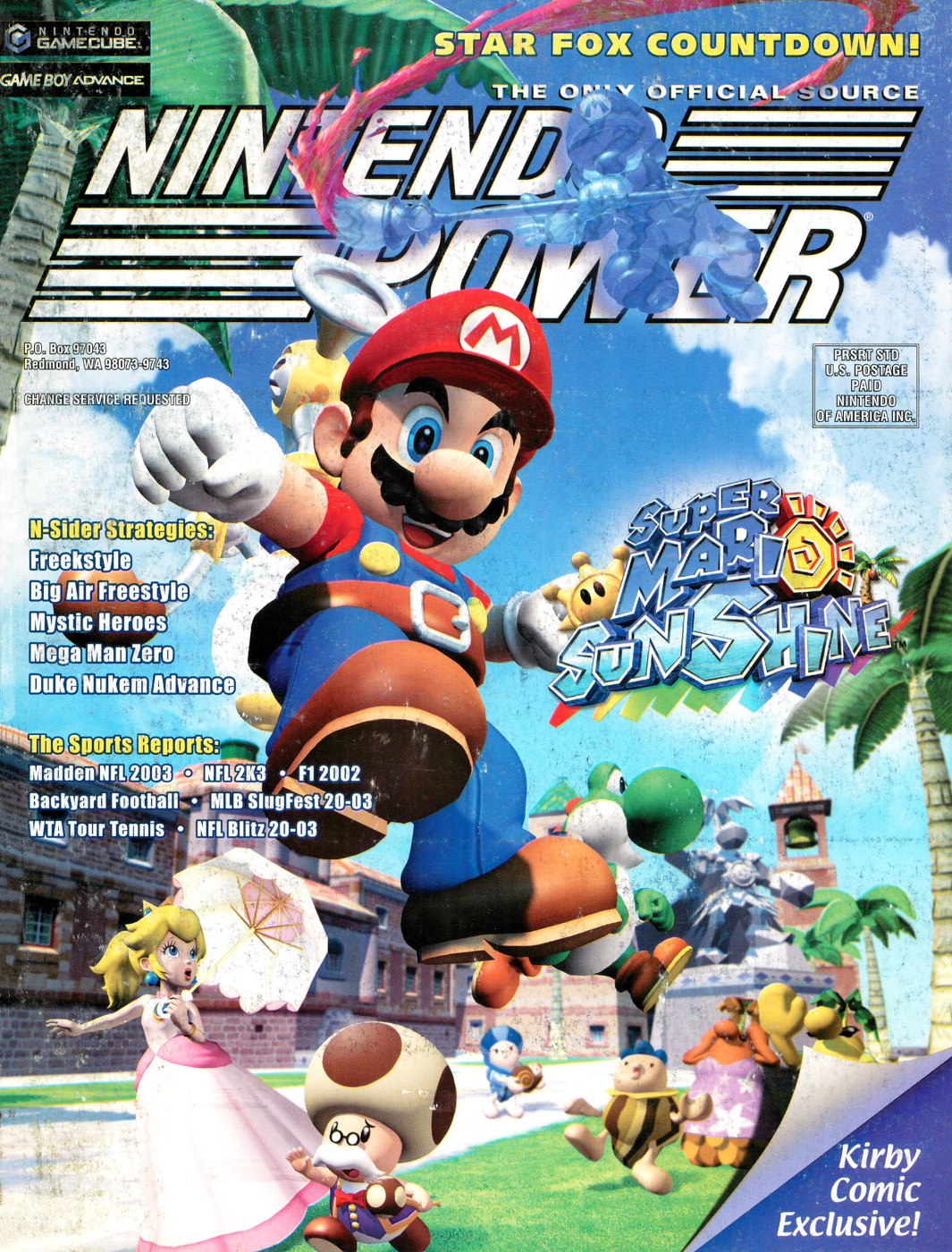
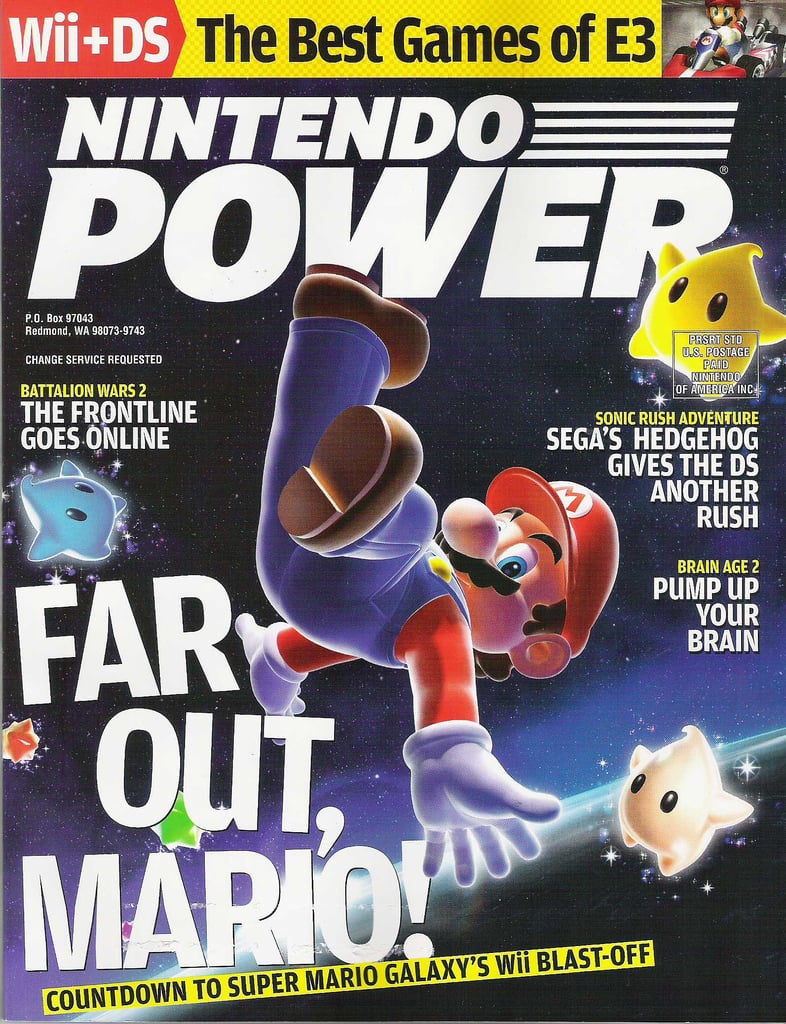
Mario fronted Nintendo Power again and again over its 285 issues. Here are some of the best covers, from the NES to the Wii.
Sources
Every fact on this page was checked against the 10 sources listed here.
Show sources
Super Luigi Bros, Super Mario in Nintendo Power Magazine · Wikipedia, Nintendo Power · GameSpot, Final issue of Nintendo Power pays homage to origin · Digital Game Museum, Nintendo Power Strategy Guide · Internet Archive, Nintendo Power Strategy Guide: Super Mario Bros. 3 · Super Luigi Bros, Super Mario Adventures Comics · Super Mario Wiki (4 articles)
Images: Mario and all related characters, artwork and screenshots are © Nintendo; other artwork, covers and scans are © their respective owners. Images are used here for commentary and reference.