97 galleries3,550 artworks13 platforms1981–2014Renders, key art & concept artFrom Kotabe to CG
Super Mario Official Artwork
Official renders, character art and concept sketches from Nintendo: 97 galleries and around 3,550 pictures, filed by console from the arcade to the Wii U and covering Mario games from Donkey Kong to Mario Kart 8.
Underneath the archive is the story of how Mario was drawn: from Shigeru Miyamoto’s pixel-sized carpenter of 1981 and Yoichi Kotabe’s friendly house style to the computer renders of the mid-1990s and the hand-drawn art that never quite went away.
Galleries:97, one per game or theme
Artworks:About 3,550 in all
Platforms:13: Arcade, NES, Game Boy, Super Nintendo, Virtual Boy, Nintendo 64, Game Boy Colour, Game Boy Advance, GameCube, DS, Wii, 3DS and Wii U
Welcome to our rendered artwork section, comprising lots of galleries of official artwork from Nintendo used in the marketing and design of their games, or sometimes even from their manuals, magazines or other sources. We have a vast selection of official high resolution artwork covering the earliest games in the series like Donkey Kong way back in 1981 to the most modern games like Mario Kart 8.
Each card below shows one piece of art from that gallery. Galleries are grouped by console – search for a game or jump straight to a platform, and click any image inside a gallery for the full-size version.
Official artwork is the Mario you meet before the console is even switched on: the leaping figure on the box, the little drawings in the instruction booklet, the poster on the bedroom wall and, these days, the glossy character render on a shop page. For its first fifteen years it was drawn by hand, and it had a job the games could not do. In 1981 Mario was a handful of pixels on a 16-by-16 grid, so the paintings had to tell you he was a cheerful little man in a cap and overalls. From the mid-1990s more and more of it was rendered from 3D models, yet Nintendo’s illustrators have never entirely put their pencils down, and the history below follows that journey from Miyamoto’s first sketches to Super Mario Bros. Wonder.
The archive is filed by console, oldest first, and most cards hold one game. A few big ones are split: Super Mario World has three galleries (Mario, Yoshi and Peach; items and logos; enemies and bosses), Super Mario 64 has two and Mario Golf: World Tour three. If you only have ten minutes, start with the 204 characters, enemies and bosses in the Super Mario RPG gallery, the concept art in the Donkey Kong set and the Super Mario Galaxy collection, which mixes finished art with early designs. For the pictures printed on the packaging see the Box Art archive, and for the pixels themselves the Sprite Archive.
Highlights
Super Mario RPG: 204 characters, enemies and bosses, the largest gallery here.
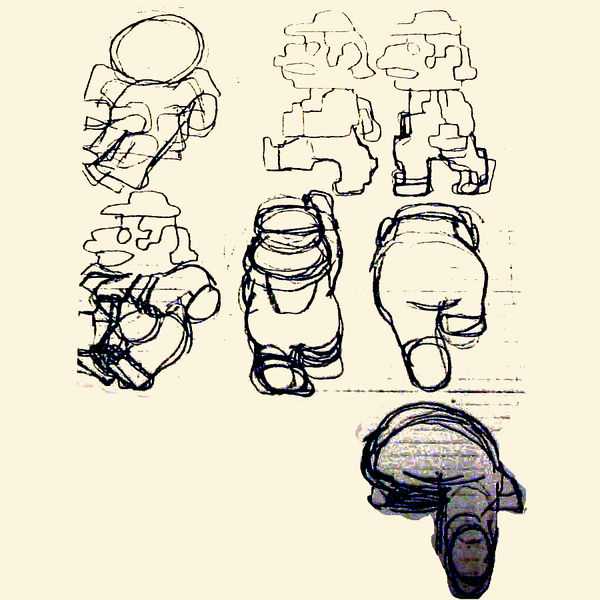
Donkey Kong: seven pieces of concept art from where it all began.
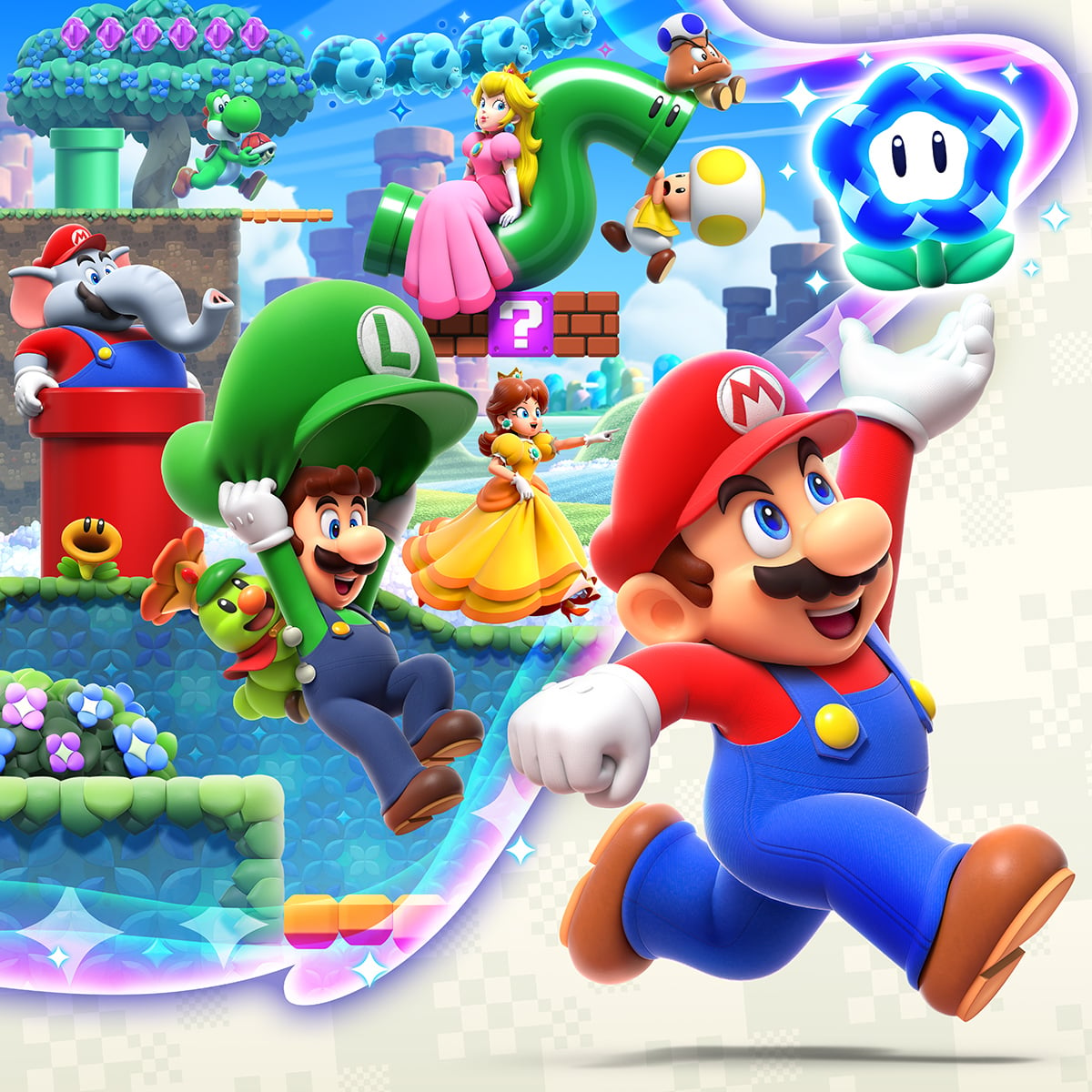
Super Mario Bros. (1985): the key art for the box, drawn by Shigeru Miyamoto himself.Super Mario 64 (1996): the polygon Mario leaps off the globe.Super Mario Bros. Wonder (2023): key art for the most expressive 2D Mario yet.
Quick Answers
The questions people most often ask about Mario’s official art, answered briefly. Follow the links for the full story.
Who designed Mario?
Shigeru Miyamoto, for the 1981 arcade game Donkey Kong, where he was a carpenter called Jumpman. His cap, moustache and overalls were practical choices for a character drawn on a grid of 16 by 16 pixels. From 1985 the former Toei animator Yoichi Kotabe refined the design into the version Nintendo drew for the next two decades. More →
Who drew the Super Mario Bros. box art?
Miyamoto drew it himself. When Kotabe arrived at Nintendo he worked from that box illustration and Miyamoto’s instructions to produce the Mario design that later artwork was built on. Our history section puts the two side by side. More →
Who is Yoichi Kotabe?
An animator trained at Toei Animation who worked with Isao Takahata and Hayao Miyazaki and designed the characters of Heidi, Girl of the Alps. He joined Nintendo in 1985, drew the cover and booklet art for Super Mario Bros. 3, illustrated Super Mario Kart, supervised the modelling of Mario for Super Mario 64 and left in 2007. More than 40 Super Mario games carry his name in the credits. More →
When did Mario’s official art switch to 3D renders?
In the mid-1990s. Rare’s Donkey Kong Country (1994) made computer-rendered graphics the look of the moment; Super Mario RPG and Super Mario 64 (both 1996) built Mario as a 3D model; and Mario Kart 64 was first called Super Mario Kart R, the R meaning rendered. Hand-drawn art carried on alongside, most famously in Yoshi’s Island. More →
Who draws Mario’s official artwork today?
Nintendo’s own artists. Shigehisa Nakaue, who joined the company in 2003, is regarded as the series’ main 2D illustrator; his credits run from CG illustration on Mario Kart Wii to illustration on Super Mario 3D World and Mario Kart 8, and he drew Peach’s letters in Super Mario 3D Land. More →
Why did Nintendo change the M on Mario’s cap?
Kotabe thought the original letter looked a little too much like McDonald’s golden arches, so when he reworked the design he redrew it. More →
Why did Mario swap to a red shirt and blue overalls?
In Donkey Kong he wore red overalls over a blue shirt, two colours picked to contrast so that his arms showed up when they moved. Later art reversed them, and Miyamoto put the change down to different teams working on the games and to better technology. More →
How big is the archive?
There are 97 galleries holding about 3,550 pieces of art across 13 platforms, from the arcade to the Wii U. The largest is Super Mario RPG with 204 pictures, while a few galleries hold just one. More →
How Mario’s official look was invented, refined, rebuilt in 3D and, every so often, drawn by hand again.
Jumpman on a 16-pixel grid (1981–1984)
Concept art of Jumpman from Donkey Kong’s development, 1981.
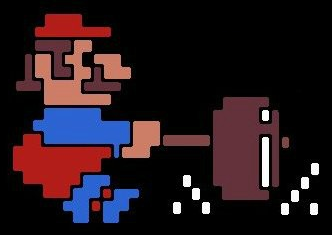
Mario began as a problem of resolution. For Donkey Kong in 1981, Shigeru Miyamoto needed a hero who would read clearly in a square just 16 pixels across, and nearly every famous feature is a workaround. A cap meant nobody had to draw his hair, or animate it flapping when he jumped. A big nose and a bushy moustache suggested a face without needing a mouth or expressions. Overalls in a different colour from his shirt made his arms visible as they swung. In the arcade he was a carpenter, and the game’s own material calls him Jumpman.
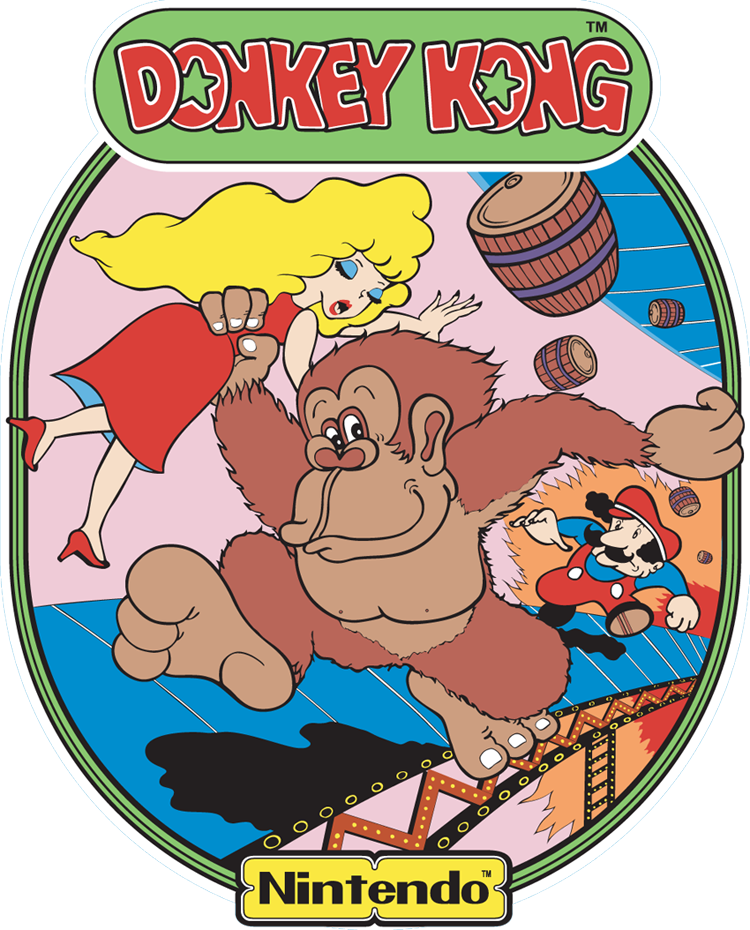
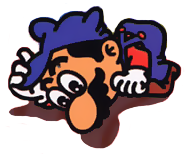
The paintings filled in what the pixels could not. The cabinet art and the 1981 character drawings show a stocky, big-nosed little man in red overalls and a blue shirt, and some early merchandise even gave him a bald patch. Two years later the arcade Mario Bros. made him a plumber, on a colleague’s suggestion, and gave him a brother.
Mario with the hammer: Donkey Kong character art, 1981.The side art of the Donkey Kong arcade cabinet.Mario Bros. (1983): now a plumber, with a brother to share the pipes.
Yoichi Kotabe’s house style (1985–1995)
Mario as Kotabe drew him for Super Mario Bros.
The man who gave Mario his friendly face came from animation. Yoichi Kotabe learned his trade at Toei Animation, worked there alongside Isao Takahata and Hayao Miyazaki, followed them out of the studio and designed the characters of Heidi, Girl of the Alps (1974). In 1985 a former Toei colleague, Hiroshi Ikeda, by then a manager at Nintendo, met him in a coffee shop and asked him to come and advise on animation. Kotabe thought he would stay a year or two. He stayed until 2007.
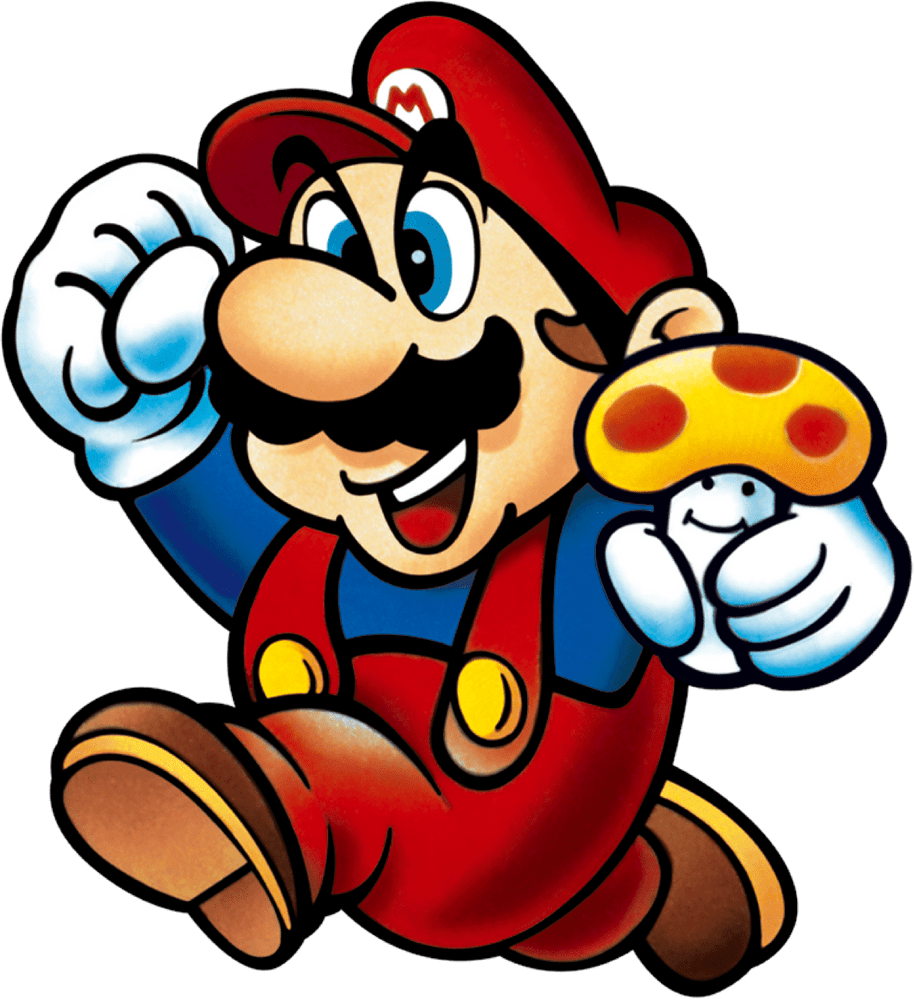
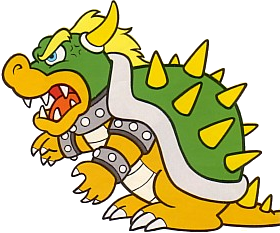
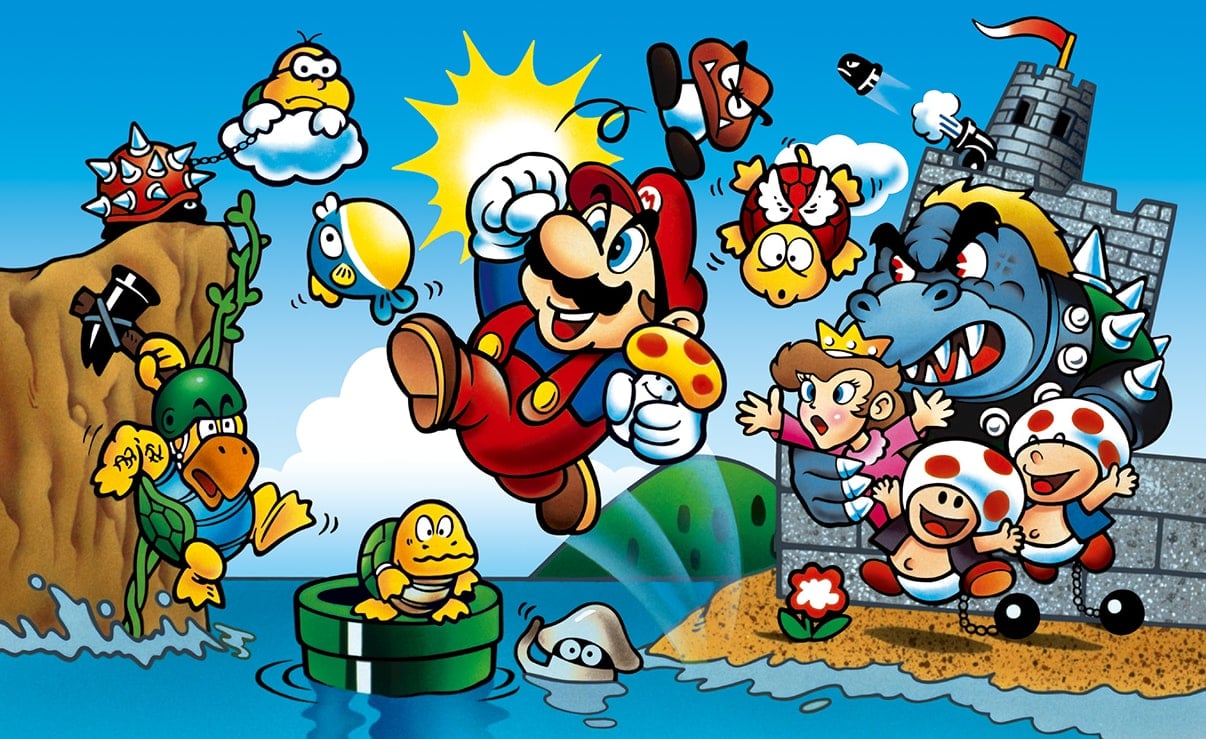
Super Mario Bros. was already drawn when he arrived: Miyamoto had illustrated the box himself. Kotabe’s job was to take that picture and Miyamoto’s instructions and turn them into a Mario who could be drawn the same way every time, and the result became the base for every Mario that followed. He reworked the supporting cast too. Princess Toadstool grew taller and got a new dress, Miyamoto having asked for slightly cat-like eyes and a look that was stubborn but charming. Bowser, whom Miyamoto had first drawn as something like an ox, in homage to the Ox King of the animated Journey to the West, was rebuilt once the team noticed how much he had in common with the Koopa Troopas. Kotabe even redrew the M on Mario’s cap, because the old one put him in mind of McDonald’s golden arches.
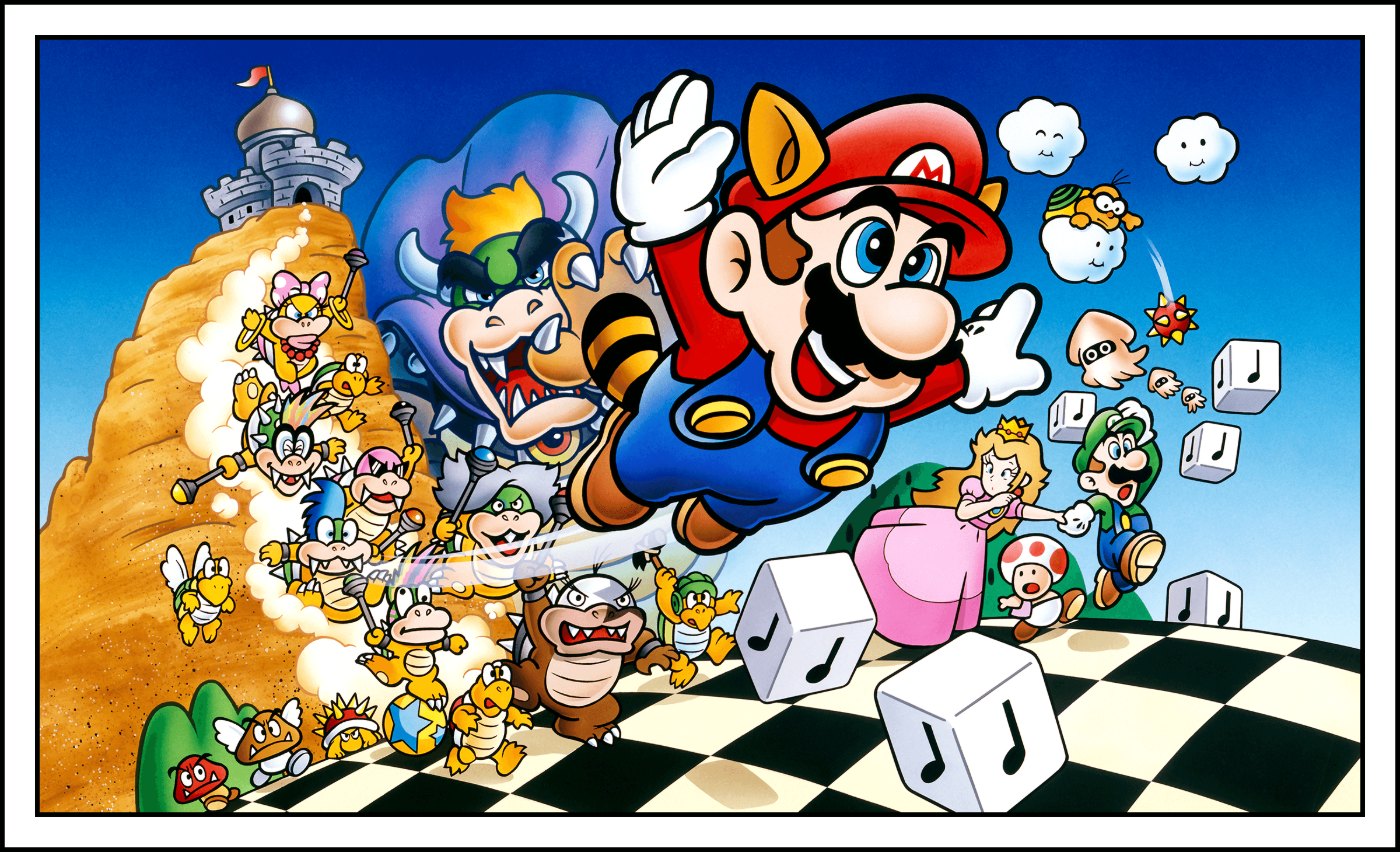
That style was Nintendo’s Mario for the next decade. Kotabe drew the cover and the instruction-booklet art for Super Mario Bros. 3, and he is credited as an illustrator on Super Mario Kart, for which he argued for a budget so the team could go and study real go-karts, an animator’s habit of looking hard at the real thing. In all, more than 40 Super Mario games name him in their credits.
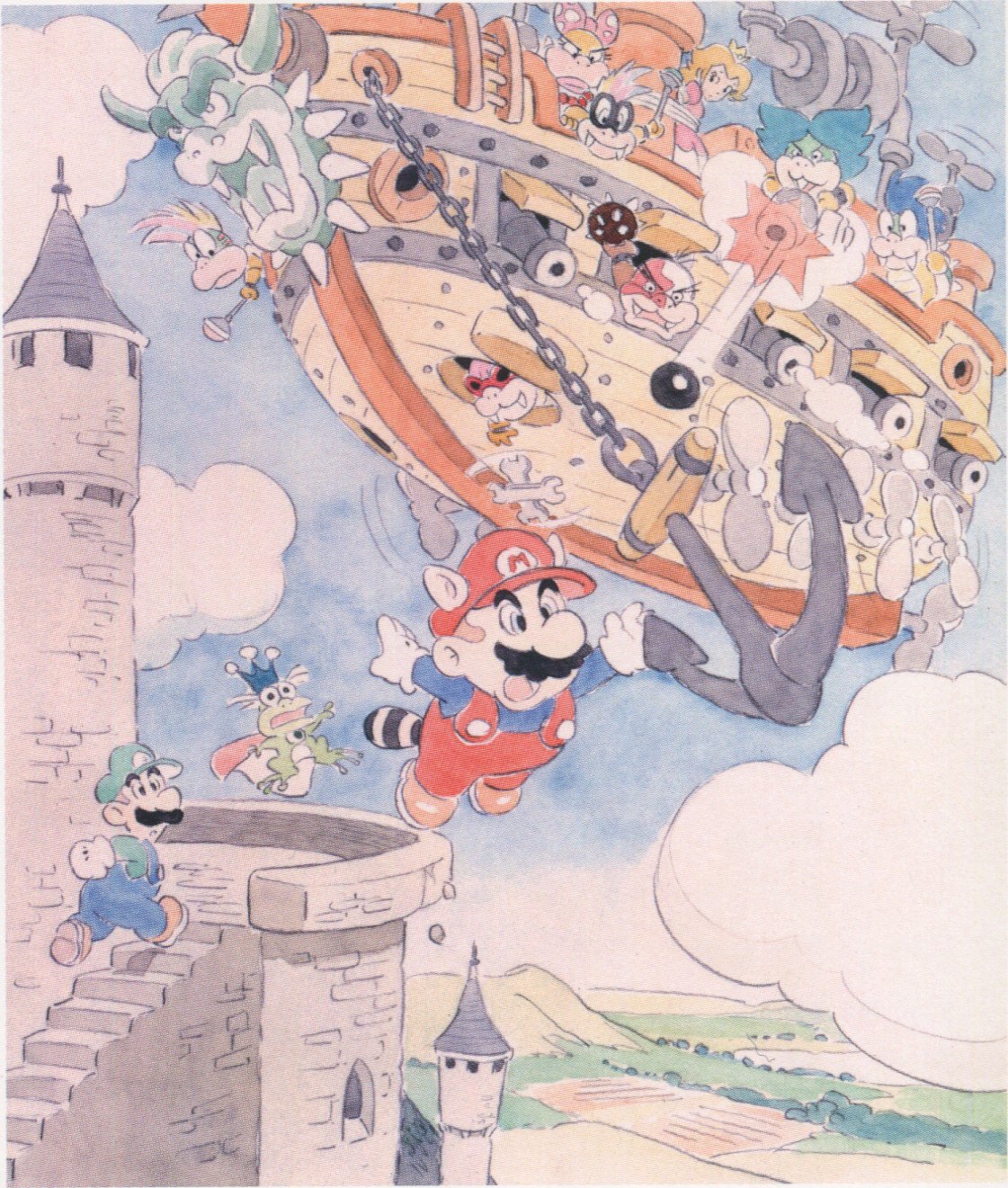
Before: Mario and a Magic Mushroom as Miyamoto drew them.Miyamoto’s original Princess Toadstool and Bowser.After: Kotabe’s Bowser, rebuilt along Koopa Troopa lines.A pencil sketch for Super Mario Bros. 3’s airship artwork.
Rendered: the CG years (1994–1997)
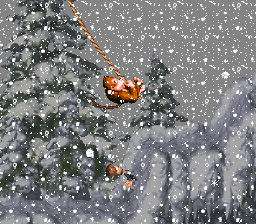
Donkey Kong Country (1994): Rare’s pre-rendered look.
In November 1994 Rare’s Donkey Kong Country changed what people expected a Nintendo character to look like. Rare had modelled its apes on Silicon Graphics workstations costing £80,000 each, rendered every frame of their animation and compressed the results back into Super Nintendo sprites. Half a million copies sold in the first week, and rendered 3D graphics were suddenly the look of the moment.
Not everybody followed. The team behind Yoshi’s Island has said that people inside Nintendo wondered whether Yoshi should get the same treatment, but the game was too far along to change, and designer Shigefumi Hino says they chose to fight back with the exact opposite: a thoroughly hand-drawn look, with Hisashi Nogami sketching backgrounds in marker pen and scanning them in.
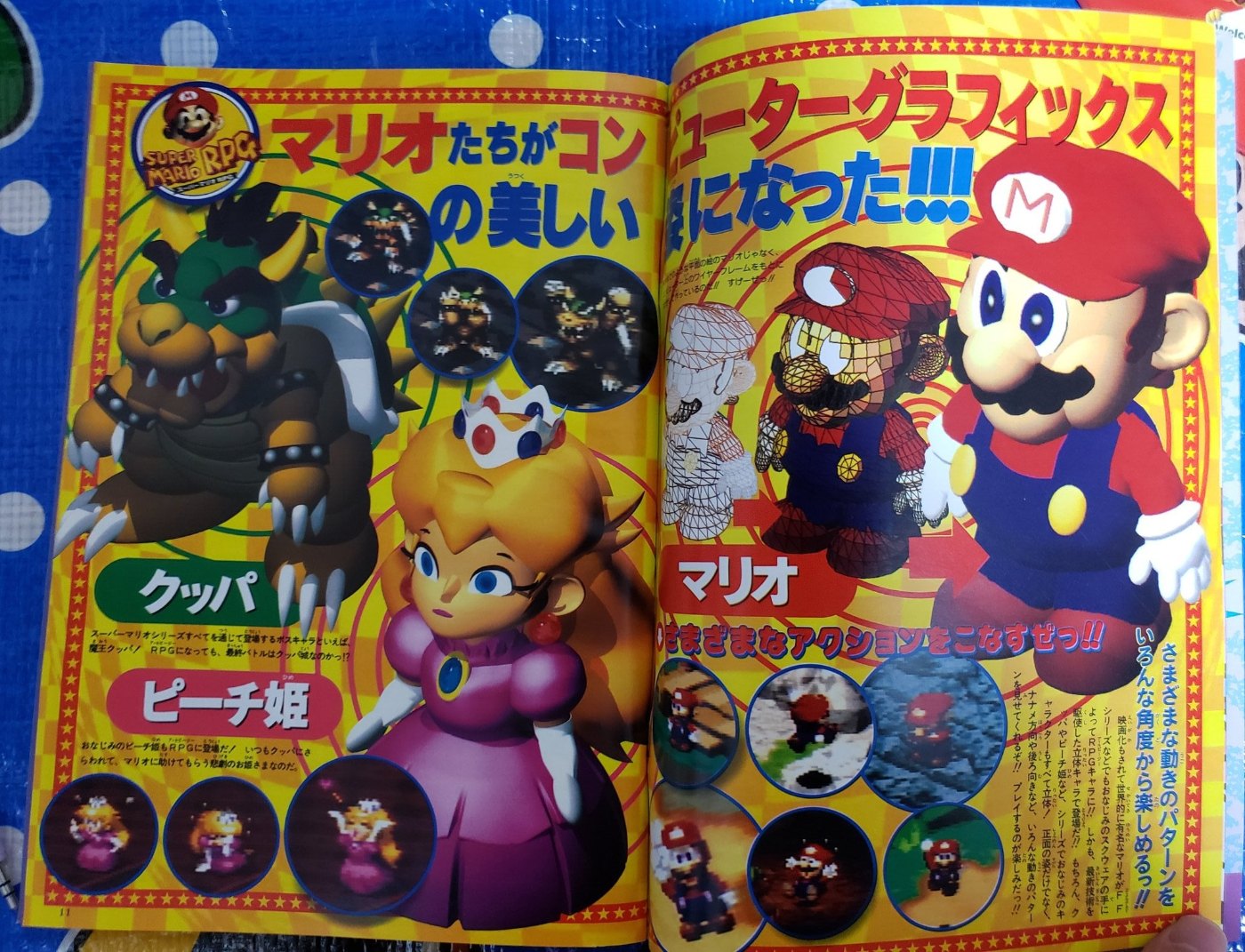
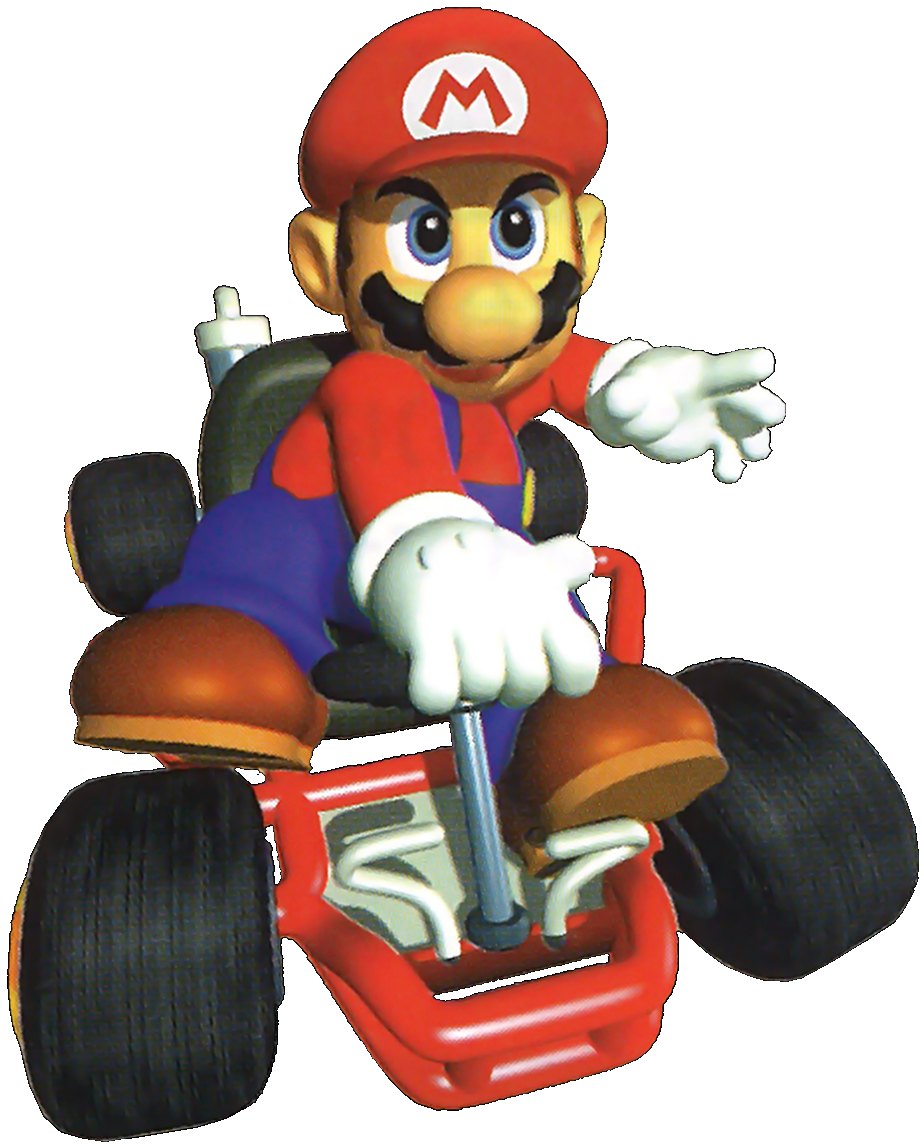
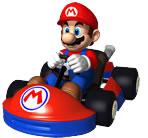
Mario went the other way. Super Mario RPG (1996), made with Square, built its cast as computer models (Shinya Takahashi is credited as C.G. model designer) and turned them into pre-rendered sprites. In Super Mario 64 Mario became a real-time polygon model, built with the N-World toolkit, and Kotabe’s role moved with him: by his own account he redesigned the character and supervised the modelling. At Mario Kart 64, character designer Tomoaki Kuroume started from that Super Mario 64 Mario, reshaped him limb by limb to sit in a kart and grip the wheel, and rendered every driver from every angle.
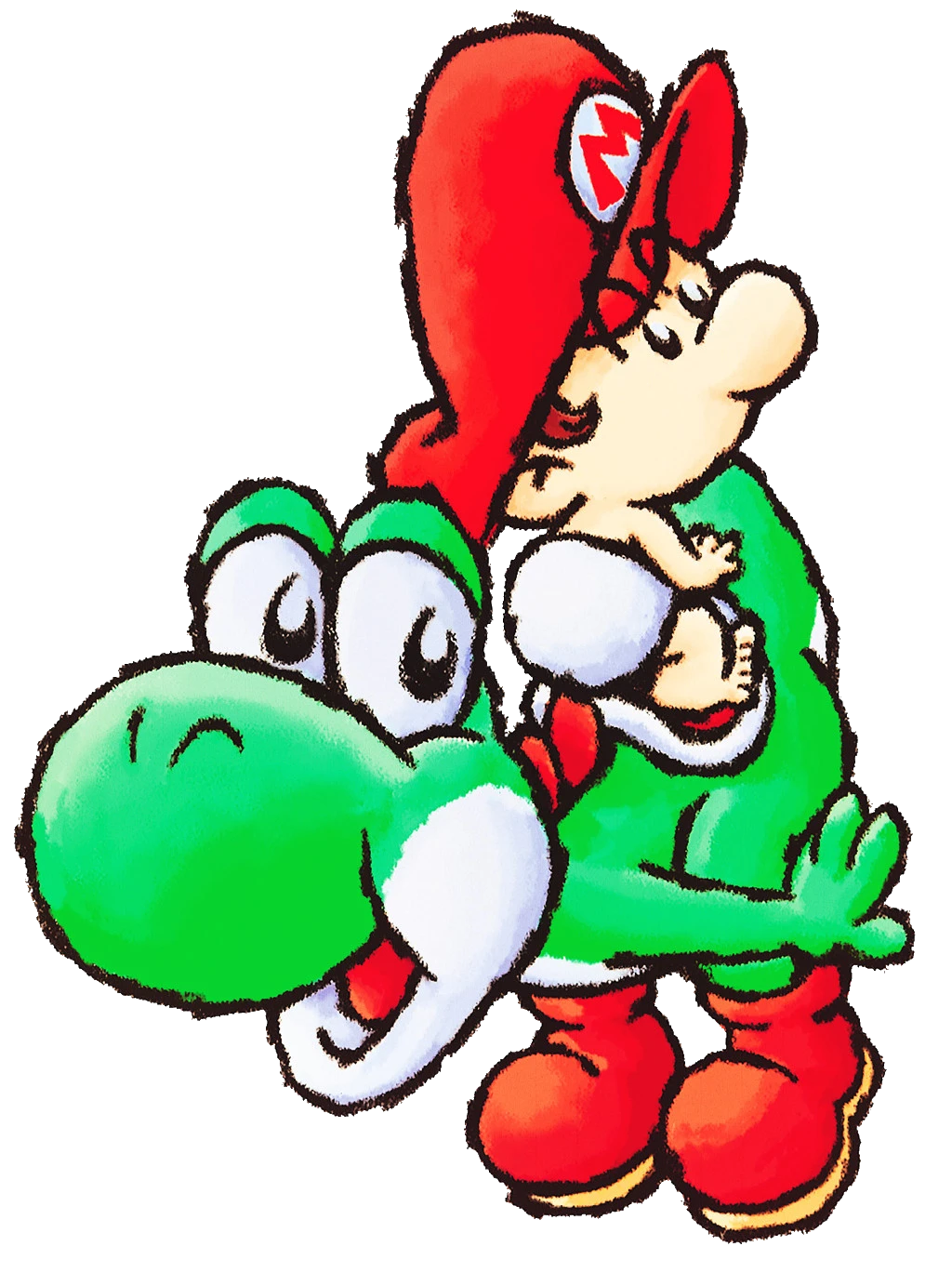
Early renders of Mario, Bowser and Toadstool for Super Mario RPG, as printed in V-Jump.Mario Kart 64: Mario rebuilt from his Super Mario 64 model.Yoshi’s Island (1995) went the other way, with soft, hand-drawn art.
The render takes over (late 1990s–2010s)
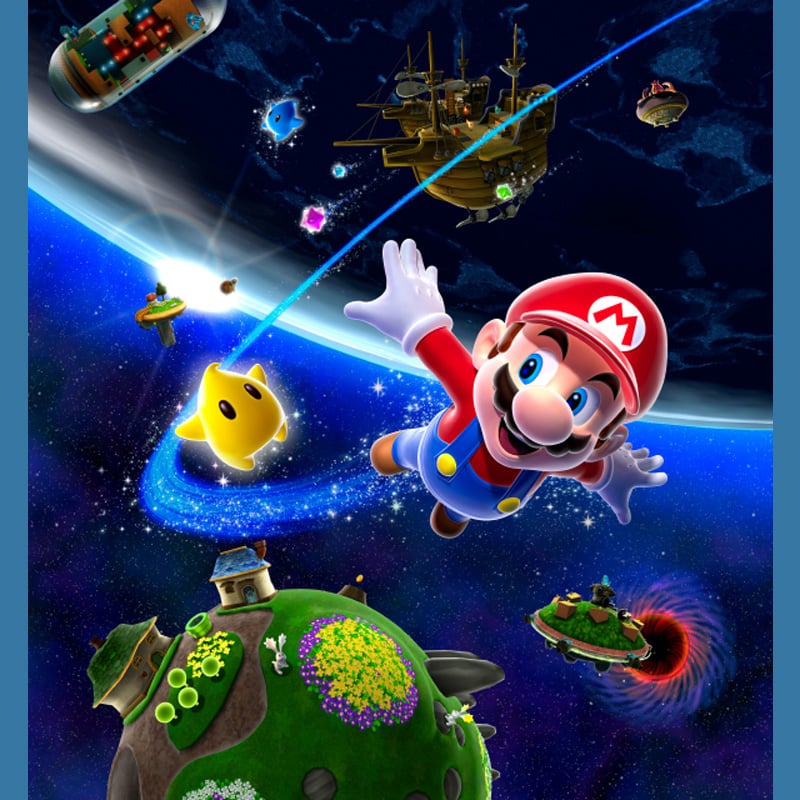
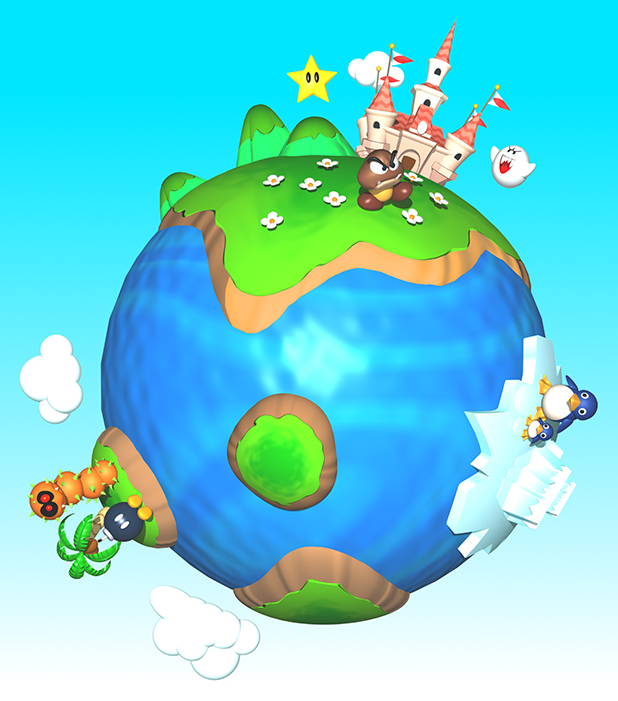
Super Mario Galaxy (2007): Mario, a Luma and the planets.
Once Mario had a model, new pictures of him could be built from it, as Mario Kart 64 had shown. By the mid-2000s Nintendo’s credits were listing CG illustration as a job in its own right. Shigehisa Nakaue, who had drawn for the magazine Nintendo Dream before joining Nintendo in 2003, holds that credit on Mario Kart DS, Mario Party 8 and Mario Kart Wii, and an illustration credit on Super Mario Galaxy, Super Mario 3D World and Mario Kart 8.
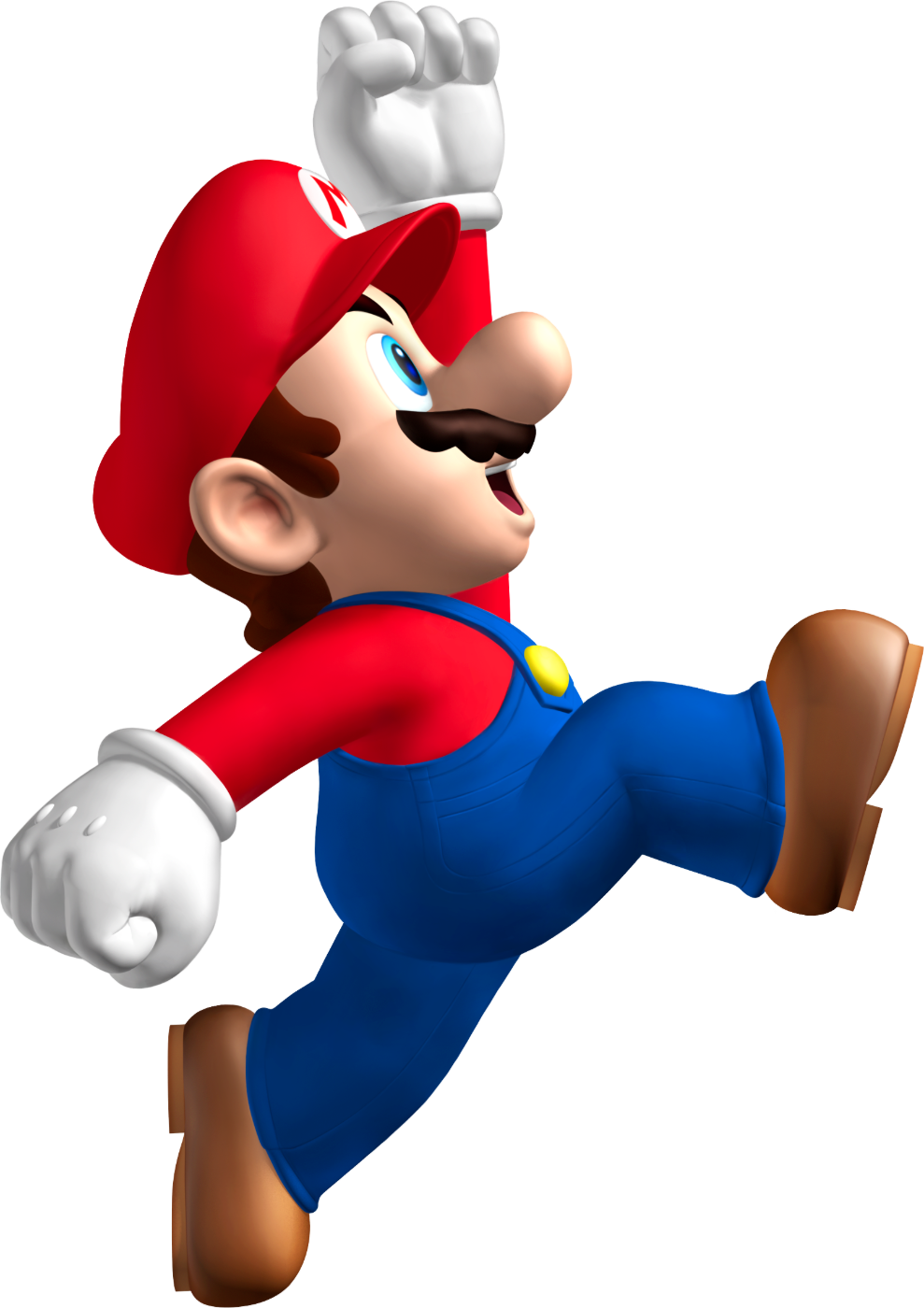
Even the 2D games changed. New Super Mario Bros. (2006) was the first 2D Mario to draw its characters with 3D models, as the team behind Wonder later pointed out. Kotabe left Nintendo in 2007, after 21 years, to work freelance and teach at the Toei Animation Institute; he was later thanked in the credits of The Super Mario Bros. Movie.
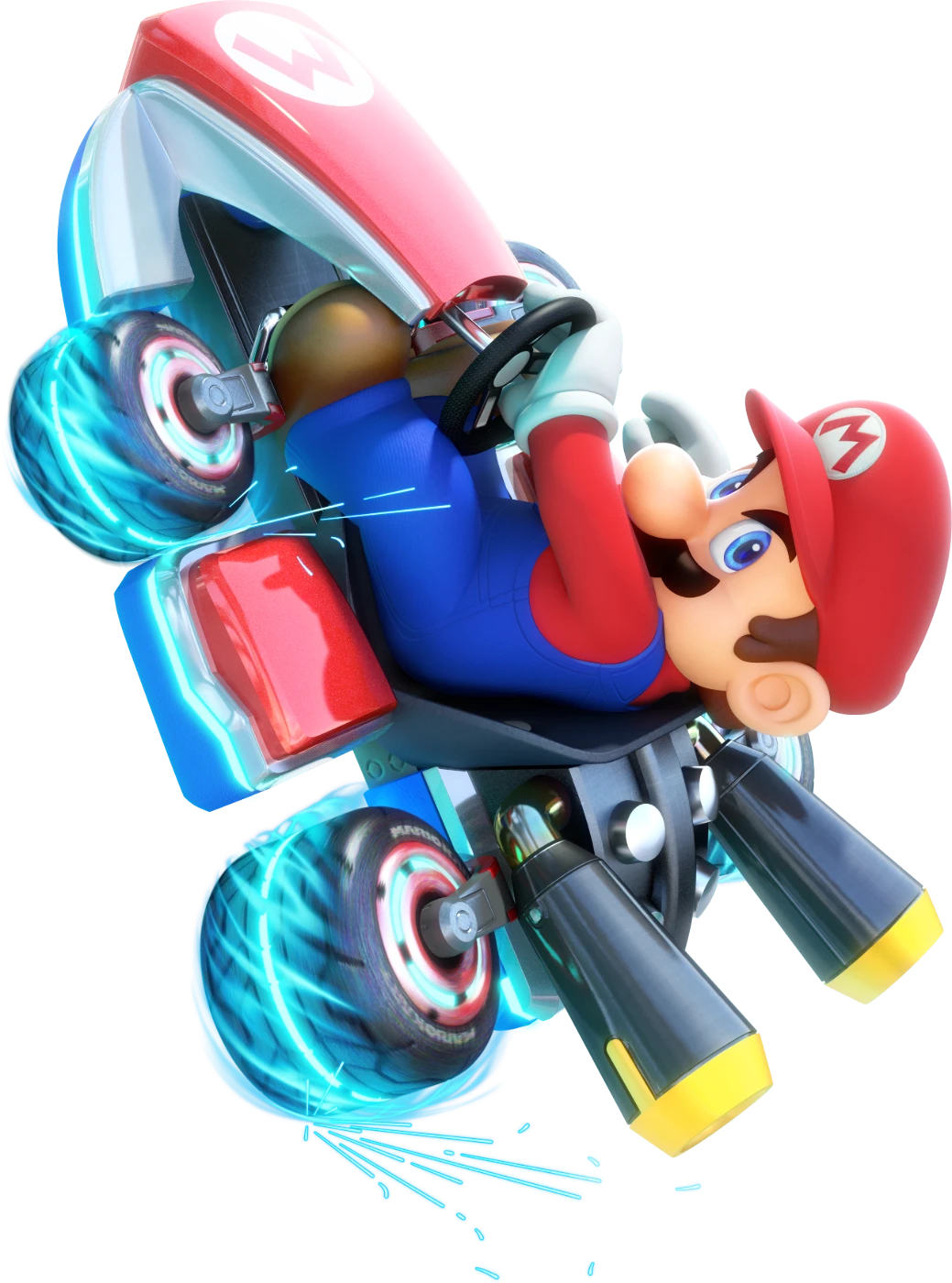
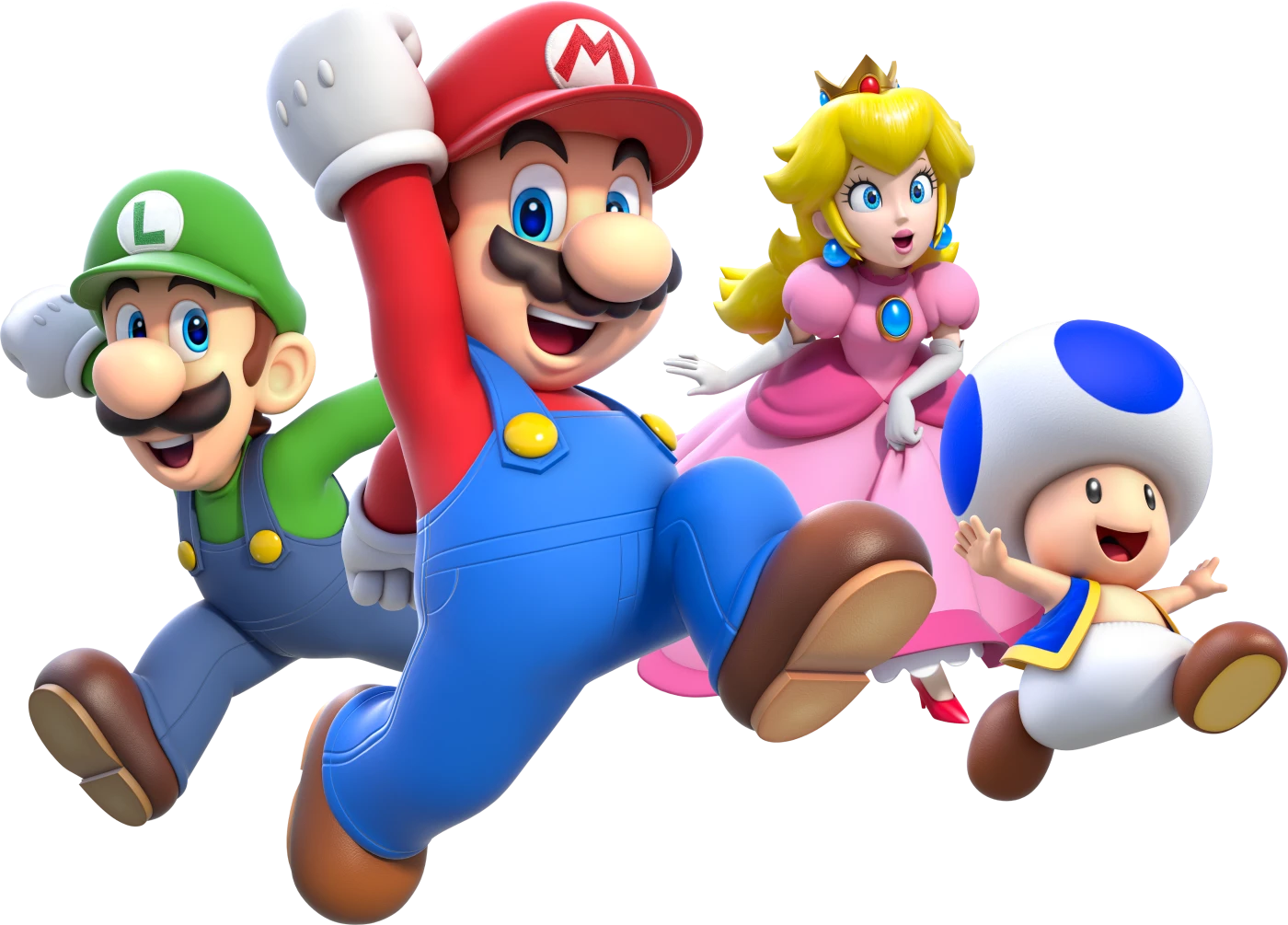
New Super Mario Bros. (2006): the 2D series goes 3D under the hood.Mario Kart 8 (2014): the polished modern render.Super Mario 3D World (2013): the main crew.
Pencils out again: Mario art today
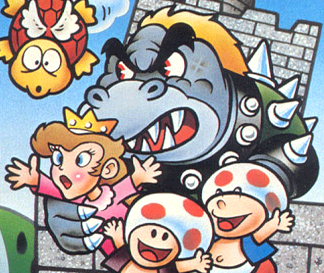
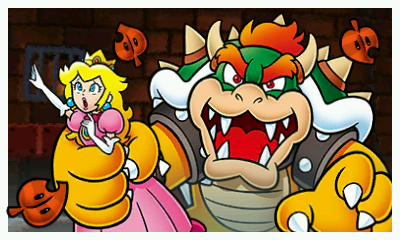
Hand-drawn story art from Super Mario 3D Land: Bowser carries off Princess Peach.
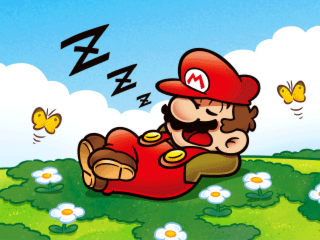
Hand-drawn Mario never went away; it moved into the corners. The illustrated letters from Princess Peach in Super Mario 3D Land (2011) look so much like Kotabe’s work that for years they were credited to him, but they were drawn by Nakaue, who is credited with the game’s illustrations and is now regarded as the main 2D artist on the series. Art attributed to him has since appeared on the sleep screen of 2020’s Game & Watch: Super Mario Bros., in story art for Super Nintendo World and in concept art for The Super Mario Bros. Movie and The Super Mario Galaxy Movie.
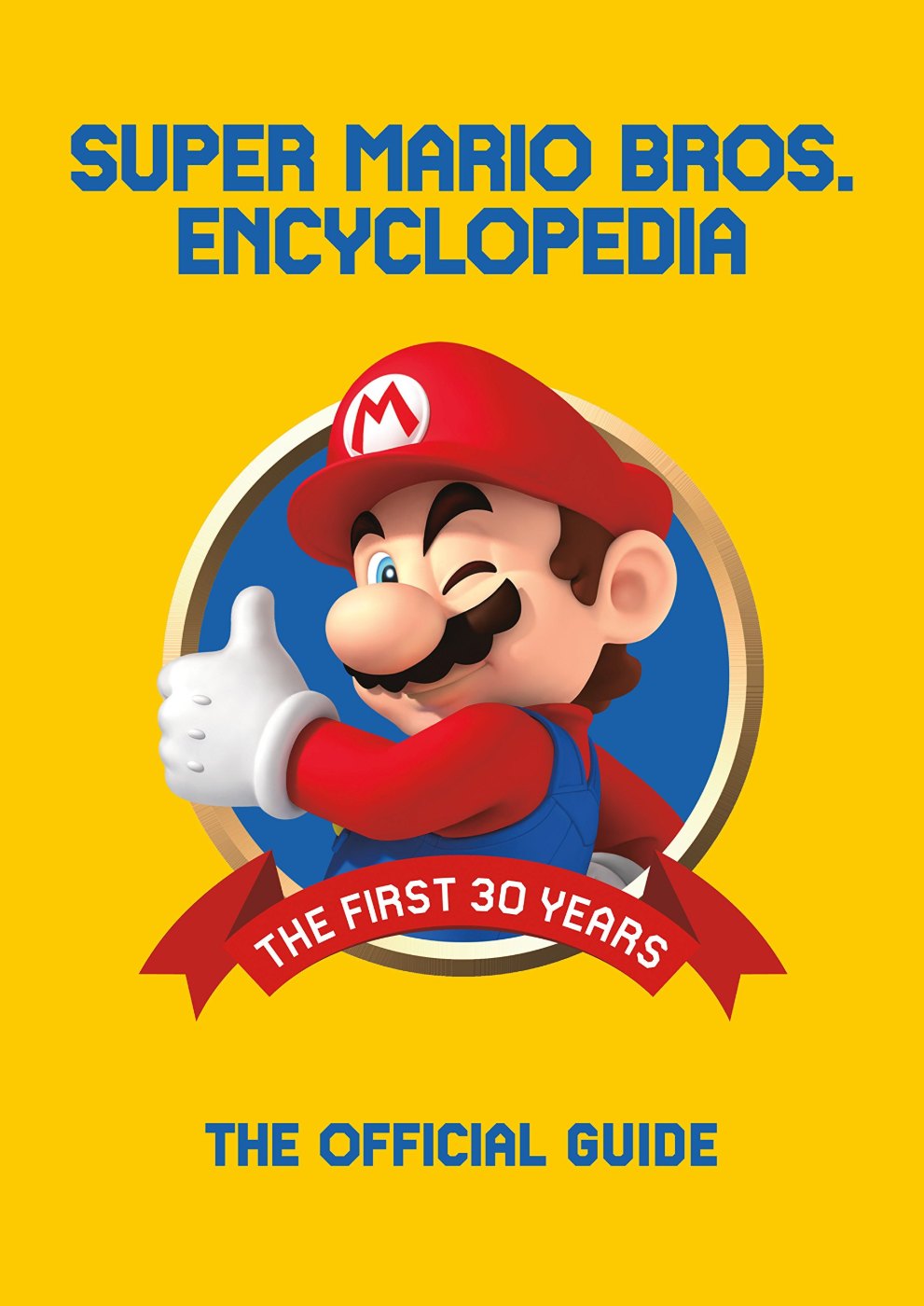
At the other end of the scale, key art has become something to collect. The 30th-anniversary Super Mario Bros. Encyclopedia (Japan 2015; in English as Super Mario Encyclopedia, 2018) and The Art of Super Mario Odyssey (Japan 2018, English 2019) gathered concept art and developer notes into book form. And for Super Mario Bros. Wonder (2023) the developers more than doubled the joints in Mario’s model, swapped in new models for expressions too subtle for joints, and turned his body to face where he runs while keeping his face towards the player.
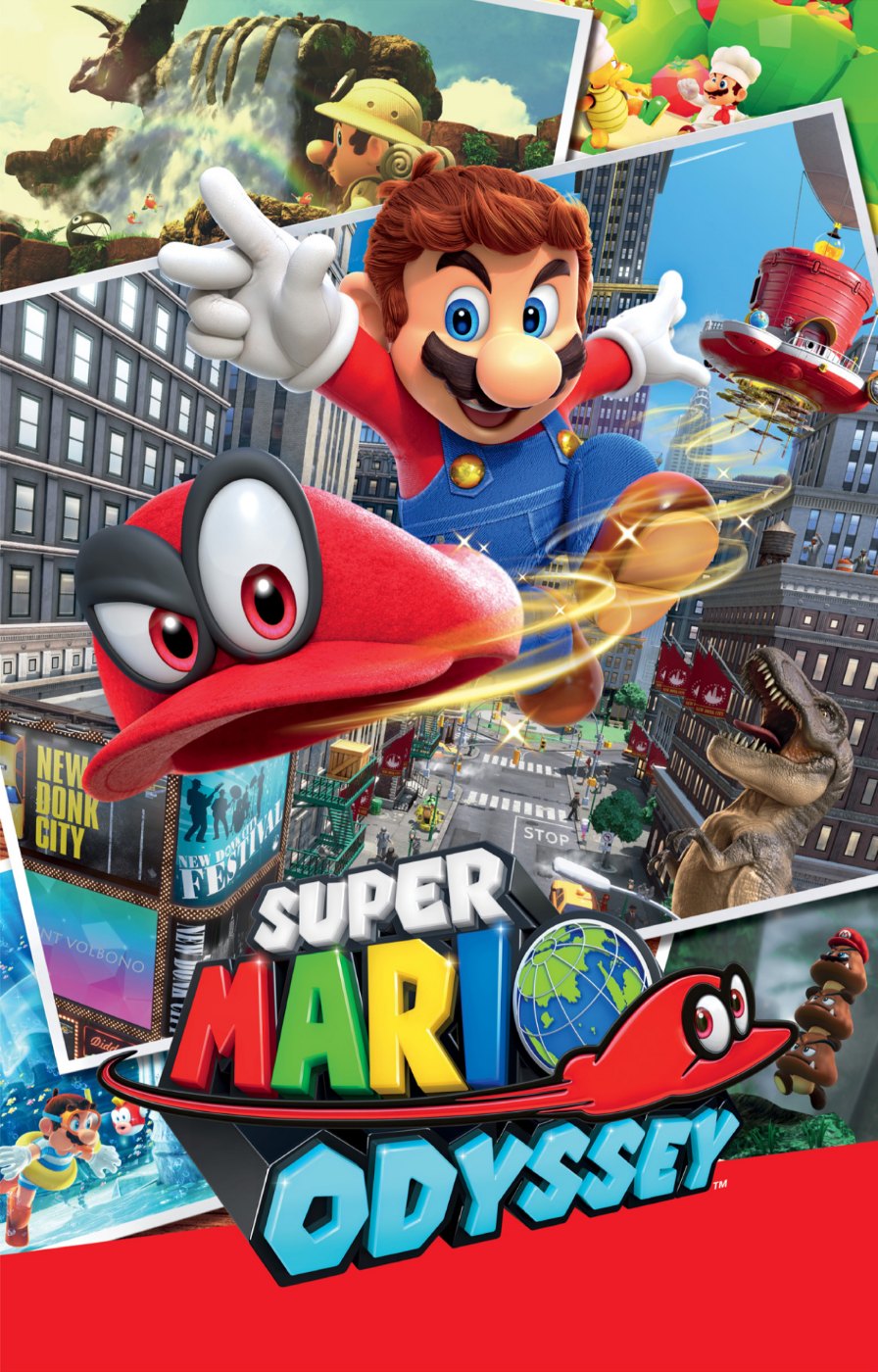
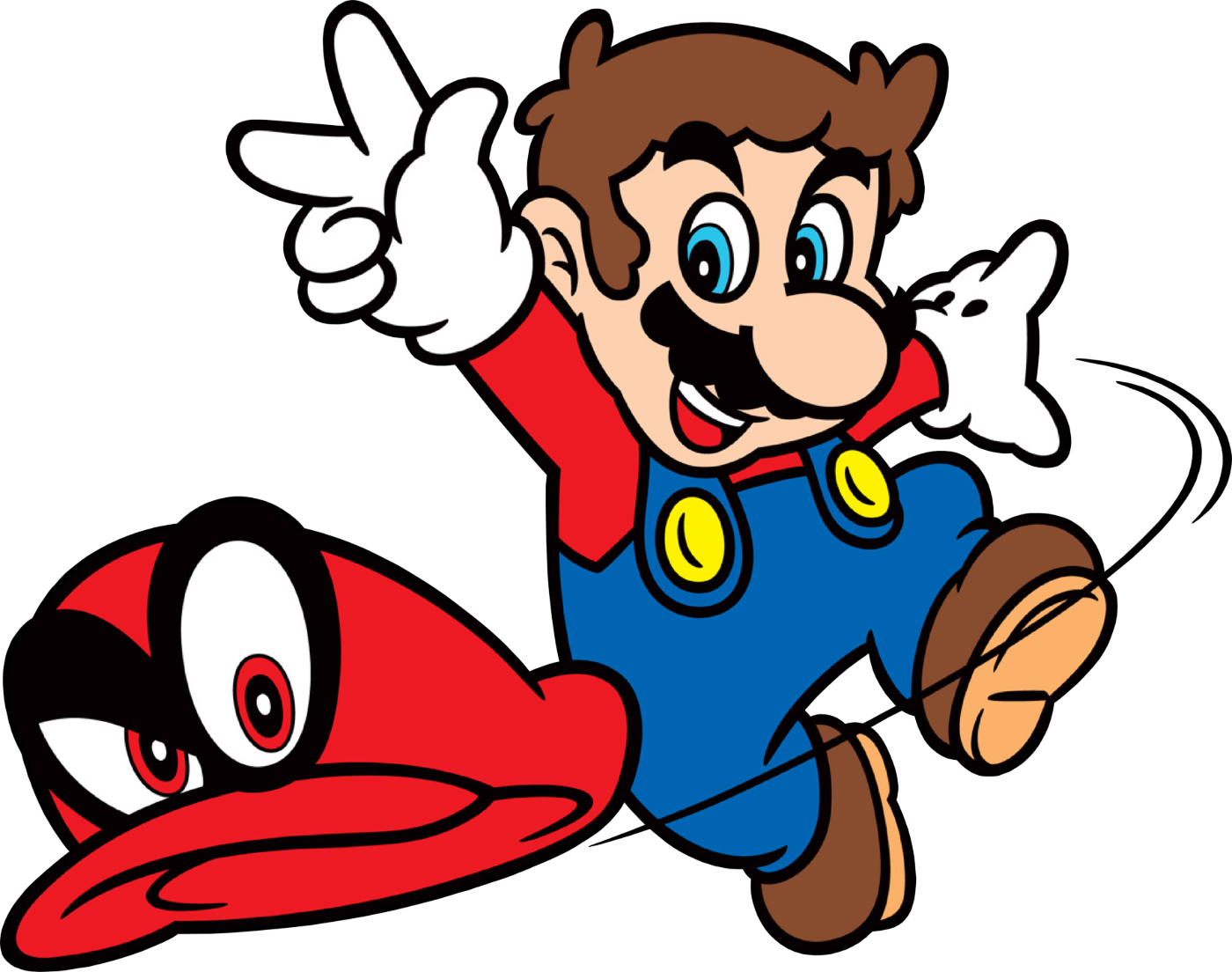
Sleep-mode art from Game & Watch: Super Mario Bros. (2020).Super Mario Encyclopedia (2018), the English edition of the 30th-anniversary book.Super Mario Odyssey (2017): the box-art collage of Mario, Cappy and the kingdoms.
Advertisement
Timeline
Mario’s look, year by year, through the pictures Nintendo made of him.
Mario’s official art: a timeline
Donkey Kong1981Miyamoto designs Jumpman on a 16-by-16 grid: cap, moustache and contrasting overalls.
Mario Bros.1983Mario becomes a plumber and gains a brother.
Super Mario Bros.1985Miyamoto draws the box art; Yoichi Kotabe joins Nintendo and redesigns Mario, Peach and Bowser.
Super Mario Bros. 31988Kotabe draws the cover and the booklet art.
Super Mario Kart1992Kotabe illustrates, after studying real go-karts.
Donkey Kong CountryNovember 1994Rare’s pre-rendered graphics make CG the look of the moment.
Yoshi’s Island1995Nintendo answers with a deliberately hand-drawn style.
Super Mario RPG & Super Mario 641996Mario becomes a 3D model, pre-rendered in one and real-time polygons in the other; Kotabe supervises the modelling.
Mario Kart 641996Developed as Super Mario Kart R, the R for rendered; its drivers are rendered from 3D models.
Shigehisa Nakaue2003Joins Nintendo; later credited with CG illustration and illustration across the series.
New Super Mario Bros.2006The first 2D Mario to use 3D models.
Kotabe retires2007Leaves Nintendo after 21 years and goes freelance.
Super Mario 3D Land2011Nakaue’s hand-drawn letters from Peach.
Super Mario Bros. Encyclopedia19 October 2015The 30th-anniversary book is published in Japan (English edition, October 2018).
The Art of Super Mario Odyssey28 September 2018Published in Japan; Dark Horse’s English edition follows on 22 October 2019.
Game & Watch: Super Mario Bros.2020Its sleep-mode art is attributed to Nakaue.
Super Mario Bros. Wonder2023Mario’s 2D model is rebuilt with twice the joints and new expressions.
Trivia & Interesting Facts
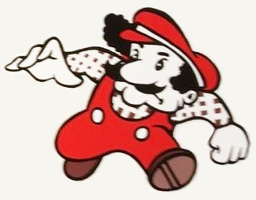
Early Donkey Kong merchandise drew Mario with a bald patch.
Miyamoto wanted Princess Toadstool’s eyes to be a little cat-like, so that she would come across as stubborn but charming.
Kotabe’s first animation at Nintendo was of Luigi spinning round, and it had far too many frames for a game. His first real game job was the flying carpet in Yume Kōjō: Doki Doki Panic, which he had to trim down without losing its smoothness.
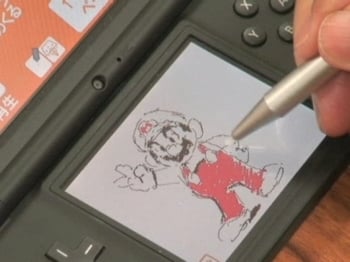
Kotabe drawing Mario in Flipnote Studio.Kotabe has drawn Mario in Flipnote Studio on the Nintendo DSi; he made four Flipnote animations, one of them of Mario.
Kotabe’s Nintendo work went well beyond Mario. He was character supervisor on Pokémon Snap and Pokémon Stadium, animation supervisor on Pokémon: The First Movie, and a designer on The Legend of Zelda: A Link to the Past and Link’s Awakening.
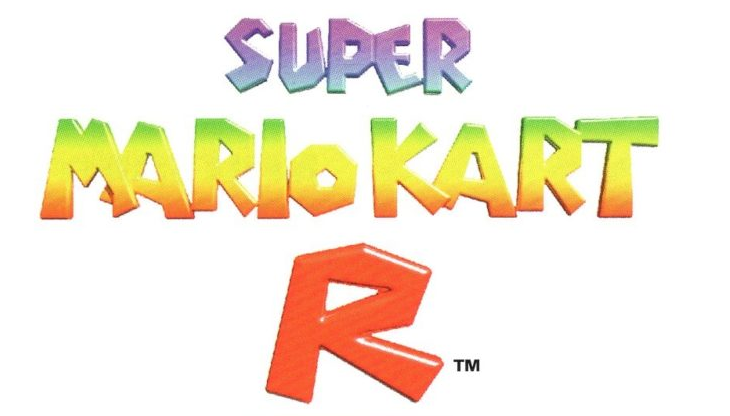
The Super Mario Kart R logo.Mario Kart 64 was announced as Super Mario Kart R. The R stood for rendered, after the computer-rendered drivers.
Halfway through Mario Kart 64, a hard disk failed and took the character work with it. About 80 per cent of the driver models had to be built twice, and Kuroume reckoned the second versions were better.
Kart racers need different proportions. For Super Mario Kart the characters were drawn three heads tall to suit the karts; the pilots of F-Zero had been seven heads tall.
The very last Super Mario game to list Kotabe in its credits was WarioWare: Smooth Moves.
Six Marios from six eras, all from the galleries above. Select any picture to see it larger.
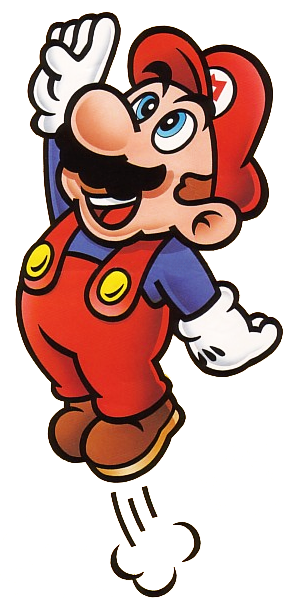
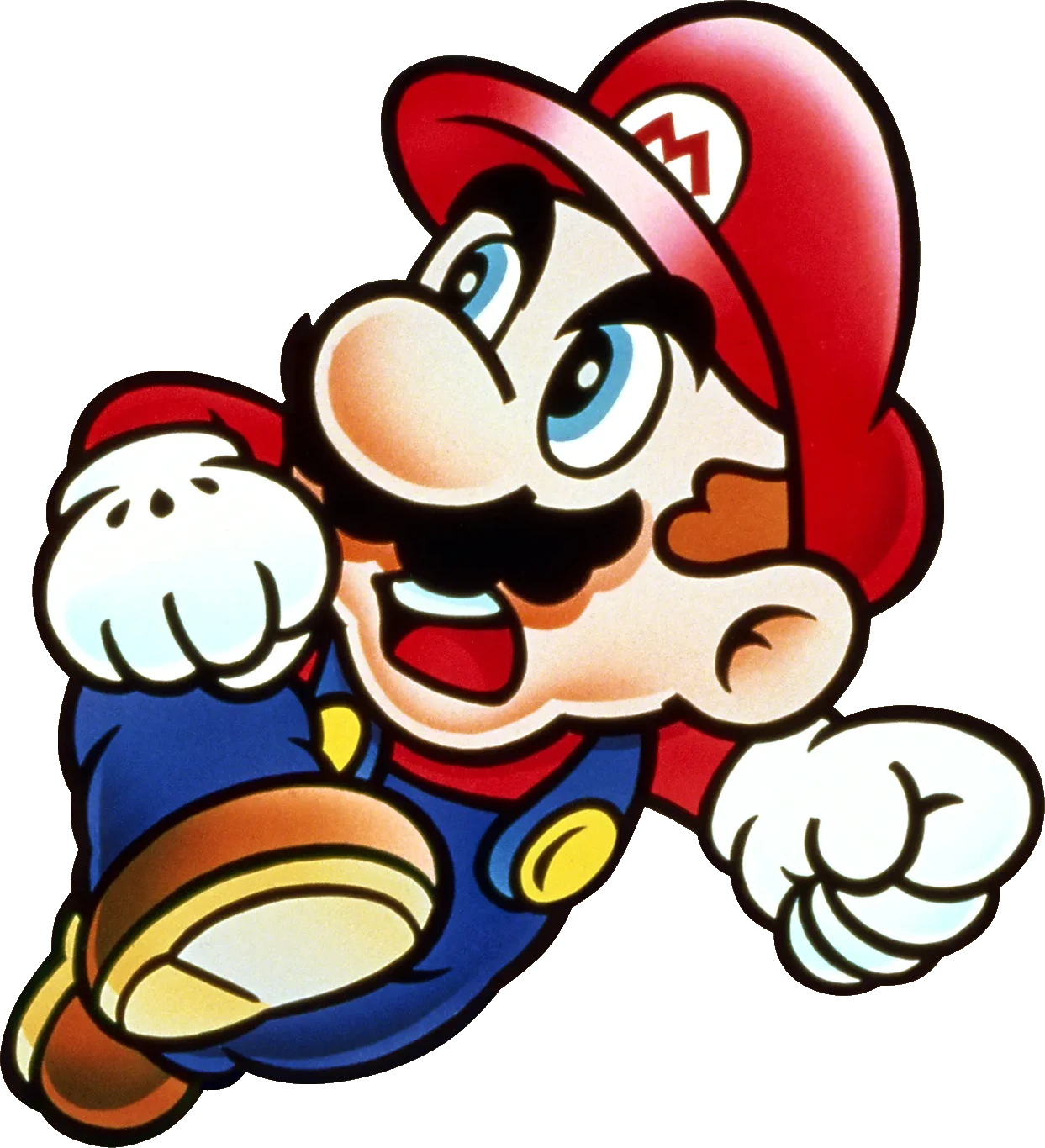
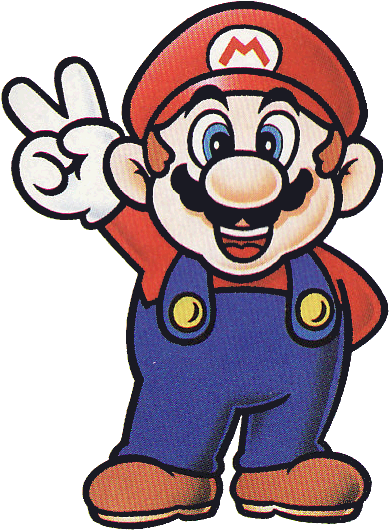
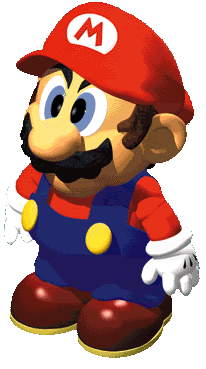
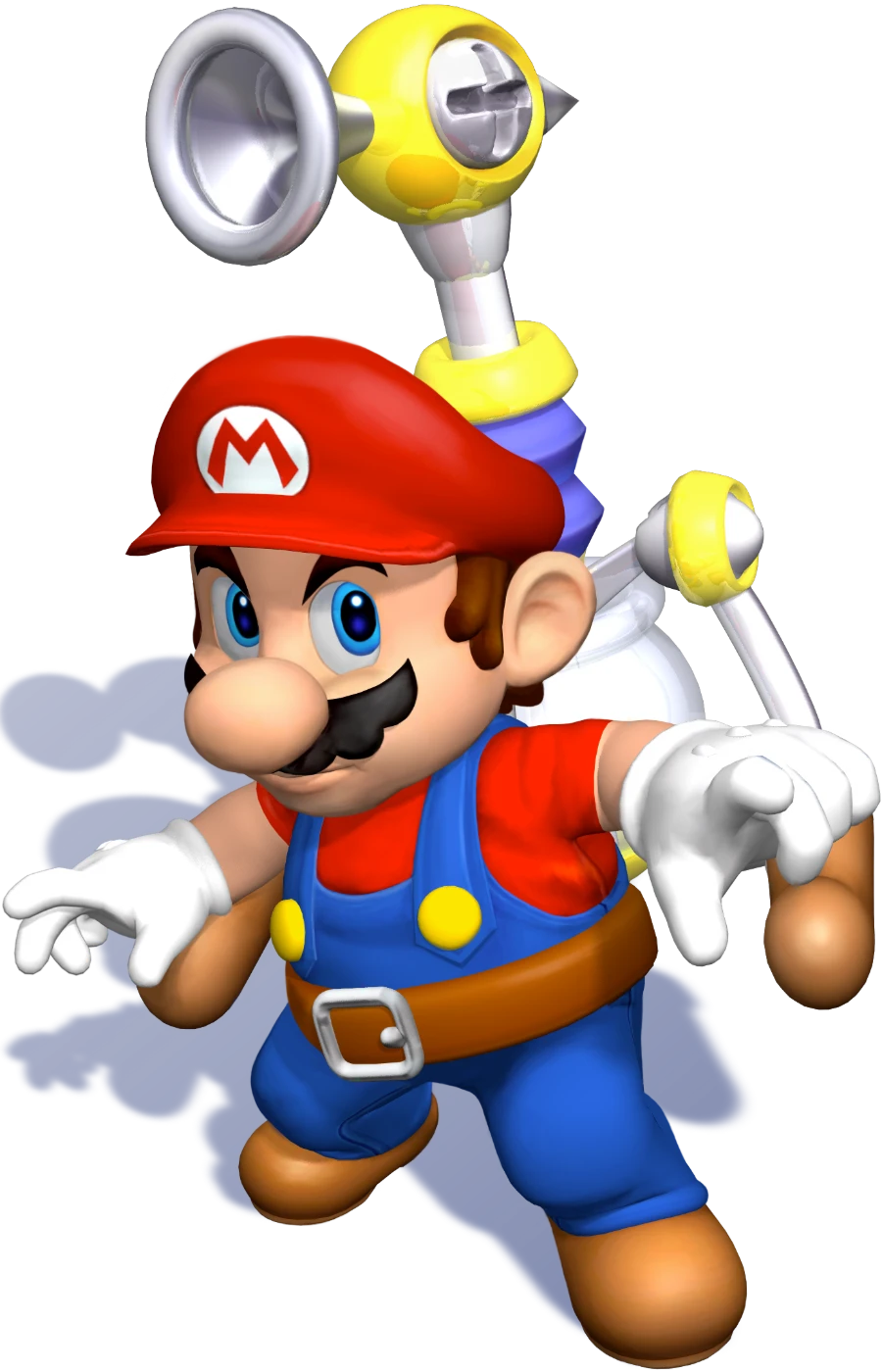
Donkey Kong (1981): the original Jumpman.Super Mario Land (1989): the Game Boy cover art.Super Mario World (1990): a victory sign for the Super Nintendo.Super Mario RPG (1996): a pre-rendered Mario.Super Mario Sunshine (2002): Mario and F.L.U.D.D.Super Mario Odyssey (2017): Mario throws Cappy.
Sources
Every fact on this page was checked against the 16 sources listed here.
To provide the best experiences, we use technologies like cookies to store and/or access device information. Consenting to these technologies will allow us to process data such as browsing behavior or unique IDs on this site. Not consenting or withdrawing consent, may adversely affect certain features and functions.
Functional
Always active
The technical storage or access is strictly necessary for the legitimate purpose of enabling the use of a specific service explicitly requested by the subscriber or user, or for the sole purpose of carrying out the transmission of a communication over an electronic communications network.
Preferences
The technical storage or access is necessary for the legitimate purpose of storing preferences that are not requested by the subscriber or user.
Statistics
The technical storage or access that is used exclusively for statistical purposes.The technical storage or access that is used exclusively for anonymous statistical purposes. Without a subpoena, voluntary compliance on the part of your Internet Service Provider, or additional records from a third party, information stored or retrieved for this purpose alone cannot usually be used to identify you.
Marketing
The technical storage or access is required to create user profiles to send advertising, or to track the user on a website or across several websites for similar marketing purposes.




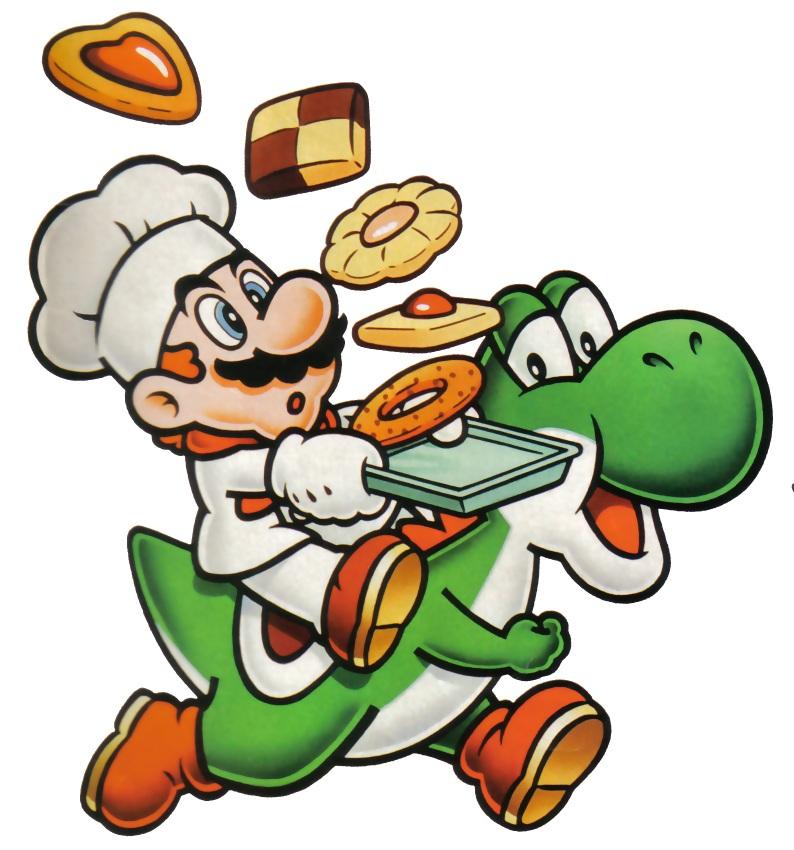


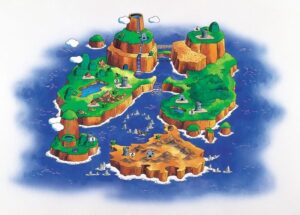
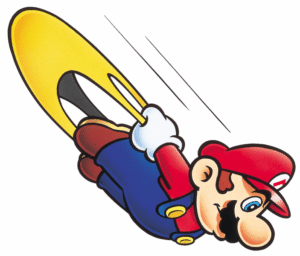 Super Mario WorldMario, Yoshi & Peach49 artworks
 Super Mario WorldItems, logos & supporting art37 artworks
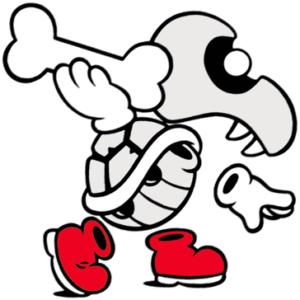 Super Mario WorldEnemies & bosses62 artworks
 Mario Paint1992 · 12 artworks
 Super Mario KartCharacters & karts18 artworks
 Mario & Wario1993 · 12 artworks
 Super Mario RPGCharacters, enemies & bosses204 artworks

 Mario Kart 641996 · 44 artworks
 Super Mario 64Supporting art, posters & course icons30 artworks
 Super Mario 64Bowser5 artworks
 Yoshi’s Story1997 · 85 artworks
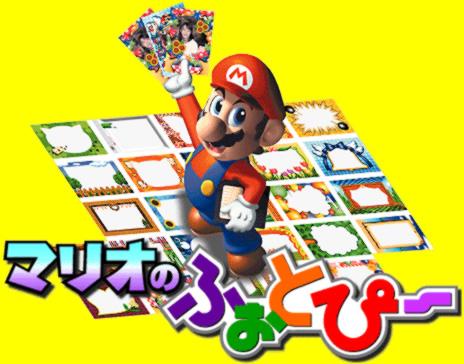 Mario no Photopi1998 · 1 artwork
 Mario Party1998 · 22 artworks
 Mario GolfCharacters & courses25 artworks
 Mario Party 21999 · 13 artworks
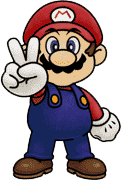 Super Smash Bros.1999 · 20 artworks
 Mario Party 32000 · 23 artworks
 Mario Tennis2000 · 35 artworks
 Paper Mario2000 · 39 artworks
 Dr. Mario 642001 · 2 artworks


 Mario Kart: Super Circuit2001 · 16 artworks
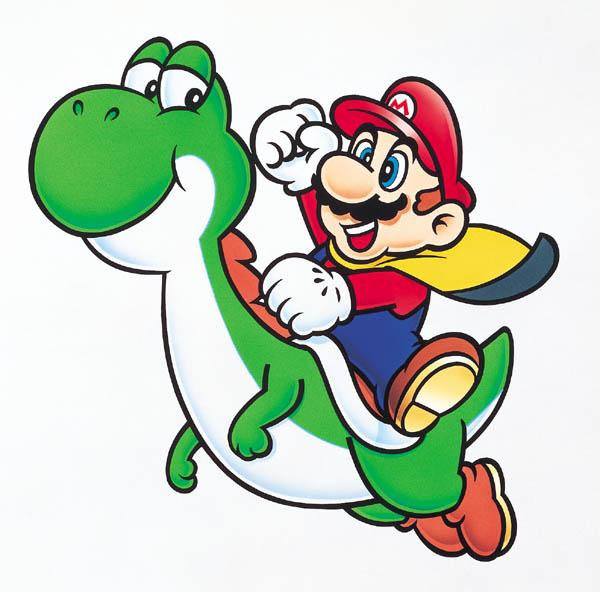 Super Mario Advance 22001 · 1 artwork
 Mario & Luigi: Superstar SagaCharacters17 artworks
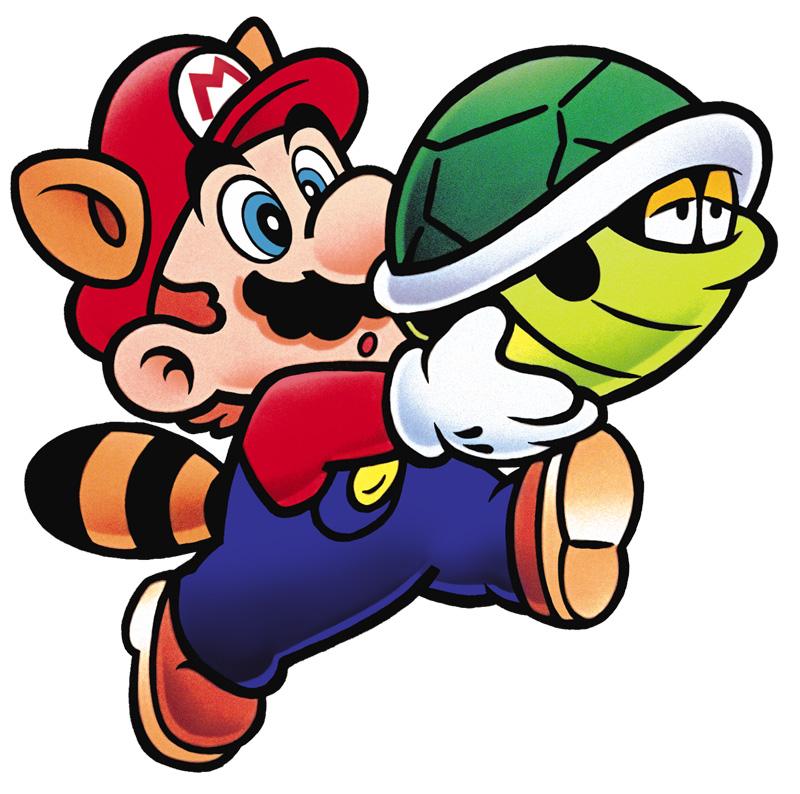 Super Mario Advance 42003 · 3 artworks
 Mario Golf: Advance TourCharacters17 artworks
 Mario Pinball Land2004 · 18 artworks
 Mario vs. Donkey Kong2004 · 7 artworks
 Yoshi Topsy-Turvy2004 · 37 artworks
 Mario Party Advance2005 · 25 artworks
 Mario Tennis: Power Tour2005 · 14 artworks
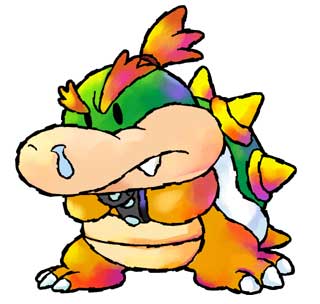 Super Mario Advance 36 artworks
 Luigi’s Mansion2001 · 15 artworks
 Mario Party 42002 · 10 artworks
 Super Mario Sunshine2002 · 14 artworks
 Mario Golf: Toadstool Tour2003 · 52 artworks
 Mario Kart: Double Dash!!2003 · 44 artworks
 Wario World2003 · 27 artworks
 Paper Mario: The Thousand-Year DoorConcept art3 artworks
 Dance Dance Revolution: Mario Mix2005 · 6 artworks
 Super Mario 64 DS2004 · 13 artworks
 Mario & Luigi: Partners in Time2005 · 27 artworks
 Mario Kart DS2005 · 26 artworks
 Super Princess Peach2005 · 18 artworks
 Mario Hoops 3-on-3Characters & courts54 artworks
 Mario vs. Donkey Kong 2: March of the Minis2006 · 1 artwork
 Itadaki Street DSMario characters9 artworks
 Mario & Luigi: Bowser’s Inside Story2009 · 25 artworks
 Mario vs. Donkey Kong: Mini-Land Mayhem!2010 · 6 artworks
 Mario Party 82007 · 33 artworks
 Mario Strikers ChargedCaptains & sidekicks24 artworks
 Super Mario GalaxyIncluding concept art133 artworks
 Super Paper MarioIncluding concept art77 artworks
 Mario Kart Wii2008 · 60 artworks
 Mario Super SluggersTeam captains & players27 artworks
 Super Smash Bros. BrawlFighters & Assist Trophies132 artworks
 Mario & Sonic at the Olympic Winter Games2009 · 53 artworks
 New Super Mario Bros. Wii2009 · 84 artworks
 Mario Sports Mix2010 · 24 artworks
 Super Mario All-Stars 25th Anniversary Edition2010 · 4 artworks
 Super Mario Galaxy 22010 · 95 artworks
 Fortune StreetDragon Quest & Mario characters35 artworks
 Mario Kart 7Karts & characters92 artworks
 Super Mario 3D Land2011 · 92 artworks
 Mario & Sonic at the London 2012 Olympic GamesTeam Mario & Team Sonic31 artworks
 New Super Mario Bros. 22012 · 69 artworks
 Paper Mario: Sticker Star2012 · 60 artworks
 Luigi’s Mansion: Dark MoonCharacters, ghosts & scenery63 artworks
 Mario & Luigi: Dream Team2013 · 34 artworks
 Mario Party: Island Tour2013 · 18 artworks
 Mario Golf: World TourLogos & misc art9 artworks
 Mario Golf: World TourCharacters7 artworks
 Mario Golf: World TourCourses & scenery16 artworks
 Yoshi’s New Island2014 · 48 artworks
 New Super Mario Bros. U2012 · 102 artworks
 Dr. Luigi2013 · 13 artworks
 Game & WarioCharacters & logos19 artworks
 Mario & Sonic at the Sochi 2014 Olympic Winter GamesCharacters & logos13 artworks
 New Super Luigi U2013 · 8 artworks
 Super Mario 3D World2013 · 119 artworks
 Mario Kart 8Characters, items & logos66 artworks
 NES Remix 22014 · 185 artworks
 Super Smash Bros. for Wii U & 3DSCharacters & logos16 artworks