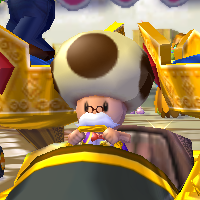
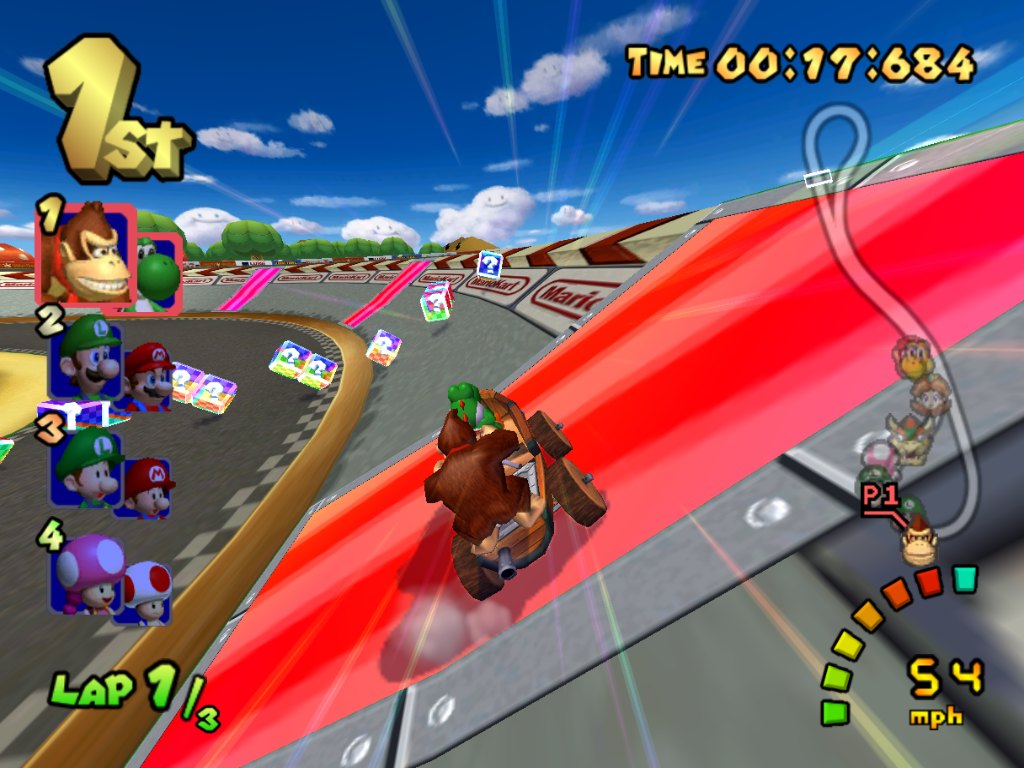
Nintendo GameCube2003Kart racingNintendo EADTwo riders per kart20 drivers, 21 karts16-player LANNearly 7 million soldToadette’s debut
Mario Kart: Double Dash!!
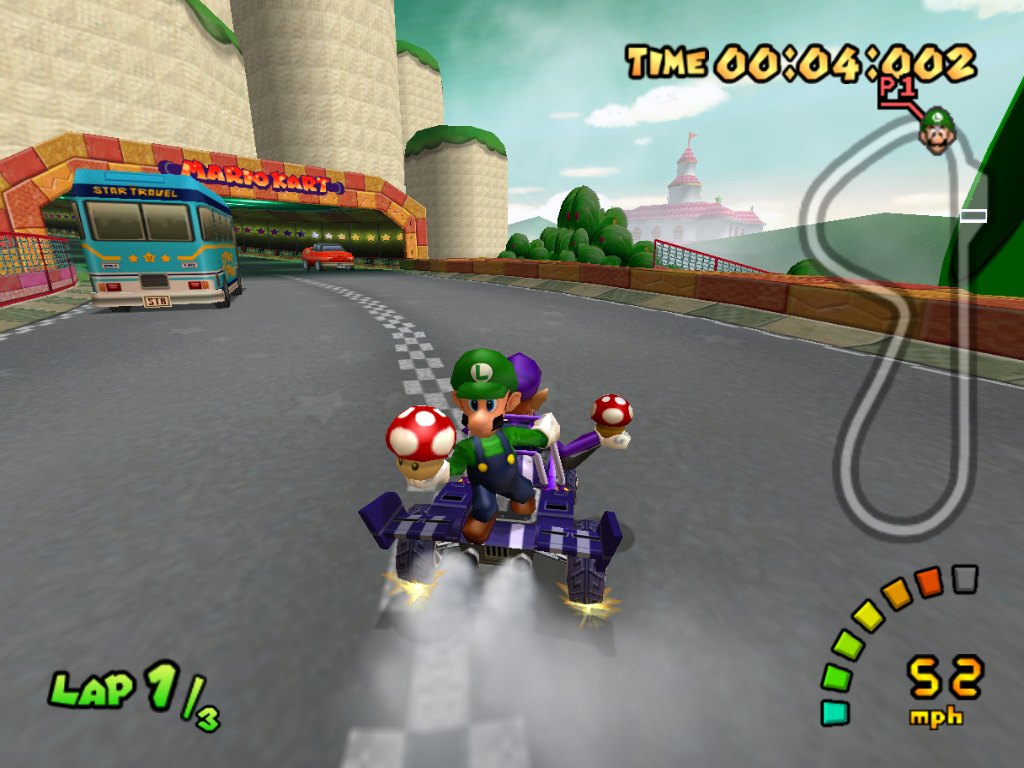
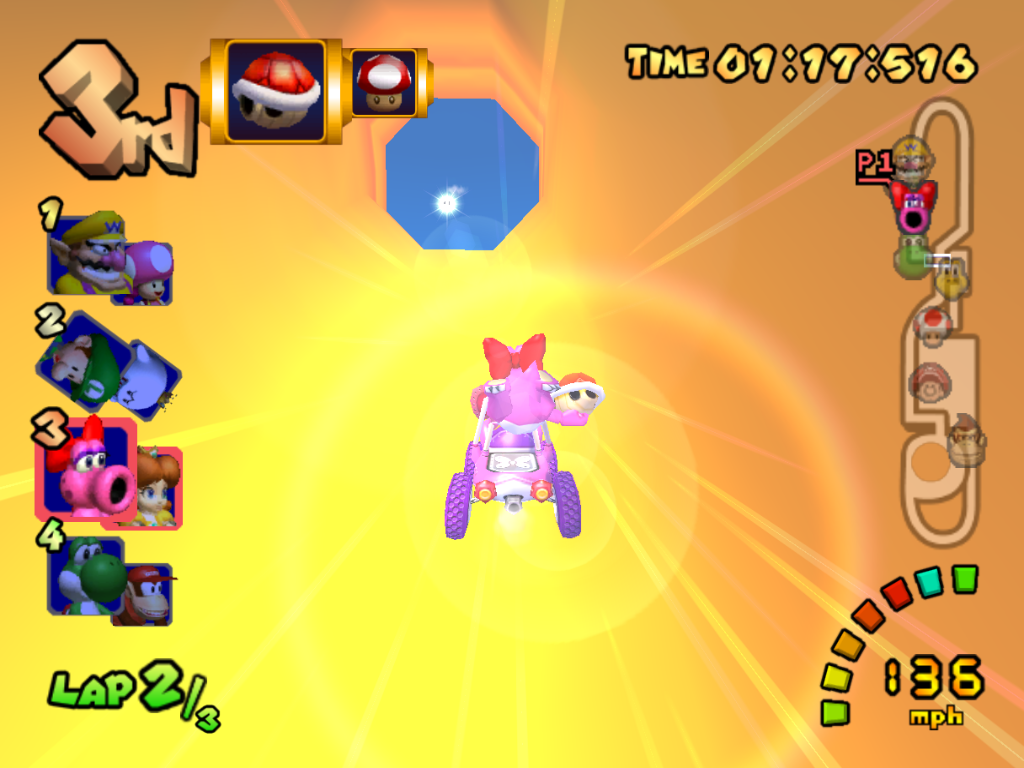
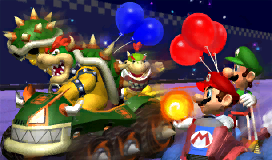
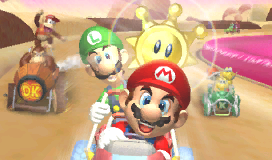
Two seats, one kart, and an argument about who gets to drive. Mario Kart: Double Dash!! arrived on the Nintendo GameCube in Japan on 7 November 2003, in Europe a week later and in North America on 17 November, and it remains the only Mario Kart built around teams: one character at the wheel, a second hanging off the back with the items, and a tap of Z to swap them over. There are 20 drivers to pair in any combination, each with a special item that only they and their usual partner can draw (a Chain Chomp on a lead, a giant banana, Bowser’s own shell), 21 karts in three weight classes and 16 new courses, from the seven-lap frenzy of Baby Park to the cannon-shot of DK Mountain. Two friends can share a single kart, and with Broadband Adapters as many as sixteen can share a race. Made by Nintendo EAD under chief director Kiyoshi Mizuki, it sold close to seven million copies, second only to Super Smash Bros. Melee on the system, and it has never been re-released.
Drivers and karts:20 drivers (16 at the start), 21 karts (8 at the start)
Courses:16 race courses in four cups, plus the All-Cup Tour; 6 battle courses
Sales:Close to 7 million worldwide
Re-releases:Player’s Choice reissue in Australia and New Zealand only
Advertisement
Overview
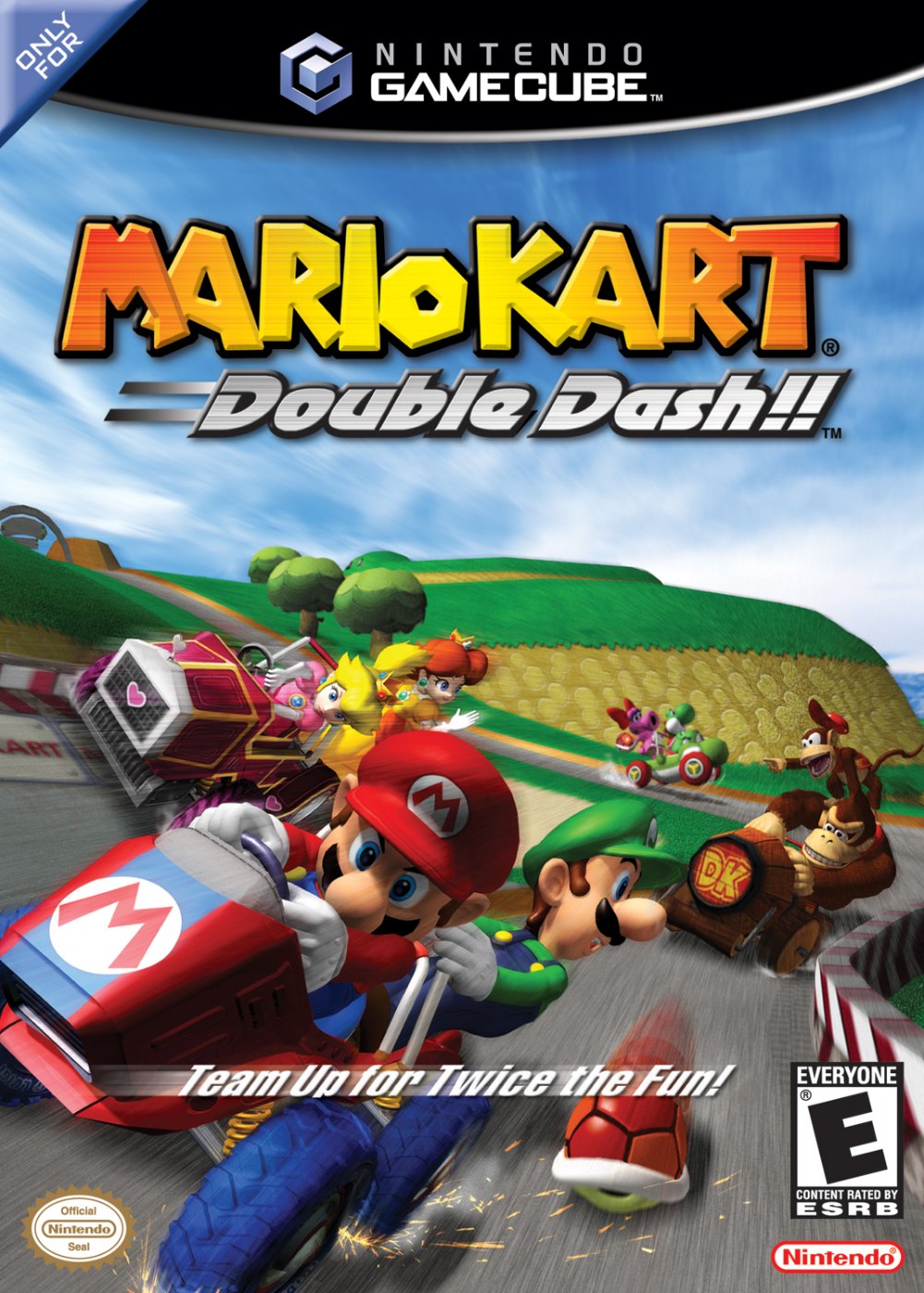
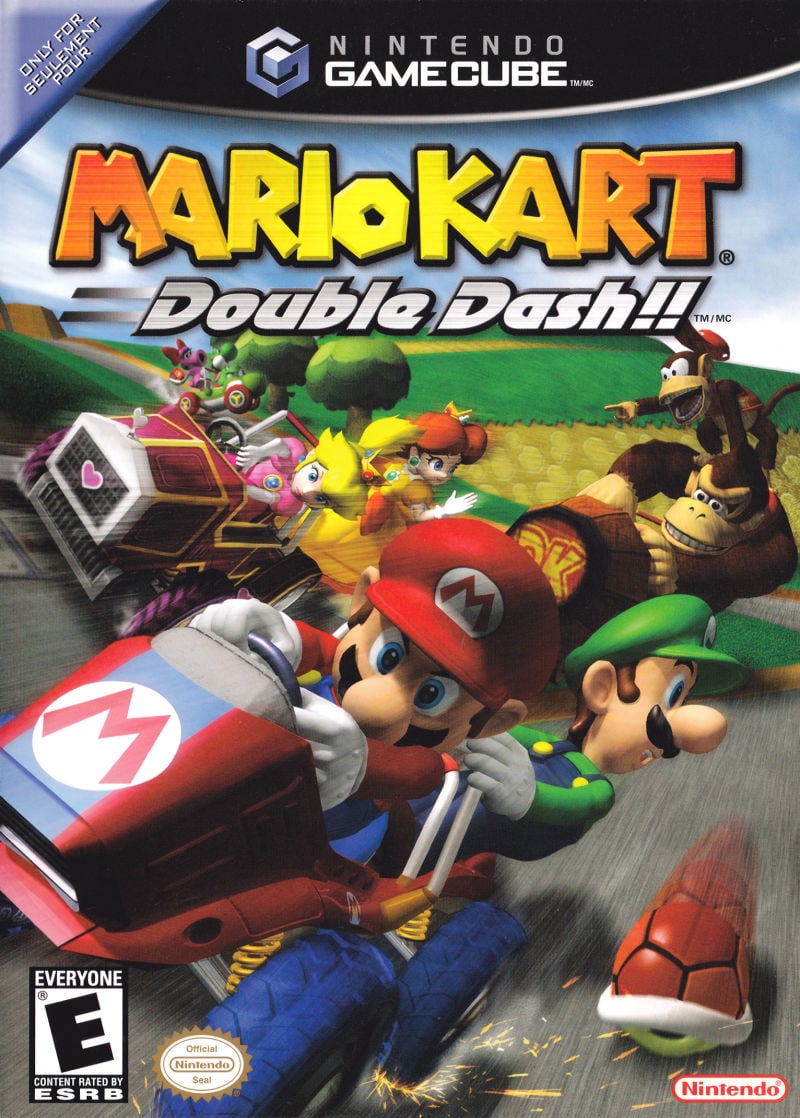
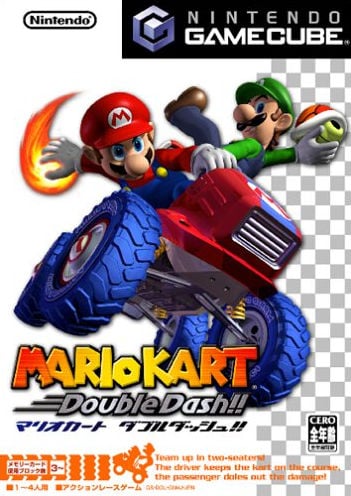
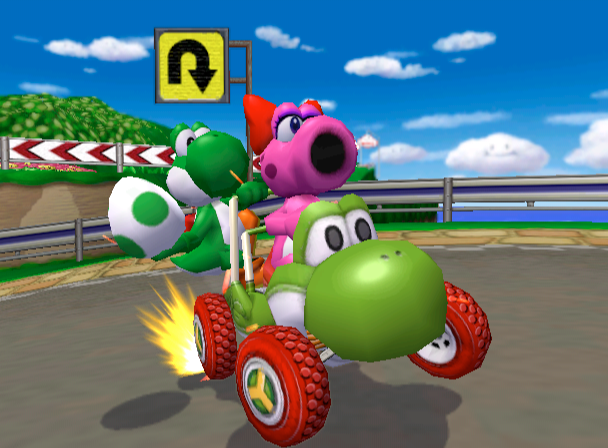
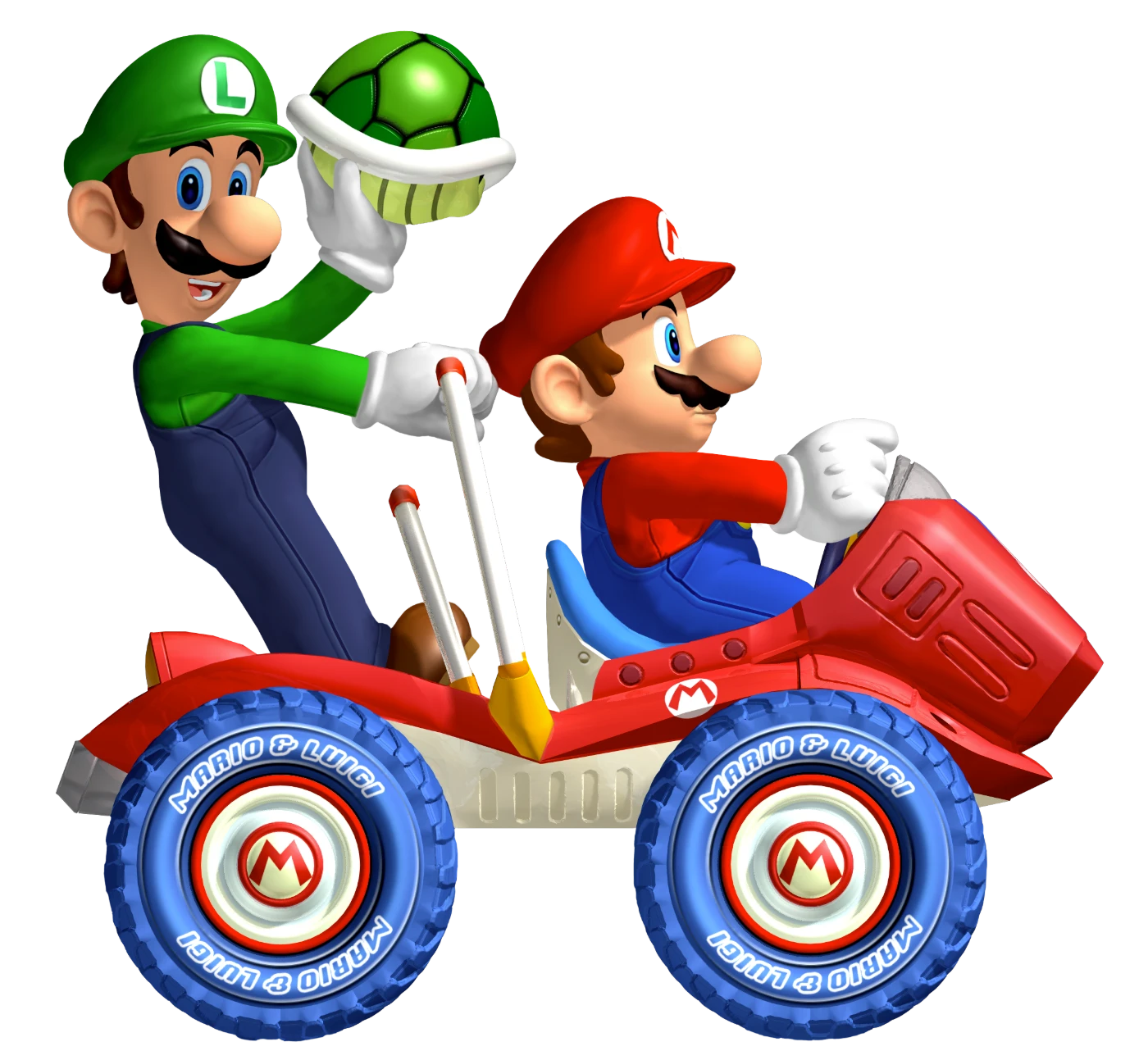
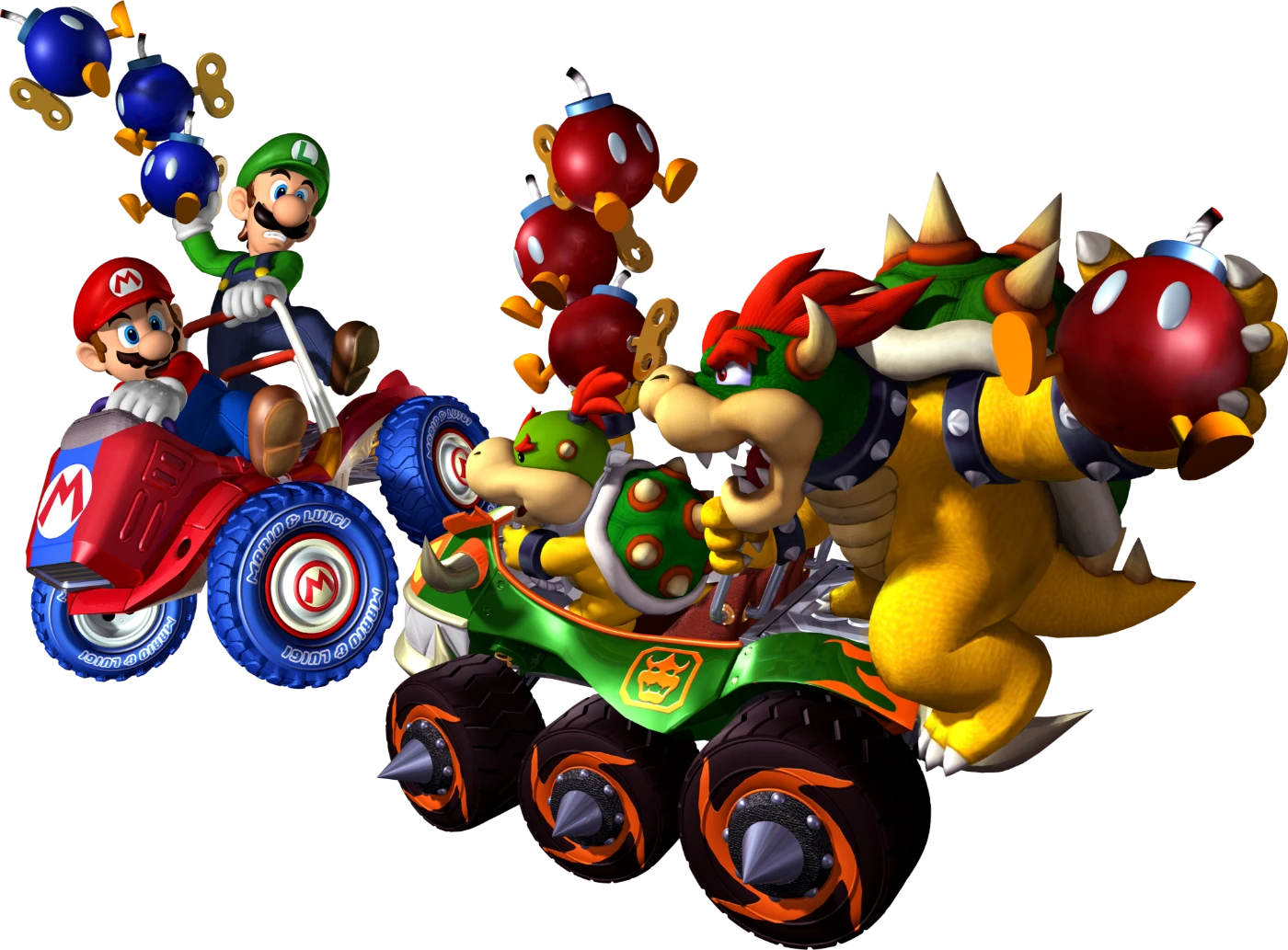
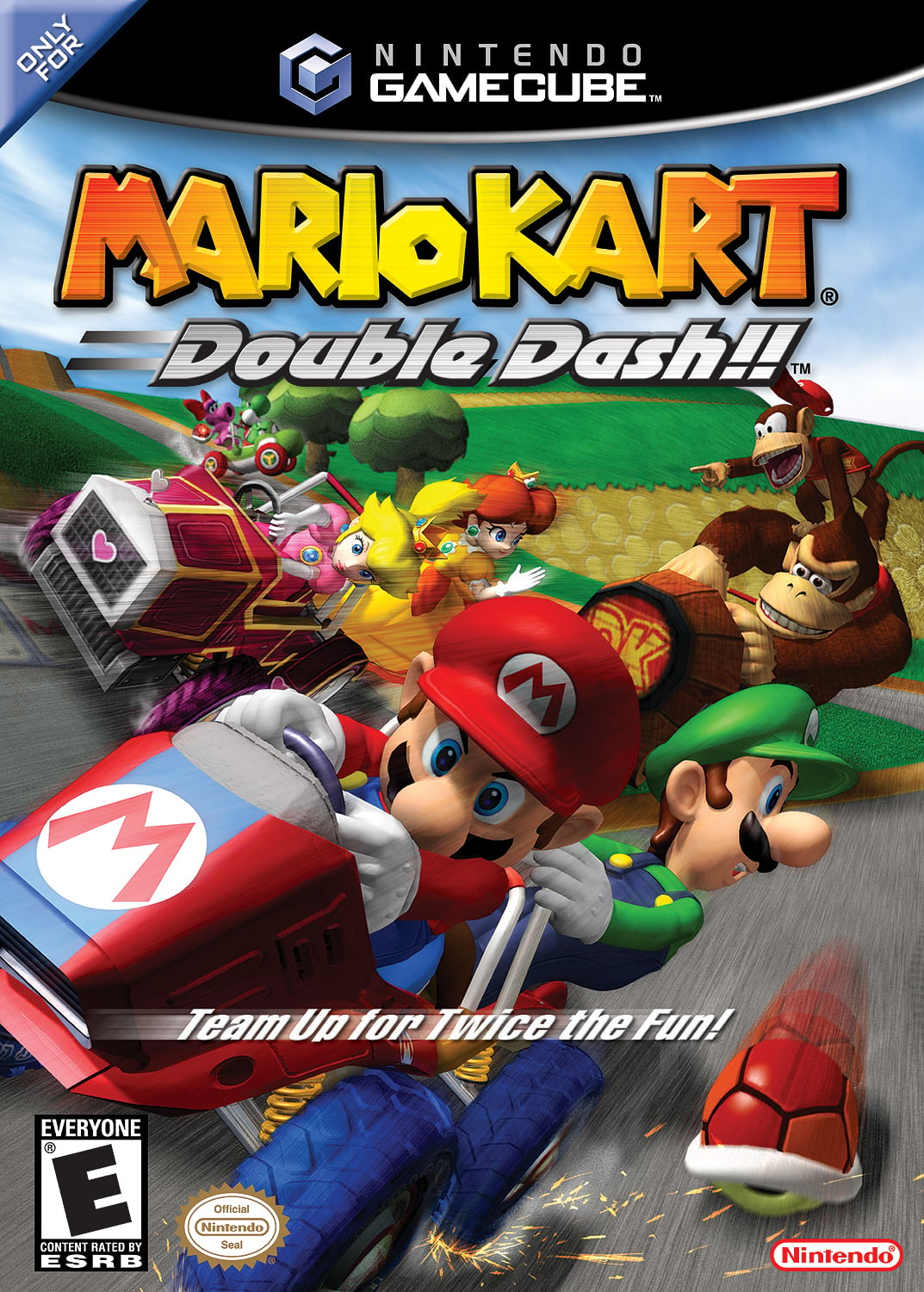
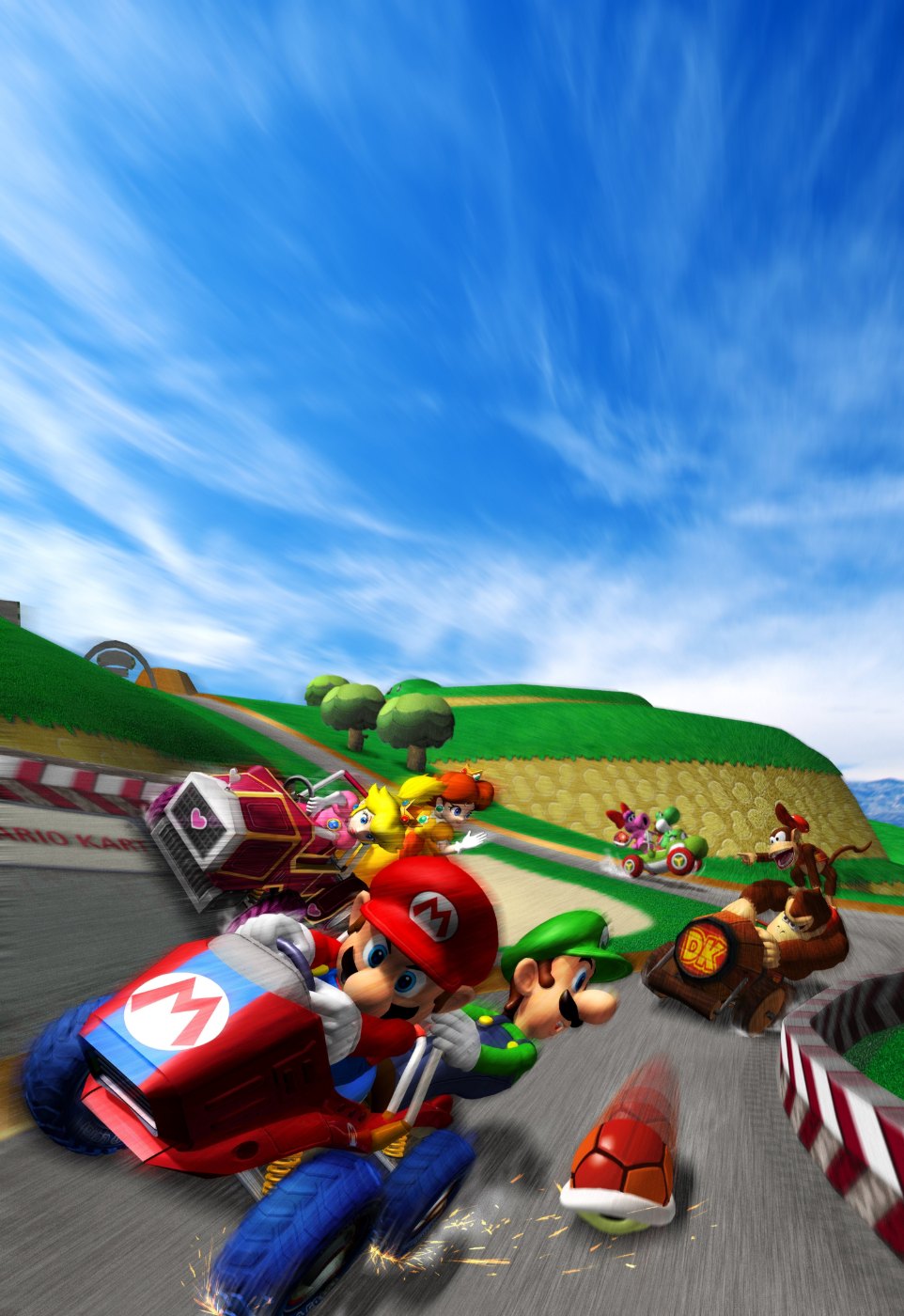
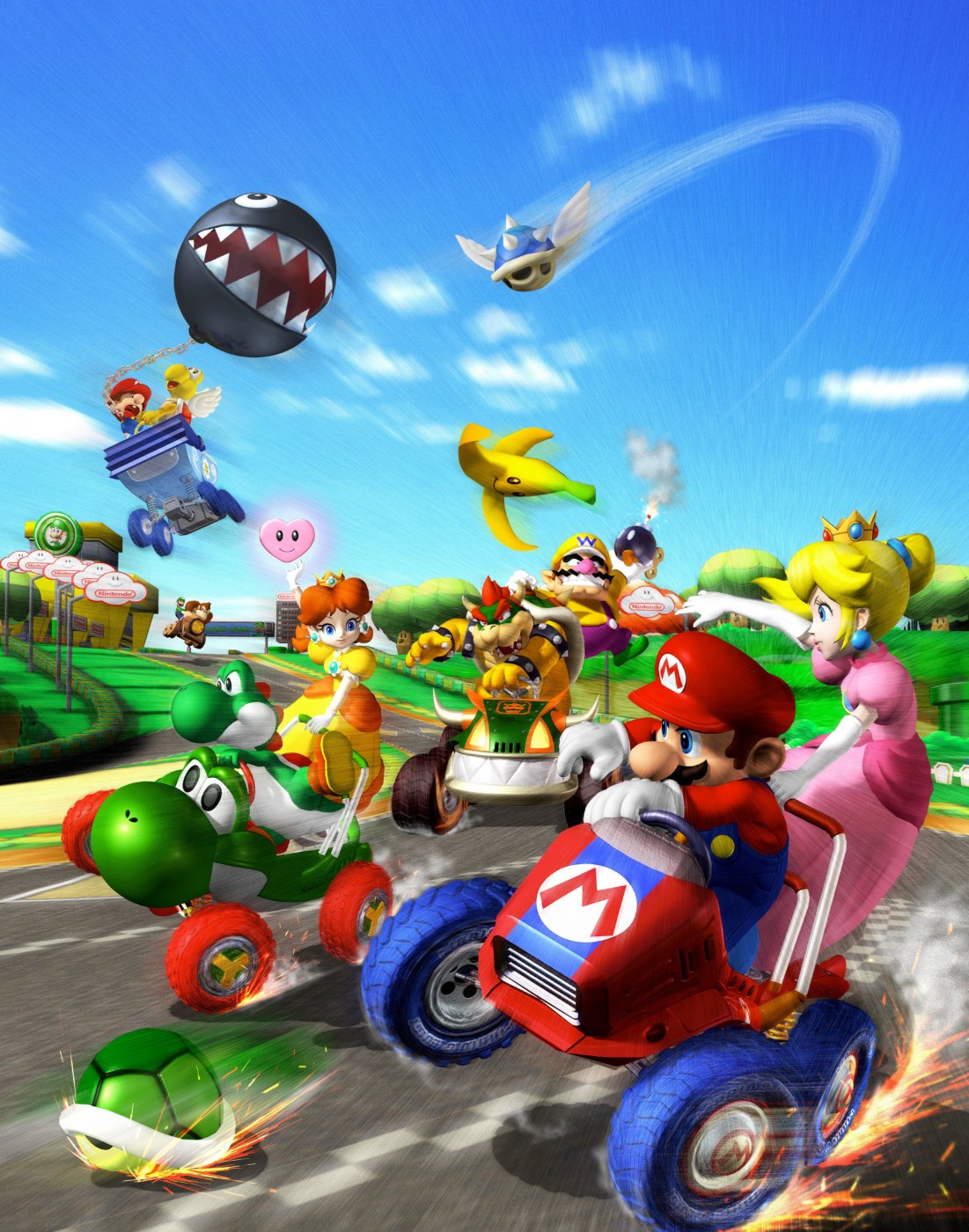
The key art used on the box: the default teams tearing round Yoshi Circuit.
Every Mario Kart has a hook, and no hook has ever been as bold as this one. In Double Dash!! each kart carries two characters. The one in front steers. The one behind holds the items, throws them, and leans out to shove rivals aside. They can change places whenever you like, which matters more than it sounds, because each character can hold an item of their own and because some of those items belong to particular characters and nobody else.
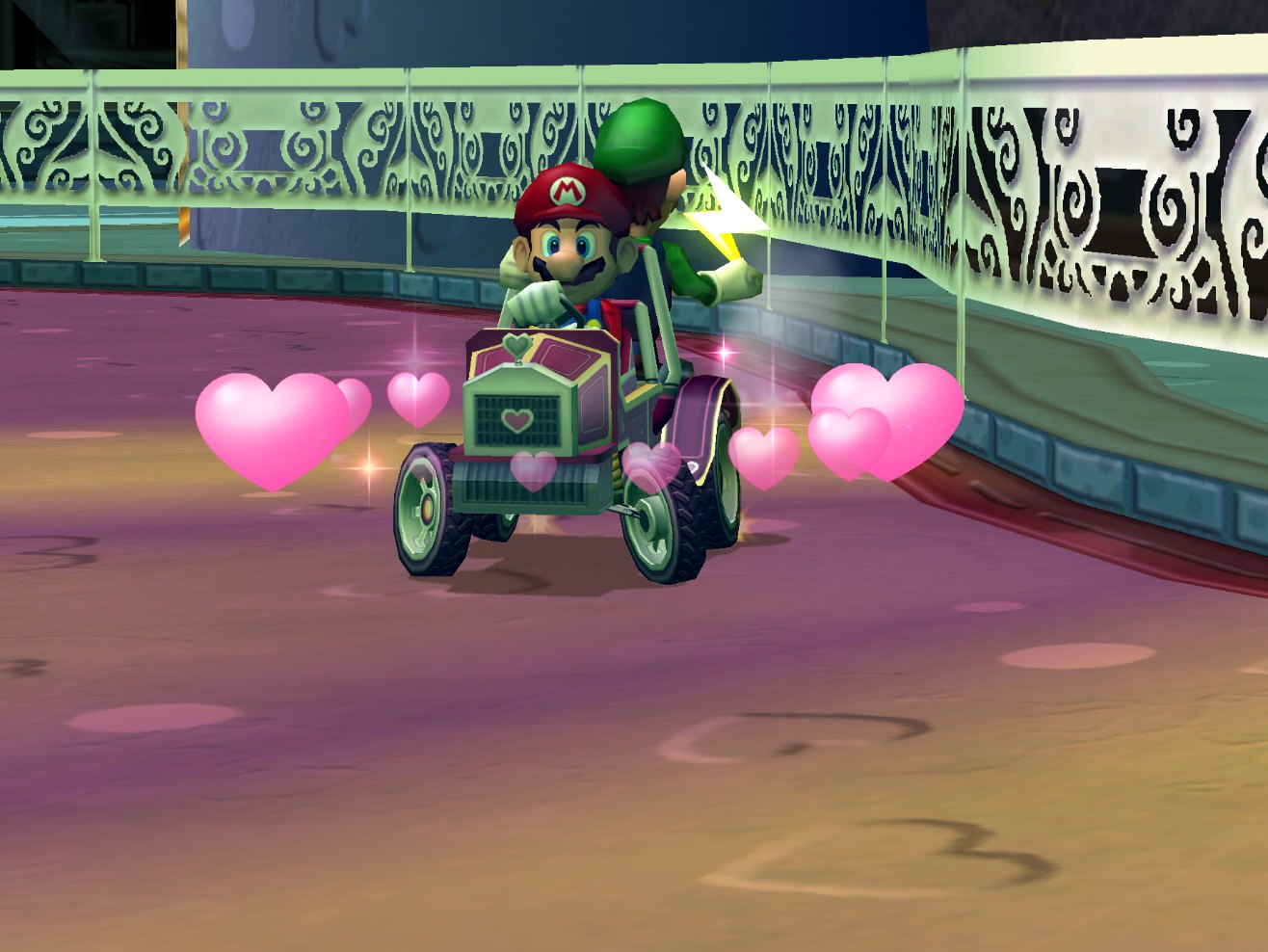
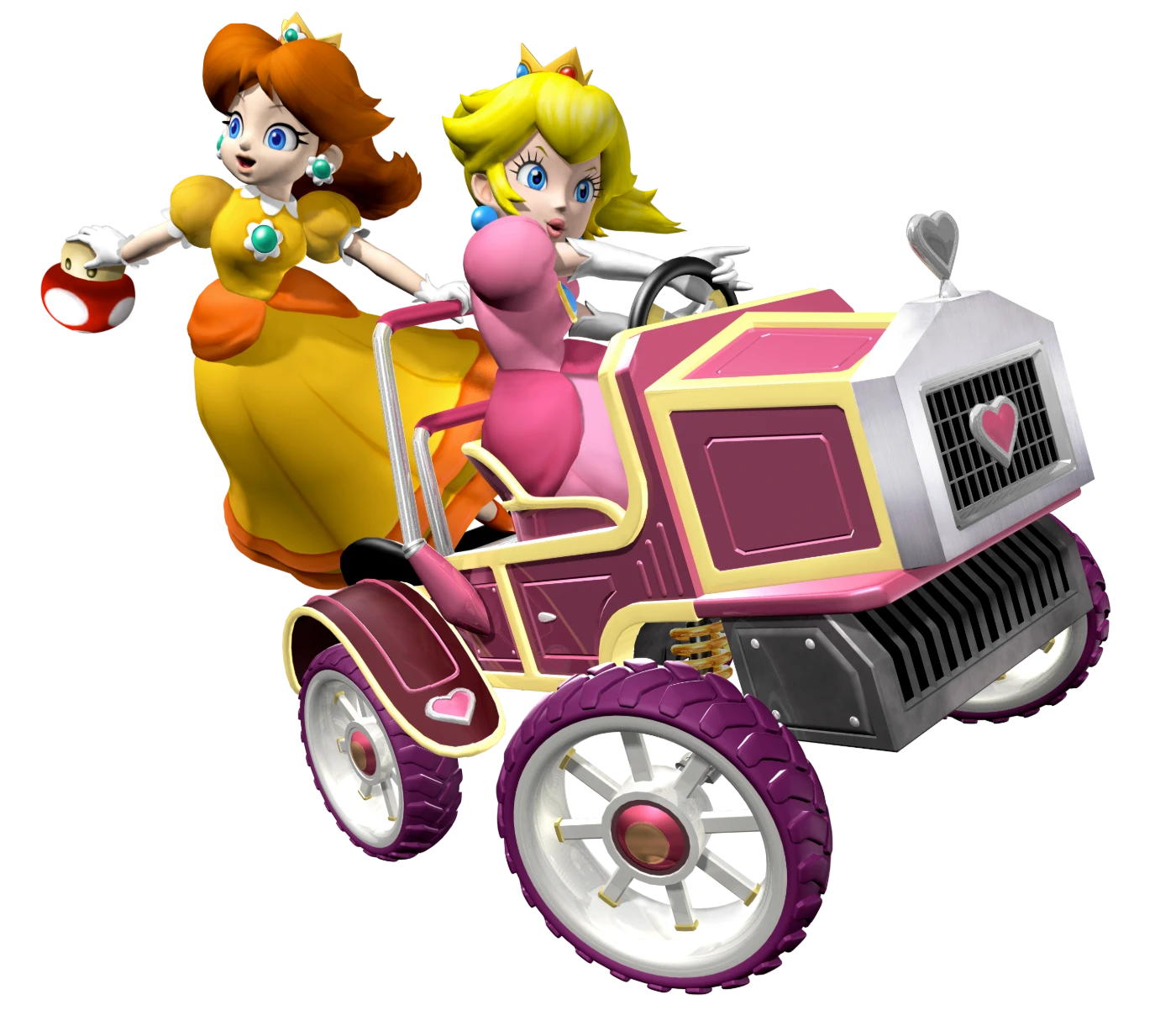
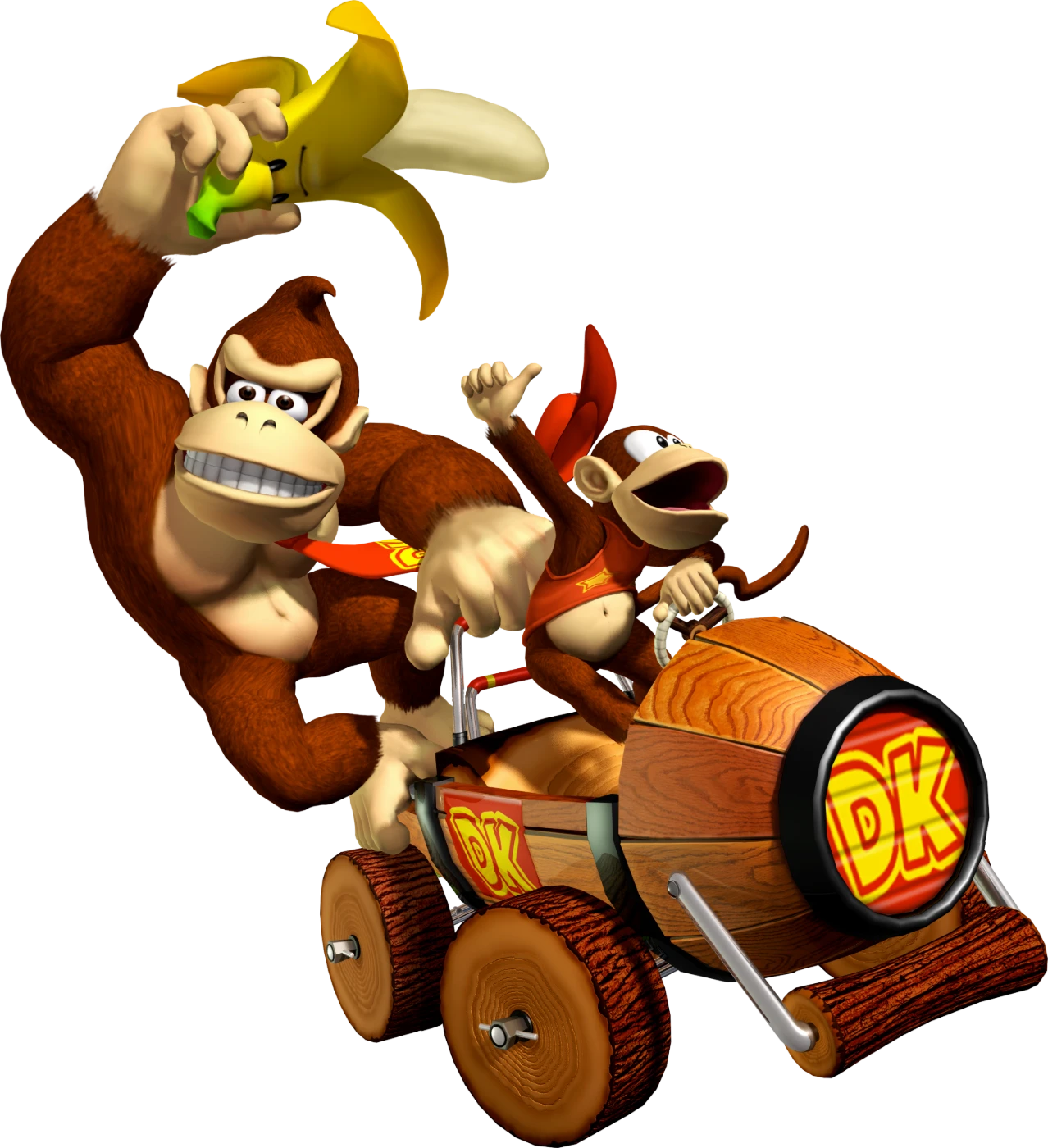
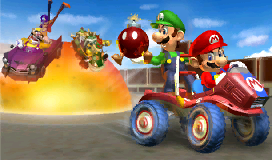
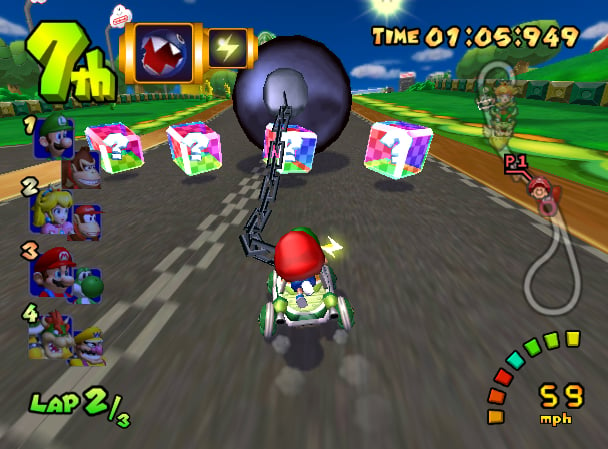
That second idea, the special item, gives the roster a personality no earlier Mario Kart had. Mario and Luigi throw fireballs. Peach and Daisy raise a pair of hearts that catch incoming items and pocket them. The babies are dragged up the field by a Chain Chomp. Donkey Kong and Diddy drop a Giant Banana that is almost impossible to steer around. Pick any two of the 20 drivers and you have chosen two specials, a weight class and a shortlist of karts, and suddenly the character select screen is a strategy game.
It was also a technical leap. This is the first Mario Kart in which the drivers and items are true 3D models and not flat sprites, the first with a different kart for every character, and the first that could be played in languages other than English and Japanese. Its 16 courses are all new, and several of them (Baby Park, Yoshi Circuit, DK Mountain, Daisy Cruiser, Waluigi Stadium) have become fixtures of later games. A cooperative mode lets two players crew one kart, and a LAN mode links up to eight GameCubes for sixteen players, a feature Nintendo’s own producers tested by cramming sixteen staff into one room.
Reviews in 2003 were strong but not unanimous: a Metacritic score of 87, perfect or near-perfect marks from Electronic Gaming Monthly and Nintendo Power, a famous 5 out of 10 from Edge. Players settled the question. Double Dash!! was the best-selling game in America in the month it launched and finished as the second best-selling game on the GameCube. More than twenty years later it is still one of the most fondly remembered games in the series.
Why Double Dash!! matters to Mario fans
It is the game that turned Mario Kart’s cast into a real ensemble. Toadette makes her first appearance anywhere, Baby Luigi and King Boo are playable for the first time, and Daisy, Birdo, Waluigi, Diddy Kong, Bowser Jr., Petey Piranha, Baby Mario and Paratroopa all join the series. It is full of Super Mario Sunshine and Luigi’s Mansion, the GameCube games that came before it, and its scoring, its character-specific karts and many of its courses have been part of Mario Kart ever since.
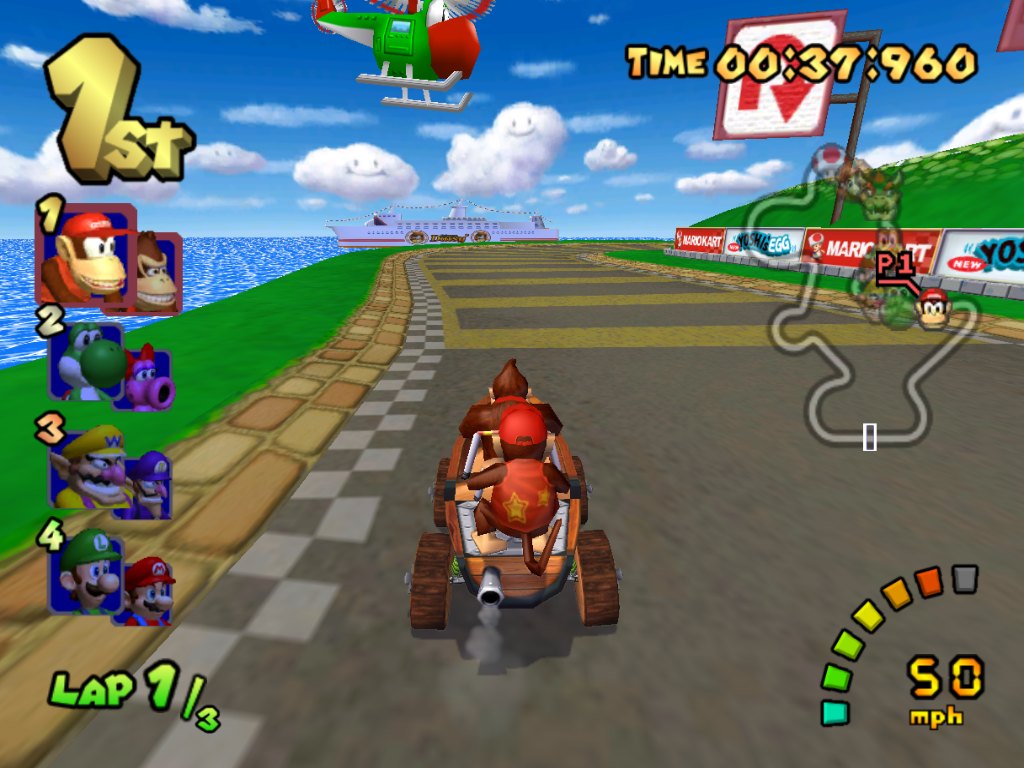
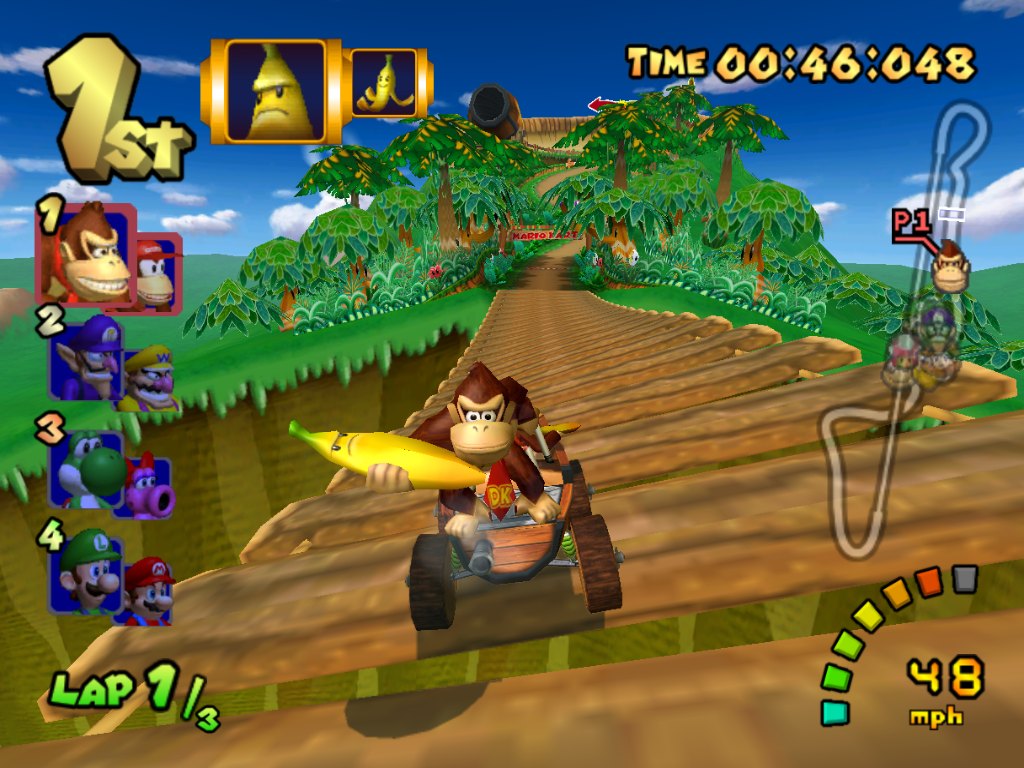
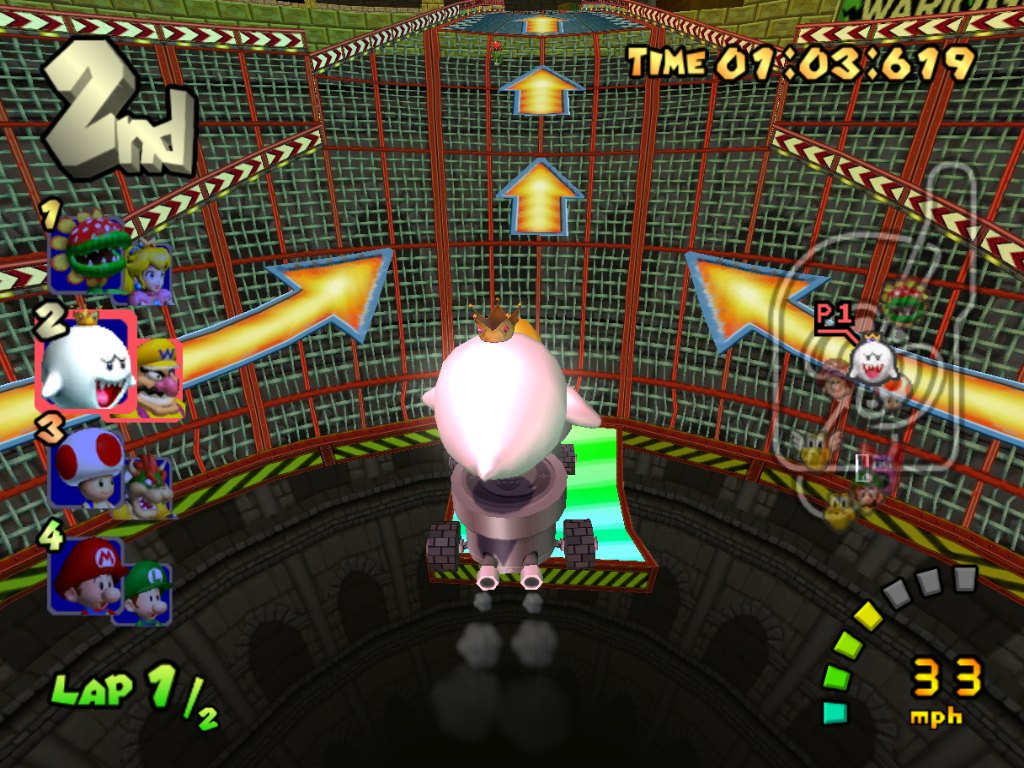
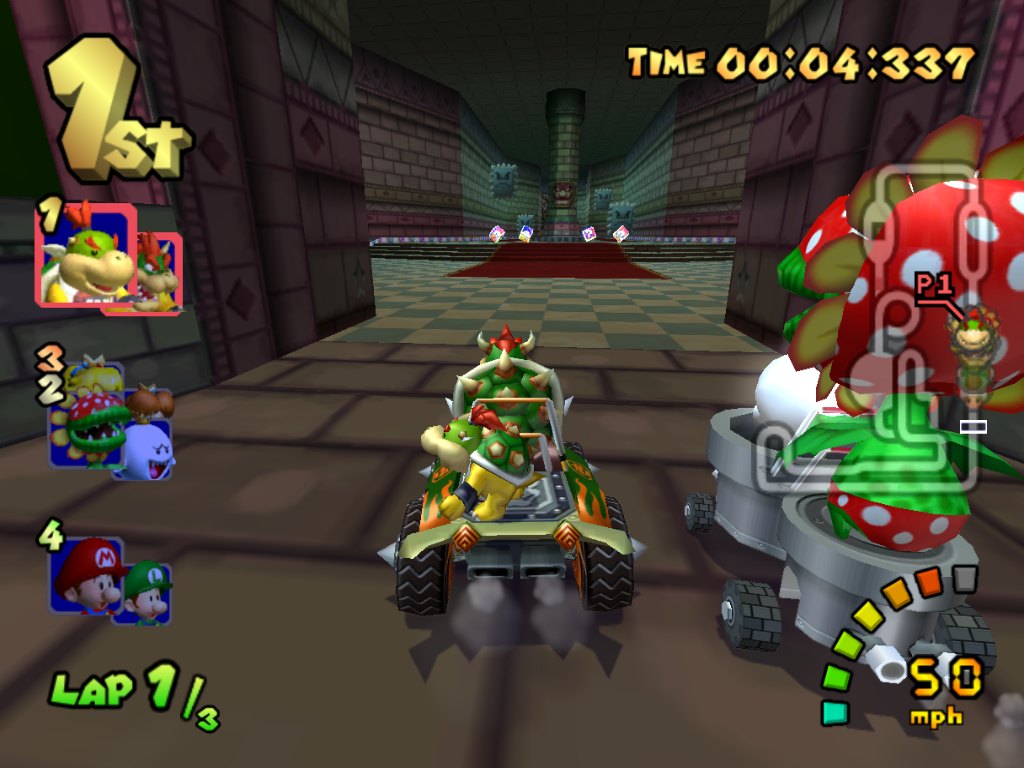
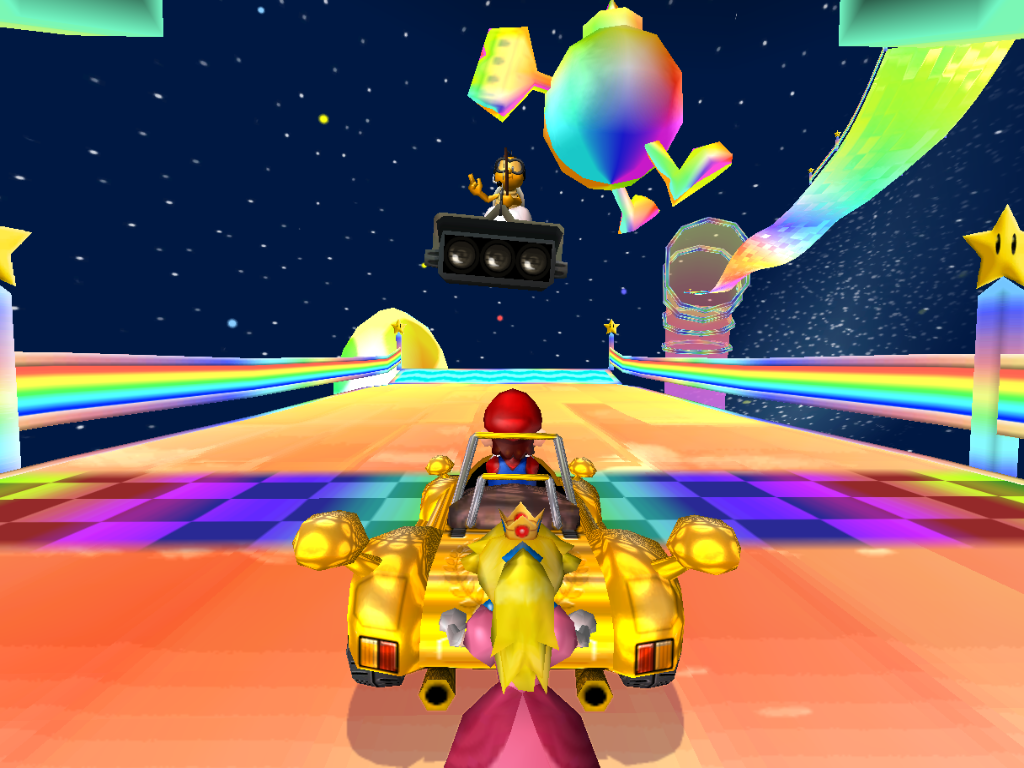
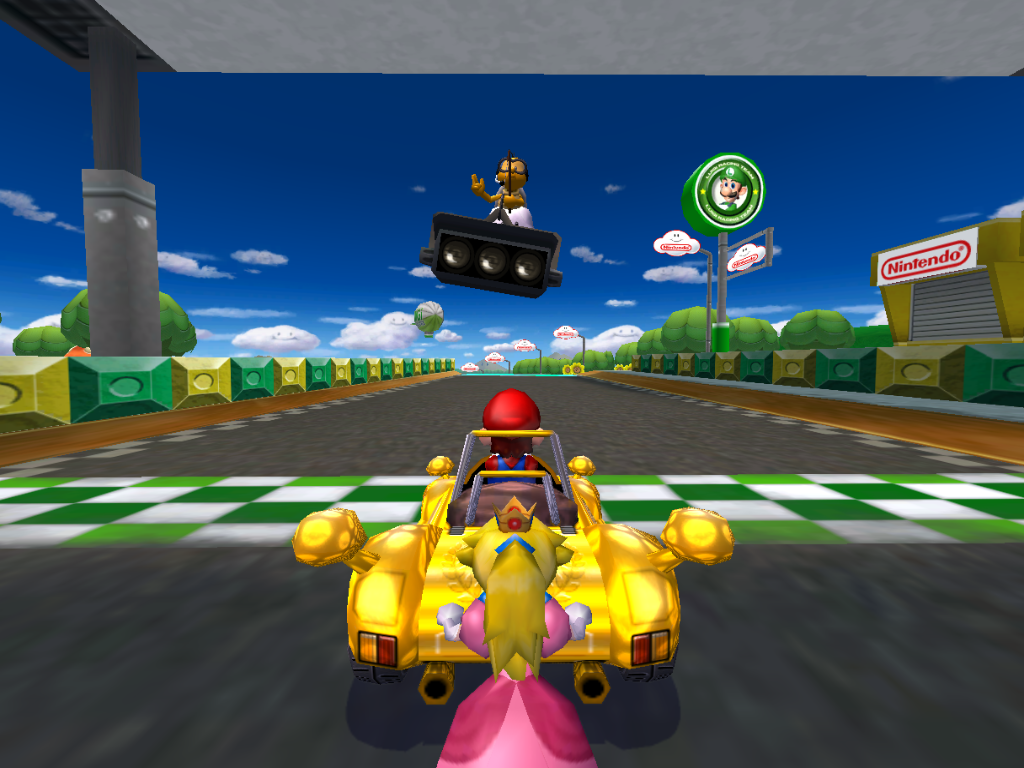
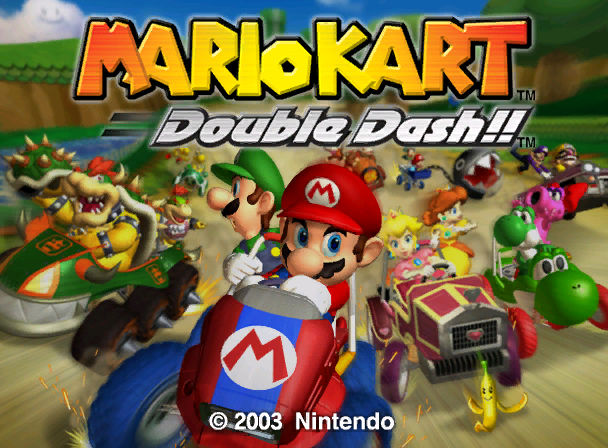
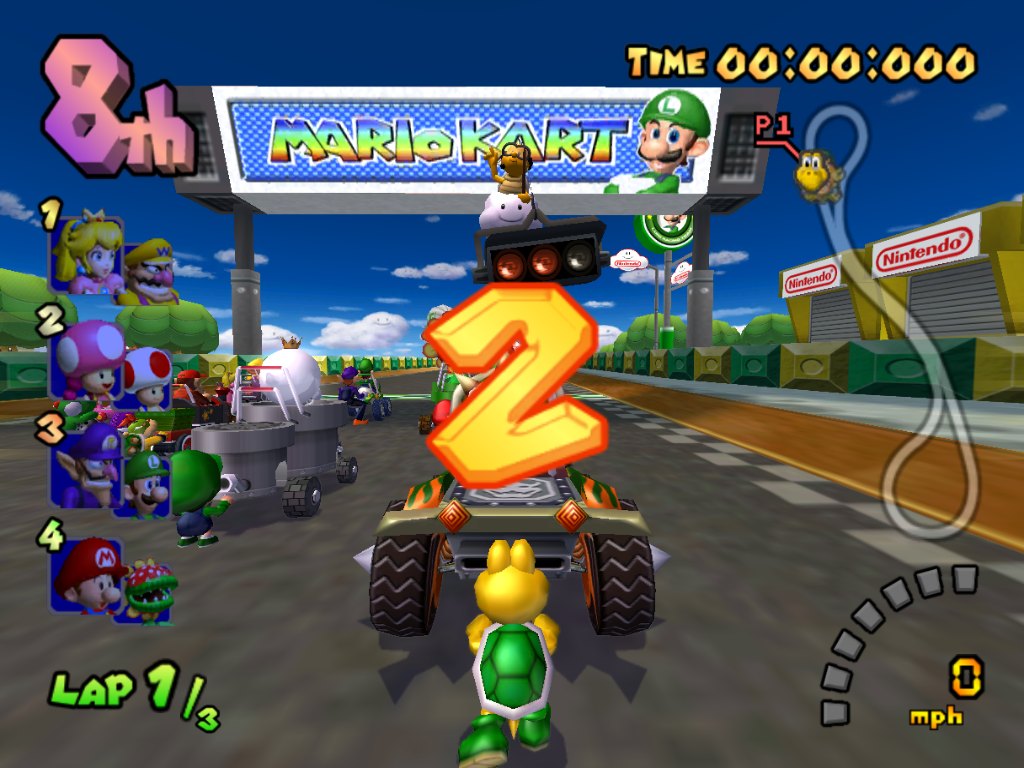
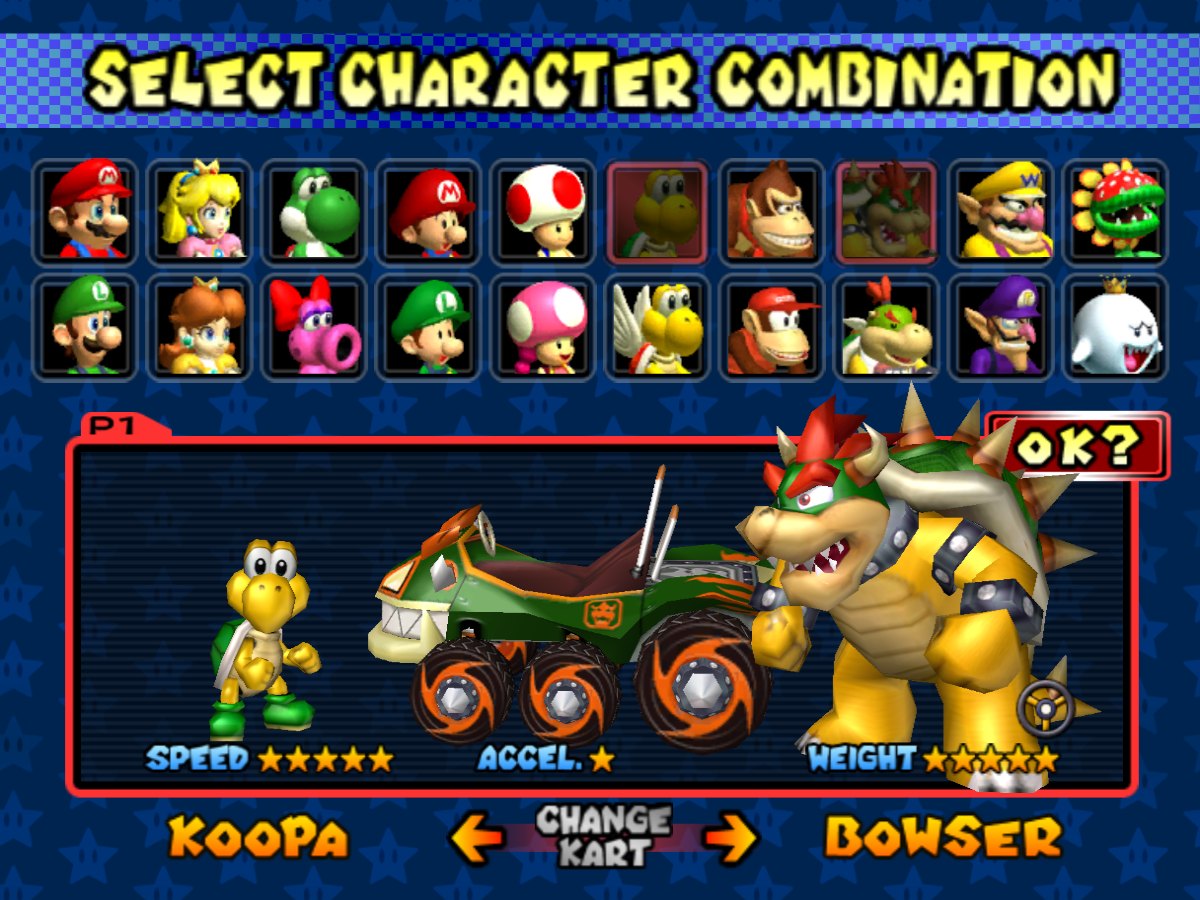
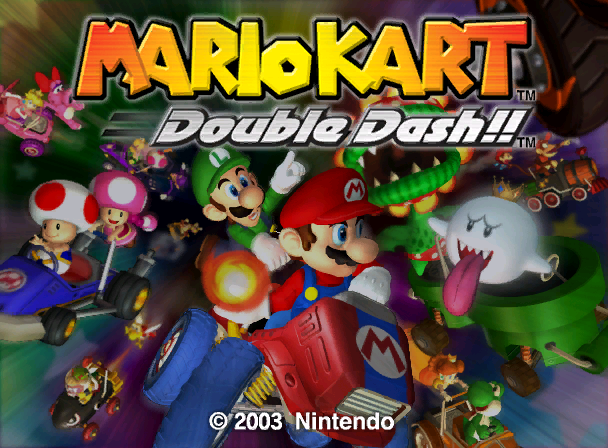
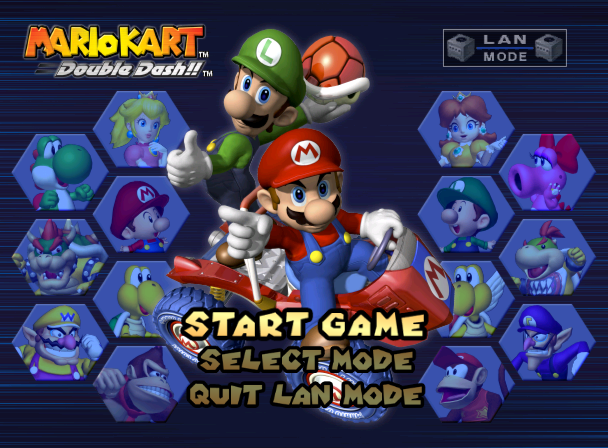
The title screen, with the eight starting teams.Lakitu starts a Grand Prix race on Luigi Circuit.The full character select screen, with all 20 drivers unlocked.Baby Mario and Baby Luigi unleash their special item, the Chain Chomp.
“The first gave birth to an entire genre. The second delivered multiplayer perfection.”
Official text: Nintendo of Europe, Mario Kart: Double Dash!! product page, and the North American box tagline as recorded by Super Mario Wiki.
Nintendo’s European product page opens with those two sentences about Super Mario Kart and Mario Kart 64 before introducing the new game’s twist: two characters to every kart, no restrictions on who rides with whom, and seats that can be swapped in mid-race. The front of the North American box put it more briefly: “Team Up for Twice the Fun!”
Quick Answers
The questions people ask most about Mario Kart: Double Dash!!, answered briefly here and in depth further down the page.
When did Mario Kart: Double Dash!! come out?
Japan: 7 November 2003. Europe and Australia: 14 November 2003. North America: 17 November 2003. South Korea followed on 20 December 2003. More →
How many characters are there, and who is unlockable?
Twenty. Sixteen are available from the start. Toad and Toadette are unlocked by winning the 100cc Special Cup, and Petey Piranha and King Boo by winning the Star Cup in Mirror Mode. More →
What are the special items?
Items that only certain characters can draw from an Item Box: Fireballs (Mario, Luigi), Heart (Peach, Daisy), Eggs (Yoshi, Birdo), Chain Chomp (the babies), Triple Shells (Koopa, Paratroopa), Giant Banana (the Kongs), Bowser’s Shell (Bowser, Bowser Jr.), Bob-omb (Wario, Waluigi) and Golden Mushroom (Toad, Toadette). Petey Piranha and King Boo can draw almost any of them. More →
How do you do a Double Dash start?
It is only possible in co-op play, with two players on one kart. Both press A at the same instant as the lights turn green. Get it right and the kart rockets away on a blue flame, further than an ordinary Rocket Start. More →
How do you unlock Mirror Mode and the Parade Kart?
Win the Special Cup in 150cc to open the All-Cup Tour, then win the All-Cup Tour in 150cc to open Mirror Mode. Winning the All-Cup Tour in Mirror Mode unlocks the Parade Kart, which any pair of characters can drive. More →
How many courses are there?
Sixteen race courses in four cups (Mushroom, Flower, Star and Special), all new to this game, plus six battle courses. The All-Cup Tour runs all sixteen in one sitting. More →
How does 16-player LAN mode work?
Each GameCube needs its own copy of the game and a Broadband Adapter. Up to eight consoles can be joined through a network hub, and with two players sharing each kart that makes sixteen people in one race. Characters are assigned at random in LAN play. More →
Who made it?
Nintendo EAD. Kiyoshi Mizuki was chief director, with Yasuyuki Oyagi, Futoshi Shirai and Daiji Imai directing, and Shigeru Miyamoto, Tadashi Sugiyama, Shinya Takahashi and Takashi Tezuka producing. Shinobu Tanaka and Kenta Nagata wrote the music. More →
How many copies did it sell?
Close to seven million. Published tallies range from 6.88 to about 7 million, which makes it the second best-selling GameCube game after Super Smash Bros. Melee. More →
Can I play it on a modern console?
Not officially. Double Dash!! has never been re-released or added to a download service; the only reissue was a Player’s Choice edition in Australia and New Zealand. Many of its courses have been remade in later Mario Kart games. More →
Cups & Courses
Official artwork: mixed teams on Luigi Circuit.
Double Dash!! has sixteen race courses, four to a cup, and every one of them was new in 2003. Most belong to somebody: Luigi Circuit, Peach Beach, Daisy Cruiser, Waluigi Stadium, Wario Colosseum and so on are the home tracks of the drivers they are named after, and the staff ghost on each is usually driven by its owner. Races last three laps, with two exceptions at opposite extremes, Baby Park (seven) and Wario Colosseum (two).
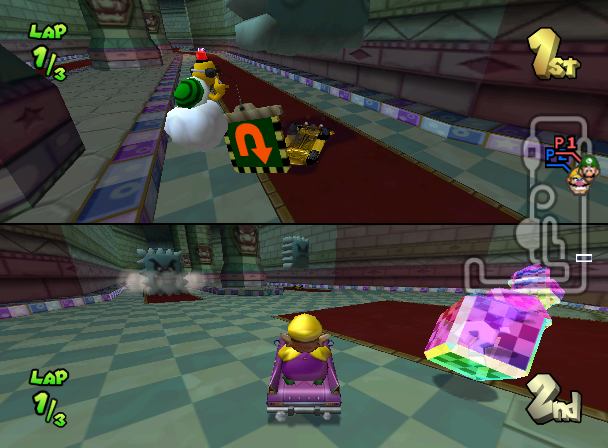
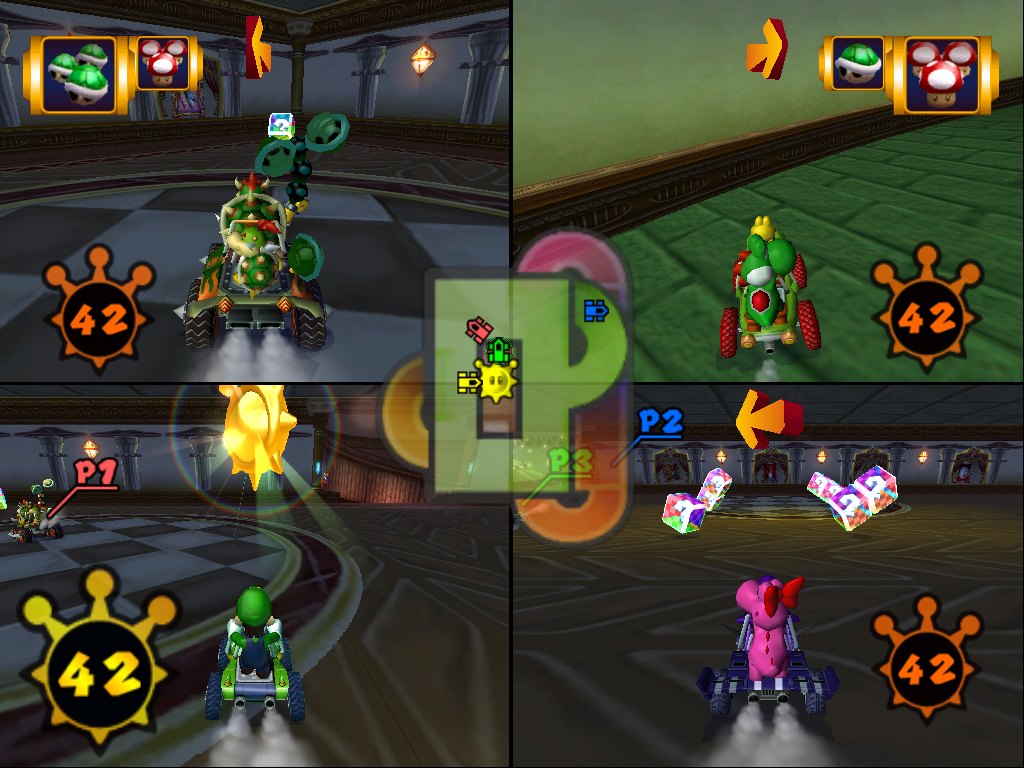
The courses also share a world. Mushroom City glitters on the horizon of Mushroom Bridge, Wario Colosseum and Rainbow Road; DK Mountain looms over Baby Park and Dino Dino Jungle; the Daisy Cruiser sails past Peach Beach and Yoshi Circuit. And they are not the same for every audience: in split-screen and LAN races the game quietly removes scenery and thins out the hazards to keep the picture smooth.
Mushroom Cup
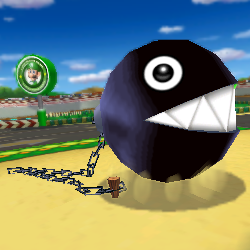
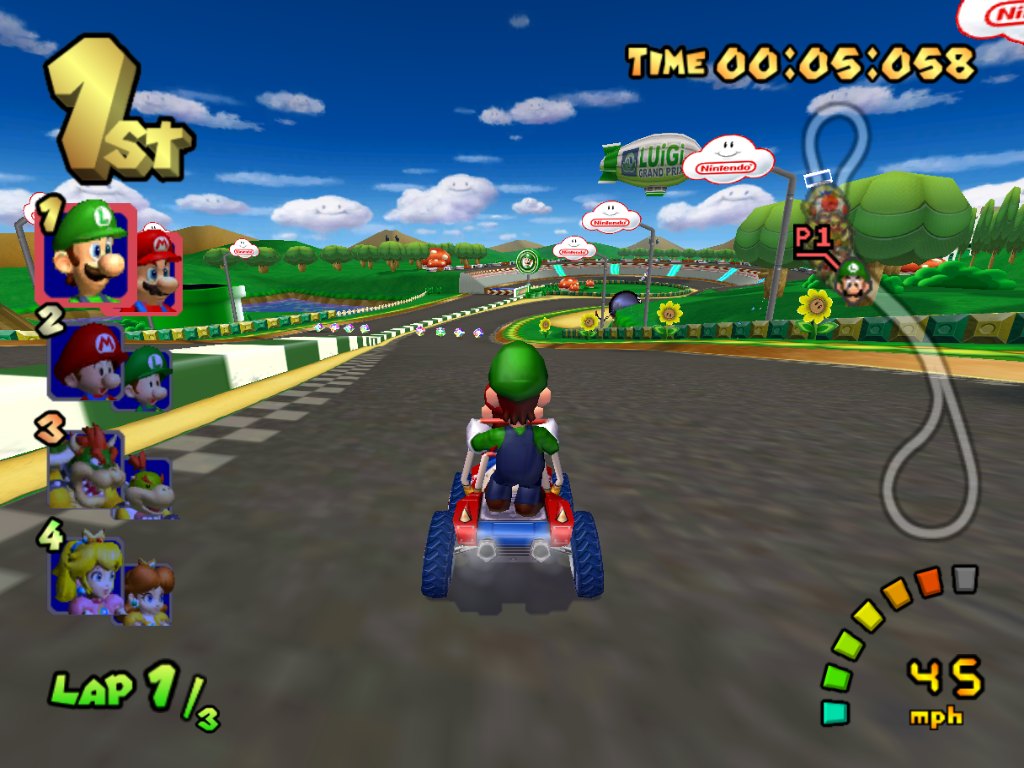
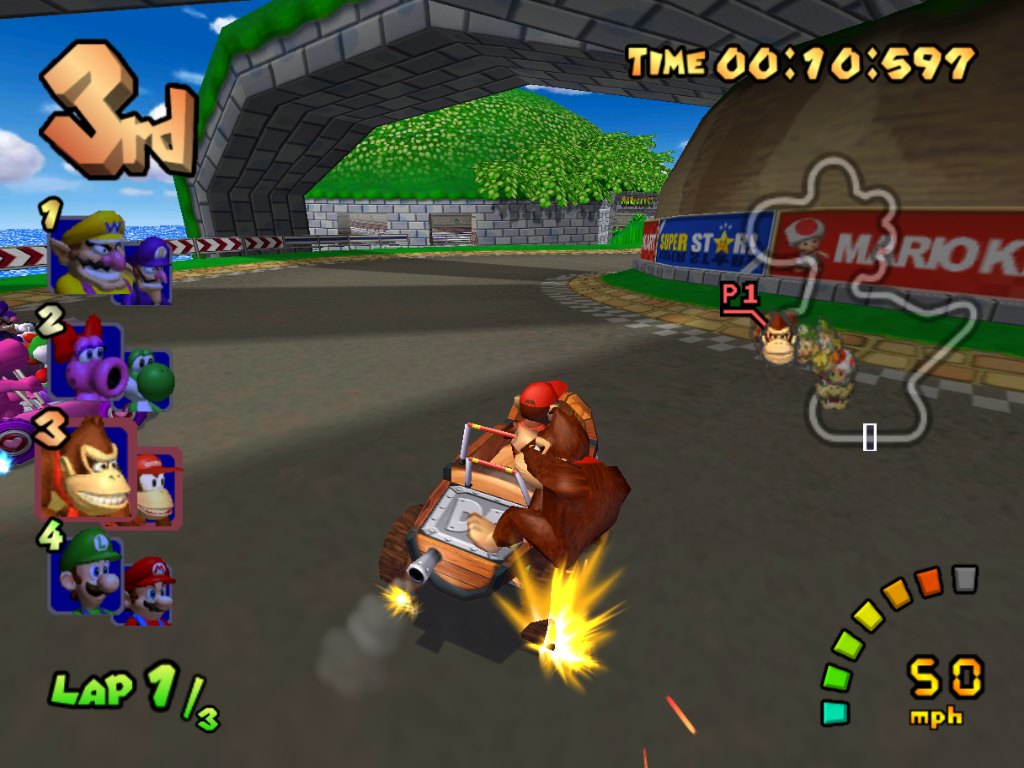
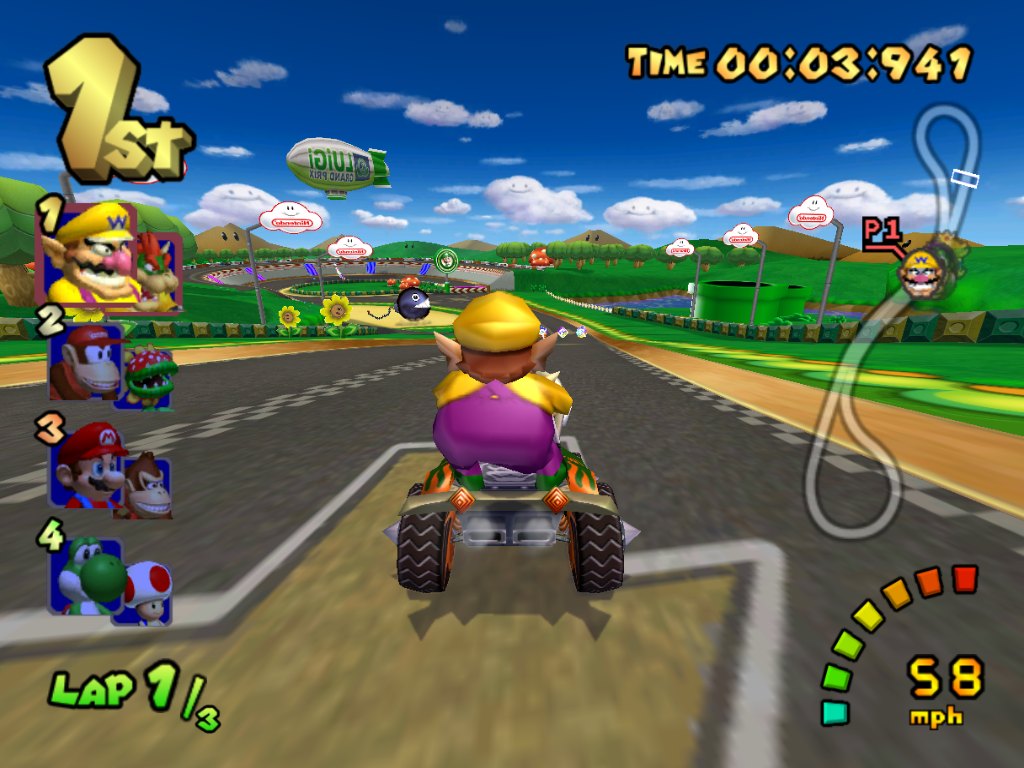
Luigi Circuit is a pinched oval with a Dash Panel on each of its two U-turns and a Chain Chomp chained up beside the first. In 50cc a barrier runs down the middle; in the faster classes it is taken away, and the two directions of traffic share the same strip of tarmac. A mansion straight out of Luigi’s Mansion can be seen from the track.
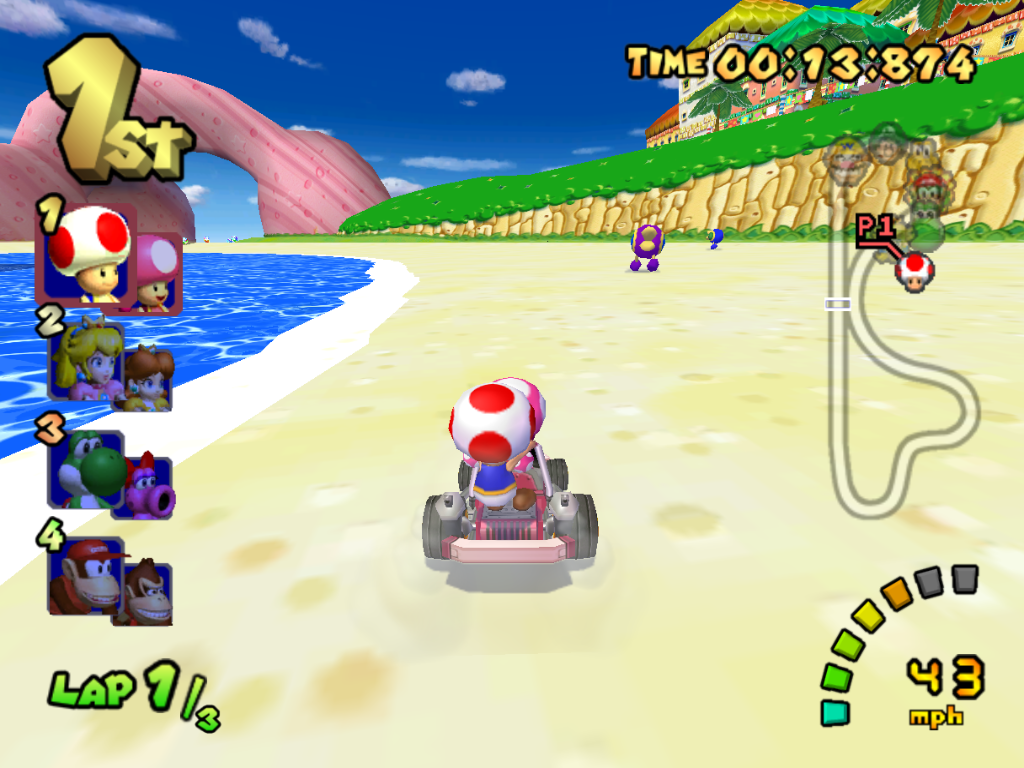
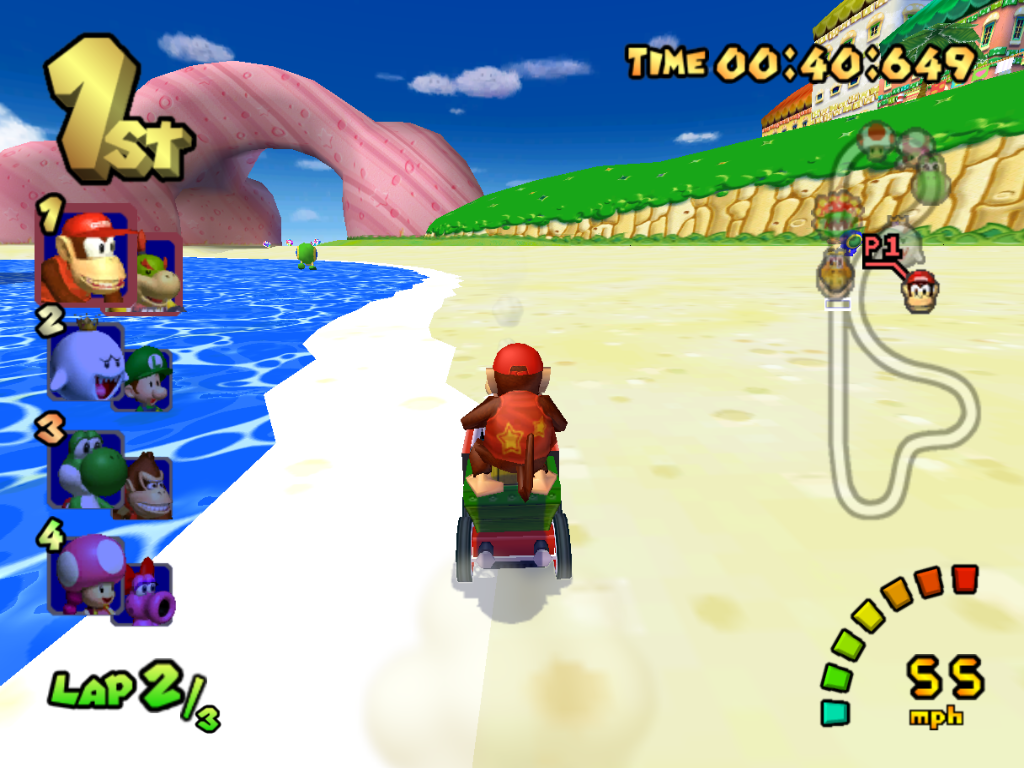
Peach Beach is a seaside town in the style of Super Mario Sunshine, with Piantas watching from the pavement. The beach section depends on the tide: at low water you can cut straight across the sand, at high water you go the long way round or splash through at a crawl. Duck-billed Cataquacks patrol the shore and toss karts into the air.
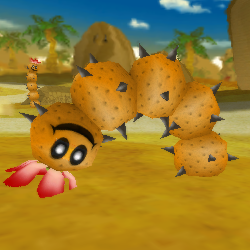
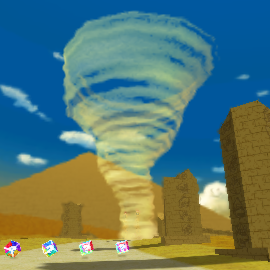
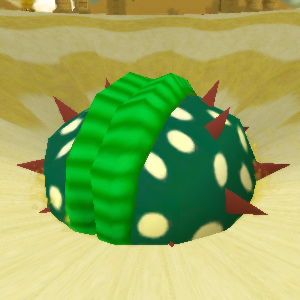
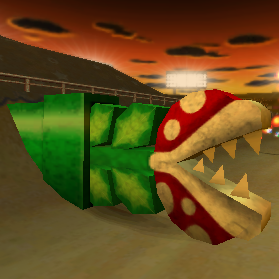
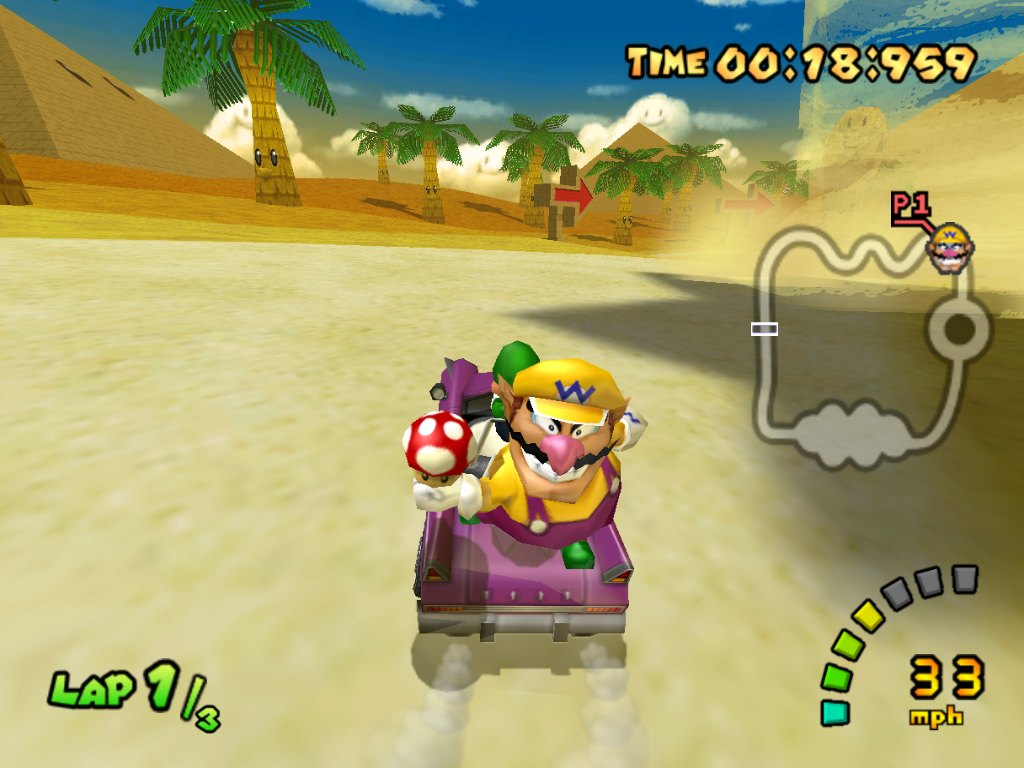
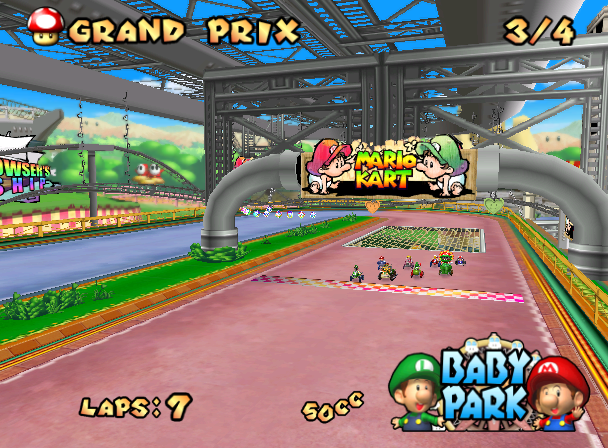
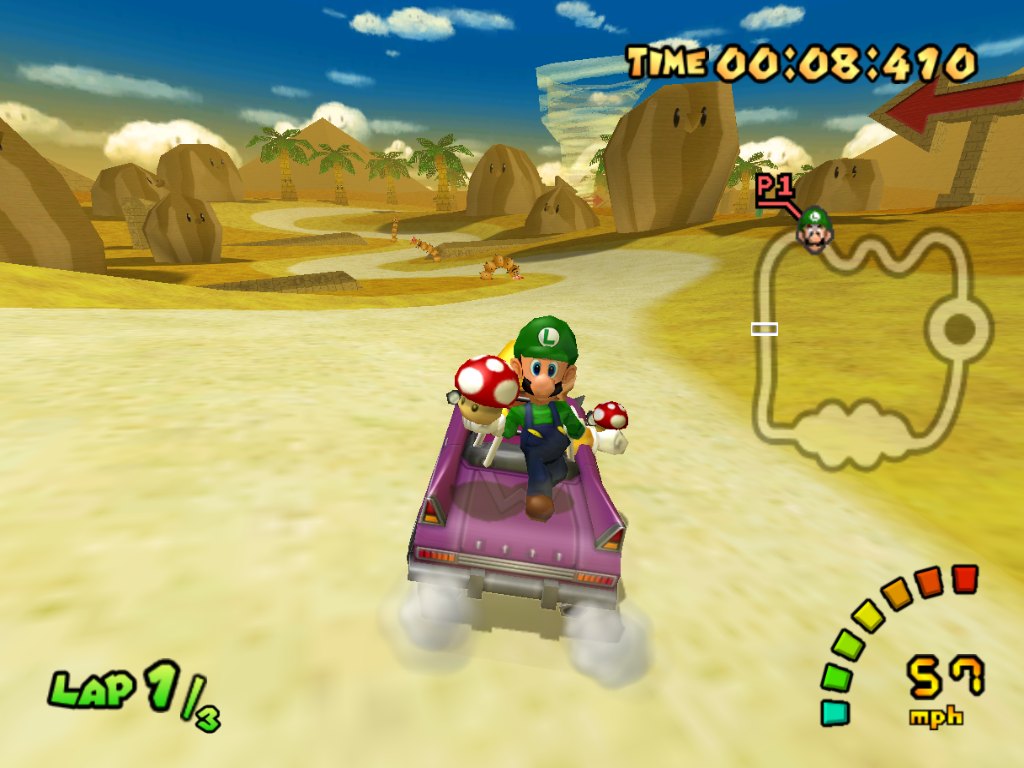
Baby Park is the simplest course in Mario Kart, and one of the most argued over: a tiny oval in a fairground, lapped seven times in about ten seconds a go. With eight karts never more than a few lengths apart and shells able to cross the central divider, it is less a race than a food fight. Dry Dry Desert ends the cup among pyramids and obelisks, with swaying Pokeys, a wandering tornado that plucks karts off the road, and a quicksand pit with a hungry plant at the bottom.
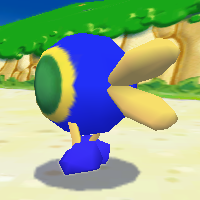
Luigi Circuit in 50cc, with its central barrier in place.Cataquacks on the sand at Peach Beach.King Boo and Paratroopa in the thick of it at Baby Park.Steering clear of the tornado in Dry Dry Desert.
Flower Cup
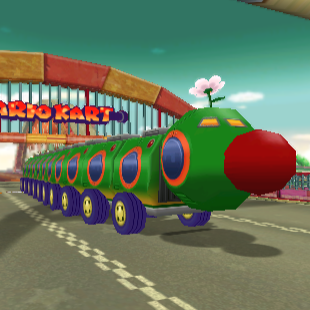
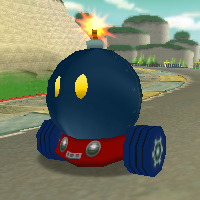
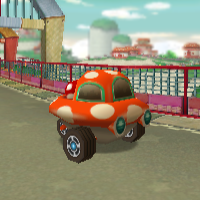
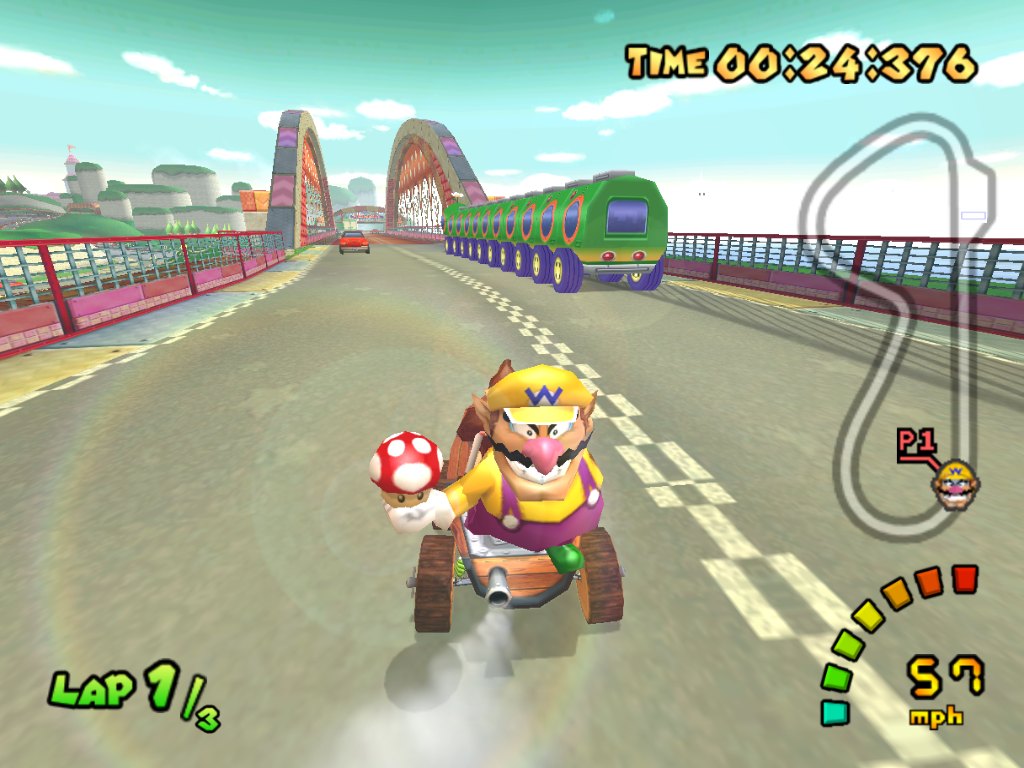
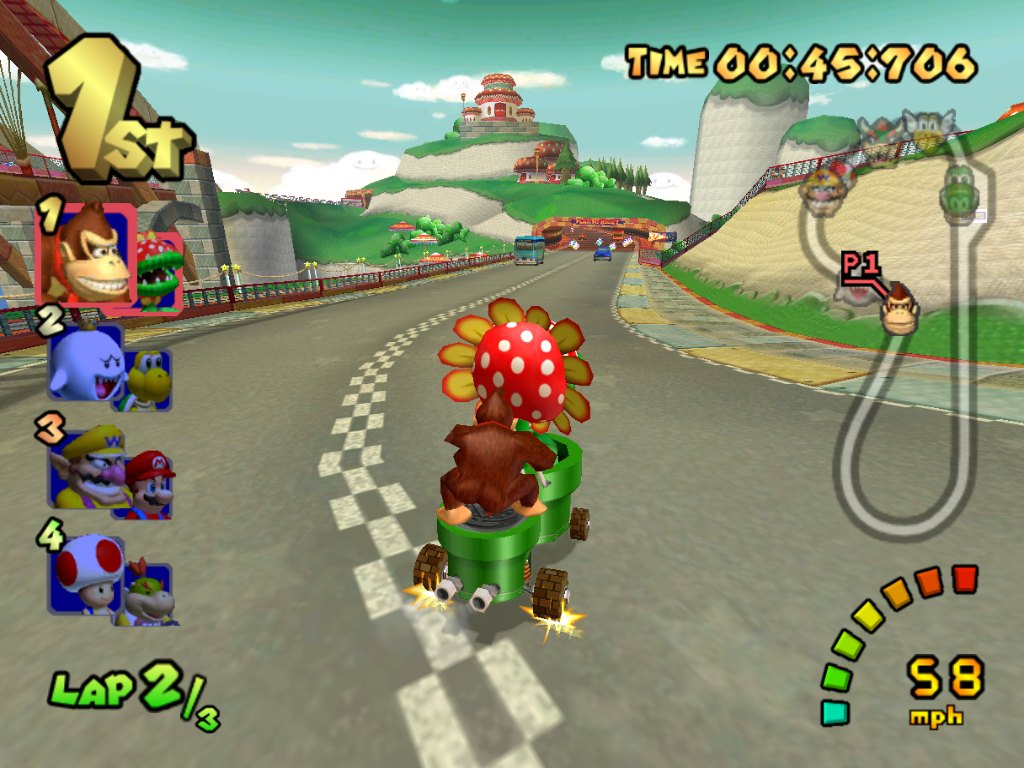
Mushroom Bridge is a coastal highway open to traffic. Cars, buses and trucks will flatten you, Bob-omb cars explode, the three-wheeled mushroom cars drop a Mushroom when bumped, and now and then the Wiggler Wagon, a long green bus, takes up most of the road. The daring can ride the arches of the suspension bridge itself, which are lined with Dash Panels and have no guard rails.
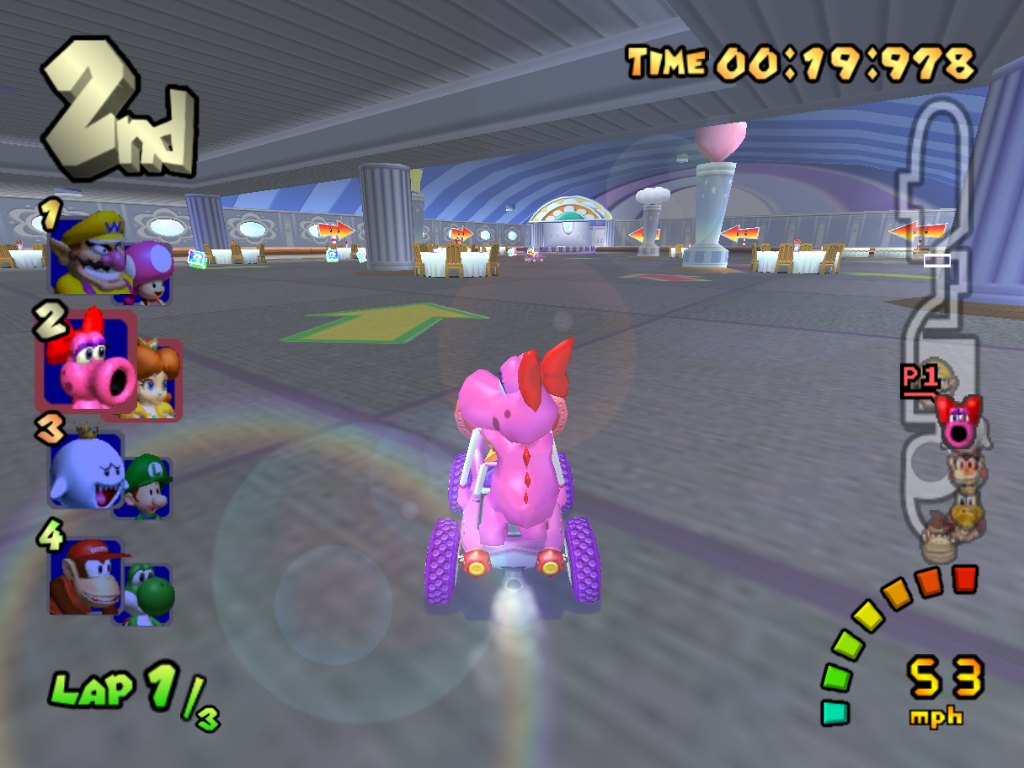
Mario Circuit loops round Princess Peach’s Castle past a Chain Chomp, pipes full of Piranha Plants and a bumpy stretch patrolled by Goombas. Daisy Cruiser is a race through an ocean liner: round the swimming pool on the top deck, through a dining room where the tables slide about as the ship rolls, and down into the hold.
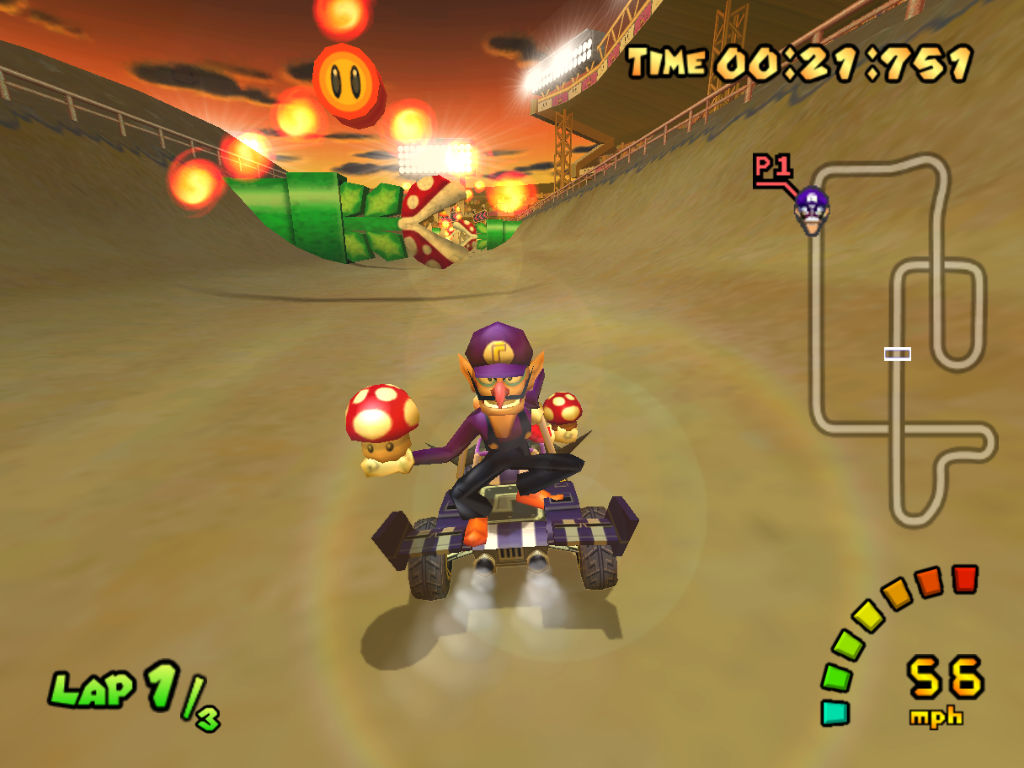
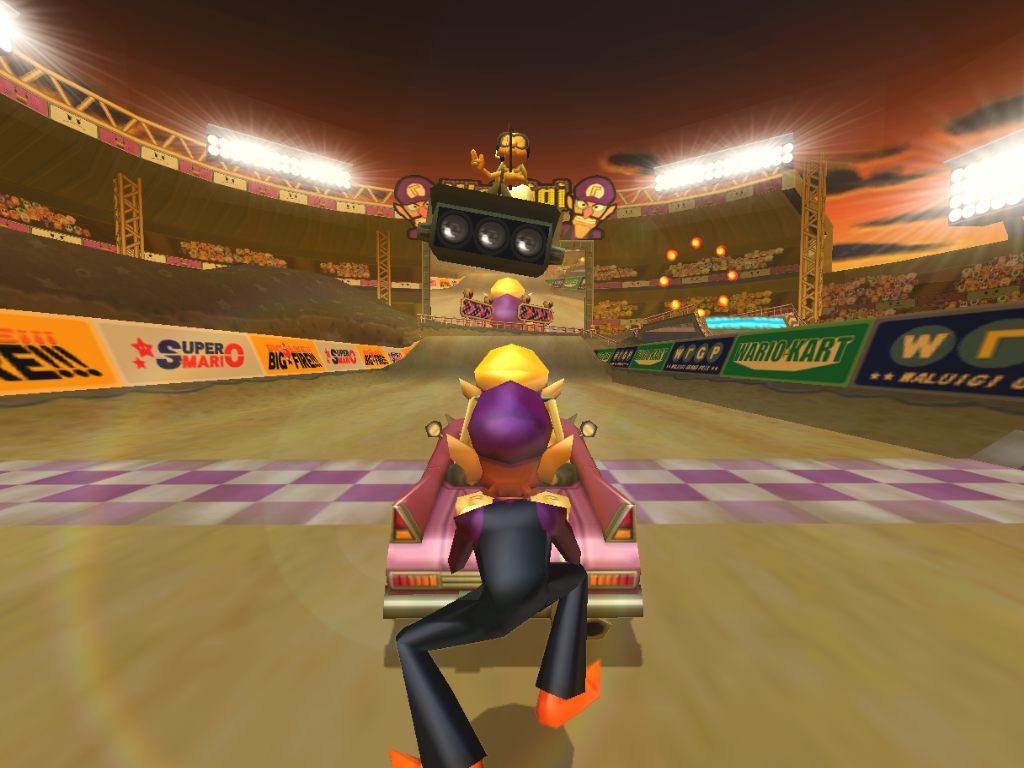
Waluigi Stadium is a stunt arena in the spirit of Wario Stadium from Mario Kart 64: jumps through rings of fire, a pond of mud, Fire Bars, giant wooden Piranha Plants and a crowd that reacts to what you do.
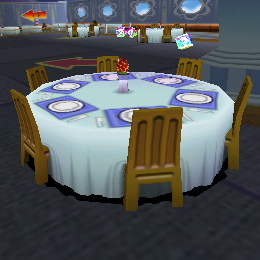
The Wiggler Wagon on Mushroom Bridge.Mario Circuit’s Chain Chomp guards the circular turn.The dining room of the Daisy Cruiser.Fire Bars and Piranha Plant walls at Waluigi Stadium.
Star Cup
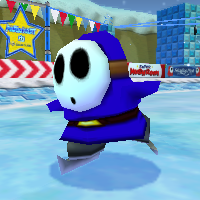
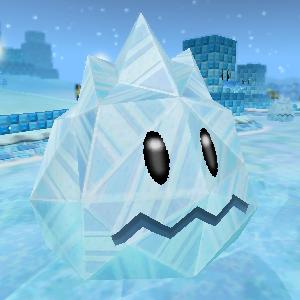
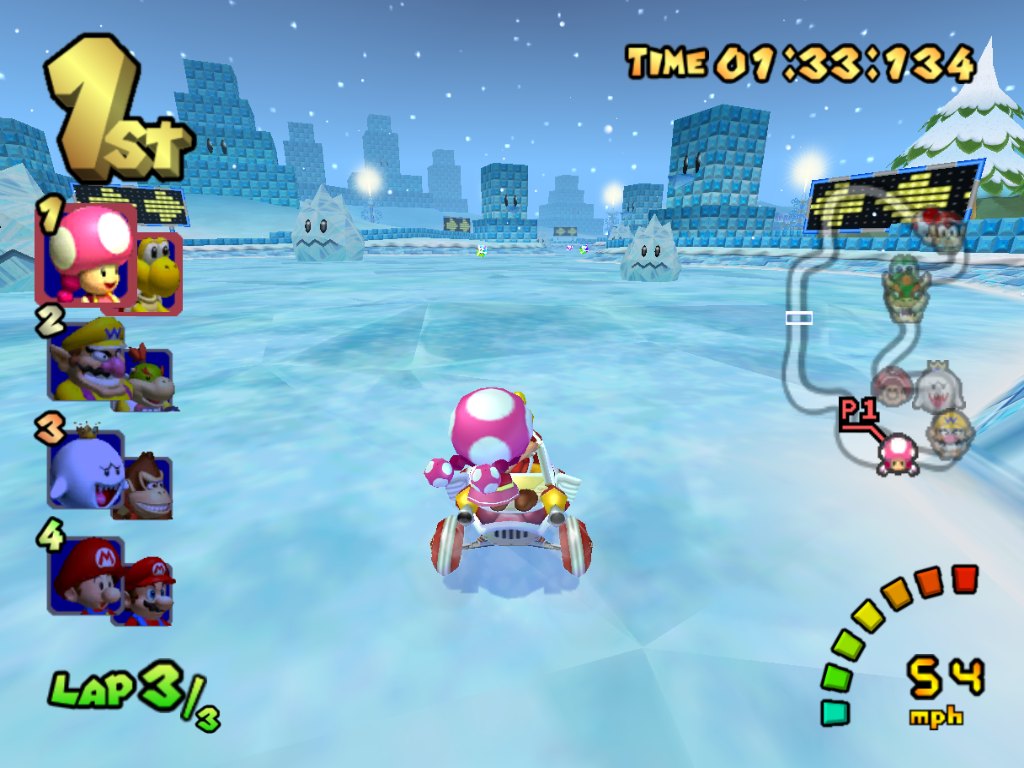
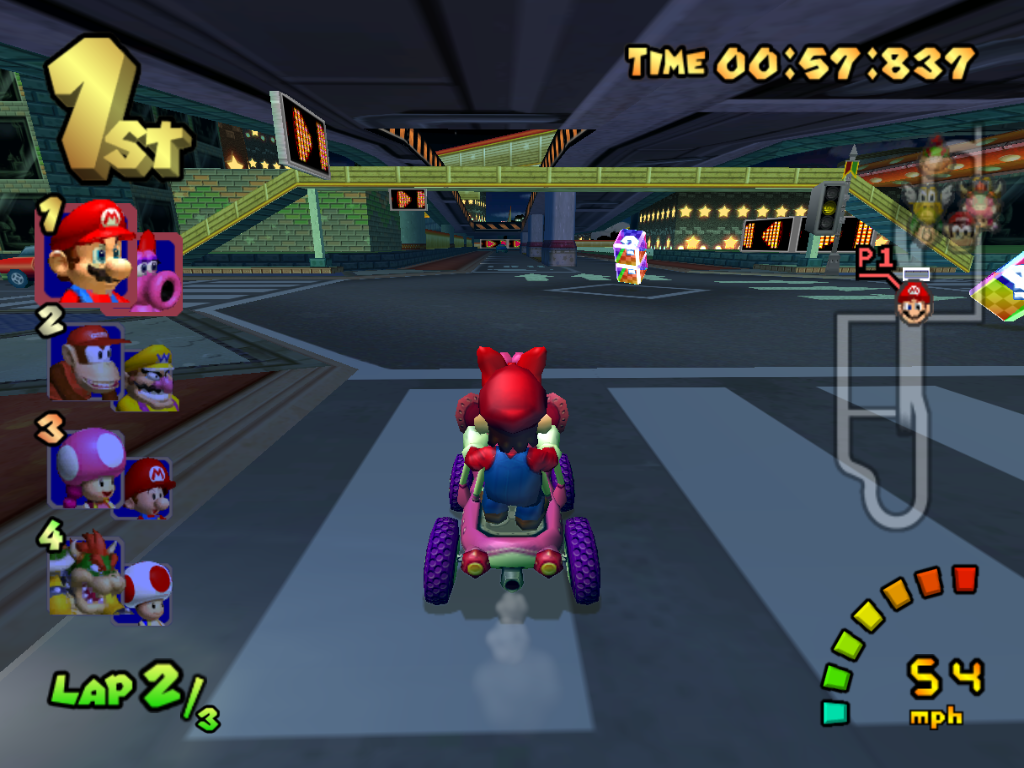
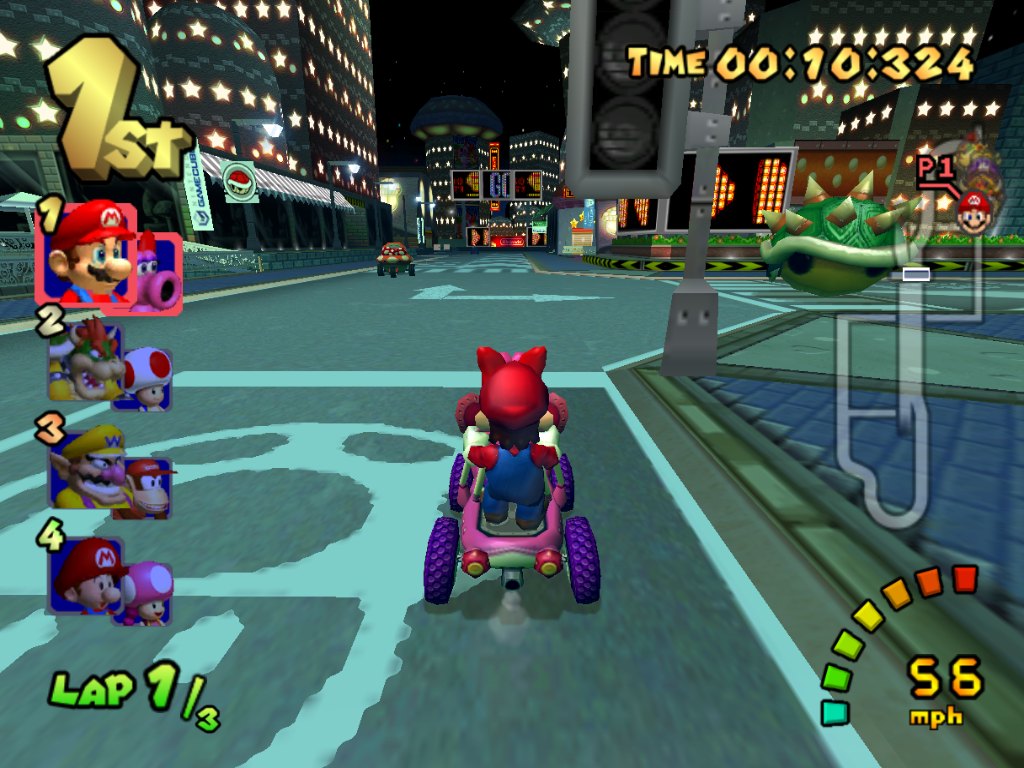
Sherbet Land shares only a name with the Nintendo 64 course. This one is an ice rink where Shy Guys skate in formation, followed by a tunnel of ice and a field of Freezies that encase any kart that touches them. Mushroom City is Mushroom Bridge after dark, a neon downtown of mushroom-shaped towers with a choice of routes at every junction and the same lethal traffic.
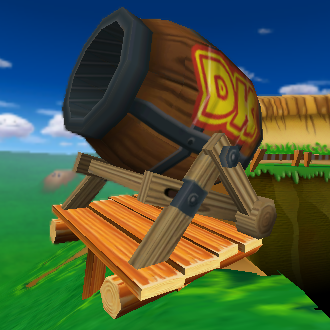
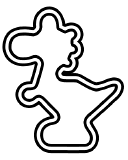
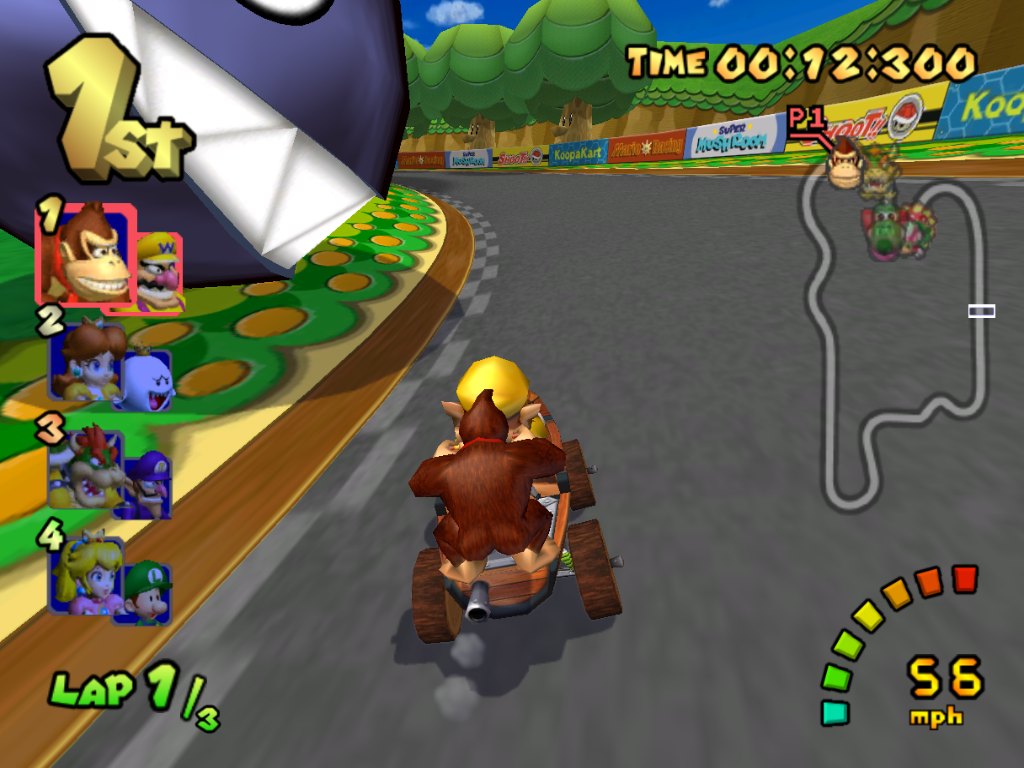
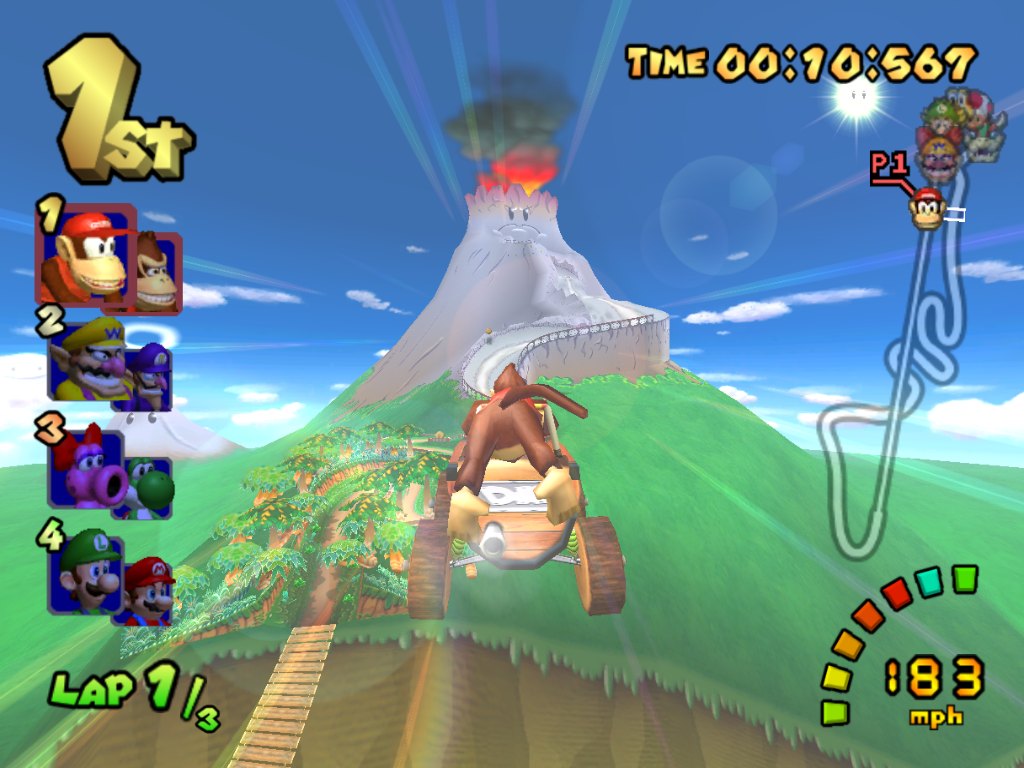
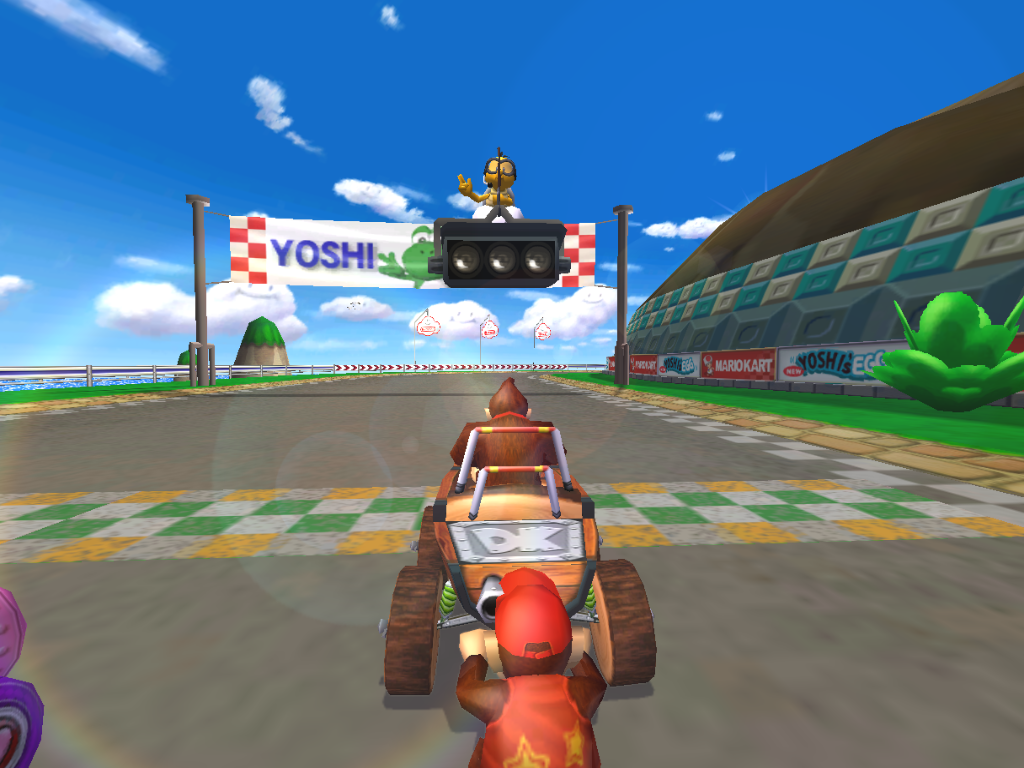
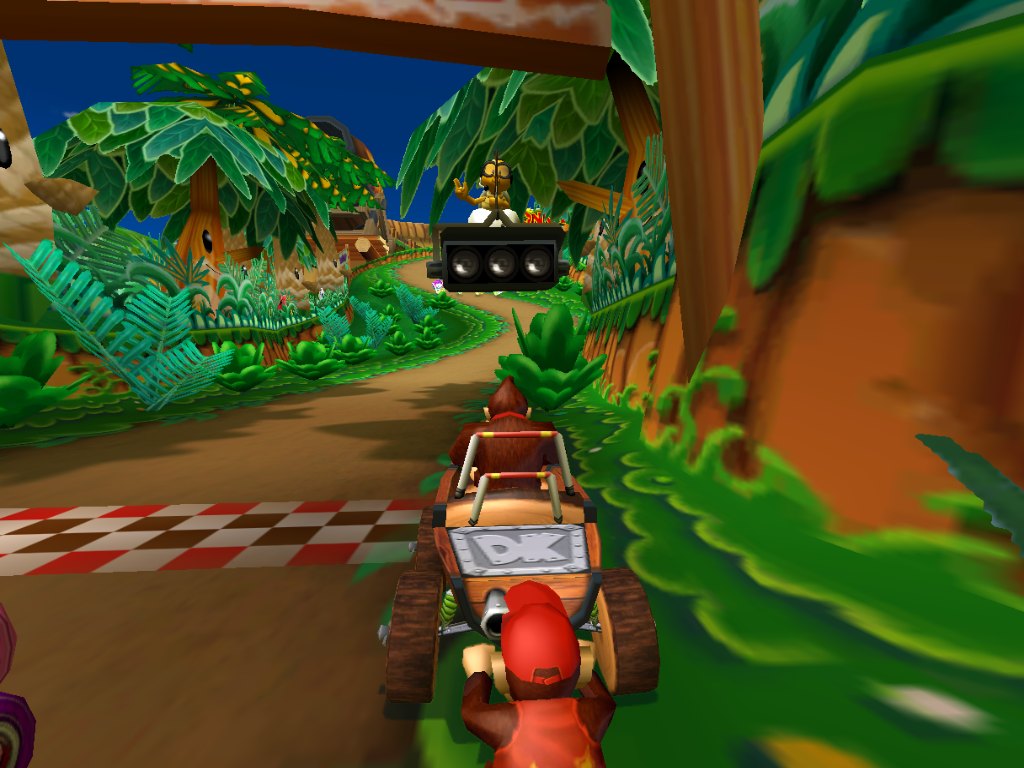
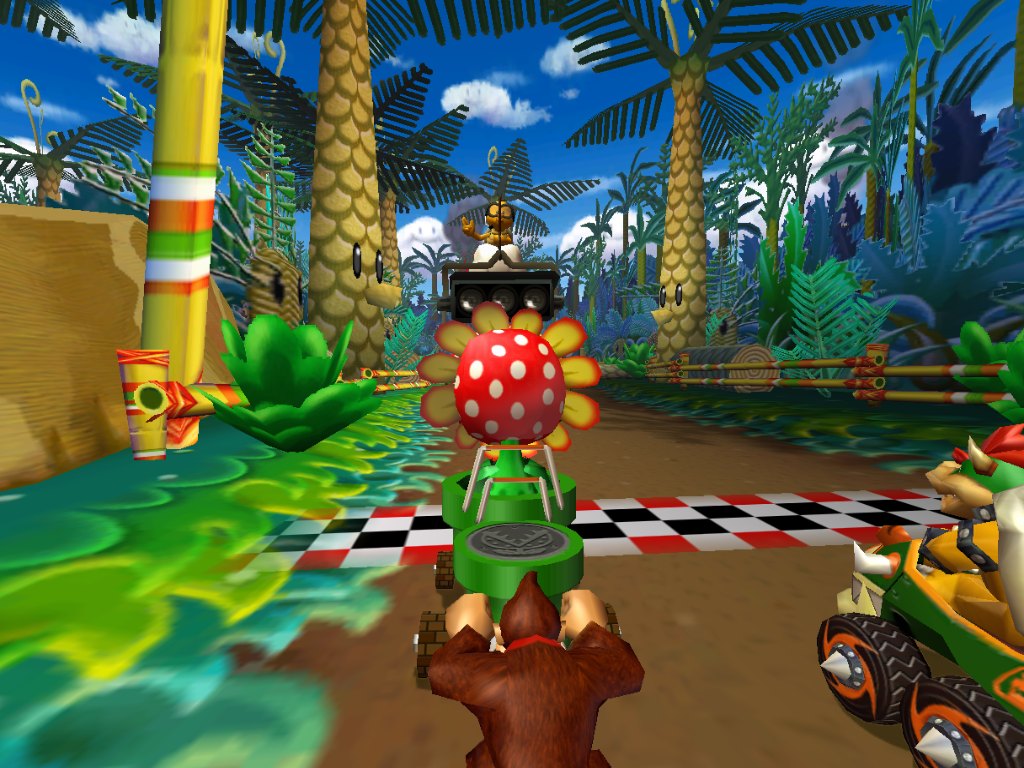
Yoshi Circuit is shaped like Yoshi. Seen from above, the track traces his nose, his neck, his hands and his tail, which makes for a lap of constant hairpins beside the sea. DK Mountain starts in the jungle, loads every kart into a giant Barrel Cannon and fires it to the summit of a volcano. The way down is a plunge through tumbling boulders and blind bends to a rope bridge that sways underfoot. The staff called this course their touchstone, the one they used early on to find out what the new engine could do.
The Freezie field of Sherbet Land.The four-way junction in Mushroom City.Yoshi Circuit: this stretch of road is Yoshi’s fingers.Fired out of the cannon on DK Mountain.
Special Cup
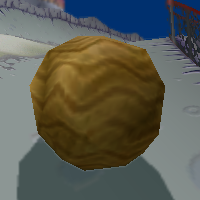
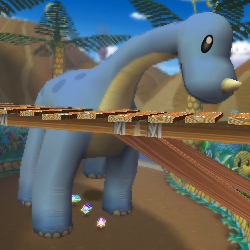
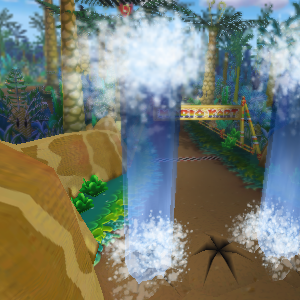
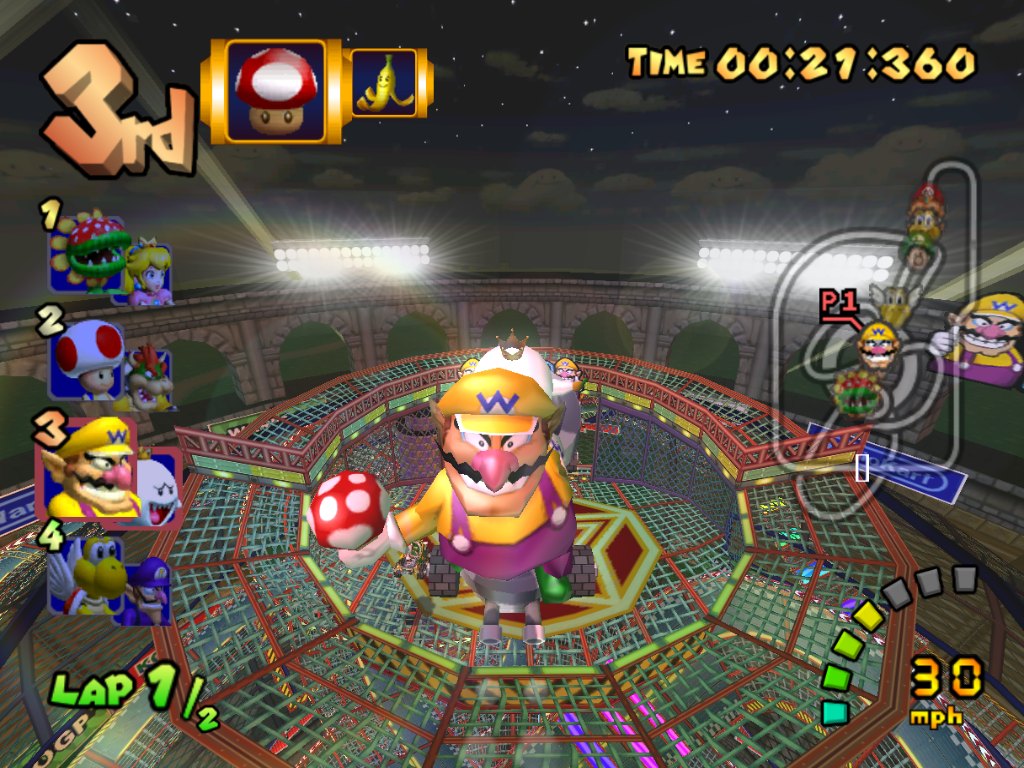
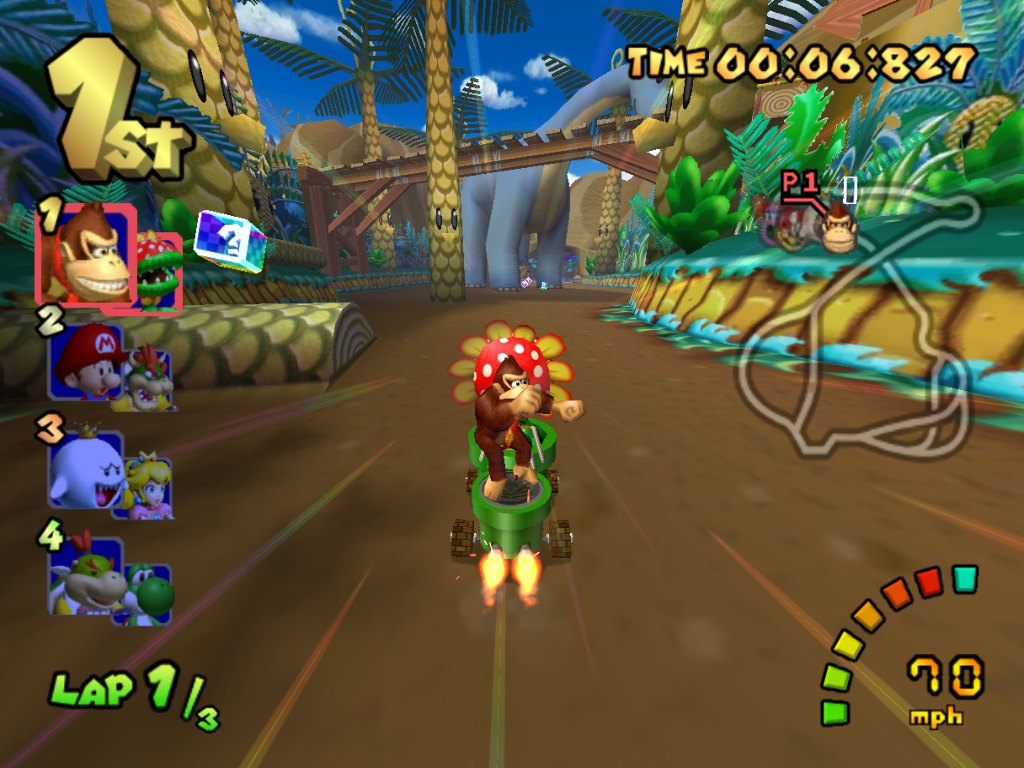
Wario Colosseum is the longest course in the game, so long that the race is only two laps. It is a roller coaster of a track, part globe of death and part Roman arena, with corkscrews, Dash Panel jumps and a domed bowl with a ramp over the pit in its middle. Dino Dino Jungle runs through a prehistoric valley where an enormous long-necked dinosaur stamps about on the racing line and geysers erupt under your wheels.
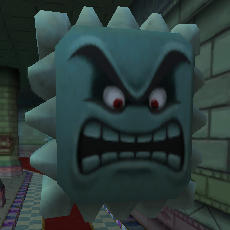
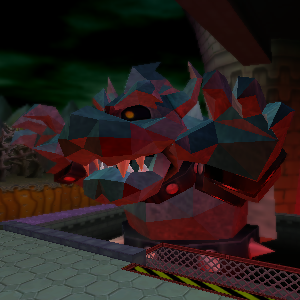
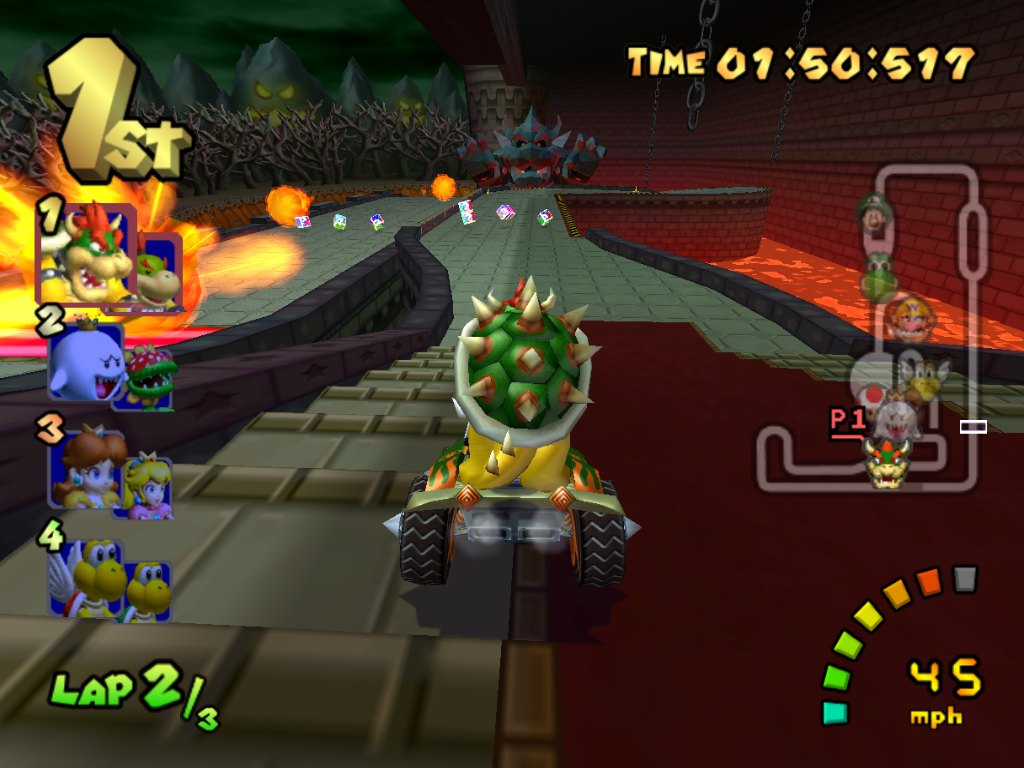
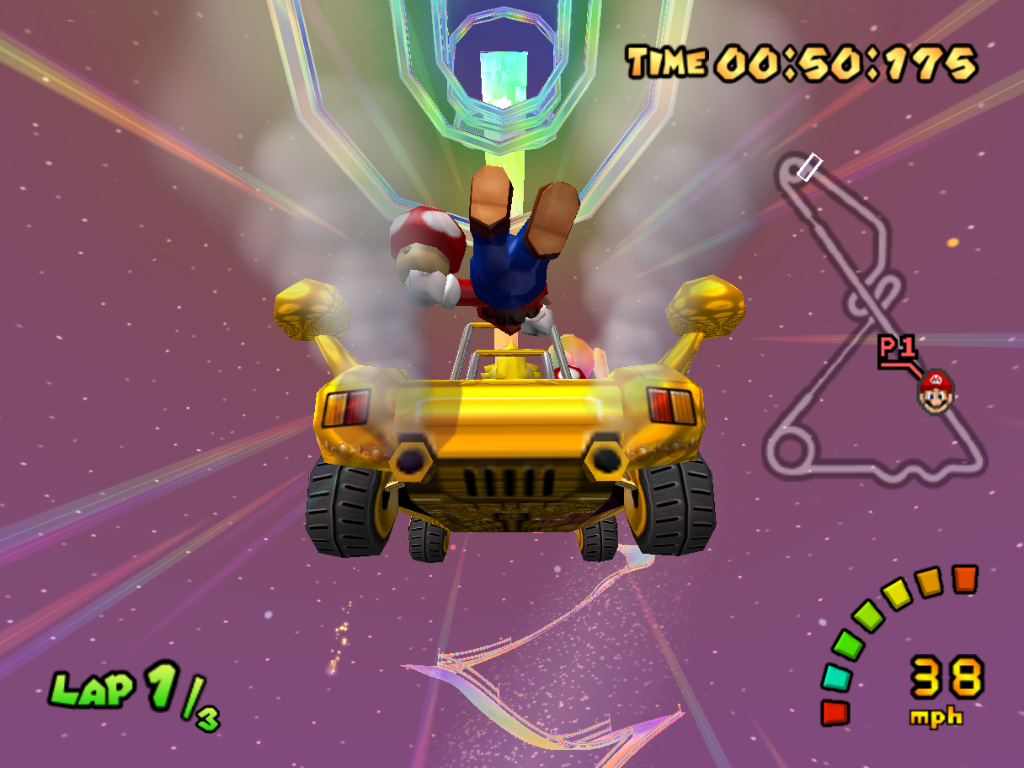
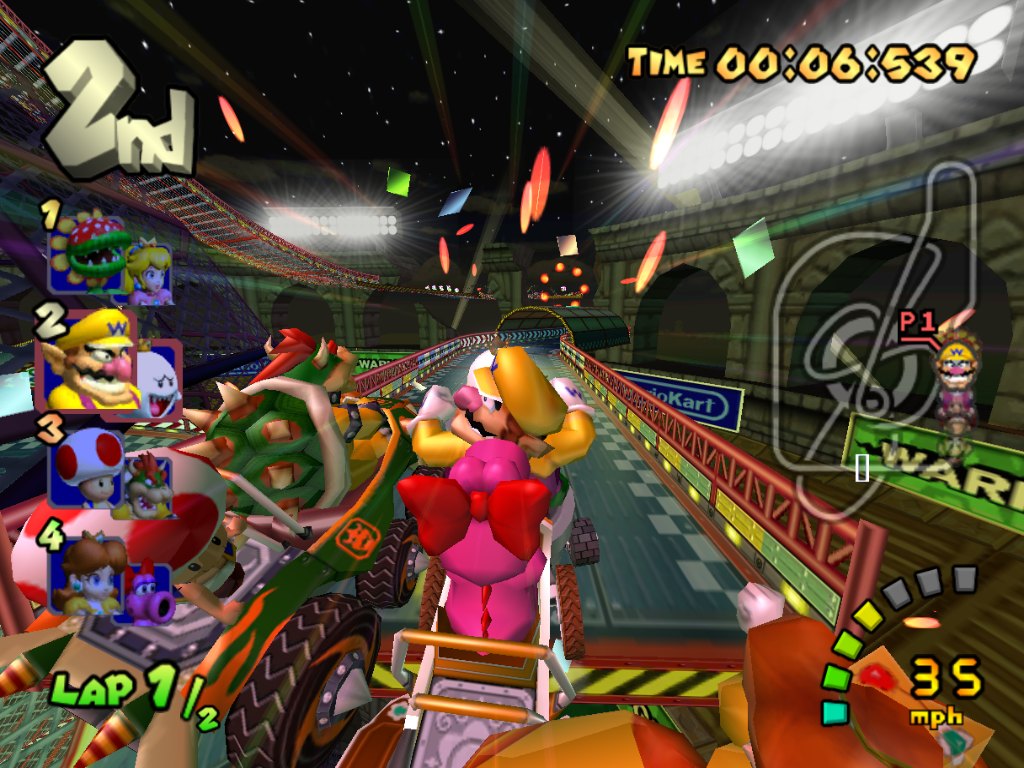
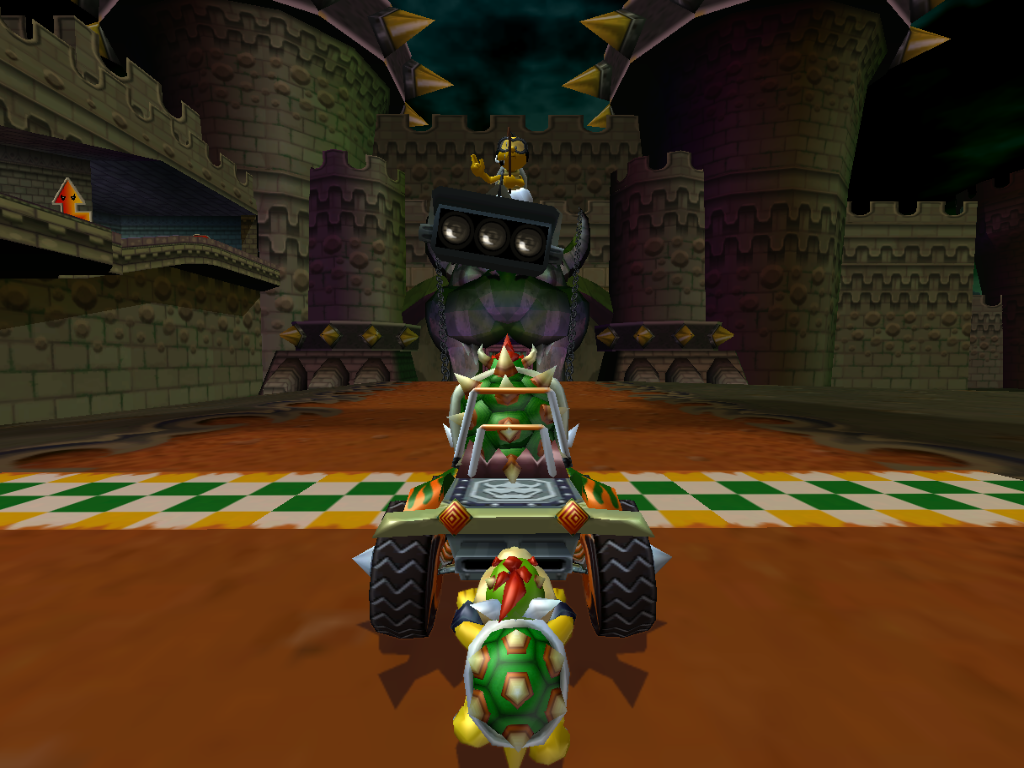
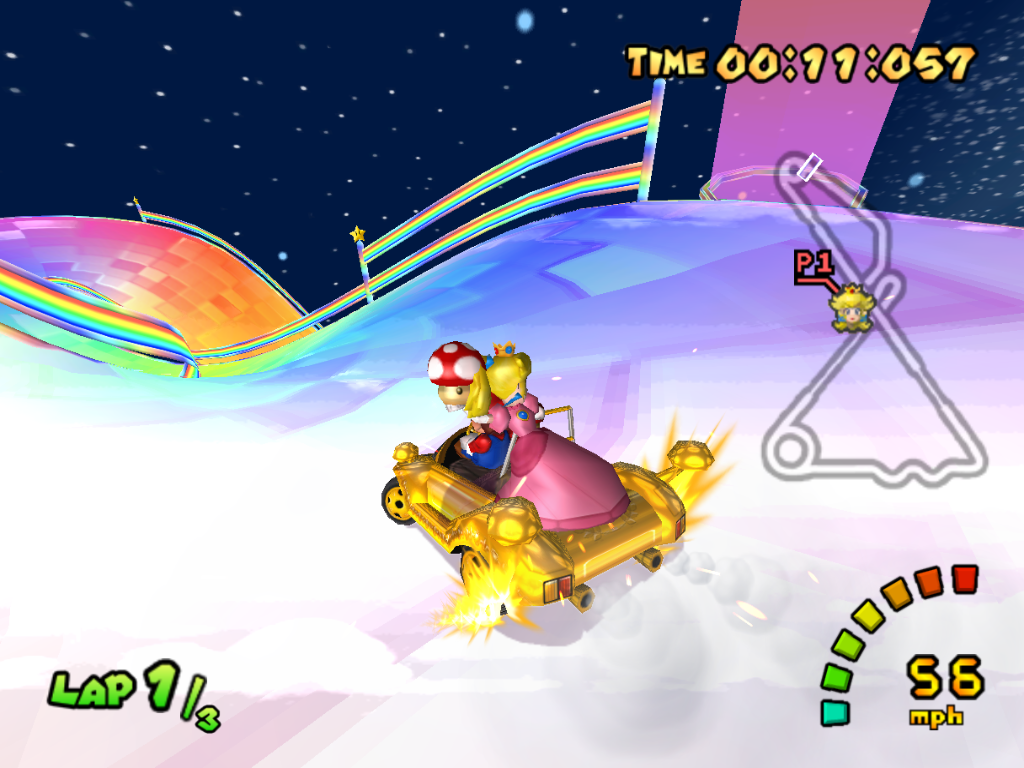
Bowser’s Castle has Thwomps, lava, Fire Bars, and a mechanical Bowser that spits fireballs across the road near the finish. Spin out here and you are rewarded with Bowser’s laugh. Rainbow Road hangs in the night sky above a glowing city, twisting through two helixes before a pipe sucks every kart up to the top of the course. It is the first Rainbow Road with barriers on only some of its edges, and giant sculptures of the game’s items float around it.
The long jump into the dome at Wario Colosseum.A dinosaur on the track in Dino Dino Jungle.The fire-breathing Bowser statue.The wind tunnel on Rainbow Road.
The All-Cup Tour and Mirror Mode
The fifth trophy in each class is for the All-Cup Tour, a marathon of all sixteen courses with a single running score. There are no breaks and no retries, and since the order is shuffled between the fixed first and last races, no two attempts are alike. Winning it in 150cc opens Mirror Mode, and winning it in Mirror Mode earns the Parade Kart.
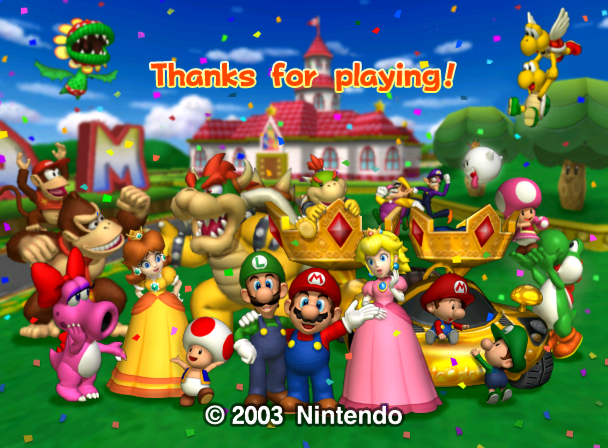
Clear the All-Cup Tour in every class and the game marks the occasion with a new title screen, on which the unlockable teams join the others, and a different final picture after the credits.
Luigi Circuit in Mirror Mode.The second title screen, earned by clearing the All-Cup Tour in every class.The closing scene of the credits once every All-Cup Tour has been won.
The six battle courses
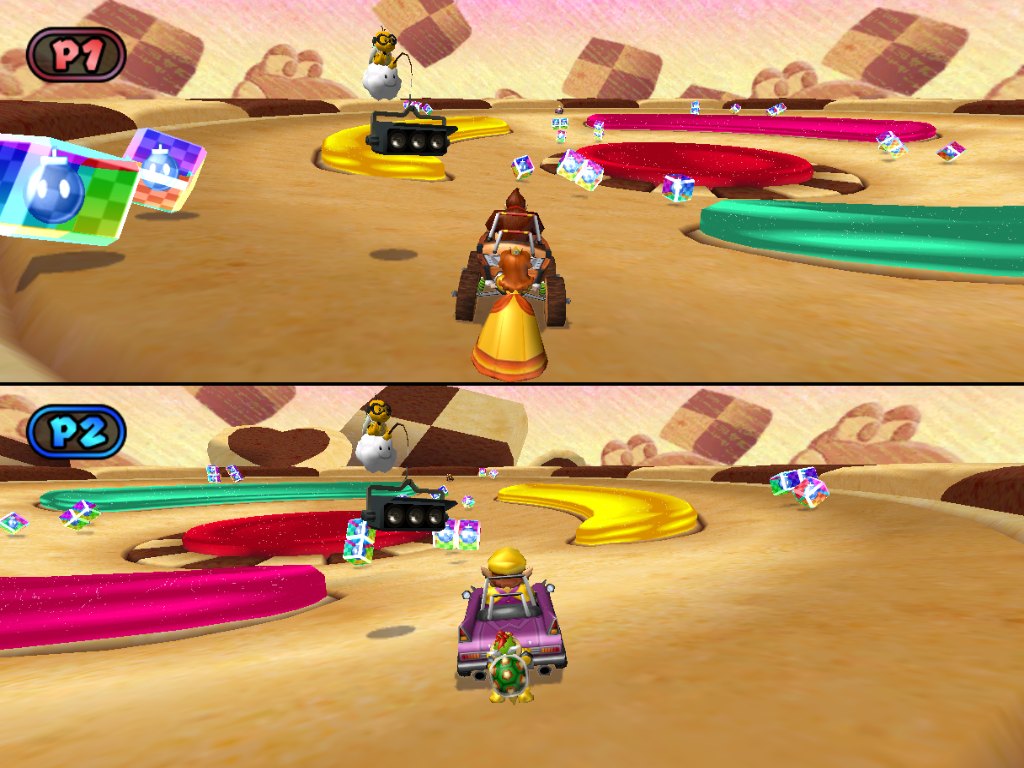
Cookie Land is a giant biscuit, divided into rings by walls of icing. Block City is a square with four towers of toy blocks, apparently a nod to Block Fort in Mario Kart 64. Nintendo GameCube is exactly that: the top of a colossal console adrift in space. Pipe Plaza joins a lower courtyard to a mesh upper deck by four warp pipes.
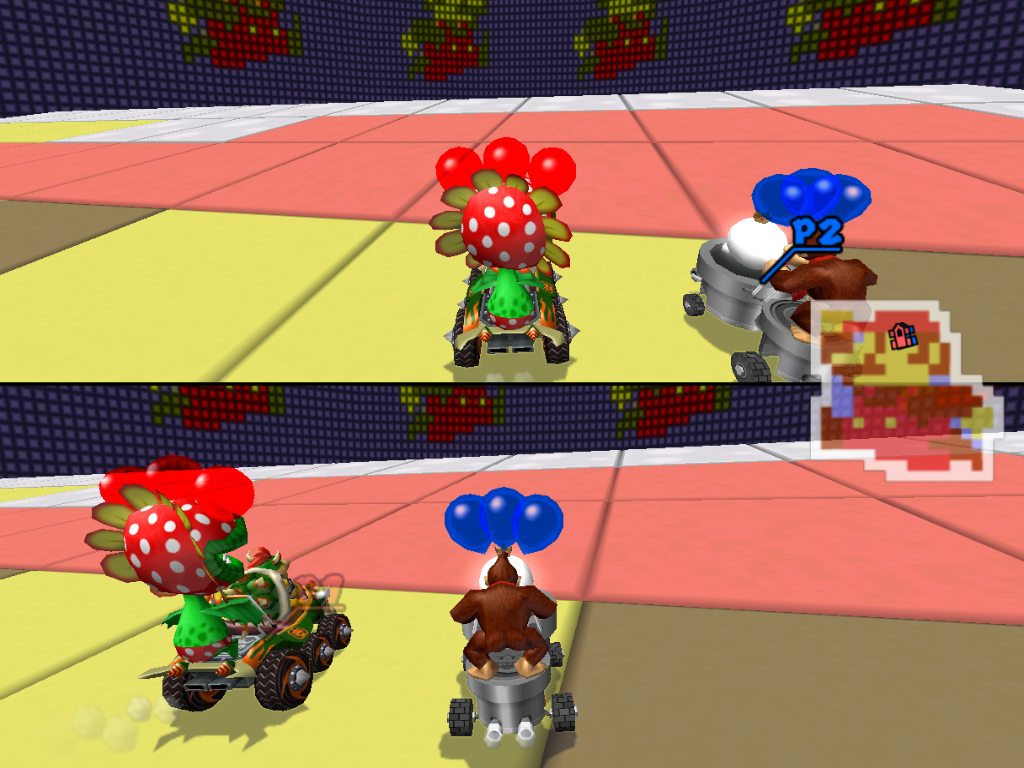
Two more are unlocked. Luigi’s Mansion (win the 150cc Mushroom Cup) is a three-storey maze haunted by portrait ghosts from the GameCube launch game. Tilt-a-Kart (win the Mirror Flower Cup) is a floating platform of tiles that form a picture of 8-bit Mario, and it lurches from side to side, the only battle course you can fall off.
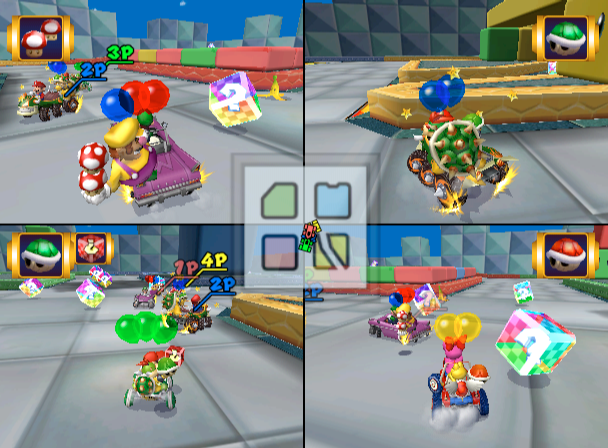
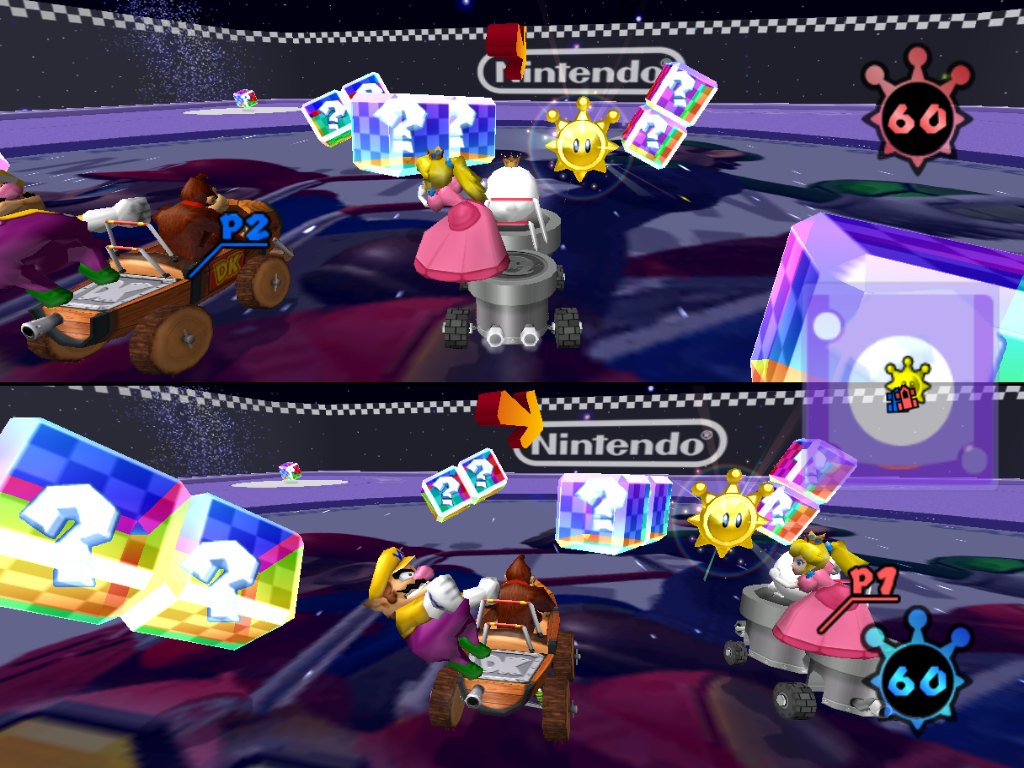
Bob-omb Blast about to begin on Cookie Land.A four-player Balloon Battle in Block City.Shine Thief on the Nintendo GameCube course.Bob-omb Blast in Pipe Plaza.Luigi’s Mansion.Tilt-a-Kart.
Every course in Mario Kart: Double Dash!!
All sixteen race courses in cup order. Every one is new to this game. Later appearances are noted where a course has been remade.
Luigi CircuitMushroom Cup · new · 3 lapsA pinched oval where the two halves of the lap run side by side, guarded by a Chain Chomp. Remade for Mario Kart DS.
Peach BeachMushroom Cup · new · 3 lapsA Sunshine-flavoured resort with a tidal beach and kart-flipping Cataquacks. Back in Mario Kart Wii and Mario Kart World.
Baby ParkMushroom Cup · new · 7 lapsA tiny fairground oval: the shortest course and the most laps in the series. Remade for Mario Kart DS, Mario Kart 8 and Tour.
Dry Dry DesertMushroom Cup · new · 3 lapsPyramids, Pokeys, a tornado and a man-eating plant in a sand pit. Returned in Mario Kart 8.
Mushroom BridgeFlower Cup · new · 3 lapsA coast road busy with cars, buses, bomb-cars and the Wiggler Wagon. Remade for Mario Kart DS and Tour.
Mario CircuitFlower Cup · new · 3 lapsRound Peach’s Castle past a Chain Chomp, Piranha Plants and Goombas. Seen again in the credits; remade for Mario Kart Wii.
Daisy CruiserFlower Cup · new · 3 lapsUp on deck, round the pool, through the dining room and into the hold of a liner. Back in Mario Kart 7, Tour and Mario Kart 8 Deluxe.
Waluigi StadiumFlower Cup · new · 3 lapsA stunt arena of fire rings, mud and wooden Piranha Plants. Remade for Mario Kart Wii, Tour and Mario Kart 8 Deluxe.
Sherbet LandStar Cup · new · 3 lapsSkating Shy Guys on the rink, Freezies on the ice field. Returned in Mario Kart 8.
Mushroom CityStar Cup · new · 3 lapsA night-time city of branching streets and heavy traffic. Never remade.
Yoshi CircuitStar Cup · new · 3 lapsAn island circuit in the shape of Yoshi, the only course in the series modelled on a playable character. Back in Mario Kart DS, Mario Kart 8 and Tour.
DK MountainStar Cup · new · 3 lapsA cannon ride to the top of a volcano and a hair-raising descent. Remade for Mario Kart Wii, Tour and Mario Kart 8 Deluxe.
Wario ColosseumSpecial Cup · new · 2 lapsA vast steel coaster, the longest course in the game. Never remade.
Dino Dino JungleSpecial Cup · new · 3 lapsDinosaurs, geysers and rickety bridges. Remade for Mario Kart 7, Tour and Mario Kart World.
Bowser’s CastleSpecial Cup · new · 3 lapsThwomps, lava and a statue that breathes fire. Never remade.
Rainbow RoadSpecial Cup · new · 3 lapsA sky-high ribbon above a glowing city, with a pipe that fires karts to its summit. Never remade.
Battle courses: Cookie Land (remade for Mario Kart Wii and Tour), Block City, Nintendo GameCube, Pipe Plaza (remade for Mario Kart DS), Luigi’s Mansion (unlockable; remade for Mario Kart 8 Deluxe) and Tilt-a-Kart (unlockable).
Twelve of the sixteen race courses have returned in later Mario Kart games. Mushroom City, Wario Colosseum, Bowser’s Castle and Rainbow Road are the four that have not.
Advertisement
Gameplay & Controls
Strip away the second seat and this is recognisably Mario Kart: eight karts, three laps, items from boxes, mini-turbos out of corners. Put the second seat back and almost every decision changes. Who drives? Who throws? Do you hold your special item for the last lap or swap seats so that the other rider can pick up a second one?
Items matter even more than usual, because they do not simply vanish. A kart that is struck by Lightning or robbed by a rival drops what it was carrying on to the track, and a shell, banana or Mushroom left lying there goes off under the first kart to touch it.
Two riders, two items
The character in the rear seat is the one who collects from Item Boxes. An ordinary box gives the rear rider one item; a Double Item Box, new in this game, gives one to each rider. Because only the rear rider can use an item, swapping seats with Z is how you choose which of the two to fire, and how you free up a hand to collect another.
Items are split into standard ones, which anybody can receive, and special ones, which are tied to characters. A team can hold only one special item at a time: while one rider has theirs, the partner will not be given another.
The rear rider can also steal. Hit a rival with a Mushroom boost or a Star while your rear rider’s hands are empty and you take the item their team was holding.
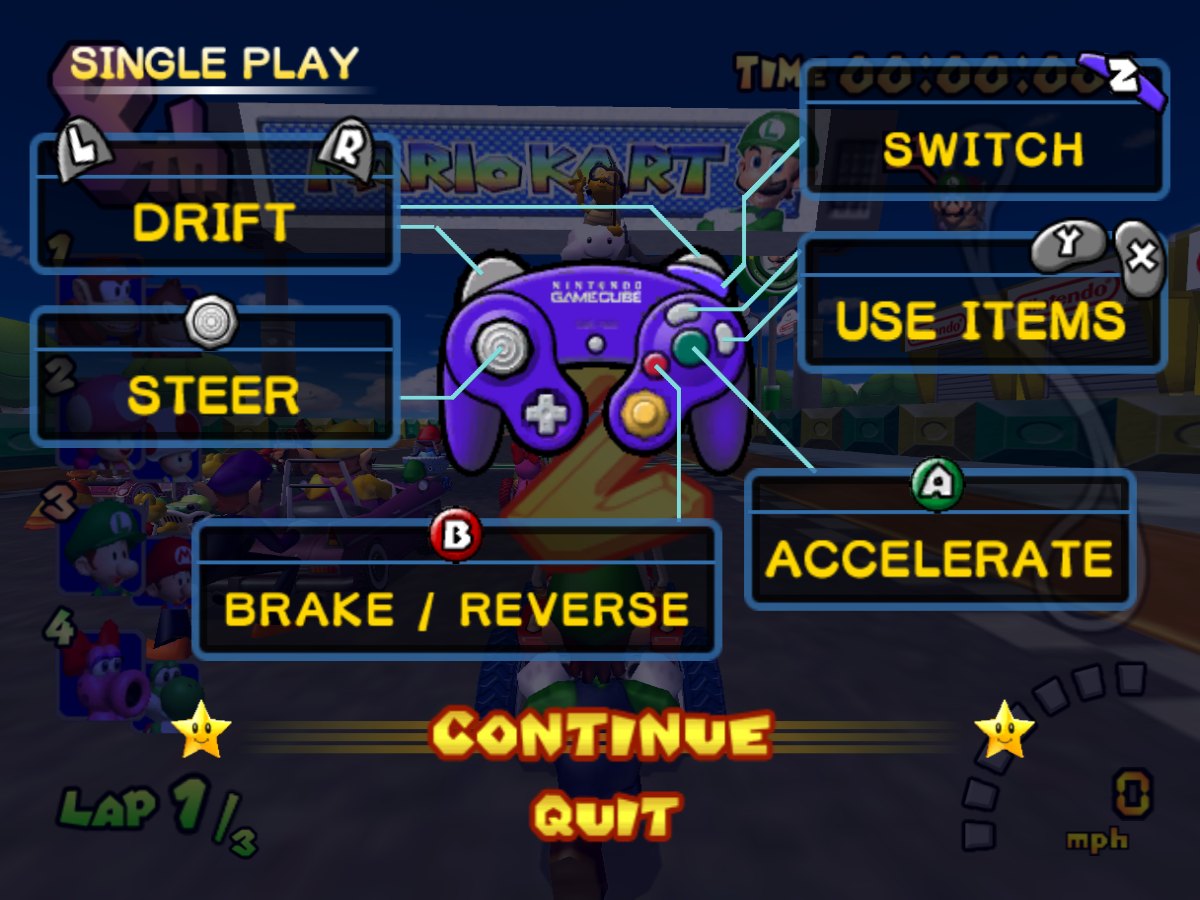
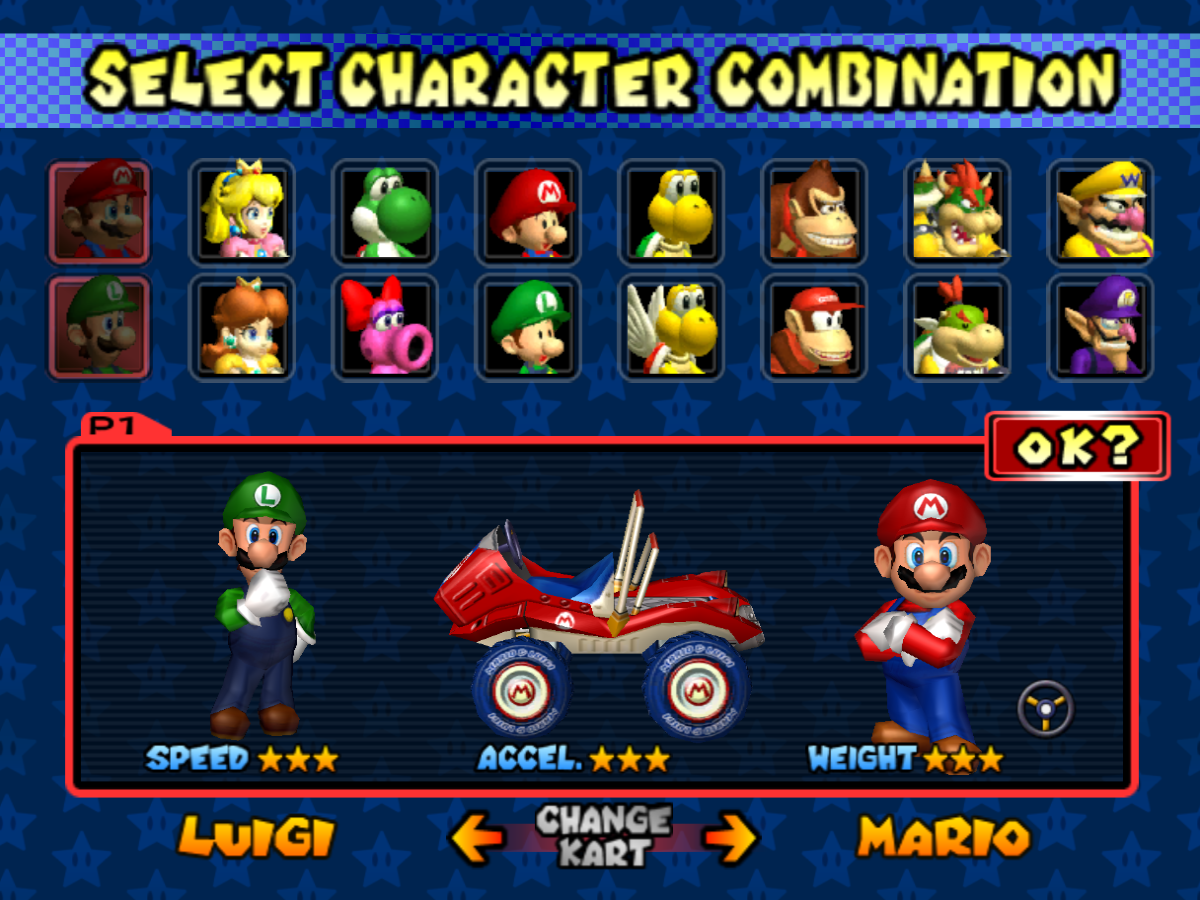
The single-player controls, as shown on the pause screen.The character select screen at the start of the game: sixteen drivers, eight teams.
Controls
Playing alone, you control both riders. The Control Stick steers, A accelerates and B brakes or reverses. Hold L or R to drift. X or Y uses the rear rider’s item (push the stick forward or back to throw it ahead or drop it behind) and sounds the horn when you have nothing. Z swaps the riders.
On the character select screen, Z also decides which of your two characters starts in the driving seat, and pressing L and R together before anyone has chosen hands every player a random pair and a random kart.
Drifting, mini-turbos and Rocket Starts
Hold L or R as you turn and the kart slides. Now flick the Control Stick away from the corner and back again: the sparks at the wheels change colour, turning orange and then blue. Let go of the shoulder button while they are blue and the kart fires out of the bend with a mini-turbo. Skilled players chain these slides together even on straights, a technique known as snaking, and a sharp drift can even shake off a Red Shell, something the developers admitted they had not planned.
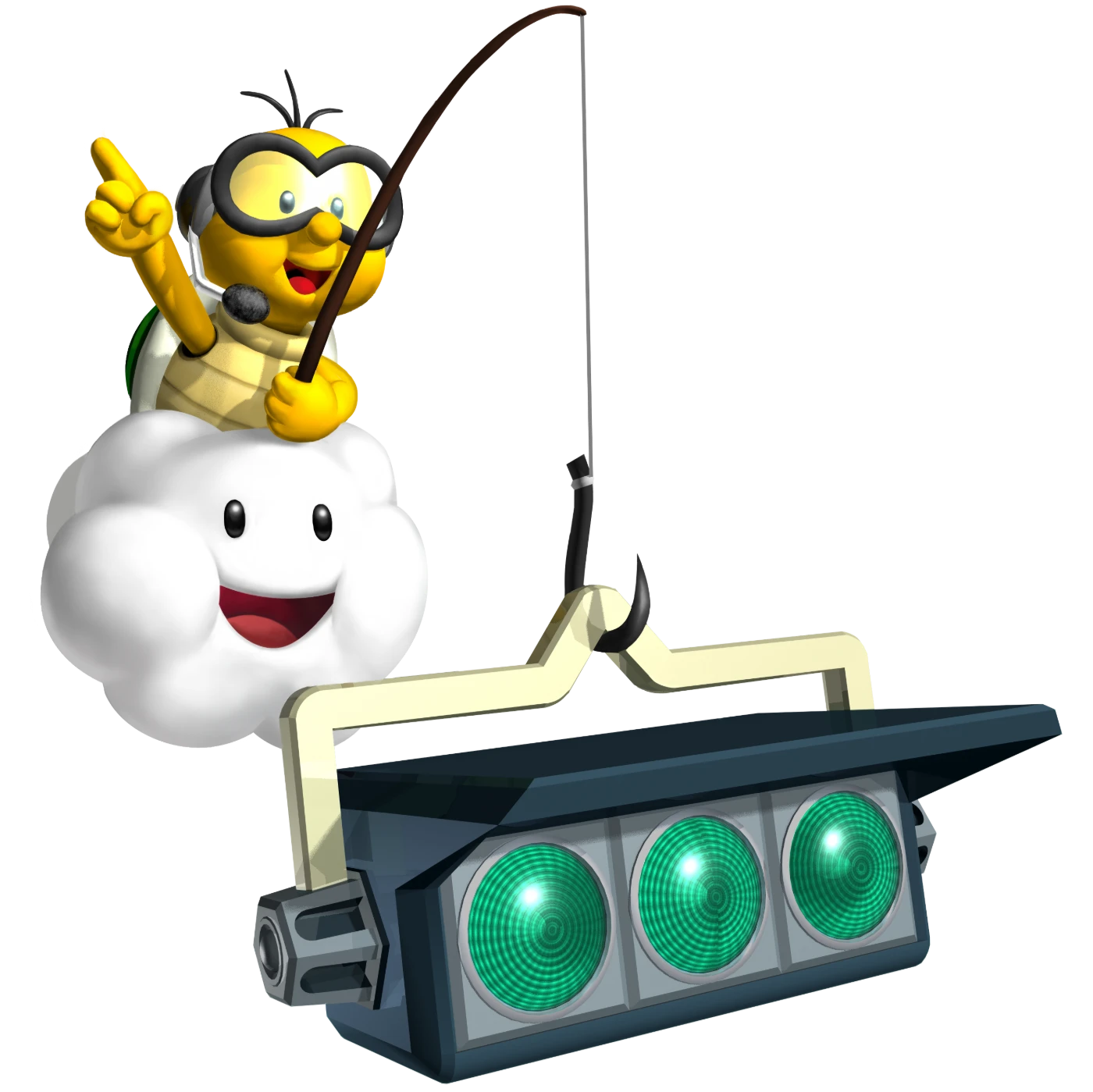
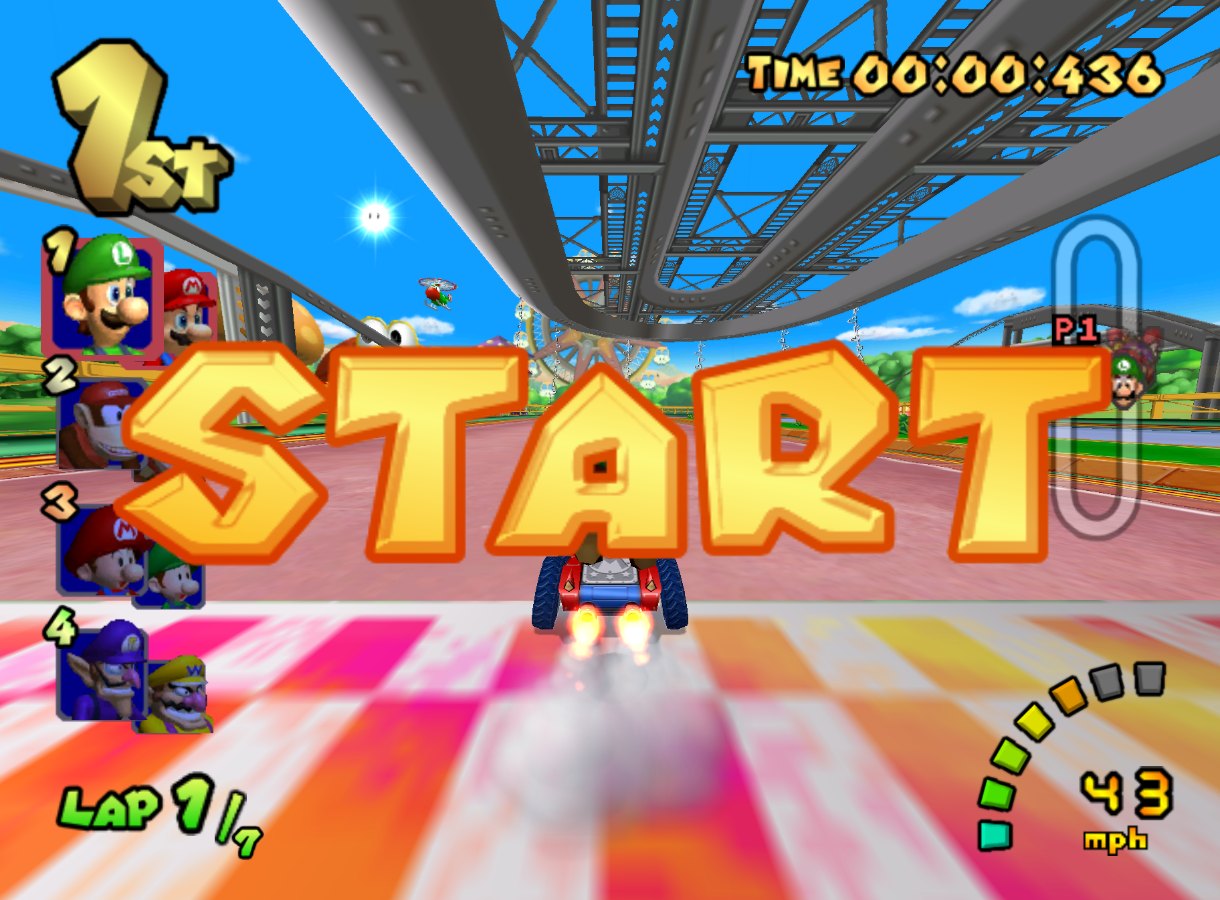
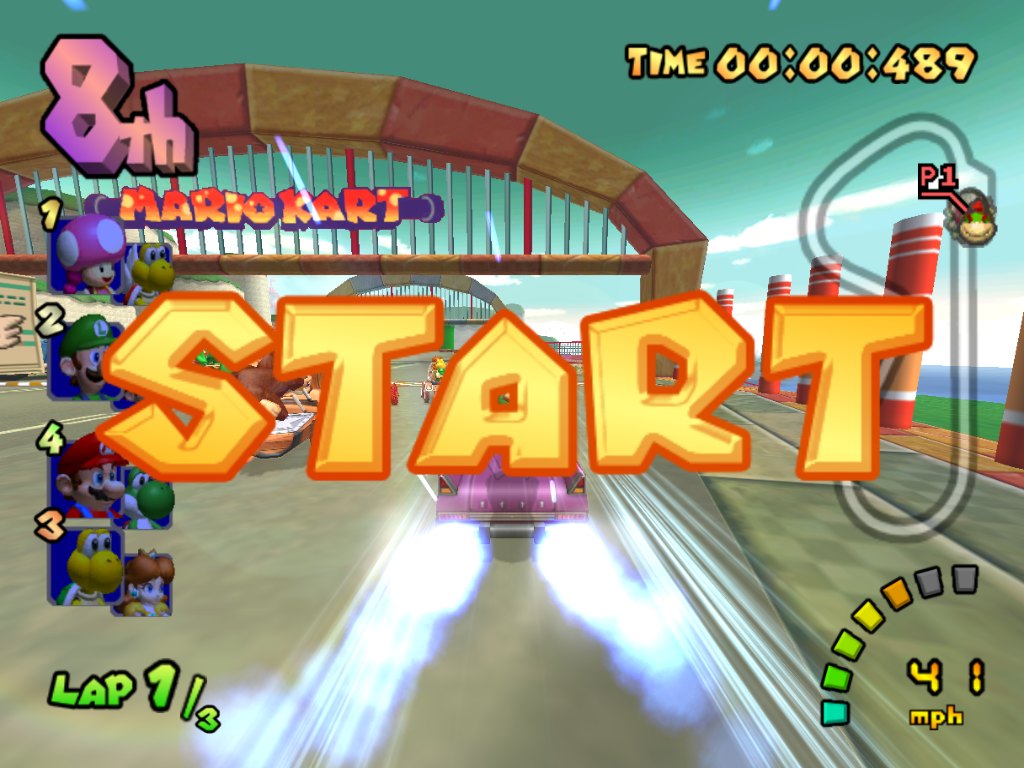
For a Rocket Start, press A just as Lakitu’s lights turn green. The countdown is a second longer than in earlier games and the lights now run from left to right. When the last lap begins, the music rises by a semitone and speeds up.
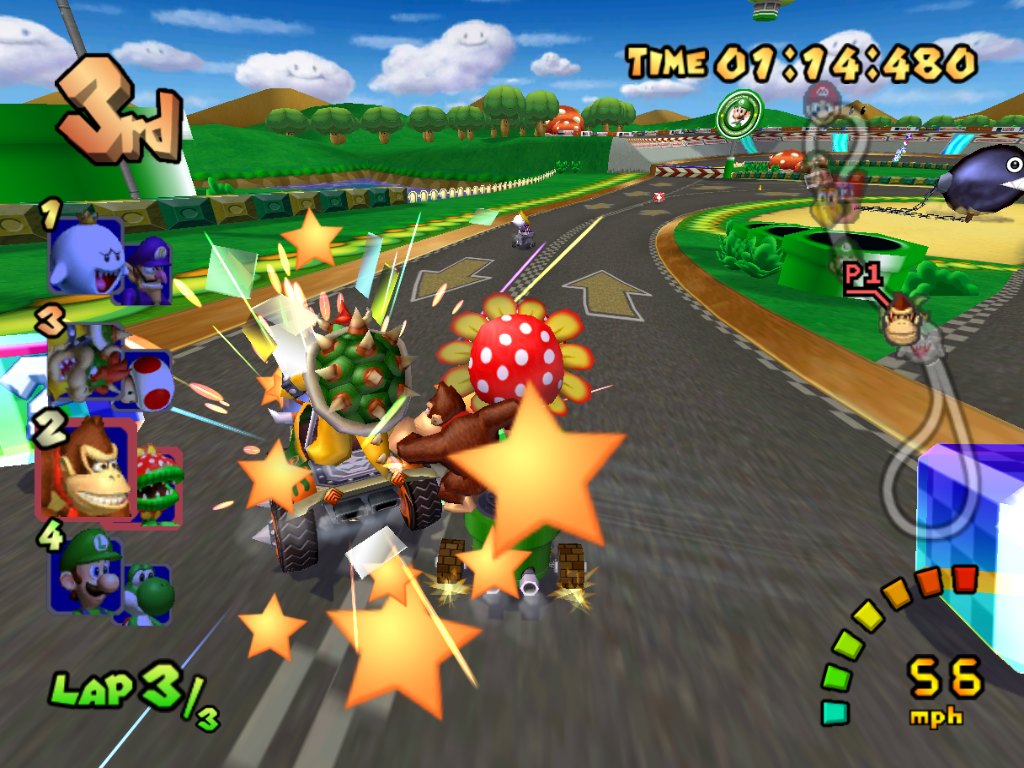
A Rocket Start at Baby Park.The Double Dash!! itself: a co-op start on Mushroom Bridge.
Co-op: one kart, two players
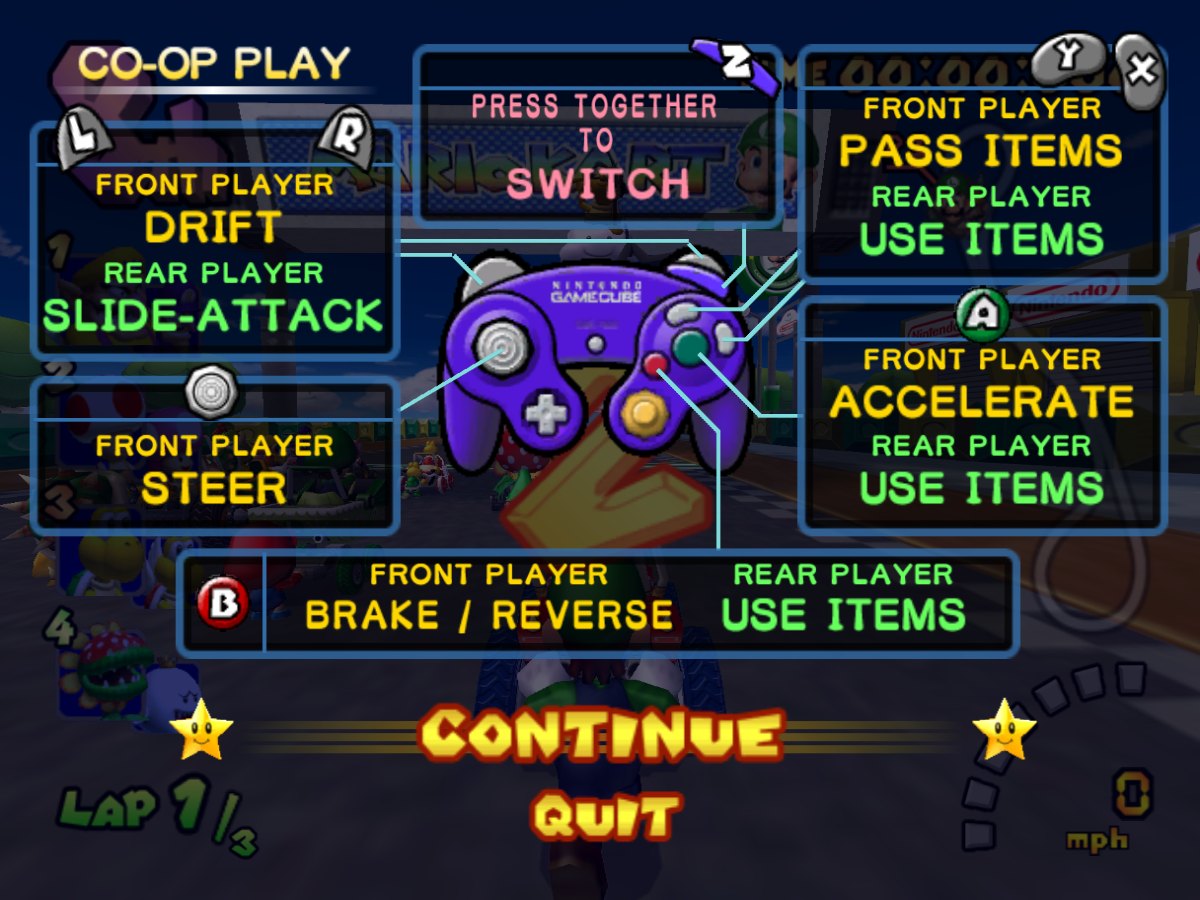
Double Dash!! is the only Mario Kart in which two people can crew the same kart. One drives; the other controls the rear rider, using items with any face button. To swap, both players must press Z together.
A co-op crew can do two things a solo player cannot. The first is the move the game is named after: if both players hit A exactly as the lights turn green, the kart launches with a Double Dash!!, a start more powerful than the ordinary Rocket Start. The second is the Slide Attack. The rear player presses L or R to lunge sideways into a neighbouring kart, knocking it off line and snatching its item.
Co-op works in Grand Prix for two players, and in Versus and Battle for two teams of two or one team against two solo karts. Producer Shinya Takahashi had a particular audience in mind: “I recommend parents and children play co-op together, with the parent driving and the child controlling the items.”
Co-op controls on the pause screen.Donkey Kong leans out for a Slide Attack.
Game modes
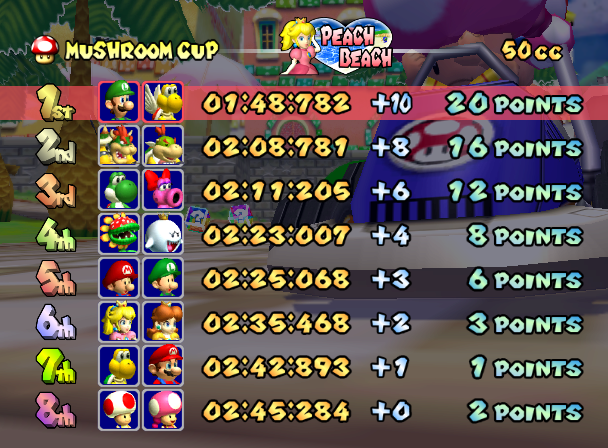
Grand Prix is a cup of four races against seven computer teams, for up to four players. Points are awarded all the way down the field for the first time (10, 8, 6, 5, 4, 3, 2 and 1), and there are no retries: a bad race stays on your record until the cup is over. Both rules have been kept by every Mario Kart since.
Time Trial is a solo run with two Mushrooms. Your best run on each course is saved as a ghost, five memory-card blocks apiece, and beating a target time unlocks a ghost recorded by Nintendo’s own staff. Versus is a race for two to four players without computer drivers, with a choice of one to nine laps and four item settings: Recommended, Basic, Frantic or None.
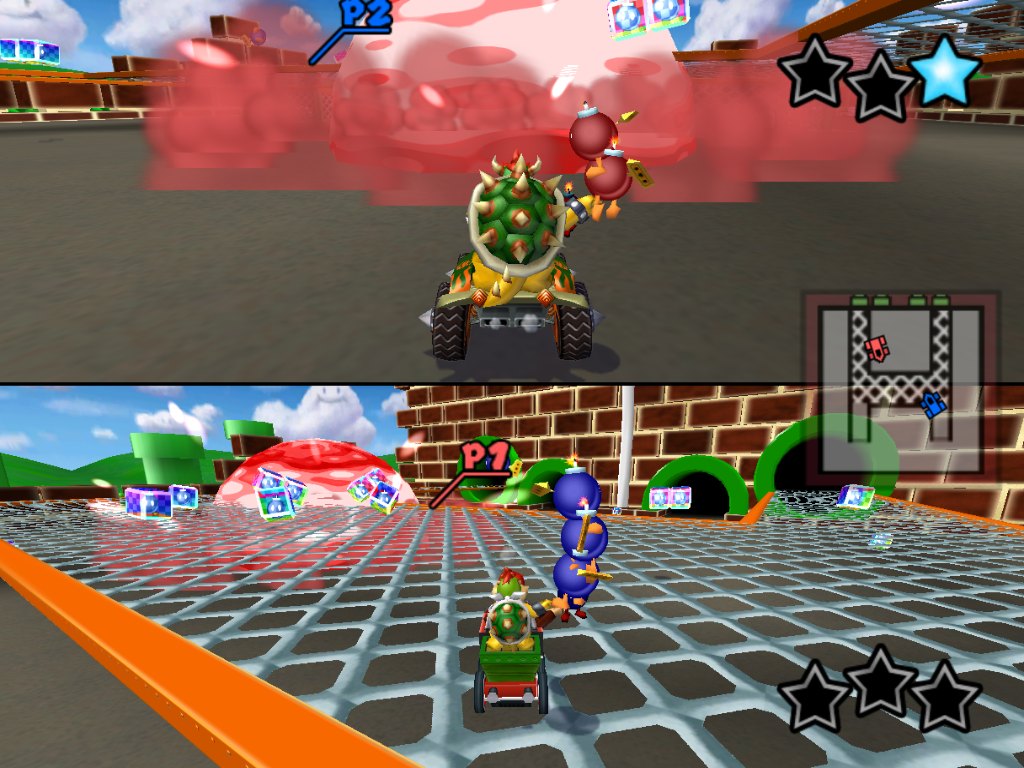
Battle offers three games. In Balloon Battle you burst rivals’ balloons, and can steal them with a Mushroom or a Star. In Shine Thief everyone fights over a single Shine Sprite, and whoever is holding it when the clock runs out wins. In Bob-omb Blast every Item Box contains a Bob-omb, each rider can stockpile five, and a hit earns a star: three wins a two-player match, four a larger one. Any character can draw any special item in Battle.
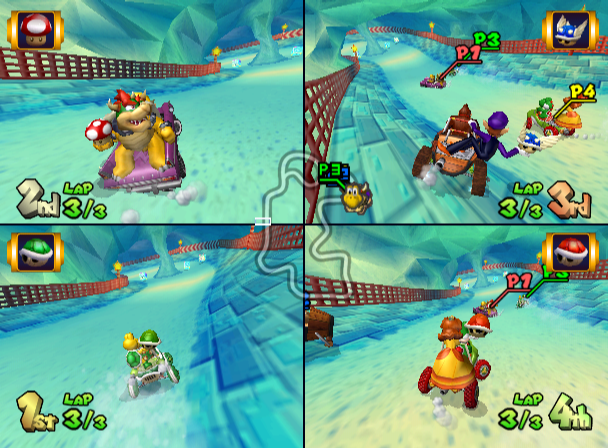
Four-player Versus on Sherbet Land.Time Trial at Waluigi Stadium.The points table after a race at Peach Beach.
Engine classes, Mirror and the All-Cup Tour
In 50cc the computer teams have few items and anybody can win. In 100cc they start throwing Red Shells. In 150cc they are faster, better armed (Spiny Shells included), race in mixed pairs instead of their usual partnerships and aim their items at you. Mirror Mode is 150cc with every course flipped left to right.
Three cups are open at the start. The Special Cup is the reward for winning the Star Cup in 100cc. Win the Special Cup in 150cc and a fifth option appears: the All-Cup Tour, all sixteen courses in a single sitting. It always starts at Luigi Circuit and always ends on Rainbow Road, with the fourteen in between shuffled.
The 21 karts
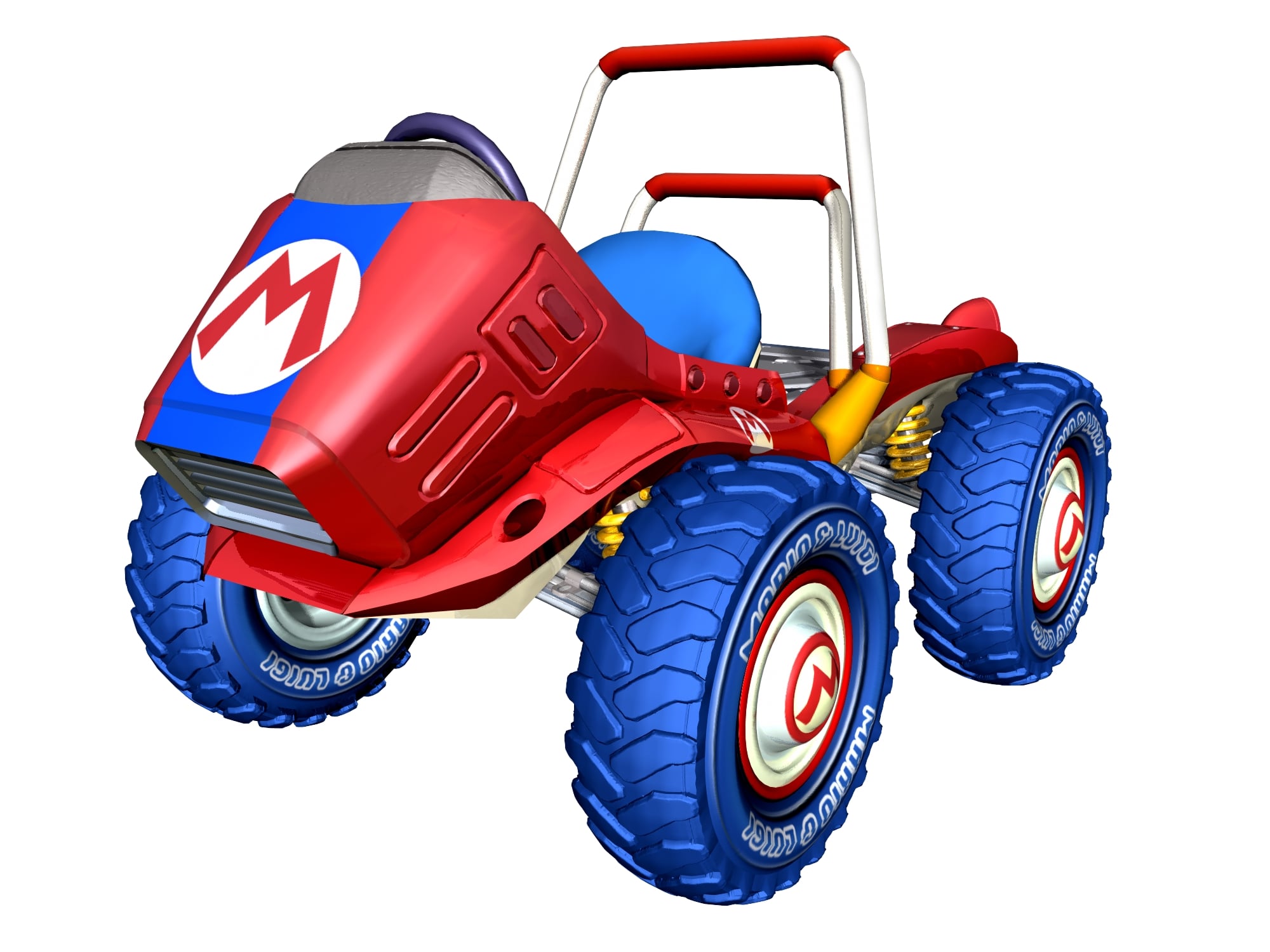
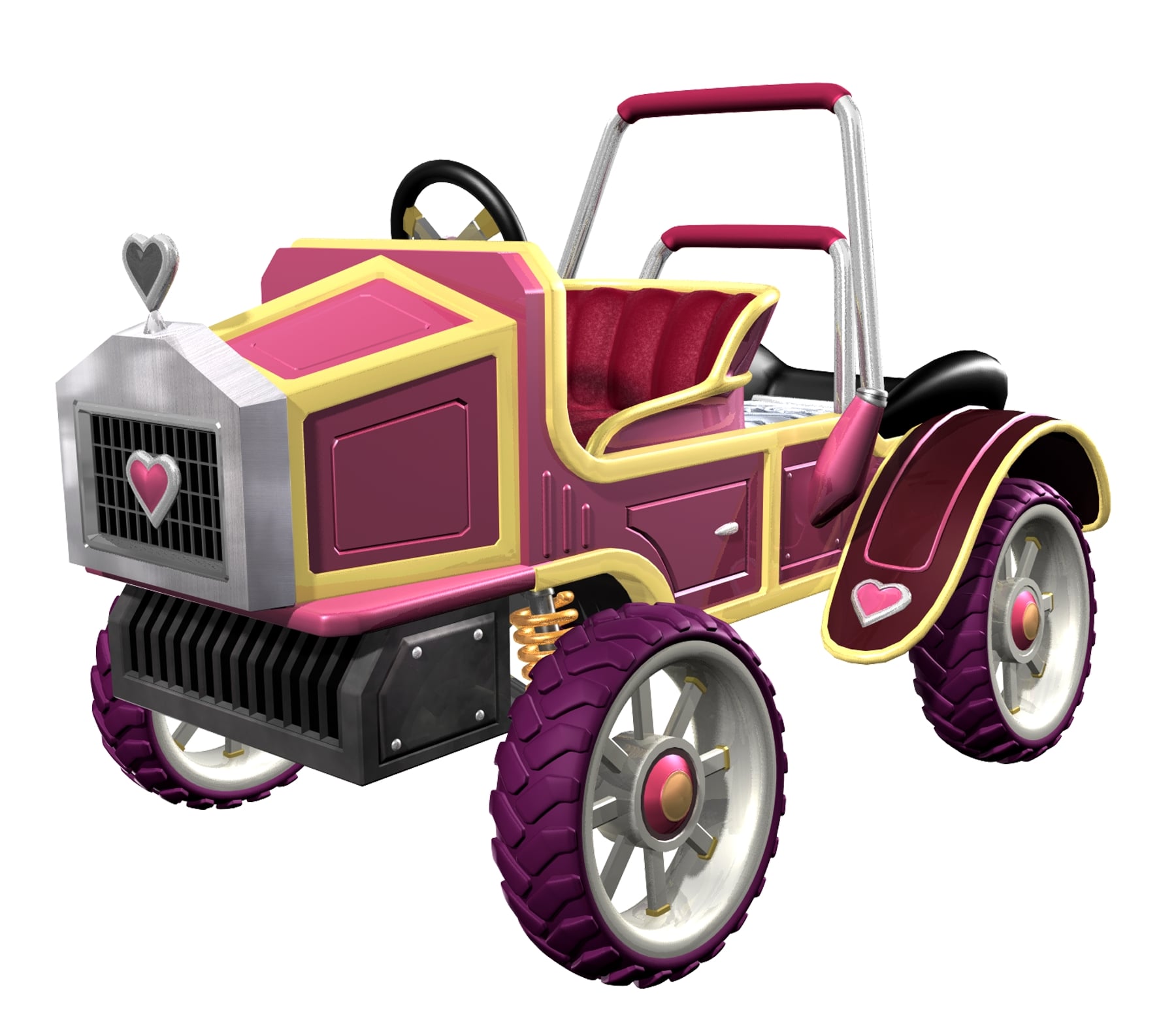
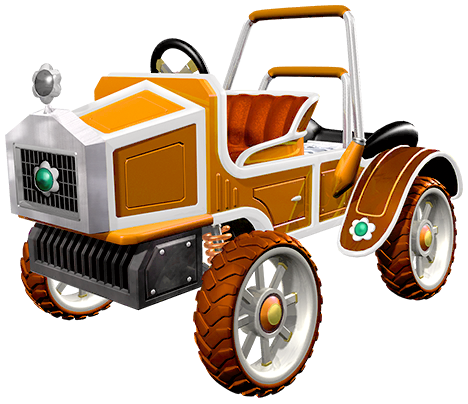
For the first time in the series, every character has a kart of their own, from Mario’s Red Fire to Bowser’s Koopa King, and you choose one after choosing your team. Each is rated out of five stars for speed, acceleration and weight. Light karts get up to speed quickly but top out early and are easily barged; heavy karts are the reverse, and suffer most off the road.
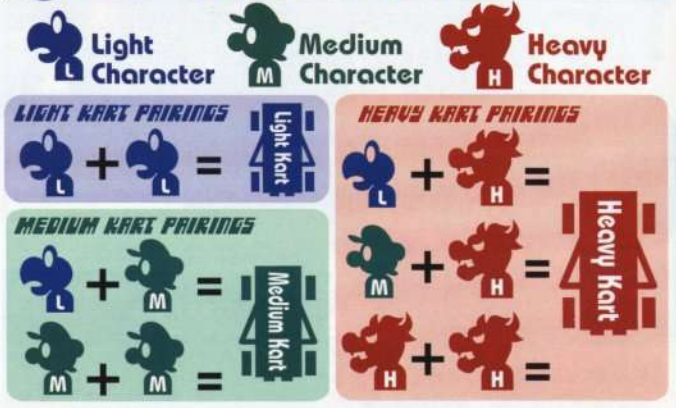
You cannot put just anyone in just anything. The heaviest member of the team decides the class: two light characters choose from the light karts, a team with a middleweight (and nobody heavier) from the medium ones, and any team with a heavyweight aboard must take a heavy kart. Eight karts are available from the start and thirteen are unlocked by winning cups. The last of them, the Parade Kart, ignores the rule and will carry any pair.
The designers settled on this arrangement after trying others. Handling was tied to the kart, not the driver, because systems based on the riders’ combined weight, or on who happened to be at the wheel, proved confusing in testing.
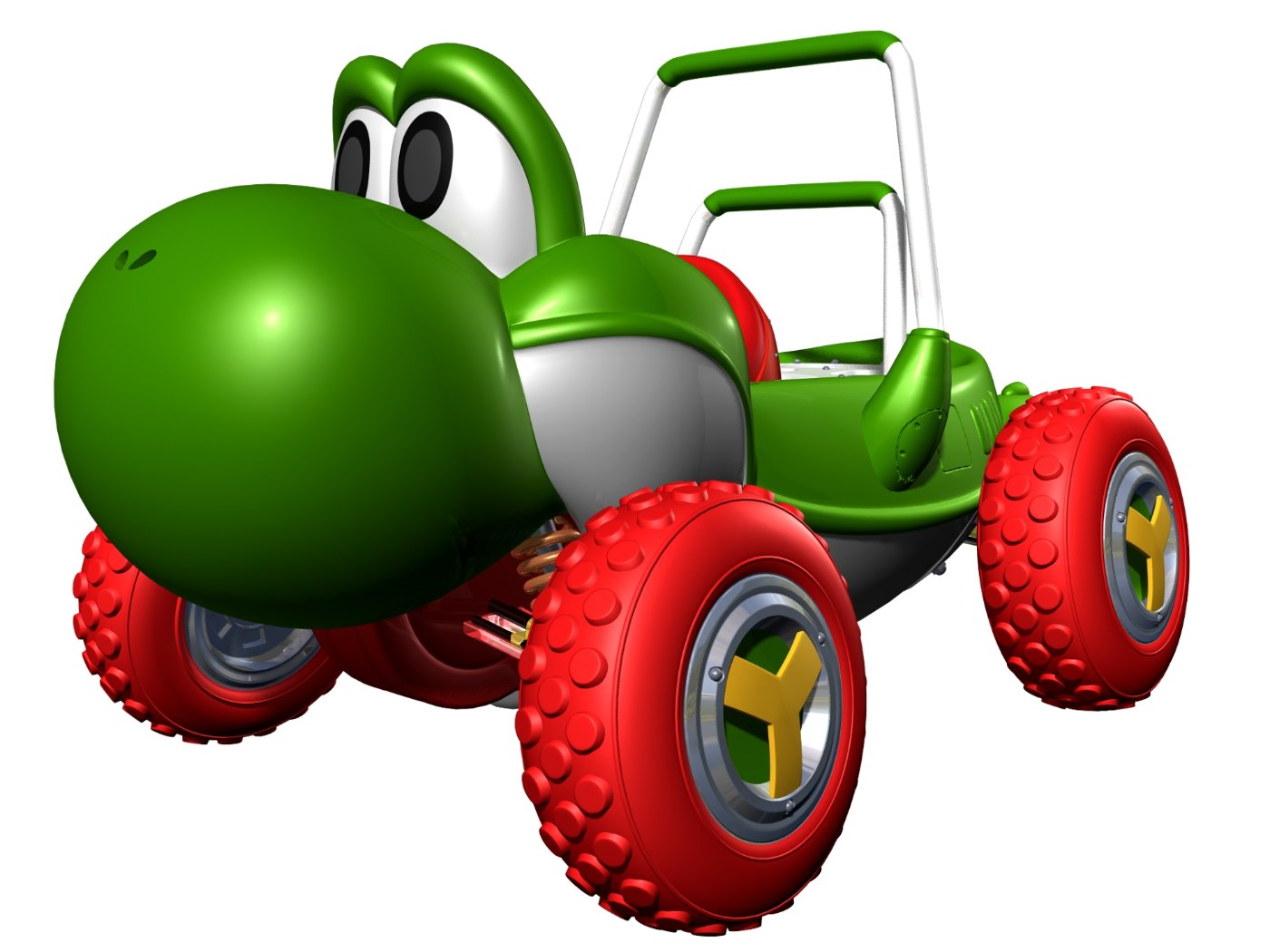
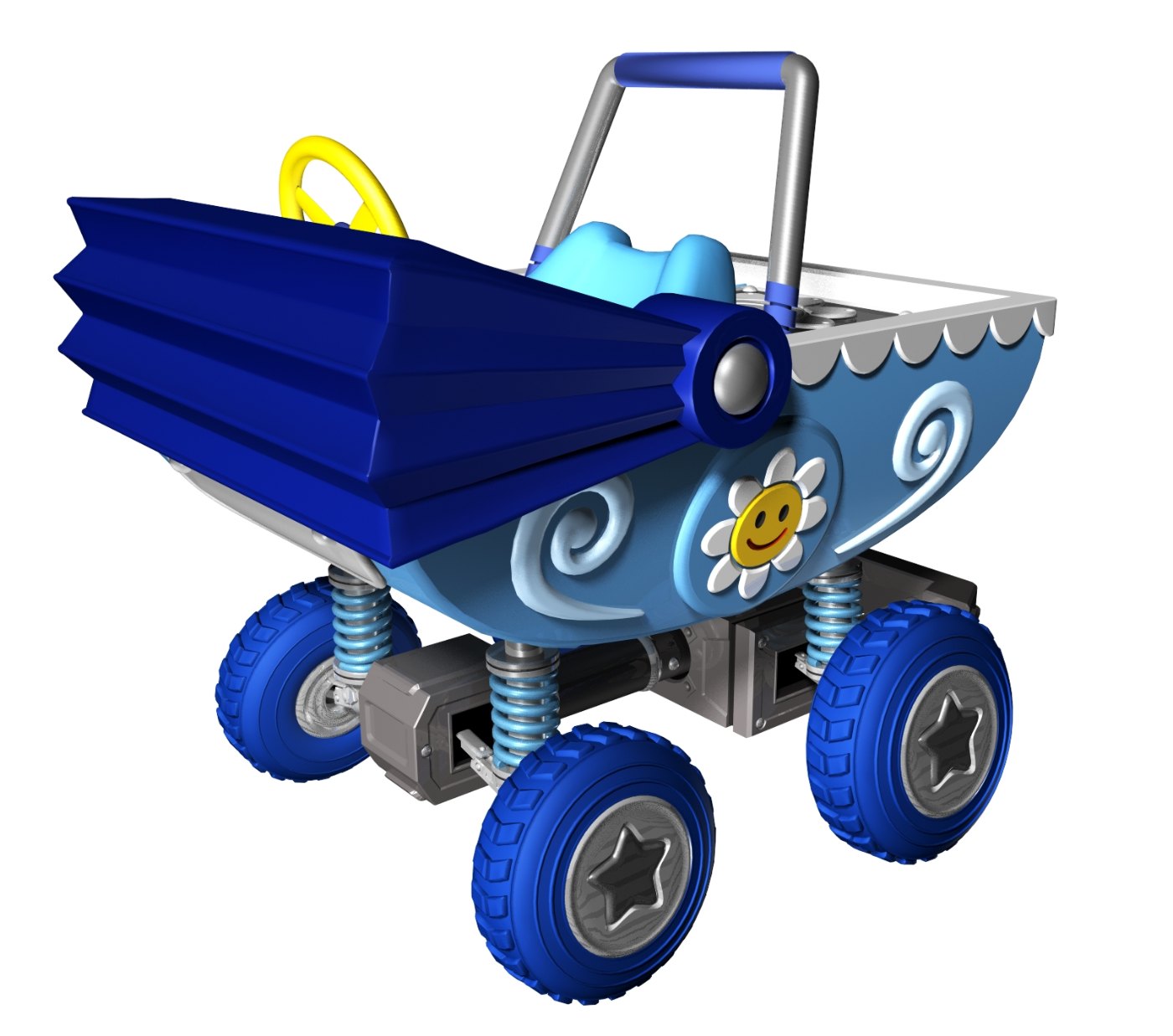
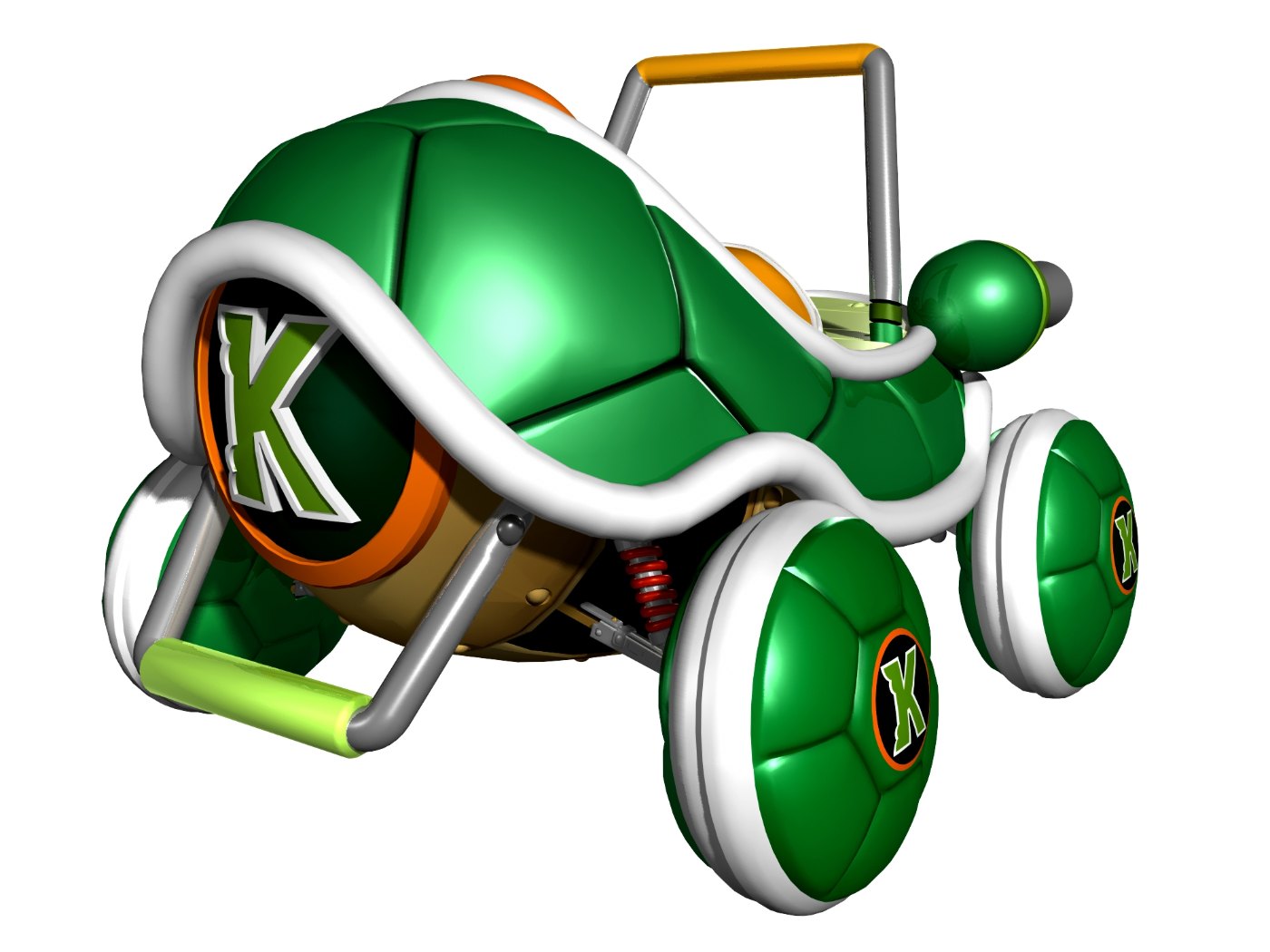
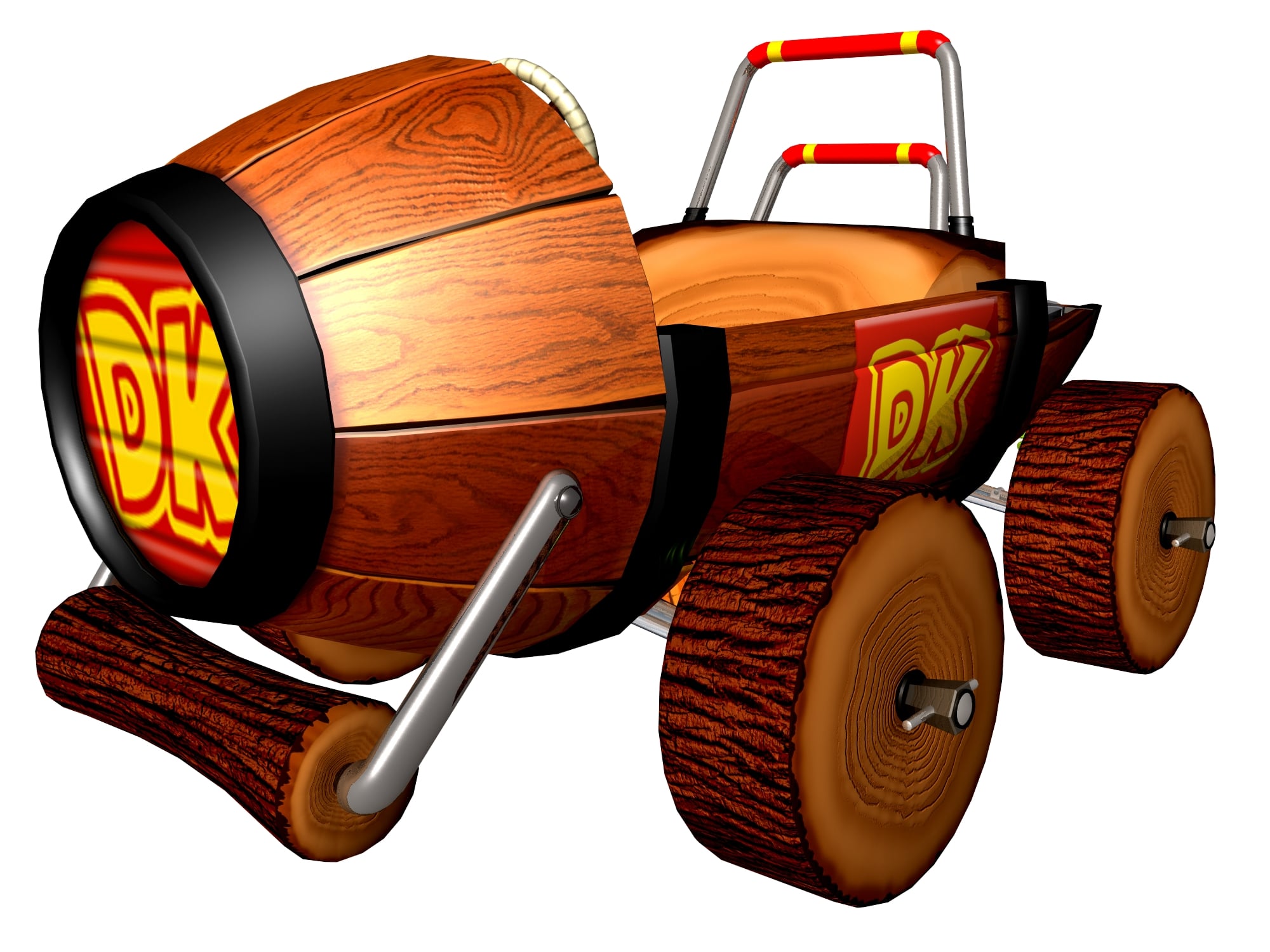
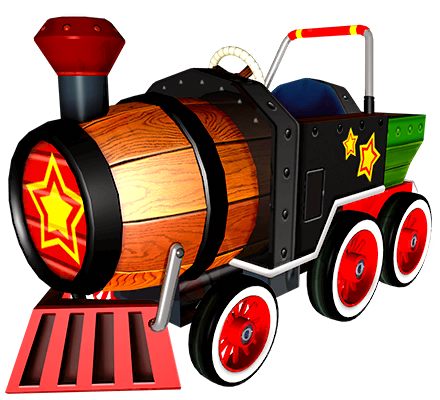
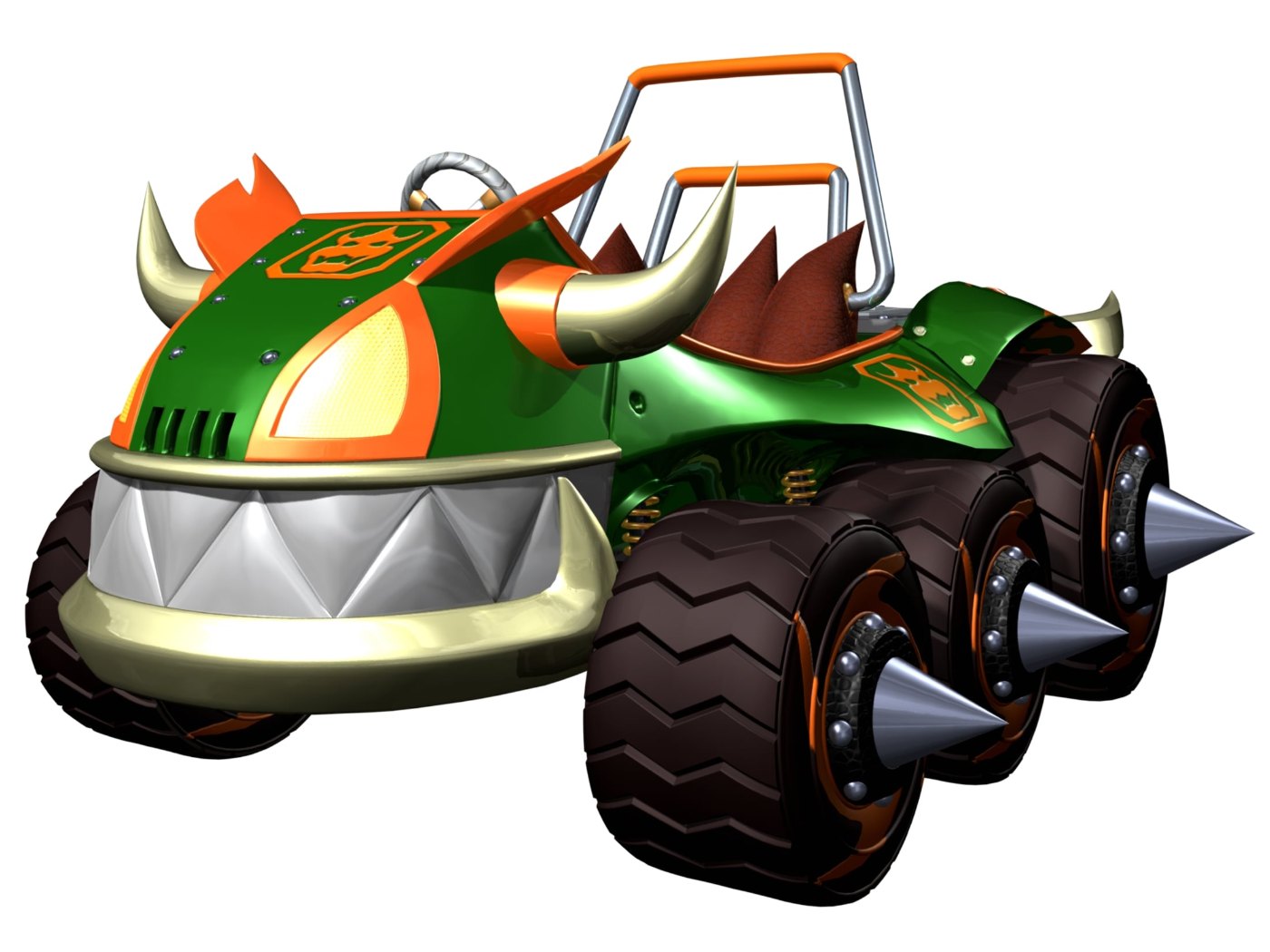
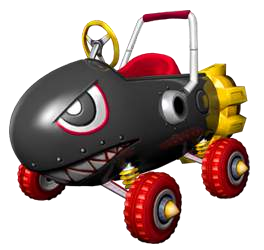
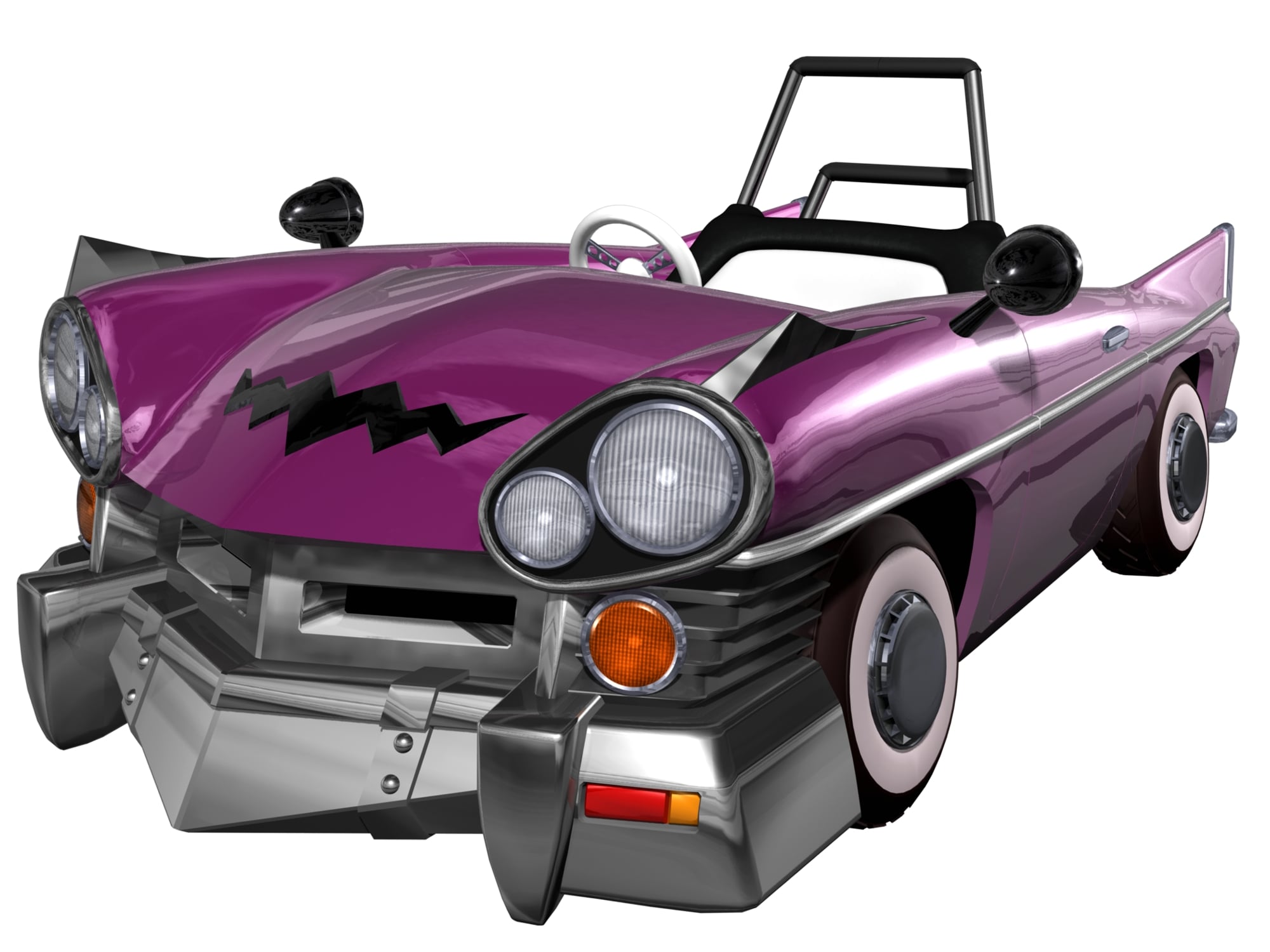
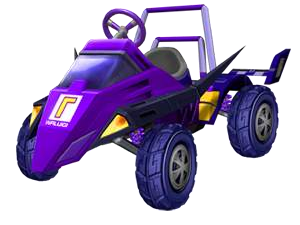
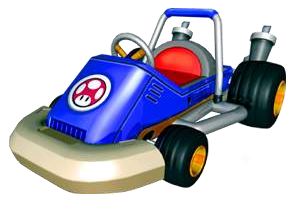
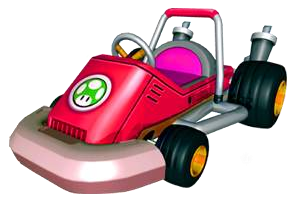
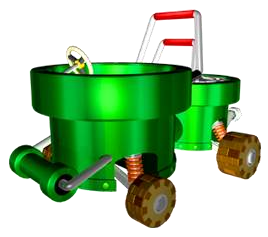
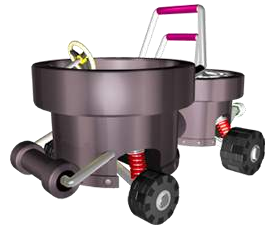
Red Fire (Mario). Medium. Speed 3, acceleration 3, weight 3. Available from the start.Green Fire (Luigi). Medium. Speed 4, acceleration 2, weight 2. Win the 50cc Mushroom Cup.Heart Coach (Peach). Medium. Speed 2, acceleration 4, weight 3. Available from the start.Bloom Coach (Daisy). Medium. Speed 3, acceleration 3, weight 2. Win the 50cc Flower Cup.Turbo Yoshi (Yoshi). Medium. Speed 2, acceleration 4, weight 3. Available from the start.Turbo Birdo (Birdo). Medium. Speed 3, acceleration 3, weight 4. Win the 150cc Flower Cup.Goo-Goo Buggy (Baby Mario). Light. Speed 1, acceleration 5, weight 2. Available from the start.Rattle Buggy (Baby Luigi). Light. Speed 2, acceleration 4, weight 2. Win the 100cc Mushroom Cup.Koopa Dasher (Koopa). Light. Speed 2, acceleration 4, weight 2. Available from the start.Para-Wing (Paratroopa). Light. Speed 1, acceleration 5, weight 2. Win the 50cc Star Cup.DK Jumbo (Donkey Kong). Heavy. Speed 4, acceleration 2, weight 4. Available from the start.Barrel Train (Diddy Kong). Light. Speed 4, acceleration 2, weight 3. Win the 150cc Star Cup.Koopa King (Bowser). Heavy. Speed 5, acceleration 1, weight 5. Available from the start.Bullet Blaster (Bowser Jr.). Light. Speed 4, acceleration 3, weight 1. Win the 50cc Special Cup.Wario Car (Wario). Heavy. Speed 4, acceleration 2, weight 4. Available from the start.Waluigi Racer (Waluigi). Medium. Speed 3, acceleration 3, weight 3. Win the 100cc Flower Cup.Toad Kart (Toad). Light. Speed 2, acceleration 4, weight 2. Win the 100cc Special Cup.Toadette Kart (Toadette). Light. Speed 1, acceleration 5, weight 2. Win the Mirror Mushroom Cup.Piranha Pipes (Petey Piranha). Heavy. Speed 4, acceleration 2, weight 5. Win the Mirror Star Cup.Boo Pipes (King Boo). Heavy. Speed 2, acceleration 4, weight 5. Win the Mirror Special Cup.Parade Kart (anyone). Speed 4, acceleration 3, weight 4. Win the Mirror All-Cup Tour.
LAN mode: sixteen players
With the Nintendo GameCube Broadband Adapter, sold separately, consoles can be networked: two with a crossover cable, or up to eight through a hub. Every console needs its own disc and adapter. Eight karts is still the limit, so anything beyond eight players means doubling up in co-op, and a full house of sixteen needs at least four consoles and televisions.
LAN play offers Versus, Balloon Battle and Shine Thief, but not Bob-omb Blast. Characters are dealt out at random before each race; Toad and Toadette join the draw if a memory card has them unlocked, while Petey Piranha, King Boo and their karts never appear. A console with nobody playing shows the race as a spectator.
There is no online mode. Enthusiasts later used third-party tunnelling software such as Warp Pipe to play LAN games over the internet, but Nintendo never supported it.
The LAN Mode title screen.
Items
Nine standard items that any team can draw, and the special items that belong to particular pairs. As ever, what you are offered depends on your position: leaders get Bananas and Green Shells, stragglers get Stars, Lightning and Spiny Shells.
Item BoxGives one item to the rear rider. Boxes reappear faster than in earlier games, so that karts at the back are not left empty-handed.
Double Item BoxNew. Two boxes stacked together: one item for each rider.
Green ShellTravels in a straight line and spins out whatever it hits.
Red ShellHomes in on the kart ahead and flips it.
Spiny ShellNow has wings. It flies to the leader and explodes, flipping every kart caught in the blast.
MushroomA short burst of speed, and a way of stealing an item from a kart you ram.
Triple MushroomsThree boosts to use one after another.
BananaDrop it behind or throw it ahead. The trick from Mario Kart 64 of braking to escape the spin has been removed.
Fake ItemLooks like an Item Box, behaves like a trap.
StarInvincibility and a little extra speed. Karts you touch are sent flying, and you can steal their items.
LightningStrikes every rival at once: they spin, drop their items and shrink, losing top speed.
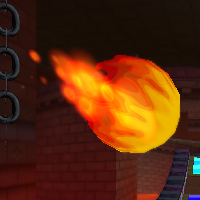
Fireballs (red)Special: Mario. A fireball that splits into several and slides down the road, able to hit a whole pack.
Fireballs (green)Special: Luigi. The same attack in green.
HeartSpecial: Peach and Daisy. Hearts circle the kart. An item that hits one is absorbed and becomes yours to use.
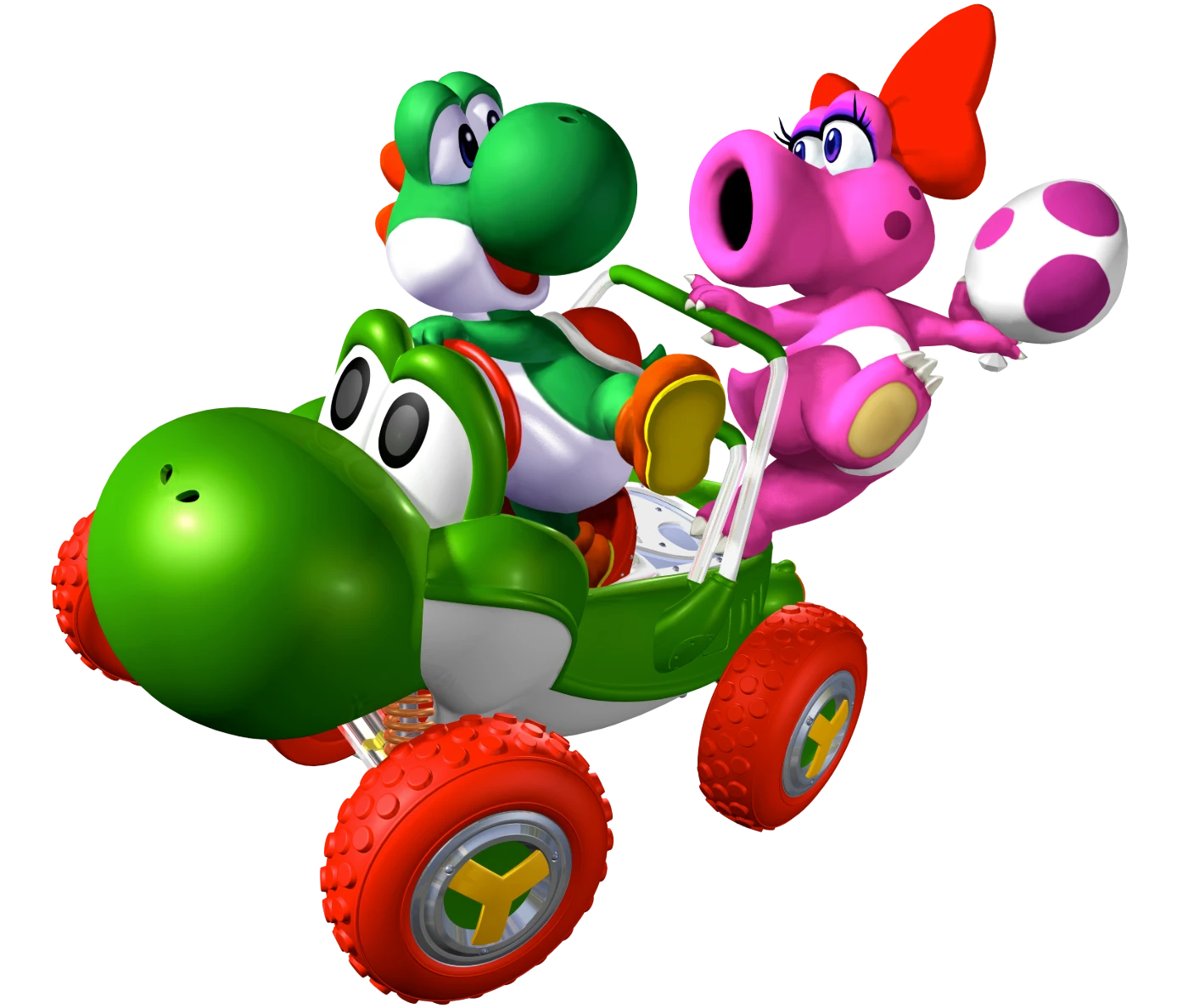
Yoshi’s EggSpecial: Yoshi. Rolls after the kart ahead, and when it breaks it leaves three more items on the track.
Birdo’s EggSpecial: Birdo. Her own version of the same homing egg.
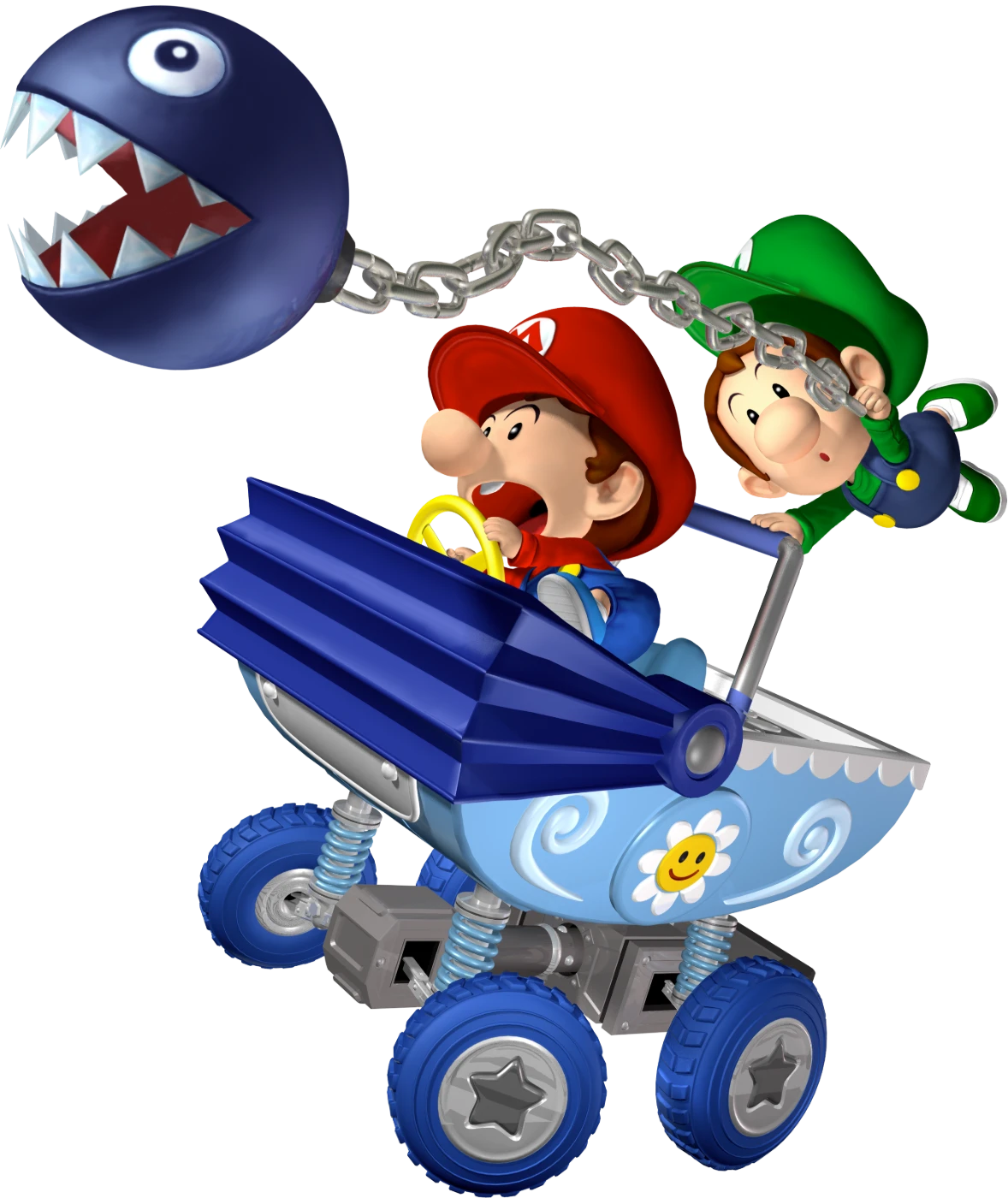
Chain ChompSpecial: Baby Mario and Baby Luigi. A Chain Chomp charges up the road towing the kart behind it and bowling rivals over. Designed as a catch-up item that needs no skill.
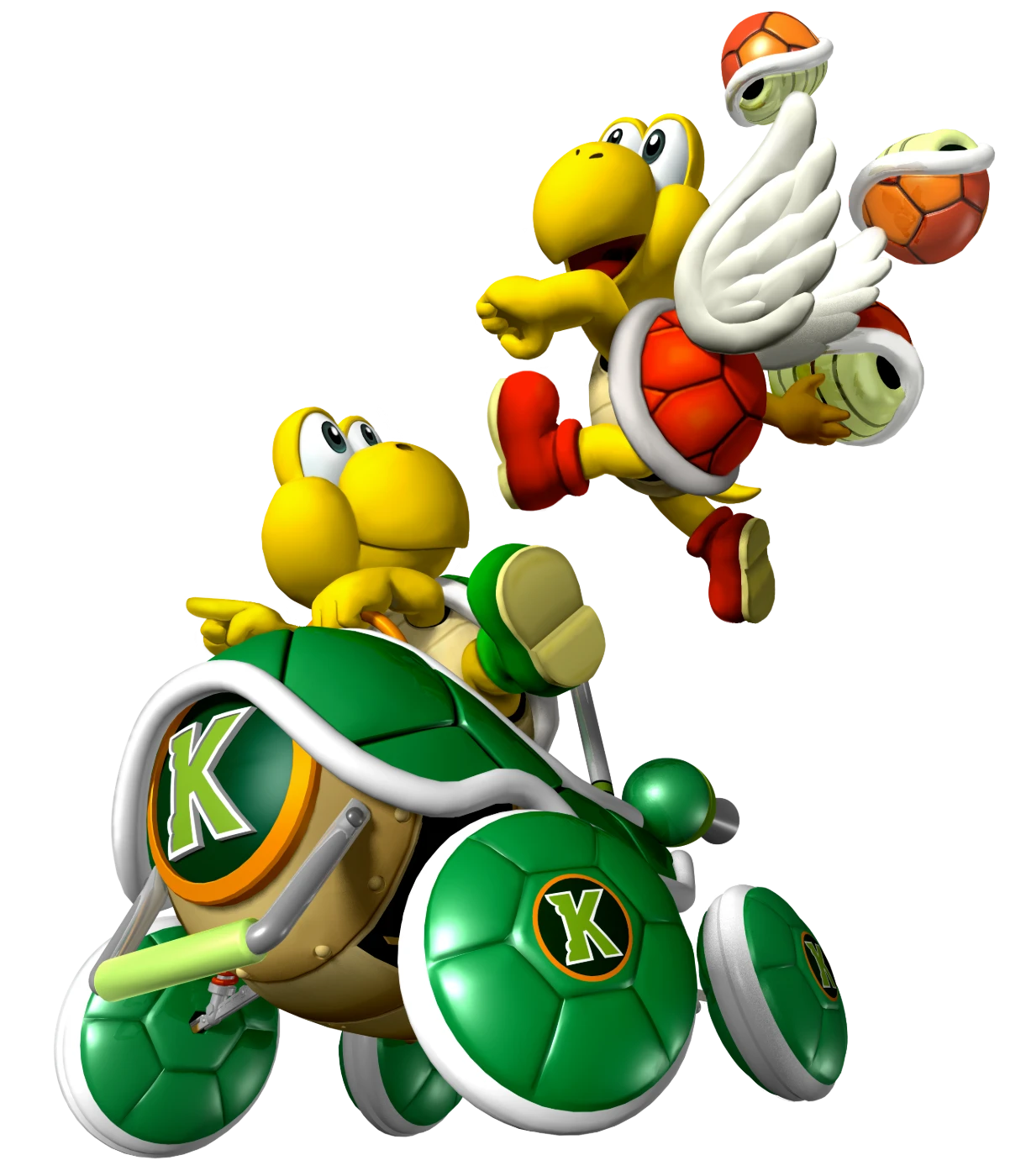
Triple Green ShellsSpecial: Koopa and Paratroopa. Three shells at once. Reserved for one team because, in testing, they made races too chaotic.
Triple Red ShellsSpecial: Koopa and Paratroopa. Three homing shells.
Giant BananaSpecial: Donkey Kong and Diddy Kong. An enormous peel that is very hard to steer around.
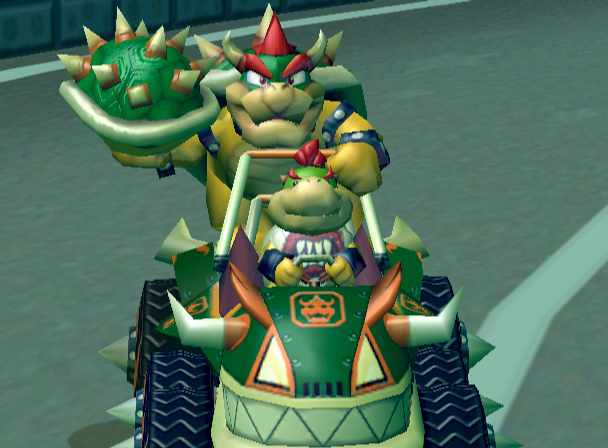
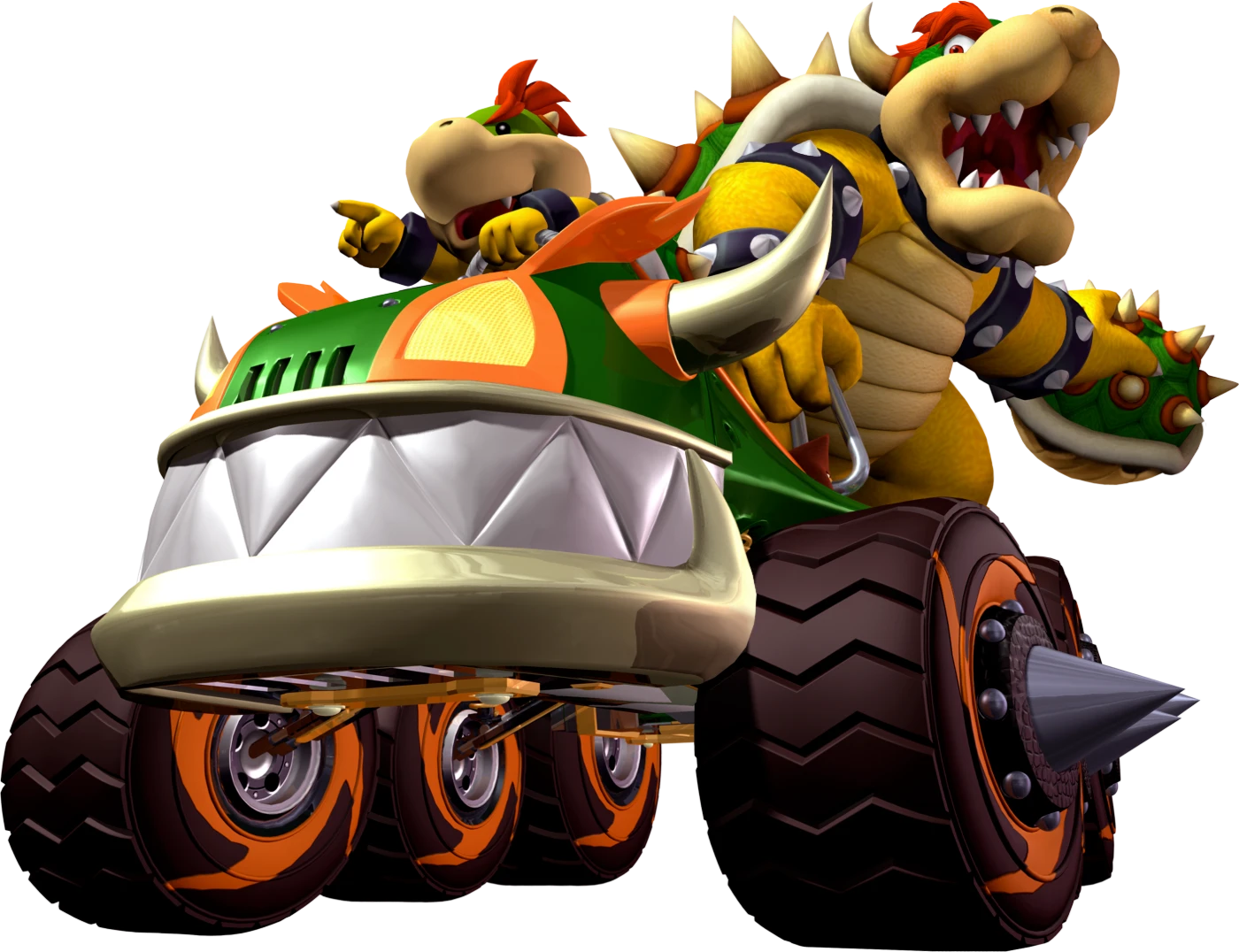
Bowser’s ShellSpecial: Bowser and Bowser Jr. A giant shell that barrels down the road slamming into every kart in its way.
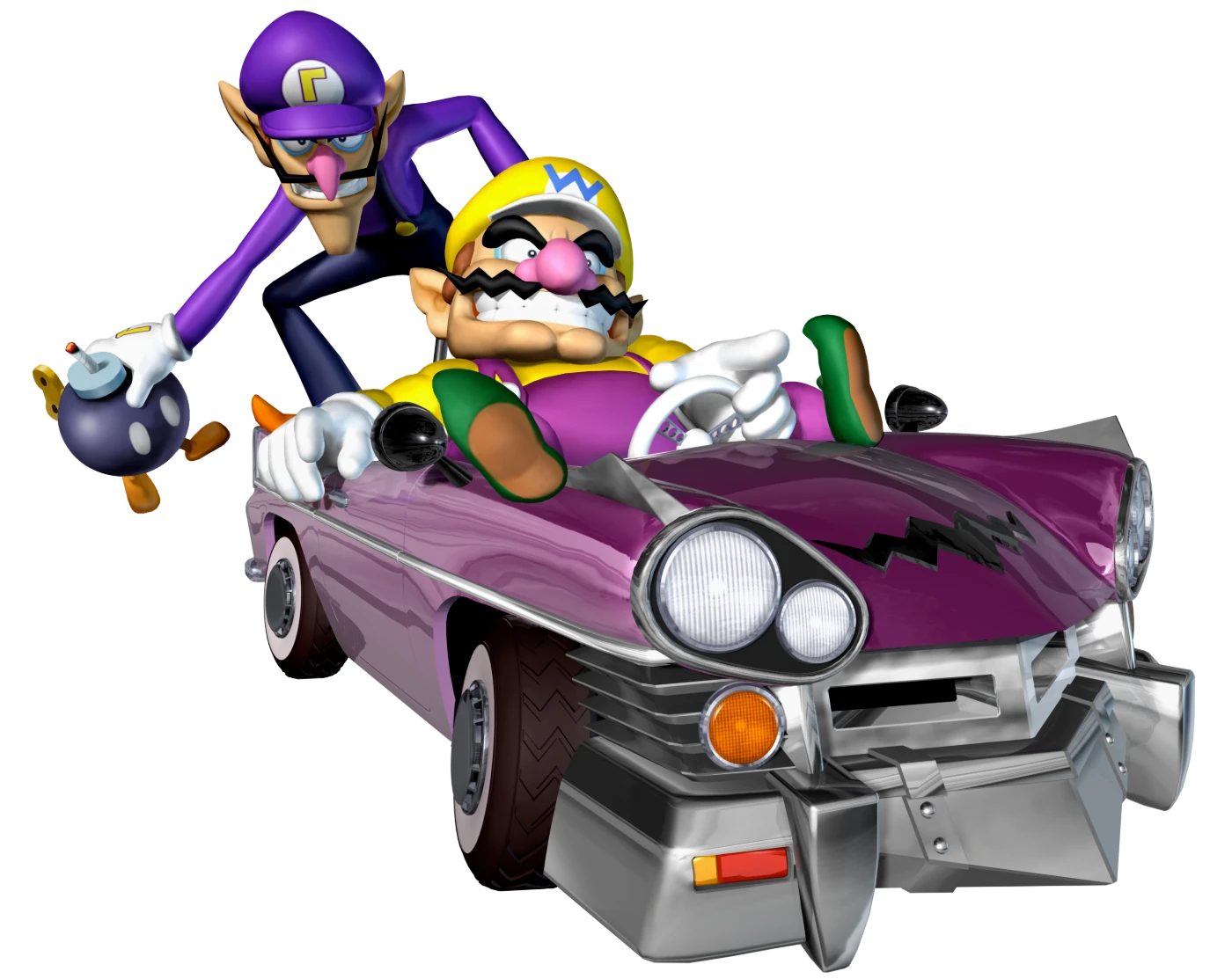
Bob-ombSpecial: Wario and Waluigi. Thrown like a grenade, further if you push the stick forward, and quite capable of catching its thrower.
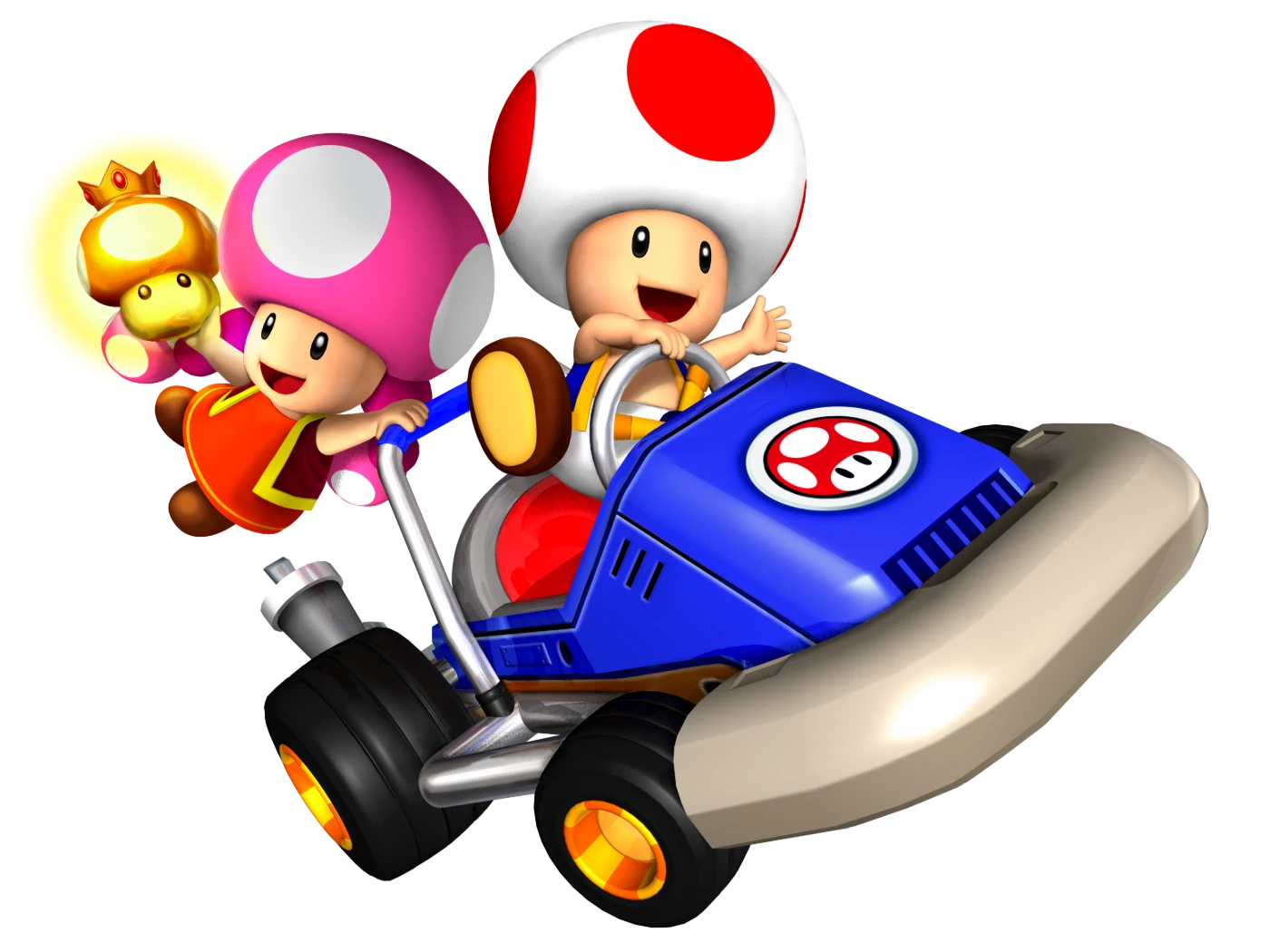
Golden MushroomSpecial: Toad and Toadette. Unlimited boosts for a short time.
Cartoons, Comics & Other Media
Double Dash!! was the GameCube’s big game of Christmas 2003, and Nintendo sold it accordingly: on television, in bundles with the console, and with a bonus disc of demos. Its courses and ideas have been turning up in other games ever since.
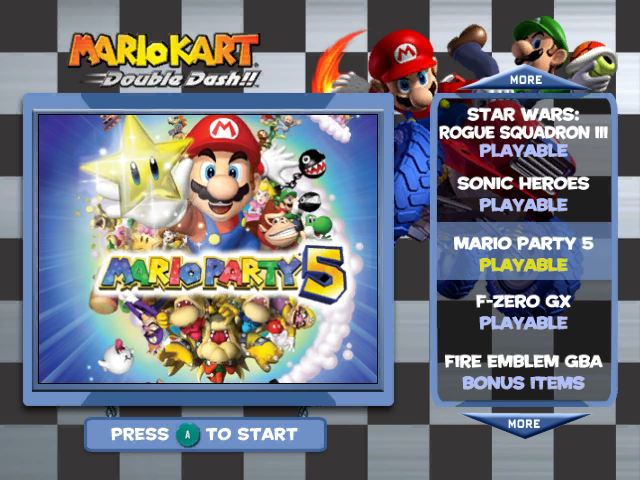
The bonus discPre-order edition · North America · 2003Customers who pre-ordered received a two-disc edition, flagged on the cover with the words “Includes BONUS DISC with playable demos!”. The second disc held playable demos of Mario Party 5, F-Zero GX, Sonic Heroes, Star Wars Rogue Squadron III: Rebel Strike and Teenage Mutant Ninja Turtles, seven trailers, and two songs and fifteen items that could be sent to Fire Emblem on a Game Boy Advance.
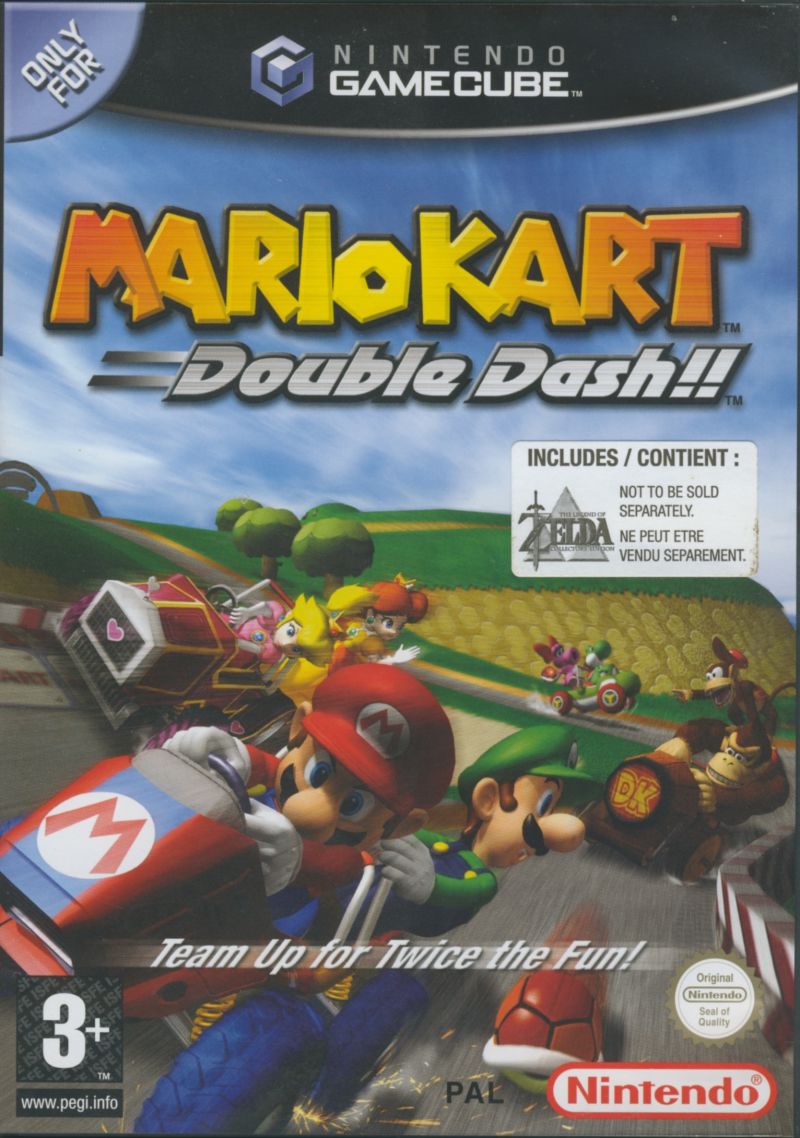
The Limited Edition PakConsole bundle · Europe · 14 November 2003In Europe the game launched alongside a bundle of a GameCube, Double Dash!! and The Legend of Zelda: Collector’s Edition, a disc containing The Legend of Zelda, Zelda II, Ocarina of Time, Majora’s Mask and a demo of The Wind Waker. Nintendo priced it at around 149 euros, or 99 pounds in the United Kingdom.
Television advertsCommercials · 2003The Cutting Room Floor catalogues several: an American spot built around the bonus disc, two British ones known as “Super Mario News” and “Airport”, and a Dutch advert for the console bundle. Some used footage from unfinished versions of the game.
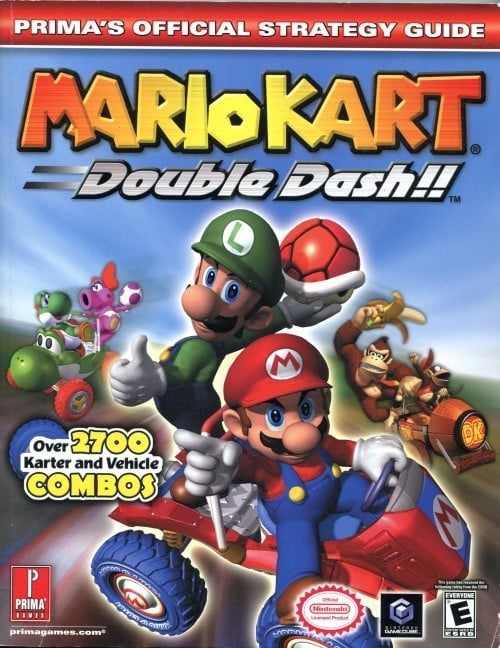
Strategy guidesBooks · 2003Nintendo Power published an official Player’s Guide, and Prima Games a strategy guide of its own.
The GameCube faceplateMerchandiseThe Nintendo GameCube battle course shows Mario and Luigi in the Red Fire on the console’s lid. Nintendo later produced the same design as a real faceplate for the real machine.
Mario Kart DSGame · Nintendo DS · 2005The next Mario Kart brought back Luigi Circuit, Baby Park, Mushroom Bridge and Yoshi Circuit as retro courses and Pipe Plaza as a battle arena, and its Shine Runners mode grew out of Shine Thief. Block City was planned too, but got no further than a kiosk demo.
Returning coursesMario Kart Wii, 7, 8, Tour and WorldPeach Beach, Mario Circuit, Waluigi Stadium, DK Mountain and Cookie Land were rebuilt for Mario Kart Wii; Daisy Cruiser and Dino Dino Jungle for Mario Kart 7; Dry Dry Desert, Sherbet Land, Baby Park and Yoshi Circuit for Mario Kart 8; and Luigi’s Mansion, Daisy Cruiser, Waluigi Stadium and DK Mountain for Mario Kart 8 Deluxe. Peach Beach and Dino Dino Jungle are in Mario Kart World.
Super Mario GalaxyGames · WiiTilt-a-Kart’s idea of a platform built from the tiles of an 8-bit Mario sprite reappears in the Toy Time Galaxy of Super Mario Galaxy and the Mario Squared Galaxy of its sequel.
Characters
Twenty drivers: nine returning from earlier Mario Karts and eleven new to the series. They are listed here in their default pairs, the teams the computer uses in 50cc and 100cc, but any two can ride together, which makes 190 possible combinations. Weight matters because the heaviest rider decides which karts the team may use.
Character
Who they are
In this game
Abilities & notes
MarioMedium · partner: Luigi
The all-rounder, voiced as ever by Charles Martinet. Mario Circuit is his home track.
Available from the start. His kart is the Red Fire, the benchmark with three stars in everything.
Special: red Fireballs
Kart: Red Fire (medium)
LuigiMedium · partner: Mario
Mario’s brother, with the opening course named after him and a mansion beside it.
Available from the start, though his Green Fire has to be won in the 50cc Mushroom Cup.
Special: green Fireballs
Kart: Green Fire (medium)
PeachMedium · partner: Daisy
The princess of the Mushroom Kingdom. Peach Beach is her course, and she co-drives the Rainbow Road staff ghost with Mario.
Available from the start.
Special: Heart
Kart: Heart Coach (medium)
DaisyMedium · partner: Peach · new
The princess of Sarasaland, racing in Mario Kart for the first time. Voiced by Deanna Mustard.
Available from the start. Her Bloom Coach is won in the 50cc Flower Cup, and she has a cruise liner to her name.
Special: Heart
Kart: Bloom Coach (medium)
YoshiMedium · partner: Birdo
Mario’s dinosaur friend, owner of a circuit shaped like himself.
Available from the start.
Special: Yoshi’s Egg
Kart: Turbo Yoshi (medium)
BirdoMedium · partner: Yoshi · new
The bow-wearing egg-spitter, new to Mario Kart. Kazumi Totaka voices both her and Yoshi.
Available from the start. Her Turbo Birdo is won in the 150cc Flower Cup.
Special: Birdo’s Egg
Kart: Turbo Birdo (medium)
Baby MarioLight · partner: Baby Luigi · new
Mario as an infant, new to Mario Kart.
Available from the start. The developers singled out a baby paired with a princess as an especially strong team.
Special: Chain Chomp
Kart: Goo-Goo Buggy (light)
Baby LuigiLight · partner: Baby Mario · new
Luigi as an infant, playable here for the first time in any game.
Available from the start. His Rattle Buggy is won in the 100cc Mushroom Cup. Baby Park is named after him in the game’s files.
Special: Chain Chomp
Kart: Rattle Buggy (light)
KoopaLight · partner: Paratroopa
Koopa Troopa, back on the grid for the first time since Super Mario Kart.
Available from the start. Mushroom Bridge is his course behind the scenes.
Special: Triple Green Shells or Triple Red Shells
Kart: Koopa Dasher (light)
ParatroopaLight · partner: Koopa · new
A red-shelled, winged Koopa, new to Mario Kart. The winged Spiny Shell began life as his special item.
Available from the start. His Para-Wing is won in the 50cc Star Cup, and Mushroom City is his course.
Special: Triple Green Shells or Triple Red Shells
Kart: Para-Wing (light)
Donkey KongHeavy · partner: Diddy Kong
The king of the jungle, with a mountain and a cannon to prove it.
Available from the start. Before the Giant Banana was invented, his special item was going to be a barrel.
Special: Giant Banana
Kart: DK Jumbo (heavy)
Diddy KongLight · partner: Donkey Kong · new
Donkey Kong’s little buddy, new to Mario Kart. He took a place first designed for Donkey Kong Jr.
Available from the start. His Barrel Train is won in the 150cc Star Cup. Dino Dino Jungle is his course in the game’s files.
Special: Giant Banana
Kart: Barrel Train (light)
BowserHeavy · partner: Bowser Jr.
The Koopa King, voiced by Scott Burns, with the fastest and heaviest of the starting karts.
Available from the start. His Bullet Blaster is won in the 50cc Special Cup.
Special: Bowser’s Shell
Kart: Bullet Blaster (light)
WarioHeavy · partner: Waluigi
Mario’s greedy rival, proprietor of the biggest course in the game.
Available from the start.
Special: Bob-omb
Kart: Wario Car (heavy)
WaluigiMedium · partner: Wario · new
Wario’s lanky partner in crime, new to Mario Kart.
Available from the start. His Waluigi Racer is won in the 100cc Flower Cup.
Special: Bob-omb
Kart: Waluigi Racer (medium)
ToadLight · partner: Toadette · unlockable
Peach’s retainer, a regular since 1992, and here a secret character for the only time in the series. The team could not at first find him a partner.
Unlocked, with Toadette and the Toad Kart, by winning the 100cc Special Cup.
Special: Golden Mushroom
Kart: Toad Kart (light)
ToadetteLight · partner: Toad · unlockable · new
A pink Toad with plaits, created for this game. Double Dash!! is her first appearance anywhere. Voiced, like Toad and Peach, by Jen Taylor.
Unlocked with Toad. Her own kart is won in the Mirror Mushroom Cup.
Special: Golden Mushroom
Kart: Toadette Kart (light)
Petey PiranhaHeavy · partner: King Boo · unlockable · new
The giant Piranha Plant boss of Super Mario Sunshine. His roars are by composer Toru Minegishi.
Unlocked, with King Boo and the Piranha Pipes, by winning the Star Cup in Mirror Mode.
Special: any, except green Fireballs and Birdo’s Egg
Kart: Piranha Pipes (heavy)
King BooHeavy · partner: Petey Piranha · unlockable · new
The ghostly villain of Luigi’s Mansion, playable for the first time in any game.
Unlocked with Petey Piranha. His Boo Pipes are won in the Mirror Special Cup.
Special: any, except green Fireballs and Birdo’s Egg
Kart: Boo Pipes (heavy)
Course hazards and trackside characters
The things on the track that are not trying to win. Split-screen races have fewer of several of them.
Chain ChompLuigi Circuit, Mario CircuitTethered to a post beside the road, and lunges at anything in reach.
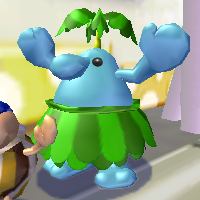
CataquackPeach BeachThe duck-billed creatures of Super Mario Sunshine. They fling karts into the air and can cost you your items.
PokeyDry Dry DesertCactus columns that sway across the road.
TornadoDry Dry DesertWanders the course, lifts karts off the ground and strips their items.
Pit PlantDry Dry DesertLives at the bottom of the quicksand pit and eats whoever slides in.
Wiggler WagonMushroom Bridge, Mushroom CityA long green bus in the shape of a Wiggler. An early version of Mushroom City had two.
Bomb-carMushroom Bridge, Mushroom CityA Bob-omb on wheels. It explodes on contact.
Mushroom carMushroom Bridge, Mushroom CityThe one friendly vehicle: bump it and it drops a Mushroom.
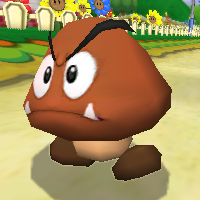
GoombaMario CircuitWaddles from side to side across the bumpy section.
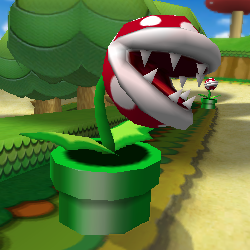
Piranha PlantMario Circuit, Yoshi CircuitLeans out of roadside pipes to bite passing karts.
Sliding tablesDaisy CruiserSlide back and forth across the dining room as the ship rolls.
Fire ChainWaluigi Stadium, Wario ColosseumA floating ring of fireballs, often with an Item Box as bait in the middle.
Mecha Piranha PlantWaluigi StadiumA mechanical plant that slides in and out of its pipe.
Skating Shy GuySherbet LandSkates, jumps and twirls across the rink. The red ones come in pairs.
FreezieSherbet LandA lump of ice that freezes any kart that touches it.
Barrel CannonDK MountainFires karts to the top of the volcano. Nothing can hit you while you are in the air.
BoulderDK MountainTumbles down the mountain road on the way back.
NoshiDino Dino JungleA huge blue sauropod whose feet come down on the track.
Water geyserDino Dino JungleErupts under karts and lifts them into the air.
ThwompBowser’s CastleCrashes down to flatten karts.
Lava BubbleBowser’s CastleHops in arcs through the metal grating.
Mechanical BowserBowser’s CastleA giant statue that shoots fireballs down the final corridor.
PiantasPeach Beach, Daisy Cruiser, award ceremonyThe islanders of Super Mario Sunshine, here as spectators.
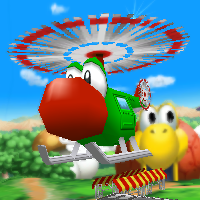
Yoshi helicopterBaby Park, Yoshi CircuitBased on Yoshi’s helicopter transformation in Yoshi’s Island.
The stadium crowdWaluigi StadiumToads, Shy Guys, Snifits, Goombas, Boos and Hammer Bros. in the stands.
ToadsworthAward ceremonyPeach’s elderly steward, on hand for the trophy presentation.
The people who made it
Names and roles as given in the staff roll. The three senior staff interviewed by Nintendo Dream in 2003 are the source of most of the Development section below.
Kiyoshi MizukiChief directorJoined Nintendo around 1999 and had been assistant director of Luigi’s Mansion. He set the tone: a Mario Kart that beginners could enjoy.
Tadashi SugiyamaProducerWith Mario Kart since the Super NES original. It was he who admitted the team kept a one-driver version in reserve.
Shinya TakahashiProducerA veteran of most Nintendo EAD projects, and the champion of parent-and-child co-op.
Shigeru Miyamoto and Takashi TezukaProducersThe other two of the game’s four credited producers. In 2002 Miyamoto told reporters the game was being kept under wraps because screenshots would give its concept away.
Satoru IwataExecutive producerNintendo’s president, in the role his predecessor Hiroshi Yamauchi had held on Super Circuit.
Yasuyuki Oyagi, Futoshi Shirai, Daiji ImaiDirectorsOyagi had been assistant director of Mario Kart 64 and went on to direct later entries in the series.
Kenji YamamotoProgram directorLed a programming team of six.
Tsuyoshi Watanabe and Junji MoriiDesign manager; art directorWatanabe is recorded as having considered a double jump for the karts.
Hiromu Takemura, Hirotake Ohtsubo, Yoshihisa Morimoto, Yu KudoCourse designThe four designers of the sixteen courses and six arenas.
Shinobu Tanaka and Kenta NagataMusicTanaka, who had written music for Super Mario Sunshine, composed and arranged the Peach Beach theme.
Charles MartinetVoicesMario, Luigi, Wario, Waluigi, Baby Mario and Baby Luigi: six of the twenty drivers.
Jen Taylor, Deanna Mustard, Scott Burns, Dolores RogersVoicesTaylor is Peach, Toad and Toadette; Mustard is Daisy; Burns is Bowser; Rogers is Bowser Jr.
Kazumi Totaka, Grant Kirkhope, Chris Sutherland, Toru MinegishiVoices (uncredited)Yoshi and Birdo, Donkey Kong, Diddy Kong and Petey Piranha respectively, according to Super Mario Wiki.
Advertisement
How It Was Made
Double Dash!! is unusually well documented for a Nintendo game of its time, thanks to a long interview its producers and chief director gave to Nintendo Dream magazine before launch, translated into English by shmuplations in 2025, and to The Cutting Room Floor’s reconstruction of what was shown to the press and when.
Seven seconds in 2001
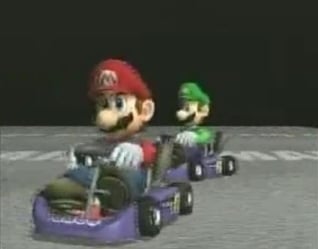
The 2001 clip: Mario and Luigi in separate karts, long before the two-seater idea. Nintendo, via Super Mario Wiki
The first anyone saw of a GameCube Mario Kart was a clip a few seconds long, shown at Nintendo’s presentation on the eve of E3 on 16 May 2001. Mario and Luigi, using their models from Super Smash Bros. Melee, drove two plain karts across an empty surface. It was labelled simply Mario Kart for Nintendo GameCube.
Then it disappeared. At a round-table in May 2002 Shigeru Miyamoto said the game could have been shown but that screenshots would give away what kind of game it was, a remark that makes sense in hindsight. The real thing was unveiled in Famitsu on 23 April 2003, with its title and its two-seater karts, and was playable at E3 that May on three courses, at one station with a steering wheel and at another with eight GameCubes networked together.
Reaction at E3 was that the karts felt slow. Nintendo promised to fix it, and Kiyoshi Mizuki later confirmed that speeds, the camera and the drift were all retuned after outside feedback. A second demo, with Battle mode, toured European shows in August, and a near-final version was shown to the press in San Francisco on 17 September, where the American release date was announced.
The escape hatch
The two-rider idea came at the end of a long search for something new to do with multiplayer. The first thought was a sidecar. Tadashi Sugiyama explained why that failed: “Can you imagine 8 massive karts lined up like that?” Seating the second rider behind the first kept the karts narrow but blocked the view, and the answer to that, letting players swap the riders at will, turned into the heart of the game.
Nobody was sure it would work. “We were a little worried about it though, so at first we were developing a single-driver version too,” Sugiyama said. Shinya Takahashi called that conventional version “our emergency escape hatch”. It was dropped when it became clear that most of the staff wanted to make something new, and nearly a whole year went into working out how two riders should behave.
The team grew to between 40 and 50 people, more than half of whom joined in the final year.
Inventing the special items
Several of the special items were happy accidents. The Giant Banana came from somebody testing how large a banana could be made in the editor. Mario and Luigi’s Fireballs grew out of an earlier idea for a starburst of five shells. The Chain Chomp was made for the babies as a way for inexperienced players to catch up without doing anything clever. Triple Green Shells, a standard item in Mario Kart 64, were given to Koopa alone because they made races too wild.
The winged Spiny Shell began as Paratroopa’s special, a “Winged Shell”. It was promoted to a standard item and made to explode because, as Mizuki put it, “since good players can end up getting so far ahead, we needed an item like the Spiny Shell.”
Items moved between characters late in the day. At E3 2003 the Golden Mushroom belonged to Peach and Daisy; when it went to the Toads, umbrellas were considered for the princesses before the Heart was devised. Donkey Kong was to have thrown a barrel. And a build shown that spring had Bowser holding a Chain Chomp.
Casting the karts
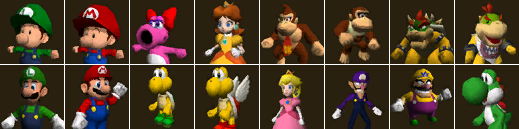
Early character icons from a demo disc, with Donkey Kong Jr. in Diddy Kong’s place. Nintendo, via Super Mario Wiki
Early character icons found on a demo disc show Donkey Kong Jr., a veteran of the first Mario Kart, where Diddy Kong now sits. Sugiyama confirmed that Junior was designed and cut, and that Diddy won on name recognition. Toad was meant to be on the starting grid, but the designers could not find him a suitable partner. He ended up as a hidden character instead, paired with a brand-new one, Toadette.
The karts themselves caused arguments about whether some of them counted as karts at all. Small touches followed from the two-seat layout: the shortest characters were given a second grab bar on the back of the kart so that they had something to hold.
Polygons, tyres and Baby Park
Mario Kart 64 had 3D tracks but flat, pre-rendered drivers, which limited where its camera could go. With everything now built from polygons, the course designers could add real height: jumps, corkscrews, a cannon up a mountain. The physics changed too. Karts now work out their position from all four tyres and not from a single point at the centre, and Mizuki said the game used the GameCube’s processor almost to capacity.
Baby Park was decided on early. The team was laying out courses during the Salt Lake City Winter Olympics of 2002, and Mizuki remembered watching the speed skating: “I saw the short track they’d prepared for the ice skating and thought, ‘We should make a track like that!’” Takahashi thought of the indoor go-kart rinks once popular in Japan. They knocked up a test, enjoyed it and left it almost untouched, knowing exactly what they had made. “It’s a love-it-or-hate-it kind of course,” Mizuki said.
A game for beginners
Mizuki told Computer and Video Games that his hardest task was to draw in people who had never played Mario Kart, and that the answer was to keep things simple. “We wanted this to be a game that even beginners could enjoy,” he told Nintendo Dream. So Item Boxes come back sooner, karts recover from a spin more quickly, mini-turbos are easier to trigger, and the expert trick of braking through a banana is gone. The speed of the karts is never secretly adjusted; the balance comes from which items are handed to whom.
Some ideas were left out. A link-up with the Game Boy Advance was discussed and judged a poor fit. Forcing co-op partners to swap seats every lap was rejected because it would spoil the game for a parent driving with a small child. And the LAN mode was tested the hard way. In Sugiyama’s words: “Sixteen sweaty dudes all snuggled up against each other.”
Series Firsts
What Double Dash!! added to Mario Kart, checked against the three games before it.
1Two riders per kartThe first Mario Kart with a driver and a passenger, and still the only one. Co-op play on a single kart is likewise unique to this game.
2Special itemsThe first items tied to particular characters.
33D drivers and itemsThe first Mario Kart to draw its characters and items as polygon models. Mario Kart 64 used pre-rendered sprites on 3D tracks.
4A kart for every characterThe first game in the series with distinct karts to choose from, an idea every later Mario Kart has kept.
5LAN playThe first Mario Kart that could link home consoles together, for up to sixteen players.
6Points for everyoneThe 10-8-6-5-4-3-2-1 scoring and the end of race retries both start here, and both carried into every later instalment.
7Double Item BoxesStacked boxes that give an item to each rider.
8New battle gamesShine Thief and Bob-omb Blast join Balloon Battle. Mario Kart DS based its Shine Runners mode on the former.
9Eleven newcomersDaisy, Birdo, Baby Mario, Baby Luigi, Paratroopa, Diddy Kong, Bowser Jr., Waluigi, Toadette, Petey Piranha and King Boo all race for the first time. For Toadette it is a first appearance in any game.
10The All-Cup TourA fifth trophy for racing all sixteen courses in one go.
11More languagesThe first Mario Kart playable in languages other than English and Japanese, with French, German, Spanish and Italian included.
12Seven lapsBaby Park’s seven laps are the most of any course in the series, on its shortest track.
Cheats & Secrets
Everything in Double Dash!! is unlocked by winning cups, and gold trophies are the only currency. The game hides a few other secrets in its menus and on its courses.
What each cup unlocks
50cc: Mushroom Cup, Green Fire; Flower Cup, Bloom Coach; Star Cup, Para-Wing; Special Cup, Bullet Blaster. 100cc: Mushroom Cup, Rattle Buggy; Flower Cup, Waluigi Racer; Star Cup, the Special Cup itself; Special Cup, Toad, Toadette and the Toad Kart. 150cc: Mushroom Cup, the Luigi’s Mansion battle course; Flower Cup, Turbo Birdo; Star Cup, Barrel Train; Special Cup, the All-Cup Tour; All-Cup Tour, Mirror Mode. Mirror: Mushroom Cup, Toadette Kart; Flower Cup, the Tilt-a-Kart battle course; Star Cup, Petey Piranha, King Boo and the Piranha Pipes; Special Cup, Boo Pipes; All-Cup Tour, the Parade Kart.
The second title screen and ending
Win the All-Cup Tour in every class, including 50cc and 100cc, where it unlocks nothing else. The title screen changes to include the secret teams, and the credits end on a different picture.
Staff ghosts
Beat a hidden target time on a course in Time Trial and a ghost recorded by Nintendo’s staff becomes available to race. Their times run from 1:11.108 on Baby Park to 3:16.476 on Rainbow Road. Each is driven by the course’s owner with their usual partner, except on Rainbow Road, where Mario and Peach share the Red Fire.
The Double Dash!! start
In co-op, both players press A at the moment the lights turn green. Playing alone, a normal Rocket Start needs the same timing from one thumb.
Random teams
On the character select screen, before anyone has picked, press L and R together. Every player is given a random pair and a random kart.
Dodging and stealing
A hard drift at the right moment can make a Red Shell miss. A Mushroom or Star turns your kart into a pickpocket: ram a rival while your rear rider is empty-handed and you take their item. And if you keep to the arches on Mushroom Bridge, the Spiny Shell cannot reach you.
Shortcuts
Luigi Circuit (100cc and up): a lane on the far right of each U-turn hides two Double Item Boxes, Chain Chomp permitting. Peach Beach: a green pipe by the shore leads to a Double Item Box, and a Mushroom takes you straight across the water at high tide. Mushroom Bridge: a pipe near the start, and the Dash Panels along the bridge arches. Mario Circuit: boost across the grass inside the Chain Chomp’s curve. Daisy Cruiser: squeeze past the right-hand side of the pool. Mushroom City: a pink alley at the junction and a dirt road that needs a Mushroom. Yoshi Circuit: a Mushroom hop across the gap at Yoshi’s hand, and a tunnel with extra Double Item Boxes. DK Mountain: through the long grass near the start with a Mushroom, and a jump across the ravine. Dino Dino Jungle: a Mushroom path that avoids the geyser cave. Bowser’s Castle: a leap through a gap in the wall by the statue, with lava waiting if you miss.
The Japanese contest code
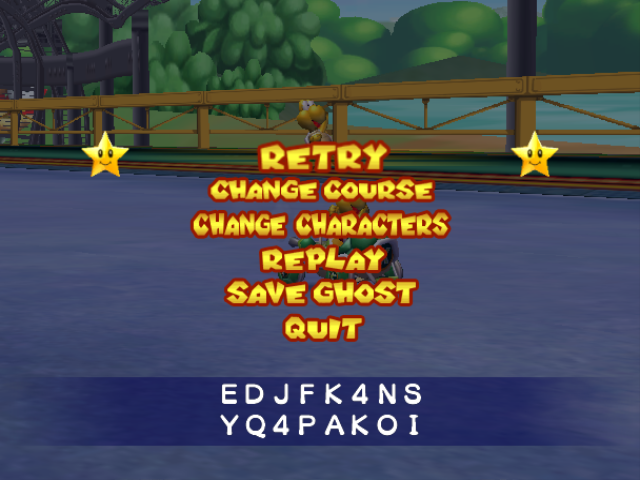
After finishing a Time Trial, press L, R, L, R, X, Y, X, Y, Z. A sixteen-character code appears at the bottom of the screen, encoding the course, kart, characters and times. It was made for a competition held only in Japan, but the code shows up in every version of the game.
More from SLB
SLB’s own cheats page, kart guide and driving techniques guide for Double Dash!! are linked under Reference below.
Compiled from Super Mario Wiki’s unlocking matrix, staff ghost table and course pages, The Cutting Room Floor and the 2003 developer interview.
Glitches & Oddities
Double Dash!! is a solid piece of engineering, and its best-known oddities are harmless curiosities. One of them is spectacular.
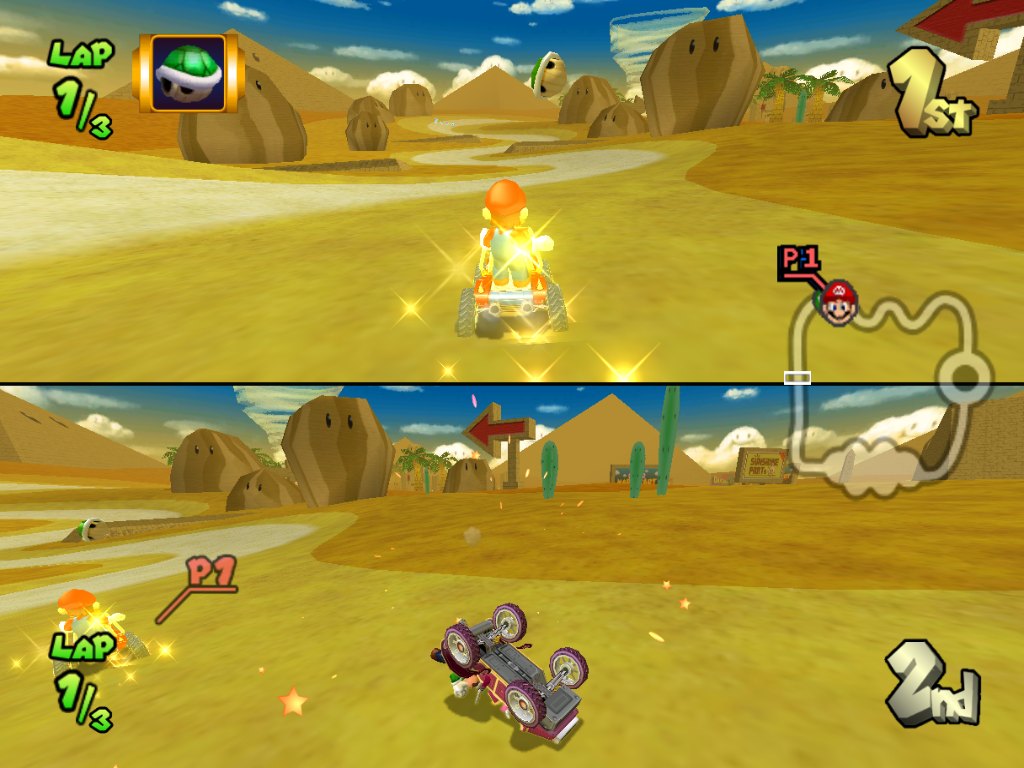
The permanently upside-down Parade Kart
The Parade Kart, stuck on its roof.
This works only with the Parade Kart and is easiest with two players. Park under one of the stationary Thwomps in Bowser’s Castle (the big blue dinosaur in Dino Dino Jungle will also do) while the second player fetches something explosive, a Spiny Shell or a Bob-omb. Detonate it so that the blast throws the kart upwards at the moment the Thwomp comes down. If the timing is right the kart lands on its roof and stays there, and it cannot be harmed in that state. The only cure is to be struck by Lightning and then squashed again.
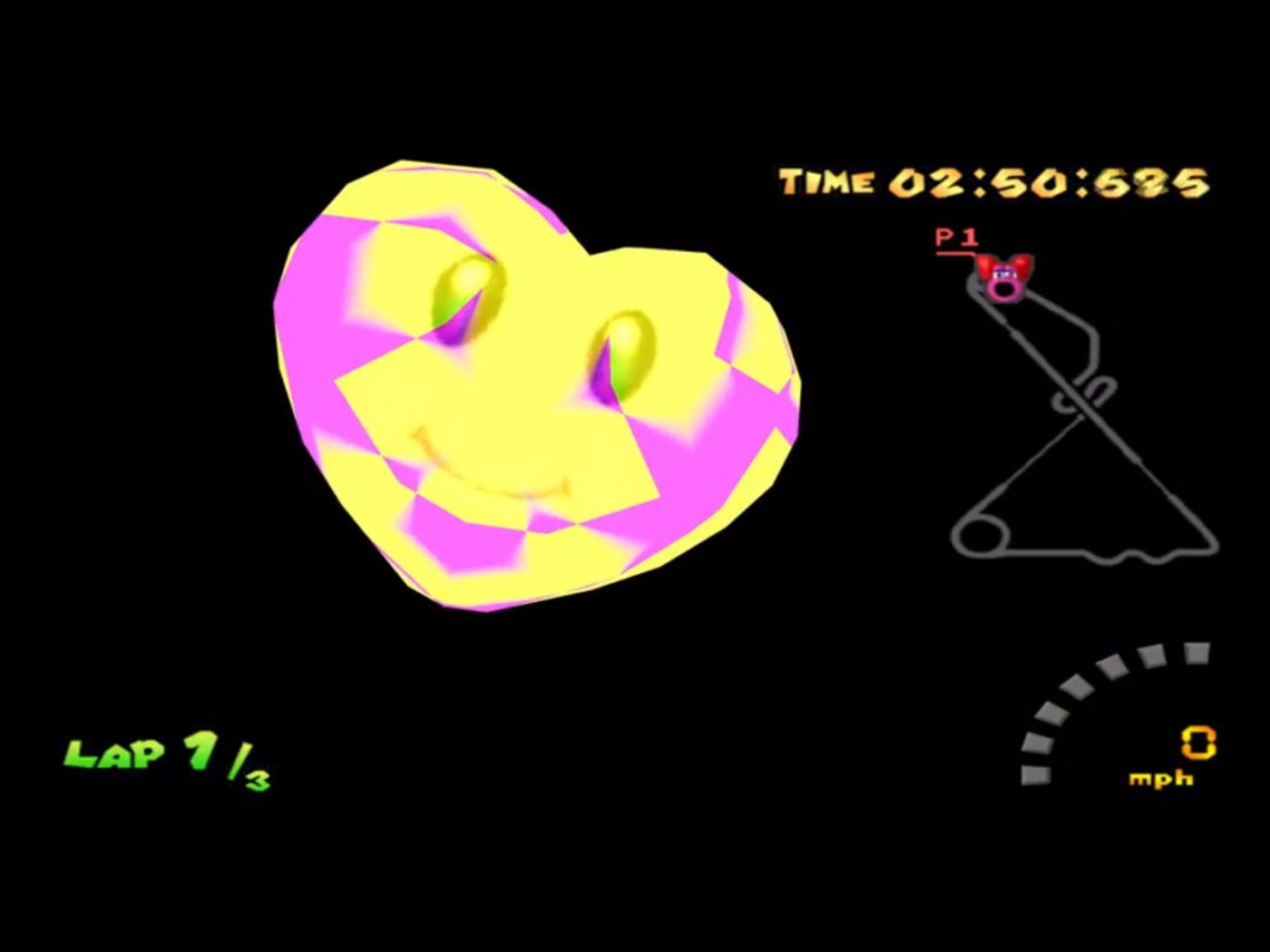
The lost heart of Rainbow Road
The misplaced heart decoration.
One of the giant item sculptures that decorate Rainbow Road, a heart, sits outside the sky backdrop where it was never meant to be seen. Its front is painted with the Red Shell’s texture and its back is plain yellow.
The floating table
An unused dining table hovers above the sea outside the Daisy Cruiser.
Snaking
Not a bug but an exploit of the drift system: by sliding left and right down a straight and releasing a mini-turbo each time, expert players keep a kart boosting almost continuously.
A thinner world in split-screen
Dry Dry Desert in split-screen, with fewer Pokeys than usual.
To hold its frame rate with several views on screen, the game removes detail: no Daisy Cruiser off Peach Beach, no Jumbotron or fire rings at Waluigi Stadium, fewer Pokeys, Goombas, boulders and dinosaurs, a shorter Wiggler Wagon and no glowing city beneath Rainbow Road. The same cut-down courses are used in LAN play, even on a full screen.
Videos
Nintendo’s 2003 trailer for the game, and Did You Know Gaming’s tour of its secrets and development stories.
Nintendo’s original trailer for the game, as preserved by a trailer archive channel.
Did You Know Gaming’s episode on Double Dash!!: facts, secrets and Easter eggs from the game and its making.
Trivia & Interesting Facts
Toadette was created for this game. Double Dash!! is her first appearance in anything.
Donkey Kong Jr. on the early character icons.Donkey Kong Jr. was designed for the game and appears on early character icons, but lost his seat to Diddy Kong. Producer Tadashi Sugiyama said Diddy was simply better known.
The developers built a conventional one-driver version of the game alongside the two-seater in case the idea failed. They called it their emergency escape hatch.
Baby Park was inspired by the short-track speed skating at the 2002 Winter Olympics and by indoor go-kart rinks in Japan.
Baby Park has no hazards at all. It does not need any.
Yoshi Circuit is the only course in the series whose layout is modelled on a playable character.
The character models were first borrowed from Super Smash Bros. Melee for the 2001 demonstration, and Diddy Kong’s final model was shared with a Mario Golf game being made at the same time.
The Spiny Shell gained its wings because it was originally Paratroopa’s special item.
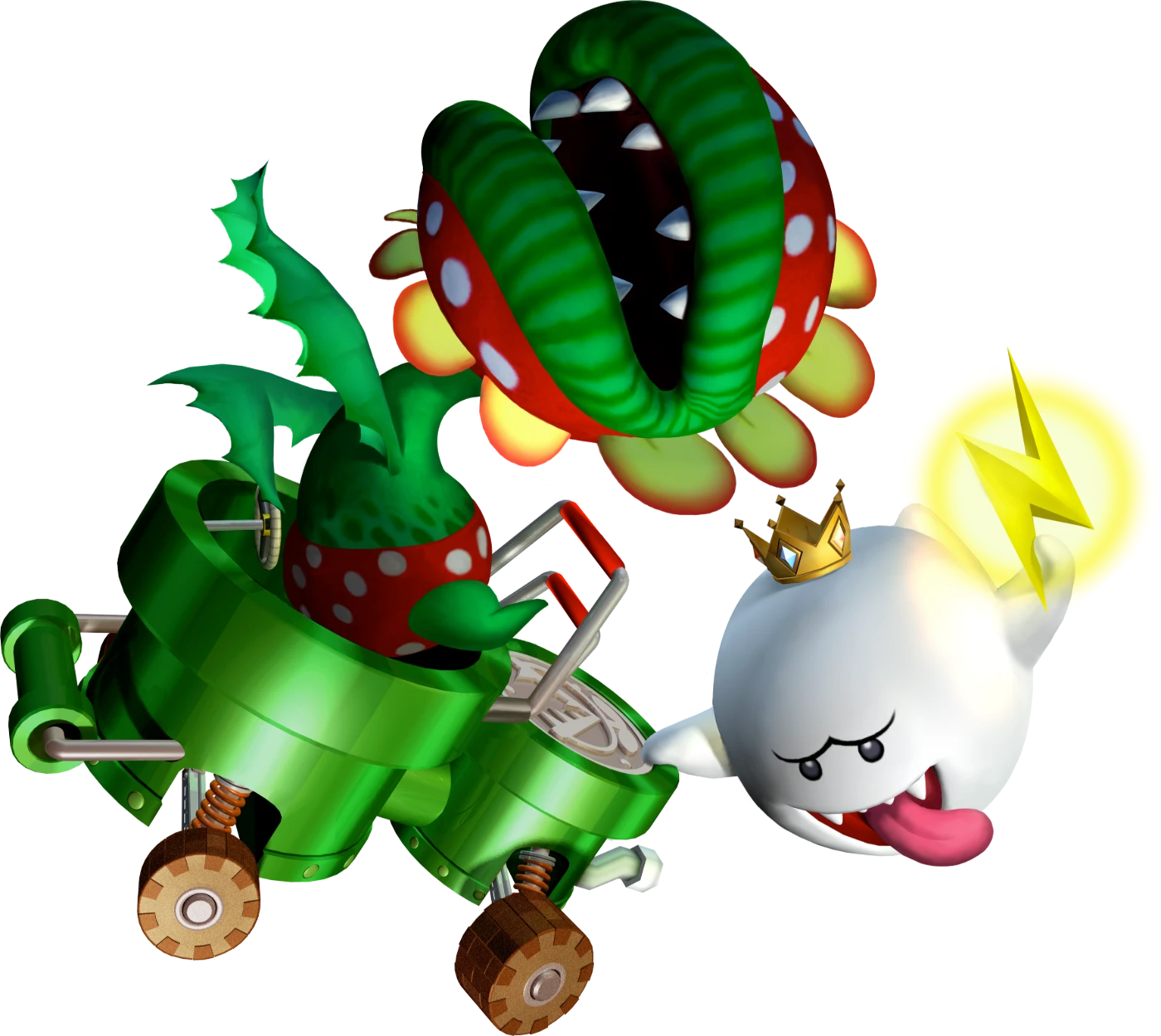
Petey Piranha and King Boo have no special item of their own. They can draw anyone else’s, apart from Luigi’s green Fireballs and Birdo’s Egg.
When the final lap starts, the music does not just speed up by a tenth: it also shifts up a semitone.
Lakitu holds his lap board on whichever side of the screen is away from the last corner before the line.
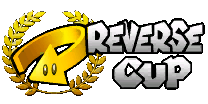
The unused Reverse Cup icon.Data on a demo disc refers to a Reverse Cup, with its own icon and upside-down trophies, apparently for racing the courses backwards. Mario Kart would not offer reverse courses until Mario Kart Tour.
An early version of Sherbet Land, called Dekoboko in the files, survives on a European demo disc.
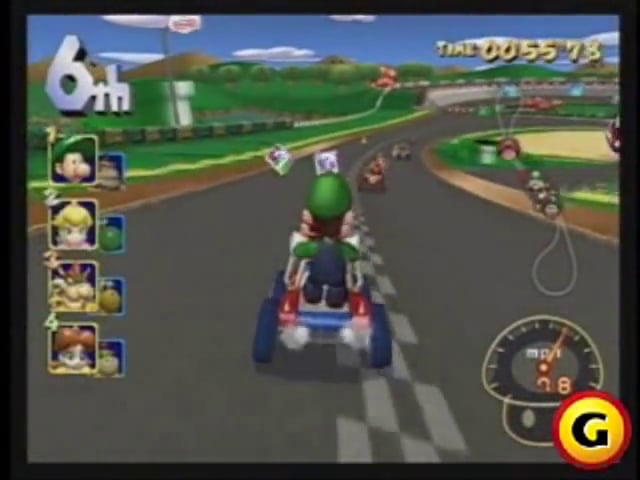
An early Luigi Circuit, with the mushroom-shaped speedometer.In the earliest screenshots the speedometer was shaped like a mushroom and the results screen looked like Mario Kart 64’s.
Trackside adverts name around forty fictional sponsors, among them Luigi Tires, Wario Pharmacy, Koopa Sport, Sunshine Parts and Moo Moo Farm.
Bowser Jr. never drives a staff ghost and Bowser never rides in the back of one.
Rainbow Road plays a glistening sound when karts drift or turn sharply, a first for the series.
The Wii can play GameCube discs, but not this game’s LAN mode: the Broadband Adapter is not compatible with it.
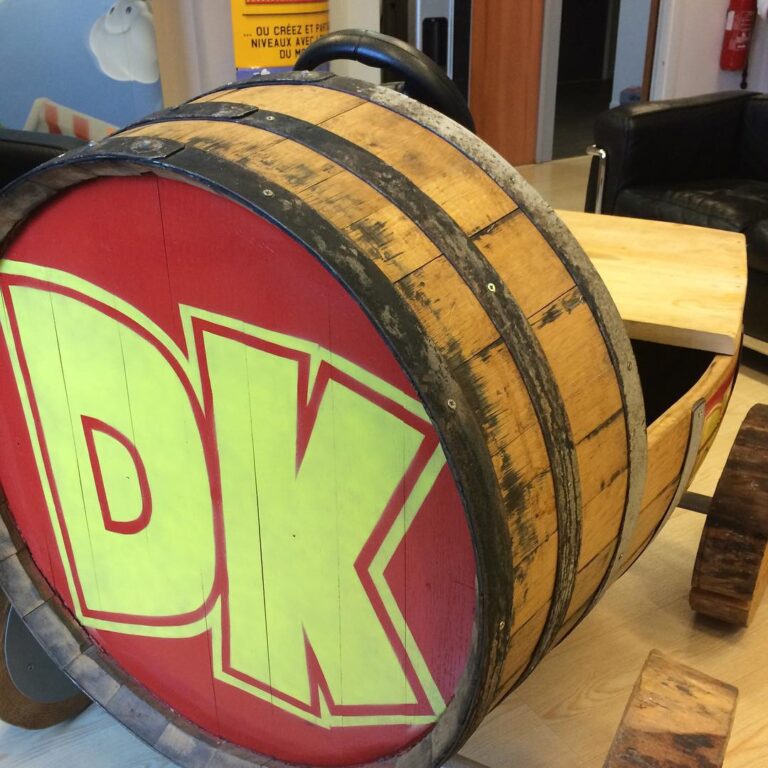
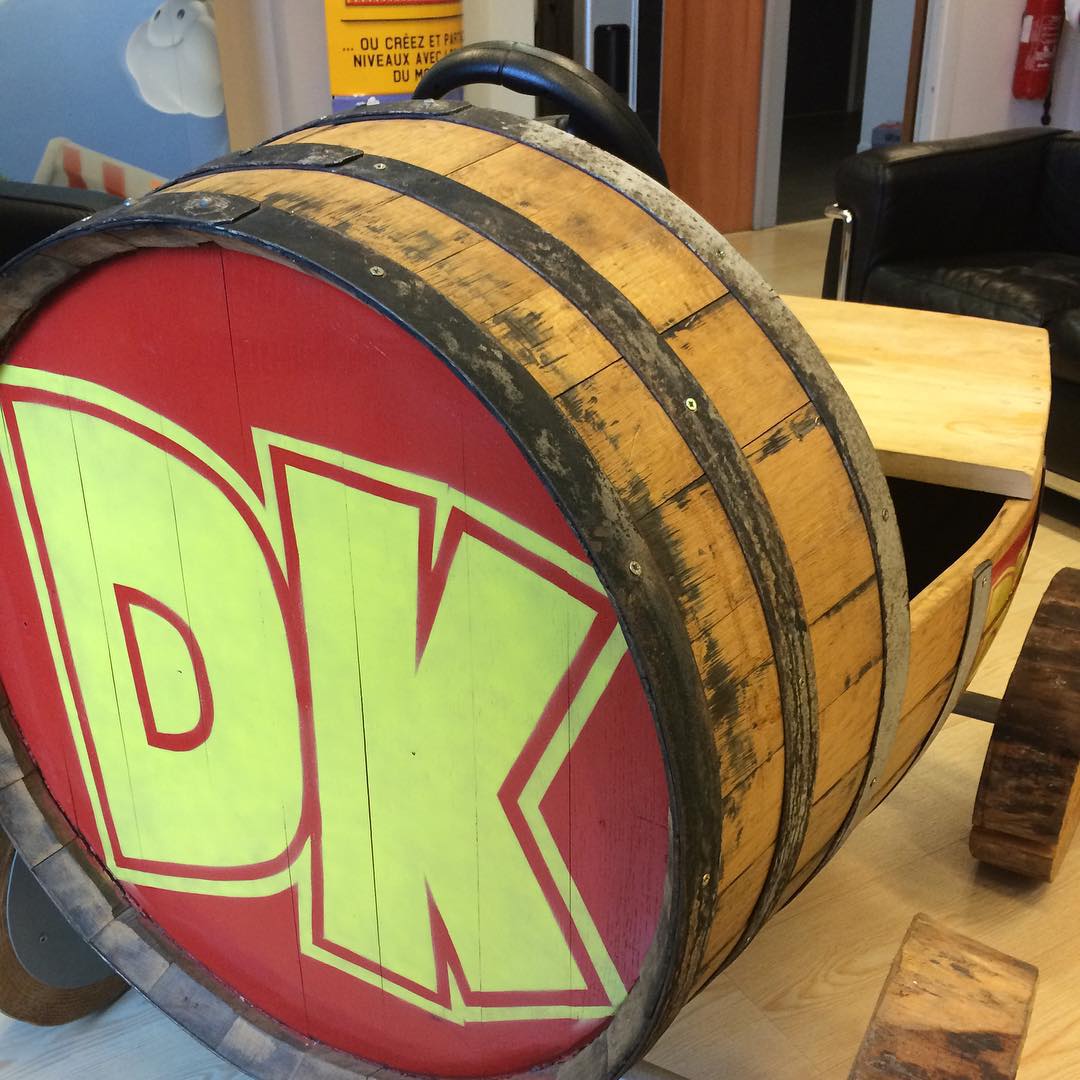
The real-life DK Jumbo built for Nintendo France.Nintendo France promoted the game with a full-size model of the DK Jumbo.
In February 2002 Shigeru Miyamoto mused to a reporter that Sonic the Hedgehog might be a driver. Nothing came of it.
Hideki Konno, who co-directed the first Mario Kart and later produced Mario Kart DS and Wii, did not work on Double Dash!!. He was busy with Luigi’s Mansion and other projects at the time.
Regional Box Art
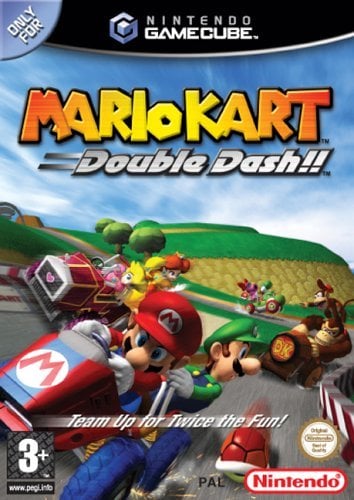
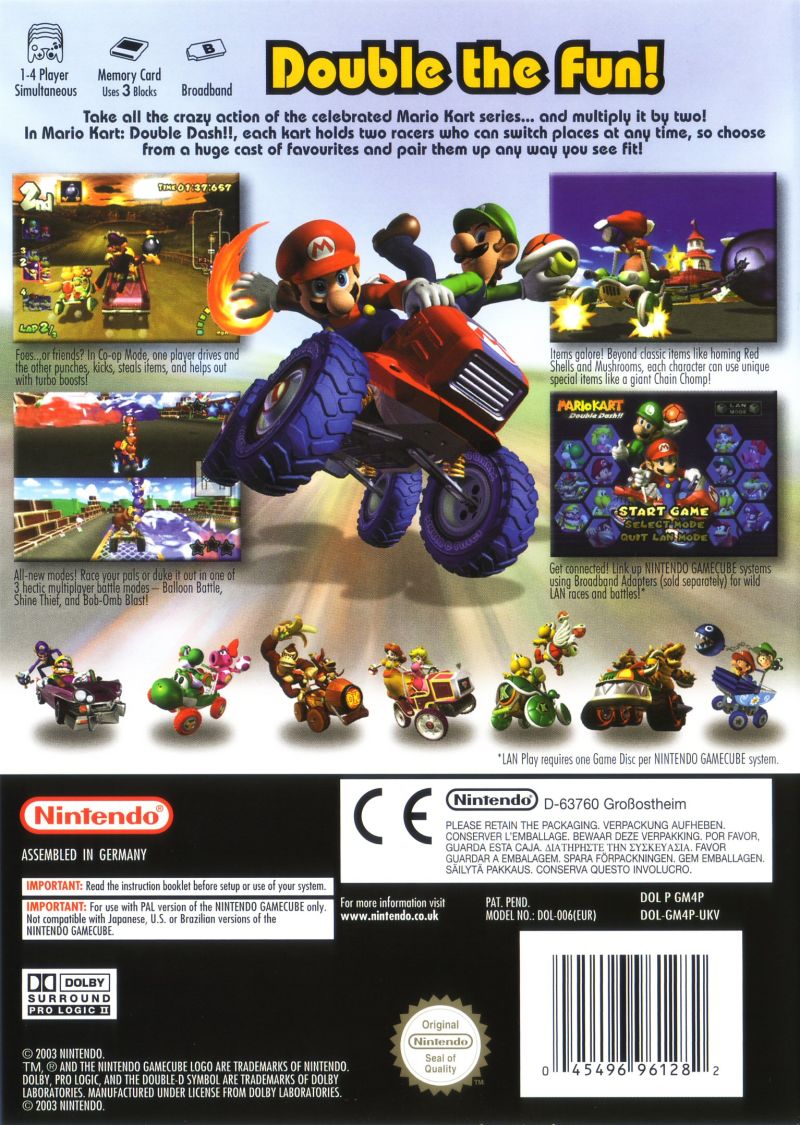
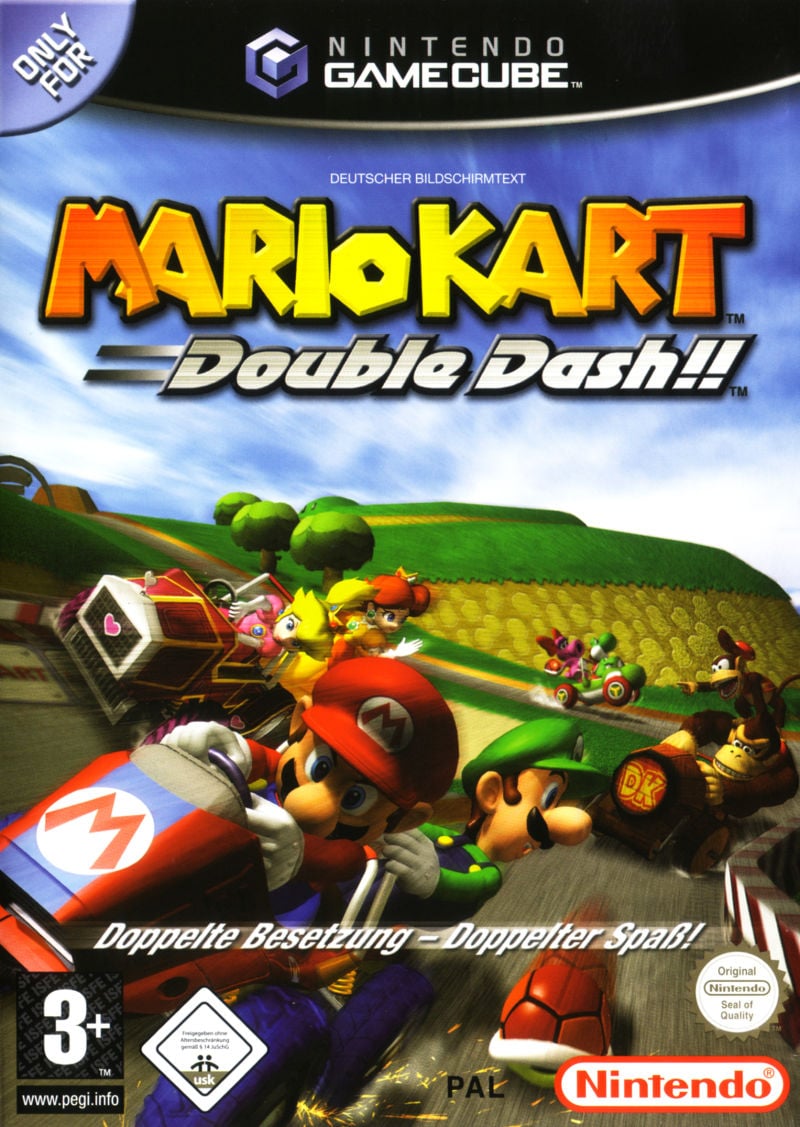
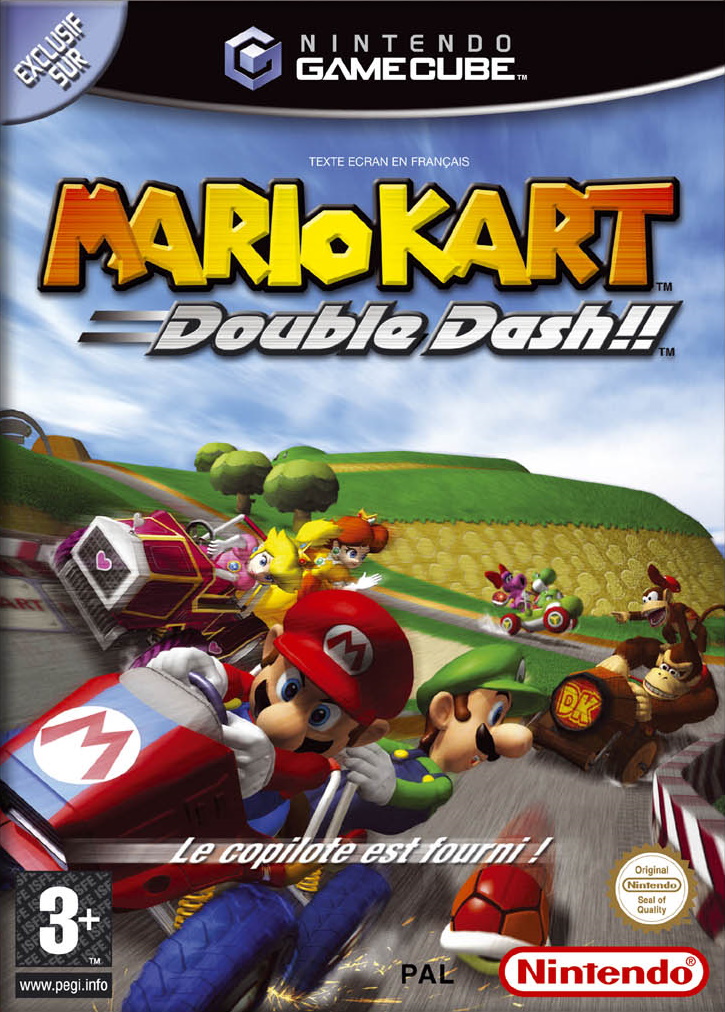
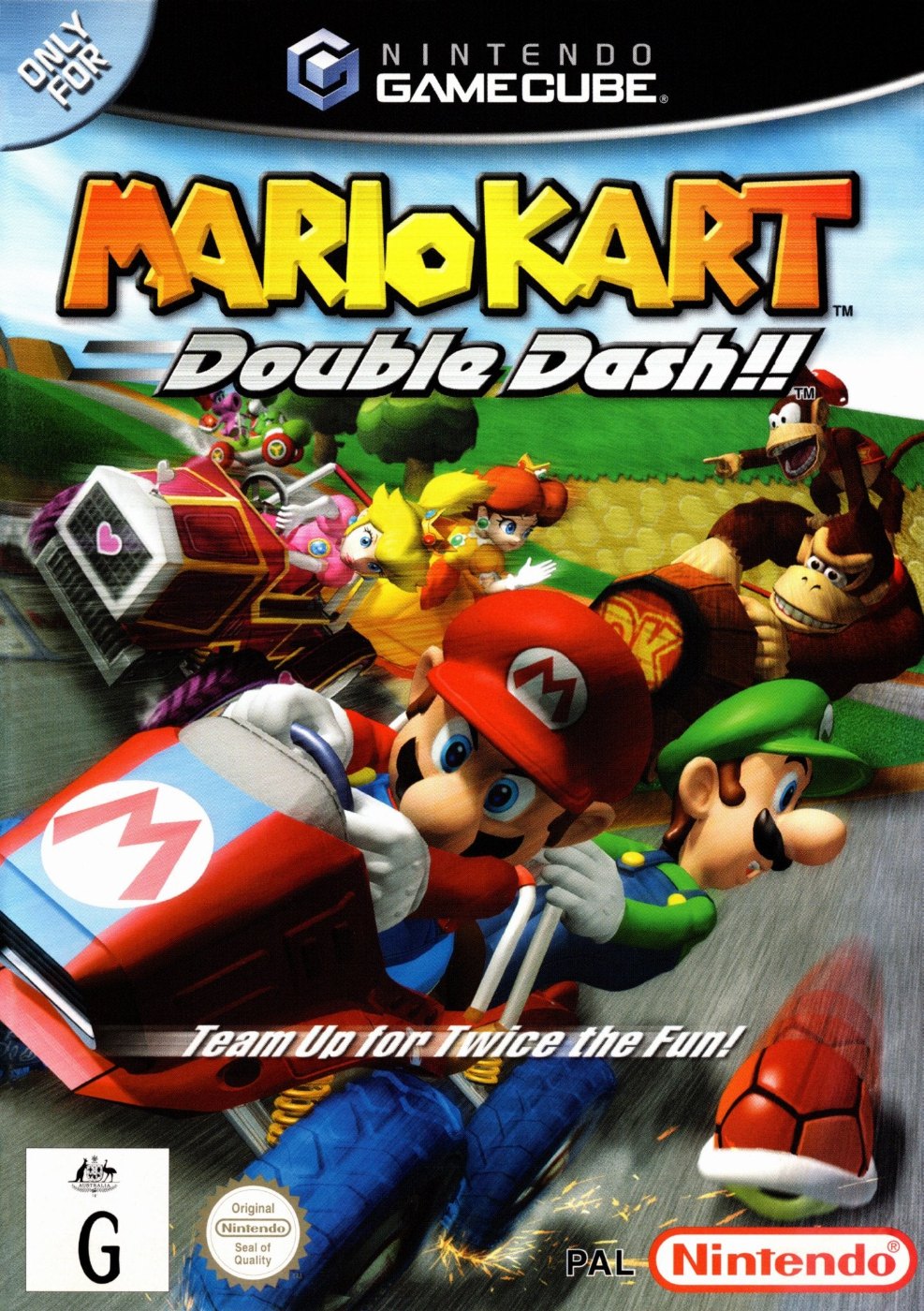
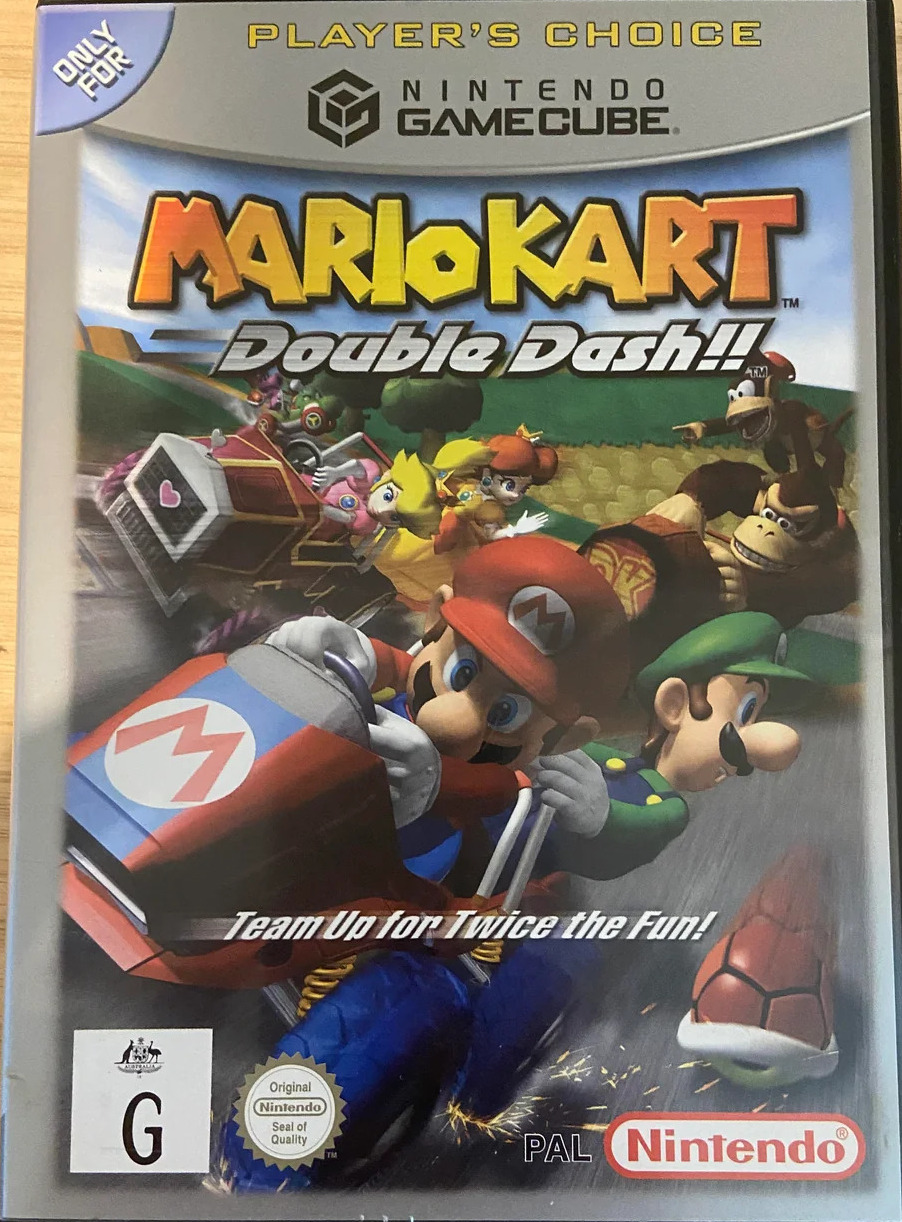
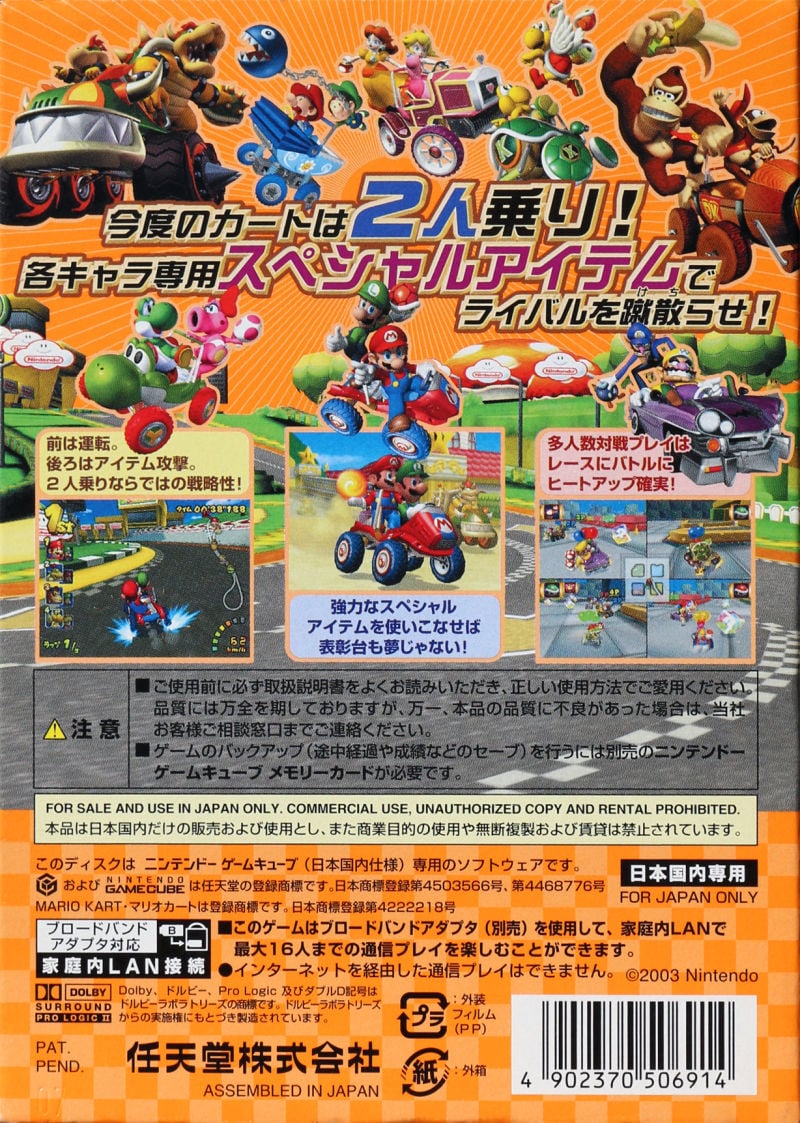
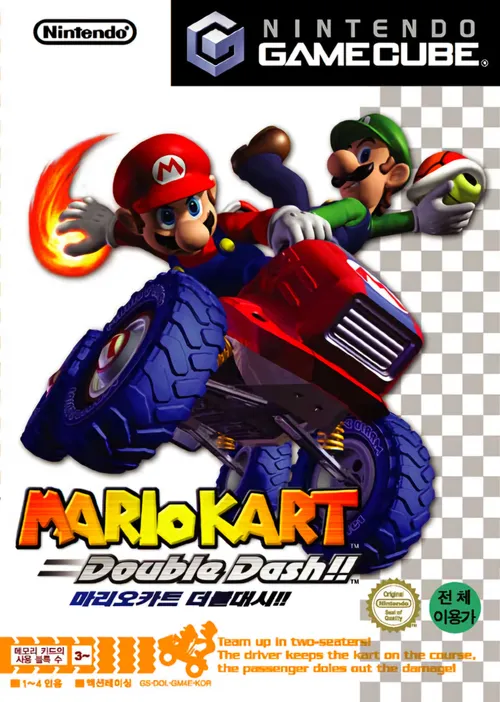
The same scene, Mario and Luigi leading the field round Yoshi Circuit, was used worldwide. What changed was the paperwork around it: bonus disc flashes, bundle stickers and age ratings.
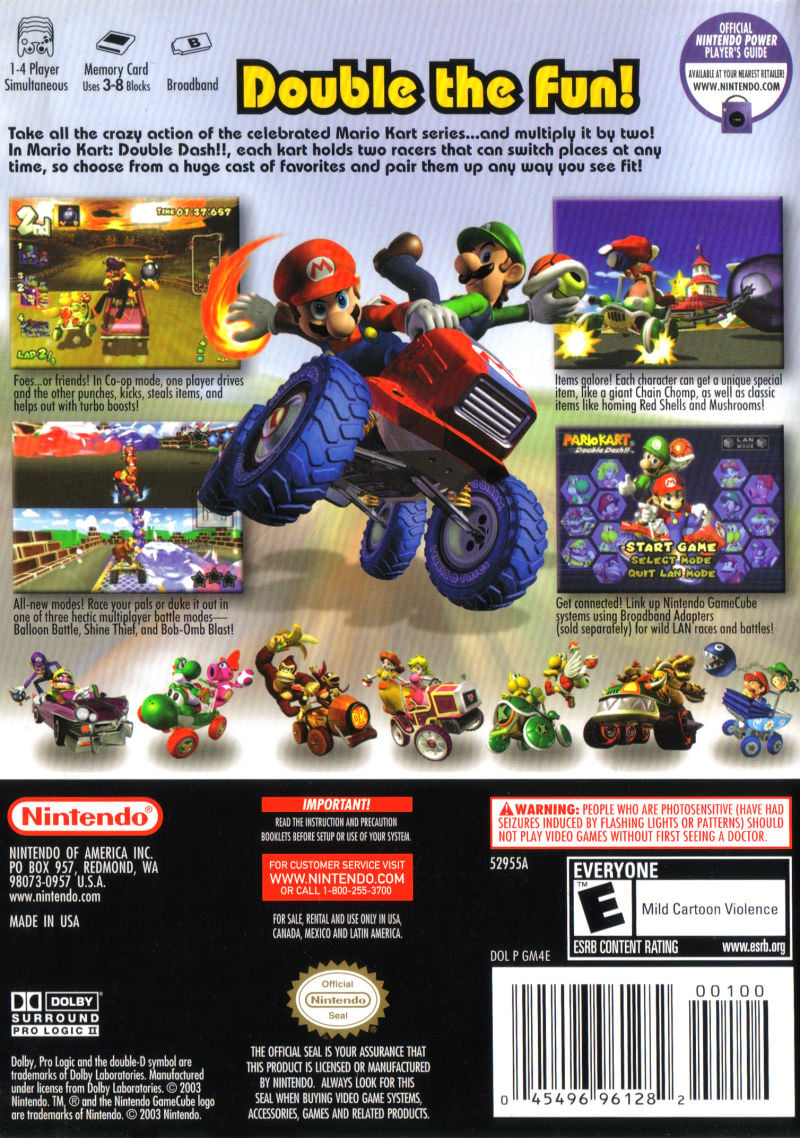
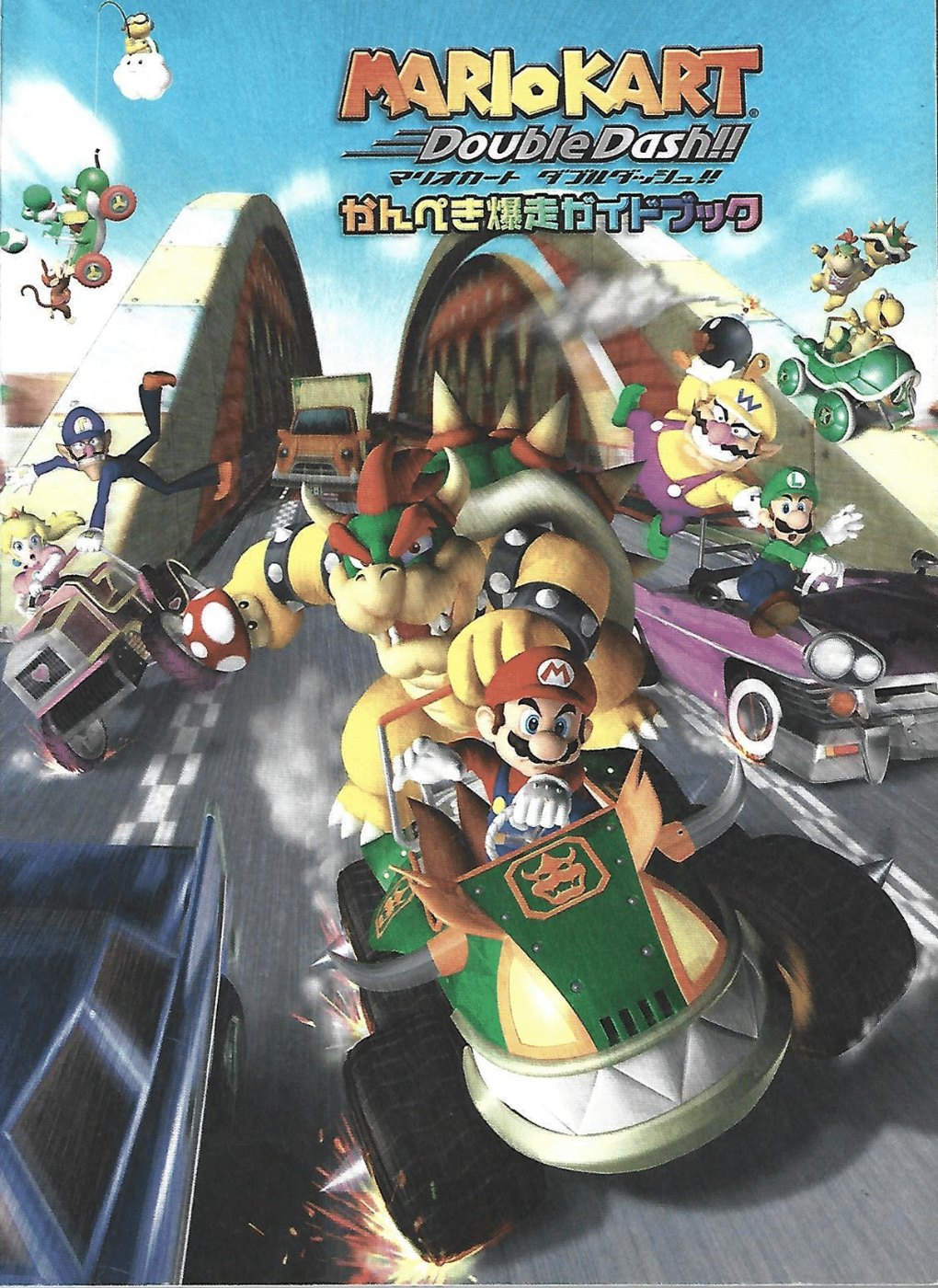
North America (2003)The standard edition.North America, backThe reverse of the case.North America (Special Edition)The two-disc pre-order edition with the bonus disc.North America, pre-releaseAn early version of the cover.CanadaThe bilingual Canadian release.Europe (2003)The standard PAL cover.Europe, backThe reverse of the European case.Europe (Limited Edition Pak)The copy packed with the console and the Zelda Collector’s Edition disc.GermanyGerman-language cover.FranceFrench-language cover.Australasia (2003)The Australian and New Zealand release.Australasia (Player’s Choice)The only budget reissue the game ever received.Japan (2003)The Japanese cover.Japan, backThe reverse of the Japanese case.South Korea (2003)Released on 20 December 2003.
Screenshots
More from the sixteen courses, and one very large kart.
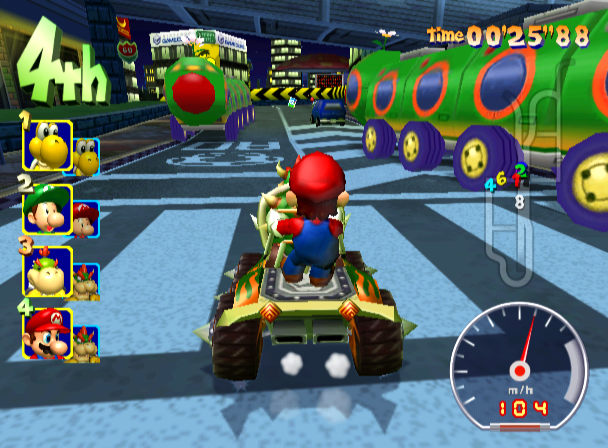
Yoshi and Donkey Kong round a curve on Luigi Circuit.Peach’s Castle seen from Mushroom Bridge.The Daisy Cruiser’s funnel doubles as a cannon.Mario and Luigi take the pink shortcut in Mushroom City.Bowser and Bowser Jr. downtown.Yoshi and Birdo on Yoshi Circuit.A Yoshi helicopter over Yoshi Circuit.The swaying bridge at the foot of DK Mountain.The ramp over the pit in Wario Colosseum.Into Bowser’s Castle.Mario and Peach line up for a Time Trial on Rainbow Road.Mario and Peach aboard the Parade Kart.
Artwork & Media Gallery
Official artwork, logos, icons, course maps, pre-release images and adverts from Mario Kart: Double Dash!!. Select any image to see it full size; SLB’s box art and screenshot galleries have more.
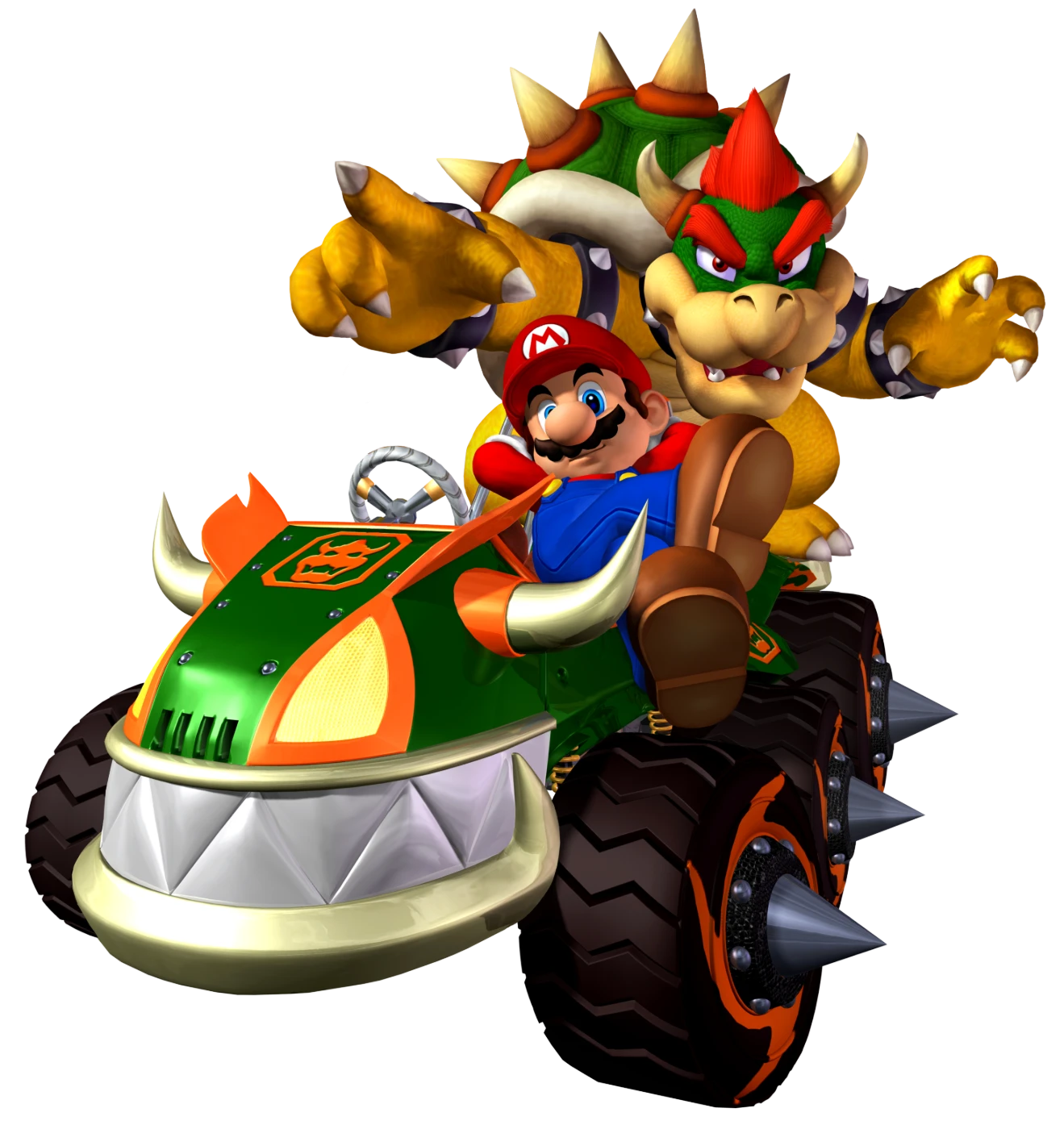
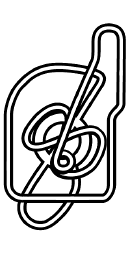
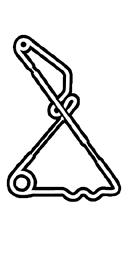
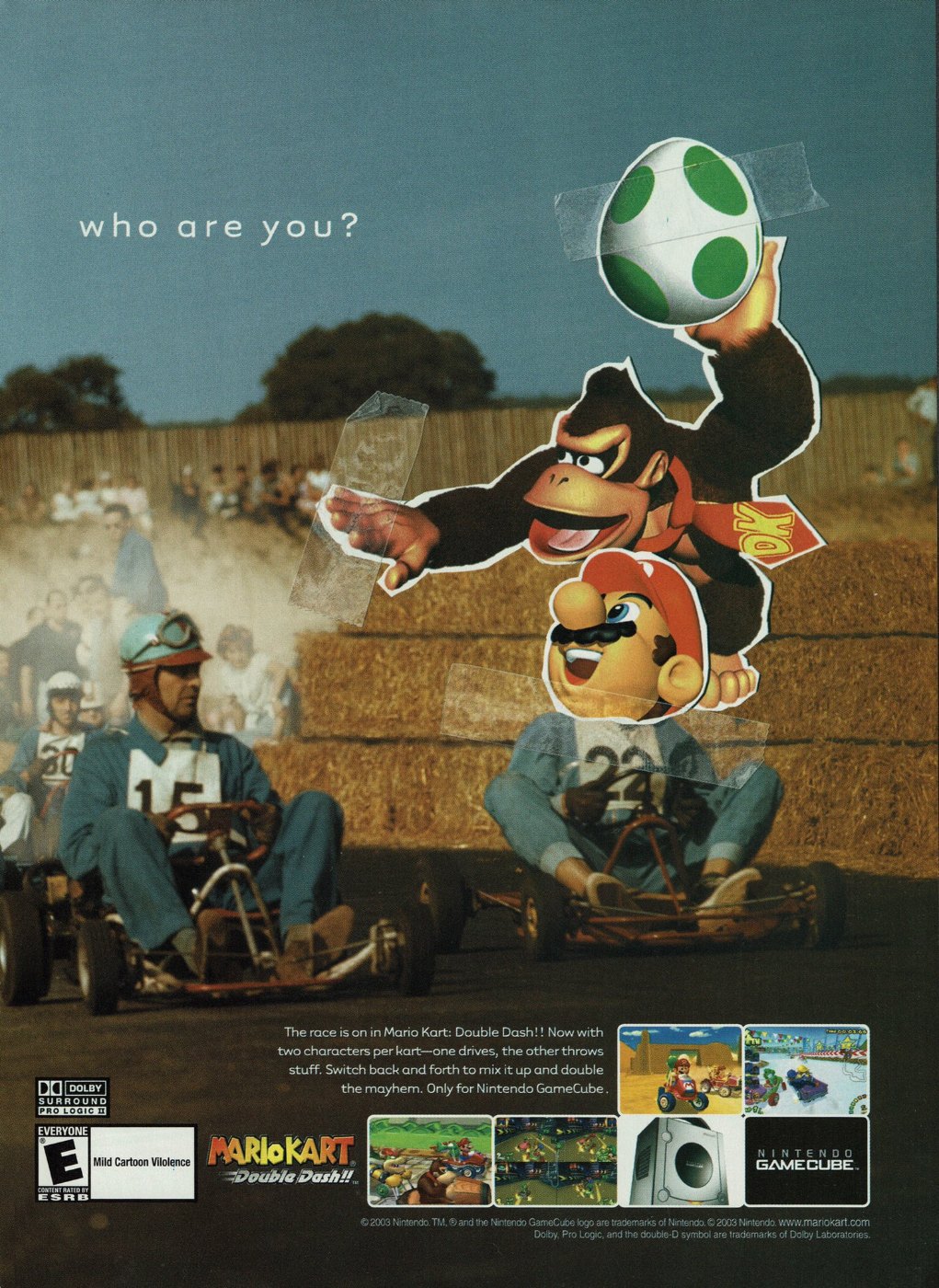
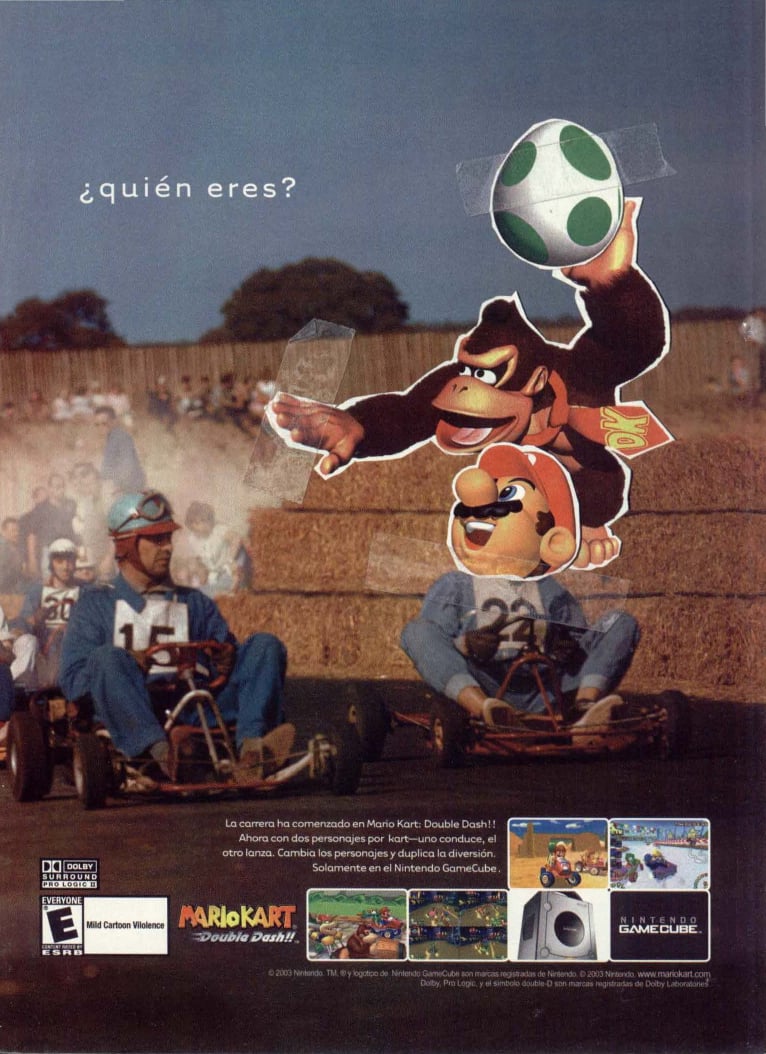
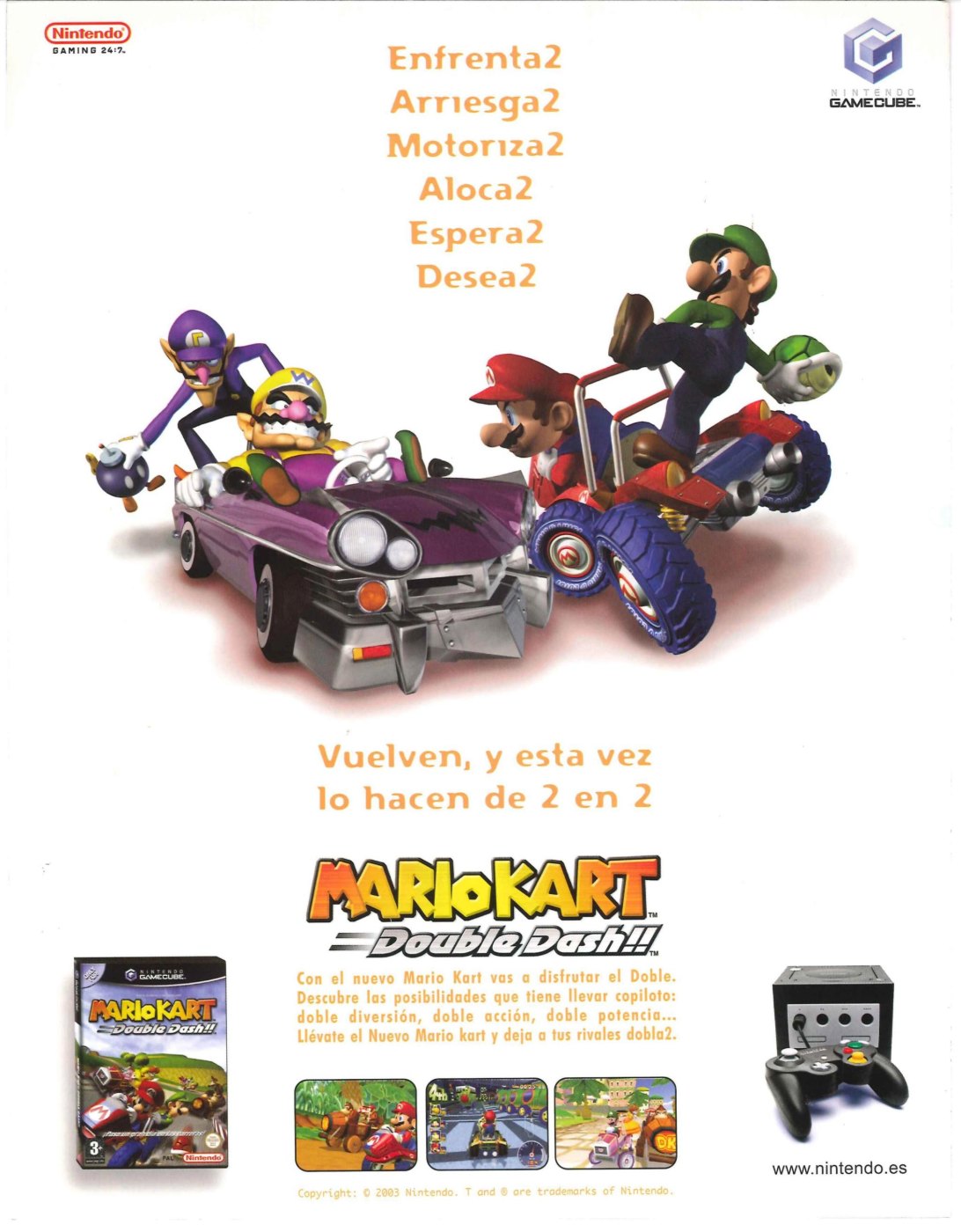
Mario and Luigi.Peach and Daisy.Yoshi and Birdo.Baby Mario and Baby Luigi.Koopa and Paratroopa.Donkey Kong and Diddy Kong.Bowser and Bowser Jr.Wario and Waluigi.Toad and Toadette.Petey Piranha and King Boo.A mixed team: Mario and Bowser aboard the Koopa King.Official artwork of DK Mountain.Official artwork of Mushroom Bridge.Artwork for Bob-omb Blast.Lakitu, the race official.The international logo.The Japanese logo.The pre-release logo.Mushroom Cup.Flower Cup.Star Cup.Special Cup.All-Cup Tour.Balloon Battle icon.Shine Thief icon.Bob-omb Blast icon.Course map: Baby Park.Course map: Yoshi Circuit, unmistakably Yoshi.Course map: Wario Colosseum.Course map: Rainbow Road.The kart compatibility chart from the instruction booklet.Delfino Fruits, one of the game’s many trackside sponsors.The original 2001 title: Mario Kart for Nintendo GameCube.Pre-release Mushroom City, with two Wiggler Wagons.An example of the Japanese Time Trial contest code.The bonus disc’s title screen.The bonus disc’s main menu.A European console bundle in platinum.Prima’s strategy guide.North American print advert.Mexican print advert.Spanish print advert.The memory card save icon.
Legacy & Re-releases
Double Dash!! is the Mario Kart that Nintendo has never repeated and never reissued, which goes a long way to explaining the affection it commands.
Every release
Nintendo GameCube (Japan)7 November 2003The first release.
Nintendo GameCube (Europe and Australia)14 November 2003Launched alongside the Limited Edition Pak, a console bundle that added The Legend of Zelda: Collector’s Edition.
Nintendo GameCube (North America)17 November 2003Pre-orders received the two-disc Special Edition with the bonus disc.
Nintendo GameCube (South Korea)20 December 2003The Korean release.
Player’s Choice (Australia and New Zealand)Date unknownThe only budget reissue, and the only re-release of any kind.
Later consolesNeverGameCube discs run on the original Wii, without LAN play, but at the time of writing the game has never been offered on a Virtual Console or subscription service.
What Mario Kart kept
The second seat went, and with it the special items, co-op karts and seat-swapping. Nearly everything else stayed. Mario Kart DS and every game after it kept the idea of a kart for each character, the points for all eight finishers and the no-retry Grand Prix. The winged, exploding Spiny Shell became the series standard. Shine Thief became Shine Runners. And the eleven newcomers stayed on the guest list: it is hard now to imagine a Mario Kart without Daisy, Waluigi, Bowser Jr. or Toadette.
Its courses have been mined steadily. Four went into Mario Kart DS, four into Mario Kart Wii, two into Mario Kart 7, four into Mario Kart 8, and more into Mario Kart Tour, the Booster Course Pass and Mario Kart World. Baby Park in particular has become a party piece, rebuilt for three later games.
Its place in the series
In 2003 the complaint was that Double Dash!! had not changed enough. Twenty years on it looks like the most experimental Mario Kart of them all: the only one with teams, the only one whose roster matters to your items, and the last made before Hideki Konno’s return turned the series towards online play and retro cups. It sits between the handheld experiment of Super Circuit and the template that Mario Kart DS would set.
Its staff went on to shape what followed. Yasuyuki Oyagi, one of its three directors, directed later entries in the series. And when shmuplations published the old Nintendo Dream interview in 2025, the story of the “escape hatch” version was picked up by news sites around the world. People still want to know how this one happened.
Reviews & Sales
Sales
Double Dash!! was the hit the GameCube needed for Christmas 2003. According to the sources collected by Wikipedia, it was the best-selling game in the United States in November 2003 on NPD’s chart and passed a million copies within seven weeks, at the time the fastest start of any GameCube game. American sales reached 2.2 million by mid-2006 and 3.8 million in all; Japan accounted for a little over 800,000; and in Britain it earned a Gold sales award from ELSPA.
Worldwide totals differ slightly from source to source. Joystiq reported “nearly seven million” in February 2009, Wikipedia’s list of best-selling GameCube games gives 6.88 million, and Guinness World Records, citing VGChartz, credits it with 6.95 million as of June 2014 and names it the best-selling racing game on the system. On any of those figures it is the GameCube’s number two, behind Super Smash Bros. Melee and ahead of Super Mario Sunshine.
~7mcopies sold worldwide
2ndbest-selling GameCube game
3.8min the United States
802,000+in Japan
Reviews
Scores are those listed by Wikipedia and Super Mario Wiki; dates are given where the sources supply them.
Electronic Gaming MonthlyUS · three reviewers
10 / 10 / 9.5
Nintendo PowerUS · issue 175, January 2004
5/5
X-PlayUS television · Skyler Miller · 15 December 2003
5/5
GameZoneLouis Bedigian · 17 November 2003
9.7/10
1Up.comUS
9.5/10
GamesRadarMartin Kitts · 1 December 2003
95%
Game InformerUS · December 2003
9.25/10
GameSpyBryn Williams · 1 November 2003
4.5/5
EurogamerTom Bramwell · 3 November 2003
9/10
Nintendo World ReportUS
8.5/10
IGNFran Mirabella III · 11 November 2003
7.9/10
GameSpotRyan Davis · 13 November 2003
7.9/10
PALGNAustralia · Chris Sell · 30 July 2004
7.5/10
EdgeUK
5/10
Nintendo LifeSpencer McIlvaine · retrospective · 2009
9/10
MetacriticAverage of 58 reviews
87/100
GameRankingsAverage of 73 reviews
87.20%
The split in the scores tells the story. Reviewers who came for the multiplayer were delighted; Eurogamer’s Tom Bramwell would not put it above the original Super Mario Kart but wrote that “it is the closest anyone’s ever come, and one of the finest pieces of electronic entertainment ever developed.” Those hoping for a reinvention were cooler. IGN’s Fran Mirabella praised the multiplayer but found the game too close to Mario Kart 64 and its potential under-used, and GameSpot gave the same 7.9.
Edge was harsher still, awarding five out of ten and complaining that Mario Kart was “not being a racing game any more”. Time has been kinder: the UK’s Official Nintendo Magazine placed it 63rd in its 100 greatest Nintendo games in 2009.
Honours
ITV Game Stars · 2004Multiplayer GameWon at the British television awards.
Video Software Dealers Association · 2004GameCube Video Game of the YearAnnounced in July 2004.
7th Annual Interactive Achievement Awards · 2004Console Racing Game of the Year (nominee)Nominated by the Academy of Interactive Arts & Sciences.
Official Nintendo Magazine · 2009No. 63, 100 Greatest Nintendo GamesIn the UK magazine’s all-time ranking.
Guinness World RecordsBest-selling racing videogame (GameCube)With 6.95 million copies as of 30 June 2014, according to VGChartz.
SLB User Reviews
Mario Kart: Double Dash!! has yet to receive a community review on Super Luigi Bros.
If you’ve played Mario Kart: Double Dash!! and would like to submit a review, please get in touch.
More from the Super Luigi Bros Guide
These picture lists come from the earlier Super Luigi Bros guide to Mario Kart: Double Dash!! and are kept here in full.
Karts
Twenty-one karts — one bespoke design per character, plus the unlockable Parade Kart. Each kart has visual styling matching its driver, and three star-rated stats: Speed, Acceleration and Weight (max 5 stars each).
Karts are split into three weight classes — Light, Medium and Heavy — with general characteristics:
Light karts — best acceleration, weakest top speed, easily knocked aside. Wider turning radius. Good for technical drivers who exploit short-cuts.
Medium karts — balanced stats. The all-rounders.
Heavy karts — highest top speed and ramming power, slow acceleration. Wide turning, big collisions.
The combined weight of both characters determines available karts. A Light + Light pair can use Light karts; a Medium + Medium pair gets Medium karts; mix any two classes and you get the higher of the two. Some standout designs:
Heart Coach (Peach & Daisy)Koopa Dasher (Koopa & Paratroopa)Koopa King (Bowser)Wario Car (Wario)Parade Kart (Unlockable / All-Cup Tour)
The Parade Kart is unique — it is unlocked by winning the All Cup Tour at 150cc, can be driven by any character, and has unusually high stats. It’s the closest thing to a single-cart goal at endgame.
Cups & Courses
Sixteen all-new race courses across four cups, plus the secret All Cup Tour that strings every race together back to back. Each cup unlocks at the next engine class as you progress through the game.
Cup
Courses
Theme
Mushroom Cup
Luigi Circuit → Peach Beach → Baby Park → Dry Dry Desert
Beginner-friendly. Baby Park is a 7-lap oval — the shortest, most chaotic course in series history.
The endgame circuits — a giant Wario stadium, dinosaur-laden jungle, the Koopa King’s lava-strewn keep, and the iconic Rainbow Road.
All Cup Tour
All 16 in random order
Endurance event. Win all 16 in a row.
Course Lore Highlights
Baby Park — modelled on a Mario-themed amusement park, with rollercoasters and balloon vendors visible in the background. 7 laps with no shortcuts — pure item warfare. The shortest race in any Mario Kart.
Peach Beach — on the Isle Delfino tropical paradise (Super Mario Sunshine’s setting). Cataquacks roam the beach and will toss you into the air.
Daisy Cruiser — a luxury liner with shifting decks, a fountain you can race around, and dining-room tables to crash through.
Waluigi Stadium — massive jumps over fire pits, with a Waluigi-shaped grand entrance. The first-ever Waluigi-themed course in the franchise.
Yoshi Circuit — from above, the track is shaped exactly like the silhouette of Yoshi.
DK Mountain — you launch up the mountain via a giant Diddy Kong Racing-style cannon, then race down the volcanic slope dodging boulders.
Wario Colosseum — uniquely only 2 laps due to its enormous length.
Dino Dino Jungle — a giant brontosaurus walks through the track during the race, blocking parts of the road.
Rainbow Road — the iconic neon ribbon, here with massive jumps and shortcut potential. Soundtrack is widely considered one of the best Rainbow Roads ever.
Course Artwork
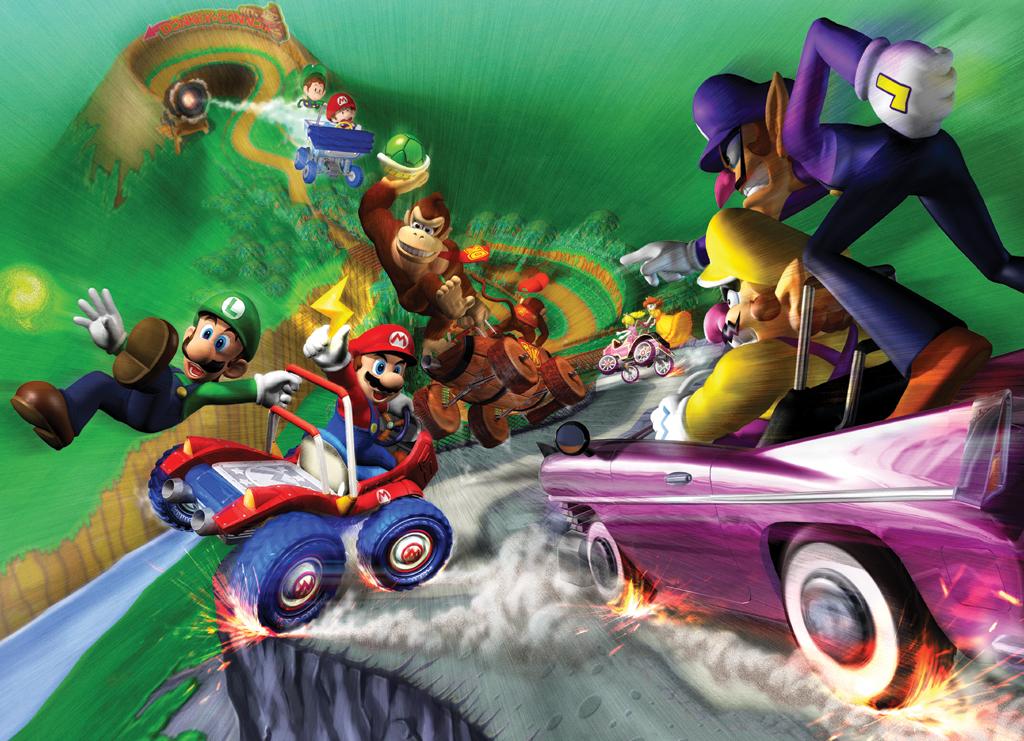
Default teams racing on Luigi CircuitMixed teams racing on Mushroom BridgeDefault teams racing on DK Mountain
Reference / Information
Sub-pages, guides and the official manual for Mario Kart: Double Dash!!
To provide the best experiences, we use technologies like cookies to store and/or access device information. Consenting to these technologies will allow us to process data such as browsing behavior or unique IDs on this site. Not consenting or withdrawing consent, may adversely affect certain features and functions.
Functional
Always active
The technical storage or access is strictly necessary for the legitimate purpose of enabling the use of a specific service explicitly requested by the subscriber or user, or for the sole purpose of carrying out the transmission of a communication over an electronic communications network.
Preferences
The technical storage or access is necessary for the legitimate purpose of storing preferences that are not requested by the subscriber or user.
Statistics
The technical storage or access that is used exclusively for statistical purposes.The technical storage or access that is used exclusively for anonymous statistical purposes. Without a subpoena, voluntary compliance on the part of your Internet Service Provider, or additional records from a third party, information stored or retrieved for this purpose alone cannot usually be used to identify you.
Marketing
The technical storage or access is required to create user profiles to send advertising, or to track the user on a website or across several websites for similar marketing purposes.


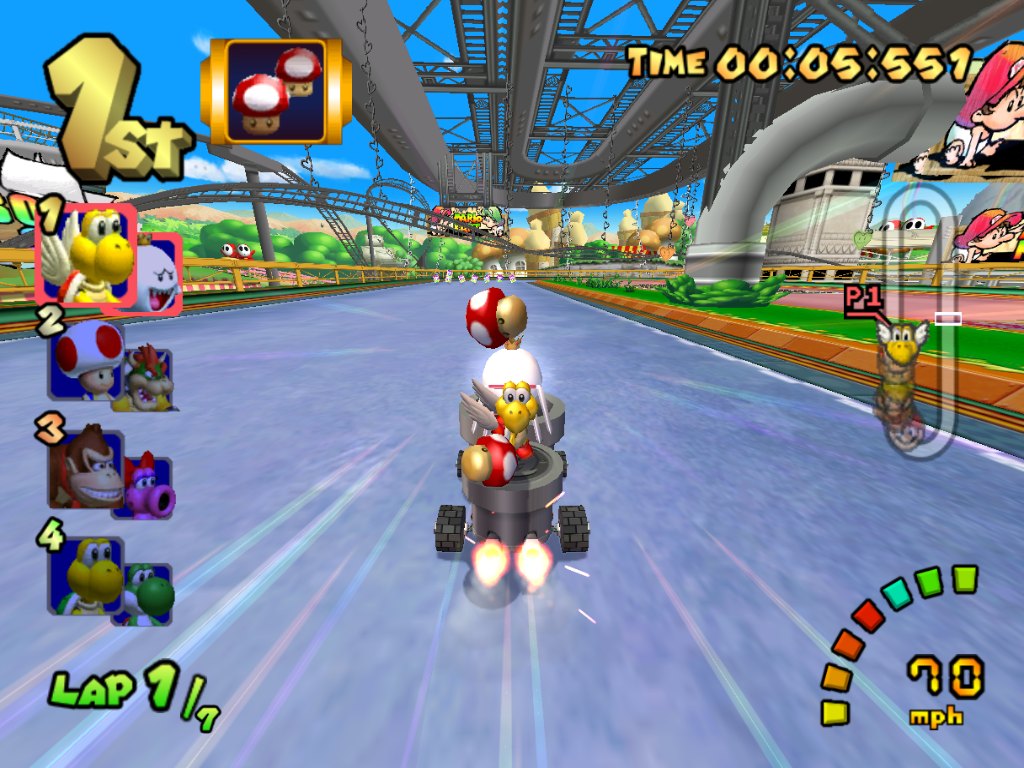
 Luigi CircuitMushroom Cup · new · 3 lapsA pinched oval where the two halves of the lap run side by side, guarded by a Chain Chomp. Remade for Mario Kart DS.
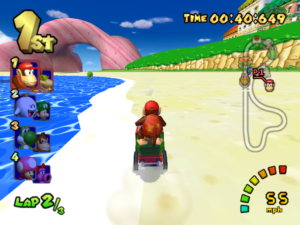 Peach BeachMushroom Cup · new · 3 lapsA Sunshine-flavoured resort with a tidal beach and kart-flipping Cataquacks. Back in Mario Kart Wii and Mario Kart World.
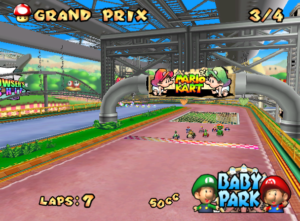 Baby ParkMushroom Cup · new · 7 lapsA tiny fairground oval: the shortest course and the most laps in the series. Remade for Mario Kart DS, Mario Kart 8 and Tour.
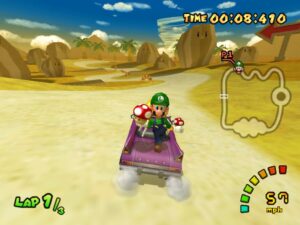 Dry Dry DesertMushroom Cup · new · 3 lapsPyramids, Pokeys, a tornado and a man-eating plant in a sand pit. Returned in Mario Kart 8.
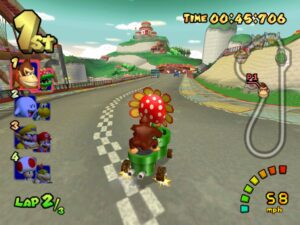 Mushroom BridgeFlower Cup · new · 3 lapsA coast road busy with cars, buses, bomb-cars and the Wiggler Wagon. Remade for Mario Kart DS and Tour.
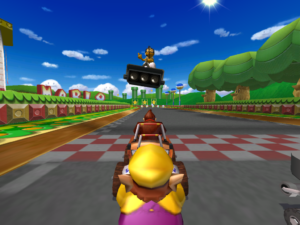 Mario CircuitFlower Cup · new · 3 lapsRound Peach’s Castle past a Chain Chomp, Piranha Plants and Goombas. Seen again in the credits; remade for Mario Kart Wii.
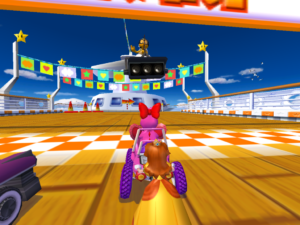 Daisy CruiserFlower Cup · new · 3 lapsUp on deck, round the pool, through the dining room and into the hold of a liner. Back in Mario Kart 7, Tour and Mario Kart 8 Deluxe.
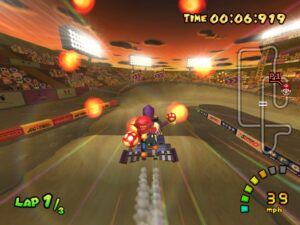 Waluigi StadiumFlower Cup · new · 3 lapsA stunt arena of fire rings, mud and wooden Piranha Plants. Remade for Mario Kart Wii, Tour and Mario Kart 8 Deluxe.
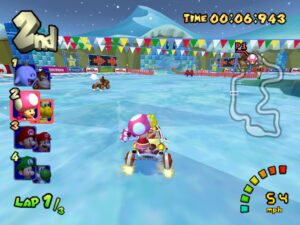 Sherbet LandStar Cup · new · 3 lapsSkating Shy Guys on the rink, Freezies on the ice field. Returned in Mario Kart 8.
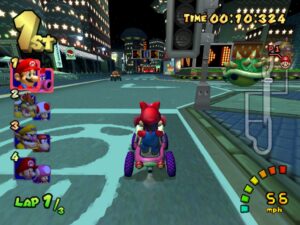 Mushroom CityStar Cup · new · 3 lapsA night-time city of branching streets and heavy traffic. Never remade.
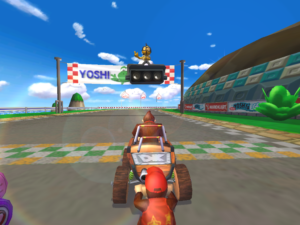 Yoshi CircuitStar Cup · new · 3 lapsAn island circuit in the shape of Yoshi, the only course in the series modelled on a playable character. Back in Mario Kart DS, Mario Kart 8 and Tour.
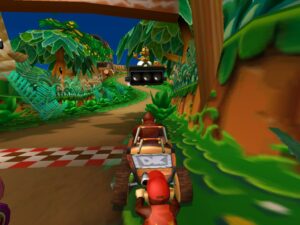 DK MountainStar Cup · new · 3 lapsA cannon ride to the top of a volcano and a hair-raising descent. Remade for Mario Kart Wii, Tour and Mario Kart 8 Deluxe.
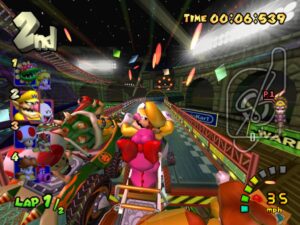 Wario ColosseumSpecial Cup · new · 2 lapsA vast steel coaster, the longest course in the game. Never remade.
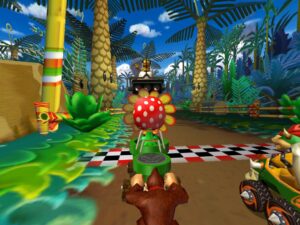 Dino Dino JungleSpecial Cup · new · 3 lapsDinosaurs, geysers and rickety bridges. Remade for Mario Kart 7, Tour and Mario Kart World.
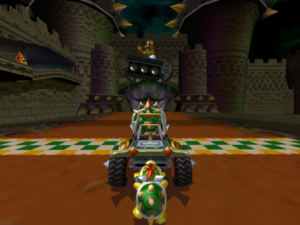 Bowser’s CastleSpecial Cup · new · 3 lapsThwomps, lava and a statue that breathes fire. Never remade.
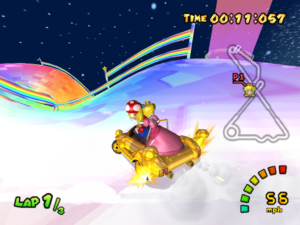 Rainbow RoadSpecial Cup · new · 3 lapsA sky-high ribbon above a glowing city, with a pipe that fires karts to its summit. Never remade.
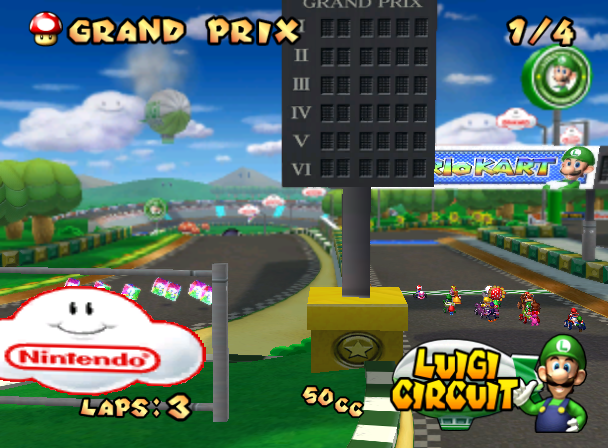
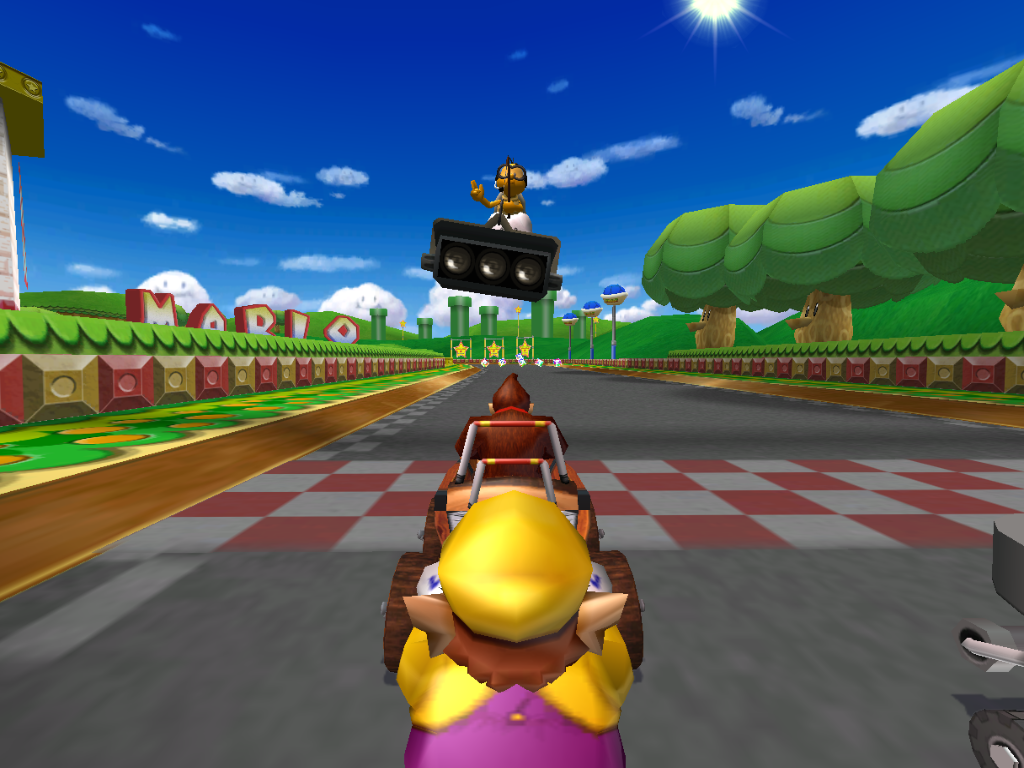
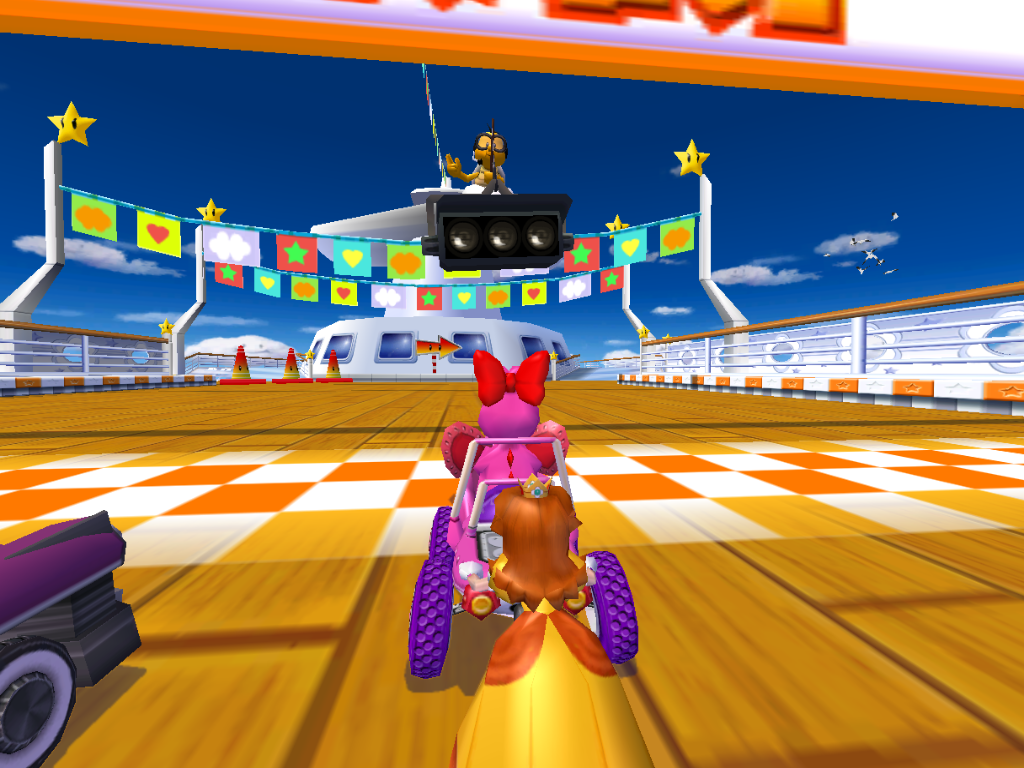
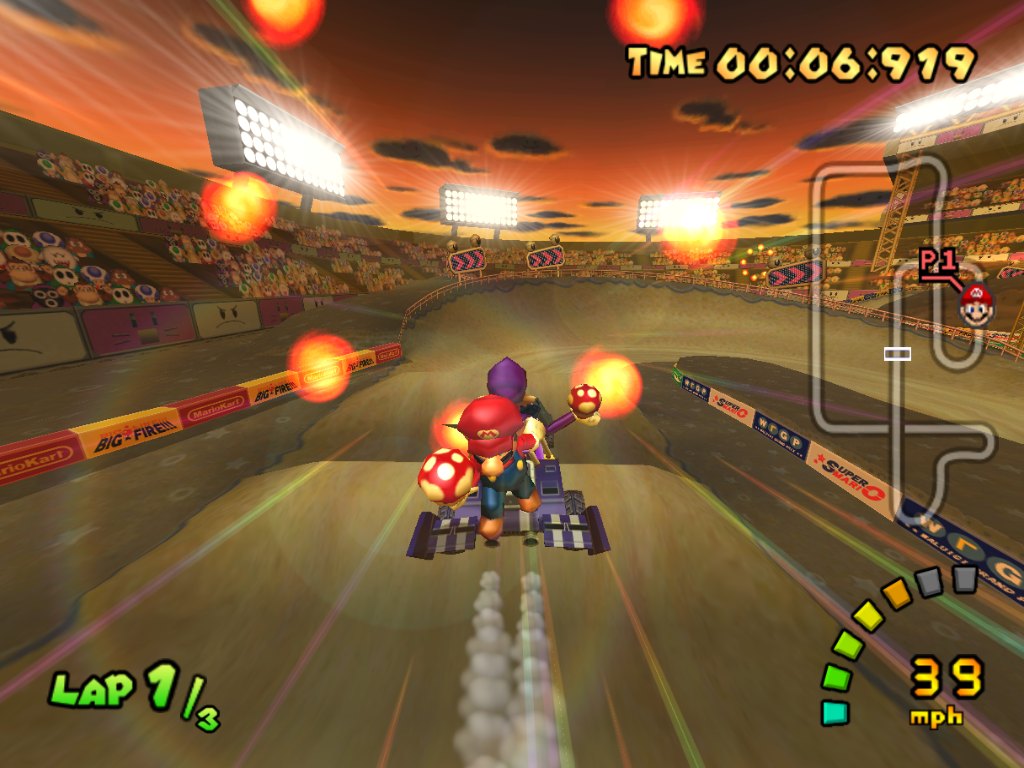
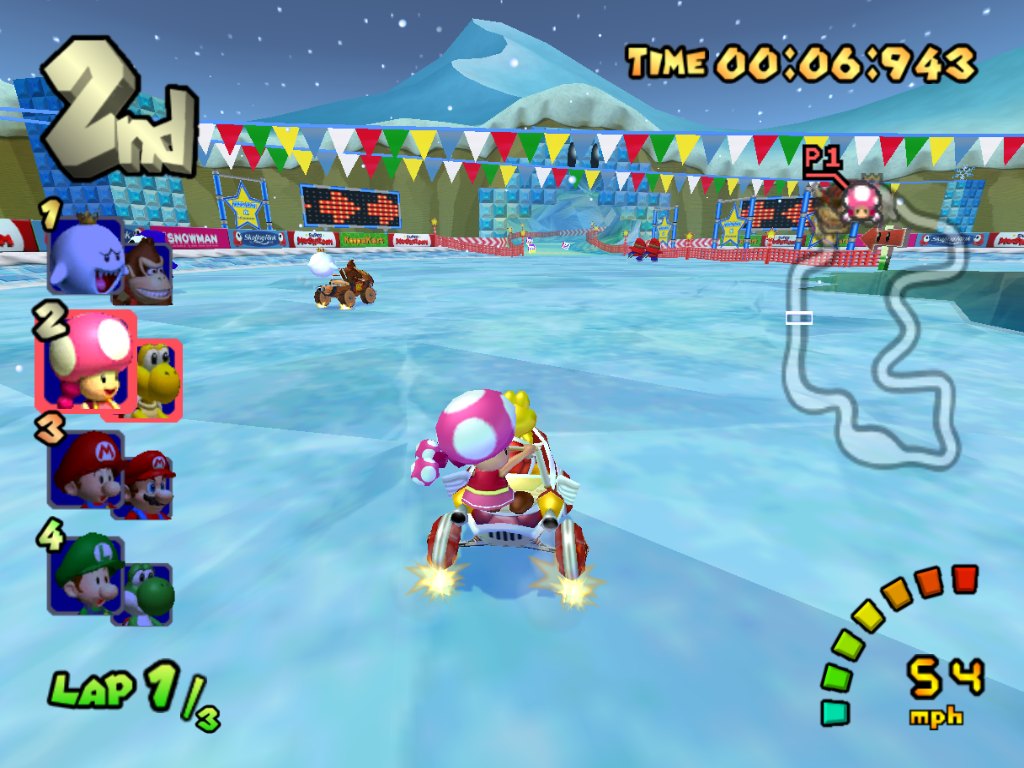
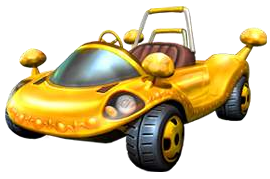
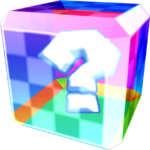 Item BoxGives one item to the rear rider. Boxes reappear faster than in earlier games, so that karts at the back are not left empty-handed.
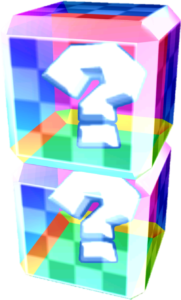 Double Item BoxNew. Two boxes stacked together: one item for each rider.
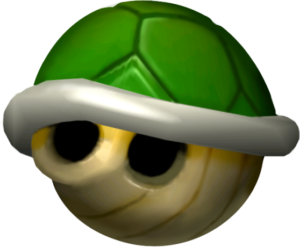 Green ShellTravels in a straight line and spins out whatever it hits.
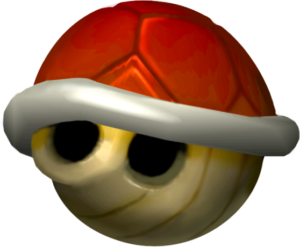 Red ShellHomes in on the kart ahead and flips it.
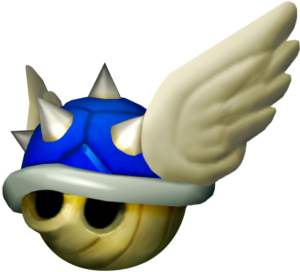 Spiny ShellNow has wings. It flies to the leader and explodes, flipping every kart caught in the blast.
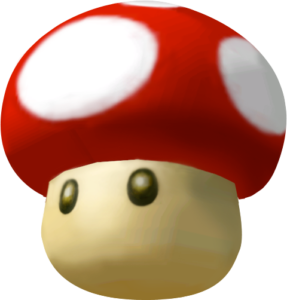 MushroomA short burst of speed, and a way of stealing an item from a kart you ram.
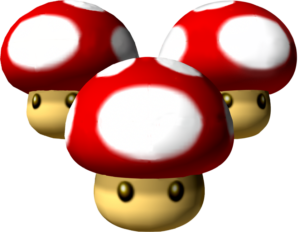 Triple MushroomsThree boosts to use one after another.
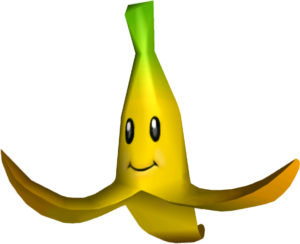 BananaDrop it behind or throw it ahead. The trick from Mario Kart 64 of braking to escape the spin has been removed.
 Fake ItemLooks like an Item Box, behaves like a trap.
 StarInvincibility and a little extra speed. Karts you touch are sent flying, and you can steal their items.
 LightningStrikes every rival at once: they spin, drop their items and shrink, losing top speed.
 Fireballs (red)Special: Mario. A fireball that splits into several and slides down the road, able to hit a whole pack.
 Fireballs (green)Special: Luigi. The same attack in green.
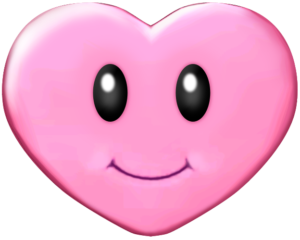 HeartSpecial: Peach and Daisy. Hearts circle the kart. An item that hits one is absorbed and becomes yours to use.
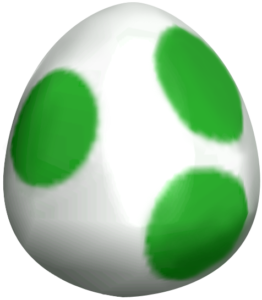 Yoshi’s EggSpecial: Yoshi. Rolls after the kart ahead, and when it breaks it leaves three more items on the track.
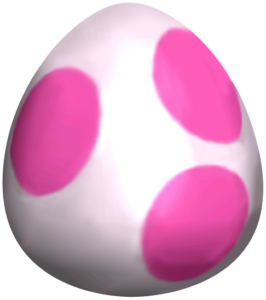 Birdo’s EggSpecial: Birdo. Her own version of the same homing egg.
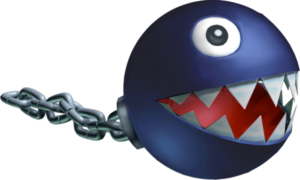 Chain ChompSpecial: Baby Mario and Baby Luigi. A Chain Chomp charges up the road towing the kart behind it and bowling rivals over. Designed as a catch-up item that needs no skill.
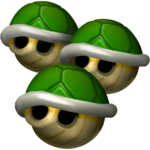 Triple Green ShellsSpecial: Koopa and Paratroopa. Three shells at once. Reserved for one team because, in testing, they made races too chaotic.
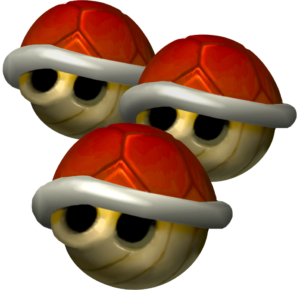 Triple Red ShellsSpecial: Koopa and Paratroopa. Three homing shells.
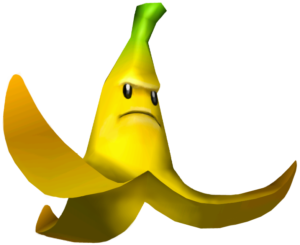 Giant BananaSpecial: Donkey Kong and Diddy Kong. An enormous peel that is very hard to steer around.
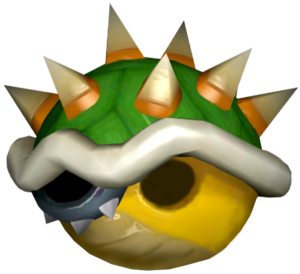 Bowser’s ShellSpecial: Bowser and Bowser Jr. A giant shell that barrels down the road slamming into every kart in its way.
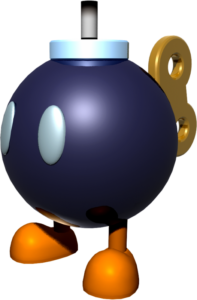 Bob-ombSpecial: Wario and Waluigi. Thrown like a grenade, further if you push the stick forward, and quite capable of catching its thrower.
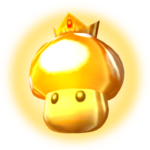 Golden MushroomSpecial: Toad and Toadette. Unlimited boosts for a short time.
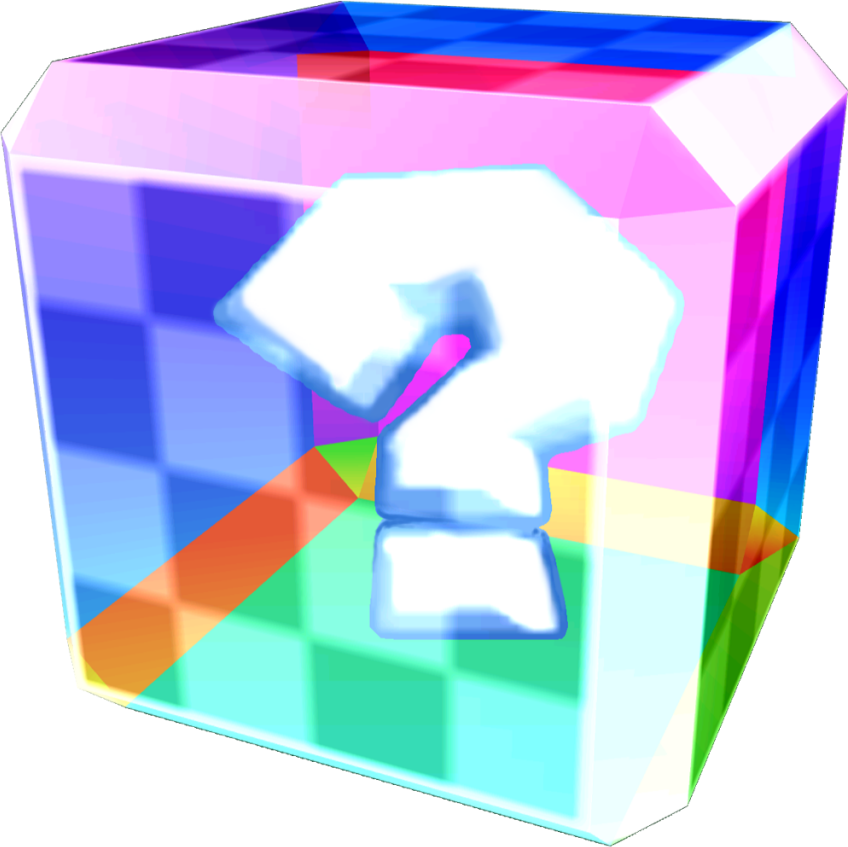
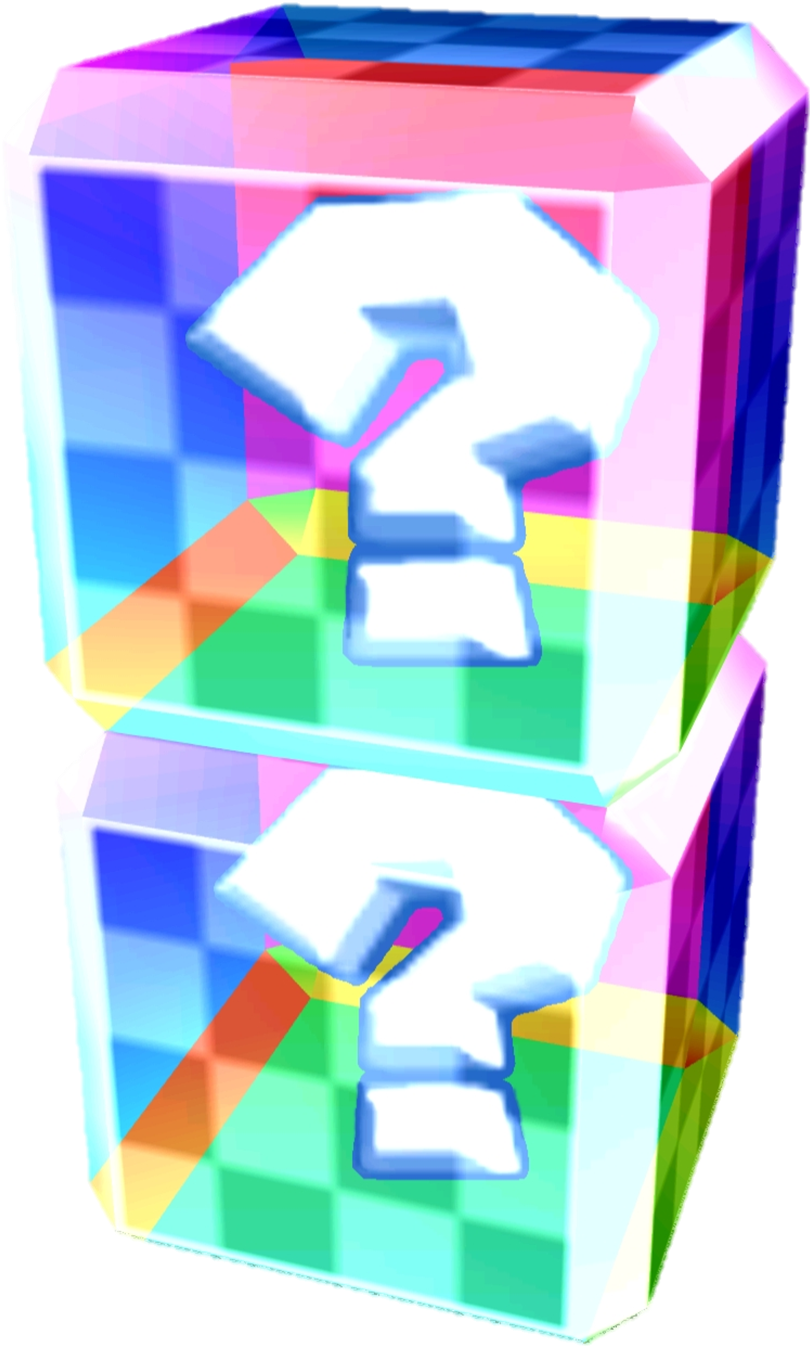
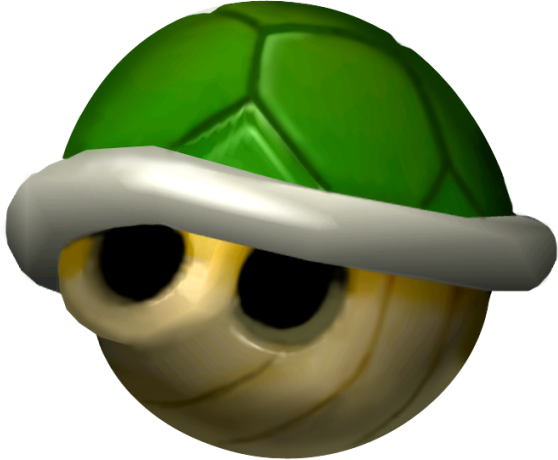
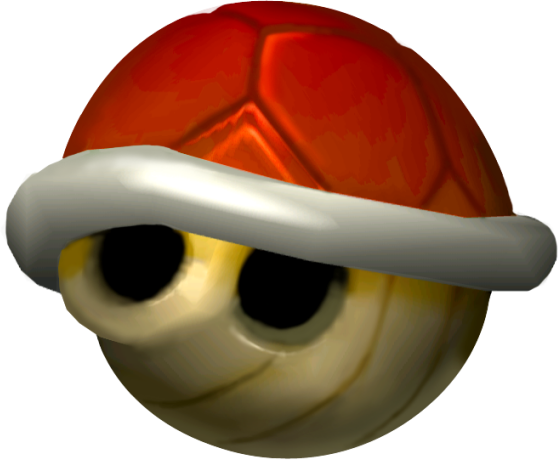
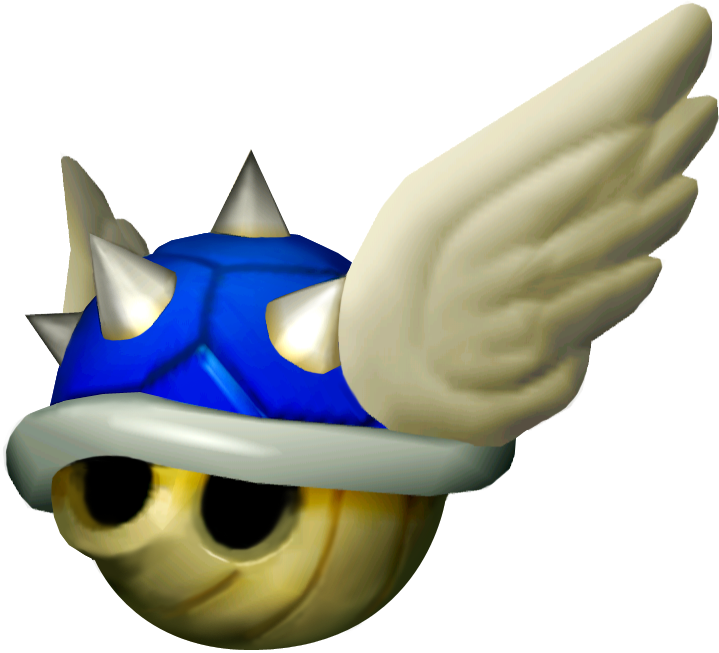
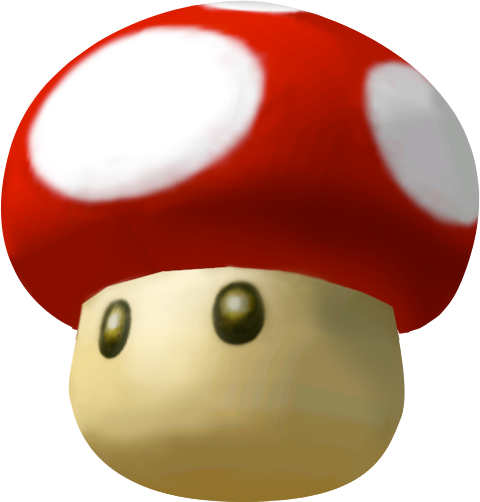
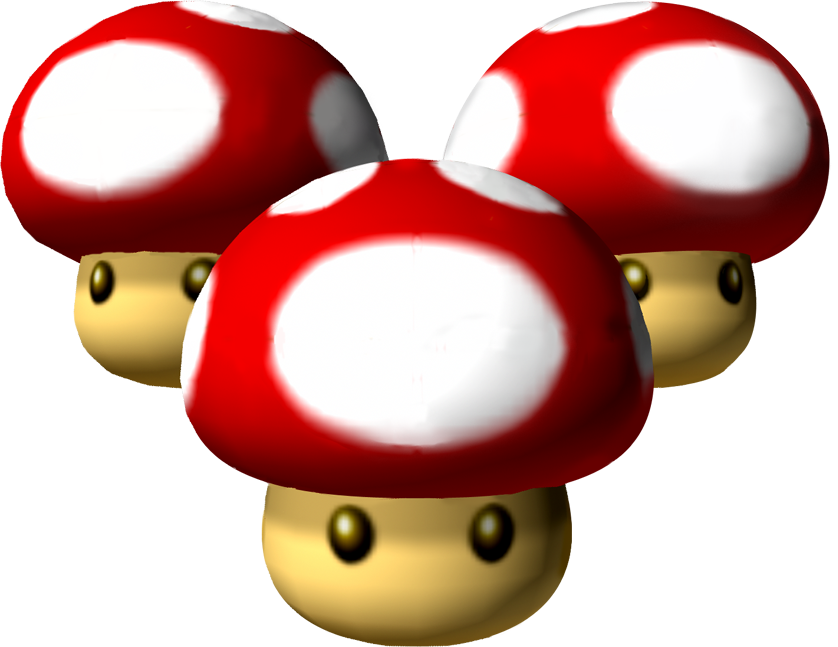
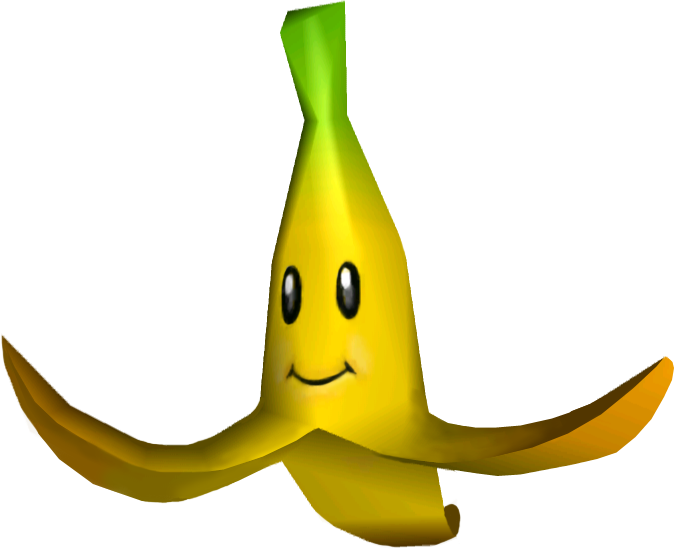
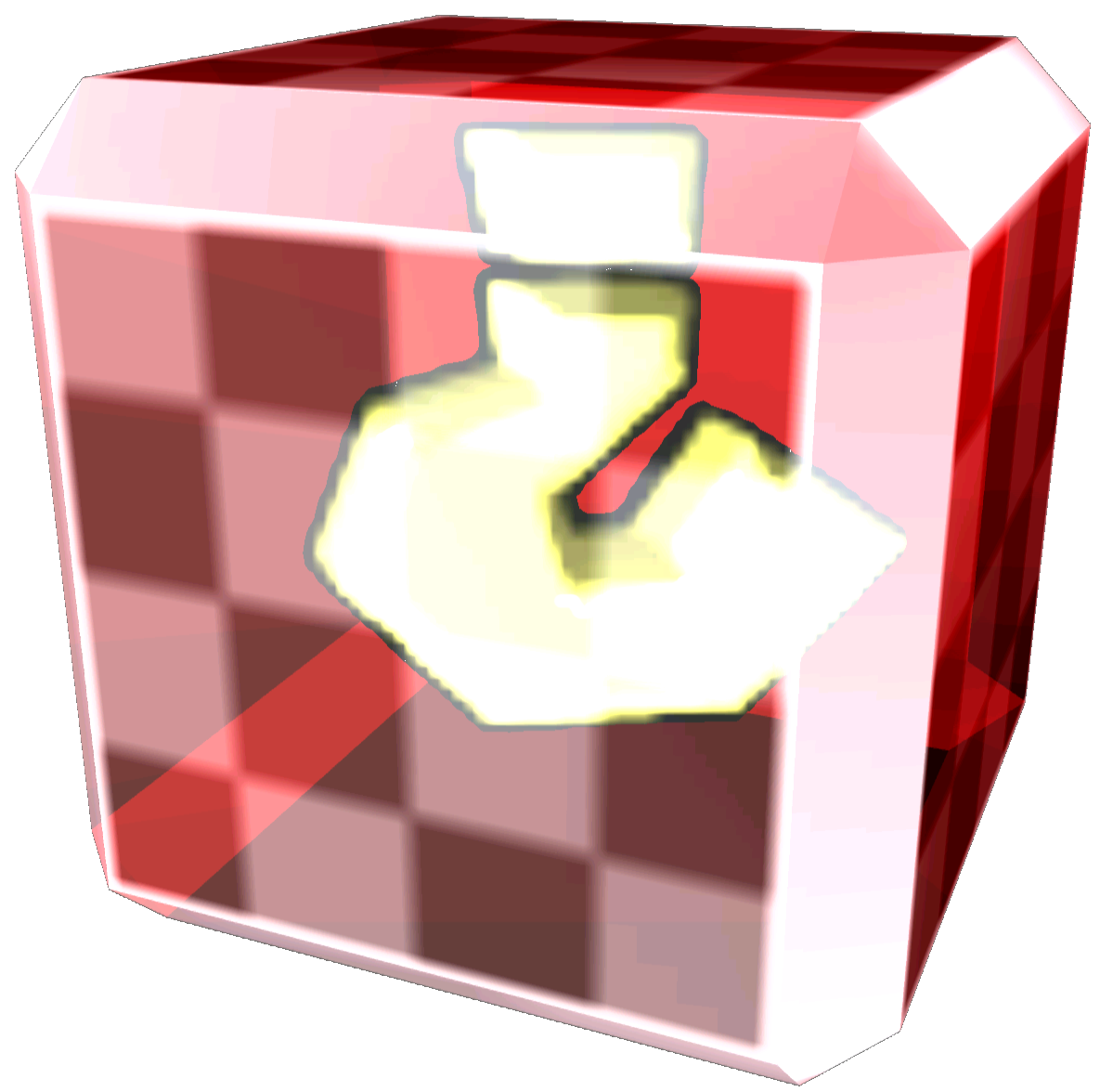


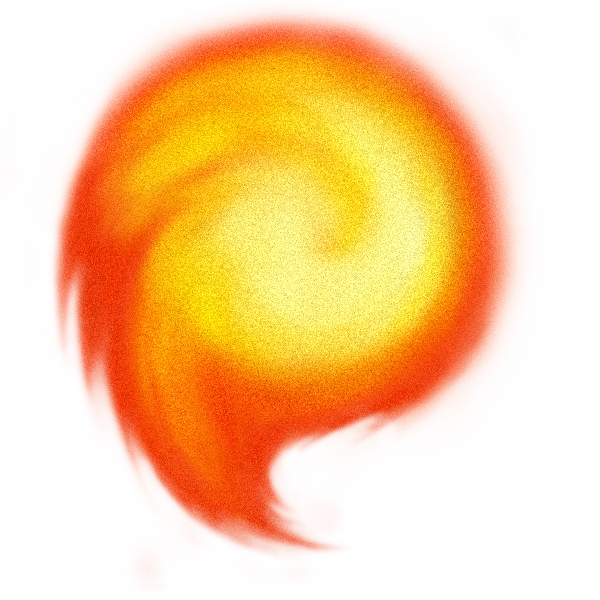
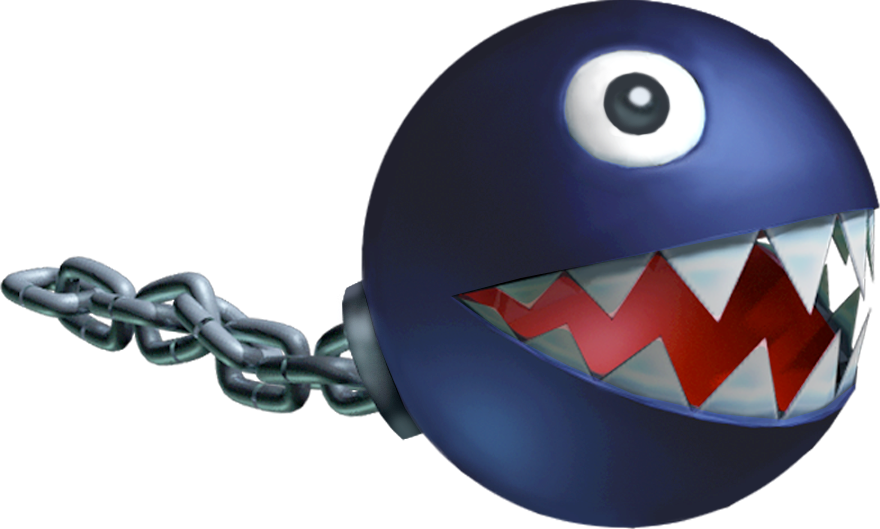
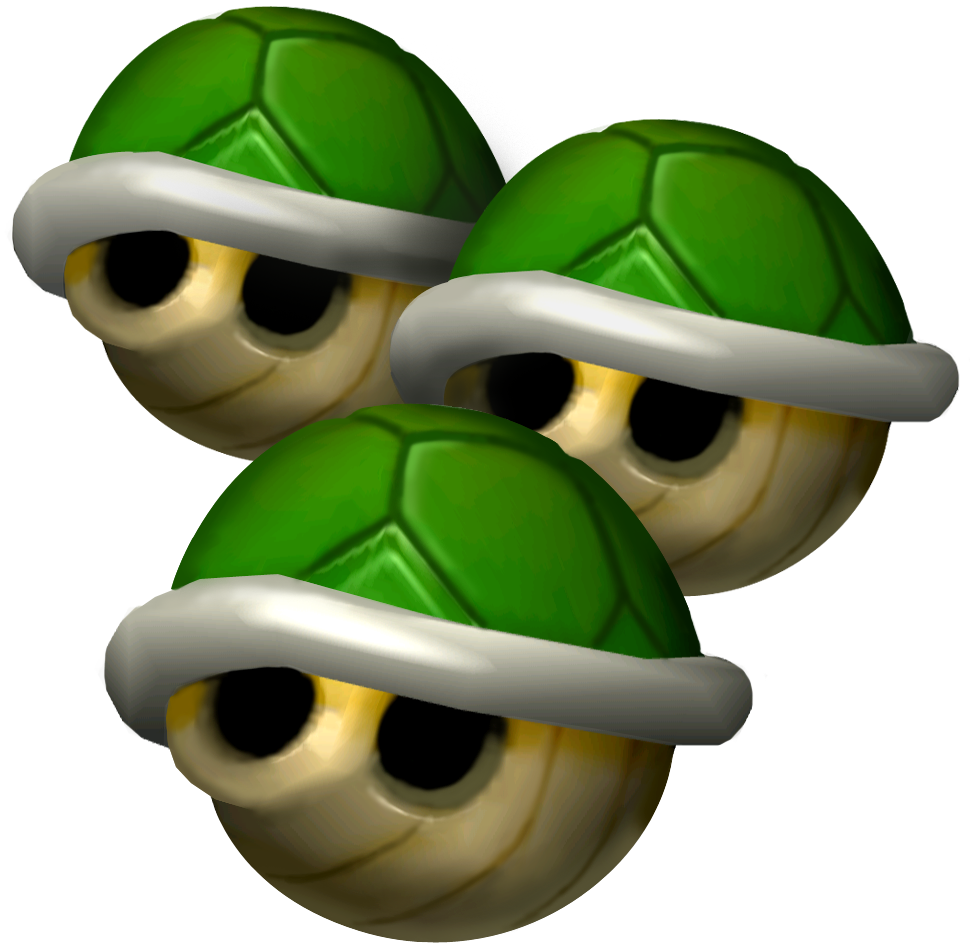
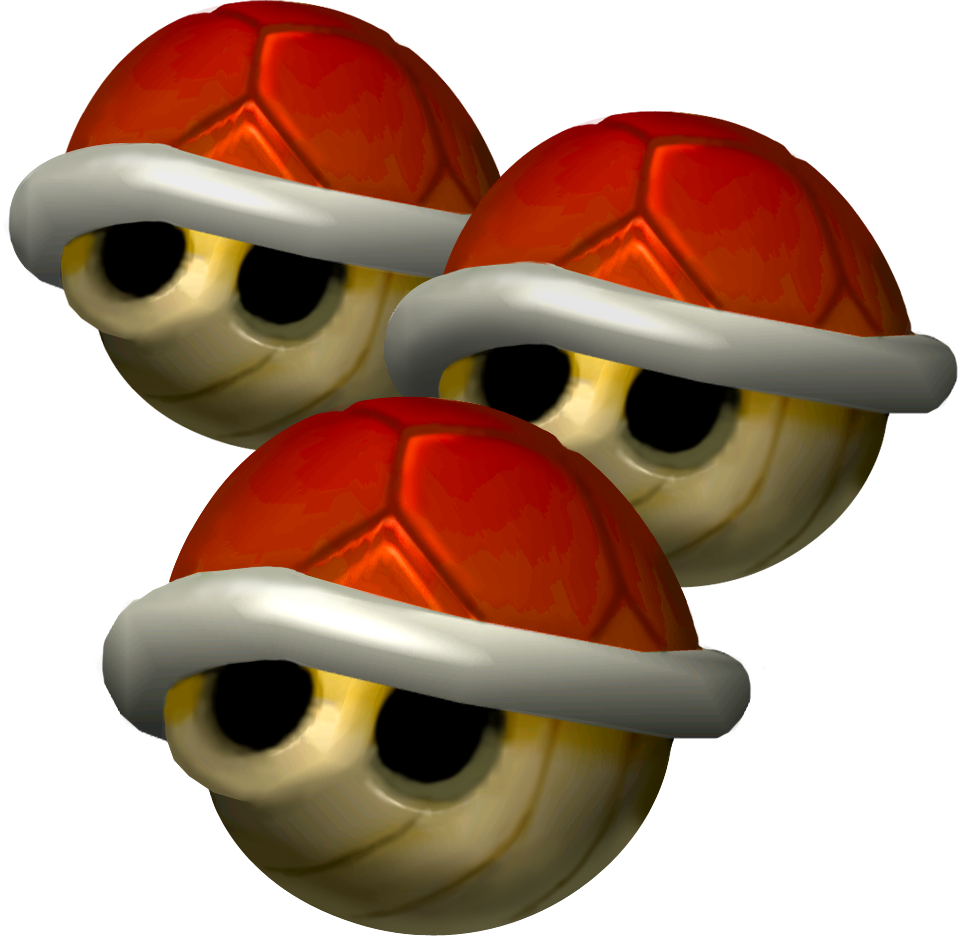
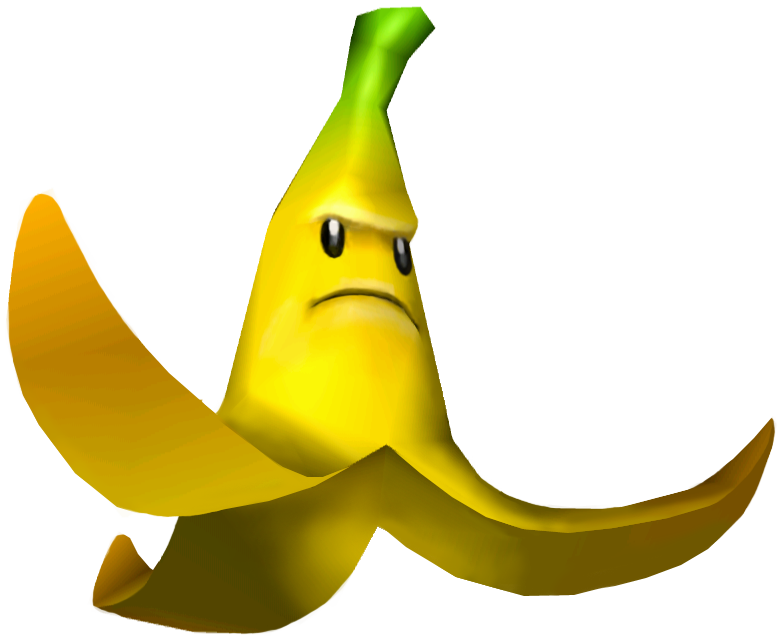
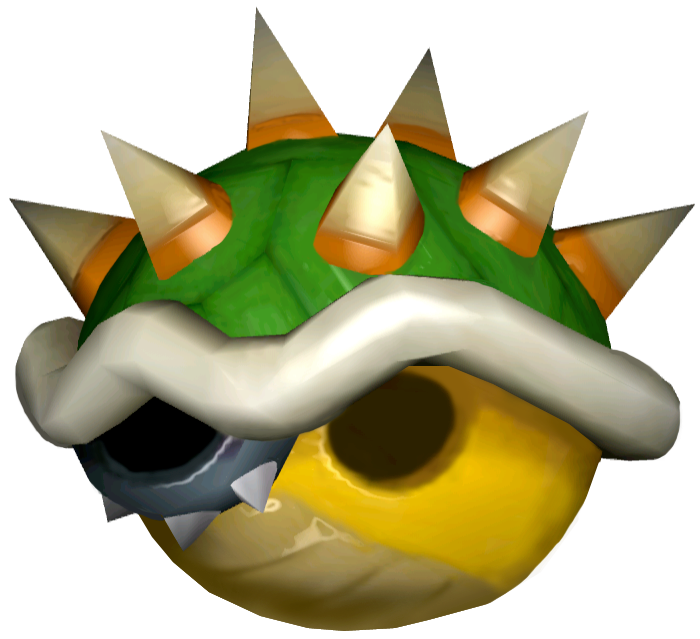
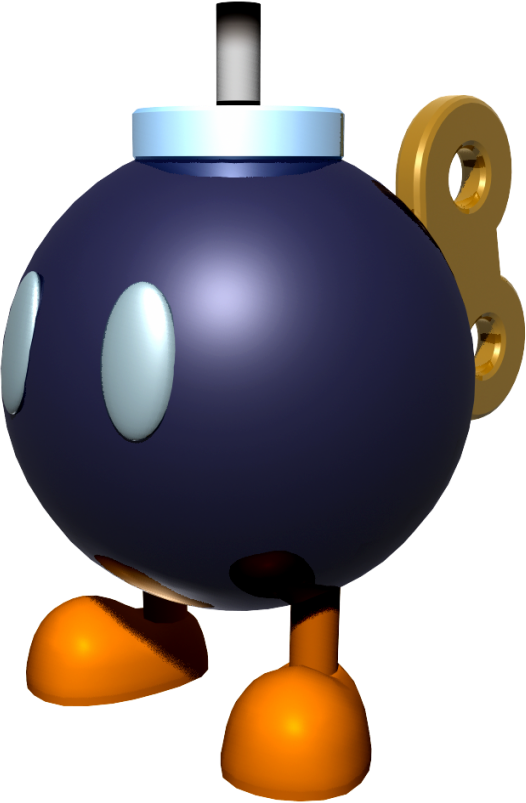
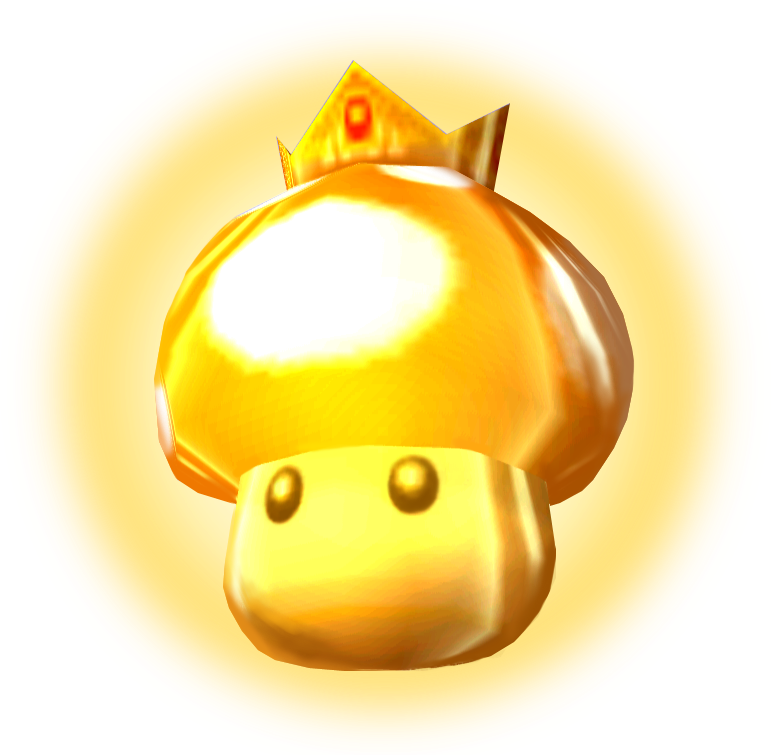
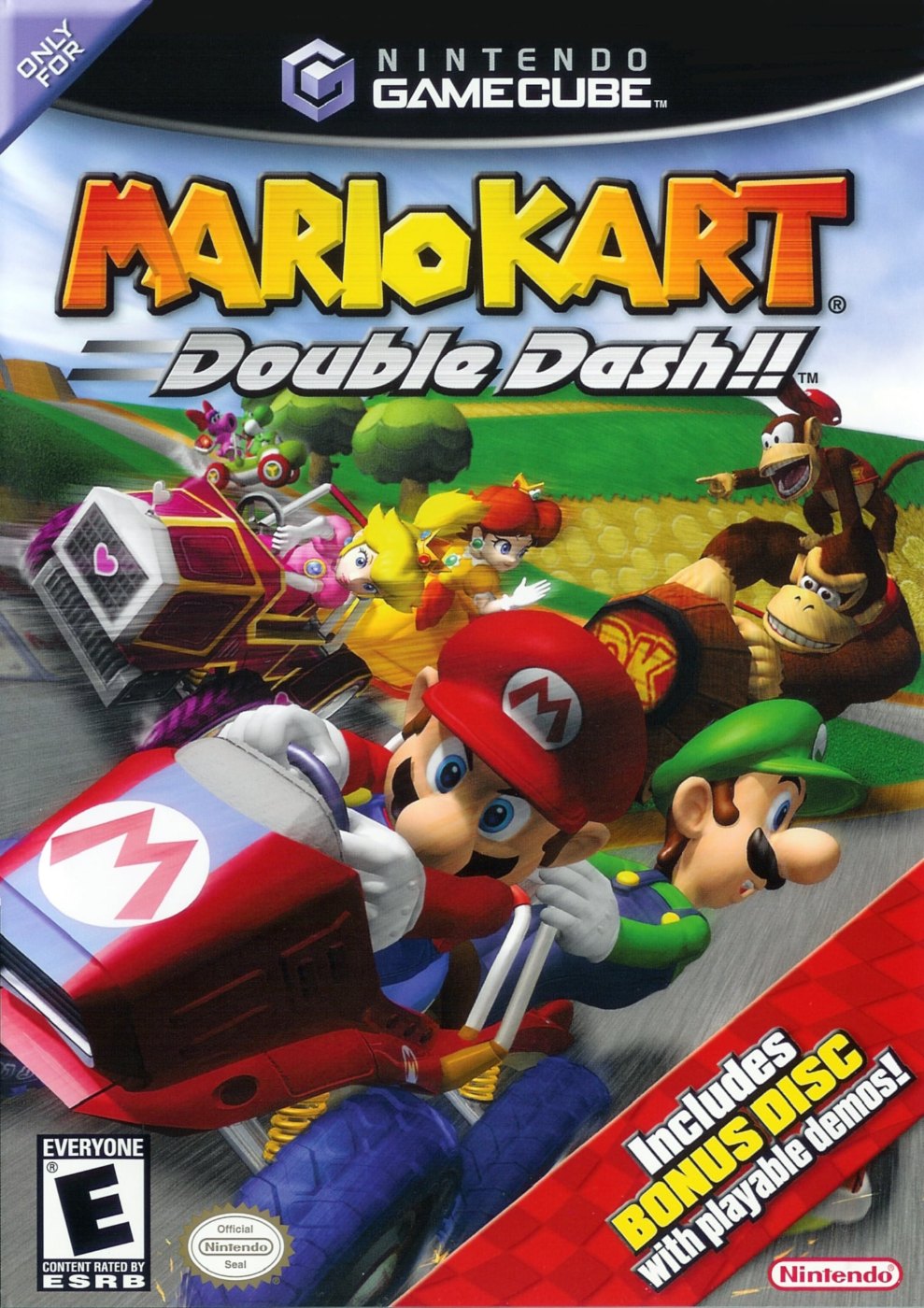 The bonus discPre-order edition · North America · 2003Customers who pre-ordered received a two-disc edition, flagged on the cover with the words “Includes BONUS DISC with playable demos!”. The second disc held playable demos of Mario Party 5, F-Zero GX, Sonic Heroes, Star Wars Rogue Squadron III: Rebel Strike and Teenage Mutant Ninja Turtles, seven trailers, and two songs and fifteen items that could be sent to Fire Emblem on a Game Boy Advance.
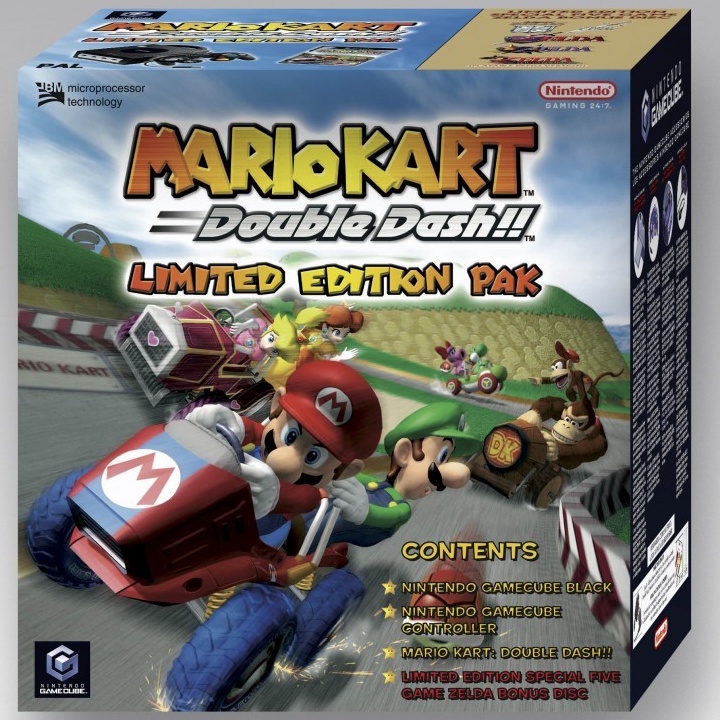 The Limited Edition PakConsole bundle · Europe · 14 November 2003In Europe the game launched alongside a bundle of a GameCube, Double Dash!! and The Legend of Zelda: Collector’s Edition, a disc containing The Legend of Zelda, Zelda II, Ocarina of Time, Majora’s Mask and a demo of The Wind Waker. Nintendo priced it at around 149 euros, or 99 pounds in the United Kingdom.
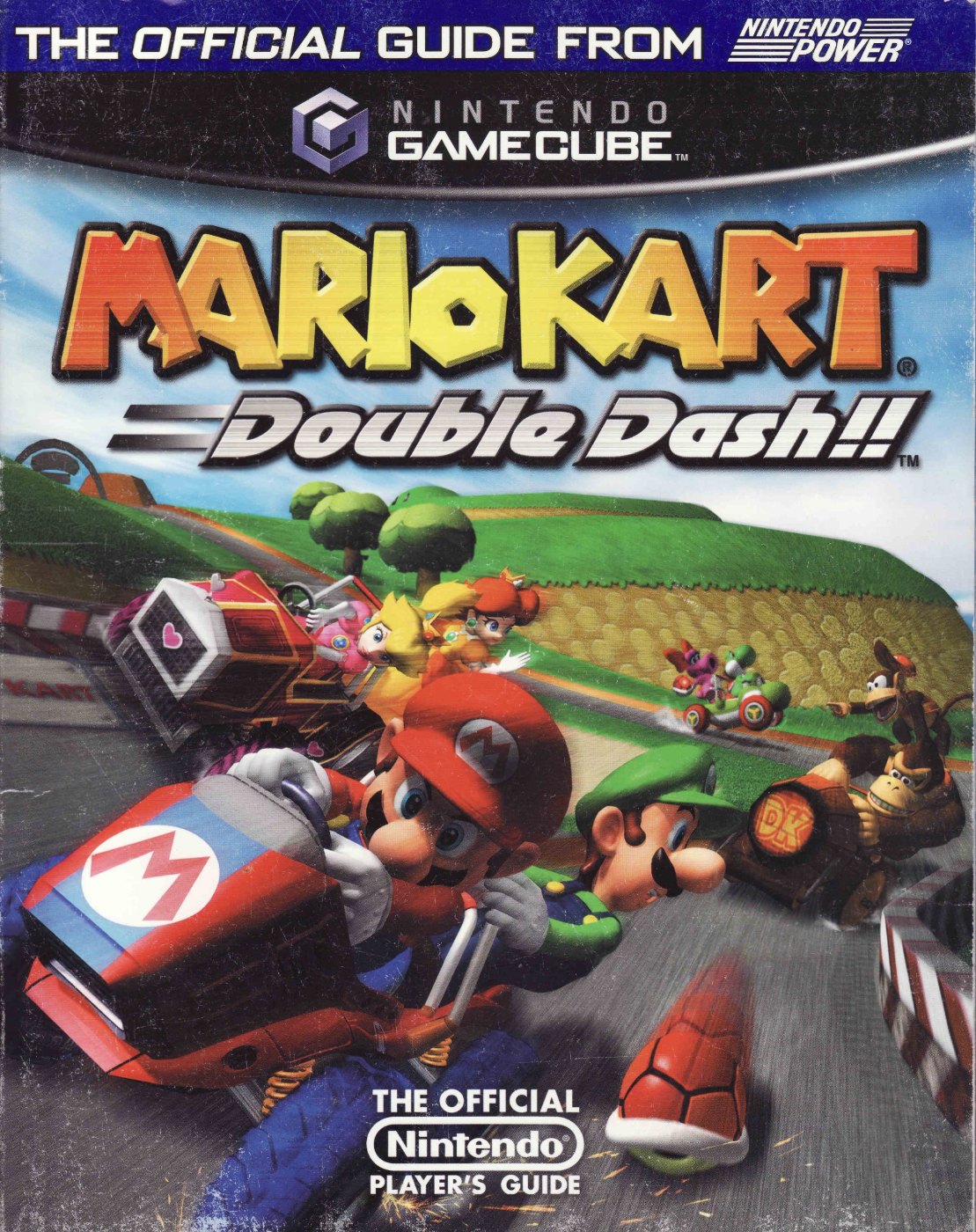 Strategy guidesBooks · 2003Nintendo Power published an official Player’s Guide, and Prima Games a strategy guide of its own.
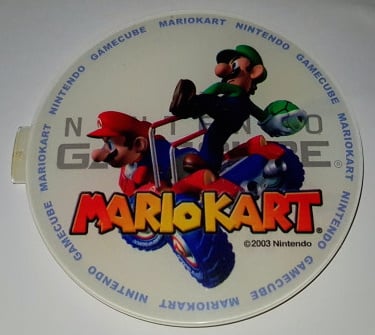 The GameCube faceplateMerchandiseThe Nintendo GameCube battle course shows Mario and Luigi in the Red Fire on the console’s lid. Nintendo later produced the same design as a real faceplate for the real machine.
 MarioMedium · partner: Luigi
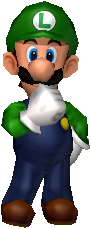 LuigiMedium · partner: Mario
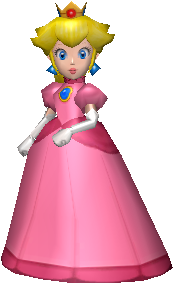 PeachMedium · partner: Daisy
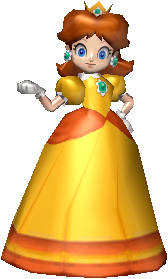 DaisyMedium · partner: Peach · new
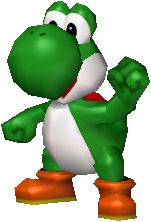 YoshiMedium · partner: Birdo
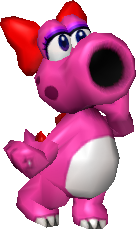 BirdoMedium · partner: Yoshi · new
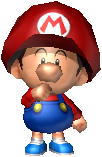 Baby MarioLight · partner: Baby Luigi · new
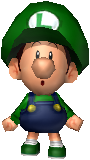 Baby LuigiLight · partner: Baby Mario · new
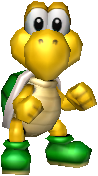 KoopaLight · partner: Paratroopa
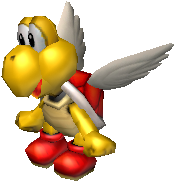 ParatroopaLight · partner: Koopa · new
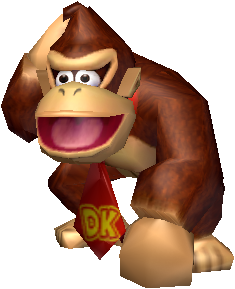 Donkey KongHeavy · partner: Diddy Kong
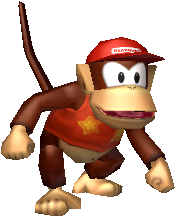 Diddy KongLight · partner: Donkey Kong · new
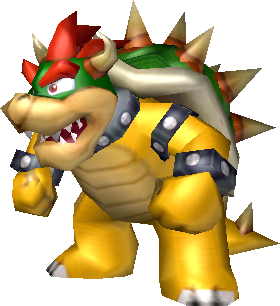 BowserHeavy · partner: Bowser Jr.
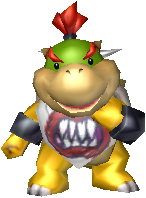 Bowser Jr.Light · partner: Bowser · new
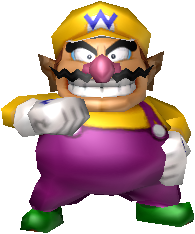 WarioHeavy · partner: Waluigi
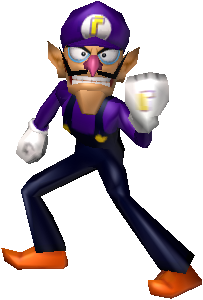 WaluigiMedium · partner: Wario · new
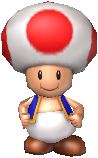 ToadLight · partner: Toadette · unlockable
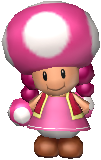 ToadetteLight · partner: Toad · unlockable · new
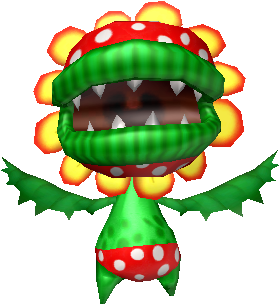 Petey PiranhaHeavy · partner: King Boo · unlockable · new
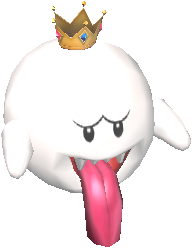 King BooHeavy · partner: Petey Piranha · unlockable · new
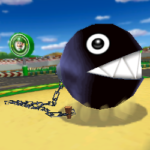 Chain ChompLuigi Circuit, Mario CircuitTethered to a post beside the road, and lunges at anything in reach.
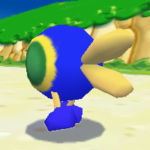 CataquackPeach BeachThe duck-billed creatures of Super Mario Sunshine. They fling karts into the air and can cost you your items.
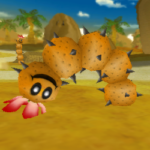 PokeyDry Dry DesertCactus columns that sway across the road.
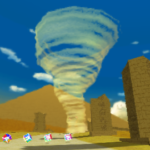 TornadoDry Dry DesertWanders the course, lifts karts off the ground and strips their items.
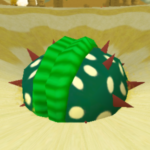 Pit PlantDry Dry DesertLives at the bottom of the quicksand pit and eats whoever slides in.
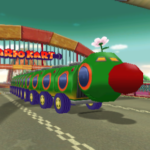 Wiggler WagonMushroom Bridge, Mushroom CityA long green bus in the shape of a Wiggler. An early version of Mushroom City had two.
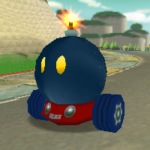 Bomb-carMushroom Bridge, Mushroom CityA Bob-omb on wheels. It explodes on contact.
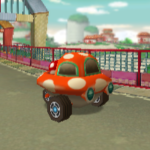 Mushroom carMushroom Bridge, Mushroom CityThe one friendly vehicle: bump it and it drops a Mushroom.
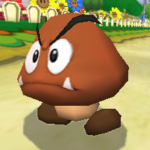 GoombaMario CircuitWaddles from side to side across the bumpy section.
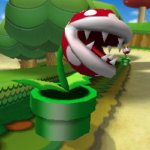 Piranha PlantMario Circuit, Yoshi CircuitLeans out of roadside pipes to bite passing karts.
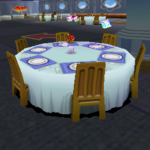 Sliding tablesDaisy CruiserSlide back and forth across the dining room as the ship rolls.
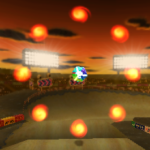 Fire ChainWaluigi Stadium, Wario ColosseumA floating ring of fireballs, often with an Item Box as bait in the middle.
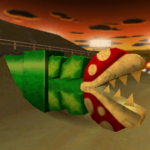 Mecha Piranha PlantWaluigi StadiumA mechanical plant that slides in and out of its pipe.
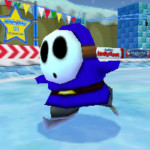 Skating Shy GuySherbet LandSkates, jumps and twirls across the rink. The red ones come in pairs.
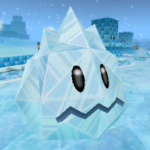 FreezieSherbet LandA lump of ice that freezes any kart that touches it.
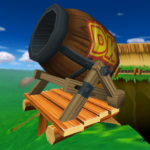 Barrel CannonDK MountainFires karts to the top of the volcano. Nothing can hit you while you are in the air.
 BoulderDK MountainTumbles down the mountain road on the way back.
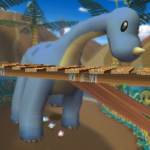 NoshiDino Dino JungleA huge blue sauropod whose feet come down on the track.
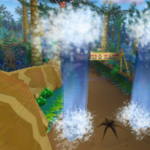 Water geyserDino Dino JungleErupts under karts and lifts them into the air.
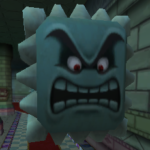 ThwompBowser’s CastleCrashes down to flatten karts.
 Lava BubbleBowser’s CastleHops in arcs through the metal grating.
 Mechanical BowserBowser’s CastleA giant statue that shoots fireballs down the final corridor.
 PiantasPeach Beach, Daisy Cruiser, award ceremonyThe islanders of Super Mario Sunshine, here as spectators.
 Yoshi helicopterBaby Park, Yoshi CircuitBased on Yoshi’s helicopter transformation in Yoshi’s Island.
 The stadium crowdWaluigi StadiumToads, Shy Guys, Snifits, Goombas, Boos and Hammer Bros. in the stands.
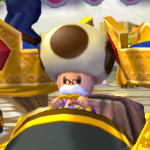 ToadsworthAward ceremonyPeach’s elderly steward, on hand for the trophy presentation.