
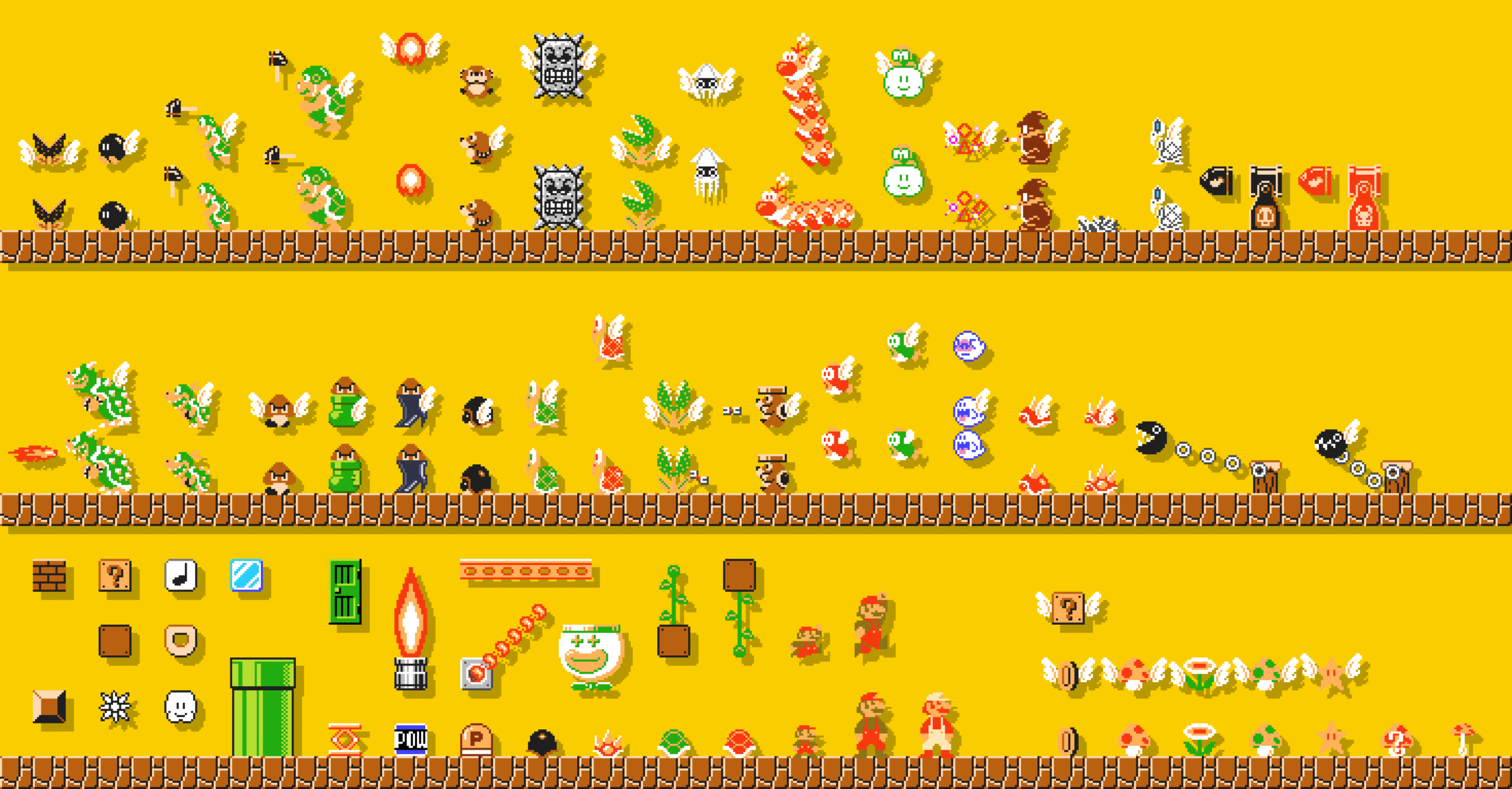
Super Mario Sprite Archive
Sprite sheets and backgrounds ripped from Mario games, from Donkey Kong on the Game Boy to New Super Mario Bros. 2: 32 sets and 490 sheets across six platforms, ready for comics, fan games and pixel art.
Below the archive, the story of Mario in pixels: why a 16-pixel hero needed a cap and a moustache, how the NES, Super Nintendo, Game Boy and DS shaped his sprites, and how Super Mario Bros. 3, Super Mario World and Yoshi’s Island each changed the look.
Overview
This section contains sprites from lots of your favourite Super Mario titles, for use in comics, pictures, fan games or anything else you can think of. Did you rip some sprites? Why not mail them to submissions@superluigibros.com and we’ll put them online, giving full credit and linking to a blog or social profile of your choice.
So what is a sprite exactly? A computer graphic which may be moved on-screen and otherwise manipulated as a single entity.
In the old sense of the word, a sprite is a small picture that the console’s hardware can slide around on top of the background without redrawing the scene, and for twenty years Mario lived inside those rules. The NES could show 64 of them at once, each just 8 pixels wide and limited to three colours plus transparency, so a Mario of any size had to be pieced together from several. Every generation since has loosened the limits, with more sprites, bigger sizes and more colours, then scaling and rotation, until New Super Mario Bros. brought 3D models to the 2D series in 2006. The history below explains how those limits gave Mario his cap, moustache and overalls, and how his pixels changed from one machine to the next.
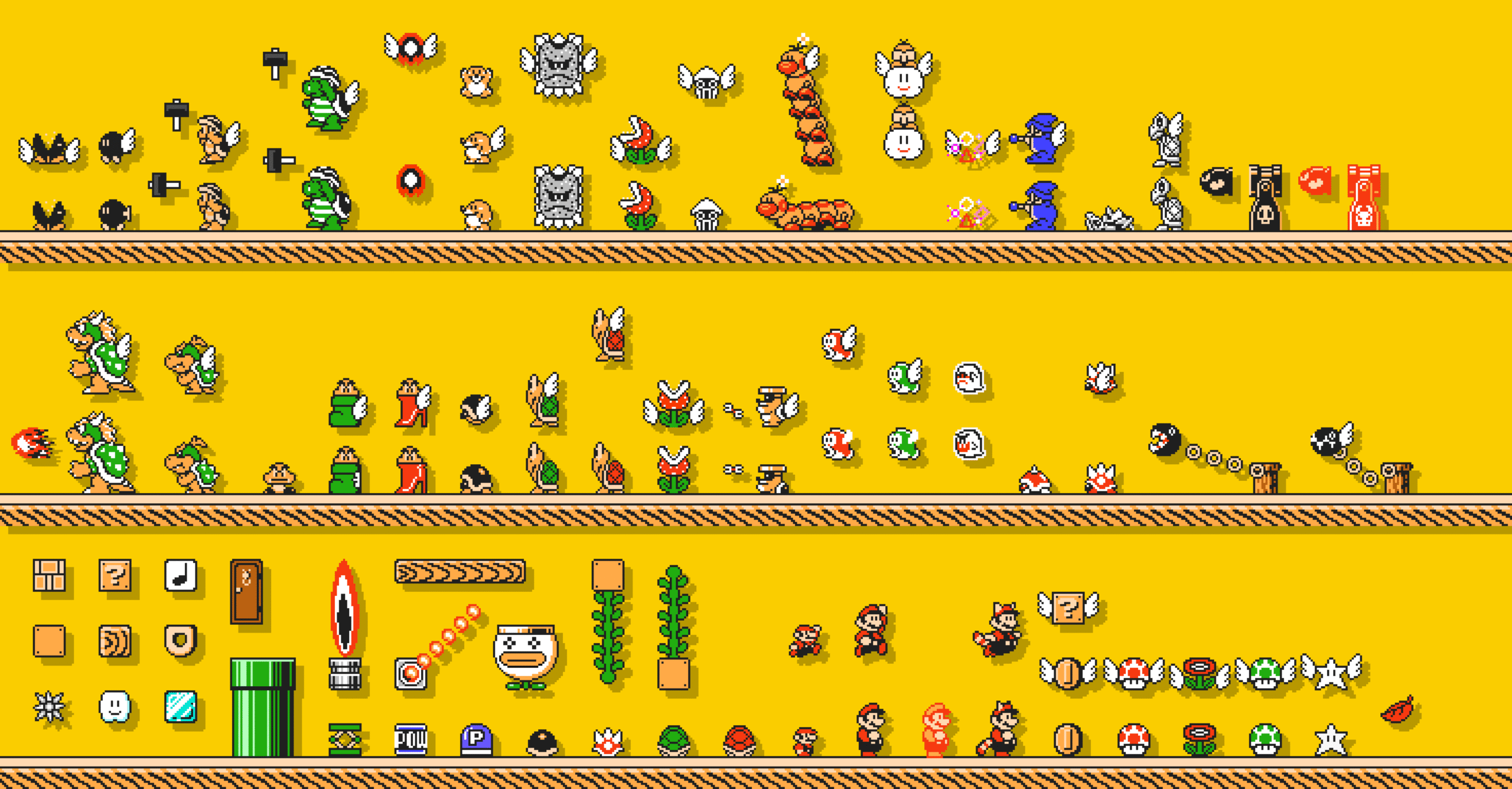
The archive itself is filed by console. The big sets are worth the visit on their own: 101 sheets for Super Mario Bros. 3 on the NES and 94 more for its 16-bit All-Stars remake, so you can compare the two frame by frame, plus 87 for Yoshi Topsy-Turvy and 71 for Super Mario Advance 4. Smaller sets cover oddities such as Mario is Missing! and Excitebike: Bun Bun Mario Battle Stadium. For finished official pictures rather than in-game graphics, see the Official Artwork archive; for whole levels laid out in one image, the Super Mario Bros. maps.
- Super Mario Bros. 3: 101 sheets, the largest set in the archive.
- Super Mario Bros. 3, All-Stars version: 94 sheets of the 16-bit redraw.
- Super Mario World: Mario, Luigi & Yoshi: the heroes of the Super Nintendo classic.
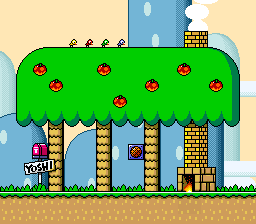
- Yoshi’s Island: the good guys: the hand-drawn look in pixels.
- Paper Mario: Sticker Star: 31 sheets of sprites and models from the 3DS.
Quick Answers
Short answers to the questions people ask most about Mario’s sprites. Follow the links for more.
What is a sprite?
A small graphic that can be moved around the screen and handled as a single object. On older consoles sprites were drawn by dedicated hardware on top of the background, which let them move without the scene being redrawn. The word was coined at Texas Instruments in the late 1970s, because the images seem to float above the background. More →
Why does Mario wear a cap and have a moustache?
Because he was first drawn on a grid just 16 pixels square, for Donkey Kong in 1981. The cap meant no hair to draw or animate, the big nose and moustache gave him a face without a mouth, and overalls in a different colour from his shirt made his arm movements easy to see. More →
How big is Mario’s sprite?
In Donkey Kong he fits a 16-by-16 square. Super Mario Bros. started life with a 16-by-32-pixel test block, and because NES sprites are only 8 pixels wide, Mario is built from several of them. Later machines allowed single sprites up to 64 pixels square. More →
Why does Mario start small in Super Mario Bros.?
So that grabbing a Magic Mushroom feels like a reward. The team had designed the courses around a small Mario they meant to scale up, then kept the small size as the starting point. Miyamoto has firmly denied the old story that small Mario came from a bug. More →
How many colours does a Mario sprite have?
It depends on the machine. Each NES and Game Boy sprite has three colours plus transparent, so the 8-bit Mario is drawn in very few shades. Super Nintendo sprites have 15 colours plus transparent, Game Boy Advance sprites 15 or 255, and the Nintendo DS up to 65,536. More →
Why does Yoshi’s Island look hand-drawn?
On purpose. When Donkey Kong Country made pre-rendered graphics the fashion in 1994, the Yoshi’s Island team chose the opposite: art drawn by hand, scanned in and then rebuilt pixel by pixel, with a Super FX 2 chip in the cartridge to rotate and resize things on screen. More →
Can I use these sprites in my fan game?
This archive was put together for fan projects like that: Luke’s introduction offers the sheets for comics, pictures and fan games. The sprites themselves are © Nintendo, though, and we can’t give legal advice; whether a particular project is allowed is a question for Nintendo. More →
Can I send you sprites I have ripped?
Yes, please. Mail them to submissions@superluigibros.com and they will go online with full credit and a link to a blog or social profile of your choice. More →
Which set in the archive is the biggest?
Super Mario Bros. 3 on the NES, with 101 sheets, followed by its 94-sheet All-Stars version. In all there are 490 sheets in 32 sets. More →
Browse the Sprite Archive
Browse by platform
NES / Famicom
7 sets


Game Boy
3 sets


Super Nintendo
13 sets Excitebike: Bun Bun Mario Battle Stadium2 sheets
 Mario is Missing!Sprites & backgrounds2 sheets
 Mario’s Time MachineSprites & backgrounds1 sheet
 Mario’s Time MachineBackgrounds1 sheet
 Super Mario All-Stars1 sheet
 Super Mario Bros. 3Super Mario All-Stars version94 sheets
 Super Mario KartCharacters & karts1 sheet
 Super Mario RPG1 sheet
 Super Mario WorldBackground sheets4 sheets
 Super Mario WorldMario, Luigi & Yoshi1 sheet
 Super Mario WorldBad guys1 sheet
 Super Mario World 2: Yoshi’s IslandThe good guys1 sheet
 Super Mario World 2: Yoshi’s IslandEnemies & bad guys1 sheet
Nintendo 64
1 set
Game Boy Advance
6 sets


Nintendo 3DS
2 sets

Nothing matches that search – try a shorter name.
Mario’s Sprites Through the Years
From a 16-pixel carpenter to a 3D model that still remembers its pixel poses: how Mario’s sprites were made, machine by machine.
What a sprite is, and why Mario wears a cap (1979–1984)

The word goes back to Texas Instruments at the end of the 1970s. Karl Guttag, one of the two engineers behind TI’s TMS9918 video chip, said it came from a manager there, David Ackley, and it stuck because the little images appear to float over the background without disturbing it. Hardware sprites are mixed into the picture one line at a time as it is sent to the television, so they can move freely without the processor redrawing the scene; the catch is that only so many fit on each line. Nintendo’s Radar Scope and Donkey Kong boards, which grew out of Namco’s Galaxian hardware, drew sprites 16 pixels square in three colours.
That square is the box Mario had to fit. Miyamoto first drew him on a 16-by-16 grid, and his look is a list of clever shortcuts. Put a cap on him and there is no hairline or brow to draw, and nothing to flap about in mid-jump. Give him a big nose with a thick moustache underneath and the eye reads a face, with no mouth needed. Dress him in two clashing colours, overalls against shirt and both against the backdrop, and you can follow every swing of his arms. Mario’s famous look was, at heart, the answer to a pixel budget.


Eight-bit Mario: Super Mario Bros. to Super Mario Bros. 3 (1985–1988)

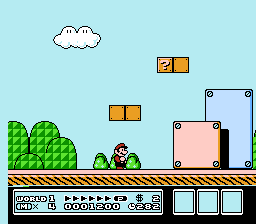
The Famicom’s picture processor could show 64 sprites, no more than eight on any one line, each 8 pixels wide and 8 or 16 tall, in three colours plus transparent. Mario on the NES is therefore a little mosaic of hardware sprites. Super Mario Bros.’ first prototype, in December 1984, was nothing more than a 16-by-32-pixel block moving round a single screen. The team then built the courses around a small Mario they planned to enlarge later, and in the end made small Mario the starting point so that a Magic Mushroom would feel like a prize. Miyamoto has flatly denied the rumour that small Mario was born from a bug that showed only his top half. The whole game fitted into 32 KB of program and 8 KB of sprite and background graphics.
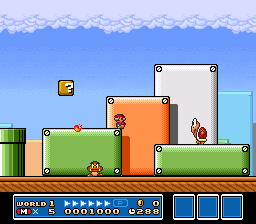
Super Mario Bros. 3 (1988) gave Mario a makeover on the same hardware. Takashi Tezuka disliked the way the original sprite’s eye merged into his cap, so the new Mario has his eye one dot clear of the brim, which Miyamoto reckoned made him cuter, and the characters were outlined in black. Then came the suits: a raccoon tail that Tezuka worried felt forced, though it ended up letting Mario both spin and fly, a Frog Suit and a ride in a Goomba’s Shoe.



Sixteen bits: Super Mario World and All-Stars (1990–1994)
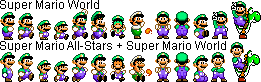
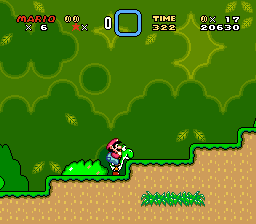
The Super Nintendo raised every limit: 128 sprites on screen, single sprites from 8 up to 64 pixels square, and 15 colours plus transparent for each. Super Mario World (1990) spent some of that on Mario’s face. Designer Shigefumi Hino says it is the first game in which Mario’s eyes have whites, a detail Miyamoto checked strictly; Hino left small Mario’s eyes black because he liked the character they had in Super Mario Bros. 3.
Super Mario All-Stars (Japan, July 1993) then redrew the NES-era games for 16-bit hardware. Its artists modelled the new Mario on Super Mario World, gave him a black outline so he stood out against the busier backgrounds, used the extra colours throughout and hung portraits of Bowser and Mario on the walls of once-empty black castle rooms. When Super Mario World was later added to the cartridge, Luigi finally got sprites of his own instead of being a recoloured Mario, and the All-Stars graphics went on to be reused in Super Mario Advance 4 on the Game Boy Advance.
Rendered or hand-drawn? (1994–2000)
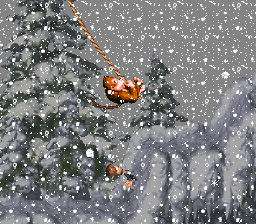
Rare’s Donkey Kong Country (1994) showed another way to make sprites: model the characters on Silicon Graphics workstations, render every frame of animation, then compress the pictures into Super Nintendo sprites. Super Mario RPG (1996) built Mario and friends as computer models and used them as pre-rendered sprites too. Mario Kart 64 carried the trick into 3D: each driver was drawn from many angles and pasted on to flat boards that always face the camera, which kept eight karts and four-player battles within the Nintendo 64’s memory.
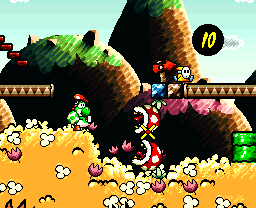
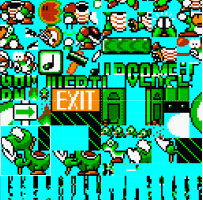
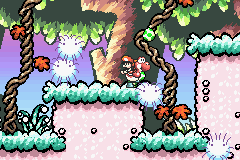
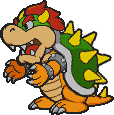
The Yoshi’s Island team went the other way. Nintendo’s marketing people had reportedly found an early version weak next to Donkey Kong Country, and it was too late to copy Rare’s approach, so Hino says they set out to fight back with a thoroughly hand-drawn look. The art was drawn by hand (Hisashi Nogami did backgrounds in marker pen), scanned, then rebuilt pixel by pixel, while a Super FX 2 chip in the cartridge rotated and resized objects on the fly. A couple of years later Paper Mario’s look began with a rough picture dated 5 March 1997, drawn in spare time by new designer Naohiko Aoyama: flat, picture-book characters in a 3D world, using 3D to make 2D stand out.

Pocket Mario: Game Boy to Nintendo DS (1989–2006)

The handhelds told the same story in miniature. The Game Boy (1989) allowed 40 sprites, ten to a line, each in three shades plus transparent, which is the canvas Super Mario Land was drawn on. The Game Boy Advance (2001) matched the Super Nintendo’s 128 sprites and 64-pixel sizes, added hardware scaling and rotation, and allowed 15 or 255 colours per sprite. That made it a comfortable home both for remakes such as Super Mario Advance 4 and for new pixel art such as Mario & Luigi: Superstar Saga and Yoshi Topsy-Turvy.
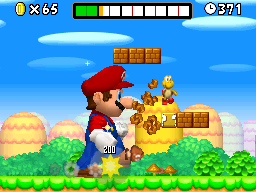
The Nintendo DS (2004) kept those sprite counts and allowed up to 65,536 colours, but the real change came in 2006, when New Super Mario Bros. became the first 2D Mario to use 3D models for its characters. Pixels still matter, though. When the team behind Super Mario Bros. Wonder (2023) set out to make Mario more expressive, they went back and studied his classic pixel-era poses before more than doubling the joints in his model.


Rips, sheets and fan games
Ripping is the fan habit of lifting the art out of a game and laying it out, frame by frame, on a sprite sheet. Online collections such as The Spriters Resource gather rips from Super Nintendo, Mega Drive and Game Boy Advance games in particular, and those sheets fed a whole genre of web comics. Neglected Mario Characters (1998) is cited by 1UP as the first sprite comic on the internet, and Bob and George, which began in 2000 with Mega Man sprites, made the style popular.
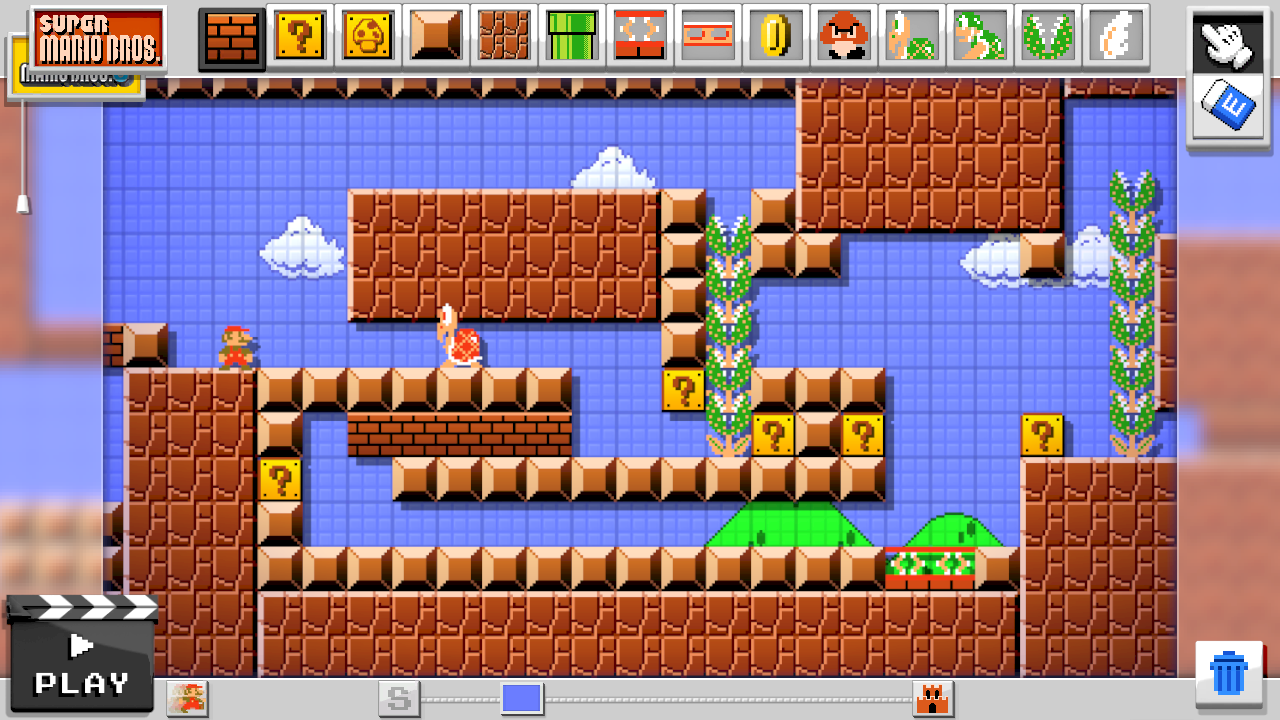
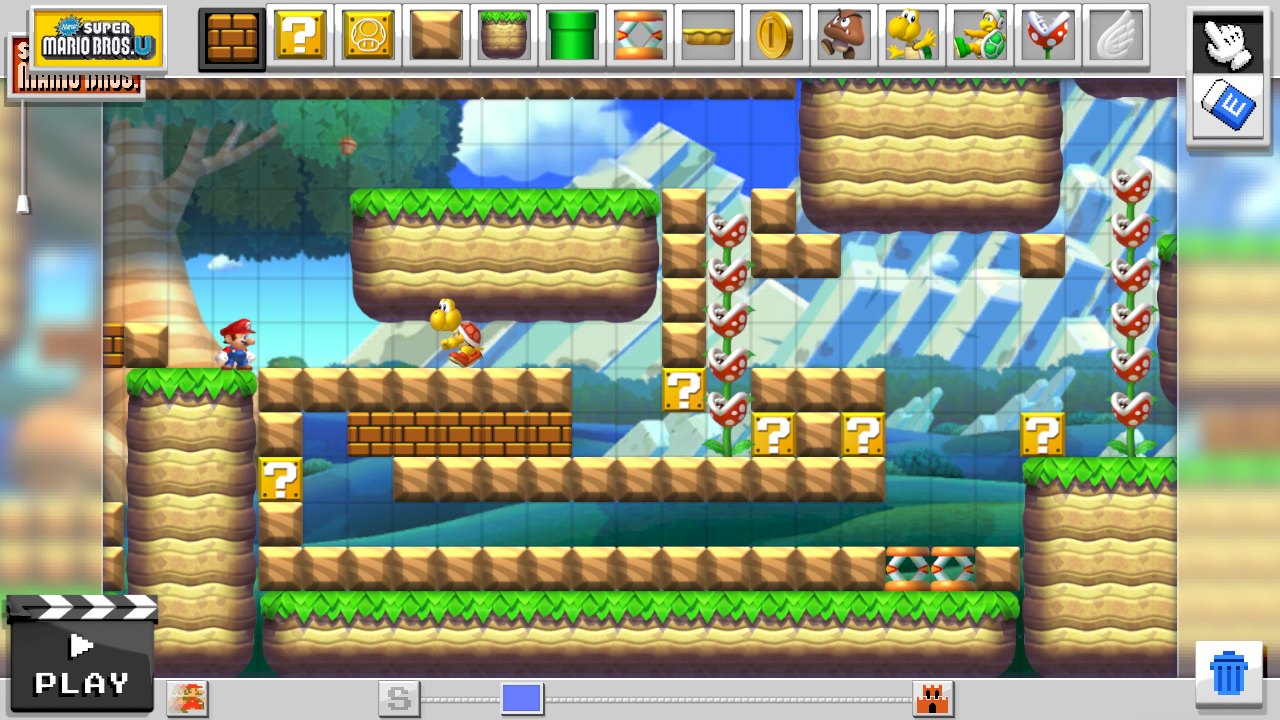
Nintendo eventually built a sprite toy of its own. Super Mario Maker (2015) began as an internal tool for building Mario levels and lets players make courses in the styles of Super Mario Bros., Super Mario Bros. 3, Super Mario World and New Super Mario Bros. U, with 153 costumes for 8-bit Mario. This archive was put together in the same spirit: the sheets are here for comics, pictures, fan games and pixel art. The sprites remain © Nintendo, and if you have ripped a set yourself, Luke will gladly put it online with full credit.

Timeline
The machines, the games and the moments that changed how Mario’s pixels were made.
Mario in pixels: a timeline
- TMS9918 1979Texas Instruments’ video chip popularises hardware sprites, and the name.
- Donkey Kong 1981Mario is designed on a 16-by-16 grid: cap, moustache, contrasting overalls.
- Famicom 198364 sprites, eight to a line, three colours each.
- Super Mario Bros. 1985Small Mario and Super Mario, in 8 KB of graphics.
- Super Mario Bros. 3 1988Black outlines, an eye clear of the cap and a raccoon tail.
- Game Boy 198940 sprites in three shades; Super Mario Land.
- Super Mario World 1990Super Nintendo sprites with 15 colours; Mario’s eyes get whites.
- Super Mario All-Stars 14 July 1993The NES games redrawn in the Super Mario World style (Japan).
- Donkey Kong Country November 1994Pre-rendered sprites from Silicon Graphics workstations.
- Yoshi’s Island August 1995Hand-drawn, scanned and pixelled; Super FX 2 effects (Japan).
- Super Mario RPG & Mario Kart 64 1996Pre-rendered sprites and billboarded drivers.
- Neglected Mario Characters 1998Cited as the first sprite comic on the internet.
- Game Boy Advance 2001Scaling and rotation in hardware; the Super Mario Advance remakes reuse All-Stars graphics.
- New Super Mario Bros. 2006The first 2D Mario to use 3D models.
- Super Mario Maker September 2015Players build courses in four sprite styles.
- Super Mario Bros. Wonder 2023The team studies Mario’s pixel-era poses for its new model.
Trivia & Interesting Facts
- Super Mario Bros.’ clouds and bushes are the same graphic in different colours, one of the ways the game squeezed into 8 KB of graphics.
- In the earliest Super Mario Bros. test the sky was pitch black; the blue arrived once the background could scroll sideways. Miyamoto also wanted to see a Mario about twice the size of the one in Mario Bros. jumping around.
- Super Mario Bros. 3 was first built with a bird’s-eye view. The black-and-white chequered floors are a leftover from that plan.
- Yoshi began with the keyword horse, which led Hino to draw something like a big lizard. Tezuka’s cuter rough sketch became the basis of the final design, and he kept insisting long afterwards that the red thing on Yoshi’s back is a shell.
- While making Super Mario Maker, a quarter of a century later, Hino says the team noticed that Super Mario World’s Bowser had the wrong colour hide: green when it should have been orange.
- Super Mario 64 mixes the two approaches: Mario is made of polygons, but the Bob-ombs and Wigglers are flat billboards, which Miyamoto says look shinier than Mario himself.
- Takashi Tezuka saw Super Mario Maker as a way to bring the fun of Mario Paint to a course editor.
- Yoshi’s Island is hand-drawn almost everywhere, but its opening and ending scenes use a pre-rendered look as a compromise.
- This archive holds Super Mario Bros. 3 twice: 101 sheets from the NES game and 94 from the All-Stars remake, 195 sheets of one game in two generations of pixels.
Sprite Gallery
A handful of favourites from across the archive’s eras. Select any sprite to see it larger.


Sources
Every fact on this page was checked against the 16 sources listed here.
Show sources
Super Luigi Bros, Super Mario Sprite Archive · Wikipedia, “Sprite (computer graphics)” · Nintendo, Ask the Developer Vol. 11: Super Mario Bros. Wonder, Part 2 · Nintendo UK, “Nintendo Classic Mini: NES special interview – Volume 3: Super Mario Bros.” · Nintendo UK, “Nintendo Classic Mini: SNES developer interview – Volume 5 · Wikipedia, “Mario” · Wikipedia, “Super Mario Bros.” · Wikipedia, “Super Mario World 2: Yoshi’s Island” · Wikipedia, “Super Mario All-Stars” · Wikipedia, “Donkey Kong Country” · Wikipedia, “Super Mario RPG” · Nintendo, Iwata Asks: Mario Kart Wii, “It Started With A Guy In Overalls” · Nintendo, Iwata Asks: Paper Mario: Sticker Star, “Going All Out with Stickers” · Wikipedia, “Sprite comic” · Wikipedia, “Super Mario Maker” · Nintendo, Iwata Asks: Super Mario Bros. 25th Anniversary, Volume 5
Images: Mario and all related characters, artwork and screenshots are © Nintendo; other artwork, covers and scans are © their respective owners. Images are used here for commentary and reference.