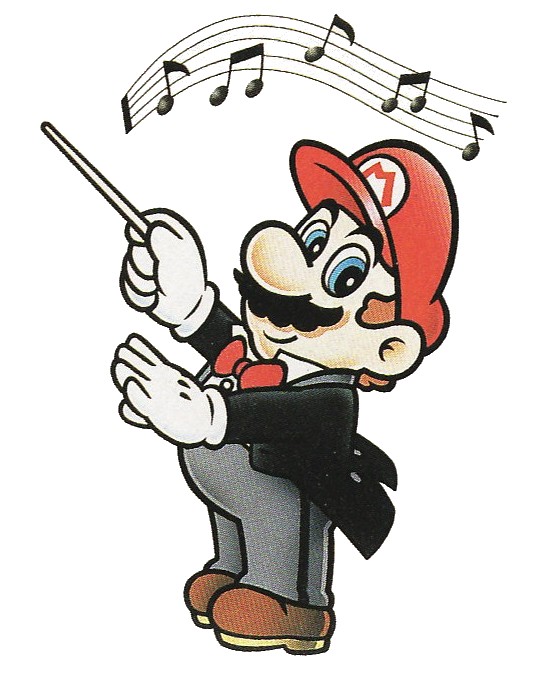
MIDI music, MP3 soundtracks and WAV sound effects ripped from Mario games old and new – from the Mario Bros. arcade to Mario Kart Wii.
Under the archive sits the story of how Mario learned to sing: Koji Kondo’s 1985 ground theme, the five-channel NES chip, the sample-built Super NES, Mario Paint’s do-it-yourself composer, Charles Martinet’s voice, the Mario Galaxy Orchestra and the songs from the Saturday-morning cartoons.
Collections:109 galleries
Files:3,141 in all
Formats:MIDI (music), MP3 (music and soundtracks), WAV (sound effects and voices)
Music (MIDI):77 collections, from the Atari 2600 and Intellivision Donkey Kong ports to New Super Mario Bros. and Mario & Luigi: Bowser’s Inside Story
Soundtracks (MP3):10 collections, among them the Super Mario 64 and Double Dash!! soundtracks and music from all three DIC cartoons
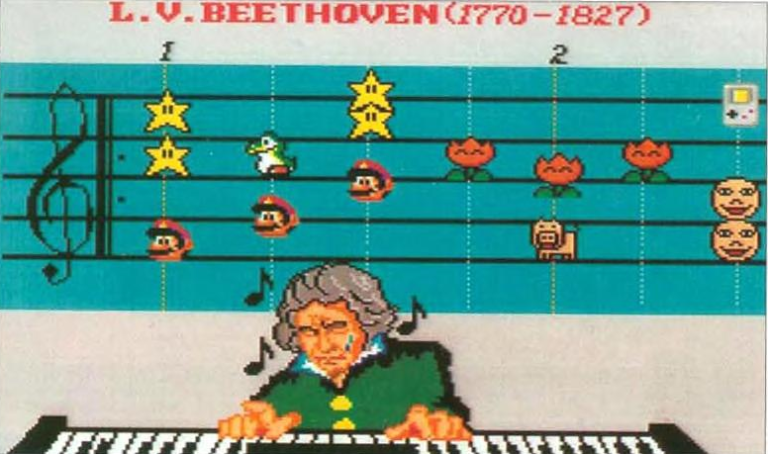
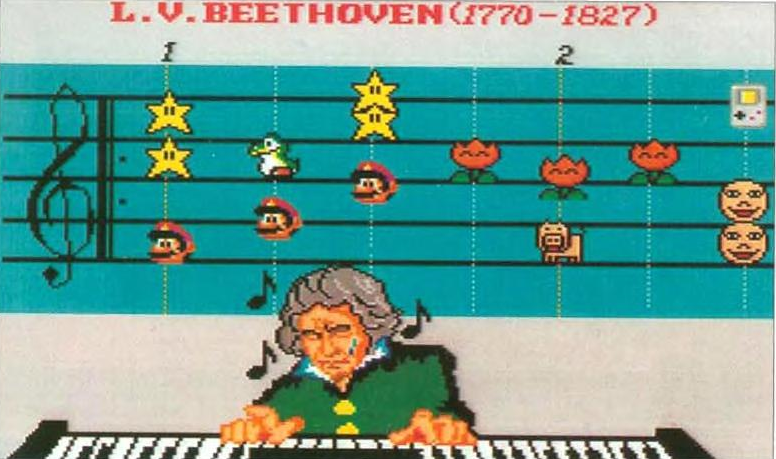
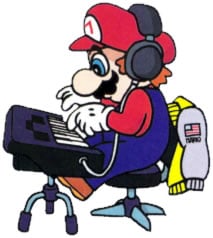
Mario at the keyboard, from the Mario Paint player’s guide.
Welcome to our sound and music archive featuring a vast collection of sounds and music heard in your favourite Mario titles old to new. The sounds are mostly in MIDI, MP3 and WAV formats, all of which play in any modern browser or media player – use them in your fan made games, or play the Mario death sound on repeat for a week to annoy your sister. We’re sure you’ll find a use for something in our collection.
Mario is the rare video game hero you can recognise with your eyes shut. Five notes of the ground theme, the ping of a coin, the boing of a jump or the sad little tune that plays when he falls down a pit are enough, and most of those sounds were written by one man, Koji Kondo, in 1985. This archive keeps them together with forty years of what followed: the samples of the Super NES, the orchestras and big bands of the Wii and Wii U years, and the voices that turned a sprite into a character.
The archive is shelved by format. MIDI makes up 77 of the 109 collections: a MIDI file stores the notes and their timing rather than a recording, which keeps it tiny but means it borrows its instruments from whatever plays it, so a tune can sound different on a phone and on a PC. The ten MP3 collections are actual recordings, including the Super Mario 64 soundtrack and themes from the Super Show, Adventures of Super Mario Bros. 3 and Super Mario World cartoons. The 22 WAV packs hold the sound effects and voice clips, from the four Mario Bros. arcade sounds to King Koopa’s cartoon one-liners. Use the search box or the format links to jump about; the history below explains where the sounds came from.
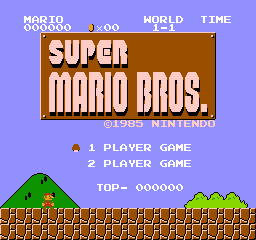
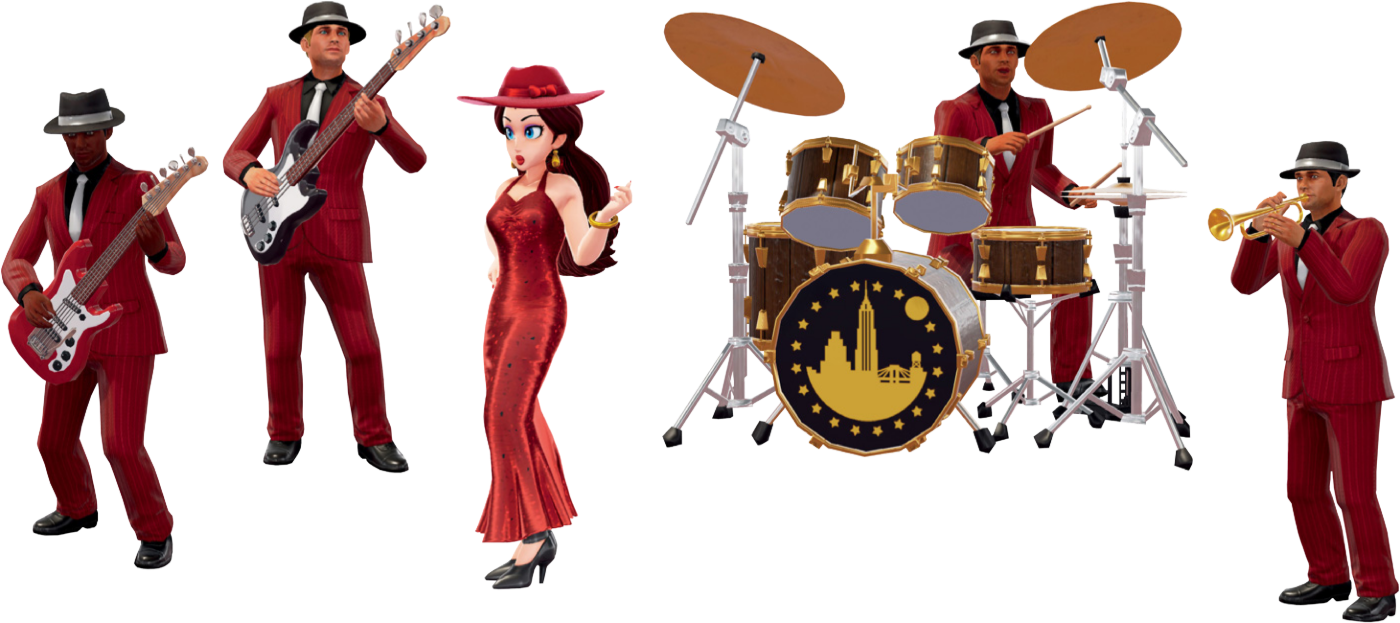
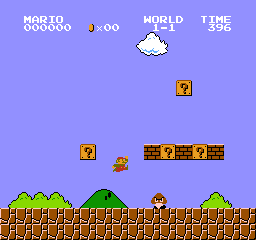
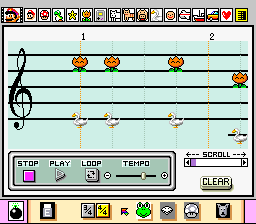
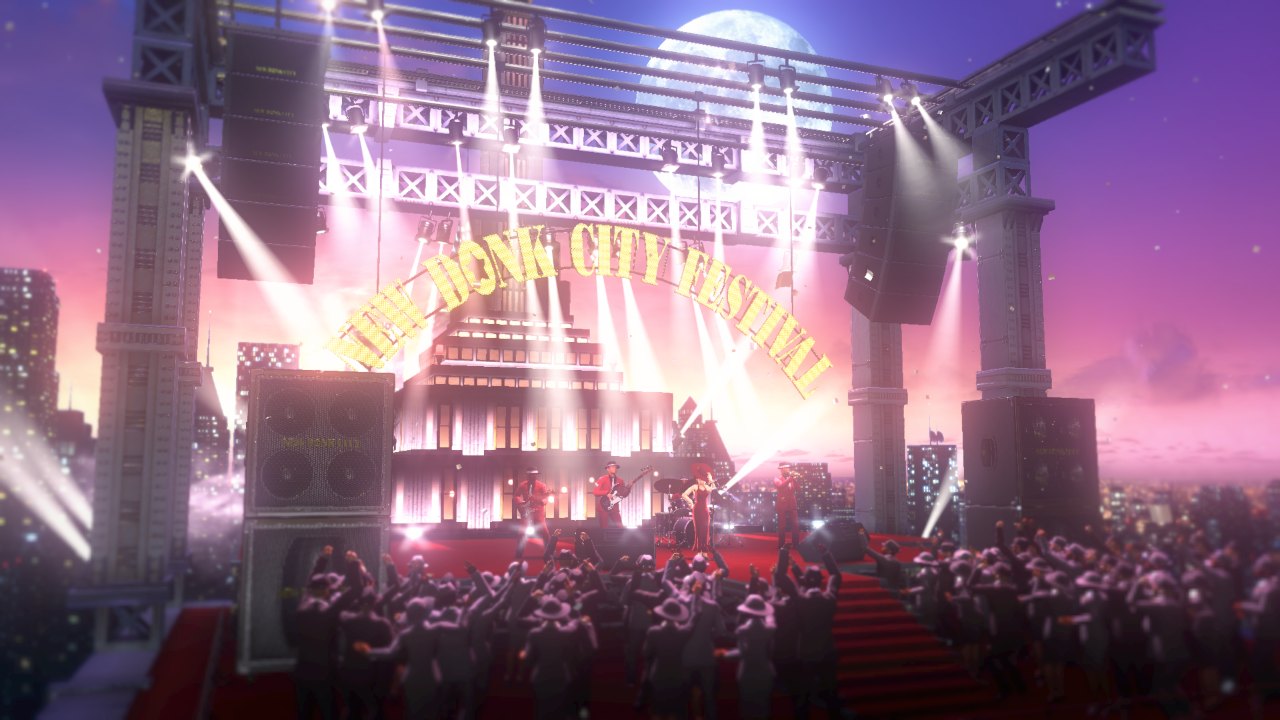
World 1-1, where the ground theme first played in 1985.Mario Paint’s Music mode: every note is a picture.The New Donk City Festival in Super Mario Odyssey, with a live band behind Pauline.
Quick Answers
The questions people most often ask about Mario’s music and sound effects, answered briefly.
Who composed the Super Mario Bros. theme?
Koji Kondo, who joined Nintendo in 1984 and wrote all six pieces of music and the sound effects for Super Mario Bros. in 1985. His ground theme (the overworld music) became, in 2023, the first video game recording chosen for the US National Recording Registry. More →
Why does the music speed up when time runs out?
When fewer than 100 units are left on the clock, the tune jumps to a faster tempo as a warning. Kondo has pointed to it as an example of a musical idea that only works in a game. More →
How many sounds could the NES play at once?
Its Ricoh 2A03 chip has five channels: two pulse waves, a triangle wave, a noise channel and a basic sample channel. Kondo worked with three tonal voices plus noise in 1985 and spread his chords wide to make them sound fuller. Super Mario Bros. 3 later used the sample channel for drums. More →
Why do the MIDI files sound different from the games?
A MIDI file is a list of notes and timings, not a recording. Your computer or phone supplies the instruments, so a MIDI of a Mario tune is a cover played by your device’s synthesiser. For the real thing, try the MP3 soundtracks. More →
Who is the voice of Mario?
Charles Martinet voiced Mario from a 1994 CD-ROM version of Mario Teaches Typing and through Super Mario 64 until August 2023, when he became Nintendo’s Mario Ambassador. Kevin Afghani has voiced Mario and Luigi since Super Mario Bros. Wonder (2023). More →
When did Mario music start using a real orchestra?
Super Mario Galaxy (2007) was the first Super Mario game to record its music with a full orchestra, about fifty musicians billed as the Mario Galaxy Orchestra. Galaxy 2 used around seventy, then 3D World switched to a jazz big band. More →
Who wrote the music for Mario Paint?
Hirokazu Tanaka, Ryoji Yoshitomi and Kazumi Totaka. Its Music mode let players compose their own songs on a stave with 15 picture-notes, from Mario and Yoshi to a cat and a pig. More →
What music did the Super Mario Bros. Super Show! use?
Each episode opened with the Mario Brothers Rap, built on the overworld theme, and closed with Lou Albano performing Do the Mario. Haim Saban and Shuki Levy are credited for the theme and music. More →
Mario’s sound has been shaped as much by the hardware as by the composers. Here is how it grew, from three bleeping voices on the Famicom to live orchestras, big bands and an app on your phone.
Koji Kondo and the ground theme
Super Mario Bros. (1985): six tunes and every sound effect by Koji Kondo.
Koji Kondo grew up playing the Electone organ and was studying art in Osaka, playing keyboards in a fusion band, when a friend showed him Nintendo’s advert for its first dedicated sound staff. It was the only company he applied to. He joined in 1984, did the audio for the arcade Punch-Out!! and was then handed a prototype of a new side-scroller. On the Famicom he usually wrote the music and the sound effects himself, which he felt kept the two in balance.
The ground theme cost him more time than any of the game’s other five pieces. His first attempt, written to early footage of Mario wandering an empty field, was light and slow, and the team did not like it against the game as it became. Working on a small keyboard, he rebuilt it on a hi-hat rhythm and an open, spread-out chord riff, tried several melodies over the top, kept the best one and raised the tempo to match how fast Mario was now running. The result has a swung, syncopated Latin feel; Kondo has named Latin and Portuguese music, the saxophonist Sadao Watanabe and the fusion band T-Square among his loves.
The theme also listens to the player. Once the timer falls under 100, the tune suddenly races ahead, the kind of game-only idea Kondo has cited when explaining what makes game music different. It went on to sell as a ringtone, fill concert halls and, in April 2023, become the first video game recording added to the US National Recording Registry. Kondo is now a senior officer in Nintendo’s Entertainment Planning & Development division, consulted on the score of The Super Mario Bros. Movie and was inducted into the Academy of Interactive Arts & Sciences Hall of Fame in 2024.
The ground theme’s home: World 1-1.The score bar. Under 100 on the clock, the music speeds up.
Three voices and a noise: the NES sound chip
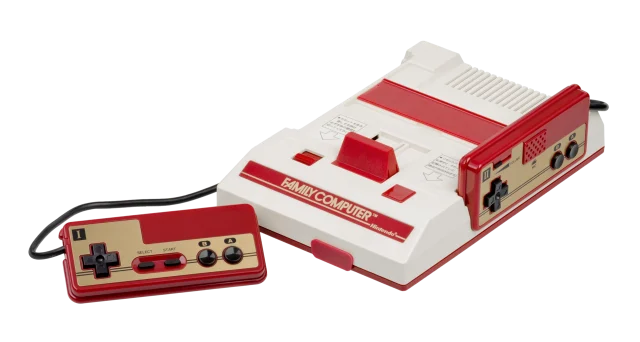
The Family Computer (1983), whose Ricoh sound hardware played Kondo’s first Mario scores.
The Famicom and NES make their music on a Ricoh chip, the 2A03, with five channels. Two produce pulse (square) waves with four pulse-width settings, one a stepped triangle wave that has no volume control of its own, one a noise generator for percussion and hiss, and the last plays crude 1-bit samples. Samples ate memory, so most early games ignored that fifth channel. Kondo described his palette as three channels and found that spreading the notes of a chord far apart made three voices sound bigger, a trick he stumbled on while designing sound effects.
Those effects are as famous as the music. Asked for a sound for Mario’s jump, Kondo objected at first that a leap is silent; he wrote a boing anyway, wanting a sound that was new to everyone and slightly comic, and it later turned up on a Japanese television quiz. Memory was so tight that the ending theme, written with an AABA shape, had to drop its contrasting B part; Kondo restored the full piece in the Disk System’s Super Mario Bros. 2. The Disk System’s extra sound channel also let him design his own waveforms, which he used to imitate violins and oboes. Even the European cartridge was retouched: the second tone of the coin sound and the death jingle differ from the Japanese and American versions.
By Super Mario Bros. 3 (1988) cartridges were large enough for the sample channel to earn its keep. Kondo built the score around percussion, using samples for timbales and booming timpani, and struggled for a long time over the first overworld tune before Miyamoto approved it. His favourite was the jaunty Hammer Brothers battle music, written to feel fun rather than tense.
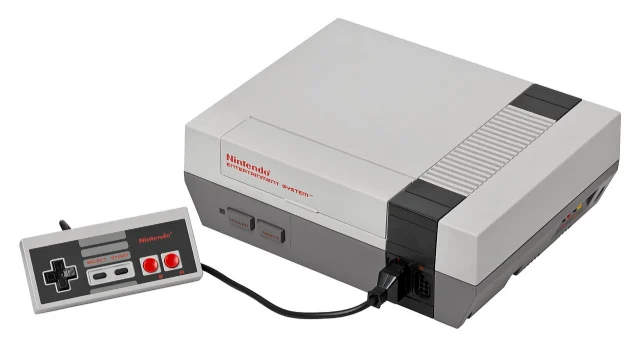
The coin: two tones, one of them changed for Europe.The Nintendo Entertainment System (1985).
Samples, Super NES and Mario Paint’s composer
The Super Famicom (1990), with its Sony-designed sound system.
The Super Famicom’s sound was designed by Sony engineer Ken Kutaragi and runs as a separate little computer: an 8-bit SPC700 processor driving a 16-bit DSP, with 64 KB of its own memory, eight voices in stereo, compressed samples and a hardware echo. For Super Mario World (1990) Kondo said, in a 1990 interview and a 1991 guidebook, that having eight channels instead of three was welcome, but that every instrument now had to be made as a sample before a note could be written, which made the work far harder. He composed at a keyboard, keyed the parts into a computer and checked them on the hardware, finishing the water theme first. He later said he liked pairing realistic instruments in unlikely combinations, such as banjo with steel drum.
The same machine gave everybody else a go. Mario Paint (1992), scored by Hirokazu Tanaka, Ryoji Yoshitomi and Kazumi Totaka, has a Music mode in which you stamp 15 picture-notes (Mario, Yoshi, a cat, a pig, a Game Boy and more) on a treble stave, up to three per beat, and watch Mario hop along the tune as it plays. Its limits, quarter notes only and no sharps or flats, became part of its charm; fans later cloned it on PCs, and Mario Paint covers became a YouTube genre of their own.
Super NES Mario music spread well beyond Kondo. Soyo Oka scored Super Mario Kart, Yoko Shimomura wrote Super Mario RPG (the biggest music set in our archive, 119 MIDI files) and Kondo returned for Yoshi’s Island, whose 119 sound effects fill another of our largest collections.
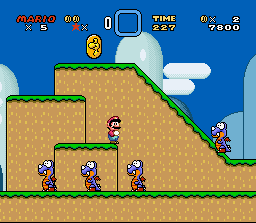
Super Mario World, the Super Famicom launch game, scored by Kondo with sampled instruments.Mario Paint’s Music mode, the composer that launched a thousand covers.
Mario finds his voice
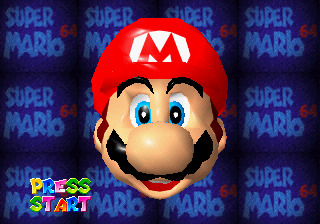
Super Mario 64’s stretchy title-screen face: Mario’s first 3D adventure and Martinet’s first on a Nintendo console.
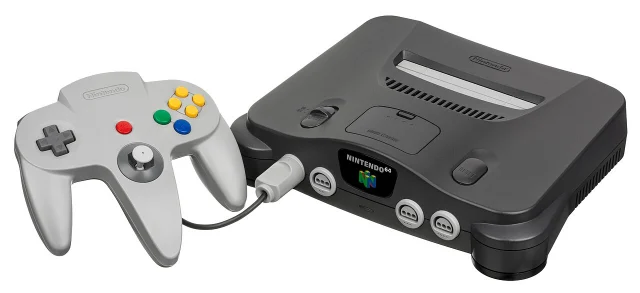
The Nintendo 64 could play around sixteen sounds at once, and Kondo no longer had to do the sound programming himself, so for Super Mario 64 (1996) he concentrated on bright, rhythmic tunes while a specialist, Yoji Inagaki, handled the effects. The old jump boing gave way to Mario’s own shouts, picked at random. Placeholder yells from sound libraries were replaced by an actor Nintendo of America hired: Charles Martinet.
Martinet had won the part in 1991, arriving at a trade-show audition as it was wrapping up. The brief was an Italian plumber from Brooklyn; he had a deep, gravelly voice in mind, decided it would be too much for children and made it friendlier. He first spoke as Mario in a 1994 CD-ROM version of Mario Teaches Typing and at length in Mario’s Game Gallery (1995) before recording Super Mario 64 in Seattle, with Nintendo Power’s Leslie Swan as Peach. He went on to voice Luigi, Wario, Waluigi and Baby Mario too, and Guinness World Records counted 100 Mario appearances by 2018. In August 2023 Nintendo announced that he was stepping back from the role, and he became its Mario Ambassador; Kevin Afghani took over in Super Mario Bros. Wonder.
The Nintendo 64, around sixteen simultaneous sounds.A Super Mario Sunshine secret course, sung a cappella.
Orchestras, big bands and Jump Up, Super Star!
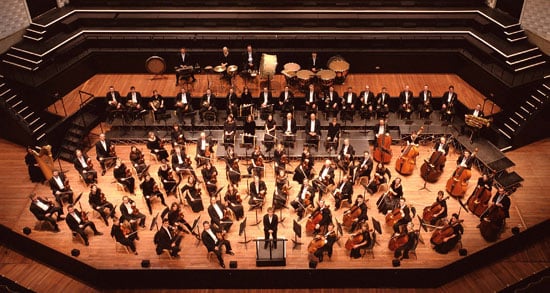
The Mario Galaxy Orchestra in session.
Super Mario Galaxy (2007) nearly sounded very different. Mahito Yokota spent three months on 28 Latin-flavoured pop tracks with theremin-like synths before Kondo turned down his main theme with the verdict that Mario should be cool rather than cute. Yokota thought about quitting. Instead three unlabelled demos went to Miyamoto, who picked the orchestral one because it felt the most like outer space; it was Kondo’s. About fifty players, billed as the Mario Galaxy Orchestra, then recorded the score at Sound Inn Studios in Tokyo under Koji Haishima, keeping time with a metronome pitched at the speed Mario runs. It was the first Super Mario game to record its music with a full orchestra.
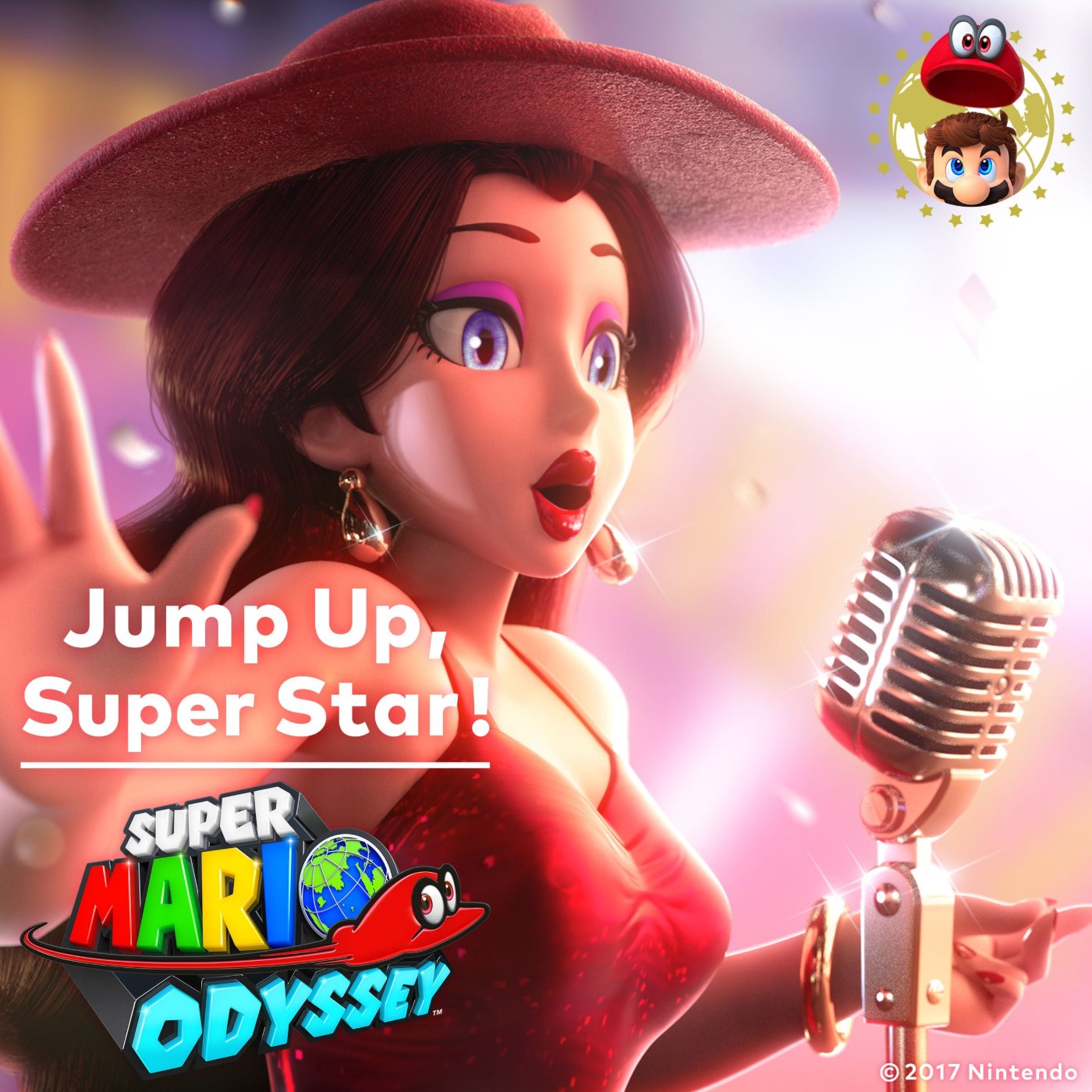
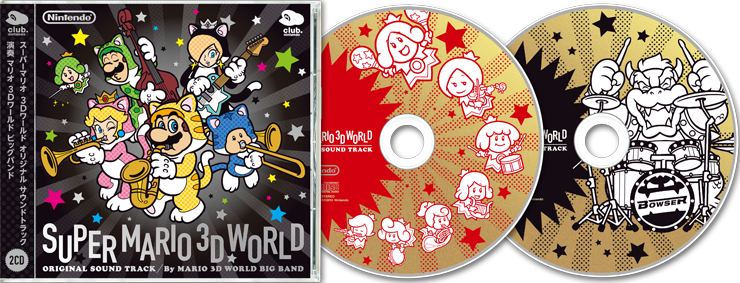
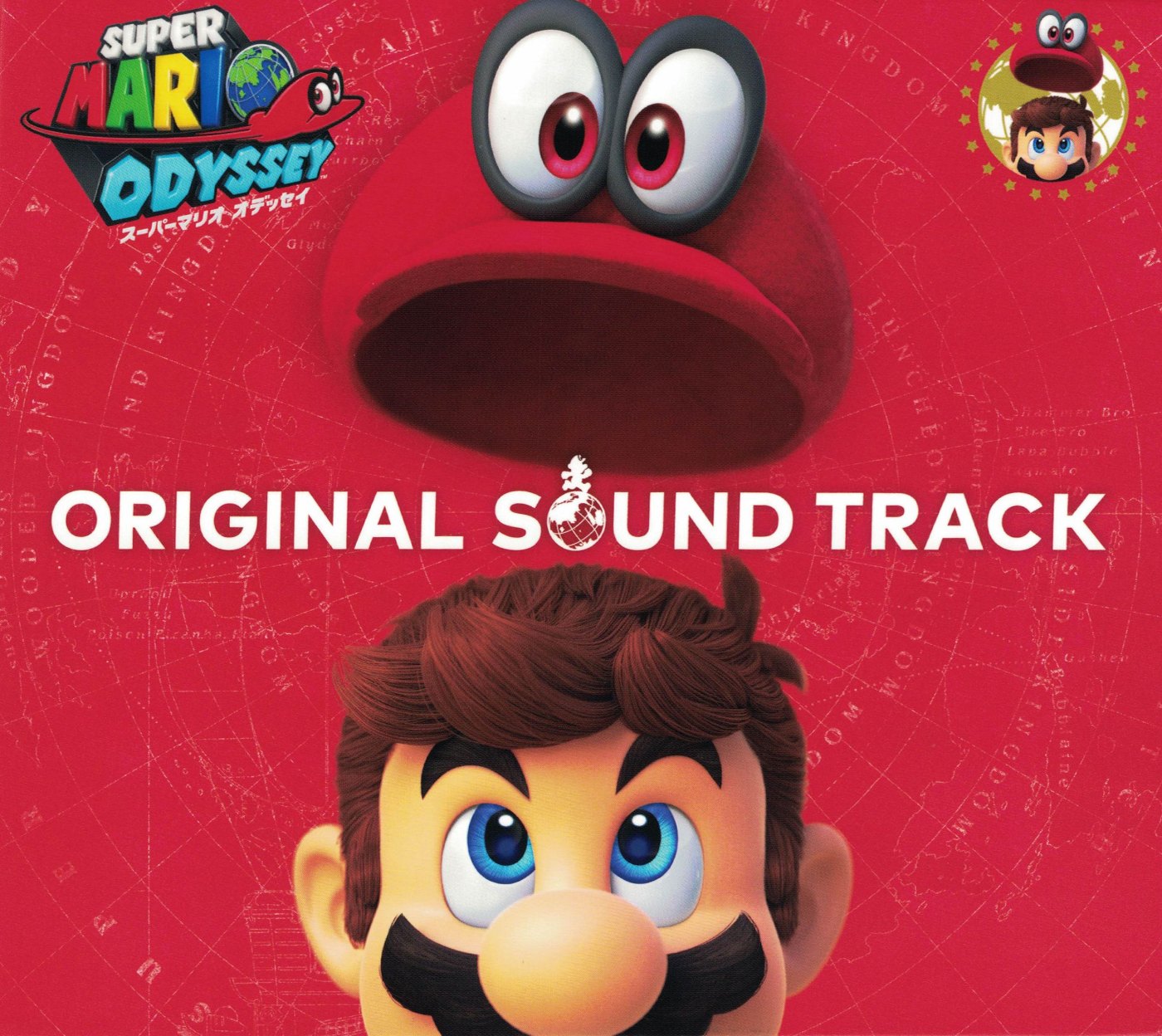
There was no going back. Galaxy 2 (2010) used about seventy musicians (sixty in the orchestra and ten in a big band), with Kondo supervising every track. Super Mario 3D World (2013) went to jazz with the trumpets and saxophones of the Mario 3D World Big Band, and Mario Kart 8 (2014) had its whole soundtrack played live by the Mario Kart Band. Super Mario Odyssey (2017) gave Pauline a passion for jazz and a song: Naoto Kubo’s Jump Up, Super Star!, sung by Kate Higgins (credited as Kate Davis) in English and Aimi Mukohara in Japanese.
Kondo kept his hand in throughout, as composer, supervisor or sound director, and is credited again on Super Mario Bros. Wonder (2023) alongside Shiho Fujii, Sayako Doi and Chisaki Shimazu, the game where a Wonder Flower can make the Piranha Plants burst into song. At the end of October 2024 Nintendo opened its Nintendo Music app for Switch Online members with Super Mario Bros., Galaxy and Odyssey on day one; Super Mario Sunshine joined in August 2026.
The Jump Up, Super Star! single cover.New Donk City’s four musicians, whom Mario has to round up for Pauline’s festival.
The cartoons’ music
The Super Mario Bros. Super Show! logo.
Mario’s music left the console almost at once. Japanese radio listeners sent in lyrics for the ground theme, and in 1986 a sung version, Go Go Mario!!, came out on record; the tune also scores the 1986 anime film. In America, The Super Mario Bros. Super Show! (syndicated from 4 September 1989, 65 episodes) credits Haim Saban and Shuki Levy for its theme and music. Each episode opened with the Mario Brothers Rap, co-written with Andrew Dimitroff and built on the overworld theme, and closed with wrestler Lou Albano, the live-action Mario, performing Do the Mario in front of a green screen. Every cartoon also slipped in a cover of a pop hit; the North American DVDs replaced them with instrumentals from the later shows.
The Adventures of Super Mario Bros. 3 (NBC, from 8 September 1990) moved the brothers to Walker Boone and Tony Rosato, with music by Michael Tavera. It too licensed songs, including two by Milli Vanilli that the DVD releases replaced because of the duo’s lip-syncing scandal. The constant across all three DIC series, through Super Mario World in 1991, is Harvey Atkin’s King Koopa, whose bellowing is preserved in our King Koopa quote collection.
The Adventures of Super Mario Bros. 3 (1990).The Super Mario World cartoon (1991), the last of DIC’s three series.
Advertisement
Timeline: Forty Years of Mario Music
Landmarks in Mario’s music and sound, from Kondo’s first day to the Nintendo Music app.
Key dates
Koji Kondo joins Nintendo1984Hired as one of the company’s first dedicated sound staff; his first job is the audio for the arcade Punch-Out!!.
Super Mario Bros.13 September 1985Six pieces of music and every sound effect by Kondo, squeezed onto a 40 KB cartridge.
Go Go Mario!!1986A sung version of the ground theme, with lyrics sent in by radio listeners, is released on record.
Super Mario Bros. 2 (Disk System)June 1986The sequel brings back the middle section that memory limits had cut from the first game’s ending theme.
Super Mario Bros. 323 October 1988Sampled timbales and timpani from the NES’s fifth channel; the Hammer Brothers battle tune is Kondo’s favourite.
The Super Mario Bros. Super Show!4 September 1989The Mario Brothers Rap opens each episode; Lou Albano’s Do the Mario closes it.
Super Mario World21 November 1990The Super Famicom launch game: eight sampled voices in place of the Famicom’s handful.
Mario Paint14 July 1992Music mode turns every owner of a Super NES mouse into a composer.
Mario Teaches Typing (CD-ROM)1994Charles Martinet speaks as Mario in a game for the first time.
Super Mario 6423 June 1996Martinet’s Mario reaches a Nintendo console, and shouts replace the jump boing.
Luigi’s Mansion14 September 2001Luigi hums his own theme tune as he creeps through the house; music by Kazumi Totaka and Shinobu Tanaka.
Super Mario Galaxy1 November 2007Mahito Yokota and Kondo write the first Super Mario score recorded with a full orchestra, the Mario Galaxy Orchestra.
Super Mario 3D World21 November 2013The Mario 3D World Big Band swaps the orchestra for jazz.
Super Mario Odyssey27 October 2017Jump Up, Super Star! gives the series a vocal anthem, sung by Kate Higgins.
National Recording RegistryApril 2023The ground theme becomes the first video game recording selected by the Library of Congress.
A new voiceAugust–October 2023Martinet becomes Mario Ambassador; Kevin Afghani voices Mario and Luigi in Super Mario Bros. Wonder.
Nintendo MusicOctober 2024Nintendo’s music app launches with Super Mario Bros., Super Mario Galaxy and Super Mario Odyssey among its first soundtracks.
Trivia & Interesting Facts
When Kondo was asked to give Mario’s jump a sound, he first pointed out that jumping is silent. The boing he wrote anyway later turned up on a Japanese TV quiz show.
The ground theme’s style owes something to Sister Marian, a 1984 track by the Japanese fusion band T-Square (then THE SQUARE), whose rhythms Kondo found easy for Japanese listeners to follow.
As a ringtone the theme spent 112 straight weeks in the US top ten up to November 2004, sold about 747,900 copies in the US in 2006 and was certified gold by the RIAA in 2010.
European copies of Super Mario Bros. play a slightly different second note in the coin sound and a slightly different death jingle.
Super Mario Bros.’ ending theme was planned in four parts (AABA) and trimmed to AA because space ran out. The lost part resurfaced the following year in the Disk System sequel, Super Mario Bros. 2.
Super Mario Galaxy’s orchestra recorded to a metronome matched to the speed of Mario’s running feet, so the music would move with him.
Before the orchestra, Mahito Yokota had spent three months writing 28 Latin-pop tracks for Galaxy. Kondo’s rejection of the main theme sent him back to the drawing board.
Beethoven, Mario Paint style, from the player’s guide.Click the O in Mario Paint’s title logo and it fizzes, explodes and plays a hidden tune by Kazumi Totaka.
Guinness World Records recognised Charles Martinet in 2018 for playing the same character, Mario, in 100 games, a record for a video game voice actor.
The Super Show’s cartoons each featured a cover of a pop song, and one, a Huey Lewis and the News number, was judged unsuitable because of its swearing. Only the 1989 VHS tapes keep the original covers.
Nintendo 3DS Sound with its Super Mario Bros. sound-effect set.The Nintendo 3DS’s built-in Sound app has a set of Super Mario Bros. sound effects you can fire off with the shoulder buttons.
Kazumi Totaka, one of Mario Paint’s composers, also scored Luigi’s Mansion and voiced Professor E. Gadd in it.
Soundtracks, Music Rooms & Sound Toys
Soundtrack albums, in-game music rooms and sound toys from across the series.
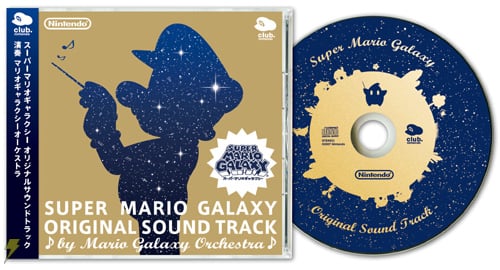
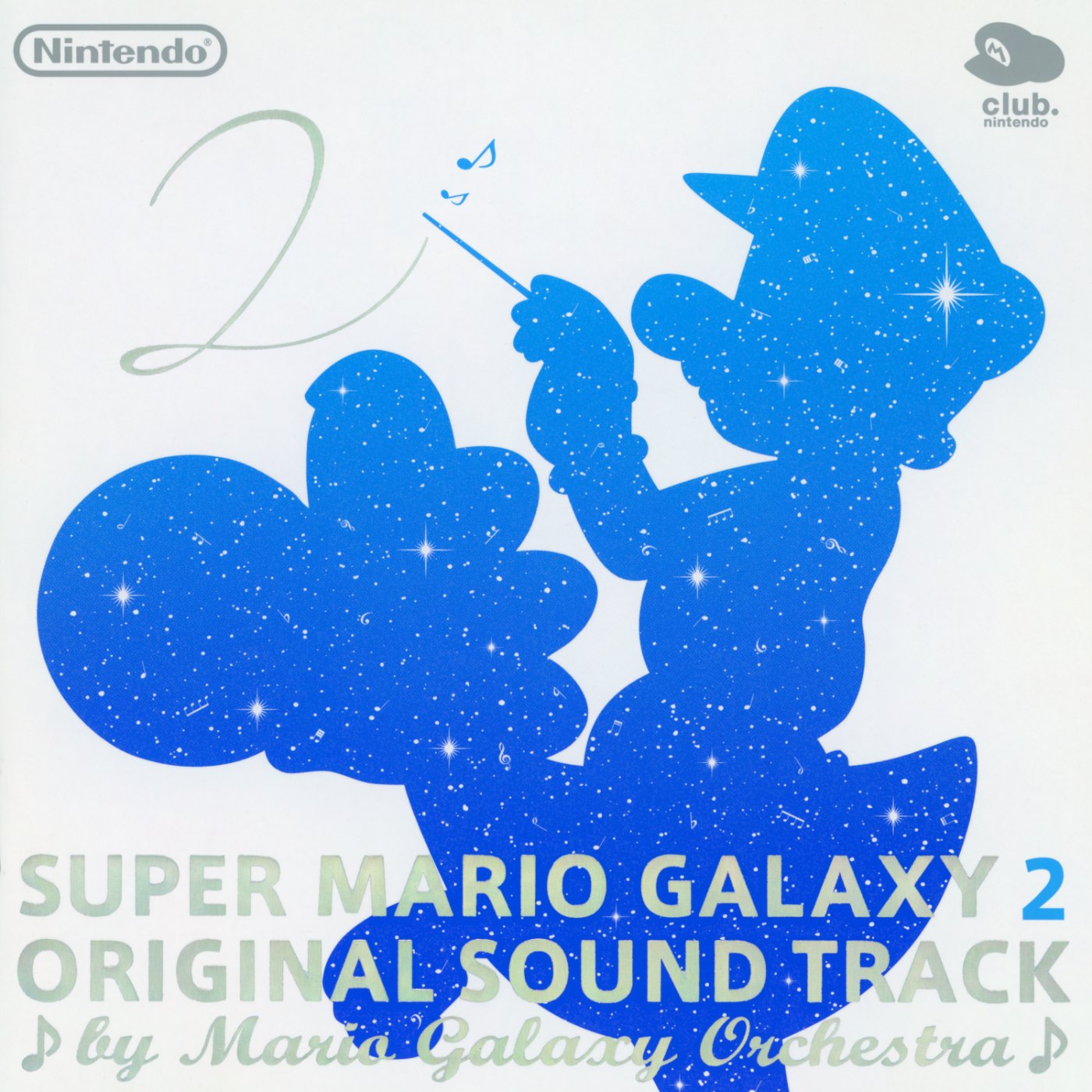
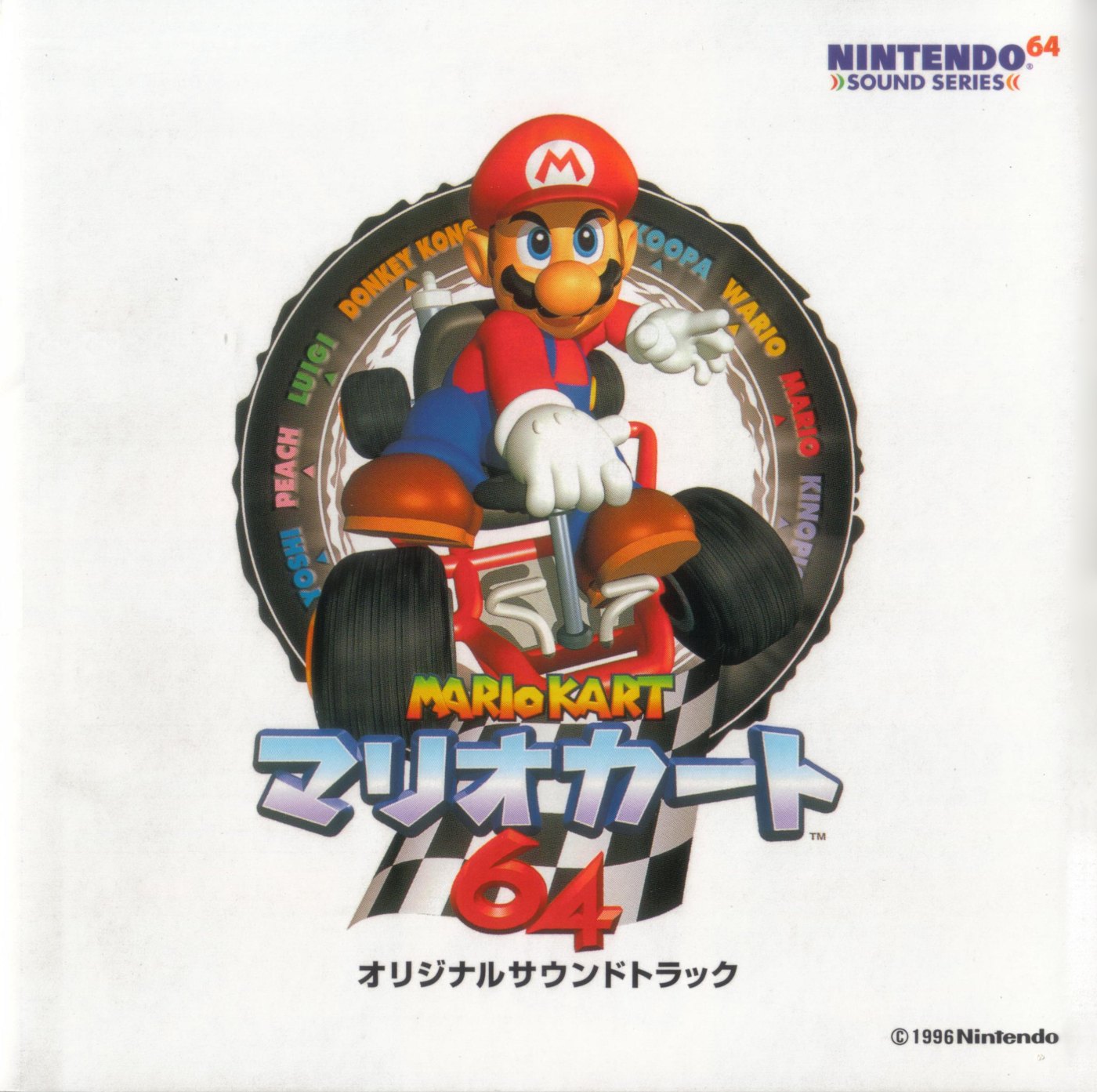
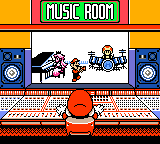
The Club Nintendo Super Mario Galaxy Original Soundtrack (2008).Super Mario Galaxy 2 Original Soundtrack, a Japanese Club Nintendo reward.Super Mario 3D World Original Soundtrack, played by the Mario 3D World Big Band.The four-disc Super Mario Odyssey Original Soundtrack.Mario Kart 64 Original Soundtrack.Game & Watch Gallery 2’s Music Room.Super Mario Bros. 3’s Music Box, which sends map enemies to sleep.Mario in Mario Paint’s Music mode artwork.
Sources
Every fact on this page was checked against the 33 sources listed here.
To provide the best experiences, we use technologies like cookies to store and/or access device information. Consenting to these technologies will allow us to process data such as browsing behavior or unique IDs on this site. Not consenting or withdrawing consent, may adversely affect certain features and functions.
Functional
Always active
The technical storage or access is strictly necessary for the legitimate purpose of enabling the use of a specific service explicitly requested by the subscriber or user, or for the sole purpose of carrying out the transmission of a communication over an electronic communications network.
Preferences
The technical storage or access is necessary for the legitimate purpose of storing preferences that are not requested by the subscriber or user.
Statistics
The technical storage or access that is used exclusively for statistical purposes.The technical storage or access that is used exclusively for anonymous statistical purposes. Without a subpoena, voluntary compliance on the part of your Internet Service Provider, or additional records from a third party, information stored or retrieved for this purpose alone cannot usually be used to identify you.
Marketing
The technical storage or access is required to create user profiles to send advertising, or to track the user on a website or across several websites for similar marketing purposes.

 Donkey Kong (Atari 2600) musicMIDI2 files
 Donkey Kong (Intellivision) musicMIDI2 filesMIDISound & musicDonkey Kong Jr. (Intellivision) musicDonkey Kong Jr. (Intellivision) musicMIDI6 filesMIDISound & musicDr. Mario sounds and musicDr. Mario sounds and musicMIDI14 filesMIDISound & musicGame & Watch GalleryGame & Watch GalleryMIDI7 files
 Game & Watch Gallery 2 musicMIDI1 file
 Game & Watch Gallery 4 (GBA) musicMIDI7 files
 Hotel Mario (Philips CD-i)MIDI1 file
 Luigi’s Mansion musicMIDI17 filesMIDISound & musicMario & Luigi: Bowser’s Inside Story (Nintendo DS) musicMario & Luigi: Bowser’s Inside Story (Nintendo DS) musicMIDI13 filesMIDISound & musicMario & Luigi: Partners in Time (Nintendo DS) musicMario & Luigi: Partners in Time (Nintendo DS) musicMIDI43 files
 Mario & Luigi: Superstar Saga (Game Boy Advance) musicMIDI49 filesMIDISound & musicMario Bros. (Arcade) musicMario Bros. (Arcade) musicMIDI2 files
 Mario Bros. musicMIDI2 files
 Mario Golf Advance Tour (GBA) musicMIDI24 filesMIDISound & musicMario Golf musicMario Golf musicMIDI25 files
 Mario Golf: Toadstool Tour sounds and musicMIDI7 filesMIDISound & musicMario Hoops 3-on-3 (Nintendo DS) musicMario Hoops 3-on-3 (Nintendo DS) musicMIDI1 fileMIDISound & musicMario is Missing NES musicMario is Missing NES musicMIDI2 files
 Mario Kart (Nintendo DS) musicMIDI27 files
 Mario Kart Double Dash musicMIDI14 files
 Mario Kart: Super Circuit musicMIDI19 files
 Mario Paint musicMIDI15 files
 Mario Party (Nintendo DS) musicMIDI1 file
 Mario Party 2 musicMIDI28 files
 Mario Party 3 musicMIDI20 files
 Mario Party 6 musicMIDI3 files
 Mario Party 7 musicMIDI1 file
 Mario Party musicMIDI52 files
 Mario Power Tennis musicMIDI4 filesMIDISound & musicMario Teaches Typing 2 musicMario Teaches Typing 2 musicMIDI8 filesMIDISound & musicMario Tennis 64 musicMario Tennis 64 musicMIDI8 filesMIDISound & musicMario Tennis Advance musicMario Tennis Advance musicMIDI7 filesMIDISound & musicMario Tennis sounds and musicMario Tennis sounds and musicMIDI2 filesMIDISound & musicMario Tennis VBoy musicMario Tennis VBoy musicMIDI1 fileMIDISound & musicMario vs. Donkey Kong 2 musicMario vs. Donkey Kong 2 musicMIDI1 file
 Mario vs. Donkey Kong musicMIDI2 filesMIDISound & musicMario’s Game Gallery musicMario’s Game Gallery musicMIDI11 files
 Mario’s Picross sounds and musicMIDI2 filesMIDISound & musicMario’s Time Machine musicMario’s Time Machine musicMIDI7 filesMIDISound & musicNew Super Mario Bros. (Nintendo DS) musicNew Super Mario Bros. (Nintendo DS) musicMIDI23 files
 Paper Mario musicMIDI69 files
 Super Mario Advance 2 musicMIDI6 files
 Super Mario Advance 4 musicMIDI56 files
 Super Mario Advance musicMIDI7 filesMIDISound & musicSuper Mario Allstars musicSuper Mario Allstars musicMIDI18 files
 Super Mario Bros. 2 musicMIDI7 filesMIDISound & musicSuper Mario Bros. 3 musicSuper Mario Bros. 3 musicMIDI24 files
 Super Mario Bros. Deluxe sounds and musicMIDI11 files
 Super Mario Bros. musicMIDI7 filesMIDISound & musicSuper Mario Kart 64 musicSuper Mario Kart 64 musicMIDI56 files
 Super Mario Kart musicMIDI57 files
 Super Mario Land 2 sounds and musicMIDI54 files
 Super Mario RPG musicMIDI119 files
 Super Mario Sunshine musicMIDI22 files
 Super Mario World musicMIDI74 filesMIDISound & musicSuper Princess Peach (Nintendo DS)Super Princess Peach (Nintendo DS)MIDI3 filesMIDISound & musicTetris & Dr. Mario musicTetris & Dr. Mario musicMIDI9 filesMIDISound & musicWario BlastWario BlastMIDI16 filesMIDISound & musicWario Land 2 (Game Boy)Wario Land 2 (Game Boy)MIDI38 filesMIDISound & musicWario Land 3 (Game Boy) musicWario Land 3 (Game Boy) musicMIDI41 filesMIDISound & musicWario Land 4 musicWario Land 4 musicMIDI6 filesMIDISound & musicWario Land: Super Mario Land 3 musicWario Land: Super Mario Land 3 musicMIDI42 filesMIDISound & musicWario World sounds and musicWario World sounds and musicMIDI1 fileMIDISound & musicWario’s Woods musicWario’s Woods musicMIDI4 filesMIDISound & musicWarioWare Inc Mega Partygames musicWarioWare Inc Mega Partygames musicMIDI4 filesMIDISound & musicWarioWare Inc. musicWarioWare Inc. musicMIDI4 filesMIDISound & musicWarioWare Touched musicWarioWare Touched musicMIDI7 filesMIDISound & musicWarioWare Twisted musicWarioWare Twisted musicMIDI5 filesMIDISound & musicYoshi’s Cookie (Game Boy)Yoshi’s Cookie (Game Boy)MIDI5 filesMIDISound & musicYoshi’s Cookie musicYoshi’s Cookie musicMIDI7 filesMIDISound & musicYoshi’s Island musicYoshi’s Island musicMIDI5 files
 Yoshi’s Safari musicMIDI27 filesMIDISound & musicYoshi’s Story musicYoshi’s Story musicMIDI20 filesMIDISound & musicYoshi’s Touch & Go musicYoshi’s Touch & Go musicMIDI4 files
 Adventures of Super Mario Bros. 3MP32 files
 Super Mario 64 OST musicMP336 files
 Super Mario Bros. Super Show soundtracksMP33 files
 Super Mario World TV Show musicMP32 files
 King Koopa Quote collection from the Super Mario Bros. Cartoons in MP3 formatWAV85 files
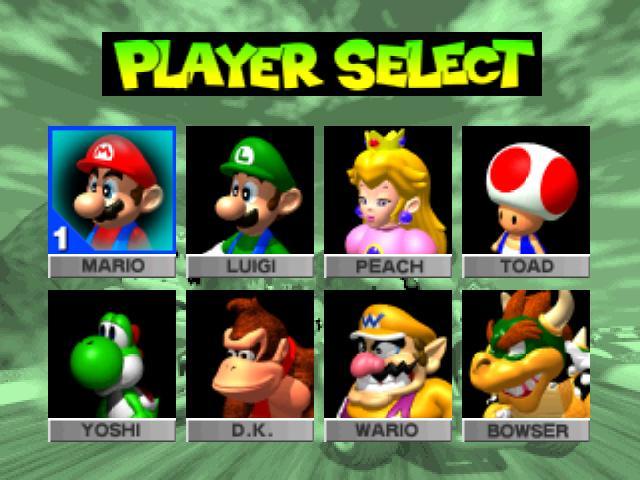 Mario Kart 64 sound effectsWAV
 Mario Kart Wii sound effects and voice samplesWAV121 files
 Super Mario World 2: Yoshi’s Island sound effectsWAV119 files