
Super Mario Games on the Super Nintendo (SNES)
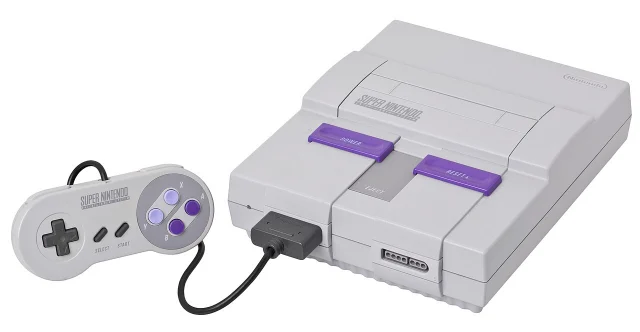
Nintendo’s 16-bit Super Famicom, sold in the West as the Super NES, gave Mario a cape, a dinosaur and a go-kart. It launched in Japan on 21 November 1990 with Super Mario World, which came in the box with the American console, and went on to invent kart racing, hand the lead to Yoshi and send Mario into his first role-playing game.
SLB covers 18 Mario games on the system, from those headliners to mouse-driven puzzlers, a Super Scope safari, Japan-only downloads and licensed edutainment. Nintendo sold 49.10 million consoles.
Overview

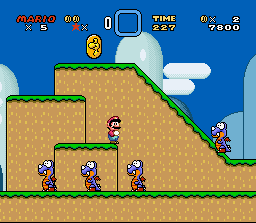
The Super Famicom arrived with Mario already on board. Super Mario World launched with the console in Japan in November 1990 and came packed with the Super NES in North America, introducing Yoshi, the cape and a map full of secret exits. It set the tone for a machine that would spend the next eight years stretching what Mario could be.
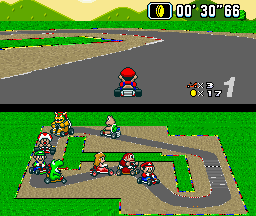
In 1992 Mario Paint turned the console into a sketchpad and music studio with its own mouse, and Super Mario Kart used the hardware’s Mode 7 trick to invent a genre. 1993 brought Super Mario All-Stars, with all four NES adventures rebuilt in 16-bit, the Super Scope shooter Yoshi’s Safari and Game Freak’s Mario & Wario. Licensees filled the gaps with Yoshi’s Cookie and a run of edutainment led by Mario is Missing!
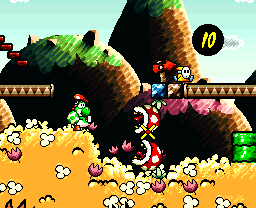
The late era was some of the best Mario ever made. Super Mario World 2: Yoshi’s Island (1995) put Yoshi in charge of a crying Baby Mario with the help of the Super FX 2 chip, and Square’s Super Mario RPG (1996) began Mario’s life as a role-playing hero. In Japan the console kept going with downloads: Mario’s Super Picross and Wrecking Crew ’98 both lived on Nintendo Power flash cartridges.
Nintendo EAD made the big four, Super Mario World, Super Mario Kart, All-Stars and Yoshi’s Island, while R&D1 produced Mario Paint and Yoshi’s Safari. Outside studios made much of the rest: Game Freak, Square, Bullet-Proof Software, The Software Toolworks and Jupiter among them. Look back at the 8-bit years on our NES hub, or carry on into 3D on the Nintendo 64 hub.
- Super Mario World – 96 exits, a cape and Yoshi: the 16-bit platformer at its purest.
- Super Mario Kart – the game that started the biggest series in racing.
- Yoshi’s Island – hand-drawn, inventive and still gorgeous.
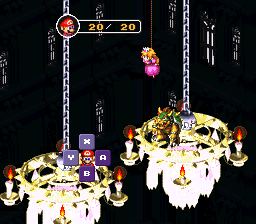
Quick Answers
Short answers to the questions people ask most about Mario on the Super Famicom and Super NES.
How many Mario games are on the SNES?
Super Luigi Bros covers 18 Super Famicom and Super NES games with a Mario connection, from Super Mario World (1990) to Wrecking Crew ’98 (1998). The More Mario list at the bottom of this page adds Satellaview specials and other rarities. More →
What was the first Mario game on the Super Nintendo?
Super Mario World, a launch game for the Super Famicom on 21 November 1990 alongside F-Zero, and the pack-in game with the Super NES in North America. More →
What was the last Mario game on the SNES?
In North America, Super Mario RPG: Legend of the Seven Stars (13 May 1996). In Japan, Wrecking Crew ’98, which was written to Nintendo Power flash cartridges from 1 January 1998 and sold on a normal cartridge from 23 May 1998. More →
Which is the best-selling Mario game on the SNES?
Super Mario World, usually given as 20.61 million copies, most of them packed in with a console. Nintendo has not published per-game totals for the Super NES, so treat every figure as unofficial. More →
How many SNES consoles did Nintendo sell?
Nintendo’s investor figures give 49.10 million Super Famicom and Super NES consoles and 379.06 million games sold worldwide (as of 30 September 2026). More →
Which SNES Mario games used the mouse?
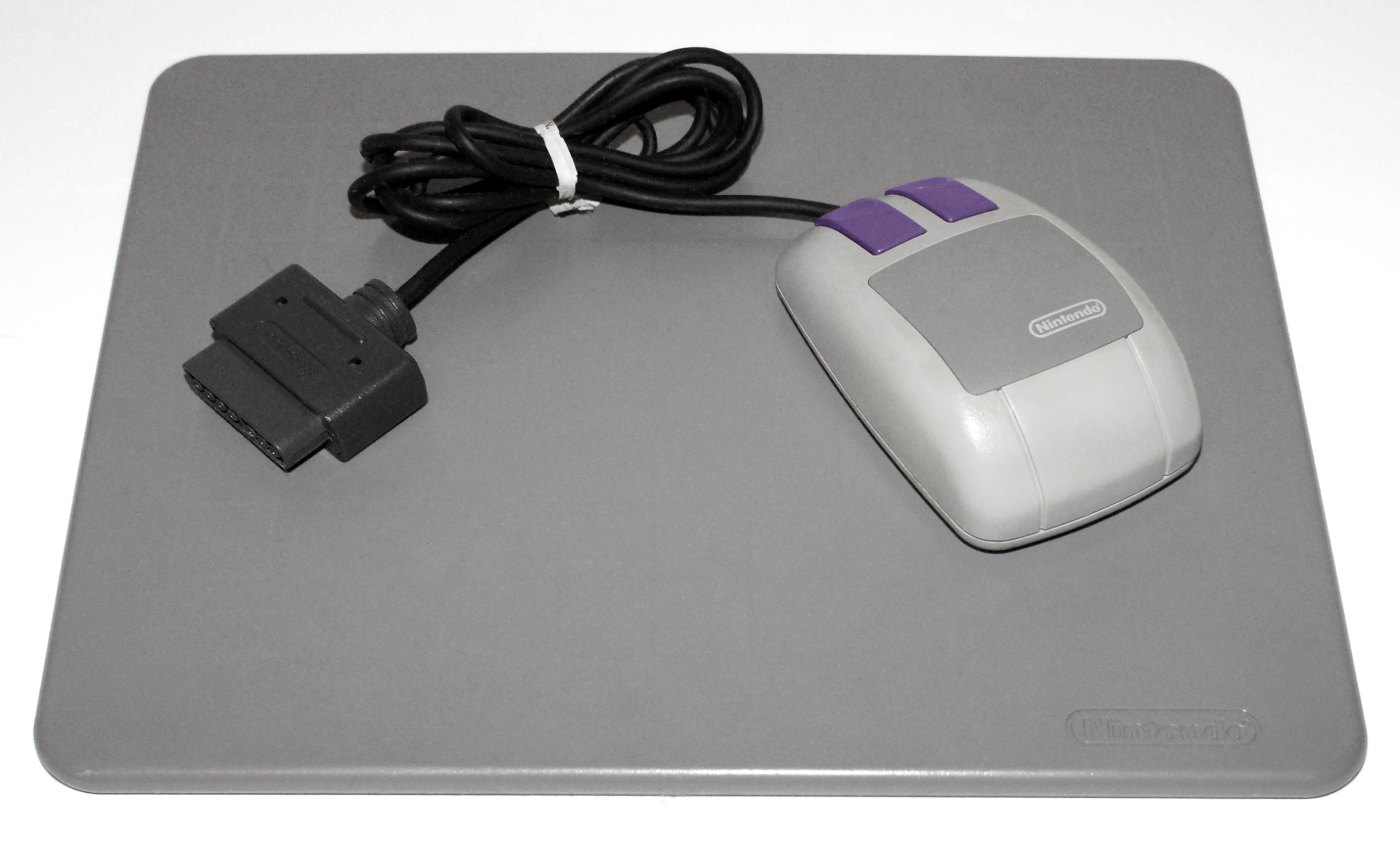
The Super NES Mouse was made for Mario Paint, which came in the box with it. Mario & Wario, Mario’s Super Picross and the three Mario’s Early Years! games also support it. More →
Which SNES Mario games were Japan-only?
Mario & Wario (until Switch Online in October 2025), Mario’s Super Picross (until Europe’s Wii Virtual Console in 2007) and Wrecking Crew ’98 (until Switch Online in 2024), plus the Satellaview broadcasts. The reverse also happened: Tetris & Dr. Mario never came out in Japan. More →
Was Super Mario RPG released in Europe?
Not on the Super NES. Europe and Australia first got it on the Wii Virtual Console on 22 August 2008; the full Switch remake followed in November 2023. More →
Can you still play SNES Mario games today?
Eight of them. The Super Nintendo Entertainment System app in Nintendo Classics, part of Nintendo Switch Online, includes Super Mario World, Yoshi’s Island, Super Mario Kart, Super Mario All-Stars, Mario Paint, Mario & Wario, Mario’s Super Picross and Wrecking Crew ’98. More →
All SNES Mario Games
Every Super Famicom and Super NES game with its own page on Super Luigi Bros, in order of its first release on the system. Where a page covers several systems, the tile says so and takes you to the Super NES part where there is one. The role on each tile says how big Mario’s part is:
- Main role – the classic platform-style Mario adventures, such as Super Mario Bros. and Super Mario Land, plus the RPGs and other games built around Mario himself.
- Spin-off – a game that features Mario throughout but is not a mainstream adventure – karting, party, sports and puzzle games.
- Edutainment – games designed to teach as well as entertain, starring characters from the Mario universe.
- Compilation – several Mario games collected on one cartridge or disc.
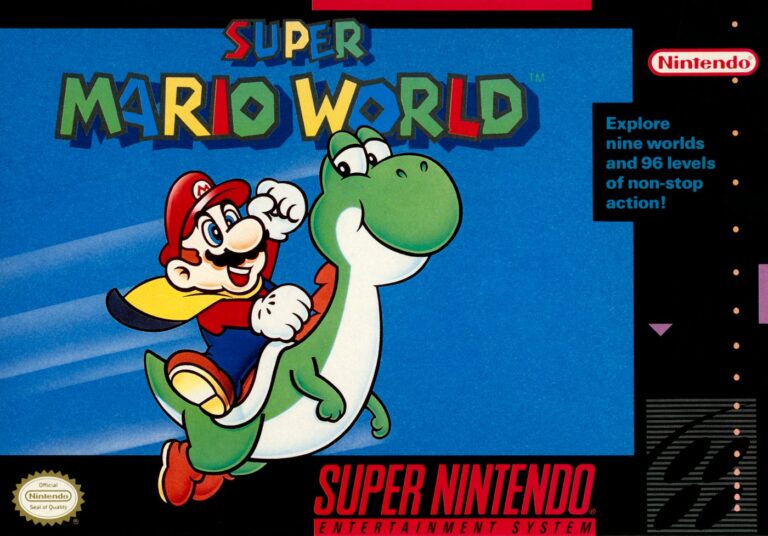
Super Mario World
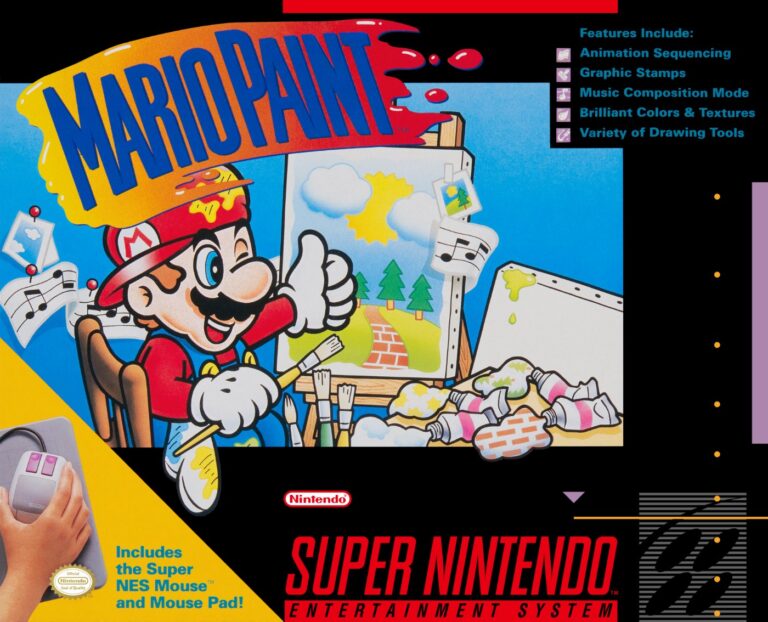
Mario Paint
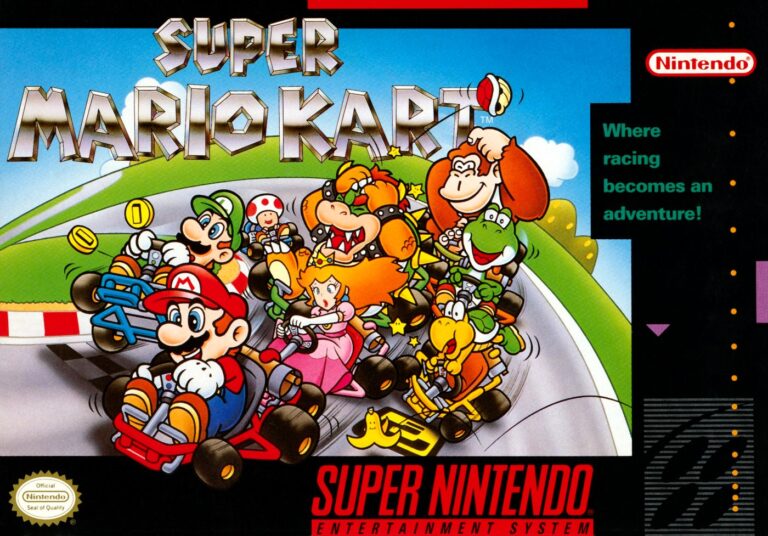
Super Mario Kart
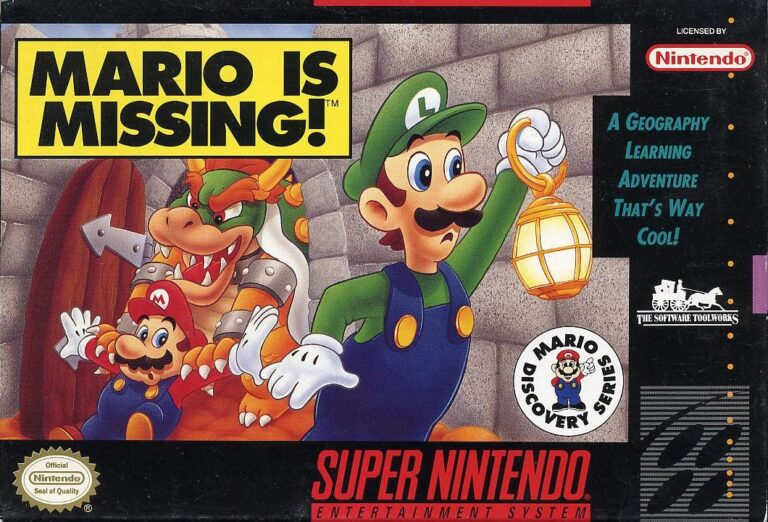
Mario is Missing! (Super NES)
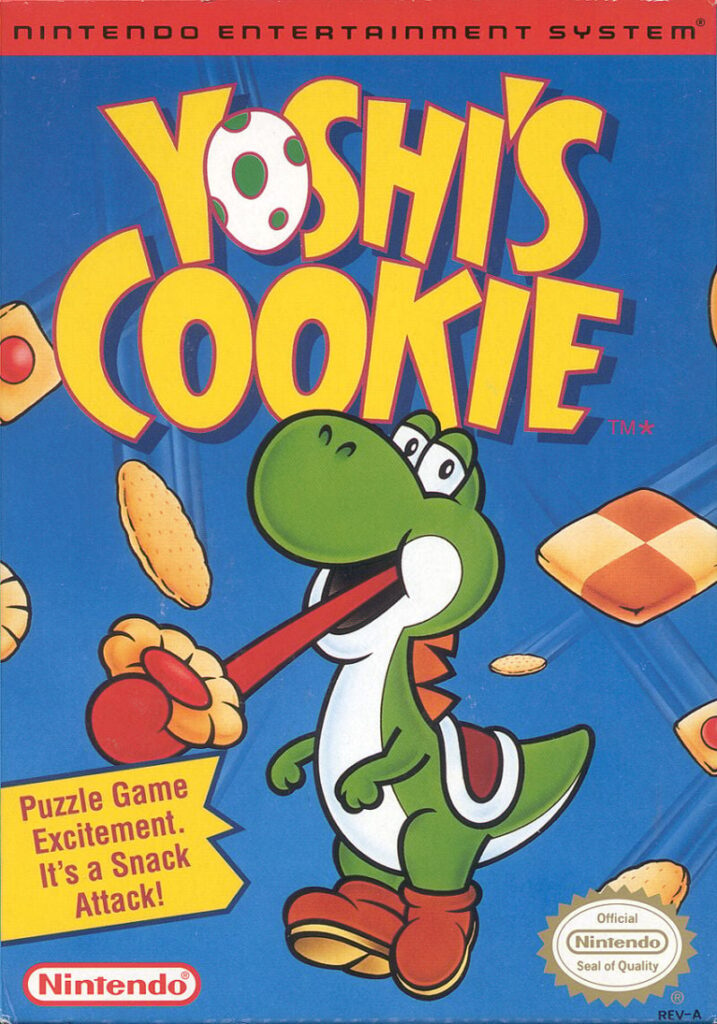
Yoshi’s Cookie (Super NES)
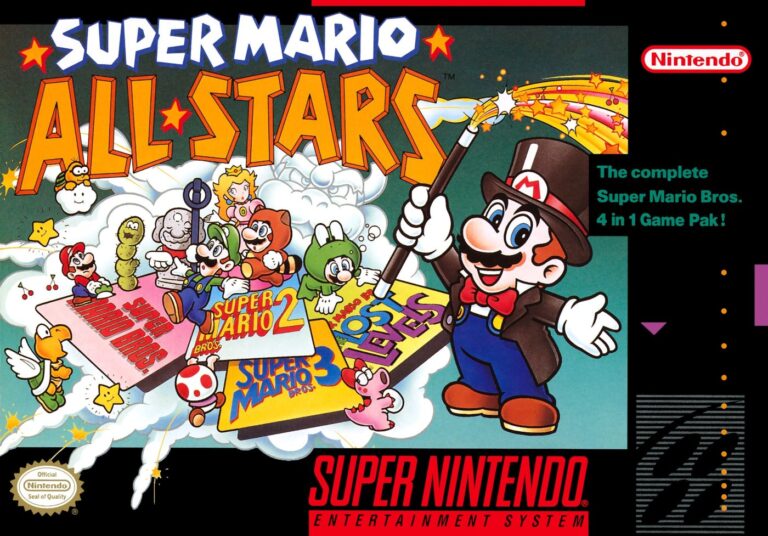
Super Mario All-Stars
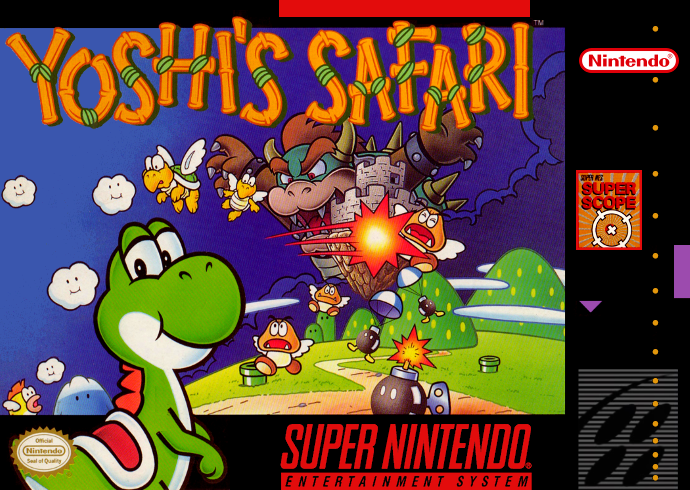
Yoshi’s Safari
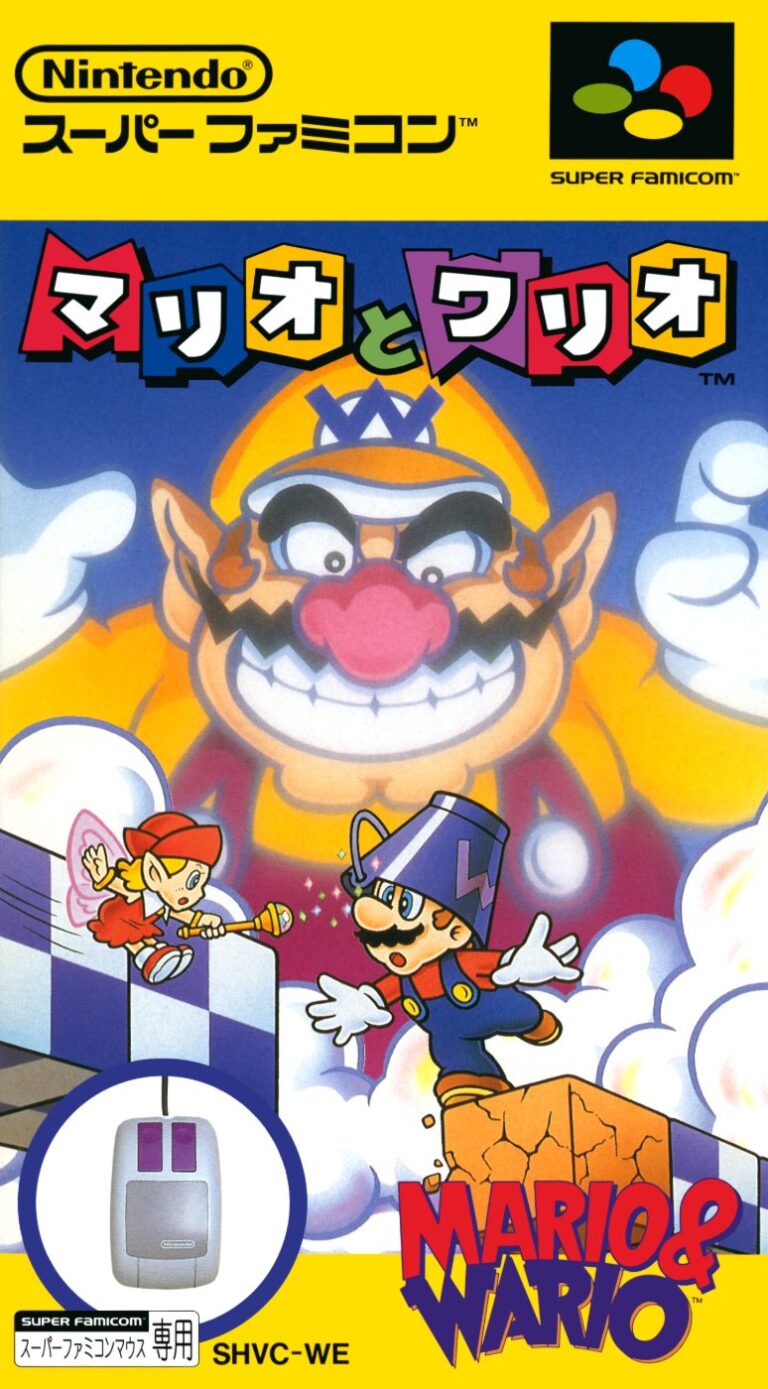
Mario & Wario
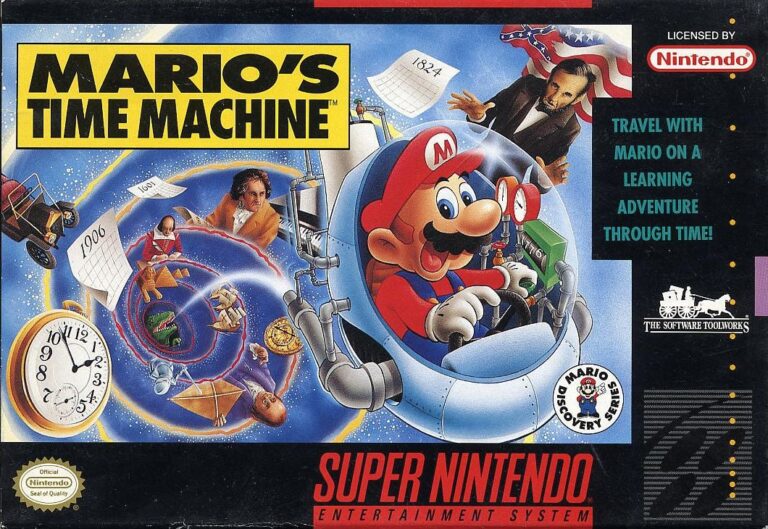
Mario’s Time Machine (Super NES)
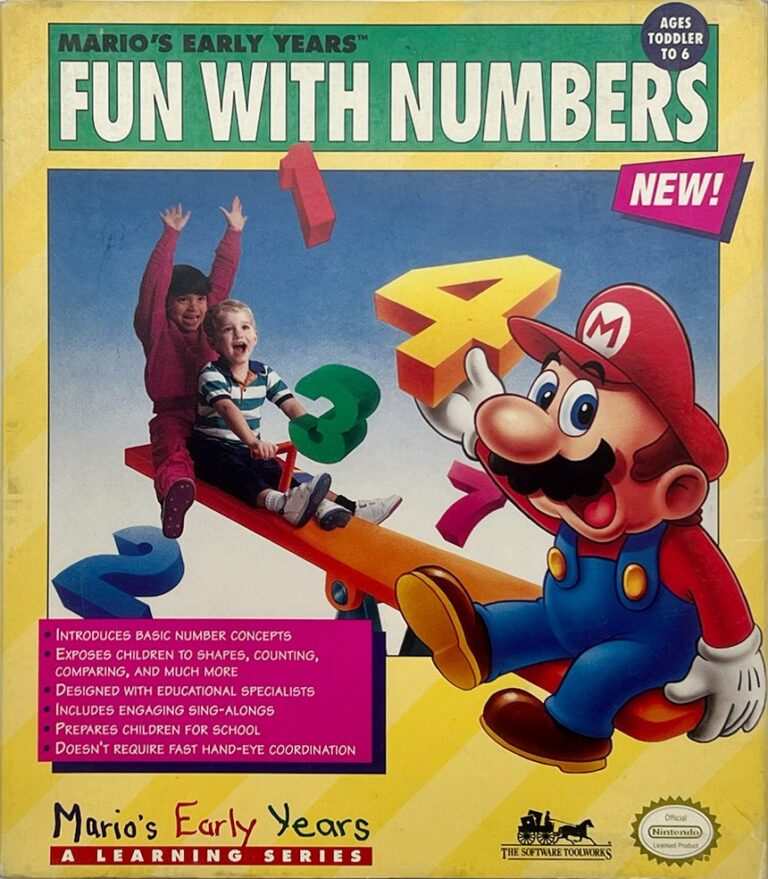
Mario’s Early Years! Fun with Numbers
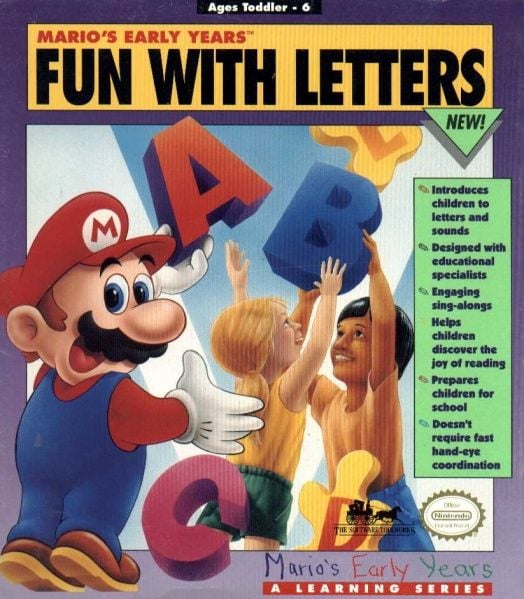
Mario’s Early Years! Fun with Letters
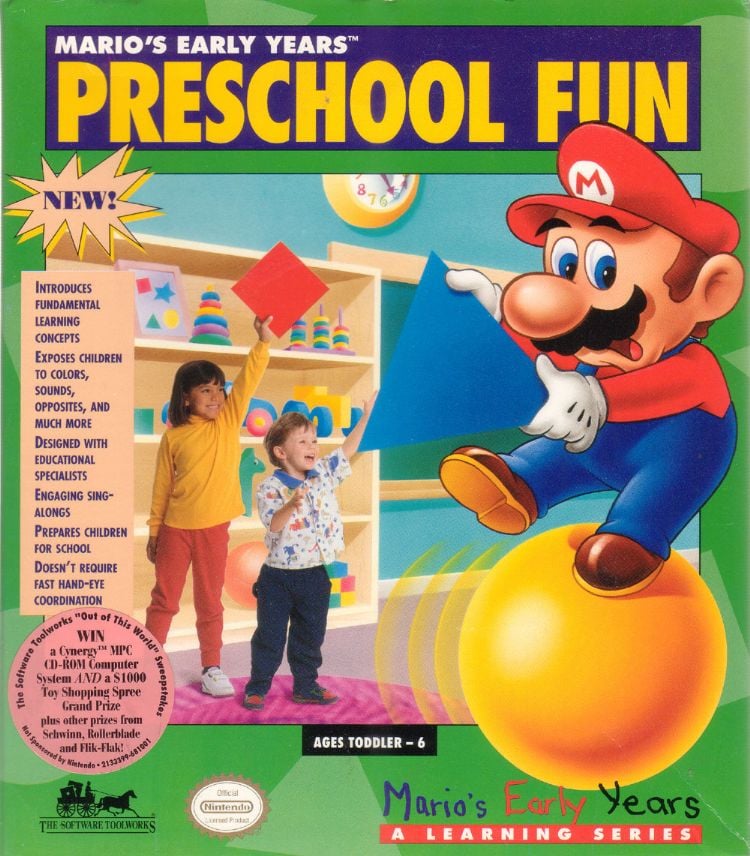
Mario’s Early Years! Preschool Fun
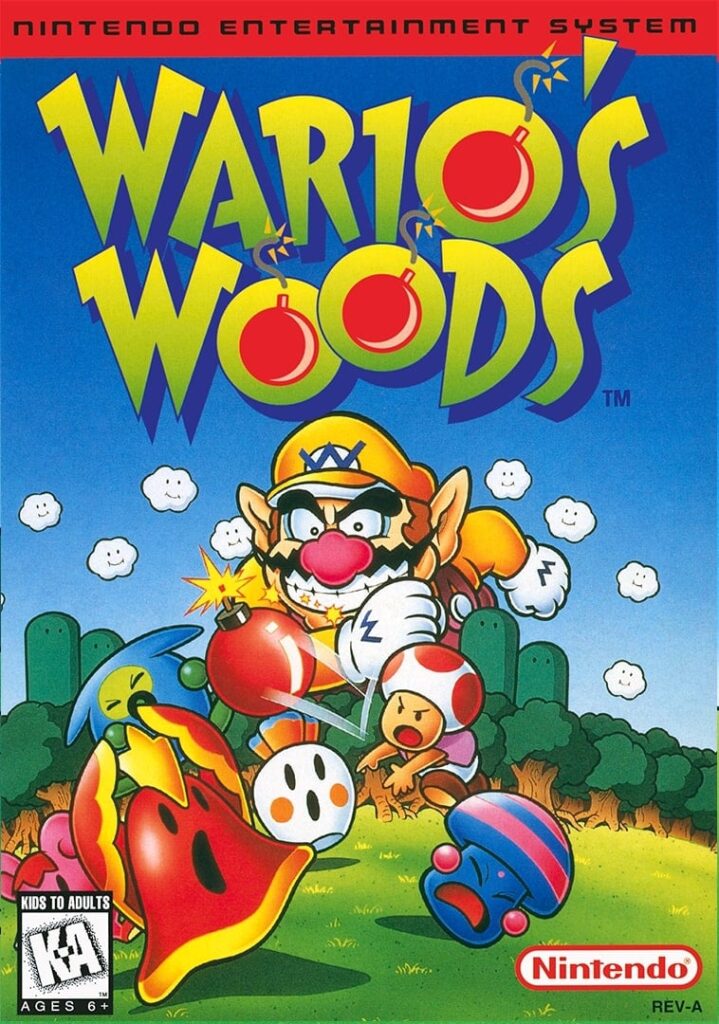
Wario’s Woods (Super NES)
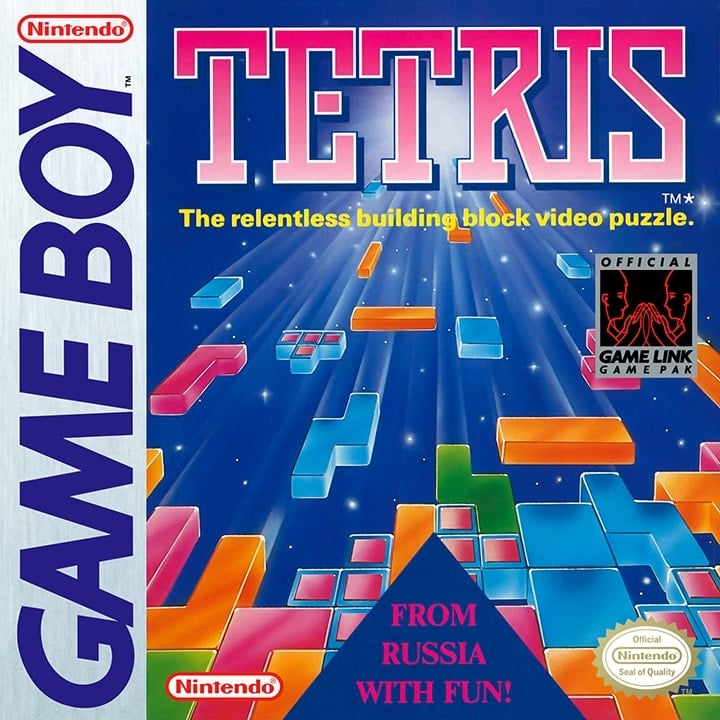
Tetris & Dr. Mario
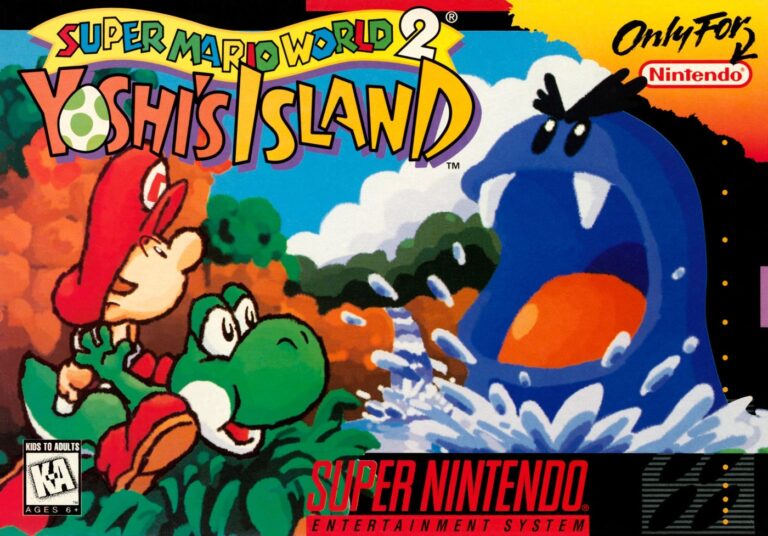
Super Mario World 2: Yoshi’s Island
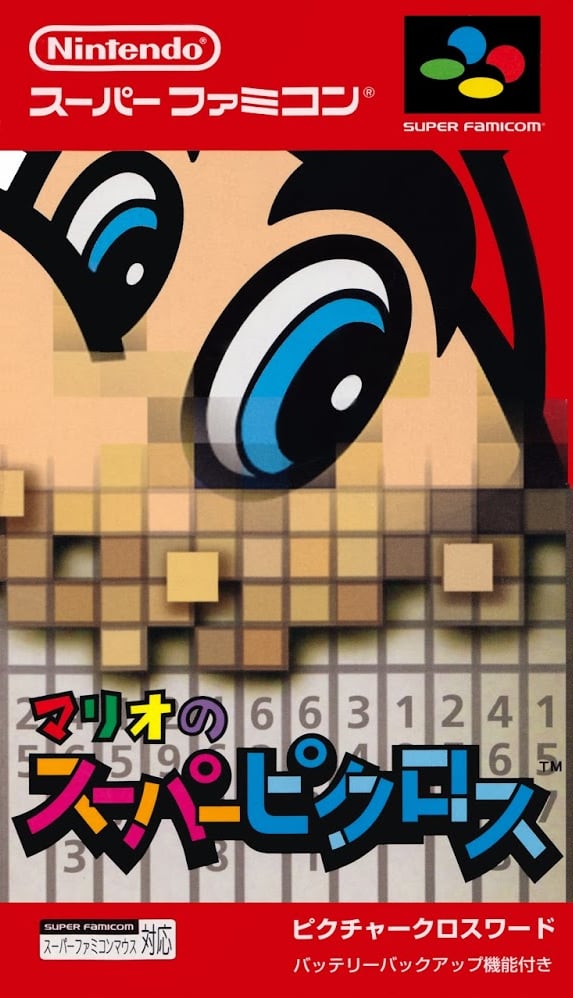
Mario’s Super Picross
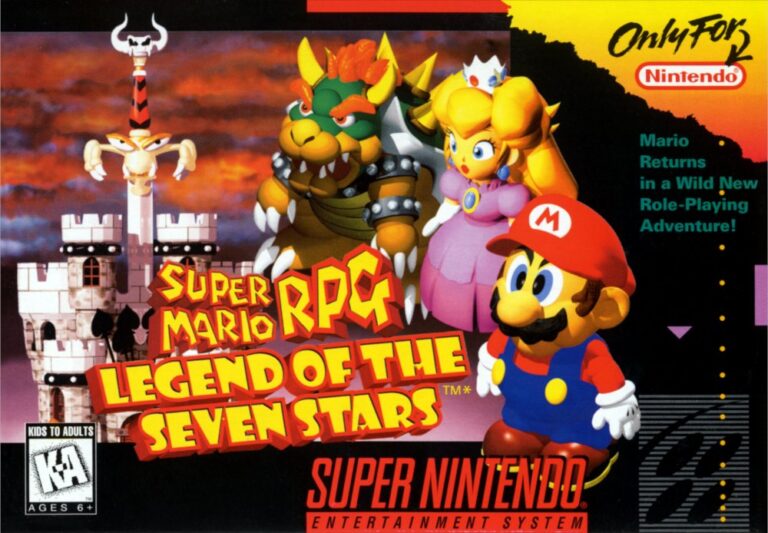
Super Mario RPG: Legend of the Seven Stars
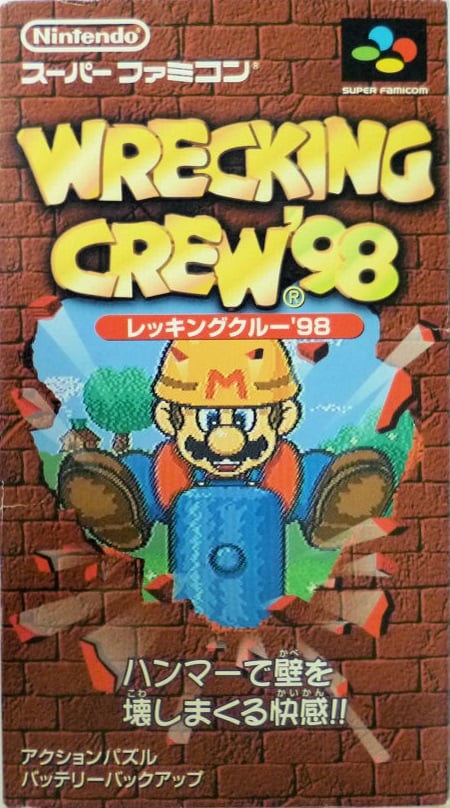
Wrecking Crew ’98
The Super Famicom & Super NES Hardware
The 16-bit machine Mario launched, and the chips, add-ons and Japanese services his games leaned on.
Designing the Super Famicom
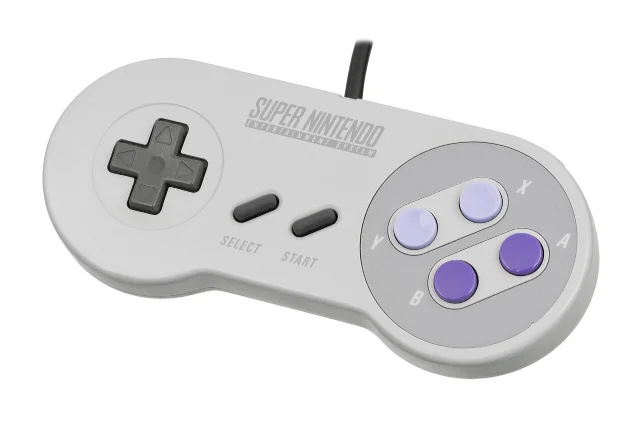
Masayuki Uemura, who had designed the Famicom, led the work on its successor. At its heart is a Ricoh 5A22, built around the WDC 65C816, running at up to 3.58 MHz with 128 KB of working memory and 64 KB for graphics. The palette holds 32,768 colours, 256 of them on screen at once.
The sound came from Sony: engineer Ken Kutaragi designed an eight-channel audio chip with its own SPC700 processor, reportedly agreeing the deal without telling his superiors. The graphics chip’s Mode 7 could rotate and scale a whole background layer to fake 3D, and Super Mario Kart would build an entire game on it.
Launch and the 16-bit war
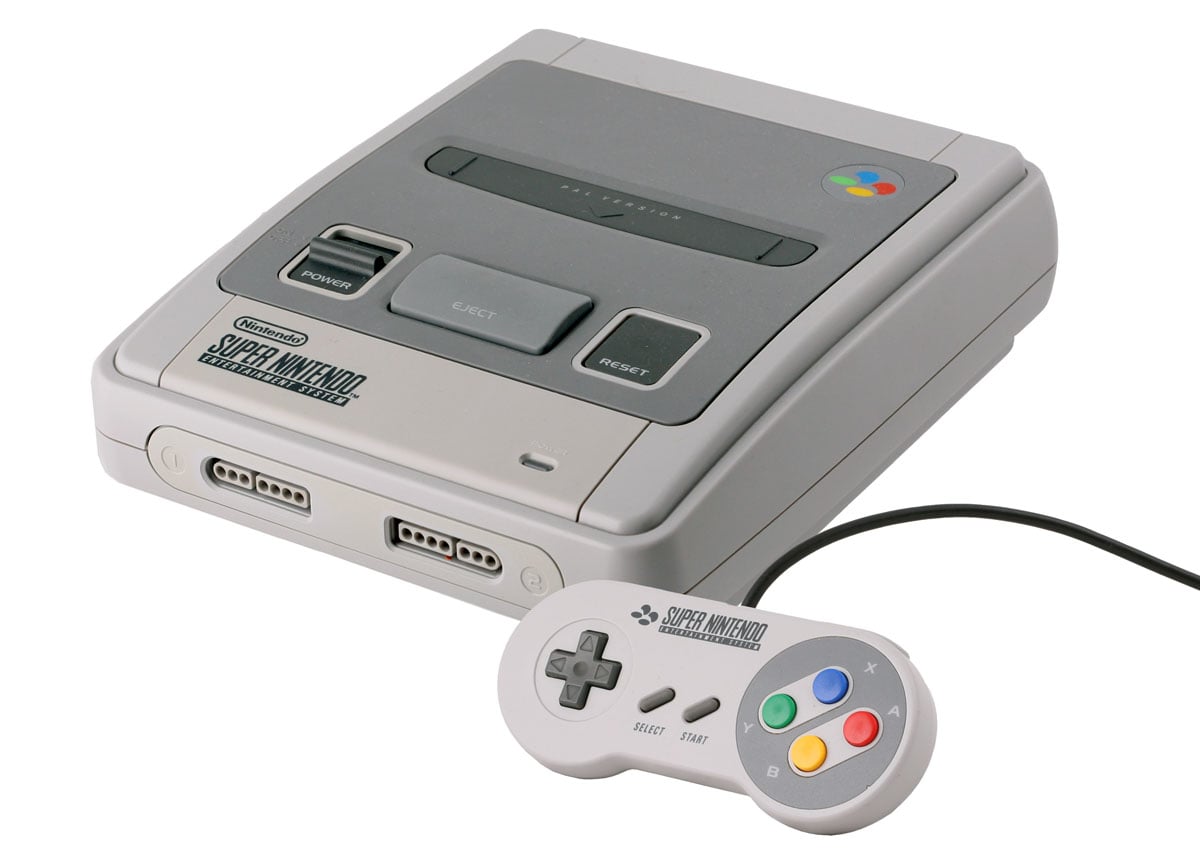
Super Mario World was first shown in July 1989, but a worldwide chip shortage helped push the console back to 21 November 1990, when the Super Famicom went on sale in Japan for ¥25,000 with Super Mario World and F-Zero. In North America, where Lance Barr redesigned the case, shipments began on 23 August 1991 and the official launch followed on 9 September at US$199, with Super Mario World in the box.
Britain, Ireland and France followed on 11 April 1992 (£150 in the UK), Australia on 3 July and Germany on 15 August. The rival was Sega’s Mega Drive, or Genesis, which had a two-year head start and a cheaper price. Even so, the Genesis held only an estimated 60 per cent of America’s 16-bit market in June 1992, and a 2014 analysis of NPD data put the Super NES’s lifetime US lead over the Genesis at 1.5 million units.
Chips in the cartridge
Super NES cartridges could carry extra processors, and Mario’s games used three of them. Super Mario Kart carries a DSP-1 maths chip to help with the arithmetic; Yoshi’s Island was planned around Argonaut’s Super FX and became the first game to ship with the faster Super FX 2, which it uses to stretch, spin and wobble sprites; and Square’s Super Mario RPG relies on Nintendo’s SA-1, which contains a 65C816 core of its own running at 10.7 MHz.
Mouse, Super Scope and Super Game Boy
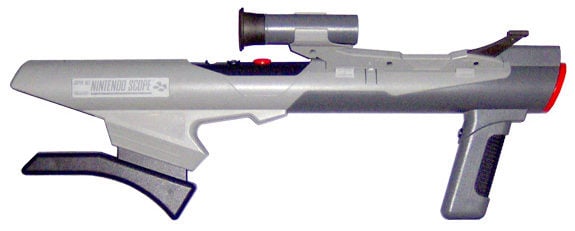
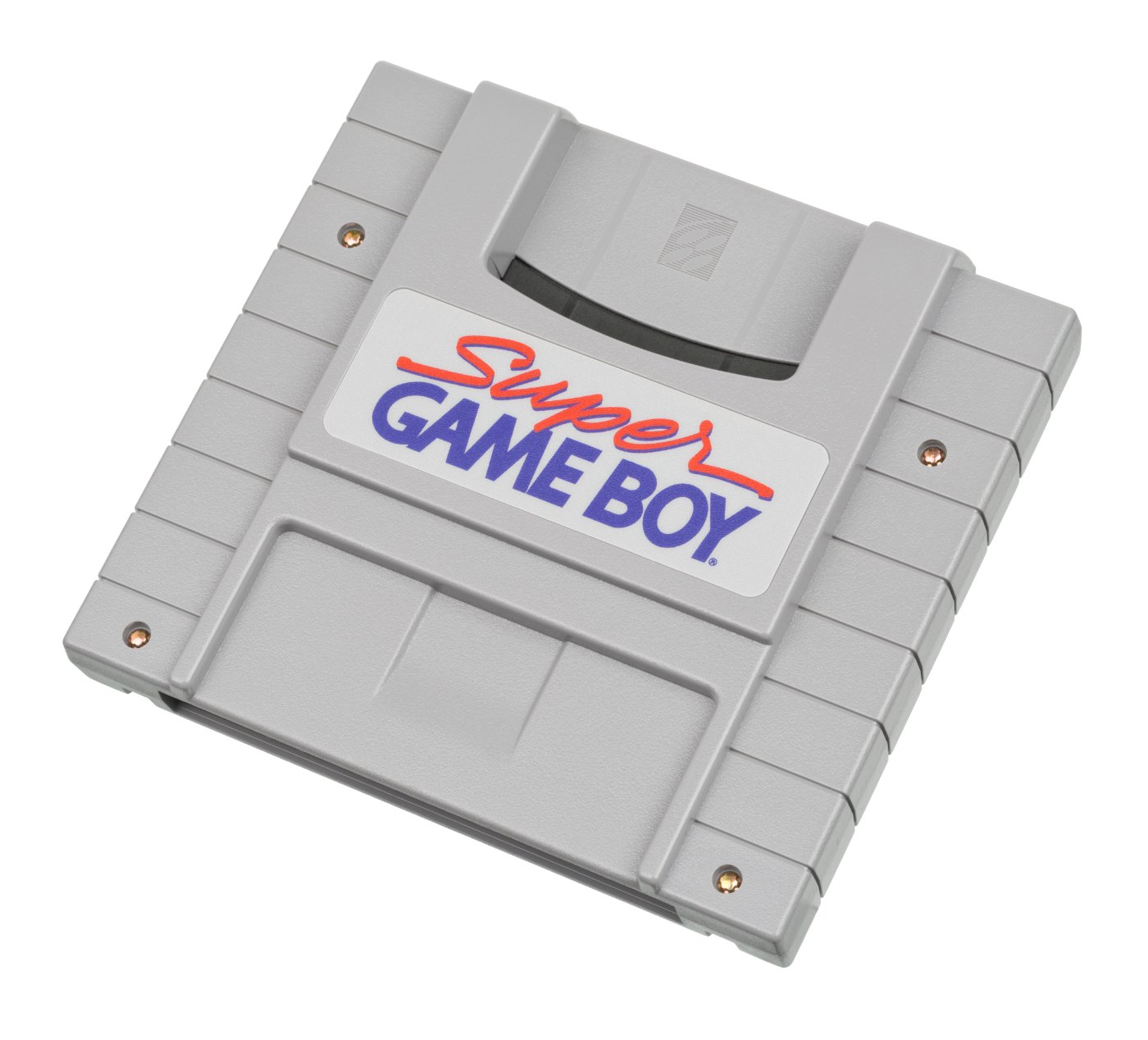
The Super NES Mouse was designed for Mario Paint and launched with it, sold together with a mouse mat in a US$59.95 package. Mario & Wario, Mario’s Super Picross and the Mario’s Early Years! trio also use it. The Super Scope light gun has just one Mario game, Yoshi’s Safari, while the Super Game Boy adapter let Game Boy Mario games run on the television with colour palettes and borders.
Satellaview and Nintendo Power
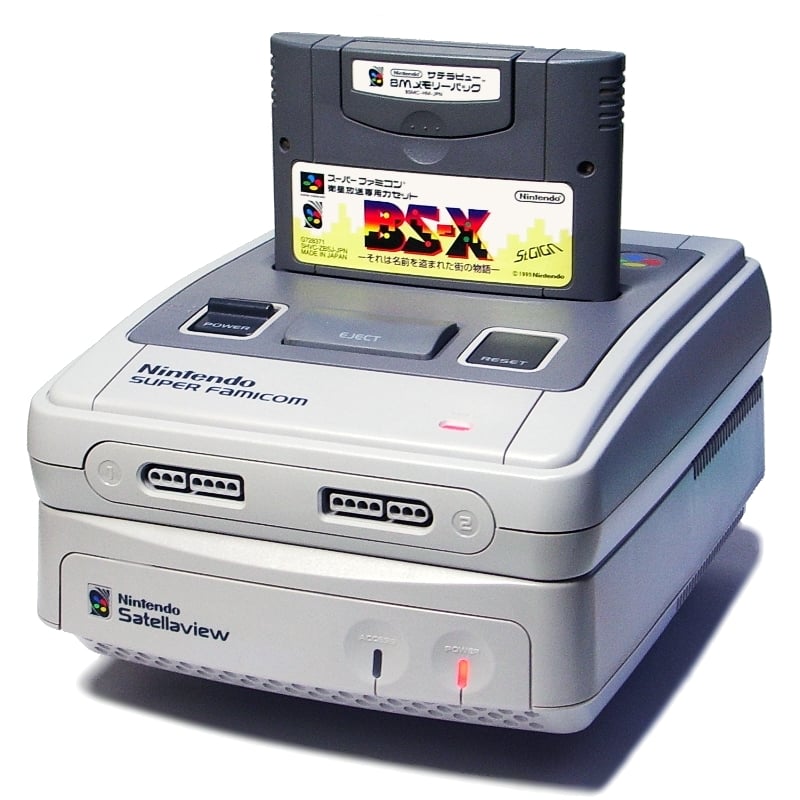
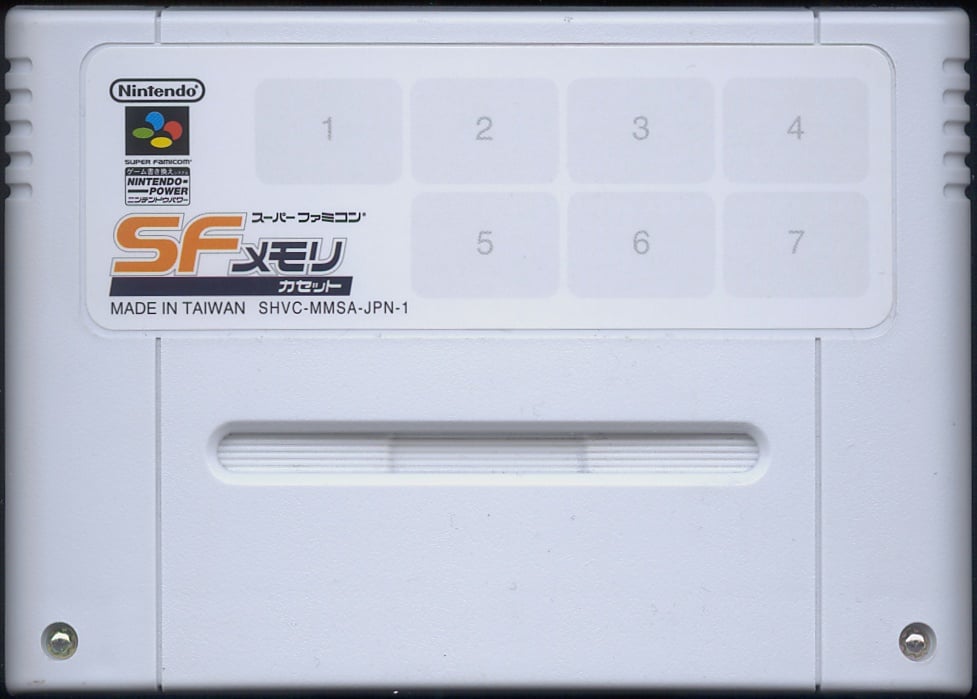
Japan had two download services the West never saw. The Satellaview modem sat under the Super Famicom and received games by satellite broadcast from 23 April 1995 to 30 June 2000, Mario specials among them. From 30 September 1997 Nintendo Power kiosks in shops wrote games to rewritable SF Memory cartridges; Mario’s Super Picross was available on day one, and Wrecking Crew ’98 appeared there on 1 January 1998, months before its cartridge. The service ran until 2007.
Mario bundles, new models and the end
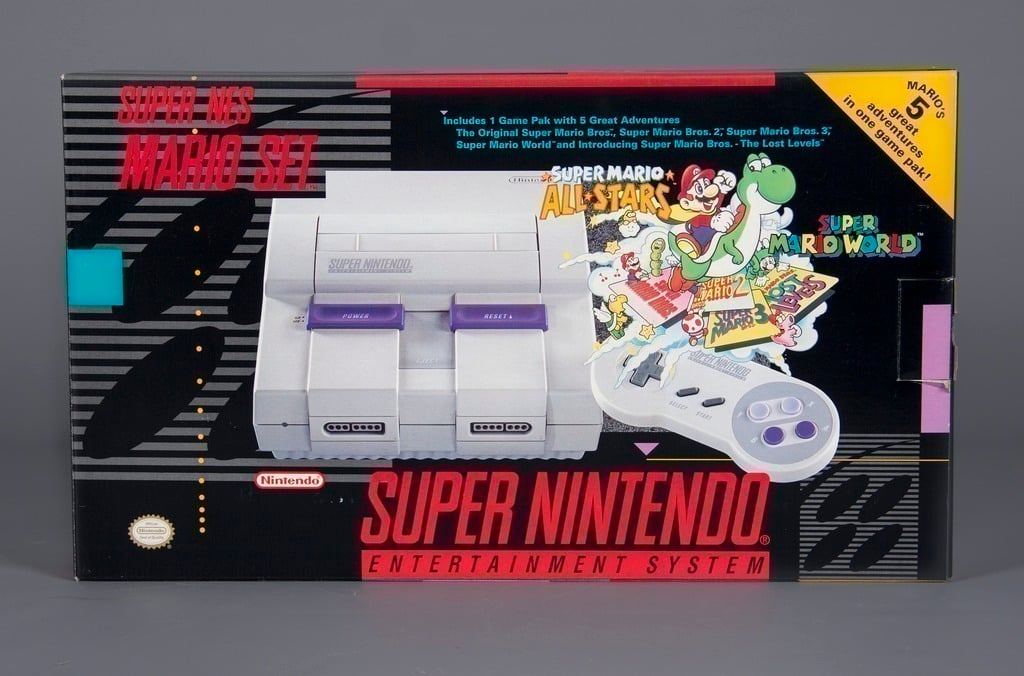
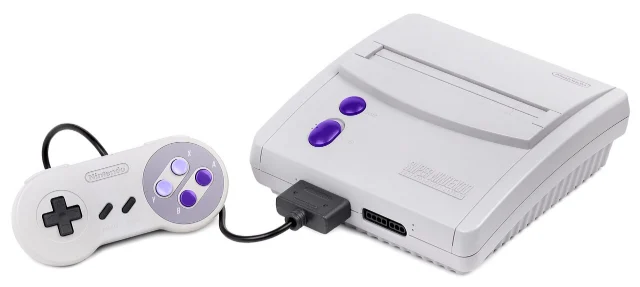
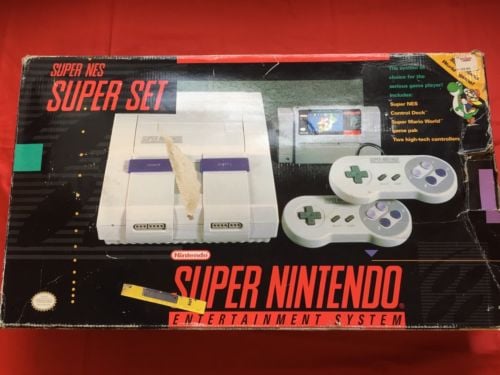
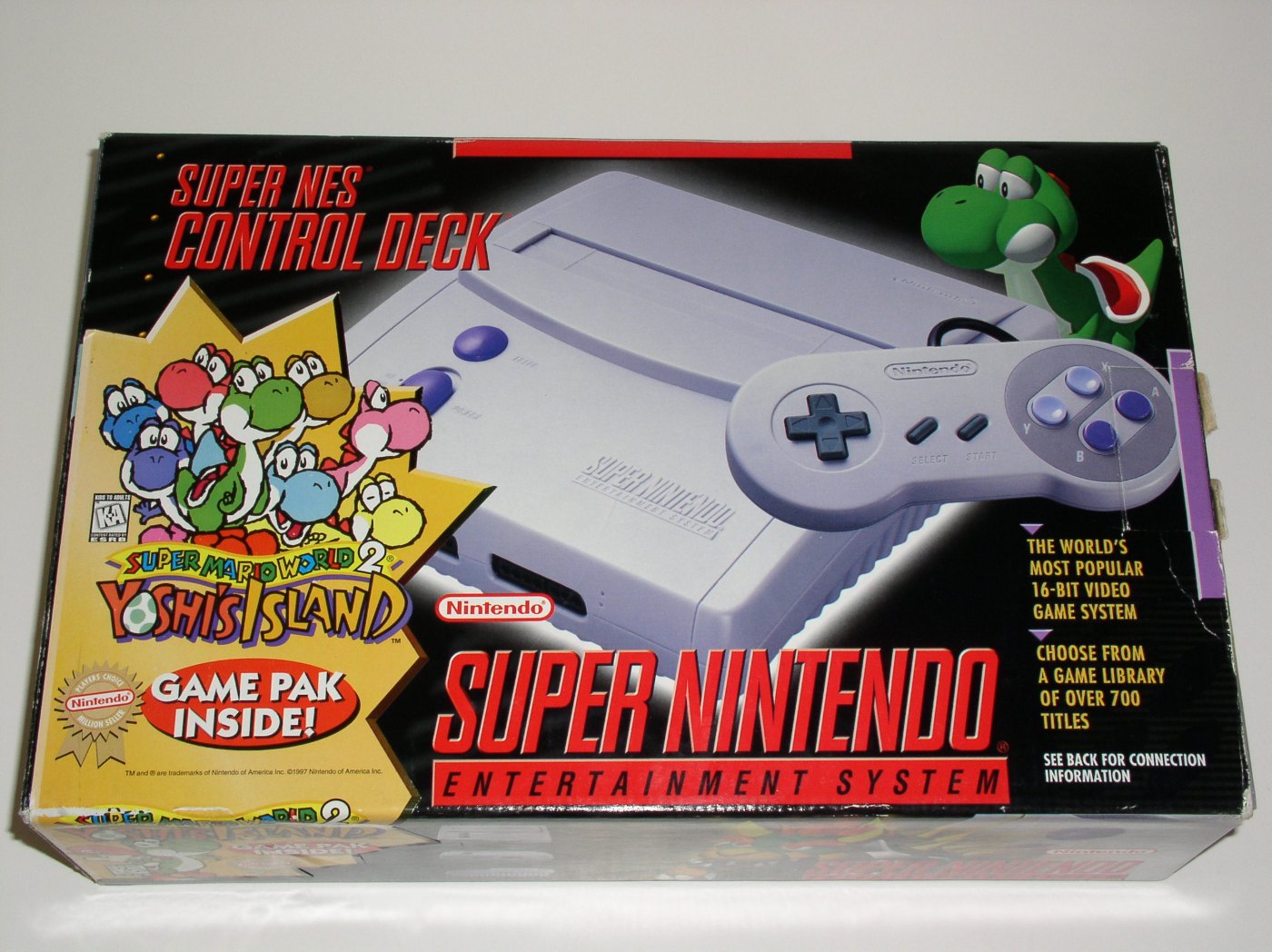
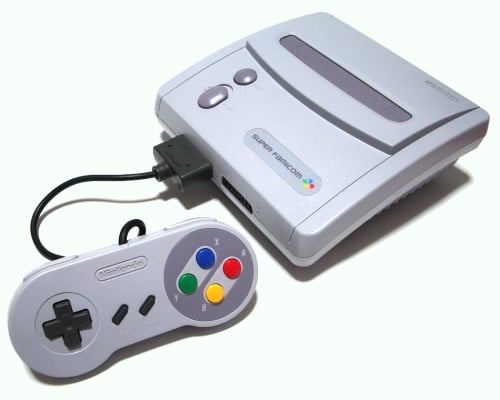
Mario sold the Super NES as he had the NES. The Super Set came with Super Mario World, and the Super NES Mario Set of December 1994 added a cartridge combining All-Stars with Super Mario World, a version only ever sold in that bundle in North America. When the slimmer New-Style Super NES arrived in October 1997 at US$99, some boxes came with Yoshi’s Island; Japan’s Super Famicom Jr. followed on 27 March 1998 for ¥7,800.
The console bowed out in Europe in 1998 and in North America in 1999, and Super Famicom production ended on 25 September 2003. Nintendo’s investor figures put the total at 49.10 million consoles and 379.06 million games.
Sales & Best-Sellers
How the Super NES and its Mario games sold
Nintendo’s investor relations pages put lifetime sales at 49.10 million Super Famicom and Super NES consoles and 379.06 million games. Nintendo’s regional breakdown, quoted by Wikipedia, splits the hardware into 23.35 million in the Americas, 17.17 million in Japan and 8.58 million elsewhere, more than half of them outside Japan.
As with the NES, Nintendo has never published lifetime totals for individual Super NES games, so there is no official best-seller chart. The figure usually quoted for Super Mario World, 20.61 million, is inflated by years as the pack-in game. A UPI report on Nintendo’s results in May 1993 said the Mario Paint and mouse package had passed one million units, and Nintendo’s own results show later versions doing well: the 2010 Wii edition of All-Stars sold 2.24 million by March 2011 and the 2023 Super Mario RPG remake 3.31 million by March 2024.
- 49.10mSuper Famicom and Super NES consoles (Nintendo IR, 30 Sep 2026)
- 379.06mgames sold for the system (Nintendo IR)
- 23.35mconsoles in the Americas (Nintendo regional data, via Wikipedia)
- 18Mario games on this page
Mario Firsts on the SNES
Ten Mario milestones that happened first on the Super Famicom and Super NES, each checked against the NES and Game Boy games before them.
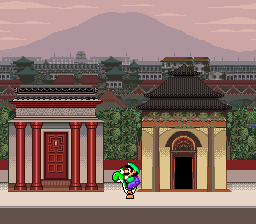
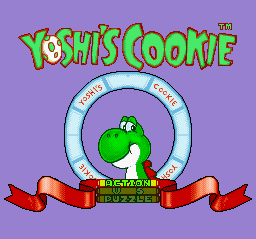
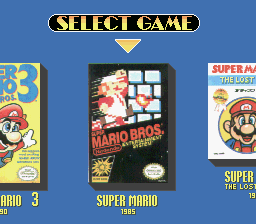
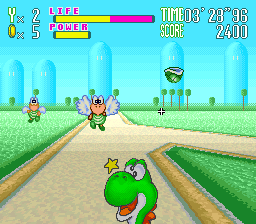
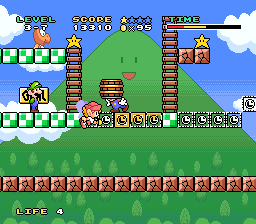
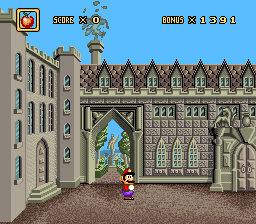
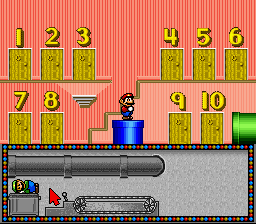
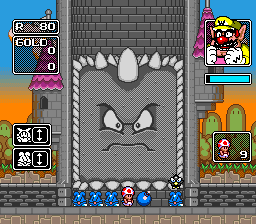
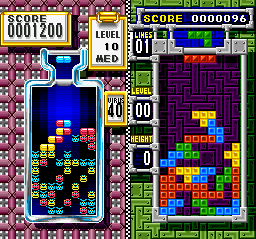
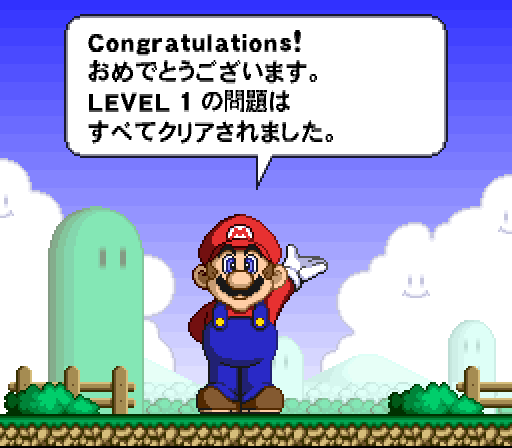
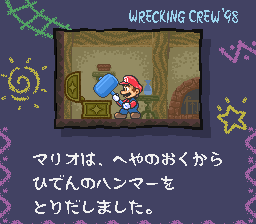
Mario on the SNES in Pictures
One picture from each of the other Mario games on the system, in release order.
Videos
Nintendo’s trailer for the miniature Super NES of 2017, and the 2025 Switch Online update that finally brought Mario & Wario west.
Trivia & Interesting Facts
- The Japanese box of Super Mario World carries the subtitle Super Mario Bros. 4.
- When Super Mario World was first shown in July 1989, the audience thought it looked too much like the NES Marios; a warmer reception followed a year later.
- Super Mario Kart has no hills or overpasses because each track is a single flat Mode 7 image; karts, pipes and Thwomps are sprites scaled by distance.
- Super Mario All-Stars + Super Mario World gave Luigi his own sprite in Super Mario World, and was only ever sold with a console in North America.
- Mario & Wario is the first appearance of the bucket that later turned up as a Melee trophy; its October 2025 Switch Online release was its first anywhere outside Japan.
- Yoshi’s Safari is the only Mario game that uses the Super Scope.
- Nintendo of America called Yoshi’s Island’s Super FX 2 effects “Morphmation”.
- Mario Paint’s Undodog made his debut 23 years before Super Mario Maker brought him back.
- Alexey Pajitnov, the creator of Tetris, designed the Puzzle mode of the Super NES Yoshi’s Cookie.
- Super Mario RPG was the last Mario game, and the last Square game, released for the Super NES in North America.
- Mario’s Super Picross was one of the games on offer on Nintendo Power’s first day, 30 September 1997.
- The Super NES Wario’s Woods has never been re-released; every reissue so far has used the NES game.
- Tetris & Dr. Mario was never released in Japan.
- Mario Paint joined Nintendo Classics on 28 July 2025 in the Americas, with mouse support added to the Super NES app for it.
Hardware & Merchandise Gallery
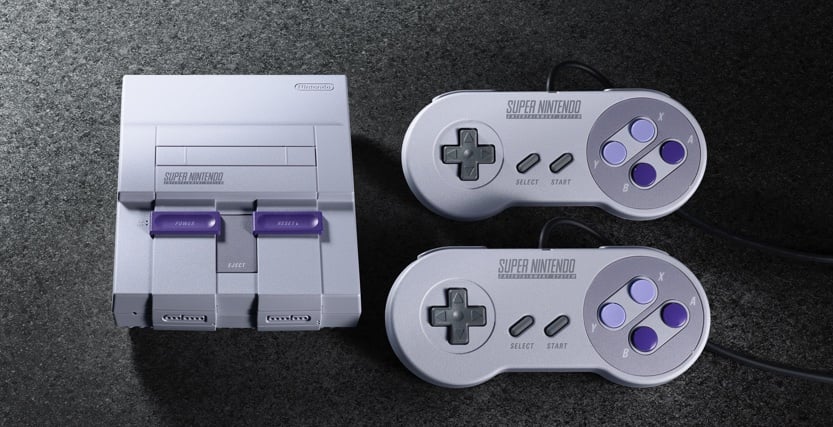
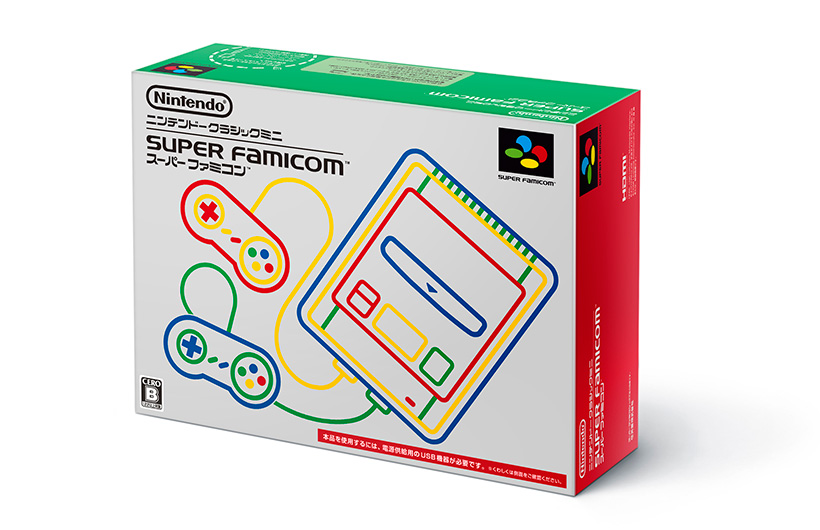
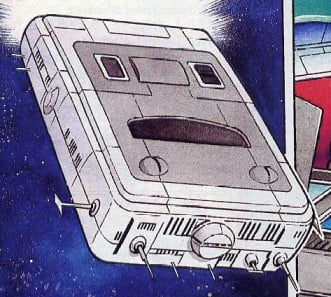
Mario-themed bundles, accessories and later tributes to the Super Nintendo.
Timeline & Legacy
From the Super Famicom’s launch to Nintendo Classics, the dates that shaped Mario’s 16-bit years.
Mario on the SNES: key dates
- Super Famicom launch 21 November 1990Japan gets the console with Super Mario World and F-Zero.
- Super NES in America 23 August 1991Shipments begin with Super Mario World in the box; official launch 9 September.
- Europe 11 April 1992Britain, Ireland and France get the console, and Super Mario World, on the same day.
- Mario Paint 14 July 1992The mouse arrives with Mario’s art studio.
- Super Mario Kart 27 August 1992Kart racing is born in Japan.
- Super Mario All-Stars 14 July 1993The NES adventures return in 16-bit, The Lost Levels included.
- Super NES Mario Set December 1994All-Stars and Super Mario World on one cartridge, in the box with the console.
- Satellaview 23 April 1995Japan’s satellite download service begins; it runs until 30 June 2000.
- Yoshi’s Island 5 August 1995The first Super FX 2 game puts Yoshi in the lead.
- Super Mario RPG 9 March 1996Square’s Mario role-playing game opens in Japan; North America follows on 13 May.
- Nintendo Power 30 September 1997Japanese shops start writing games to flash cartridges; Wrecking Crew ’98 follows on 1 January 1998.
- New-Style Super NES October 1997A slimmer US$99 model, some with Yoshi’s Island; Japan’s Super Famicom Jr. follows on 27 March 1998.
- Super Famicom production ends 25 September 2003The last 16-bit consoles leave the factory, on the same day as the last Famicoms.
- Super NES Classic Edition 29 September 2017A miniature console with 21 games, among them Super Mario World, Super Mario Kart, Yoshi’s Island and Super Mario RPG.
- Nintendo Switch Online September 2019The Super NES app opens; Nintendo UK dates it 6 September 2019.
- Super Mario RPG remake 17 November 2023A full Switch remake of the 1996 game.
Playing them today
The Super Nintendo Entertainment System app in Nintendo Classics comes with a basic Nintendo Switch Online membership on Switch and Switch 2. As of 13 November 2026 Nintendo lists eight of the 18 games on this page: Super Mario World, Yoshi’s Island, Super Mario Kart, Super Mario All-Stars, Mario Paint and Mario & Wario (both with mouse controls), and the Japanese versions of Mario’s Super Picross and Wrecking Crew ’98.
Super Mario RPG is not in the app, but the 2023 Switch remake is easy to find. Yoshi’s Safari, the Super NES Yoshi’s Cookie and Wario’s Woods, Tetris & Dr. Mario and the licensed edutainment games have no current release.
Legacy
The Super NES era gave Mario many of the things he still has: Yoshi, Mario Kart, Bowser as a sometime ally and a taste for role-playing. Nintendo has kept the games in circulation, from the Game Boy Advance’s Super Mario Advance 2 and Super Mario Advance 3 to the Super Mario All-Stars 25th Anniversary Edition on Wii, and Super Mario World’s graphics became one of the styles in Super Mario Maker.
Mario Paint’s spirit lives on in the 64DD’s Mario Artist: Paint Studio, and Super Mario RPG led straight to Paper Mario and the Mario & Luigi series. For the 8-bit story see the NES hub; for what came next, the Nintendo 64 hub, or browse every Mario game.
More Mario on the SNES
Other notable Mario-related releases on the SNES that don’t have their own page here yet:
- Dec 1994Super Mario All-Stars + Super Mario WorldCompilationAll-Stars plus Super Mario World; a console bundle in North America
- Jan 1995UNDAKE30 Same Game Daisakusen Mario VersionSpin-offHudson Soft tile puzzler; promotional cartridge, later Satellaview
- Mar 1996BS Super Mario USA Power ChallengeMain roleSatellaview remix of Super Mario USA in four episodes
- May 1997Excitebike: Bun Bun Mario Battle StadiumSpin-offSatellaview Excitebike starring Mario, Luigi and Toad
- Dec 1997BS Super Mario CollectionMain roleSatellaview remix of All-Stars, broadcast in four weekly parts
Sources
Every fact on this page was checked against the 8 sources listed here.
Show sources
Wikipedia, Super Nintendo Entertainment System · Super Luigi Bros game pages for each game on this hub · Nintendo IR, Dedicated Video Game Sales Units · Nintendo UK, Super Nintendo Entertainment System – Nintendo Classics · YouTube oEmbed: Super NES Classic Edition Features Trailer · YouTube oEmbed: Super NES – October 2025 Games Update · Nintendo UK, Nintendo Classics – Nintendo Switch Online Overview & FAQ · Super Mario Wiki
Images: Mario and all related characters, artwork and screenshots are © Nintendo; other artwork, covers and scans are © their respective owners. Images are used here for commentary and reference. Photos: JCD1981NL / Wikipedia (CC BY 3.0); NESWorld.